 Neonatal malnutrition and macrophage in Candida albicans infection
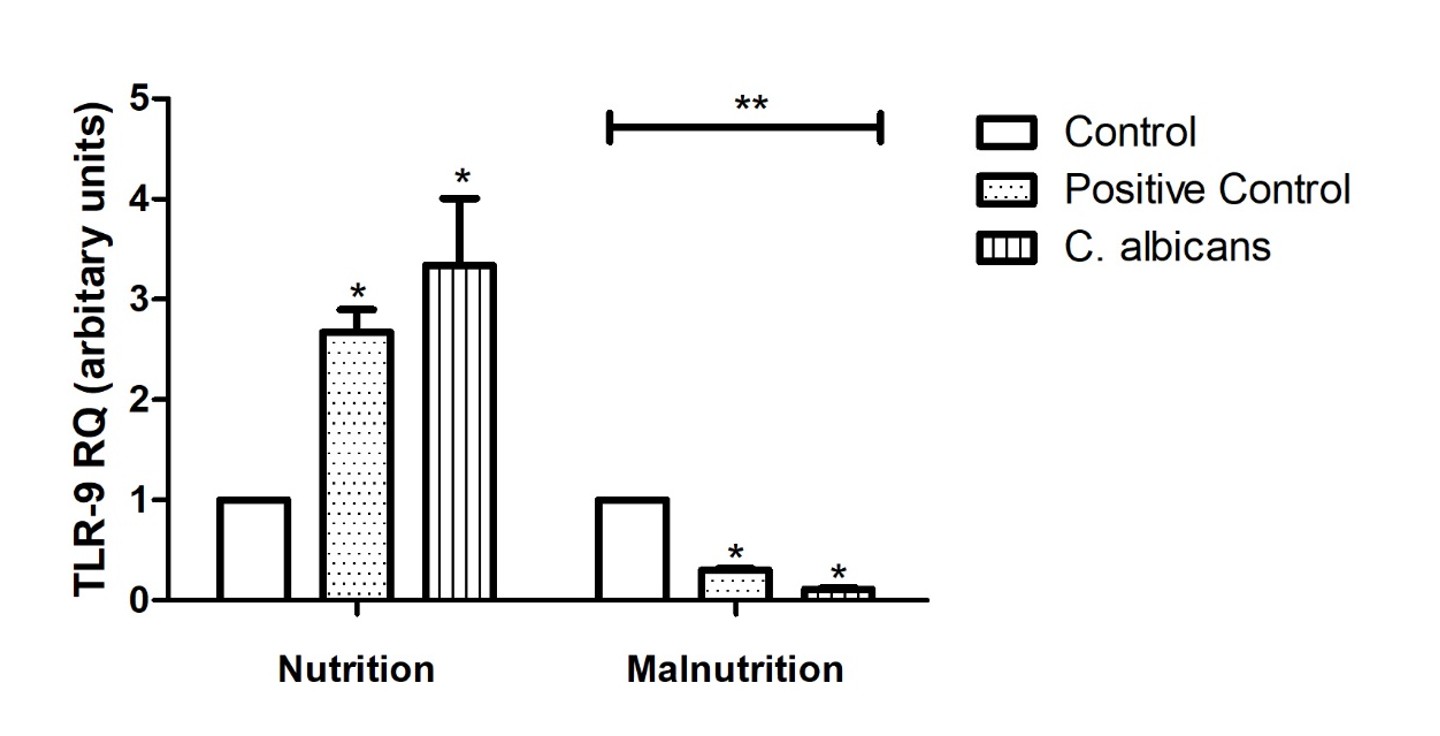
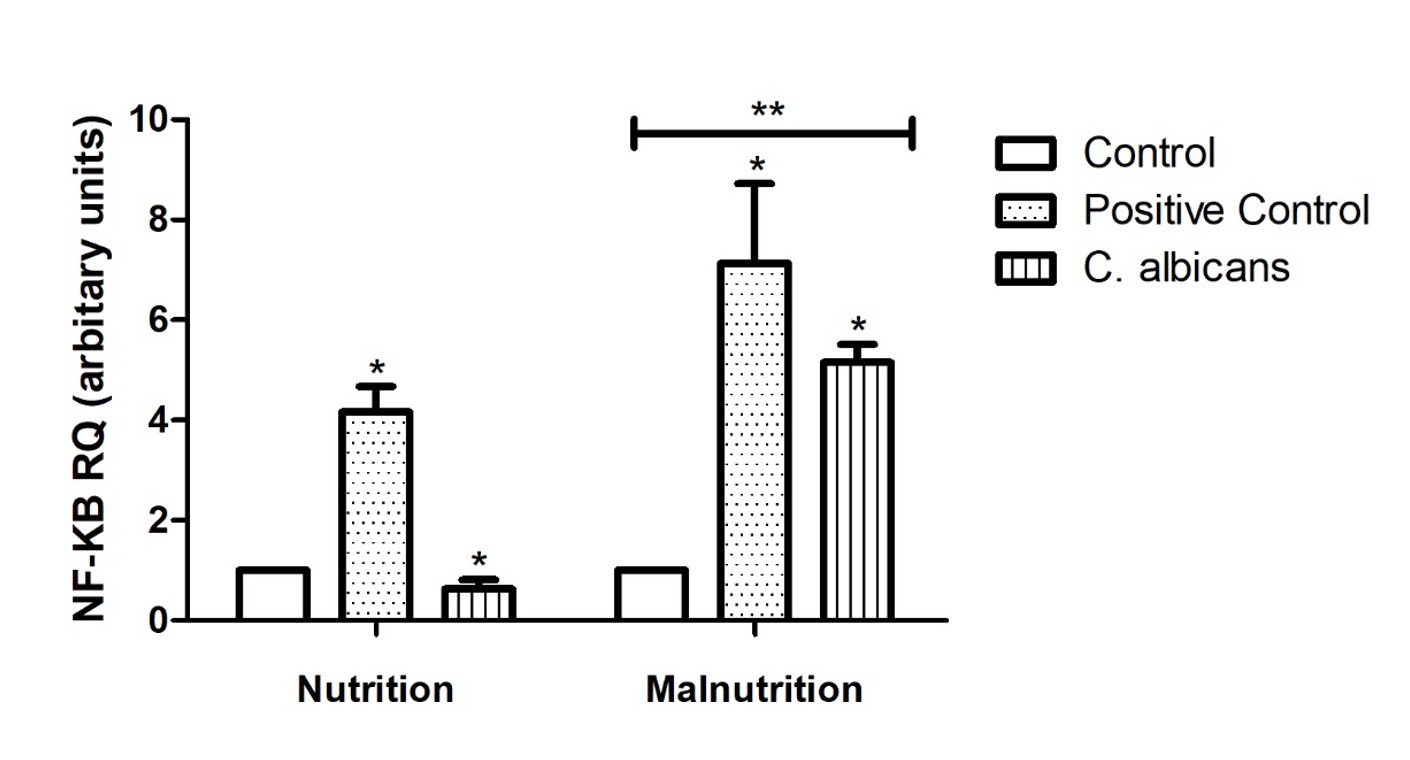
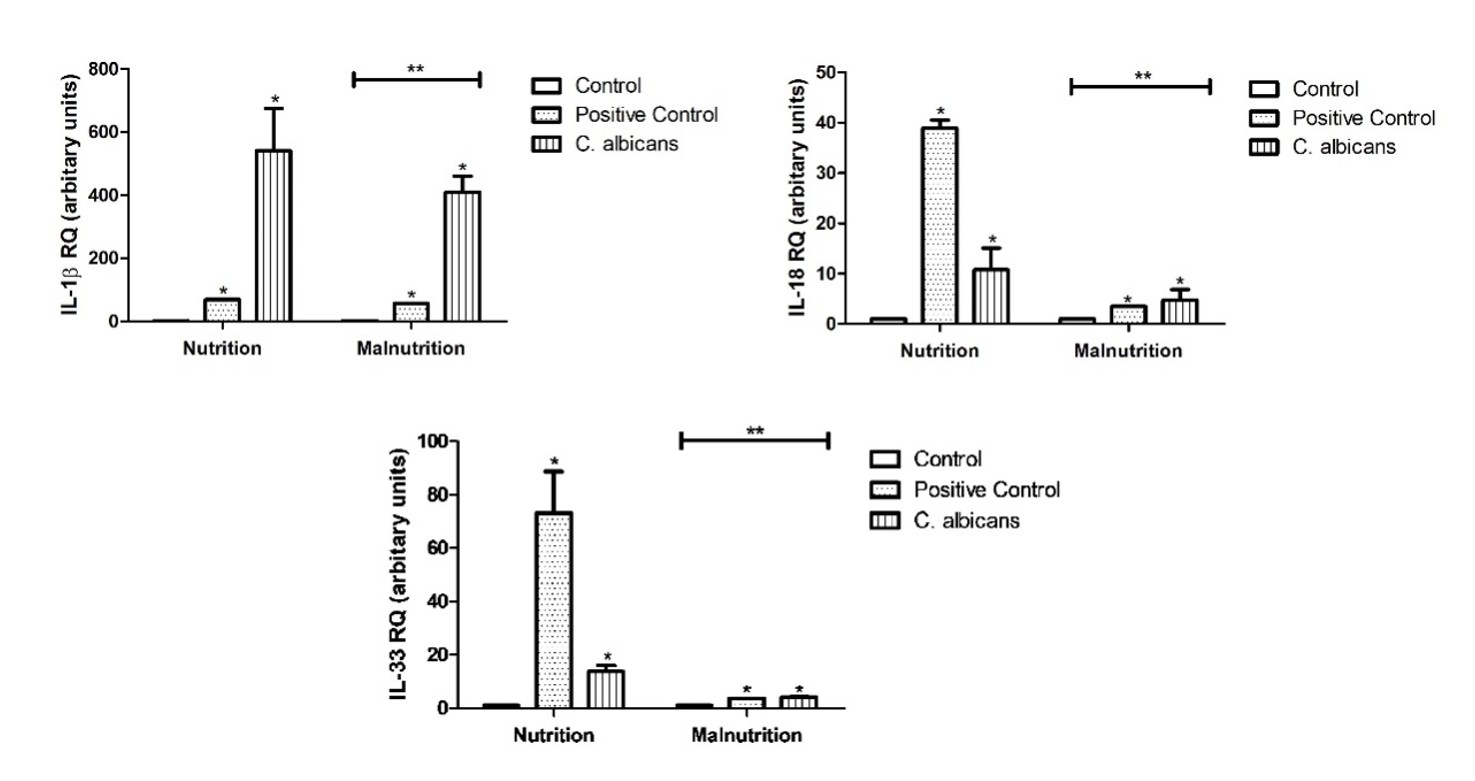
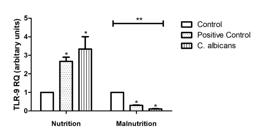
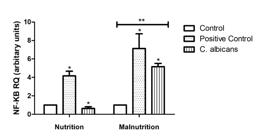
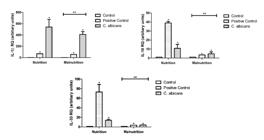
Neonatal malnutrition is an important environmental exposure factor that can influence the development and health of all body systems, including the immune system. The objective was to detect the impacts of malnutrition in critical period of development on the response Candida albicans infection. It was used 24 male rats Wistar. The animals were divided malnourished group (8% protein) or nourished group (17% protein). It was collected alveolar macrophages by bronchoalveolar lavage fluid of the rats with 90-day-old. Expression levels of the targets were performed using Real-time RT-PCR. It had lower body weights from 5 days of life, until adulthood. Macrophages collected from malnourished animals exhibit a lower expression of the Toll-Like Receptor (TLR-9), interleukin 18 (IL-18) and interleukin 33 (IL-33); however, transcription nuclear kappa B (NF- kB) and interleukin 1β (IL-1β) are expressed in systems where there is a challenge with an immunogenic stimulus (Lipopolysaccharide and Candida albicans). Nutritional reduction during the neonatal period has repercussions on body growth and defense mechanisms observed in adult life. The results revealed dysregulation of immune mediators with probable implications for the effector immune response. Thus, the response to Candida albicans was altered for neonatal malnutrition, with a high chance of progressing to tissue damage.
Keywords:
malnutrition; Candida albicans; interleukin 33; interleukin 1β
 Thumbnail
 Thumbnail
 Thumbnail
 Thumbnail