 Relevance of the Itaperi Campus (Fortaleza, Brazil) for urban avifauna revealed through a citizen science initiative
Abstract
This study evaluated the potential of Itaperi Campus, of the State University of Ceará (UECE), in Fortaleza, Brazil, as a strategic point of birdwatching and for urban biodiversity conservation. Twenty observation sessions were conducted between April 2023 and December 2024, within the context of a university outreach project with community participation. A total of 102 species were recorded, distributed among 38 families and 19 orders, including species endemic to the Caatinga biome, as well as endangered and nocturnal species. Notable among these are Aratinga jandaya (Gmelin, 1788), threatened in Ceará, and Psittacara leucophthalmus (Statius Müller, 1776), considered regionally extinct. Birds targeted by wildlife trafficking were also observed. The results demonstrate that Itaperi Campus plays a strategic role as an urban green area, functioning as a refuge for avifauna and as a space for citizen science and environmental education initiatives.
Keywords:
birdwatching; environmental education; participatory monitoring; threatened species; urban biodiversity
Resumo
Este estudo avaliou o potencial do Campus do Itaperi, da Universidade Estadual do Ceará (UECE), em Fortaleza, Brasil, como ponto estratégico para a observação de aves e para a conservação da biodiversidade urbana. Foram realizadas 20 sessões de observação entre abril de 2023 e dezembro de 2024, num contexto de um projeto de extensão universitária com participação comunitária. Registraram-se 102 espécies, distribuídas em 38 famílias e 19 ordens, incluindo espécies endêmicas da Caatinga, ameaçadas de extinção e de hábitos noturnos. Destacam-se Aratinga jandaya (Gmelin, 1788), ameaçada no Ceará, e Psittacara leucophthalmus (Statius Müller, 1776), considerada regionalmente extinta. Também foram observadas aves alvo do tráfico de fauna. Os resultados demonstram que o Campus do Itaperi desempenha papel estratégico como área verde urbana, funcionando como refúgio para a avifauna e como espaço para iniciativas de ciência cidadã e de educação ambiental.
Palavras-chave:
observação de aves; educação ambiental; monitoramento participativo; espécies ameaçadas; biodiversidade urbana
1. Introduction
Birdwatching consists of the identification and appreciation of birds in their natural habitat and has experienced significant growth at both global and national scales, driven by the use of collaborative digital platforms such as eBird, WikiAves, and iNaturalist (Sullivan et al., 2014; Callaghan et al., 2019; Forti et al., 2024; Silva, 2024). In addition to its recreational nature, this practice contributes to environmental education by bringing individuals closer to local biodiversity and encouraging engagement in conservation actions (Silva and Reyes, 2010; Cooper et al., 2015; Licarião et al., 2022; Sulistio et al., 2023). Studies also point to benefits associated with psychological well-being and the development of attention and environmental perception (Hammoud et al., 2022; Harkness, 2023).
Urban expansion and the consequent reduction of green areas are associated with habitat loss and fragmentation, with direct effects on the richness, abundance, and distribution of birds in these environments (Franz et al., 2010; Sushinsky et al., 2017). These processes can alter community composition, favoring more generalist and disturbance-tolerant species at the expense of more sensitive species (Taylor et al., 2013; Mascarenhas et al., 2023). In Fortaleza, Ceará, Brazil, the loss of vegetation cover has been particularly significant, with only about 16% of the municipal territory retaining remnants of native vegetation, often subjected to varying levels of degradation (Costa et al., 2025). Part of this reduction involves remnants of native vegetation within the urban perimeter, whose fragmentation compromises habitat integrity and the maintenance of regional biodiversity (Araujo et al., 2021). The city ranks among the Brazilian capitals with the lowest proportion of green area per inhabitant (Lima and Garcez, 2017). In this context, the maintenance and proper management of urban vegetation remnants are essential to sustain bird diversity and richness in urban environments (Wong et al., 2023). Consequently, in cities with limited vegetation cover, maintaining structurally conserved green areas becomes an essential condition for implementing initiatives such as birdwatching.
One of the remaining green areas in Fortaleza is located on the Itaperi Campus of the State University of Ceará (UECE). Although part of this area has undergone recent changes associated with the implementation of institutional infrastructure, a study previously conducted by Araujo et al. (2021) showed that the flora was composed of native species, common to the Ceará coast, in addition to presenting a phytophysiognomic diversity that reflects its local heterogeneity and ecological potential, associated with the presence of different vegetation strata and proximity to an aquatic environment, thus forming an environmental mosaic favorable to the maintenance of biodiversity. According to the authors, these attributes supported the proposal for formal recognition as a Protected Area and the development of a management plan for its preservation. There is also a reservoir associated with this green area that, within the urban matrix, contributes to the availability of resources and suitable habitat conditions for feeding, reproduction, and shelter of the local avifauna (Sousa et al., 2020). Although the Itaperi Campus has significant potential for biodiversity, it faces vulnerabilities due to the urbanization process in its surroundings, such as pressures on land use and occupation, real estate expansion, and increased anthropogenic interference (Alencar et al., 2017), which contribute to environmental degradation and ecosystem vulnerability. Within the campus itself, the Itaperi reservoir exhibits eutrophication and siltation, in addition to receiving domestic and animal effluents, including open sewage from university sectors (Santos et al., 2023), indicating the presence of local environmental disturbances that may influence habitat conditions for the avifauna. This reinforces the need for more effective management and conservation actions to mitigate the identified impacts.
In this context, it becomes important to understand the role of urban green remnants in biodiversity conservation within highly urbanized environments. Urban green areas embedded within densely occupied landscapes may function as important refuges for avifauna, particularly when they retain structural and environmental heterogeneity. Despite this, studies focusing on urban green areas in Fortaleza remain scarce, particularly those involving bird monitoring with community participation, and the use of such approaches in the region is still limited. This may suggest their potential for documenting urban avifauna. This study therefore aimed to evaluate the potential of the Itaperi Campus as a strategic urban green area for birdwatching and urban biodiversity conservation, within the context of a citizen science initiative.
2. Material and Methods
Birdwatching sessions were conducted as part of a university outreach and citizen science project involving community participation, organized through the initiative "Aves do Campus do Itaperi” (Birds of the Itaperi Campus Project) and promoted by the Laboratory of Ornithological Studies (LABEO), affiliated with the Faculty of Veterinary Medicine (FAVET/UECE). The activities were open to the general public, covering all age groups, and included both experienced and novice birdwatchers, as well as individuals participating for the first time.
The study was conducted at the Itaperi Campus of the State University of Ceará (UECE), located in the urbanized area of Fortaleza, Ceará, a city situated within the Coastal Zone Vegetation Complex (Oliveira et al., 2020). This phytogeographic unit is characterized by a floristic composition comprising species originating from different domains, such as the Cerrado, Caatinga, Atlantic Forest, Amazon Forest, and Restinga (Ramos et al., 2025). In the Itaperi Campus specifically, the vegetation is predominantly classified as Coastal Semideciduous Forest (Araujo et al., 2021). The northern portion of the campus was not used for birdwatching activities; however, it is important to note that this area is more urbanized and features a diverse vegetation cover, with a predominance of native Brazilian species, particularly from the Fabaceae and Malvaceae families, and a dominance of arboreal species (Oliveira et al., 2020). In a more central area lies a small urban lake formed by the damming of a local watercourse (Itaperi reservoir), whose surrounding vegetation plays an important ecological role in maintaining biodiversity, including the local avifauna (Alencar et al., 2017; Sousa et al., 2020). The southern portion harbors a small urban coastal forest fragment that, although containing some exotic species, is predominantly composed of native vegetation and includes endemic species, as well as species associated with the Caatinga and Cerrado phytogeographic domains (Araujo et al., 2021).
This study was descriptive in nature, with a sampling design based on participatory inventories conducted through walks along a previously defined route within the study area, involving visual and auditory observation of the avifauna (Figure 1). Birdwatching activities were carried out between April 2023 and December 2024 on a monthly basis, except in January 2024 due to logistical constraints. Information on participant profile was obtained in advance through a self-administered questionnaire applied prior to the activities, including questions on age group, how participants became aware of the project, and whether they had any prior experience with birdwatching. The birdwatching route extended for approximately 2,000 meters, starting at 7:00 a.m. and ending at 10:00 a.m. On four specific occasions (November 2023, March, August, and October 2024), observations were conducted during the evening (6:00 p.m. to 8:30 p.m.) to record crepuscular and nocturnal bird species. The route was chosen both for its accessibility to observers and for its suitability for birdwatching. It included campus areas such as the edge of the dense forest in the south and the margins of the Itaperi reservoir, with observations restricted to accessible areas regularly used by the community, without entering denser vegetation.

Location of the Itaperi Campus (Fortaleza, Ceará, Brazil), highlighting the study area and the route covered during birdwatching activities.
The walks were conducted along this previously defined route, which was repeated across different sessions, thereby characterizing a fixed-route survey. No formal quantitative line transect protocols or standardized point counts were applied. Along the route, opportunistic pauses were made in sections with higher concentrations of individuals or greater environmental heterogeneity, without the establishment of fixed observation points or predetermined stopping times. Records were exclusively qualitative, considering only the presence of species detected during the survey.
The activities began near LABEO (latitude 3°47'44.3''S, longitude 38°33'32.3''W). Although community participation primarily aimed at awareness-raising and contact with nature, participants were given basic introductory guidance and were encouraged to identify species with binoculars, through either direct visual observation or vocalization-based identification. They were also encouraged to record their observations using photographs, specialized mobile applications (such as the eBird platform, already used by the project guides and by some of the more experienced participants), or written notes. The identification of bird species listed by participants was verified by the project’s supervising observers. At the end of each event, the total number of species observed was counted, with active collaboration from the participants. Analyses were based exclusively on species presence records from direct visual observations or auditory detections (vocalizations), with no use of indirect evidence (e.g., tracks, nests, or feathers), and no systematic quantification of abundance or behavior was performed. Taxonomic nomenclature and information regarding endemism followed the Brazilian Ornithological Records Committee (Pacheco et al., 2021). Ecological interpretation related to species’ association with urban environments was based on specialized literature (Evans et al., 2011), as well as on general ornithological references describing habitat use and species associations with aquatic and water-related environments (del Hoyo et al., 1996), and conservation status was determined according to the Red List of Threatened Fauna of the State of Ceará (Ceará, 2022).
Species frequency of occurrence was calculated based on the number of sessions in which each species was recorded and was used as a measure of temporal consistency of records. Additionally, a species accumulation curve was constructed based on the cumulative number of species recorded across sampling sessions, with a descriptive and exploratory purpose. The ecological relevance of the site was assessed considering total accumulated richness (number of recorded species), the presence of taxa of conservation interest, and the temporal consistency of species records throughout the study period.
3. Results
Between 2023 and 2024, 20 birdwatching sessions were conducted at the Itaperi Campus, 16 during the daytime and four at night. The number of participants per session ranged from 9 to 32 adults, with an average of approximately 18.0 participants. A total of 360 participations were recorded across the 20 sessions. Children were occasionally observed during the activities, accompanying participants, and were not included in the analyses. Regarding previous experience with birdwatching, 52.8% reported no prior experience, 23.3% had previous experience but were not able to independently identify bird species, and 23.9% were able to identify species independently.
In total, 102 species were recorded, distributed across 38 families and 19 orders (Table 1). The species accumulation curve showed a progressive increase in recorded richness throughout the sampling period, reaching 102 species by the twentieth session (Figure 2). The order with the highest number of species recorded during the study period was Passeriformes (48; 46.6%), followed by Pelecaniformes (7; 6.8%) and Apodiformes (6; 5.8%). The orders Psittaciformes and Gruiformes each accounted for five species (4.9%). Among families, Tyrannidae (13) and Thraupidae (10) were the most speciose.
Records of bird species observed during monthly birdwatching activities at the Itaperi Campus of the State University of Ceará from April 2023 to December 2024.
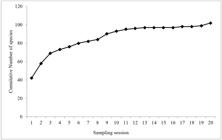
Species accumulation curve based on bird species recorded during birdwatching sessions at the Itaperi Campus, Fortaleza, Ceará, Brazil, between April 2023 and December 2024.
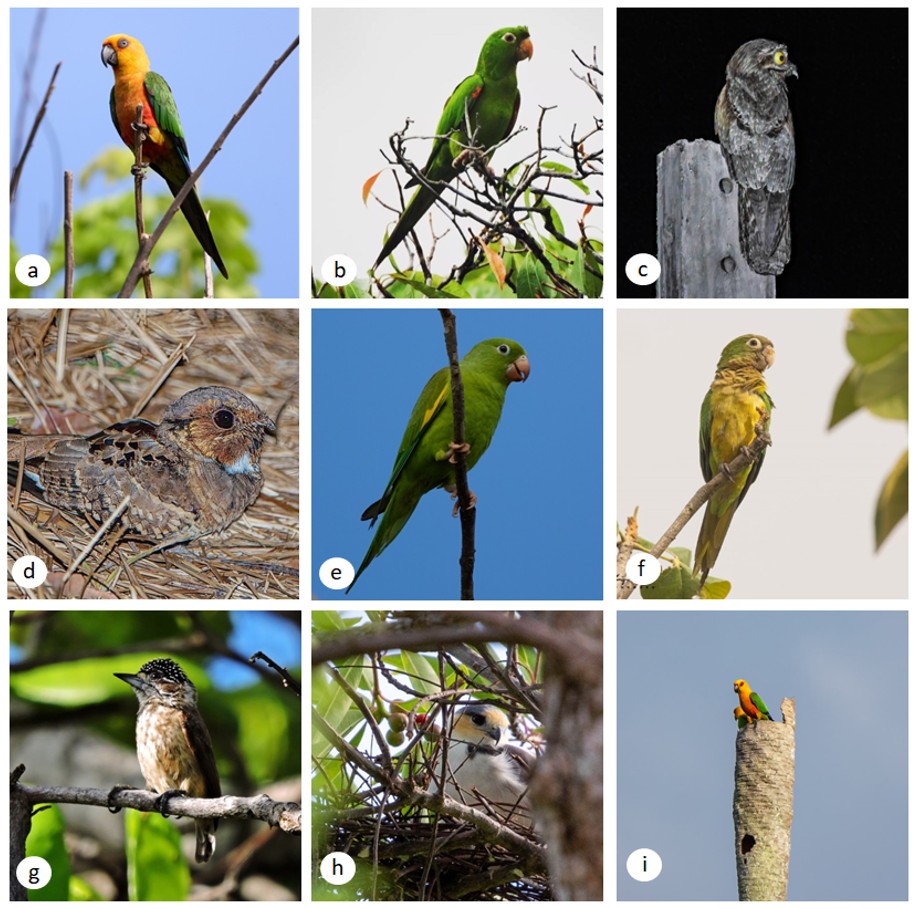
The diversity of birds recorded included species frequently associated with urban environments, Caatinga endemics, diurnal and nocturnal species, as well as birds rarely observed in the region and others threatened with extinction (Figure 3). During daytime sessions, between 32 and 61 species were observed per activity. Records included both common species, such as Tyrannus melancholicus (Vieillot, 1819) and Columba livia (Gmelin, 1789), and uncommon species, such as Psittacara leucophthalmus (Müller, 1776), considered regionally extinct in Ceará, in addition to birds of conservation interest in Ceará, such as Aratinga jandaya (Gmelin, 1788), classified as threatened in the state. Among the endemic species of the Caatinga biome recorded in the study area are Picumnus limae (Snethlage, 1924), Thamnophilus capistratus (Lesson, 1840), and Eupsittula cactorum (Kuhl, 1820). Additionally, species associated with aquatic and water-associated environments were recorded, including species such as Podilymbus podiceps (Linnaeus, 1758), Tachybaptus dominicus (Linnaeus, 1766), Nannopterum brasilianum (Gmelin, 1789), Aramus guarauna (Linnaeus, 1766), Gallinula galeata (Lichtenstein, 1818), Porphyrio martinica (Linnaeus, 1766), Jacana jacana (Linnaeus, 1766), Aramides cajaneus (Statius Müller, 1776), Certhiaxis cinnamomeus (Gmelin, 1788), Chloroceryle amazona (Latham, 1790), Megaceryle torquata (Linnaeus, 1766), Arundinicola leucocephala (Linnaeus, 1764), as well as representatives of Ardeidae, including Ixobrychus exilis (Gmelin, 1789).

Bird species recorded during birdwatching activities at the Itaperi Campus, Fortaleza, Ceará, Brazil. (a) Aratinga jandaya, a species included in Ceará’s Red List of threatened fauna; (b) Psittacara leucophthalmus, considered regionally extinct in the state, although juvenile individuals were observed; (c) Nyctibius griseus and (d) Nyctidromus albicollis, species recorded during nocturnal activities; (e) Brotogeris chiriri, one of the most frequent species, common in urban environments; (f) Eupsittula cactorum and (g) Picumnus limae, endemic species of the region; (h) Gampsonyx swainsonii on an active nest; (i) Aratinga jandaya using a palm stem cavity for nesting. Photos: (a, e, h) Renan Rodrigues Lima; (b) Régis Siqueira de Castro Teixeira; (c, i) Flávio de Queirós Carvalho; (d) Lucas de Medeiro Dib; (f) Francisco Cláudio Fernandes Alves e Silva; (g) Neilton Monteiro Pascoal Filho.
During nighttime sessions, six crepuscular or nocturnal species were recorded. Nyctidromus albicollis (Gmelin, 1789) was observed in all four sessions; Glaucidium brasilianum (Gmelin, 1788), Athene cunicularia (Molina, 1782), and Megascops choliba (Vieillot, 1817) in three; and Nyctibius griseus (Gmelin, 1789) and Tyto furcata (Temminck, 1827) in two.
The species with the highest frequency of occurrence was Vanellus chilensis (Molina, 1782), recorded in 17 out of 20 sessions, followed by C. livia, Crotophaga ani (Linnaeus, 1758), and T. melancholicus (16 each), and by Pitangus sulphuratus (Linnaeus, 1766), Thraupis sayaca (Linnaeus, 1766), E. cactorum, and Brotogeris chiriri (Vieillot, 1818) (15 each), based on the number of sessions in which they were detected.
During the activities, nests of 24 species were identified, including Gampsonyx swainsonii (Vigors, 1825), Eupetomena macroura (Gmelin, 1788), Coragyps atratus (Bechstein, 1793), Guira guira (Gmelin, 1788), P. martinica, Dendroplex picus (Gmelin, 1788), Taraba major (Vieillot, 1816), A. jandaya, Podilymbus podiceps, and M. choliba.
4. Discussion
According to data from collaborative citizen science platforms, as of February 2026 the municipality of Fortaleza had recorded 249 species on WikiAves, 282 on eBird, and 201 on iNaturalist (WikiAves, 2026; eBird, 2026; iNaturalist, 2026). At the Itaperi Campus, 102 species were recorded over two years of monitoring activities. Considering the relatively small extent of the campus’ green area, the short distance covered by observers, the limited time of each session, and the fact that the monitoring was carried out as part of university outreach and citizen science activities, it was possible to record a notable species richness in the study area, within the context of the conditions under which the activities were conducted. This illustrates the potential of structured participatory inventories as an approach for monitoring urban biodiversity (Sullivan et al., 2014; Callaghan et al., 2019). Occurrence records from citizen science initiatives can support the description of spatial and temporal patterns, particularly when based on repeated observations over time (Sullivan et al., 2014). In this study, frequency of occurrence was used as a descriptive measure of temporal consistency.
The campus functions as a “green island” embedded within a highly anthropized and fragmented urban matrix, in a municipality characterized by a pronounced reduction in remaining vegetation cover (Costa et al., 2025). In this context, remnant green areas such as the Itaperi Campus may play an important role in supporting bird assemblages (Sousa et al., 2020) and may also contribute to landscape connectivity, as bird occurrence is influenced by the proximity among green areas and the degree of isolation between habitat fragments (Oropeza-Sánchez et al., 2025). Studies in tropical cities indicate that more naturalized green spaces with lower edge proportions support greater bird diversity, particularly when associated with the presence of water bodies (Wong et al., 2023). Furthermore, freshwater environments in urban areas have been linked to increased richness of specific bird groups, particularly those dependent on aquatic habitats, underscoring the importance of structures such as the Itaperi reservoir in providing essential resources for avifauna (Zhang & Huang, 2020).
Several species were consistently recorded across nearly all months of observation, including P. sulphuratus, Coereba flaveola (Linnaeus, 1758), and T. melancholicus. These species are commonly associated with urban environments and are consistent with patterns described for urban-tolerant birds, which tend to exhibit greater tolerance to anthropogenic landscape modification (Evans et al., 2011). This pattern is consistent with the ecological characteristics typically associated with these species, such as opportunistic feeding behavior, generalist nectarivory, and broad habitat tolerance (Sick, 2001; Evans et al., 2011; Hoyos et al., 2022). Their recurrence may be attributed to their broad geographic distribution and to traits such as dietary and habitat generalism, high dispersal capacity, and greater ecological plasticity, which favor persistence in urbanized areas where suitable conditions for foraging and nesting are available (Daros et al., 2018; Hoyos et al., 2022; Mascarenhas et al., 2023; Licarião et al., 2023; Neate-Clegg et al., 2023). Frugivorous and small passerine species such as Euphonia chlorotica (Linnaeus, 1766), and T. sayaca were also regularly observed, likely due to the continuous availability of food resources provided by the plant diversity within the campus during the observation period (Oliveira et al., 2020), a pattern consistent with the tendency of frugivorous birds to respond to spatial and temporal variation in fruit availability (Sick, 2001), a behavior favored in urban environments by species with high dispersal ability and broad dietary niches (Neate-Clegg et al., 2023). The high frequency of occurrence of some species across sessions, combined with the recorded richness and the presence of taxa of conservation concern, reinforces the role of the Itaperi Campus as a relevant urban green area, as the temporal recurrence of species is considered an indicator of effective habitat use in urbanized landscapes (Evans et al., 2011). In addition, the species accumulation curve exhibited a tendency toward stabilization over time, indicating a decrease in the rate of new records throughout the sampling period.
Bird species commonly found in urban environments, as well as endemic species of the Caatinga biome recorded in the study area, highlight the ecological importance of the remaining vegetation within the campus as critical habitat for maintaining regional biodiversity, particularly in the face of urban expansion and the ongoing reduction of Caatinga remnants in Fortaleza (Almeida-Filho et al., 2020).
Some species were recorded in only one or two of the 20 sampling sessions, including Melanerpes candidus (Otto, 1796), Myiarchus tyrannulus (Statius Müller, 1776), and Myiodynastes maculatus (Statius Müller, 1776). The sporadic presence of M. candidus may be associated with its fragmented distribution in northeastern Brazil, particularly near the Caatinga, where its occurrence is considered marginal (Moura and França, 2014). M. maculatus is known to use urban areas as stopover sites during seasonal movements or as occasional breeding grounds, depending on resource availability (Vitório et al., 2019). In the case of M. tyrannulus, its occasional occurrence may relate to known migratory patterns within the Tyrannidae family, whose species frequently use urban habitats as temporary refuges during migration (Vogel et al., 2011; Ruiz-Esparza et al., 2011). These observations reinforce the role of the campus as a temporary refuge not only for resident species but also for those exhibiting seasonal or migratory behavior.
Among the species recorded at the Itaperi Campus, the Jandaia parakeet (A. jandaya), listed as threatened in Ceará’s Red List of Endangered Fauna (Ceará, 2022), represents a noteworthy record due to its conservation status. In the state of Ceará, the species is associated with the Coastal Vegetation Complex and with carnauba palm groves, exhibiting gregarious behavior and reliance on tree cavities for nesting. It also occurs in urbanized environments, such as the city of Fortaleza (Ceará, 2025). Over time, its occurrence in natural habitats has become increasingly scarce, likely due to pressures such as capture for the illegal wildlife trade and habitat loss. Its presence underscores the relevance of the campus’ remnant vegetation for bird conservation, providing essential ecological resources such as food and nesting sites (Oliveira et al., 2020). Additionally, another important record was that of P. leucophthalmus, considered regionally extinct in Ceará (Ceará, 2022). The species shows versatility in habitat use, being observed in flocks in urbanized landscapes and reproducing in natural cavities, such as tree hollows and sandstone escarpments, while maintaining populations in neighboring states, such as Piauí, Brazil, although it is considered scarce within the Caatinga domain (Ceará, 2025). It was recorded in Fortaleza, including a flock of approximately 30 individuals and a juvenile (Sousa et al., 2020; Teixeira, 2025a; Teixeira, 2025b). Such records suggest the possible establishment of a local population in Fortaleza or its surroundings, indicating that these individuals are not merely escapees from captivity.
During one of the field activities, a flock of Chrysomus ruficapillus (Vieillot, 1819) was observed in the wild. On another occasion, however, a single individual was recorded showing worn and misaligned feathers, as well as a dull plumage appearance, characteristics frequently associated with nutritional disorders and inadequate management in captive birds (Tully et al., 2010), which may indicate a history of maintenance under artificial conditions. Additionally, the isolated record may represent complementary evidence, as the species typically occurs in large flocks under natural conditions (Sick, 2001). This species is included among those most frequently involved in wildlife trafficking, as well as species such as Sporophila lineola (Linnaeus, 1758), B. chiriri, and E. cactorum, as indicated in the Federal Police guide to trafficked birds (Brasil, 2016). Previous records from the Itaperi Campus by Sousa et al. (2020) had already reported the presence of birds likely originating from captivity or escape, such as an individual of A. jandaya and Pyrrhura griseipectus Salvadori, 1900, a species listed as Critically Endangered by the IUCN Red List. These findings demonstrate the campus’ function as a temporary refuge for birds affected by illegal trade and captivity.
Although this study did not aim to conduct a systematic avifaunal survey, the diversity observed through community-based birdwatching over two years highlights the Itaperi Campus as a refuge for bird species and as a site of interest for birdwatching activities. The results suggest that formal scientific surveys could reveal an even greater number of species in the area. This occurs because such surveys involve standardized protocols and the use of complementary methods, such as line transects, mist nets, and bioacoustic monitoring, which, when combined with systematic sampling effort, increase the likelihood of recording cryptic species or those with inconspicuous habits, often under-sampled in opportunistic visual observations (Sutherland, 2006).
The contribution of the Itaperi Campus to the maintenance of urban avifauna does not represent an isolated case in Fortaleza. Although studies on urban green areas in Fortaleza are still scarce, some areas located approximately 7–10 km from the campus have been reported as relevant for species records. Despite the continued loss of green areas, initiatives such as Vem Passarinhar CE highlight the role of urban protected areas, including Parque Estadual do Cocó and Área de Relevante Interesse Ecológico (ARIE; Area of Relevant Ecological Interest) do Sítio Curió in promoting birdwatching and fostering appreciation of regional avifauna (Licarião et al., 2022). Parque Estadual do Cocó, which represents one of the largest protected urban green areas in northern and northeastern Brazil (Perea-Ardila, 2025), harbors a diversity of ecosystems, including mangrove, restinga, and tabuleiro vegetation, and a total richness of 160 bird species has been reported, considering both primary and secondary data (ARCADIS, 2020). In this context, when considering only the primary records obtained during community-based activities, the number of species detected at the Itaperi Campus, despite its smaller spatial extent, underscores the relevance of this area for local avifauna. Given the limited availability of published scientific studies on ARIE do Sítio Curió, currently accessible avifaunal records derive primarily from citizen science platforms such as WikiAves, which indicate the occurrence of at least 45 species (WikiAves, 2026). The area covers approximately 57 ha and is embedded within the urban matrix, associated with a remnant of native vegetation related to the Atlantic Forest (Braga et al., 2025). In a context where urban avifauna in green areas of Fortaleza remains insufficiently documented, an inventory conducted at Parque Rachel de Queiroz, which is characterized by the presence of artificial wetlands and recently established urban vegetation, recorded 32 species distributed across 10 orders and 17 families, even with limited sampling effort (Gomes et al., 2025), demonstrating that different urban green fragments within the city maintain noteworthy avifaunal richness.
The results obtained emphasize the importance of initiatives promoting bird observation with community participation, reinforcing the role of citizen science in documenting avifauna and, in this case, in valuing urban green areas. The experience described in this study demonstrates that educational and participatory approaches foster a closer relationship between people and local fauna, generating ecologically relevant data. This process strengthens the foundation for conservation strategies that engage society and promote the protection of urban green spaces. Such initiatives are particularly relevant in cities like Fortaleza, which face unplanned urban growth and progressive loss of vegetation cover, making the preservation of remaining fragments essential for maintaining local fauna (Costa et al., 2025). In this context, the identification of species of conservation interest and the mapping of their occurrence on campus, based on the monitoring data, provide a technical basis for institutional environmental planning. These data allow for the identification of priority areas for conservation within the university, ensuring that future infrastructure expansions consider the maintenance of these ecological refuges.
Beyond its contribution to species records, the project also has relevant implications from the perspective of environmental education and social engagement. The presence of multiple observers working simultaneously along the route expanded the visual and auditory coverage of the sampled area, potentially increasing the likelihood of detecting species in different microhabitats. The literature shows that practical birdwatching experiences within the context of citizen science provide favorable settings for the development of ecological awareness and for valuing urban remnants (Cooper et al., 2015; Licarião et al., 2022). In metropolitan contexts such as Fortaleza, characterized by intense anthropogenic pressure and the progressive reduction of green areas (Costa et al., 2025), initiatives of this nature can help bring society closer to scientific knowledge and strengthen the perception of the environmental value of these fragments. In this sense, citizen science is not limited to data generation, but also represents a social engagement strategy with the potential to support participatory urban conservation actions.
From a qualitative standpoint, the project’s dynamics demonstrated that the diversity of participant profiles facilitated knowledge exchange and enhanced engagement with the local avifauna. The validation of records by supervisors at the end of each session proved to be an effective strategy for reconciling the participatory character of the activity with the level of rigor required for species documentation. Within the context of this study, group heterogeneity, when combined with appropriate technical guidance and continuity of activities, did not compromise record consistency. The experience accumulated over the two-year monitoring period therefore suggests that structured participatory initiatives with field supervision can generate ecologically meaningful information, particularly when implemented on a continuous basis.
In this context, the project demonstrates a concrete integration of research, university extension, and local-scale environmental monitoring. By organizing regular activities within an urban fragment suitable for birdwatching, the adopted model illustrates how university campuses can function as strategic platforms for integrating scientific knowledge production, academic training, and community engagement. The consolidation of initiatives of this kind expands the institutional role of the university in promoting educational practices and strengthening the interface between science and society in urban environments.
5. Conclusion
The birdwatching activities carried out at the Itaperi Campus highlight the potential of participatory approaches to generate relevant data on urban avifauna. Throughout the study period, taxa of conservation interest, including threatened species, were recorded, reinforcing the value of such initiatives as tools for environmental education and scientific knowledge production. Despite the limited sampling effort, the results suggest that urban green areas, such as the Itaperi Campus, can function as strategic spaces for both conservation and community engagement within the context of this study, while also underscoring the importance of the area as a refuge within an intensely modified urban matrix.
The results indicate that structured citizen science initiatives can simultaneously contribute to urban biodiversity monitoring and to the strengthening of environmental education. The experience conducted at the Itaperi Campus suggests that green areas embedded within metropolitan contexts may function as strategic spaces, considering the methodological approach adopted, based on participatory monitoring and species occurrence records, both for the production of ecological knowledge and for community engagement. This model shows potential for replication across other university campuses and urban fragments, underscoring the importance of integrating universities and society in the recognition and conservation of natural remnants in rapidly expanding cities.
The data generated through the monitoring effort may further inform future management and environmental planning strategies at the campus scale, as well as contribute to the development of guidelines aimed at the conservation of urban green spaces in Fortaleza, by providing information on species composition, frequency of occurrence, and the presence of taxa of conservation concern.
Acknowledgements
We extend our gratitude to the Bem-te-vi Birdwatching group for their support during the bird observation activities, and to all participants who contributed with their records. We also thank photographers Renan Rodrigues, Flávio Queirós, and Cláudio Fernandes for kindly providing their images for inclusion in this article. Our appreciation also goes to the Pro-Reitoria de Extensão (PROEX/UECE) for supporting the scholarships granted to the undergraduate students responsible for this project.
Data Availability Statement
All data generated and analyzed during this study are included in this article.
References
-
ALENCAR, V.B., MEIRA, S.A. and MENDES, L.M.S., 2017. Áreas de preservação permanente no Campus do Itaperi e seu entorno (Fortaleza, Ceará): o uso de técnicas de geoprocessamento no auxílio à proteção ambiental. Planeta Amazônia: Revista Internacional de Direito Ambiental e Políticas Públicas, vol. 9, no. 9, pp. 45-59. https://doi.org/10.18468/planetaamazonia.2017n9.p45-59
» https://doi.org/10.18468/planetaamazonia.2017n9.p45-59 -
ALMEIDA-FILHO, M.A., SOUZA, J.C., RODRIGUES, G.S.R., MENDES, R.M.S. and PANTOJA, L.D.M., 2020. Potencial de trilhas como prática de educação ambiental em unidade de conservação dentro de um campus universitário no município de Fortaleza, CE. Scientia Plena, vol. 16, no. 9, pp. 1-10. https://doi.org/10.14808/sci.plena.2020.099901
» https://doi.org/10.14808/sci.plena.2020.099901 -
ARAUJO, R.O., LUCENA, E.M.P., BONILLA, O.H., VIEIRA, M.I.C. and SAMPAIO, V.D.S., 2021. Floristic composition of an urban coastal forest fragment at the State University of Ceará, Fortaleza, Brazil. Rodriguésia, vol. 72, pp. e00582020. https://doi.org/10.1590/2175-7860202172085
» https://doi.org/10.1590/2175-7860202172085 -
ARCADIS, 2020 [viewed 2 March 2026]. Plano de manejo do Parque Estadual do Cocó: produto 22 – plano de manejo consolidado [online]. Fortaleza: Secretaria do Meio Ambiente do Estado do Ceará. Available from: https://www.sema.ce.gov.br/wp-content/uploads/sites/36/2021/03/PMPC_01.pdf
» https://www.sema.ce.gov.br/wp-content/uploads/sites/36/2021/03/PMPC_01.pdf -
BRAGA, F.L.P., SANTOS, J.O., GORAYEB, A. and BARBOSA, P.J., 2025. A ARIE do Sítio Curió, Fortaleza-Ceará: desafios e potencialidades socioeconômicas em contextos urbanos. Olam. Ciência & Tecnologia, vol. 20, no. 1, pp. 279-289. https://doi.org/10.5281/zenodo.18064055
» https://doi.org/10.5281/zenodo.18064055 - BRASIL. Ministério da Justiça. Polícia Federal, 2016. Guia de identificação de aves traficadas no Brasil Florianópolis: BECONN, Produção de Conteúdo, 200 p.
-
CALLAGHAN, C.T., POORE, A.G.B., MAJOR, R.E., ROWLEY, J.J.L. and CORNWELL, W.K., 2019. Optimizing future biodiversity sampling by citizen scientists. Proceedings. Biological Sciences, vol. 286, no. 1912, pp. 20191487. https://doi.org/10.1098/rspb.2019.1487 PMid:31575364.
» https://doi.org/10.1098/rspb.2019.1487 -
CEARÁ, 2025 [viewed 30 April 2026]. Livro Vermelho dos Animais Ameaçados de Extinção do Ceará: Aves Fortaleza: Governo do Estado do Ceará. Available from: https://www.sema.ce.gov.br/lista-vermelha-de-especies-ameacadas-da-fauna-do-ceara
» https://www.sema.ce.gov.br/lista-vermelha-de-especies-ameacadas-da-fauna-do-ceara -
CEARÁ. Secretaria do Meio Ambiente, 2022 [viewed 27 August 2026]. Portaria nº 145/2022. Dispõe sobre a lista vermelha das aves ameaçadas de extinção do Ceará Diário Oficial do Estado do Ceará, Fortaleza, 28 set., ano XIV, no. 196, Seção 3, pp. 62. Available from: https://www.rcambiental.com.br/ver-ato/PORT-SEMA-CE-145-2022/01937da0-50de-7351-a840-b478ba3e1aea
» https://www.rcambiental.com.br/ver-ato/PORT-SEMA-CE-145-2022/01937da0-50de-7351-a840-b478ba3e1aea -
COOPER, C., LARSON, L.R., HALE, B.W., ROBERTS, N.S. and CHARLES, D., 2015. Are wildlife recreationists conservationists? Linking hunting, birdwatching, and pro-environmental behavior. The Journal of Wildlife Management, vol. 79, no. 3, pp. 446-457. https://doi.org/10.1002/jwmg.855
» https://doi.org/10.1002/jwmg.855 -
COSTA, M.L.F., SANTOS, J.O., QUEIROZ, L.R. and MORO, M.F., 2025. Quanto sobra de verde em uma metrópole? Um estudo sobre a cobertura vegetal remanescente em Fortaleza, Ceará, Brasil. Sociedade & Natureza, vol. 37, no. 1, pp. e75295. https://doi.org/10.14393/SN-v37-2025-75295
» https://doi.org/10.14393/SN-v37-2025-75295 -
DAROS, H., DUTRA, W.B. and DUCA, C., 2018. Breeding biology of Tyrannus melancholicus (Aves: Tyrannidae) in a restinga reserve of southeastern Brazil. Zoologia, vol. 35, pp. e24569. https://doi.org/10.3897/zoologia.35.e24569
» https://doi.org/10.3897/zoologia.35.e24569 - DEL HOYO, J., ELLIOTT, A. and SARGATAL, J., 1996. Handbook of the Birds of the World Barcelona: Lynx Edicions, vol. 3: Hoatzin to Auks.
-
EBIRD, 2026 [viewed 3 March 2026]. eBird: an online database of bird distribution and abundance [online]. Available from: https://www.ebird.org
» https://www.ebird.org -
EVANS, K.L., CHAMBERLAIN, D.E., HATCHWELL, B.J., GREGORY, R.D. and GASTON, K.J., 2011. What defines an urban bird? Global Change Biology, vol. 17, no. 1, pp. 32-44. https://doi.org/10.1111/j.1365-2486.2010.02247.x
» https://doi.org/10.1111/j.1365-2486.2010.02247.x -
FORTI, L.R., PASSETTI, A.M.P.R.S., OLIVEIRA, T., FREITAS, K., COSTA, G.F., MAIA, J.V.L., QUEIROS, A., LOPES, M.A.D.F. and SZABO, J.K., 2024. Stronger together: different community science platforms all contribute to wildlife research. Wildlife Research, vol. 51, no. 8, pp. WR23160. https://doi.org/10.1071/WR23160
» https://doi.org/10.1071/WR23160 -
FRANZ, I., CAPPELATTI, L. and BARROS, M.P., 2010. Bird community in a forest patch isolated by the urban matrix at the Sinos River basin, Rio Grande do Sul State, Brazil, with comments on the possible local defaunation. Brazilian Journal of Biology, vol. 70, no. 4, suppl., pp. 1137-1148. https://doi.org/10.1590/S1519-69842010000600002 PMid:21225154.
» https://doi.org/10.1590/S1519-69842010000600002 -
GOMES, A.J.C.F., SANTOS, A.B.C., PEREIRA, Y.L., FERREIRA, L.B. and SALES JÚNIOR, L.G., 2025. Levantamento da diversidade de aves do Parque Rachel de Queiroz em Fortaleza – CE. Missões, vol. 11, no. 3, pp. 01-12. https://doi.org/10.62236/missoes.v11i3.504
» https://doi.org/10.62236/missoes.v11i3.504 -
HAMMOUD, R., COOPER, C., TAYLOR, H., COLLINGE, S. and MCGREAL, R., 2022. Smartphone-based ecological momentary assessment reveals mental health benefits of birdlife. Scientific Reports, vol. 12, no. 1, pp. 17589. https://doi.org/10.1038/s41598-022-20207-6 PMid:36302928.
» https://doi.org/10.1038/s41598-022-20207-6 -
HARKNESS, J., 2023. I help children explore the connection to nature that saved my life. BMJ (Clinical Research Ed.), vol. 383, pp. 2790. https://doi.org/10.1136/bmj.p2790 PMid:38164634.
» https://doi.org/10.1136/bmj.p2790 -
HOYOS, S.L., FANJUL, M.E. and ALDERETE, M., 2022. Aspectos de la biología reproductiva del Benteveo (Pitangus sulphuratus) bajo diferentes grados de urbanización en un aglomerado urbano del Noroeste de Argentina. El Hornero, vol. 37, no. 2, pp. 195-206. https://doi.org/10.56178/eh.v37i2.410
» https://doi.org/10.56178/eh.v37i2.410 -
INATURALIST, 2026 [viewed 3 March 2026]. iNaturalist: a community for biodiversity observations [online]. Available from: https://www.inaturalist.org
» https://www.inaturalist.org - LICARIÃO, C., TOSCANO, I., AMARAL, L., ALBANO, C., FREITAS, V., BEZERRA, L.E. and FERNANDES-FERREIRA, H. Zoneamento do turismo de observação de aves do Ceará Fortaleza: INOVAFAUNA, Programa Cientista Chefe em Meio Ambiente do Ceará, FUNCAP, 2023, 55 p.
-
LICARIÃO, C.B.L., RODRIGUES, G.S.R. and SOUSA, S.A., 2022. “Vem passarinhar CE”: a observação de aves e o papel na conservação de áreas protegidas no estado do Ceará. Revista Brasileira de Ecoturismo, vol. 15, no. 3, pp. 469-486. https://doi.org/10.34024/rbecotur.2022.v15.13613
» https://doi.org/10.34024/rbecotur.2022.v15.13613 -
LIMA, S.M. and GARCEZ, D.S., 2017. Áreas verdes públicas urbanas e sua relação com a melhoria da qualidade de vida: um estudo de caso em um parque ecológico urbano na cidade de Fortaleza (Ceará, Brasil). Revista Brasileira de Ciências Ambientais, no. 43, pp. 140-151. https://doi.org/10.5327/Z2176-947820170126
» https://doi.org/10.5327/Z2176-947820170126 -
MASCARENHAS, R., MEIRELLES, P.M. and BATALHA-FILHO, H., 2023. Urbanization drives adaptive evolution in a Neotropical bird. Current Zoology, vol. 69, no. 5, pp. 607-619. https://doi.org/10.1093/cz/zoac066 PMid:37637315.
» https://doi.org/10.1093/cz/zoac066 -
MOURA, P.T.S. and FRANÇA, L.F., 2014. Refining the distribution of the White Woodpecker (Melanerpes candidus) in the Caatinga biome. Revista Brasileira de Ornitologia, vol. 22, no. 1, pp. 32-34. https://doi.org/10.1007/BF03544229
» https://doi.org/10.1007/BF03544229 -
NEATE-CLEGG, M.H.C., TONELLI, B.A., YOUNGFLESH, C., WU, J.X., MONTGOMERY, G.A., ŞEKERCIOĞLU, Ç.H. and TINGLEY, M.W., 2023. Traits shaping urban tolerance in birds differ around the world. Current Biology : CB, vol. 33, no. 9, pp. 1677-1688.e6. https://doi.org/10.1016/j.cub.2023.03.024 PMid:37023752.
» https://doi.org/10.1016/j.cub.2023.03.024 -
OLIVEIRA, G.G.L., LUCENA, E.M.P. and SAMPAIO, V.S., 2020. Levantamento florístico da área urbanizada do Campus Itaperi da Universidade Estadual do Ceará. Revista Brasileira de Geografia Física, vol. 13, no. 3, pp. 1177-1193. https://doi.org/10.26848/rbgf.v13.3.p1177-1193
» https://doi.org/10.26848/rbgf.v13.3.p1177-1193 -
OROPEZA-SÁNCHEZ, M.T., SOLANO-ZAVALETA, I., CUANDÓN-HERNÁNDEZ, W.L., MARTÍNEZ-VILLEGAS, J.A., PALOMERA-HERNÁNDEZ, V. and ZÚÑIGA-VEGA, J.J., 2025. Urban green spaces with high connectivity and complex vegetation promote occupancy and richness of birds in a tropical megacity. Urban Ecosystems, vol. 28, no. 1, pp. 50. https://doi.org/10.1007/s11252-024-01612-3
» https://doi.org/10.1007/s11252-024-01612-3 -
PACHECO, J.F., SILVEIRA, L.F., ALEIXO, A., AGNE, C.E., BENCKE, G.A., BRAVO, G.A., BRITO, G.R.R., COHN-HAFT, M., MAURÍCIO, G.N., NAKA, L.N., OLMOS, F., POSSO, S., LEES, A.C., FIGUEIREDO, L.F.A., CARRANO, E., GUEDES, R.C., CESARI, E., FRANZ, I., SCHUNCK, F. and PIACENTINI, V.Q., 2021. Annotated checklist of the birds of Brazil by the Brazilian Ornithological Records Committee – second edition. Ornithology Research, vol. 29, no. 2, pp. 94-105. https://doi.org/10.1007/s43388-021-00058-x
» https://doi.org/10.1007/s43388-021-00058-x -
PEREA-ARDILA, M.A., 2025. Caracterização espectral da cobertura do solo do Parque Estadual do Cocó a partir de imagens CBERS-4A. Revista Ibérica de Sistemas e Tecnologias de Informação, no. 59, pp. 83-97. https://doi.org/10.62059/LatArXiv.preprints.512
» https://doi.org/10.62059/LatArXiv.preprints.512 -
RAMOS, V.B., PONTES, A.V.D., ARAUJO, R.O., PINHEIRO, L.F., SILVEIRA, A.P. and LUCENA, E.M.P., 2025. Floristic Reproductive Phenology of the State University of Ceará, Itaperi Campus, Fortaleza-CE. Revista Brasileira de Geografia Física, vol. 18, no. 4, pp. 3028-3046. https://doi.org/10.26848/rbgf.v18.4.p3028-3046
» https://doi.org/10.26848/rbgf.v18.4.p3028-3046 - RUIZ-ESPARZA, J., ROCHA, P.A., RUIZ-ESPARZA, D.P.B., RIBEIRO, A.S. and FERRARI, S.F., 2011. Migratory birds in the semi-arid Caatinga scrublands of northeastern Brazil: diversity and seasonal patterns. Ornitología Neotropical, vol. 22, pp. 15-24.
-
SANTOS, A.B.C., ROCHA, A.L.C.V., LIMA, L.H. and BONILLA, O.H., 2023 [viewed 30 April 2026]. Vida e morte anunciada de um corpo de água urbano: Lagoa da UECE no Campus do Itaperi – Fortaleza – Ceará. In: Anais da Semana Universitária da Universidade Estadual do Ceará, Fortaleza, Brasil; 2023; Fortaleza. Fortaleza: Universidade Estadual do Ceará. Available from: https://www.uece.br/propgpq/home/servicos-e-informativos/anais-da-semana-universitaria
» https://www.uece.br/propgpq/home/servicos-e-informativos/anais-da-semana-universitaria - SICK, H., 2001. Ornitologia brasileira 3. ed. Rio de Janeiro: Nova Fronteira. 912 p.
-
SILVA, H.G. and REYES, E.A., 2010. Breve historia de la observación de aves en México en el siglo XX y principios del siglo XXI. Huitzil, vol. 11, no. 1, pp. 9-20. https://doi.org/10.28947/hrmo.2010.11.1.109
» https://doi.org/10.28947/hrmo.2010.11.1.109 -
SILVA, L.B., 2024. Frugivory and primary seed dispersal of Elaeis guineensis by birds of prey. Brazilian Journal of Biology, vol. 84, pp. e256937. https://doi.org/10.1590/1519-6984.256937 PMid:35416851.
» https://doi.org/10.1590/1519-6984.256937 -
SOUSA, L.C., CAMPOS, E.M.S.Q., SOUSA, A.R., PASCOAL FILHO, N.M., BELEZA, A.J.F., MARQUES, A.R., TEIXEIRA, R.S.C. and MACIEL, W.C., 2020. Área verde e açude do Campus do Itaperi da Universidade Estadual do Ceará: refúgio para aves de vida livre ou oriundas de escape. Brazilian Journal of Development, vol. 6, no. 12, pp. 103403-103412. https://doi.org/10.34117/bjdv6n12-734
» https://doi.org/10.34117/bjdv6n12-734 -
SULISTIO, F.R., RUMIDIN, R. and PRAYITNO, A., 2023. Perencanaan jalur interpretasi birdwatching di Hutan Lindung Angke Kapuk, Jakarta (Birdwatching interpretive trail planning in Angke Kapuk protected forest, Jakarta). Jurnal Nusa Sylva, vol. 23, no. 2, pp. 88-102. https://doi.org/10.31938/jns.v23i2.724
» https://doi.org/10.31938/jns.v23i2.724 -
SULLIVAN, B.L., AYCRIGG, J.L., BARRY, J.H., BONNEY, R.E., BRUNS, N., COOPER, C.B., DAMOULAS, T., DHONDT, A.A., DIETTERICH, T., FARNSWORTH, A., FINK, D., FITZPATRICK, J.W., FREDERICKS, T., GERBRACHT, J., GOMES, C., HOCHACHKA, W.M., ILIFF, M.J., LAGOZE, C., LA SORTE, F.A., MERRIFIELD, M., MORRIS, W., PHILLIPS, T.B., REYNOLDS, M., RODEWALD, A.D., ROSENBERG, K.V., TRAUTMANN, N.M., WIGGINS, A., WINKLER, D.W., WONG, W.K., WOOD, C.L. and KELLING, S., 2014. The eBird enterprise: an integrated approach to development and application of citizen science. Biological Conservation, vol. 169, pp. 31-40. https://doi.org/10.1016/j.biocon.2013.11.003
» https://doi.org/10.1016/j.biocon.2013.11.003 - SUSHINSKY, J.R., RHODES, J.R., SHANAHAN, D.F., POSSINGHAM, H.P. and FULLER, R.A., 2017. Maintaining experiences of nature as a city grows. Ecology and Society, vol. 22, no. 3, pp. 22. https://doi.org/10.5751/ES-09454-220322.
-
SUTHERLAND, W.J., 2006. Ecological census techniques 2nd ed. Cambridge: Cambridge University Press. https://doi.org/10.1017/CBO9780511790508
» https://doi.org/10.1017/CBO9780511790508 -
TAYLOR, L., TAYLOR, C. and DAVIS, A., 2013. The impact of urbanisation on avian species: the inextricable link between people and birds. Urban Ecosystems, vol. 16, no. 3, pp. 481-498. https://doi.org/10.1007/s11252-012-0283-y
» https://doi.org/10.1007/s11252-012-0283-y -
TEIXEIRA, R.S., 2025a [viewed 27 August 2026]. [WA7057679, Psittacara leucophthalmus (Statius Müller, 1776)]. WikiAves – A Enciclopédia das Aves do Brasil, 2023 Available from: http://www.wikiaves.com/7057679
» http://www.wikiaves.com/7057679 -
TEIXEIRA, R.S., 2025b [viewed 27 August 2026]. [WA7057710, Psittacara leucophthalmus (Statius Müller, 1776)]. WikiAves – A Enciclopédia das Aves do Brasil, 2025 Available from: http://www.wikiaves.com/7057710
» http://www.wikiaves.com/7057710 - TULLY, T.N., DORRESTEIN, G.M. and JONES, A.K., 2010. Handbook of avian medicine 2nd ed. Oxford: Butterworth-Heinemann. 464 p.
-
VITÓRIO, J.G., FRENEDOZO, R.C. and BARBOSA, K.V.C., 2019. Habitat use and home range of a migratory bird, Myiodynastes maculatus solitarius, in an urban park in the Atlantic Forest, Brazil. Revista Brasileira de Ornitologia, vol. 27, no. 2, pp. 115-121. https://doi.org/10.1007/BF03544455
» https://doi.org/10.1007/BF03544455 -
VOGEL, H.F., METRI, R., ZAWADZKI, C.H. and MOURA, M.O., 2011. Avifauna from a campus of Universidade Estadual do Centro-Oeste, Guarapuava, Paraná State, Brazil. Acta Scientiarum. Biological Sciences, vol. 33, no. 2, pp. 197-207. https://doi.org/10.4025/actascibiolsci.v33i2.7710
» https://doi.org/10.4025/actascibiolsci.v33i2.7710 -
WIKIAVES, 2026 [viewed 3 March 2026]. WikiAves, a enciclopédia das aves do Brasil [online]. Available from: http://www.wikiaves.com.br/
» http://www.wikiaves.com.br/ -
WONG, J.S., SOH, M.C., LOW, B.W. and BIRCH, K.H., 2023. Tropical bird communities benefit from regular-shaped and naturalised urban green spaces with water bodies. Landscape and Urban Planning, vol. 231, pp. 104644. https://doi.org/10.1016/j.landurbplan.2022.104644
» https://doi.org/10.1016/j.landurbplan.2022.104644 -
ZHANG, Z. and HUANG, G., 2020. How do urban parks provide bird habitats and birdwatching service? Evidence from Beijing, China. Remote Sensing (Basel), vol. 12, no. 19, pp. 3166. https://doi.org/10.3390/rs12193166
» https://doi.org/10.3390/rs12193166
Edited by
-
Editor:
Takako Matsumura Tundisi