 Unraveling allometric relationships of fish species in streams of southwestern Amazon
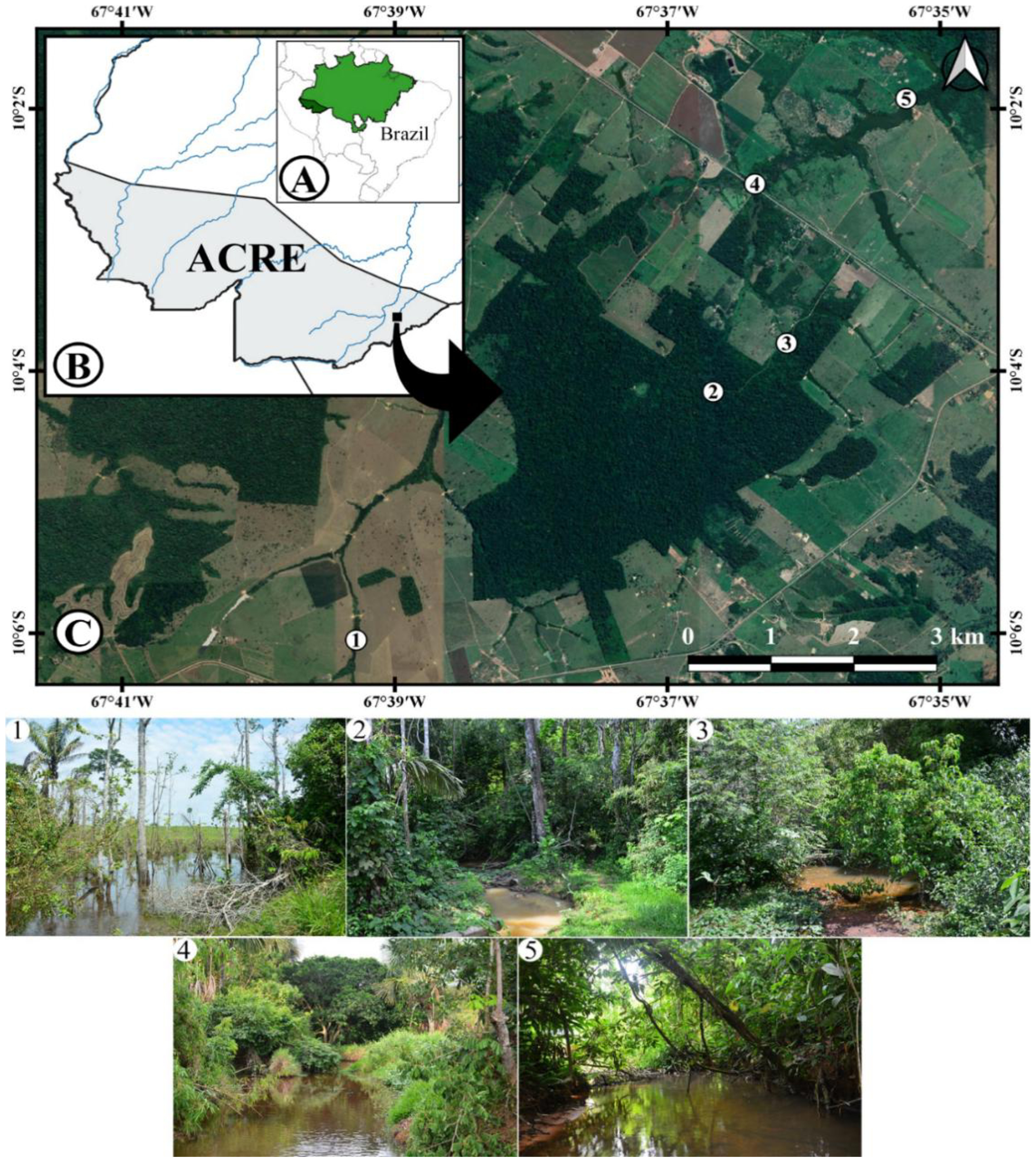
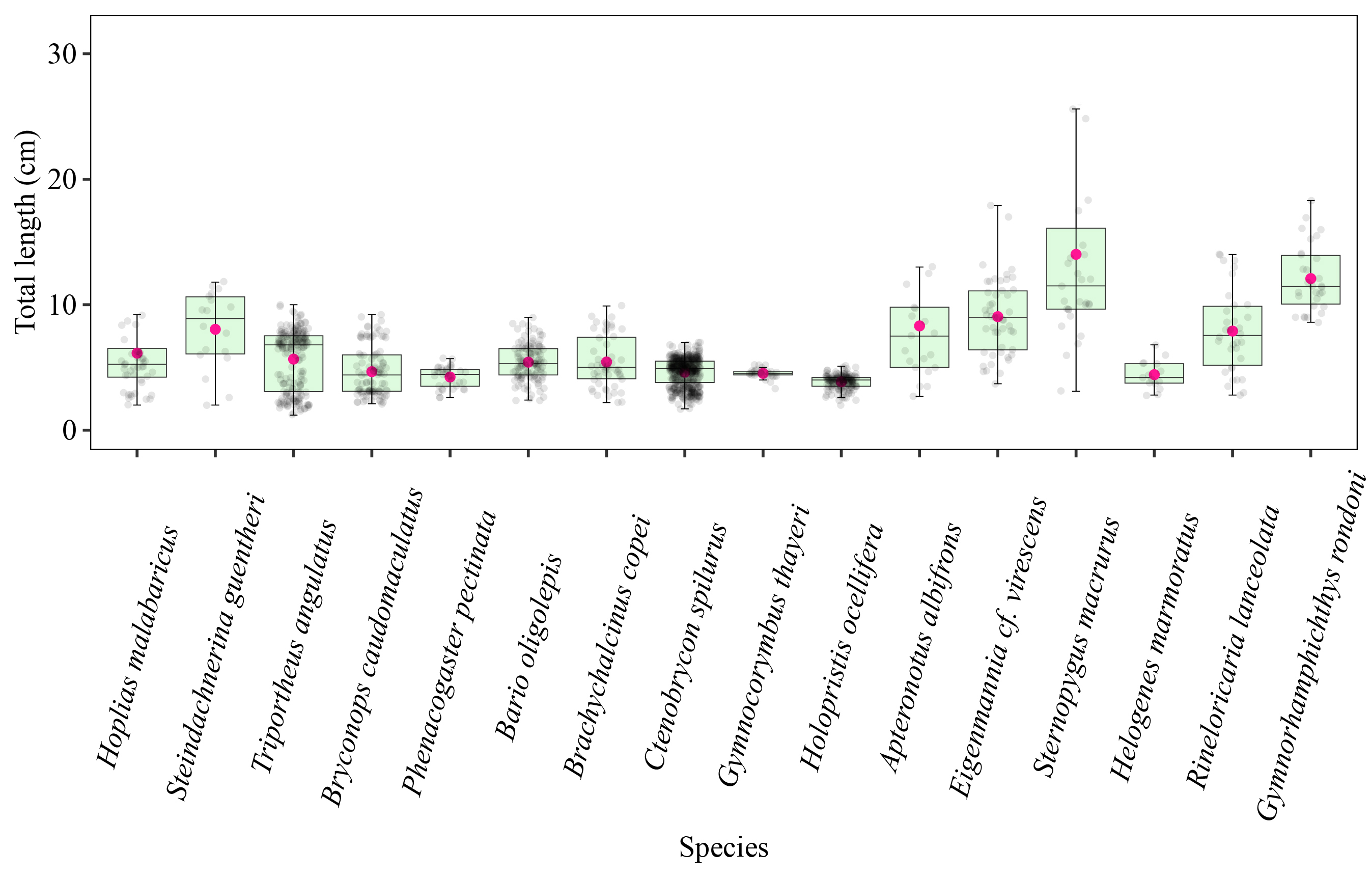
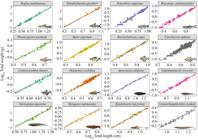
In this study, we analyzed a total of 1,354 individuals belonging to 16 species, distributed across three orders (Characiformes, Siluriformes, and Gymnotiformes), collected bimonthly, between August 2016 and July 2018, at five sampling sites in the Quinoá stream system. We present new weight-length relationship data for nine species (Triportheus angulatus, Bryconops caudomaculatus, Holopritis ocellifera, Gymnocorymbus thayeri, Apteronotus albifrons, Sternopygus macrurus, Helogenes marmoratus, Rineloricaria lanceolata, and Gymnorhamphichthys rondoni) from southwestern Amazonia, Acre State, northern Brazil. Length-weight relationships were estimated through linear regression after logarithmic transformation of the data, and a Student’s t-test was applied to test the null hypothesis that the allometric coefficient does not differ statistically from b = 3. Total length (TL, cm) ranged from 1.2 to 31.5 cm and total weight (TW, g) from 0.02 to 92.5 g. The intercept (a) of the length-weight relationship ranged from 0.0068 to 0.063, the regression slope (b) from 2.46 to 3.28, and the coefficient of determination (R2) from 0.91 to 0.99. Negative allometric growth was observed in 68.8% of the species, positive allometric growth in 25.0%, and only 6.3% exhibited isometric growth. Elongated species, particularly Gymnotiformes and some Siluriformes, showed a negative allometric pattern, whereas species such as Steindachnerina guentheri, Bario oligolepis, and Holopristis ocellifera exhibited positive allometric growth. Our findings reinforce that environmental variation in Amazonian streams influences the length-weight relationship patterns of fish species, highlighting the importance of considering analytical factors such as sampling methods and temporal scale when comparing studies. Overall, the data generated contribute to the knowledge of the ichthyofauna of the Acre state, as well as provide support for ecological studies, management of forage species, and conservation of Amazonian aquatic ecosystems.
Keywords:
Acre; amazonian ichthyofauna; aquatic ecosystems; growth patterns; igarapé Quinoá
 Thumbnail
 Thumbnail
 Thumbnail