 Eco-enviro analysis of climate change impacts on tropical aquaculture: assessing economic risks to food security and livelihoods in freshwater ecosystems
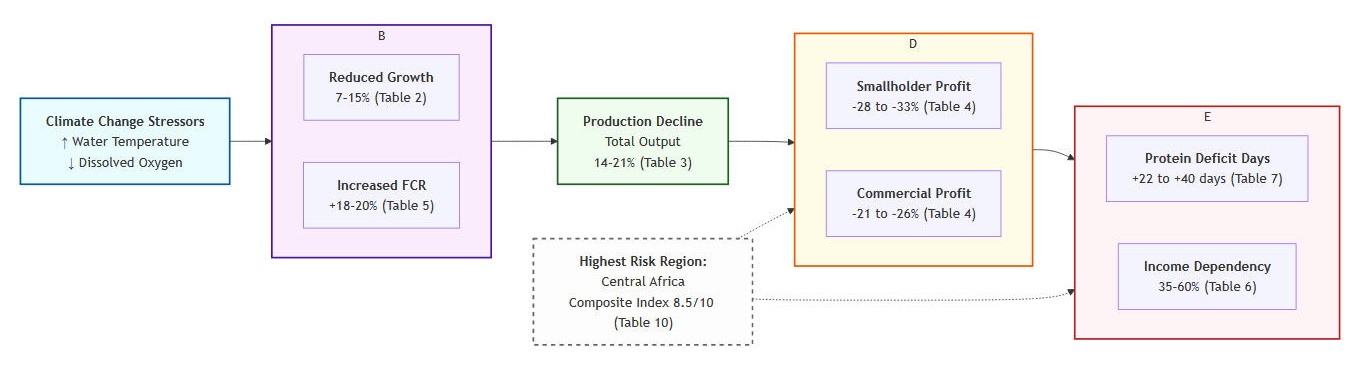
Tropical freshwater aquaculture is immense significance for ensuring food security and livelihood for large numbers of people in the tropical parts of the world. This study conducted to evaluate the economic and environmental effects of climate change on tropical freshwater aquaculture and risks on food security and livelihood. By taking an integrated approach and comparative study in major areas of Southeast Asia, Central Africa, and Latin America, the effect of the RCP 6.0senario was evaluated till 2050 in this study. The results show a considerable reduction in water quality, with a rise in water temperature by 1.8 to 2.1 °C and a reduction in dissolved oxygen concentration. This scenario has resulted in a reduction in growth rate performance of key species like tilapia and carp by 7 to 15%. At a macro-level, the output will affected by a decline of 14 to 21%, with the highest impact on Southeast Asia, specifically a reduction of 21.2%. For a macro-level economic assessment, the profit margins, particularly small-scale farming, will be highly impacted, specifically by a reduction of 28 to 33%. The principal method through which this economic loss will be generated is through the reduction in efficiency, specifically a rise in feed conversion ratio by 18-20%. The benefits social impact of these trends is severe. This is because 35-60% income dependence on this segment puts them under high risk. The findings show that the number of days of protein deficiency per year for households would rise between 22-40 days. The Composite Risk Index shows that Central Africa has high vulnerability with a score of 8.5 on a scale of 10 based on high sensitivity and extremely low capacity to adapt to climate change. This paper shows how important is to develop equity-based adaptation programs to support smallholder farmers and to invest in cost-effective technologies and breeding.
Keywords:
tropical aquaculture; climate change; economic risk; food security
 Thumbnail