 Exploring the population ecological characteristics and the stock status of mitre squid (Uroteuthis chinensis Gray, 1849) in Belitung waters, Indonesia
Abstract
The intensive fishing and lack of data for squid fisheries in Belitung waters have increased the risk of stock population decline, which could lead to large economic losses. Comprehensive studies on the biological aspects and stock status of squid were crucial to developing some management recommendations. This study investigated several population ecological characteristics (size distribution, length-weight relationship, condition factors, maturity stages, length at maturity, and growth parameters), the stock status, and the biological reference points of mitre squid (Uroteuthis chinensis Gray, 1849) in Belitung waters. The squid’s biological data were collected from August 2023 to March 2024. The stock status was investigated by several approaches, including length-converted catch-curve (LCC), yield per recruit (YPR) analysis, and length-based spawning potential ratio (LB-SPR). This study revealed that the mean size of male and female squid captured by squid jig was 16.22 ± 6.72 cm and 14.23 ± 3.65 cm (Mean of mantle length ± standard deviation), with the length at first maturity (Lm50) of 19 cm for males and 12 cm for females. Female gonadally mature squid were found throughout the year, with the largest proportion in January (93%). The overfishing condition of U. chinensis has occurred based on the current exploitation level for male (Ecur: 0.63; Fcur: 2.61 year-1) and female (Ecur: 0.72; Fcur: 4.39 year-1) that exceeds both the optimal exploitation rate (Eopt=0.5) and the fishing mortality given the maximum yield per recruit (Male Fmax: 2.08 year-1; Female Fmax: 3.35 year-1). Recruitment overfishing has also occurred based on the current spawning potential ratio of 18%. Reducing the fishing trips by 24%, applying a season closure in January, and enlarging the selectivity to 15 cm were recommended to raise the squid stock and ensure the sustainability of squid fisheries in Belitung waters.
Keywords:
biological reference point; overfishing; season closure; squid jig
Resumo
A pesca intensiva e a falta de dados sobre a pesca de lula nas águas de Belitung aumentaram o risco de declínio da população dos estoques, o que poderia levar a grandes perdas econômicas. Estudos abrangentes sobre os aspectos biológicos e o status dos estoques de lula foram cruciais para a formulação de algumas recomendações de manejo. Este estudo investigou várias características ecológicas da população (distribuição de tamanho, relação comprimento-peso, fatores de condição, estágios de maturidade, comprimento na maturidade e parâmetros de crescimento), o status do estoque e os pontos de referência biológicos da lula-mitra (Uroteuthis chinensis Gray, 1849) nas águas de Belitung. Os dados biológicos da lula foram coletados de agosto de 2023 a março de 2024. O status do estoque foi avaliado por meio de diversas abordagens, incluindo curva de captura convertida pelo comprimento (LCC), análise de rendimento por recruta (YPR) e razão potencial de desova baseada em comprimento (LB-SPR). Esse estudo revelou que o tamanho médio das lulas machos e fêmeas capturadas pelo gabarito de lula foi de 16,22 ± 6,72 cm e 14,23 ± 3,65 cm (média do comprimento do manto ± desvio-padrão), com o comprimento na primeira maturidade (Lm50) de 19 cm para os machos e 12 cm para as fêmeas. Lulas fêmeas com gônadas maduras foram encontradas durante todo o ano, com maior proporção registrada em janeiro (93%). A condição de sobrepesca da U. chinensis ocorreu com base no nível de exploração atual para machos (Ecur: 0,63; Fcur: 2,61 ano-1) e fêmeas (Ecur: 0,72; Fcur: 4,39 ano-1) que excede a taxa de exploração ideal (Eopt=0,5) e a mortalidade por pesca, considerando o rendimento máximo por recruta (Fmax masculino: 2,08 ano-1; Fmax feminino: 3,35 ano-1). A sobrepesca de recrutamento também ocorreu com base na atual taxa de potencial de desova de 18%. A redução das viagens de pesca em 24%, a aplicação de um defeso em janeiro e a ampliação da seletividade para 15 cm foram recomendadas para aumentar o estoque de lula e garantir a sustentabilidade da pesca de lula nas águas de Belitung.
Palavras-chave:
ponto de referência biológico; sobrepesca; fechamento da temporada; lula-mitra
1. Introduction
Squid fisheries in Indonesia have contributed greatly to national economic growth. The squid fisheries have contributed for the main livelihood of local fishers, employment in the squid industry, export products, and protein sources. The total annual production of squids in Indonesia reached 234,681 tons (India, 2024). One of Indonesia's largest producers of squid was from Belitung waters, which are part of the Fisheries Management Area (FMA) 711. The production of squids in Belitung waters was 59,784 tons or about 25% of the total production of squids in Indonesia. The most dominantly captured and economically important species in Belitung waters was the mitre squid (Uroteuthis chinensis).
U. chinensis is a neritic species that lives in shallow coastal areas of up to 170 m (Carpenter and Niem, 1998). Due to its neritic characteristics and high economic value, this species has become a common target for artisanal squid jig fisheries in Belitung waters. Small-scale fishers have more access to shallow coastal waters, causing U. chinensis a commonly targeted species. Other fishing gears targeting U. chinensis as a target were the lift net and ‘bouke ami’. However, the landing information has not been well recorded. Some landing data remain unreported, particularly from the small-scale fishers, due to a lack of facilities and landing site area. Many fishers landed their catch directly to the middleman. This condition can inhibit the implementation of management regulations, such as catch quotas, protected areas, and closed seasons.
The intensive fishing and lack of data have raised the vulnerability of the squid stock, which can lead to economic loss. The unregulated fishing pressure will lead to the growth overfishing and recruitment overfishing conditions. The growth overfishing meant that the squid has been caught before they can reach the optimal condition to contribute the biomass (Pauly, 1983). In the growth overfishing condition, the fishery will be more profitable if the squid size was enlarged to the optimal length at first capture, which can be indicated by the maximum length at first capture (Lmax) (Tirtadanu et al., 2021). The recruitment overfishing condition meant that the spawning stock biomass was too low, which can reduce the squid’s stock due to the decline in recruitment. This condition can be affected by the high fishing pressure that reduces the spawners to less than optimal levels. A prior study indicated that the fish aggregated device (FAD) contributes to recruitment overfishing, as it captures numerous squid spawners (Sasikumar et al., 2015). Wang et al. (2021) also found the overfishing condition of U. chinensis in Northeastern South China Sea due to the increasing of fishing intensity. Those overfishing conditions will lead to declining the squid’s stock and economic loss, as well as the squid fishery business. Therefore, in-depth studies on population ecological characteristics (size distribution, length-weight relationship, condition factors, maturity stages, length at maturity, and growth parameters) and stock status are crucial to developing management recommendations for squid fisheries in Belitung waters.
Most squid species have a short lifespan of about 1-2 years (Bat et al., 2009; Wang et al., 2010). Liu et al. (2024) found that U. chinensis reached the maximum size at about 175 days. In short-lived fisheries, reproduction occurs faster, and natural mortality is high after reproduction (Villegas, 2001). These optimal conditions meant the number of efforts and size of fish catch at the threshold aligned with fisheries management objectives, aiming for maximum sustainable yield and maximum economic values while ensuring stock sustainability (Tirtadanu et al., 2021). Therefore, studying optimal effort level and optimal size is important so that fishers can reach the yields at a profitable and sustainable level. Moreover, the spawning stock biomass of squid in nature needs to be maintained at optimal conditions so that recruitment can continue and contribute to the fishery (Caddy, 1983). Biological reference points are used to determine the stock status of a fishery based on limit reference points and target reference points from several stock assessment models (Hordyk et al., 2016). Biological reference points that can be used to develop management tools include fishing mortality that produces maximum yield per recruit and a 40% spawning potential ratio (Clark, 2002; Widiyastuti and Tirtadanu, 2024). The length-based spawning potential ratio was performed in this study to measure the level of recruitment overfishing of the squid fishery, that indicated by the ratio of spawning stock biomass per recruit in the fishery conditions and in the absence of fishery (Goodyear, 1993). The rich data assessment of squid fishery in Belitung waters was challenging, due to the lack of time-series catch and effort data, and the complexity of multiple gear and fisheries. However, LB-SPR can be performed using limited data input, which includes length data and some life history parameters of the target species (Hordyk et al., 2016). The outputs can be beneficial to understand the current status, related to the recruitment overfishing conditions, which will be used to develop some management tools. Some management tools that can be used include season closure, minimum legal size, and effort limitation (Arkhipkin et al., 2021). This information can be investigated by exploring the squid population's ecological characteristics, stock status, and biological reference points.
Some previous studies have reported the sexual dimorphism of U. chinensis and their hatching periods that occur in a fast period until entering the recruitment phase (Sukramongkol et al., 2007; Bat et al., 2009). Other studies were related to its distribution, which is also influenced by depth, where larger populations were caught in deeper waters (Islam et al., 2017; Tirtadanu and Suprapto, 2016). Evidence of sexual dimorphism in squid indicates the consideration of separating data by sex in the stock assessment conducted in this study. Previous studies on squid reproduction and distribution contributed to understanding life history factors relevant to stock assessment and squid fisheries aspects. An advanced analysis of stock assessment on U. chinensis has not yet been conducted in Belitung waters. Stock assessment is crucial to investigate the stock status and to decide the optimal fishing level. This study investigated some population ecological characteristics (size distribution, length-weight relationship, condition factors, maturity stages, length at maturity, and growth parameters) and the stock status of U. chinensis in Belitung waters. This study discussed some key information related to stock status, spawning season, optimal size, and optimal fishing level as a basis for developing squid fisheries management recommendations in Belitung waters.
2. Materials and Methods
2.1. Data collection
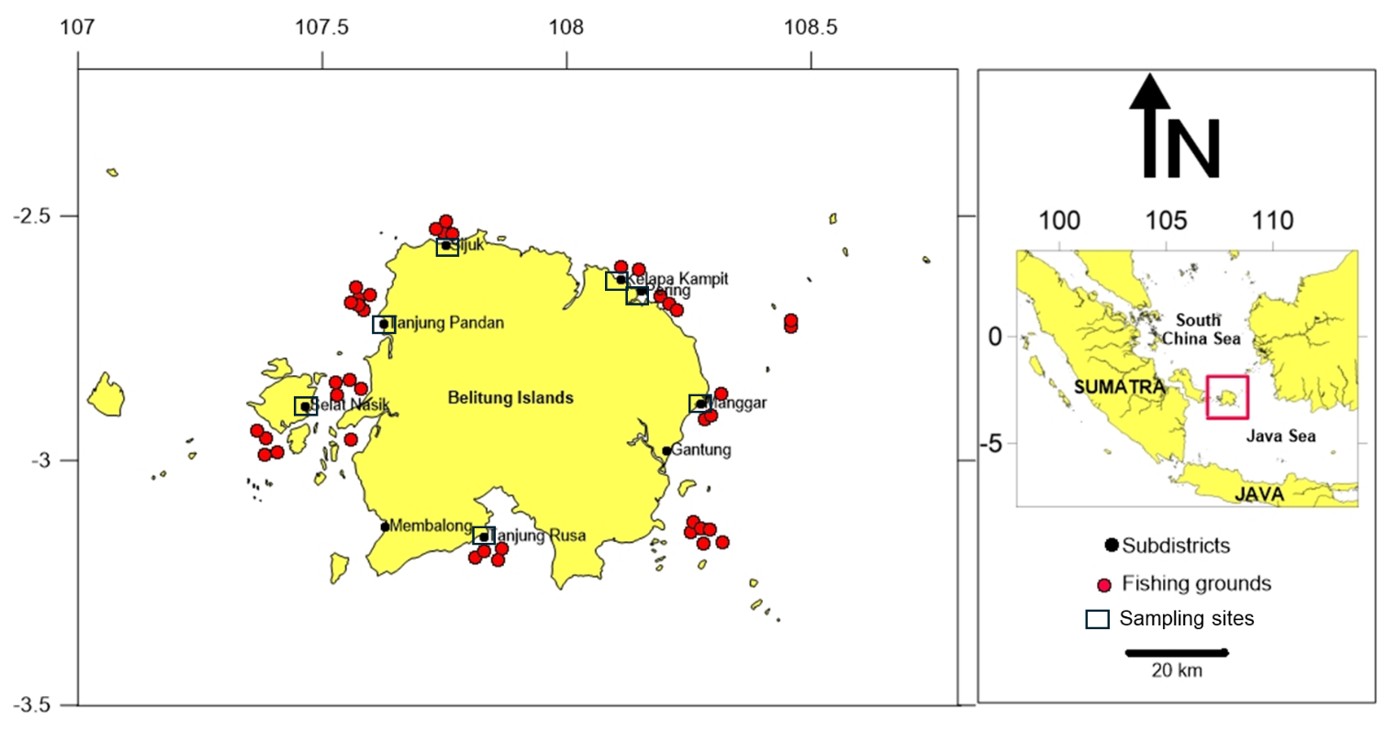
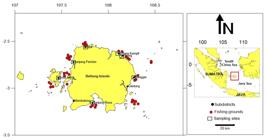
Samples were collected from August 2023 to March 2024 in Belitung waters, and there were 1,063 squid samples captured by local fishers using squid jigs. The squid jig artisanal fishery used 1-2 GT wooden vessels with 14 horsepower engines. The fishery was one-day fishing, and the setting was operated at night for approximately seven hours. The frequency of fishing trips ranged from 20 to 26 times each month. The fishing ground areas were around Kampit, Pering Beach, Sijuk, Seliu, and Tanjung Pandan (Figure 1). The samples were collected from some landing sites in Kampit, with coordinates 2.63°S and 107.95°E, Tanjung Pandan (2.72°S and 107.62°E), Pering (2.65°S and 108.15°E), Manggar (2.88°S and 108.27°E), Selat Nasik (2.88°S and 107.46°E), Sijuk (2.56°S and 107.75°E). The average values of some environmental variables for the fishing ground areas have been reported from the previous study as a mean depth of 10 m, sea surface temperature 29 °C and salinity of 31 ppt (Puspasari et al., 2025). Measurements of squid characteristics included mantle length in cm, weight in grams, sex, and gonad maturity stages.
2.2. Data analysis
Population ecological characteristics of U. chinensis included length frequency data visualized by histograms, length-weight relationship, monthly relative condition factor, monthly gonad maturity proportion, the length at first maturity (Lm50), and growth parameters. The length at first maturity is an essential parameter for obtaining direct knowledge of the optimal selectivity of squid fishery. As the multiple spawning tropical squid, U. chinensis should be captured larger than the length at first maturity to allow the adult squid to reproduce at least once to sustain the recruitment (Sajikumar et al., 2022). Therefore, the length at first maturity can also be a rough estimate of the minimum legal size for management purposes. The length at first maturity (Lm50) was estimated using a logistic model based on the Schnute and Richards (1990) Equation 1:
P is the proportion of gonadally mature squid at length xi; Gi is the maximum achievable proportion of gonadally mature squid; A and B are parameters estimated from the logistic function.
The length-weight relationship could be used as an indicator of the proportional body weight of squid. The negative allometry growth pattern reflects the comparatively slender body shape, whereas the positive allometry highlights the larger fatness. The isometric growth pattern indicates the proportional body weight of the squid. Negative allometry may indicate low food availability, stress level, drained energy, and changes in environmental conditions (Siddique et al., 2014). Length-weight relationships and relative condition factors were estimated through Equations 2 and 3 (Ricker, 1975; Le Cren, 1951):
and
a is a constant, b is the growth coefficient, L is the mantle length (cm), W is the observed weight (g), and w is the calculated weight of squids. The relative condition factors (Kn) were calculated monthly with a 95% confidence interval.
Growth parameters of male and female squid, including asymptotic length (L∞), growth rate (K) and theoretical age at zero length (t0) were estimated using the electronic length frequency analysis with simulated annealing (ELEFAN GA) method in the TropFishR programme package of the R programme (Scrucca, 2013; R Development Core Team, 2008; Mildenberger et al., 2017). This study used a length class of 2 cm, with a moving average (MA) of 5, which is sufficient to show the growth movement of squid as a short-lived species. The moving average helps to see the growth pattern from each length frequency peak (Mildenberger et al., 2017).
The theoretical age at zero length (t0) was estimated by following Pauly’s (1983) Equation 4:
The stock status of U. chinensis was obtained through several approaches, including the length-converted catch curve (LCC) method, yield per recruit (YPR) analysis, and length-based spawning potential ratio (LB-SPR). The LCC model provides the rough status of fishery based on the ratio of natural mortality and fishing mortality. The yield per recruit model assess the growth overfishing level of the fishery, which is linked to the optimal selectivity that can be reached to obtain the maximum yield per recruit. The spawning potential ratio assesses the recruitment overfishing level, which is related to the optimal spawning biomass per recruit that should remain in the sea (Tirtadanu et al., 2022; Hordyk et al., 2016).
The exploitation rate (E) was used in the LCC method to indicate the fisheries status. The E value was obtained by comparing fishing mortality (F) and total mortality (Z). Total mortality is obtained from the LCC analysis with the Formula 5 (Sparre and Venema, 1992):
where C is the frequency of each length class, Z is total mortality, t is age, L1 and L2 are the lengths of squid in the upper and lower interval classes.
Fishing mortality was obtained from the difference between total mortality (Z) and natural mortality (M). Natural mortality was estimated based on Pauly (1983) and Then et al. (2015) Equations 6 and 7:
where M1 and M2 are the natural mortality from Pauly (1983) and Then et al. (2015), K is the growth rate, T is the average of sea surface temperature of the coastal area as 29 °C, L∞ is the asymptotic length. The more conservative results from the natural mortality will be used as the precautionary approach to the stock assessment of squid fishery.
The YPR in this study was performed to estimate the fishing mortality level that produced the maximum yield per recruit (Fmax) and the fishing mortality level that corresponds to 10% of the slope of the yield per recruit (F0.1) (Gulland and Boerema, 1973). The reference point of Lmax was also used to assess the growth overfishing level of the squid fishery in Belitung waters. YPR was obtained based on the Thompson and Bell model using TropFishR in the R program (Thompson and Bell, 1934; R Development Core Team, 2008; Mildenberger et al., 2017).
The spawning stock biomass condition of U. chinensis in Belitung waters was estimated using the length-based spawning potential ratio with the LBSPR package in R program (R Development Core Team, 2008; Hordyk et al., 2016; Mildenberger et al., 2019). The spawning potential ratio (SPR) is the ratio between spawning stock biomass per recruit in the presence of fishing and spawning stock biomass per recruit in the absence of fishing (Goodyear, 1993). The length-based spawning potential ratios depends on several assumptions: (i) the stock is in a steady state, (ii) the length composition accurately reflects the population size, (iii) recruitment stands constant, and (iv) growth follows to the Von Bertalanffy growth curve (Hordyk et al., 2016). The selectivity of squid jig, which targets specific sizes, can influence the sensitivity of the length-based spawning potential ratio. The selection of natural mortality parameters may affect the sensitivity of the LB-SPR results; hence, this study used more conservative natural mortality as precautionary management. The reference point for overfishing status is at the 40% SPR threshold.
3. Results
3.1. Population ecological characteristics
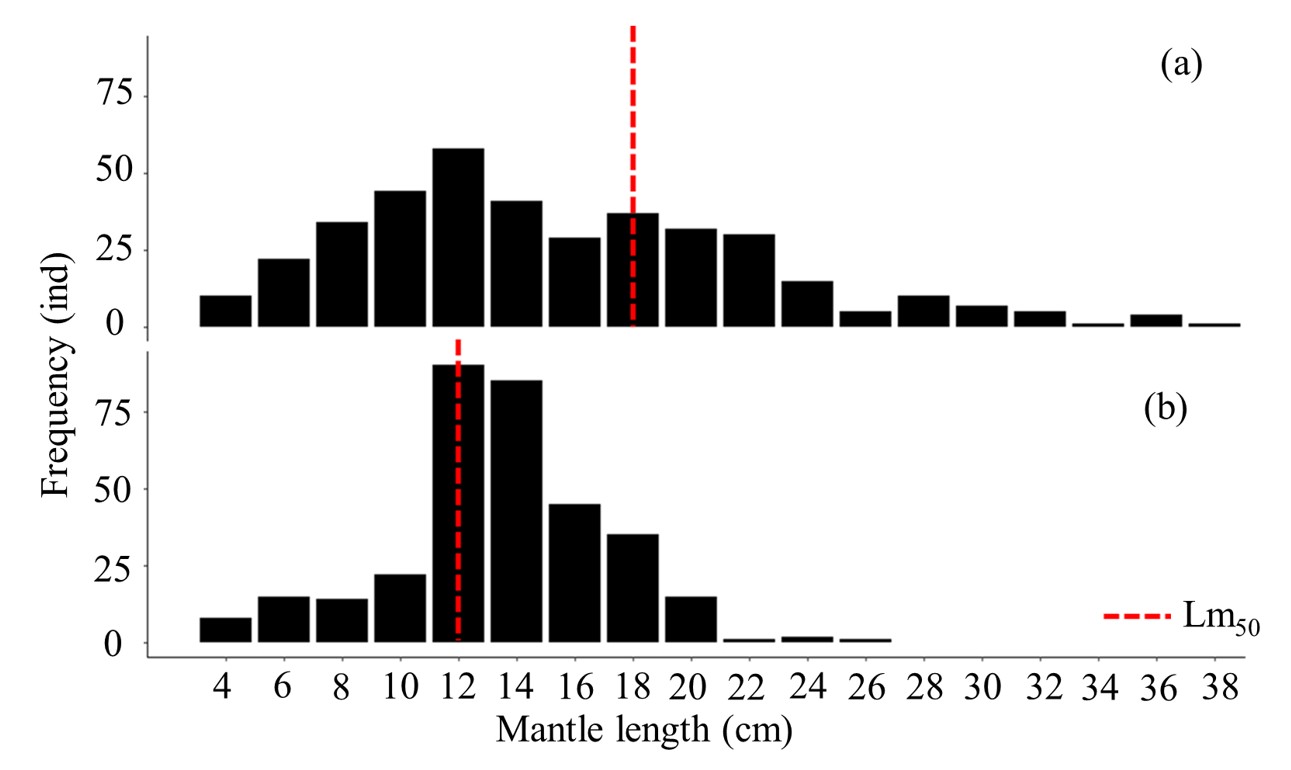
Male U. chinensis is larger than females. The mantle length of male squid ranged from 4 to 38 cm with a mean size of 16.22 ± 6.72 cm (Mean ± standard deviation), while female sizes ranged from 4 to 26 cm with an average of 14.23 ± 3.65 cm. The most squid size captured by squid jig was 12 cm, with a proportion of 27% in males and 15% in females (Figure 2).
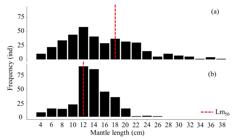
Length frequency of (a) male and (b) female mitre squid (Uroteuthis chinensis) in Belitung waters. The red dash line represents the length at first maturity (Lm50) of mitre squid.
The length at first maturity (Lm50) for male and female U. chinensis was 19 cm and 12 cm, respectively. By comparing the length frequency data with the length at first maturity, the proportion of male and female squid captured before reaching their gonadal maturity size was 71.4% and 44.74%, respectively.
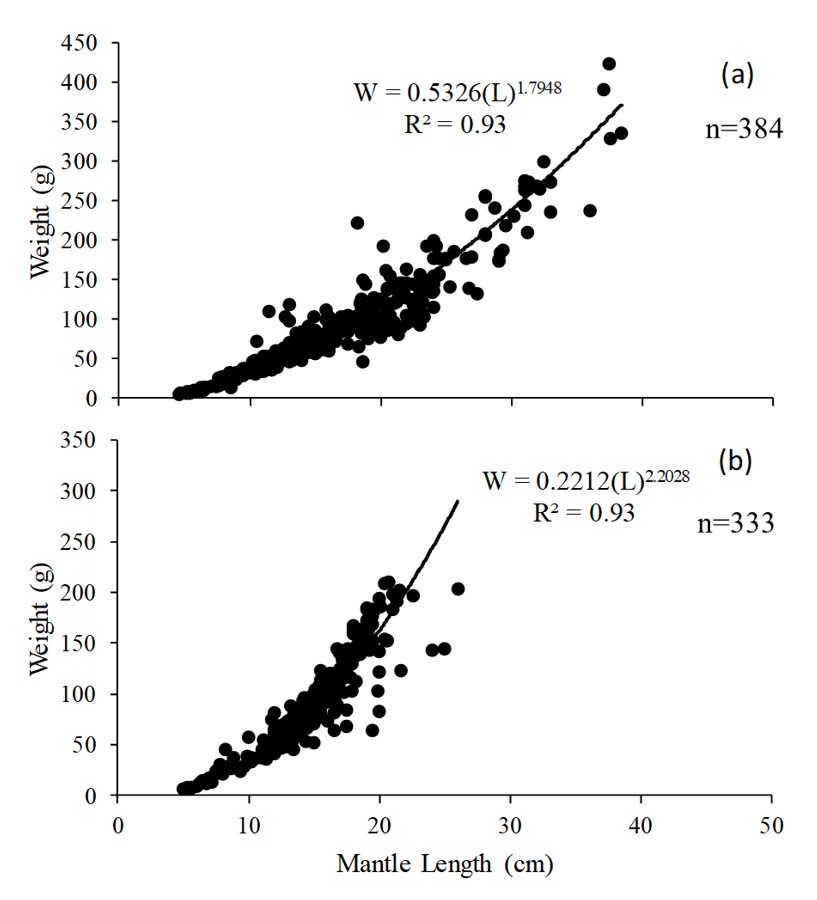
The mean weight of male U. chinensis in Belitung waters was 88.71 ± 64.99 (Mean ± SD) g, and the mean weight of females was 85.21 ± 48.86 g. The length-weight relationship between male and female squid was W=0.5326(L)1.7948 and W=0.2212(L)2.2028, respectively (Figure 3). The growth patterns of males and females were negative allometric, indicating relatively lean weight proportions. The growth coefficient b at a 95% confidence interval was 1.79 ± 0.05 and 2.20 ± 0.06.
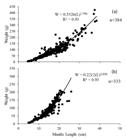
Length-weight relationship of (a) male and (b) female mitre squid (Uroteuthis chinensis) in Belitung waters.
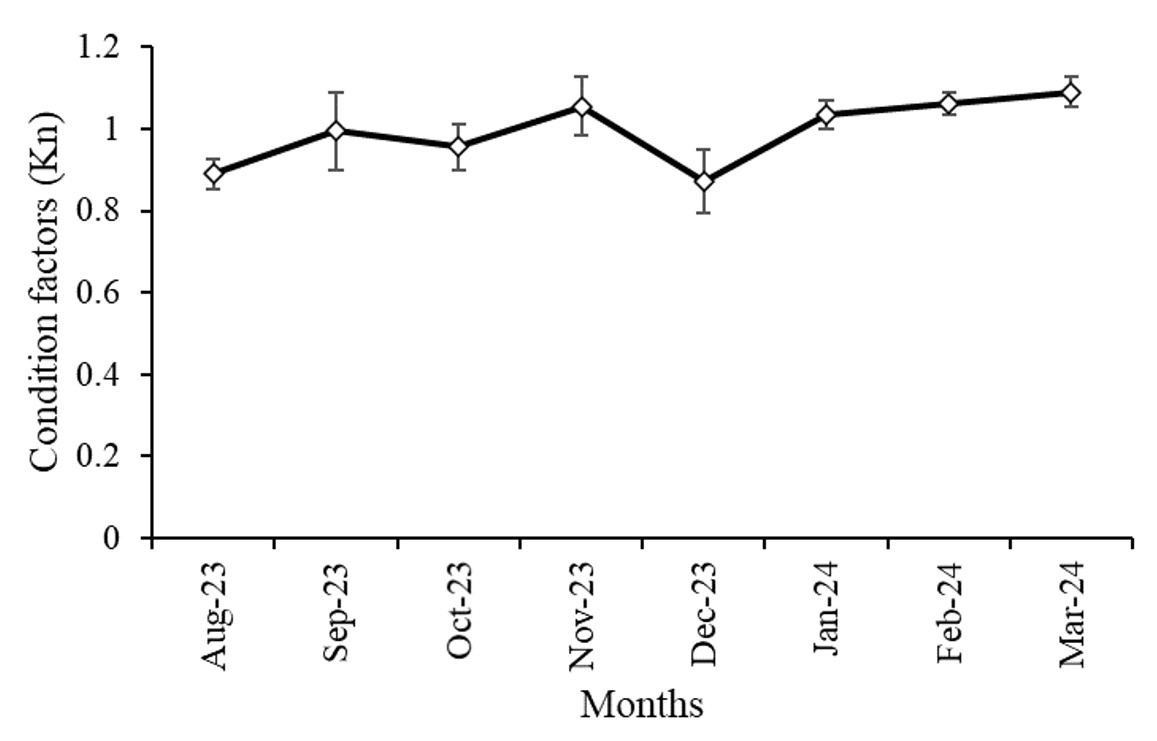
The condition factor of female squid in Belitung waters fluctuated monthly. The condition factor ranged from 0.87 to 1.09 (Figure 4). The lowest condition factors were found in August (Kn=0.89) and December (Kn=0.87), while the peaks were found in November (Kn=1.06) and March (Kn=1.09).
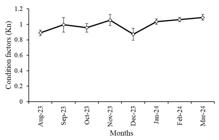
Monthly condition factors of female mitre squid (Uroteuthis chinensis) in Belitung waters, August 2023–March 2024.
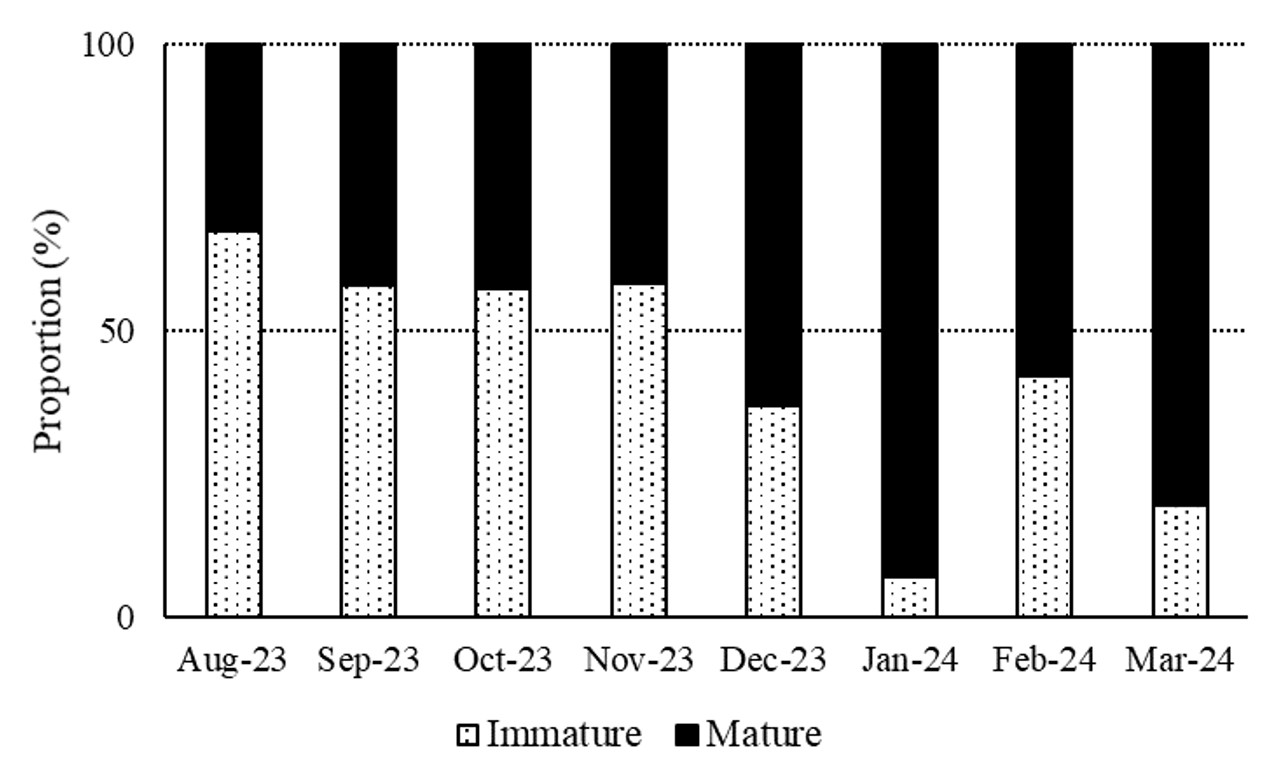
Gonadally mature females were found throughout the year, with monthly proportions ranging from 32.5 to 93.02% (Figure 5). The lowest proportion of gonadally mature squid was found in August (32.5%), while the largest was in January (93.02%). The proportion of mature U. chinensis tended to increase starting from September 2023 (42.11%) to the peak in January 2024 (93.02%). The proportion of mature squid from December to March was in the range of 57.89 to 93.02%, higher than in August to November, with a range of 32.5-42.86%.
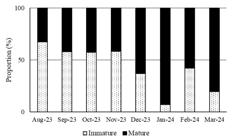
Monthly proportions of immature and mature female mitre squid (Uroteuthis chinensis) in Belitung waters, August 2023–March 2024.
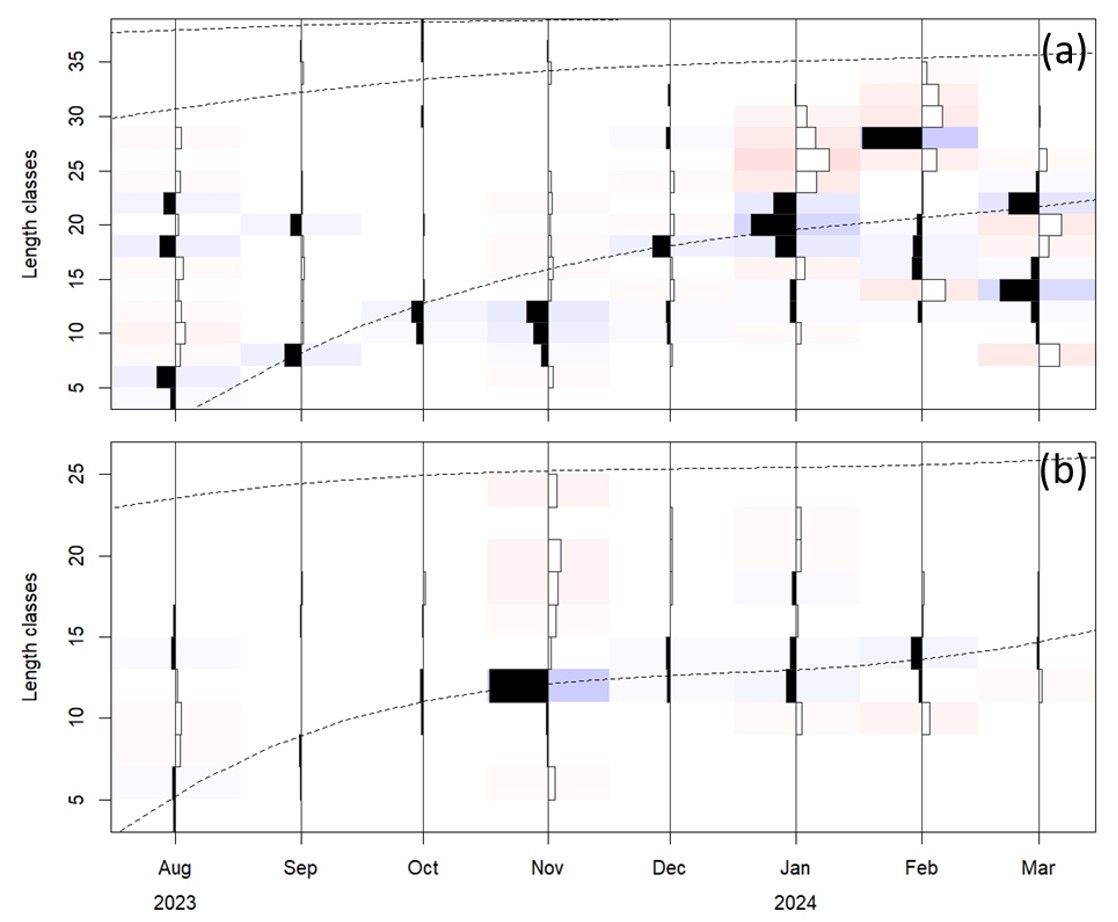
The asymptotic length of males U. chinensis was 37.30% larger than females, and the growth of females was slightly faster than males (Figure 6). The asymptotic length (L∞), growth rate (K), and theoretical age at zero length (t0) of male squid were 40.49 cm, 1.36 yr-1, and -0.1064 year, respectively. The asymptotic length (L∞), growth rate (K), and theoretical age at zero length (t0) of females were 29.49 cm, 1.40 year-1, and -0.1126 year, respectively. The growth of male and female squid followed the Equations 8 and 9:
and
respectively.
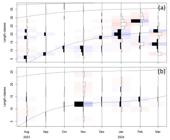
The monthly length frequency and the growth of (a) male and (b) female mitre squid (Uroteuthis chinensis) in Belitung waters, August 2023–March 2024. Data were analyzed by the ELEFAN TropFishR packages in the R Program.
Based on the Von Bertalanffy growth equation, the length at first maturity (Lm50=19 cm) of male squid was reached at 4 to 5 months, and the maximum size was attained at 2.21 years (Figure 7). The length at first maturity of females (Lm50=12 cm) was reached at 3-4 months, and the maximum size was attained at 2.14 years.
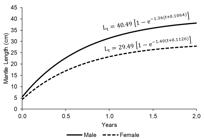
The Von Bertalanffy Growth Curve of male and female mitre squid (Uroteuthis chinensis) in Belitung waters.
3.2. Stock status
The natural mortality of male and female squid by using Pauly (1983) method (Mmale=2.04 year-1; Mfemale=2.27 year-1) was larger than the natural mortality by using Then et al. (2015) method (Mmale=1.52 year-1; Mfemale=1.73 year-1). The higher natural mortality will lead to a lower estimate of the fishing pressure. Some previous studies have suggested using the more conservative M values as the precautionary approach for management actions (Tirtadanu et al., 2023; Widiyastuti and Tirtadanu, 2024). Therefore, this study used the natural mortality from Then et al. (2015) as the precautionary approach to the stock assessment of squid fishery.
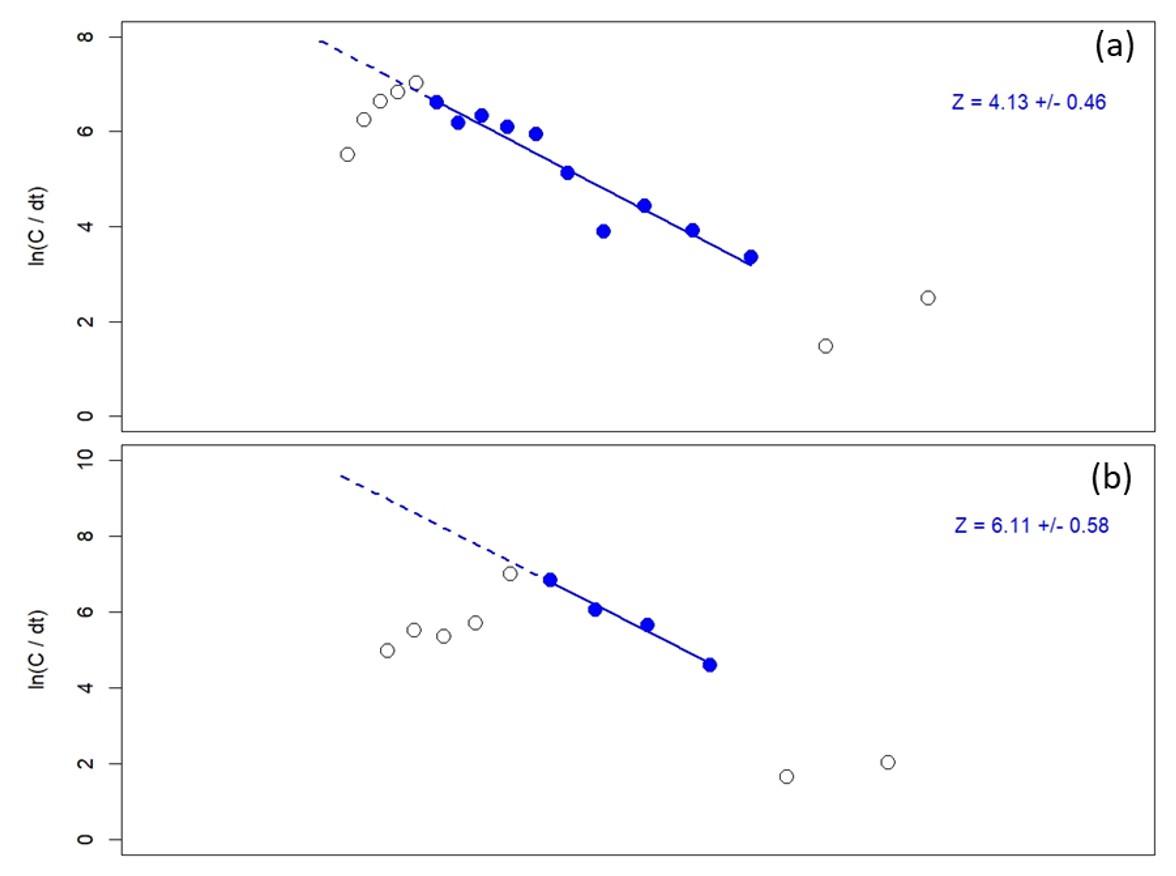
The total mortality of female squid (Z=6.11 year-1) was higher than the total mortality of males (Z=4.13 year-1) (Figure 8). Natural mortality (M) and fishing mortality (F) of male squid were 1.52 year-1 and 2.62 year-1, respectively. Natural mortality and fishing mortality of females were 1.73 year-1 and 4.39 year-1, respectively. Fishing mortalities (F) of both sexes were higher than their natural mortalities (M), so the exploitation rate (E) of squid in Belitung waters was above its optimal point (E>0.5). The current exploitation rate of males is 0.63, and the exploitation rate of females is 14.29% larger than the exploitation rate of males. Based on the catch-curve approach, the optimal exploitation level of squid can be attained by reducing the exploitation rate by 20-31% from the current condition.
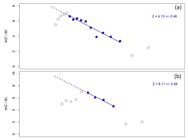
The length-converted catch curve of (a) males and (b) females mitre squid (Uroteuthis chinensis) in Belitung waters.
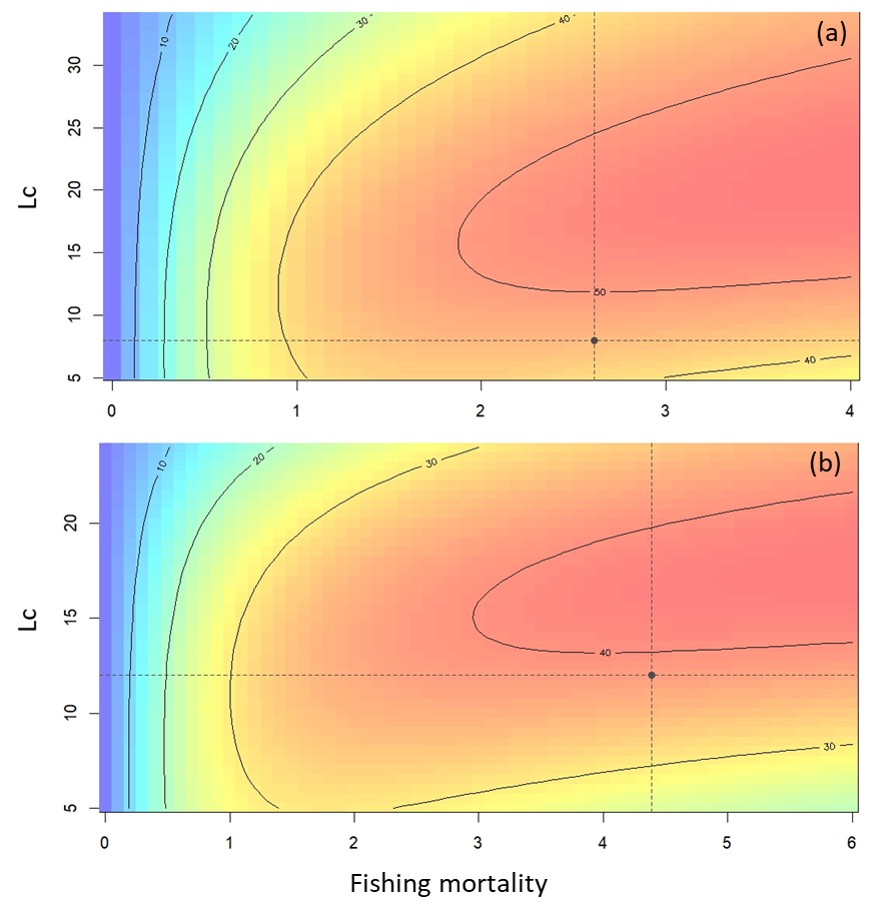
Under current conditions, with a fishing mortality (F) of male squid of 2.61 year-1 and a length at first capture (Lc50) of 8 cm, the yield per recruit of males in Belitung waters was 44.57 g recruit-1 (Figure 9). The maximum yield per recruit of males can be reached by enlarging selectivity to Lcmax or reducing fishing mortality to Fmax. The yield per recruit of males will increase to the maximum value, or 23.37% greater than the current yield per recruit, by enlarging the selectivity from 8 cm (Lccur) to 15 cm (Lcmax). At the current selectivity, the yield per recruit of male squid can be increased to 46.17 g recruit-1 by reducing the fishing mortality at the Fmax level by 2.08 year-1, or 20.31% lower than the current condition (Table 1). A reference point of F0.1 in male squid (F0.1=1.31) can be achieved by reducing fishing mortality by 49.81% from current conditions.

The isopleth of the yield per recruit analysis as a function of fishing mortality and length at first capture for (a) males and (b) females mitre squid (Uroteuthis chinensis) in Belitung waters. The circle dot represents the current yield per recruit. Lc is the length at first capture of mitre squid.
Some biological reference points based on the catch-curve, yield per recruit, and length-based spawning potential ratio analysis for mitre squid (Uroteuthis chinensis) in Belitung waters.
At the current condition of length at first capture (Lc50) as 12 cm and a fishing mortality of female U. chinensis as 4.39 year-1, the current yield per recruit of female squid in Belitung waters was 38.51 g recruit-1 (Figure 9). By raising the squid's selectivity from 12 cm (Lccur) to 15 cm (Lcmax), the yield per recruit of female squid can be reached at the maximum, or 12.62% larger than the current yield per recruit. At the current selectivity, the yield per recruit of female squid can be increased to 38.59 g recruit by reducing fishing mortality at the Fmax level by 3.35 year-1, 23.69% less than the current condition (Table 1). A reference point of F0.1 on females (F0.1=1.75) can be achieved by reducing fishing mortality to 60.14% from current conditions.
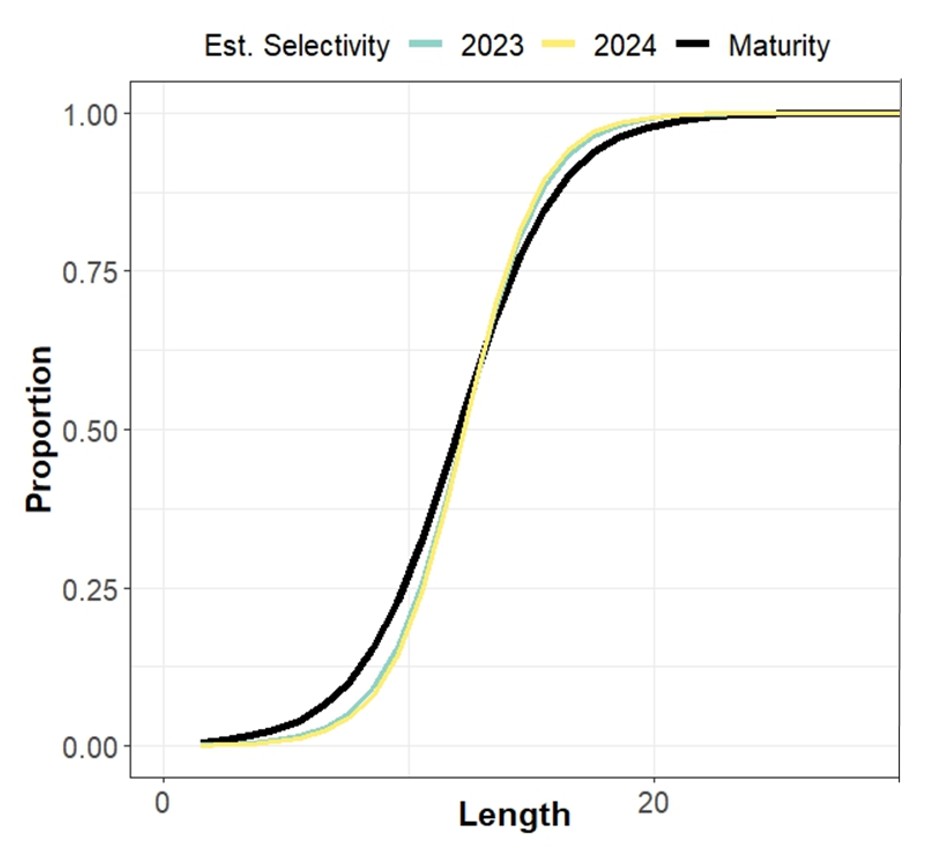
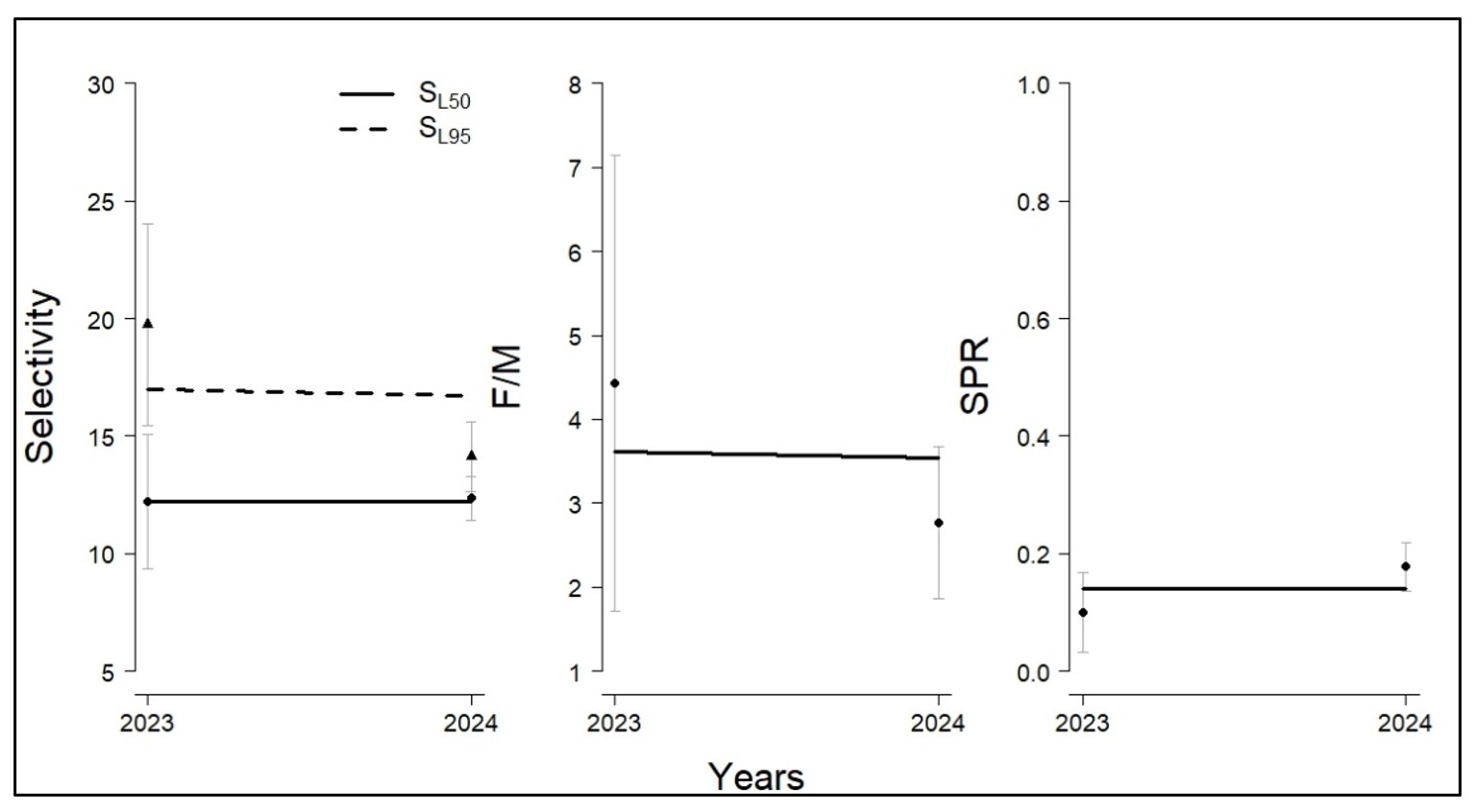
Some input parameters used in the spawning potential ratio analysis for female squid were the length-frequency data, asymptotic length of 29.49 cm, M/K ratio of 1.23, and the length at 50% and 95% maturity of 12 cm and 18 cm, respectively. The gear selectivity of female squid captured by squid jig was the same as the length at first maturity (Figure 10). The current spawning potential ratio of U. chinensis in Belitung waters is 0.18, which is smaller than the optimal spawning potential ratio of 40% SPR (Figure 11).
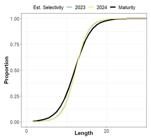
The length at maturity and selectivity of females mitre squid (Uroteuthis chinensis) in Belitung waters.
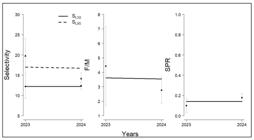
The selectivity, ratio of fishing mortality and natural mortality (F/M), and spawning potential ratio (SPR) of mitre squid (Uroteuthis chinensis) in Belitung waters. Data were analyzed by the LBSPR package in the R Program. SL50 is the mantle length at which 50% of squids are retained by the fishing gear and SL95 is the mantle length at which 95% of squids are retained by the fishing gear.
4. Discussion
The maximum size of male squid in Belitung waters was 46% larger than the size of females. Previous studies have also reported sexual dimorphism in U. chinensis (Bat et al., 2009). The size ranges of male and female squid in Belitung waters were 4 to 38 cm and 4 to 26 cm, respectively. Those size ranges were relatively small compared to the size ranges of U. chinensis in the China Seas, which were from 6.6 to 47.5 cm for males and 8.8 to 41.7 cm for females (Jin et al., 2019). The length at first maturity (Lm50) of male and female U. chinensis in Belitung waters were 19 cm and 12 cm, respectively. The proportion of immature squid captured by squid jig was also relatively high, ranging from 44.7 to 71.4%. To enhance recruitment through reproduction, the size of the catch is recommended to be larger than the length at first maturity. Tokai and Ueta (1999) found that the size of the squid jig will affect the size of the catch (Tokai and Ueta, 1999). Therefore, enlarging the jigs is recommended to allow the squids to reproduce and raise the recruitment.
U. chinensis in Belitung waters has a negative allometry growth pattern, indicating a relatively thin body weight pattern (b<3). Previous research has found the same condition for commercial squid fisheries in some areas, including U. chinensis in Malaysia, U. duvaucelii in India, and U. edulis in Japan (Siddique et al., 2014; Tehseen et al., 2019; Yamaguchi et al., 2020). The growth coefficient b of female squid (b=2.2028) was larger than that of male squid (b=1.7948), indicating higher fatness in females than males. Those can be affected by the energy allocation of females towards gonad development and multiple spawning events, whereas males allocate energy towards competition and movement (Chiang and Wang, 2025). However, both male and female squids have the allometry growth pattern that indicates a thin body shape. The allometry growth pattern can be affected by some factors, including the lack of food, high stress, and environmental changes. This finding can be linked to the contribution of biomass, where the decreasing body weight will impact the amount of catch in weight. The length at first maturity of male and female squid was reached at 52.7 (~18 squids per kg) and 105.1 g (~9 squids per kg), respectively. The body weight patterns can also fluctuate monthly, influenced by food availability, environmental factors, and gonadal maturity conditions (Mulyono et al., 2017).
The condition factor of female squid in Belitung waters fluctuated, influenced by environmental factors, food availability, and reproductive aspects. The peak condition factor was found during the rainy season in November and March. Wang et al. (2021) stated that the distribution of U. chinensis was influenced by the primary productivity of the waters. The high condition factor in the rainy season was caused by the high density of plankton, which is the preferred food for squids.
The study of the proportion of gonadally mature females can be an indicator of the spawning season (Liu et al., 2024). The hatching season of U. chinensis in China was found in the Spring season in April (Jin et al., 2019). Based on the proportion of gonadally mature squid in Belitung waters, the spawning season was concentrated from December to March, with a peak in January. The sea surface temperature for Belitung waters ranged from 27.1 to 30.9°C (World Sea Temperatures, 2025). The warmest temperature occurred in November and April to June, which ranged from 28.3 to 30.9°C. The spawning peak of U. chinensis in this study was found in February, with the sea temperature ranging from 27.9 to 29.1°C. This condition can be the optimal temperature for the hatching period. Another study also found that U. chinensis in China was primarily hatched in Summer at 29°C (Wang et al., 2020). A management strategy with seasonal closure during the spawning season can be one of the alternatives to enhance squid reproduction in nature.
Female squid in Belitung waters had slightly faster growth and a smaller size than males. The asymptotic length (L∞) of male and female U. chinensis were 40.49 cm and 29.49 cm, respectively. The growth rate (K) of male and female squid were 1.36 year-1 and 1.40 year-1, respectively. The findings indicate evidence of sexual dimorphism in U. chinensis. The males showed a larger size than females, as evidenced by the maximum length and asymptotic length of males (Lmax=38 cm; L∞=40.49 cm), which exceeds that of females (Lmax=26 cm; L∞=29.49 cm). The coefficient of growth b for females (b=2.20) was greater than that for males (b=1.79), indicating a higher level of fatness in females than males. This may result from the energy allocation of females towards gonad development and multiple spawning events, whereas males allocate energy towards competition and movement. Moreover, the growth rate for females (K=1.40) was slightly greater than that for males (K=1.36), which may contribute to a longer lifespan for females than males. As a multiple spawner, the female's prolonged lifespan will allow squids to release the egg and aid in recruitment.
The length at first maturity of U. chinensis in this study (Lm50[male]=19 cm; Lm50[female]=12 cm) was close to U. chinensis found in Bangka waters (Lm50[male]=19 cm; Lm50[female]=15 cm) and larger than that found in Banyuasin waters (Lm50[male]=11 cm; Lm50[female]=10 cm). Some factors affected the variation of length at first maturity across regions. The availability of rich food can induce squid to grow faster and reach maturity earlier. Another study also linked it to higher water temperature, leading to achieving the earlier length at first maturity (Lavin et al., 2022). The length at first maturity (Lm50) was attained at 3 to 4 months for males and 4 to 5 months for females. Similar conditions were also found for females U. edulis in China, with the length at first maturity attained at 4 to 5 months of age (Wang et al., 2010). Bat et al. (2009) found that warmer water conditions can increase squid’s growth. Tropical water conditions are indicated as a factor that caused a relatively fast growth of squid in Belitung. In addition, Rodhouse (2001) suggested that effort limitation is the most effective management tool for short-lived species. Rapid growth and a relatively short lifespan will lead to high natural mortality. At the same time, an intensive fishing pressure that exceeds optimal conditions will cause a decrease in spawning stock biomass that can inhibit the recruitment of stocks in nature. Some management actions that can be applied include (i) community-based management to connect the government, the fishers, the squid fishery business and scientists regarding how to implement the optimal efforts (24% reduction on fishing trips) and selectivity (enlarging selectivity to 15 cm) for the squid fishery (ii) After the cooperation was agreed upon all the stakeholders, the regulation should be strengthened, and supported by data monitoring.
Squid fishing pressure is currently in an overfishing condition based on the exploitation rate (E) indicator from the catch-curve approach, which is 0.63 year-1 for males and 0.73 year-1 for females. Overfishing conditions for squid fisheries have also occurred in the northern waters of Java (Puspitasari and Fahrudin, 2019; Wagiyo et al., 2021). The same fishery status was also found in the yield per recruit model with current fishing mortality (Fcur[male]=2.62 year-1; Fcur[female]=4.39 year-1), which has exceeded the reference point of Fmax (Fmax[male]=2.08 year-1; Fmax[female]=3.35 year-1). This yield per recruit result indicated that the current exploitation level is not in the biomass-optimal condition. Fishermen will obtain biomass-optimal fishery conditions by reducing effort by about 24% from the current effort. Moreover, capturing small squid has a negative impact on the biomass and the optimal catch of the fishery. Capturing small-sized squids will inhibit them from growing larger. If the small-sized squids remained in nature until they reached the optimal length at first capture (Lcmax), the squids would grow larger to contribute to the biomass, and the fishery would be more profitable (Pauly, 1983; FAO, 2011; Tirtadanu et al., 2021). The squid fishery will be more profitable if the selectivity is enlarged from 12 cm to 15 cm, as the reference Lcmax. Ulas and Aydin (2011) reported that the use of red squid jigs could increase the selectivity and catch rate of squid compared to other colors. In addition, enlarging mesh selectivity from 20 mm to 35 mm also successfully increased the squid catch in India (Kasim, 1985).
Based on the current spawning potential ratio (SPR) of 18%, which is lower than the reference point of 40% SPR, the mitre squid stock status in Belitung waters has been in a state of recruitment overfishing. This condition indicates that the spawning stock biomass of U. chinensis is too low, which can inhibit recruitment due to low reproduction. The environmental condition of Belitung waters was still appropriate for the growth and reproduction of U. chinensis, with a potential spawning habitat close to 84 thousand ha (Puspasari et al., 2025). Therefore, the stock population of U. chinensis in Belitung waters seems affected mainly by fishing activities. The recruitment overfishing as the low spawning stock biomass of U. chinensis was caused by the high fishing pressure and high number of small-size captured.
The continuous fishing pressure at the current level could lead to a declining population and economic losses to the squid fishery in the future. Caddy (1983) suggested leaving 40% of the biomass in nature each year to enhance recruitment. Various fisheries management measures have also been discussed in several previous studies. Arkhipkin et al. (2021) suggested a combination of several management tools, including effort-based management, spatial and seasonal fishing restrictions, mesh size restrictions, and individual transferable quotas. Moreover, Rodhouse (2001) recommended effort limitation as the best management tool for short-lived fisheries. The combination of effort limitation and seasonal closure has been applied as an effective management strategy to improve the spawning stock biomass of Loligo gahi squid in the Falkland Islands. Effort limitation was implemented through a reduction in fishing licenses, permitting fishing operations for only 6 to 8 months annually (Barton, 2002). Additionally, New Zealand has successfully boosted the stock biomass of the squid Nototodarus gouldi by establishing an annual Total Allowable Commercial Catch (TACC) and conducting regular stock assessment monitoring (Lischka et al., 2020; Cryer et al., 2016). Due to the overfishing condition of the mitre squid in Belitung waters based on stock assessment approaches LCC, YPR analysis, and LB-SPR, some management recommendations that can be developed to restore the squid’s stock include reducing about 24% of fishing trips; fishing closure based on area and season, especially in January; modifying fishing gear to increase selectivity to 15 cm. Those management measures need to be well socialized to fishers, traders, squid industries, and other stakeholders to enhance the sustainability of squid fisheries in Belitung waters.
5. Conclusion
Squid fisheries in Belitung are currently in an overfishing condition based on the current exploitation rate (E) indicator, which has exceeded the threshold of 0.5 of E, and the current fishing mortality indicator, which has exceeded the reference point of Fmax. The growth of the overfishing condition has occurred based on the current selectivity, which is below the optimal size, which can produce the maximum yield per recruit at Lcmax of 15 cm. The current spawning stock biomass is also relatively low (SPRcur=18%), which indicates a recruitment overfishing state. The spawning season was found from December to March, with the peak in January. Based on the current stock status and some biological reference points, some management measures need to be developed, including a 24% reduction in the fishing trips, the fishing closure during the spawning area and season, especially in January, and enlarging selectivity to 15 cm. Those management tools needed to be developed by the government cooperatively by involving various stakeholders, including local communities, fishers, traders, the squid industry, and fishery researchers.
Acknowledgements
The authors are thankful to the Ministry of Finance, Republic of Indonesia, for supporting the research funding through the RIIM (Riset Inovasi untuk Indonesia Maju) 3 scheme. The authors are also thankful to Mr. Maqdist, Mrs. Cucu and Mr. Agri for collecting the data through enumerators.
Data Availability Statement
Research data is only available upon request
References
-
ARKHIPKIN, A.I., HENDRICKSON, L.C., PAYA, I., PIERCE, G.J., ROA-URETA, R.H., ROBIN, J.P. and WINTER, A., 2021. Stock assessment and management of cephalopods: advances and challenges for short-lived fishery resources. ICES Journal of Marine Science, vol. 78, no. 2, pp. 714-730. http://doi.org/10.1093/icesjms/fsaa038
» http://doi.org/10.1093/icesjms/fsaa038 -
BARTON, J., 2002. Fisheries and fisheries management in Falkland Islands Conservation Zones. Aquatic Conservation, vol. 12, no. 1, pp. 127-135. http://doi.org/10.1002/aqc.482
» http://doi.org/10.1002/aqc.482 - BAT, N.K., VINH, C.T., FOLKVORD, A., JOHANNESSEN, A., TSUCHIYA, K. and SEGAWA, S., 2009. Age and growth of mitre squid Photololigo chinensis in the Tonkin Gulf of Vietnam based on statolith microstructure. La Mer, vol. 47, pp. 57-65.
- CADDY, J.F. 1983. Advances in assessment of world cephalopod resources Rome: FAO Publications. The cephalopods: factors relevant to their population dynamics and to the assessment and management of stocks, pp. 416-457. FAO Fisheries Technical Papers, no. 231.
- CARPENTER, K.E. and NIEM, V.H., 1998. The living marine resources of the Western Central Pacific. Volume 2. Cephalopods, crustaceans, holothurians and sharks Rome: FAO Publications. pp. 687-1396. FAO Species Identification Guide for Fishery Purposes.
-
CHIANG, C.I. and WANG, C.H., 2025. Life-history traits, maturation, and energy allocation of a small mesopelagic squid Abralia multihamata. Fisheries Research, vol. 285, pp. 1-11. http://doi.org/10.1016/j.fishres.2025.107347
» http://doi.org/10.1016/j.fishres.2025.107347 -
CLARK, W.G., 2002. F35% revisited ten years later. North American Journal of Fisheries Management, vol. 22, no. 1, pp. 251-257. http://doi.org/10.1577/1548-8675(2002)022<0251:FRTYL>2.0.CO;2
» http://doi.org/10.1577/1548-8675(2002)022<0251:FRTYL>2.0.CO;2 -
CRYER, M., MACE, P.M. and SULLIVAN, K., 2016. New Zealand’s ecosystem approach to fisheries management. Fisheries Oceanography, vol. 25, no. S1, pp. 57-70. http://doi.org/10.1111/fog.12088
» http://doi.org/10.1111/fog.12088 -
FOOD AND AGRICULTURE ORGANIZATION OF THE UNITED NATIONS – FAO, 2011 [viewed 28 November 2024]. Code of Conduct for Responsible Fisheries [online]. Rome: FAO, 91 p. Available from: https://www.fao.org/3/i1900e/i1900e00.htm
» https://www.fao.org/3/i1900e/i1900e00.htm - GOODYEAR, C.P., 1993. Spawning stock biomass per recruit in fisheries management: foundation and current use. In: S.J. SMITH, J.J. HUNt and D. RIVARD, eds. Risk evaluation and biological reference points for fisheries management Ottawa: National Research Council of Canada, pp. 67-81. Canadian Special Publication of Fisheries and Aquatic Sciences, no. 120.
- GULLAND, J.A. and BOEREMA, L.K., 1973. Scientific advice on catch level. Fish Bulletin, vol. 71, no. 2, pp. 325-335.
-
HORDYK, A.R., ONO, K., PRINCE, J.D. and WALTERS, C.J., 2016. A simple length-structured model based on life history ratios and incorporating size-dependent selectivity: aplication to spawning potential ratios for data-poor stocks. Canadian Journal of Fisheries and Aquatic Sciences, vol. 73, no. 12, pp. 1-38. http://doi.org/10.1139/cjfas-2015-0422
» http://doi.org/10.1139/cjfas-2015-0422 - INDIA. Ministry of Marine Affairs and Fisheries – MMAF, 2024. Marine and fisheries in figures 2024 Jakarta: MMAF, 504 p.
-
ISLAM, R., PRADIT, S., HAJISAMAE, S., PERNGMAK, P., PAUL, M., NAIM, J. and FAZRUL, H., 2017. Abundance and distribution pattern of two common Loliginid squids, Uroteuthis (Photololigo) chinensis (Gray 1849) and Uroteuthis (Photololigo) duvaucelii (d’Orbigny 1935), in the Gulf of Thailand. Asian Fisheries Science, vol. 30, no. 4, pp. 262-273. http://doi.org/10.33997/j.afs.2017.30.4.004
» http://doi.org/10.33997/j.afs.2017.30.4.004 -
JIN, Y., LI, N., CHEN, X., LIU, B. and LI, J., 2019. Comparative age and growth of Uroteuthis chinensis and Uroteuthis edulis from China Seas based on statolith. Aquaculture and Fisheries, vol. 4, no. 4, pp. 166-172. http://doi.org/10.1016/j.aaf.2019.02.002
» http://doi.org/10.1016/j.aaf.2019.02.002 -
KASIM, H.M., 1985 [viewed 28 November 2024]. Population dynamics of the squid Loligo duvaucelii d’orbigny (Cephalopoda) in Saurashtra waters. Journal of the Marine Biological Association of India [online], vol. 27, pp. 103-112. Available from: http://eprints.cmfri.org.in/id/eprint/1222
» http://eprints.cmfri.org.in/id/eprint/1222 -
LAVIN, C.P., GORDO-VILASECA, C.G., STEPHENSON, F., SHI, Z. and COSTELLO, M.J., 2022. Warmer temperature decreases the maximum length of six species of marine fishes, crustacean, and squid in New Zealand. Environmental Biology of Fishes, vol. 105, no. 10, pp. 1431-1446. http://doi.org/10.1007/s10641-022-01251-7
» http://doi.org/10.1007/s10641-022-01251-7 -
LE CREN, E.D., 1951. The length-weight relationships and seasonal cycle in gonad weight and condition in the perch (Perca fluviatus). Journal of Animal Ecology, vol. 20, no. 2, pp. 201-219. http://doi.org/10.2307/1540
» http://doi.org/10.2307/1540 -
LISCHKA, A., POOK, C.J., PANNELL, J., BRAID, H.E., GAW, S. and BOLSTAD, K.S.R., 2020. Distribution of trace elements in the tissues of arrow squid (Nototodarus sloanii) from the Chatham Rise, New Zealand: human health implications. Fisheries Research, vol. 221, pp. 1-8. http://doi.org/10.1016/j.fishres.2019.105383
» http://doi.org/10.1016/j.fishres.2019.105383 -
LIU, D., ZHANG, C., GUO, J., WANG, H., PANG, Y. and TIAN, Y., 2024. Age and growth of mitre squid (Uroteuthis chinensis) in the northwestern South China Sea based on statolith microstructure analysis. Diversity, vol. 16, no. 395, pp. 1-15. http://doi.org/10.3390/d16070395
» http://doi.org/10.3390/d16070395 -
MILDENBERGER, T.K., TAYLOR, M. and WOLFF, M., 2017. TropFishR: an R package for fisheries analysis with length-frequency data. Methods in Ecology and Evolution, vol. 8, no. 11, pp. 1520-1527. http://doi.org/10.1111/2041-210X.12791
» http://doi.org/10.1111/2041-210X.12791 -
MILDENBERGER, T.K., TAYLOR, M.H. and WOLFF, M., 2019 [viewed 28 November 2024]. Tropical fisheries analysis with R [online]. Available from: https://github.com/tokami/TropFishR
» https://github.com/tokami/TropFishR - MULYONO, M., MUFTI, P., MUFTI, M., ABINAWANTO, A., AFFANDI, R. and MARDIYONO, 2017. The development of gonad mantis shrimp Harpiosquilla raphidea Fabricius, 1798 in Banten Bay, Indonesia. International Journal of Aquatic Science, vol. 8, no. 1, pp. 26-33.
- SPARRE, P. and VENEMA, S.C., 1992. Introduction to tropical fish stock assessment part 1. Manual Rome: FAO Publications. 376 p. FAO Fisheries Technical Papers, no. 306.1.
- PAULY, D., 1983. Some simple methods for the assessment of tropical fish stocks Rome: FAO Publications. 52 p. FAO Fisheries Technical Papers, no. 234.
-
PUSPASARI, R., RAHMAN, A., SUGIANTI, Y., MUJIYANTO., AMBALIKA, I., TIRTADANU., PUTRI, M.R.A., AMRI, K. and PAMUNGKAS, A., 2025. MUJIYANTO, AMBALIKA, I., TIRTADANU, PUTRI, M.R.A., AMRI, K. and PAMUNGKAS, A., 2025. Projecting potential spawning area and habitat characterization of the mitre squid (Uroteuthis chinensis Gray, 1849) using socio-ecological methods. Egyptian Journal of Aquatic Research http://doi.org/10.1016/j.ejar.2025.03.007
» http://doi.org/10.1016/j.ejar.2025.03.007 -
PUSPITASARI, R.K. and FAHRUDIN, A., 2019. Population dynamic of squid (Loligo sp.) in the Banten Bay, Banten Province. Journal of Tropical Fisheries Management, vol. 32, no. 2, pp. 36-44. http://doi.org/10.29244/jppt.v3i2.30560
» http://doi.org/10.29244/jppt.v3i2.30560 -
R DEVELOPMENT CORE TEAM, 2008 [accessed 28 November 2024]. R: a language and environment for statistical computing. R foundation for statistical computing [online]. Vienna: R Foundation for Statistical Computing. Available from: https://www.R-project.org/
» https://www.R-project.org/ - RICKER, W.E., 1975. Computation and interpretation of biological statistics of fish populations. Ottawa: Department of the Environment Fisheries and Marine Service, 382 p. (Bulletin of the Fisheries Research Board of Canada, no. 191).
-
RODHOUSE, P.G., 2001. Managing and forecasting squid fisheries in variable environments. Fisheries Research, vol. 54, no. 1, pp. 3-8. http://doi.org/10.1016/S0165-7836(01)00370-8
» http://doi.org/10.1016/S0165-7836(01)00370-8 -
SAJIKUMAR, K.K., SASIKUMAR, G., JAYASANKAR, J., BHARTI, V., VENKATESAN, V., JOY, K.M.J., ALLOYCIOUS, P.S. and MOHAMED, K.S., 2022. Dynamics of growth and spawning in the Indian squid Uroteuthis duvaucelii (Cephalopoda: Loliginidae) from the tropical Arabian Sea. Regional Studies in Marine Science, vol. 52, pp. 1-9. http://doi.org/10.1016/j.rsma.2022.102324
» http://doi.org/10.1016/j.rsma.2022.102324 -
SASIKUMAR, G., MOHAMED, K.S., ROHIT, P. and SAMPATHKUMAR, G., 2015. Can an aggregation-fishery be responsible for recruitment overfishing? A case study on cuttlefish stock associated with moored fish aggregation devices (FADs). Fisheries Research, vol. 172, pp. 148-156. http://doi.org/10.1016/j.fishres.2015.06.027
» http://doi.org/10.1016/j.fishres.2015.06.027 -
SCHNUTE, J.T. and RICHARDS, L.J., 1990. A unified approach to the analysis of fish growth, maturity and survivorship data. Canadian Journal of Fisheries and Aquatic Sciences, vol. 47, no. 1, pp. 24-40. http://doi.org/10.1139/f90-003
» http://doi.org/10.1139/f90-003 -
SCRUCCA, L., 2013. GA: a package for genetic algorithms in R. Journal of Statistical Software, vol. 53, no. 4, pp. 1-37. http://doi.org/10.18637/jss.v053.i04
» http://doi.org/10.18637/jss.v053.i04 -
SIDDIQUE, M.A.M., ARSHAD, A. and AMIN, S.M.N., 2014. Length-weight relationships of the tropical cephalopod Uroteuthis chinensis (Gray, 1849) from Sabah, Malaysia. Zoology and Ecology, vol. 24, no. 3, pp. 215-218. http://doi.org/10.1080/21658005.2014.934515
» http://doi.org/10.1080/21658005.2014.934515 -
SUKRAMONGKOL, N., TSUCHIYA, K. and SEGAWA, S., 2007. Age and maturation of Loligo duvaucelii and L. chinensis from Andaman Sea of Thailand. Reviews in Fish Biology and Fisheries, vol. 17, no. 2-3, pp. 237-246. http://doi.org/10.1007/s11160-006-9033-7
» http://doi.org/10.1007/s11160-006-9033-7 - TEHSEEN, P., DESAI, A.Y., SAROJ, J. and ARTI, J., 2019. Feeding biology and length-weight relationship of Indian squid (Uroteuthis duvaucelii) in coastal waters of Gujarat. Journal of Experimental Zoology India, vol. 22, no. 1, pp. 609-613.
-
THEN, A.Y., HOENIG, J.M., HALL, N.G. and HEWITT, D.A., 2015. Evaluating the predictive performance of empirical estimators of natural mortality rate using information on over 200 fish species. ICES Journal of Marine Science, vol. 72, no. 1, pp. 82-92. http://doi.org/10.1093/icesjms/fsu136
» http://doi.org/10.1093/icesjms/fsu136 - THOMPSON, W.F. and BELL, F.H., 1934. Effect of changes in intensity upon total yield and yield per unit of gear. Report of the International Fisheries Commission, vol. 8, pp. 7-49.
- TIRTADANU and SUPRAPTO., 2016. Sebaran cumi-cumi (Loliginidae) dan sotong (Sepiidae) yang tertangkap trawl di Laut Arafura. In: Seminar Nasional Pengelolaan Perikanan Pelagis, 2016, Malang. Malang: MEXMA, FPIK Universitas Brawijaya, pp. 77-81.
-
TIRTADANU., SUMAN, A., CHODRIJAH, U., KANG, B. and ZHANG, C.I., 2021. Stock assessment and management implications of three lobster species in Gunungkidul waters, Indonesia. Ocean and Coastal Management, vol. 211, pp. 105780. http://doi.org/10.1016/j.ocecoaman.2021.105780
» http://doi.org/10.1016/j.ocecoaman.2021.105780 -
TIRTADANU., SUMAN, A., CHODRIJAH, U. and ZHANG, C.-I., 2022. Multi-species assessment and management implications of lobster fisheries in Gunungkidul waters, Indonesia. Egyptian Journal of Aquatic Research, vol. 48, no. 1, pp. 91-98. http://doi.org/10.1016/j.ejar.2021.10.006
» http://doi.org/10.1016/j.ejar.2021.10.006 -
TIRTADANU, PRIHATININGSIH., YUSUF, H.N., ZAMRONI, A., AMRI, K. and CHODRIJAH, U., 2023. Assessing the stock status of areolate grouper (Epinephelus areolatus) in Java Sea, Indonesia. Regional Studies in Marine Science, vol. 66, no. 15, pp. 103116. http://doi.org/10.1016/j.rsma.2023.103116
» http://doi.org/10.1016/j.rsma.2023.103116 -
TOKAI, T. and UETA, Y., 1999. Estimation of size selectivity for oval squid Sepioteuthis lessoniana in the squid jigging fishery of Tokushima Prefecture. Fisheries Science, vol. 65, no. 3, pp. 448-454. http://doi.org/10.2331/fishsci.65.448
» http://doi.org/10.2331/fishsci.65.448 -
ULAS, A. and AYDIN, I., 2011 [viewed 28 November 2024]. The effect of jig color and lunar bright on coastal squid jigging. African Journal of Biotechnology [online], vol. 10, no. 9, pp. 1721-1726. Available from: https://academicjournals.org/journal/AJB/edition/28_February_2011
» https://academicjournals.org/journal/AJB/edition/28_February_2011 -
VILLEGAS, P., 2001. Growth, life cycle and fishery biology of Loligo gahi (d’Orbigny, 1835) off the Peruvian coast. Fisheries Research, vol. 54, no. 1, pp. 123-131. http://doi.org/10.1016/S0165-7836(01)00376-9
» http://doi.org/10.1016/S0165-7836(01)00376-9 - WAGIYO, K., TIRTADANU and FAUZI, M., 2021. Population dynamics and exploitation rate of Indian squids (Photololigo duvaucelii Orbigny, 1848) in the Jakarta Bay. Jurnal Penelitian Perikanan Indonesia, vol. 26, no. 4, pp. 233-246.
-
WANG, D., YAO, L., YU, J. and CHEN, P., 2020. The role of environmental factors on the fishery catch of the squid Uroteuthis chinensis in the Pearl River Estuary, China. Journal of Marine Science and Engineering, vol. 9, no. 2, pp. 131. http://doi.org/10.3390/jmse9020131
» http://doi.org/10.3390/jmse9020131 -
WANG, K.Y., LEE, K.T. and LIAO, C.H., 2010. Age, growth and maturation of swordtip squid (Photololigo edulis) in the Southern East China Sea. Journal of Marine Science and Technology, vol. 18, no. 1, pp. 99-105. http://doi.org/10.51400/2709-6998.1870
» http://doi.org/10.51400/2709-6998.1870 -
WANG, X., HE, Y., DU, F., LIU, M., BEI, W., CAI, Y. and QIU, Y., 2021. Using LBB tools to assess miter squid stock in the Northeastern South China Sea. Frontiers in Marine Science, vol. 7, pp. 1-20. http://doi.org/10.3389/fmars.2020.518627
» http://doi.org/10.3389/fmars.2020.518627 -
WIDIYASTUTI, H. and TIRTADANU, 2024. Length-based stock assessment of the blue swimming crab Portunus pelagicus (Linnaeus, 1758)lWIDI in the northern coast of Java, Indonesia. Indian Journal of Fisheries, vol. 71, no. 2, pp. 15-21. http://doi.org/10.21077/ijf.2024.71.2.133183-02
» http://doi.org/10.21077/ijf.2024.71.2.133183-02 -
WORLD SEA TEMPERATURES, 2025 [viewed 3 May 2025]. Sea temperature in Belitung Timur, Indonesia [online]. Available from: https://www.seatemperature.org/asia/indonesia/manggar.htm
» https://www.seatemperature.org/asia/indonesia/manggar.htm -
YAMAGUCHI, T., TAKAYAMA, K., HIROSE, N. and MATSUYAMA, M., 2020. Relationship between empirical water temperature and spring characteristics of swordtip squid (Uroteuthis edulis) caught in the eastern Tsushima Strait. Marine Biology Research, vol. 16, no. 2, pp. 93-102. http://doi.org/10.1080/17451000.2020.1712420
» http://doi.org/10.1080/17451000.2020.1712420
Edited by
-
Editor:
Takako Matsumura Tundisi