
 Rhodopseudomonas palustris increase soybean photosynthesis and protein levels in grains
Abstract
Rhodopseudomonas palustris, a photosynthetic bacterium with biostimulant properties, enhances agricultural productivity by increasing plant resistance to environmental stresses. To assess its impact on soybean cultivation, we conducted a field experiment employing a randomized complete block design comprising six treatments and five replicates. The treatments included the following: (1) control treatment (no application); (2) bacterial treatment in the sowing furrow; (3) bacterial treatment in the sowing furrow involving two foliar applications at the six-trifoliate stage and the beginning of flowering; (4) foliar treatment at the six-trifoliate stage; (5) two foliar treatments, one at the six-trifoliate stage and one at the beginning of flowering; and (6) three foliar treatments, one at the six-trifoliate stage, one at the beginning of flowering and the third during pod formation. Foliar application of Rhodopseudomonas palustris at the six-trifoliate stage significantly increased the photosynthetic rate and height of the soybean plants. The starch content in the soybean leaves exhibited a greater increase across all the R. palustris treatments. Notably, compared with those in the control plants, the protein levels in the leaves in the R. palustris-treated groups were elevated. Furthermore, the treatments involving foliar application at the six-trifoliate stage and three foliar applications showed a marked increase in protein content in the grains. This approach optimizes soybean plant growth and increases grain protein content, thereby improving the nutritional value of cereal plants. Innovative biotechnologies, such as the application of R. palustris, have the potential to enhance physiological and biochemical responses while increasing the commercial quality of soybean crops.
Keywords:
photosynthetic bacterium; grain yield; leaf gas exchange; Glycine max L
Resumo
Rhodopseudomonas palustris, uma bactéria fotossintética com propriedades bioestimulantes, aumenta a produtividade agrícola por aumentar resistência das plantas a estresses ambientais. Para avaliar seu impacto na cultura da soja, conduzimos um experimento de campo utilizando um delineamento em blocos completos casualizados, composto por seis tratamentos e cinco repetições. Os tratamentos incluíram o seguinte: (1) tratamento controle (sem aplicação); (2) tratamento bacteriano no sulco de semeadura; (3) tratamento bacteriano no sulco de semeadura envolvendo duas aplicações foliares no estádio de seis trifólios e no início do florescimento; (4) tratamento foliar no estádio de seis trifólios; (5) dois tratamentos foliares, um no estádio de seis trifólios e outro no início do florescimento; e (6) três tratamentos foliares, um no estádio de seis trifólios, um no início do florescimento e o terceiro durante a formação de vagens. A aplicação foliar de Rhodopseudomonas palustris no estádio de seis trifólios aumentou significativamente a taxa fotossintética e a altura das plantas de soja. Houve um aumento no teor de amido nas folhas de soja em todos os tratamentos com R. palustris. Notavelmente, em comparação com as plantas controle, os níveis de proteína nas folhas dos grupos tratados com R. palustris foram elevados. Além disso, os tratamentos envolvendo aplicação foliar no estádio de seis trifólios e três aplicações foliares mostraram um aumento acentuado no teor de proteína nos grãos. Esta abordagem otimiza o crescimento da planta de soja e aumenta o teor de proteína do grão, melhorando assim o valor nutricional das plantas de cereal. Biotecnologias inovadoras, como a aplicação de R. palustris, têm o potencial de melhorar as respostas fisiológicas e bioquímicas, ao mesmo tempo que aumentam a qualidade comercial da cultura da soja.
Palavras-chave:
bactéria fotossintética; rendimento de grãos; trocas gasosas; Glycine max L
1. Introduction
Soybean (Glycine max L. Merrill) is a crop of great economic importance in global agriculture. It is also an important crop for ensuring global food security due to its high oil (20%) and protein (40%) contents (Pípolo and Mandarino, 2016). This cereal crop is the basis for manufacturing various food products and animal feed (Nair et al., 2023). Brazil is currently the largest soybean producer due to favourable edaphoclimatic conditions and the high economic return of this crop (Brasil, 2025; Menegon et al. 2024). In the last 20 years, Brazil has registered a growth of 257% in soybean production (Winck et al., 2023), with a production of 171.5 million tons in the 2024/25 harvest (Brasil, 2025).
The agricultural expansion that has taken place in recent years, mainly in tropical countries, has led to a significant increase in the yields of various grains. However, as growing areas expand, areas with soils that are appropriate for agriculture become scarce, and producers consequently move to more semiarid environments, where less rainfall may occur (Silva et al., 2023). Agricultural activity is strongly influenced by weather conditions (Mehraj et al., 2023). Therefore, the prospect of climate changes with higher temperatures and reduced rainfall patterns may further impact soybean agricultural production worldwide. Restrictions on land use in the coming decades will require producers to produce more in smaller exploited areas. Furthermore, bean quality is just as important as an increase in yield. High nutritional values, such as high protein content, are important for the food industry. Consequently, biotechnologies that can be used to increase yield and soy quality will gain support in this scenario. The use of microbiological biostimulants is on the rise in agriculture, as these agents contribute to mitigating the impacts of abiotic stresses, optimizing plant nutrition, and increasing crop productivity (Grammenou et al., 2023).
A new possibility for producers is purple nonsulfur bacteria (PNSB) (Surachat et al., 2022). These bacteria are already used in agriculture (Hsu et al., 2021; Brown et al., 2022; Lino et al., 2023), but little is known about the mechanisms by which they interact with cultivated plants, such as soybean plants. Thus, Rhodopseudomonas palustris is a photosynthetic bacterium that is classified as the most metabolically versatile bacterium because it is highly adaptable to different conditions and changes its method of obtaining energy (Sakarika et al., 2020; Harwood 2022).
R. palustris inoculation is associated with the increase in plant resistance to environmental stress caused by abiotic and biotic factors due to its ability to produce aminolaevulinic acid (ALA), which acts as a precursor of chloroplasts and photosynthetic compounds, in addition to porphyrin and growth hormone compounds, and supplies them to plants (Sakpirom et al., 2017; Nunkaew et al., 2015; Surachat et al., 2022). The R. palustris has potential for biotechnological applications due to its diverse metabolic pathways, ability to generate ATP from light and extreme longevity when in a state of arrested growth (Harwood 2022; Brown et al., 2022).
However, in addition to the few conclusive results on the use of this bacterium in large crops such as soybeans, there are a lack of reports on the best application/inoculation method, and the knowledge of how the morphophysiological and biochemical characteristics of plants are modified by R. palustris is still limited. Considering the benefits conferred by this bacterium in plants and the gaps in knowledge on this subject, we hypothesized that the application of R. palustris will improve the morphophysiological aspects of plants and increase soybean yield. In this context, the main objective was to assess the response of soybean cultivation to various application methods of R. palustris by investigating the effects of these methods on plant growth, gas exchange, biomolecule levels, and soybean productivity.
2. Materials and Methods
The experiment was carried out under field conditions at the experimental center of Fazenda Primavera, Alfenas – MG, Brazil, at 21° 44’ 67” S, 46° 01’ 08” W, and an average altitude of 789 m. The average temperatures recorded during the experimental period were a maximum of 32.4 °C and a minimum of 16.8 °C; the accumulated rainfall was 831 mm between sowing and harvesting from October 2020 to March 2021.
The soil was chemically characterized and classified as oxisol, and fertilization was carried out based on the chemical analysis of the soil, in which the formula 04-20-00 (170 kg ha-1) was applied at sowing (Table 1). To supply nitrogen to the soybean crop, seeds were inoculated by applying 0.3 L ha-1 of Bradyrhizobium japonicum at 5×10¹² CFU L-1. The soybean cultivar used was AS3590 IPRO from maturation group 5.9 (from the company Agroeste®), which was considered to have a medium cycle, and was harvested approximately 120 days after emergence. The commercial product Bioavance® (Vinhedo, Brazil), consisting of the R. palustris G5 strain, was used in the treatment applications; this product contained 7.5 × 10⁵ colony forming units (CFU mL-1) of the bacterium and had a density of 1.0 g cm−3, based on studies of Lino et al. (2023) and Ge et al. (2017). The commercial inoculant was stored in its original packaging under refrigerated conditions (4 to 10 °C) until the moment of use to ensure cell viability.
The experiment was carried out using a randomized block design (RBD) with six treatments and five replicates. The treatments were: control (no application); 1S - bacteria applied in the sowing furrow; 1S2L - bacteria applied in the planting furrow plus two foliar applications, at the V6 (six fully expanded trefoils) and R1(beginning of flowering) soybean stages; 1L - foliar application at the V6 stage; 2L – two foliar applications, at the V6 and R1 soybean stages; and 3L - three foliar applications, at the V6, R1 and R3 (beginning of pod development) soybean stages (Table 2).
In each application, 1.0 L ha-1 of the R. palustris G5 strain solution was used. For the sowing furrow treatment (1S), the product was applied using a pressurized furrow injection system coupled to the seeder, calibrated for a spray volume of 50 L ha-1. For the foliar applications, the solution was prepared by diluting the commercial product in non-chlorinated water to reach a spray volume of 200 L ha-1, without the addition of chemical adjuvants to avoid potential antagonistic effects on the bacterial cells. Foliar spraying was performed using a CO2-pressurized backpack sprayer equipped with a hollow-cone nozzle (TeeJet TXA80015VK), operating at a constant pressure of 4.0 bar. To protect the biological agent from high solar radiation and thermal stress, all applications were carried out during late afternoon (after 5:00 PM), with an average relative humidity above 65% and wind speeds below 10 km h-1. Each replicate consisted of nine rows of the 11 meters long, spaced 50 centimeters apart, with the plot totalling 49.5 m2. Sixteen seeds were sown per meter, following the cultivar recommendation for the southern region of Minas Gerais state. The useful area of the plots was the three central lines, making up an area of 13.5 m2.
2.1. Gas exchange and plant analysis
Gas exchange was evaluated in the last fully expanded trefoil in two plants per plot, in the morning, between 8 and 10 am, at the V6 (sixth fully expanded trefoil) stage. The net photosynthetic rate (A), stomatal conductance (gs), leaf transpiration (E) and internal carbon (Ci) were evaluated. The carboxylation efficiency (A/Ci) was obtained from the values of A and Ci, and the water use efficiency (WUE) was calculated from A and E. An infrared gas analyser (IRGA, LI 6400XT – LI-COR, Lincoln, NE, USA) was used. Measurements were made with a photon flux density (PPFD) of 1000 µmol m-2 s-1 at a controlled leaf temperature (28 °C).
Plant height was determined 7 days after the last application of R. palustris in R3 using a tape measure from the base of the plant to the last fully expanded trefoil, and the stem diameter was determined using a digital caliper. For these evaluations, twenty plants were randomly selected from the two central rows of each plot.
The soybeans were harvested manually when the plants reached the physiological maturation stage. For this evaluation, the three central lines of each plot were used, composing a useful area of 13.5 m2. Subsequently, the pods were threshed and the mass of 1000 grains and grain yield were expressed in g and kg ha-1, respectively, after the moisture content was corrected to 13% according to methodologies described in the Rules for Seed Analysis (Brasil, 1992). The mass of 1000 grains was taken from three samples of each plot and the grain yield from the average values of the useful area of the plots.
2.2. Analysis of biomolecules in leaves and grains
For the extraction of biomolecules, 0.2 g of dried leaf and 0.2 of grain biomass were taken from two plants per replicate and separately homogeneized with 5 mL of potassium phosphate buffer (0.1 M, pH 7.0), followed by incubation in a water bath for 30 minutes at 40 °C. The mixture was subsequently centrifuged at 10,000 × g for 20 minutes. This process was repeated once, and the supernatants were combined to obtain a final extraction volume of 10 mL. Aliquots of the supernatant were used for the analysis of total soluble sugars, reducing sugars, amino acids, and proteins. The resulting pellet was solubilized in 1.5 mL of 30% perchloric acid (m v-1), and the mixture was incubated for 24 hours and centrifuged at 10,000 × g for 20 minutes. The supernatant was used for starch quantification.
The quantification of reducing sugars followed the methodology of Miller (1959), and the quantification of total soluble sugars and starch was carried out according to the methodology described by Yemm and Willis (1954). The quantification of proteins followed the method proposed by Bradford (1976), and the quantification of amino acids was performed according to Yemm et al. (1955). All these analyses were carried out after soybean harvest, using all the leaves from two plants per plot. The grain analysis was also carried out after harvest.
2.3. Data analysis
For the statistical analysis of the results, analysis of variance (ANOVA) and the Tukey test were used at the 0.05% significance level (p<0.05) using Sisvar software, version 5.6 (Federal University of Lavras, Lavras, Brazil). The graphs were generated using GraphPad Prism software, version 8.0.1 (GraphPad Software, Inc., La Jolla, California, United States), and the tables were created using the Microsoft Office suite.
3. Results
When analysing gas exchange, an increase in photosynthesis (A) was observed with foliar application of R. palustris (1L) during the initial stages of soybean growth compared to that in the 1S2L treatment (Figure 1a). Stomatal conductance (gs) (Figure 1b) and intercellular CO2 content (Ci) (Figure 1c) did not differ among treatments (p > 0.05). The ratio between net photosynthesis and intercellular CO2 content (A/Ci) followed a similar trend, with only a reduction observed under treatment 1S2L compared with the 3L (Figure 1d).

Leaf gas exchange and growth of soybean plants as a function of the application of the bacterium Rhodopseudomonas palustris. (A) Photosynthesis (a); (gs) stomatal conductance (b); (Ci) inner carbon (c); (A/Ci) carboxylation efficiency (d); height (e) and diameter (f). Means followed by the same letter do not differ according to the Tukey test at 5% probability (p≤0.05). Control = no application; 1S = bacteria applied in the sowing furrow; 1S2L = bacteria applied in the planting furrow plus two foliar applications, one at the V6 stage and one at the R1 stage; 1L = foliar application at the V6 stage; 2L = two foliar applications, one at the V6 stage and one at the R1 stage; 3L = three foliar applications, at the V6, R1 and R3 stages.
Regarding growth parameters, plant height showed significant variation among treatments, where 1S plants displaying reduced height compared with control, 1S2L, 1L and 2L (Figure 1e). Stem diameter was also reduced in 1S plants in comparison with control and 1S2L (Figure 1f). Overall, repeated foliar applications of R. palustris showed no significant effect in enhancing photosynthetic activity and growth compared with control plants.
The application of R. palustris significantly influenced several biochemical parameters in soybean leaves and grains. Leaf protein content increased in all treated plants compared with the control, with no significant differences among application regimes (Figure 2a). Grain protein content also responded to treatments, with the highest values observed under 1L and 3L, which differed from control, 1S and 2L (Figure 2b).
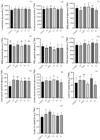
Content of biomolecules in soybean leaves and grains as a function of the application of the bacterium Rhodopseudomonas palustris. Protein in leaves (a) and grains (b); reducing sugars in leaves (RSL) (c); reducing sugars in grains (RSG) (d); total sugars in leaves (TSL) (e); total sugars in grains (TSG) (f); starch in leaves (g); starch in grains (h); amino acid (AA) in leaves (i); amino acids in grains (j). Means followed by the same letter do not differ according to the Tukey test at 5% probability (p≤0.05). Control = no application; 1S = bacteria applied in the sowing furrow; 1S2L = bacteria applied in the planting furrow plus two foliar applications, one at the V6 stage and one at the R1 stage; 1L = foliar application at the V6 stage; 2L = two foliar applications, one at the V6 stage and one at the R1 stage; 3L = three foliar applications, at the V6, R1 and R3 stages.
Regarding soluble sugars, reducing sugars in leaves (RSL) (Figure 2c) and reducing sugars in grains (RSG) (Figure 2d) showed slight but significant variations among treatments. 3L treated plants resulted in the lowest RLS values, being statistically different from control, 1S2L and 1L plants. On the other hand, 1S treated plants showed the lowest RSG values, differing from 1S2L and 2L, indicating that 2 foliar applications of R. palustris at V6 and R1 stages must be effective in enhancing RSG.
The 1S2L was the only treatment that could keep total sugars in leaves (TSL) as in the control plants, where all other treatments led to reduction in this parameter (Figure 2e), while total sugars in grains (TSG) increased significantly under 2L in comparison with all other treatments, although 1S2L and 3L were higher than control, 1S and 1L plants (Figure 2f). These findings corroborate to the theory that foliar applications of R. palustris, at V6 and R1 stages may led to an enhancement in grains sugar content.
Leaf starch content increased significantly in all R. palustris treated plants compared with the control, particularly under 1S that showed the higher mean value (Figure 2g), while grain starch content remained unaffected across all treatments in comparison with the control (Figure 2h).
Amino acid (AA) content varied markedly among treatments. Leaf AA was enhanced under 2L treatment, differing from control, 1L and 3L, with 1S and 1S2L also higher than 1L and 3L (Figure 2i). The higher value for grain AA was observed under 1S2L treatment in comparison with all other treatments and 1S was also higher than others (Figure 2j).
Overall, R. palustris enhanced leaf protein and starch accumulation with a variable behavior related with total sugar and AA content in both leaves and grains.
Although R. palustris (1L) slightly increased plant height 1S2L and 1L, this change was not reflected in the increase in soybean yield (Table 3). A significant increase in bean yield was expected for plants inoculated with R. palustris due to the greater amount of photosynthesis observed in the growth phase, as well as the accumulation of important biomolecules such as proteins, starch and amino acids.
Weight of a thousand grains (WTG) and yield, as a function of the application of Rhodopseudomonas palustris1.
4. Discussion
Pulverization of plants or soil with purple nonsulfur bacteria (PNSB) improves soil fertility and plant photosynthetic rate, resulting in increased plant growth and yield (Sundar and Chao, 2022). This increase in photosynthesis found in this study may be associated with the production of substances that promote plant growth, such as 5-aminolevulinic acid (ALA), which acts as a precursor for the production of chlorophyll and other metabolites (Nunkaew et al., 2015; Kantachote et al., 2016). The R. palustris also contains bacteriochlorophylls that can absorb wavelengths above 800 nm, which include infrared waves (Soundararajan et al., 2019; Lopez-Romero et al., 2020). Therefore, this fact could have enabled a range of wavelengths of a broader wave, favouring a greater absorption spectrum for soybean plants and reflecting a photosynthesis increase. suggesting that R. palustris may benefit the carboxylation activity of rubisco, improving the biochemical metabolism of the plants. Furthermore, the 3L foliar treatment improved A/Ci suggesting that R. palustris may benefit the carboxylation activity of rubisco, improving the biochemical metabolism of the plants.
The foliar application of 1L suggest that the use of this bacterium can optimize soybean crop growth. This can be explained by the fact that this bacterium acts as a biostimulant by producing indoleacetic acid (IAA), and as a biofertilizer by fixing atmospheric nitrogen (Kantachote et al., 2016; Brown et al., 2022). The R. palustris can stimulate nitrogen uptake and increase auxin levels in young leaves by increasing leaf cell proliferation during leaf development (Hsu et al., 2021). Similarly, taller plants may also have greater leaf area available for gas exchange and compete for greater absorption of radiation (Figure 1) (Falster and Westoby 2003). In addition, IAA stimulates root development (Sundar and Chao, 2022), which also favours greater exploration of the soil profile and, consequently, greater absorption of water and nutrients. In other crops, such as mango, an improvement in physiological aspects was also observed, such as an increase in the photosynthetic rate in the early stages of this crop with the application of R. palustris (Lino et al., 2023).
Total or reducing sugars are responsible for initiating a series of metabolic processes that are directly linked to plant growth and development (Mishra et al., 2022). Nonetheless, R. palustris application positively modulated the amount of sugars destined for the grains (Figure 2d, 2f). This result may be related to the role of auxin signalling in adjusting sugar metabolism and carbon partitioning (Mishra et al., 2022). Although auxins were not quantified in this study, the literature indicates that the production of IAA by R. palustris may partially explain the interaction of these metabolic pathways in the response of soybean plants.
The increase of protein content should be seen as beneficial, as it makes it possible to improve the nutritional value of this cereal. The protein content in soybean is important in the international commercialization of this agricultural product. Protein content is one of the main factors that international buyers consider when purchasing soybeans, as protein quality directly affects the final use of the product (Pípolo and Mandarino, 2016; Arrutia et al., 2020). Therefore, this approach can provide quality soybean meal, for example, and may affect its commercial value.
In addition to the importance of protein content in grains, it is important to emphasize the yield of protein produced per hectare. A yield of 4800 kg ha-1 of soybean with 40% protein will result in 1920 kg ha-1 of protein in approximately 120 days of the soybean cycle. Furthermore, the United Nations has estimated that the demand for proteins will double by 2050 (Aimutis, 2022). Thus, innovative biotechnologies such as R. palustris inoculation can increase the protein content in food, providing food security.
The elevated photosynthetic rate induced by R. palustris may have resulted in a greater investment in the aboveground part of the plant (vegetative growth) without displaying a similar pattern of resource allocation to enhance grain yield (sink). Crop yield depends on the source‒sink relationship, which is strongly influenced by environmental responses and the metabolic demands of the plant itself (Smith et al., 2018; Kirkby et al., 2023). Thus, resource allocation in plants is contingent upon the plant's life cycle stage, reproductive strategy, and metabolism, which govern the transport and allocation of photoassimilates (Rossi et al., 2015; Kirkby et al., 2023).
The observed increase in photosynthetic efficiency and grain protein content, without a concomitant rise in grain yield, suggests a sink-limited condition. In soybean, final yield is primarily determined by the number of seeds per unit area, a component established during early reproductive stages that often fails to expand despite increased photoassimilate supply (Assefa et al., 2019). Furthermore, the high temperatures recorded during the experiment (32.4 °C) may have exacerbated pod abortion and respiratory losses (Siebers et al., 2015), contributing to the soybean yield gap often observed in Brazilian environments where climatic variability can prevent plants from reaching their full genetic potential (Sentelhas et al., 2015).
Many metabolic pathways can directly impact crop yield through a myriad of different mechanisms (Rossi et al., 2015), which may have contributed to the findings in this study. However, further experiments are necessary for a better understanding of the effects on soybean grain yield, as the literature highlights the significant effects of R. palustris on cereal productivity (Sabki et al., 2021). However, the presence of this bacterium favoured the morphophysiological and biochemical aspects of the plants, demonstrating that soybean plants treated with R. palustris could be better prepared for use as possible environmental stress agents.
Positive plant yield-related results, were obtained in different studies (Hsu et al., 2021; Brown et al., 2022; Lino et al., 2023). Kantachote et al. (2016) reported that inoculation with R. palustris significantly increased rice yield. However, inoculation did not affect the morphological characteristics of the plants. Therefore, further research with this bacterium under different management conditions (e.g., water stress; fertilizer levels; doses of R. palustris) is suggested for a better understanding and elucidation of the mechanisms involved in plant responses.
5. Conclusion
Application of R. palustris (1L ha-1) increases the photosynthetic rate, the protein content, and grain quality of soybean plants, resulting in increased protein content. Additionally, R. palustris improved the amino acid content in both the leaves and grains. While soybean productivity is unaffected by the application of R. palustris, further research involving different doses of this bacterium and its impact on soybean cultivation is necessary to improve the understanding and elucidate the underlying mechanisms governing plant responses.
Acknowledgements
This work was supported by Coordenação de Aperfeiçoamento de Pessoal de Nível Superior (CAPES) – code 001 and by Conselho Nacional de Desenvolvimento Científico e Tecnológico (CNPq) for the productivity grant awarded (process no. 309692/2021-0).
Data Availability Statement
The research data analyzed in this study are not publicly available by any means.
References
-
AIMUTIS, W.R., 2022. Plant-based proteins: the good, bad, and ugly. Annual Review of Food Science and Technology, vol. 13, no. 1, pp. 1-17. https://doi.org/10.1146/annurev-food-092221-041723 PMid:34982579.
» https://doi.org/10.1146/annurev-food-092221-041723 -
ARRUTIA, A., BINNER, E., WILLIAMS, P. and WALDRON, K.W., 2020. Oilseeds beyond oil: press cakes and meals supplying global protein requirements. Trends in Food Science & Technology, vol. 100, pp. 88-102. https://doi.org/10.1016/j.tifs.2020.03.044
» https://doi.org/10.1016/j.tifs.2020.03.044 -
ASSEFA, Y., PURCELL, L.C., SALMERON, M., NAHEED, S., ARCHONTOULIS, S.V., LICHT, M.A., ARCHIBEZ, H., LIN, T., ROCHA, H.S. and CIAMPITTI, I.A., 2019. Soybean yield components and yield formation: a review. Frontiers in Plant Science, vol. 10, pp. 298. https://doi.org/10.3389/fpls.2019.00298 PMid:30915097.
» https://doi.org/10.3389/fpls.2019.00298 -
BRADFORD, M.M., 1976. A rapid and sensitive method for the quantitation of microgram quantities of protein utilizing the principle of protein-dye binding. Analytical Biochemistry, vol. 72, no. 1-2, pp. 248-254. https://doi.org/10.1016/0003-2697(76)90527-3 PMid:942051.
» https://doi.org/10.1016/0003-2697(76)90527-3 - BRASIL. MINISTÉRIO DA AGRICULTURA E DA REFORMA AGRÁRIA, 1992. Regras para análise de sementes Brasília: SNDA/DNDV/CLAV.
-
BRASIL. COMPANHIA NACIONAL DE ABASTECIMENTO – CONAB, 2025 [viewed 15 January 2026]. Acompanhamento da Safra Brasileira de Grãos, Safra 2024/25, 12º Levantamento [online]. Available from: https://www.conab.gov.br/info-agro/safras/graos/boletim-a-companhamento-da-safra-brasileira-de-graos
» https://www.conab.gov.br/info-agro/safras/graos/boletim-a-companhamento-da-safra-brasileira-de-graos -
BROWN, B., WILKINS, M. and SAHA, R., 2022. Rhodopseudomonas palustris: A biotechnology chassis. Biotechnology Advances, vol. 60, pp. 108001. https://doi.org/10.1016/j.biotechadv.2022.108001 PMid:35680002.
» https://doi.org/10.1016/j.biotechadv.2022.108001 -
FALSTER, D.S. and WESTOBY, M., 2003. Plant height and evolutionary games. Trends in Ecology & Evolution, vol. 18, no. 7, pp. 337-343. https://doi.org/10.1016/S0169-5347(03)00061-2
» https://doi.org/10.1016/S0169-5347(03)00061-2 -
GE, H., LIU, Z. and ZHANG, F., 2017. Effect of Rhodopseudomonas palustris G5 on seedling growth and some physiological and biochemical characteristics of cucumber under cadmium stress. Emirates Journal of Food and Agriculture, vol. 29, no. 11, pp. 816-821. https://doi.org/10.9755/ejfa.2017.v29.i11.1327
» https://doi.org/10.9755/ejfa.2017.v29.i11.1327 -
GRAMMENOU, A., PETROPOULOS, S.A., THALASSINOS, G., RINKLEBE, J., SHAHEEN, S.M. and ANTONIADIS, V., 2023. Biostimulants in the Soil–Plant Interface: Agro-environmental Implications - A Review. Earth Systems and Environment, vol. 7, no. 3, pp. 583-600. https://doi.org/10.1007/s41748-023-00349-x
» https://doi.org/10.1007/s41748-023-00349-x -
HARWOOD, C.S., 2022. Rhodopseudomonas palustris. Trends in Microbiology, vol. 30, no. 3, pp. 307-308. https://doi.org/10.1016/j.tim.2021.12.001 PMid:34933806.
» https://doi.org/10.1016/j.tim.2021.12.001 -
HSU, S.H., SHEN, M.W., CHEN, J.C., LUR, H.S. and LIU, C.T., 2021. The photosynthetic bacterium Rhodopseudomonas palustris strain PS3 exerts plant growth-promoting effects by stimulating nitrogen uptake and elevating auxin levels in expanding leaves. Frontiers in Plant Science, vol. 12, pp. 1-18. https://doi.org/10.3389/fpls.2021.573634 PMid:33613595.
» https://doi.org/10.3389/fpls.2021.573634 -
KANTACHOTE, D., NUNKAEW, T., KANTHA, T. and CHAIPRAPAT, S., 2016. Biofertilizers from Rhodopseudomonas palustris strains to enhance rice yields and reduce methane emissions. Applied Soil Ecology, vol. 100, pp. 154-161. https://doi.org/10.1016/j.apsoil.2015.12.015
» https://doi.org/10.1016/j.apsoil.2015.12.015 -
KIRKBY, E.A., NIKOLIC, M., WHITE, P.J. and XU, G. 2023. Mineral nutrition, yield, and source–sink relationships. In: Marschner’s mineral nutrition of plants London: Academic Press, pp. 131-200. https://doi.org/10.1016/B978-0-12-819773-8.00015-0
» https://doi.org/10.1016/B978-0-12-819773-8.00015-0 -
LINO, J.O.S., MUDO, L.E.D., LOBO, J.T., CAVALCANTE, Í.H.L., SOUTO, A.G.L., SANCHES, L.G. and PAIVA NETO, V.B., 2023. Application of Rhodopseudomonas palustris moderates some of the crop physiological parameters in mango cultivar ‘Keitt’. Erwerbs-Obstbau, vol. 65, no. 5, pp. 1-13. https://doi.org/10.1007/s10341-023-00863-2
» https://doi.org/10.1007/s10341-023-00863-2 -
LOPEZ-ROMERO, J., SALGADO-MANJARREZ, E., TORRES, L. and GARCIA-PEÑA, E.I., 2020. Enhanced carotenoid production by Rhodopseudomonas palustris ATCC 17001 under low light conditions. Journal of Biotechnology, vol. 323, pp. 159-165. https://doi.org/10.1016/j.jbiotec.2020.08.007 PMid:32827602.
» https://doi.org/10.1016/j.jbiotec.2020.08.007 -
MEHRAJ, S., PANDIT, A.H., ALI, M.T., RATHER, A.M.U.D., BISATI, I.A., MALIK, H.A. and ASHRAF, S. 2023. Climate Change: general overview and implications on agriculture and allied sectors. In: J.A. PARRAY, ed. Climate change and microbiome dynamics Cham: Springer, pp. 1-10. https://doi.org/10.1007/978-3-031-21079-2_7
» https://doi.org/10.1007/978-3-031-21079-2_7 -
MENEGON, A.H.M., LIMA, S.F., ALVES, V.C.D., CONTARDI, L.M., CORDEIRO, M.A.S., VENDRUSCOLO, E.P., NUNES, R.C.B. and NOGUEIRA, A.R.F., 2024. Soybean population management seeking greater grain productivity. Revista de Gestão Social e Ambiental, vol. 18, no. 2, pp. e04294. https://doi.org/10.24857/rgsa.v18n2-017
» https://doi.org/10.24857/rgsa.v18n2-017 -
MILLER, G.L., 1959. Use of dinitrosalicylic acid reagent for determination of reducing sugar. Analytical Chemistry, vol. 31, no. 3, pp. 426-428. https://doi.org/10.1021/ac60147a030
» https://doi.org/10.1021/ac60147a030 -
MISHRA, B.S., SHARMA, M. and LAXMI, A., 2022. Role of sugar and auxin crosstalk in plant growth and development. Physiologia Plantarum, vol. 174, no. 1, pp. 1-21. https://doi.org/10.1111/ppl.13546 PMid:34480799.
» https://doi.org/10.1111/ppl.13546 -
NAIR, R.M., BODDEPALLI, V.N., YAN, M.R., KUMAR, V., GILL, B., PAN, R.S., WANG, C., HARTMAN, J.L., SOUZA, R.S. and SOMTA, P., 2023. Global status of vegetable soybean. Plants, vol. 12, no. 3, pp. 1-22. https://doi.org/10.3390/plants12030609 PMid:36771696.
» https://doi.org/10.3390/plants12030609 -
NUNKAEW, T., KANTACHOTE, D., NITODA, T. and KANZAKI, H., 2015. Selection of salt tolerant purple nonsulfur bacteria producing 5-aminolevulinic acid (ALA) and reducing methane emissions from microbial rice straw degradation. Applied Soil Ecology, vol. 86, pp. 113-120. https://doi.org/10.1016/j.apsoil.2014.10.005
» https://doi.org/10.1016/j.apsoil.2014.10.005 - PÍPOLO, A.E. and MANDARINO, J.M.G., 2016. Os teores de proteína da soja e a qualidade para a indústria. Boletim Informativo da SBCS, vol. 42, no. 2, pp. 30-32.
-
ROSSI, M., BERMUDEZ, L. and CARRARI, F., 2015. Crop yield: challenges from a metabolic perspective. Current Opinion in Plant Biology, vol. 25, pp. 79-89. https://doi.org/10.1016/j.pbi.2015.05.004 PMid:26002068.
» https://doi.org/10.1016/j.pbi.2015.05.004 -
SABKI, M.H., ONG, P.Y., LEE, C.T., IBRAHIM, N., VAN FAN, Y. and KLEMEŠ, J.J., 2021. The Potential of Rhodopseudomonas palustris as a Bio-Fertiliser for Sustainable Agriculture. Chemical Engineering Transactions, vol. 88, pp. 457-462. https://doi.org/10.3303/CET2188076
» https://doi.org/10.3303/CET2188076 -
SAKARIKA, M., SPANOGHE, J., SUI, Y., WAMBACQ, E., GRUNERT, O., HAESAERT, G., SPILLER, M. and VLAEMINCK, S.E., 2020. Purple non-sulphur bacteria and plant production: benefits for fertilization, stress resistance and the environment. Microbial Biotechnology, vol. 13, no. 5, pp. 1336-1365. https://doi.org/10.1111/1751-7915.13474 PMid:31432629.
» https://doi.org/10.1111/1751-7915.13474 -
SAKPIROM, J., KANTACHOTE, D., NUNKAEW, T. and KHAN, E., 2017. Characterizations of purple non-sulfur bacteria isolated from paddy fields, and identification of strains with potential for plant growth-promotion, greenhouse gas mitigation and heavy metal bioremediation. Research in Microbiology, vol. 168, no. 3, pp. 266-275. https://doi.org/10.1016/j.resmic.2016.12.001 PMid:28040468.
» https://doi.org/10.1016/j.resmic.2016.12.001 -
SENTELHAS, P.C., BATTISTI, R., CÂMARA, G.M.S., FARIAS, J.R.B., HAMPF, A.C. and HOOGENBOOM, G., 2015. The soybean yield gap in Brazil: magnitude, causes and possible solutions. Journal of Agricultural Science, vol. 153, no. 8, pp. 1394-1411. https://doi.org/10.1017/S0021859615000313
» https://doi.org/10.1017/S0021859615000313 -
SIEBERS, M.H., YENDREJASZYK, J., FABURABI, S. and ORT, D.R., 2015. Heat waves imposed during early pod development in soybean (Glycine max) cause significant yield loss despite a rapid recovery from oxidative stress. Global Change Biology, vol. 21, no. 8, pp. 3114-3125. https://doi.org/10.1111/gcb.12935 PMid:25845935.
» https://doi.org/10.1111/gcb.12935 -
SILVA, D.S., ARIMA, E.Y., REIS, T.N. and RATTIS, L., 2023. Temperature effect on Brazilian soybean yields, and farmers’ responses. International Journal of Agricultural Sustainability, vol. 21, no. 1, pp. 1-15. https://doi.org/10.1080/14735903.2023.2173370
» https://doi.org/10.1080/14735903.2023.2173370 -
SMITH, M.R., RAO, I.M. and MERCHANT, A., 2018. Source-sink relationships in crop plants and their influence on yield development and nutritional quality. Frontiers in Plant Science, vol. 9, pp. 1889. https://doi.org/10.3389/fpls.2018.01889 PMid:30619435.
» https://doi.org/10.3389/fpls.2018.01889 -
SOUNDARARAJAN, M., LEDBETTER, R., KUSUMA, P., ZHEN, S., LUDDEN, P., BUGBEE, B. and SEEFELDT, L.C., 2019. Phototrophic N2 and CO2 fixation using a Rhodopseudomonas palustris-H2 mediated electrochemical system with infrared photons. Frontiers in Microbiology, vol. 10, pp. 1-9. https://doi.org/10.3389/fmicb.2019.01817
» https://doi.org/10.3389/fmicb.2019.01817 -
SUNDAR, L.S. and CHAO, Y.Y., 2022. Potential of Purple Non-Sulfur Bacteria in sustainably enhancing the agronomic and physiological performances of rice. Agronomy (Basel), vol. 12, no. 10, pp. 2347. https://doi.org/10.3390/agronomy12102347
» https://doi.org/10.3390/agronomy12102347 -
SURACHAT, K., KANTACHOTE, D., DEACHAMAG, P. and WONGLAPSUWAN, M., 2022. In silico genomic analysis of Rhodopseudomonas palustris strains revealed potential biocontrol agents and crop yield enhancers. Biological Control, vol. 176, pp. 1-15. https://doi.org/10.1016/j.biocontrol.2022.105085
» https://doi.org/10.1016/j.biocontrol.2022.105085 -
WINCK, J.E.M., TAGLIAPIETRA, E.L., SCHNEIDER, R.A., INKLMAN, V.B., DALLA NORA, M., SAVEGNAGO, C. and STRECK, N.A., 2023. Decomposition of yield gap of soybean in environment x genetics x management in Southern Brazil. European Journal of Agronomy, vol. 145, pp. 1-10. https://doi.org/10.1016/j.eja.2023.126795
» https://doi.org/10.1016/j.eja.2023.126795 -
YEMM, E.W. and WILLIS, A.J., 1954. The estimation of carbohydrates in plant extracts by anthrone. The Biochemical Journal, vol. 57, no. 3, pp. 508-514. https://doi.org/10.1042/bj0570508 PMid:13181867.
» https://doi.org/10.1042/bj0570508 -
YEMM, E.W., COCKING, E.C. and RICKETTS, R.E., 1955. The determination of amino-acids with ninhydrin. The Analyst, vol. 80, no. 948, pp. 209-213. https://doi.org/10.1039/an9558000209
» https://doi.org/10.1039/an9558000209
Edited by
-
Editor:
Takako Matsumura Tundisi


