 Integrative analysis of two psammophytic species of the genus Eremurus M. Bieb. from Kazakhstan
Abstract
The genus Eremurus M. Bieb. (Asphodelaceae) comprises more than 70 species of perennial herbaceous plants distributed predominantly in the montane steppe and arid regions of Eastern and Central Asia. In the desert ecosystems of Kazakhstan, the genus is represented by two psammophytic species, Eremurus anisopterus (Kar. et Kir.) Regel and E. inderiensis (Steven) Regel, which differ in their ecological preferences, morphology, anatomy, and genetic characteristics. The aim of the present study was a comprehensive investigation of the eco-geographical, morpho-anatomical, cytogenetic, molecular-phylogenetic, and phytocoenotic features of these species. The study material included herbarium collections (AA, MW, LE, TASH), data from field expeditions conducted in 2023–2025, as well as the results of morphometric, anatomical, flow-cytometric, and molecular-genetic analyses (nrITS, trnQ–rps16). It was established that E. anisopterus is a narrowly specialized, stenotopic species confined to weakly disturbed barchan dune complexes, highly sensitive to anthropogenic impacts and characterized by a K-strategy. In contrast, E. inderiensis exhibits a broad ecological amplitude, tolerance to grazing pressure, and an r-strategy, acting as an important stabilizer of the vegetation cover of fixed and transformed sands. Morpho-anatomical differences, seed micromorphology, flow-cytometric data indicating diploid and tetraploid levels, and consistent phylogenetic separation (Clade B and Clade C) provide evidence of a deep evolutionary divergence between these species. The obtained results highlight the significance of the genus Eremurus for the functioning of desert ecosystems in Kazakhstan and may be applied in the development of conservation strategies and phytomeliorative measures.
Keywords:
Eremurus; Asphodelaceae; anatomy; ecology; flow cytometry; phylogeny; distribution area
Resumo
O gênero Eremurus M. Bieb. (Asphodelaceae) compreende mais de 70 espécies de plantas herbáceas perenes, distribuídas predominantemente nas estepes montanhosas e regiões áridas da Ásia Oriental e Central. Nos ecossistemas desérticos do Cazaquistão, o gênero é representado por duas espécies psamófitas, Eremurus anisopterus (Kar. et Kir.) Regel e E. inderiensis (Steven) Regel, que diferem em suas preferências ecológicas, morfologia, anatomia e características genéticas. O objetivo do presente estudo foi a investigação abrangente das características ecogeográficas, morfoanatômicas, citogenéticas, filogenéticas moleculares e fitocenóticas dessas espécies. O material de estudo incluiu coleções de herbário (AA, MW, LE, TASH), dados de expedições de campo realizadas entre 2023 e 2025, bem como os resultados de análises morfométricas, anatômicas, de citometria de fluxo e genéticas moleculares (nrITS, trnQ–rps16). Foi estabelecido que E. anisopterus é uma espécie estenotópica e altamente especializada, confinada a complexos de dunas barcanas pouco perturbadas, altamente sensível a impactos antropogênicos e caracterizada por uma estratégia do tipo K. Em contraste, E. inderiensis exibe uma ampla amplitude ecológica, tolerância à pressão de pastejo e uma estratégia do tipo r, atuando como um importante estabilizador da cobertura vegetal de areias fixas e transformadas. Diferenças morfoanatômicas, micromorfologia das sementes, dados de citometria de fluxo indicando níveis diploides e tetraploides, e separação filogenética consistente (Clado B e Clado C), fornecem evidências de uma profunda divergência evolutiva entre essas espécies. Os resultados obtidos destacam a importância do gênero Eremurus para o funcionamento dos ecossistemas desérticos no Cazaquistão e podem ser aplicados no desenvolvimento de estratégias de conservação e medidas fitomeliorativas.
Palavras-chave:
Eremurus; Asphodelaceae; anatomia; ecologia; citometria de fluxo; filogenia; área de distribuição
1. Introduction
The genus Eremurus M. Bieb. belongs to the family Asphodelaceae Juss. and comprises more than 70 species of perennial herbaceous plants. Members of the genus are characterized by spindle-shaped thickened rhizomes bearing tufts of basal leaves. The main distribution area of Eremurus covers the montane steppe regions of Eastern and Central Asia, while some species extend westwards to Crimea, the Caucasus, and Western Siberia.
According to the Flora of Kazakhstan (1958), the genus is represented in Kazakhstan by 13 species, whereas M. S. Baitenov (2001) reported the presence of 15 species, although he did not provide a detailed list. Most representatives of the genus are mesophytes inhabiting mainly mountain and foothill meadow communities. Only a few species are adapted to arid environments and occur in desert and semi-desert zones of the country.
Based on the data of M. S. Baitenov (2001), two endemic species are recognized in the flora of Kazakhstan: Eremurus hilariae Popov et Vved. (Karatau, Talas Alatau) and E. anisopterus (Kar. et Kir.) Regel (sandy deserts of the Balkhash region). Despite indicating the total number of species (15), Baitenov did not publish their complete enumeration.
Representatives of the genus Eremurus have been actively studied by foreign researchers in various fields, including morphology, phylogeny, anatomy, and phytochemistry. In Russia, Smirnova et al. (2002) investigated the localization of acetyl groups in the roots of E. zangezuricus. Chinese researchers have paid particular attention to E. anisopterus, conducting studies on its pollination biology (Ma et al., 2008), the isolation of a new galactomannan from its roots (Hu et al., 2011), the determination of its chemical composition (Xiao et al., 2014), the analysis of gynomonoecy (Mamut et al., 2014, 2017), and investigations of population structure and dynamics under varying degrees of anthropogenic disturbance (Jing et al., 2017). In addition, phytochemical studies of E. altaicus (Pall.) Stev. were carried out in China at the eastern margin of its distribution range (Li et al., 2015).
In Iran, a comprehensive review of the genus Eremurus has been conducted, encompassing phytochemistry, pharmacological properties, and traditional uses of its representatives (Farhadi et al., 2023). Specialized phytochemical investigations of the root composition of E. luteus were also performed (Shahrampour and Razavi, 2022, 2023). Earlier, Safar et al. (2014) examined the phylogenetic relationships among the genera Eremurus, Asphodelus, and Asphodeline based on analyses of plastid trnL–F sequences and nuclear ITS DNA regions.
In Uzbekistan, comprehensive morpho-genetic studies of representatives of the genus Eremurus were carried out by D. Makhmudjanov and co-authors. Based on a comparative analysis of species distribution ranges, the authors concluded that Central Asia represents the center of origin of the genus (Makhmudjanov et al., 2019, 2022, 2023, 2025).
In India, Eremurus persicus (Jaub. & Spach) Boiss. – an indigenous medicinal component of the flora of the Western Himalayas—has been studied in detail (Verma et al., 2023).
At the same time, several species remain insufficiently investigated, including E. cristatus Vved., E. fuscus (O. Fedtsch.) Vved., E. tianschanicus Pazij & Vved. ex Pavlov, E. inderiensis (M. Bieb.) Regel, and E. robustus (Regel) Regel, which highlights the need for further integrated studies.
According to M. S. Baitenov (2001), the distribution range of the genus Eremurus covers Western Asia and the Irano-Turanian region, with the highest species diversity observed in the southern parts of Central Asia.
Psammophytic species of the genus Eremurus constitute important components of desert ecosystems in Kazakhstan and exhibit unique adaptations to arid and extreme conditions of mobile sands. Their study is essential for understanding the mechanisms of ecological resilience, as well as the morphological and anatomical traits that ensure survival under arid climatic conditions.
A comprehensive analysis of the structure and adaptive features of Eremurus species makes it possible to elucidate their ecological roles, phytomeliorative potential, and significance in maintaining the stability of desert ecosystems, thereby providing a scientific basis for conservation and restoration measures.
The aim of this study is to examine the ecology, morphology, genetics, and relationships of two psammophytic Eremurus species in Kazakhstan to better understand how they adapt and contribute to the stability of desert ecosystems.
2. Materials and Methods
2.1. Area of study
The study area encompasses a broad belt of southern, central, and western regions of Kazakhstan, where the main distribution ranges of the psammophytic species Eremurus anisopterus and Eremurus inderiensis are concentrated. Two zones are distinguished on the map: the southern range (green), where both species occur sympatrically, and the extensive central–western zone (outlined in red), characterized by the occurrence of E. inderiensis only (Figure 1).

The joint presence of E. anisopterus and E. inderiensis was noted in the territory of Almaty, Zhetysu, Zhambyl, Turkestan, Kyzylorda and partly East Kazakhstan regions, including the adjacent areas of Shymkent and the southern foothills of the Tien Shan. These areas are represented by sandy and semi-desert landscapes favorable for the development of psammophytic vegetation.
The distribution of E. inderiensis alone covers a much wider territory, covering Mangystau, Atyrau, West Kazakhstan, Aktobe, Karaganda and Ulytau regions and partially in the Kostanay region. These regions include desert, dry steppe and semi-desert zones with a pronounced continental climate (Figure 1).
2.2. Expedition and data collection
In the process of research, classical botanical (route reconnaissance, ecological-systematic, ecological-geographical) methods were used. In the course of the work, herbarium materials of the collection funds of the Institute of Botany and Phytointroduction (AA, Almaty, Kazakhstan), Lomonosov Moscow State University (MW, Moscow, Russia), the Komarov Botanical Institute (LE, St. Petersburg, Russia), the Institute of Botany of the Academy of Sciences of the Republic were studied Uzbekistan (TASH, Tashkent, Uzbekistan), etc., as well as electronic databases such as iNaturalist, GBIF, plantarium.ru. To identify the collected material, fundamental summaries were used: "Flora of Kazakhstan" (Flora of Kazakhstan, 1958; Mukhadil, 2023; Mukhadil et al., 2023, 2024), "Guide to Plants of Central Asia and Kazakhstan" and others (Fedchenko, 1935; Vvedensky and Kovalevskaya, 1971). Latin and Russian names are used in accordance with the database International Plant Names Index (IPNI, 2026) and Plants of the World Online (POWO, 2026). The map was created using QGIS 3.28.
2.3. Morphology
Morphological images of psammophytic species were performed using a remote-controlled microscope Levenhuk DTX RC4 (China), which provides high-quality macro- and microphotographs. For a detailed analysis of the microsculpture of the seed coat, a scanning electron microscope SEM2000 (China) was additionally used, which made it possible to obtain high-resolution images and identify fine structural features of the seed surface.
2.4. Anatomical method
Anatomical materials were fixed in 50–70% ethanol. For the preparation of transverse sections, the samples were embedded in histological paraffin using special molds measuring 15 × 15 mm. Transverse sections were obtained with a semi-automatic rotary microtome (MEDITE M530), with a section thickness of 40 μm. The sections were examined using a Levenhuk Zoom&Joy microscope (China), and microphotographs were taken with a Levenhuk D740T 5.1 camera using the LevenhukLite software. Biometric measurements were also performed using this software. Mean values and standard errors of biometric data were calculated in Microsoft Excel using the Data Analysis function. The anatomical structure of the samples studied was described and compared with contemporary literature data on closely related species (Zabaluev et al. 2001; Erzhapova and Alikhadzhiev 2015; Naumov and Kirpichev, 2017; Rumyantsev and Zagreeva 2020; Zhuikova 2017; Osmonali et al., 2020; Tynybekov et al., 2024; Aldassugurova et al., 2025, Abdildanov et al., 2025b).
To improve the quality of interpretation of the data obtained, published studies on seed micromorphology and anatomical features of representatives of closely related taxa and species from other families, etc., were analyzed (Karabalayeva et al., 2025a, b; Kubentayev et al. 2022; Sumbembayev et al., 2023, 2025a, b; Kenesbay et al., 2025; Muratbayeva et al., 2025; Tastanbekova et al., 2025; Sinaga et al., 2025).
2.5. Flow cytometry
The DNA content was determined by flow cytometry techniques with propidium iodide staining. Leaves dried with silica gel were used as samples for DNA content analysis. The samples were co-chopped with standard using sharp razor blade in a LB01 buffer supplemented with propidium iodide (50 μg/mL), RNase (10 μg/mL) and 2-mercaptoethanol (0.2%) (Doležel et al., 1992). The nuclear suspension was filtered through nylon filter with a pore size 50 μm.
Analyses were performed on a Cytoflex cytometer (Beckman Coulter, Inc.). As an internal standard were used the Pisum sativum ‘Ctirad’, 2C = 9.09 pg and Vicia faba ‘Inovec’, 2C = 26,9 pg (Doležel et al., 1992, 1998; Skaptsov et al., 2024; Abdildanov et al., 2025a, b).
2.6. Molecular genetics methods
Extraction of DNA from leaves dried with silica gel was carried out using the NucleoSpin Plant II Mini kit (MACHEREY-NAGEL GmbH & Co. KG). The ITS fragment was amplified using ITS-A (Blattner, 1999) and ITS-4 (White et al., 1990) primers. The chloroplast fragments trnQ–rps16 were amplified using the primers described by (Shaw et al., 2007). The Polymerase Chain Reaction (PCR) mix consisted of 1 µl DNA, 1 µl primer, 10 µl Red HS Taq 2x Mix, and 8 µl distilled water.
2.6.1. Amplification and sequencing
To perform the PCR, the amplification protocol for Red Mix was used, involving a 20 µl reaction mixture with 2×HS Taq Mix Red (Biozym Scientific GmbH, Germany), where the mix was 1 µl each of direct primer and reverse primer, 10 µl Red Mix, and 8 µl H2. The amplified products were tested by electrophoresis on a 1.5% agarose gel stained with ethidium bromide. The DNA fragments were visualized under UV light on a Gel I X20 Lmager (INTAS Science Imaging Instruments GmbH, Germany) and documented using a Mitsubishi P93D printer (Mitsubishi Elec. Corp., Japan). The PCR products were sent to Microsynth SeqLab (Göttingen, Germany; www.microsynth.seqlab.de) for sequencing. The sequences from all individuals were manually edited in Chromas Lite 2.1 (Technelysium Pty Ltd., South Brisbane, QLD, Australia) and aligned with ClustalX (Thompson et al., 1997); the alignment was manually corrected using MEGA7 (Kumar et al., 2016; Orazov et al., 2024; Zargar et al., 2023; Ussen et al, 2025).
2.6.2. Phylogenetic analyses
Both datasets (nrITS and the cpDNA markers) were analyzed separately through Fitch parsimony with the heuristic search option in PAUP version 4.0 b10 (Swofford, 2002) with MULTREES, TBR branch swapping, and 100 replicates of random addition sequence. Gaps were treated as missing data. The consistency index (CI) was calculated to estimate the amount of homoplasy in the character set (Kluge and Farris, 1969). The most parsimonious trees returned by the analysis were summarized in one consensus tree using the strict consensus method. Bootstrap support (BS) – were performed using 1,000 pseudoreplicates to assess the support of the clades (Felsenstein, 1985). Bayesian phylogenetic analyses were also performed using MrBayes 3.1.23 (Huelsenbeck et al., 2002; Ronquist and Huelsenbeck, 2003). The sequence evolution model was chosen by following the Akaike information criterion (AIC) obtained from jModelTest2. Two independent analyses with four Markov chains were run for 10 million generations, sampling trees every 100 generations. The first 25% of the trees were discarded as burn-in. The remaining 150,000 trees were combined into a single dataset, and a majority-rule consensus tree was obtained, along with posterior probabilities (PP).
The following species were selected as the external group: Asphodelus tenuiflorus K.Koch, Aloidendron ramosissimum (Pillans) Klopper & Gideon F.Sm., A. dichotomum (Masson) Klopper & Gideon F.Sm., Kumara disticha Medik.
2.7. Geobotanical methods
Geobotanical surveys represent an essential tool for assessing the condition and dynamics of vegetation cover, allowing an objective evaluation of ecosystem degradation and desertification processes. The applied methods were aimed at analyzing the structure, floristic composition, and ecological–coenotic organization of plant communities under different natural conditions in Kazakhstan.
For analytical observations, permanent sample plots measuring 15 × 15 m were established at the study sites, providing an optimal balance between representativeness and descriptive resolution. The geographic coordinates of each plot were recorded using a GPS receiver. During plot establishment, key landscape parameters were considered, including microrelief, slope exposure, substrate type, and degree of anthropogenic disturbance (Bykov, 1957, 1978).
Within each plot, a complete inventory of the floristic composition was conducted, recording plant life forms, their ecological–coenotic affiliations, projective cover, height, and the abundance of dominant species.
The main criteria for vegetation degradation included a reduction in total projective cover by 20–30% relative to reference (undisturbed) sites, a decrease in the proportion of characteristic and dominant species, and a simultaneous increase in the abundance of ruderal forms.
3. Results
Based on the processing of field expedition materials, the synthesis and analysis of literature data, and the critical review of herbarium specimens from the collections AA, MW, LE, and TASH, the presence of two Eremurus species in the sandy desert regions of Kazakhstan was confirmed: E. anisopterus (Kar. et Kir.) Regel and E. inderiensis (Steven) Regel. However, to clarify their precise distribution and ecological preferences, contemporary detailed studies are required. In particular, confirmation of the endemic status of E. anisopterus is needed, necessitating the investigation of the boundaries of its range. E. inderiensis, in turn, is a characteristic species of the psammophytic deserts of Kazakhstan (Mukhadil, 2023; Mukhadil et al., 2023).
From a systematic perspective, the two species are assigned to different sections (Fedchenko, 1935; Flora of Kazakhstan, 1958; Vvedensky and Kovalevskaya, 1971):
-
Section 1. Ammolirion Kar. et Kir. – E. inderiensis
-
Section 2. Hennigia Kar. et Kir. – E. anisopterus
Based on information obtained from the examined herbarium specimens and our field expeditions, a distribution map of the psammophytic Eremurus species (E. anisopterus and E. inderiensis) was compiled (Figure 2).

Map of distribution of psammophytic species of the genus Eremurus in the desert part of Kazakhstan.
3.1. Morphology analysis
The presented results of the morphological analysis of Eremurus anisopterus and Eremurus inderiensis are based on a detailed comparative study of the vegetative and generative structures of plants. Morphological characteristics include measurements of the height of individuals, parameters of leaves and inflorescences, the number of leaves and flowers, as well as the size of fruits and seeds (Figure 3, 4).

Morphology of flowers of psammophytic species of the genus Eremurus. A-C: Eremurus anisopterus; D-F: E. inderiensis.
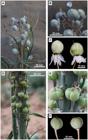
Morphology of fruits of psammophytic species of the genus Eremurus. A-C: Eremurus anisopterus; D-F: E. inderiensis.
Summarized morphological data and comparative interpretation are provided below to establish key differences in the life form, reproductive strategy, and ecological plasticity of Eremurus anisopterus and Eremurus inderiensis (Table 1).
A comparison of seed sizes of E. inderiensis and E. anisopterus species is presented in the following table (Figure 5; Table 2). It provides statistical indicators for the length and width of seeds of each species: mean value ± standard error, minimum, maximum and confidence interval.

Seed morphology of psammophytic species of the genus Eremurus. A-C: Eremurus anisopterus; D-F: E. inderiensis.
The microphotographs below reflect the surface features of the seeds of the species under study, demonstrating the nature of the relief, the degree of expression of cell structures and the type of microsculpture of the seed coat (Figure 6).
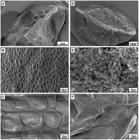
Comparative microstructure of the surface of seeds of Eremurus anisopterus and E. inderiensis. A-C: Eremurus anisopterus; D-F: E. inderiensis.
3.2. Anatomy analysis
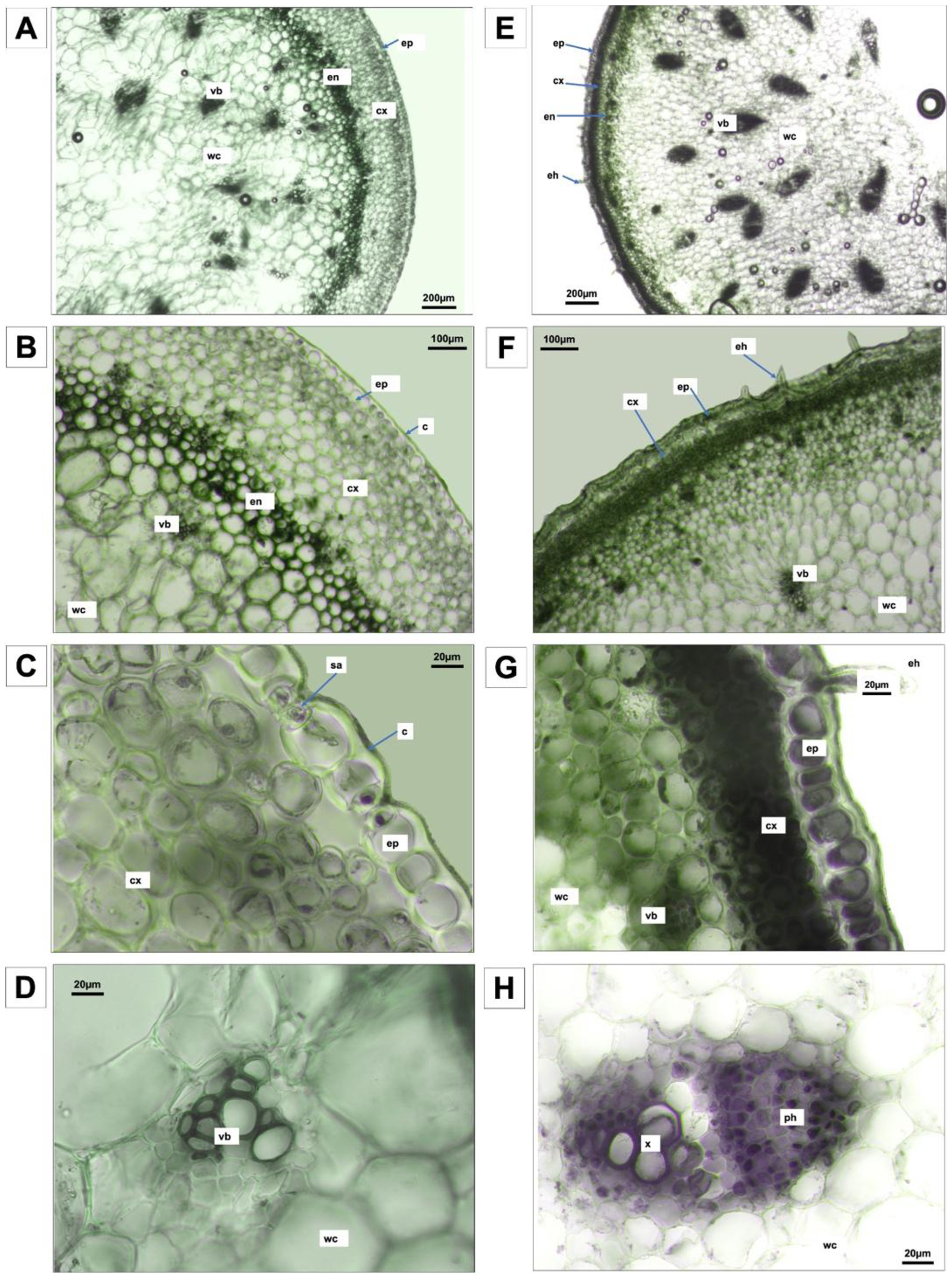
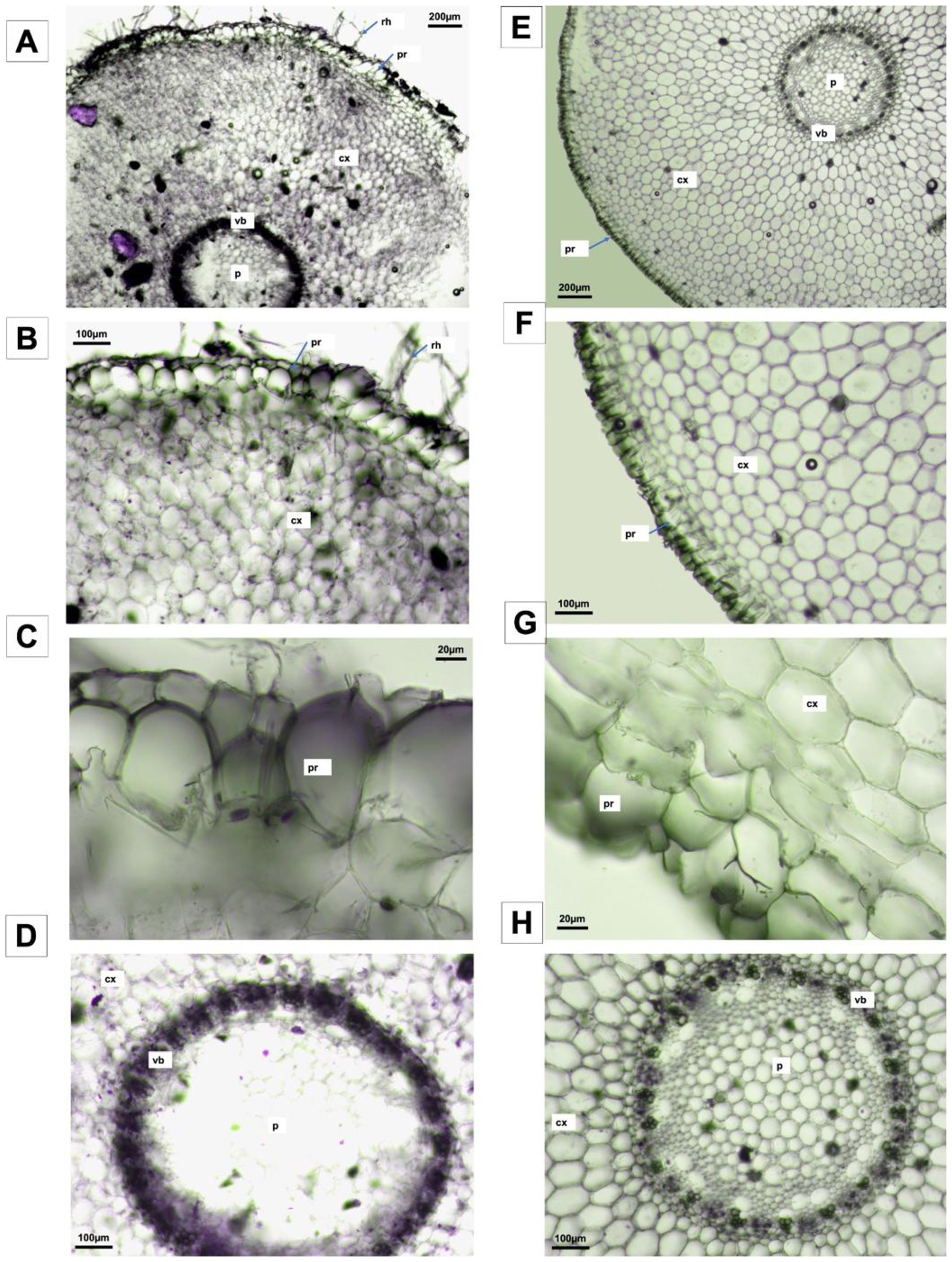
The results presented below are based on a comparative analysis of the anatomical structure of the leaves, stem and root of two psammophytic species, Eremurus anisopterus and Eremurus inderiensis. The study included the measurement of key morphological and anatomical parameters that reveal differences in the structure of integumentary tissues, photosynthetic elements, water-bearing cells and parenchyma (Figure 7, 8, 9).
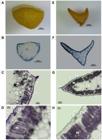
Anatomical structure of leaves of psammophytic species of the genus Eremurus. A-D: Eremurus anisopterus; E-H: E. inderiensis.

Anatomical structure of stems of psammophytic species of the genus Eremurus. A-D: Eremurus anisopterus; E-H: E. inderiensis.

Anatomical structure of the roots of psammophytic species of the genus Eremurus. A-D: Eremurus anisopterus; E-H: E. inderiensis.
Below are systematized quantitative data and their interpretation, reflecting the anatomical specifics of each species and allowing to assess their ecological strategy in the conditions of desert ecosystems of Kazakhstan (Tables 3, 4, 5).
Indicators of the anatomical structure of leaves of Eremurus inderiensis and E. anisopterus species
Indicators of the anatomical structure of the stem of the species Eremurus inderiensis and E. anisopterus
Indicators of the anatomical structure of the root of Eremurus inderiensis and E. Anisopterus species
3.3. Flow cytometry analysis
The analysis was performed using Pisum sativum and Vicia faba as internal standards, which ensured high measurement accuracy and low coefficients of variation (CV), not exceeding 3%. In the resulting non-gated histograms (Figure 10), clearly defined G1-phase peaks of the studied samples are visible, as well as a distinct separation between the signals of the standards and the analyzed species, confirming the correctness of the methodology and the reliability of the results. The obtained DNA content data (Table 6) revealed significant interspecific differences. E. cristatus and E. inderiensis exhibited similar 2C values, corresponding to a diploid level (2n = 2x), which fully agrees with previously published karyological information (2n = 14). In contrast, E. anisopterus showed an almost twofold increase in nuclear DNA content, indicating a tetraploid level (2n = 4x) and reflecting a divergence from earlier literature reports that had described this species as diploid. In this analysis, E. cristatus served as the outgroup.

Examples of ungated flow cytometric histograms. A – E. cristatus (E.c.); B – E. inderiensis (E.i.); C, D – E. anisopterus (E.a.);. E – E. inderiensis and E. anisopterus combined; F - E. cristatus and E. anisopterus combined. P.s. – internal standard P. sativum. V.f. - internal standard V. faba.
In order to clarify phylogenetic relationships and clarify the taxonomic position of the studied species of the genus Eremurus, molecular genetic analysis was carried out in this paper using sequences of nuclear and chloroplast markers (Figures 11, 12).

The ITS tree represents species of the genus Eremurus.The joint presence of Bayesian with a probability greater than 0.98 and bootstrap support greater than 95% is indicated by a black dot.

Plastid phylogenetic tree (trnQ–rps16) of Eremurus species. The joint presence of Bayesian with a probability greater than 0.98 and bootstrap support greater than 95% is indicated by a black dot. The samples highlighted by us are in bold. Groups of species are outlined by a vertical short line and colored in a single color. The following data were obtained by running the data through the JModeltest software: TPM1uf, -lnL 1422.16500, AIC 3021.195672, weight 0.382692.
The samples highlighted by us are in bold. Groups of species are outlined by a vertical short line and colored in a single color. The following data were obtained by running the data through the JModeltest software: TrN+G, -lnL 1306.11784, AIC 2862.839128, weight 0.198803.
4. Discussion
Analysis of herbarium materials (AA, MW, LE, TASH) and our own field collections showed that the sandy desert ecosystems of Kazakhstan are reliably inhabited by two psammophytic species of the genus Eremurus: E. anisopterus (Kar. et Kir.) Regel and E. inderiensis (Steven) Regel. Their distribution, habitat preferences, and responses to anthropogenic impacts differ significantly. Based on the compilation of occurrence points and literature data, a distribution map was created, demonstrating the mosaic nature of the ranges of both species and their unequal roles in shaping desert vegetation (Figure 2).
Eremurus anisopterus exhibits a predominantly localized distribution within the Balkhash–Alakol floristic region and the Ili River valley, with occasional records from the Pre-Aral, Kyzylorda, Kyzylkum, and Turkestan floristic regions. All contemporary collection sites of this species are associated with sandy massifs characterized by well-developed barchan morphology, often including a shrub layer. The species occurs on stabilized and slightly mobile dunes overgrown with saxaul and other shrubs, indicating its preference for a specific combination of loose substrate and stable microrelief. Within the Ili River valley, E. anisopterus is found mainly on the left bank, where the degree of plowing and grazing is significantly lower than on the right bank. On the right bank, the presence of an extensive network of agricultural enterprises and high grazing pressure from large and small livestock leads to trampling and compaction of sandy soils, resulting in the exclusion of the species from plant communities. Thus, E. anisopterus can be considered an indicator of lightly disturbed barchan ecosystems, sensitive to anthropogenic pressure and changes in the physical state of the substrate. Comparison of herbarium and contemporary field data shows that E. anisopterus has a narrow ecological amplitude: it rarely occurs on flat stabilized sands, interdunal depressions, or weakly saline sandy steppes. The species demonstrates marked stenotopy, being associated with relatively “young” or partially mobile barchans that preserve sand looseness and a favorable water regime in the upper soil profile. Its occurrence on shrub-covered dunes indicates that the shrub vegetation provides an important microclimatic and soil-protective function, stabilizing the sandy substrate and creating a more favorable moisture–temperature regime. When the shrub layer is disturbed, grazing increases, and sand compaction occurs, conditions for E. anisopterus rapidly deteriorate, leading to its local disappearance from phytocoenoses.
Eremurus inderiensis exhibits a considerably wider geographic and ecological distribution within the sandy ecosystems of Kazakhstan. The species has been recorded in the Pre-Aral region (Pre-Aral and Kyzylorda floristic regions), the Caspian lowlands, the Betpak-Dala Desert, the Moyynkum, northern and southern Balkhash areas, and on sandy sites associated with the Dzungarian Alatau. This extensive range indicates a high adaptive capacity to different types of sandy substrates and climatic conditions within the desert zone.
Compared to E. anisopterus, E. inderiensis shows significantly greater ecological and coenotic plasticity. The species is primarily associated with stabilized and slightly mobile flat sands, interdunal depressions, and gently undulating desert plains. It occurs both in pure psammophytic communities and in complex shrub–psammophytic or wormwood–grass associations, often together with Ephedra, Krascheninnikovia (teresken), various grasses, and Artemisia species. On dunes, E. inderiensis generally occupies the lower and middle slopes, rarely reaching the crest, which emphasizes its preference for more stabilized areas with reduced sand mobility. A key feature of E. inderiensis in terms of eco-geography is its tolerance to anthropogenic impacts. Unlike E. anisopterus, this species demonstrates high resilience to grazing pressure and other disturbances. It is not used as fodder, is avoided by livestock, and tolerates trampling. Field observations indicate increasing density and abundance of E. inderiensis closer to settlements and pastures, highlighting its pasciphilous nature: the species can not only persist but also increase its presence in communities on degraded and anthropogenically impacted sandy sites. In some cases, E. inderiensis forms almost monodominant phytocoenoses on stabilized plains, making it one of the key edifiers of desert vegetation. Comparison of the ranges and habitats of the two species shows that, despite occasional syntopic occurrences, their ecological niches only partially overlap. Co-occurrence of E. anisopterus and E. inderiensis typically occurs in transitional zones within barchan complexes: E. inderiensis occupies lower slopes and interdunal depressions, while the upper, more mobile and less compacted dune areas are occupied by scattered individuals of E. anisopterus. In these communities, the contribution of E. anisopterus remains minimal, further confirming its status as a narrowly specialized stenobiont, dependent on specific combinations of microrelief, sand structure, and minimal disturbance.
Ecogeographical analysis indicates that E. anisopterus and E. inderiensis represent two distinct types of psammophytic adaptation within the desert zone of Kazakhstan. E. anisopterus can be characterized as a species with a narrow ecological niche, highly dependent on the structural integrity of barchan landscapes and low levels of anthropogenic disturbance. Its presence indicates the preservation of natural barchan complexes and minimal pasture degradation. In contrast, E. inderiensis is a typical eurybiont psammophyte, capable of colonizing a wide range of sandy habitats, from relatively undisturbed areas to actively grazed pastures. It serves as an indicator of stabilized and often secondarily transformed sands, playing an important role in maintaining vegetation cover under grazing pressure and other forms of anthropogenic impact.
The spatial distribution of these two species across different floristic regions of Kazakhstan also reflects large-scale biogeographic patterns. The highest occurrence of E. anisopterus is confined to southern Balkhash and the Ili River valley, associated with the combination of a warm, arid climate and well-developed barchan dune systems. Meanwhile, E. inderiensis is recorded in the western (Pre-Aral, Caspian) as well as central and southeastern (Betpak-Dala, Moyynkum, southern Balkhash) desert regions, showing a gradual decrease in occurrence from east to west within Kazakhstan’s sandy massifs. This distribution pattern reflects the species’ high adaptive capacity to diverse combinations of climatic and soil–geomorphological factors within the desert zone.
4.1. Morphology
A comparative analysis of the morphological characteristics of Eremurus inderiensis and E. anisopterus revealed a clear divergence in their adaptive strategies to the conditions of arid sandy ecosystems. Morphometric data highlight differences in plant habit, the structure of vegetative and generative organs, and, consequently, in their adaptations to different types of sandy habitats. E. inderiensis exhibits a substantially greater height (69.66 ± 2.91 cm) compared to E. anisopterus (33.90 ± 1.27 cm). The long inflorescence of E. inderiensis (43.23 ± 2.23 cm) allows for efficient use of solar radiation and high generative productivity, whereas the short inflorescence of E. anisopterus (19.20 ± 0.93 cm) reflects adaptation to mobile dunes and wind erosion. Leaf morphology also differs markedly. In E. anisopterus, leaves are narrow (5.87 ± 0.24 mm), trigonal, and exhibit xeromorphic traits that reduce transpiration and enhance stability on loose sand; the number of leaves forming a dense rosette is slightly higher (14.50 ± 0.83). In contrast, E. inderiensis has broader (12.39 ± 0.66 mm) and longer leaves (31.25 ± 0.91 cm), indicating higher photosynthetic potential and preference for stabilized and interdunal sands.
The most pronounced differences occur in the generative sphere. E. inderiensis produces significantly more flowers and fruits (103.41 ± 8.05) than E. anisopterus (21.00 ± 2.06), whereas the latter develops larger fruits (14.00 ± 0.29 mm vs. 7.52 ± 0.16 mm). Seeds of E. anisopterus are also larger (7.47 × 5.28 mm) compared to E. inderiensis (4.84 × 3.10 mm), which facilitates successful germination in mobile substrates.
In summary, E. anisopterus represents a stenotopic barchan psammophyte with a K-strategy, while E. inderiensis is a eurytopic species exhibiting a pronounced r-strategy, supporting broad dispersal and resilience in the sandy deserts of Kazakhstan and Central Asia.
The seed surface of Eremurus anisopterus is characterized by a pronounced folded-wrinkled texture, combining large longitudinal and transverse grooves with fine microsculpturing. The folding is unevenly distributed: the central part of the seed exhibits a dense network of small folds, whereas the periphery shows a cell-like convex relief. At the microscopic level, the surface is composed of large polygonal cells with thickened walls. Within the cells, a radial “rosette” pattern of fine cracks and folds imparts a granular–rough texture to the seed coat. This structure facilitates moisture retention and helps anchor the seed within the mobile sandy substrate.
Seeds of Eremurus inderiensis display an even coarser and rougher surface. Their relief is formed by deep grooves, prominent intercellular seams, and numerous micro-bumps. Radial cracks within the cells are deeper and more distinct than in E. anisopterus, creating a highly rugged texture. This microsculpture reflects adaptation to arid and gravelly habitats, providing protection against abrasion, enhancing moisture retention, and ensuring reliable fixation of seeds in the substrate.
4.2. Anatomy
Comparative anatomical studies of the leaves, stems, and roots of Eremurus inderiensis and E. anisopterus revealed pronounced differences in the structure of protective, assimilative, and water-storage tissues, reflecting their adaptations to different microrelief conditions within the sandy deserts of Kazakhstan. These findings are consistent with general patterns of xerophytic and psammophytic plant adaptation.
The leaves of E. anisopterus are characterized by a thicker epidermis (20.53 μm vs. 15.20 μm in E. inderiensis) and a well-developed palisade mesophyll (134.74 μm vs. 92.22 μm), indicating a pronounced water-conservation strategy and high photosynthetic activity under extreme insolation. In contrast, E. inderiensis has larger water-storage cells (68.64 μm vs. 50.17 μm), reflecting a strategy of moisture accumulation typical of interdunal and slightly mobile sands.
The stem of E. anisopterus also shows xeromorphic traits: a thicker epidermis (29.20 μm vs. 23.24 μm), larger primary cortex cells (34.52 μm vs. 17.67 μm), and well-developed water-storage elements (91.96 μm vs. 59.18 μm), highlighting their role as supplementary water reservoirs.
In the roots, E. anisopterus exhibits a thicker periderm (76.96 μm), whereas E. inderiensis has a more extensive primary cortex parenchyma (87.86 μm vs. 68.69 μm), enabling prolonged water retention. Overall, E. anisopterus is adapted to extremely dry barchan conditions, while E. inderiensis is oriented toward more moisture-stable sandy ecotopes.
4.3. Flow cytometry and molecular genetic data
Flow cytometry data allow refinement of the genomic positions of Eremurus inderiensis and E. anisopterus in comparison with E. stenophyllus, for which genome size and GC content have been well characterized. In the genus Eremurus in general, there is a combination of large nuclear genomes with a low basic chromosome number (x = 7), a pattern typical of many xerophytic species and consistent with their ecological strategies.
In E. stenophyllus, the 2C value is approximately 16.2 pg (1C ≈ 8.1 pg), placing it among the species with the largest genomes in Asphodeloideae. The GC content reaches 41.3%, which lies in the medium-to-high range and is associated with arid habitats and increased stress tolerance (Šmarda et al., 2014). In this context, E. stenophyllus can serve as a reference species for evaluating genomic parameters in other Eremurus taxa.
Although direct cytometric measurements for E. inderiensis and E. anisopterus are lacking, their phylogenetic positions and karyological data allow informed inferences. E. inderiensis is a diploid species (2n = 14), consistently placed in Clade B, where taxa generally have moderate genome sizes. Its 1C genome is estimated at 6.5–8.0 pg with a GC content of approximately 38–41%, corresponding to less extreme habitat conditions.
In contrast, E. anisopterus is tetraploid (2n = 28; Wu and Ma 2005), implying a substantial increase in genome size: the expected 2C value may reach 30–32 pg, with 1C of 14–16 pg. Polyploidization in Clade C is likely accompanied by stabilization of GC content and enhanced genomic plasticity, providing adaptive advantages under conditions of severe aridification.
Thus, E. inderiensis and E. anisopterus represent two contrasting types of genomic organization: a diploid, relatively stable type and a polyploid, more dynamic type. These differences correspond to their phylogenetic positions and reflect divergent evolutionary strategies for adaptation in the desert ecosystems of Central Asia.
The genetic positions of Eremurus inderiensis and E. anisopterus reflect the divergence of two independent evolutionary lineages within the genus Eremurus, as confirmed by analyses of nuclear and plastid markers. The constructed phylogenetic trees are consistent with previously published molecular data and demonstrate a stable clade structure within the genus. E. inderiensis consistently occupies a position within Clade B, which unites species corresponding to the traditional subgenus Eremurus and section Ammolirion. All analyzed sequences form a well-supported monophyletic cluster, indicating high genetic integrity of the species and no evidence of hybridization or plastid capture. This fully aligns with the results of Safar et al. (2014) and recent complete chloroplast genome data (Makhmudjanov et al., 2023, 2024).
In contrast, E. anisopterus confidently falls within Clade C, associated with the subgenus Henningia and the so-called “yellow” species complex. Its sequences group with Central Asian taxa (E. luteus, E. suworowii, E. stenophyllus), forming a distinct monophyletic subcluster that reflects intraspecific genetic homogeneity. The congruence between nuclear and plastid data, and the absence of conflicts between trees, indicate an ancient (Oligocene–Miocene) and stable evolutionary separation of these lineages, confirming the independent evolutionary status of both species as representatives of different directions within the genus Eremurus.
4.4. Phytocoenotic characteristics
During field expeditions conducted in 2023–2025 in the desert regions of Kazakhstan, the composition and current state of plant communities dominated by psammophytic species of the genus Eremurus were studied. Of the 28 communities examined, 23 contained Eremurus inderiensis, and 7 contained Eremurus anisopterus. In some cases, both species co-occurred, which explains why the total exceeds the number of communities studied.
Eremurus anisopterus is a rare and localized species, occurring primarily in barchan-type sandy deserts of southern Kazakhstan. It is typically associated with stabilized and semi-stabilized loose dunes densely covered with shrub species such as Haloxylon aphyllum and Calligonum leucocladum and occurs in areas with minimal anthropogenic disturbance. Observations indicate that under increased human impact—particularly in regions of intensive grazing and plowing, which lead to soil compaction and substrate degradation—E. anisopterus disappears from the phytocoenoses. The species is more frequently found in areas distant from settlements and agricultural lands, highlighting its sensitivity to disruption of the natural structure of sandy ecosystems.
In contrast, Eremurus inderiensis demonstrates a broader ecological amplitude and high adaptive capacity. It occurs on dune slopes as well as on flat sandy areas, interdunal depressions, and weakly stabilized sands. The species tolerates moderate levels of anthropogenic impact and often forms stable populations near settlements, where other desert species cannot persist under pressure. E. inderiensis shows high resilience to soil compaction and is not grazed by livestock, allowing it to survive even in degraded pastures. Consequently, this species can be considered an indicator of moderate disturbance and the relative stability of sandy ecosystems.
Phytocoenoses with Eremurus inderiensis belong to typical desert communities of Kazakhstan and are characterized by a moderate projective cover of the species (5–30%) within the phytocoenosis. The species plays an important role in the middle layer. These communities contain 15–29 plant species, and in areas affected by human activity, species diversity decreases while the proportion of disturbance-tolerant taxa increases. Common species in these phytocoenoses include Haloxylon aphyllum, Calligonum leucocladum, Calligonum aphyllum, Krascheninnikovia ceratoides, Carex physodes, Eremopyrum orientale, Scorzonera sericeolanata, and other typical desert plants. The vertical structure of the communities is well-differentiated: the upper layer is formed by shrubs (Haloxylon aphyllum, Calligonum leucocladum), the middle layer by semi-shrubs and large herbaceous species (Eremurus inderiensis, Krascheninnikovia ceratoides), and the lower layer by herbaceous plants, including ephemerals and ephemeroids.
Communities with Eremurus anisopterus are mainly associated with barchan and interdunal ecosystems with loose sandy substrates and low soil compaction. The average number of species in these communities is about 29. E. anisopterus often predominates in some patches, with individual heights of 40–60 cm and projective cover of 3–5% within the phytocoenosis. Common associated species are Haloxylon aphyllum, Calligonum leucocladum, Carex physodes, and Atraphaxis replicata. These communities have a three-layered structure: the upper layer is formed by shrubs, the middle layer by Eremurus anisopterus and other semi-shrubs, and the lower layer by herbaceous plants (Carex physodes, Poa bulbosa).
Both Eremurus species play an important role in the structure of desert ecosystems in Kazakhstan. They participate in forming biogeocenoses typical for sandy and semi-desert landscapes and maintain vegetation stability on mobile substrates. E. anisopterus shows high specialization, being confined to semi-stabilized barchan ecosystems, and can serve as an indicator of the integrity of natural sandy landscapes. E. inderiensis, on the other hand, demonstrates ecological plasticity and the ability to exist in disturbed ecotopes, acting as an indicator of the adaptive potential of the genus under increasing anthropogenic impact.
The conducted phytocoenotic analysis of the psammophytic species Eremurus inderiensis and E. anisopterus allows us to conclude that they differ in their ecological strategies and functional roles within the ecosystems of Kazakhstan.
5. Conclusions
A comprehensive ecological-geographical, morpho-anatomical, cytogenetic, molecular-phylogenetic, and phytocoenotic study of Eremurus anisopterus and E. inderiensis revealed that these species exhibit fundamentally different types of psammophytic adaptation and evolutionary survival strategies in the desert ecosystems of Kazakhstan. E. anisopterus is a narrowly specialized stenotopic species, confined to minimally disturbed barchan complexes with loose sandy substrates. It demonstrates a K-strategy, high sensitivity to anthropogenic impacts, and can be regarded as an indicator of the integrity and conservation of natural sandy (barchan) ecosystems. In contrast, E. inderiensis exhibits a broad ecological amplitude, high morpho-anatomical and cenotic plasticity, and resilience to grazing pressure and secondary disturbances. Following an r-strategy, this species serves as an important stabilizer and edifier of vegetation cover on both stabilized and transformed sands.
The differences between the species are consistently supported by data on morphology, anatomy, seed micro-sculpture, ploidy level, inferred genome organization, and phylogenetic position (Clade B vs. Clade C), indicating deep evolutionary divergence between these lineages. These findings highlight the significant role of the genus Eremurus in the functioning of sandy ecosystems and underscore its potential as an indicator of desert landscape conditions, guiding the conservation of rare psammophytic species and sustainable management of arid territories in Kazakhstan.
Acknowledgements
This research was funded by the Ministry of Ecology and Natural Resources of the Republic of Kazakhstan «BR23591088 – Creating the Ulytau Plant Cadastre as Kazakhstan Law tasks’ implementation “On Plant World” for sustainable use of the region’s botanical resources».
Data Availability Statement
The entire data set that supports the results of this study was published in the article itself.
References
-
ABDILDANOV, D.S., VESSELOVA, P.V., KUDABAYEVA, G.M., ZAIKOV, V.F., OSMONALI, B.B., SKAPTSOV, M.V. and FRIESEN, N., 2025a. Análise populacional de espécies psamófitas Allium sabulosum Steven ex Bunge no Cazaquistão. Brazilian Journal of Biology, vol. 85, pp. e298182. https://doi.org/10.1590/1519-6984.298182 PMid:41221941.
» https://doi.org/10.1590/1519-6984.298182 -
ABDILDANOV, D.S.H., VESSELOVA, P.V., KUDABAYEVA, G.M., OSMONALI, B.B., SKAPTSOV, M.V. and FRIESEN, N., 2025b. Endemic of Kazakhstan Allium lehmannianum Merckl. Ex Bunge and Its Position Within the Genus Allium. Plants, vol. 14, no. 7, pp. 1113. https://doi.org/10.3390/plants14071113 PMid:40219181.
» https://doi.org/10.3390/plants14071113 -
ALDASSUGUROVA, C., ULTANBEKOVA, G., AMETOV, A., AKSOY, A., KULYMBET, K., AKHMETOVA, A., NAZARBEKOVA, S., CHILDIBAYEVA, A., BAZARBAYEVA, T., MUKANOVA, G. and BAIBOTAYEVA, A., 2025. Agrochemical compositions of soils and rhizosphere microorganisms of Rosa potentilliflora Chrshan. et M. Pop. in eastern and central part of Zailiyskiy Alatau. Ecological Processes, vol. 14, no. 1, pp. 66. https://doi.org/10.1186/s13717-025-00634-9
» https://doi.org/10.1186/s13717-025-00634-9 - BAITENOV, M.S., 2001. Flora of Kazakhstan Almaty: Gylym, 2 vols. (2. The generic complex of flora).
-
BLATTNER, F.R., 1999. Direct amplification of the entire ITS region from poorly preserved plant material using recombinant PCR. BioTechniques, vol. 27, no. 6, pp. 1180-1186. https://doi.org/10.2144/99276st04 PMid:10631497.
» https://doi.org/10.2144/99276st04 - BYKOV, B. A., 1957. Geobotany Alma-Ata: Izd-vo AN Kaz.
- BYKOV, B.A., 1978. Geobotany Alma-Ata: [s.n.].
-
DOLEŽEL, J., GREILHUBER, J., LUCRETTI, S., MEISTER, A., LYSÁK, M., NARDI, L. and OBERMAYER, R., 1998. Plant genome size estimation by flow cytometry: inter-laboratory comparison. Annals of Botany, vol. 82, suppl. 1, pp. 17-26. https://doi.org/10.1093/oxfordjournals.aob.a010312
» https://doi.org/10.1093/oxfordjournals.aob.a010312 -
DOLEŽEL, J., SGORBATI, S. and LUCRETTI, S., 1992. Comparison of three DNA fluorochromes for flow cytometric estimation of nuclear DNA content in plants. Physiologia Plantarum, vol. 85, no. 4, pp. 625-631. https://doi.org/10.1111/j.1399-3054.1992.tb04764.x
» https://doi.org/10.1111/j.1399-3054.1992.tb04764.x - ERZHAPOVA, E.S. and ALIKHADZHIEV, M.X., 2015. Plant morphology Grozny: Chechen State University, pp. 23-34.
-
FARHADI, F., AVAN, R., SAHEBKAR, A. and EGHBALI, S., 2023. A comprehensive review on Eremurus species: phytochemistry, pharmacology and traditional uses. Phytochemistry Letters, vol. 53, pp. 142-149. https://doi.org/10.1016/j.phytol.2022.12.002
» https://doi.org/10.1016/j.phytol.2022.12.002 - FEDCHENKO, B.A., 1935. Eremurus. In: V.L. KOMAROV, ed. Flora of the USSR Moscou: Academy of Sciences of the USSR, vol. 4.
-
FELSENSTEIN, J., 1985. Confidence limits on phylogenies: an approach using the bootstrap. Evolution; International Journal of Organic Evolution, vol. 39, no. 4, pp. 783-791. https://doi.org/10.1111/j.1558-5646.1985.tb00420.x PMid:28561359.
» https://doi.org/10.1111/j.1558-5646.1985.tb00420.x - FLORA OF KAZAKHSTAN, 1958. Eremurus Alma-Ata: Publishing House of the Academy of Sciences of the Kazakh SSR, vol. 2, pp. 110-117.
-
HU, C., KONG, Q., YANG, D. and PAN, Y., 2011. Isolation and structural characterization of a novel galactomannan from Eremurus anisopterus (Ker. et Kir) Regel roots. Carbohydrate Polymers, vol. 84, no. 1, pp. 402-406. https://doi.org/10.1016/j.carbpol.2010.11.054
» https://doi.org/10.1016/j.carbpol.2010.11.054 -
HUELSENBECK, J.P., LARGET, B., MILLER, R.E. and RONQUIST, F., 2002. Potential applications and pitfalls of Bayesian inference of phylogeny. Systematic Biology, vol. 51, no. 5, pp. 673-688. https://doi.org/10.1080/10635150290102366 PMid:12396583.
» https://doi.org/10.1080/10635150290102366 -
INTERNATIONAL PLANT NAMES INDEX - IPNI, 2026 [viewed 8 January 2026]. [online]. Available from: https://www.ipni.org/
» https://www.ipni.org/ -
JING, A.N., WU, L.,WANG, H.J., DUAN, C. and WANG, S.M., 2017. Structural and dynamic characteristics of Eremurus anisopterus populations in areas with different levels of disturbance. Acta Ecologica Sinica, vol. 37, no. 6, pp. 2023-2032. http://doi.org/105846 /stxb201512242572
» http://doi.org/105846 /stxb201512242572 -
KARABALAYEVA, D., KURMANBAYEVA, M., KUSMANGAZINOV, A., OSMONALI, B. and ZHUMAGUL, M., 2025a. Floristic checklist and distribution of Trollius species (Ranunculaceae) in Kazakhstan. Biodiversitas (Surakarta), vol. 26, no. 8, pp. 4103-4123. https://doi.org/10.13057/biodiv/d260839
» https://doi.org/10.13057/biodiv/d260839 -
KARABALAYEVA, D., KURMANBAYEVA, M., KULYMBET, K., KUSMANGAZINOV, A., ZHUMAGUL, M., ANATOLIY, R., SAKEN, M., KUANYSHBAYEVA, M. and ALZHANOVA, B., 2025b. Influence of soil characteristics on the distribution and evolution of Trollius dschungaricus Regel populations in the Northern Tien Shan, Kazakhstan. Journal of Ecological Engineering, vol. 26, no. 10, pp. 450-459. https://doi.org/10.12911/22998993/207416
» https://doi.org/10.12911/22998993/207416 -
KENESBAY, A., KURMANTAYEVA, A., SITPAYEVA, G., SHMAKOV, A., KOLTUNOVA, A. and KULYMBET, K., 2025. Assessment of Cousinia mindshelkensis populations (Asteraceae) at the Karatau Ridge, South Kazakhstan. Biodiversitas (Surakarta), vol. 12, no. 26. http://doi.org/10.13057/biodiv/d2612
» http://doi.org/10.13057/biodiv/d2612 -
KLUGE, A.G. and FARRIS, J.S., 1969. Quantitative phyletics and the evolution of anurans. Systematic Biology, vol. 18, no. 1, pp. 1-32. https://doi.org/10.1093/sysbio/18.1.1
» https://doi.org/10.1093/sysbio/18.1.1 -
KUBENTAYEV, S.A., KHASENOVA, A.E., IMANBAYEVA, A.A. and ALIBEKOV, D.T., 2022. Morphology of seeds of rare and endemic plants of Kazakhstan. Fundamental and Experimental Biology, vol. 107, no. 3, pp. 92-98. https://doi.org/10.31489/2022bmg3/92-98
» https://doi.org/10.31489/2022bmg3/92-98 -
KUMAR, S., STECHER, G. and TAMURA, K., 2016. Mega 7: molecular evolutionary genetics analysis version 7.0 for bigger datasets. Molecular Biology and Evolution, vol. 33, no. 7, pp. 1870-1874. https://doi.org/10.1093/molbev/msw054 PMid:27004904.
» https://doi.org/10.1093/molbev/msw054 -
LI, X., XIE, L.Z., LI, J., CHEN, G.D. and AISA, H.A., 2015. A pair of new tetrahydro-naphthalenone enantiomers from Eremurus altaicus (Pall.) Stev. Phytochemistry Letters, vol. 13, pp. 330-333. https://doi.org/10.1016/j.phytol.2015.07.014
» https://doi.org/10.1016/j.phytol.2015.07.014 -
MA, M., FAN, J. and LI, J., 2008. Pollination characteristics of the ephemeroid plant Eremurus anisopterus. Frontiers of Biology in China, vol. 3, no. 3, pp. 315-319. https://doi.org/10.1007/s11515-008-0041-y
» https://doi.org/10.1007/s11515-008-0041-y -
MAKHMUDJANOV, D., ABDULLAEV, D., JURAMURODOV, I., TUYCHIEV, S., YUSUPOV, Z., SUN, H., TOJIBAEV, K. and DENG, T., 2023. Comparative analysis and characterization of ten complete chloroplast genomes of eremurus species (Asphodelaceae). Forests, vol. 14, no. 9, pp. 1709. https://doi.org/10.3390/f14091709
» https://doi.org/10.3390/f14091709 -
MAKHMUDJANOV, D., JURAMURODOV, I., KURBONALIEVA, M., YUSUPOV, Z., DEKHKONOV, D., DENG, T. and SUN, H., 2022. Genus Eremurus (Asphodelaceae) in the flora of Uzbekistan. Plant Diversity of Central Asia, vol. 2, no. 2, pp. 82-127. https://doi.org/10.54981/PDCA/vol1_iss2/a4
» https://doi.org/10.54981/PDCA/vol1_iss2/a4 -
MAKHMUDJANOV, D., VOLIS, S., YUSUPOV, Z., JURAMURODOV, I., TOJIBAEV, K., DENG, T. and SUN, H., 2024. Central Asia revealed as a key area in evolution of Eremurus (Asphodelaceae). Plant Diversity, vol. 46, no. 3, pp. 333-343. https://doi.org/10.1016/j.pld.2023.08.004 PMid:38798731.
» https://doi.org/10.1016/j.pld.2023.08.004 -
MAKHMUDJANOV, D., YUSUPOV, Z., ABDULLAEV, D., DENG, T., TOJIBAEV, K. and SUN, H., 2019. The complete chloroplast genome of Eremurus robustus (Asphodelaceae). Mitochondrial DNA. Part B, Resources, vol. 4, no. 2, pp. 3366-3367. https://doi.org/10.1080/23802359.2019.1674198 PMid:33365996.
» https://doi.org/10.1080/23802359.2019.1674198 - MAKHMUDJANOV, D.I., TOJIBAEV, K.S.H., JURAMURODOV, I.J., JURAEV, Z.N., DENG, T. and SUN, H., eds., 2025. The genus Eremurus of the world Ukraine: Institute of Botany.
-
MAMUT, J., XIONG, Y.Z., TAN, D.Y. and HUANG, S.Q., 2014. Pistillate flowers experience more pollen limitation and less geitonogamy than perfect flowers in a gynomonoecious herb. The New Phytologist, vol. 201, no. 2, pp. 670-677. https://doi.org/10.1111/nph.12525 PMid:24111788.
» https://doi.org/10.1111/nph.12525 -
MAMUT, J., XIONG, Y.Z., TAN, D.Y. and HUANG, S.Q., 2017. Flexibility of resource allocation in a hermaphroditic‐gynomonoecious herb through deployment of female and male resources in perfect flowers. American Journal of Botany, vol. 104, no. 3, pp. 461-467. https://doi.org/10.3732/ajb.1600397 PMid:28341630.
» https://doi.org/10.3732/ajb.1600397 - MUKHADIL, G.K., 2023. Species composition of the genus Eremurus M. Bieb. desert part of the valley of the river Ili//"FARABI ALEMI": materials of the international. In: Nauchn. Conference Students and Young Scientists, 2023 April 6-8, Almaty: KazNU Publishing House, pp. 60-61.
-
MUKHADIL, G.K., KUDABAEVA, G.M. and DAULET, K.A., 2024. Distribution and ecological confinement of psammophytic species of the genus Eremurus in Kazakhstan. Problems of Botany of Southern Siberia and Mongolia, vol. 23, no. 2, pp. 272-278. http://doi.org/10.14258/pbssm.2024104
» http://doi.org/10.14258/pbssm.2024104 - MUKHADIL, G.K., KUDABAYEVA, G.M. and OSMONALI, B.B., 2023. Ecological confinement and features of species of the genus Eremurus M. Bieb. desert part of the valley of the river Ili//Problems of desertification of the territory of the Republic of Kazakhstan and issues of their solution: materials of the International Conference. In: Nauchno-prakt. Conference, 2023 September 22, Almaty. Almaty: KazNU Publishing House, pp. 100-103.
-
MURATBAYEVA, A., NURMAHANOVA, A., KULYMBET, K., MYLTYKBAYEVA, A., AKHMETOVA, A., ABDULLAYEVA, B., ATABAYEVA, S., BAITASHEVA, G., KYRBASSOVA, E. and OMAROVA, Z., 2025. Soil morphological and chemical characteristics in the habitats of the rare, endemic plant Spiraeanthus schrenkianus in Karatau Mountains, Kazakhstan. Brazilian Journal of Biology, vol. 85, pp. e295015. https://doi.org/10.1590/1519-6984.295015 PMid:40834182.
» https://doi.org/10.1590/1519-6984.295015 - NAUMOV, S.YU. and KIRPICHEV I.V., 2017. Geobotany: a textbook Lugansk: Elton, pp. 45-55.
-
ORAZOV, A., YERMAGAMBETOVA, M., MYRZAGALIYEVA, A., MUKHITDINOV, N., TUSTUBAYEVA, S., TURUSPEKOV, Y. and ALMEREKOVA, S., 2024. Plant height variation and genetic diversity between Prunus ledebouriana (Schlecht.) YY Yao and Prunus tenella Batsch based on using SSR markers in East Kazakhstan. PeerJ, vol. 12, pp. e16735. https://doi.org/10.7717/peerj.16735 PMid:38223754.
» https://doi.org/10.7717/peerj.16735 -
OSMONALI, B.B., AKHTAEVA, N.Z., VESSELOVA, P.V., KUDABAYEVA, G.M. and KURBATOVA, N.V., 2020. Features of the anatomical structure of various species of the genus Salsola L. Problems of Botany in Southern Siberia and Mongolia, vol. 19, pp. 146-154 (In Russian). https://doi.org/10.14258/pbssm.2020093
» https://doi.org/10.14258/pbssm.2020093 -
PLANTS OF THE WORLD ONLINE – POWO, 2026 [viewed 8 January 2026]. Royal Botanic Gardens, Kew [online]. Available from: https://powo.science.kew.org/
» https://powo.science.kew.org/ -
RONQUIST, F. and HUELSENBECK, J.P., 2003. Mr Bayes 3: bayesian phylogenetic inference under mixed models. Bioinformatics (Oxford, England), vol. 19, no. 12, pp. 1572-1574. https://doi.org/10.1093/bioinformatics/btg180 PMid:12912839.
» https://doi.org/10.1093/bioinformatics/btg180 - RUMYANTSEV, D.E. and ZAGREEVA, A.B., 2020. Plant morphology Delaware: Professional Science Publishing House, pp. 25-45.
-
SAFAR, K.N., OSALOO, S.K., ASSADI, M., ZARREI, M. and MOZAFFAR, M.K., 2014. Phylogenetic analysis of Eremurus, Asphodelus, and Asphodeline (Xanthorrhoeaceae-Asphodeloideae) inferred from plastid trnL-F and nrDNA ITS sequences. Biochemical Systematics and Ecology, vol. 56, pp. 32-39. https://doi.org/10.1016/j.bse.2014.04.015
» https://doi.org/10.1016/j.bse.2014.04.015 -
SHAHRAMPOUR, D. and RAZAVI, S.M., 2022. Physicochemical and structural properties of a bio-based antioxidant packaging film derived from Eremurus luteus root gum. Materials Today. Communications, vol. 33, pp. 104756. https://doi.org/10.1016/j.mtcomm.2022.104756
» https://doi.org/10.1016/j.mtcomm.2022.104756 -
SHAHRAMPOUR, D. and RAZAVI, S.M., 2023. Fabrication and characterization of novel biodegradable active films based on Eremurus luteus root gum incorporated with nanoemulsions of rosemary essential oil. Progress in Organic Coatings, vol. 175, pp. 107360. https://doi.org/10.1016/j.porgcoat.2022.107360
» https://doi.org/10.1016/j.porgcoat.2022.107360 -
SHAW, J., LICKEY, E.B., SCHILLING, E.E. and SMALL, R.L., 2007. Comparison of whole chloroplast genome sequences to choose noncoding regions for phylogenetic studies in angiosperms: the tortoise and the hare III. American Journal of Botany, vol. 94, no. 3, pp. 275-288. https://doi.org/10.3732/ajb.94.3.275 PMid:21636401.
» https://doi.org/10.3732/ajb.94.3.275 -
SINAGA, P., SIMANJUNTAK, A., SAGALA, F. and GINTING, M.C., 2025. The effect of environmental, social and governance disclosure on firm value in energy sector companies listed on the indonesia stock exchange in the 2021-2023 PERIOD. Jurnal Ilmiah Accusi, vol. 7, no. 1, pp. 113-124. https://doi.org/10.36985/94t7h561
» https://doi.org/10.36985/94t7h561 -
SKAPTSOV, M.V., KUTSEV, M.G., SMIRNOV, S.V., VAGANOV, A.V., UVAROVA, O.V. and SHMAKOV, A.I., 2024. Standards in plant flow cytometry: an overview, polymorphism and linearity issues. Turczaninowia, vol. 27, no. 2, pp. 86-104. https://doi.org/10.14258/turczaninowia.27.2.10
» https://doi.org/10.14258/turczaninowia.27.2.10 -
SMIRNOVA, N.I., MESTECHKINA, N.M. and SHCHERBUKHIN, V.D., 2002. Localization of acetyl groups in the macromolecule of glucomannan obtained from roots of Eremurus zangezuricus. Applied Biochemistry and Microbiology, vol. 38, no. 5, pp. 467-469. https://doi.org/10.1023/A:1019976720404
» https://doi.org/10.1023/A:1019976720404 -
SUMBEMBAYEV, A., LAGUS, O., DANILOVA, A., AIMENOVA, Z., SEILKHAN, A., TAKIYEVA, Z., REWICZ, A. and NOWAK, S., 2025a. Seed Morphology ofAlliumL. Endemic Species from SectionSchoenoprasum(Amaryllidaceae) in Eastern Kazakhstan. Biology (Basel), vol. 14, no. 9, pp. 1230. https://doi.org/10.3390/biology14091230 PMid:41007375.
» https://doi.org/10.3390/biology14091230 -
SUMBEMBAYEV, A.A., LAGUS, O., DANILOVA, A.N., REWICZ, A. and NOWAK, S., 2025b. Morphometric parameters of seeds as a practical method for identifying rare species of the genusTulipaL. (Liliaceae) from East Kazakhstan region. PhytoKeys, vol. 251, pp. 67-86. https://doi.org/10.3897/phytokeys.251.133890 PMid:39867479.
» https://doi.org/10.3897/phytokeys.251.133890 -
SUMBEMBAYEV, A.A., LAGUS, O.A. and NOWAK, S., 2023. Seed morphometry of Rheum L. (Polygonaceae)species from Kazakhstan and its implications in taxonomy and species identification. Biodiversitas (Surakarta), vol. 24, no. 9, pp. 4677-4692. https://doi.org/10.13057/biodiv/d240908
» https://doi.org/10.13057/biodiv/d240908 - SWOFFORD, D.L., 2002. PAUP*: Phylogenetic analysis using parsimony (* and other methods), version 4 Sunderlan: Sinauer Associates.
-
TASTANBEKOVA, A., KULYMBET, K., KURMANBAYEVA, M., HÖHN, M., ZHUMAGUL, M., ABDURAIMOV, O., ISSAYEV, G., ALSHYNBAYEV, O., TOKTAR, M. and SMANOV, Z., 2025. Implications of population size, structure, and soil parameters for the conservation of Allochrusa gypsophiloides in Kazakhstan. Biodiversitas (Surakarta), vol. 26, no. 5, pp. 2051-2064. https://doi.org/10.13057/biodiv/d260504
» https://doi.org/10.13057/biodiv/d260504 -
THOMPSON, J.D., GIBSON, T.J., PLEWNIAK, F., JEANMOUGIN, F. and HIGGINS, D.G., 1997. The clustal X window interface: flexible strategies for multiple sequence alignment aided by quality analysis tools. Nucleic Acids Research, vol. 25, no. 24, pp. 4876-4882. https://doi.org/10.1093/nar/25.24.4876 PMid:9396791.
» https://doi.org/10.1093/nar/25.24.4876 -
TYNYBEKOV, B., IMANALIYEVA, M., KUATBAYEV, A., SATYBALDIYEVA, G., BORIBAY, E., KULYMBET, K., UMIRBAYEVA, Z., MAMYTOVA, N., BEKBOSSYN, N., KURMANBAY, U., SADYROVA, G., TOKTAR, M., NAZARBEKOVA, S., ABDULLAYEVA, B. and NURMAHANOVA, A., 2024. Adaptation features of Gentiana tianschanica Rupr: populations to environmental factors in Kazakhstan. Energy & Environment, vol. 26, pp. 1361. https://doi.org/10.30919/esee1361
» https://doi.org/10.30919/esee1361 -
USSEN, S., VESSELOVA, P.V., KUDABAYEVA, G.M., SERGAZINA, M.M. and ALIMZHANOVA, M.B., 2025. Comparative phytochemical analysis of five species of the genus arthrophytum Schrenk (Amaranthaceae) from the Flora of Kazakhstan. Metabolites, vol. 15, no. 12, pp. 800. https://doi.org/10.3390/metabo15120800 PMid:41441041.
» https://doi.org/10.3390/metabo15120800 -
VERMA, S., SOFI, I.I., GANIE, A.H., SHAH, M.A. and SHARMA, N., 2023. Incidence and frequency of desynapsis in Eremu-rus persicus (Jaub. & Spach) Boiss.(Asphodelaceae)–A native and important medicinal plant species of Western Himalaya. Caryologia, vol. 76, no. 1, pp. 15-26. https://doi.org/10.36253/caryologia-1904
» https://doi.org/10.36253/caryologia-1904 - VVEDENSKY, A.I. and KOVALEVSKAYA, S.S., 1971. Genus Eremurus M. Bieb. The guide to plants of Central Asia Tashkent: FAN Uzbek SSR, vol. 2, pp. 14-27.
- WHITE, T.J., BRUNS, T., LEE, S. and TAYLOR, J., 1990. Amplification and direct sequencing of fungal ribosomal RNA genes for phylogenetics. In: M.A. INNIS, D.H. GELFAND, J.J. SHINSKY and T.J. WHITE, eds. PCR protocols: a guide to methods and applications San Diego: Academic Press, pp 315-322.
-
WU, R. and MA, C.X., 2005. A general framework for statistical linkage analysis in multivalent tetraploids. Genetics, vol. 170, no. 2, pp. 899-907. https://doi.org/10.1534/genetics.104.035816 PMid:15802525.
» https://doi.org/10.1534/genetics.104.035816 -
XIAO, J.Q., ESHBAKOVA, K.A. and AISA, H.A., 2014. Chemical constituents of Eremurus anisopterus. Chemistry of Natural Compounds, vol. 50, no. 4, pp. 730-731. https://doi.org/10.1007/s10600-014-1065-y
» https://doi.org/10.1007/s10600-014-1065-y - ZABALUEV A.P., SPIVAK N.A., GULINA E.V., SHEVCHENKO E.N., 2001. Anatomy and morphology of plants Saratov Oblast: Saratov State Agrarian University named after N.I. Vavilov, pp. 12-20.
-
ZARGAR, M., DYUSSIBAYEVA, E., ORAZOV, A., ZEINULLINA, A., ZHIRNOVA, I., YESSENBEKOVA, G. and RYSBEKOVA, A., 2023. Microsatellite-based genetic diversity analysis and population structure of Proso Millet (Panicum miliaceum L.) in Kazakhstan. Agronomy (Basel), vol. 13, no. 10, pp. 2514. https://doi.org/10.3390/agronomy13102514
» https://doi.org/10.3390/agronomy13102514 - ZHUIKOVA, T.V., 2017. Botany: anatomy and morphology of plants. Practicum. Moscow. Yurayt, pp. 11-20.
Edited by
-
Editor:
Takako Matsumura Tundisi