
 Molecular identification and environmental characterization of Gracilaria firma in Lapindo-affected aquaculture ponds
Abstract
The continuous discharge of Lapindo mud into the Porong River since 2006 has altered the ecological conditions of coastal aquaculture ponds in Kedungpandan Village, Sidoarjo. Resultant changes in water quality, organic loading, and heavy metal variability may influence the performance of cultivated Gracilaria species. This study aimed to molecularly identify local Gracilaria using the p23SrV genetic marker and characterize pond water quality under the influence of Lapindo sedimentation. Molecular identification was conducted on seaweed samples collected from a single sampling site (station TD2), while environmental conditions were evaluated through water quality assessments at nine sampling stations. DNA analysis involved extraction, PCR amplification, and Sanger sequencing, followed by BLASTn analysis and phylogenetic reconstruction. The sampled specimen exhibited 100% sequence identity with Gracilaria firma, supported by 100% query coverage and an E-value of 0, supporting species-level identification. Environmental parameters across stations ranged as follows: temperature 29.7-34.1 °C, salinity 19-24 ppt, pH 7.19-8.91, dissolved oxygen 7.7-9.9 mg L−1, nitrate 0-12.1 mg L−1, and total organic matter (TOM) 22.12-91.64 mg L−1. Lead (Pb) was detected at very low concentrations 0.001-0.0037 mg L−1, while cadmium (Cd) remained below the detection limit. In contrast, copper (Cu) and zinc (Zn) were present at concentrations ranging from 0.25 to 3.42 mg L−1 and 0 to 0.07 mg L−1, respectively. Principal Component Analysis (PCA) identified TOM, Cu, and nitrate as the principal drivers of spatial variability in pond conditions. This study provides the first molecular-based identification of Gracilaria firma in this region based on the analyzed specimen and presents an integrated analytical approach that contributes to environmental assessment in coastal aquaculture systems.
Keywords:
Gracilaria firma; Lapindo mud; molecular identification; environmental assessment; p23SrV marker
Resumo
A descarga contínua da lama de Lapindo no rio Porong desde 2006 tem alterado as condições ecológicas dos viveiros de aquicultura costeira na Vila de Kedungpandan, Sidoarjo. As mudanças resultantes na qualidade da água, na carga orgânica e na variabilidade de metais pesados podem influenciar o desempenho das espécies cultivadas de Gracilaria. Este estudo teve como objetivo identificar molecularmente Gracilaria local utilizando o marcador genético p23SrV e caracterizar a qualidade da água dos viveiros sob a influência da sedimentação proveniente de Lapindo. A identificação molecular foi realizada em amostras de macroalgas coletadas em um único ponto de amostragem (estação TD2), enquanto as condições ambientais foram avaliadas por meio de análises da qualidade da água em nove estações de amostragem. A análise de DNA incluiu extração, amplificação por PCR e sequenciamento por Sanger, seguidos de análise BLASTn e reconstrução filogenética. O espécime analisado apresentou 100% de identidade de sequência com Gracilaria firma, com 100% de cobertura da consulta e valor de E igual a 0, sustentando a identificação em nível de espécie. Os parâmetros ambientais entre as estações variaram da seguinte forma: temperatura entre 29,7-34,1 °C, salinidade de 19-24 ppt, pH de 7,19-8,91, oxigênio dissolvido de 7,7-9,9 mg L−1, nitrato de 0-12,1 mg L−1 e matéria orgânica total (TOM) de 22,12-91,64 mg L−1. O chumbo (Pb) foi detectado em concentrações muito baixas (0,001-0,0037 mg L−1), enquanto o cádmio (Cd) permaneceu abaixo do limite de detecção. Em contraste, o cobre (Cu) e o zinco (Zn) estiveram presentes em concentrações variando de 0,25 a 3,42 mg L−1 e de 0 a 0,07 mg L−1, respectivamente. A Análise de Componentes Principais (PCA) identificou a TOM, o Cu e o nitrato como os principais fatores responsáveis pela variabilidade espacial das condições dos viveiros. Este estudo fornece a primeira identificação molecular de Gracilaria firma nesta região com base no espécime analisado e apresenta uma abordagem analítica integrada que contribui para a avaliação ambiental em sistemas de aquicultura costeira.
Palavras-chave:
Gracilaria firma; lama de Lapindo; identificação molecular; avaliação ambiental; marcador p23SrV
1. Introduction
The continuous discharge of Lapindo mud into the Porong River since 2006 has substantially modified the physicochemical characteristics of downstream estuarine and coastal systems (Jennerjahn et al., 2013; Kure et al., 2014). Elevated loads of suspended solids, organic detritus, and trace metals, transported through tidal exchange, influence the hydrology and ecological functioning of surrounding aquaculture ponds. Such alterations impact nutrient dynamics, salinity regimes, primary productivity, and overall ecosystem stability (Verdegem, 2013). These environmental disturbances are of particular concern in the Sidoarjo Regency, where Gracilaria species are cultivated extensively for agar production and typically require stable brackishwater conditions (Bixler and Porse, 2011; Rimmer et al., 2021).
Accurate identification of Gracilaria species in disturbed environments is challenging due to pronounced morphological plasticity across gradients of salinity, nutrients, and metals (Lyra et al., 2016). Environmental stressors often produce overlapping morphotypes among congeneric species, leading to potential misidentification when relying solely on morphological traits. Consequently, molecular approaches have become indispensable for resolving taxonomic ambiguity. Among available plastid markers, the p23SrV intergenic spacer has demonstrated high discriminatory power and consistent phylogenetic resolution for tropical Gracilaria species (Sherwood and Presting, 2007; Shaw et al., 2007; Hollingsworth et al., 2009; Wirawan et al., 2021).
In South-east Asia, G. firma is recognized for its tolerance to fluctuating salinity, moderate nutrient enrichment, and dynamic coastal conditions (Wu et al., 2018; Ross et al., 2024). However, its performance and persistence in multi-stressor environments, such as Lapindo-affected ponds, remain poorly understood (Yulianto et al., 2018; Luo et al., 2020). Although Gracilaria cultivation is widespread in this region, the absence of molecular confirmation of species identity represents a critical gap in both aquaculture management and ecological monitoring.
Given the uncertainty in species-level identification, a comprehensive assessment of the aquatic environment is concurrently essential for these impacted systems. Key water quality parameters—including temperature, salinity, pH, dissolved oxygen, nutrients, total organic matter (TOM), and trace metals—are fundamental determinants of seaweed growth and ecological integrity (Wilson et al., 2015; Ullah et al., 2025). Multivariate statistical methods, such as Principal Component Analysis (PCA), are valuable for elucidating spatial gradients and identifying the dominant environmental drivers within aquaculture ecosystems (Borja et al., 2012; Mutea et al., 2021; Ottinger et al., 2024).
Given the chronic influence of Lapindo sedimentation and the existing uncertainties regarding species identity and environmental suitability for Gracilaria cultivation, an integrated molecular and ecological assessment is required. This study was therefore designed to: (1) molecularly identify the predominant Gracilaria species in Lapindo-affected ponds using the p23SrV genetic marker, and (2) characterize the key environmental drivers shaping pond conditions. The integrated approach presented here provides essential baseline data for understanding seaweed resilience in multi-stressor environments and supports the development of strategies for sustainable coastal aquaculture management in Sidoarjo.
2. Material and Methods
2.1. Study area and sampling design
This research was carried out in Kedungpandan Village, Sidoarjo Regency, East Java, utilizing nine sampling stations situated within coastal aquaculture ponds. To effectively capture spatial environmental gradients associated with tidal influence and Lapindo sediment input, stations were stratified into three ecological zones: Inland (TD1-TD3), Middle (TT1-TT3), and Coastal (TP1-TP3). Water samples and in situ measurements were collected from the surface layer (0-20 cm depth) at each station. A purposive sampling design was employed to ensure the selected stations represented the hydrological and environmental heterogeneity of the system (Legendre and Legendre, 2012; Creswell and Creswell, 2017).
A single representative specimen of Gracilaria was collected from station TD2 for molecular identification, acknowledging the limited scope of the sampling design. This station was selected from the inland zone due to its characteristic moderate organic loading and sediment influence, aligning with established methodologies for bioindicator sampling in anthropogenically impacted aquatic environments (Borja et al., 2012).
2.2. Water quality measurements
In situ water quality parameters (temperature, salinity, pH, and dissolved oxygen) were measured at each station using calibrated portable multiparameter instruments (BLE-9100 and EZ-9909). Concurrently, water samples were collected in pre-cleaned, acid-washed polyethylene bottles and transported on ice for laboratory analysis. Nutrients (NO3−, NO2−, NH4+, PO43−) were determined spectrophotometrically (APHA 4500-series), and Total Organic Matter (TOM) was quantified via titration (APHA 5310 B).
Pb and Cd concentrations were determined by Atomic Absorption Spectrometry (AAS; Shimadzu AA 7800) at the ISO/IEC 17025:2017 accredited Integrated Laboratory of Brawijaya University. Cu and Zn concentrations were determined using UV-Vis spectrophotometry following standard colorimetric methods, measured at analytical wavelengths commonly applied for Cu (≈457 nm) and Zn (≈620 nm). Method accuracy for Cu and Zn was confirmed through analysis of Certified Reference Materials (NIST SRM 3114 and SRM 3168a, respectively), yielding recovery rates between 90% and 110%. Relevant water quality thresholds from international and national guidelines—including APHA (2017), FAO (1993), CCME (2014), and Indonesian standards (SNI, 2010; Indonesia, 2004) are compiled for reference in Table 1.
Water quality standards from FAO, SNI 7578:2010, CCME, and Indonesian Ministerial Regulation No. 51/2004.
2.3. DNA extraction, PCR amplification, and sequencing
Genomic DNA was extracted from a Gracilaria thallus using the Quick-DNA™ Plant/Seed Miniprep Kit (Zymo Research, USA) following the manufacturer’s protocol. DNA concentration and purity were measured with a NanoDrop™ 2000 spectrophotometer (Thermo Fisher Scientific, USA) and verified by 1% agarose gel electrophoresis.
The plastid p23SrV intergenic region was amplified via polymerase chain reaction (PCR) using the specific primers p23SrV_f1 (5′-GGA CAG AAA GAC CCT ATG AA-3′) and p23SrV_r1 (5′-TCA GCC TGT TAT CCC TAG AG-3′) (Sherwood and Presting, 2007). Each 25 µL reaction contained 12.5 µL of 2× MyTaq™ HS Red Mix (Bioline), 0.5 µL of each primer (10 µM), approximately 50 ng of template DNA, and nuclease-free water. The thermal cycling profile consisted of an initial denaturation at 95 °C for 1 min; followed by 35 cycles of 95 °C for 10 s, 52 °C for 15 s, and 72 °C for 15 s; and a final hold at 4 °C. Successful amplification was confirmed by visualizing the PCR product on a 1% agarose gel alongside a 100 bp DNA ladder.
The PCR amplicon was purified and sequenced bidirectionally using Sanger sequencing. Chromatograms were assembled and manually curated to generate a high-quality consensus sequence, with low-quality terminal regions trimmed.
Preliminary taxonomic identification was performed by comparing the consensus sequence against the NCBI GenBank database using the BLASTn algorithm. For phylogenetic analysis, the sequence was aligned with reference sequences of relevant Gracilariaceae species retrieved from GenBank using MAFFT v7 with the FFT-NS-2 algorithm, and the alignment was visually inspected and manually adjusted in MEGA X. A Neighbor-Joining (NJ) tree was then constructed using the Kimura 2-parameter (K2P) model with 1,000 bootstrap replicates to assess branch support. These molecular procedures follow established plant and macroalgal DNA barcoding protocols (Shaw et al., 2007; Sherwood and Presting, 2007; Hollingsworth et al., 2009).
2.4. Statistical and multivariate analyses
Descriptive statistics were calculated for all measured physicochemical parameters. Data were standardized to z-scores to ensure comparability across variables with different units. Principal Component Analysis (PCA) was then performed to explore spatial patterns among stations and identify key environmental drivers (Borja et al., 2012; Mutea et al., 2021).
All statistical computations and multivariate analyses were performed using the PAT software, version 4.13.
3. Results
3.1. Molecular identification of Gracilaria firma
Amplification of the plastid p23SrV region yielded a distinct single band of approximately 400 base pairs (Figure 1). The resulting 399-bp consensus sequence from station TD2 exhibited 100% identity and query coverage with reference sequences of Gracilaria firma in the GenBank database (e.g., accessions EU024851, JQ723800).
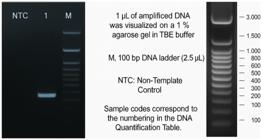
PCR amplification of the p23SrV marker. Agarose gel electrophoresis (1%) showing successful amplification of the plastid p23SrV region from the Gracilaria sample collected at station TD2. Lane NTC: non-template control; Lane 1: TD2 sample with a clear ~400 bp band; Lane M: 100 bp DNA ladder.
Phylogenetic reconstruction placed the station TD2 sequence within a robustly supported clade of G. firma (99-100% bootstrap value), clearly distinguishing it from other closely related Gracilaria species (Figure 2). These molecular results support the identification of the analyzed specimen from station TD2 as G. firma.

Phylogenetic tree of Gracilaria spp. Neighbor-Joining phylogenetic reconstruction using the p23SrV marker, placing the station TD2 sequence within the well supported Gracilaria firma clade (bootstrap = 100%), distinguishing it from closely related species including Gracilaria blodgettii, Gracilaria pacifica, and Gracilaria changii.
3.2. Physicochemical water parameters
The measured physicochemical parameters exhibited distinct spatial patterns across the sampling stations (Figure 3). Water temperature ranged from 29.7 to 34.1 °C, with the maximum recorded at the coastal station TP2 (Figure 3a). Salinity varied from 19 to 24 ppt, displaying a general gradient from lower values at inland stations (TD series) to higher values at coastal stations (TP series) (Figure 3b). The pH values remained within a circumneutral to alkaline range (7.19-8.91) (Figure 3c), while dissolved oxygen (DO) concentrations were consistently elevated, ranging from 7.7 to 9.9 mg L−1 across all sites (Figure 3d).

Spatial variation of physical water quality parameters. Distribution of physical parameters across nine pond stations (TD1-TP3): (a) Temperature (°C), (b) Salinity (ppt), (c) pH, and (d) Dissolved Oxygen (mg L−1). Values indicate moderate-high variability influenced by tidal exchange and Lapindo sediment inputs.
Nitrate concentrations demonstrated considerable spatial variability (0-12.1 mg L−1), with the highest concentration observed at the inland station TD1 (Figure 4a). Total Organic Matter (TOM) exhibited a pronounced spatial gradient, with concentrations ranging from 22.12 to 91.64 mg L−1 (Table 2). The highest TOM values were recorded at the inland station TD1 and the coastal station TP3 (Figure 4c). This spatial distribution suggests a potential association with Lapindo sediment inputs in the inland zone and organic accumulation dynamics in the coastal zone.

Nutrients and Total Organic Matter Spatial distribution of: (a) Nitrate (mg L−1), (b) Phosphate (mg L−1), and (c) Total Organic Matter (mg L−1) across stations. (b) High TOM and nitrate near TD1 and TP3 reflect organic enrichment from Lapindo-impacted inflows.
3.3. Trace metal concentrations
Trace metal analysis revealed distinct spatial distributions (Table 2). Lead (Pb) and cadmium (Cd) concentrations were below the detection limit at all sampling stations. In contrast, copper (Cu) was quantifiable across the study area, with concentrations ranging from 0.25 to 3.42 mg L−1. The highest Cu levels were recorded at the inland stations TD1 and TD3 (Figure 5). Zinc (Zn) was present at low concentrations, ranging from non-detectable to 0.07 mg L−1, and showed minimal spatial variation (Figure 5). A notable spatial correspondence was observed between stations with elevated Cu concentrations and those with high Total Organic Matter (TOM), indicating a spatial association between organic matter accumulation and copper presence in the sediment-influenced ponds.

Heavy metals heatmap. Heatmap showing the spatial distribution of Pb, Cd, Cu, and Zn concentrations (mg L−1) across sampling stations. Copper (Cu) exhibits the highest concentrations and greatest spatial variability among sites. Cadmium (Cd) concentrations were below detection limits (BDL) at all stations.
3.4. Principal Component Analysis (PCA)
Principal Component Analysis (PCA) ordination revealed a clear spatial structuring of the sampling stations, which clustered into three groups corresponding to the inland (TD), middle (TT), and coastal (TP) zones (Figure 6). The first two principal components together explained 60.68% of the total environmental variance. PC1, accounting for 36.92% of the variance, was dominated by strong positive loadings for Total Organic Matter (TOM), copper (Cu), and nitrate, representing a gradient of anthropogenic influence and organic loading. PC2, explaining 23.76% of the variance, was primarily associated with pH and dissolved oxygen (DO), reflecting natural physicochemical variation.

PCA biplot of water quality variables and sampling sites Principal Component Analysis (PCA) showing separation of inland (TD), mid-pond (TT), and coastal (TP) zones. PC1 (36.92%) is primarily driven by TOM, Cu, and nitrate, while PC2 (23.76%) is influenced by pH, DO, and Zn. Vectors represent variable loadings scaled by correlation. The station TD2 sample clusters within the moderate-stress zone where Gracilaria firma was recorded.
The position of station TD2, where G. firma was identified, was characterized by moderate levels of TOM, low-to-moderate Cu concentration, and stable salinity within the ordination space. The identified specimen (station TD2) was associated with moderate levels of environmental stress within the ordination space.
4. Discussion
4.1. Molecular confirmation of G. firma and implications for biodiversity
The robust amplification and sequencing of the p23SrV plastid marker provided molecular support for the identification of the sampled specimen as G. firma, with phylogenetic reconstruction placing it within a well supported, species-specific clade. This finding reinforces the utility and discriminatory power of the p23SrV region for the precise delineation of species within the taxonomically complex Gracilariaceae family (Sherwood and Presting, 2007; Lyra et al., 2016).
Molecular identification is particularly critical for genera like Gracilaria, where pronounced morphological plasticity in response to environmental variables such as salinity and temperature often obscures taxonomic boundaries (Lyra et al., 2016). This molecular approach effectively circumvented these limitations, enabling accurate species-level diagnosis. The detection of G. firma in the Lapindo-affected ponds not only represents the first molecularly verified record for this region but also corroborates its documented tolerance to moderately fluctuating environmental conditions, as observed in other South-east Asian coastal waters (Hendri et al., 2017; Tresnati et al., 2021). This finding may suggest an extension of the recognized ecological tolerance of the species and implies potential resilience under moderately impacted conditions.
4.2. Environmental gradients associated with lapindo mud deposition
The study revealed pronounced spatial gradients in organic loading and nutrient enrichment, suggesting an environmental influence associated with the ongoing deposition of Lapindo mud. Stations proximate to the main mudflow pathway exhibited elevated levels of total organic matter (TOM) and nitrate, a pattern consistent with the documented influx of sediment-laden, nutrient-rich effluents from the Lapindo site into adjacent coastal waters (Putri and Triajie, 2021; Saputro et al., 2021).
This type of organic enrichment can intensify benthic microbial respiration, leading to hypoxic conditions and altered sediment biogeochemistry, thereby creating a suboptimal substrate for macroalgal spore settlement, attachment, and long-term survival (Garcia-Robledo et al., 2013). The observed spatial pattern aligns with established thresholds where excessive sedimentary organic matter inhibits seaweed colonization through mechanisms such as substrate smothering, reduced light availability, and biogeochemical stress (Desmond et al., 2015).
Conversely, stations subject to stronger tidal flushing exhibited more stable and marine-influenced conditions characterized by higher salinity and lower accumulations of organic matter. Such an environment is generally more favorable for Gracilaria cultivation, as it mitigates the stressors associated with terrestrial discharge (Melo Soares et al., 2023). This clear dichotomy underscores the critical role of local hydrodynamics in modulating the impact of anthropogenic sedimentation and in structuring the ecological suitability of ponds for aquaculture.
4.3. Trace metals as limiting factors for macroalgal survival
Among the trace metals analyzed, copper (Cu) emerged as the most significant potential stressor within the study area. The total Cu concentrations (0.25-3.42 mg L−1) markedly exceeded national seawater quality standards (Indonesia, 2004). This pronounced elevation aligns with the known geochemical signature of volcaniclastic sediments, strongly implicating the ongoing Lapindo mudflow as a dominant source (Moenne et al., 2016; Firdausy and Sudaryatno, 2017).
A critical consideration for ecological interpretation is the distinction between total metal concentration and the bioavailable fraction that governs toxicity. In aquatic environments rich in organic and particulate matter, a substantial proportion of metals can be sequestered through complexation with organic ligands or adsorption onto particles, thereby reducing their bioavailability (Linnik et al., 2020). The observed spatial correspondence between elevated Cu and high TOM (Figure 5) supports this moderating mechanism, suggesting that organic matter may partially mitigate copper toxicity by binding a fraction of the metal.
However, the absence of Gracilaria at stations with the highest total Cu levels (e.g., TD1, TD3) may suggest a threshold where the metal binding capacity of organic matter becomes less effective, potentially increasing the proportion of bioavailable copper species. This fraction is responsible for well documented toxicity pathways in macroalgae, including the inhibition of photosynthesis, disruption of nutrient uptake, and induction of oxidative stress (Mendes et al., 2013, 2015; Chen et al., 2024; Zhu et al., 2009). The presence of G. firma at station TD2 (Cu 1.9 mg L−1) may reflect a potential environmental window in which organic complexation reduces Cu bioavailability, as suggested by studies on macroalgal tolerance to metal stress (Moenne et al., 2016). Furthermore, some Gracilaria species have been reported to possess physiological detoxification mechanisms, such as the production of metal binding phytochelatins or compartmentalization within cell walls, which may enhance their survival under moderate metal exposure (Moenne et al., 2016; Periyasamy et al., 2024).
In contrast, zinc (Zn) concentrations were consistently low (0-0.07 mg L−1) and remained orders of magnitude below the documented toxicity thresholds for seaweeds (Periyasamy et al., 2024; Bhuyan et al., 2024), suggesting its role in shaping the observed community structure is negligible. Similarly, lead (Pb) was detected only at very low concentrations, while cadmium (Cd) was either undetectable or present at trace levels, suggesting that these metals are unlikely to serve as primary stressors within the current system.
Thus, while copper represents a key metal stressor in the Lapindo-affected ponds, its actual toxicity to G. firma is likely modulated by the organic matter dynamics, highlighting the importance of assessing bioavailable metal fractions rather than total concentrations in environmental risk assessments.
4.4. Environmental window permitting the presence of G. firma
The identified specimen of G. firma was associated with an intermediate environmental niche (station TD2), characterized by a constrained gradient of organic loading, moderate copper exposure, and relatively stable salinity. These physicochemical conditions align with the documented tolerance range of this species for key factors such as salinity, temperature, and nutrient availability (Ma et al., 2021).
Gracilaria was absent at stations along the main gradient of combined organic and copper stress, reflecting spatial distribution patterns rather than causal effects. This distribution supports the concept that the cumulative impact of multiple stressors, rather than any single variable, is a principal factor limiting seaweed establishment. This finding aligns with existing evidence demonstrating that the synergistic effects of organic enrichment and metal toxicity can severely inhibit macroalgal recruitment and growth (Lauze and Hable, 2017). Consequently, G. firma appears to occupy a specific environmental window, persisting under conditions of moderate, non-synergistic stress but excluded from areas where high-intensity stressors co-occur.
4.5. Implications for aquaculture management and ecosystem resilience
The environmental gradients delineated in this study, shaped by chronic Lapindo mud deposition, have direct implications for the management of coastal aquaculture ponds. While G. firma exhibits a degree of resilience to moderate environmental perturbation, the observed extremes in organic loading coupled with elevated copper concentrations pose significant risks to both macroalgal viability and cocultured aquatic species. This pattern of inhibited macroalgal presence under combined heavy metal and organic stress is consistent with findings from other estuarine systems impacted by anthropogenic discharges (Zhang et al., 2014; Orboc et al., 2022; Silva Lima et al., 2023).
The integrated approach employed here—combining molecular species identification with multivariate environmental assessment—underscores potential management considerations, such as routine monitoring of bioavailable copper and sedimentary organic matter, improved hydrodynamic management, and targeted sediment management are suggested in light of the observed spatial patterns of Gracilaria distribution.
Adopting such evidence-based interventions would help restore the ecological balance necessary for successful Gracilaria cultivation, thereby supporting the long-term productivity and sustainability of aquaculture operations in the Lapindo-affected region.
4.6. Limitations and future research directions
This study provides a robust integrated assessment, yet its scope suggests key avenues for future work. The molecular identification, while conclusive, is based on a single specimen from a representative site. Consequently, it cannot reveal the population genetic structure or the extent of intraspecific variation of G. firma across the environmental gradient. Subsequent studies employing a replicated sampling design across all zones would be essential to explore potential ecotypic differentiation or genetic adaptation to localized stress from metals and organic matter. Furthermore, long-term temporal monitoring of water quality coupled with in situ growth experiments would help clarify the physiological thresholds and adaptive capacity of G. firma, strengthening the basis for its use in sustainable aquaculture management within sedimentation-impacted systems.
5. Conclusion
This study provides the first molecular-based identification of Gracilaria firma in aquaculture ponds affected by the Lapindo mudflow, based on the analyzed specimen, and supports the utility of the p23SrV plastid marker for the reliable identification of morphologically plastic taxa in dynamic environments. Multivariate spatial analysis indicated that total organic matter (TOM) and potentially bioavailable copper represent key environmental stressors structuring pond conditions, with the analyzed G. firma specimen being associated with zones of moderate impact characterized by relatively stable salinity and hydrodynamic flushing.
These findings suggest that combined environmental stress gradients, rather than isolated variables, may play an important role in influencing seaweed occurrence in anthropogenically disturbed coastal ecosystems. Consequently, targeted management interventions may be important for mitigating cumulative environmental stressors. Such measures could contribute to enhancing ecological resilience and supporting the sustainable cultivation of G. firma in sedimentation-impacted coastal aquaculture systems.
Acknowledgments
The authors gratefully acknowledge the Center for Marine and Fisheries Education (Pusdik KKP) for providing financial support for this study. The authors also thank all colleagues and field assistants whose contributions during sample collection and laboratory analysis were essential to the completion of this work.
Data Availability Statement
The data supporting the findings of this study are fully available within the article. All relevant data are included in the manuscript, including tables, figures, and supplementary descriptions.
References
- AMERICAN PUBLIC HEALTH ASSOCIATION – APHA. American Water Works Association. Water Environment Federation, 2017. Standard methods for the examination of water and wastewater. 23rd ed. Washington, D.C.
-
BHUYAN, M.S., KUNDA, M., BAKAR, M.A., SENAPATHI, V., HUSAIN, S.A., CHOWDHURY, E., ALI, M.M. and PANDIT, D., 2024. Heavy metal and mineral analysis of cultivated seaweeds from Cox’s Bazar Coast, Bay of Bengal, Bangladesh: a human health risk implication. Discover Oceans, vol. 1, no. 1, pp. 11. https://doi.org/10.1007/s44289-024-00012-x
» https://doi.org/10.1007/s44289-024-00012-x -
BIXLER, H.J. and PORSE, H., 2011. A decade of change in the seaweed hydrocolloids industry. Journal of Applied Phycology, vol. 23, no. 3, pp. 321-335. https://doi.org/10.1007/s10811-010-9529-3
» https://doi.org/10.1007/s10811-010-9529-3 -
BORJA, Á., DAUER, D.M. and GRÉMARE, A., 2012. The importance of setting targets and reference conditions in assessing marine ecosystem quality. Ecological Indicators, vol. 12, no. 1, pp. 1-7. https://doi.org/10.1016/j.ecolind.2011.06.018
» https://doi.org/10.1016/j.ecolind.2011.06.018 - CANADIAN COUNCIL OF MINISTERS OF THE ENVIRONMENT – CCME, 2014. Canadian water quality guidelines: cadmium. Winnipeg, Canada.
-
CHEN, X., TANG, Y., ZHANG, H., ZHANG, X., SUN, X., ZANG, X. and XU, N., 2024. Physiological, transcriptome, and metabolome analyses reveal the tolerance to Cu toxicity in red macroalgae Gracilariopsis lemaneiformis International Journal of Molecular Sciences, vol. 25, no. 9, pp. 4770. https://doi.org/10.3390/ijms25094770 PMid:38731988.
» https://doi.org/10.3390/ijms25094770 - CRESWELL, J.W. and CRESWELL, J.D., 2017. Research design: qualitative, quantitative, and mixed methods approaches. Thousand Oaks: SAGE Publications.
-
DESMOND, M.J., PRITCHARD, D.W. and HEPBURN, C.D., 2015. Light limitation within southern New Zealand kelp forest communities. PLoS One, vol. 10, no. 4, pp. e0123676. https://doi.org/10.1371/journal.pone.0123676 PMid:25902185.
» https://doi.org/10.1371/journal.pone.0123676 -
FIRDAUSY, A.P. and SUDARYATNO, 2017. Remote sensing and GIS application for sedimentation modeling in Porong River estuary as an impact of Lapindo mudflow, Sidoarjo. IOP Conference Series: Earth and Environmental Science, vol. 98, no. 1, pp. 012022. https://doi.org/10.1088/1755-1315/98/1/012022
» https://doi.org/10.1088/1755-1315/98/1/012022 - FOOD AND AGRICULTURE ORGANIZATION OF THE UNITED NATIONS – FAO, 1993. Manual on seaweed culture: a practical guide to the culture of Gracilaria spp Rome: FAO.
-
GARCIA-ROBLEDO, E., REVSBECH, N.P., RISGAARD-PETERSEN, N. and CORZO, A., 2013. Changes in N cycling induced by Ulva detritus enrichment of sediments. Aquatic Microbial Ecology, vol. 69, no. 2, pp. 113-122. https://doi.org/10.3354/ame01626
» https://doi.org/10.3354/ame01626 -
HENDRI, M., ROZIRWAN, R.A. and APRI, R., 2017. Optimization of cultivated seaweed land Gracilaria sp. using vertikultur system. International Journal of Material Science, vol. 7, pp. 411-422. https://doi.org/10.5376/ijms.2017.07.0043
» https://doi.org/10.5376/ijms.2017.07.0043 -
HOLLINGSWORTH, P.M., FORREST, L.L., SPOUGE, J.L., HAJIBABAEI, M., RATNASINGHAM, S., VAN DER BANK, M. and LITTLE, D.P., 2009. A DNA barcode for land plants. Proceedings of the National Academy of Sciences of the United States of America, vol. 106, pp. 12794-12797. https://doi.org/10.1073/pnas.0905845106
» https://doi.org/10.1073/pnas.0905845106 - INDONESIA. Ministry of Environment, 2004. Decree No. 51/2004 concerning seawater quality standards. Government of Indonesia, Jakarta.
-
JENNERJAHN, T.C., JÄNEN, I., PROPP, C., ADI, S. and NUGROHO, S.P., 2013. Environmental impact of mud volcano inputs on the anthropogenically altered Porong River and Madura Strait coastal waters, Java, Indonesia. Estuarine, Coastal and Shelf Science, vol. 130, pp. 152-160. https://doi.org/10.1016/j.ecss.2013.04.007
» https://doi.org/10.1016/j.ecss.2013.04.007 -
KURE, S., WINARTA, B., TAKEDA, Y., UDO, K., UMEDA, M., MANO, A. and TANAKA, H., 2014. Effects of mud flows from the LUSI mud volcano on the Porong River estuary, Indonesia. Journal of Coastal Research, vol. 70, pp. 568-573. https://doi.org/10.2112/SI70-096.1
» https://doi.org/10.2112/SI70-096.1 -
LAUZE, J.F. and HABLE, W.E., 2017. Impaired growth and reproductive capacity in marine rockweeds following prolonged environmental contaminant exposure. Botanica Marina, vol. 60, no. 2, pp. 137-148. https://doi.org/10.1515/bot-2016-0067
» https://doi.org/10.1515/bot-2016-0067 - LEGENDRE, P. and LEGENDRE, L., 2012. Numerical ecology 3rd ed. Amsterdam: Elsevier.
- LINNIK, P.N., ZHEZHERYA, V.A. and KIPNIS, L.S., 2020. Potential complexing ability of surface water organic matter: II. Toxicity of metal-containing aquatic environment. Russian Journal of General Chemistry, vol. 90, no. 13, pp. 2691-2699. https://doi.org/10.1134/S1070363220130253.
-
LUO, H., WANG, Q., LIU, Z., WANG, S., LONG, A. and YANG, Y., 2020. Potential bioremediation effects of seaweed Gracilaria lemaneiformis on heavy metals in coastal sediment from a typical mariculture zone. Chemosphere, vol. 245, pp. 125636. https://doi.org/10.1016/j.chemosphere.2019.125636
» https://doi.org/10.1016/j.chemosphere.2019.125636 -
LYRA, G.D.M., GURGEL, C.F.D., COSTA, E.D.S., DE JESUS, P.B., OLIVEIRA, M.C., OLIVEIRA, E.C., DAVIS, C.C. and NUNES, J.M.D.C., 2016. Delimitating cryptic species in the Gracilaria domingensis complex (Gracilariaceae, Rhodophyta) using molecular and morphological data. Journal of Phycology, vol. 52, no. 6, pp. 997-1017. https://doi.org/10.1111/jpy.12456 PMid:27485203.
» https://doi.org/10.1111/jpy.12456 -
MA, C., QIN, S., CUI, H., LIU, Z., ZHUANG, L., WANG, Y. and ZHONG, Z., 2021. Nitrogen enrichment mediates the effects of high temperature on the growth, photosynthesis, and biochemical constituents of Gracilaria blodgettii and Gracilaria lemaneiformis Environmental Science and Pollution Research International, vol. 28, no. 17, pp. 21256-21265. https://doi.org/10.1007/s11356-020-11969-5 PMid:33411287.
» https://doi.org/10.1007/s11356-020-11969-5 -
MELO SOARES, R.H.R., OLIVEIRA FERNANDES, F., ASSUNÇÃO, C.A., BORBUREMA, H.D., AMARAL CARNEIRO, M.A. and MARINHO-SORIANO, E., 2023. Macroalgal diversity along an environmental gradient in a saltwork. Estuarine, Coastal and Shelf Science, vol. 288, pp. 108377. https://doi.org/10.1016/j.ecss.2023.108377
» https://doi.org/10.1016/j.ecss.2023.108377 -
MENDES, L.F., ZAMBOTTI-VILLELA, L., COLEPICOLO, P., MARINHO-SORIANO, E., STEVANI, C.V. and YOKOYA, N.S., 2013. Metal cation toxicity in the alga Gracilaria domingensis as evaluated by the daily growth rates in synthetic seawater. Journal of Applied Phycology, vol. 25, no. 6, pp. 1939-1947. https://doi.org/10.1007/s10811-013-0036-1
» https://doi.org/10.1007/s10811-013-0036-1 -
MENDES, L.F., ZAMBOTTI-VILLELA, L., SIMAS-RODRIGUES, C. and COLEPICOLO, P., 2015. Toxicological effects of metal-EDTA/NTA complex formation in a synthetic medium on the macroalga Gracilaria domingensis Journal of Applied Phycology, vol. 27, no. 3, pp. 1307-1314. https://doi.org/10.1007/s10811-014-0426-z
» https://doi.org/10.1007/s10811-014-0426-z -
MOENNE, A., GONZÁLEZ, A. and SÁEZ, C.A., 2016. Mechanisms of metal tolerance in marine macroalgae, with emphasis on copper tolerance in Chlorophyta and Rhodophyta. Aquatic Toxicology, vol. 176, pp. 30-37. https://doi.org/10.1016/j.aquatox.2016.04.015
» https://doi.org/10.1016/j.aquatox.2016.04.015 -
MUTEA, F.G., NELSON, H.K., AU, H.V., HUYNH, T.G. and VU, U.N., 2021. Assessment of water quality for aquaculture in Hau River, Mekong Delta, Vietnam using multivariate statistical analysis. Water, vol. 13, no. 22, pp. 3307. https://doi.org/10.3390/w13223307
» https://doi.org/10.3390/w13223307 -
ORBOC, D.R., CAPANGPANGAN, R., JUMAWAN, J., OMBAT, L. and SERONAY, R., 2022. Marine benthic macrophytes diversity and concentration of heavy metals in Thalassia hemprichii near mining area of Claver, Surigao del Norte, Philippines. Journal of Ecosystem Science and Eco-Governance, vol. 4, pp. 29-39. https://doi.org/10.54610/jeseg/4.2.2022.004
» https://doi.org/10.54610/jeseg/4.2.2022.004 -
OTTINGER, M., BACHOFER, F., KLEIN, I., HUTH, J. and KUENZER, C., 2024. Advancing coastal aquaculture insights: a multi-sensor approach using Earth observation time series data to delineate pond aquaculture dynamics. In: Proceedings of the IEEE International Geoscience & Remote Sensing Symposium (IGARSS 2024), 2024, Athens, Greece. New York: IEEE, pp. 5940-5943. https://doi.org/10.1109/IGARSS53475.2024.10640479
» https://doi.org/10.1109/IGARSS53475.2024.10640479 -
PERIYASAMY, C., SURESH KUMAR, K. and SUBBA RAO, P.V., 2024. Seaweeds as accumulators of heavy metals: current status on heavy metal sequestration. In: G.A. RAVISHANKAR, A.R. RAO and S.K. KIM, eds. Algae mediated bioremediation: industrial perspectives. Weinheim: Wiley-VCH, vol. 1, pp. 123-143. https://doi.org/10.1002/9783527843367.ch7
» https://doi.org/10.1002/9783527843367.ch7 -
PUTRI, R.A.N. and TRIAJIE, H., 2021. Organic pollution level based on Biological Oxygen Demand (BOD), Chemical Oxygen Demand (COD), and Total Organic Matter (TOM) concentrations in the Bancaran River, Bangkalan Regency. Juvenil: Journal of Marine and Fisheries Science, vol. 2, no. 2, pp. 137-145. https://doi.org/10.21107/juvenil.v2i2.10778
» https://doi.org/10.21107/juvenil.v2i2.10778 -
RIMMER, M.A., LARSON, S., LAPONG, I., PURNOMO, A.H., PONG-MASAK, P.R., SWANEPOEL, L. and PAUL, N.A., 2021. Seaweed aquaculture in Indonesia contributes to social and economic aspects of livelihoods and community wellbeing. Sustainability, vol. 13, no. 19, pp. 10946. https://doi.org/10.3390/su131910946
» https://doi.org/10.3390/su131910946 -
ROSS, B.G., MAGNUSSON, M., LAWTON, R.J. and LAWTON, R.J., 2024. The novel estuarine bioremediation target Gracilaria transtasmānica has high tolerance to light limitation, air exposure and a broad range of salinities. Journal of Applied Phycology, vol. 36, no. 6, pp. 3611-3621. https://doi.org/10.1007/s10811-024-03319-6
» https://doi.org/10.1007/s10811-024-03319-6 -
SAPUTRO, R., SISNO, S. and JUWONO, P., 2021. Analysis of carrying capacity of the Porong River caused by Sidoarjo mud disposal. Civil and Environmental Science, vol. 4, no. 2, pp. 192-201. https://doi.org/10.21776/ub.civense.2021.00402.9
» https://doi.org/10.21776/ub.civense.2021.00402.9 -
SHAW, J., LICKEY, E.B., SCHILLING, E.E. and SMALL, R.L., 2007. Comparison of whole chloroplast genome sequences to choose noncoding regions for phylogenetic studies in angiosperms: the tortoise and the hare III. American Journal of Botany, vol. 94, no. 3, pp. 275-288. https://doi.org/10.3732/ajb.94.3.275 PMid:21636401.
» https://doi.org/10.3732/ajb.94.3.275 -
SHERWOOD, A.R. and PRESTING, G.G., 2007. Universal primers amplify a 23S rDNA plastid marker in eukaryotic algae and cyanobacteria. Journal of Phycology, vol. 46, no. 3, pp. 726-731. https://doi.org/10.1111/j.1529-8817.2007.00341.x
» https://doi.org/10.1111/j.1529-8817.2007.00341.x -
SILVA LIMA, L., FREITAS DELGADO, J., VIEIRA, K.S., AMORIM, R.M., FONSECA, E.M. and BAPTISTA NETO, J.A., 2023. Uma avaliação sistemática sobre os efeitos de metais e metaloides, presentes em sedimentos, sobre comunidades de macroinvertebrados bentônicos em estuário subtropical no Brasil-Sistema Estuarino de Paranaguá. Brazilian Journal of Development, vol. 9, no. 2, pp. 6667-6698. https://doi.org/10.34117/bjdv9n2-036
» https://doi.org/10.34117/bjdv9n2-036 - STANDAR NASIONAL INDONESIA – SNI, 2010. SNI 7578:2010: production of seaweed gracilaria (Gracilaria verrucosa) using the pond broadcasting method in polyculture. Jakarta: Badan Standardisasi Nasional.
-
TRESNATI, J., YASIR, I., BESTARI, A.D., YANTI, A., APRIANTO, R. and TUWO, A., 2021. Effect of salinity on the growth of seaweed Gracilaria changii. IOP Conference Series. Earth and Environmental Science, vol. 763, pp. 012030. https://doi.org/10.1088/1755-1315/763/1/012030
» https://doi.org/10.1088/1755-1315/763/1/012030 -
ULLAH, M.R., HAQUE, M.A., HASAN, M.M., YASMIN, F., BOSU, A., ISLAM, M.A. and TANU, M.B., 2025. Water physicochemical properties influence the production, nutritional composition, and antioxidant activity of Gracilaria tenuistipitata from the northern Bay of Bengal, Bangladesh. Journal of Food Biochemistry, vol. 2025, no. 1, pp. 9594885. https://doi.org/10.1155/jfbc/9594885
» https://doi.org/10.1155/jfbc/9594885 -
VERDEGEM, M.C., 2013. Nutrient discharge from aquaculture operations in function of system design and production environment. Reviews in Aquaculture, vol. 5, no. 3, pp. 158-171. https://doi.org/10.1111/raq.12011
» https://doi.org/10.1111/raq.12011 -
WILSON, K.L., KAY, L.M., SCHMIDT, A.L. and LOTZE, H.K., 2015. Effects of increasing water temperatures on survival and growth of ecologically and economically important seaweeds in Atlantic Canada: implications for climate change. Marine Biology, vol. 162, no. 12, pp. 2431-2444. https://doi.org/10.1007/s00227-015-2769-7
» https://doi.org/10.1007/s00227-015-2769-7 -
WIRAWAN, I.G.P., SASADARA, M.M.V., WIJAYA, I.N. and KRINANDIKA, A.A.K., 2021. DNA barcoding in molecular identification and phylogenetic relationship of beneficial wild Balinese red algae Bulung Sangu (Gracilaria sp.). Bali Medical Journal, vol. 10, no. 1, pp. 82-88. https://doi.org/10.15562/bmj.v10i1.2093
» https://doi.org/10.15562/bmj.v10i1.2093 -
WU, H., SHIN, S.K., JANG, S., YARISH, C. and KIM, J.K., 2018. Growth and nutrient bioextraction of Gracilaria chorda, Gracilaria vermiculophylla, Ulva prolifera, and Ulva compressa under hypo- and hyper-osmotic conditions. Algae - Korean Phycological Society, vol. 33, no. 4, pp. 329-340. https://doi.org/10.4490/algae.2018.33.11.13
» https://doi.org/10.4490/algae.2018.33.11.13 -
YULIANTO, B., PRAMESTI, R., HAMDANI, R., SUNARYO, S. and SANTOSO, A., 2018. Biosorption capacity and growth performance of Gracilaria sp. cultivated in cadmium-contaminated media. Tropical Marine Journal, vol. 21, pp. 129-136. https://doi.org/10.14710/jkt.v21i2.3849
» https://doi.org/10.14710/jkt.v21i2.3849 -
ZHANG, Z.W., XU, X.R., SUN, Y.X., YU, S., CHEN, Y.S. and PENG, J.X., 2014. Heavy metal and organic contaminants in mangrove ecosystems of China: a review. Environmental Science and Pollution Research International, vol. 21, no. 20, pp. 11938-11950. https://doi.org/10.1007/s11356-014-3100-8 PMid:24938806.
» https://doi.org/10.1007/s11356-014-3100-8 - ZHU, X.F., ZOU, D.H., JIAN, J.B., CHEN, W.Z., LIU, H.H. and DU, H., 2009. Physiological responses of Gracilaria lemaneiformis to copper stress. Journal of Applied Ecology, vol. 20, no. 6, pp. 1438-1444. PMid:19795656.
Edited by
-
Editor:
Takako Matsumura Tundisi


