 Characterization of sounds produced by three Brazilian Alpheus snapping shrimp species (Decapoda: Caridea) in laboratory
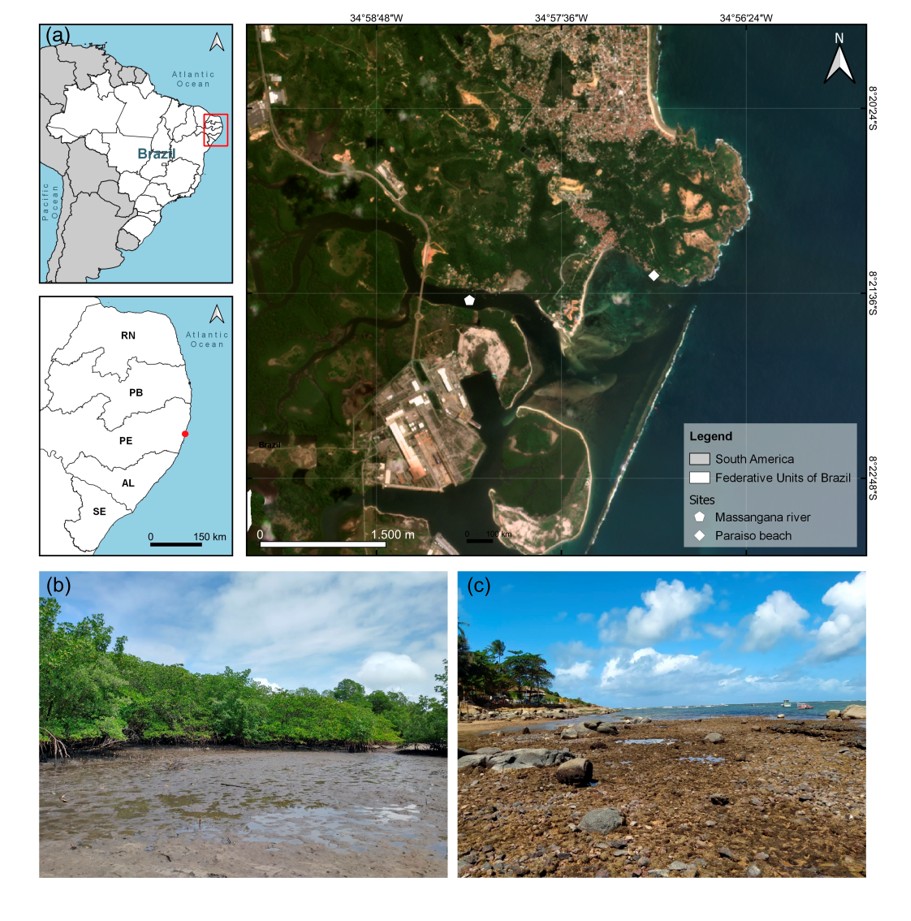
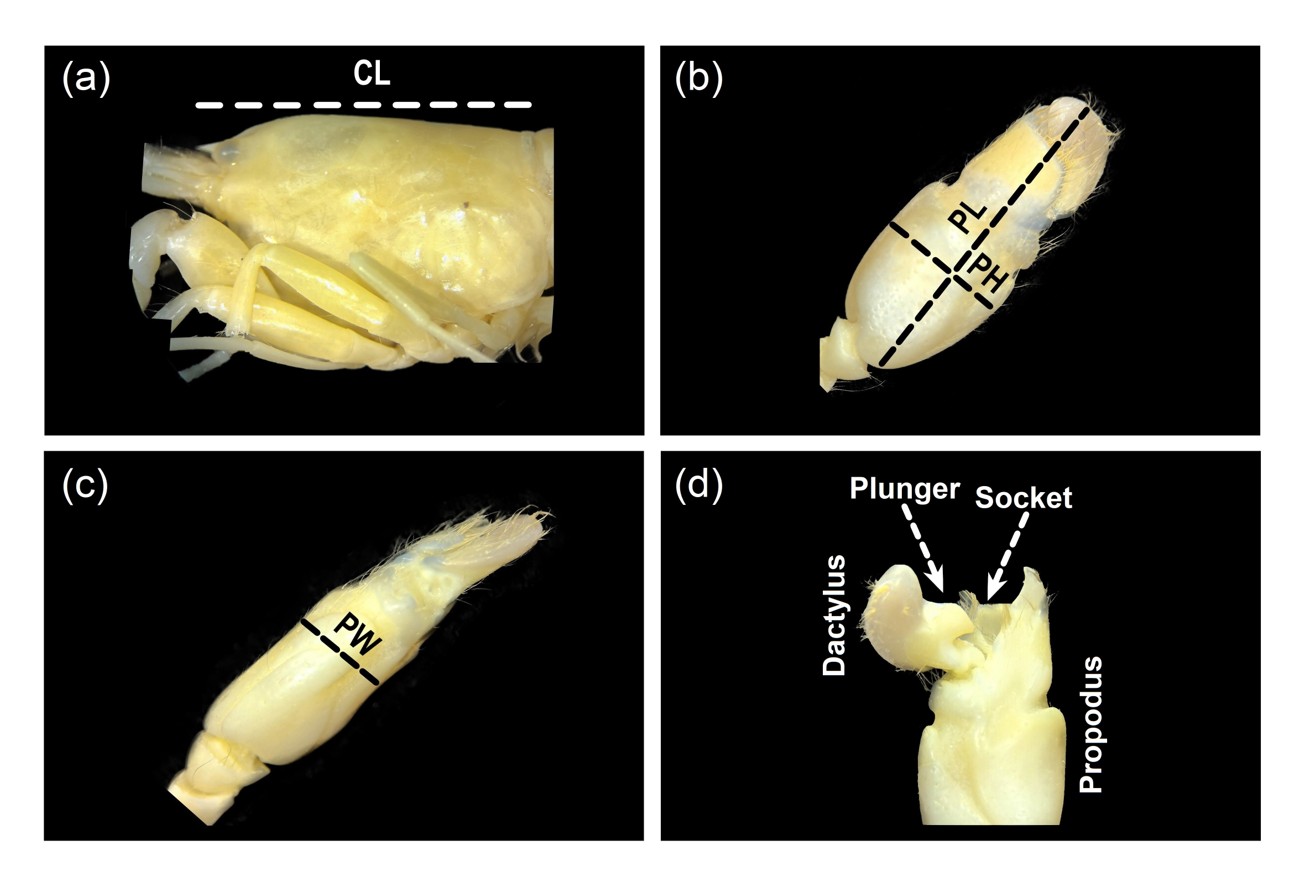
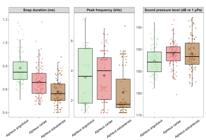
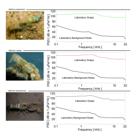
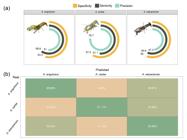
Snapping shrimps produce snap sounds used for predation, defense, and reproduction. Despite their ecological importance, only a few studies have described the acoustic properties of these sounds. This study aimed to characterize the acoustic properties of snaps produced by Alpheus angulosus, A. carlae, and A. estuariensis. It also evaluated their correlation with morphometric measurements under laboratory conditions. A total of 45 individuals across all species were recorded, and 90 snaps were analyzed for each species. The snaps exhibited short durations under 1 ms with peak frequencies predominantly ranging from 2 to 5 kHz. Peak-to-peak (SPLpk-pk) sound pressure level values reached up to 180 dB re 1 μPa. The power spectral density (PSD) values for snap sounds were more consistent between 95 and 110 dB re 1 μPa2/Hz. Analyses revealed interspecific differences in sound parameters, with A. angulosus showing the highest degree of differentiation. Although linear regressions indicated significant relationships between morphometric measurements and sound parameters, their predictive power was limited. The findings of this study are consistent with previous research on the characterization of acoustic properties, while also highlighting variations in sound parameters among snapping shrimp species.
Keywords:
acoustic properties; Alpheidae; bioacoustics; morphometrics; shrimps
 Thumbnail
 Thumbnail
 Thumbnail
 Thumbnail
 Thumbnail
 Thumbnail