
 Seedling quality of Cordia trichotoma under different container volumes and fertilizers
Abstract
The success of forest plantations depends on the quality of seedlings, which can be ensured through nursery techniques. This study aimed to assess the growth of Cordia trichotoma seedlings in two container volumes combined with four fertilizer compositions. The experimental design was completely randomized in a 2 × 4 factorial arrangement with four replications: two container volumes (170 and 270 cm3) and four fertilizer compositions (Basacote® [NPK 15-8-12]; Basacote® + Phusion® [NPK 9-40-00]; Polyblen® [NPK 20-5-20]; and Polyblen® + Phusion®). Tube volume significantly influenced shoot height, root length, shoot, root, and total dry mass, with 270 cm3 tube presenting higher means (21.26 cm; 19.06 cm; 1.79 g; 3.60 g and 5.39 g, respectively), except for root regeneration potential. The factors tube volume and fertilizer had isolated effects on stem collar diameter and the Dickson Quality Index, with heist means the 270 cm3 tube (5.0 mm and 1.11, respectively) and the Basacote® fertilizer (4.77 mm and 0.99, respectively). Interaction between factors was observed in the shoot height/stem collar diameter ratio, dry mass of shoot/root dry mass ratio, and lignification index. Using 270 cm3 containers and Basacote® fertilizer resulted in better development of C. trichotoma seedlings.
Keywords:
fertilization; louro-pardo; plant nutrition; silviculture
Resumo
O sucesso dos plantios florestais é garantido com a implementação de mudas de qualidade, que podem ser asseguradas por meio de técnicas aplicadas na fase de viveiro. Dessa forma, o objetivo deste estudo foi avaliar o desenvolvimento de mudas de C. trichotoma produzidas em dois volumes de recipientes combinados com quatro composições de fertilizantes. O delineamento experimental foi inteiramente casualizado em arranjo fatorial 2 × 4, com quatro repetições: dois volumes de tubetes (170 e 270 cm3) e quatro composições de fertilizantes (Basacote® (NPK 15-8-12); Basacote® + Phusion® (NPK 9-40-00); Polyblen® (NPK 20-5-20) e Polyblen® + Phusion®). O volume do tubete influenciou significativamente a altura da parte aérea, comprimento de raiz, massa seca da parte aérea, de raiz e total, com maiores médias para o tubete de 270 cm3 (21,26 cm; 19,06 cm; 1,79 g; 3,60 g e 5,39 g, respectivamente), exceto para potencial de regeneração das raízes. Os fatores volume do tubete e fertilizante apresentaram efeitos isolados para o diâmetro do coleto e o Índice de Qualidade de Dickson, com maiores médias apresentadas pelo tubete de 270 cm3 (5,0 mm e 1,11, respectivamente) e o fertilizante Basacote® (4,77 mm e 0,99, respectivamente). Na relação altura da parte aérea/diâmetro do coleto, massa seca da parte aérea/ massa seca de raiz e índice de lignificação, houve interação entre os fatores. A utilização de tubetes de 270 cm3 e do fertilizante Basacote® proporcionou melhor desenvolvimento das mudas de C. trichotoma.
Palavras-chave:
adubação; louro-pardo; nutrição de plantas; silvicultura
1. Introduction
Cordia trichotoma (Vell.) Arrab. Ex Steud., known as brown laurel, is a tree species from the Boraginaceae family found in several South American countries. It has become attractive for commercial production due to its straight shape, noble wood, good durability, and ease of work, making it ideal for luxury furniture manufacturing (Wille et al., 2017; Cunha et al., 2023).
Using high-quality seedlings in commercial forestry ensures good production performance, given their longer growth cycle. This practice prevents losses, reduces replanting rates, and enhances resistance to adverse field conditions (Rodrigues et al., 2023). Seedling production requires morphological, physiological, and silvicultural knowledge, as seedlings are considered the primary raw material in the forestry chain (Dionisio et al., 2021). Proper assessment of seedlings during the nursery phase is crucial to ensure their quality and subsequent planting success (Smiderle et al., 2024a). To achieve these results, it is essential to optimize the seedling production system through advanced techniques, such as the appropriate choice of container and nutritional management, ensuring proper fertilization during the nursery phase, considering the specific nutritional needs of each forest species (Smiderle et al., 2024b).
Containers protect the root system from external agents and influence root architecture, potentially limiting or favoring development (Chu et al., 2020). Commonly used containers in commercial nurseries include polyethylene plastic bags and polypropylene tubes. Tubes occupy less space, enable mechanization of seedling operations, reduce the incidence of pests and diseases, and can be reused (Cabreira et al., 2021; Carvalho et al., 2023).
Substrates provide the necessary physicochemical conditions for root system development, influencing water, air, and nutrient retention (Smiderle et al., 2021). The use of substrates, along with fertilizers, can significantly impact seedling performance, especially with controlled-release fertilizers (CRF). Compared to conventional fertilizers, CRFs continuously provide nutrients over an extended period, reducing losses due to volatilization and leaching (Cunha et al., 2021).
Studies have shown CRF efficiency in various forest species (Berghetti et al., 2016; Cunha et al., 2021; Cunha et al., 2022; Carvalho et al., 2023). However, few studies have evaluated the influence of these fertilizers, combined with container volume, on physiological parameters such as root regeneration potential. This parameter is critical for assessing seedling performance in the field, including survival percentage and initial growth after planting (Matos et al., 2022).
Considering the relationship between CRF efficiency and container type and volume (Chu et al., 2020), the specific needs of each species, and the wide range of available fertilizers, the goal is to identify a combination that promotes the development of C. trichotoma seedlings in the nursery while minimizing production costs. Therefore, this study aimed to evaluate the development of C. trichotoma seedlings produced in two different container volumes combined with four fertilizer compositions.
2. Material and Methods
The study was conducted in two stages. The first involved seedling production in a forest nursery owned by the company Symbiosis Investimentos, followed by morphological assessment in the laboratory at the State University of Southwestern Bahia (UESB). The second comprised the assessment of morphological parameters and root regeneration potential (RRP). The seeds were obtained from commercial lots widely used by the company.
Symbiosis Investimentos is located in the district of Trancoso, Porto Seguro, Bahia, Brazil (16º 26’ 59” S; 39º 03’ 53” W; and 59-m altitude). According to Köppen’s classification, the area has a humid or super-humid tropical climate (Af), with average monthly rainfall exceeding 60 mm and less than 1,500 mm per year, and an average annual temperature of 24 °C (Carvalho et al., 2020).
An experiment was carried out using a completely randomized design in a 2 × 4 factorial scheme, with two container volumes (170 and 270 cm3) and four fertilizer compositions (Table 1), with four replications with 20 seedlings each, totaling 640 seedlings. The fertilizers used were Basacote® (15-08-12) with a nutrient release time of 270 days, Polyblen® (20-05-20) with a nutrient release time of 120 days, and Phusion® (09-40-00) with readily available phosphorus. The fertilizer treatments were Basacote®, Basacote® + Phusion®, Polyblen®, and Polyblen® + Phusion®. The fertilizers were dosed at 3 g per 1 L Carolina Soil® substrate (90% Sphagnum peat + 10% vermiculite), with Yoorin Master® 1S phosphate fertilizer powder forming the base substrate. The fertilizers were weighed on a precision scale, incorporated into the base substrate, and homogenized.
After preparing the substrates, containers were filled and soaked with water to ensure uniformity. The containers were then placed in a 50% shade greenhouse, where containers were directly sown with three seeds each. An average ambient temperature of 26.6 ºC was maintained in the greenhouse, with micro-sprinkler irrigation (37 L/h flow rate and 3m reach diameter) for 10 minutes twice a day and a 50% shading mesh. Sixty days after sowing (DAS), seedlings were selected. At 120 DAS, they were transferred to a hardening area under full sun and the same irrigation regime. At 210 DAS, the seedlings were taken to the UESB Silviculture Laboratory for evaluation.
The evaluated variables included shoot height (SH, in cm) measured with a graduated ruler, stem collar diameter (SCD, in mm) measured with a digital caliper, number of roots (NR), dry mass of shoot (SDM), root (RDM), total (TDM), SH/SCD ratio, SDM/RDM ratio, root regeneration potential (RRP), lignification index (LI) and the Dickson Quality Index (DQI) of seedlings. LI relates the total dry mass with the total wet mass, giving the percentage of lignification. Samples of 10 randomly selected seedlings from each plot were used. The roots were washed, and shoot height, stem diameter, and the number of leaves on the main stem were measured. The shoot and root system were separated, dried in an oven at ±65 ºC for 72 hours, and weighed on a digital balance.
RRP was measured using rhizoboxes made from transparent PET bottles without necks, with a height and diameter of 25.0 and 10.0 cm, respectively, and a capacity of 2 L of substrate (Carneiro, 1995). The substrate used for this stage was Vivatto® Plus, consisting of pine bark and vermiculite (1.5 L per bottle). Four vertical grooves were made in the external walls of containers, dividing them into quadrants (Figure 1). Seedlings were randomly selected and removed from their containers. After cleaning and pruning the root system by cutting roots 3.0 cm from the central axis, the seedlings were transplanted into rhizoboxes and placed under uniform temperature and light conditions. The containers were covered with black plastic to protect seedlings from light. After transplanting, the seedlings were irrigated twice a day.
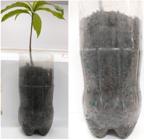
RRP determination involved counting the number of new root ends visible in the four quadrants of the container walls. Evaluations took place every other day for 90 days after transplanting. A permanent ink brush was used to mark each root end that touched the container walls. The evaluation included the total number of regenerated roots (TNRR) and the number in each quadrant.
To verify the analysis of variance (ANOVA) assumptions, normality (Shapiro-Wilk test; p > 0.05), homoscedasticity (Bartlett test; p > 0.05), and independence between experimental units were tested. Once assumptions were met, data were subjected to ANOVA, and significant differences between treatments were compared using Tukey's post-hoc test (p ≤ 0.05). In cases of no interaction between factors, container size was evaluated using the Student “t” test (p ≤ 0.05). The results were evaluated through correlation analyses. All statistical analyses were performed using R version 4.0.2 (R Development Core Team, 2022), and graphical representations were generated via the AgroR package (Shimizu et al., 2023).
3. Results
According to the analysis of variance (Table 2), an interaction occurred between the factors for the SH/SCD and SDM/RDM ratios, as well as for the lignification index (LI). The lignification index relates the total dry mass with the total wet mass, giving the percentage of lignification. For duct diameter and the Dickson Quality Index, the factors affected these metrics independently, indicating no mutual influence. The tube volume was the sole factor influencing the height of the aerial part, root length, dry mass of the aerial part and root, and the total number of regenerated roots.
At 210 days after sowing (DAS), Cordia trichotoma seedlings in 270 cm3 containers showed higher shoot height (SH), root length (RL), and stem collar diameter (SCD) (Table 3). The RL values of 12.5 cm and 19.1 cm were close to the container heights of 13 cm and 19 cm, respectively, in volumes of 170 cm3 and 270 cm3. Stem collar diameter (SCD) was highest with Basacote® and lowest with Polyblen® (Table 3).
Shoot height, stem collar diameter, and root length of Cordia trichotoma seedlings at 210 days after sowing (DAS) as a function of the container type and fertilizer.
For the dry mass components of the seedlings, the greatest growth was observed in larger volume containers (270 cm3), which provided better conditions for the accumulation of shoot dry mass (SDM), root dry mass (RDM), and total dry mass (TDM) (Table 4).
For the SH/SCD ratio, the lowest averages were found with Basacote®+Phusion® and Polyblen® fertilizers in the 170 cm3 tube, while larger volume tubes showed higher ratio values for all fertilizers except Basacote® (Figure 2A). Regarding the SDM/RDM ratio (Figure 2B), a statistical difference was observed only for the Basacote® fertilizer, with the 270 cm3 tube resulting in higher values (0.551) compared to the 170 cm3 tube (0.408). Evaluating the fertilizers in each tube volume, a significant difference was found only between the Polyblen® + Phusion® and Basacote® fertilizers in the 170 cm3 tube, with the former having higher averages (0.535). In the 270 cm3 tube, a significant difference was observed between Basacote® (0.551) and Basacote® + Phusion® (0.424).
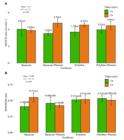
SH/SCD ratio (A) and SDM/RDM ratio (B) of Cordia trichotoma seedlings as a function of the container type and fertilizer at 210 days after sowing (DAS). Means (±SD) followed by the same lowercase letter in columns do not differ from each other by the t-test at 5% probability for containers and by Tukey’s test for fertilizers. CV = Coefficient of variation.
The Dickson Quality Index (DQI) of seedlings was influenced by container volume and fertilizer type (Table 5). The 270 cm3 container showed a better DQI (1.108), while the 170 cm3 container had a 47% lower DQI (0.633). Among fertilizers, Basacote® was superior with a DQI of 0.987, not statistically different from Basacote®+ Phusion® (0.942) and Polyblen® (0.82). The lowest DQI was observed with Polyblen®+ Phusion® fertilizer (0.738).
Cordia trichotoma seedling Dickson Quality Index (DQI) and the total number of regenerated roots as a function of the container type and fertilizer at 210 days after sowing (DAS).
Concerning the total number of regenerated roots, only container volume had a significant effect (Table 5). The 170 cm3 container had the highest mean (87.9), followed by the 270 cm3 container (59.4). The number of roots per quadrant represents the root regeneration potential (Figure 3), with greater homogeneity in the distribution of C. trichotoma roots observed in the 170 cm3 container.

Cordia trichotoma seedling root regeneration potential as a function of the container type and fertilizer within different quadrants at 210 days after sowing (DAS).
Regarding the lignification index (LI), there was a significant interaction between factors. With Basacote® fertilizer, the 170 cm3 containers resulted in higher values (0.659) compared to the 270 cm3 containers (0.491). The combination of Basacote® + Phusion® fertilizers produced an inverse response, with the 270 cm3 container showing the highest LI (0.655). When using Polyblen® and Polyblen® + Phusion® fertilizers, the two container sizes showed equivalent results. The 170 cm3 containers, combined with Polyblen® + Phusion®, Polyblen®, and Basacote® fertilizers, showed similar LI values (0.688, 0.661, and 0.659, respectively). The combination of Basacote® + Phusion® fertilizers resulted in a lower LI (0.479). For the 270 cm3 container, higher LI values were found with Polyblen® and Basacote® + Phusion® fertilizers (0.751 and 0.655, respectively) (Figure 4).
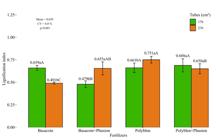
Cordia trichotoma seedling lignification index as a function of the container type and fertilizer at 210 days after sowing (DAS). Means (±SD) followed by the same lowercase letter within columns do not differ from each other by the t-test at 5% probability for containers and by Tukey’s test for fertilizers. CV = Coefficient of variation.
As shown by the correlation analysis (Figure 5), DQI is a reliable quality parameter for C. trichotoma seedlings, exhibiting a high correlation with the variables that compose it (SDM, RDM, and TDM) as well as with SH, SCD, and RL.

Pearson’s correlation among the morphological parameters of Cordia trichotoma seedlings as a function of the container volume and fertilizer. SH = Shoot height; SCD = Stem collar diameter; SH/SCD = Shoot height/stem collar diameter ratio; RL = Root length; SDM = Shoot dry mass; RDM = Root dry mass; TDM = Total dry mass; DQI = Dickson Quality Index; TNRR = Total number of regenerated roots; LI = Lignification index.
The variables SH, SCD, and RL correlated positively. RL and TNRR correlated negatively (-0.76) (Figure 5). However, this did not affect other variables, as TNRR did not show significant correlations with them.
4. Discussion
The SH, RL and SCD results indicate that up to 210 DAS, the root system and seedling growth were limited by container volume. Larger containers provided better conditions for root system growth due to the greater substrate volume, which retained more nutrients and water, thereby promoting plant growth in height and stem collar diameter.
The increased growth of seedlings in larger volume containers is linked to the greater amount of substrate, which offers more space for root growth and larger quantities of nutrients and water. This leads to faster growth and development, as seedlings balance root system growth with shoot height (Chu et al., 2020; Matos et al., 2022).
Malavasi and Malavasi (2006) studied Cordia trichotoma at 70 days and found similarities in seedlings grown in 120, 180, and 300 cm3 containers. They based their evaluation on the appearance of roots at the bottom of the containers (55 cm3). Considering production in 120 cm3 containers the most advantageous, seedlings were transplanted at 70 days with a height of 4.66 cm, and in the field, they reached 21.4 cm in height at 250 days after transplanting. This result is similar to what was observed in our experiment with 270 cm3 containers maintained for 210 DAS in the nursery. Therefore, without harming plant growth, C. trichotoma growers can choose between using smaller containers with less nursery time or larger containers with longer nursery time, depending on their interests and conditions.
Stem collar diameter (SCD) was highest with Basacote® and lowest with Polyblen® (Table 3). These results suggest that the macro and micronutrient percentages in Basacote® were sufficient to promote diameter growth, likely due to its total nutrient release time of up to 270 days. Basacote® provides controlled release and solubilization of nutrients, reducing nutrient leaching, and offers a greater nitrogen supply compared to other macronutrients (Rodrigues et al., 2019). In contrast, Polyblen® has a release time limited to 120 days, explaining its lower SCD values. Phusion® is a fertilizer with improved efficiency, offering readily available phosphorus for seedlings, but its effect is not long-lasting. The elevated levels of phosphorus from Phusion® incorporated into Basacote® and Polyblen® did not alter their effectiveness for SCD.
Mass results may be linked to seedling growth variables, as the 270 cm3 tube also provided greater shoot height, collar diameter, and root length. Matos et al. (2022) found higher biomass values in larger tubes (288 cm3) for Toona ciliata seedlings, with SDM, RDM, and TDM values of 2.78, 2.05, and 4.83 g, respectively. They explained that seedlings in larger containers grew faster, requiring less time for their formation. Cabreira et al. (2021) reported similar findings, observing higher SDM and RDM values for Inga laurina seedlings in 280 cm3 tubes, regardless of the CRF dose used.
The SH/SCD ratio indicates the robustness index, a fundamental morphological characteristic for estimating seedling growth in the field after planting, with adequate values between 5.4 and 8.1 (Cunha et al., 2022). However, none of the treatments analyzed fall within the recommended range, suggesting that the interaction between the factors was not suitable for the species. Berghetti et al. (2016) evaluated the growth of C. trichotoma seedlings in different container sizes (110 and 180 cm3) using Osmocote® (NPK 15-09-12) at different doses, finding a significant effect only for container sizes. This indicates that the SH/SCD ratio is directly correlated with the container volume used.
Reyes et al. (2014) report that the SDM/RDM ratio indicates the balance of biomass distribution, with a ratio between 1.5 and 2.0 indicating the best quality. In this study, the accumulated RDM was twice the SDM, which may be a characteristic of C. trichotoma in response to prolonged water deficit (Zanuncio et al., 2020). Adequate nutrient availability enables the production of seedlings with greater biomass distribution. Thus, the use of controlled-release fertilizers, especially those with longer release times like Basacote®, can be effective in producing more vigorous seedlings.
The DQI is a function of TDM values, SH/SCD ratio, and SDM/RDM ratio, with a minimum index of 0.2 indicating good seedling quality for transplanting (Dickson et al., 1960). As with the morphological variables, the conditions of the 270 cm3 container provided better DQI development, as larger volumes promote greater plant growth and development. Lima Filho et al. (2019), working with different container volumes (55, 110, 180, and 280 cm3) for the production of Ceiba speciosa seedlings, found the best DQI with 280 cm3 containers.
An efficient root system enhances a plant's ability to explore the soil after transplanting. The potential of regenerated roots affects the prognosis of a seedling's performance in the field, as seedlings capable of regenerating their root systems can establish themselves more rapidly. These seedlings will expand their root systems easily, ensuring adequate soil exploitation, nutrient supply, and water uptake (Matos et al., 2022). Although lower, the root regeneration potential (RRP) of seedlings produced in 270 cm3 containers was satisfactory, allowing survival and growth after transplanting into the rhizoboxes.
The lignification index (LI) is related to tissue lignification in woody species under stress. A higher LI indicates greater tissue lignification (Dionisio et al., 2021). This suggests greater tolerance of seedlings to mechanical loads caused by wind, ensuring higher survival rates in the field. Additionally, lignin in the plant provides increased resistance to embolism, a phenomenon associated with the death of woody plants under water deficit and wind stress (Dranski et al., 2015).
Paz et al. (2023) assessed the quality of Pinus patula and P. oaxacana seedlings and found that high and traditional fertilization produced a lignification index (LI) above 30% for both species. The LI for P. patula was 33.1% and 34.4%, respectively, and for P. oaxacana, it was 30.4% and 31.9%, respectively. This highlights the importance of fertilizers in lignin production, ensuring more robust seedlings. Dionisio et al. (2021) achieved higher LI averages (0.42 ± 0.05) for Bertholletia excelsa seedlings in larger volume tubes (345 cm3), similar to the results found in the present study. They also consider LI values above 0.5 as indicative of high-quality seedlings, values between 0.35 and 0.49 as medium quality, and below 0.35 as low quality. In this study, all LIs, except for the treatment with the 270 cm3 tube and Basacote® fertilizer (0.491) and the 170 cm3 tube and Basacote® + Phusion® (0.479), indicated high-quality seedlings.
Avelino et al. (2022) observed a similar correlation with native timber species (Calophyllum brasiliense, Eriotheca macrophylla, Inga laurina, Psidium cattleyanum, Roupala montana, and Sloanea obtusifolia), and Aimi et al. (2016) found the same with Cabralea canjerana under different container volumes and doses of controlled-release fertilizers. These findings demonstrate the efficiency of these variables in indicating high post-planting survival.
The variables SH, SCD, and RL correlated positively, likely because above-ground growth is associated with root system development. Smiderle et al. (2021) observed this in Agonandra brasiliensis under different substrates and controlled-release fertilizers. Plants investing in vertical growth also develop proportional roots to provide support and nutrients. RL and TNRR correlated negatively (-0.76), indicating that smaller containers (which reduce RL) have a greater potential for root formation as compensation.
Thus, larger volume containers proved to be the best option for producing C. trichotoma seedlings. Berghetti et al. (2016) also recommend larger containers for this species. The advantages of using containers include the possibility of reuse, space efficiency in the nursery, reduced labor, practicality in planting, and ease of handling (Freitas et al., 2018).
Using containers offers greater practicality and economic viability. However, compared to plastic bags and pots, containers have lower volumetric capacity, resulting in smaller substrate volumes and consequently lower nutrient availability for plants (Pias et al., 2015). The application of controlled-release fertilizers like Basacote® can be an effective alternative to maintain C. trichotoma plants in containers for a longer period without the need for substrate replacement and without compromising seedling quality.
5. Conclusions
The use of 270 cm3 containers results in better morphological quality for Cordia trichotoma seedlings. The fertilizer with the longest release time, Basacote® with an NPK formulation (15-8-12), or its combination with Phusion® (09-40-00), promotes higher averages in most of the assessed variables. This included shoot height, stem collar diameter, root length, shoot dry mass, root dry mass, total dry mass, shoot height/stem collar diameter ratio, shoot dry mass/root dry mass ratio, and the Dickson Quality Index.
Acknowledgements
The authors gratefully acknowledge Symbiosis Investimentos e Participações S.A. for providing research infrastructure and materials, and the institutions Coordenação de Aperfeiçoamento de Pessoal de Nível Superior (CAPES), Conselho Nacional de Desenvolvimento Científico e Tecnológico (CNPq), and the Universidade Estadual Sudoeste da Bahia (UESB) for financial support.
References
-
AIMI, S.C., ARAUJO, M.M., LEÓN, E.B., OLIVEIRA, G.G. and CUNHA, F.S., 2016. Volumen de contenedores y dosis de fertilizante de liberación controlada en el crecimiento de plantas de Cabralea canjerana producidas en vivero. Bosque, vol. 37, no. 2, pp. 401-407. http://doi.org/10.4067/S0717-92002016000200018
» http://doi.org/10.4067/S0717-92002016000200018 -
AVELINO, N.R., SCHILLING, A.C., DALMOLIN, A.C., SANTOS, M.S. and MIELKE, M.S., 2022. Alocação de biomassa e indicadores de crescimento para a avaliação da qualidade de mudas de espécies florestais nativas. Ciência Florestal, vol. 31, no. 4, pp. 1733-1750. http://doi.org/10.5902/1980509843229
» http://doi.org/10.5902/1980509843229 -
BERGHETTI, A.L.P., ARAUJO, M.M., TONETTO, T.S., AIMI, S.C., NAVROSKI, M.C., TURCHETTO, F. and ZAVISTANOVICZ, T.C., 2016. Growth of Cordia trichotoma seedlings in different sizes of recipients and doses of fertilizer. African Journal of Agricultural Research, vol. 11, no. 28, pp. 2450-245. http://doi.org/10.5897/AJAR2016.10883
» http://doi.org/10.5897/AJAR2016.10883 -
CABREIRA, G.V., LELES, P.S.S., ALONSO, J.M., RESENDE, A.S., CABREIRA, W.V. and SOUSA, T.J.S., 2021. Controlled-release fertilizer and container volume to produce Inga laurina seedlings. Floresta e Ambiente, vol. 28, no. 1, pp. 1-9. http://doi.org/10.1590/2179-8087-floram-2019-0057
» http://doi.org/10.1590/2179-8087-floram-2019-0057 - CARNEIRO, J.G.A., 1995. Produção e controle de qualidade de mudas florestais Curitiba: UFPR/FUPEF/Campos: UENF.
- CARVALHO, A.L.S., CRUZ, R.S., SILVA, L.C., LOPES, E.R.N. and ZANCH, F.B., 2020. Qualidade de aterro de resíduos na Costa do Descobrimento. Revija za Geografijo, vol. 37, pp. 427-445. http://doi.org/10.51359/2238-6211.2020.245287.
-
CARVALHO, F.E.L., PRATO, A.I. and ROJAS-MOLINA, J., 2023. Quality of LecythistuyranaPittier seedlings using controlled-release fertilizer, volumes of container and light acclimatation. Floresta e Ambiente, vol. 30, pp. 1-9. http://doi.org/10.1590/2179-8087-FLORAM-2023-0009
» http://doi.org/10.1590/2179-8087-FLORAM-2023-0009 -
CHU, X., WANG, X., ZHANG, D., WU, X. and ZHOU, Z., 2020. Effects of fertilization and container-type on nutrient uptake and utilization by four subtropical tree seedlings. Journal of Forestry Research, vol. 31, no. 4, pp. 1201-1213. http://doi.org/10.1007/s11676-019-01070-0
» http://doi.org/10.1007/s11676-019-01070-0 -
CUNHA, F.L., NIERI, E., MELO, L.A., MIRANDA, E.N., FERNANDES, T.J. and VENTURIN, N., 2021. Efficiency of slow release fertilizers in the production of Eucalyptus Grandisseedlings. Floresta e Ambiente, vol. 28, no. 4, pp. 1-9. http://doi.org/10.1590/2179-8087-floram-2021-0059
» http://doi.org/10.1590/2179-8087-floram-2021-0059 -
CUNHA, F.L., SANTOS, J.A., DINIZ, P.C., MELO, L.A. and VENTURIN, N., 2023. Crescimento de mudas de Cordia trichotoma submetidas a diferentes fontes e doses de fertilizantes. Revista de Ciências Agroveterinárias, vol. 22, no. 2, pp. 251-259. http://doi.org/10.5965/223811712222023251
» http://doi.org/10.5965/223811712222023251 - CUNHA, F.L., SANTOS, J.A., DINIZ, P.C., MELO, L.A. and VENTURIN, N., 2022. Use of slow-release fertilizers in the production of Handroanthus impetiginosus seedlings. Advances in Forestry Science, vol. 9, pp. 1885-1891. http://doi.org/10.34062/afs.v9i4.13072.
-
DICKSON, A., LEAF, A.L. and HOSNER, J.F., 1960. Quality appraisal of white spruce and white pine seedling stock in nurseries. Forestry Chronicle, vol. 36, no. 1, pp. 10-13. http://doi.org/10.5558/tfc36010-1
» http://doi.org/10.5558/tfc36010-1 - DIONISIO, L.F.S., SCHWARTZ, G., ROCHA, M.J.S. and CORVERA, R., 2021. Effects of pruning and recipient volume on seedlings’ quality of Bertholletia excels Bonpl. (Lecythidaceae). European Academic Research, vol. 9, pp. 1198-1212.
-
DRANSKI, J.A.L., MALAVASI, U.C. and MALAVASI, M.M., 2015. Relationship between lignin content and quality of Pinus taeda seedlings. Revista Árvore, vol. 39, no. 5, pp. 905-913. http://doi.org/10.1590/0100-67622015000500013
» http://doi.org/10.1590/0100-67622015000500013 -
FREITAS, R.A.D., SILVA, P.S.P., PEIXINHO, J.B., MENDONÇA, A.V.R. and SANTOS, L.B., 2018. Performance of tamboril seedlings produced in three different tube volumes. Floresta e Ambiente, vol. 25, no. 4, pp. 1-9. http://doi.org/10.1590/2179-8087.021415
» http://doi.org/10.1590/2179-8087.021415 -
LIMA FILHO, P., LELES, P.S.S., ABREU, A.H.M., FONSECA, A.C. and SILVA, E.V., 2019. Produção de mudas de Ceiba speciosa em diferentes volumes de tubetes utilizando o biossólido como substrato. Ciência Florestal, vol. 29, no. 1, pp. 27-39. http://doi.org/10.5902/1980509819340
» http://doi.org/10.5902/1980509819340 -
MALAVASI, U.C. and MALAVASI, M.M., 2006. Efeito do volume do tubete no crescimento inicial de plântulas de Cordia trichotoma (Vell.) Arrab. Ex Steud e Jacaranda micranta Cham. Ciência Florestal, vol. 16, no. 1, pp. 11-16. http://doi.org/10.5902/198050981883
» http://doi.org/10.5902/198050981883 -
MATOS, P.S., OLIVEIRA, J.C., MEDEIROS, W.P. and NOVAES, A.B., 2022. Roots characteristics and effects of containers on the quality of Toona ciliata m. Roemer seedlings. Floresta, vol. 52, no. 2, pp. 359-366. http://doi.org/10.5380/rf.v52i2.81218
» http://doi.org/10.5380/rf.v52i2.81218 - PAZ, M.P., TREJO, D.A.R., MORALES, A.V. and LA ROSA, M.A.M.B., 2023. Fertilization, plant quality and field survival of Pinus spp. in Ixtlán de Juárez, state of Oaxaca. Revista Mexicana de Ciencias Forestales, vol. 14, pp. 71-92. http://doi.org/10.29298/rmcf.v14i76.1324.
- PIAS, O.H.C., BERGHETTI, J., SOMAVILLA, L., CANTARELLI, E.B., 2015. Qualidade de mudas de cedro em função da utilização de fertilizantes e recipientes de diferentes tamanhos. Revista Agro@mbiente, vol. 9, pp. 208-213. http://doi.org/10.18227/1982-8470ragro.v9i2.2210.
-
R DEVELOPMENT CORE TEAM, 2022 [viewed 3 January 2024]. R: A Language and environment for statistical computing [online]. Vienna: R Foundation for Statistical Computing [online]. Available from: https://www.r-project.org/
» https://www.r-project.org/ -
REYES, J.T.S., FLORES, H.J.M., PÉREZ, C.M.Á.D., SÁNCHEZ, A.R. and RAMOS, J.H., 2014. Calidad de planta de tres especies de pino en el vivero “Morelia”, estado de Michoacán. Revista Mexicana de Ciencias Forestales, vol. 5, no. 26, pp. 98-111. http://doi.org/10.29298/rmcf.v5i26.293
» http://doi.org/10.29298/rmcf.v5i26.293 -
RODRIGUES, F.A., COSTA, F.H.S. and PASQUAL, M., 2019. Crescimento de bananeiras micropropagadas em função do substrato e adubo de liberação controlada. Revista de Ciências Agroveterinárias, vol. 18, no. 1, pp. 146-149. http://doi.org/10.5965/223811711812019146
» http://doi.org/10.5965/223811711812019146 -
RODRIGUES, J.C.W., CAMPOS, M.C.C., BERGAMIN, A.C., SILVA, M.N.S., LIMA, R.A. and SANTOS, R.V., 2023. A importância da produção de mudas de essências florestais na região Amazônica: uma revisão sistemática. Revista Científica da Faculdade de Educação e Meio Ambiente, vol. 14, no. 1, pp. 10-24. http://doi.org/10.31072/rcf.v14i1.1144
» http://doi.org/10.31072/rcf.v14i1.1144 -
SHIMIZU, G., MARUBAYASHI, R. and GONCALVES, L., 2023 [viewed 4 January 2024]. AgroR: Experimental statistics and graphics for agricultural sciences. R package version 1.3.5 [online]. Available from: https://CRAN.R-project.org/package=AgroR
» https://CRAN.R-project.org/package=AgroR -
SMIDERLE, O.J., SOUZA, A.G., LIMA-PRIMO, H.E. and FAGUNDES, P.R.O., 2024a. Efficiency of organomineral fertilizer and doses of Azospirillum brasilense on the morphophysiological quality of Mezilaurus itauba seedlings. Brazilian Journal of Biology = Revista Brasileira de Biologia, vol. 84, pp. 279851. http://doi.org/10.1590/1519-6984.279851 PMid:38747856.
» http://doi.org/10.1590/1519-6984.279851 -
SMIDERLE, O.J., MILHOMEM, C.A., DIAS, T.J., ALVES, E.U. and SOUZA, A.G., 2024b. Quality of Mezilaurus itauba seedlings inoculated with Trichoderma harzianum under doses of organomineral fertilizer from cupuaçu residues. Brazilian Journal of Biology = Revista Brasileira de Biologia, vol. 84, pp. e284144. http://doi.org/10.1590/1519-6984.284144 PMid:39046053.
» http://doi.org/10.1590/1519-6984.284144 -
SMIDERLE, O.J., SOUZA, A.G., MONTENEGRO, R.A. and MORIYAMA, T.K., 2021. Morphological correlation and quality of Agonandra brasiliensis seedlings in substrates and controlled release fertilizer. Acta Agronomica, vol. 70, pp. 258-265. http://doi.org/10.15446/acag.v70n3.86984
» http://doi.org/10.15446/acag.v70n3.86984 -
WILLE, V.K.D., WASTOWSKI, A.D., PEDRAZZI, C. and SAUER, M.P., 2017. Composição química da madeira de Cordia trichotoma (Vell.) Arráb. exSteud. Ciência Florestal, vol. 27, no. 4, pp. 1441-1449. http://doi.org/10.5902/1980509830332
» http://doi.org/10.5902/1980509830332 -
ZANUNCIO, V.S.S., STEFANELLO, T.H. and LIMA, L.B., 2020. Germinating dynamics and seedling production of Cordia trichotoma (VELL.) Arrabida Ex Steudel. Brazilian Journal of Development, vol. 6, no. 9, pp. 68757-68770. http://doi.org/10.34117/bjdv6n9-354
» http://doi.org/10.34117/bjdv6n9-354


