 Gender determination of date palm (Phoenix dactylifera) seedlings through phenotypic characteristics and SRY gene with ISSR marker as positive control
Abstract
The date palm (Phoenix dactylifera), a member of the family Arecaceae, is a dioecious plant in which male and female flowers occur on separate individuals. Sex determination in date palms is typically possible only at the flowering stage, which occurs at reproductive maturity between four and five years. Consequently, sex cannot be determined at the early seedling stage. This study aimed to determine the sex of date palm seedlings through phenotypic characterization and molecular analysis of the SRY gene, validated using ISSR markers. A total of 10 seedlings from each of two cultivars—KL.1 and Barhee—were used. In vivo propagation method enabled phenotypic characterization based on radicle structure (spiraled or non-spiraled) and leaf primordium morphology (curved or straight). Molecular determination of sex was conducted using SRY gene-specific primers (SRY-date F-R) and ISSR markers (IS_A02 and IS_A71). Phenotypic characterization of KL.1 resulted in the identification of seven male seedlings (K1, K3, K4, K5, K12, K14, K15) and three female seedlings (K2, K6, K9). For Barhee, phenotypic analysis indicated seven male seedlings (B1, B2, B5, B8, B11, B12, B15) and three female seedlings (B4, B6, B10). Molecular analysis of KL.1 validated the phenotypic results, with identical sex indications. In Barhee, molecular analysis identified five male and five female seedlings, showing discrepancies with the phenotypic results for two seedlings (B12 and B15). Despite these inconsistencies, Chi-square and Cramer’s V tests revealed that the p-values for KL.1 (0.012) and Barhee (0.048) indicated strong and statistically significant associations between phenotypic and molecular sex determination.
Keywords:
ISSR marker; phenotypic; Phoenix dactylifera; SRY gene
Resumo
As tâmaras (Phoenix dactylifera) são plantas classificadas na família Arecaceae. As tâmaras atingem normalmente a maturidade reprodutiva entre 4 e 5 anos, fato pelo qual, na fase inicial de plântula, não é possível determinar se pertencem ao sexo masculino ou feminino. O objetivo deste estudo é determinar o sexo das tâmaras através de características fenotípicas e análise molecular do gene SRY validado utilizando marcadores ISSR. Um total de 10 mudas de cada cultivar, KL.1 e Barhe, foram utilizadas como amostras. Este método de pesquisa inclui a propagação de tâmaras in vivo, permitindo a caracterização fenotípica através da estrutura da radícula (enrolada ou desenrolada) e da estrutura da primórdia foliar (curvada ou não curvada). A determinação do sexo masculino e feminino também foi realizada molecularmente usando o marcador molecular do gene SRY (SRY-date F-R) e marcadores ISSR (IS_A02 e IS_A71). Os resultados da caracterização fenotípica da cultivar de tâmara KL.1 mostraram 7 mudas masculinas (K1, K3, K4, K5, K12, K14, K15) e 3 femininas (K2, K6, K9). Enquanto isso, os resultados da cultivar Barhe indicaram 7 machos, que são as mudas B1, B2, B5, B8, B11, B12, B15, e 3 fêmeas, que são B4, B6, B10. Além disso, foi realizada uma determinação molecular, cujos resultados para a cultivar KL 1 validaram a caracterização fenotípica com indicações do mesmo sexo das mudas. Enquanto isso, a cultivar Barhe produziu 5 mudas identificadas como masculinas e 5 como femininas. Houve uma discrepância entre as caracterizações fenotípica e genotípica na determinação do sexo de 2 mudas (B12, B15) da cultivar Barhe. No entanto, com base no teste Qui-quadrado e no V de Cramer, a análise do valor p para a cultivar KL 1 (0,012) e Barhe (0,048) indica que tal discrepância ainda é aceitável devido a forte relação e associação significativa entre as características fenotípicas e moleculares.
Palavras-chave:
marcador ISSR; fenotípico; Phoenix dactylifera; gene SRY
1. Introduction
The date palm (Phoenix dactylifera) is a monocotyledonous plant belonging to the family Arecaceae (palm family) (Al-Karmadi and Okoh, 2024). Native to tropical and subtropical regions of Western Asia, the species is widely cultivated and holds high economic value, particularly in Saudi Arabia (Suleiman et al., 2021). In tropical regions such as Thailand, hybrid cultivation has successfully produced the KL.1 cultivar, a cross between the Barhee and Deglet Noor cultivars (Intha and Chaiprasart, 2018; Saptari and Sumaryono, 2018; Promkaew et al., 2024). In Indonesia, date palms are capable of growth and development; however, not all trees produce fruit due to environmental constraints, presenting challenges to commercial cultivation (Dewi et al., 2020; Pramudi et al., 2021).
Date palms are dioecious, meaning male and female flowers occur on separate plants (Al-Ameri et al., 2016). Only female trees bear fruit, while male trees produce pollen necessary for fertilization (Torres et al., 2018). In commercial date palm cultivation, it is critical to select seedlings that will develop into female plants, as only 8-10% of male trees are required for pollination. However, sex cannot be determined during the early seedling stage (Salomón-Torres et al., 2021; Spennemann, 2018). Typically, sex determination becomes possible only when plants reach reproductive maturity, between four and five years of age. This delay poses significant challenges for breeders because inefficient land use, increased maintenance costs, and delayed selection decisions, making early sex identification a critical and unresolved challenge in date palm breeding and cultivation (Naeem et al., 2023; Intha and Chaiprasart, 2018).
In vivo propagation of date palms from seeds takes approximately four months to produce viable seedlings (Bernas et al., 2020). Germination proceeds through several stages, from radicle emergence to the development of the first leaf (Elamin et al., 2017). Previous studies have associated radicle spiraling and first-leaf curvature with presumed sex differences in early seedlings (Zango et al., 2016; Bernas et al., 2020). However, these traits should be considered only as potential phenotypic indicators, as they are not definitive and require molecular confirmation for accurate sex identification. However, these morphological characteristics are influenced by environmental factors and should be regarded only as preliminary indicators, as they cannot provide definitive sex identification without genetic validation. Thus, molecular marker-based approaches have emerged as a more reliable solution for early sex identification in dioecious plants.
In this study, a Y-linked male-specific molecular marker known as SRY-date was used for early male sex identification, with positive control validation provided by ISSR markers. The SRY-date marker represents a male-specific sequence associated with the Y chromosome in dioecious plants and plays an important role in sex determination in Phoenix dactylifera (Solliman et al., 2019). The ISSR marker technique analyzes genetic variation using short DNA sequences composed of simple sequence repeats (Al-Ameri et al., 2016). Accordingly, this study builds upon the work of Zango et al. (2016) and Bernas et al. (2020), while also updating the findings of Solliman et al. (2019). The approach employed here enables earlier identification of male plants and enhances understanding of sex-linked genetic markers, thereby improving accuracy in identifying plant sex at early developmental stages.
2. Material and Methods
2.1. Material
The materials used included plastic germination trays, spray bottles, glass jars, distilled water, tissue paper, alcohol, polybags, garden soil, animal manure, rice husk, burnt rice husk, and aluminum foil. The plant material consisted of two date palm cultivars, Barhee and KL.1. For each cultivar, 10 seeds were used. Resulting in a total of 20 seeds for germination. Molecular biology materials comprised a Geneaid Plant DNA Mini Kit, 1.5 mL microtubes, pestles, 0.2 mL PCR tubes, 0.2 mL tube racks, MyTaq™ Red Mix PCR kit, ddH2O, Kimtech wipes, 2% agarose, 4 μL ethidium bromide, 1× TBE buffer, and a 100 bp DNA ladder. Primers IS_A02 (GAG AGA GAG AGA GAG AGA C ) and IS_A71 (CAC ACA CAC ACA CAC ARG) (Al-Ameri et al., 2016). Primers SRY-date F (CGG CCC TCT AAG TAT CTG TGC GCA ACG) and SRY-date R (GTT TGC ACT TCG AAG CAG AG) (Solliman et al., 2019).
2.2. Method
2.2.1. In vivo culture of date palm seeds (Phoenix dactylifera)
Seeds of two date palm cultivars, KL.1 and Barhee (10 seeds each), were prepared by soaking in sterile distilled water for seven days to initiate imbibition. Germination was carried out on tissue-based medium placed in plastic germination trays sterilized with alcohol. The tissues were moistened with sterile distilled water, and seeds were arranged in labeled positions (1-10) for easy identification. Germination was performed in darkness, and moisture levels were maintained by observation every two days. Between days 5-7 after germination, radicle morphology was assessed, distinguishing between spiraled and non-spiraled forms as described by Bernas et al. (2020). Radicles aged 7-14 days were transplanted into new media—moistened tissue inside individual glass jars—sealed with transparent plastic. These were placed under sufficient light, with regular monitoring of humidity. The first leaf primordium typically emerged 7-14 days after transplantation. The germination phase lasted approximately 25-30 days.
2.2.2. Plant DNA isolation
DNA was extracted from seedling leaves after four months of growth using the Geneaid Plant DNA Mini Kit protocol. The kit reagents included liquid nitrogen, GP1 buffer, GPX1 buffer, GP2 buffer, GP3 buffer, W1 buffer (isopropanol), wash buffer (ethanol), elution buffer, RNase A, filter columns, GD columns, and 2 mL collection tubes. DNA concentration and purity were assessed using a Thermo Scientific™ NanoDrop 2000 spectrophotometer. Absorbance was measured at wavelengths of 260 nm and 280 nm to estimate nucleic acid content and potential protein contamination. Ratios ranging from 1.8 to 2.0 were considered indicative of high-quality DNA with acceptable purity for downstream molecular analyses.
2.2.3. Polymerase chain reaction (PCR)
For SRY gene analysis, PCR amplification was conducted using MyTaq™ Red Mix. Each 25 μL PCR reaction consisted of: 12.5 μL MyTaq™ Red Mix, 1 μL forward primer, 1 μL reverse primer, 0.5 μL ddH2O, and 5 μL DNA template. ISSR marker analysis used MyTaq™ Red Mix with the following composition per 25 μL reaction 12.5 μL MyTaq™ Red Mix, 1 μL ISSR primer (IS_A02 or IS_A71), 1.5 μL ddH2O, and 5 μL DNA template.. The total reaction volume for both assays was 25 µL. The thermal cycling conditions were as follows initial denaturation 94 °C for 5 min, denaturation 94 °C for 30 s, annealing (SRY-date F-R primers 50 °C for 30 s; IS_A71 primers 57 °C for 30 s; IS_A02 primers 55 °C for 30s), extension 72 °C for 1 min, final extension 72 °C for 5 min. Table 1. presents the primer sequences used for DNA amplification of date palm (Phoenix dactylifera) seedlings. The SRY-date F-R primers were employed for specific identification of male plants. The IS_A02 and IS_A71 primers are ISSR markers used as positive controls, where IS_A02 is associated with female-specific amplification, while IS_A71 is associated with male-specific amplification.
2.2.4. Electrophoresis
Following PCR amplification, DNA visualization was conducted using 2% agarose gel electrophoresis. Gels were prepared by dissolving 0.8 g agarose in 40 mL 1× TBE buffer and adding 3 μL ethidium bromide. The mixture was microwaved at medium-high for 1 min, poured into gel molds with combs inserted, and allowed to solidify for 40-60 min. Gels were placed in electrophoresis tanks with combs positioned at the anode side, submerged in 1× TBE buffer. DNA ladder (100 bp) was loaded at 3 μL per well, and PCR products were loaded at 5 μL per well. Electrophoresis was run at 100 V, 400 mA for 45 min.
2.2.5. Data analysis
Phenotypic parameters included radicle morphology (spiraled or non-spiraled) and first leaf primordium shape (curved or straight). Genotypic parameters were based on the presence or absence of PCR bands for the SRY gene and ISSR markers. Band sizes were analyzed using ImageJ software (Tomlinson et al., 2024). Statistical associations between phenotypic and molecular data were evaluated using Chi-square (χฒ) tests in IBM SPSS. A p-value ≤ 0.05 was considered statistically significant (Rowley et al., 2020). The strength of association was assessed using Phi coefficient and Cramer’s V for 2×2 contingency tables, with interpretation as follows: >0.25 = very strong, >0.15 = strong, >0.10 = moderate, >0.05 = weak, and >0 = very weak or none (Akoglu, 2018).
3. Results
3.1. Phenotypic characteristics of date palm seedlings
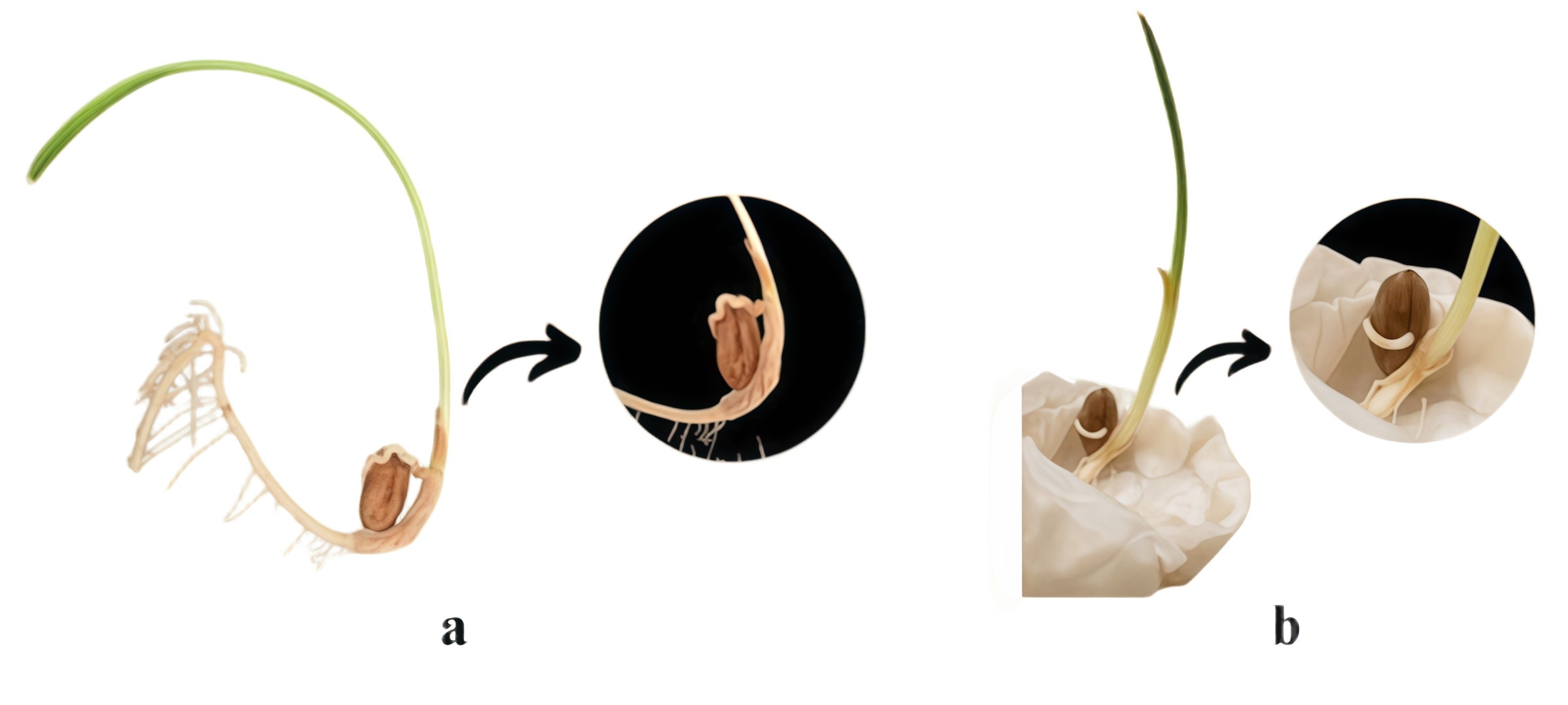
Date palm (Phoenix dactylifera) seedlings were observed over a three-month period for phenotypic characterization as early indicators of sex-related differences. Morphological features assessed included radicle structure and leaf primordium shape in cultivars KL.1 and Barhee. Phenotypic differences between male and female seedlings are shown in Figure 1. These observations are in agreement with previous reports by Bernas et al. (2020) and Zango et al. (2016), seedlings with radicle spiral structure including female date palms. During the growth of leaf primordia, date palm seedlings have curved leaf primordia structures as shown in point a of Figure 1. Meanwhile, male date palms have non-spiral/straight radicle structures accompanied by leaf primordia growth with non-curved/straight structures as shown in point b of Figure 1.
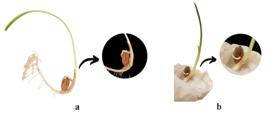
Morphological differences in radicle and first leaf primordium of date palm (P. dactylifera) seedlings indicating sex (a) Female; (b) Male.
Based on these criteria, as shown in Table 2. 7 of the 10 KL. 1 seedlings (K1, K3, K4, K5, K12, K14, K15) were identified as male, while 3 seedlings (K2, K6, K9) as female,. Resulting in a male-to-female ratio of 7:3 (70% male, 30% female).
Similarly, in the Barhee cultivar as shown in Table 3. seedlings were successfully identified during the germination period. Of these, 7 seedlings (B1, B2, B5, B8, B11, B12, and B15) were classified as male date palms (♂). Meanwhile, 3 seedlings (B4, B6, and B10) were identified as female date palms (♀). Overall, the Barhee cultivar also exhibited a male-to-female ratio of 7:3 (70% male and 30% female.
3.2. Phenotypic characteristics
Genotypic analysis was performed to validate phenotypic sex determination for both cultivars using SRY and ISSR molecular markers. PCR amplification and gel electrophoresis results are summarized in Table 4. Electrophoresis results were denoted with a value of “1” indicating the presence of a visible DNA band, while the absence of a band was denoted with “0.”
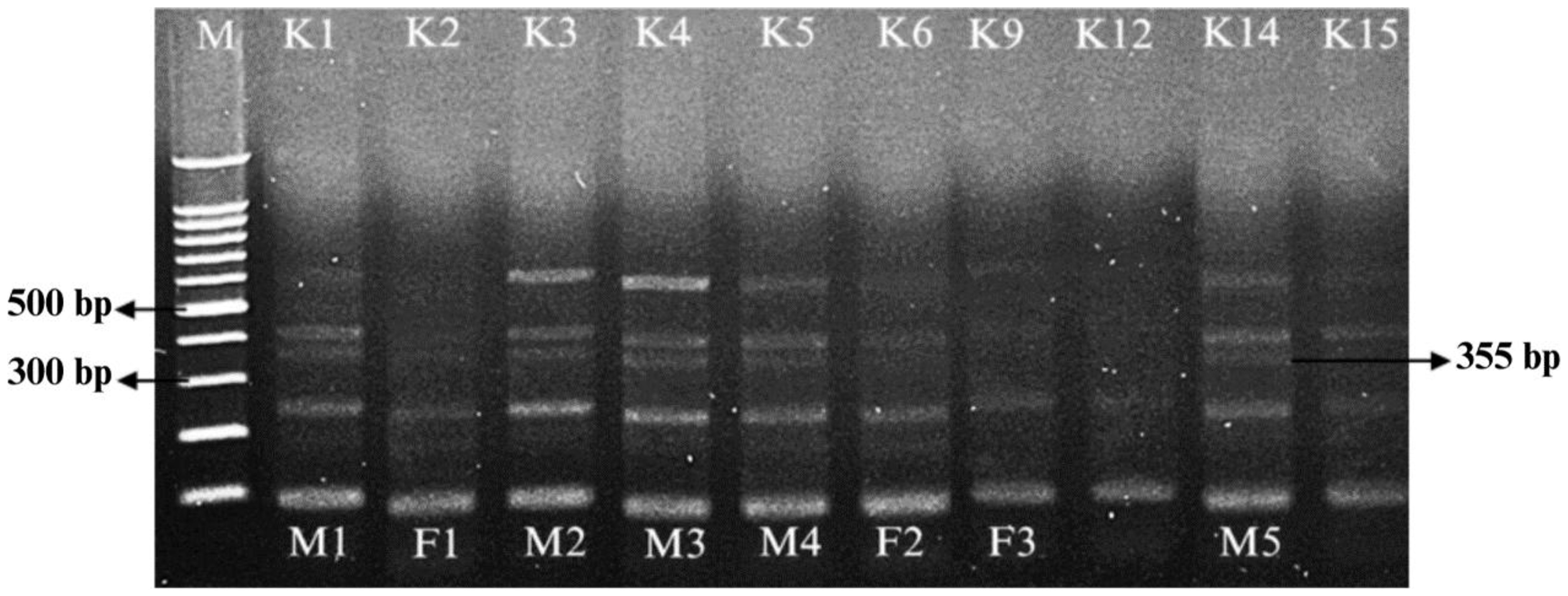
The results in Figure 2 showed that seedlings K1, K3, K4, K5, K14, and K15 had visible electrophoresis bands with primers specific to the SRY gene (male-specific, 355 bp) denoted as “1”, confirming male sex. Seedlings K2, K6, and K9 did not show bands with SRY primers denoted as “0”, indicating female sex. Seedling K12 did not produce any bands, requiring further validation through ISSR markers.
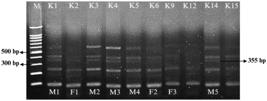
Visualization of PCR products using primer SRY-date in 10 Date Palm (Phoenix dactylifera) seedlings of the cultivar KL 1 (M = Marker; M1 = Male 1; F1 = Female 1; etc).
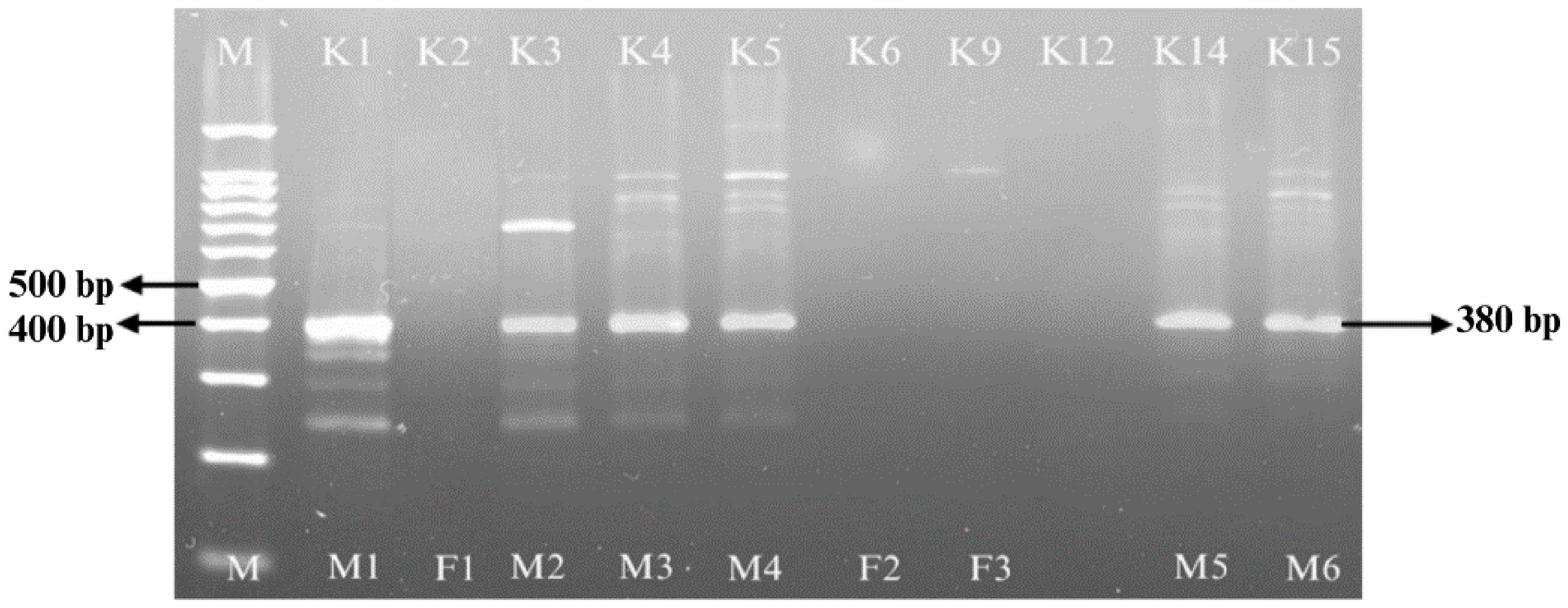
In addition to SRY-date primer analysis, further validation was performed using ISSR marker primer IS_A71 (male-specific, 380 bp) to strengthen molecular indications. Visualization results from IS_A71 confirmed that K1, K3, K4, K5, K14, and K15 were male, while K2, K6, and K9 were female. Seedling K12 remained undetermined, as no bands were produced in any marker test (Figure 3). Further validation using IS_A02 (female-specific 390 bp) confirmed female sex in K2, K6, and K9, while K12 again showed no visible bands (Figure 4).
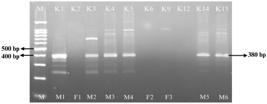
Visualization of PCR products using primer IS_A71 in 10 Date Palm (Phoenix dactylifera) seedlings of the cultivar KL 1 (M = Marker; M1 = Male 1; F1 = Female 1; etc).
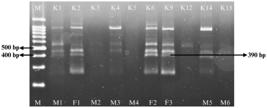
Visualization of PCR products using primer IS_A02 in 10 Date Palm (Phoenix dactylifera) seedlings of the cultivar KL 1 (M = Marker; M1 = Male 1; F1 = Female 1; etc).
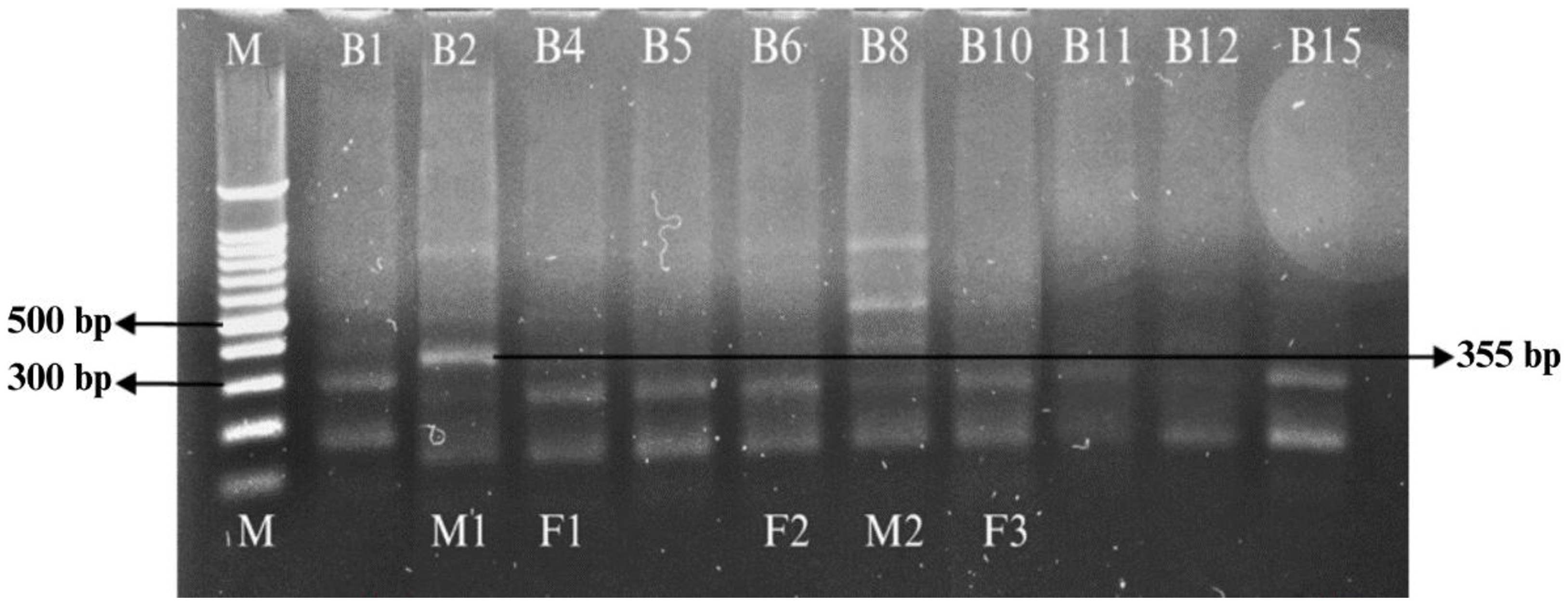
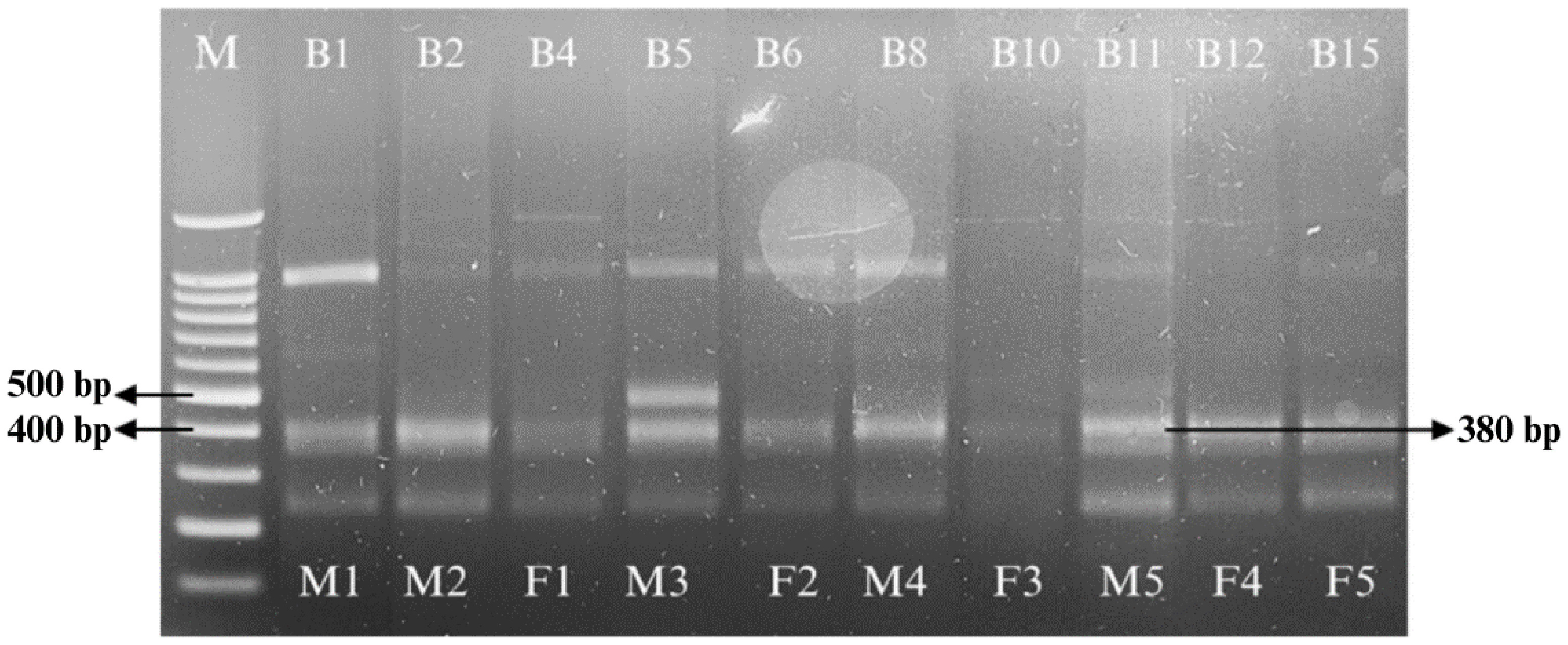
Based on molecular analysis using three markers the SRY gene, ISSR marker IS_A02, and ISSR marker IS_A71, the electrophoresis results for the date palm cultivar Barhee are summarized in Table 5. Amplification with the SRY-date primer (male-specific, 355 bp) produced clear bands in only two samples (B2 and B8), which were therefore confirmed as male (Figure 5).
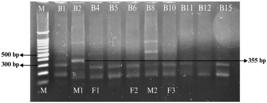
Visualization of PCR products using primer SRY-date in 10 Date Palm (Phoenix dactylifera) seedlings of the cultivar Barhee (M = Marker; M1 = Male 1; F1 = Female 1; etc).
Phenotypic assessment had preliminarily classified seven seedlings (B1, B2, B5, B8, B11, B12, and B15) as male and three seedlings (B4, B6, and B10) as female. However, molecular validation using the SRY-date marker confirmed male sex only in B2 and B8, while the remaining five phenotypically male seedlings (B1, B5, B11, B12, and B15) showed no SRY-specific amplification.
Consequently, further validation was performed using ISSR markers. Electrophoresis with IS_A71 (male-spesific 380 bp) revealed male-specific bands in five seedlings (B1, B2, B5, B8, and B11) (Figure 6).
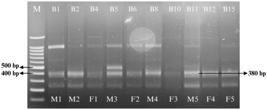
Visualization of PCR products using primer IS_A71 in 10 Date Palm (Phoenix dactylifera) seedlings of the Cultivar Barhee (M = Marker; M1 = Male 1; F1 = Female 1; etc).
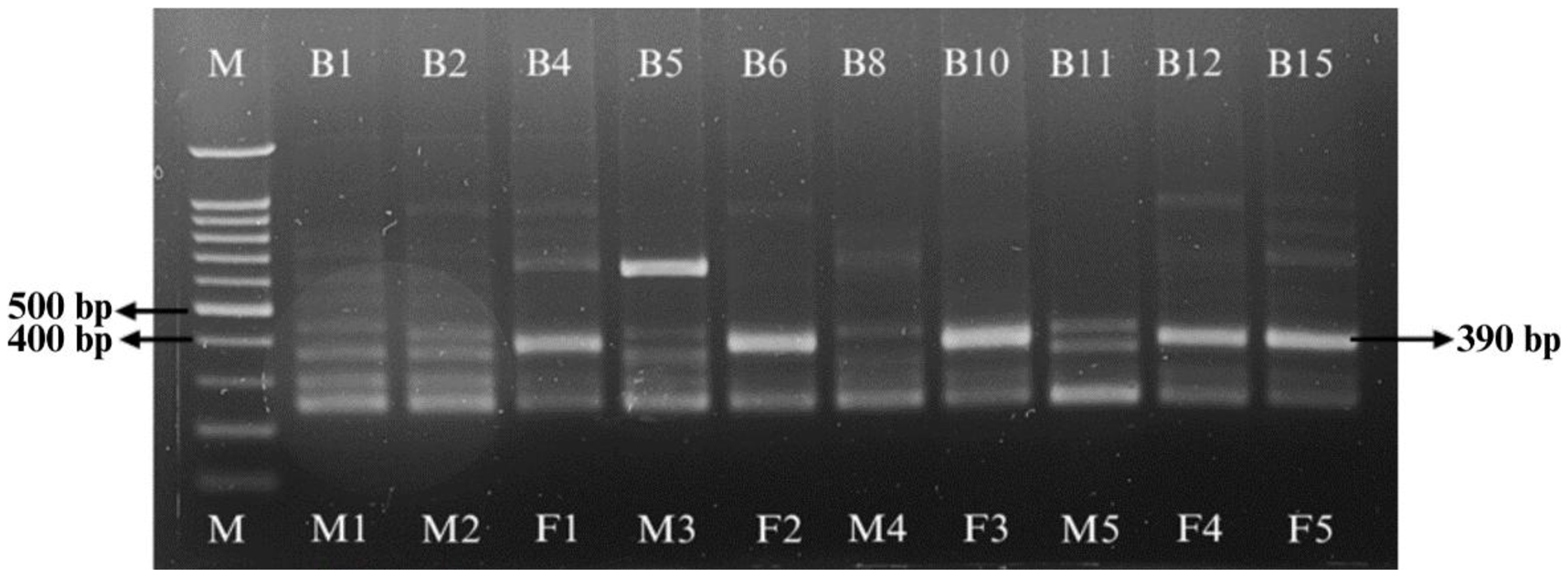
The remaining seedlings (B4, B6, B10, B12, and B15) did not produce specific IS_A71 bands and instead showed smeared profiles. Subsequent analysis using IS_A02 (female- spesific 390 bp) produced clear female-specific bands in B4, B6, B10, B12, and B15 (Figure 7).
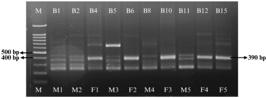
Visualization of PCR products using primer IS_A02 in 10 Date Palm (Phoenix dactylifera) seedlings of the Cultivar Barhee (M = Marker; M1 = Male 1; F1 = Female 1; etc).
Overall, the combined ISSR analyses confirmed five male (B1, B2, B5, B8, and B11) and five female seedlings (B4, B6, B10, B12, and B15) in the Barhee cultivar. These results resolved the discrepancies observed with the SRY-date marker and demonstrate that ISSR markers provide effective complementary validation when SRY-specific amplification is detected in only a subset of male individuals.
3.3. Association between phenotypic and molecular data
The morphological and molecular sex identification data for date palm cultivars KL.1 and Barhee were statistically analyzed using the Chi-square (χฒ) test in IBM SPSS. The Chi-square analysis showed that the relationship between morphological and molecular sex identification in cultivar KL.1 had a p-value of 0.012, while Barhee had a p-value of 0.048. Both values were below the significance threshold of 0.05, indicating a statistically significant association between morphological traits (radicle structure and young leaf morphology) and molecular markers (SRY gene and ISSR). The strength of association was further evaluated using the Phi coefficient and Cramer’s V test. Based on the Cramer’s V interpretation, the association between morphological and molecular sex identification in cultivar KL.1 was classified as “very strong” with a value of 1.000, while Barhee showed a “strong” association with a value of 0.655. These results indicate that morphological observations can serve as an initial reference for determining the sex of Phoenix dactylifera seedlings. However, molecular analysis is still required to ensure high accuracy in sex identification, particularly in cases where morphological and molecular results differ.
4. Discussion
4.1. Phenotypic characterization of date palm seedlings for sex identification
This study demonstrated that morphological traits useful for early sex determination in date palm seedlings include radicle structure and leaf primordia morphology. In both KL.1 and Barhee cultivars, spiraled radicles accompanied by curved leaf primordia were indicative of female plants, whereas non-spiraled radicles with straight leaf primordia indicated male plants (Figure 1). These findings are consistent with the observations of Zango et al. (2016) and Bernas et al. (2020). Bernas et al. (2020) state that the spiral shape of the radicle in date palm seedlings correlates with the growth of curved leaf primordia. This can be explained through physiological and molecular activities during the early stages of date palm germination. Xiao et al. (2019) state that starch granule accumulation occurs at the distal end of the cotyledon leaf stalk of date palm seedlings. This accumulation is also associated with the root's response to gravity, caused by the high mRNA levels of Indole-3-Acetic Acid Inducible2 (PdIAA2) (Xiao et al., 2019). When there is an imbalance in auxin distribution caused by low PdIAA2 expression in the columella, it disrupts the gravitropic response. The gravitropic response is associated with columella cells in the root tip containing amyloplasts (starch granules) that function as statoliths, which are organelles that respond to the direction of gravitational force (Kirschner et al., 2017). When statoliths are disrupted, auxin hormonal signals cannot be distributed evenly throughout the root tissue. This causes the direction of radicle growth to become curved or twisted. But, the relationship between hormonal regulation and cell differentiation during early growth stages and gene expression in sexual development requires further validation through molecular approaches. However, these phenotypic traits should be interpreted as preliminary indicators only. Therefore, molecular validation is required to reliably confirm seedling sex.
4.2. Genotypic characterization of date palm seedlings for sex identification
Sex determination based on genotypic characteristics in KL 1 and Barhe date palm cultivars using molecular markers, including SRY date, IS_A71, and IS_A02. The results of amplification visualization using the SRY date primer showed that male seedlings had an electrophoresis gel band of 355 bp. This is shown in Figure 2 (Samples K1, K3, K4, K5, K14, and K15) and Figure 5 (Samples B2 and B8) as male seedlings. The results of this study indicate the presence of the SRY gene in the samples, thereby identifying them as male. Based on the research by Solliman et al. (2019), the SRY molecular marker was designed to amplify the gene regulating male reproductive development on the Y chromosome. Previous studies have demonstrated that date palm (Phoenix dactylifera) possesses an XY sex chromosome system, with male individuals being heterogametic (XY) and females homogametic (XX). Torres et al. (2021) identified several male-specific, Y-linked DNA loci supporting the existence of a sex-determining region on the Y chromosome. Therefore, this reinforces the assumption that specific genetic markers for the Y chromosome can be developed to distinguish between male and female plants. In line with the statement by Razumova et al. (2023), dates have a chromosome number of (2n = 32; n = 16), where the XY sex chromosome type includes male individuals with the Y chromosome carrying the sex-determining factor, while the XX chromosome type includes female individuals. Additionally, Torres et al. (2018) revealed the presence of a sex-determining region (Sex-Determining Region) on the Y chromosome (Torres et al., 2018). This sex-determining region can be analyzed as SRY-like DNA markers present on the Y chromosome, thus only found in male individuals. This is validated by the statement of Detroja et al. (2025) who stated that the Y chromosome in dates contains specific male markers, one of which is the SRY gene (Sex-determining Region Y) (Detroja et al., 2025).
In addition to the SRY date molecular marker, sex determination through phenotypic characteristics was also performed using ISSR Markers. This was done for further validation as a positive control (Al-Yasi and Al-Qthanin, 2024). In this study, ISSR Marker primers were used, including IS_A71 (KU323795) and IS_A02 (KU323794). The visualization of PCR products in date palm cultivars KL 1 and Barhe showed that male date palm seedlings amplified using the IS_A71 primer had a DNA band size of 380 bp. This is shown in Figure 3 (Samples K1, K3, K4, K5, K14, and K15) and Figure 6 (Samples B1, B2, B5, B8, and B11) belong to the male sex. This study is supported by the findings of Al-Ameri et al. (2016), where the target of the IS_A71 primer produces a unique 380 bp band found in all male plants (Al-Ameri et al., 2016; Alqaisi et al., 2022). In ISSR marker, the IS_A02 primer, is specific for identifying female date palm sex. Based on the visualization of PCR products in 10 KL 1 and Barhe date palm samples, female date palm seedlings exhibit an electrophoresis gel band at 390 bp. This statement refers to Figure 4 (Samples K2, K6, and K9) and Figure 7 (Samples B4, B6, B10, B12, and B15), which are included in female seedlings, marked by the formation of bands with a size of 390 bp. The results of this electrophoresis visualization are consistent with the research by Al-Ameri et al. (2016), which states that the target of the IS_A02 primer will produce a 390 bp band only in female date palm plants (Al-Ameri et al., 2016). Specific primers in the ISSR Marker method amplify DNA templates from date palm seedling samples in regions located between two repetitive sequences or at oppositely oriented locations. Thus, ISSR Markers are suitable for identifying genetic differences between male and female plants in certain species (Choudhury et al., 2022). In this case, it can be used to help indicate the sex of date palm (P. dactylifera) seedlings whose sex is unknown.
Based on the overall molecular testing to validate phenotypic characterization of date palm seedlings, several seedlings experienced issues in PCR product visualization, including the seedling with code K12. K12 consistently failed to produce detectable DNA bands for all molecular markers tested. Consequently, the male-associated phenotype inferred from morphological observation for K12 could not be molecularly confirmed. The absence of amplification may be attributed to technical factors, including PCR inhibition, suboptimal DNA quality, or variations affecting primer-template annealing efficiency, as previously reported in molecular studies of plant sex determination (Latham et al., 2023). Such factors can result in null amplification, even when target sequences are present. Therefore, interpretations regarding allelic dropout or primer-site mutations remain hypothetical. Definitive identification of the underlying cause of amplification failure in K12 would require further investigation using DNA sequencing approaches, which was beyond the scope of the present study (Chang et al., 2023). As for the Barhe cultivar of date palm in seedlings B12 and B15, there was a discrepancy between phenotypic assessment and molecular validation. Morphological characteristics of seedlings B12 and B15 indicated male sex, but molecular testing with the SRY gene genetic marker did not find any bands formed. Subsequent validation using ISSR markers revealed that B12 and B15 amplified only with the IS_A02 primer, producing a female-specific band at 390 bp, while no amplification was detected with the male-associated IS_A71 marker. These results indicate internal consistency between the ISSR markers, supporting female molecular identification for both seedlings. The observed discrepancy between morphological characterization and molecular results suggests limitations in early phenotypic sex inference, particularly at the seedling stage. Several factors may contribute to such inconsistencies, including developmental stage effects, marker sensitivity, primer specificity, or technical constraints in PCR-based assays (Pilkington et al., 2019; Lin et al., 2023). Confirmation of such mechanisms would require longitudinal developmental observations and genomic or epigenetic analyses, which were beyond the scope of this study.
The relationship between molecular sex determination and morphology in date palm seedlings shows that morphological characteristics can be used as an initial indicator in identifying the sex of plants (Zango et al., 2016; Bernas et al., 2020). Meanwhile, molecular validation reinforces the results of the initial indicators, where male seedlings are marked by the presence of DNA bands on the SRY date primer (355 bp) and IS_A71 (380 bp), while female seedlings show specific bands on the IS_A02 primer (390 bp) (Al-Ameri et al., 2016; Solliman et al., 2019). These morphological characteristics were found to have a significant correlation with molecular identification results, both in the KL 1 and Barhe cultivars. This was demonstrated by the Chi-Square test results with p-values of 0.012 < 0.05 and 0.048 < 0.05. The p-value values indicate that morphological characteristics can represent genotypic differences in seedlings (Bangdiwala, 2016). For future research, larger sample sizes across diverse cultivars are needed to assess marker robustness and reproducibility. Longitudinal studies following seedlings to reproductive maturity would further clarify the predictive accuracy of early indicators. Additionally, integrating sequencing-based approaches or genome-wide markers may help elucidate the genetic mechanisms underlying sex determination in date palm.
Acknowledgements
This research is funded by the Indonesian Endowment Fund for Education (LPDP) on behalf of the Indonesia Ministry of Higher Education, Science and Technology and managed under the EQUITY Program (Contract No. 4299/B3/DT.03.08/2025 and No. 3029/PKS/ITS/2025).
Data Availability Statement
Data will be made available on request
References
-
AKOGLU, H., 2018. User’s guide to correlation coefficients. Turkish Journal of Emergency Medicine, vol. 18, no. 3, pp. 91-93. https://doi.org/10.1016/j.tjem.2018.08.001 PMid:30191186.
» https://doi.org/10.1016/j.tjem.2018.08.001 -
AL-AMERI, A.A., AL-QURAINY, F., GAAFAR, A.-R.Z., KHAN, S. and NADEEM, M., 2016. Molecular identification of sex in Phoenix dactylifera using inter simple sequence repeat markers. BioMed Research International, vol. 2016, pp. 4530846. https://doi.org/10.1155/2016/4530846 PMid:27419132.
» https://doi.org/10.1155/2016/4530846 -
AL-KARMADI, A. and OKOH, A.I., 2024. An overview of date (Phoenix dactylifera) fruits as an important global food resource. Foods, vol. 13, no. 7, pp. 1024. https://doi.org/10.3390/foods13071024 PMid:38611330.
» https://doi.org/10.3390/foods13071024 - ALQAISI, M.R.M., AL-JUMAILI, A.S., KHLAFA, H.M. and ASAL, K.N., 2022. Molecular detection of date palm (Phoenix dactylifera L.) at the vegetative stage by using DNA ISSR marker for cultivar identification. AIP Conference Proceedings, vol. 2394, pp. 030008.
-
AL-YASI, H.M. and AL-QTHANIN, R., 2024. Comparing genetic differentiation and variation using ISSR and SCoT among Juniper plant markers in Saudi Arabia. Frontiers in Plant Science, vol. 15, pp. 1356917. https://doi.org/10.3389/fpls.2024.1356917 PMid:38638351.
» https://doi.org/10.3389/fpls.2024.1356917 -
BANGDIWALA, S.I., 2016. Chi-squared statistics of association and homogeneity. International Journal of Injury Control and Safety Promotion, vol. 23, no. 4, pp. 444-446. https://doi.org/10.1080/17457300.2016.1228144 PMid:27705100.
» https://doi.org/10.1080/17457300.2016.1228144 -
BERNAS, S.M., FITRIANA, M., WIJAYA, A. and AIDIL FITRI, S.N., 2020. Effect of the seedling age and compost to the growth of palm date lulu (Phoenix dactylifera L.) nursery and investigation of female seedling on soil of sub-optimal land. Journal of Suboptimal Lands, vol. 9, no. 2, pp. 199-207. https://doi.org/10.33230/JLSO.9.2.2020.509
» https://doi.org/10.33230/JLSO.9.2.2020.509 -
CHANG, M., JUNG, J.K., PARK, J.H., JUNG, J.Y., LEE, W.-H. and KIM, J.-Y., 2023. Amplification failure of the amelogenin X gene caused by a rare mutation in the primer-binding region. Genes, vol. 14, no. 11, pp. 1986. https://doi.org/10.3390/genes14111986 PMid:38002929.
» https://doi.org/10.3390/genes14111986 -
CHOUDHURY, A., DEB, S., KHARBYNGAR, B., RAJPAL, V.R. and RAO, S.R., 2022. Dissecting the plant genome: through new generation molecular markers. Genetic Resources and Crop Evolution, vol. 69, no. 8, pp. 2661-2698. https://doi.org/10.1007/s10722-022-01441-3
» https://doi.org/10.1007/s10722-022-01441-3 -
DETROJA, A., KORADIYA, J., IBRAHIM, M., BHIMANI, A., BHATT, T.C., SANGHVI, G. and BISHOYI, A.K., 2025. A simple, rapid, cost-effective and reliable molecular technique for early sex determination in Phoenix dactylifera. Analytical Biochemistry, vol. 702, pp. 115843. https://doi.org/10.1016/j.ab.2025.115843 PMid:40086658.
» https://doi.org/10.1016/j.ab.2025.115843 -
DEWI, L.P., YUSUP, I.R., MUTIANI, L.D. and MUHAYAH, M.S., 2020. Faktor Berbuahnya Pohon Kurma (Phoenix dactylifera) di kampus 2 UIN Sunan Gunung Djati Bandung. Jurnal Bio Educatio, vol. 5, no. 1, pp. 1-8. https://doi.org/10.31949/be.v5i1.1893
» https://doi.org/10.31949/be.v5i1.1893 - ELAMIN, A.H., ELSADIQ, E.H., ALJUBOURI, H.J. and GAFAR, M.O., 2017. Improving fruit quality and yield of Khenazi date palm (Phoenix dactylifera L.) grown in sandy soil by application of nitrogen, fosforus, potassium and organic manure. International Journal of Development and Sustainability, vol. 6, no. 8, pp. 862-875.
-
INTHA, N. and CHAIPRASART, P., 2018. Sex determination in date palm (Phoenix dactylifera L.) by PCR based marker analysis. Scientia Horticulturae, vol. 236, pp. 251-255. https://doi.org/10.1016/j.scienta.2018.03.039
» https://doi.org/10.1016/j.scienta.2018.03.039 -
KIRSCHNER, G.K., STAHL, Y., VON KORFF, M. and SIMON, R., 2017. Unique and conserved features of the barley root meristem. Frontiers in Plant Science, vol. 8, pp. 1240. https://doi.org/10.3389/fpls.2017.01240 PMid:28785269.
» https://doi.org/10.3389/fpls.2017.01240 -
LATHAM, S., HUGHES, E., BUDGEN, B. and MORLEY, A., 2023. Inhibition of the PCR by genomic DNA. PLoS One, vol. 18, no. 4, e0284538. https://doi.org/10.1371/journal.pone.0284538 PMid:37083935.
» https://doi.org/10.1371/journal.pone.0284538 - LIN, W., ZHANG, Y., QUEENBOROUGH, S., NI, M., HE, Q. and LI, B.-H., 2023. Molecular sexing reveals ontogenetic shifts in sex ratios and underlying processes in a dioecious tree species. Authorea, vol. 3, no. 2, pp. 1-15.
- NAEEM, A.B., KHALID, F., SOOMRO, A.M., MUNDO, A.D.D., ZAIDI, A., SENAPATI, B. and DOSHI, O.P., 2023. Early gender identification of date palm using machine learning. Journal of Computing & Biomedical Informatics, vol. 4, no. 2, pp. 1-15.
-
PILKINGTON, S.M., TAHIR, J., HILARIO, E., GARDINER, S.E., CHAGNÉ, D., CATANACH, A., MCCALLUM, J., JESSON, L., FRASER, L.G., MCNEILAGE, M.A., DENG, C., CROWHURST, R.N., DATSON, P.M. and ZHANG, Q., 2019. Genetic and cytological analyses reveal the recombination landscape of a partially differentiated plant sex chromosome in kiwifruit. BMC Plant Biology, vol. 19, no. 1, pp. 172. https://doi.org/10.1186/s12870-019-1766-2 PMid:31039740.
» https://doi.org/10.1186/s12870-019-1766-2 -
PRAMUDI, M.I., BASERAH, B. and ROSA, H.O., 2021. Inventory and identification of arthropods on dates (Phoenix dactylifera L.). Tropical Wetland Journal, vol. 7, no. 1, pp. 39-47. https://doi.org/10.20527/twj.v7i1.99
» https://doi.org/10.20527/twj.v7i1.99 -
PROMKAEW, N., UMPUNJUN, P., CHUENBOONNGARM, N. and VIBOONJUN, U., 2024. Development of a molecular maker for sex identification in Thai commercial date palm (Phoenix dactylifera L.). Plant Biotechnology, vol. 41, no. 1, pp. 45-51. https://doi.org/10.5511/plantbiotechnology.23.1214b PMid:39464865.
» https://doi.org/10.5511/plantbiotechnology.23.1214b -
RAZUMOVA, O.V., ALEXANDROV, O.S., BONE, K.D., KARLOV, G.I. and DIVASHUK, M.G., 2023. Sex chromosomes and sex determination in dioecious agricultural plants. Agronomy, vol. 13, no. 2, pp. 540. https://doi.org/10.3390/agronomy13020540
» https://doi.org/10.3390/agronomy13020540 -
ROWLEY, L.D., FELGUEIRAS, M., RÉTHORÉ, G., BRAGANÇA, F., THOMAS, R.J., HUCKLE, E. and MEDEIROS, R., 2020. Reliability of morphological criteria for sexing birds during ringing, assessed using molecular methods – a study of thirteen species of passerines and near passerines. Ringing & Migration, vol. 35, no. 2, pp. 83-93. https://doi.org/10.1080/03078698.2021.2009544
» https://doi.org/10.1080/03078698.2021.2009544 -
SALOMÓN-TORRES, R., KRUEGER, R., GARCÍA-VÁZQUEZ, J.P., VILLA-ANGULO, R., VILLA-ANGULO, C., ORTIZ-URIBE, N., SOL-URIBE, J.A. and SAMANIEGO-SANDOVAL, L., 2021. Date palm pollen: features, production, extraction and pollination methods. Agronomy, vol. 11, no. 3, pp. 504. https://doi.org/10.3390/agronomy11030504
» https://doi.org/10.3390/agronomy11030504 -
SAPTARI, R.T. and SUMARYONO., 2018. Embriogenesis somatik dari pucuk tunas tanaman kurma (Phoenix dactylifera L.) Somatic embryogenesis from shoot tip of date palm (Phoenix dactylifera L.). Menara Perkebunan, vol. 86, no. 2, pp. 1. https://doi.org/10.22302/iribb.jur.mp.v86i2.313
» https://doi.org/10.22302/iribb.jur.mp.v86i2.313 -
SOLLIMAN, M., MOHASSEB, H.A.A., AL-KHATEEB, A.A., AL-KHATEEB, S.A., CHOWDHURY, K., EL-SHEMY, H.A. and ALDAEJ, M.I., 2019. Identification and sequencing of Date-SRY gene: a novel tool for sex determination of date palm (Phoenix dactylifera L.). Saudi Journal of Biological Sciences, vol. 26, no. 3, pp. 514-523. https://doi.org/10.1016/j.sjbs.2017.08.002 PMid:30899166.
» https://doi.org/10.1016/j.sjbs.2017.08.002 -
SPENNEMANN, D.H.R., 2018. Review of the vertebrate-mediated dispersal of the Date Palm, Phoenix dactylifera. Zoology in the Middle East, vol. 64, no. 4, pp. 283-296. https://doi.org/10.1080/09397140.2018.1514785
» https://doi.org/10.1080/09397140.2018.1514785 -
SULEIMAN, R.K., IALI, W., EL ALI, B. and UMOREN, S.A., 2021. New constituents from the leaves of Date Palm (Phoenix dactylifera L.) of Saudi Origin. Molecules, vol. 26, no. 14, pp. 4192. https://doi.org/10.3390/molecules26144192 PMid:34299467.
» https://doi.org/10.3390/molecules26144192 -
TOMLINSON, C., RAJASEKARAN, A., BROCHU-GAUDREAU, K., DUBOIS, C., FARMILO, A.J., GRIS, P., KHATIZ, A., MATTHEWS, A., PILTONEN, M., AMRANI, A. and GRIS, D., 2024. A convenient analytic method for gel quantification using ImageJ paired with Python or R. PLoS One, vol. 19, no. 11, e0308297. https://doi.org/10.1371/journal.pone.0308297 PMid:39570862.
» https://doi.org/10.1371/journal.pone.0308297 -
TORRES, M.F., MATHEW, L.S., AHMED, I., AL-AZWANI, I.K., KRUEGER, R., RIVERA-NUÑEZ, D., MOHAMOUD, Y.A., CLARK, A.G., SUHRE, K. and MALEK, J.A., 2018. Genus-wide sequencing supports a two-locus model for sex-determination in Phoenix. Nature Communications, vol. 9, no. 1, pp. 3969. https://doi.org/10.1038/s41467-018-06375-y PMid:30266991.
» https://doi.org/10.1038/s41467-018-06375-y -
TORRES, M.F., MOHAMOUD, Y.A., YOUNUSKUNJU, S., SUHRE, K. and MALEK, J.A., 2021. Evidence of recombination suppression blocks on the Y chromosome of date palm (Phoenix dactylifera). Frontiers in Plant Science, vol. 12, pp. 634901. https://doi.org/10.3389/fpls.2021.634901 PMid:33959137.
» https://doi.org/10.3389/fpls.2021.634901 -
XIAO, T.T., RAYGOZA, A.A., PÉREZ, J.C., KIRSCHNER, G., DENG, Y., ATKINSON, B., STURROCK, C., LUBE, V., WANG, J.Y., LUBINEAU, G., AL-BABILI, S., CRUZ RAMÍREZ, A., BENNETT, M. and BLILOU, I., 2019. Emergent protective organogenesis in date palms: a morpho-devo-dynamic adaptive strategy during early development. The Plant Cell, vol. 31, no. 8, pp. 1751-1766. https://doi.org/10.1105/tpc.19.00008 PMid:31142581.
» https://doi.org/10.1105/tpc.19.00008 -
ZANGO, O., REY, H., BAKASSO, Y., LECOUSTRE, R., ABERLENC, F. and PINTAUD, J.-C., 2016. Local practices and knowledge associated with date palm cultivation in Southeastern Niger. Agricultural Sciences, vol. 7, no. 9, pp. 586-603. https://doi.org/10.4236/as.2016.79056
» https://doi.org/10.4236/as.2016.79056
Edited by
-
Editor:
Takako Matsumura Tundisi