 The effect of salt stress in halophytes on nutritional properties and their use as food additives
Abstract
Halophytes exhibit a broad geographical distribution, and their phytochemical profiling highlights their nutritional relevance, particularly in the context of global food insecurity. Salicornia species, in particular, have been identified as a source of functional nutrients, including dietary fiber, proteins, and essential macronutrients. In this study, Salicornia perennans specimens collected from two distinct regions of Kazakhstan were analyzed using atomic spectrometry, revealing significant inter-populational variation in macronutrient composition among wild-grown samples. Furthermore, the impact of artificially induced chloride salinity at concentrations of 0 mM, 100 mM, 200 mM, and 300 mM was investigated with respect to macronutrient and nutrient accumulation. Data analysis indicated that 300 mM salinity promoted the accumulation of elemental nutrients within plant tissues, despite a concomitant reduction in fresh biomass by up to 13% (p>0.01). Protein content was also found to be salinity-dependent, with sample #1 exhibiting a peak value of 11.03 mg·g−1 fresh weight at the highest salinity level tested. These findings underscore intraspecific variability in nutrient accumulation patterns within Salicornia perennans, reflecting its adaptive plasticity to diverse environmental conditions. The results further support the potential of wild halophytic species as valuable components in food systems, owing to their high nutritional density and resilience under saline stress, making them promising candidates for the development of novel functional food products.
Keywords:
halophytes; Salicornia perennans; macronutrients; salinity; sodium reduction; functional foods; osmotic adjustment
Resumo
As halófitas apresentam ampla distribuição geográfica, e seu perfil fitoquímico destaca sua relevância nutricional, particularmente no contexto da insegurança alimentar global. Espécies de Salicornia, em especial, foram identificadas como fonte de nutrientes funcionais, incluindo fibras alimentares, proteínas e macronutrientes essenciais. Neste estudo, espécimes de Salicornia perennans coletados em duas regiões distintas do Cazaquistão foram analisados por espectrometria atômica, revelando variação interpopulacional significativa na composição de macronutrientes entre amostras silvestres. Além disso, o impacto da salinidade clorada induzida artificialmente em concentrações de 0 mM, 100 mM, 200 mM e 300 mM foi investigado em relação ao acúmulo de macronutrientes e nutrientes. A análise dos dados indicou que a salinidade de 300 mM promoveu o acúmulo de nutrientes elementares nos tecidos vegetais, apesar de uma redução concomitante na biomassa fresca de até 13% (p > 0,01). O teor de proteína também se mostrou dependente da salinidade, com a amostra nº 1 apresentando um valor máximo de 11,03 mg·g−1 de peso fresco no nível de salinidade mais elevado testado. Esses achados ressaltam a variabilidade intraespecífica nos padrões de acúmulo de nutrientes em Salicornia perennans, refletindo sua plasticidade adaptativa a diversas condições ambientais. Os resultados reforçam o potencial de espécies halófitas silvestres como componentes valiosos em sistemas alimentares, devido à sua alta densidade nutricional e resiliência sob estresse salino, tornando-as candidatas promissoras para o desenvolvimento de novos produtos alimentícios funcionais.
Palavras-chave:
halófitas; Salicornia perennans; macronutrientes; salinidade; redução de sódio; alimentos funcionais; ajuste osmótico
1. Introduction
Salicornia is a genus of halophytic plants adapted to thrive in highly saline soils, widely recognized for their ecological and industrial applications as resilient, sustainable crops (Turcios et al., 2024). Salicornia has attracted particular attention in the fields of food and pharmaceutical sciences due to its rich profile of bioactive compounds. Studies have demonstrated its antioxidant, anti-inflammatory, and immunomodulatory properties. Of notable interest are the seeds of Salicornia, which are rich in linoleic, oleic, palmitic, and stearic acids, along with substantial levels of protein and polysaccharides (Cárdenas-Pérez et al., 2021). Beyond direct consumption, Salicornia has been identified as a viable alternative source of dietary salt in food products.
In Kazakhstan, Salicornia is widespread across saline soils, especially in the southern regions, with the exception of mountainous areas (FAO, 2017). According to regional studies, Salicornia europaea is prevalent and demonstrates significant elemental content, including 32.89% Na and 33.51% Cl, along with magnesium (1.8%), potassium (1.94%), calcium (0.74%), and silicon (1.32%). Comprehensive research efforts are ongoing to evaluate Salicornia's utility across various sectors, particularly within the food industry. For instance, research by Kaisarova et al. (2024) demonstrated the feasibility of reducing sodium chloride content in meat-based snacks through the incorporation of Salicornia-derived plant materials.
In the work of Shin and Lee (2013)S. herbacea powder was granulated into spherical forms, exhibiting promising characteristics as a salt substitute. Similarly, Kim et al. (2014) reported that incorporating 1.5% Salicornia-based salt as a partial NaCl replacement in sausage formulations enhanced textural quality without inducing adverse sensory effects.
In a study by Clavel-Coibrié et al. (2021), Salicornia perennis was integrated into cracker formulations at concentrations ranging from 1% to 10% as a NaCl replacement. The inclusion of Salicornia not only preserved the structural integrity of the crackers but also enhanced their crispness and improved nutritional composition—elevating phenolic content, antioxidant activity, and mineral levels (notably potassium, magnesium, and phosphorus). Remarkably, substituting just 1% NaCl with S. perennis resulted in a 70% reduction in sodium content.
Further studies by Barreira et al. (2017) examined multiple halophytic taxa, including Saliocornia perennis subsp. perennis, S. perennis subsp. alpini and Salicornia ramosissima (Salicorniaceae), Arthrocnemum macrostachyum (Amaranthaceae). These species exhibited high protein levels (5.20-13.2 g/100 g dry weight) and elevated concentrations of n-3 polyunsaturated fatty acids, especially α-linolenic acid (19.3-25.9% of total fatty acids), while maintaining toxic metal contents well below the safety thresholds established by the European Commission. Mineral content was also high, particularly sodium (64.1-109 mg/g DW), and S. ramosissima was identified as a particularly rich source of manganese (204 µg/g DW).
Comparative mineral profiling revealed that Sarcocornia perennis and Salicornia ramosissima shared similar potassium and zinc concentrations, though S. perennis demonstrated higher levels of magnesium, calcium, phosphorus, and iron relative to Salicornia europaea. Copper (1.17-1.31 mg/100 g), lead (0.09-0.10 mg/100 g), and cadmium (0.04-0.05 mg/100 g) concentrations were negligible and posed no consumer health risks (Antunes et al., 2021).
A metabolomic investigation by Wang et al. (2021) in the leaves of S. salsa and S. europaea identified 822 and 694 metabolites, respectively. Salt stress was associated with increased levels of key compounds such as glucosamine (FC = 7.70), maltose (FC = 9.34), and d-(+)-sucrose (FC = 7.19). Moreover, levels of d-(+)-glucose, 2-propenyl glucosinolate (sinigrin), and fructose-1-phosphate were markedly elevated in S. salsa relative to S. europaea, suggesting species-specific metabolic responses to salinity.
Research into the morphology, microstructure, and salt adaptation mechanisms of these plants is ongoing, aimed at deepening our understanding of their physiology in relation to their commercial potential. The commercial viability of Salicornia is contingent upon a comprehensive understanding of its biochemical structure and compositional dynamics. As demonstrated, the nutritional profile varies not only across species but also as a function of genetic background and environmental salinity (Castagna et al., 2022).
To effectively harness Salicornia with enhanced nutritional value, it is critical to examine the effects of salinity on the accumulation of proteins, macronutrients, chlorophyll, and other bioactive components (Lopes et al., 2023). Given that Salicornia in Kazakhstan grows across diverse soil types with varying degrees and types of salinity, its nutritional properties may fluctuate accordingly. This underlines the importance of selecting appropriate species and habitats for its optimal utilization in the food industry.
The objective of our study was to investigate the baseline mineral composition of wild Salicornia perennans populations from the Kyzylorda and Zhambyl regions of Kazakhstan, as well as to assess the dynamics of macro- and micronutrient accumulation under different laboratory-controlled salinity regimes.
2. Material and Methods
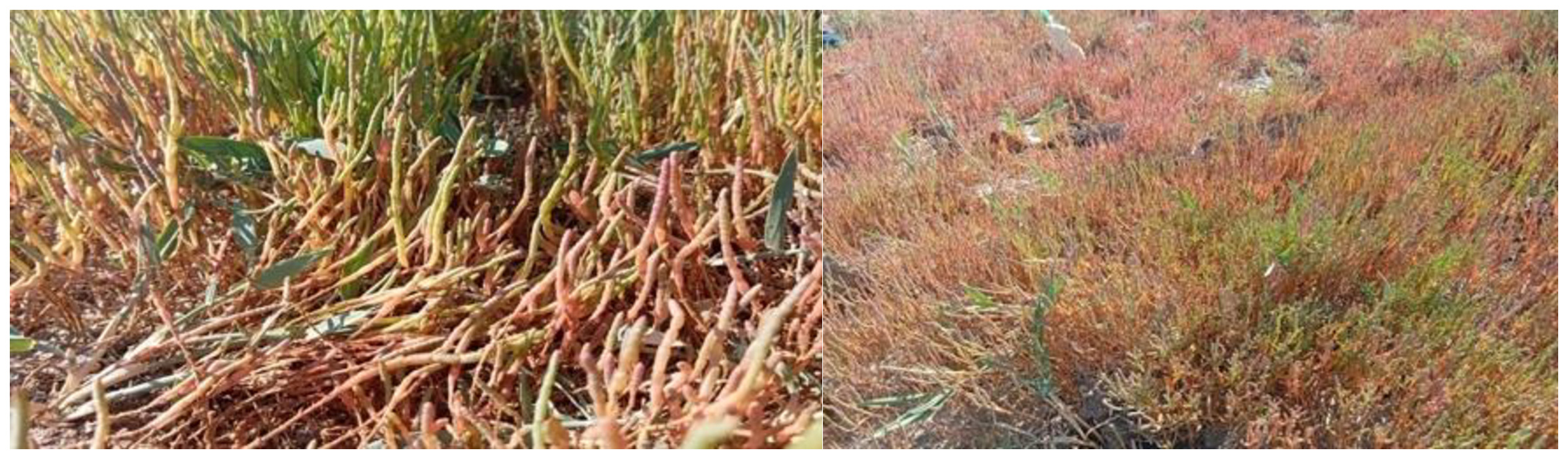
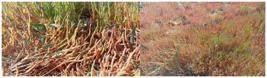
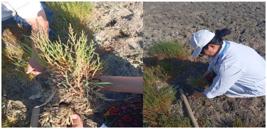
The study subject, Salicornia perennans (Figure 1), was collected in its wild form from the Karmakchinsky district of the Kyzylorda region and the Moyinkum district of the Zhambyl region in September 2023.
A portion of the samples was air-dried and transported to the laboratory for analysis in sealed paper bags. Collected seeds were sown in mineral wool under controlled laboratory conditions. Cultivation was conducted at the Plant Culture and Cell Laboratory within the Research Platform for Agricultural Biotechnology at the S. Seifullin Kazakh Agro-Technical Research University. Irrigation was performed using tap water supplemented with NaCl at concentrations of 0. 100. 200. and 300 mM. Plants were watered twice weekly with the respective saline solutions.
Growth conditions were maintained at an average temperature of 25-27 °C, relative humidity of 55-70%, under illumination of 17.000 lux, with a photoperiod of 16 hours light and 8 hours darkness in a phytotron chamber. The experimental design included triplicate repetitions. Each replicate involved the cultivation of 30 seeds per sample for 16 days, after which germination intensity was assessed by calculating the percentage ratio of germinated to non-germinated seeds (Karpin et al., 2012)
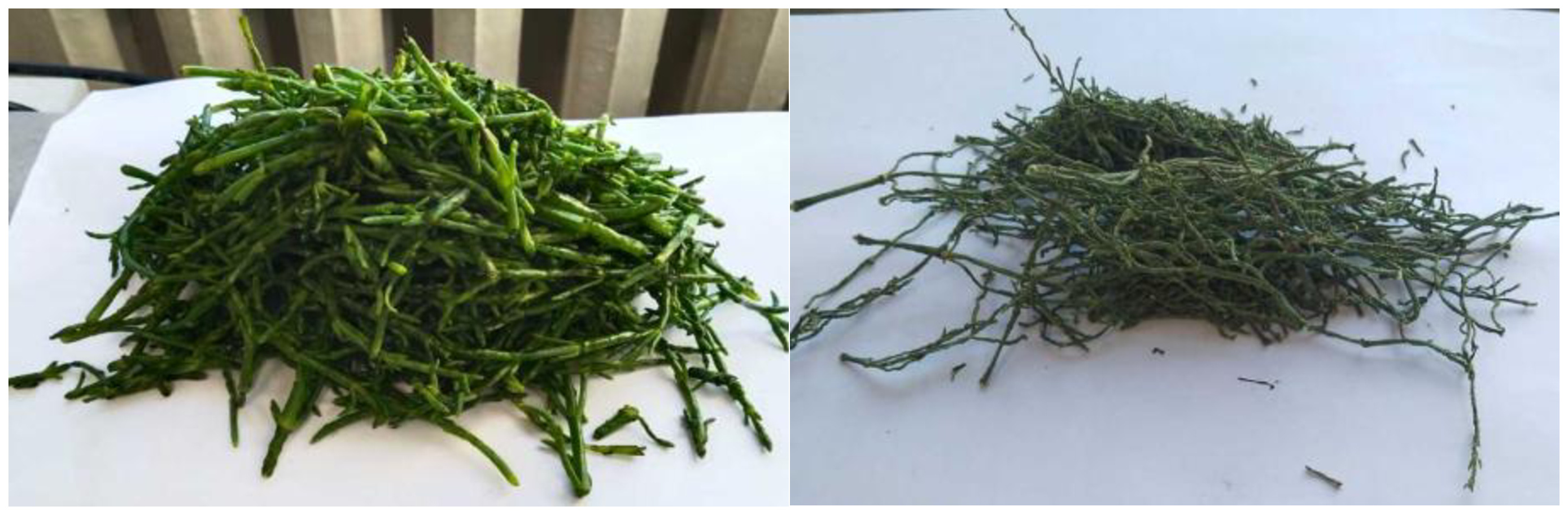
Fresh and dry biomass determinations were performed by weighing 200 g samples (Figure 2) in both fresh and dried states using an analytical balance (Ohaus Pioneer PX, New York, USA) with a precision of ±0.0001 g.
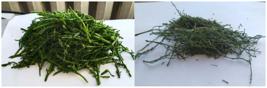
Fresh and dry biomass of Salicornia perennans from Karmakshy district taken for physic-chemical analysis.
Biomass was harvested after eight weeks of growth under salt stress conditions. The drying protocol followed the method optimized by Barroca et al. (2020). Four plants per species per replicate were sampled on days 1, 3, and 8 following the onset of treatment. Fresh shoot weight was recorded immediately post-harvest. Subsequently, a portion of the shoot material was oven-dried at 70°C for 48 hours, and dry weight was measured. The water content percentage for each sample was calculated using the following Formula 1:
Elemental analysis of the collected biomass was performed using atomic absorption gas chromatography, following the relevant GOST standards: calcium according to GOST R 55573-13 Method II (RUNORM, 2013a); potassium, sodium, and magnesium as per GOST R 55484-13 (RUNORM, 2013b); zinc, iron, and copper according to GOST 30178-96 (RUNORM, 1997b); and phosphorus by GOST 26657-97 (RUNORM, 1997a) (s.4). These methods share a common principle based on comparing the absorption of resonance radiation by free metal atoms generated in the flame upon introduction of the sample solution (with complete organic matrix destruction) against calibration solutions with known metal concentrations subjected to identical procedures.
Total soluble proteins were extracted and quantified as previously described (Ventura et al., 2010), employing the Bio-Rad protein assay based on a modified Bradford method (Bradford, 1976).
Chlorophyll extraction was conducted by incubating leaf samples in 80% acetone (1:10 w/v) for 48 hours at 4°C in darkness. Following a 1:4 (v/v) dilution of the extract, chlorophyll and β-carotene contents were measured spectrophotometrically using a PE 5400 UV spectrophotometer (Ekros, St. Petersburg, Russia) at wavelengths of 652 nm and 480 nm, respectively (Ventura et al., 2011).
Conductivity measurements were performed using an electrochemical conductivity detector (ED 50; Dionex) coupled with an inline self-regenerating anion suppressor (ASRS® 300 4 mm; Dionex) operating in AutoSuppression recirculation mode (Ventura et al., 2011).
Quantification of total soluble sugars (expressed as glucose equivalents) in plant tissue extracts was carried out via the sulfuric acid-phenol method (Maness, 2010).
Data were statistically analyzed using Student’s t-test (t) and associated p-values (p) implemented in Microsoft Excel 2010. A value of p>0.05 was considered reliable.
3. Results and Discussion
Salicorniaperennans is a distinctive representative of halophytic flora, thriving in extreme saline soil conditions where most other plants fail to survive due to excessive salt concentrations. This resilience is attributed to a suite of morphophysiological adaptations, including succulent leaves that efficiently retain moisture under high salinity stress (Katel et al., 2023). For the utilization of Salicornia in food products, it is essential to perform selective sampling and optimize growth conditions to maximize the content of antioxidants, salts, phenolic compounds, proteins, and other bioactive constituents (Limongelli et al., 2022).
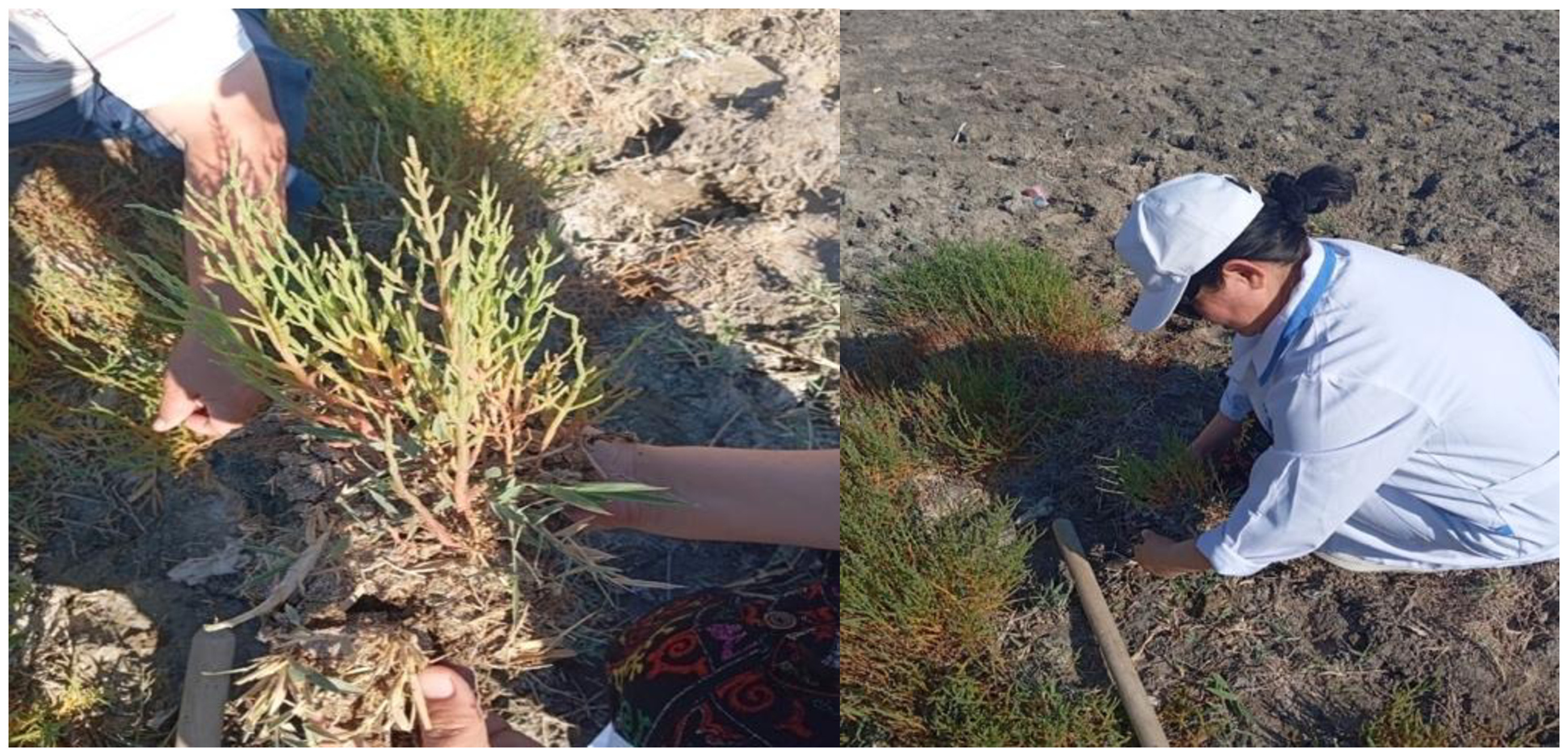
Sampling was conducted in the southern region of the country, where soil salinization affects over 85% of the territory. Soil salt concentrations in this area range from 1.07% to 2.23%, providing a natural environment conducive to halophyte growth. Salicornia perennans, previously identified through molecular methods (Ventura et al., 2011), is abundantly found in the Karmakchinsky district of the Kyzylorda region and the Moyinkum district of the Zhambyl region. Sampling took place in the autumn (Figure 3), coinciding with the peak accumulation of nutrients and seed maturation.
Dried and milled samples were utilized for physicochemical analyses of Salicornia. Among critical quality parameters ensuring prolonged storage stability and minimal contamination of the plant raw material are moisture content and water activity (Table 1).
Physical properties of Salicornia perennans from different localities of the Republic of Kazakhstan.
The moisture content of sample Nº1 was 83.6%, which is 8% lower than that of sample Nº2. where moisture reached 90.8% (p>0.001). This reduction in moisture is pivotal for enhancing product stability, as lower moisture content retards microbial degradation, thereby extending shelf life. Additionally, water activity in sample Nº1 was 37.9% lower compared to sample Nº2 (p > 0.01). Water activity directly influences microbial and fungal accessibility to water and can preserve the usability of sample Nº1 during prolonged storage. Decreased water activity also improves organoleptic properties by reducing the product’s wateriness and increasing its firmness, making it more suitable as a stabilizing and salt-replacing ingredient in diverse food formulations. The assessment of mineral components in Salicornia is critical when considering its application as a food ingredient. Key minerals of interest include magnesium, sodium, phosphorus, potassium, zinc, and iron. Table 2 presents the chemical analysis results of the two samples.
Chemical properties of Salicornia perennans from different localities of the Republic of Kazakhstan (mg/kg of fresh weight).
Аccording to Table 2, the chemical profile of Salicornia perennans sample Nº1 underscores its superiority as a natural substitute for table salt. The sodium content in this sample exceeded that of sample Nº2 by 25.4%. Elements such as calcium, potassium, and magnesium serve as supplementary macroelement sources. Notably, potassium content in sample Nº1 was over 100% lower than in sample Nº2. Conversely, sample Nº2 contained 64% and 102% higher levels of zinc and iron, respectively. The ratios of magnesium, copper, and phosphorus were comparable across both samples. Preliminary elemental analyses suggest that the habitat influences the macroelement accumulation profile in the plant, likely reflecting differences in soil salinity characteristics across regions.
Both investigative stages indicated that sample Nº1 exhibits more favorable characteristics for selection as a salt source in food products, especially when combined with its potential for extended storage due to reduced moisture and water activity.
An essential criterion for the application of Salicornia in food products is the level of heavy metal accumulation. Analysis of heavy metals in Salicornia perennans samples from Karmakchinsky and Moyinkum districts confirms compliance with stringent safety standards, endorsing the raw material from these regions as safe for food industry use (Table 3).
Concentrations of cadmium, red, mercury, and arsenic in both samples were below regulatory thresholds, validating their suitability for food applications.
While both wild samples are liable for food use, considering the higher sodium and calcium content alongside lower moisture and water activity, sample Nº1 is deemed more promising. Moreover, it is crucial not only to evaluate wild specimen characteristics but also to assess their responsiveness to varying salinity levels and cultivation under controlled conditions, where salinity type and substrate parameters are regulated.
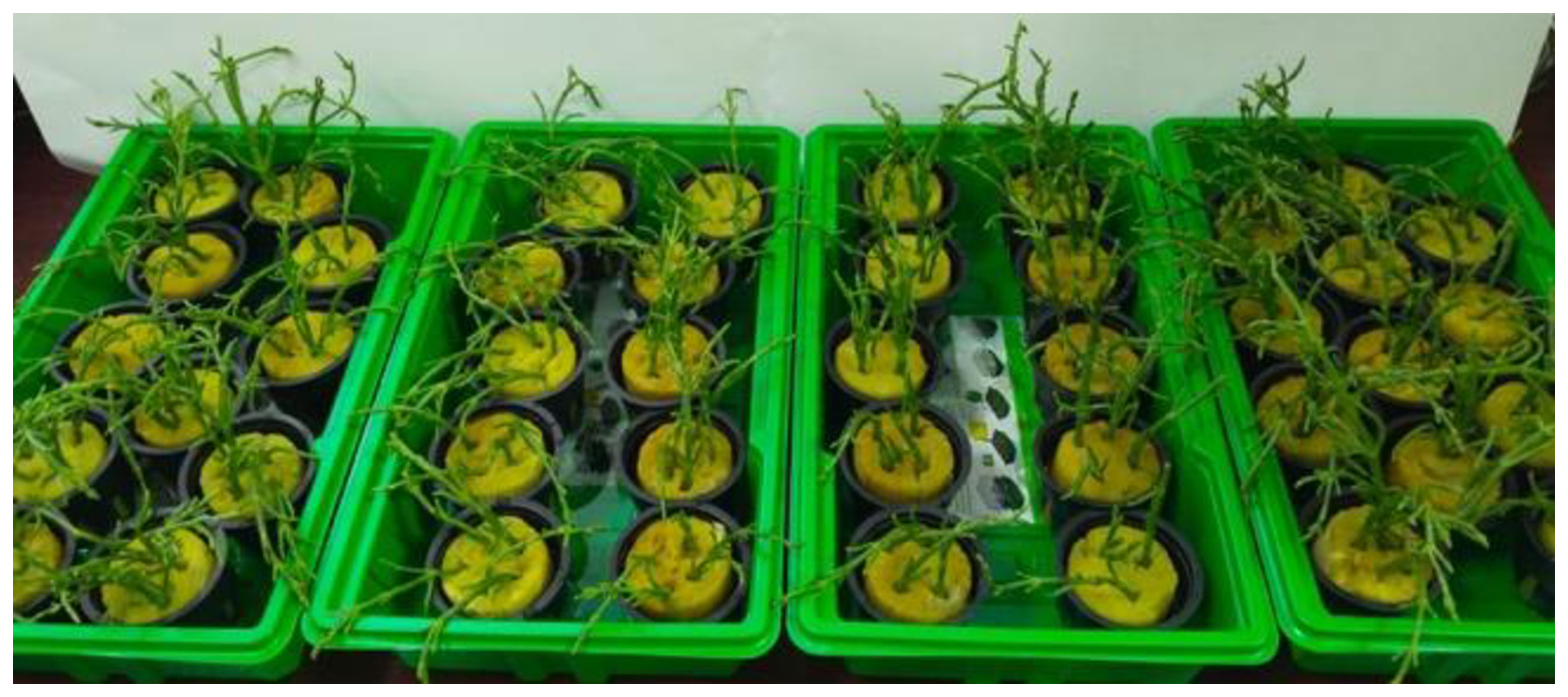
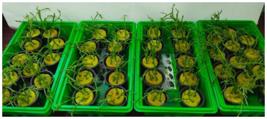
To use Salicornia samples as a natural salt substitute, it is critical to select plants at an optimal growth stage under salt stress conditions that promote maximal accumulation of macroelements. To this end, the influence of varying salinity levels on the mineral content of Salicornia perennans was assessed under controlled laboratory conditions. Seeds were sown in mineral wool according to the previously described methodology. The first germination events were observed on days 8-9. The fresh samples exhibited a rich green coloration, indicating a high chlorophyll concentration (Figure 4).
Plants were irrigated with chloride-based saline solution at concentrations of 0, 100, 200 and 300 mM. The onset of acclimation and active growth was recorded on day 12. The experiment demonstrated that seedling survival and germination rates were optimal at a salinity level of 100 mM and a day/night temperature regime of 20/10 °C. Figure 5 presents the survival data of the two Salicornia accessions 14 days post-germination on mineral wool.
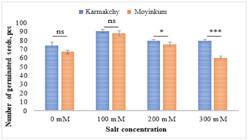
The survival rate of shoots in saline solution of salicornia samples (nsp≥0.05; *р>0.01; **р>0.001).
As shown in Figure 5, growth began to decline in both samples starting at 200 mM salinity, though growth rates remained higher than the control by 7.6% and 12.5% for samples Nº1 and Nº2 respectively. The growth performance of the Moyinkum accession was consistently lower than that of the Karmakchy accession across all salinity treatments. Inhibitory effects were particularly evident in sample Nº2 at 300 mM NaCl, where growth decreased by 20% relative to the 200 mM condition and by 10% compared to the control for Moyinkum's sample. In contrast, the Karmakchy accession (sample Nº1) maintained germination at 300 mM and even exceeded the control by 7.6%. This may indicate a degree of salt tolerance in sample Nº1 under elevated salinity, although it does not necessarily correlate with higher mineral accumulation or biomass production under artificial conditions.
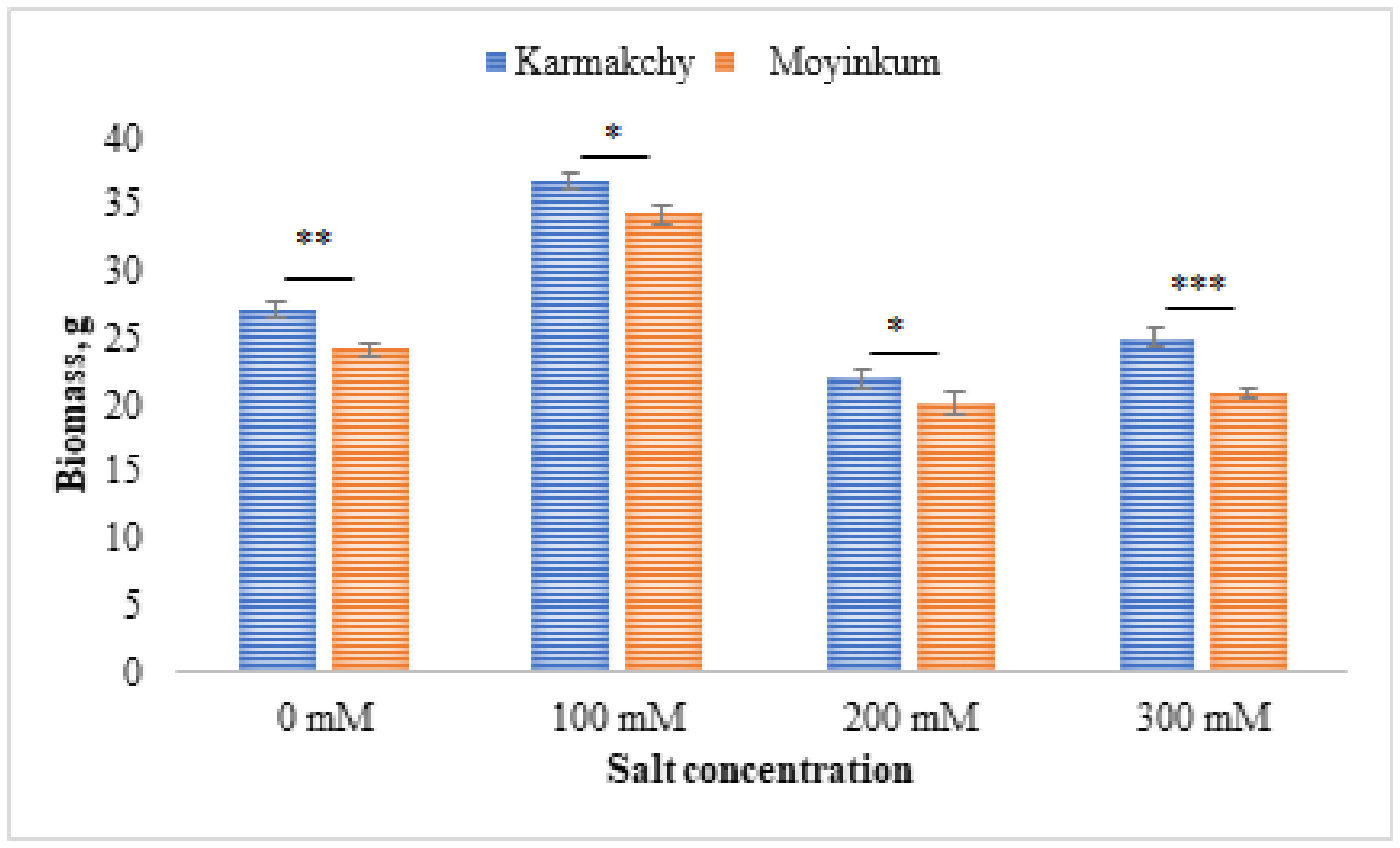
Biomass accumulation, a key commercial parameter, serves as a proxy for nutrient and salt content in Salicornia perennans grown under various salinity regimes. Figure 6 illustrates the biomass accumulation outcomes for the two accessions.
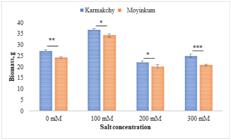
Fresh biomass of S. perennans grown under salt stress conditions: 0, 100, 200 and 300 mM NaCl (*р>0.01; **p≥0.05; ***р>0.001).
Biomass analysis revealed a strong response to saline treatments in both accessions, with the highest growth observed at 100 mM NaCl, where biomass increased by 35.4% and 42% for samples Nº1 and Nº2. respectively. Increasing salinity to 200 mM resulted in biomass reductions from 17.4 to 18.8% relative to the control, and up to 41.8% compared to the 100 mM treatment (p>0.001). Interestingly, a slight biomass increase was observed at 300mM (ranging from 4% to 13% for samples Nº1 and Nº2, respectively; p>0.01) compared to the 200mM treatment. It is possible that the higher salinity level creates conditions for growth that are close to soil parameters, given that the samples visually looked greener and denser when the shoots were broken, which may indicate a low water content. The patterns of mineral accumulation under these conditions are presented in Table 4.
According to the results of the study, for sample Nº1. the most favorable conditions for achieving higher crispness and sodium content were observed under 300 mM salinity. Calcium accumulation reached its peak at this salinity level, increasing by up to 7.8% (p > 0.001). At the same time, magnesium and potassium content decreased by 15% (p > 0.001) and 3.8% (p = 0.08), respectively for sample No. 1. Zinc accumulation declined with increasing salinity. Iron levels remained comparable at 300 mM, with slight increases of up to 9.8% at 100 and 200 mM relative to the control (p = 0.71). Phosphorus content exhibited a more stable pattern, decreasing by 6.5% at 300 mM compared to the control (p = 0.33).
Compared to the wild Salicornia sample, sample Nº1 had lower calcium levels at 0 mM salinity by 4848.6 mg/kg fresh weight (p = 0.15). Under 300 mM salinity, the calcium difference was reduced to 3457.68 mg/kg fresh weight (p = 0.24). A similar accumulation pattern was observed for potassium, sodium, magnesium, and phosphorus. Meanwhile, zinc, copper, and iron levels showed minor differences, which may reflect species-specific characteristics of elemental uptake.
Compared to sample Nº1, sample Nº2 demonstrated significantly lower calcium accumulation (p > 0.001). However, calcium content slightly increased at 200 mM and returned to control values at 300 mM salinity. Potassium content was consistently higher in sample Nº2 than in sample Nº1 under all experimental conditions (p > 0.001), although no significant variations were observed within individual treatments. All components, except sodium, followed similar trends of accumulation, with low statistical reliability. Notably, sodium content at 300 mM increased by 23988 mg/kg fresh weight compared to the control.
The use of sodium chloride as the sole salinizing agent in laboratory conditions may influence the elemental accumulation profile. Therefore, future experiments should take into account the nature and composition of soil salinity in wild habitats and consider using mixed salts to better simulate natural conditions. When compared to the wild sample, sodium accumulation in the laboratory-grown plant was 29.453.4 mg/kg fresh weight higher at 300 mM salinity. Magnesium accumulation in the wild sample was higher by 1832.14 mg/kg fresh weight than in the laboratory sample at 300 mM (p = 0.32). The concentrations of zinc, iron, copper, and phosphorus showed no statistically significant differences from the wild sample.
Based on these findings, both sample Nº 1 and sample Nº 2 can be considered for use as salt substitutes when grown under 300 mM salinity, provided that crispness and key macroelement levels are preserved. Although overall biomass accumulation was lower, the elevated sodium content compensates for the reduced yield of above-ground biomass. However, further research should explore different salinity types and incorporate additional macroelement sources into the irrigation solutions to enhance biomass production and mineral accumulation.
In laboratory conditions, general metrics of sugar, chlorophyll, and protein accumulation were also assessed (Table 5). These indicators provide a more comprehensive characterization of the growth and nutritional profiles of the laboratory-grown Salicornia samples.
The electrical conductivity parameter consolidates and corroborates the obtained results regarding the presence of salts in the samples. In both samples, the conductivity pattern is analogous: an increase is observed at 100 and 200 mM, followed by a decrease at 300 mM. This parameter reflects changes in the overall ion content of salts in the samples, with a statistically significant difference between sample Nº1 and sample Nº 2.
The accumulation of soluble sugars serves as an adaptation mechanism to salinity in various plants. In this regard, both samples exhibit sugar accumulation starting from 200 mM up to 300 mM salinity, indicating adaptive mechanisms in the plant.
Chlorophyll accumulation signifies more stable functioning and reduced stress in Sample Nº1. as its chlorophyll content shows significant changes at 200 mM and remains comparable to the control at 300 mM salinity. In contrast, sample Nº2. despite an increase in chlorophyll at 100 mM salinity, loses chlorophyll at 200 mM and 300 mM, decreasing to a level lower than the control by 0.7 mg g-1 FB (p=0.21) fresh biomass.
Regarding protein accumulation, sample Nº1 demonstrates an increase up to 300 mM salinity, surpassing the control by 31.3%, and by 8.9% at 200 mM (p = 0.34). Sample Nº 2 exhibits a significantly lower protein content compared to sample Nº1. decreasing by 4.5% at 300 mM salinity compared to 200 mM.
While maintaining nutritional properties, sample Nº1 shows statistically significant differences across all studied characteristics, making it more attractive for cultivation under controlled conditions to accumulate biomass for subsequent use in food products. Sample Nº 2. though slightly inferior in macroelement accumulation, has a significantly lower nutritional value. Despite species identity, the growing environment plays a crucial role in plant adaptation and response mechanisms to salinity. It is also essential to consider additional salinity parameters and growth periods.
Halophytes, particularly Salicornia perennans, have garnered global attention for their potential as functional foods, animal feed, and raw materials for various industries, including edible oil production, biofuels, and textiles. Additionally, these plants synthesize valuable bioactive phytochemicals utilized in the pharmaceutical, cosmetic, and nutraceutical sectors (Faustino and Pinto, 2019). Despite Salicornia being an underutilized crop, it possesses a range of chemical compounds and derivatives that can enhance antioxidant, dietary, antidiabetic, anti-inflammatory, cardioprotective, and neuroprotective properties in human nutrition. The presence of significant amounts of nutrients and diverse functional bioactive phytochemicals opens avenues for expanding the use of Salicornia as a functional food (Ekanayake et al., 2023).
In Kazakhstan, interest in Salicornia is relatively recent; however, it is widely distributed in saline soils across various regions, particularly in the southern part of the country, where a significant portion of the land is saline. Earlier studies identified various halophyte species, including habitats of Salicornia perennans, in two districts of the South Kazakhstan region. Collection efforts during these studies revealed an expansion of halophyte distribution, indicating soil degradation and the spread of saline soils. Harvesting in the autumn allowed for sampling during peak nutrient and salt accumulation, facilitating seed collection for subsequent laboratory experiments.
Research findings indicate that wild samples exhibited higher accumulation levels of all macroelements compared to laboratory-grown samples. Notably, differences in accumulation patterns were observed between identical species adapted to varying salinity conditions. Distinct differences were identified between two samples in potassium accumulation, with sample Nº1 accumulating over 100% less than sample Nº2. However, sample Nº2 exhibited 64% and 102% higher zinc and iron contents, respectively. These variations may depend on soil composition and salinity type. An essential characteristic was the low heavy metal content in both samples, making even wild Salicornia suitable for use as a food component.
The growing interest and acceptance of functional foods have created a new market pathway for halophytes, with the discovery of various bioactive compounds derived from halophytes that support specific bodily functions in addition to being nutritious (Petropoulos et al., 2018). Among diverse halophytes, Salicornia spp. has secured a unique position in the global functional food market due to its rich bioactive phytochemical profile (Adolf et al., 2013).
Studies on the impact of salinity on nutrient and macroelement accumulation revealed significant differences from wild samples across all indicators, highlighting the distinct growth characteristics in natural conditions. Crispiness, considering calcium accumulation in wild samples, was relatively high; however, sodium accumulation did not differ significantly at 300 mM, indicating sufficient sodium chloride in the substrate. Elements such as zinc, copper, and iron did not significantly differ from wild samples, suggesting species-specific accumulation patterns. Sample Nº1 and Nº2 exhibited significant differences in sodium accumulation, with sample Nº1 accumulating 50 000 mg/kg fresh weight more. Notable differences were also observed in potassium content, which was 51% higher in sample Nº2, while calcium content was three times higher in Sample Nº1. Comparing accumulation differences between laboratory and wild samples revealed noticeable disparities, potentially due to the more diverse salt composition in the soil and the availability of a broad spectrum of macro- and microelements.
Domestication of new crops from the wild is a crucial process ensuring food security by addressing adaptation to changing conditions. These wild plants offer broader and unique health benefits beyond basic nutrition. Salinization has led to a sharp reduction in arable land and freshwater resources designated for cultivation (Pearlstein et al., 2012).
As a food component, Salicornia can serve as an additional protein source, containing 11 mg/g-1 fresh weight with low soluble sugars and macroelement content. Salicornia from the Karakchin and Moyinkum districts in the southern region of the country can be utilized in food products both as a salt substitute and as a biologically active food supplement, providing fiber, protein, and macroelements.
Thus, in the context of the threat of meeting the demand for global food production, Salicornia can currently occupy an extensive niche in various sectors of the food and pharmaceutical industries. At the same time, Salicornia can be used to increase the productivity of saline lands.
4. Conclusions
The results obtained revealed distinct differences in the accumulation of macroelements—namely calcium, potassium, magnesium, zinc, copper, iron, and phosphorus—between two morphologically identical Salicornia perennans specimens collected from ecologically divergent habitats. Wild samples exhibited notably higher levels of calcium and sodium. Due to their low concentrations of heavy metals, these wild-harvested specimens may be considered suitable for direct consumption. Variability in salinity levels was shown to significantly influence the patterns of elemental accumulation. Both Sample Nº 1 and sample Nº2 demonstrated the capacity to be cultivated under controlled laboratory conditions at a salinity level of 300 mM, while retaining adequate nutritional properties, thereby rendering them viable as functional additives in food products. The findings of this study provide new insights into the differential effects of natural versus artificial growth environments on the physiological and biochemical development of Salicornia, and contribute to a more comprehensive understanding of how varying salinity regimes impact the nutritional profile of Salicornia perennans.
Acknowledgements
This research is funded by the Ministry of Agriculture of the Republic of Kazakhstan, grant number BR22883587.
Data Availability Statement
The dataset analyzed or produced in this study can be requested from the corresponding author.
References
-
ADOLF, V.I., JACOBSEN, S.E. and SHABALA, S., 2013. Salt tolerance mechanisms in quinoa (Chenopodium quinoa Willd.). Environmental and Experimental Botany, vol. 92, pp. 43-54. https://doi.org/10.1016/j.envexpbot.2012.07.004
» https://doi.org/10.1016/j.envexpbot.2012.07.004 -
ANTUNES, M.D., GAGO, C., GUERREIRO, A., SOUSA, A.R., JULIÃO, M., MIGUEL, M.G., FALEIRO, M.L. and PANAGOPOULOS, T., 2021. Nutritional characterization and storage ability of Salicornia ramosissima and Sarcocornia perennis for fresh vegetable salads. Horticulturae, vol. 7, no. 1, pp. 6. https://doi.org/10.3390/horticulturae7010006
» https://doi.org/10.3390/horticulturae7010006 -
BARREIRA, L., RESEK, E., RODRIGUES, M.J., ROCHA, M.I., PEREIRA, H., BANDARRA, N., SILVA, M.M., VARELA, J. and CUSTÓDIO, L., 2017. Halophytes: gourmet food with nutritional health benefits? Journal of Food Composition and Analysis : An Official Publication of the United Nations University, International Network of Food Data Systems, vol. 59, pp. 35-42. https://doi.org/10.1016/j.jfca.2017.02.003
» https://doi.org/10.1016/j.jfca.2017.02.003 -
BARROCA, M.J., GUINÉ, R.P.F., AMADO, A.M., RESSURREIÇÃO, S., SILVA, A.M., MARQUES, M.P.M. and DE CARVALHO, L.A.E.B., 2020. The drying process of Sarcocornia perennis: impact on nutritional and physico-chemical properties. Journal of Food Science and Technology, vol. 57, no. 12, pp. 4443-4458. https://doi.org/10.1007/s13197-020-04482-7 PMid:33087958.
» https://doi.org/10.1007/s13197-020-04482-7 -
BRADFORD, M.M., 1976. A rapid and sensitive method for the quantitation of microgram quantities of protein utilizing the principle of protein–dye binding. Analytical Biochemistry, vol. 72, no. 1-2, pp. 248-254. https://doi.org/10.1016/0003-2697(76)90527-3 PMid:942051.
» https://doi.org/10.1016/0003-2697(76)90527-3 -
CÁRDENAS-PÉREZ, S., PIERNIK, A., CHANONA-PÉREZ, J.J., GRIGORE, M.N. and PEREA-FLORES, M.J., 2021. An overview of the emerging trends of the Salicornia L. genus as a sustainable crop. Environmental and Experimental Botany, vol. 191, pp. 104606. https://doi.org/10.1016/j.envexpbot.2021.104606
» https://doi.org/10.1016/j.envexpbot.2021.104606 -
CASTAGNA, A., MARIOTTINI, G., GABRIELE, M., LONGO, V., SOUID, A., DAUVERGNE, X., MAGNÉ, C., FOGGI, G., CONTE, G. and RANIERI, A., 2022. Nutritional Composition and bioactivity of Salicornia europaea L. plants grown in monoculture or intercropped with tomato plants in salt-affected soils. Horticulturae, vol. 8, no. 9, pp. 828. https://doi.org/10.3390/horticulturae8090828
» https://doi.org/10.3390/horticulturae8090828 -
CLAVEL-COIBRIÉ, E., SALES, J.R., SILVA, A.M., BARROCA, M.J., SOUSA, I. and RAYMUNDO, A., 2021. Sarcocornia perennis: A Salt Substitute in Savory Snacks. Foods, vol. 10, no. 12, pp. 3110. https://doi.org/10.3390/foods10123110 PMid:34945661.
» https://doi.org/10.3390/foods10123110 -
EKANAYAKE, S., EGODAWATTA, C., ATTANAYAKE, R.N. and PERERA, D., 2023. From salt pan to saucepan: Salicornia, a halophytic vegetable with an array of potential health benefits. Food Frontiers, vol. 4, no. 2, pp. 641-676. https://doi.org/10.1002/fft2.214
» https://doi.org/10.1002/fft2.214 -
FAUSTINO, M. and PINTO, D., 2019. Halophytic grasses, a new source of nutraceuticals? A review on their secondary metabolites and biological activities. International Journal of Molecular Sciences, vol. 20, no. 5, pp. 1067-1097. https://doi.org/10.3390/ijms20051067 PMid:30823674.
» https://doi.org/10.3390/ijms20051067 - FOOD AND AGRICULTURE ORGANIZATION OF THE UNITED NATIONS – FAO, 2017. Guidelines for the management of saline soils Rome: Eurasian Center for Food Security, 153 p.
-
KAISAROVA, A., SHINGISOV, A. and BARANENKO, D.A., 2024. Use of the salicornia plant as a substitute for salt in the recipe for manufacturing meat chips. The Journal of Almaty Technological University., vol. 145, no. 3, pp. 39-48. https://doi.org/10.48184/2304-568X-2024-3-39-48
» https://doi.org/10.48184/2304-568X-2024-3-39-48 - KARPIN, V.I., PEREVRAVO, N.I., ZOLOTAREV, V.N., RYABOVA, V.E., SHAMSUTDINOVA, E.Z. and KOZLOVA, T.V., 2012. The methodology for determining the growth force of seeds of forage crops Moscow: Publishing House of the Russian Academy of Agricultural Sciences, 16 p.
-
KATEL, S., SANGAM, O., ADHIKARI, R., ADHIKARI, S. and YADAV, S., 2023. Exploring the potential of Salicornia: a halophyte’s impact on agriculture, the environment, and the economy. Peruvian Journal of Agronomy., vol. 7, no. 3, pp. 220-238. https://doi.org/10.21704/pja.v7i3.1991
» https://doi.org/10.21704/pja.v7i3.1991 -
KIM, H.-W., HWANG, K.-E., SONG, D.-H., KIM, Y.J., LIM, Y.B., HAM, Y.K., YEO, E.J., CHANG, S.J., CHOI, Y.S. and KIM, C.J., 2014. Effect of glasswort (Salicornia herbacea L.) on the texture of frankfurters. Meat Science, vol. 97, no. 4, pp. 513-517. https://doi.org/10.1016/j.meatsci.2014.03.019 PMid:24769151.
» https://doi.org/10.1016/j.meatsci.2014.03.019 -
LIMONGELLI, F., CRUPI, P., CLODOVEO, M.L., CORBO, F. and MURAGLIA, M., 2022. Overview of the polyphenols in Salicornia: from recovery to health-promoting effect. Molecules (Basel, Switzerland), vol. 27, no. 22, pp. 7954. https://doi.org/10.3390/molecules27227954 PMid:36432054.
» https://doi.org/10.3390/molecules27227954 -
LOPES, M., SILVA, A.S., SÉNDON, R., BARBOSA-PEREIRA, L., CAVALEIRO, C. and RAMOS, F., 2023. Towards the sustainable exploitation of salt-tolerant plants: nutritional characterisation, phenolics composition, and potential contaminants analysis of Salicornia ramosissima and Sarcocornia perennis alpini. Molecules (Basel, Switzerland), vol. 28, no. 6, pp. 2726. https://doi.org/10.3390/molecules28062726 PMid:36985696.
» https://doi.org/10.3390/molecules28062726 -
MANESS, N., 2010. Extraction and analysis of soluble carbohydrates. Methods in Molecular Biology (Clifton, N.J.), vol. 639, pp. 341-370. https://doi.org/10.1007/978-1-60761-702-0_22 PMid:20387058.
» https://doi.org/10.1007/978-1-60761-702-0_22 -
PEARLSTEIN, S.L., FELGER, R.S., GLENN, E.P., HARRINGTON, J., AL-GHANEM, K.A. and NELSON, S.G., 2012. Nipa (Distichlis palmeri): a perennial grain crop for saltwater irrigation. Journal of Arid Environments, vol. 82, pp. 60-70. https://doi.org/10.1016/j.jaridenv.2012.02.009
» https://doi.org/10.1016/j.jaridenv.2012.02.009 -
PETROPOULOS, S.A., KARKANIS, A., MARTINS, N. and FERREIRA, I.C., 2018. Edible halophytes of the Mediterranean basin: potential candidates for novel food products. Trends in Food Science & Technology, vol. 74, pp. 69-84. https://doi.org/10.1016/j.tifs.2018.02.006
» https://doi.org/10.1016/j.tifs.2018.02.006 - RUSSIAN STANDARDS AND TECHNICAL REGULATIONS – RUNORM, 1997a. GOST 26657-97: feed, compound feed and feed raw materials. Methods for determination of phosphorus content Moscow: IPK Publishing House of Standards.
- RUSSIAN STANDARDS AND TECHNICAL REGULATIONS – RUNORM, 1997b. GOST 30178-96: raw materials and food products. Atomic absorption method for the determination of toxic elements Moscow: IPK Publishing House of Standards.
- RUSSIAN STANDARDS AND TECHNICAL REGULATIONS – RUNORM, 2013a. GOST R 55573-2013: meat and meat products. Determination of calcium by atomic absorption and titrimetric methods Moscow: Standartinform.
- RUSSIAN STANDARDS AND TECHNICAL REGULATIONS – RUNORM, 2013b. GOST R 55484-2013: food products. Determination of potassium, sodium and magnesium by atomic absorption spectrometry Moscow: Standartinform.
-
SHIN, M.-G. and LEE, G.-H., 2013. Spherical granule production from micronized saltwort (Salicornia herbacea) powder as salt substitute. Preventive Nutrition and Food Science, vol. 18, no. 1, pp. 60-66. https://doi.org/10.3746/pnf.2013.18.1.060 PMid:24471111.
» https://doi.org/10.3746/pnf.2013.18.1.060 -
TURCIOS, A.E., GORNATI, D. and PAPENBROCK, J., 2024. Analysis of the ability of marsh samphire (Salicornia europaea) to extract environmentally relevant elements from different culture media: contribution of biochar to plant nutrition and growth. Journal of Soil Science and Plant Nutrition, vol. 24, no. 3, pp. 5740-5758. https://doi.org/10.1007/s42729-024-01937-0
» https://doi.org/10.1007/s42729-024-01937-0 -
VENTURA, Y., WUDDINEH, W.A., EPHRATH, Y., SHPIGEL, M. and SAGI, M., 2010. Molybdenum as an essential element for improving total yield in seawater-grown Salicornia europaea L. Scientia Horticulturae, vol. 126, no. 3, pp. 395-401. https://doi.org/10.1016/j.scienta.2010.07.015
» https://doi.org/10.1016/j.scienta.2010.07.015 -
VENTURA, Y., WUDDINEH, W., MYRZABAYEV, M., ALIKULOV, Z., KHOZIN-GOLDBERG, I., SHPIGEL, M., SAMOCHA, T. and SAGI, M., 2011. Effect of seawater concentration on the productivity and nutritional value of annual Salicornia and perennial Sarcocomia halophytes as leafy vegetable crops. Scientia Horticulturae, vol. 128, no. 3, pp. 189-196. https://doi.org/10.1016/j.scienta.2011.02.001
» https://doi.org/10.1016/j.scienta.2011.02.001 -
WANG, X., BAI, J., WANG, W., ZHANG, G., YIN, S. and WANG, D., 2021. A comparative metabolomics analysis of the halophyte Suaeda salsa and Salicornia europaea. Environmental Geochemistry and Health, vol. 43, no. 3, pp. 1109-1122. https://doi.org/10.1007/s10653-020-00569-4 PMid:32323170.
» https://doi.org/10.1007/s10653-020-00569-4
Edited by
-
Editor:
Takako Matsumura Tundisi