
 Spatial and temporal variation in food resources shapes foraging of the Blue-and-yellow Macaw (Ara ararauna; Linnaeus, 1758) in a mosaic of Cerrado densities
Abstract
Parrots are generalist foragers that exploit habitat mosaics to meet their survival and reproductive needs. In this study, I assessed the influence of food availability on the abundance of Blue-and-yellow Macaws feeding over a mosaic of cerrado densities. The study took place at Emas National Park in Central Brazil (Goiás State), where I designated 12 transects (4 in less-dense, 4 in intermediate, and 4 in more-dense cerrado) to sample tree density, food availability, and macaw consumption. Three of the four main food species differed significantly in abundance and fruit supply: Anacardium humile was more plentiful in more open sites, while Caryocar brasiliense and Ouratea spectabilis had higher densities and fruit abundance in denser cerrado. Pouteria torta, equally abundant across all densities, provided a primary food source through its seeds. Spatial and temporal shifts in fruiting across these species led to parallel peaks of foraging Blue-and-yellow Macaws, highlighting the importance of different cerrado densities as feeding areas. Notably, the more open sites, considered highly threatened, were often exploited by large numbers of macaws during the transition from the dry to the wet season. The juxtaposition of distinct cerrado densities enables staggered pulses of resources, thereby maintaining a year-round food supply. Conserving areas with varied cerrado densities is crucial for supporting Blue-and-yellow Macaw populations, which decline as Cerrado habitats are lost.
Keywords:
Psittacidae; phenology; vegetation densities; frugivory; feeding ecology
Resumo
Em mosaicos de habitats, os psitacídeos buscam alimentos variados para atender às suas necessidades de sobrevivência e reprodução. Neste estudo, avaliei a influência da disponibilidade de espécies alimentares em diferentes densidades de vegetação do Cerrado sobre o número de araras Canindé alimentando-se. Este estudo foi realizado no Parque Nacional das Emas no Estado de Goiás, Brasil Central. Defini 12 trajetos (4 em cerrado menos denso, 4 em intermediário e 4 em cerrado mais denso) para amostrar a densidade de árvores, a disponibilidade e o consumo de alimentos pelas araras Canindé. Três das quatro espécies mais importantes para as Canindés apresentaram diferenças na densidade relativa e na oferta de frutos. Dentre elas, as sementes de Anacardium humile foram altamente abundantes e consumidas no cerrado mais aberto. Por outro lado, Cariocar brasiliense e Ouratea spectabilis apresentaram densidades e abundância de frutos maiores no cerrado intermediário e no mais denso. As sementes de Pouteria torta foram o principal alimento nas três densidades de cerrado, nas quais sua abundância foi semelhante. Além disso, diferentes combinações de abundância de frutos dessas quatro espécies foram paralelas aos picos no número de araras alimentando-se em cada densidade. Isso enfatiza a importância de variadas densidades de cerrado como áreas de alimentação para as araras Canindé. Particularmente, nas mais abertas e altamente ameaçadas, a combinação dos frutos de A. humile e P. torta foi explorada por um grande número de araras Canindé em determinados períodos do ano. A justaposição de diferentes densidades do Cerrado exibindo pulsos alternados de recursos ao longo do ano todo, favorece a persistência dessa arara em escala de paisagem. Assim, o mosaico de densidades indica um alto valor de conservação de uma determinada área de Cerrado, o que é necessário para favorecer o aumento das populações de araras Canindé, que estão em declínio junto com o Cerrado.
Palavras-chave:
Psittacidae; fenologia; densidades de vegetação; frugivoria; ecologia alimentar
1. Introduction
Habitat mosaics may explain variations in local abundance patterns and in species' resource exploitation (Fischer and Lindenmayer, 2006). In particular, vegetation type and the surrounding landscape strongly influence the persistence of animal populations, such as birds (Cunningham et al., 2014). As a result, bird abundance varies along the landscape, reflecting changes in plant community composition and food availability (Ferger et al., 2015). In this respect, many parrot species forage at different sites in response to food patches, which are essential for meeting their nutritional needs (Raubenheimer et al., 2009). Since food availability, such as fruits, fluctuates both spatially and temporally, frugivorous/granivorous birds such as parrots are adapted to search for plentiful feeding areas (Saracco et al., 2004). Consequently, the ongoing trophic interactions between parrots and plants result from parrots' ability to exploit food patches across a variety of spatial scales (Gilardi and Munn, 1998; Haugaasen and Peres, 2007; Brightsmith et al., 2021; Ragusa-Netto, 2022, 2024).
The Brazilian Cerrado is the most biodiverse savanna in the world (Morandi et al., 2020) and is recognized as a biodiversity hotspot (Françoso et al., 2015). Characterized by a vegetation gradient ranging from open fields to dense savannas (Ribeiro and Walter, 1998), the Cerrado has undergone extensive deforestation, resulting in fragments of varying sizes and degrees of isolation (Alencar et al., 2020). As a result, these remnants now comprise half of the region’s former range. They are embedded in a matrix of diverse land uses, including agriculture, livestock, eucalyptus forestry, mining, and urban development (Alencar et al., 2020). These fragments are further shaped by economic, social, and political factors aimed at enhancing food production and income (Espírito-Santo et al., 2016). In addition, invasions by domestic animals, excessive fires, and timber and non-timber product harvesting have affected plant and animal populations within these fragments (Giroldo and Scariot, 2015; Grande et al., 2020). Particularly concerning is the impact on macaws that depend on large-seeded species (Berg et al., 2007; Ragusa-Netto, 2022, 2024; Silva et al., 2024), which are becoming increasingly rare in fragmented vegetation (Cramer et al., 2007; Tabarelli et al., 2008).
In the Cerrado, the Blue-and-yellow Macaw (Ara ararauna; Linnaeus, 1758) uses habitats ranging from fragmented to continuous vegetation and urban areas as feeding sites (Ragusa-Netto, 2006, 2011, 2022, 2025; Santos and Ragusa-Netto, 2014). Despite anthropic pressures, they continue foraging for the local abundance and variety of large-seeded fruits (Ragusa-Netto, 2006, 2022, 2025), which influence their patterns of habitat use (Haugaasen and Peres, 2007; Lee et al., 2014; Ragusa-Netto, 2022, 2024). In principle, variations in vegetation densities might reflect habitat-related food availability and correlate with the number of macaws foraging at different cerrado densities, as expected for Emas National Park in central Brazil. This preserved site is one of the largest protected areas of the Brazilian Cerrado. Despite being a large fragment encroached upon by agricultural lands, it includes extensive tracts of the Cerrado gradient (Batalha and Martins, 2002). Ragusa-Netto (2022) documented the dynamics between spatial-temporal food variability and parrot diet in a habitat mosaic. However, the importance of some extensive cerrado densities for food provision remains unknown, which is a conservation concern given the threats facing the Cerrado, and its densities in particular (Alencar et al., 2020). In this study, I evaluated the influence of food availability on the number of feeding Blue-and-yellow Macaws across a mosaic of cerrado vegetation densities.
2. Methods
2.1. Study area
This study was conducted in the Cerrado core region within Emas National Park (ENP), which spans 134,000 ha. ENP is located in the Brazilian Central Plateau, in the southwest of Goiás state (17°19’-18°28’S, 52°39’-53°10’W, 900-1100 m a.s.l.). The climate exhibits a distinct pattern, characterized by a wet season (October to March) and a prolonged dry season (April to September). Annual rainfall averages approximately 1,500 mm, with 70% of it falling during the wet season. The mean temperature is about 24.6°C (Batalha and Martins, 2002). Vegetation is a mosaic of gallery forest, palm (Mauritia flexuosa L.f.) stands, and cerrado (93% of the area), ranging from open fields to dense woods. Approximately 70% of the cerrado is composed of savanna-like habitats, which are characterized by trees interspersed with grassy areas (Batalha and Martins, 2002). During the dry season, mainly in August and September, tree species shed their leaves. The richest plant families are Asteraceae, Fabaceae, Poaceae, and Myrtaceae (Batalha and Martins, 2002). Data collection occurred in the southern part of ENP (18°15’S, 52°53’W, 900 m a.s.l.; Figure 1), dominated by semi-open cerrado. This area is crossed by the Formoso River (east-west) and the Buriti Torto stream (north-south). Along the Buriti Torto, M. flexuosa palms dominate, accompanied by scattered trees such as Xylopia emarginata Mart. and Virola sebifera Aubl.. The soil beside this stream is permanently wet or flooded. The evergreen riparian vegetation along the Formoso River is dense, with a canopy 12 to 17 meters high. Some emergent trees reach 25 meters. The deciduous cerrado mainly consists of small trees (2-6 m high), spaced 2-15 m apart in a native grass matrix. Common species include Pouteria torta (Mart.) Radlk., P. ramiflora (Mart.) Radlk., Stryphnodendron adstringens (Mart.) Coville, Anadenanthera falcata (Benth.) Speg., Kielmeyera coriacea Mart. & Zucc., and Piptocarpha rotundifolia (Less.) Baker (Batalha and Martins 2002).

Transects used to sample food availability, tree density, and Blue-and-yellow Macaws (Ara ararauna) feeding, in the southern portion of the Emas National Park (State of Goiás, Brazil, 2006-2007). Cerrado densities: CR – Cerrado Ralo (less dense), CC – Campo Cerrado (intermediate), CS – Cerrado Stricto sensu (more dense; see methods).
2.2. Sampling
2.2.1. Cerrado tree species density
I sampled tree species abundance to assess the relationship between tree density and food resources available to macaws. I used the point-centered quadrant technique (Krebs, 1989). Initially, I based cerrado tree densities on Ribeiro and Walter (1998). I identified the densest cerrado areas in the southern ENP. These areas corresponded to cerrado stricto sensu (Ribeiro and Walter, 1998). From these dense stands, I next located more open sites. I first transitioned to campo-cerrado, and then to cerrado ralo (Ribeiro and Walter, 1998). In these areas, trees were progressively farther apart, spaced about two to four times greater than in cerrado stricto sensu. To compare habitats, I established twelve 1.5 km-long transects, each at least 2 km apart. Four were in cerrado ralo (CR, least dense), four in campo-cerrado (CC, intermediate), and four in cerrado stricto sensu (CS, densest; Figure 1). Along each transect, I placed 20 points 70 m apart. At each point, I measured the distance to the four nearest trees and recorded diameter at base height (DBaH), my proxy for tree size, a parameter correlated with fruit production (see below).
2.2.2. Food availability for Blue-and-yellow Macaws
At each transect, I sampled resource availability from 20 trees with DBaH > 5 cm. All sampled trees were potentially mature. I selected the closest tree to each sampling point, if it was identified as a food species for Blue-and-yellow Macaw (Ragusa-Netto, 2022). I measured its DBaH and numbered it with an aluminum tag (N = 240 trees). Each month from January 2006 to December 2007, I monitored the crowns of these trees for the presence of flowers and fruits. When necessary, I used 8x40 binoculars. I ranked the abundance of each resource from total absence (0) to a plentiful crop (4; Fournier 1974). Tree density and size influence total resource availability in a given area (Haugaasen and Peres, 2007). To address this, I calculated a monthly index for each food species at each transect. I multiplied the sum of scores by each species' mean density and average DBaH. I then summed these results per transect to estimate a species' monthly resource abundance index for each cerrado density.
2.2.3. Blue-and-yellow Macaws' use of food resources
To sample macaws' foraging, I conducted direct observations of them feeding. Each month, I walked the 12 transects for a total of 36 hours (3 h per transect). Walks occurred from sunrise to 10:00 and from 15:00 to 18:00, when macaws are often foraging (Marsden, 1999). I rotated the order of the transects, departure point, and direction. Upon observing at least one Blue-and-yellow Macaw feeding, I recorded the following: a) plant species, b) part eaten (flower, pulp, or seeds), and c) the number of macaws eating. Seeds were classified as large if they were ≥ 1.0 cm (Brewer, 2001), using the scales in Lorenzi (1994, 1998) because of the clarity of the pictures showing seeds compared to the provided cm scale. To avoid pseudoreplication, I used only the initial observation of feeding macaws (Hejl et al., 1990), recording the first ingestion of each macaw's specific food item. Indeed, I used transect sampling of birds (Bibby et al., 2000) to count feeding macaws, focusing on the relationship between macaw numbers and food resource abundance. Blue-and-yellow Macaws, which are noisy, can be reliably spotted up to 300 m away, making them readily identifiable at short to medium ranges (50-300 m; Gilardi and Munn, 1998; Marsden, 1999; Bibby et al., 2000). While walking each transect, I only stopped for a few seconds to record any feeding macaw within a 200 m radius.
2.3. Data analyses
Firstly, I grouped data on the monthly index of resources available for Blue-and-yellow Macaws (Table 1) in four periods of the year: the late wet season (January-March), the early dry season (April-June), the late dry season (July-September), and the early wet season (October-December). These periods often correspond to peaks and troughs of plant food production (Ragusa-Netto, 2022). I also grouped data on the monthly number of Blue-and-yellow Macaws feeding. Next, I used multiple regression analysis to test the relationship between the indices of resource availability from each species (independent variables) and the number of Blue-and-yellow Macaws feeding across 24 sites along seasons. In the analyses, I grouped items comprising less than 5% of the macaws' diet as ‘other’ (Table 1). I then ran an ANOVA to compare tree density from the three cerrado densities, tree species' relative densities, and DBaH. If the ANOVA showed significant differences in means, I performed a post hoc pairwise comparison using the Tukey test. For these analyses, I log-transformed the data to improve linearity. I subsequently used the Chi-square test to compare the proportions of Blue-and-yellow Macaws feeding in the different three cerrado densities and a Chi-square contingency analysis to compare the proportions of Blue-and-yellow Macaws feeding on the cerrado densities during the four periods of the year. To investigate which food species explained differences in macaws’ diet composition between cerrado densities, I applied a similarity percentages procedure (SIMPER). I assessed independence among sampling units (macaws' diet per transect) using the Mantel test with 10,000 permutations. I correlated the matrix of food items used by macaws per transect (using the Bray-Curtis index) with the matrix of distances between transects (measured in km using Euclidean distance).
Plant taxa (family, species) and plant parts eaten by the Blue-and-yellow Macaw (Ara ararauna) in a mosaic of Cerrado densities at Emas National Park, State of Goiás, Brazil (2006-2007). Food items: P - pulp, S - seed. Cerrado densities: CR – Cerrado Ralo (less dense), CC – Campo Cerrado (intermediate), CS – Cerrado Stricto sensu (more dense; see methods). * = species with large seeds (≥ 1.0 cm).
3. Results
3.1. Cerrado trees densities
In the more open cerrado (CR), the tree density ranged from 60.74 to 113.10 trees/ha (mean ± se, 90.20 ± 11.31). The DBaH varied from 3.0 to 36.0 cm (11.13 ± 0.68 cm). In the intermediate sites (CC), tree density varied from 230.44 to 502.16 trees/ha (372.17 ± 63.32). The DBaH ranged from 5.0 to 52.0 cm (13.21 ± 0.98 cm). In the CS areas, tree density ranged from 520.96 to 1297.43 trees/ha (869.47 ± 166.10), while the DBaH varied from 7.0 to 93.0 cm (19.62 ± 1.39 cm). The relative density of three of the four most important food species for Blue-and-yellow Macaws (Table 1) varied across cerrado densities. Anacardium humile exhibited a minor relative density in the densest Cerrado, although the DBaH showed no significant difference in densities (Table 2). In contrast, in the densest cerrado, Caryocar brasiliense had larger trees, displaying higher relative density (Table 2). Ouratea spectabilis, which was absent from the less dense cerrado, exhibited higher relative density at the intermediate than at the densest cerrado, where the trees were larger (Table 2). Pouteria torta showed a relative density similar across cerrado densities, but it had a larger DBaH in the CS density (Table 2). Finally, species assigned as ‘other’ presented similar relative density across densities, although the densest cerrado had larger trees (Table 2).
Comparison between the relative density and size (diameter at base height: DBaH) of the main foraged species by Blue-and-yellow Macaws over a mosaic of Cerrado densities in the Emas National Park (State of Goiás, Brazil, 2006-2007). Cerrado densities: CR – Cerrado Ralo (less dense), CC – Campo Cerrado (intermediate), CS – Cerrado Stricto sensu (more dense; see methods). Mean ± se values and ANOVA (F and P) results are presented. Values marked with * are significantly different according to the Tukey test.
3.2. Food availability for Blue-and-yellow Macaws
In every cerrado density, in both years, prominent fruiting peaks arose in the early wet season, while moderate fruiting occurred during the dry season (Figure 2). In the first year, the major peak was dominated mainly by P. torta and C. brasiliense, whereas in the second year, it consisted of P. torta, C. brasiliense, and O. spectabilis. At less dense sites (CR and CC), P. torta comprised the bulk of fruit production in the first peak. In contrast, during the second year at the intermediate and the densest densities, C. brasiliense and O. spectabilis dominated fruit production (Figure 2). When the dry season began in April, species such as Stryphnodendron adstringens, Dimorphandra mollis, Qualea parviflora, and Q. grandiflora accounted for the bulk of fruit production. In this respect, S. adstringens and D. mollis were common in the less dense cerrado (‘other’ in CR and CC), while Q. parviflora and Q. grandiflora (‘other’ in CS) were present in the densest sites (Figure 2). Furthermore, at the end of this period, A. humile began fruiting, thereby increasing fruit availability in the less dense cerrado (Figure 2).

Seasonal co-occurrence of food resource availability and the number of Blue-and-yellow Macaws recorded feeding at a mosaic of Cerrado vegetation densities in Emas National Park (State of Goiás, Brazil, 2006–2007). Cerrado densities: CR – Cerrado Ralo (less dense), CC – Campo Cerrado (intermediate), CS – Cerrado Stricto sensu (more dense; see methods).
3.3. Blue-and-yellow Macaws' food resource use
I documented 533 macaws feeding on fruits in the three cerrado densities (Table 1, Figure 2). They foraged on 8 species in the CR, 8 in the CC, and 6 in the CS densities (Table 1). Blue-and-yellow Macaws consumed mainly large seeds (508 macaws), while smaller seeds were eaten by 25, and only 2 ate fruit pulp (Table 1). Macaws used all densities similarly as feeding areas in both years (2006: χ2 = 4.92, P = 0.09, df = 2; 2007: χ2 = 2.73, P = 0.257, df = 2; Figure 2), but the number of feeding macaws varied according to seasons across densities each year (2006: χ2 = 28.10, P = 0.0001, df = 6; 2007: χ2 = 50.72, P = 0.0001, df = 6; Figure 2). The Mantel test detected no significant spatial autocorrelation among Blue-and-yellow Macaws' diet along transects (Mantel test, r = 0.056, P = 0.335). Four large-seeded species (P. torta, A. humile, C. brasiliense, and O. spectabilis) formed most of their diet (Table 1). Macaws foraged heavily on P. torta regardless of cerrado density in 2006 (χ2 = 2.39, P = 0.302, df = 2), but in 2007, they used the CS more often (χ2 = 9.57, P = 0.008, df = 2; Figure 2). They mainly fed on A. humile at the CR in both years (2006: χ2 = 78.53, P = 0.0001, df = 2; 2007: χ2 = 31.94, P = 0.0001, df = 2; Figure 2). In 2006, macaws moderately fed on C. brasiliense seeds in the CR, but fed similarly on this species across the cerrado densities in 2007 (2006: χ2 = 17.26, P = 0.0001, df = 2; 2007: χ2 = 0.50, P = 0.780, df = 2; Figure 2). A similar number of macaws foraged on O. spectabilis seeds at CC and CS densities in 2007 (χ2 = 0.50, P = 0.78, df = 2; Figure 2). Species representing less than 5% of the diet, grouped as 'other', were less exploited at the CR in 2006 (χ2 = 12.67, P = 0.001, df = 2). However, in 2007, these species were consumed similarly across densities (χ2 = 0.49, P = 0.783, df = 2; Figure 2).
A multiple linear regression model indicated that, over the mosaic of cerrado densities, certain fruit types had a significant effect on the number of feeding macaws (N = 24, R = 0.900, F = 15.39, P < 0.0001, Figure 2). Significant fruits were P. torta (t = 3.77, P = 0.001), A. humile (t = 3.16, P = 0.005), C. brasiliense (t = 2.39, P = 0.029), and ‘other’ (t = 4.82, P = 0.0001). Pouteria torta accounted for 50.2% of the variance, C. brasiliense 25.2%, A. humile 20.2%, while ‘other’ just 0.6%. The expected number of feeding macaws can be calculated by adding the effects of the four factors:
Number of feeding macaws = 0.23 + 0.15 x (index of P. torta fruit abundance) + 0.13 x (index of A. humile fruit abundance) + 0.10 x (index of C. brasiliense fruit abundance) + 0.17 x (index of ‘other’ fruit abundance).
To further explore these relations within each cerrado density, multiple linear regression was significant for the CR (N = 8, R = 0.99, F = 49.20, P < 0.004, Figure 2). Fruits significant to that were P. torta (t = 8.52, P = 0.003) and A. humile fruits (t = 6.55, P = 0.007). Pouteria torta fruits accounted for 74.3% of the variance, and A. humile fruits for 47%. For the CC, the regression was significant (N = 8, R = 0.99, F = 65.71, P < 0.015, Figure 2), with P. torta fruits (t = 4.53, P = 0.045) and A. humile fruits (t = 4.04, P = 0.050) as significant factors. Pouteria torta fruits accounted for 77.1% of the variance; A. humile fruits accounted for 30.2%. In the CS, the regression was also significant (N = 8, R = 0.99, F = 60.21, P < 0.016, Figure 2), with P. torta (t = 5.73, P = 0.029), C. brasiliense (t = 4.56, P = 0.044), and ‘other’ fruits (t = 6.18, P = 0.025). Pouteria torta explained 47% of the variance, C. brasiliense 37.2%, and ‘other’ fruits 0.7%. Furthermore, the SIMPER analysis revealed diet differences among macaws across cerrado densities. These ranged from 58.56 (CC versus CS, mainly from P. torta and ‘other’) to 62.01 (CR versus CS, mostly due to A. humile and P. torta). An intermediate value occurred for the CR versus CC (60.83), driven by A. humile and ‘other’ (Figure 3).
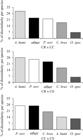
Blue-and-yellow Macaws' diet dissimilarities at a mosaic of Cerrado vegetation densities due to most consumed species (SIMPER analysis [> 25% cumulative contribution]; total cumulative dissimilarity: CR – Cerrado Ralo vs CC – Campo Cerrado = 60.83; CR – Cerrado Ralo vs CS – Cerrado Stricto sensu = 62.01; CC – Campo Cerrado vs CS – Cerrado Stricto sensu = 58.56). Species name represented by the first four letters (see Table 1; Emas National Park, State of Goiás, Brazil, 2006-2007).
4. Discussion
In both years, fruit availability peaked in all three cerrado densities during the early wet season. This aligned with the fruiting of the most important species for Blue-and-yellow Macaws. In each cerrado density, increased fruit production resulted from a higher relative abundance of trees that fruited plentifully. The marked fruiting peak in the early wet season matched phenology studies from seasonal areas, where early rains trigger fruiting in many tree species (Ragusa-Netto and Silva, 2007; Lima and Rodal, 2010). During the dry season, general fruit availability was moderate. Exceptions occurred, such as Qualea parviflora in dense cerrado sites and Stryphnodendron adstringens in less dense areas. Such patterns often show inter-annual differences (Ragusa-Netto, 2007) so that, in this study, variations mainly resulted from fluctuations in fruit production in certain species during the wet (e.g., O. spectabilis) or dry (e.g., Q. parviflora) season. Then, spatial and temporal fluctuations in fruit production underscore the importance of habitat mosaics in providing diverse staggered fruit patches over the years (Haugaasen and Peres, 2007) across a mosaic of cerrado densities.
At each cerrado density, fruiting peaks included at least two species often foraged by macaws (Ragusa-Netto, 2007, 2024), and these fruiting events were related to macaw abundance at each site and time. This pattern indicates that macaws opportunistically exploited cerrado densities as resources became available (Ragusa-Netto, 2024). Macaws are wide-ranging foragers (Gilardi and Munn, 1998; Brightsmith et al., 2021) capable of foraging for seasonal fruit patches across different sites, as documented here for each cerrado density and habitat mosaic in Amazonia (Haugaasen and Peres, 2007). Previous studies in both the Pantanal (Ragusa-Netto, 2007) and the Cerrado (Ragusa-Netto, 2006, 2022, 2024, 2025) support the relationship between fruiting pulses and seasonal changes in parrot local abundance within habitat mosaics. While foraging at cerrado densities, Blue-and-yellow Macaws primarily fed on large-seeded fruits, consuming seeds rather than the pulp. In this study and in Ragusa-Netto (2022), P. torta seeds were the primary food, and those of A. humile and C. brasiliense were among the prominent items. These plentiful seeds showed a significant relationship with Blue-and-yellow Macaw abundance across cerrado densities. Rich in protein, fats, and carbohydrates (Fagundes et al., 2019; Pérez-Barcena et al., 2021; Chen et al., 2023; da Graça Tomás et al., 2025), they made up 73% of the macaws’ diet, highlighting their importance as major foods across the mosaic of cerrado densities.
In contrast, in a cerrado fragment, the Blue-and-yellow Macaw's diet was dominated by large seeds from dry fruits (Ragusa-Netto, 2006), which accounted for much of the phenology pattern (Ragusa-Netto, 2006). Particularly, Vatairea macrocarpa (Benth.) Ducke seeds, absent from my ENP samples, accounted for 63% of the diet. In terms of temporal availability, at ENP, dry fruits predominated during the dry season, and macaws used them in all cerrado densities. These resources supported macaws during periods when fleshy fruits were scarce, particularly during the early- to mid-dry season. Their consumption favored macaws’ persistence at the landscape level when no fleshy fruit was foraged. All such variations clarify the strong Blue-and-yellow Macaw's flexibility, which also uses cities as feeding areas, mainly exploiting exotic species bearing large-seeded fruits (Ragusa-Netto, 2025). In this respect, it is important to emphasize the preponderance of large seeds in macaws’ diet, which often exploit a suite of 15-20 species from flora-poor (Matuzak et al., 2008; Hamm et al., 2020) to flora-rich sites such as Amazonia (Lee et al., 2014).
Regarding Blue-and-yellow Macaws’ foraging, they were common at more open sites during the transition from the dry to the wet season, when A. humile and P. torta seeds were available. The abundant A. humile seeds were important in distinguishing the diet at densest from that at lees dense areas. In addition, the key dietary difference between intermediate and densest cerrado densities was the virtual absence of A. humile at the densest sites. Indeed, differences in the proportional use of A. humile, ‘other’, and P. torta seeds explained much of the foraging dissimilarity across the cerrado densities. This pattern resulted from significant differences in tree size and/or relative density of these species across sites, which was related to fruit production and, consequently, their use by macaws (Haugaasen and Peres, 2007; Minor and Kobe, 2019). It is worth noting that during four periods over the two years, the least dense sites were foraged by great numbers of macaws, which in turn represented a substantial proportion of the overall abundance of macaws along the cerrado densities. Furthermore, smaller, more scattered trees characterized the most open sites, which supplied Blue-and-yellow Macaws with A. humile and P. torta seeds during the critical chick-rearing period (Bianchi, 1998; Ragusa-Netto, pers. observation).
Effective Cerrado reserve design also requires understanding landscape-scale faunal dynamics (Haugaasen and Peres, 2007). With the rapid loss of habitat (Alencar et al., 2020), the urgent prioritization of conservation areas becomes necessary. As this study demonstrates, fruit availability fluctuates over time and space, influencing the abundance of Blue-and-yellow Macaws. Furthermore, the more open cerrado tracts, often the first to be cleared for ranching (Alencar et al., 2020), provided resources for macaws when fruit becomes scarce in the in the densest sites. The loss of landscape heterogeneity, therefore, likely harms macaws in fragmented regions. To counter this, establishing new conservation sites to maintain landscape diversity is necessary to slow the ongoing decline of Blue-and-yellow Macaws (Berkunsky et al., 2017). Fewer macaws also weaken their roles as seed predators and dispersers, which contribute to plant diversity and regeneration (Terborgh, 2012; Tella et al., 2015). This suggests potential ripple effects on plant community dynamics: a balance between macaw seed predation and dispersal may be shaping plant species distribution along the different densities, influencing broader ecological patterns and community-level interactions (Terborgh, 2012). Consequently, studying food availability and consumption dynamics could clarify their role in providing conservation services.
A collection of cerrado densities can, in principle, maximize food availability for Blue-and-yellow Macaws. At least one cerrado density offers abundant fruit, while another may feature scarcity (Ragusa-Netto, 2022, 2024). This study finds that adjacent cerrado densities help sustain Blue-and-yellow Macaw populations on a landscape scale. Further research should investigate the extent of macaw movements (Brightsmith et al., 2021), which may help clarify reserve and corridor size requirements given their wide-distance food search (Gilardi and Munn, 1998; Chassot and Monge-Arias, 2012). This species is a generalist in both habitat and diet, and by switching to available food sources, macaws indicate the dynamic nature of habitat use (Ragusa-Netto, 2006, 2022, 2025). Understanding these choices not only sheds light on their survival strategies but also emphasizes the broader conservation challenges facing the Cerrado. Successful conservation efforts will need to account for these complexities to maintain both the region's biodiversity and the Blue-and-yellow Macaw's resilience. Therefore, large sites encompassing varied cerrado densities would have an enhanced conservation value by supporting larger numbers of Blue-and-yellow Macaws.
Acknowledgements
I am indebted to Gabriel Borges (IBAMA) for logistical support at Emas National Park and to two anonymous reviewers who provided constructive comments and corrections on an earlier version of this study. PROPP/UFMS and FUNDECT provided financial support.
Data Availability Statement
Research data is available in the body of the article.
References
-
ALENCAR, A., SHIMBO, J.Z., LENTI, F., BALZANI MARQUES, C., ZIMBRES, B., ROSA, M. and BARROSO, M., 2020. Mapping three decades of changes in the Brazilian savanna native vegetation using Landsat data processed in the google earth engine platform. Remote Sensing, vol. 12, no. 6, pp. 924. https://doi.org/10.3390/rs12060924
» https://doi.org/10.3390/rs12060924 -
BATALHA, M.A. and MARTINS, F.R., 2002 [viewed 18 December 2025]. The vascular flora of the cerrado in Emas National Park (Goiás, central Brazil). SIDA, Contributions to Botany [online], vol. 20, no. 1, pp. 295-311. Available from: http://www.jstor.org/stable/41968022
» http://www.jstor.org/stable/41968022 -
BERG, K.S., SOCOLA, J. and ANGEL, R.R., 2007. Great Green Macaws and the annual cycle of their food plants in Ecuador. Journal of Field Ornithology, vol. 78, no. 1, pp. 1-10. https://doi.org/10.1111/j.1557-9263.2006.00080.x
» https://doi.org/10.1111/j.1557-9263.2006.00080.x -
BERKUNSKY, I., QUILLFELDT, P., BRIGHTSMITH, D.J., ABBUD, M.C., AGUILAR, J.M.R.E., ALEMÁN-ZELAYA, U., ARAMBURÚ, R.M., ARCE ARIAS, A., BALAS MCNAB, R., BALSBY, T.J.S., BARREDO BARBERENA, J.M., BEISSINGER, S.R., ROSALES, M., BERG, K.S., BIANCHI, C.A., BLANCO, E., BODRATI, A., BONILLA-RUZ, C., BOTERO-DELGADILLO, E., CANAVELLI, S.B., CAPARROZ, R., CEPEDA, R.E., CHASSOT, O., CINTA-MAGALLÓN, C., COCKLE, K.L., DANIELE, G., DE ARAUJO, C.B., DE BARBOSA, A.E., DE MOURA, L.N., DEL CASTILLO, H., DÍAZ, S., DÍAZ-LUQUE, J.A., DOUGLAS, L., FIGUEROA RODRÍGUEZ, A., GARCÍA-ANLEU, R.A., GILARDI, J.D., GRILLI, P.G., GUIX, J.C., HERNÁNDEZ, M., HERNÁNDEZ-MUÑOZ, A., HIRALDO, F., HORSTMAN, E., IBARRA PORTILLO, R., ISACCH, J.P., JIMÉNEZ, J.E., JOYNER, L., JUAREZ, M., KACOLIRIS, F.P., KANAAN, V.T., KLEMANN-JÚNIOR, L., LATTA, S.C., LEE, A.T.K., LESTERHUIS, A., LEZAMA-LÓPEZ, M., LUGARINI, C., MARATEO, G., MARINELLI, C.B., MARTÍNEZ, J., MCREYNOLDS, M.S., MEJIA URBINA, C.R., MONGE-ARIAS, G., MONTERRUBIO-RICO, T.C., NUNES, A.P., NUNES, F.P., OLACIREGUI, C., ORTEGA-ARGUELLES, J., PACIFICO, E., PAGANO, L., POLITI, N., PONCE-SANTIZO, G., PORTILLO REYES, H.O., PRESTES, N.P., PRESTI, F., RENTON, K., REYES-MACEDO, G., RINGLER, E., RIVERA, L., RODRÍGUEZ-FERRARO, A., ROJAS-VALVERDE, A.M., ROJAS-LLANOS, R.E., RUBIO-ROCHA, Y.G., SAIDENBERG, A.B.S., SALINAS-MELGOZA, A., SANZ, V., SCHAEFER, H.M., SCHERER-NETO, P., SEIXAS, G.H.F., SERAFINI, P., SILVEIRA, L.F., SIPINSKI, E.A.B., SOMENZARI, M., SUSANIBAR, D., TELLA, J.L., TORRES-SOVERO, C., TROFINO-FALASCO, C., VARGAS-RODRÍGUEZ, R., VÁZQUEZ-REYES, L.D., WHITE JUNIOR, T.H., WILLIAMS, S., ZARZA, R. and MASELLO, J.F., 2017. Current threats faced by Neotropical parrot populations. Biological Conservation, vol. 214, no. 2, pp. 278-287. https://doi.org/10.1016/j.biocon.2017.08.016
» https://doi.org/10.1016/j.biocon.2017.08.016 - BIANCHI, C.A., 1998. Biologia reprodutiva da arara-canindé (Ara ararauna, Psittacidae) no Parque Nacional das Emas, Goiás Brasília: Universidade de Brasília. Dissertação de Mestrado.
- BIBBY, C., BURGESS, N., HILLIS, D., HILL, D. and MUSTOE, S., 2000. Bird census techniques Amsterdam: Elsevier, 257 p.
-
BREWER, S.W., 2001. Predation and dispersal of large and small seeds of a tropical palm. Oikos, vol. 92, no. 2, pp. 245-255. https://doi.org/10.1034/j.1600-0706.2001.920206.x
» https://doi.org/10.1034/j.1600-0706.2001.920206.x -
BRIGHTSMITH, D.J., BOYD, J.D., HOBSON, E.A. and RANDEL, C.J., 2021. Satellite telemetry reveals complex migratory movement patterns of two large macaw species in the western Amazon basin. Avian Conservation & Ecology, vol. 16, no. 1, pp. art14. https://doi.org/10.5751/ACE-01822-160114
» https://doi.org/10.5751/ACE-01822-160114 -
CRAMER, J.M., MESQUITA, R.C. and WILLIAMSON, G.B., 2007. Forest fragmentation differentially affects seed dispersal of large and small-seeded tropical trees. Biological Conservation, vol. 137, no. 3, pp. 415-423. https://doi.org/10.1016/j.biocon.2007.02.019
» https://doi.org/10.1016/j.biocon.2007.02.019 -
CUNNINGHAM, R.B., LINDENMAYER, D.B., CRANE, M., MICHAEL, D.R., BARTON, P.S., GIBBONS, P., OKADA, S., IKIN, K. and STEIN, J.A., 2014. The law of diminishing returns: woodland birds respond to native vegetation cover at multiple spatial scales and over time. Diversity & Distributions, vol. 20, no. 1, pp. 59-71. https://doi.org/10.1111/ddi.12145
» https://doi.org/10.1111/ddi.12145 - CHASSOT, O. and MONGE-ARIAS, G., 2012. Connectivity conservation of the Great Green Macaw’s landscape in Costa Rica and Nicaragua (1994–2012). Parks, vol. 18, no. 1, pp. 1-69.
-
CHEN, Y.Y., LI, N.Y., GUO, X., HUANG, H.J., GARCIA‐OLIVEIRA, P., ZHANG, J., PRIETO, M.A., GUO, Z. and LIU, C., 2023. The nutritional and bio‐active constituents, functional activities, and industrial applications of cashew (Anacardium occidentale): A review. Food Frontiers, vol. 4, no. 4, pp. 1606-1621. https://doi.org/10.1002/fft2.250
» https://doi.org/10.1002/fft2.250 -
DA GRAÇA TOMÁS, M., DA COSTA, C.A.R., DE BARROS, H.E.A., NATARELLI, C.V.L., DA SILVA, L.G.M., CARVALHO, E.E.N., TAKEUCHI, K.P., DA SILVA, F.M.O., BOAS, E.V.B.V., DE ALMEIDA LOBO, F. and RODRIGUES, L.J., 2025. Characterization of the physicochemical, nutritional and mineral composition of Curriola (Pouteria ramiflora) and Marmelada bola (Alibertia edulis) pulp, peel and seed at different maturation stages. Food and Humanity, vol. 5, pp. 100649. https://doi.org/10.1016/j.foohum.2025.100649
» https://doi.org/10.1016/j.foohum.2025.100649 -
ESPÍRITO-SANTO, M.M., LEITE, M.E., SILVA, J.O., BARBOSA, R.S., ROCHA, A.M., ANAYA, F.C. and DUPIN, M.G., 2016. Understanding patterns of land-cover change in the Brazilian Cerrado from 2000 to 2015. Philosophical Transactions of the Royal Society of London. Series B, Biological Sciences, vol. 371, no. 1703, pp. 20150435. https://doi.org/10.1098/rstb.2015.0435 PMid:27502383.
» https://doi.org/10.1098/rstb.2015.0435 -
FAGUNDES, M.M.D.A., VIANA, A.M.F., CARVALHO, M.M.D.F. and SILVA, M.E., 2019. Evaluation of the biological quality of defatted pequi (Caryocar brasiliense Cambess) seed flour protein supplemented with lysine to rats (Rattus norvegicus). Revista de Nutrição, vol. 32, pp. e180129. https://doi.org/10.1590/1678-9865201932e180129
» https://doi.org/10.1590/1678-9865201932e180129 -
FERGER, S.W., SCHLEUNING, M., HEMP, A., HOWELL, K.M. and BÖHNING-GAESE, K., 2015. Climate and bird species richness. Global Ecology and Biogeography, vol. 23, no. 5, pp. 541-549. https://doi.org/10.1111/geb.12151
» https://doi.org/10.1111/geb.12151 -
FISCHER, J. and LINDENMAYER, B.D., 2006. Beyond fragmentation: the continuum model for fauna research and conservation in human‐modified landscapes. Oikos, vol. 112, no. 2, pp. 473-480. https://doi.org/10.1111/j.0030-1299.2006.14148.x
» https://doi.org/10.1111/j.0030-1299.2006.14148.x - FOURNIER, L.A., 1974. Un método cuantitativo para la medición de características fenológicas en arboles. Turrialba, vol. 24, no. 4, pp. 422-423.
-
FRANÇOSO, R.D., BRANDÃO, R., NOGUEIRA, C.C., SALMONA, Y.B., MACHADO, R.B. and COLLI, G.R., 2015. Habitat loss and the effectiveness of protected areas in the Cerrado Biodiversity Hotspot. Natureza & Conservação, vol. 13, no. 1, pp. 35-40. https://doi.org/10.1016/j.ncon.2015.04.001
» https://doi.org/10.1016/j.ncon.2015.04.001 -
GILARDI, J.D. and MUNN, C.A., 1998. Patterns of activity, flocking, and habitat use in parrots of the Peruvian Amazon. The Condor, vol. 100, no. 4, pp. 641-653. https://doi.org/10.2307/1369745
» https://doi.org/10.2307/1369745 -
GIROLDO, A.B. and SCARIOT, A., 2015. Land use and management affects the demography and conservation of an intensively harvested Cerrado fruit tree species. Biological Conservation, vol. 191, no. 1, pp. 150-158. https://doi.org/10.1016/j.biocon.2015.06.020
» https://doi.org/10.1016/j.biocon.2015.06.020 -
GRANDE, T.O., ALENCAR, R.M., RIBEIRO, P.P. and MELO, F.R., 2020. Fragment shape and size, landscape permeability and fragmentation level as predictors of primate occupancy in a region of Brazilian Cerrado. Acta Scientiarum. Biological Sciences, vol. 42, no. 1, pp. 1-15. https://doi.org/10.4025/actascibiolsci.v42i1.48339
» https://doi.org/10.4025/actascibiolsci.v42i1.48339 -
HAMM, J.O., BOND, G.M., EXLEY, L.C. and KOREIN, E.A., 2020. Reduced diet breadth in the Scarlet Macaw Ara macao of the Área de Conservación Osa (ACOSA), Costa Rica: implications for conservation and ecotourism. Bird Conservation International, vol. 30, no. 4, pp. 575-585. https://doi.org/10.1017/S0959270920000088
» https://doi.org/10.1017/S0959270920000088 -
HAUGAASEN, T. and PERES, C.A., 2007. Vertebrate responses to fruit production in Amazonian flooded and unflooded forests. Biodiversity and Conservation, vol. 16, no. 14, pp. 4165-4190. https://doi.org/10.1007/s10531-007-9217-z
» https://doi.org/10.1007/s10531-007-9217-z - HEJL, S.J., VERNER, J. and BELL, W., 1990. Sequential versus initial observations in studies of avian foraging. Studies in Avian Biology, vol. 13, pp. 166-173.
- KREBS, C.J., 1989. Ecological methodology New York: Harper & Row, 654 p.
-
LEE, A.T., BRIGHTSMITH, D.J., VARGAS, M.P., LEON, K.Q., MEJIA, A.J. and MARSDEN, S.J., 2014. Diet and geophagy across a western Amazonian parrot assemblage. Biotropica, vol. 46, no. 3, pp. 322-330. https://doi.org/10.1111/btp.12099
» https://doi.org/10.1111/btp.12099 -
LIMA, A.D. and RODAL, M.J.N., 2010. Phenology and wood density of plants growing in the semi-arid region of northeastern Brazil. Journal of Arid Environments, vol. 74, no. 11, pp. 1363-1373. https://doi.org/10.1016/j.jaridenv.2010.05.009
» https://doi.org/10.1016/j.jaridenv.2010.05.009 - LORENZI, H., 1994. Árvores Brasileiras: Manual de identificação e cultivo de plantas arbóreas nativas do Brasil Nova Odessa: Editora Plantarum, vol. 1, 352 p.
- LORENZI, H., 1998. Árvores Brasileiras: Manual de identificação e cultivo de plantas arbóreas nativas do Brasil Nova Odessa: Editora Plantarum, vol. 2, 352 p.
-
MARSDEN, S.J., 1999. Estimation of parrot and hornbill densities using a point count distance sampling method. The Ibis, vol. 141, no. 3, pp. 327-390. https://doi.org/10.1111/j.1474-919X.1999.tb04405.x
» https://doi.org/10.1111/j.1474-919X.1999.tb04405.x -
MATUZAK, G.D., BEZY, M.B. and BRIGHTSMITH, D.J., 2008. Foraging ecology of parrots in a modified landscape: seasonal trends and introduced species. The Wilson Journal of Ornithology, vol. 120, no. 2, pp. 353-365. https://doi.org/10.1676/07-038.1
» https://doi.org/10.1676/07-038.1 -
MINOR, D.M. and KOBE, R.K., 2019. Fruit production is influenced by tree size and size‐asymmetric crowding in a wet tropical forest. Ecology and Evolution, vol. 9, no. 3, pp. 1458-1472. https://doi.org/10.1002/ece3.4867 PMid:30805174.
» https://doi.org/10.1002/ece3.4867 -
MORANDI, D.T., DE JESUS FRANÇA, L.C., MENEZES, E.S., MACHADO, E.L.M., DA SILVA, M.D. and MUCIDA, D.P., 2020. Delimitation of ecological corridors between conservation units in the Brazilian Cerrado using a GIS and AHP approach. Ecological Indicators, vol. 115, pp. 106440. https://doi.org/10.1016/j.ecolind.2020.106440
» https://doi.org/10.1016/j.ecolind.2020.106440 -
PÉREZ-BARCENA, J., LEÓN-ROMERO, Y., CRUZ CASTILLO, J., SOLORZA-FERIA, J., TAPIA-MARURI, D. and EVANGELISTA-LOZANO, S., 2021. Partial characterization of the physical, chemical, and morphological properties of the seed of Pouteria campechiana (Sapotaceae). Fruits, vol. 76, no. 4, pp. 201-210. https://doi.org/10.17660/th2021/76.4.5
» https://doi.org/10.17660/th2021/76.4.5 - RAGUSA-NETTO, J., 2006. Dry fruits and the abundance of the Blue-and-yellow Macaw (Ara ararauna) at a Cerrado remnant in central Brazil. Ornitología Neotropical, vol. 17, no. 4, pp. 491-500.
-
RAGUSA-NETTO, J., 2007. Nectar, fleshy fruits and the abundance of parrots at a gallery forest in the southern Pantanal (Brazil). Studies on Neotropical Fauna and Environment, vol. 42, no. 2, pp. 93-99. https://doi.org/10.1080/01650520600979643
» https://doi.org/10.1080/01650520600979643 - RAGUSA-NETTO, J., 2011. Pre-dispersal seed predation by Blue-and-Yellow Macaw (Ara ararauna, Psittacidae), on fruit crops of the Pequi (Caryocar brasiliense, Caryocariaceae), in the Brazilian cerrado. Ornitología Neotropical, vol. 22, no. 1, pp. 329-338.
-
RAGUSA-NETTO, J., 2022. Feeding ecology of a parrot assemblage in the Brazilian Cerrado. Ornitología Neotropical, vol. 33, no. 2, pp. 109-119. https://doi.org/10.58843/ornneo.vi.755
» https://doi.org/10.58843/ornneo.vi.755 -
RAGUSA-NETTO, J., 2024. Feeding ecology of the Red-and-green Macaw (Ara chloropterus; Gray 1859) in a habitat mosaic from Cerrado. Brazilian Journal of Biology = Revista Brasileira de Biologia, vol. 84, pp. e280711. https://doi.org/10.1590/1519-6984.280711 PMid:38808787.
» https://doi.org/10.1590/1519-6984.280711 -
RAGUSA-NETTO, J., 2025. Blue-and-yellow Macaw (Ara ararauna; Linnaeus, 1758) and its novel and major food, Terminalia catappa L. seeds, in an urban area in Central Brazil. Brazilian Journal of Biology = Revista Brasileira de Biologia, vol. 85, pp. e288000. https://doi.org/10.1590/1519-6984.288000 PMid:40638406.
» https://doi.org/10.1590/1519-6984.288000 -
RAGUSA-NETTO, J. and SILVA, R.R., 2007. Canopy phenology of a dry forest in western Brazil. Brazilian Journal of Biology = Revista Brasileira de Biologia, vol. 67, no. 3, pp. 569-575. https://doi.org/10.1590/S1519-69842007000300024 PMid:18094842.
» https://doi.org/10.1590/S1519-69842007000300024 -
RAUBENHEIMER, D., SIMPSON, S.J. and MAYNTZ, D., 2009. Nutrition, ecology and nutritional ecology: toward an integrated framework. Functional Ecology, vol. 23, no. 1, pp. 4-16. https://doi.org/10.1111/j.1365-2435.2009.01522.x
» https://doi.org/10.1111/j.1365-2435.2009.01522.x - RIBEIRO, J.F. and WALTER, B.M.T., 1998. Fitofisionomias do cerrado. In: S.M. SANO and S.P. ALMEIDA, eds. Cerrado: ambiente e flora Planaltina: Embrapa, pp. 89-166.
-
SANTOS, A.A. and RAGUSA-NETTO, J., 2014. Plant food resources exploited by Blue-and-Yellow Macaws (Ara ararauna, Linnaeus, 1758) at an urban area in Central Brazil. Brazilian Journal of Biology = Revista Brasileira de Biologia, vol. 74, no. 2, pp. 429-437. https://doi.org/10.1590/1519-6984.27312 PMid:25166327.
» https://doi.org/10.1590/1519-6984.27312 -
SARACCO, J.F., COLLAZO, J.A. and GROOM, M.J., 2004. How do frugivores track resources? Insights from spatial analyses of bird foraging in a tropical forest. Oecologia, vol. 139, no. 2, pp. 235-245. https://doi.org/10.1007/s00442-004-1493-7 PMid:14872335.
» https://doi.org/10.1007/s00442-004-1493-7 -
SILVA, P.A., DA SILVA JÚNIOR, G.N., SANTOS, L.S. and BRITO, L., 2024. Revealing new insights into Red‐bellied Macaw foraging ecology through citizen photography. Austral Ecology, vol. 49, no. 1, pp. e13478. https://doi.org/10.1111/aec.13478
» https://doi.org/10.1111/aec.13478 -
TABARELLI, M., LOPES, A.V. and PERES, C.A., 2008. Edge effects drive tropical forest fragments toward an early successional system. Biotropica, vol. 40, no. 6, pp. 657-661. https://doi.org/10.1111/j.1744-7429.2008.00454.x
» https://doi.org/10.1111/j.1744-7429.2008.00454.x -
TELLA, J.L., BAÑOS-VILLALBA, A., HERNÁNDEZ-BRITO, D., ROJAS, A., PACÍFICO, E.C., DÍAZ-LUQUE, J.A., CARRETE, M., BLANCO, G. and HIRALDO, F., 2015. Parrots as overlooked seed dispersers. Frontiers in Ecology and the Environment, vol. 13, no. 6, pp. 338-339. https://doi.org/10.1890/1540-9295-13.6.338
» https://doi.org/10.1890/1540-9295-13.6.338 -
TERBORGH, J., 2012. Enemies maintain hyperdiverse tropical forests. The American Naturalist, vol. 179, no. 3, pp. 303-314. https://doi.org/10.1086/664183 PMid:22322219.
» https://doi.org/10.1086/664183
*
e-mail: jragusanetto@yahoo.comEditor:


