 Identity of Crassostrea praia (
Abstract
The study aimed to identify species of the genus Crassostrea from Rio Grande do Sul and to trace the identity of C. praia, a species recognized under conchological or distributive precepts of native oyster species occurring in an ecological gradient beyond mangrove vegetation. To achieve this, oysters were collected in the southernmost region of Brazil (RS) for morphological and molecular identification of C. praia. The specimens were subjected to a diagnostic PCR-RFLP analysis and sequencing of the mitochondrial 16S rDNA gene. Based on the molecular identity of the specimens, a comparative anatomical assessment was made, involving the sizes of the mantle and the labial palps, the shapes of the accessory heart, heart, and anus, and pattern of the tentacles on the edge of the mantle. The molecular results showed the presence of two species in RS: C. rhizophorae and C. gasar, with the latter being a new occurrence for regions beyond mangrove vegetation. C. praia proved to be conspecific with C. rhizophorae, being its synonym. Anatomical data related to the species are plastic and incapable of generating specific criteria for identification between C. gasar and C. rhizophorae. Regarding the shell criteria used to promote the construction of the C. praia entity, they are deeply related to environmental conditions and the effect of population density on its conchological characters, since its molecular identity indicates that this species is synonymous with C. rhizophorae.
Keywords:
mangrove oysters; taxonomy; phylogeny; anatomy; 16S rDNA
Resumo
O estudo teve como objetivo identificar espécies do gênero Crassostrea do Rio Grande do Sul, além de rastrear a identidade de C. praia, uma espécie reconhecida sob preceitos conchológicos ou distributivos de espécies de ostras nativas que ocorrem em um gradiente ecológico além da vegetação de mangue. Para isso, ostras foram coletadas na região mais ao sul do Brasil (RS) para a identificação morfológica e molecular de C. praia. Os espécimes foram identificados a partir de análises de PCR-RFLP diagnóstico e sequenciamento do gene do rDNA mitocondrial 16S. Com base na identificação molecular dos espécimes, foi feita uma avaliação anatômica comparativa envolvendo os tamanhos do manto e dos palpos labiais, as formas do coração acessório, do coração, e do ânus, e o padrão dos tentáculos no borda do manto. Os resultados moleculares mostraram a presença de duas espécies no RS: C. rhizophorae e C. gasar, sendo a última uma nova ocorrência para regiões além da vegetação de mangue. C. praia provou ser conespecífico com C. rhizophorae, sendo seu sinônimo. Os dados relacionados à anatomia das espécies são plásticos e incapazes de gerar critérios específicos para a correta identificação entre C. gasar e C. rhizophorae. Em relação aos critérios morfológicos das conchas usados para promover a construção da entidade C. praia, eles estão profundamente relacionados às condições ambientais e ao efeito da densidade populacional, uma vez que sua identidade molecular indica que essa espécie é sinônima de C. rhizophorae.
Palavras-chave:
ostras de mangue; taxonomia; filogenia; anatomia; 16s rDNA
1. Introduction
Studies on the family Ostreidae in Brazil indicate the presence of two predominant genera in the coastal and estuarine regions: Crassostrea (Sacco, 1897) and Ostrea (Linneaus, 1758). The genus Crassostrea presents a special situation in which the number of species and their accepted names are in constant debate among the Brazilian specialists. Nevertheless, at least four entities are recognized along the littoral coasts: C. gasar (Dillwyn, 1817), C. rhizophorae (Guilding, 1828), C. talonata (Li and Qi, 1994), and C. gigas (Thunberg, 1793). Meanwhile, the genus Ostrea are represented by two species: O. equestris (Say, 1834) and O. puelchana (D’Orbigny, 1842).
The current status of Brazilian oysters’ identity, ecology, and geographic distribution has been stated in recent studies from different locations along the littoral coasts (e.g., Melo et al., 2010a; Lazoski et al., 2011 - mangrove oysters from Pará to Santa Catarina states). This is especially true where ethnology or economic interests in oysters are reported (e.g., Absher, 1989 - Paraná state; Boehs et al., 2019 - Bahia state; Melo et al., 2010b - Santa Catarina state; Galvão et al., 2013 - São Paulo state; Lopes et al., 2018 - Maranhão state).
In the southern state of Brazil (Rio Grande do Sul; RS), studies involving species identification are scarce, and the status of Crassostrea species is particularly uncertain. The first study dealing with oysters in this region recognizes O. parasitica subsp. praia (Ihering, 1907) as an expansive variety of mangrove oyster species occurring beyond the southern tropical border of mangrove vegetation. This species designation was later synonymized with C. rhizophorae, which expanded its southern distribution to Uruguay (Ríos, 1985, 2009). Subsequently, Amaral and Simone (2014) evaluated the holotype material associated to this entity collected in RS and elevate its status to species, formally naming it C. praia (Ihering, 1907).
The current application of this species name in RS is uncertain, and it is considered a taxon inquirendum in WOrMS (MolluscaBase, 2024). The identity of C. praia fluctuates; the original description encompasses the oysters occurring beyond the mangrove vegetation, being a variety apart from the status of “O. parasitica” which does not settle in mangrove trees, constituting an ecological interpretation of taxa. The reviewers’ description alludes to a species defined by morphological and distribution patterns.
A necessity of an approach to reassess the reality of ostreid species in this region created an opportunity to evaluate the identity of native Crassostrea species in RS. Therefore, we propose to assert the identity of Crassostrea praia taxon inquirendum and other native ostreids collected in RS coastal area.
2. Material and Methods
2.1. Field collection
Oyster specimens of the genus Crassostrea were sampled along the rocky shores of two sites from Rio Grande do Sul (Praia da Guarita - Torres; from Moles do Rio Grande up to “Museu Oceanográfico Prof. Eliézer de C. Ríos” – Rio Grande; Figure 1), during the period from March 2022 to March 2023. The authorization for oyster sampling in the field for scientific purposes was provided by Sisbio authorization number 88540.

Map containing the locations of Crassostrea oyster collections carried out in the state of RS, Brazil.
For a better assessment of oysters that morphologically fit the identity of C. praia, additional samples that show conchological conformity with C. praia, according to Amaral and Simone (2014), were collected in Santa Catarina and included in subsequent analyses. All specimens were stored in cool transport boxes (2 °C to 10 °C) and taken to the Laboratory of Marine Mollusk (LMM) for molecular and anatomical analysis.
2.2. Molecular analysis
Before the taxonomic description and comparative morphological evaluation between the taxa identified in this study, the animals were identified through molecular analyses. Adductor muscle tissues were extracted from fresh wild oysters using a knife and stored in microtubes containing 95% ethanol until molecular analysis.
Genomic DNA (gDNA) was extracted according to the Salting Out extraction method, with minor protocol modifications (Miller et al., 1988).
Total DNA purification was performed using a modified CTAB protocol de Melo et al., 2010b). Additional specimens corresponding to several morphotypes of native Crassostrea species (C. gasar, Brazilian and Caribbean C. rhizophorae, Crassostrea sp. sensuSingarajah, 1980) were submitted to this procedure to compose the sequence analysis.
Amplification of a 530bp region of the 16S rDNA gene was carried out using the primers 16S.AR (5′ - CGC CTG TTT ATC AAA AAC AT - 3′) and 16S.BR (5′ - CCG GTC TGA ACT CAG ATC ACG T - 3′) (Palumbi et al., 2002). Polymerase chain reaction (PCR) was performed in a thermocycler (Sprint), according to Melo et al. (2010b). PCR reactions used 10 ng of template DNA, 1 unit of Taq polymerase (GE Life Sciences), 200 μM of each of the four dNTPs, 200 nM of each primer, and 1.5 mM of MgCl2 in 20 μL of 1 x PCR buffer (500 mM KCl, 15 mM MgCl2, 100 mM Tris HCl, pH 9.0, GE Life Sciences).
Crassostrea species differentiation was achieved using a PCR-RFLP diagnostic system, as proposed by Pie et al. (2006). The 16S PCR product was digested with HaeIII restriction enzyme (Gibco-BRL) to reveal species-specific RFLP patterns. Restriction reactions were conducted at 37 °C for 4 h as recommended by the supplier, using 5 µL of PCR reaction. RFLP fragments of wild oyster samples and control specimens for C. gasar and C. rhizophorae, as well as the 100 bp DNA ladder, were visualized on 2% agarose gels stained with ethidium bromide under UV light and recorded with a digital camera.
Confirmation of the 16S rDNA fragments obtained from the restriction enzyme reactions was carried out through individual sequencing of the PCR products, followed by purification with ExoSAP-IT™ PCR Product Cleanup Reagent (Applied Biosystems), following the manufacturer's instructions.
Sequencing procedures were conducted according to Melo et al. (2010b). We directly sequenced six 16S rDNA fragments from Crassostrea species. Sequences were deposited in GenBank (accession numbers: PQ667768-PQ667773). Additionally, Crassostrea sequences from GenBank were included in our phylogenetic analyses (accession numbers: AB748914 Sekino and Yamashita, 2013; AB972008 Sekino et al., 2015; AJ312937, AJ312938 Lapègue et al., 2002; AJ553914 Boudry et al., 2003; AY632549 Wang et al., 2004; DQ839413, DQ839414, DQ839415, Pie et al., 2006; EF473271, EF473279, EF473280, Varela et al., 2007; FJ717606-FJ717607 Lazoski et al., 2011; FJ478027-FJ478032, Melo et al., 2010b; FJ743504 Jung et al., 2008; KC429253 Sharma et al., 2013; KT317198 Raith et al., 2015).
Sequences were aligned using BioEdit version 7.2.5 multiple alignment program (Hall, 1999), and alignments were confirmed through visual inspection. Phylogenetic analyses were conducted using MEGA 11 software (Tamura et al., 2021). For maximum likehood (ML) analysis, sequence pairwise distances were estimated using the Tamura-Nei model (Tamura and Nei, 1993).
2.3. Anatomical analysis
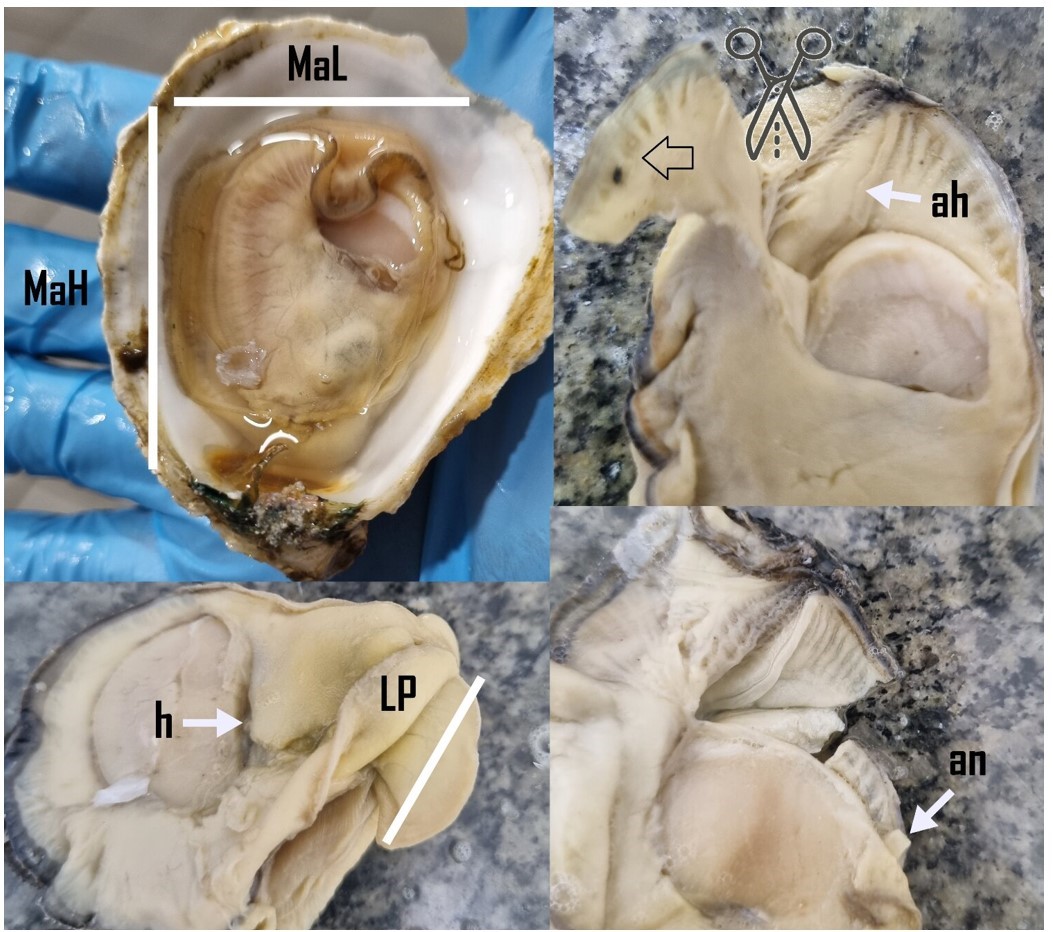
A total of 30 animals of each species found were subjected to anatomical analysis after their molecular identification. The anatomical measurements of the sample took into account mantle height (MaH), mantle length (MaL) and labial palp height (LP), according to Carter et al. (2012) (Figure 2).

Photos of the anatomical macrostructures evaluated in this study. Mantle height (MaH), mantle length (MaL) and labial palp height (LP) were measured. Arrowheads mark the location of other anatomical structures evaluated in this study, ah: accessory heart, an: anus, h: location of the heart. Photos by João Paulo Ramos Ferreira.
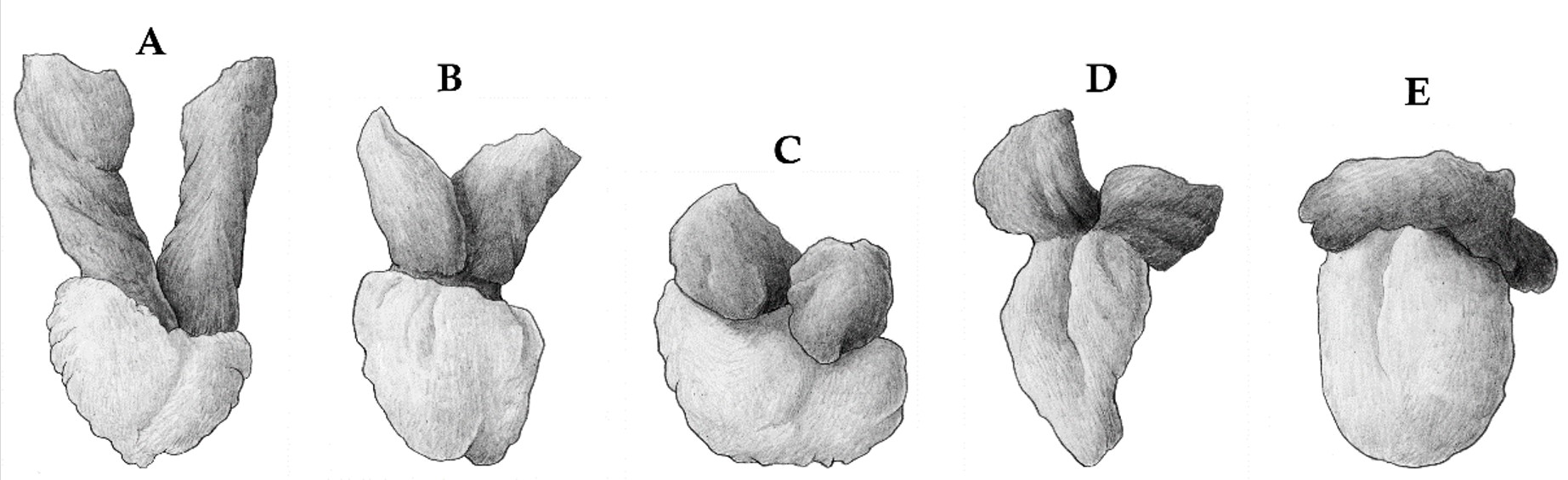
Other anatomical structures with taxonomic relevance were also evaluated. The folds at the mantle margin follow the classification proposed by Tëmkin (2006) for ostreid species spanning the outer fold (OF-1), devoid of tentacles, the middle fold (IF-1), and the inner fold (IF-2) (Figure 3; examples of IFs in Figure 4). The tentacle pattern of IF-1 has up to three sizes of tentacles, according to the anatomical descriptions provided by Amaral and Simone (2014): high, medium and low. Their pattern was classified as Saccostrea-like (higher elongate tentacles spaced by 3-5 medium lanceolate tentacles), Gryphaeidae-like (higher and more cylindrical tentacles spaced by 3-4 small dot-like tentacles), Magallana-like (higher lanceolate tentacles spaced by a small triangular tentacle followed by a medium triangular tentacle and another small triangular tentacle), Crassostrea-like (higher triangular tentacle spaced by a small tentacle) (Figure 5). Accessory hearts (ah) were classified as simple or Y-branched (Figure 6) (sub ‘with accessory heart with tributaries’ in Harry, 1985). The anal appendage was classified as simple or expanded (in lanceolate or revolute projections), based on Carreon (1969) (Figure 7). The shape of the heart was evaluated based on the shape of the atrium (elongated, lanceolate, oval) and the shape of the ventricle (cordate, elongated, oval) (Figure 8; examples of oyster hearts in Figure 9). Shape names followed the description of Carter et al. (2012).

Photo of the anatomical diagram of the trifid mantle edge of oysters of the genus Crassostrea. From left to right: the outer fold (OF-1) devoid of tentacles, the intermediate fold (IF-1) and the inner fold (IF-2). Photo by João Paulo Ramos Ferreira.

Photos representing the morphological plasticity of the inner edge of the mantle (IF) of oyster specimens of the genus Crassostrea. (A-H) The left-facing mantle edge of all examples shown represents IF-2, while the right-side mantle edge represents IF-1, whose tentacle pattern was analyzed in this study. Photos by João Paulo Ramos Ferreira.

Schematic drawing of the of the IF-1 and IF-2 in the mantle margins. The IF-1 tentacle patterns follow in the sequence from top to bottom: Crassostrea type, Gryphaeidae type, Magallana type, Saccostrea type. Illustrations by Leandro Lopes de Souza.
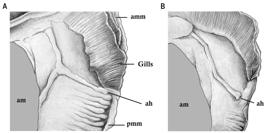
Schematic drawing of the inner surface of the left mantle lobe, showing the accessory heart patterns located between the mantle union between anterior side containing the gills (Gills) and the posterior mangin of the oyster mantle (pmm). (A) accessory heart pattern (ah) in “Y”; (B) accessory heart pattern simple, without branches; am: adductor muscle, amm: anterior margin of the oyster mantle. Illustrations by Leandro Lopes de Souza.

Schematic drawing showing the anal appendage of oysters. (A) simple anal appendix pattern; (B, C) expanded or revoluted anal appendix pattern. Illustrations by Leandro Lopes de Souza.

Schematic drawing of the types of mangrove oyster hearts. (A) heart has an elongated atrium and cordate ventricle; (B) has a lanceolate atrium and cordate ventricle; (C) has an oval atrium and a cordate ventricle; (D) has an oval atrium and an elongated ventricle; (E) has an elongated atrium and the oval ventricle. Illustrations by Leandro Lopes de Souza.

Photos representing the morphological plasticity of the heart of oyster specimens of the genus Crassostrea. Photos by João Paulo Ramos Ferreira.
2.4. Statistical analysis
A permutation t-test (P < 0.05) was applied to all anatomical characters (MaH, MaL and LP). A chi-square test was used to evaluate the pattern of the middle tentacle folds (IF-1) of the mantle margins, accessory heart format (ah), and the anal appendage format. The association of categorical heart format (ventricle and atrium) with species was visualized using a mosaic plot with residual-based shading. This conditional independence was tested with a chi-square test for independence based on permutation distribution (P < 0.05) using the vcd package (Meyer et al., 2006). All analyses were performed using the RStudio software (Posit Team, 2023). Data from this study was submitted to an online database and can be found in Ferreira et al. (2024).
3. Results
3.1. Molecular analysis
The identification of Crassostrea species from RS (C. praia) by sequence analysis demonstrated its conespecificity with C. rhizophorae. In addition, there is an expansion of the distribution of C. gasar to RS, as new occurrence of taxa.
The ML tree showed only three main clades of Crassostrea corresponding to C. gasar, C. rhizophorae, and C. virginica. Specimens of C. praia analyzed in this study showed 100% sequence identity with the sequence of C. rhizophorae used in this study and the ones obtained from GenBank. The specimens of C. gasar analysed in this study showed 100% sequence identity with the sequence of C. gasar/C. brasiliana obtained from GenBank (Figure 10). Nodal support was evaluated through 1,000 bootstrap replicates.

Cladogram of the maximum likehood method for the genus Crassostrea based on 16S rRNA, using Magallana and Talonostrea (previously included under the genus Crassostrea), Saccostrea cuccullata and Ostrea edulis as outgroups. Oysters used in this and previous studies were identified by GenBank accession numbers.
The PCR-RFLP of wild mangrove oyster specimens showed bands with approximately 230 bp, corresponding to C. gasar, and 260 bp, corresponding to C. rhizophorae (Figure 11), also confirming the results performed by sequence analysis.

Restriction fragment length patterns of Crassostrea species from RS based on HAEIII digestion of 16S rDNA fragments. Lane 1: 100 bp DNA ladder. Lane 2 and 3: Positive controls of C. rhizophorae (RHI) and C. gasar (GA), respectively.
3.2. Anatomical analysis
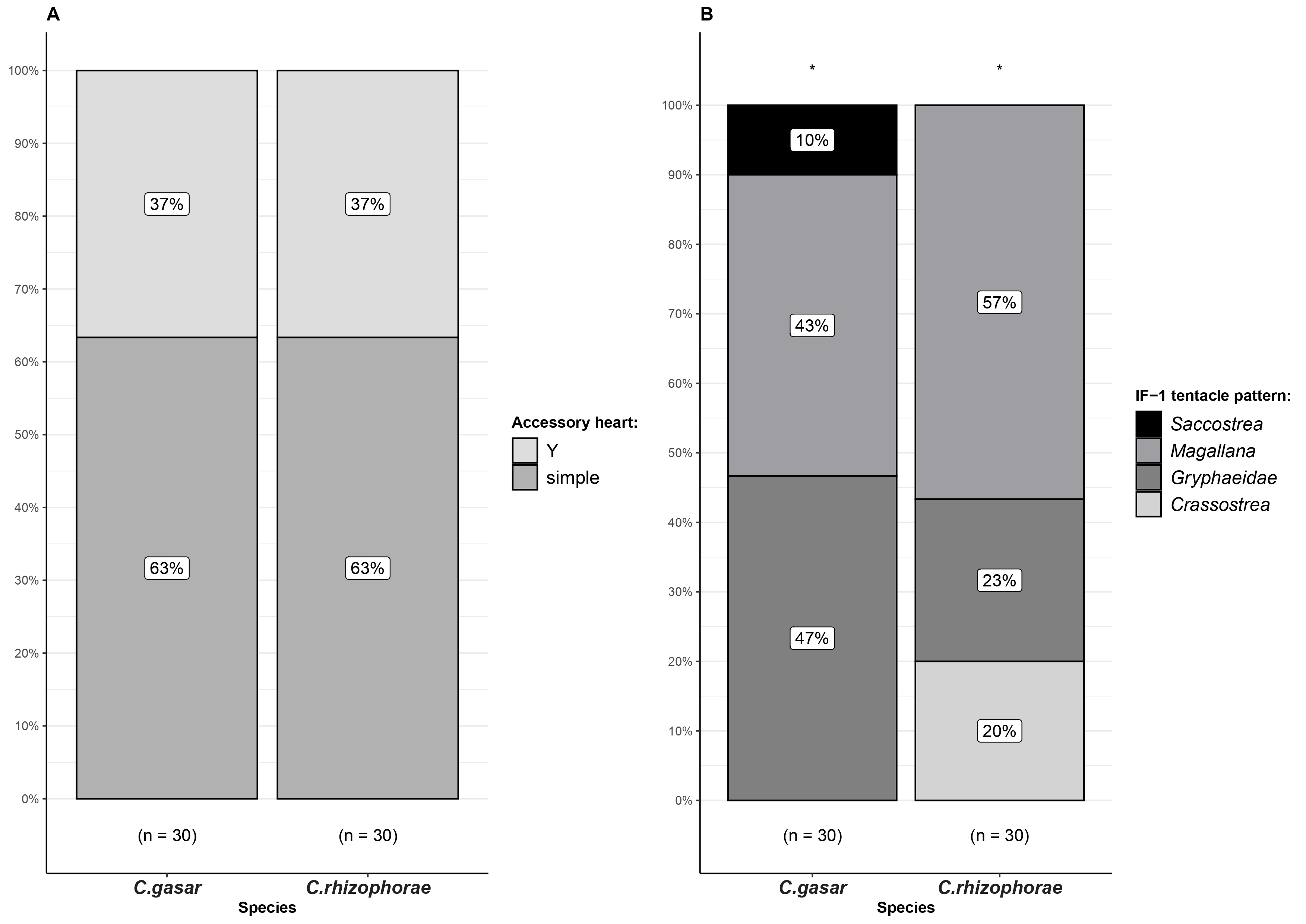
The size of MaH, MaL and LP are higher in C. gasar than in C. rhizophorae. The preponderance of and expanded anus projection is ratter verified in C. rhizophorae than in C. gasar (Figure 12). The pattern of tentacles of IF-1 are quite different between species with a tendency of Gryphaeidae pattern of tentacles belonging to C. gasar individuals, while Magallana pattern is for C. rhizophorae. The Saccostrea and Crassostrea patterns of tentacles showed to be exclusive to C. gasar and C. rhizophorae, respectively. No statistical difference was found in accessory heart (ah) format of both species (Figure 13).

Mean (± standard deviation) of measurements related to (A) Mantle height; (B) Mantle length; and (C) Labial palps height; (D) Frequency of C. gasar and C. rhizophorae individuals for each anal appendage category (P <0.05).

Frequency of individuals of C. gasar and C. rhizophorae for each. (A) accessory heart shape and for each; (B) tentacle pattern category of the intermediate mantle edge (IF-1) (P <0.05).
The format of ventricle of the oyster heart are preferably cordate for both species, with a positive correlation between C. gasar and an elongate atrium, while a positive correlation between C. rhizophorae and an oval atrium was observed. An oval ventricle was only observed in C. gasar (Figure 14).

The chi-square test of independence between species, ventricle shape and atrium shape, based on the permutation distribution.
4. Discussion
The genetic analysis performed to ascertain the identity of Crassostrea praia confirms a conespecificity with C. rhizophorae, without reasonable doubts. The evaluation of morphological and distributional data applied to C. praia used to circumscribe the identity, though it may be raise certain considerations about its uniqueness, when it comes to a profound approach on the subject, certain integration with the mangrove oysters may be observed.
There is no doubt C. praia represented an entity of Crassostrea oysters occurring beyond mangrove vegetation – which is a preferable habitat for C. gasar and C. rhizophorae – though its boundaries were quite different from its conception. An essentialist primal approach of C. praia emphasizes an ecological gradient for a subspecies separation of O. parasitica, which at that time, surrounded itself as the identity of all mangrove oyster species in Brazil (Ihering, 1907).
A latter study add morphological remarks for this variety, describing it as almost narrowly elongated shell, hollow at the top margin, being the lower valve adorned with large reddish spots, longitudinal ornamentation and nodosities (Lamy, 1928). These conchological characteristics were also perceived in the Crassostrea review of Amaral and Simone (2014), with an addition of an elongated adductor muscle impression of the left valve, and a restriction of its distribution as endemic to Lagoa dos Patos sandbank, RS.
This set of traits gave a false premise of uniqueness for being “not seen” among mangrove oysters from tropical areas of Brazil. Studies ratter limits the range of observation to oysters in mangrove or estuarine regions, where natural stocks are more available, and ethnological uses of oysters are preponderant among traditional communities (Boehs et al., 2019; Martins et al., 2019; Pereira et al., 2001; Ramos et al., 2013; Sampaio et al., 2020).
Understanding the shell growth pattern is a better way to uncover the nature of this structure. The rib projection on the left valve in oysters does commonly have an antimarginal conformation, in which the portion of the mantle responsible to secrete new shell projections during a growth cycle does not maintain its alignment during the mantle retraction phase, favorably assuming a new conformation, during the resting phase, before a new growth cycle (Checa and Jiménez-Jiménez, 2003). According to the same authors, the form of antimarginal ribs is strongly linked to the mechanical properties of the mantle (thickness and viscosity) and on environmental conditions (substrate, density of individuals), thus enabling a high variability and irregularity of oyster ribbing patterns. The formation of costae in some individuals, which is a remarkable morphology for C. praia (Amaral and Simone, 2014; Lamy, 1928), is a result of allometric elongation due to densely packed oysters, forcing individuals to extrude the mantle through the ventral margin for a rapid shell growth above in order to maintain an effective filtering area (Checa and Jiménez-Jiménez, 2003).
The shell of C. praia is currently elongate which shows a conversion between the conditional factor for costae formation and its presence in the holotype material, which is the only testimonial material for the species, apart from a doubtful material reported in Lopes et al. (2021). The set of conchological characters utilized to form C. praia’s identity can be found in few specimens of C. gasar in Ferreira et al. (2023), other scattered attributes such as costae and elongate muscle scar are present in several specimens of C. rhizophorae (Galtsoff, 1964) and they constitute a reminiscent vestiges of rapid growth. The pattern of shell in C. praia is also encountered in specimens located in more saline areas of Santa Catarina (Figure 15), which endorses a more ecomorphotype formation, but within the same species.

(A-K) Crassostrea oysters located in RS and SC. A-C Oysters from SC whose shell morphology is similar to the description of C. praia. D-E; I-J C. rhizophorae collected in RS identified through genetic analysis. F-H; K C. gasar collected on the coast of RS. Photo by João Paulo Ramos Ferreira.
The PCR-RFLP analysis showed both of “mangrove oysters” (C. gasar and C. rhizophorae) occurring in RS. C. rhizophorae was an expected species, since it has been reported to reach Uruguay as the most austral distribution (Huber, 2010; Ríos, 1985, 2009). C. gasar, on the other hand, was considered a species most believed to be restricted to the mangrove and estuarine areas of the tropical and equatorial areas of Brazil and West Africa (Carpenter and de Angelis, 2016; Ignacio et al., 2000; Nascimento, 1991; Ranson, 1948). Its occurrence to the Southern colder water parts of RS, demonstrates the species exhibit a physiological tolerance for a high range of temperature in environment. Furthering towards this subject, C. gasar shows to be indeed an interesting species when it comes to physiological adjustments to environment fitting. The species convergently demonstrates a tolerance for a high range of salinity spectrum (Funo et al., 2015; Horodesky et al., 2019), and for habitat gradients (subtidal, intertidal) (Boehs et al., 2019; Galvão et al., 2013).
The evaluation of anatomic features is a common practice when it comes to find morphological criteria for separation among the diverse groups of bivalves and possible correlation to evolution (Kellogg, 1892; Tëmkin, 2006). In this study, this evaluation Crassostrea was performed to find a possible striking feature for species distinction if molecular analysis came to validate C. praia as an accepted species. Since specimens in RS are identified as either C. gasar or C. rhizophorae, despite the morphology of their shells, anatomic features were evaluated accordingly.
The accessory heart of genus Crassostrea was considered to be without any tributaries (or simple), being a genus-specific feature for the separation of allied genera such as Ostrea (Harry, 1985). Later, the simple and y-conformation of the accessory heart was considered a criterion for species separation of species in Brazil (Amaral and Simone, 2014), expanding a possibility of accessory hearts possessing tributaries in larger oysters. Also, the Saccostrea species exhibited a preferable y-conformation of accessory heart, with an exception to S. echinata (Amaral and Simone, 2016). In this study, the simple and y-conformation of accessory hearts are equally scattered among wild population of oysters.
The pattern of tentacles of IF-1 showed quite plasticity among oyster population, even though studies promote such feature as species-specific (Carreon, 1969; Castillo-Rodriguez and García-Cubas, 1984; Evseev et al., 1996). The morphological variation on tentacles are most expressive between grand groups of bivalves (Audino and Marian, 2020; Tëmkin, 2006), being the IF-1 tentacles of Crassostrea are arranged submarginally and are quite similar to the tentacles of IF-2 (Audino et al., 2021). A especial arrangement constituting of a larger tentacle separated by several diminutive ones (Gryphaidae pattern), present in both C. rhizophorae and C. gasar, is also found for C. virginica (Eble and Scro, 1996; Nelson, 1938), as well as in Spondylus (Audino and Marian, 2020) and Hyotissa (Simone et al., 2015). A Saccostrea-like and Magallana-like IF-1 tentacle pattern, found in some specimens in this study, are quite similar to Saccostrea echinata and C. iredalei (Carreon, 1969, Plate II, Figure 6 and Figure 1, respectively) which may enhance the possibility that tentacle forms embodies responses from environment condition.
The form of heart possesses a wide conformation and exuberance though its morphology is poorly evaluated in studies. Ventricles are commonly expected exhibit cordate form, while large atrium (elongate) are commonly associated to a higher size of the animal observed in C. gasar, since a smaller atrium (oval) is verified on smaller animal belonging to C. rhizophorae. Carreon (1969) illustrated various forms of hearts, however, he tried to establish possible differences among ostreids in relation to the size of atrium fusion. Specimens evaluated in this possessed unfused atrium aspects.
Expanded anal appendages have been reported to occur in specimens of Crassostrea, being an apomorphic condition for the genus (Tëmkin, 2006). In the present study, however, the shape of the simple or expanded anus proved to be very plastic among the specimens treated in this study, as was also observed among several species of ostreids from the Indo-Pacific seas (Carreon, 1969). This demonstrates that certain descriptions proposed for ostreids may be tainted from the perspective of using an ideal model specimen in the description of species-specific characters, with the totality of anatomical characters evaluated demonstrating a total continuum between the species of this taxonomic group.
5. Conclusion
The species C. praia constitutes a synonym of C. rhizophorae, which is confirmed by genetic data, totalizing two native Crassostrea species in Brazil: C. gasar and C. rhizophorae. The aspects related to its distribution, ecology and the conchological morphology of C. praia are a reflection of an ecological gradient, constituting an ecomorphotype, and not a valid species, accordingly to perspective proposed by Mayr (1999).
The anatomical data, commonly used to assert species identity in Crassostrea species, possesses even more plasticity between species than conchological morphology treated in Ferreira et al. (2023), confirming that species identity in oysters relies on primarily on genetic criteria (Lazoski et al., 2011; Reece et al., 2008).
Acknowledgements
The authors want to thank the financial support received from the Financiadora de Estudos e Projetos (FINEP), the Conselho Nacional de Desenvolvimento Científico e Tecnológico (CNPq), the Coordenação de Aperfeiçoamento de Pessoal de Nível Superior (CAPES). The authors thank PPGAQI-UFSC, in special to LMM and LABCAI laboratories for providing the conditions for the development of the current study. We also thank Claudio Blacher (LMM-UFSC) and Lauro Perelló Barcellos (CCMar – Rio Grande/RS) for the Crassostrea specimens collected in Rio Grande/RS.
References
- ABSHER, T.M., 1989. Populações natutais de ostras do gênero Crassostrea do litoral do Paraná: desenvolvimento larval, recrutamento e crescimento. São Paulo: Universidade de São Paulo. Tese de Doutorado em Oceanografia Biológica.
-
AMARAL, V.S. and SIMONE, L.R.L., 2014. Revision of genus Crassostrea (Bivalvia: Ostreidae) of Brazil. Journal of the Marine Biological Association of the United Kingdom, vol. 94, no. 4, pp. 811-836. http://doi.org/10.1017/S0025315414000058
» http://doi.org/10.1017/S0025315414000058 - AMARAL, V.S. and SIMONE, L.R.L., 2016. Comparative anatomy of five species of Saccostrea Dollfus and Dautzenberg, 1920 (Bivalvia: Ostreidae) from the Pacific Ocean. The Nautilus, vol. 130, no. 2, pp. 53-71.
-
AUDINO, J.A. and MARIAN, J.E.A.R., 2020. Form and function of tentacles in pteriomorphian bivalves. Journal of Morphology, vol. 281, no. 1, pp. 33-46. http://doi.org/10.1002/jmor.21077 PMid:31750976.
» http://doi.org/10.1002/jmor.21077 -
AUDINO, J.A., SERB, J.M. and MARIAN, J.E.A.R., 2021. Untangling the diversity and evolution of tentacles in scallops, oysters, and their relatives (Bivalvia: Pteriomorphia). Organisms, Diversity & Evolution, vol. 21, no. 1, pp. 145-160. http://doi.org/10.1007/s13127-021-00482-3
» http://doi.org/10.1007/s13127-021-00482-3 -
BOEHS, G., LUZ, M.D.S.A. and DE ANDRADE, V.R.D., 2019. Molecular identification of cryptic species of oysters (genus Crassostrea Sacco, 1897) in the northeast atlantic coast of Brazil. Boletim do Instituto de Pesca, vol. 45, no. 2, pp. 2-7. http://doi.org/10.20950/1678-2305.2019.45.2.446
» http://doi.org/10.20950/1678-2305.2019.45.2.446 -
BOUDRY, P., HEURTEBISE, S. and LAPÈGUE, S., 2003. Mitochondrial and nuclear DNa sequence variation of presumed Crassostrea gigas and Crassostrea angulata specimens: a new oyster species in Hong Kong? Aquaculture, vol. 228, no. 1-4, pp. 15-25. http://doi.org/10.1016/S0044-8486(03)00443-5
» http://doi.org/10.1016/S0044-8486(03)00443-5 - CARPENTER, K.E. and DE ANGELIS, N., 2016. The living marine resources of the Central Eastern Atlantic: bivalves, gastropods, hagfishes, sharks, batoid fishes and chimaeras. Rome: FAO. FAO Species Identification Guide for Fishery Purposes, no. 2.
- CARREON, J.A., 1969. The Malacology of Philippine oysters of the genus Crassostrea and a review of their shell characters. Proceedings of the National Shellfisheries Association, vol. 59, pp. 104-115.
- CARTER, J.G., HARRIES, P., MALCHUS, N., SARTORI, A., ANDERSON, L., BIELER, R., BOGAN, A., COAN, E., COPE, J., CRAGG, S., GARCIA-MARCH, J., HYLLEBERG, J., KELLEY, P., KLEEMANN, K., KRIZ, J., McROBERTS, C., MIKKELSEN, P., POJETA Jr., J., SKELTON, P.W., TËMKIN, I., YANCEY, T. and ZIERITZ, A., 2012. Treatise online 48, part N, revised, volume 1, chapter 31: illustrated glossary of the Bivalvia. Lawrence: KU Paleontological Institute, University of Kansas.
- CASTILLO-RODRIGUEZ, Z.G. and GARCÍA-CUBAS, A., 1984. Taxonomia y anatomía comparada de las ostras en las costas de México. Anales Del Instituto de Ciencias Del Mar y Limnología, vol. 11, pp. 484.
-
CHECA, A.G. and JIMÉNEZ-JIMÉNEZ, A.P., 2003. Rib fabrication in Ostreoidea and Plicatuloidea (Bivalvia, Pteriomorphia) and its evolutionary significance. Zoomorphology, vol. 122, no. 3, pp. 145-159. http://doi.org/10.1007/s00435-003-0080-5
» http://doi.org/10.1007/s00435-003-0080-5 - D’ORBIGNY, A., 1842. Voyage dans l’Amérique méridionale : le Brésil, la république orientale de l’Uruguay, la République argentine, la Patagonie, la république du Chili, la république de Bolivia, la république du Pérou. Tome Troisième, 4.e partie: Paléontologie Paris: Chez Pitois-Levrault. http://doi.org/10.5962/bhl.title.110540.
-
DILLWYN, L.W., 1817. A descriptive catalogue of recent shells : arranged according to the Linnæan method; with particular attention to the synonymy. London: J. and A. Arch. http://doi.org/10.5962/bhl.title.10437
» http://doi.org/10.5962/bhl.title.10437 - EBLE, A.F. and SCRO, R., 1996. General anatomy. In: V.S. KENNEDY, R.I.E. NEWELL, eds. The Eastern Oyster Crassostrea virginica Maryland: Maryland Sea Grant College, pp. 19-73.
-
EVSEEV, G.A., YAKOVLEV, Y.M. and LI, X., 1996. The anatomy of the Pacific Oyster, Crassostrea gigas (Thurnberg) (Bivalvia: Ostreidae). Publications of the Seto Marine Biological Laboratory, vol. 37, no. 3-6, pp. 239-255. http://doi.org/10.5134/176265
» http://doi.org/10.5134/176265 -
FERREIRA, J.P.R., FREIRE, T.B., ZACCHI, F.L. and MELO, C.M.R., 2024. [viewed 22 October 2024]. Anatomical and molecular data of Crassostrea collected on Rio Grande do Sul, Brazil IEEE Dataport. http://doi.org/10.21227/e6w1-zf52
» http://doi.org/10.21227/e6w1-zf52 -
FERREIRA, J.P.R., LEGAT, A.P., LAZOSKI, C., FREIRE, T.B., GOMES, C.H.A. and MELO, C.R.M., 2023. A historical and integrative taxonomic account of mangrove oyster species native to the Atlantic American coast: a re-evaluation of Brazilian Crassostrea species. Zoologischer Anzeiger, vol. 305, pp. 52-81. http://doi.org/10.1016/j.jcz.2023.06.002
» http://doi.org/10.1016/j.jcz.2023.06.002 -
FUNO, I.C.S.A., ANTONIO, Í.G., MARINHO, Y.F. and GALVEZ, A.O., 2015 [viewed 22 October 2024]. Influência da salinidade sobre a sobrevivência e crescimento Crassostrea gasar. Boletim do Instituto de Pesca [online], vol. 41, no. 4, pp. 837-847. Available from: https://www.researchgate.net/publication/303864189
» https://www.researchgate.net/publication/303864189 -
GALTSOFF, P.S., 1964 [viewed 22 October 2024]. The American oyster Crassostrea virginica Gmelin. Fishery Bulletin of the Fish and Wildlife Service [online], vol. 64, pp. 21-82. Available from: https://spo.nmfs.noaa.gov/sites/default/files/pdf-content/fish-bull/ch1.pdf
» https://spo.nmfs.noaa.gov/sites/default/files/pdf-content/fish-bull/ch1.pdf -
GALVÃO, M.S.N., PEREIRA, O.M. and HILSDORF, A.W.S., 2013. Molecular identification and distribution of mangrove oysters (Crassostrea) in an estuarine ecosystem in southeast Brazil: implications for aquaculture and fisheries management. Aquaculture Research, vol. 44, no. 10, pp. 1589-1601. http://doi.org/10.1111/j.1365-2109.2012.03166.x
» http://doi.org/10.1111/j.1365-2109.2012.03166.x -
GUILDING, L., 1828 [viewed 22 October 2024]. Observations on the zoology of the Caribbean Islands. The Zoological Journal [online], vol. 3, pp. 542. Available from: https://www.biodiversitylibrary.org/bibliography/39584
» https://www.biodiversitylibrary.org/bibliography/39584 - HALL, T.A., 1999. BioEdit: a user friendly biological sequence alignment editor and analysis program for Windows 95/98/NT. Nucleic Acids Symposium Series, vol. 41, pp. 95-98.
-
HARRY, H.W., 1985 [viewed 22 October 2024]. Synopsis of the supraspecific classification of living oysters (Bivalvia: gryphaeidae and Ostreidae). The Veliger [online], vol. 28, no. 2, pp. 121-158. Available from: http://www.biodiversitylibrary.org/bibliography/66841
» http://www.biodiversitylibrary.org/bibliography/66841 -
HORODESKY, A., CASTILHO-WESTPHAL, G.G., COZER, N., ROSSI, V.G. and OSTRENSKY, A., 2019. Effects of salinity on the survival and histology of oysters Crassostrea gasar (Adanson, 1757). Bioscience Journal, vol. 35, no. 2, pp. 586-597. http://doi.org/10.14393/BJ-v35n2a20198-42099
» http://doi.org/10.14393/BJ-v35n2a20198-42099 - HUBER, M., 2010. Compendium of bivalves: full-color guide to 3,300 of the world’s marine bivalves: a status on Bivalvia after 250 years of research. Hackenhei: ConchBooks, 901 p.
-
IGNACIO, B.L., ABSHER, T.M., LAZOSKI, C. and SOLÉ-CAVA, A.M., 2000. Genetic evidence of the presence of two species of Crassostrea (Bivalvia: Ostreidae) on the coast of Brazil. Marine Biology, vol. 136, no. 6, pp. 987-991. http://doi.org/10.1007/s002270000252
» http://doi.org/10.1007/s002270000252 - IHERING, H., 1907. Les mollusques fossiles du Tertiare et du Crétacé Supérieur de l’Argentine. Anales Del Museo Nacional de Buenos Aires, vol. 7, pp. 1-611.
-
JUNG, H., EYUN, S. and KIM, W.-J., 2008. Inferring Korean oyster phylogenies, including the east Asian oyster (Crassostrea ariakensis) and its population structure infer. Journal of Shellfish Research, vol. 27, no. 4, pp. 1018-1019. http://doi.org/10.2983/0730-8000(2008)27[985:AOTPPA]2.0.CO;2
» http://doi.org/10.2983/0730-8000(2008)27[985:AOTPPA]2.0.CO;2 -
KELLOGG, J.L., 1892. A contribution to our knowledge of the morphology of Lamellibranchiate mollusks. Bulletin of the United States Fish Commission, vol. 10, pp. 389-436. http://doi.org/10.5962/bhl.title.10822
» http://doi.org/10.5962/bhl.title.10822 - LAMY, E., 1928. Les Huîtres de la République Argentine. Bulletin du Muséum National d’Histoire Naturelle, vol. 1, pp. 101-104.
-
LAPÈGUE, S., BOUTET, I., LEITÃO, A., HEURTEBISE, S., GARCIA, P., THIRIOT-QUIÉVREUX, C. and BOUDRY, P., 2002. Trans-atlantic distribution of a mangrove oyster species revealed by 16S mtDNA and karyological analyses. The Biological Bulletin, vol. 202, no. 3, pp. 232-242. http://doi.org/10.2307/1543473 PMid:12086994.
» http://doi.org/10.2307/1543473 -
LAZOSKI, C., GUSMÃO, J., BOUDRY, P. and SOLÉ-CAVA, A.M., 2011. Phylogeny and phylogeography of Atlantic oyster species: evolutionary history, limited genetic connectivity and isolation by distance. Marine Ecology Progress Series, vol. 426, pp. 197-212. http://doi.org/10.3354/meps09035
» http://doi.org/10.3354/meps09035 - LI, X. and QI, Z., 1994. Studies on the comparative anatomy, systematic classification and evolution of Chinese oysters. Studia Marina Sinica, vol. 35, pp. 143-173.
-
LINNEAUS, C., 1758. Systema naturae per regna tria naturae. Holmiae: Impensis Direct, Laurentii Salvii. http://doi.org/10.5962/bhl.title.542
» http://doi.org/10.5962/bhl.title.542 -
LOPES, R.G.P.S., ANTONIO, Í.G., TCHAIKA, L., BARROS, M.C. and FRAGA, E., 2018. Molecular identification of native oysters on the coast of Maranhão, Brazil. Boletim do Instituto de Pesca, vol. 44, no. 4, e377. http://doi.org/10.20950/1678-2305.2018.44.4.377
» http://doi.org/10.20950/1678-2305.2018.44.4.377 -
LOPES, R.P., PEREIRA, J.C., CARON, F., RITTER, M., DE SOUZA, M.S., DILLENBURG, S.R., BARBOZA, E.G., TATUMI, S.H., YEE, M., KINOSHITA, A. and BAFFA, O., 2021. Late Pleistocene-Holocene fossils from Mirim Lake, southern Brazil, and their paleoenvironmental significance : II – Mollusks. Journal of South American Earth Sciences, vol. 112, pp. 103546. http://doi.org/10.1016/j.jsames.2021.103546
» http://doi.org/10.1016/j.jsames.2021.103546 - MARTINS, D.S.M., MONTELES, J.S., DE JESUS, P.P., MARINHO, Y.F., ANTÔNIO, Í.G. and FUNO, I.C. S.A., 2019. Transferência tecnológica da ostreicultura em comunidade de marisqueiros do município de Raposa, Maranhão. In: A.M. ZUFFO, ed. Aquicultura e pesca: adversidades e resultados Ponta Grossa: Atena Editora, pp. 160-173. http://doi.org/10.22533/at.ed.27219290322
- MAYR, E., 1999. Systematic and the origin of species. Ernst Mayr: with a new introduction by the author London: Harvard University Press.
-
MELO, A.G.C., VARELA, E.S., BEASLEY, C.R., SCHNEIDER, H., SAMPAIO, I., GAFFNEY, P.M. and TAGLIARO, C.H., 2010a. Molecular identification, phylogeny and geographic distribution of Brazilian mangrove oysters (Crassostrea). Genetics and Molecular Biology, vol. 33, no. 3, pp. 564-572. http://doi.org/10.1590/S1415-47572010000300030 PMid:21637433.
» http://doi.org/10.1590/S1415-47572010000300030 -
MELO, C.M.R., SILVA, F.C., GOMES, C.H.A.M., SOLÉ-CAVA, A.M. and LAZOSKI, C., 2010b. Crassostrea gigas in natural oyster banks in southern Brazil. Biological Invasions, vol. 12, no. 3, pp. 441-449. http://doi.org/10.1007/s10530-009-9475-7
» http://doi.org/10.1007/s10530-009-9475-7 -
MEYER, D., ZEILEIS, A. and HORNIK, K., 2006. The strucplot framework: visualizing multi-way contingency tables with vcd. Journal of Statistical Software, vol. 17, no. 3, pp. 1-48. http://doi.org/10.18637/jss.v017.i03
» http://doi.org/10.18637/jss.v017.i03 -
MILLER, S.A., DYKES, D.D. and POLESKY, H.F., 1988. A simple salting out procedure for extracting DNA from human nucleated cells. Nucleic Acids Research, vol. 16, no. 3, pp. 1215. http://doi.org/10.1093/nar/16.3.1215 PMid:3344216.
» http://doi.org/10.1093/nar/16.3.1215 -
MOLLUSCABASE, 2024 [viewed 22 October 2024]. Crassostrea Sacco, 1897 [online]. Available from: https://www.marinespecies.org/aphia.php?p=taxdetails&id=138297
» https://www.marinespecies.org/aphia.php?p=taxdetails&id=138297 - NASCIMENTO, I.A., 1991. Crassostrea rhizophorae (Guilding) and C. brasiliana (Lamarck) in South and Central America. In: A. MENZEL, ed. Estuarine and marine bivalve mollusk culture. Boston: CRC Press, pp. 125-134. http://doi.org/10.1201/9781351071918-10.
-
NELSON, T.C., 1938. The feeding mechanism of the oyster. I. On the pallium and the branchial chambers of Ostrea virginica, O. edulis and O. angulata, with comparisons with other species of the genus. Journal of Morphology, vol. 63, no. 1, pp. 1-61. http://doi.org/10.1002/jmor.1050630102
» http://doi.org/10.1002/jmor.1050630102 - PALUMBI, S., MARTIN, A., ROMANO, S., MCMILLAN, W.O., STICE, L. and GRABOWSKI, G., 2002. The simple fool’s guide to PCR. Honolulu: University of Hawaii.
- PEREIRA, O.M., MACHADO, I.C., HENRIQUES, M.B. and YAMANAKA, N., 2001. Crescimento da ostra Crassostrea brasiliana semeada sobre tabuleiro em diferentes densidades na região estuarina-lagunar de Cananéia-SP (25oS, 48oW). Boletim do Instituto de Pesca, vol. 27, no. 2, pp. 163-174.
-
PIE, M.R., RIBEIRO, R.O., BOEGER, W.A., OSTRENSKY, A., FALLEIROS, R.M. and ANGELO, L., 2006. A simple PCR-RFLP method for the discrimination of native and introduced oyster species (Crassostrea brasiliana, C. rhizophorae and C. gigas; Bivalvia: Ostreidae) cultured in Southern Brazil. Aquaculture Research, vol. 37, no. 15, pp. 1598-1600. http://doi.org/10.1111/j.1365-2109.2006.01591.x
» http://doi.org/10.1111/j.1365-2109.2006.01591.x -
POSIT TEAM, 2023 [viewed 22 October 2024]. RStudio: integrated development environment for R [online], Available from: http://www.posit.co/
» http://www.posit.co/ -
RAITH, M., ZACHERL, D.C., PILGRIM, E.M. and EERNISSE, D.J., 2015. Phylogeny and species diversity of gulf of california oysters (Ostreidae) inferred from mitochondrial DNA. American Malacological Bulletin, vol. 33, no. 2, pp. 263. http://doi.org/10.4003/006.033.0206
» http://doi.org/10.4003/006.033.0206 - RAMOS, C. O., FERREIRA, J.F. and MELO, C.M.R., 2013. Maturação da ostra nativa Crassostrea gasar submetida a diferentes dietas em laboratório. Boletim do Instituto de Pesca, vol. 39, no. 2, pp. 107-120.
- RANSON, G., 1948. Ecologie et répartition géographique des Ostréidés vivants. Revue Scientifique, vol. 86, pp. 469-473.
-
REECE, K.S., CORDES, J.F., STUBBS, J.B., HUDSON, K.L. and FRANCIS, E.A., 2008. Molecular phylogenies help resolve taxonomic confusion with Asian Crassostrea oyster species. Marine Biology, vol. 153, no. 4, pp. 709-721. http://doi.org/10.1007/s00227-007-0846-2
» http://doi.org/10.1007/s00227-007-0846-2 - RÍOS, E.C., 1985. Seashells of Brazil Rio Grande: Fundação Cidade do Rio Grande, 328 p.
- RÍOS, E.C., 2009. Compendium of Brazilian sea shells, Rio Grande: Evangraf.
-
SACCO, F., 1897. I molluschi dei terreni terziarii del Piemonte e della Liguria. Torino: Stamperia Reale. http://doi.org/10.5962/bhl.title.12269
» http://doi.org/10.5962/bhl.title.12269 -
SAMPAIO, D.S., SANTOS, M.L.S., TAGLIARO, C.H. and BEASLEY, C.R., 2020. Variation in environmental characteristics of waters among amazon coast oyster culture units. Acta Amazonica, vol. 50, no. 4, pp. 295-304. http://doi.org/10.1590/1809-4392202000250
» http://doi.org/10.1590/1809-4392202000250 - SAY, T., 1834. American Conchology, or descriptions of the shells of North America. Illustrated by coloured figures from original drawings executed from nature New Harmony: School Press.
-
SEKINO, M. and YAMASHITA, H., 2013. Mitochondrial DNA barcoding for Okinawan oysters: a cryptic population of the Portuguese oyster Crassostrea angulata in Japanese waters. Fisheries Science, vol. 79, no. 1, pp. 61-76. http://doi.org/10.1007/s12562-012-0577-2
» http://doi.org/10.1007/s12562-012-0577-2 -
SEKINO, M., ISHIKAWA, H., FUJIWARA, A., DOYOLA-SOLIS, E.F.C., LEBATA-RAMOS, M.J.H. and YAMASHITA, H., 2015. The first record of a cupped oyster species Crassostrea dianbaiensis in the waters of Japan. Fisheries Science, vol. 81, no. 2, pp. 267-281. http://doi.org/10.1007/s12562-014-0838-3
» http://doi.org/10.1007/s12562-014-0838-3 -
SHARMA, P.P., ZARDUS, J.D., BOYLE, E.E., GONZÁLEZ, V.L., JENNINGS, R.M., MCINTYRE, E. and GIRIBET, G., 2013. Molecular phylogenetics and evolution into the deep: a phylogenetic approach to the bivalve subclass Protobranchia. Molecular Phylogenetics and Evolution, vol. 69, no. 1, pp. 188-204. http://doi.org/10.1016/j.ympev.2013.05.018 PMid:23742885.
» http://doi.org/10.1016/j.ympev.2013.05.018 -
SIMONE, L.R.L., MIKKELSEN, P.M. and BIELER, R., 2015. Comparative anatomy of selected marine bivalves from the florida keys, with notes on Brazilian congeners (Mollusca: Bivalvia). Malacologia, vol. 58, no. 1-2, pp. 1-127. http://doi.org/10.4002/040.058.0201
» http://doi.org/10.4002/040.058.0201 - SINGARAJAH, K.V., 1980. On the taxonomy, ecology and physiology of a giant oyster, Crassostrea paraibensis, new species. Bulletin of Marine Science, vol. 30, no. 4, pp. 833-847.
-
TAMURA, K. and NEI, M., 1993. Estimation of the number of nucleotide substitutions in the control region of mitochondrial DNA in humans and chimpanzees. Molecular Biology and Evolution, vol. 10, no. 3, pp. 512-526. http://doi.org/10.1093/oxfordjournals.molbev.a040023 PMid:8336541.
» http://doi.org/10.1093/oxfordjournals.molbev.a040023 -
TAMURA, K., STECHER, G. and KUMAR, S., 2021. MEGA11: molecular evolutionary genetics analysis version 11. Molecular Biology and Evolution, vol. 38, no. 7, pp. 3022-3027. http://doi.org/10.1093/molbev/msab120 PMid:33892491.
» http://doi.org/10.1093/molbev/msab120 -
TËMKIN, I., 2006. Morphological perspective on the classification and evolution of Recent Pterioidea (Mollusca: Bivalvia). Zoological Journal of the Linnean Society, vol. 148, no. 3, pp. 253-312. http://doi.org/10.1111/j.1096-3642.2006.00257.x
» http://doi.org/10.1111/j.1096-3642.2006.00257.x - THUNBERG, C.P., 1793. Tekning och Beskrifning på en stor Ostronsort ifrån Japan. Kongliga Svenska Vetenskaps-Akademiens Handlingar, vol. 14, no. 4-6, pp. 140-142.
-
VARELA, E.S., BEASLEY, C.R., SCHNEIDER, H., SAMPAIO, I., MARQUES-SILVA, N.D.S. and TAGLIARO, C.H., 2007. Molecular phylogeny of mangrove oysters (Crassostrea) from Brazil. The Journal of Molluscan Studies, vol. 73, no. 3, pp. 229-234. http://doi.org/10.1093/mollus/eym018
» http://doi.org/10.1093/mollus/eym018 -
WANG, H., GUO, X., ZHANG, G. and ZHANG, F., 2004. Classification of jinjiang oysters Crassostrea rivularis (Gould, 1861) from China, based on morphology and phylogenetic analysis. Aquaculture (Amsterdam, Netherlands), vol. 242, no. 1-4, pp. 137-155. http://doi.org/10.1016/j.aquaculture.2004.09.014
» http://doi.org/10.1016/j.aquaculture.2004.09.014