
 Trophic dynamics and morphometric divergence of coexisting neotropical cichlid species (Teleostei: Cichliformes) in relation to a dam
Abstract
Freshwater species are under threat from anthropogenic disturbance from in-stream barriers. Trophic interactions are a major driver of community structure and understanding how species partition resources in relation to barriers can help determine ecological impacts. In this study, we analyzed the diet based on stomach contents of three cichlid species from distinct genera and with divergent morphologies that occur in syntopy (Apistogramma piauiensis, Cichlasoma cf. zarskei, and Saxatilia brasiliensis) from the Mata de Itamacaoca, middle Munim River basin, Maranhão, northeastern Brazil, examining prey diversity and richness variations above and below a dam. Apistogramma piauiensis and Saxatilia brasiliensis primarily consumed insects, while Cichlasoma cf. zarskei had a more diverse diet, including insects, substrate, and fish. The dam had no measurable effect on stomach content diversity or richness; however, there were species-specific differences, with the diet of A. piauiensis showing lower prey richness than the other two species and lower dietary diversity than Saxatilia brasiliensis. nMDS and PERMANOVA analyses indicated considerable dietary niche overlap among species, with a weak but significant effect of species on the composition of consumed prey. There was a high dietary overlap between Cichlasoma cf. zarskei and Saxatilia brasiliensis. All species separated in morphospace with Saxatilia brasiliensis exhibiting traits related to predatory foraging. These results indicate niche separation in ecologies among the three focal species, which may be related to differences in morphology. However, given the limited temporal scale and variables assessed, further studies are necessary to comprehensively evaluate the influence of the dam on trophic resources and fish assemblages.
Keywords:
Cichlidae; dam impact; dietary overlap; morphometrics; trophic niche
Resumo
Espécies de água doce estão sob ameaça de distúrbios antrópicos causados por barreiras nos cursos d'água. As interações tróficas são um dos principais fatores que moldam a estrutura das comunidades, e compreender como as espécies compartilham recursos em relação a essas barreiras pode ajudar a determinar os impactos ecológicos. Neste estudo, analisamos a dieta com base no conteúdo estomacal de três espécies de ciclídeos, de gêneros distintos e morfologia divergente, que ocorrem em sintopia (Apistogramma piauiensis, Cichlasoma cf. zarskei e Saxatilia brasiliensis), coletadas na Mata de Itamacaoca, bacia do médio Rio Munim, Maranhão, nordeste do Brasil, investigando variações na diversidade e riqueza de presas acima e abaixo de uma barragem. Apistogramma piauiensis e Saxatilia brasiliensis consumiram principalmente insetos, enquanto Cichlasoma cf. zarskei apresentou uma dieta mais diversificada, incluindo insetos, substrato e peixes. A barragem não teve efeito mensurável sobre a diversidade ou riqueza do conteúdo estomacal, mas diferenças específicas entre as espécies foram observadas. A dieta de A. piauiensis apresentou menor riqueza de presas em comparação às outras duas espécies e menor diversidade dietética em relação a Saxatilia brasiliensis. Análises de nMDS e PERMANOVA indicaram considerável sobreposição de nicho alimentar entre as espécies, com um efeito fraco, porém significativo, das espécies na composição das presas consumidas. Observou-se uma alta sobreposição dietética entre Cichlasoma cf. zarskei e Saxatilia brasiliensis. As espécies se diferenciaram no morfoespaço, com Saxatilia brasiliensis exibindo características relacionadas à forrageamento predatório. Esses resultados indicam separação de nichos ecológicos entre as três espécies focais, o que pode estar relacionado a diferenças na morfologia. No entanto, dada a escala temporal limitada e as variáveis avaliadas, estudos adicionais são necessários para avaliar de forma abrangente a influência da barragem sobre os recursos tróficos e as assembleias de peixes.
Palavras-chave:
Cichlidae; impacto de barragem; sobreposição de dieta; morfometria; nicho trófico
1. Introduction
Freshwater ecosystems rank among the most imperiled globally, subjected to escalating anthropogenic pressures including habitat fragmentation, overexploitation, chemical pollution, and biological invasions (Tickner et al., 2020; Ottoni et al., 2023, 2025). These disturbances disrupt fundamental ecological processes by altering resource availability, modifying species interactions, and restructuring community assemblages (Freitas et al., 2022). In biodiversity-rich Neotropical regions, freshwater fish assemblages—particularly those comprising phylogenetically related and ecologically plastic species—serve as compelling models for investigating mechanisms of coexistence under dynamic environmental conditions (Reis et al., 2016). Understanding these mechanisms is critical, as anthropogenic modifications often intensify competitive interactions, potentially leading to local extirpations or shifts in trophic structure (Dala-Corte et al., 2020).
In this context, identifying the processes that enable species to coexist despite increasing environmental stress is a central tenet of community ecology (Lubich et al., 2024). Classical niche theory (Hutchinson, 1957) and modern coexistence frameworks (Chesson, 2000) posit that stable coexistence requires ecological differentiation along at least one niche axis—spatial, temporal, or trophic. In freshwater fish assemblages, such differentiation often manifests through morphological divergence in traits related to feeding, locomotion, or habitat use (Gomiero et al., 2010; Lubich et al., 2024). These morphological traits can be quantified through morphometric analyses, which provide indirect evidence of niche partitioning when integrated with dietary data (Meyer, 1990; Ibáñez and Jawad, 2018, Dwivedi and De, 2024). However, the relationship between morphology and ecological function is not always deterministic, as behavioral plasticity and environmental constraints may decouple body shape from realized resource use (Vranken et al., 2020).
Predation and foraging behavior play pivotal roles in structuring aquatic assemblages, driving energy flow and influencing community stability (Sih et al., 1985). Stomach content analysis remains a foundational tool for resolving short-term trophic interactions, offering direct evidence of resource use (Baker et al., 2014). Yet, dietary patterns are shaped by the interaction between intrinsic species traits (e.g., morphology, behavior) and extrinsic environmental conditions (e.g., habitat heterogeneity, resource availability) (McCard et al., 2021; Luger et al., 2020). As such, integrative approaches that combine morphometric and dietary data have gained traction in quantifying trophic differentiation among sympatric species (Sibbing and Nagelkerke, 2000; Galvez et al., 2022). These approaches are particularly informative in groups exhibiting high trophic diversity (Meyer, 1990; Dwivedi and De, 2024), such as cichlids (Arbour and López-Fernández, 2014; Galvez et al., 2022).
Among Neotropical freshwater fishes, the family Cichlidae exemplifies adaptive radiation, characterized by exceptional ecological and phenotypic diversification (Montaña and Winemiller, 2013; Nelson et al., 2016). Neotropical cichlids encompass 84 genera and 564 species (Fricke et al., 2025), spanning a broad range of trophic guilds—from detritivore to piscivore—with specialized morphologies for shell-crushing, algae scraping, and benthic foraging (Hulsey et al., 2008). Their ecological versatility and morphological disparity make cichlids an ideal model for exploring form-function relationships and assessing how environmental changes reshape niche dynamics (Muschick et al., 2012; Ford et al., 2016).
This study investigates the trophic structure and morphometric variation of three syntopic cichlid species [Apistogramma piauiensis Kullander, 1980, Cichlasoma cf. zarskei, and Saxatilia brasiliensis (Bloch, 1792)] inhabiting the fragmented Mata de Itamacaoca stream system, middle Munim River basin, Maranhão, Brazil. These species were selected not only due to their co-occurrence but also because the family Cichlidae is the second most speciose in the Mata de Itamacaoca (Oliveira et al., 2020), underscoring its ecological relevance in the local fish community. Although they belong to distinct genera and exhibit divergent morphologies, their syntopy makes them an excellent system to evaluate how habitat sharing shapes trophic differentiation in cichlid lineages (Muschick et al., 2012; Ford et al., 2016). We test two hypotheses: (1) These species will exhibit significant divergence in feeding-related morphometrics, yet moderate dietary overlap, reflecting niche differentiation; and (2) dam-induced fragmentation will reduce resource diversity downstream, manifesting in diminished trophic richness and diversity in fish diets below the impoundment. By integrating morphometric and dietary analyses, this work contributes to understanding how anthropogenic disturbances influence coexistence mechanisms in Neotropical cichlids.
2. Material and Methods
2.1. Study area and field sampling
This study was conducted in the Mata de Itamacaoca, middle Munim River basin, State of Maranhão, northeastern Brazil, a 460-hectare protected urban area within the Cerrado biome, located at an altitude of approximately 90 meters above sea level in Chapadinha, Maranhão State, Brazil (3°44'45.20”S, 43°19'15.10”W) (Figure 1, Table 1). The Munim River basin (approximately 16,000 km2), which spans between the Amazon and Cerrado biomes, hosts a diverse cichlid assemblage, with ecological data still limited in the region (Koerber et al., 2022; Vieira et al., 2023). This area is of significant importance due to the presence of a dam constructed to provide potable water to the municipality of Chapadinha, State of Maranhão. The dam is primarily fed by the springs and streams originating within the Mata de Itamacaoca, which serve as vital sources of freshwater. The establishment of this dam was a key factor in the creation of the protected area, emphasizing the need to conserving the integrity of the surrounding vegetation to maintain water quality and ensure a sustainable supply for the local population (Silva et al., 2008). The study area encompasses a rich diversity of vegetation types, including riparian and gallery forests that line the watercourses, as well as various stream sources that support a variety of fish communities (Oliveira et al., 2020; Vieira et al., 2023; Oliveira et al., 2024). Additionally, the area includes closed-canopy forests with trees exceeding 10 meters in height (Silva et al., 2008). The Mata de Itamacaoca was recognized as an Area of Relevant Ecological Interest by Municipal Decree No. 05/2018, underlining its importance in conserving local fauna and flora (Maranhão, 2018). Beyond its role in water provision, the area plays a crucial part in maintaining ecological balance, regulating the local climate, conserving soil, and enhancing water quality (Silva et al., 2008).
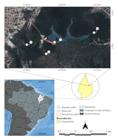
Study area map showing the sampling sites (C1–C4) in the Mata de Itamacaoca, municipality of Chapadinha, State of Maranhão, northeastern Brazil. The Itamacaoca Dam is highlighted in red.
Sampling sites with geographic coordinates and number of individuals per species collected at each site at Mata de Itamacaoca and their positions in relation to the dam (Above or Below), middle Munim River basin, State of Maranhão, northeastern Brazil. The absence of Saxatilia brasiliensis at site C4 is indicated by a dash (–).
Sampling occurred quarterly from August 2014 to February 2020, encompassing 22 sampling campaigns. Fish sampling was conducted at four sites (C1-C4) located in tributaries that feed the Mata de Itamacaoca reservoir within the middle Munim River basin, Maranhão, Brazil. All four sites were sampled concurrently during each campaign, ensuring consistent temporal coverage and minimizing seasonal bias (Figure 1, Table 1). While only site C3 is situated downstream of the dam and exhibits typical characteristics of a fragmented lotic environment, all sites are hydrologically connected to the reservoir and may be differentially influenced by dam-induced alterations in flow regime (Figure 1). Although only one site is directly affected by the dam, hydrological continuity among sites suggests that indirect effects may extend upstream (Medeiros et al., 2014; Jorge et al., 2019; Abbott et al., 2022). For the morphometric and trophic analyses presented herein, a subset of individuals from each species was selected to achieve approximately 40 specimens per species (Table 1). Individuals were drawn in balanced proportions from all four sampling sites to ensure spatial representation (Table 1). Temporal variation was not incorporated as a factor in the analyses; instead, data were aggregated across sampling dates to focus on spatial comparisons among sites. Although temporal variability was not directly analyzed, aggregating data across multiple years helps capture the general trophic and morphometric patterns representative of each site, rather than transient fluctuations. This approach allowed a robust assessment of trophic structure and morphometric variation across sites with varying degrees of dam influence, while avoiding pseudoreplication by treating individual specimens as independent spatial replicates.
Fish were captured using hand nets (80 cm length x 54 cm width, 2 mm mesh size) and seine nets (240 cm length x 100 cm height, 2 mm mesh size), following the methodologies outlined by Auricchio and Salomão (2002). The collection procedures adhered strictly to animal welfare guidelines, as established by Underwood and Anthony (2020). Specimens were euthanized using a solution of ethyl 3-amino-benzoate-methanesulfonate (MS-222) at a concentration of 250 mg/L until opercular movements ceased. After euthanasia, the specimens were preserved in 10% formalin for 10-15 days before being transferred to a 70% ethanol solution for long-term storage. All specimens were deposited in the Coleção Ictiológica do Centro de Ciências Agrárias e Ambientais of Universidade Federal do Maranhão (CICCAA) (Supplementary Material 1).
2.2. Stomach content analyses
To investigate trophic niches and morphometric variation, we examined the stomach contents of 117 individuals from three Cichlid species: Apistogramma piauiensis (n = 40); Cichlasoma cf. zarskei (n = 40); and Saxatilia brasiliensis (n = 37) (Supplementary Material 1; Table 1; Table 2). The frequency of occurrence (FO) of each food item was determined as the ratio of stomachs containing a specific item to the total stomachs examined (Hyslop, 1980). Dietary proportions were estimated visually using a grid-based method (Hyslop, 1980). Stomach contents were compressed to a consistent thickness of 0.5 mm, and the covered surface area was estimated by counting 1 mm2 grid squares. Proportions were rounded to 0.1% and expressed as percentages. Mean and standard deviation of prey proportions were calculated for each species, excluding empty stomachs. The modified feeding index (IAi) was calculated following Kawakami and Vazzoler (1980).
Trophic guild of the three Cichliform species employed in the variance in morphometrics and trophic niche, mean ± standard deviation (SD), median and range of all sampled Chicliform standard length (SL).
To simplify analysis, prey items were grouped into functional categories based on size, shape, and movement patterns, including insects, insect larvae, plant material, benthic arthropods, crustaceans, fish, and substrate (Table 3). The category substrate comprises inorganic and non-nutritive materials such as sediment, sludge and debris, which are considered to be incidentally ingested during foraging (Bowen, 1983; Fugi et al., 2001; Novakowski et al., 2016). Because substrate (sediment, sand, and inorganic material) does not represent intentional dietary intake, it was excluded from quantitative trophic analyses, including the Index of Alimentary Importance (IAi) and NMDS ordination, to avoid bias from incidental ingestion (Bowen, 1983; Hyslop, 1980). However, substrate was retained in descriptive diet analyses—such as relative proportions of dietary items, indicator species analysis, and SIMPER analysis—to ensure a complete representation of stomach content composition.
Alimentary importance index (IAi) of food items of each of three Cichliform species in Mata de Itamacaoca, middle Munim River basin, Brazil.
We also conducted an indicator species analysis using the indicspecies::multipatt function in R to determine which dietary components significantly contributed to the stomach contents of each species (alpha = 0.05) (Dufrêne and Legendre, 1997; De Cáceres et al., 2010). Non-Metric Multidimensional Scaling (nMDS) based on Bray-Curtis dissimilarity (vegan::metaMDS) was used to evaluate dietary overlap, with stress values <0.2 ensuring ordination quality. A PERMANOVA (999 permutations) was used to test whether there were species specific differences between resource consumption and the effect of the dam using a full interaction model. ANOSIM was used to test whether dietary differences between species was more than variation within species, and a SIMPER analysis was used to identify which resources contribute the most difference between the cichlid consumers. We also calculated Levins' index of dietary niche breadth (Levins, 1968) (Equation 1):
Where: B: Niche breadth index; pi: Proportion of resource i use relative to the total resources used; n: Total number of resource categories.
And Pianka’s index of niche overlap (Pianka, 1973) (Equation 2):
Where: Oij: Niche overlap index between species i and j; pik: Proportion of resource k used by species i; pjk: Proportion of resource k used by species j; n: Total number of resource categories.
Shannon diversity index (H) and prey richness (Sprich) were calculated to evaluate prey diversity and richness above and below the dam (Shannon, 1948). To further explore spatial variation in dietary composition, we also assessed prey richness and diversity at the individual site level (C1 to C4) for each species. All diversity calculations were based on volumetric data from stomach content analyses and were performed using the vegan package in R (Oksanen et al., 2022). Two Generalized Linear Models (GLMs) with a quasi-Poisson distribution were constructed to determine whether there were differences between cichlid species and dam location on H and Sprich. Initial models included a full interaction effect and which were removed if not significant. Model simplification was achieved via the R package “car” and Type 2 sum of squares and post-hoc differences established using “emmeans” (Lenth et al., 2020).
2.3. Morphometric analysis
To assess morphometric variation potentially related to trophic ecology among the three studied species, we adapted established protocols (Balon et al., 1986; Sibbing and Nagelkerke, 2000; Breda et al., 2005) to obtain 16 linear morphometric measurements from captured specimens (Figure 2; Supplementary Material 2; Table 2). These traits were selected based on previous evidence linking them to feeding performance, habitat use, and locomotion, which are important aspects influencing ecological niche differentiation (Supplementary Material 2). Measurements were taken using a digital caliper (accurate to two decimal places) and stereoscopic microscopy to ensure precision. To control for overall body size, Mosimann size correction method was applied (Jungers et al., 1995), dividing each trait by the geometric mean (GM) of all measured traits per individual to isolate shape variation. The GM was retained as an additional variable representing overall body size, preferred over standard length (SL) to better capture size-related variation (Nawa et al., 2024). Principal Component Analysis (PCA) on the correlation matrix of size-corrected traits was performed to explore morphometric differences among species. Statistical analyses were conducted using R software (R Core Team, 2021).

Schematic representation of a fish illustrating the linear morphometric measurements recorded from Cichliform species in the Mata de Itamacaoca, situated in the middle Munim River basin, northeastern Brazil. Adapted from Balon et al. (1986), Sibbing and Nagelkerke (2000). Illustration adapted from Novakowski et al. (2016).
3. Results
3.1. Dietary composition
A total of 29 distinct food items were recorded in the diets of the three Cichliform species (Table 3). Insects dominated the diets of Apistogramma piauiensis (49.6%) and Saxatilia brasiliensis (40.4%), while Cichlasoma cf. zarskei exhibited a more diverse diet with significant proportions of insects (29.4%), substrate (23.3%), and fish (19.6%) (Figure 3). Significant dietary indicators included substrate for Cichlasoma cf. zarskei (p = 0.001) and crustaceans for Saxatilia brasiliensis (p = 0.001) (Table 4). Fish and plant material were key indicators for both of Cichlasoma cf. zarskei and Saxatilia brasiliensis (p < 0.05) (Table 4).

Proportional contribution (volume) of feeding items grouped into categories related to the three Cichliform species, Mata de Itamacaoca, middle Munim River basin. The presence of substrate-related items (e.g., sediment, sludge and debris) reflects incidental ingestion during foraging rather than targeted feeding, while the overall dietary profile illustrates the trophic composition associated with each species.
All significant indicator resources of feeding items are grouped into categories related to each of the three Cichliform species. Indicator Value (stat): Higher values indicate a stronger association between the resource and the species. Resources in bold are those that were found to be statistically significant.
3.2. Dietary niche breadth and overlap
The nMDS analysis (stress = 0.15) showed dietary overlap between the three species (Figure 4). PERMANOVA indicated a weak but significant difference in diet composition between the three species, explaining 17% of the variation (F2,57 = 5.68; R2 = 0.17; p < 0.001) and no effect of the dam wall on stomach contents, while ANOSIM also indicated weak but significant differences in diet dissimilarity (R = 0.21, p = 0.001). The SIMPER analysis revealed that diet dissimilarity between Apistogramma piauiensis and Saxatilia brasiliensis was primarily driven by fish (cumulative contribution: 0.70) and insects (0.36) (Table 5). For Apistogramma piauiensis and Cichlasoma cf. zarskei, the main contributors were insects (0.27), substrate (0.50), and fish (0.71). The dissimilarity between Saxatilia brasiliensis and Cichlasoma cf. zarskei was mostly influenced by plant material (0.79), substrate (0.69), insects (0.52), and fish (0.28). (Table 5). Dietary niche breadth ranged from 1.90 for Apistogramma piauiensis to 3.48 for Saxatilia brasiliensis and 4.75 for Cichlasoma cf. zarskei. Saxatilia brasiliensis and Cichlasoma cf. zarskei exhibited the highest overlap (OP = 0.84). Apistogramma piauiensis showed a moderate overlap with both Saxatilia brasiliensis (OP = 0.68) and Cichlasoma cf. zarskei (OP = 0.70).

Non-metric multidimensional scaling of the resource use of Cichliform species of the Mata de Itamacaoca, middle Munim River basin. Shaded areas indicate trophic niche overlap.
Accumulated contributions (SIMPER) from the most influential food items to the dissimilarity in diet among cichlid species.
3.3. Effect of consumer and dam on resource consumption
There were no interaction effects between species and the dam wall on dietary Sprich and H (Figure 5; Figure 6). Species had a significant effect on Sprich (χ2=8.71, df=2, p<0.05) and H χ2=6.68, df=2, p<0.05) (Table 6). For Sprich, Apistogramma piauiensis had significantly lower Sprich than Saxatilia brasiliensis (z=2.640, p < 0.05) (Table 6). There was no significant difference between Cichlasoma cf. zarskei and Saxatilia brasiliensis (z = 0.383, p > 0.05) (Table 6). For H, Apistogramma piauiensis had significantly lower H than Saxatilia brasiliensis (z=2.440, p < 0.05) (Table 6). The difference between Apistogramma piauiensis and Cichlasoma cf. zarskei was not significant (z = 1.833, p > 0.05), and similarly, no significant difference was found between Cichlasoma cf. zarskei and Saxatilia brasiliensis (z = 0.699, p > 0.05) (Table 6). The dam wall had no effect on Sprich (χ2=0.56, df=1, p=0.45) or H χ2=0.07, df=1, p=0.77).(χ2=0.07, df=1, p=0.77).

Prey richness (Sprich) and Shannon-Wiener diversity (H) across sampling sites situated both above and below the dam wall. Boxplots represent the median and interquartile ranges, while individual points signify prey richness per site in the Mata de Itamacaoca.

(A) Variation in prey richness (S) across sampling sites and among cichlid species. (B) Prey diversity, based on the Shannon-Wiener index (H), across sampling sites for each species in the Mata de Itamacaoca.
Summary of GLMs used to determine differences in prey richness (Sprich) and Shannon-Weiner diversity index (H), with fish species as the independent variable. Significant p-values are highlighted in bold.
3.4. Morphometrics
The PCA explained 54% of the variance in morphometrics (Figure 7; Table 7). Saxatilia brasiliensis clustered distinctly, driven by traits such as head length (HL), oral gape width (GW), and standard length (SL). Cichlasoma cf. zarskei exhibited greater head depth (HD) and body depth (BD), while Apistogramma piauiensis was characterized by elongated dorsal fins (DFiL) and gill-related traits, including gill raker length (GiRL) and distance (GiRD) (Figure 7; Table 7).

Biplot of the Principal Component Analysis (PCA) showing the linear morphometric space among Cichliform species and variable loadings on the PC axes.
Abbreviation and Kendall correlation (tau Kendall) values were obtained for each linear morphometric variable the first and two axes (PC1 and PC2) of the principal component analysis (PCA). Values > 0.7 are in bold because they explain most of the morphometric patterns across the three Cichliform species.
4. Discussion
We conducted the first study using morphometrics and trophic analysis to compare three Cichliform species (Apistogramma piauiensis, Cichlasoma cf. zarskei, and Saxatilia brasiliensis), which coexist in a protected area of the Mata de Itamacaoca, located in the middle Munim River basin, State of Maranhão, northeastern Brazil. In total, seven species of the family Cichlidae are recorded in the basin (Vieira et al., 2023). However, the selection of the three species analyzed was based on their coexistence within this specific ecosystem, encompassing both areas upstream of the Itamacaoca Dam (reservoir) and downstream (the river stretch below the dam). This arrangement provides an ideal scenario for investigating ecological mechanisms associated with morphometric divergence and trophic strategies that favor the persistence of morphologically distinct species under the influence of interspecific competition (Burns and Sidlauskas, 2019). Despite its protected status, the area is subject to direct urban pressures (Oliveira et al., 2020, 2024). Although the sample size was modest, it was representative of the species within the study area, considering the limited extent of the Mata de Itamacaoca and its susceptibility to anthropogenic disturbances.
Although this study did not incorporate limnological or habitat structure variables, the focus on morphometric and dietary data allowed for a robust assessment of trophic differentiation among co-occurring cichlids. We acknowledge that integrating abiotic factors such as water quality, substrate type, or flow velocity could provide a more comprehensive understanding of the mechanisms underlying species coexistence and spatial variation (Jackson et al., 2001; Peres-Neto et al., 2006, Heino et al., 2017; Tonkin et al., 2017). Future studies should aim to include environmental predictors to better disentangle the relative contributions of biotic and abiotic drivers in fragmented Neotropical stream systems.
While we did not detect clear spatial differences in diet attributable solely to the dam, we recognize that trophic patterns may reflect the combined influence of dam-related changes and site-specific environmental conditions, such as flow regime, habitat complexity, and oxygen availability (see Abbott et al., 2022). The observation of the absence of a significant effect of the dam on dietary composition aligns with the protected status of the Mata de Itamacaoca, which helps maintain ecological integrity despite anthropogenic pressures (Silva et al., 2008; Oliveira et al., 2024). For example, the dam likely creates a more lentic environment upstream, fostering habitat complexity that supports a greater variety of prey types, such as benthic invertebrates and aquatic vegetation (Abbott et al., 2022). In addition, riparian and gallery forests likely mitigate the dam's impacts by stabilizing hydrological processes and supporting diverse prey availability, thereby buffering aquatic communities from severe ecological shifts (Turunen et al., 2021; Wuerges et al., 2024).
The presence of substrate in the stomach contents likely reflects incidental ingestion during benthic foraging activities, rather than intentional consumption (Bowen, 1983; Hyslop, 1980). While substrate was excluded from quantitative trophic analyses such as the Index of Alimentary Importance and NMDS ordination to prevent bias in the estimation of trophic structure and niche overlap, its inclusion in descriptive analyses—including dietary proportions, indicator species analysis, and SIMPER—allowed for a comprehensive representation of the stomach content composition. The occurrence of substrate thus provides indirect evidence of benthic foraging behavior and habitat use, particularly in species more associated with the bottom strata, and should not be overlooked when interpreting feeding ecology and ecological strategies in dam-influenced environments (Fugi et al., 2001).
Our results demonstrate distinct dietary patterns among the three cichlid species, accompanied by a degree of niche overlap. This pattern is likely facilitated by the ecosystem's abundant resources, which reduce interspecific competition. Similar patterns have been observed in the Paraná River basin (Dias et al., 2017) and other tropical freshwater systems (Lowe-McConnell, 1987; Correa and Winemiller, 2014), where high resource availability permits niche overlap without competitive exclusion. Grouping prey items facilitated analysis but may have obscured fine dietary differences between species, which could explain the high trophic niche overlap observed. More detailed methods in future studies could clarify these subtleties. These findings are consistent with the niche expansion hypothesis proposed by MacArthur and Levins (1967), which posits that under conditions of high resource availability, species can afford broader niches with partial overlap, reducing the intensity of interspecific competition. Our results are in contrast to Figueiredo et al. (2015) who found that low food availability during a drought limited cichlid dietary overlap as they were forced to partition resources. The broader niche breadth observed in Cichlasoma cf. zarskei, compared to Saxatilia brasiliensis and Apistogramma piauiensis, underscores its ecological generalist. Further understanding the different mechanisms of resource selection and foraging strategies between these species is needed to predict future changes in trophic interactions. This is the first documentation of Cichlasoma cf. zarskei foraging patterns and our data suggests that due to generalist feeding the species may be resilient to ecological change.
Typically, an in-stream barrier will retain nutrients and reduce the drift of macroinvertebrates downstream which allows the fish assemblage to feed at a higher trophic level (Pennock et al., 2021; Abbott et al., 2022). Although previous studies have reported changes in trophic structure following damming, particularly in relation to altered resource availability and prey community shifts (e.g., Jorge et al., 2019), we did not detect marked differences in prey richness or dietary diversity between upstream and downstream sites. This absence of strong spatial signal may reflect the ecological resilience of the system or the buffering effects of riparian integrity (Turunen et al., 2021; Wuerges et al., 2024), but it should be interpreted with caution, given the limited number of variables and spatial points considered in this study. In our study, similar resources dominated the diet of all species, such as insects, insect larvae, crustaceans, and plant material, which may reflect the current conditions imposed by altered flow regimes rather than a direct dietary shift (Jorge et al., 2019; Wuerges et al., 2024). Given the generalist feeding behavior of many cichlids (Arbour and López-Fernández, 2014; 2016), it is likely that these species are exploiting the most abundant and accessible resources available in the modified habitat. Moreover, the high habitat complexity observed in both the riparian zone and in-stream areas, due to the protection status of the site, may help sustain diverse invertebrate communities (Taniguchi et al., 2003; Fenstermacher et al., 2024), potentially buffering against more pronounced dietary shifts.
These subtle variations in resource use are likely influenced by morphometric differences among the cichlid assemblage. Morphological traits likely reflect species-specific adaptations that enhance the efficiency of capturing and processing dietary resources (Gatz Junior, 1979; Balon et al., 1986; Sibbing and Nagelkerke, 2000; Breda et al., 2005; Montaña and Winemiller, 2013; Novakowski et al., 2016; Garcia et al., 2020; Luger et al., 2020; Oliveira et al., 2024). All three species exhibit generalist feeding strategies both above and below the dam wall. Apistogramma piauiensis exhibits adaptations such as an elongated dorsal fin, longer gill rakers, and increased gill raker distance, which facilitate filtering small invertebrates like insects and larvae (Balon et al., 1986; Sibbing and Nagelkerke, 2000; Breda et al., 2005). Cichlasoma cf. zarskei is characterized by greater head and body depth, enabling the capture of larger prey (Balon et al., 1986; Sibbing and Nagelkerke, 2000; Breda et al., 2005). Saxatilia brasiliensis exhibits a larger head length, wider oral gape, and greater standard length—traits associated with a more predatory diet focused on fish and larger prey (Balon et al., 1986; Sibbing and Nagelkerke, 2000; Breda et al., 2005; Nagelkerke et al., 2018). Their diets reflect these adaptations, with S. brasiliensis feeding on fish, crustaceans, and insects. Although limited trophic data restricts comparisons with similar species, members of the genus Apistogramma Regan 1913 are generally opportunistic feeders influenced by environmental prey availability (Virgilio et al., 2020). Species of the genus Cichlasoma Swainson 1839 are omnivorous, consuming invertebrates and plant material (Gurgel et al., 2005), while studies on S. brasiliensis is more predatory, with a preference for small fish, crustaceans, and insects, with diet changes reflecting prey availability (Gurgel et al., 2005).
In conclusion, the dietary patterns and morphometric variation of these three cichliform species reflect a balance between trophic specialization and plasticity within the dynamic Cerrado ecosystem (Oliveira et al., 2024). The ecological integrity of the Mata de Itamacaoca, ensured by its protected status, plays a fundamental role in mediating species interactions and maintaining biodiversity despite anthropogenic pressures (Oliveira et al., 2020, 2024). he marked dietary niche overlap among species is likely shaped by multiple factors. While the abundance of insects—sustained by intact riparian vegetation—played a central role (Taniguchi et al., 2003; Turunen et al., 2021; Wuerges et al., 2024), other mechanisms may also contribute. The generalist feeding strategies of Neotropical cichlids (Arbour and López-Fernández, 2014) and the high availability of prey likely reduce interspecific competition, allowing species to share similar dietary niches (Vranken et al., 2020). In addition, grouping prey items into broader categories for analytical purposes may have masked finer-scale dietary differences, thereby inflating the observed trophic overlap. Stomach content analyses are also influenced by prey condition, as soft-bodied organisms are digested more quickly than those with exoskeletons (Buckland et al., 2017 which may explain the predominance of insects in the diets. Although fish were sampled quarterly over several years, data from all sampling events were pooled for analysis. This approach prioritized spatial comparisons of trophic structure across sites rather than temporal or seasonal variation. We acknowledge that this decision may limit the detection of temporal dietary shifts and short-term ecological responses. Future studies incorporating greater temporal resolution are recommended to better capture seasonal dynamics and refine our understanding of resource use and species interactions in dam-impacted Neotropical streams. The Itamacaoca Dam, inaugurated in 1982 and expanded in 2015, shifted from a partial barrier to a complete obstacle for fish movement between upstream and downstream populations. Combined with the loss and fragmentation of native vegetation—which threaten groundwater recharge and the springs that feed the reservoir—this transformation highlights the urgent need for integrated management measures to mitigate ecological impacts and preserve ecosystem resilience.
Supplementary Material
Supplementary material accompanies this paper.
Supplementary Material 1
Supplementary Material 2
This material is available as part of the online article from https://doi.org/10.1590/1519-6984.293810
Acknowledgements
We thank CAPES - Fundação Coordenação de Aperfeiçoamento de Pessoal de Nível Superior (Finance Code 001), and CNPq - Conselho Nacional de Desenvolvimento Científico e Tecnológico for the scholarships: CAPES grant 88887.699722/2022-00 to E.S.O., CAPES grant 88887.950525/2024-00 to L.O.V., and CNPq grants 307974/2021-9 and 306490/2024-2 to F.P.O. JS acknowledges funding from the UKRI Future Leaders Fellowship (Grant Number: MR/X035662/1).
Data Availability Statement
The research data are only available upon request to the corresponding author.
References
-
ABBOTT, K.M., ZAIDEL, P.A., ROY, A.H., HOULE, K.M. and NISLOW, K.H., 2022. Investigating impacts of small dams and dam removal on dissolved oxygen in streams. PLoS One, vol. 17, no. 11, pp. e0277647. http://doi.org/10.1371/journal.pone.0277647 PMid:36395280.
» http://doi.org/10.1371/journal.pone.0277647 -
ARBOUR, J.H. and LÓPEZ-FERNÁNDEZ, H., 2014. Adaptive landscape and functional diversity of Neotropical cichlids: Implications for the ecology and evolution of Cichlinae (Cichlidae; Cichliformes). Journal of Evolutionary Biology, vol. 27, no. 11, pp. 2431-2442. http://doi.org/10.1111/jeb.12486 PMid:25302771.
» http://doi.org/10.1111/jeb.12486 -
ARBOUR, J.H. and LÓPEZ-FERNÁNDEZ, H., 2016. Continental cichlid radiations: functional diversity reveals the role of changing ecological opportunity in the neotropics. Proceedings. Biological Sciences, vol. 283, no. 1836, pp. 20160556. http://doi.org/10.1098/rspb.2016.0556 PMid:27512144.
» http://doi.org/10.1098/rspb.2016.0556 - AURICCHIO, P. and SALOMÃO, M.G., 2002. Técnicas de coleta e preparação de vertebrados para fins científicos e didáticos 1. ed. São Paulo: Editora Instituto Pau Brasil de História Natural, 350 p.
-
BAKER, R., BUCKLAND, A. and SHEAVES, M., 2014. Fish gut content analysis: robust measures of diet composition. Fish and Fisheries, vol. 15, no. 1, pp. 170-177. http://doi.org/10.1111/faf.12026
» http://doi.org/10.1111/faf.12026 -
BALON, E.K., CRAWFORD, S.S. and LELEK, A., 1986. Fish communities of the upper Danube River (Germany, Austria) prior to the new Rhein-Main-Donan connection. Environmental Biology of Fishes, vol. 15, no. 4, pp. 243-271. http://doi.org/10.1007/BF03549796
» http://doi.org/10.1007/BF03549796 -
BOWEN, S.H., 1983. Detritivory in Neotropical fish communities. Environmental Biology of Fishes, vol. 9, no. 2, pp. 137-144. http://doi.org/10.1007/BF00690858
» http://doi.org/10.1007/BF00690858 -
BREDA, L., OLIVEIRA, E.F. and GOULART, E., 2005. Ecomorfologia de locomoção de peixes com enfoque para espécies neotropicais. Acta Scientiarum. Biological Sciences, vol. 27, no. 4, pp. 371-381. http://doi.org/10.4025/actascibiolsci.v27i4.1271
» http://doi.org/10.4025/actascibiolsci.v27i4.1271 -
BUCKLAND, A., BAKER, R., LONERAGAN, N. and SHEAVES, M., 2017. Standardising fish stomach content analysis: the importance of prey condition. Fisheries Research, vol. 196, pp. 126-140. http://doi.org/10.1016/j.fishres.2017.08.003
» http://doi.org/10.1016/j.fishres.2017.08.003 -
BURNS, M.D. and SIDLAUSKAS, B.L., 2019. Ancient and contingent body shap diversification in a hyperdiverse continental fish radiation. Evolution; International Journal of Organic Evolution, vol. 73, no. 3, pp. 569-587. http://doi.org/10.1111/evo.13658 PMid:30560991.
» http://doi.org/10.1111/evo.13658 -
CHESSON, P., 2000. Mechanisms of maintenance of species diversity. Annual Review of Ecology and Systematics, vol. 31, no. 1, pp. 343-366. http://doi.org/10.1146/annurev.ecolsys.31.1.343
» http://doi.org/10.1146/annurev.ecolsys.31.1.343 -
CORREA, S.B. and WINEMILLER, K.O., 2014. Niche partitioning among frugivorous fishes in response to fluctuating resources in the Amazonian floodplain forest. Ecology, vol. 95, no. 1, pp. 210-224. http://doi.org/10.1890/13-0393.1 PMid:24649660.
» http://doi.org/10.1890/13-0393.1 -
DALA-CORTE, R.B., MELO, A.S., SIQUEIRA, T., BINI, L.M., MARTINS, R.T., CUNICO, A.M., PES, A.M., MAGALHÃES, A.L.B., GODOY, B.S., LEAL, C.G., MONTEIRO-JÚNIOR, C.S., STENERT, C., CASTRO, D.M.P., MACEDO, D.R., LIMA-JUNIOR, D.P., GUBIANI, É.A., MASSARIOL, F.C., TERESA, F.B., BECKER, F.G., SOUZA, F.N., VALENTE-NETO, F., SOUZA, F.L., SALLES, F.F., BREJÃO, G.L., BRITO, J.G., VITULE, J.R.S., SIMIÃO-FERREIRA, J., DIAS-SILVA, K., ALBUQUERQUE, L., JUEN, L., MALTCHIK, L., CASATTI, L., MONTAG, L., RODRIGUES, M.E., CALLISTO, M., NOGUEIRA, M.A.M., SANTOS, M.R., HAMADA, N., PAMPLIN, P.A.Z., POMPEU, P.S., LEITÃO, R.P., RUARO, R., MARIANO, R., COUCEIRO, S.R.M., ABILHOA, V., OLIVEIRA, V.C., SHIMANO, Y., MORETTO, Y., SÚAREZ, Y.R. and ROQUE, F.O., 2020. Thresholds of freshwater biodiversity in response to riparian vegetation loss in the Neotropical region. Journal of Applied Ecology, vol. 57, no. 7, pp. 1391-1402. http://doi.org/10.1111/1365-2664.13657
» http://doi.org/10.1111/1365-2664.13657 -
DE CÁCERES, M., LEGENDRE, P. and MORETTI, M., 2010. Improving indicator species analysis by combining groups of sites. Oikos, vol. 119, no. 10, pp. 1674-1684. http://doi.org/10.1111/j.1600-0706.2010.18334.x
» http://doi.org/10.1111/j.1600-0706.2010.18334.x -
DIAS, R.M., ORTEGA, J.C.G., GOMES, L.C. and AGOSTINHO, A.A., 2017. Trophic relationships in fish assemblages of Neotropical floodplain lakes: selectivity and feeding overlap mediated by food availability. Iheringia. Série Zoologia, vol. 107, no. 0, pp. e2017035. http://doi.org/10.1590/1678-4766e2017035
» http://doi.org/10.1590/1678-4766e2017035 -
DUFRÊNE, M. and LEGENDRE, P., 1997. Species assemblages and indicator species: the need for a flexible asymmetrical approach. Ecological Monographs, vol. 67, no. 3, pp. 345-366. http://doi.org/10.2307/2963459
» http://doi.org/10.2307/2963459 -
DWIVEDI, A.K. and DE, K., 2024. Role of morphometrics in fish diversity assessment: Status, challenges and future prospects. National Academy Science Letters, vol. 47, no. 2, pp. 123-126. http://doi.org/10.1007/s40009-023-01323-x
» http://doi.org/10.1007/s40009-023-01323-x -
FENSTERMACHER, C.C., RADFORD, D.S., PORRECA, A.P., SASS, G.G. and PARKOS, J.J., 2024. Ecosystem responses to a whole-reservoir coarse woody habitat addition. Fisheries Management and Ecology, vol. 31, no. 6, pp. e12728. http://doi.org/10.1111/fme.12728
» http://doi.org/10.1111/fme.12728 -
FIGUEIREDO, B.R.S., ARAUJO, G.J.M., SILVA, M.J.D. and MEDEIROS, E.S.F., 2015. Implications of low food availability on resource partitioning among three species of Cichlidae (Pisces: Perciformes) in a Brazilian semi-arid reservoir. Acta Limnologica Brasiliensia, vol. 27, no. 1, pp. 93-104. http://doi.org/10.1590/S2179-975X3314
» http://doi.org/10.1590/S2179-975X3314 -
FORD, A.G., RÜBER, L., NEWTON, J., DASMAHAPATRA, K.K., BALARIN, J.D., BRUUN, K. and DAY, J.J., 2016. Niche divergence facilitated by fine-scale ecological partitioning in a recent cichlid fish adaptive radiation. Evolution; International Journal of Organic Evolution, vol. 70, no. 12, pp. 2718-2735. http://doi.org/10.1111/evo.13072 PMid:27659769.
» http://doi.org/10.1111/evo.13072 -
FREITAS, T.M.S., PRUDENTE, B.S. and MONTAG, L.F.A., 2022. Flood pulse influence on the feeding ecology of two Amazonian Auchenipterid catfishes. Neotropical Ichthyology, vol. 20, no. 1, pp. e210103. http://doi.org/10.1590/1982-0224-2021-0103
» http://doi.org/10.1590/1982-0224-2021-0103 -
FRICKE, R., ESCHMEYER, W.N. and FONG, J.D., 2025 [viewed 28 Jan 2025]. Species by family/subfamily [online]. The California Academy of Sciences. Available from: http://researcharchive.calacademy.org/research/ichthyology/catalog/SpeciesByFamily.asp
» http://researcharchive.calacademy.org/research/ichthyology/catalog/SpeciesByFamily.asp -
FUGI, R., AGOSTINHO, A.A. and HAHN, N.S., 2001. Trophic morphology of five benthic-feeding fish species of a tropical floodplain. Brazilian Journal of Biology = Revista Brasileira de Biologia, vol. 61, no. 1, pp. 27-33. http://doi.org/10.1590/S0034-71082001000100005 PMid:11340459.
» http://doi.org/10.1590/S0034-71082001000100005 -
GALVEZ, J.R., ST JOHN, M.E., MCLEAN, K., TOUOKONG, C.D., GONWOUO, L.N. and MARTIN, C.H., 2022. Trophic specialization on unique resources despite limited niche divergence in a celebrated example of sympatric speciation. Ecology Freshwater Fish, vol. 31, no. 4, pp. 675-692. http://doi.org/10.1111/eff.12661 PMid:36211622.
» http://doi.org/10.1111/eff.12661 -
GARCIA, T.D., QUIRINO, B.A., PESSOA, L.A., CARDOZO, A.L.P. and GOULART, E., 2020. Differences in ecomorphology and trophic niche segregation of two sympatric heptapterids (Teleostei: siluriformes). Acta Scientiarum. Biological Sciences, vol. 42, pp. 2-12. http://doi.org/10.4025/actascibiolsci.v42i1.49835
» http://doi.org/10.4025/actascibiolsci.v42i1.49835 -
GATZ JUNIOR, A.J., 1979. Community organization in fishes as indicated by morphological features. Ecology, vol. 60, no. 4, pp. 711-718. http://doi.org/10.2307/1936608
» http://doi.org/10.2307/1936608 -
GOMIERO, L.M., VILLARES JUNIOR, G.A. and NAOUS, F., 2010. Seasonal and ontogenetic variations in the diet of Cichla kelberi Kullander and Ferreira, 2006 introduced in an artificial lake in southeastern Brazil. Brazilian Journal of Biology = Revista Brasileira de Biologia, vol. 70, no. 4, pp. 1033-1037. http://doi.org/10.1590/S1519-69842010000500017 PMid:21180910.
» http://doi.org/10.1590/S1519-69842010000500017 -
GURGEL, H.C.B., SILVA, N.B., LUCAS, F.D. and SOUZA, L.L.G., 2005. Alimentação da comunidade de peixes de um trecho do rio Ceará Mirim, em Umari, Taipu, Estado do Rio Grande do Norte, Brasil. Acta Scientiarum. Animal Sciences, vol. 27, no. 2, pp. 229-233. http://doi.org/10.4025/actascianimsci.v27i2.1226
» http://doi.org/10.4025/actascianimsci.v27i2.1226 -
HEINO, J., SOININEN, J., ALAHUHTA, J., LAPPALAINEN, J. and VIRTANEN, R., 2017. Metacommunity ecology meets biogeography: effects of geographical region, spatial dynamics and environmental filtering on community structure in aquatic organisms. Oecologia, vol. 183, no. 1, pp. 121-137. http://doi.org/10.1007/s00442-016-3750-y PMid:27714463.
» http://doi.org/10.1007/s00442-016-3750-y -
HULSEY, C.D., ROBERTS, R.J., LIN, A.S.P., GULDBERG, R. and STREELMAN, J.T., 2008. Convergence in a mechanically complex phenotype: detecting structural adaptations for crushing in cichlid fish. Evolution; International Journal of Organic Evolution, vol. 62, no. 7, pp. 1587-1599. http://doi.org/10.1111/j.1558-5646.2008.00384.x PMid:18373629.
» http://doi.org/10.1111/j.1558-5646.2008.00384.x -
HUTCHINSON, G., 1957. Concluding remarks. Cold Spring Harbor Symposia on Quantitative Biology, vol. 22, no. 0, pp. 415-427. http://doi.org/10.1101/SQB.1957.022.01.039
» http://doi.org/10.1101/SQB.1957.022.01.039 -
HYSLOP, E.J., 1980. Stomach contents analysis: a review of methods and their application. Journal of Fish Biology, vol. 17, no. 4, pp. 411-429. http://doi.org/10.1111/j.1095-8649.1980.tb02775.x
» http://doi.org/10.1111/j.1095-8649.1980.tb02775.x -
IBÁÑEZ, A.L. and JAWAD, L.A., 2018. Morphometric variation of fish scales among some species of rattail fish from New Zealand waters. Journal of the Marine Biological Association of the United Kingdom, vol. 98, no. 8, pp. 1991-1998. http://doi.org/10.1017/S0025315418000024
» http://doi.org/10.1017/S0025315418000024 - JACKSON, D.A., PERES-NETO, P.R. and OLDEN, J.D., 2001. What controls who is where in freshwater fish communities: the roles of biotic, abiotic, and spatial factors. Canadian Journal of Fisheries and Aquatic Sciences, vol. 58, pp. 157-170.
-
JORGE, M.B., VILELA, M.J.A., SUAREZ, Y.R. and LIMA-JUNIOR, S.E., 2019. Changes in diet of a neotropical cichlid in response to river damming. Acta Scientiarum. Biological Sciences, vol. 41, no. 1, pp. 43880. http://doi.org/10.4025/actascibiolsci.v41i1.43880
» http://doi.org/10.4025/actascibiolsci.v41i1.43880 -
JUNGERS, W.L., FALSETTI, A.B. and WALL, C.E., 1995. Shape, relative size, and size-adjustments in morphometrics. American Journal of Physical Anthropology, vol. 38, no. 21, pp. 137-161. http://doi.org/10.1002/ajpa.1330380608
» http://doi.org/10.1002/ajpa.1330380608 -
KAWAKAMI, E. and VAZZOLER, G., 1980. Método gráfico e estimativa de índice alimentar aplicado no estudo de alimentação de peixes. Boletim do Instituto Oceanográfico, vol. 29, no. 2, pp. 205-207. http://doi.org/10.1590/S0373-55241980000200043
» http://doi.org/10.1590/S0373-55241980000200043 -
KOERBER, S., GUIMARÃES, E.C., BRITO, P.S., BRAGANÇA, P.H.N. and OTTONI, F.P., 2022 [viewed 29 Jan 2025]. Checklist of the freshwater fishes of Maranhão, Brazil (CLOFFBR-MA). Ichthyological Contributions of Peces Criollos [online], vol. 79, pp. 1-94. Available from: https://pecescriollos.de/wp-content/uploads/2022/01/ICP-79-Koerber-et-al-2022-CLOFFBR-MA-Freshwater-Fishes-of-Maranhao.pdf
» https://pecescriollos.de/wp-content/uploads/2022/01/ICP-79-Koerber-et-al-2022-CLOFFBR-MA-Freshwater-Fishes-of-Maranhao.pdf -
LENTH, R., BANFAI, B., BOLKER, B., BUERKNER, P., GINÉ-VÁZQUEZ, I., HERVÉ, M., JUNG, M., LOVE, J., MIGUEZ, F., PIASKOWSKI, J., RIEBL, H. and SINGMANN, H., 2020 [viewed 29 Jan 2025]. Emmeans: estimated marginal means, aka least-squares means. R package version 1.4.6. [software]. Vienna: R Core Team. Available at: https://CRAN.R-project.org/package=emmeans
» https://CRAN.R-project.org/package=emmeans -
LEVINS, R., 1968. Evolution in changing environments: some theoretical explorations Princeton: Princeton University Press. http://doi.org/10.1515/9780691209418
» http://doi.org/10.1515/9780691209418 -
LOWE-MCCONNELL, R.H., 1987. Ecological studies in tropical fish communities. Cambridge: Cambridge University Press. http://doi.org/10.1017/CBO9780511721892
» http://doi.org/10.1017/CBO9780511721892 -
LUBICH, C., AGUIAR-SANTOS, J., CORRÊA, F., FREITAS, C. and SIQUEIRA-SOUZA, F.K., 2024. Trophic ecology of Acestrorhynchus falcirostris Cuvier, 1819 in island lakes on the lower stretch of the Solimões River, Amazon Basin. Brazilian Journal of Biology = Revista Brasileira de Biologia, vol. 84, pp. e253852. http://doi.org/10.1590/1519-6984.253852 PMid:35081214.
» http://doi.org/10.1590/1519-6984.253852 -
LUGER, A.M., SOUTH, J., ALEXANDER, M.E., ELLENDER, B.R., WEYL, O.L.F. and NAGELKERKE, L.A.J., 2020. Ecomorphology of largemouth bass relative to a native trophic analogue explains its high invasive impact. Biological Invasions, vol. 22, no. 7, pp. 2223-2233. http://doi.org/10.1007/s10530-020-02252-2
» http://doi.org/10.1007/s10530-020-02252-2 -
MACARTHUR, R. and LEVINS, R., 1967. The limiting similarity, convergence, and divergence of coexisting species. American Naturalist, vol. 101, no. 921, pp. 377-385. http://doi.org/10.1086/282505
» http://doi.org/10.1086/282505 - MARANHÃO, 2018. Decreto Nº 05/2018, 23 de Março de 2018. Dispõe sobre a criação de área de Relevante Interesse Ecológico (Arie) Itamacaoca. Prefeitura Municipal de Chapadinha, Chapadinha, 23 Maio.
-
MCCARD, M., SOUTH, J., CUTHBERT, R.N., DICKEY, J.W.E., MCCARD, N. and DICK, J.T.A., 2021. Pushing the switch: functional responses and prey switching by invasive lionfish may mediate their ecological impact. Biological Invasions, vol. 23, no. 6, pp. 2019-2032. http://doi.org/10.1007/s10530-021-02487-7
» http://doi.org/10.1007/s10530-021-02487-7 -
MEDEIROS, E.R., PELICICE, F.M., AGOSTINHO, C.S. and MARQUES, E.E., 2014. Short-term changes in energy allocation by Hemiodontidae fish after the construction of a large reservoir (Lajeado Dam, Tocantins River). Neotropical Ichthyology, vol. 12, no. 3, pp. 649-658. http://doi.org/10.1590/1982-0224-20130186
» http://doi.org/10.1590/1982-0224-20130186 -
MEYER, A., 1990. Morphometrics and allometry in the trophically polymorphic cichlid fish, Cichlasoma citrinellum: alternative adaptations and ontogenetic changes in shape. Journal of Zoology, vol. 221, no. 2, pp. 237-260. http://doi.org/10.1111/j.1469-7998.1990.tb03994.x
» http://doi.org/10.1111/j.1469-7998.1990.tb03994.x -
MONTAÑA, C.G. and WINEMILLER, K.O., 2013. Evolutionary convergence in Neotropical Cichlids and Nearctic centrarchids: evidence from morphology, diet, and stable isotope analysis. Biological Journal of the Linnean Society. Linnean Society of London, vol. 109, no. 1, pp. 146-164. http://doi.org/10.1111/bij.12021
» http://doi.org/10.1111/bij.12021 -
MUSCHICK, M., INDERMAUR, A. and SALZBURGER, W., 2012. Convergent evolution within an adaptive radiation of cichlid fishes. Current Biology, vol. 22, no. 24, pp. 2362-2368. http://doi.org/10.1016/j.cub.2012.10.048 PMid:23159601.
» http://doi.org/10.1016/j.cub.2012.10.048 -
NAGELKERKE, L.A.J., VAN ONSELEN, E., VAN KESSEL, N. and LEUVEN, R.S.E.W., 2018. Functional feeding traits as predictors of invasive success of alien freshwater fish species using a food- fish model. PLoS ONE, vol. 13, no. 6, pp. 1-13. https://doi.org/10.1371/journal.pone.0197636
» https://doi.org/10.1371/journal.pone.0197636 -
NAWA, N., SOUTH, J., ELLENDER, B.R., PEGG, J., MADZIVANZIRA, T.C. and WASSERMAN, R.J., 2024. Complex selection processes on invasive crayfish phenotype at the invasion front of the Zambezi floodplains ecoregion. Freshwater Biology, vol. 69, no. 9, pp. 1322-1337. http://doi.org/10.1111/fwb.14308
» http://doi.org/10.1111/fwb.14308 -
NELSON, J.S., GRANDE, T.C. and WILSON, M.V.H., 2016. Fishes of the world 5th ed. Hoboken: John Wiley & Sons. http://doi.org/10.1002/9781119174844
» http://doi.org/10.1002/9781119174844 -
NOVAKOWSKI, G.C., CASSEMIRO, F.A.S. and HAHN, N.S., 2016. Diet and ecomorphological relationships of four cichlid species from the Cuiabá River basin. Neotropical Ichthyology, vol. 14, no. 3, pp. e150151. http://doi.org/10.1590/1982-0224-20150151
» http://doi.org/10.1590/1982-0224-20150151 - OKSANEN, J.F.G., BLANCHET, R., KINDT, P., LEGENDRE, P.R., MINCHIN, R.B., O’HARA, G.L., SIMPSON, P., SOLYMOS, M.H.H., STEVENS, M.H.H., WAGNER, H., BARBOUR, M., BEDWARD, M., BOLKER, B., BORCARD, D., BORMAN, T., CARVALHO, G., CHIRICO, M., CACERES, M., DURAND, S., EVANGELISTA, H.B.A., FITZJOHN, R., FRIENDLY, M., FURNEAUX, B., HANNIGAN, G., HILL, M.O., LAHTI, L., MARTINO, C., MCGLINN, D., OUELLETTE, M.H., CUNHA, E.R., SMITH, T., STIER, A., BRAAK, C.J.F.T. and WEEDON, J. 2022. vegan: Community Ecology Package. R package version 2.5-7 [software]. Vienna: R Core Team.
-
OTTONI, F.P., ÂNDRADE, M., HENSCHEL, E., AZEVEDO-SANTOS, V.M., PAVANELLI, C.S. and ALBERT, J.S., 2025. Editorial: Freshwater biodiversity crisis: multidisciplinary approaches as tools for conservation Volume II. Frontiers in Environmental Science, vol. 13, pp. 1613883. http://doi.org/10.3389/fenvs.2025.1613883
» http://doi.org/10.3389/fenvs.2025.1613883 -
OLIVEIRA, E.S., GUIMARÃES, E.C., BRITO, P.S., VIEIRA, L.O., OLIVEIRA, R.F., CAMPOS, D.S., KATZ, A.M., SOUTH, J., NUNES, J.L.S. and OTTONI, F.P., 2020. Ichthyofauna of the Mata de Itamacaoca, an urban protected area from the upper Munim River basin, Northern Brazilian Cerrado. Biota Neotropica, vol. 20, no. 4, pp. 1-14. http://doi.org/10.1590/1676-0611-bn-2020-1116
» http://doi.org/10.1590/1676-0611-bn-2020-1116 -
OLIVEIRA, E.S., SOUTH, J., GUIMARÃES, E.C., VIEIRA, L.O., CAMPOS, D.S. and OTTONI, F.P., 2024. Characterizing functional morphology and trophic niches in a neotropical Characiforms (Actinopterygii: Teleostei) assemblage in middle Munim River basin, Maranhão, Brazil. Brazilian Journal of Biology = Revista Brasileira de Biologia, vol. 84, e279881. http://doi.org/10.1590/1519-6984.279881 PMid:38422299.
» http://doi.org/10.1590/1519-6984.279881 -
OTTONI, F.P., SOUTH, J., AZEVEDO-SANTOS, V.M., HENSCHEL, E. and DE BRAGANÇA, P.H.N., 2023. Editorial: Freshwater biodiversity crisis: Multidisciplinary approaches as tools for conservation. Frontiers in Environmental Science, vol. 11, pp. 1155608. http://doi.org/10.3389/fenvs.2023.1155608
» http://doi.org/10.3389/fenvs.2023.1155608 -
PENNOCK, C.A., AHRENS, Z.T., MCKINSTRY, M.C., BUDY, P. and GIDO, K.B., 2021. Trophic niches of native and nonnative fishes along a river-reservoir continuum. Scientific Reports, vol. 11, no. 1, pp. 12140. http://doi.org/10.1038/s41598-021-91730-1 PMid:34108584.
» http://doi.org/10.1038/s41598-021-91730-1 -
PERES-NETO, P.R., LEGENDRE, P., DRAY, S. and BORCARD, D., 2006. Variation partitioning of species data matrices: estimation and comparison of fractions. Ecology, vol. 87, no. 10, pp. 2614-2625. http://doi.org/10.1890/0012-9658(2006)87[2614:VPOSDM]2.0.CO;2 PMid:17089669.
» http://doi.org/10.1890/0012-9658(2006)87[2614:VPOSDM]2.0.CO;2 -
PIANKA, E.R., 1973. The Structure of Lizard Communities. Annual Review of Ecology and Systematics, vol. 4, no. 1, pp. 53-74. http://doi.org/10.1146/annurev.es.04.110173.000413
» http://doi.org/10.1146/annurev.es.04.110173.000413 - R CORE TEAM, 2021. R: A language and environment for statistical computing Vienna: R Foundation for Statistical Computing.
-
REIS, R.E., ALBERT, J.S., DI DARIO, F., MINCARONE, M.M., PETRY, P. and ROCHA, L.A., 2016. Fish biodiversity and conservation in South America. Revista Brasileira de Biologia, vol. 89, no. 1, pp. 12-47. http://doi.org/10.1111/jfb.13016 PMid:27312713.
» http://doi.org/10.1111/jfb.13016 -
SHANNON, C.E., 1948. A mathematical theory of communication. The Bell System Technical Journal, vol. 27, no. 3, pp. 379-423. http://doi.org/10.1002/j.1538-7305.1948.tb01338.x
» http://doi.org/10.1002/j.1538-7305.1948.tb01338.x -
SIBBING, F.A. and NAGELKERKE, L.A., 2000. Resource partitioning by Lake Tana barbs predicted from fish morphometrics and prey characteristics. Reviews in Fish Biology and Fisheries, vol. 10, no. 4, pp. 393-437. http://doi.org/10.1023/A:1012270422092
» http://doi.org/10.1023/A:1012270422092 -
SIH, A., BROWN, B., KIKUCHI, D., PULSFORD, S., ROPER, K., SCHINDLER, D. and LAM, J., 1985 [viewed 29 Jan 2025]. Predation, competition, and prey communities: a review of the role of predation in community structure. Ecology [online], vol. 66, no. 5, pp. 1420-1432. Available from: http://www.jstor.org/stable/2097050
» http://www.jstor.org/stable/2097050 - SILVA, A.L.G., MARTINS, F., SANTOS, R. and NUNES, J.L.S., 2008. Conservação da Reserva da Itamacaoca de Chapadinha/MA. In: J.F. SELBACH and J.R.S.A. LEITE, eds. Meio ambiente no Baixo Parnaíba: olhos no mundo, pés na região São Luís: EDUFMA, pp. 97-104.
-
TANIGUCHI, H., NAKANO, S. and TOKESHI, M., 2003. Influences of habitat complexity on the diversity and abundance of epiphytic invertebrates on plants. Freshwater Biology, vol. 48, no. 4, pp. 718-728. http://doi.org/10.1046/j.1365-2427.2003.01047.x
» http://doi.org/10.1046/j.1365-2427.2003.01047.x -
TICKNER, D., OPPERMAN, J.J., ABELL, R., ACREMAN, M., ARTHINGTON, A.H., BUNN, S.E., COOKE, S.J., DALTON, J., DARWALL, W., EDWARDS, G., HARRISON, I., HUGHES, K., JONES, T., LECLÈRE, D., LYNCH, A.J., LEONARD, P., MCCLAIN, M.E., MURUVEN, D., OLDEN, J.D., ORMEROD, S.J., ROBINSON, J., THARME, R.E., THIEME, M., TOCKNER, K., WRIGHT, M. and YOUNG, L., 2020. Bending the curve of global freshwater biodiversity loss: an emergency recovery plan. Bioscience, vol. 70, no. 4, pp. 330-342. http://doi.org/10.1093/biosci/biaa002 PMid:32284631.
» http://doi.org/10.1093/biosci/biaa002 -
TONKIN, J.D., BOGAN, M.T., BONADA, N., RIOS-TOUMA, B. and LYTLE, D.A., 2017. Seasonality and predictability shape temporal species diversity. Ecology, vol. 98, no. 5, pp. 1201-1216. http://doi.org/10.1002/ecy.1761 PMid:28144975.
» http://doi.org/10.1002/ecy.1761 -
TURUNEN, J., ELBRECHT, V., STEINKE, D. and AROVIITA, J., 2021. Riparian forests can mitigate warming and ecological degradation of agricultural headwater streams. Freshwater Biology, vol. 66, no. 4, pp. 785-798. http://doi.org/10.1111/fwb.13678
» http://doi.org/10.1111/fwb.13678 -
UNDERWOOD, W. and ANTHONY, R., 2020 [viewed 1 November 2022]. AVMA guidelines for the euthanasia of animals: 2020 edition [online]. Schaumburg: AVMA. Available from: https://www.avma.org/sites/default/files/2020-01/2020-Euthanasia-Final-1-17-20.pdf</bok
» https://www.avma.org/sites/default/files/2020-01/2020-Euthanasia-Final-1-17-20.pdf</bok -
VIEIRA, L.O., CAMPOS, D.S., OLIVEIRA, R.F., SOUTH, J., COELHO, M.S.P., PAIVA, M.J.S., BRAGANÇA, P., GUIMARÃES, E., KATZ, A., BRITO, P., SANTOS, J. and OTTONI, F.P., 2023. Checklist of the fish fauna of the Munim River Basin, Maranhão, north-eastern Brazil. Biodiversity Data Journal, vol. 11, pp. e98632. http://doi.org/10.3897/BDJ.11.e98632 PMid:38327355.
» http://doi.org/10.3897/BDJ.11.e98632 -
VIRGILIO, L.R., BRITO, C.H., SUÇUARANA, M.S. and VIEIRA, L.J.S., 2020. Forest fragmentation influences the diet of cichlids Apistogramma agassizii (Steindachner, 1875) and Aequidens tetramerus (Heckel, 1840) (Actinopterygii: Cichliformes) in streams of the Western Amazon. Acta Limnologica Brasiliensia, vol. 32, pp. e28. http://doi.org/10.1590/s2179-975x2618
» http://doi.org/10.1590/s2179-975x2618 -
VRANKEN, N., VAN STEENBERGE, M. and SNOEKS, J., 2020. Similar ecology, different morphology: three new species of oral-mollusc shellers from Lake Edward. Journal of Fish Biology, vol. 96, no. 5, pp. 1202-1217. http://doi.org/10.1111/jfb.14107 PMid:31338837.
» http://doi.org/10.1111/jfb.14107 -
WUERGES, M., MANTOVANI-SILVA, E., PERONI, N. and LUÍS HETTWER GIEHL, E., 2024. Local heterogenisation and regional homogenisation linked to habitat loss induced by dams in riparian forests of the Brazilian Atlantic Forest. Scientific Reports, vol. 14, no. 1, pp. 25240. http://doi.org/10.1038/s41598-024-76747-6 PMid:39448769.
» http://doi.org/10.1038/s41598-024-76747-6
Edited by
-
Editor:
Elisabeth Henschel


