 Vegetative growth and morphological aspects of Stylosanthes spp. (Fabaceae) under water deficit conditions
Abstract
The objective of this study was to evaluate the growth and morphological characteristics of Stylosanthes spp. under water deficit conditions. The experiment was conducted under different levels of water availability (60%, 40% and 20%) and involved two genotypes: the accession BGF 11-001, from the Forage Germplasm Bank of the State University of Feira de Santana (UEFS), and the cultivar BRS-Bela. A completely randomized design was used, arranged in a 3×2 factorial scheme. Vegetative growth was monitored, and morpho-functional and morphological traits were measured at the end of the experiment. BGF 11-001 showed reduced leaf sprouting intensity even under ideal water availability, with a more pronounced decrease at 20% availability. In contrast, the Bela genotype showed a reduction only at 20%. Regarding mature leaves, BGF 11-001 maintained a constant intensity, while Bela showed a reduction under all conditions, especially at 20%. The studied genotypes exhibited morpho-functional traits associated with tolerance to water deficit, with the BGF 11-001 accession demonstrating superior productive performance under all water availability levels. However, both genetic materials showed reduced biomass production under water deficit conditions. These results indicate the potential of the BGF 11-001 accession for use in regions with varying water availability, contributing to the selection of genotypes more resilient to water stress.
Keywords:
BRS-Bela; forage legume; Stylosanthes viscosa; Stylosanthes guianensis; drought tolerance
Resumo
O objetivo deste estudo foi avaliar o crescimento as características morfológicas de Stylosanthes spp. sob condições de déficit hídrico. O experimento foi conduzido utilizando diferentes níveis de disponibilidade hídrica (60%, 40% e 20%) e dois genótipos: o acesso BGF 11-001, proveniente do Banco de Germoplasma de Forrageiras da Universidade Estadual de Feira de Santana, e a cultivar BRS-Bela. O delineamento experimental foi inteiramente casualizado, em esquema fatorial 3×2. Houve monitoração do crescimento vegetativo e características morfofuncionais e morfológicas foram mensuradas ao final do experimento. O BGF 11-001 reduziu a intensidade da brotação foliar mesmo com água ideal, com queda mais acentuada a 20% de disponibilidade. Já o genótipo Bela teve redução apenas a 20%. Quanto à folha madura, o BGF 11-001 manteve intensidade constante, enquanto a Bela apresentou redução em todas as condições, especialmente a 20%. Os genótipos estudados exibiram características morfofuncionais associadas à tolerância ao déficit hídrico; o acesso BGF 11-001 que apresentou desempenho produtivo superior à Bela em todas as disponibilidades hídricas. Contudo, ambos os materiais genéticos apresentaram redução na produção de biomassa em condições de déficit hídrico. Esses resultados indicam o potencial do acesso BGF 11-001 para uso em regiões com variação na disponibilidade hídrica, contribuindo para a seleção de genótipos mais resilientes ao estresse hídrico.
Palavras-chave:
BRS-Bela; forrageira leguminosa; Stylosanthes viscosa; Stylosanthes guianensis; tolerância à seca
1. Introduction
Water is a vital molecule for sustaining plant life, as it participates in numerous physiological processes and serves as a key regulator of plant metabolism (Oo et al., 2020; Poddar et al., 2023). Water deficit, characterized by reduced water availability, triggers a cascade of physiological and morphological changes in plants, which can impact both their structure and functional traits (Violle et al., 2007; Neves et al., 2022; Santos et al., 2021). Such changes may include accelerated senescence, leaf abscission, and reduced vegetative growth (Wang et al., 2021; Cruz et al., 2023; Alzoheiry, 2024), as well as reductions in wood or leaf density – adaptations that enhance the plant's capacity to retain water (Freitas et al., 2024; Pereira et al., 2024).
Tropical forests and seasonally dry tropical forests and woodlands (SDTFW), sensuQueiroz et al. (2017), are common in arid or semi-arid regions of Africa and South America (Fernandes et al., 2020), typically occurring on fertile soils, with low annual precipitation, extended dry seasons, and strong seasonality (Pennington et al., 2000). One-third of the total area of SDTFW in South America is found in the Brazilian Semi-arid region (SAB), known as the Caatinga biome (Queiroz et al., 2017), which primarily covers northeastern Brazil – occupying about 12% of the country’s territory (IBGE, 2021). In this region, agriculture and grazing are particularly challenging (Miles et al., 2006), mainly due to negative water balances throughout the year, caused by high temperatures and poorly distributed rainfall (Nunes et al., 2022).
From this perspective, agricultural activity, which depends on water for its sustainability, is directly affected by the climatic conditions of the SAB, given that both crop and livestock production are negatively impacted, especially during the dry seasons of the year (Cirilo et al., 2017). Moreover, this region is home to approximately 50% of the country's family farming establishments (Vilela et al., 2019), and since these are exposed to the aforementioned climatic constraints, they often face productivity limitations, which in turn negatively influence the region’s socioeconomic development.
Livestock production in the SAB plays a significant role in the national economy, as the region holds 65% of the country’s sheep herd and 90% of its goat herd, in addition to supporting approximately 40 million head of cattle (IBGE, 2018). Most of this livestock is raised under extensive systems, relying on pastures with low forage availability, especially during periods of water scarcity (Souza et al., 2020). Furthermore, there are few studies focused on the development of forage cultivars adapted to the climate of the SAB and, in this context, it is essential to identify genotypes that are adapted to water deficit conditions and capable of maintaining satisfactory productive performance under such environmental constraints.
Stylosanthes Sw. is a genus belonging to the family Fabaceae Lindl. and is widely distributed across the America. Brazil is considered the main center of diversity for this genus, with 38 species recorded in the Flora e Funga do Brasil (JBRJ, 2025). Moreover, many of these species are classified as Plant Genetic Resources, as they are potential forage plants with high biomass yield and protein content ranging from 12% to 20%, in addition to their adaptability to acidic soils, low fertility, and water deficit conditions (Gonzalez et al., 2000; Liu et al., 2019; Cook and Schultze-Kraft, 2020).
Among the species of the Stylosanthes genus, six are predominantly used as forage legumes (Singh et al., 2018). Of these, Stylosanthes guianensis (Aubl.) Sw. is the most widely cultivated due to its high biomass production, favorable nutritional profile, and broad edaphoclimatic adaptability (Tropical Forages, 2020). Stylosanthes viscosa (L.) Sw., although less widespread, presents promising agronomic traits, such as greater hardiness and potential drought tolerance, making it relevant in the context of increasing water scarcity (Singh et al., 2018). These attributes are particularly important for cultivation in SAB, and part of the genetic variability present in this region is conserved in the Germplasm Bank of the State University of Feira de Santana (BGF-UEFS) (Santos Júnior et al., 2022); however, its expression in morphological traits has been little explored.
Several studies have investigated the performance of Stylosanthes species under water deficit conditions, highlighting physiological and agronomic responses that indicate their potential for cultivation in drought-prone regions (Nagaich et al., 2013; Habermann et al., 2021; Ferreira-Neto et al., 2022). However, further research is still needed to deepen the understanding of tolerance mechanisms and to support the development of more drought-adapted genetic materials suitable for semi-arid and water-limited environments.
Considering the importance of in-depth studies on the expression of productive traits in Stylosanthes in the SAB, especially under water deficit conditions, this study focused specifically on drought tolerance – a critical factor for future plant breeding programs targeting semi-arid regions. In this context, we conducted growth and morphological evaluations of Stylosanthes spp. genotypes under water deficit conditions, aiming to contribute to the development of forage materials adapted to the climatic conditions of the SAB and capable of tolerating water-limited environments.
2. Materials and Methods
2.1. Plant material and growth conditions
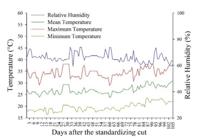
The experiment was conducted in a greenhouse at the Horto Florestal Experimental Unit of the UEFS, located at coordinates 12°16’7.99”S and 38°56’21.63”W, with an altitude of 258 m. Climatic data were obtained using a thermo-hygrometer installed inside the greenhouse, with the information presented in Figure 1. Two genotypes were evaluated in the experiment: accession BGF 11-001 (S. viscosa), collected in the municipality of Conceição do Coité, Bahia, at coordinates 11°36’20”S and 39°09’52.1”W, and conserved at BGF-UEFS; and the cultivar BRS-Bela (S. guianensis), developed by the Brazilian Agricultural Research Corporation (EMBRAPA).
The substrate used was collected from the soil of the Horto Florestal Experimental Unit, from the 0–20 cm layer, and exhibited the following physico-chemical properties: pH = 6.1 in water; P = 32.0 mg/dm3; K = 140.0 mg/dm3; S = 11.0 mg/dm3; Fe = 57.0 mg/dm3; Zn = 6.2 mg/dm3; Cu = 0.8 mg/dm3; Mn = 13.9 mg/dm3; B = 0.27 mg/dm3; Ca = 2.6 cmolc/dm3; Mg = 0.7 cmolc/dm3; H+Al = 1.8 cmolc/dm3; organic matter (OM) = 2.95 dag/kg; base saturation (V) = 66%. Regarding physical properties (particle size fractions), the values were: sand = 660 g/kg; silt = 85 g/kg; clay = 288 g/kg, characterizing a sandy clay loam texture. According to the recommendations of the Fertilization and Liming Manual for the State of Minas Gerais (5th approximation), to meet the phosphorus requirements, 0.7 g of single superphosphate was applied to each experimental unit. Pot capacity was determined following the method described by Bonfim-Silva et al. (2011), using pots of the same volume as in the experiment (8 L), filled with 8 kg of air-dried fine soil.
2.2. Experimental procedure
Seeds of accession BGF 11-001 were scarified with sandpaper (no. 150) to overcome seed coat dormancy. For BRS-Bela, this procedure was unnecessary because mechanical harvesting and seed processing damaged the seed coat, allowing seed imbibition. Subsequently, seeds from both genotypes were disinfected with a 0.5% sodium hypochlorite solution for 10 min, rinsed with distilled water, and placed in Petri dishes containing germination paper moistened with distilled water for germination. The dishes were kept for 3 days in a B.O.D. growth chamber at 30 °C with a 12-hour photoperiod. Seeds that showed radicle emergence were then transferred to the respective pots used for the experiment. Each pot received five seeds.
During the first 55 days of cultivation, the seedlings were maintained at 60% pot capacity, with irrigation performed as needed. After this period, thinning was carried out, retaining only the most vigorous individual in each pot, and a uniformity cut was then applied, with plants trimmed to a height of 15 cm. Subsequently, pot capacity was maintained at 60% for an additional 50 days to allow for proper plant establishment. After this period, water availability treatments were applied by adjusting pot capacity to 60%, 40%, and 20%. The cultivation was concluded after 55 days of exposure to these water regimes.
2.3. Experimental measurements
Three days after the uniformity cut, vegetative growth monitoring began on 12 individuals per treatment, carried out from 07/20/2024 to 10/28/2024, with observations taken at three-day intervals. The monitoring followed the methodology proposed by Fournier (1974), which is based on a semi-quantitative scale from 0 to 4, where: 0 = absence of the phenophase; 1 = 1% to 25% presence; 2 = 26% to 50% presence; 3 = 51% to 75% presence; and 4 = 76% to 100% presence. Leaf buds was recorded by the presence of newly emerged, underdeveloped leaves; Mature Leaf were defined as those fully expanded; and Leaf Fall was identified by chlorophyll degradation and leaf abscission.
The remaining experimental analyses were carried out at the end of the experiment. The descriptors of Stem Dry Mass (SDM, g) and Leaf Dry Mass (LDM, g) were obtained by segmenting the plant parts, followed by drying in a forced-air oven at 55 °C for 72 hours and subsequent weighing on an analytical balance. Total Dry Mass (TDM, g) was calculated as the sum of SDM and LDM. The Leaf/Stem ratio (L/S) was determined by dividing LDM by SDM. Throughout the water regime period, senescent leaf material was collected, and at the end of the experiment, the Dry Mass of Fallen Leaves (DMFL, g) was measured. Based on these data, the Percentage of Dry Mass of Fallen Leaves (DMFL%) was calculated in relation to the total leaf production.
The Collar Diameter (CD, mm) was measured using a digital caliper positioned just above the soil surface. Primary Branch Length (PBL, cm), Central Axis Length (CAL, cm), and Plant Height (PH, cm) were measured with a millimeter ruler; plant height was defined as the distance from the base of the plant to the uppermost leaf. The Number of Branches (NB, units) was determined by direct counting. Central Leaflet Length (CLL, mm), Central Leaflet Width (CLW, mm), Lateral Leaflet Length (LLL, mm), and Lateral Leaflet Width (LLW, mm) were measured with a digital caliper, using as a standard the tenth leaf on the primary branch, counted from the point of intersection with the central axis. Leaf Area (LA) was estimated based on the collection of 10 leaves per individual, which were scanned using a leaf area meter (LI-3100C), and then dried in a forced-air oven at 55 °C for 72 hours. After drying, the leaf dry mass (g) was determined using an analytical balance, and LA was indirectly estimated based on its relationship with leaf dry mass.
To measure leaf traits, 10 fully expanded leaves were collected, and a disc was extracted from each using a metal punch (DD = 0.1063 cm2) excluding the midrib. The discs were submerged in distilled water for 24 hours, then placed on paper towels to remove excess moisture. After this period, the Saturated Weight of the sample (SW, mg) was determined using an analytical balance, and Leaf Thickness (LT, mm) was measured with a digital caliper. The discs were then placed in paper bags and dried in a forced-air oven at 55 °C for 72 hours, followed by a second weighing to determine the Dry Weight (DW, mg). Using these data, the following variables were calculated: Leaf Mass Per Unit Area (LMA = SW / DD, mg·mm−3); Succulence (SUC = (SW − DW) / DD, g·cm−2); and Leaf Density (LD = LMA / LT, mg·mm−3).
To determine Stem Density (SD, g·cm−3), segments approximately 5 cm in length were collected from the middle third of the plants. The samples were submerged in distilled water for 72 hours to allow full saturation. After this period, sample volume was determined using the Archimedes’ principle by immersing each section in a beaker filled with distilled water placed on a precision electronic balance (Trugilho et al., 1990). The weight of the displaced water, corresponding to the stem volume, was recorded. The samples were then dried in a forced-air oven at 55 °C for 5 days, and dry mass was measured (Barbosa and Ferreira, 2004). SD was calculated as the ratio between dry mass and volume (Ilic et al., 2000), and classified according to Borchert (1994).
2.4. Experimental design and data analysis
The experiment was conducted in a completely randomized design, in a 3×2 factorial scheme, consisting of three water regimes and two genotypes. Both factors were considered qualitative, since the water availability levels of 20%, 40%, and 60% correspond to severe drought, moderate drought, and optimal water supply, respectively. For the assessment of vegetative development, 12 plants were monitored, while the measurement of morphological traits was performed on 6 randomly selected individuals.
Prior to data analysis, tests were performed to verify the assumptions required for analysis of variance (ANOVA). The Shapiro-Wilk test was used to assess the normality of residuals, while Bartlett’s test evaluated the homoscedasticity of variances. As the assumptions were not met for the variable DMFL%, data were transformed using the arcsine square root function: arcsin√(x/100). Once the assumptions were satisfied, ANOVA was performed at a significance level of p ≤ 0.05. When a significant interaction between factors was detected, multiple comparisons were conducted using Tukey’s test (p ≤ 0.05). Additionally, principal component analysis (PCA) was performed to explore the relationships between treatments and the variables analyzed. To evaluate the relationship between the intensity of vegetative phenophases and water availability levels, Spearman’s nonparametric correlation test was used, due to the lack of residual normality in the phenophase data. All analyses were performed using R statistical software (version 2024.12.0+467) (R Core Team, 2024).
3. Results
Variation in leaf buds intensity was observed between genotypes and water availability levels (Figure 2). The BGF 11-001 accession (Figure 2A) showed a reduction in budding across all treatments after the onset of water restrictions, with the most pronounced decrease under 20% pot capacity (52.08%), and earlier than in the other regimes. In contrast, the Bela cultivar showed little variation under 40% and 60% water availability, but under 20% there was a reduction, reaching 75% intensity.

Intensity of leaf buds in Stylosanthes spp. plants cultivated under different water availability levels. (A) accession BGF 11-001 (S. viscosa); (B) Cultivar BRS-Bela (S. guianensis).
In the mature leaf phenophase (Figure 3), the BGF 11-001 accession (Figure 3A) maintained consistent intensity across all water regimes, remaining mostly at 100% intensity throughout the treatment period. In contrast, the Bela cultivar (Figure 3B) showed variations in the intensity of this phenophase over the observation period. These fluctuations occurred under all water availability levels, with more pronounced reductions in plants grown under the lowest water availability (20%).
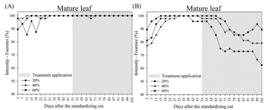
Intensity of mature leaves in Stylosanthes spp. plants cultivated under different water availability levels. (A) accession BGF 11-001 (S. viscosa); (B) Cultivar BRS-Bela (S. guianensis).
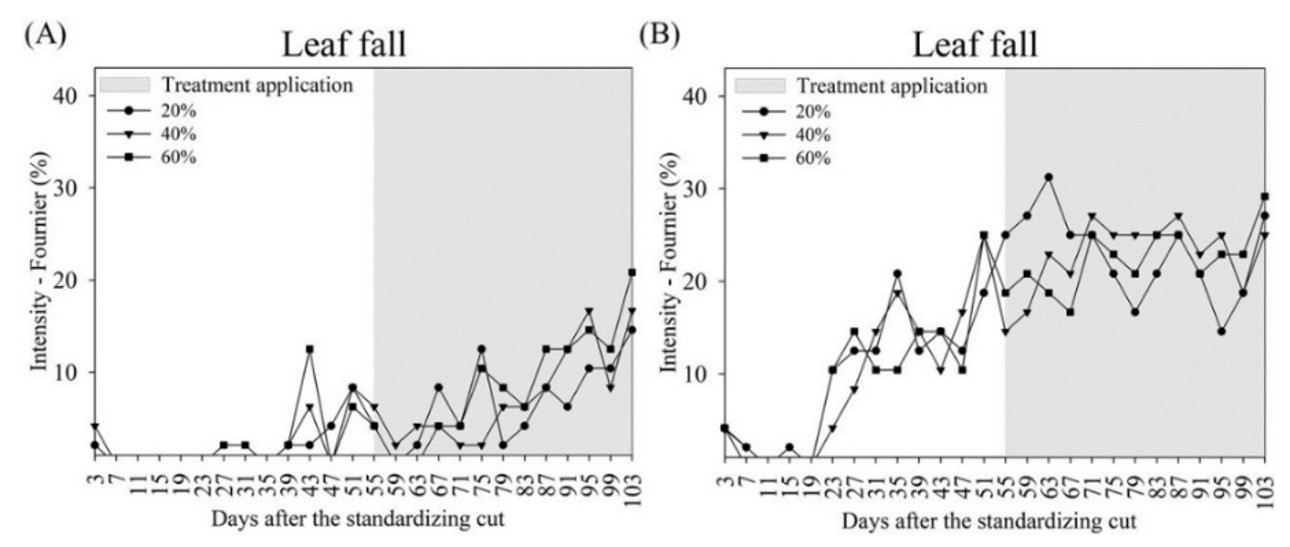
Regarding leaf fall (Figure 4), both genotypes exhibited low intensity of this phenophase under all water availability levels. However, the Bela cultivar (Figure 4B) showed difference compared to the BGF 11-001 accession (Figure 4A). For both genotypes, no major differences were observed among water regimes within each material, as the intensity of leaf fall varied throughout the experimental period.
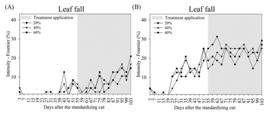
Intensity of leaf fall in Stylosanthes spp. plants cultivated under different water availability levels. (A) accession BGF 11-001 (S. viscosa); (B) Cultivar BRS-Bela (S. guianensis).
The correlation analysis (Figure 5) revealed distinct association patterns between phenophases and water availability in the evaluated genotypes. For the BGF 11-001 genotype (Figure 5A), leaf buds showed a weak positive correlation with water availability (rs = 0.34, p ≤ 0.01), while the mature leaf and leaf abscission phenophases did not show significant correlations with water availability levels (p > 0.05). In the Bela cultivar (Figure 5B), leaf buds exhibited a strong positive correlation (rs = 0.81, p ≤ 0.01) with water availability, and the mature leaf phenophase showed a moderate correlation (rs = 0.65, p ≤ 0.01); as observed in BGF 11-001, leaf fall showed no significant correlation (p > 0.05) with water availability levels.
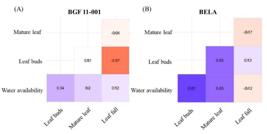
Spearman correlation (rs) between water availability and vegetative phenophases of Stylosanthes spp. genotypes grown under different water availabilities.
The ANOVA of the morpho-functional traits (Table 1) revealed that the interaction between genotype and water availability was significant for LT (p ≤ 0.05), while it had no significant effect on SUC, LD and SD (p > 0.05). In this context, the isolated effect of the genotype factor was significant (p ≤ 0.01) for SUC, LD, and SD. In turn, the water availability factor significantly influenced only SUC (p ≤ 0.05), showing no significant effect on the other variables where no interaction between factors was observed.
Summary of the analysis of variance for morphofunctional traits of Stylosanthes spp. genotypes grown under different water availability levels.
The decomposition of the interaction for LT (Figure 6) revealed that, within the genotype factor, the BGF 11-001 accession exhibited significantly greater LT across all treatments compared to the Bela cultivar. On the other hand, when analyzing the water availability factor, no significant effect was observed in either genotype, indicating that both genotypes did not respond to this variable under different water supply conditions.

Decomposition of the interaction for Leaf Thickness of Stylosanthes spp. genotypes grown under different water availabilities. Different letters (uppercase for genotype factor and lowercase for water availability factor) indicate significant differences according to Tukey’s test (p ≤ 0.05).
When comparing the genotypes independently (Figure 7), it was observed that, for SUC (Figure 7A), the BGF 11-001 accession showed a higher mean value compared to the Bela cultivar. Regarding LD (Figure 7B), the Bela cultivar exhibited higher values than BGF 11-001. As for SD (Figure 7C), the BGF 11-001 genotype presented higher mean values than the Bela cultivar.
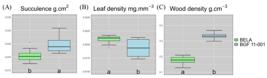
Comparison of means for the individual effect of genotype on morphofunctional traits of Stylosanthes spp. grown under different water availabilities. Different letters indicate significant differences according to Tukey’s test (p ≤ 0.05).
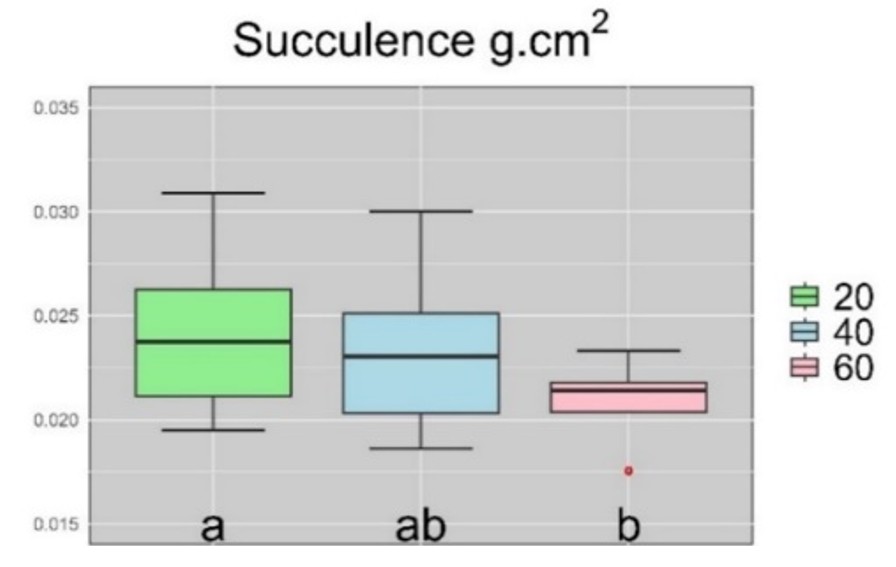
Figure 8 presents the comparison of means for the water availability factor on the variable SUC. It was observed that the 20% water availability treatment had the highest mean succulence, being significantly greater than the 60% treatment. The 40% treatment showed an intermediate value, not differing significantly from the 20% and 60% treatments.

Comparison of means for the individual effect of water availability on the leaf morphofunctional trait Succulence of Stylosanthes spp. grown under different water availabilities. Different letters indicate significant differences according to Tukey’s test (p ≤ 0.05).
The ANOVA for biomass production traits (Table 2) showed that the interaction between factors was not significant (p > 0.05) LDM, TDM and L/S. However, a significant interaction (p ≤ 0.05) was observed for SDM and DMFL%, indicating that the effect of water availability depends on the genotype. Individually, the genotype factor had a highly significant effect on LDM and L/S (p ≤ 0.01), revealing differences between genetic materials. For TDM, the genotype effect was not significant, suggesting random variation. Water availability significantly influenced TDM (p ≤ 0.01) and LDM (p ≤ 0.05), but had no effect on L/S.
Summary of the analysis of variance for biomass production variables of Stylosanthes spp. genotypes grown under different water availability conditions.
The decomposition of the interaction for SDM and DMFL% is presented in Figure 9. At 60% water availability, the Bela cultivar showed higher SDM (Figure 9A) than BGF 11-001, while no differences between genotypes were observed at the other levels. Bela exhibited the highest mean SDM at 60%, differing from the other levels, whereas BGF 11-001 showed a similar but less pronounced trend. For DMFL% (Figure 9B), BGF 11-001 was superior to Bela at all water availability levels. Within each genotype, BGF 11-001 showed no significant variation across water regimes, while Bela exhibited an increase in DMFL% at 20%, differing from the 60% level. No differences were observed at 40% compared to the other water regimes

Decomposition of the interaction for biomass production of Stylosanthes spp. grown under different water availabilities. Different letters indicate significant differences according to Tukey’s test (p ≤ 0.05).
Additionally, Figure 10 presents the individual comparison of the genotype factor LDM (Figure 10A) and L/S (Figure 10B), in which the BGF 11-001 genotype showed significantly higher values than the Bela cultivar for both variables. The isolated comparison of means for the water availability factor, shown in Figure 11 for LDM (Figure 11A) and total dry mass (TDM) (Figure 11B), indicates that the 60% treatment yielded the highest mean values, being significantly greater than the 20% and 40% treatments, which did not differ from each other.

Comparison of means for the individual effect of genotype on biomass production of Stylosanthes spp. grown under different water availabilities. Different letters indicate significant differences according to Tukey’s test (p ≤ 0.05).

Comparison of means for the individual effect of water availability on biomass production variables of Stylosanthes spp. grown under different water availabilities. Different letters indicate significant differences according to Tukey’s test (p ≤ 0.05)
The ANOVA for morphological traits (Table 3) indicated a significant interaction between genotype and water availability only for PBL (p ≤ 0.05), suggesting that this variable depends on the combination of genotype and water regime. Independently, the genotype factor was significant (p ≤ 0.01) for CD, CLL, PH, NB, CLL, CLW, and LLL, indicating genetic differences between genotypes. Water availability significantly influenced (p ≤ 0.01) DC, CLL, PH, NB, and LA, highlighting the effect of water conditions on these variables.
Summary of the analysis of variance for the morphological traits of Stylosanthes spp. genotypes grown under different water availability levels.
The decomposition of the CRP variable (Figure 12) showed that the Bela cultivar had the highest mean at 60% water availability, differing from the 40% and 20% levels, which were statistically similar. In BGF 11-001, the 40% and 60% levels did not differ, but both were superior to the 20% level. When comparing genotypes, Bela exhibited higher values than BGF 11-001 at 20% and 60% water availability, with no significant difference between them at the 40% level.

Decomposition of the interaction for Primary Branch Length of Stylosanthes spp. grown under different water availabilities. Different letters (uppercase for genotype factor and lowercase for water availability factor) indicate significant differences according to Tukey’s test (p ≤ 0.05).
Figure 13 presents the mean comparison for the genotype factor in the variables CD, CAL, PH, NB, CLL, CLW, and LLL. The Bela cultivar showed higher values for CD (13A), CAL (13B), and PH (13C) compared to BGF 11-001. In contrast, NB was higher in BGF 11-001 (13D). Regarding leaf traits, Bela exhibited greater CLL (13E) and LLW (13G), while BGF 11-001 stood out for LLL (13F). The independent evaluation of water availability showed that CD was higher at 60% compared to 20% and 40%, which did not differ (Figure 14A). For CAL and PH, the 40% and 60% levels had better results than the 20% level, with no difference between them (Figures 14B and 14C). NB was higher at 60% than at 20% and 40%, which were statistically similar (Figure 14D). Finally, LA was highest at 60%, with 20% and 40% showing lower and statistically similar values (Figure 14E).

Comparison of means for the individual effect of genotype on morphological traits of Stylosanthes spp. grown under different water availabilities. Different letters indicate significant differences according to Tukey’s test (p ≤ 0.05).
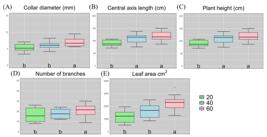
Comparison of means for the individual effect of water availability on caracteres morphological traits of Stylosanthes spp. grown under different water availability levels. Different letters indicate significant differences according to Tukey’s test (p ≤ 0.05).
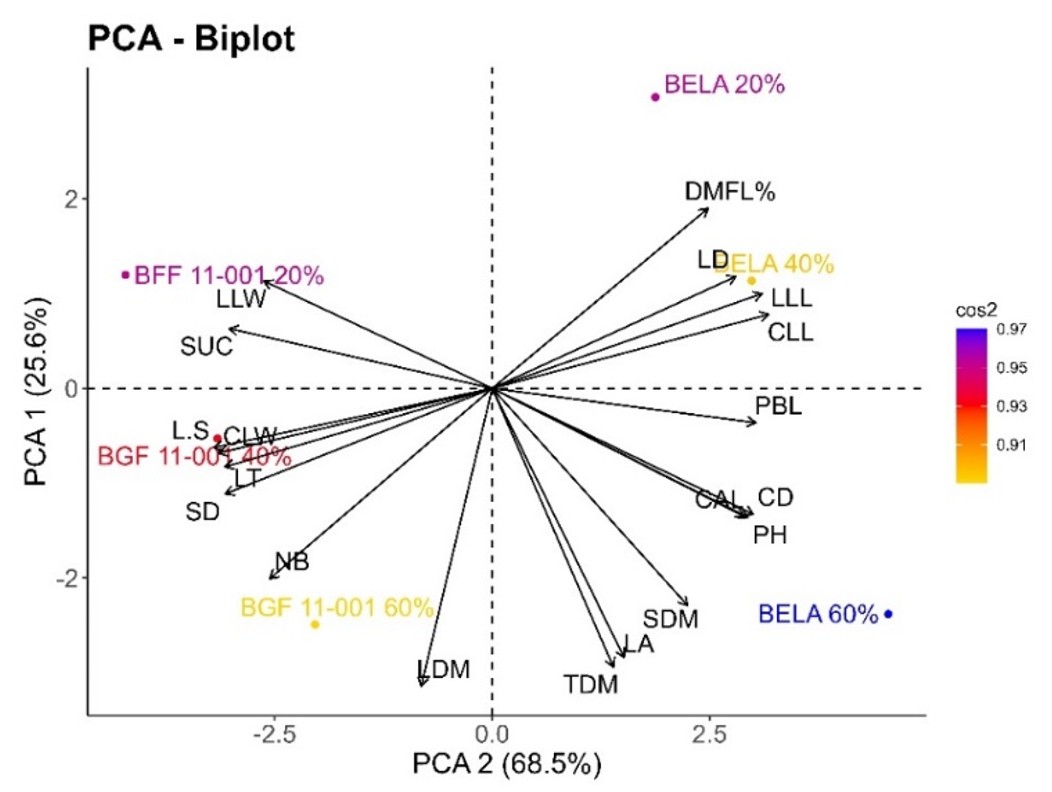
The PCA biplot (Figure 15) shows the relationship between treatments and the analyzed variables. The first two principal components (PC1 and PC2, respectively) explained 93.8% of the total variation (67% for PC1 and 26.8% for PC2). The BGF 11-001 genotype under 60% water availability was positively associated with LDM and NR, and negatively with DMFL%. The Bela cultivar at 60% was strongly correlated with SDM, PH, CAL, CD, LA, and TDM, and negatively correlated with WLL and SUC. BGF 11-001 under 40% showed a positive correlation with CLW, LT, and SD, and a negative correlation with DFA, LLL, and CLL, while Bela under the same condition showed the opposite trend. Under 20%, BGF 11-001 was positively correlated with LLW and SUC, and negatively with CLL, PH, and CD.
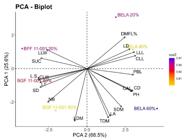
Principal component analysis (PCA) of morphological variables measured in Stylosanthes spp. grown under water availability levels. LT: Leaf Thickness; SUC: Succulence; LD: Leaf Density; SD: Stem Density; LDM: Leaf Dry Mass; SDM: Stem Dry Mass; TDM: Total Dry Mass; L.S: Leaf/Stem ratio; DMFL%: Percentage of Dry Mass of Fallen Leaves; CD: Collar Diameter; CAL: Central Axis Length; PBL: Primary Branch Length; PH: Plant Height; NB: Number of Branches; CLL: Central Leaflet Length; CLW: Central Leaflet Width; LLL: Lateral Leaflet Length; LLW: Lateral Leaflet Width; LA: Leaf Area.
4. Discussion
Leaf exchange is strongly influenced by climatic factors, especially in seasonal environments (Ragusa-Netto and Silva, 2007; Neves et al., 2022). In tropical seasonal ecosystems, rainfall patterns and water availability determine plant water-use traits and select species with varied strategies to cope with seasonal drought (Butz et al., 2017). In this context, investigating forage plants adapted to the SAB region is essential, as local livestock production depends largely on rainfall (Cirilo et al., 2017). Therefore, studying the vegetative growth of genotypes under conditions of low water availability is crucial for selecting genetic materials better adapted to the region.
Our results indicated a reduction in leaf buds in the BGF 11-001 accession even under ideal conditions, suggesting that this genotype naturally limits the emission of new leaves. Additionally, the lower sprouting intensity observed at 20% confirms its sensitivity to water deficit, although without a sharp decline as stress increased. In contrast, the response of the Bela cultivar to water deficit reflected a more pronounced limitation under extreme water scarcity, indicating greater sensitivity to this stress. This behavior, also supported by the correlation analysis, suggests an adaptive strategy focused on restricting vegetative growth, possibly as a means of conserving resources during severe water shortages. This dynamic underscore the critical role of water availability in plant performance, particularly in biomass accumulation and maintenance of vegetative growth, as discussed by Sallam et al. (2019).
The stability of the mature leaf phenophase in BGF 11-001 under severe water deficit suggests an inherent physiological tolerance to water scarcity, possibly linked to mechanisms that maintain leaf development despite the reduced water availability. In contrast, the greater sensitivity observed in the Bela cultivar may reflect a strategy that is less focused on drought resilience, which could result in more pronounced declines in leaf biomass during dry periods. In the seasonal context of water deficit in semi-arid regions – where reduced forage availability for grazing is common (Aghajani et al., 2023) – leaf biomass reduction would likely be more pronounced in the Bela cultivar than in BGF 11-001, according to the results obtained in our study.
In BGF 11-001, the apparent stability of DMFL% under stress suggests mechanisms that limit leaf loss, possibly contributing to a sustained photosynthetic capacity during drought. In contrast, the increased leaf abscission observed in the Bela cultivar is consistent with a common drought-response strategy, in which shedding leaves reduce the transpirational surface area and conserve water (Silva et al., 2019; Cruz et al., 2023). These distinct responses highlight genotypic variability in the management of water stress and underscore the importance of selecting drought-tolerant materials for cultivation in water-limited environments.
Despite the genotypic variation in SD, the classification of both materials as low-density wood types (≤0.5 g/cm3) suggests a common adaptive trait associated with water storage capacity, which is beneficial under drought-prone conditions typical of semi-arid regions (Borchert, 1994; Liu et al., 2020). The relationship between low lignification and increased water content reinforces the functional role of these tissues in maintaining hydration during periods of water scarcity. Although contrasting patterns emerged between the mean comparison and PCA results regarding SD, this may reflect the different structural or physiological strategies adopted by each genotype. Considering that lower SD values are linked to increased vulnerability to cavitation (Liu et al., 2020), this trait is particularly relevant in water-limited environments, where xylem dysfunction caused by embolism can restrict solute transport and impair plant development (Ren et al., 2023; Nunes et al., 2022).
The LD values indicated that the Bela cultivar exhibited higher levels for this variable, which may represent a disadvantage when compared to the BGF 11-001 accession. This potential drawback is linked to the negative correlation between LD and photosynthetic capacity, as higher LD can limit CO2 diffusion and consequently reduce the plant’s photosynthetic efficiency (Witkowski and Lamont, 1991; Terashima et al., 2011; Sugiura et al., 2020).
The higher values of LT and SUC observed in the BGF 11-001 compared to the Bela suggest a potential adaptive advantage of this genotype to the SAB – characterized by high solar radiation throughout the year (Nihad et al., 2019) and seasonal water deficit (Nunes et al., 2022). Thicker leaves provide greater protection against damage caused by excessive light compared to thinner leaves (Liu et al., 2019), and also allow for greater water storage (Guo et al., 2023) – a key trait under water stress conditions. The trend of increased SUC in both genotypes under low water availability suggests phenotypic plasticity associated with this trait, possibly mediated by mechanisms that promote water accumulation, thus contributing directly to drought tolerance (Chin and Sillett, 2016).
Recent studies indicate that water restriction can alter plant morpho-functional traits, triggering the development of adaptive strategies to stress (Santos et al., 2021; Freitas et al., 2024; Pereira et al., 2024). However, in the present study, most of the morpho-functional variables analyzed (LD, SD, and LT) did not show significant variation in either genotype as a function of water availability. This lack of response may be related to the short duration of exposure to drought treatments, which was possibly insufficient to reveal phenotypic plasticity in these morpho-functional traits.
The significant reduction in LDM production under water restriction highlights the genotypes' sensitivity to deficit conditions, indicating that water limitation directly impairs foliar development. This effect occurred uniformly across the evaluated genotypes; however, the average performance of BGF 11-001 compared to the Bela cultivar suggests that, regardless of water availability, it maintains a proportionally higher LDM production. Similar results were reported by Gomes et al. (2023) in Brachiaria spp., where reduced water availability led to a decrease in leaf dry matter production.
Additionally, plants under water deficit conditions, due to the need to reduce stomatal conductance, tend to decrease LA and consequently the surface for solar energy absorption (Cruz et al., 2023). This strategy reduces water loss, allowing this resource to remain available for longer to maintain metabolic activities (Medrano et al., 2007; Cruz et al., 2023). However, despite this variable generally being correlated with LDM, the PCA analysis did not indicate a strong association between them, with LA being more related to the Bela cultivar. This result may be linked to the LT values, which were higher in BGF 11-001 compared to Bela, resulting in greater dry mass accumulation per LA in this genotype – a pattern also observed by Li et al., (2022) in herbaceous species.
The lack results for the morphological traits CLL, LLL, CLW, and LLW suggests that the reduction in la observed in the individuals is more likely associated with decreased leaf emergence and increased leaf abscission, rather than a reduction in the average leaf blade area of individuals subjected to water deficit.
The similar patterns observed for SDM and TDM in relation to the LDM variable under water deficit conditions confirm that water availability influences both variables. This agreement with Gomes et al. (2023) and Tavazoh et al. (2024), who observed a decrease in dry matter production in Brachiaria spp. and Sorghum bicolor (L.) Moench, respectively, under water stress conditions. Moreover, the lack of significant difference in TDM between genotypes indicated that total dry matter production was statistically equivalent between both, regardless of water availability. This absence of difference may be related to the strong association between the cultivar Bela and SDM, as evidenced by the PCA analysis, suggesting that this variable substantially contributed to biomass production in this genotype.
The L/S ratio is an important parameter in forage legumes, as higher values indicate better forage quality, given that this ratio significantly impacts grazing intake, since animals tend to prefer more tender materials with higher nutritional value, such as leaves (Almeida et al., 2019). In this context, BGF 11-001 stood out compared to the cultivar Bela for these variables, reflecting a potentially higher forage quality. Additionally, digestibility is favored by a lower proportion of lignin-rich tissues, such as the stem, since this polymer reduces fiber degradability in the rumen by hindering the action of microorganisms and enzymes, compromising feed utilization (Menezes et al., 2021).
The greater sensitivity of the cultivar Bela to water deficit, reflected in the reduction of CRP under lower water availability, contrasts with its overall higher CRP compared to BGF 11-001 across conditions. Conversely, BGF 11-001 consistently exhibited higher NB values than Bela. Despite these differences, both genotypes experienced decreased lateral branching with reduced water availability, aligning with observations reported by Hussain et al. (2022) in Cicer arietinum L.
Water deficit significantly impacted CD, CAL, and PH in both genotypes, indicating that water limitation compromises both primary and secondary growth. Plant growth depends on processes like cell division, expansion, and differentiation, which are regulated by genetic, physiological, ecological, and morphological factors (Hussain et al., 2022). Water deficiency can restrict cell elongation by limiting water flow through the xylem to expanding cells, thereby directly affecting growth (Awari et al., 2017; Torres et al., 2023). These physiological constraints align with previous findings of significant reductions in plant height under water stress across species, such as S. scabra (Nagaich et al., 2013) and Ocimum basilicum L. (Hamidi et al., 2022). Additionally, reductions in stem diameter under water limitation, as observed in Fagopyrum esculentum Moench L. (Zaina and Gai, 2020), further emphasize the sensitivity of growth traits to water availability.
The BGF 11-001 genotype exhibits mechanisms related to the maintenance of the mature leaf phenophase, indicating stability in leaf retention even under water deficit, which suggests reduced loss of photosynthetically functional tissue. Additionally, the greater leaf thickness observed in this genotype may be associated with an enhanced capacity for water storage in these organs. Moreover, the low wood density, a morpho-functional characteristic present in both genotypes, contributes to water storage, thereby promoting tolerance to water deficit. These factors act in an integrated manner to limit leaf loss and ensure the continuity of essential metabolic processes during periods of low water availability.
Conversely, the Bela cultivar responds to water deficit by adopting a strategy based on the premature loss of functional vegetative organs, primarily leaves, which reduces the exposed leaf area and transpiration, contributing to water conservation. Although this cultivar does not avoid the emission of new shoots, the accelerated leaf abscission represents an adaptive mechanism to reduce water consumption under stress conditions. The low wood density is also present in this genotype, functioning as a morpho-functional mechanism that enables water storage during periods of scarcity.
Despite differences in response mechanisms, both genotypes show sensitivity to water deficit, although BGF 11-001 demonstrates superior performance in the forage context, particularly regarding primary and secondary growth traits such as stem diameter, height, and lateral apex length, highlighting the direct impact of water limitation on plant structural development.
5. Conclusion
The studied genotypes of Stylosanthes spp. exhibit morphofunctional traits that contribute to tolerance to water deficit. The accession BGF 11-001 stood out by maintaining a higher leaf-to-stem ratio under both cultivation conditions, associated with foliar stability. In contrast, the cultivar BRS-Bela adopted a strategy of early leaf shedding to reduce transpiration and conserve water, which leads to a reduction in forage availability. Despite these distinct strategies, both genotypes showed a decrease in biomass production under lower water availability, highlighting the impact of water stress on plant development.
Acknowledgements
The authors gratefully acknowledge the financial support provided by the Coordenação de Aperfeiçoamento de Pessoal de Nível Superior - Brasil - CAPES - Finance Code 001.
Data Availability Statement
The entire data set that supports the results of this study was published in the article itself.
References
-
AGHAJANI, S.D., ALAVIFAZEL, M., NURMOHAMMADI, G., ARDAKANI, M.R. and SARAJUGHI, M., 2023. Drought responsive biomarkers of sorghum (Sorghum bicolor L.) as affected by biochar, planting arrangement and alternate furrow irrigation. Plant Physiology Reports, vol. 28, no. 2, pp. 247-258. https://doi.org/10.1007/s40502-023-00727-7
» https://doi.org/10.1007/s40502-023-00727-7 -
ALMEIDA, J.C.D.C., MORAIS, L.F.D., ARAÚJO, R.P., MORENZ, M.J.F., ABREU, J.B.R.D. and SOARES, F.A., 2019. Dry matter production and chemical composition of tropical forage legumes under different shading levels. Acta Scientiarum. Animal Sciences, vol. 41, no. 1, pp. 1-7. https://doi.org/10.4025/actascianimsci.v41i1.43526
» https://doi.org/10.4025/actascianimsci.v41i1.43526 - ALZOHEIRY, A.M., 2024. Effect of deficit irrigation on yield and water use efficiency of onion (Allium cepa L.) in arid zones. Brazilian Journal of Biology = Revista Brasileira de Biologia, vol. 84, e281797.
-
AWARI, V.R., DALVI, U.S., LOKHANDE, P.K., PAWAR, V.Y., MATE, S.N., NAIK, R.M. and MHASE, L.B., 2017. Physiological and biochemical basis for moisture stress tolerance in chickpea under pot study. International Journal of Current Microbiology and Applied Sciences, vol. 6, no. 5, pp. 1447-1459. https://doi.org/10.20546/ijcmas.2017.605.135
» https://doi.org/10.20546/ijcmas.2017.605.135 -
BARBOSA, R.I. and FERREIRA, C.A.C., 2004. Densidade básica da madeira de um ecossistema de “campina” em Roraima, Amazônia Brasileira. Acta Amazonica, vol. 34, no. 4, pp. 587-591. https://doi.org/10.1590/S0044-59672004000400010
» https://doi.org/10.1590/S0044-59672004000400010 - BONFIM-SILVA, E.M., SILVA, T.J.A., CABRAL, C.E.A., KROTH, B.E. and REZENDE, D., 2011. Desenvolvimento inicial de gramíneas submetidas ao estresse hídrico. Revista Caatinga, vol. 24, no. 2, pp. 180-186.
-
BORCHERT, R., 1994. Soil and stem water storage determine phenology and distribution of tropical dry forest trees. Ecology, vol. 75, no. 5, pp. 1437-1449. https://doi.org/10.2307/1937467
» https://doi.org/10.2307/1937467 -
BUTZ, P., RAFFELSBAUER, V., GRAEFE, S., PETERS, T., CUEVA, E., HOLSCHE, D. and BRAUNING, A., 2017. Tree responses to moisture fluctuations in a neotropical dry forest as potential climate change indicators. Ecological Indicators, vol. 83, pp. 559-571. https://doi.org/10.1016/j.ecolind.2016.11.021
» https://doi.org/10.1016/j.ecolind.2016.11.021 -
CHIN, A.R.O. and SILLETT, S.C., 2016. Phenotypic plasticity of leaves enhances water‐stress tolerance and promotes hydraulic conductivity in a tall conifer. American Journal of Botany, vol. 103, no. 5, pp. 796-807. https://doi.org/10.3732/ajb.1600110 PMid:27208348.
» https://doi.org/10.3732/ajb.1600110 -
CIRILO, J.A., MONTENEGRO, S.M.G.L. and CAMPOS, J.N.B., 2017. The issue of water in the Brazilian semi-arid region. In: C.E.M. BICUDO, J.G. TUNDISI and M.C.B. SCHEUENSTHUL, eds. Waters of Brazil: strategic analysis. 1st ed. Cham: Springer, chap. 5, pp. 59-71. https://doi.org/10.1007/978-3-319-41372-3_5
» https://doi.org/10.1007/978-3-319-41372-3_5 -
COOK, B.G. and SCHULTZE-KRAFT, R., 2020. Clearing confusion in Stylosanthes taxonomy: 1. S. seabrana B.L. Maass & ’t Mannetje. Tropical Grasslands-Forrajes Tropicales, vol. 8, no. 1, pp. 40-47. https://doi.org/10.17138/tgft(8)40-47
» https://doi.org/10.17138/tgft(8)40-47 -
CRUZ, N.T., PORTO, E.M.V., RAMOS, B.L.P., SANTOS, H.P., SEIXAS, A.A. and SANTOS, A.P.S., 2023. Estresse hídrico em plantas forrageiras: uma breve revisão. Revista Científica Rural, vol. 25, no. 1, pp. 1-19. https://doi.org/10.29327/246831.25.1-14
» https://doi.org/10.29327/246831.25.1-14 -
FERNANDES, M.F., CARDOSO, D. and DE QUEIROZ, L.P., 2020. An updated plant checklist of the Brazilian Caatinga seasonally dry forests and woodlands reveals high species richness and endemism. Journal of Arid Environments, vol. 174, pp. 104079. https://doi.org/10.1016/j.jaridenv.2019.104079
» https://doi.org/10.1016/j.jaridenv.2019.104079 -
FERREIRA-NETO, J.R.C., ARAÚJO, F.C., OLIVEIRA SILVA, R.L., MELO, N.F., PANDOLFI, V., FROSI, G., MORAIS, D.A.L., SILVA, M.D., RIVAS, R., SANTOS, M.G., AIDAR, S.T., MORGANTE, C.V. and BENKO-ISEPPON, A.M., 2022. Dehydration response in Stylosanthes scabra: transcriptional, biochemical, and physiological modulations. Physiologia Plantarum, vol. 174, no. 6, e13821. https://doi.org/10.1111/ppl.13821 PMid:36345266.
» https://doi.org/10.1111/ppl.13821 - FOURNIER, L.A., 1974. Un método cuantitativo para la medición de características fenológicas en árboles. Turrialba, vol. 24, pp. 422-423.
-
FREITAS, G.V., CUNHA, M. and VITÓRIA, A.P., 2024. A systematic review of leaf and wood traits in the Neotropics: environmental gradients and functionality. Trees, vol. 38, no. 3, pp. 551-572. https://doi.org/10.1007/s00468-024-02508-7
» https://doi.org/10.1007/s00468-024-02508-7 -
GOMES, L.D., LIMA, K.L.L., SILVA, G.B.A., BORGES, L.C.O., RIGHI, R.S.M., DUARTE, C.F.D., CABRAL, C.H.A. and CABRAL, C.E.A., 2023. Tolerância de híbridos de braquiária ao estresse hídrico. Scientific Electronic Archives, vol. 16, no. 10, pp. 1-7. https://doi.org/10.36560/161020231792
» https://doi.org/10.36560/161020231792 - GONZALEZ, L.M., LOPEZ, R.C., FONSECA, I. and RAMIREZ, R., 2000. Growth, stomatal frequency, DM yield and accumulation of ions in nine species of grassland legumes grown under saline conditions, crecimiento, frecuencia estomatica, rendimiento de MS y acumulacion de iones en nueve especies de leguminosas pratenses cultivadas en condiciones salinas. Pastos y Forrajes, vol. 23, pp. 299-308.
-
GUO, B., ARNDT, S.K., MILLER, R.E., SZOTA, C. and FARRELL, C., 2023. How does leaf succulence relate to plant drought resistance in woody shrubs? Tree Physiology, vol. 43, no. 9, pp. 1501-1513. https://doi.org/10.1093/treephys/tpad066 PMid:37208014.
» https://doi.org/10.1093/treephys/tpad066 -
HABERMANN, E., OLIVEIRA, E.A.D., DELVECCHIO, G., BELISÁRIO, R., BARRETO, R.F., VICIEDO, D.O., ROSSIGNOLI, N.O., COSTA, K.A.P., PRADO, R.M., GONZALEZ-MELER, M. and MARTINEZ, C.A., 2021. How does leaf physiological acclimation impact forage production and quality of a warmed managed pasture of Stylosanthes capitata under different conditions of soil water availability? The Science of the Total Environment, vol. 759, 143505. https://doi.org/10.1016/j.scitotenv.2020.143505 PMid:33223164.
» https://doi.org/10.1016/j.scitotenv.2020.143505 -
HAMIDI, M., MOGHADAM, H.T., NASRI, M., KASRAIE, P. and LARIJANI, H., 2022. The effect of ascorbic acid and bio fertilizers on basil under drought stress. Brazilian Journal of Biology = Revista Brasileira de Biologia, vol. 84, no. 1, e262459. https://doi.org/10.1590/1519-6984.262459 PMid:35830132.
» https://doi.org/10.1590/1519-6984.262459 -
HUSSAIN, N., YASMEEN, A. and YOUSAF, M.M., 2022. Antioxidant status and their enhancement strategies for water stress tolerance in chickpea. Brazilian Journal of Biology = Revista Brasileira de Biologia, vol. 82, pp. 1-10. https://doi.org/10.1590/1519-6984.237809 PMid:33978079.
» https://doi.org/10.1590/1519-6984.237809 - ILIC, J., BOLAND, D., MCDONALD, M., DOWNES, G. and BLANKEMORE, P., 2000. Woody density phase 1 Canberra: Australian Greenhouse Office, 218 p. National Carbon Accounting System Technical Report, no. 18.
-
INSTITUTO BRASILEIRO DE GEOGRAFIA E ESTATÍSTICA – IBGE, 2018 [viewed 16 January 2025]. Novo Censo Agropecuário mostra crescimento de efetivo de caprinos e ovinos no Nordeste [online]. Available from: https://www.embrapa.br/cim-inteligencia-e-mercado-de-caprinos-e-ovinos/busca-de-noticias/-/noticia/36365362/novo-censo-agropecuario-mostra-crescimento-de-efetivo-de-caprinos-e-ovinos-no-nordeste
» https://www.embrapa.br/cim-inteligencia-e-mercado-de-caprinos-e-ovinos/busca-de-noticias/-/noticia/36365362/novo-censo-agropecuario-mostra-crescimento-de-efetivo-de-caprinos-e-ovinos-no-nordeste -
INSTITUTO BRASILEIRO DE GEOGRAFIA E ESTATÍSTICA – IBGE, 2021 [viewed 16 January 2025. O semiárido brasileiro [online]. Available from: https://www.gov.br/insa/pt-br/semiarido-brasileiro
» https://www.gov.br/insa/pt-br/semiarido-brasileiro -
JARDIM BOTÂNICO DO RIO DE JANEIRO – JBRJ, 2025 [viewed 30 June 2025]. Stylosanthes [online]. Rio de Janeiro: Flora e Funga do Brasil. Available from: https://floradobrasil.jbrj.gov.br/FB115
» https://floradobrasil.jbrj.gov.br/FB115 -
LI, X.E., ZHAO, X., TSUJII, Y., MA, Y., ZHANG, R., QIAN, C., WANG, Z., GENG, F. and JIN, S., 2022. Links between leaf anatomy and leaf mass per area of herbaceous species across slope aspects in an eastern Tibetan subalpine meadow. Ecology and Evolution, vol. 12, no. 6, e8973. https://doi.org/10.1002/ece3.8973 PMid:35784019.
» https://doi.org/10.1002/ece3.8973 - LIU, H., LI, X., PENG, B., WU, C., YANG, Y. and ZHANG, J., 2020. Low wood density increases vulnerability to cavitation and mortality under drought stress in diverse tree species. The New Phytologist, vol. 226, no. 1, pp. 147-159.
-
LIU, P., HUANG, R., HU, X., JIA, Y., LI, J., LUO, J., LIU, Q., LUO, L., LIU, G. and CHEN, Z., 2019. Physiological responses and proteomic changes reveal insights into Stylosanthes response to manganese toxicity. BMC Plant Biology, vol. 19, no. 214, pp. 212-223. https://doi.org/10.1186/s12870-019-1822-y PMid:31113380.
» https://doi.org/10.1186/s12870-019-1822-y -
MEDRANO, H., BOTA, J., CIFRE, J., FLEXAS, J., RIBAS-CARBÓ, M. and GULÍAS, J., 2007. Eficiencia en el uso del água por las plantas. Investigaciones Geográficas, no. 43, pp. 63-84. https://doi.org/10.14198/INGEO2007.43.04
» https://doi.org/10.14198/INGEO2007.43.04 -
MENEZES, R.A., GONÇALVES, L.C., PIRES, F.P.A. A., MENEZES, G.L. and OLIVEIRA, A.F., 2021 [viewed 16 January 2025. Lignina: caracterização, efeito e manipulação na nutrição de ruminantes. Nutritime [online], vol. 18, no. 4, pp. 8961-8970. Available from: http://hdl.handle.net/1843/67353
» http://hdl.handle.net/1843/67353 -
MILES, L., NEWTON, A.C., DEFRIES, R.S., RAVILIOUS, C., MAY, I., BLYTH, S., KAPOS, V. and GORDON, J.E., 2006. A global overview of the conservation status of tropical dry forests. Journal of Biogeography, vol. 33, no. 3, pp. 491-505. https://doi.org/10.1111/j.1365-2699.2005.01424.x
» https://doi.org/10.1111/j.1365-2699.2005.01424.x -
NAGAICH, D., TIWARI, K.K., SRIVASTVA, N. and CHANDRA, A., 2013. Assessment of genetic diversity and morpho-physiological traits related to drought tolerance in Stylosanthes scabra. Acta Physiologiae Plantarum, vol. 35, no. 11, pp. 3127-3136. https://doi.org/10.1007/s11738-013-1345-3
» https://doi.org/10.1007/s11738-013-1345-3 -
NEVES, S.P.S., SANTOS, M.G.M., VITÓRIA, A.P., ROSSATTO, D.R., MIRANDA, L.D.A.P. and FUNCH, L.S., 2022. The roles of functional traits in canopy maintenance along a savanna/seasonally dry tropical forest gradient in northeastern Brazil. Flora, vol. 292, pp. 152090. https://doi.org/10.1016/j.flora.2022.152090
» https://doi.org/10.1016/j.flora.2022.152090 -
NIHAD, K., BERWAL, M.K., HEBBAR, K.B., BHAT, R., HARIS, A.A. and RAMESH, S.V., 2019. Photochemical and biochemical responses of heliconia (Heliconia stricta “Iris”) to different light intensities in a humid coastal environment. Horticulture, Environment and Biotechnology, vol. 60, no. 6, pp. 799-808. https://doi.org/10.1007/s13580-019-00173-1
» https://doi.org/10.1007/s13580-019-00173-1 -
NUNES, K.G., COSTA, R.N.T., CAVALCANTE, I.N., GONDIM, R.S., LIMA, S.C.R.V. and MATEOS, L., 2022. Groundwater resources for agricultural purposes in the Brazilian semi-arid region. Revista Brasileira de Engenharia Agrícola e Ambiental, vol. 26, no. 14, pp. 915-923. https://doi.org/10.1590/1807-1929/agriambi.v26n12p915-923
» https://doi.org/10.1590/1807-1929/agriambi.v26n12p915-923 -
OO, A.T., VAN HUYLENBROECK, G. and SPEELMAN, S., 2020. Measuring the economic impact of climate change on crop production in the dry zone of Myanmar: a Ricardian approach. Climate, vol. 8, no. 1, pp. 1-15. https://doi.org/10.3390/cli8010009
» https://doi.org/10.3390/cli8010009 -
PENNINGTON, R.T., PRADO, D.E. and PENDRY, C.A., 2000. Neotropical seasonally dry forests and Quaternary vegetation changes. Journal of Biogeography, vol. 27, no. 2, pp. 261-273. https://doi.org/10.1046/j.1365-2699.2000.00397.x
» https://doi.org/10.1046/j.1365-2699.2000.00397.x - PEREIRA, V.A.M., SANTOS, V.O., NEVES, S.P.S., VILLA, P.M., ROSSATTO, D.R., MIRANDA, L.A.P. and FUNCH, L.S., 2024. The role of functional traits on evergreen canopies maintenance of Hancornia speciosa (Apocynaceae) in Capitinga sandy areas. Brazilian Journal of Biology = Revista Brasileira de Biologia, vol. 84, pp. 1-6.
- PODDAR, S., CHAKRABORTI, S., PODDAR, S. and NATH, S., 2023. Comprehensive review on the consequences and omics approaches for boosting wheat production under drought stress. International Journal of Advanced Multidisciplinary Research, vol. 10, no. 1, pp. 149-162.
-
QUEIROZ, L.P., CARDOSO, D., FERNANDES, M.F. and MORO, M.F., 2017. Diversity and evolution of flowering plants of the Caatinga Domain. In: J.M.C. SILVA, I.R. LEAL and M. TABARELLI, eds. Caatinga: the largest tropical dry forest region in South America Cham: Springer, p. 23-63.. https://doi.org/10.1007/978-3-319-68339-3_2
» https://doi.org/10.1007/978-3-319-68339-3_2 -
R CORE TEAM, 2024 [viewed 16 January 2025]. R: a language and environment for statistical computing [online]. Vienna: R Foundation for Statistical Computing. Available from: https://www.R-project.org/
» https://www.R-project.org/ -
RAGUSA-NETTO, J. and SILVA, R.R., 2007. Canopy phenology of a dry forest in western Brazil. Brazilian Journal of Biology = Revista Brasileira de Biologia, vol. 67, no. 3, pp. 569-575. https://doi.org/10.1590/S1519-69842007000300024 PMid:18094842.
» https://doi.org/10.1590/S1519-69842007000300024 -
REN, Y., ZHANG, Y., GUO, S., WANG, B., WANG, S. and GAO, W., 2023. Pipe cavitation parameters reveal bubble embolism dynamics in maize xylem vessels across water potential gradients. Agriculture, vol. 14, no. 10, pp. 1-17. https://doi.org/10.3390/agriculture13101867
» https://doi.org/10.3390/agriculture13101867 -
SALLAM, A., ALQUDAH, A.M., DAWOOD, M.F.A., BAENZIGER, P.S. and BÖRNER, A., 2019. Drought stress tolerance in wheat and barley: advances in physiology, breeding and genetics research. International Journal of Molecular Sciences, vol. 20, no. 13, pp. 1-36. https://doi.org/10.3390/ijms20133137 PMid:31252573.
» https://doi.org/10.3390/ijms20133137 - SANTOS JÚNIOR, R.A.S., PELACANI, C.R., SANTOS, V.O., SILVA, A.A., FERNANDES, S.M., GISSI, D.S. and OLIVEIRA, R.S., 2022. Banco de germoplasma de forrageiras da Universidade Estadual de Feira de Santana (BGF-UEFS). Revista RG News, vol. 8, no. 2, pp. 5-15.
-
SANTOS, M.G.M., SOUSA, A.S., NEVES, S.P.S., ROSSATTO, D.R., MIRANDA, L.D.A.P. and FUNCH, L.S., 2021. Drought responses and phenotypic plasticity of Maprounea guianensis populations in humid and dry tropical forests. Rodriguésia, vol. 72, pp. 1-14. https://doi.org/10.1590/2175-7860202172077
» https://doi.org/10.1590/2175-7860202172077 -
SILVA, D.C., MELO, A.S., MELO, Y.L., ANDRADE, W.L., LIMA, L.M. and SANTOS, A.R., 2019. Silicon foliar application attenuates the effects of water suppression on cowpea cultivars. Ciência e Agrotecnologia, vol. 43, pp. 1-10. https://doi.org/10.1590/1413-7054201943023019
» https://doi.org/10.1590/1413-7054201943023019 - SINGH, T., SRINIVASAN, R., MAHANTA, S.K., TAYAG, V.K. and ROY, A.K., 2018. Tropical forage legumes in India: status and scope for sustaining livestock production: forage groups London: Intechopen.
-
SOUZA, R., HARTZELL, S., FENG, X., DANTAS, A.C., SOUZA, E.S., MENEZES, R.S.C. and PORPORATO, A., 2020. Optimal management of cattle grazing in a seasonally dry tropical forest ecosystem under rainfall fluctuations. Journal of Hydrology (Amsterdam), vol. 588, pp. 1-39. https://doi.org/10.1016/j.jhydrol.2020.125102
» https://doi.org/10.1016/j.jhydrol.2020.125102 -
SUGIURA, D., TERASHIMA, I. and EVANS, J.R., 2020. A decrease in mesophyll conductance by cell-wall thickening contributes to photosynthetic downregulation. Plant Physiology, vol. 183, no. 4, pp. 1600-1611. https://doi.org/10.1104/pp.20.00328 PMid:32518201.
» https://doi.org/10.1104/pp.20.00328 - TAVAZOH, M., HABIBI, D., GOLZARDI, F., ILKAEE, M.N. and PAKNEJAD, F., 2024. Effect of drought stress on morpho-physiological characteristics, nutritive value, and water-use efficiency of sorghum [Sorghum bicolor (L.) Moench] varieties under various irrigation systems. Brazilian Journal of Biology = Revista Brasileira de Biologia, vol. 84, e286121.
-
TERASHIMA, I., HANBA, Y.T., THOLEN, D. and NIINEMETS, Ü., 2011. Leaf functional anatomy in relation to photosynthesis. Plant Physiology, vol. 155, no. 1, pp. 108-116. https://doi.org/10.1104/pp.110.165472 PMid:21075960.
» https://doi.org/10.1104/pp.110.165472 -
TORRES, R.A.F., LIMA, G.S., PAIVA, F.J.S., SOARES, L.A.A., SILVA, F.A., SILVA, L.A., OLIVEIRA, V.K.N., MENDONÇA, A.J.T., ROQUE, I.A. and SILVA, S.T.A., 2023. Physiology and production of sugar-apple under water stress and application of proline. Brazilian Journal of Biology =. Brazilian Journal of Biology = Revista Brasileira de Biologia, vol. 83, e273404. https://doi.org/10.1590/1519-6984.273404 PMid:37255204.
» https://doi.org/10.1590/1519-6984.273404 -
TROPICAL FORAGES, 2020 [viewed 23 September 2025]. Stylosanthes guianensis var. intermedia [online]. Tropical Forages. Available from: https://tropicalforages.info/text/entities/stylosanthes_guianensis_var._intermedia.htm
» https://tropicalforages.info/text/entities/stylosanthes_guianensis_var._intermedia.htm -
TRUGILHO, P.F., SILVA, D.A., FRAZÃO, F.J.L. and MATOS, J.L.M., 1990. Comparação de métodos de determinação da densidade básica em madeira. Acta Amazonica, vol. 20, no. 0, pp. 307-309. https://doi.org/10.1590/1809-43921990201319
» https://doi.org/10.1590/1809-43921990201319 - VILELA, E.F., CALLEGARO, G.M. and FERNANDES, G.W., 2019. Biomas e agricultura: oportunidades e desafios 1. ed. Rio de Janeiro: Vertente Edições, 304 p.
-
VIOLLE, C., NAVAS, M., VILE, D., KAZAKOU, E., FORTUNEL, C., HUMMEL, I. and GARNIER, E., 2007. Let the concept of trait be functional! Oikos, vol. 116, no. 5, pp. 882-892. https://doi.org/10.1111/j.0030-1299.2007.15559.x
» https://doi.org/10.1111/j.0030-1299.2007.15559.x -
WANG, J., LI, C., LI, L., REYNOLDS, M., MAO, X. and JING, R., 2021. Exploitation of drought tolerance-related genes for crop improvement. International Journal of Molecular Sciences, vol. 22, no. 19, pp. 1-15. https://doi.org/10.3390/ijms221910265 PMid:34638606.
» https://doi.org/10.3390/ijms221910265 -
WITKOWSKI, E.T.F. and LAMONT, B.B., 1991. Leaf specific mass confounds leaf density and thickness. Oecologia, vol. 88, no. 4, pp. 486-493. https://doi.org/10.1007/BF00317710 PMid:28312617.
» https://doi.org/10.1007/BF00317710 - ZAINA, I.C. and GAI, V.F., 2020. Características morfológicas e qualidade do trigo mourisco sob estresse hídrico. Revista Cultivando Saber, vol. 14, no. 2, pp. 27-36.
Edited by
-
Editor:
Takako Matsumura Tundisi