 Agromorphological analysis of yellow passion fruit cultivars in Boyacá: basis for the selection of promising materials
Abstract
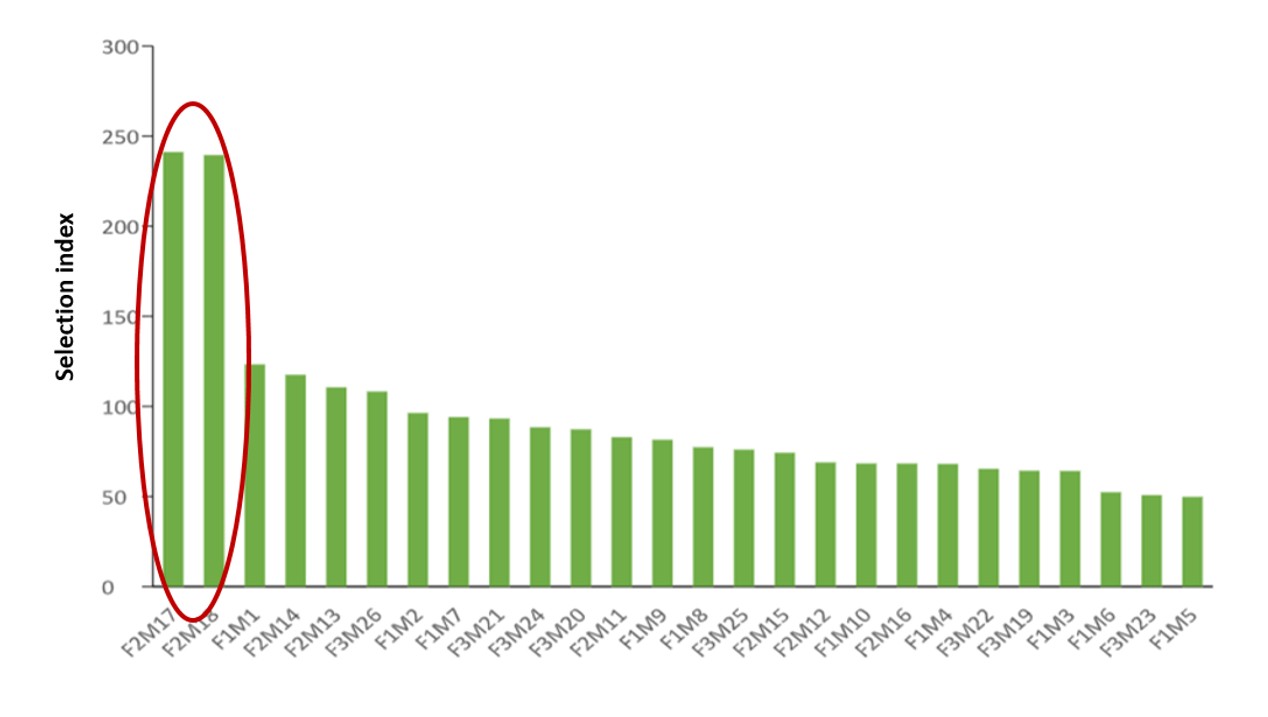
Passiflora edulis f. flavicarpa, commonly known as yellow passion fruit, is a tropical species of great economic and nutritional value due to its high content of vitamins, minerals, antioxidants, and bioactive compounds. Although work has been done in Colombia to identify and characterize the germplasm of this species, there is still no improved genetic material adapted to the main producing municipalities. The objective of this study was to agromorphologically characterize yellow passion fruit cultivars in Miraflores, Boyacá, to identify promising genotypes using 20 qualitative and 26 quantitative descriptors evaluated in leaf, stem, flower, and fruit. Descriptive, multivariate, cluster, and mixed analyses were performed. A selection index was used to identify superior genotypes. The results showed that fruit weight had the highest coefficient of variation (65.60%), followed by petal length (45.67%). Positive and significant correlations were observed between peel weight, peel thickness, and equatorial and longitudinal fruit diameters, as well as between pulp weight, juice weight, and seed number. High phenotypic segregation was found for the traits of fruit color, shape, and the presence of pigments. Mixed multivariate analyses showed that fruit-associated characteristics, such as the presence or absence of pigments, contribute most to the observed variation. The selection index allowed the selection of cultivars 17 (241.19 g) and 18 (239.50 g) as promising genotypes within genetic improvement programs for the species.
Keywords:
descriptors; germplasm; Passiflora; phenotypic diversity; plant breeding
Resumo
Passiflora edulis f. flavicarpa, conhecida comumente como maracujá-amarelo, é uma espécie tropical de grande valor econômico e nutricional, devido ao seu alto teor de vitaminas, minerais, antioxidantes e compostos bioativos. Na Colômbia, a falta de informações genéticas e a alta variabilidade fenotípica limitaram o desenvolvimento de cultivares superiores. O objetivo deste estudo foi caracterizar agromorfologicamente cultivares de maracujá-amarelo em Miraflores, Boyacá, para identificar genótipos promissores utilizando 20 descritores qualitativos e 26 descritores quantitativos, avaliados em folha, caule, flor e fruto. Foram realizadas análises descritivas, multivariadas, de agrupamento e mistas. Um índice de seleção foi utilizado para identificar genótipos superiores. Os resultados mostraram que o peso do fruto apresentou o maior coeficiente de variação (65,60%), seguido do comprimento da pétala (45,67%). Foram observadas correlações positivas e significativas entre o peso da casca e a espessura da casca, e os diâmetros equatorial e longitudinal do fruto, bem como entre o peso da polpa e o peso do suco, e o número de sementes. Alta segregação fenotípica foi encontrada para as características de cor do fruto e forma e presença de pigmentos. As análises multivariadas mistas mostraram que as características associadas ao fruto, como presença ou ausência de pigmentos, são as que mais contribuem para a variação observada. O índice de seleção permitiu selecionar as cultivares 17 (241,19 g) e 18 (239,50 g) como genótipos promissores dentro de programas de melhoramento genético da espécie.
Palavras-chave:
descritores; germoplasma; Passiflora; diversidade fenotípica; melhoramento de plantas
1. Introduction
The genus Passiflora L., considered to be the largest of this family comprising about 500 species (Carminati et al., 2024), which present a wide phenotypic variability in flowers, stems, leaves and fruits (Martinez et al., 2020). Worldwide, Brazil is the largest producer and consumer of passion fruit, both fresh and processed (Ocampo et al., 2021a). The passion fruit tree is native to tropical America. The botanical varieties Passiflora edulis f. flavicarpa (yellow or sour passion fruit) and P. edulis Sims f. edulis (purple passion fruit) are most important economically (Kuethe et al., 2024).
Most Passiflora species are allogamous, diploid, with 2n = 12, 18, or 20 chromosomes (Yotoko et al., 2011), with ornamental potential and medicinal properties (Nikolova et al., 2024), due to its contents of alkaloids, flavonoids and carotenoids, minerals and vitamins A, C, and D. The seeds contain essential fatty acids (55–66% linoleic acid, 18–20% oleic acid, and 10–14% palmitic acid), that can be used in the food and cosmetic industries (Ada et al., 2024).
Despite the economic importance and its various potential uses in industry and medicine of passion fruit in Colombia, there are still no improved materials that meet the needs of the main producing regions (Antioquia, Huila, Meta, and Valle del Cauca) (Ocampo et al., 2021a). The characterization of the germplasm is fundamental for the knowledge of its genetic variability, to direct the programs of conservation, genetic improvement and potential use of the germplasm (Stafne, 2023). The genetic diversity of Passiflora species worldwide has been evaluated using morphological descriptors (Ocampo et al., 2017; Lemos Filho et al., 2023), agronomic traits (Galeano-Mendoza et al., 2018) and physicochemical descriptors (Ada et al., 2024).
In Colombia, several studies have been conducted on genetic variability in some species of the genus Passiflora L. at both intraspecific and interspecific levels using morphological descriptors. These studies have enabled the development of new research on interspecific hybridization between the main economically important Passiflora species and their closest wild relatives (Ocampo et al., 2021b). On the other hand, Ocampo et al. (2013) evaluated the degree of genetic variability in cultivated passion fruit in Colombia as a basis for a plant breeding program using 11 physicochemical variables and analyzed by variance decomposition (univariate) and cluster analysis (neighbor joining), in which the physicochemical analysis served to identify eight elite accessions with high fruit quality. The results led to the identification of parental genotypes for the genetic improvement of the species in the department of Valle del Cauca.
Research based on germplasm characterization in the department of Boyacá has shown the existence of significant genetic variability in Passiflora species, as well as the need to explore germplasm that has not yet been studied, thus its genetic potential remains underutilized (Morillo et al., 2023). On the other hand, municipalities with a tradition in the cultivation of this crop and producer associations, such as the municipality of Miraflores, require these types of studies to overcome one of the main limitations of agricultural development, which is the lack of certified planting material, which favors the commercialization processes of the fruit in national and international markets. In this context, the objective of this research is to characterize in situ the agromorphological traits of yellow passion fruit (P. edulis f. flavicarpa) cultivars in the municipality of Miraflores with the aim of identifying outstanding individuals that meet the current market needs and result in higher incomes for farmers.
2. Material and Methods
2.1. Plant material
The agromorphological characterization of yellow passion fruit was carried out in three (3) production systems established in the Municipality of Miraflores, Boyacá (Table 1), located at the coordinates 5°11’42” N and 73°08’40” W, at an altitude of 1.432 masl, with an average temperature of 16°C, a relative humidity of 87%, and a photoperiod of 12:12 hours. These production systems were selected based on their long tradition of cultivation and their phenotypic segregation within their plots for the traits of interest, also at the suggestion of the region's own producers. Within the production systems (Table 1), plants exhibiting clearly contrasting and differentiable phenotypic characteristics, with good plant architecture and phytosanitary status, were identified and designated as cultivars or morphotypes (Ocampo et al., 2021b). Taking these criteria into account, 10 cultivars were selected on farm 1 and 8 on the other two.
Geolocation of the production systems in which the agromorphological characterization of the yellow passion fruit cultivars was carried out.
2.2. Morphological characterization
For the agromorphological characterization, both qualitative and quantitative descriptors associated with the plant, flower, and fruit were evaluated. These descriptors have previously been evaluated in Passiflora and have shown high discriminatory power at both intraspecific and interspecific levels (Morillo et al., 2023) (Table 2). For each quantitative descriptor, four measurements were taken on each plant organ using a digital caliper, and weight was determined using a digital scale. Fruit quality characteristics were assessed in the plant physiology laboratory at the Pedagogical and Technological University of Colombia in Tunja. Total soluble solids were measured in °Brix using a manual refractometer on a scale of 0 to 32 (four fruits per cultivar were evaluated). All qualitative traits were recorded as binary variables, that is, presence (1) or absence (0), and the colours of each organ were compared with the Royal Horticultural Society colour chart (Voss, 2002). For the shape of the fruit, three categories were considered: oval (1), spherical (2) and rounded (3) based on the index generated between the relationship between the diameter and the length of the fruit (Ocampo et al., 2021b).
Quantitative and qualitative descriptors used in the agromorphological characterization of the 26 yellow passion fruit cultivars.
For the selection of superior genotypes, the selection index proposed by Ocampo et al. (2021a) was modified.
Selection index: (FW x 0.4) + (PW x 0.3) + (SS x 0.2) + (DAF x 0.05) + (RLE x 0.05)
Where: FW: Fruit weight (Kg/ha); PW: Percentage of pulp plus seeds; SS: Total soluble solids content (°Brix); DAF: Days after the first flowering or precocity, and RLE: Relationship between the diameter and length of the fruit.
2.3. Statistical analysis
For the quantitative and qualitative descriptors, descriptive statistics were carried out, the assumptions for the parametric analyses were verified. Significant differences between treatments were estimated using the Tukey test with p < 0.05. These analyses were made with the R Core Team software (2020) and the missMDA package (Josse and Husson, 2016). Multivariate analyses were performed using Hierarchical Principal Component Clustering (HCPC), together with the algorithms included in the extra-factor package of the R program (Kassambara and Mundt, 2020). The components were represented in a two-dimensional plane with the FactoMineR package. In the cluster analyses the Euclidean distances and the minimum Ward distance were considered with FactoMine R (Le et al., 2008). Pearson correlation analyses for quantitative variables were performed with the “corrplot”: Visualization of a Correlation Matrix (Version 0.84) (Wei and Simko, 2017). Each variable was multiplied by the weighted value proposed in the selection index and then graphed in Microsoft Excel 2019 Program.
3. Results
3.1. Agromorphological characterization using quantitative descriptors
The agromorphological characterization of the 26 cultivars from three production systems revealed considerable variation among the evaluated variables. Fruit weight had the highest coefficient of variation (66%), with a maximum value of 559 g for cultivar 19 and 87 g for cultivar 5, with an overall average of 176 g per plant. In contrast, the longitudinal (8.5%) and transverse diameter (8.6%) of the fruit exhibited the minimum coefficients of variation (Table 3).
Descriptive statistics of the quantitative descriptors used for the characterization of the 26 passion fruit cultivars in the municipality of Miraflores, Boyacá.
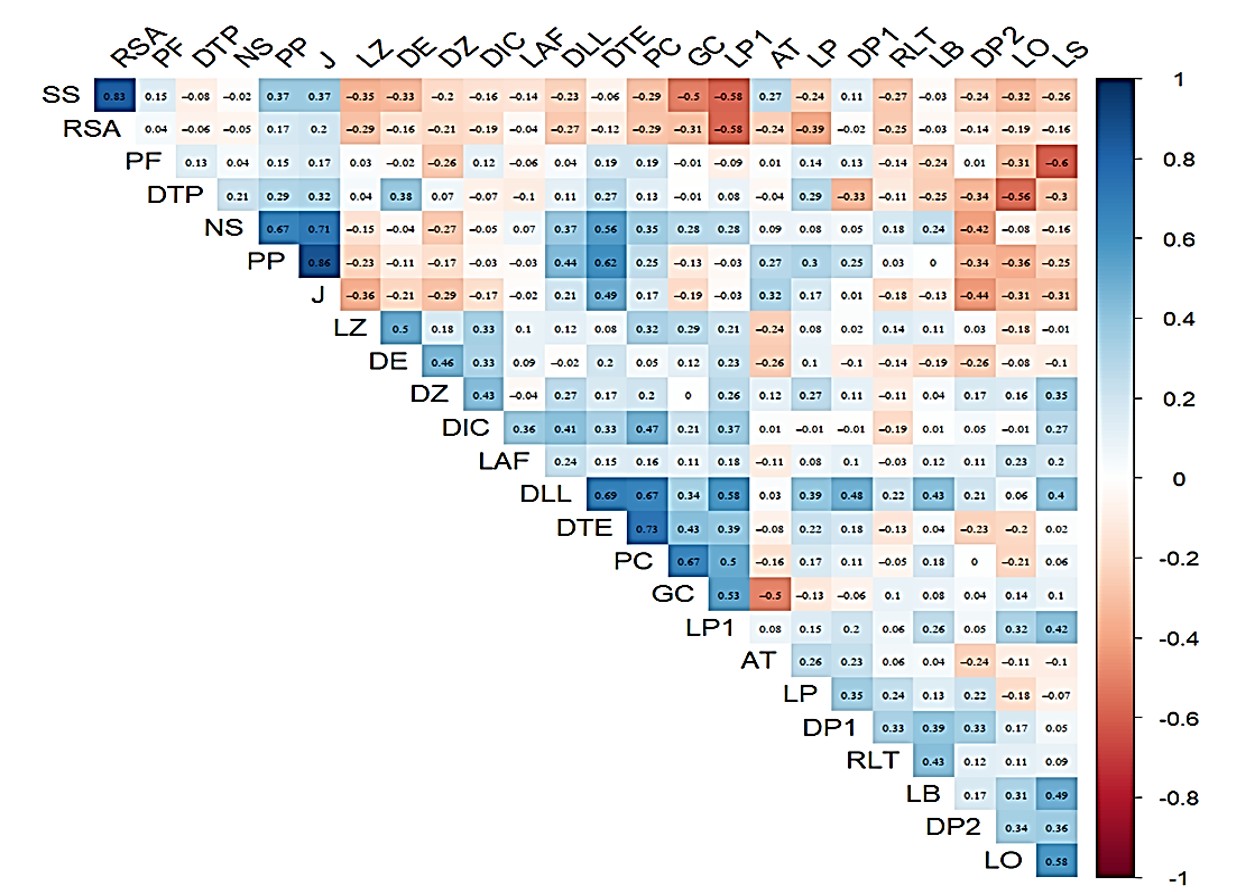
Pearson correlation analysis revealed positive and significant correlations between peel weight (PW) and peel thickness (PT) with a value of 0.81, equatorial transverse diameter (ETD) (0.84), and longitudinal diameter along the fruit (LDL). The same behavior was observed in the variables pulp weight (PW), juice weight (JW), and number of seeds (NS), which showed high positive correlations with values ranging from 0.81 to 0.97, respectively (Figure 1). On the other hand, petal length (PL1) showed inverse correlations with soluble solids (SS) and the ratio of total soluble solids to titratable acidity (TSS/TA) as well as tendril length (TL) and fruit weight (FW).

Pearson correlation analysis for the quantitative variables evaluated in the yellow passion fruit cultivars.
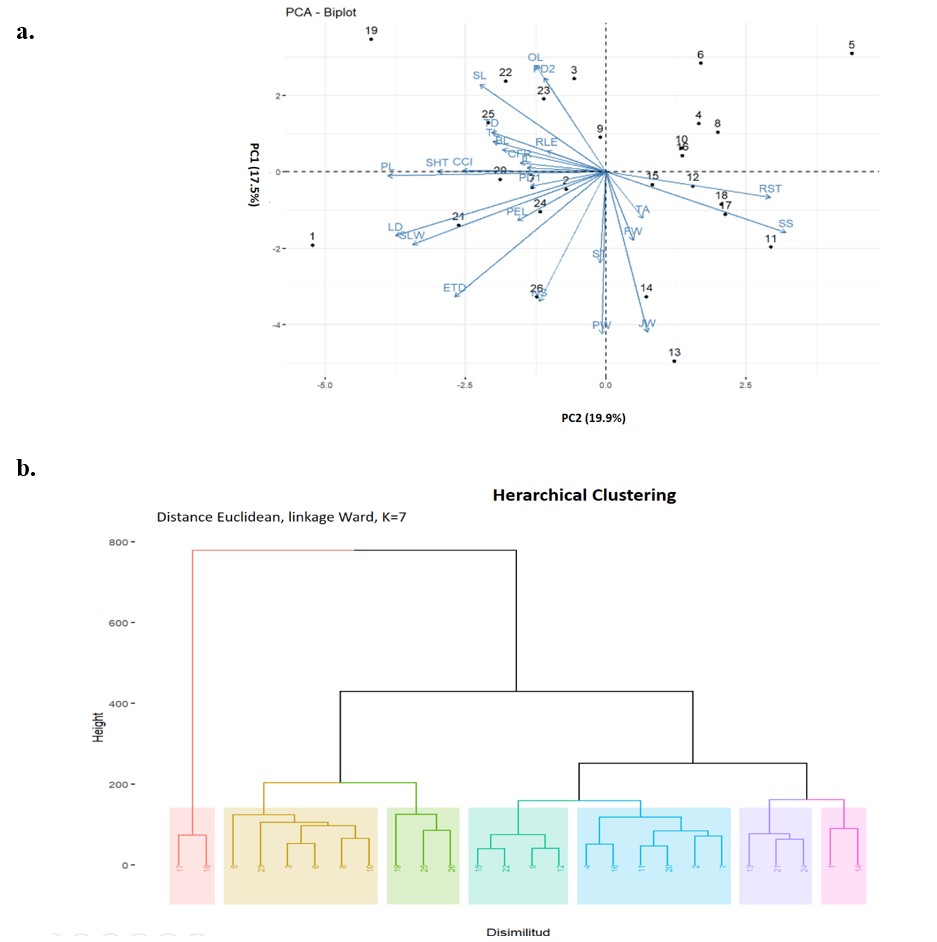
Principal component analysis performed on the quantitative traits evaluated in 26 yellow passion fruit cultivars showed that 37.4% of the total variance was explained by the first two principal components (PC1=19.9% and PC2=17.5%) (Figure 2a). The variables that contributed most to PC1 were soluble solids (SS) and the ratio of total soluble solids to titratable acidity (TSS/TA). PC2 was mainly influenced by the number of seeds (NS), fruit weight (FW), and juice weight (JW).
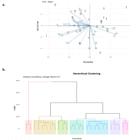
Analysis of principal components and clusters for the quantitative descriptors evaluated. (a). Analysis of principal components of the quantitative descriptors of the 26 passion fruit cultivars. (b). Hierarchical cluster analysis where the 26 passion fruit cultivars were grouped according to the quantitative descriptors based on Euclidean distances.
Cluster analysis of the quantitative traits grouped the passion fruit cultivars into seven groups (Figure 2b). The first group consisted of cultivars 17 and 18, characterized by the highest fruit weight (between 548 and 600 g) and soluble solids content of 11.7 °Brix. The second group included cultivars 3, 5, 6, 8, 10, and 23, which showed similar values for ovary length (with mean values ranging from 7.1 mm to 8.6 mm) and sepal length, with mean values from 7.16 mm to 8.6 mm. Group three was composed of cultivars 19, 25, and 26, grouped due to characteristics such as the inner diameter of the crown cavity, which varied between 4.26 mm and 4.73 mm, and bract length, ranging from 22.33 mm to 24.03 mm. Both variables were above the minimum values presented by the other cultivars, which were 3.7 mm for the inner diameter of the cavity and 17.86 mm for the bract length (Figure 2b).
The fourth group consisted of cultivars 9, 12, 15, and 22, which were grouped mainly by juice weight, although they also showed relatively close values for the number of seeds variable, with mean values of 318.33, 323.66, 290.66, and 276, respectively. The fifth group included cultivars 2, 4, 7, 11, 16, and 20, which showed very similar values for all quantitative traits evaluated, however, they stood out for the tendril length variable, with mean values ranging from 27.54 mm to 36.93 mm (Figure 2b). The sixth group was formed by cultivars 13, 21, and 24, which were mainly related by the number of seeds, with cultivars 13 and 21 having a mean of 406 seeds each, while cultivar 24 had 398 seeds. Finally, the seventh group includes cultivars 1 and 14, which show similarities in the (SST/AT) ratio, with values of 1.94 for cultivar 1 and 2.03 for cultivar 14. They also present similar values in stem diameter, with 15.20 mm and 14.23 mm, respectively.
3.2. Agromorphological characterization using qualitative descriptors
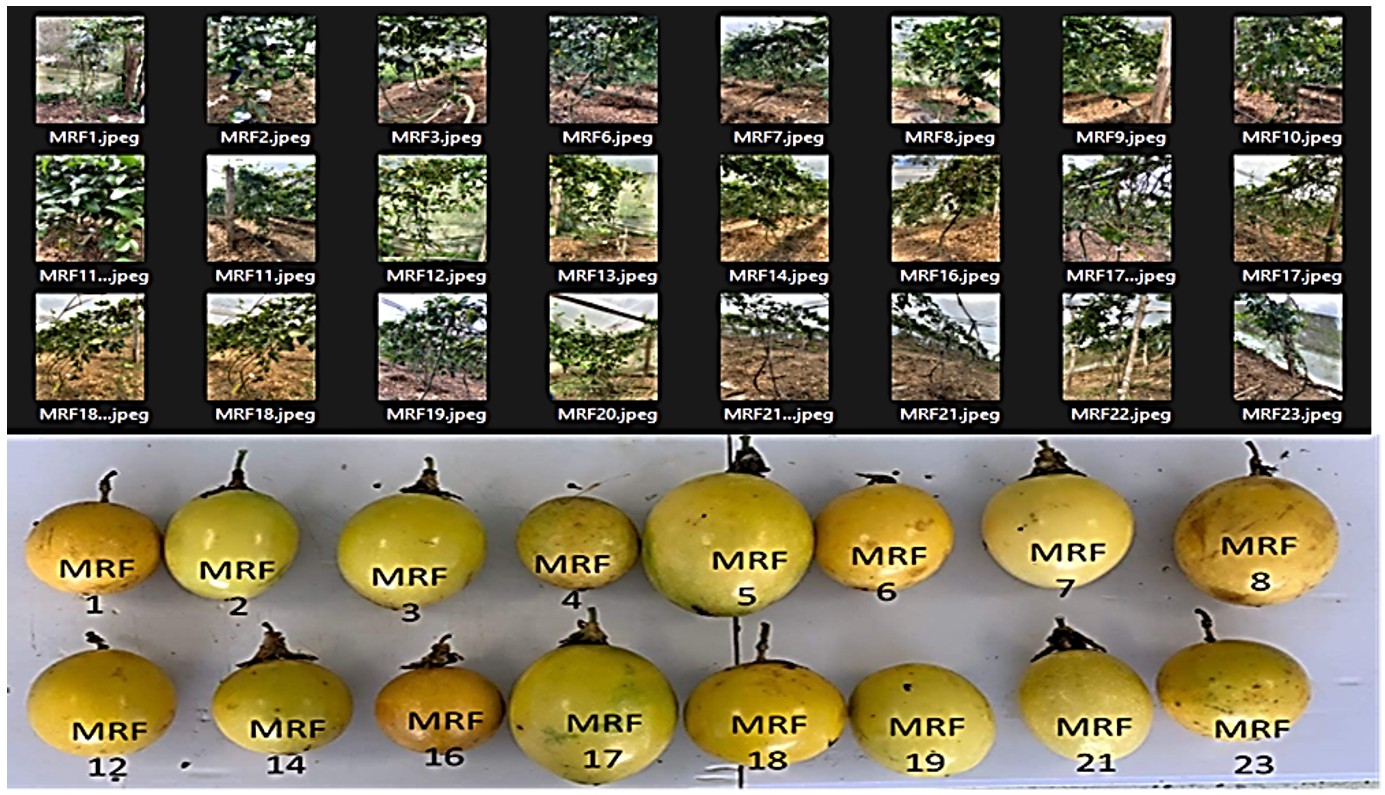
The frequency analysis of qualitative variables evaluated in the 26 yellow passion fruit cultivars showed a high phenotypic variability in characteristics such as fruit shape, where 62% (16 cultivars) presented an ellipsoid shape, 27% round, 8% oblate, and 4% oval; the presence or absence of anthocyanins, where 46% did not present any and the rest of the cultivars showed high (42%) and intermediate (12%) levels. All cultivars presented stipules, but showed variation in the presence or absence of anthocyanins in them. In leaf color, it was observed that 65% had a medium green color, 27% dark green, and 8% light green, suggesting phenotypic segregation for leaf pigments (Figure 3).

Some phenotypic characteristics related to the shape and size of the fruit, the shape of the leaf and the growth habit of the plant, that define the 26 cultivars used in the study. MRF: Morphotype or cultivar of yellow passion fruit evaluated.
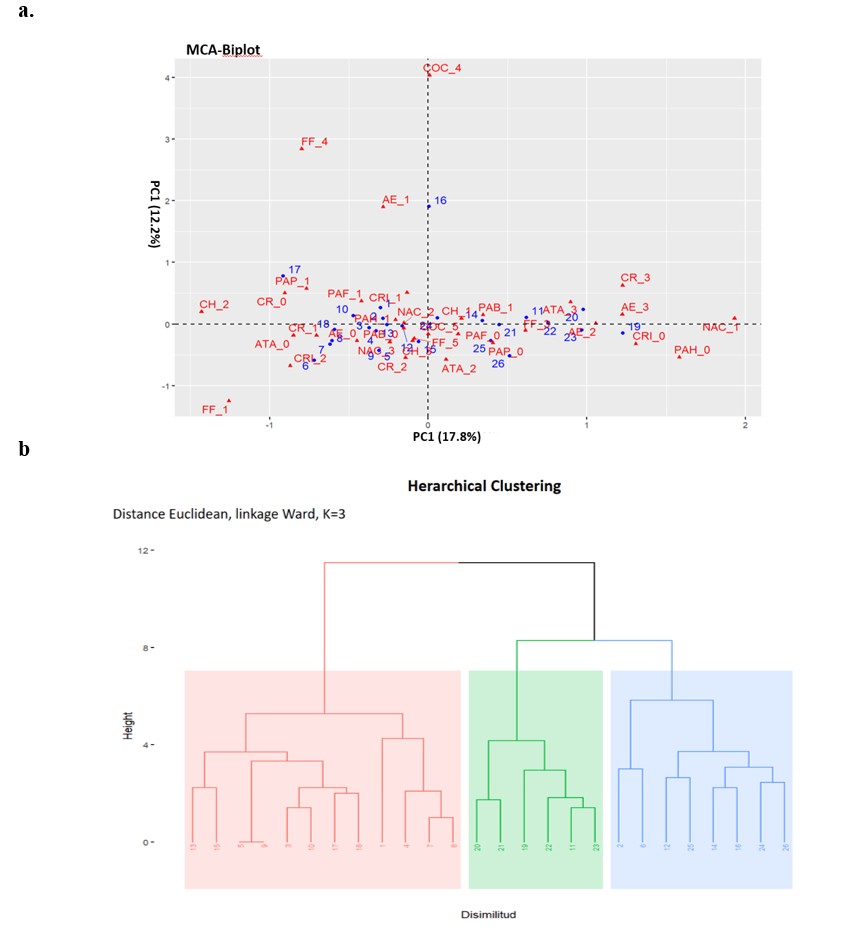
Multiple Correspondence Analysis of the evaluated qualitative variables shows that the first two components explain 30% of the phenotypic variability observed in the evaluated yellow passion fruit cultivars, with the first component explaining 17.8% and the second 12.2% (Figure 4a).
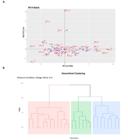
Multiple correspondence and cluster analysis for the qualitative descriptors evaluated. (a). Multiple correspondence analysis showing the contribution of the variables that allowed the 26 passion fruit cultivars to be grouped according to the qualitative variables. (b). Cluster analysis of the qualitative characters evaluated in the 26 passion fruit cultivars using the Euclidian distance.
Cluster analysis of the 26 passion fruit cultivars evaluated using qualitative descriptors formed three large groups, where we can observe that in group I there are four subgroups, and in the remaining two groups there are two subgroups respectively (Figure 4b).
3.3. Agromorphological characterization taking into account the joint analysis of qualitative and quantitative descriptors
The mixed multivariate analysis, considering both qualitative and quantitative variables, showed that the first two components explain 32% of the total phenotypic variation observed, with the first principal component (PC1) explaining 18.1% and the second principal component (PC2) explaining 13.5%. Figure 5a shows a greater phenotypic segregation for cultivars 19, 5, and 6, with the first one showing the greatest variation by presenting the highest value for some variables such as peel thickness (10 mm) compared to the other evaluated cultivars.
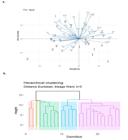
Multivariate analysis considering quantitative and qualitative descriptors. (a). Analysis of mixed factors, taking into account the contribution of the quantitative and qualitative descriptors in the first two components. (b). Cluster analysis shows the ten groups in which the passion fruit cultivars are grouped according to the qualitative and quantitative variables using the distance Euclidean.
Cluster analysis grouped the 26 yellow passion fruit cultivars into five groups (Figure 5b). The first group is composed of cultivars 19, 20, 2, 25, 22, and 23, which are characterized by having fruit weight, seed number, and soluble solids below the average, and variation in fruit shape, leaf shape, color, and the presence or absence of anthocyanin.
The second group includes cultivars 24 and 26, which present a stipule (PE), no anthocyanin (AE), and a larger petal diameter. The third group consists of cultivars 17, 18, 12, 16, 14, 11, and 13, which are characterized by having intermediate values for the longitudinal diameter of the fruit (DLL) (76.63 mm to 87.47 mm) and two colored rings in the filaments of the crown (Figure 5b).
The fourth group includes cultivar 1, which presented the highest values for longitudinal diameter along the fruit (DLL) (104.69 mm), peel thickness (GC) (7.38 mm), peel weight (PC) (159.64 g), inner diameter of the crown cavity (DIC) (5.76 mm), and bract length (30 mm), as well as a round fruit shape, green leaf color, and the presence of anthocyanin.
Finally, the fifth group includes cultivars 7, 8, 5, 4, 6, 2, 10, 3, 9, and 15, which are characterized by having the lowest values for tendril length (LZ) (48.86 mm), petiole length (LP) (9.36 mm), and petiole diameter (DP1) (1.43 mm). Regarding qualitative variables, this group presents anthocyanin in the petiole (PAP) and in the hypanthium (PAH).
3.4 Selection index of superior passion fruit cultivars
The application of the modified Ocampo index (Ocampo et al., 2021b), in which the variables related to precocity were not considered, since they were not evaluated, which is why greater weight was given to the variables related to fruit production. This index allowed the selection of cultivars with better agronomic characteristics related to the fruit (Figure 6), with cultivars 17 (241.19 kg) and 18 (239.50Kg) being the ones that should be used in future breeding programs. On the other hand, cultivars with the lowest values for the selection traits were 23 (50.78) and 5 (49.84), which could indicate a lower agronomic potential compared to the previous ones (Figure 6).
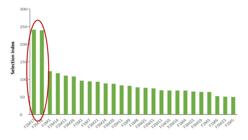
Selection index of superior genotypes proposed by Ocampo (Ocampo et al., 2021b) evaluated in the 26 passion fruit cultivars (Passiflora edulis f. flavicarpa Degener). F1, F2, F3: Farms evaluated; M: Morphotype or cultivar of yellow passion fruit. In the circle, cultivars or morphotypes are selected for their outstanding agronomic characteristics, especially those related to the fruit.
4. Discussion
Morphoagronomic characterization allows the identification of elite accessions with outstanding characteristics such as pulp percentage, juice content, among others (Ocampo et al., 2021 b). These traits are essential for the selection of progenies in breeding programs (Stafne, 2023). To analyze phenotypic diversity through morphoagronomic traits, multiple descriptors are applied, evaluating the interrelationship between them and thus allowing to identify the most promising genotypes to be included in breeding programs (Cavalcante et al., 2023).
In this sense, the morphoagronomic characterization of the 26 yellow passion fruit cultivars in the municipality of Miraflores showed a wide phenotypic variation for variables such as fruit weight (65.60%) and petal length (45.87%), while the equatorial transverse diameter had less variation (8.55%) (Table 3). Similar results were found in studies of phenotypic diversity of Passifloras in Brazil, where variables such as petal length and fruit weight are characters that allow the discrimination of accessions (Lemos Filho et al., 2023; Bezerra et al., 2024). Maciel et al. (2019) found a wide variability in fruit-associated characters in different species of Passifloras spp., from different latitudes in Brazil, thus highlighting the impact of the environment on the phenotypic expression of characters, especially quantitative ones.
The high variability in fruit weight indicates that the evaluated cultivars present a wide potential yield, which can be exploited to select genotypes with larger fruit sizes and pulp content, key characteristics for commercialization. According to Maciel et al. (2019), high coefficients of variation (CV) in fruit weight in Brazilian populations reflect significant genetic differences and opportunities for selection programs. On the other hand, the high variation in petal length could be associated with adaptability to specific agroclimatic conditions and with a possible relationship with pollination efficiency, as reported by Santos et al. (2014). According to the studies of Ocampo et al. (2021b) in Caldas (Colombia), the low variability in the equatorial transverse diameter of the fruit indicates that this variable is more constant among cultivars and less susceptible to environmental influence.
Correlation analyses revealed a high positive correlation between pulp proportion and fruit weight (Figure 1), indicating that cultivars selected for larger fruit size are likely to produce fruits with a higher pulp proportion, an important characteristic for both the industry and fresh markets. This relationship has already been reported and prioritized within Passifloras spp. breeding programs, as stated by Silva et al. (2016) and dos Santos et al. (2024); the use of correlations between fruit weight and quality has been important in Colombia for the identification of high-quality cultivars for commercialization and especially for export, for example in Caldas, Palestina, Ocampo et al. (2021a) reported on the effectiveness of the correlation between some of these variables in the selection of promising materials that can be used as parents in intra and interspecific hybridization programs.
Results similar to those reported by Galeano-Mendoza et al. (2018) in the evaluation of Passifloras spp. germplasm in Palmira, Valle, where they affirm that the relationship between fruit weight and pulp proportion predominates in accessions from different regions of the country; which agrees with the studies conducted by Martínez et al. (2020) in the department of Boyacá, in which the importance of quantitative characters associated with the fruit as indispensable characteristics in directed selection processes is also highlighted. Finally, both for the present study and for that of Morillo et al. (2023), a negative correlation was identified between soluble solids and tendril diameter (Figure 1), so that a higher content of soluble solids is associated with a decrease in its length, this descriptor being important for the differentiation and grouping of the evaluated cultivars, highlighting the importance of this descriptor in morphoagronomic characterization and therefore in the improvement of Passiflora cultivars.
Principal Component Analyses for the evaluated quantitative traits showed that the variables that contribute to explaining the greatest percentage of the phenotypic variation observed in this component were: pulp weight (PP), juice weight (J), and soluble solids content (Figure 2a). Similar results were found by Ocampo et al. (2021a) in Palestina (Caldas), where variables such as fruit dimension and weight explained 20.4% of the observed phenotypic variation and allowed the differentiation of accessions at the study site. Both studies highlight the importance of fruit traits in the discrimination of Passiflora germplasm, as well as soluble solids content, as it is a trait of interest for fruit commercialization and in the use of characters for the selection of germplasm in breeding and selection processes of genotypes of interest for their agronomic and quality characteristics. Differences in the position of components in different germplasm characterization studies could be due to variations in data structure or to study-specific factors, such as differences in the varieties analyzed or in growing conditions, which may have influenced the correlation of descriptors (Morillo et al., 2023).
Cluster analysis considering the quantitative descriptors showed that the characteristics associated with fruit and quality are the ones that determine the groupings (Figure 2b). In Colombia, Ocampo et al. (2021a) reported phenotypic groups in Caldas based on fruit weight, size, and juice content, highlighting that these are the most discriminating variables. Similarly, Martínez et al. (2020) in Boyacá identified grouping patterns that suggest that the agroecological conditions of the department favor the phenotypic differentiation of cultivars. Morillo et al. (2023) were also able to observe consistent patterns in Passiflora edulis f. flavicarpa and emphasized the use of cluster analyses as tools that serve to identify outstanding genotypes and for the design of selection strategies. Such methodologies, widely disseminated in Brazil and Colombia, are considered effective for identifying duplicates, homogeneous and/or heterogeneous groups within cultivars and for the use of genetic variability in cultivar improvement programs and for the selection of elite genotypes (Ribeiro et al., 2024).
In the frequency analyses for the qualitative traits, a high phenotypic segregation was observed, especially for characteristics such as fruit color and the presence of anthocyanins (Figure 3). The yellow coloration is predominant in the production of passion fruit, a condition that corresponds to the preference in national and international sales, as reported by Ocampo et al. (2021a, 2021b). The presence of anthocyanins is related to resistance to abiotic stress, as well as to a higher antioxidant capacity (Gioppato et al., 2019), therefore the segregation of this trait in the evaluated population can be used to select cultivars resistant to extreme environments and with high antioxidant contents. Studies conducted at the international, national, and regional levels show the importance of these traits in the selection of promising genotypes that meet market needs and respond to current climate change conditions (Ocampo et al., 2021b; Morillo et al., 2023; Stafne, 2023).
Similarly, multiple correspondence analysis showed that characteristics such as peel color and the presence of anthocyanins in various parts of the plant explain a large part of the observed qualitative variation (Figure 4a). These findings coincide with those reported by Jesus et al. (2022), who highlighted that qualitative descriptors, such as fruit color and the presence of anthocyanins, are determinant in differentiating accessions of Passiflora spp. in Brazil. Similarly, Galeano-Mendoza et al. (2018) observed comparable patterns in their analysis of passion fruit accessions in Palmira, Colombia, underlining the usefulness of these descriptors in the phenotypic classification of Passiflora germplasm. Morillo et al. (2023) also highlighted the importance of these qualitative variables for the differentiation of local accessions in Boyacá, which not only allow for the classification of genotypes but also for the evaluation of their commercial potential, as previously pointed out by Galeano-Mendoza et al. (2018) and Jesus et al. (2022) in their respective investigations, since fruit color is considered a key attribute in local and export markets.
Mixed analyses corroborated the previous results, highlighting the variables associated with the fruit and its quality (Figure 5a,5b), as well as the color and shape of the different morphological structures and the presence or absence of anthocyanins as the most discriminating characters in the evaluated yellow passion fruit cultivars (Lemos Filho et al., 2023). Results consistent with the morphoagronomic evaluations of Passiflora spp. germplasm, which ratify the phenotypic variability associated with leaf, stem, flower, and fruit. Diversity that can be exploited within conservation and genetic improvement programs of the species (Gioppato et al., 2019).
Research, such as that conducted by Pereira et al. (2015), shows how selection indices are an indispensable tool for integrating multiple variables that allow the selection of genotypes based on their multivalent traits. In the Colombian context, such statements are corroborated by the research conducted by Ocampo et al. (2021a) in Caldas, who emphasize the same traits as key characteristics in genetic improvement processes. In the case of Boyacá, recent observations such as those of Morillo et al. (2023) reinforce these findings insofar as this type of analysis allows the identification of genotypes that adapt to the climate of the highlands and exhibit superior production and quality characteristics. This methodological approach is relevant in regions where the agroclimatic diversity demands genetic materials adapted to it and with high production. The selection of indices is the reason to optimize the use of resources towards genotypes that meet market demands and with high profitability rates of the production systems. Regarding the prioritized genotypes in Miraflores, the high fruit weight, pulp proportion, and °Brix content are indispensable characteristics in cultivars to guarantee a comparative advantage in national and international markets, and which in turn constitute the raw material for directed selection processes in the genetic improvement of the species in Colombia.
Acknowledgements
The authors are grateful to the VIE (Vicerrectoría de Investigación y Extensión) from UPTC, Universidad Pedagógica y Tecnológica de Colombia (UPTC) and PITAFCOL (Asociación de Pitahayas y Frutas de Colombia) for the financial and technical support in the development of the research.
References
-
ADA, M., OĞUZ, İ., KAFKAS, N.E., BURGUT, A. and TOPÇU, H., 2024. A research on the detection of some phytochemical properties in the fruits of Passiflora species. In: 3rd International Conference on Research of Agricultural and Food Technologies (I-CRAFT-2023), 4-6 October 2023, Adana, Turkey. Les Ulis: BIO Web of Conferences, vol. 85, pp. 01050. https://doi.org/10.1051/bioconf/20248501050
» https://doi.org/10.1051/bioconf/20248501050 -
BEZERRA, M.E.A., DA SILVA SALES, W., DE OLIVERA SANTOS, J.P., DA SILVA BARBOSA, J.M., DE MELLO, D.R., DA SILVA, J.G., DA SILVA, F.E. and ARAÚJO, V.C., 2024. Genetic diversity of Passiflora cincinnata in the Chapada do Araripe, Northeast Brazil. Observatório de La Economía Latinoamericana, vol. 22, pp. e5392. http://doi.org/10.55905/oelv22n6-201
» http://doi.org/10.55905/oelv22n6-201 -
CARMINATI, M., TONDELLO, M. and ZANARDI, R., 2024. Passiflora incarnata L., herba, in benzodiazepine tapering: long-term safety and efficacy in a real-world setting. Frontiers in Psychiatry, vol. 15, pp. 1471083. http://doi.org/10.3389/fpsyt.2024.1471083 PMid:39429529.
» http://doi.org/10.3389/fpsyt.2024.1471083 -
CAVALCANTE, N., VIANNA, A.P., SANTOS, E.A., AMBRÓSIO, M., GONÇALVES JÚNIOR, D.H. and SILVA, F.A., 2023. Effect of agronomic and molecular information on the genetic diversity of passion fruit. Functional Plant Breeding Journal, vol. 5, no. 1, pp. 1-15. http://doi.org/10.35418/2526-4117/v5a10
» http://doi.org/10.35418/2526-4117/v5a10 -
DOS SANTOS, I.S., LIMA, L.K.S., SAMPAIO, S.R., SOARES, T.L. and JESUS, O.N., 2024. Genetic parameters and prediction of genotypic values in a segregating population of Passiflora BC3 [(P. edulis x P. cincinnata) x P. edulis] for fruit quality and resistance to cowpea aphid-borne mosaic virus using REML/BLUP. Scientia Horticulturae, vol. 330, pp. 113023. http://doi.org/10.1016/j.scienta.2024.113023
» http://doi.org/10.1016/j.scienta.2024.113023 -
GALEANO-MENDOZA, C.H., CÉRON-SOUZA, I. and ARANGO, L.V., 2018. Agronomic evaluation of a Colombian passion fruit (Passiflora edulis Sims) germplasm collection. Agronomy Research, vol. 16, pp. 1649-1659. http://doi.org/10.15159/AR.18.190
» http://doi.org/10.15159/AR.18.190 -
GIOPPATO, H.A., DA SILVA, M.B., CARRARA, S., PALERMO, B.R.Z., DE SOUZA MORAES, T. and DORNELAS, M.C., 2019. Genomic and transcriptomic approaches to understand Passiflora physiology and to contribute to passionfruit breeding. Theoretical and Experimental Plant Physiology, vol. 31, pp. 173-181. http://doi.org/10.1007/s40626-018-0134-1
» http://doi.org/10.1007/s40626-018-0134-1 -
JESUS, O.N., LIMA, L.K.S., SOARES, T.L., SILVA, L.N., SANTOS, I.S., SAMPAIO, S.R. and OLIVEIRA, E.J., 2022. Phenotypic diversity and alternative methods for characterization and prediction of pulp yield in passion fruit (Passiflora spp.) germplasm. Scientia Horticulturae, vol. 292, pp. 110573. http://doi.org/10.1016/j.scienta.2021.110573
» http://doi.org/10.1016/j.scienta.2021.110573 -
JOSSE, J. and HUSSON, F., 2016. missMDA: a package for handling missing values in multivariate data analysis. Journal of Statistical Software, vol. 70, pp. 1-31. https://doi.org/10.18637/jss.v070.i01
» https://doi.org/10.18637/jss.v070.i01 -
KASSAMBARA, A. and MUNDT, F., 2020 [viewed 30 January 2025]. factoextra: extract and visualize the results of multivariate data analyses [online]. R Package Version 2020. Available from: https://cran.r-project.org/web/packages/factoextra/index.html
» https://cran.r-project.org/web/packages/factoextra/index.html -
KUETHE, J., BERNAL, H.D., MOLINARI, M. and VECCHIA, M., 2024. Validating the names of three species of Passiflora from the northern portion of South America. Phytotaxa, vol. 663, pp. 77-89. http://doi.org/10.11646/phytotaxa.663.2.3
» http://doi.org/10.11646/phytotaxa.663.2.3 -
LE, S., JOSSE, J. and HUSSON, F., 2008. FactoMineR: an R package for multivariate analysis. Journal of Statistical Software, vol. 25, no. 1, pp. 1-18. http://doi.org/10.18637/jss.v025.i01.
» https://doi.org/ http://doi.org/10.18637/jss.v025.i01 -
LEMOS FILHO, D.S., DE LIMA SANTOS, M., DA MOTA PORTO, A.C., LIMA, R.P.M. and DE OLIVEIRA, A.C., 2023. Floral biometrics and phenological characterization of flowering and fruiting of the passion fruit Passiflora trintae in southwestern Bahia, Brazil. Iheringia. Série Botânica, vol. 78, pp. 1-10. http://doi.org/10.21826/2446-82312023v78e2023016
» http://doi.org/10.21826/2446-82312023v78e2023016 -
MACIEL, K.S., DE LIMA, P.A.M., MADALON, F.Z., FERREIRA, M.F.S., ALEXANDRE, R.S. and LOPES, J.C., 2019. Genetic diversity in passion fruit plants at different altitudes. Australian Journal of Crop Science, vol. 13, pp. 1083-1093. http://doi.org/10.21475/ajcs.19.13.07.p1545
» http://doi.org/10.21475/ajcs.19.13.07.p1545 -
MARTÍNEZ, M.A., MORILLO, A.C. and REYES-ARDILA, W., 2020. Characterization of the genetic diversity in Passiflora spp. in the Boyacá Department, Colombia. Chilean Journal of Agricultural Research, vol. 80, no. 3, pp. 342-351. http://doi.org/10.4067/S0718-58392020000300342.
» https://doi.org/ http://doi.org/10.4067/S0718-58392020000300342 -
MORILLO, A.C., MARTÍNEZ, M.A. and MORILLO, Y., 2023. Genetic diversity pattern of Passiflora spp. in Boyacá, Colombia. Pesquisa Agropecuária Brasileira, vol. 58, pp. 03062. http://doi.org/10.1590/S1678-3921.pab2023.v58.03062
» http://doi.org/10.1590/S1678-3921.pab2023.v58.03062 -
NIKOLOVA, K., VELIKOVA, M., GENTSCHEVA, G., GERASIMOVA, A., SLAVOV, P., HARBALIEV, N., MAKEDONSKI, L., BUHALOVA, D., PETKOVA, N. and GAVRILOVA, A., 2024. Chemical compositions, pharmacological properties and medicinal effects of genus Passiflora L.: A Review. Plants, vol. 13, no. 2, pp. 228. http://doi.org/10.3390/plants13020228 PMid:38256781.
» http://doi.org/10.3390/plants13020228 -
OCAMPO, J., ACOSTA, N. and HERNÁNDEZ, J., 2017. Variability and genetic structure of yellow passion fruit (Passiflora edulis f. flavicarpa Degener) in Colombia using microsatellite DNA markers. Agronomia Colombiana, vol. 35, pp. 135-149. http://doi.org/10.15446/agron.colomb.v35n2.59973
» http://doi.org/10.15446/agron.colomb.v35n2.59973 - OCAMPO, J., HURTADO, A. and LOPEZ, W.R., 2021b. Genetic resources and breeding prospects in Passiflora species. In: A. HURTADO SALAZAR, J. OCAMPO, N. CEBALLOS-AGUIRRE, D.J. GARCIA JARAMILLO and W.R. LOPEZ, eds. Passiflora: genetic, grafting and biotechnology approaches Hauppauge: Nova Science Publisher, pp. 1–76.
- OCAMPO, J., MARÍN, V. and URREA, R., 2021a. Agro-morphological characterization of yellow passion fruit (Passiflora edulis f. flavicarpa Degener) reveals elite genotypes for a breeding program in Colombia. Agronomia Colombiana, vol. 39, no. 2, pp. 156-176.
- OCAMPO, J., URREA, R., WYCKHUYS, K. and SALAZAR, M., 2013. Exploración de la variabilidad genética del maracuyá (Passiflora edulis f. flavicarpa Degener) como base para un programa de fitomejoramiento en Colombia. Acta Agronomica, vol. 62, pp. 352-360.
-
PEREIRA, D.A., CORRÊA, R.X. and OLIVEIRA, A.C., 2015. Molecular genetic diversity and differentiation of populations of ‘somnus’ passion fruit trees (Passiflora setacea DC): implications for conservation and pre-breeding. Biochemical Systematics and Ecology, vol. 59, pp. 12-21. http://doi.org/10.1016/j.bse.2014.12.020
» http://doi.org/10.1016/j.bse.2014.12.020 -
RIBEIRO, C.A.M., BENEDETTI, A.R., TESSMER, M.A., SOARES, N.R., BIBIANO, L.B.J., DA GLORIA, B.A., DE STEFANO PIEDADE, S.M., DAS GRAÇAS, D. and VIEIRA, M.L.C., 2024. Self-incompatibility and phenotypic assessment of yield and quality in Passiflora alata, an understudied tropical fruit species. Scientia Horticulturae, vol. 338, pp. 113666. http://doi.org/10.1016/j.scienta.2024.113666
» http://doi.org/10.1016/j.scienta.2024.113666 -
SANTOS, E.A., VIANA, A.P., FREITAS, J.D.O., SOUZA, M.M., PAIVA, C.L., RODRIGUES, D.L. and TAVARES, R.F., 2014. Phenotyping of Passiflora edulis, P. setacea, and their hybrids by a multivariate approach. Genetics and Molecular Research, vol. 13, no. 4, pp. 9828-9845. https://doi.org/10.4238/2014.november.27.10 PMid:25501192.
» https://doi.org/10.4238/2014.november.27.10 -
SILVA, F.H., MUÑOZ, P.R., VINCENT, C.I. and VIANA, A.P., 2016. Generating relevant information for breeding Passiflora edulis: genetic parameters and population structure. Euphytica, vol. 208, pp. 609-619. http://doi.org/10.1007/s10681-015-1616-8
» http://doi.org/10.1007/s10681-015-1616-8 -
STAFNE, E.T., 2023. Challenges in breeding and selecting Passiflora edulis f. flavicarpa× P. incarnata hybrids. Technology in Horticulture, vol. 3, pp. 16. http://doi.org/10.48130/TIH-2023-0016
» http://doi.org/10.48130/TIH-2023-0016 -
VOSS, D.H., 2002 [viewed 30 January 2025]. The royal horticultural society colour chart 2001. JARS [online], vol. 56, no. 1. Available from: https://www.upov.int/meetings/en/doc_details.jsp?meeting_id=48107&doc_id=416979
» https://www.upov.int/meetings/en/doc_details.jsp?meeting_id=48107&doc_id=416979 -
WEI, T. and SIMKO, V., 2017 [viewed 30 January 2025]. corrplot: visualization of a correlation matrix (Version 0.84) [software]. Available from: https://cran.r-project.org/web/packages/corrplot/index.html
» https://cran.r-project.org/web/packages/corrplot/index.html -
YOTOKO, K.S., DORNELAS, M.C., TOGNI, P.D., FONSECA, T.C., SALZANO, F.M., BONATTO, S.L. and FREITAS, L., 2011. Does variation in genome sizes reflect adaptive or neutral processes? New clues from Passiflora. PLoS One, vol. 6, no. 3, pp. e18212. http://doi.org/10.1371/journal.pone.0018212
» http://doi.org/10.1371/journal.pone.0018212