 Ultrastructural response of Beta vulgaris L. epidermis and stomata to water stress using scanning electron microscopy
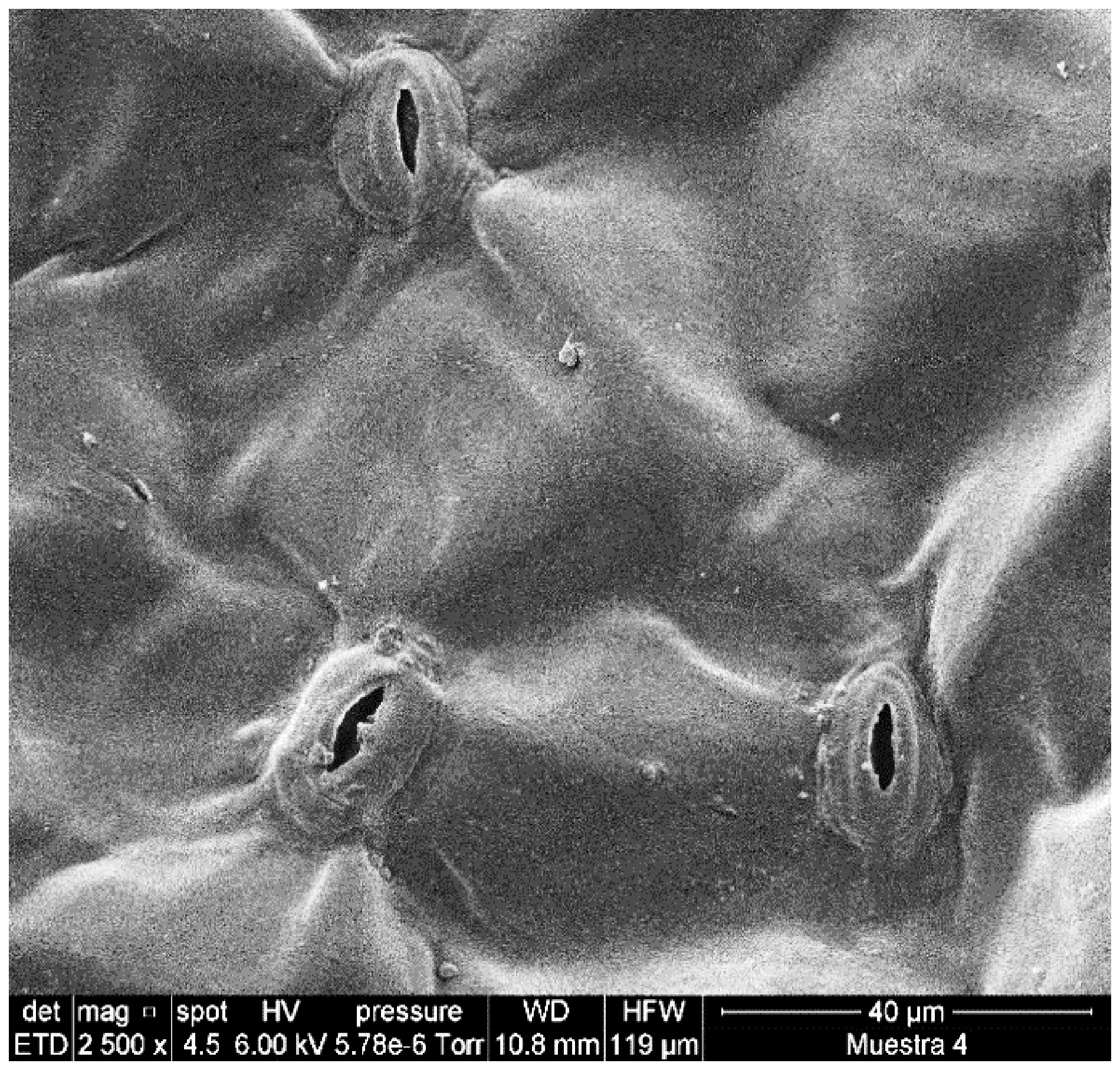
In order to counteract the negative effects of water scarcity on plant growth, the application rate of KPA was evaluated in pots with limited irrigation. The aim was to enhance water retention in the growing medium to ensure crop viability under reduced water supply. The objective of this study was to evaluate ultrastructural changes in the epidermis and stomatal apparatus of Beta vulgaris, as well as to determine their physical parameters under water-deficient conditions. A completely randomized experimental design was used to organize and analyze the data on physical characteristics. The experiment was divided into four sample groups: M1, M2, M3, and M4. The results were processed using InfoStat software and revealed significant differences among the plant groups in two of the three physical characteristics studied. Treatments M1 and M4, which included KPA, showed an overall improvement in the plant’s physiological and morphological responses, outperforming treatments M2 and M3. In contrast, M3, which did not receive KPA, exhibited morphological adaptation to water stress. At the ultrastructural level, KPA allowed the plants to maintain epidermal integrity and stomatal function, demonstrating its crucial role in preserving plant physiology under stress conditions.
Keywords:
Beta vulgaris L; ultrastructural analysis; water stress
 Thumbnail
 Thumbnail
 Thumbnail
 Thumbnail
 Thumbnail
 Thumbnail
 Thumbnail
 Thumbnail