 Study of adaptation of the gill apparatus of commercial fish of the Ile-Balkhash basin to the effects of pollutants
Abstract
In recent decades, there has been an increase in the pollution of the waters of the Ile-Balkhash basin by agricultural, industrial and domestic discharges, which has negative consequences for the ichthyofauna. The aim of this study was a histopathological analysis of the condition of the gills, which are the most sensitive to contamination of fish organs, due to their direct and constant contact with water. 7 specimens of three main fish species of commercial fish fauna were caught: bream (Abramis brama) and carp (Cyprinus carpio), both as typical benthophages with some specific feeding features and pike perch (Sander lucioperca). Microscopic analysis of the gills of the common bream (Abramis brama) revealed epithelial hypertrophy and hyperplasia, mucosal and chloride cell changes, epithelial detachment, necrosis, hyperemia, and aneurysms, which were quantified using a semi-quantitative approach. It was found that epithelial hypertrophy, hyperplasia, epithelial detachment and necrosis significantly varied between seasons, while the severity of necrosis was significantly higher in one of the seasons. Comparative analysis showed that in the carp (Cyprinus carpio), adaptive changes in the gills predominate, while in the pike perch (Sander lucioperca), as a more sensitive species, pronounced destructive lesions indicate a high level of environmental stress. Discriminant canonical analysis confirmed that epithelial hyperplasia, mucosal cell changes, epithelial detachment and necrosis are the main factors of seasonal differentiation. The results obtained demonstrate the high informative value of histopathological biomarkers of fish gills for assessing the seasonal dynamics of water quality within a single aquatic ecosystem.
Keywords:
water environment monitoring; water quality; histopathological study; fish gills; carp; bream; pike perch; bioaccumulation; pollutants
Resumo
Nas últimas décadas, tem-se observado aumento da poluição das águas da bacia do Ile-Balkhash por descargas agrícolas, industriais e domésticas, o que acarreta consequências negativas para a ictiofauna. O objetivo deste estudo foi realizar uma análise histopatológica das brânquias, que são os órgãos dos peixes mais sensíveis à contaminação, devido ao seu contato direto e constante com a água. Foram capturados sete espécimes de cada uma das três principais espécies de peixes comerciais: brema (Abramis brama), carpa comum (Cyprinus carpio), ambas bentófagas típicas com alguns hábitos alimentares específicos de cada espécie, e lúcio-perca (Sander lucioperca). A análise microscópica das brânquias da brema comum (Abramis brama) revelou hipertrofia e hiperplasia epitelial, alterações nas células mucosas e de cloreto, descolamento epitelial, necrose, hiperemia e aneurismas, que foram quantificados utilizando uma abordagem semiquantitativa. Verificou-se que a hipertrofia epitelial, a hiperplasia, o descolamento epitelial e a necrose variaram significativamente entre as estações do ano, sendo a necrose significativamente mais severa em uma das estações. Uma análise comparativa revelou que as alterações branquiais adaptativas predominam na carpa comum (Cyprinus carpio), enquanto o lúcio-perca (Sander lucioperca), uma espécie mais sensível, apresentou lesões destrutivas pronunciadas, indicando altos níveis de estresse ambiental. A análise canônica discriminante confirmou que a hiperplasia epitelial, as alterações nas células da mucosa, o desprendimento epitelial e a necrose são os principais fatores que determinam a diferenciação sazonal. Os resultados demonstram o alto valor informativo dos biomarcadores histopatológicos das brânquias de peixes para avaliar a dinâmica sazonal da qualidade da água em um único ecossistema aquático.
Palavras-chave:
monitoramento do ambiente aquático; qualidade da água; estudo histopatológico; brânquias de peixes; carpa comum; brema; lúcio-perca; bioacumulação; poluentes
1. Introduction
Intensive expansion of economic activity in the basin of the transboundary Ile River, which is one of the largest waterways of the Republic of Kazakhstan, has become one of the key factors in the anthropogenic transformation of the Ile-Balkhash water basin in recent decades. A significant increase in industrial production, mining and agriculture, as well as a rapid increase in the number of urban and rural populations, especially in the territory of the People's Republic of China, led to an increase in man-made load on the region's aquatic ecosystems. As a result, there is a steady trend towards deterioration of water quality, accompanied by the accumulation of pollutants of various nature, which poses a serious threat to hydrobionts and the ecological stability of the basin. Traditionally, water quality monitoring in freshwater ecosystems is based on periodic hydrochemical measurements of the concentrations of pollutants in water and bottom sediments. However, these methods, despite their informative value, have a number of significant limitations, which are economically costly, do not always reflect the complex impact of pollutants, and, most importantly, do not allow to assess the biological effects of pollution at the level of living organisms. In this regard, the concept of biological monitoring has been actively developed in recent decades, within the framework of which a wide range of biomarkers has been proposed that allow for qualitative and quantitative assessment of the reactions of aquatic organisms to the effects of anthropogenic pollutants (Vasanthi et al., 2013; Van der Oost et al., 2003). A special place among biomarker approaches is occupied by cyto-and histopathological methods, which are widely used to detect structural and functional rearrangements at the cellular, tissue, and subcellular levels in fish exposed to various types of pollutants.
Changes in the morphological organization of fish internal organs are considered as an integral indicator of long-term and combined exposure to adverse environmental factors (Pereira et al., 2013; Nascimento et al., 2012; Rašković et al., 2015). Among the target organs of fish, gills are the most informative in assessing the degree of water pollution. This is due to their multifunctional role, which includes gas exchange, ion-osmotic and acid-base regulation, as well as the excretion of nitrogenous metabolic products. The gill epithelium is characterized by an exceptionally large surface area, a thin respiratory barrier and direct contact with the aquatic environment, which makes it particularly vulnerable to the effects of dissolved toxicants and suspended particles (Kostić et al., 2017).
Fish gills are a multifunctional organ that plays a key role in the implementation of physiological adaptations and pathological responses to environmental changes (Evans et al., 2005). Nowadays, numerous studies confirm that structural changes in the gill apparatus that occur under the influence of chemical and physical pollutants can be considered reliable and sensitive biomarkers of water quality and the ecological state of reservoirs (Roberts and Rodger, 2012; Lenhardt et al., 2015; Lujić et al., 2015). In recent decades, a significant array of experimental and field data has been accumulated demonstrating the effectiveness of using fish gills to assess the toxicity of various pollutants both in laboratory conditions and in natural ecosystems (Kostić-Vuković et al., 2021; Mazon et al., 2002; Ribeiro et al., 2002). It is established that histopathological lesions of the gills caused by the increasing level of hydrosphere pollution are widespread among representatives of natural ichthyofauna and pose a serious problem not only for natural ecosystems, but also for fish farming facilities. Despite this, generalized data on histopathological changes in the gill apparatus of fish under conditions of complex anthropogenic impact remain fragmentary. At the same time, morphological analysis of the gills of various fish species is a correct, informative and relatively accessible tool for environmental diagnostics, which makes it possible to detect both background and episodic ("volley") contamination of water resources, as well as to identify possible sources of pathological changes in the fish body at minimal financial cost (Stentiford et al., 2003).
2. Materials and Methods
2.1. Study area and sample collection
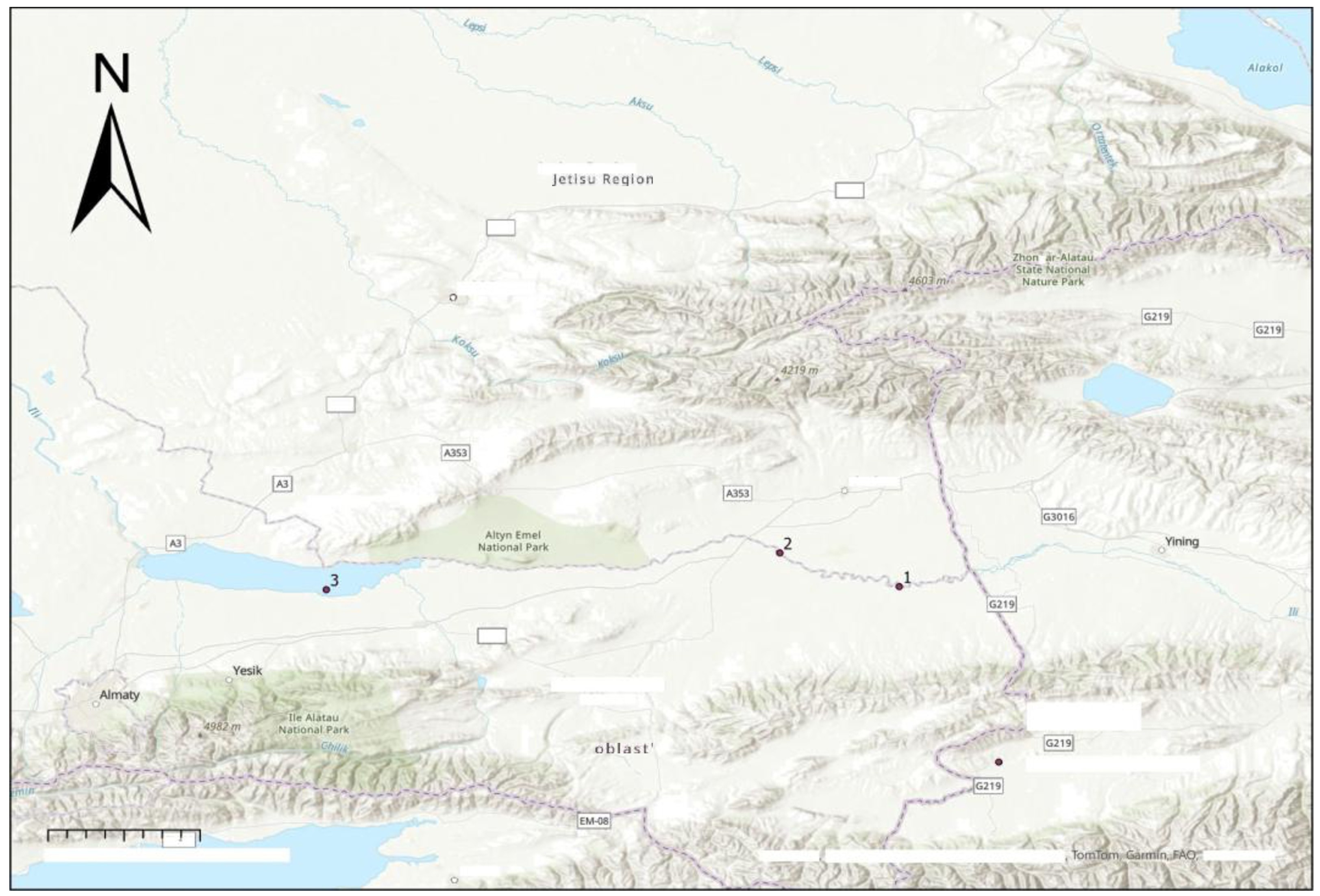
The object of the study was 21 individuals of fish, 7 specimens of each species – carp (Cyprinos carpio), bream (Abramis brama) and pike perch (Sander luciopreca). Trapping was carried out in three key areas of the Ile-Balkhash basin: point 1 - Dobun Hydrological Post (43.758632° N, 80.231509° E); point 2 - Usek River Mouth, (43.904209 ° N, 79.737592 ° E); point 3 - Near Koldy Settlement (between Zharsu and Lavar rivers) (43.745221° N, 77.862059 ° E) (Figure 1).

Map of the study area showing three sample sites in Ili-Balkhash basin. Site 1 - Dobun Hydrological Post (43.758632° N, 80.231509° E); site 2 - Usek River Mouth, (43.904209 ° N, 79.737592 ° E); site 3 - Near Koldy Settlement (between Zharsu and Lavar rivers) (43.745221° N, 77.862059 ° E).
The study included 21 fish specimens, distributed by species as follows: 7 Abramis brama; 7 Cyprinus carpio; 7 Sander lucioperca. Each species was analyzed by season: 11 individuals per species in spring and 10 individuals per species in autumn; consequently, a total of 21 individuals were studied per season, ensuring the comparability of groups and the validity of the inter-seasonal analysis. This approach was consistent with recommendations for forming representative samples in ecological studies (Zar, 2010; Quinn and Keough, 2002). Sampling was conducted during two characteristic hydrobiological periods: the spring season (April-May 2024), a period of increased metabolic activity and enhanced water exchange, and the fall season (September-October 2024), a period of relative stabilization of hydrological parameters. These seasons were selected due to their ecological representativeness and are widely used in monitoring studies of aquatic ecosystems (Allan and Castillo, 2007; Wetzel, 2001). During the sampling period, the following water parameters were recorded (mean values ± SD): temperature: 14.8–22.3 °C, pH: 7.4–8.2, dissolved oxygen: 5.6–8.9 mg/L, salinity: 0.8–1.3 g/L, ammonium (NH4+) content: 0.2–0.6 mg/L, nitrates (NO3−): 1.5–4.2 mg/L. It was found that variations in these parameters correlate with the severity of histopathological changes in the gills, which is consistent with literature data on the influence of water quality on the morphofunctional state of the gill apparatus in fish (Mallatt, 1985; Camargo and Alonso, 2006).
The gills were removed immediately after the fish were slaughtered and fixed in a 10% formalin solution. Morphometric analysis included measuring the length of gill filaments, counting the number of gill rakers, and determining their density per unit area. The measurements were performed using a Leica stereo microscope using the ImageJ digital program. At the same time, a hydrochemical analysis of water was carried out in cooperation with the Institute of Hydrogeology and Geoecology. Akhmetsafin in the laboratory of chemical and analytical research methods (Almaty, Kazakhstan), during which temperature, pH, dissolved oxygen content, total hardness, as well as concentrations of nitrates and phosphates as the main biogenic pollutants were determined.
2.2. Histological analysis
After fixation, gill tissue samples were subjected to standard histological processing (Eissa et al., 2025), which included the stages of dehydration of samples in ethyl alcohol of increasing concentration, clearing and pouring in paraffin. Serial sections of gills were made on a microtome 5 microns thick, which were then stained with standard colors - Mayer's hematoxylin and eosin. Gill tissue samples were photographed using a camera attachment on iScope (Euromex) microscope.
A semi-quantitative scale of damage (0-3 points) was used, where 0 indicates no changes, 1 indicates mild changes (local hyperplasia), 2 indicates moderate changes (lamellar fusion, edema), and 3 indicates severe changes (necrosis, epithelial destruction). Additionally, the Gill Histopathological Index (GHI) was calculated based on the sum of scores (Bernet et al., 1999). The proportion of damaged secondary lamellae ranged from 18–65% depending on the site and season; mean GHI values ranged from 1.2 ± 0.3 (relatively pristine sites) to 3.8 ± 0.6 (areas of anthropogenic impact) (p < 0.05). Species selection and sample size were refined: n = 21 fish (Abramis brama, Cyprinus carpio, Sander lucioperca, 7 individuals of each species) were studied, collected during the spring and fall periods. Sampling and storage conditions were supplemented: sampling was conducted at 3 stations in the Ila-Balkhash Basin; gills were fixed in 10% neutral formalin, and sectioning and staining were performed according to standard procedures (hematoxylin-eosin). Samples were stored under controlled laboratory conditions, in accordance with international protocols.
2.3. Statistical analysis
Statistical data processing included correlation analysis using the Spearman’s coefficient to assess the relationship of gill morphometric characteristics with hydrochemical parameters, as well as analysis of variance (ANOVA) with the Tukey post-hock test to identify significant interspecific differences. Statistical significance of differences between the spring and autumn periods was assessed using the Student's t-test.
The following statistical methods were used for data analysis: normality testing using the Shapiro-Wilk test; group comparisons using one-way analysis of variance (ANOVA) with Tukey’s post-hoc test; for non-normal distributions, the Kruskal-Wallis test; correlation analysis, Spearman’s correlation coefficient (r); multivariate analysis-discriminant analysis for classifying groups based on a set of histopathological features. Statistical significance was set at a p <0.05, which was consistent with generally accepted standards for biomedical research (Zar, 2010; Field, 2013). A correlation analysis was performed between pollutant concentrations and gill damage indices (hyperplasia, lamellar fusion, necrosis). Statistically significant correlations were established: for ammonium (NH4+), r = 0.62; for nitrates (NO3−), r = 0.58; and for decreased dissolved oxygen, r = -0.64 (p < 0.05). It was shown that an increase in the concentration of nitrogen-containing compounds is accompanied by an increase in the frequency of destructive changes in the gill epithelium. Additionally, discriminant analysis was applied, allowing for the differentiation of sites with varying levels of pollution based on a set of gill morphological indicators, which confirms their diagnostic significance. The results obtained are consistent with the literature, which emphasizes the sensitivity of the gill apparatus of fish to changes in water quality and its high informative value in biomonitoring (Mallatt, 1985; Camargo and Alonso, 2006).
The study was carried out in accordance with institutional ethical guidelines and received approval from the Local Ethics Committee of al-Farabi Kazakh National University (Almaty, Kazakhstan), registered in 2020 based on the Faculty of Medicine and Health Sciences Ethics Committee. The committee is registered with the U.S. Office for Human Research Protections (IRB00010790 – al-Farabi Kazakh National University IRB #1).
3. Results
Histological analysis of the gill apparatus of the carp (Cyprinus carpio) showed that the tissue showed heterogeneity of pathohistological changes affecting both the vascular component and the epithelial structures of the gill lamellae. In the vast majority of the studied individuals (more than 70-80%), microcirculatory disorders were recorded, manifested in the form of pronounced dilation of capillaries and vessels of the filament and lamellar arteries, as well as violations of blood rheology. The latter morphologically manifested themselves in the form of blood stasis, aggregation of shaped elements, and local petechial hemorrhages (Figure 2). The epithelial component of the gill lamellae was characterized by intense hyperplasia of the primary epithelium, which in some cases led to a significant decrease in the respiratory surface. In some areas, the degree of epithelial proliferation caused complete fusion of secondary lamellae or overlapping of their lumen by more than 50%, which indicates a significant decrease in the efficiency of gas exchange. The frequency of such changes reached 40-60% of the total number of lamellae analyzed. In the areas of hyperplasia, active proliferation of mucosal cells was observed, forming areas of hypersecretion of mucus, mainly along the periphery of the lamellae. In the thickness of the hyperplastic epithelium, a significant increase in the number of mast cells (MC), also known as eosinophilic granular cells (EGCs), was observed. Their local concentration increased by 2-3 times in comparison with intact sites (Figure 2). These changes indicate activation of inflammatory and immune defense mechanisms. Along with proliferative processes, destructive epithelial changes were revealed. Foci of necrosis of hyperplastic primary epithelium accompanied by interstitial edema were recorded in a number of lamellae. Secondary lamellae often showed curvature, detachment of the respiratory epithelium, and necrosis of the apical areas (lower lamella). In some preparations, focal hyperplasia of the primary epithelium simultaneously covered 2-3 adjacent lamellae, forming local zones of structural remodeling.
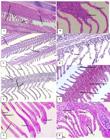
Gills of Cyprinus carpio (A, B); Abramis brama (C-F, summer season); Sander lucioperca (G, H, summer season). A: 1-mast cells, 2-blood stasis, 3-edema, 4-curvature of the secondary lamellae; B: 1-focal hyperplasia, 2-blood stasis. C: 1-edema of the primary and secondary gill epithelium; D: 1-necrosis and destruction of lamellae. E: 1-vascular dilatation, 2-blood stasis, 3-edema; F: 1-vascular hyperemia, 2-stasis, 3-edema. G: 1-blood stasis, 2-dilatation of the primary lamella vessels, 3-hyperplasia, 4-atrophy of the primary gill epithelium; H: 1-edema of the primary epithelium, 2-edema of the secondary epithelium, 3-blood stasis, 4-necrosis, 5-hemorrhage. Hematoxylin – eosin staining. Magnification: A, C, G – 100x; B, D, H – 400x; E, F – 200x.
Histological examination of the gills of bream (Abramis brama) caught in spring showed that moderately destructive changes prevailed in the tissue. In most cases (about 60-70% of individuals), curvature of the secondary lamellae, edema of the primary and secondary epithelium, as well as focal necrosis and destruction of the epithelial layer were recorded. The number of mast cells in the epithelium was insignificant and sporadic. At the same time, microcirculation disorders were detected in some individuals, which were manifested by expansion of lamellar capillaries and blood stasis. These changes were local in nature and affected, as a rule, individual parts of the gill apparatus. In individuals caught in autumn, the pathological changes were more pronounced. There was an intense hyperemia of the vessels of the microcirculatory bed, hyperplasia of the secondary epithelium, pronounced edema of the primary epithelium, as well as necrosis and destruction of the secondary lamellae. The frequency of detection of vascular disorders in winter exceeded the summer indicators by 1.5-2 times, which indicates a seasonal dependence of the severity of the pathological process. Micrographs (Figure 2 CF) of bream in summer showed moderate lamella deformities, edema of the primary and secondary epithelium, focal necrosis, blood stasis, and vasodilation of the microcirculatory bed. In some cases, vascular hyperemia, primary epithelial hyperplasia, and a combination of edema and necrotic changes were noted.
Histological analysis of the gills of pike perch (Sander lucioperca) revealed that the histostructure of pike perch gills showed the deepest and most pronounced damage to the gill apparatus compared to carp and bream. A characteristic feature was coarse deformations of both secondary and primary gill lamellae. In most of the studied samples, there was a significant curvature of the lamellae, a violation of their spatial organization, and an inhomogeneous structure of the gill epithelium. Microcirculatory disorders were acute and included sharp dilatation of the filament and lamellar arteries, massive blood stasis, and multiple hemorrhages. The epithelial layer was characterized by mosaic lesions: areas of hyperplasia and destruction of secondary lamellae alternated with areas of atrophy and edema. In summer (Figure 2 G), pike perch showed edema of the primary and secondary epithelium, blood stasis, hemorrhages, focal necrosis, and deformity of the primary lamellae. Along with hyperplasia of the primary gill epithelium, its atrophy was detected in some areas, which indicates a long-term and multifactorial impact of damaging factors.
4. Discussion
The revealed spectrum of histopathological changes in the gill apparatus in the studied fish species indicates a multifactorial and complex nature of the lesion affecting the vascular, epithelial, and immunoinflammatory components of the gills. Such a combination of morphological disorders reflects the integral response of the fish body to prolonged exposure to adverse environmental factors and indicates the chronic nature of anthropogenic load in the studied reservoir. Microcirculation disorders, represented by dilatation of gill vessels, blood stasis, and interstitial hemorrhages, were recorded in all the studied fish species and are among the earliest and most sensitive morphological markers of stress exposure. According to the literature, such changes are characteristic of both chronic water pollution with heavy metals, petroleum products, and organic toxicants, as well as hypoxia accompanying eutrophication and reduced water flow (Strzyzewska et al., 2016; Poleksic and Mitrovic-Tutundzic, 1994; Roberts, 2012) . Vasodilation and impaired blood flow are probably caused by dysregulation of vascular tone and increased endothelial permeability in response to toxic xenobiotic exposure. Hyperplasia of the primary epithelium and fusion of secondary lamellae, most pronounced in carp (Cyprinus carpio) and pike perch (Sander lucioperca), can be considered as a compensatory-adaptive reaction aimed at isolating sensitive respiratory structures from direct contact with the polluted aquatic environment. Similar changes have been repeatedly described in fish living in conditions of high concentrations of suspended particles, heavy metal ions, and toxic organic compounds (Mallatt, 1985; Bernet et al., 1999; Takashima and Hibiya, 1995). At the same time, excessive proliferation of epithelial cells leads to a thickening of the diffusion barrier and a decrease in the effective area of gas exchange, which naturally causes functional tissue hypoxia. According to some authors, overlapping the lumen of secondary lamellae by more than 50% can reduce the efficiency of oxygen exchange by 30-60%, which significantly limits the adaptive capabilities of fish, especially in conditions of additional oxygen deficiency (Barrett, 2008; Horváth et al., 2002; Kazarinov et al., 2025a). Active proliferation of mast cells (eosinophilic granule cells, EGCs), mainly detected in carp, indicates a significant role of immune and inflammatory mechanisms in the pathogenesis of the observed changes. Fish mast cells are functionally similar to the innate immune cells of superior vertebrates and are involved in the regulation of vascular permeability, edema induction, degranulation of inflammatory mediators, and tissue remodeling. Their accumulation in the gill epithelium correlates with the severity of vascular disorders and destructive changes, which confirms the inflammatory component of the gill apparatus response to pollutants (Polishchuk and Simon, 2023; Lyutikov et al., 2025; Semenchenko and Ostrovskaya, 2020). The revealed seasonal differences in the severity of histopathological changes in bream (Abramis brama) may be due to a combination of changes in hydrochemical parameters of water and seasonal features of the physiological state of fish. Injuries in winter are probably associated with the development of chronic hypoxia under the ice cover, a decrease in the intensity of metabolic processes and a weakening of detoxification mechanisms. An additional factor may be the accumulation of toxic substances in the fish body under conditions of delayed xenobiotic excretion (Lappalainen et al., 2003; Shakirova et al., 2022; Zhidkov, 2016). The most severe and morphologically diverse lesions of the gill apparatus of pike perch indicate a high sensitivity of this species to adverse environmental factors. The mosaic nature of the changes, combining hyperplastic, atrophic and necrotic processes, indicates a long-term, heterogeneous and probably combined effect of stressors of various nature. Such a pattern of lesions is considered by a number of researchers as a morphological indicator of environmental problems of the reservoir and chronic toxic pressure (Kazarinov et al., 2025b; Raskovic et al., 2010).
In general, the results obtained confirm the high diagnostic value of histological analysis of fish gills as a bioindicator method for assessing the state of the aquatic environment. The complex of revealed morphological changes makes it possible not only to record the fact of anthropogenic impact, but also to indirectly judge its nature, intensity and duration. This makes histopathological analysis of the gill apparatus a promising and economically feasible tool for integrated ecological monitoring of aquatic ecosystems under increasing anthropogenic pressure.
Analysis of the morphometric parameters of gills in the study of three commercial fish species of the Ile–Balkhash basin: carp (Cyprinus carpio), pike perch (Sander lucioperca) and bream (Abramis brama) showed interspecific differences reflecting the adaptive plasticity of the gill apparatus under the conditions of changing hydrochemical parameters of water. In the carp (Cyprinus carpio), the gills are characterized by large secondary lamellae with a high density of gill rakers. The length of the gill filaments was maximal among the three species, which increases the respiratory surface. The average density of gill rakers was 85 ± 4.2 pcs / cm2, the number of gill rakers on one gill arch was 112 ± 6.1. The obtained indicators indicate a high adaptive ability to fluctuations in the content of dissolved oxygen and water hardness, while the gills of pike perch (Sander lucioperca) are more compact, with moderately developed secondary lamellae and an average number of gill rakers. The length of the filaments was 4.8 ± 0.3 mm, the average density was 68 ± 3.7 pcs / cm2, and the number of gill rakers on the arch was 95 ± 5.2. The studied morphology of fish showed adaptation to a predatory lifestyle and moderate hydrochemical fluctuations in the environment. Bream (Abramis brama) gills have thinner, longer filaments with a moderate density of rakers (61 ± 3.5 pcs / cm2) and the amount on the arch - 90 ± 4.8. The morphology of the gills provides effective gas exchange with a relatively quiet lifestyle and a constant supply of oxygen in the surface layers of water. Table 1 shows the results of histological analysis of the gills of carp, pike perch and bream, reflecting the features of the structure of the epithelium of the gill filaments, the thickness of the secondary lamellae, the state of the capillary network and the degree of development of mucous cells. Carp showed an increase in the thickness of secondary lamellae and a high density of mucous cells, which indicates the protective orientation of the gill apparatus and its adaptation to conditions of increased turbidity of water and benthic lifestyle. In pike perch, the gill filaments are lined with a single layer of epithelium, which provides an optimal ratio between the efficiency of gas exchange and mechanical protection. Thinner secondary lamellae and a moderate density of mucosal cells reflect the high functional activity of the respiratory surface, characteristic of predatory fish with an increased level of metabolism. Bream also has a single-layer epithelium, but the capillary network is characterized by a less dense arrangement. The reduced number of mucosal cells and the intermediate thickness of lamellae indicate a lower intensity of gas exchange processes compared to pike perch and a pronounced adaptation to a relatively quiet lifestyle. The data in Table 2 show that carp has the largest respiratory surfaces of the gills and the highest density of gill rakers, which reflects a high morphological plasticity and ability to adapt to changing hydrochemical conditions. Pike perch and bream have lower gills, which is consistent with their ecological and trophic behavior. Morphological study of the gills and their adaptation in carp, as the most plastic species, shows that large and dense gills provide effective gas exchange even under high fluctuations in hydrochemical conditions, which is confirmed by correlations with dissolved oxygen and water hardness, and in pike perch moderate values of morphometric indicators of gills reflect specialized adaptation to a predatory lifestyle and conditions of a more stable environment with moderate due to hydrochemical fluctuations, bream gills show elongated filaments with an average density of rakers, which provides adaptation to a filtering lifestyle and stable water layers with constant oxygen access, but less resistance to changes in pollutants and hydrochemistry compared to carp.
Morphometric characteristics of the gills of the studied fish species in the spring and autumn periods.
The values are represented as M ± m, where M is the arithmetic mean and m is the error of the mean. Hematoxylin-eosin staining, magnification ×200. Table 2 shows the morphometric characteristics of the gills of carp (Cyprinus carpio), bream (Abramis brama) and pike perch (Sander lucioperca) studied in the spring and autumn periods. The analysis includes the main parameters of the gill apparatus that reflect the functional state of the respiratory surface: the length and width of gill filaments, the size of secondary lamellae, the distance between them, and the density of lamellae per unit length of the filament. In the spring period, all the studied species tend to increase the length of gill filaments and secondary lamellae, as well as to increase the number of lamellae per 1 mm of the filament. These changes indicate an increase in the total respiratory surface of the gills, which is associated with an increase in the metabolic activity of fish during spawning and active nutrition. In the autumn period, there is a relative decrease in the linear size of the gill structures and a decrease in the density of lamellae, accompanied by an increase in the distance between them. These morphological changes reflect a seasonal decrease in the intensity of metabolic processes and the adaptation of the respiratory apparatus of fish to conditions of low temperature and reduced motor activity. The most pronounced seasonal differences were found in pike perch, which is due to its active predatory lifestyle and high dependence of gas exchange on the level of metabolic load. In carp and bream, seasonal variations in morphometric parameters are less pronounced, which corresponds to their more relaxed lifestyle.
The data is presented as M ± m, where M is the arithmetic mean and m is the error of the mean. Measurements were performed at magnification ×200, hematoxylin-eosin staining.
Analysis of morphometric parameters Table 3 of the gills revealed statistically significant seasonal differences in all the studied fish species. In the spring period, carp, bream, and pike perch significantly (p <0.05–0.01) increased the length of gill filaments and secondary lamellae, as well as the density of lamellae per unit length of the filament, compared with the autumn period. These changes indicate an increase in the respiratory surface of the gills and an increase in gas exchange function.
Seasonal dynamics of morphometric parameters of gills of commercial fish of the Ile-Balkhash basin.
The distance between the secondary lamellae showed a tendency to increase in the autumn period, however, these differences were statistically unreliable in carp and bream (p> 0.05), while in pike perch the differences were significant (p <0.05). More pronounced seasonal fluctuations in morphometric parameters in pike perch confirm its high physiological sensitivity of the respiratory system to changes in the level of metabolic activity.
Statistical significance of differences between spring and autumn periods was assessed using Student's t-test; differences were considered significant at p <0.05. Histological analysis also confirmed statistically significant interspecific differences. Carp was characterized by a significantly larger thickness of secondary lamellae and a higher number of mucosal cells (p <0.05), which indicates the predominance of protective mechanisms.
Pike perch was found to have significantly lower lamella thickness and a moderate number of mucosal cells, which ensures maximum efficiency of gas exchange. Bream occupied an intermediate position in most indicators. Statistical analysis of morphometric and histological parameters of the gills of carp, bream, and pike perch revealed significant interspecific and seasonal differences reflecting the features of their ecological and physiological adaptation. In all species, a statistically significant increase in the length of gill filaments, the size of secondary lamellae, and the density of lamellae per unit length of the filament was found in spring compared to the autumn period (p <0.05-0.01), which indicates an increase in the respiratory surface and an intensification of gas exchange processes. The most seasonal differences were observed in pike perch, where most of the indicators were highly reliable (p <0.01), which indicates a high sensitivity of the gill apparatus to changes in the level of metabolic activity. In carp and bream, seasonal variations in morphometric parameters were less pronounced; however, some of the indicators and the distance between secondary lamellae did not reach the level of statistical significance (p> 0.05), which reflects a more stable functional state of the gills.
5. Conclusions
The study of morphometric and histological characteristics of the gills of three commercial fish species of the Ile–Balkhash basin: carp Cyprinus carpio, pike perch Sander lucioperca, and bream Abramis brama revealed clear interspecific differences reflecting specific adaptive strategies to changing hydrochemical conditions and exposure to anthropogenic pollutants. Carp show maximum length of gill filaments, high density of gill rakers and developed histological structure, which provides effective gas exchange, osmoregulation and detoxification in conditions of high hydrochemical variability and water pollution. Such features confirm the high morphological plasticity and the ability of the species to adapt to stressful environmental factors. The pike perch is characterized by moderate morphometric and histological parameters of its gills, which corresponds to its predatory lifestyle and the need to maintain active respiration in conditions of medium fluctuations in hydrochemical parameters. Bream has long but less dense gill filaments with a moderate density of gill rakers and limited histological protection, which is associated with a filter-feeding lifestyle and a relatively stable aquatic environment.
Statistical analysis of morphometric and histological parameters of the gills of carp, bream, and pike perch revealed significant interspecific and seasonal differences reflecting the features of their ecological and physiological adaptation. In all species, a statistically significant increase in the length of gill filaments, the size of secondary lamellae, and the density of lamellae per unit length of the filament was found in spring compared to the autumn period (p <0.05-0.01), which indicates an increase in the respiratory surface and an intensification of gas exchange processes. The most pronounced seasonal differences were observed in pike perch, where most of the indicators were highly reliable (p <0.01), which indicates a high sensitivity of the gill apparatus to changes in the level of metabolic activity. In carp and bream, seasonal variations in morphometric parameters were less pronounced; however, some of the indicators, the distance between secondary lamellae, did not reach the level of statistical significance (p> 0.05), which reflects a more stable functional state of the gills.
Thus, statistical analysis (ANOVA, p <0.01) confirmed significant interspecific differences in morphometric and histological parameters. Correlation analysis showed adaptive relationships, including a positive relationship between the density of gill rakers and the concentration of dissolved oxygen and a moderate relationship between filament length and water hardness, which emphasizes the role of morphological plasticity of gills as a key mechanism for fish adaptation to changing hydrochemical conditions and anthropogenic impact. The significance of the study lies in the possibility of using morphometric and histological parameters of gills as bioindicators of the state of freshwater ecosystems in the Ile–Balkhash basin, which is important for monitoring, assessing the adaptive potential of fish, developing measures for the protection of ichthyofauna and rational management of water resources in the region.
A complex of histopathological changes in the gill apparatus was revealed in the studied fish species, reflecting the chronic and multifactorial effects of unfavorable water conditions.
It was shown that microcirculation disorders, epithelial hyperplasia, and inflammatory reactions indicate a combined effect of toxic pollution and hypoxic stress.
It was found that the most pronounced and mosaic lesions of the gills were observed in pike perch, indicating a high sensitivity of this species to anthropogenic stress.
It is established that seasonal variability of changes in bream confirms the dependence of the degree of pathological disorders on hydrochemical conditions and the physiological state of fish.
It is proved that histological analysis of fish gills is confirmed as an informative and economically feasible bioindicator method for assessing the ecological state of water bodies.
Acknowledgements
The authors would like to thank the laboratory of Chemical-Analytical Research Methods of the Akhmetsafin Institute of Hydrogeology and Geoecology (Almaty, Kazakhstan) for assistance in conducting hydrochemical analysis of water samples.
Data Availability Statement
All data generated or analyzed during this research are included in this published article.
References
-
ALLAN, J.D. and CASTILLO, M.M., 2007. Stream ecology Dordrecht: Springer, 436 p. https://doi.org/10.1007/978-1-4020-5583-6
» https://doi.org/10.1007/978-1-4020-5583-6 - BARRETT, M., 2008.Zander fishing: a complete guide Ramsbury: The Crowood Press Ltd, 192 p.
-
BERNET, D., SCHMIDT, H., MEIER, W., BURKHARDT-HOLM, P. and WAHLI, T., 1999. Histopathology in fish: proposal for a protocol to assess aquatic pollution. Journal of Fish Diseases, vol. 22, no. 1, pp. 25-34. https://doi.org/10.1046/j.1365-2761.1999.00134.x
» https://doi.org/10.1046/j.1365-2761.1999.00134.x -
CAMARGO, J.A. and ALONSO, Á., 2006. Ecological and toxicological effects of inorganic nitrogen pollution. Environment International, vol. 32, no. 6, pp. 831-849. https://doi.org/10.1016/j.envint.2006.05.002 PMid:16781774.
» https://doi.org/10.1016/j.envint.2006.05.002 -
EISSA, E.S.H., GAAFAR, A.Y., MATHEW, R.T., AL-SHAHARI, E.A., OKON, E.M., EISSA, M.E. and ABD EL-AZIZ, Y.M., 2025. The role of histological stains in aquaculture and fisheries development technology. Aquaculture International, vol. 33, no. 4, pp. 283. https://doi.org/10.1007/s10499-025-01932-x
» https://doi.org/10.1007/s10499-025-01932-x -
EVANS, D.H., PIERMARINI, P.M. and CHOE, K.P., 2005. The multifunctional fish gill: dominant site of gas exchange, osmoregulation, acid-base regulation, and excretion of nitrogenous waste. Physiological Reviews, vol. 85, no. 1, pp. 97-177. https://doi.org/10.1152/physrev.00050.2003 PMid:15618479.
» https://doi.org/10.1152/physrev.00050.2003 - FIELD, A., 2013. Discovering statistics using IBM SPSS statistics 4th ed. London: Sage, 952 p.
-
HORVÁTH, L., TAMAS, G. and SEAGRAVE, C., 2002. Carp and pond fish culture: including chinese herbivorous species, pike, tench, zander, wels catfish, goldfish, african catfish and sterlet 2nd ed. Hoboken: Wiley & Sons Ltd, 188 p. https://doi.org/10.1002/9780470995662
» https://doi.org/10.1002/9780470995662 -
KAZARINOV, S.N., MERZLYAKOV, I.N., KOMAROVA, L.V., PONOSOV, S.V., KARALASH, A.A. and MIKHEEV, P.B., 2025a. Reproductive biology and efficiency of natural reproduction of pikeperch Sander lucioperca in the northeastern part of their distribution range in the Kama Reservoir (Perm Krai, Russia). Inland Water Biology, vol. 18, no. 1, pp. 192-210. https://doi.org/10.1134/S1995082924600959
» https://doi.org/10.1134/S1995082924600959 -
KAZARINOV, S.N., MERZLYAKOVA, L.V., MERZLYAKOV, I.N., KARALASH, A.A., KRAYNEV, E.Y., BYKOV, A.D. and MIKHEEV, P.B., 2025b. Changes in the diet of the zander Sander lucioperca (Percidae) in the Kama Reservoir as a result of invasion of an alien species the Black and Caspian Sea sprat Clupeonella cultriventris (Ehiravidae). Journal of Ichthyology, vol. 65, no. 4, pp. 701-712. https://doi.org/10.1134/S0032945225700110
» https://doi.org/10.1134/S0032945225700110 -
KOSTIĆ, J., KOLAREVIĆ, S., KRAČUN-KOLAREVIĆ, M., ABORGIBA, M., GAČIĆ, Z., PAUNOVIĆ, M., VIŠNJIĆ-JEFTIĆ, Ž., RAŠKOVIĆ, B., POLEKSIĆ, V., LENHARDT, M. and VUKOVIĆ-GAČIĆ, B., 2017. The impact of multiple stressors on the biomarkers response in gills and liver of freshwater breams during different seasons. The Science of the Total Environment, vol. 601-602, pp. 1670-1681. https://doi.org/10.1016/j.scitotenv.2017.05.273 PMid:28618658.
» https://doi.org/10.1016/j.scitotenv.2017.05.273 -
KOSTIĆ-VUKOVIĆ, J., KOLAREVIĆ, S., KRAČUN-KOLAREVIĆ, M., VIŠNJIĆ-JEFTIĆ, Ž., RAŠKOVIĆ, B., POLEKSIĆ, V., GAČIĆ, Z., LENHARDT, M. and VUKOVIĆ-GAČIĆ, B., 2021. Temporal variation of biomarkers in common bream Abramis brama (L., 1758) exposed to untreated municipal wastewater in the Danube River in Belgrade, Serbia. Environmental Monitoring and Assessment, vol. 193, no. 8, pp. 465. https://doi.org/10.1007/s10661-021-09232-6 PMid:34218335.
» https://doi.org/10.1007/s10661-021-09232-6 -
LAPPALAINEN, J., DÖRNER, H. and WYSUJACK, K., 2003. Reproduction biology of pikeperch (Sander lucioperca (L.))–a review. Ecology Freshwater Fish, vol. 12, no. 2, pp. 95-106. https://doi.org/10.1034/j.1600-0633.2003.00005.x
» https://doi.org/10.1034/j.1600-0633.2003.00005.x -
LENHARDT, M., POLEKSIĆ, V., VUKOVIĆ-GAČIĆ, B., RAŠKOVIĆ, B., SUNJOG, K., KOLAREVIĆ, S., JARIĆ, I. and GAČIĆ, Z., 2015. Integrated use of different fish related parameters to assess the status of water bodies. Slovenian Veterinary Research, vol. 52, no. 1, pp. 5-13. https://doi.org/10.26873/SVR-24684-2015
» https://doi.org/10.26873/SVR-24684-2015 -
LUJIĆ, J., MATAVULJ, M., POLEKSIĆ, V., RAŠKOVIĆ, B., MARINOVIĆ, Z., KOSTIĆ, D. and MILJANOVIĆ, B., 2015. Gill reaction to pollutants from the Tamiš River in three freshwater fish species, E sox lucius L. 1758, S ander lucioperca (L. 1758) and S ilurus glanis L. 1758: a comparative study. Anatomia, Histologia, Embryologia, vol. 44, no. 2, pp. 128-137. https://doi.org/10.1111/ahe.12119 PMid:24809962.
» https://doi.org/10.1111/ahe.12119 -
LYUTIKOV, A.A., TRIFONOV, A.E., DARSIA, N.A. and KOROLEV, A.E., 2025. Selectivity of pikeperch larvae Sander lucioperca (Percidae, Perciformes) feeding on lake zooplankton under culture conditions. Biologiâ Vnutrennih Vod, vol. 18, no. 5, pp. 930-937. https://doi.org/10.1134/S1995082925601108
» https://doi.org/10.1134/S1995082925601108 -
MALLATT, J., 1985. Fish gill structural changes induced by toxicants and other irritants: a statistical review. Canadian Journal of Fisheries and Aquatic Sciences, vol. 42, no. 4, pp. 630-648. https://doi.org/10.1139/f85-083
» https://doi.org/10.1139/f85-083 -
MAZON, A.F., MONTEIRO, E.A.S., PINHEIRO, G.H.D. and FERNADES, M.N., 2002. Hematological and physiological changes induced by short-term exposure to copper in the freshwater fish, Prochilodus scrofa. Brazilian Journal of Biology, vol. 62, no. 4A, pp. 621-631. https://doi.org/10.1590/S1519-69842002000400010 PMid:12659012.
» https://doi.org/10.1590/S1519-69842002000400010 -
NASCIMENTO, A.A., ARAÚJO, F.G., GOMES, I.D., MENDES, R.M.M. and SALES, A., 2012. Fish gills alterations as potential biomarkers of environmental quality in a eutrophized tropical river in south‐eastern Brazil. Anatomia, Histologia, Embryologia, vol. 41, no. 3, pp. 209-216. https://doi.org/10.1111/j.1439-0264.2011.01125.x PMid:22211803.
» https://doi.org/10.1111/j.1439-0264.2011.01125.x -
PEREIRA, S., PINTO, A.L., CORTES, R., FONTAÍNHAS-FERNANDES, A., COIMBRA, A.M. and MONTEIRO, S.M., 2013. Gill histopathological and oxidative stress evaluation in native fish captured in Portuguese northwestern rivers. Ecotoxicology and Environmental Safety, vol. 90, pp. 157-166. https://doi.org/10.1016/j.ecoenv.2012.12.023 PMid:23352272.
» https://doi.org/10.1016/j.ecoenv.2012.12.023 - POLEKSIC, V. and MITROVIC-TUTUNDZIC, V., 1994. Fish gills as a monitor of sublethal and chronic effects of pollution. Sublethal and Chronic Effects of Pollutants on Freshwater Fish, vol. 22, pp. 339-352.
-
POLISHCHUK, O.M. and SIMON, M.Y., 2023. Main aspects of pikepersh (Sander lucioperca) reproduction (a review). Agrology, vol. 6, no. 3, pp. 71-77. https://doi.org/10.32819/021112
» https://doi.org/10.32819/021112 -
QUINN, G.P. and KEOUGH, M.J., 2002. Experimental design and data analysis for biologists Cambridge: Cambridge University Press, 537 p. https://doi.org/10.1017/CBO9780511806384
» https://doi.org/10.1017/CBO9780511806384 -
RAŠKOVIĆ, B., POLEKSIĆ, V., VIŠNJIĆ‐JEFTIĆ, Ž., SKORIĆ, S., GAČIĆ, Z., DJIKANOVIĆ, V., JARIĆ, I. and LENHARDT, M., 2015. Use of histopathology and elemental accumulation in different organs of two benthophagous fish species as indicators of river pollution. Environmental Toxicology, vol. 30, no. 10, pp. 1153-1161. https://doi.org/10.1002/tox.21988 PMid:24677754.
» https://doi.org/10.1002/tox.21988 - RASKOVIC, B., POLEKSIC, V., ZIVIC, I. and SPASIC, M., 2010. Histology of carp (Cyprinus carpio, L.) gills and pond water quality in semiintensive production. Bulgarian Journal of Agricultural Science, vol. 16, no. 3, pp. 253-262.
-
RIBEIRO, C.A., BELGER, L., PELLETIER, E. and ROULEAU, C., 2002. Histopathological evidence of inorganic mercury and methyl mercury toxicity in the arctic charr (Salvelinus alpinus). Environmental Research, vol. 90, no. 3, pp. 217-225. https://doi.org/10.1016/S0013-9351(02)00025-7 PMid:12477467.
» https://doi.org/10.1016/S0013-9351(02)00025-7 -
ROBERTS, R.J. and RODGER, H.D., 2012. The pathophysiology and systematic pathology of teleosts. In: R.J. ROBERTS, ed. Fish pathology 4th ed. Hoboken: Wiley-Blackwell, pp. 62-143. https://doi.org/10.1002/9781118222942.ch3
» https://doi.org/10.1002/9781118222942.ch3 -
ROBERTS, R.J., 2012. Fish pathology 4th ed. Hoboken: Wiley-Blackwell. https://doi.org/10.1002/9781118222942
» https://doi.org/10.1002/9781118222942 -
SEMENCHENKO, N.N. and OSTROVSKAYA, E.V., 2020. Growth and biological characteristics of pike perch Sander lucioperca (Linnaeus, 1758) in the Amur River. Izvestia TINRO, vol. 200, no. 3, pp. 571-585. https://doi.org/10.26428/1606-9919-2020-200-571-585
» https://doi.org/10.26428/1606-9919-2020-200-571-585 - SHAKIROVA, F.M., ANOKHINA, O.K., SMIRNOV, A.A. and VALIEVA, G.D., 2022. Current fishery and biological characteristics of the pikeperch Sander lucioperca of the Kuibyshev Reservoir. Voprosy Rybolovstva, vol. 23, no. 3, pp. 91-101. [In Russian]
-
STENTIFORD, G.D., LONGSHAW, M., LYONS, B.P., JONES, G., GREEN, M. and FEIST, S.W., 2003. Histopathological biomarkers in estuarine fish species for the assessment of biological effects of contaminants. Marine Environmental Research, vol. 55, no. 2, pp. 137-159. https://doi.org/10.1016/S0141-1136(02)00212-X PMid:12502035.
» https://doi.org/10.1016/S0141-1136(02)00212-X -
STRZYZEWSKA, E., SZAREK, J. and BABINSKA, I., 2016. Morphologic evaluation of the gills as a tool in the diagnostics of pathological conditions in fish and pollution in the aquatic environment: a review. Veterinární Medicína, vol. 61, no. 3, pp. 123-132. https://doi.org/10.17221/8763-VETMED
» https://doi.org/10.17221/8763-VETMED - TAKASHIMA, F. and HIBIYA, T., 1995. An atlas of fish histology 2nd ed. Tokyo: Kodansha Limited, 195 p.
-
VAN DER OOST, R., BEYER, J. and VERMEULEN, N.P., 2003. Fish bioaccumulation and biomarkers in environmental risk assessment: a review. Environmental Toxicology and Pharmacology, vol. 13, no. 2, pp. 57-149. https://doi.org/10.1016/S1382-6689(02)00126-6 PMid:21782649.
» https://doi.org/10.1016/S1382-6689(02)00126-6 -
VASANTHI, L.A., REVATHI, P., MINI, J. and MUNUSWAMY, N., 2013. Integrated use of histological and ultrastructural biomarkers in Mugil cephalus for assessing heavy metal pollution in Ennore estuary, Chennai. Chemosphere, vol. 91, no. 8, pp. 1156-1164. https://doi.org/10.1016/j.chemosphere.2013.01.021 PMid:23415490.
» https://doi.org/10.1016/j.chemosphere.2013.01.021 -
WETZEL, R.G., 2001. Limnology: lake and river ecosystems 3rd ed. San Diego: Academic Press, 1006 p. https://doi.org/10.1016/C2009-0-02112-6
» https://doi.org/10.1016/C2009-0-02112-6 - ZAR, J.H., 2010. Biostatistical analysis 5th ed. Upper Saddle River: Pearson, 944 p.
- ZHIDKOV, V.S., 2016. Ecological and biological characteristics of pikeperch (Sander lucioperca) in the Protoka River. Sel’skokhozyaistvennye Nauki i Agropromyshlennyi Kompleks na Rubezhe Vekov, vol. 14, pp. 103-107. [In Russian]
Editor: