 Metagenomic insights into microbial community structure of tropical coastal sediment from Kebun Raya mangrove Surabaya, Indonesia
Abstract
Mangrove sediments represent dynamic coastal environments that host diverse microbial communities and complex biogeochemical processes. However, microbial community structures in Indonesian mangrove sediments remain insufficiently characterized. This study investigated the microbial community structure and functional potential of tropical coastal sediments from Kebun Raya Mangrove Surabaya, Indonesia, using a shotgun metagenomic approach integrated with sediment geochemical analysis. Sediment samples were collected from areas dominated by Rhizophora apiculata, Sonneratia alba, and Avicennia officinalis. Environmental parameters were measured in situ, while elemental composition of sediments was determined using X-ray fluorescence (XRF). Metagenomic sequencing was performed using the Illumina NovaSeq platform, followed by taxonomic classification and functional annotation using multiple databases including KEGG and COG. XRF analysis indicated that sediments were dominated by major elements such as Fe, Si, Al, and Ca, with trace metals including Cu, Zn, Mn, and Mo showing spatial variability across sampling sites. Metagenomic analysis revealed that microbial communities were primarily dominated by members of Pseudomonadota (Proteobacteria), followed by Actinomycetota and Bacillota, consistent with typical mangrove sediment microbiomes. Clustering and principal component analysis demonstrated moderate variation in microbial composition among sampling sites, suggesting the influence of local environmental heterogeneity. Functional annotation showed high abundance of genes related to energy production, carbohydrate metabolism, amino acid metabolism, and membrane transport, indicating strong microbial involvement in nutrient cycling and organic matter degradation. In addition, genes associated with heavy metal resistance and antibiotic resistance were widely distributed, suggesting the presence of environmental resistomes potentially influenced by metal exposure and anthropogenic inputs. Overall, the integration of geochemical and metagenomic data highlights the complex interactions between sediment chemistry and microbial functional potential. These findings provide baseline ecological insights into mangrove sediment microbiomes and emphasize the role of coastal sediments as reservoirs of microbial diversity and resistance determinants in urban-influenced mangrove ecosystems.
Keywords:
Kebun Raya Mangrove Surabaya; mangrove sediment; metagenomics; microbial diversity
Resumo
Os sedimentos de mangue representam ambientes costeiros dinâmicos que abrigam diversas comunidades microbianas e processos biogeoquímicos complexos. No entanto, as estruturas das comunidades microbianas em sedimentos de mangue indonésios permanecem insuficientemente caracterizadas. Este estudo investigou a estrutura da comunidade microbiana e o potencial funcional de sedimentos costeiros tropicais do manguezal de Kebun Raya, Surabaya, Indonésia, utilizando uma abordagem metagenômica shotgun integrada à análise geoquímica de sedimentos. Amostras de sedimentos foram coletadas em áreas dominadas por Rhizophora apiculata, Sonneratia alba e Avicennia officinalis. Os parâmetros ambientais foram medidos in situ, enquanto a composição elementar dos sedimentos foi determinada por fluorescência de raios X (XRF). O sequenciamento metagenômico foi realizado utilizando a plataforma Illumina NovaSeq, seguido por classificação taxonômica e anotação funcional usando múltiplos bancos de dados, incluindo KEGG e COG. A análise por fluorescência de raios X (XRF) indicou que os sedimentos eram dominados por elementos principais como Fe, Si, Al e Ca, com metais traço, incluindo Cu, Zn, Mn e Mo, apresentando variabilidade espacial entre os locais de amostragem. A análise metagenômica revelou que as comunidades microbianas eram predominantemente compostas por membros de Pseudomonadota (Proteobacteria), seguidos por Actinomycetota e Bacillota, o que está de acordo com os microbiomas típicos de sedimentos de mangue. A análise de agrupamento e de componentes principais demonstrou variação moderada na composição microbiana entre os locais de amostragem, sugerindo a influência da heterogeneidade ambiental local. A anotação funcional revelou alta abundância de genes relacionados à produção de energia, metabolismo de carboidratos, metabolismo de aminoácidos e transporte através de membrana, indicando forte envolvimento microbiano na ciclagem de nutrientes e na degradação da matéria orgânica. Além disso, genes associados à resistência a metais pesados e à resistência a antibióticos apresentaram ampla distribuição, sugerindo a presença de resistomas ambientais potencialmente influenciados pela exposição a metais e por aportes antropogênicos. Em suma, a integração de dados geoquímicos e metagenômicos destaca as complexas interações entre a química dos sedimentos e o potencial funcional microbiano. Essas descobertas fornecem informações ecológicas de base sobre os microbiomas dos sedimentos dos manguezais e enfatizam o papel dos sedimentos costeiros como reservatórios de diversidade microbiana e determinantes de resistência em ecossistemas de manguezais influenciados por áreas urbanas.
Palavras-chave:
Kebun Raya Mangrove Surabaya; sedimento de mangue; metagenômica; diversidade microbiana
1. Introduction
The rapid emergence and global dissemination of multidrug-resistant (MDR) bacteria represent one of the most critical challenges to public health in the 21st century (Liu et al., 2021; Suwantarat and Carroll, 2016). The increasing prevalence of antibiotic resistance significantly contributes to higher morbidity, mortality, and healthcare costs worldwide, while simultaneously reducing the effectiveness of currently available antibiotics (Prasetya et al., 2021; Vrancianu, 2020). MDR bacteria are defined as microorganisms that exhibit resistance to at least one antibiotic in three or more antimicrobial classes, making infections increasingly difficult to treat (Ikhsanudin et al., 2025). The spread of antibiotic resistance is further accelerated by horizontal gene transfer mechanisms mediated through plasmids and other mobile genetic elements that facilitate the exchange of resistance genes among bacterial species (Khameneh et al., 2019). Consequently, the exploration of alternative bioactive compounds and novel microbial resources has become an important strategy in addressing antimicrobial resistance (Bodea et al., 2022; Veeraraghavan et al., 2025).
Mangrove ecosystems represent unique coastal environments located in tropical and subtropical regions that are characterized by dynamic interactions between terrestrial and marine systems (Bohra et al., 2025; Oliveira et al., 2025). These ecosystems typically develop in intertidal zones with muddy alluvial substrates and are dominated by halophytic vegetation such as Avicennia, Rhizophora, Sonneratia, and Bruguiera species (Das et al., 2025; Chithira et al., 2021). Mangrove vegetation has evolved specialized adaptations to survive under extreme environmental conditions including high salinity, tidal fluctuations, waterlogging, and oxygen-limited sediments (Hui et al., 2024). Such environmental conditions promote the accumulation of organic matter derived from plant litter, tidal inputs, and microbial decomposition processes, resulting in highly productive sedimentary environments that support diverse microbial communities (Ghosh et al., 2022). These environmental characteristics create selective ecological pressures that support diverse and metabolically active microbial communities, making mangrove sediments an important reservoir of microorganisms with potential biotechnological and antibacterial properties.
Indonesia hosts one of the largest mangrove ecosystems in the world, and the eastern coastal region of Surabaya represents an important mangrove landscape that provides ecological, economic, and environmental services (Ikhsanudin et al., 2025). The eastern coastal mangrove area, commonly known as the Pamurbaya region, functions as a coastal protection zone, fisheries habitat, and ecotourism area while also supporting biodiversity conservation. However, rapid urbanization, industrial activities, and domestic waste discharge associated with metropolitan development can introduce pollutants into coastal environments and potentially influence sediment characteristics and microbial community composition (Marfil-Santana et al., 2021). Environmental stressors such as salinity gradients, tidal inundation, anaerobic conditions, and pollutant exposure create complex ecological niches that shape microbial diversity and functional dynamics in mangrove sediments (Imchen and Kumavath, 2020).
Microbial communities inhabiting mangrove sediments play essential roles in maintaining ecosystem stability and coastal productivity through organic matter decomposition, nutrient mineralization, nitrogen fixation, and carbon sequestration processes (Padhy et al., 2021). Metagenomic studies have revealed that mangrove sediments harbor diverse microbial taxa dominated by Proteobacteria, Firmicutes, Actinobacteria, and Bacteroidetes, which actively participate in carbon, nitrogen, and sulfur biogeochemical cycles (Maysaroh et al., 2023). The unique physicochemical characteristics of mangrove environments, including high salinity, fluctuating oxygen availability, temperature variation, and anthropogenic pressures, create polyextreme conditions that further shape microbial diversity and functional potential within sediment microbiomes (John et al., 2024). These environmental pressures contribute to the emergence of metabolically versatile microbial communities that play key ecological roles and represent promising sources of functional and biotechnologically relevant microorganisms (Kutty et al., 2023). Microorganisms inhabiting such extreme environments have evolved specialized adaptive mechanisms, including the production of small protective molecules known as extremolytes. Extremolytes are low-molecular-weight organic compounds synthesized by microorganisms to stabilize cellular macromolecules and protect cellular structures under environmental stress conditions. These molecules have attracted considerable attention due to their potential applications in biotechnology, medicine, agriculture, and pharmaceutical industries. The discovery of extremolyte-producing microorganisms from extreme environments therefore represents an important frontier in microbial biotechnology (Rodríguez et al., 2021).
Advances in high-throughput sequencing technologies, particularly metagenomic approaches, have significantly improved our ability to investigate environmental microbiomes without the need for cultivation. Metagenomic analysis enables comprehensive identification of microbial diversity and community structure directly from environmental DNA and provides valuable insights into the ecological roles and functional potential of microorganisms in complex ecosystems. Such approaches are particularly important for mangrove ecosystems where a large proportion of microbial taxa remain uncultivable under conventional laboratory conditions (Marfil-Santana et al., 2021).
Despite the ecological importance of mangrove ecosystems and the growing global interest in mangrove-associated microbiomes, studies investigating sediment microbial community structures in Indonesian coastal mangrove environments remain very limited. This knowledge gap is particularly critical in rapidly urbanizing coastal regions such as eastern Surabaya, where mangrove ecosystems are increasingly exposed to anthropogenic pressures that may alter microbial composition and ecosystem functioning. Kebun Raya Mangrove Surabaya represents one of the most important conservation-based mangrove areas in the region; however, its sediment-associated microbial diversity has not yet been comprehensively characterized using metagenomic approaches. The absence of such baseline microbial data restricts our understanding of ecosystem resilience, limits environmental monitoring capacity, and constrains the exploration of mangrove sediments as potential sources of ecologically important and biotechnologically valuable microorganisms. Therefore, a comprehensive characterization of sediment microbial community structure in this ecosystem is urgently needed to support conservation strategies, ecological assessment, and future microbial resource exploration in Indonesian coastal environments.
This research aims to investigate the microbial community structure of tropical coastal sediments from Kebun Raya Mangrove Surabaya, Indonesia, using a metagenomic approach. Understanding the diversity and composition of sediment-associated microbial communities in mangrove ecosystems is particularly important because these environments represent promising reservoirs of novel microorganisms with potential antibacterial properties that may contribute to addressing the global challenge of multidrug-resistant (MDR) bacteria. By characterizing microbial diversity in an urban-influenced mangrove ecosystem, this study provides essential baseline ecological data and supports future exploration of sediment-associated microorganisms as potential sources of bioactive compounds for antimicrobial discovery in tropical coastal environments. In addition to microbial diversity analysis, the detection of antibiotic resistance genes (ARGs) and metal resistance genes in environmental microbiomes has become increasingly important due to their role in the global spread of antimicrobial resistance. Environmental ecosystems, particularly coastal and mangrove sediments, are recognized as potential reservoirs of resistance determinants that may facilitate horizontal gene transfer between environmental bacteria and clinically relevant pathogens. The co-occurrence of heavy metal resistance genes and ARGs is of particular concern because exposure to metal contaminants can promote the selection and persistence of antibiotic resistance through co-resistance and cross-resistance mechanisms. Therefore, investigating resistance-related functional genes in mangrove sediment microbiomes is essential for understanding both ecosystem adaptation processes and the environmental contribution to the emergence of multidrug-resistant microorganisms.
2. Materials and Methods
2.1. Study area and sediment sampling
Sediment samples were collected from mangrove-associated coastal environments located in Kebun Raya Mangrove Surabaya, East Java, Indonesia. The sampling area lies within the eastern coastal region of Surabaya and is characterized by intertidal mangrove ecosystems influenced by tidal fluctuations and coastal processes. The location of collection was at Kebun Raya Mangrove Surabaya (Table 1, Figure 1). Sampling locations were selected in areas dominated by three mangrove species, namely Rhizophora apiculata (RA), Avicennia officinalis (AO), and Sonneratia alba (SA).

Sampling location at Kebun raya Mangrove Surabaya, Indonesia. The map was created using GPS Visualizer (2026).
Sediment samples were obtained from areas adjacent to the root zones of each mangrove species to capture the microbial communities associated with mangrove-influenced sediments. For each mangrove species, two independent sampling replicates were collected, resulting in a total of six sediment samples (RAS1, RAS2, SAS1, SAS2, AOS1, and AOS2). Sampling points within each vegetation type were separated by a minimum distance of approximately 30 m to reduce spatial overlap among samples.
Sampling was conducted during low tide to facilitate access to the sediment surface. Sediment cores were collected by excavating to a depth of approximately 30 cm using a sterile hand auger with a sampling diameter of approximately 7 cm. Approximately 1 kg of sediment was obtained from each sampling point and immediately transferred into sterile sampling containers. The samples were placed in insulated containers containing ice packs and transported to the laboratory at approximately 4 °C for further molecular analysis (Imchen and Kumavath, 2020).
The geographic coordinates of each sampling site were recorded using a handheld GPS device. These coordinates were later used to generate a spatial map illustrating the distribution of sampling locations within the mangrove area.
2.2. Measurement of environmental parameters
Environmental conditions at each sampling site were characterized by measuring several physicochemical parameters. Physical observations included temperature, turbidity, water color, odor, and general appearance. Chemical parameters measured included pH, salinity, dissolved oxygen (DO), nitrate, nitrite, ammonium, total phosphate, and selected heavy metal concentrations.
Water pH was measured using a portable pH meter, while salinity was determined using a refractometer. Dissolved oxygen levels were measured with a DO meter. For nitrate determination, approximately 3 g of dried sediment was mixed with 30 mL of 0.01 M CaSO4 solution and homogenized for 10 minutes to form a suspension, followed by analysis using a UV–Vis spectrophotometer. Chemical oxygen demand (COD) was measured spectrophotometrically following the Indonesian National Standard (SNI 06-6989.14:2004).
2.3. X-ray fluorescence (XRF) analysis of sediment samples
Sediment samples from each sampling site were dried, ground, and homogenized prior to elemental analysis. A minimum of 10 g of each sample was prepared for measurement using an EL-150 X-ray fluorescence (XRF) spectrometer. The analysis was performed under ambient conditions at 28.2 °C and 54% relative humidity. Instrument settings were applied as follows: without standard, without filter, medium helium, 60 s acquisition time, and 14 kV energy (Mark et al., 2022). The resulting elemental data were used to characterize sediment geochemistry and to support the interpretation of metagenomic findings, particularly microbial community structure, metabolic functions, and metal resistance potential.
2.4. Genomic DNA extraction
Microbial genomic DNA was extracted from sediment samples using the ZymoBIOMICS DNA Miniprep Kit (Zymo Research, USA) following the manufacturer’s protocol with minor modifications. Approximately 0.5 g of sediment sample was directly transferred into a ZR BashingBead™ lysis tube containing lysis buffer and homogenized by vigorous vortexing to ensure efficient mechanical cell disruption. The lysate was centrifuged at 10,000 × g for 1 minute, and the supernatant was transferred to a Zymo spin filter for clarification. The filtrate was then mixed with DNA binding buffer and loaded onto a purification column for DNA adsorption. After sequential washing steps, purified genomic DNA was eluted using DNase/RNase-free water. DNA concentration and purity were measured using a nanophotometer prior to downstream metagenomic sequencing analysis.
2.5. Shotgun metagenomic sequencing
Metagenomic sequencing was performed using a shotgun sequencing approach to characterize microbial community composition within the mangrove sediment samples. DNA libraries were prepared using the Nextera XT DNA Library Preparation Kit. Sequencing was carried out on the Illumina NovaSeq platform using paired-end reads of 2 × 100 bp. Raw sequence reads were subjected to quality filtering and adapter trimming prior to analysis. High-quality reads were aligned against the RefSeq protein database using DIAMOND in BLASTX mode (Imchen and Kumavath, 2020). Taxonomic classification was assigned using the lowest common ancestor (LCA) algorithm implemented in MEGAN software. Functional annotation of predicted genes was conducted using multiple reference databases including KEGG, SEED, VFDB, and InterPro identifiers to explore potential functional roles of the detected microbial communities (Tong et al., 2021).
2.6. Bioinformatic and statistical analysis
Microbial diversity within sediment samples was assessed using ecological diversity indices including the Shannon–Wiener index, Chao1 richness estimator, and Simpson diversity index. These indices were used to estimate microbial richness and community evenness among samples associated with different mangrove species. Multivariate analyses were conducted to explore similarities and differences among microbial communities. Principal component analysis (PCA) and heatmap-based clustering were used to visualize relationships among samples. Prior to correlation analysis, the distribution of physicochemical and diversity data was evaluated using the Shapiro–Wilk normality test. Pearson correlation analysis was applied for normally distributed data, whereas Spearman rank correlation analysis was used for non-normally distributed datasets.
3. Results and Discussion
3.1. Sediment geochemical composition based on XRF analysis
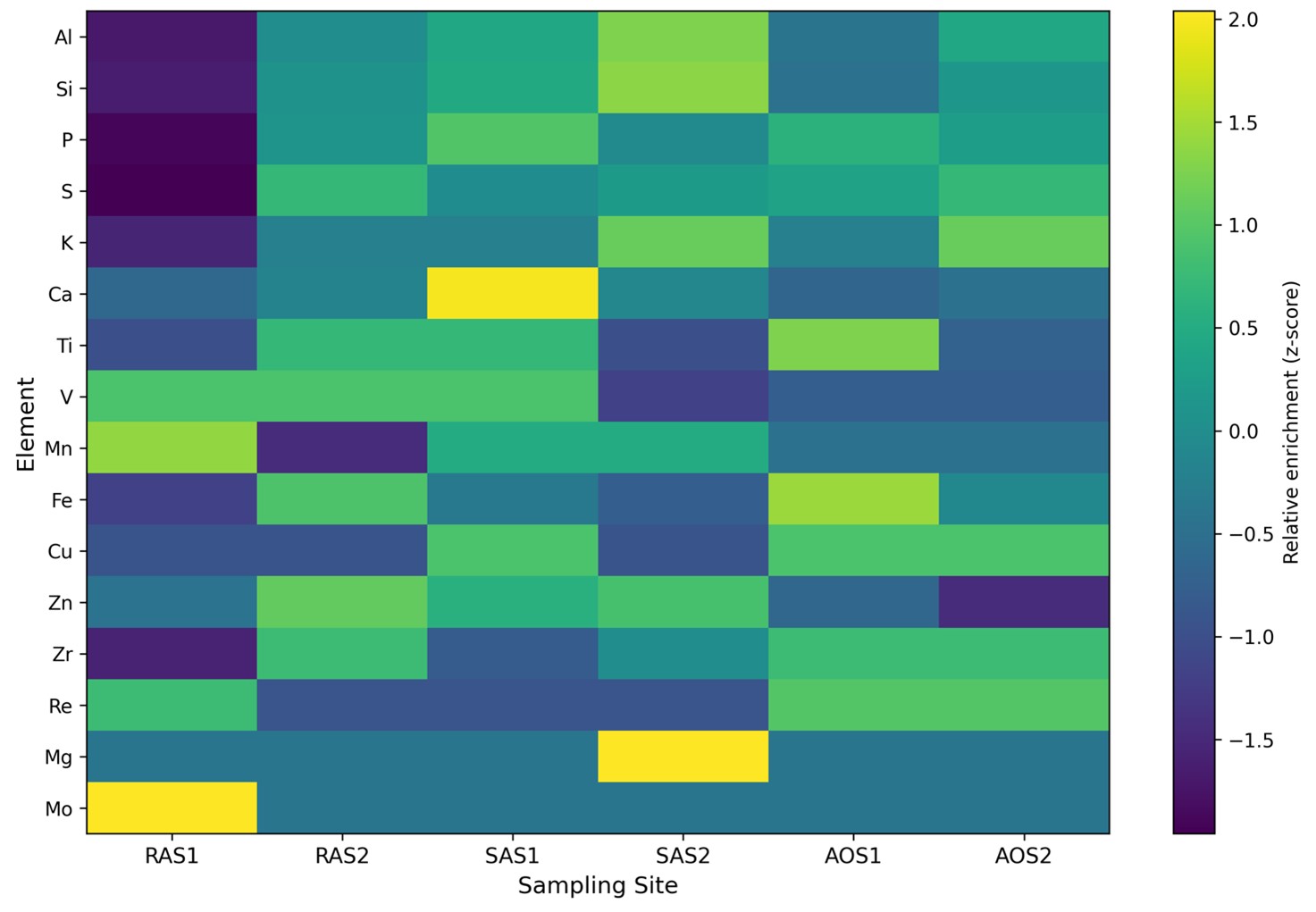
X-ray fluorescence (XRF) analysis revealed that the sediment samples were dominated by major elements including Fe, Si, Al, and Ca, while several minor and trace elements such as K, P, S, Ti, V, Mn, Cu, Zn, Zr, Re, Mg, and Mo were detected in lower concentrations (Figure 2). The heatmap visualization based on standardized values (z-scores) highlights spatial variability in elemental enrichment across the six sampling sites (RAS1, RAS2, SAS1, SAS2, AOS1, and AOS2). Overall, the elemental composition among sites showed relatively similar patterns for major elements, suggesting that the sediments likely share comparable mineralogical origins. However, several elements exhibited localized enrichment, indicating site-specific geochemical influences. Among the detected elements, iron (Fe) showed relatively higher enrichment in AOS1 and RAS2 compared to other locations. Iron is a key redox-active element in aquatic sediments and plays a crucial role in microbial respiration and biogeochemical cycling (Badawy et al., 2024). Elevated iron concentrations often support diverse microbial metabolisms, including iron reduction and oxidation processes, which are commonly observed in coastal and estuarine sediments. The presence of abundant Fe in these sediments therefore suggests favorable conditions for microbial communities capable of participating in redox-driven metabolic pathways (Luo et al., 2021).

Heatmap of sediment geochemical composition determined by X-ray fluorescence (XRF) across sampling sites (RAS1, RAS2, SAS1, SAS2, AOS1, and AOS2).
The elements silicon (Si) and aluminum (Al) showed relatively higher enrichment at SAS2, indicating the presence of aluminosilicate minerals typically derived from terrestrial inputs or mineral weathering processes. Such mineral compositions are commonly reported in coastal and estuarine sediments influenced by riverine inputs and sediment transport. Meanwhile, calcium (Ca) was notably enriched in SAS1, which may reflect the presence of carbonate materials or biogenic fragments derived from marine organisms. Carbonate-rich sediments are frequently associated with higher buffering capacity and may influence microbial habitat conditions. Sulfur (S) exhibited higher relative enrichment in RAS2 and AOS2, which may indicate localized sulfur accumulation and potentially more reducing sediment conditions. Sulfur enrichment in sediments is often associated with microbial sulfate reduction processes, which play an important role in anaerobic organic matter degradation in marine and estuarine environments. Such conditions can support specialized microbial communities adapted to sulfur cycling (Puthusseri et al., 2021).
Trace metals displayed more heterogeneous spatial patterns. Manganese (Mn) showed relatively higher enrichment in RAS1, whereas molybdenum (Mo) was strongly enriched in the same location and was nearly absent from the other sites. Molybdenum is a critical cofactor in several microbial enzymes involved in nitrogen and sulfur cycling, including nitrate reductase and nitrogenase (Nunes et al., 2024). Therefore, the localized enrichment of Mo at RAS1 may reflect distinct geochemical conditions that potentially influence microbial metabolic activity. Other trace elements such as Cu, Zn, Ti, V, and Zr were detected at low concentrations but showed noticeable variation among sampling sites. Although present in smaller amounts, these metals are ecologically significant because they can act as selective pressures on microbial communities. For example, Cu and Zn are essential micronutrients but may become toxic at elevated concentrations, thereby promoting the development of metal resistance mechanisms in microorganisms (Liu et al., 2024). The spatial variation in elemental composition observed across sampling sites may also be associated with differences in dominant mangrove vegetation types. Mangrove plant species are known to influence sediment physicochemical characteristics through differences in root architecture, oxygen transport capacity, and organic litter deposition. For example, sediments associated with Avicennia officinalis (AOS sites) showed relatively higher enrichment of Fe, which may be related to the pneumatophore root system of Avicennia that enhances oxygen diffusion into surrounding sediments and promotes iron redox cycling. In contrast, the enrichment of sulfur observed in Rhizophora apiculata (RAS sites) sediments may reflect more reduced sediment conditions commonly associated with dense prop-root structures that limit oxygen penetration and favor sulfate-reducing microbial activity. Meanwhile, elevated Si and Al concentrations detected in Sonneratia alba (SAS sites) sediments likely indicate stronger influence from terrestrial mineral inputs and sediment deposition processes typical of riverine-influenced coastal environments where this species frequently occurs. These observations suggest that vegetation type may contribute to shaping localized sediment geochemical conditions that subsequently influence microbial community structure and metabolic potential.
The XRF results provide an important environmental context for interpreting the metagenomic findings presented earlier in this study. Previous analyses of the microbial community revealed the presence of metal resistance genes and diverse functional metabolic pathways, including categories related to inorganic ion transport and metabolism, energy production, and defense mechanisms (Pawano et al., 2024). The presence of multiple metal elements in the sediment supports the interpretation that microbial communities in this environment are exposed to geochemical conditions that may favor the maintenance of metal resistance traits. In particular, the detection of Cu and Zn in the sediments is consistent with the resistome analysis that identified genes associated with resistance to various metals and antimicrobial compounds (Puthusseri et al., 2021). Previous studies have demonstrated that metal contamination can co-select for antibiotic resistance genes because metal resistance determinants and antibiotic resistance genes are often located on the same mobile genetic elements (Cao et al., 2020). Therefore, the geochemical characteristics observed in the present study may partly explain the distribution of resistance-related functional genes detected in the microbial metagenome. The dominance of Fe and other inorganic elements aligns with the functional enrichment of inorganic ion transport and metabolism observed in the COG-based functional annotation. Similar relationships between sediment geochemistry and microbial functional potential have been reported in coastal and mangrove ecosystems, where mineral composition and trace metal availability strongly influence microbial metabolic capabilities. The integration of XRF geochemical data with metagenomic functional profiling provides a more comprehensive understanding of the environmental factors shaping microbial communities. While the metagenomic analysis reveals the metabolic potential and resistance traits of the microbial assemblages, the XRF results highlight the geochemical conditions that likely contribute to the selection and maintenance of these functional characteristics (Zhang et al., 2023b).
3.2. Composition and relative abundance of bacterial communities in Kebun Raya Mangrove Sediment
The bacterial communities detected in sediment samples associated with Rhizophora apiculata (RAS1–RAS2), Sonneratia alba (SAS1–SAS2), and Avicennia officinalis (AOS1–AOS2) exhibited relatively consistent taxonomic profiles across all sampling points (Figure 3). Although minor variations in relative abundance were observed among replicates, the general community structure remained highly similar, suggesting the presence of a stable core microbiome within the mangrove sediment ecosystem. Such stability is commonly observed in mangrove environments where microbial communities are shaped by persistent environmental drivers such as organic matter input, tidal fluctuations, and sediment redox gradients. At the phylum level, the bacterial community was predominantly dominated by Pseudomonadota (formerly Proteobacteria), followed by Actinomycetota, Bacillota, and smaller proportions of Bacteroidota, Planctomycetota, Myxococcota, Acidobacteriota, and other minor phyla. The strong dominance of Pseudomonadota across all samples indicates that this phylum constitutes the major component of the mangrove sediment microbiome in the study area. Members of Pseudomonadota are widely recognized as metabolically versatile microorganisms capable of participating in multiple biogeochemical cycles, including carbon degradation, nitrogen transformation, and sulfur metabolism. This observation aligns with recent global studies of mangrove sediment microbiomes. A large-scale metagenomic survey of mangrove sediments across multiple geographic regions reported that Proteobacteria consistently dominate mangrove sediment microbial communities, often representing more than half of the total microbial abundance. Similarly, a recent study in Indian mangrove sediments reported that Proteobacteria and Actinobacteria represent the primary microbial groups responsible for organic matter turnover and nutrient cycling in coastal sediments (Nathan et al., 2020). The relatively high abundance of Actinomycetota observed in the present dataset further highlights the ecological importance of this group in mangrove sediments. Actinobacteria are well known for their ability to degrade complex organic compounds such as lignocellulose derived from mangrove leaf litter (Subramani and Suthindhiran, 2025). In addition, these microorganisms are recognized as prolific producers of secondary metabolites, including antimicrobial compounds, which contribute to microbial competition and ecological stability within sediment environments.

Microbiome abundance in taxa level from three mangrove sediment species: (A) Phylum, (B) Family, (C) Genus, and (D) Species.
At the class level, the microbial community was mainly composed of Alphaproteobacteria, Gammaproteobacteria, Actinomycetia, Betaproteobacteria, and Bacilli. Among these, Alphaproteobacteria and Gammaproteobacteria showed consistently high relative abundance across all sediment samples, indicating their ecological importance within the mangrove sediment microbial network. Alphaproteobacteria are commonly associated with oligotrophic and plant-associated environments, including rhizosphere systems. Many members of this class participate in nitrogen fixation, methylotrophy, and sulfur oxidation. Their presence in mangrove sediments is therefore often linked to interactions with mangrove root systems and nutrient transformation processes. Conversely, Gammaproteobacteria are typically considered copiotrophic microorganisms, thriving in environments enriched with organic substrates. Mangrove sediments are particularly rich in organic carbon due to continuous deposition of plant detritus and tidal inputs, which likely explains the dominance of this class (Marfil-Santana et al., 2021).
At the order level, several key groups were detected, including Burkholderiales, Rhodobacterales, Micrococcales, Pseudomonadales, Enterobacterales, and Sphingomonadales. These orders are frequently reported in coastal sediment ecosystems and are known to perform essential ecological functions (Aragón-Moreno et al., 2024). For example, Burkholderiales includes species capable of degrading aromatic compounds and participating in nitrogen cycling, while Rhodobacterales are widely associated with marine biofilm formation and sulfur metabolism. The dominance of these bacterial groups supports the hypothesis that mangrove sediments serve as hotspots for microbial-driven biogeochemical processes, particularly carbon mineralization and nutrient recycling. Similar taxonomic patterns have been reported in mangrove sediments from the South China Sea and Indian Ocean (Yan et al., 2026), where Proteobacteria-related classes dominate microbial assemblages responsible for sulfur cycling and organic matter decomposition.
In finer taxonomic resolution, the family-level distribution revealed relatively high abundances of Pseudomonadaceae, Enterobacteriaceae, Burkholderiaceae, Streptomycetaceae, Rhizobiaceae, Mycobacteriaceae, and Nocardiaceae. These families collectively represent diverse metabolic capabilities and ecological roles within sediment environments. For instance, Pseudomonadaceae and Burkholderiaceae include bacteria known for their ability to degrade complex organic substrates and environmental pollutants. These organisms often dominate nutrient-rich sediment environments and contribute to the breakdown of organic matter derived from mangrove vegetation. Meanwhile, Streptomycetaceae and Nocardiaceae belong to the Actinomycetota lineage and are recognized for their role in decomposing recalcitrant organic materials as well as producing bioactive compounds. At the genus level, several genera were consistently detected across samples, including Pseudomonas, Burkholderia, Streptomyces, Bradyrhizobium, Nocardioides, Bacillus, Mycobacterium, Halomonas, and Paracoccus. The dominance of Pseudomonas and Burkholderia is particularly noteworthy, as these genera are frequently associated with environments enriched in organic carbon and anthropogenic inputs. Both genera possess extensive metabolic capabilities that enable them to degrade hydrocarbons, aromatic compounds, and other complex substrates. The presence of Streptomyces and related actinobacterial genera suggests that mangrove sediments may also represent a valuable reservoir of microorganisms with biotechnological potential, particularly for the discovery of novel antimicrobial compounds. Several recent studies have reported that mangrove-derived Streptomyces strains exhibit strong antimicrobial and enzymatic activities, highlighting their importance as sources of new bioactive metabolites. Interestingly, low but detectable abundances of genera belonging to the Enterobacteriaceae family, such as Klebsiella and Escherichia, were also observed (Ikhsanudin et al., 2025; Maysaroh et al., 2023). While these taxa are often associated with human or animal hosts, their occurrence in coastal sediments can reflect environmental contamination or nutrient enrichment associated with urban runoff. Similar findings have been reported in mangrove ecosystems located near urbanized coastal areas, where anthropogenic inputs influence microbial community composition (Zhang et al., 2023b).
Species-level analysis revealed that the majority of the microbial community was represented by the others category, accounting for approximately 90% of the total abundance across samples. This pattern indicates extremely high microbial diversity, with many species present at relatively low abundance levels. Such a long-tail distribution is characteristic of complex environmental microbiomes, where ecological functions are distributed across numerous taxa rather than dominated by a single species. Although several species such as Salmonella enterica, Klebsiella pneumoniae, Pseudomonas aeruginosa, and Streptomyces lividans were detected, their relative abundance remained low compared to the total microbial community. It is important to note that taxonomic assignments at the species level in metagenomic datasets should be interpreted cautiously due to potential limitations in database resolution and sequence similarity thresholds (Schuele et al., 2021). Nevertheless, the overall pattern observed in this study suggests that mangrove sediment microbial communities exhibit high taxonomic diversity and functional redundancy, which may enhance ecosystem resilience. Such redundancy ensures that essential ecological processes—such as organic matter degradation, nitrogen cycling, and sulfur transformation—can continue even when environmental conditions fluctuate.
The taxonomic structure observed in this study is broadly consistent with findings from recent mangrove sediment microbiome research conducted worldwide over the past five years. Several studies have reported that Proteobacteria, Actinobacteria, and Firmicutes represent the dominant bacterial phyla in mangrove sediments, regardless of geographic location. For example, previous global metagenomic analyses of mangrove sediments reported that Proteobacteria consistently dominate microbial communities across multiple mangrove ecosystems. Similarly, studies demonstrated that sulfur-metabolizing microbial communities in coastal mangrove sediments are largely composed of Proteobacteria and Actinobacteria. More recently, Nathan et al. (2020) investigated urban mangrove sediments in Goa, India, and found that microbial communities were dominated by Proteobacteria, Chloroflexi, and Actinobacteria, with the presence of opportunistic genera linked to anthropogenic influences. These findings support the interpretation that microbial community composition in mangrove sediments is shaped by both natural environmental gradients and human activities. The results of the present study therefore reinforce the growing consensus that mangrove sediments host complex microbial communities with key roles in nutrient cycling, organic matter degradation, and ecosystem functioning (Honorato et al., 2021). At the same time, the detection of certain opportunistic taxa highlights the importance of monitoring microbial indicators of environmental disturbance in coastal mangrove systems.
3.3. Clustering and ordination analysis of mangrove sediment bacterial communities
The hierarchical clustering heatmap indicates that the bacterial communities in the six sediment samples were not randomly distributed, but instead formed structured similarity patterns (Figure 4). Based on the dendrogram, the samples can be broadly separated into two major clusters. One cluster includes RAS2, SAS2, and AOS2, which show relatively closer similarity to each other, whereas the second cluster includes AOS1, RAS1, and SAS1, suggesting a distinct compositional grouping. Within the first cluster, SAS2 and AOS2 appear to be the most similar pair, as reflected by their warmer color intensity and shorter dendrogram distance. In contrast, AOS1 shows comparatively lower similarity to the RAS2, SAS2, AOS2 group, indicating that this sample harbors a more distinct bacterial composition. Overall, the heatmap suggests that part of the bacterial community structure is shared among some samples, but marked dissimilarity remains among others, implying that local microhabitat conditions likely contributed to differences in sediment microbiome composition.

Similarity of microbial communities in mangrove sediment samples at the species level. (A) Principal component analysis (PCA) illustrating clustering patterns among samples based on species-level microbial composition; (B) Heatmap hierarchical clustering showing similarity relationships among samples and dominant microbial taxa. RAS1–RAS2 correspond to sediment samples associated with Rhizophora apiculata, SAS1–SAS2 correspond to sediment samples associated with Sonneratia alba, and AOS1–AOS2 correspond to sediment samples associated with Avicennia officinalis. Numbers 1 and 2 indicate biological replicates collected from each sampling location.
The PCA ordination (Figure 4) supports this interpretation by showing that the six samples are distributed in different directions from the centroid rather than collapsing into a tight single cluster. This pattern suggests that bacterial assemblages varied across the sampled sediments, even though they still belonged to the same mangrove ecosystem. The dispersion of points across the first two principal components indicates measurable beta diversity among samples, meaning that community composition differed from one sediment sample to another. The radial spread is especially useful in showing that some samples are more compositionally distinct than others, consistent with the separation observed in the heatmap. Together, the heatmap and PCA indicate that the mangrove sediment microbiome was structured by intra-site heterogeneity, rather than being completely homogeneous across all samples. Ecologically, such patterns are expected in mangrove sediments. Mangrove microbial communities are strongly shaped by small-scale environmental gradients, including sediment redox conditions, salinity, oxygen penetration, organic matter deposition, root influence, and hydrological connectivity. Recent work has shown that environmental variables such as salinity, pH, nutrient availability, and anthropogenic disturbance significantly influence bacterial community composition across mangrove substrates and sediment types. In a 2024 multi-niche mangrove bacterial study, PCA clearly separated communities according to substrate and environmental gradients, emphasizing the role of local physicochemical conditions in structuring bacterial assemblages. Similarly, a 2024 study from urban mangrove sediments in Goa reported that sediment bacterial communities differed across sites and that urbanization strongly affected bacterial composition and ecological function.
The clustering pattern in the present dataset is also consistent with the broader literature showing that mangrove sediments often contain a core microbiome plus habitat-specific variation. A 2025 global biogeographic analysis of prokaryotes in mangrove sediments found that mangrove sediment communities are structured across regions and habitats rather than being taxonomically uniform, with strong effects of environmental context on community distribution. Likewise, a 2025 study of seasonal dynamics in mangrove sediments demonstrated that bacterial communities can shift substantially across sampling contexts while still retaining dominant mangrove-associated lineages. These studies support the interpretation that the separation seen in your heatmap and PCA likely reflects fine-scale ecological filtering rather than analytical noise.
3.4. Functional profiling of antibiotic and metal resistance genes
The heatmap analysis revealed the distribution and relative abundance of resistance determinants against heavy metals, biocides, and antibiotics across the six sampling sites (RAS1, RAS2, SAS1, SAS2, AOS1, and AOS2) (Figure 5). The visualization employs log10-transformed relative abundance values, where red indicates higher abundance and blue indicates lower abundance of resistance genes. Hierarchical clustering further illustrates similarity patterns among samples and resistance categories, allowing identification of functional relationships within the microbial communities. The heatmap on the left illustrates the relative abundance of genes associated with resistance to heavy metals and chemical compounds. Several resistance categories were consistently detected across all sampling sites, including mercury, lead, arsenic, copper, nickel, zinc, and selenium. The detection of mercury-related resistance determinants is ecologically relevant because mangrove sediment microbiomes may include microbial taxa with potential roles in mercury transformation processes (Zhang et al., 2023a). These metals are commonly associated with anthropogenic pollution originating from industrial discharge, urban runoff, and agricultural activities, which may contribute to selective pressure in environmental microbial communities (Zhang et al., 2023b).

Heatmap illustrating the relative abundance of metal/biocide resistance genes (left) and antibiotic resistance genes (right) across sampling sites (RAS1, RAS2, SAS1, SAS2, AOS1, and AOS2). Colors represent log10-transformed relative abundance values, where red indicates higher abundance and blue indicates lower abundance. Hierarchical clustering reveals similarities in resistance gene profiles among samples and resistance categories, indicating potential environmental selection pressures and the presence of environmental resistomes.
High relative abundance of resistance determinants for metals such as arsenic, copper, and nickel was observed in multiple samples, indicating that microbial populations inhabiting these environments possess adaptive mechanisms to tolerate metal toxicity. Such resistance mechanisms generally involve efflux pumps, metal sequestration systems, enzymatic detoxification, and intracellular transformation pathways that allow microbes to survive under metal stress conditions. Previous studies have demonstrated that microbial communities exposed to heavy metals often develop resistance through genetic systems such as the ars operon (arsenic resistance), cop operon (copper resistance), and mer operon (mercury resistance), which are widely distributed among environmental bacteria (Puthusseri et al., 2021; Ali and Khan, 2018). In addition to metal resistance, several genes associated with resistance to disinfectants and biocides were also detected, including triclosan, chlorhexidine, hydrogen peroxide, acriflavine, and cetyltrimethylammonium bromide. The presence of these genes suggests that microbial communities in the sampled environments are also exposed to antimicrobial chemicals derived from household wastewater, healthcare waste, or industrial cleaning agents. Biocide resistance mechanisms frequently involve multidrug efflux pumps belonging to the major facilitator superfamily (MFS) and resistance-nodulation-division (RND) transporters, which can export toxic compounds from bacterial cells (Yang et al., 2025). The clustering pattern indicates that several samples share similar resistance profiles, suggesting that environmental conditions across these locations may exert comparable selective pressures on microbial communities. Environmental exposure to heavy metals is known to co-select for antibiotic resistance due to the genetic linkage between metal resistance genes and antibiotic resistance genes on plasmids and other mobile genetic elements.
The heatmap on the right presents the distribution of antibiotic resistance genes (ARGs) across the sampling sites. Several classes of antibiotics were represented in the analysis, including monobactams, glycopeptides, oxazolidinones, lincosamides, pleuromutilins, streptogramins, carbapenems, aminoglycosides, fluoroquinolones, penams, cephalosporins, and sulfonamides. The detection of glycopeptide-related determinants is relevant because vancomycin resistance genes have previously been reported among intrinsically antibiotic-resistant bacteria in Indonesian microbiota (Luqman et al., 2024). The results indicate that multiple ARG classes were widely distributed among samples, suggesting that environmental microbial communities harbor a diverse resistome. Particularly notable was the presence of resistance determinants related to beta-lactam antibiotics, including carbapenems, penams, and cephalosporins. Beta-lactam resistance genes are among the most prevalent ARGs in environmental metagenomes due to their ancient evolutionary origin and widespread distribution among bacterial taxa (Fan et al., 2021). Genes associated with resistance to fluoroquinolones and aminoglycosides were also detected in several samples. These antibiotic classes are widely used in both clinical and veterinary medicine, and their presence in environmental resistomes has been reported in numerous aquatic ecosystems worldwide. The persistence of these genes in environmental microbiomes indicates that aquatic and sediment ecosystems may serve as reservoirs for ARG dissemination (Zhang et al., 2023b; Pan et al., 2025). The clustering patterns in the heatmap further suggest that certain sites exhibit similar ARG compositions, implying that microbial communities in these environments may share functional resistance characteristics. Environmental resistomes are often shaped by multiple ecological factors, including nutrient availability, contamination levels, microbial diversity, and horizontal gene transfer processes (Zhang et al., 2020; Yin et al., 2022).
One of the most important ecological implications of the observed results is the potential co-occurrence of heavy metal resistance genes and antibiotic resistance genes within the same microbial communities (Puthusseri et al., 2021). Numerous studies have demonstrated that exposure to heavy metals can promote the selection and maintenance of antibiotic resistance genes through co-resistance or cross-resistance mechanisms. In co-resistance, genes conferring resistance to both antibiotics and metals are physically linked on the same mobile genetic elements, such as plasmids or integrons (Filipoiu et al., 2022). In cross-resistance, a single resistance mechanism, such as a multidrug efflux pump, provides protection against multiple toxic compounds simultaneously. This phenomenon has been widely documented in environmental microbiology research (Narsing Rao et al., 2022). For instance, previous studies demonstrated that metal contamination in aquatic ecosystems strongly correlates with increased abundance of antibiotic resistance genes. Similarly, previous reports showed that sediments exposed to industrial pollution exhibited higher ARG diversity due to co-selection pressures induced by heavy metals (Rodríguez et al., 2021; Badawy et al., 2024).
The detection of both metal resistance genes and antibiotic resistance genes across the sampling sites suggests that these environments may act as reservoirs for environmental resistomes (Tan et al., 2021). Such reservoirs are of global concern because environmental bacteria can potentially transfer resistance genes to clinically relevant pathogens through horizontal gene transfer. This process may contribute to the emergence of multidrug-resistant bacteria, which represents a significant threat to public health. Coastal and mangrove ecosystems, in particular, are known to accumulate pollutants transported through river systems and urban runoff (Narsing Rao et al., 2022). These environments therefore represent hotspots for microbial adaptation to chemical stressors and may facilitate the evolution and dissemination of resistance determinants. The present findings support the growing body of evidence that natural ecosystems are not only passive recipients of pollution but also dynamic reservoirs of microbial resistance genes (Yan et al., 2024).
The observed distribution patterns of resistance genes in this study are consistent with findings from recent metagenomic investigations of coastal and estuarine ecosystems. For example, previous studies reported widespread detection of ARGs and metal resistance genes in marine sediments influenced by anthropogenic pollution. Similarly, Zeng et al. (2023) identified diverse antibiotic resistance determinants in mangrove sediments, highlighting the role of these ecosystems as reservoirs of environmental resistomes. These studies collectively indicate that environmental microbial communities can harbor complex resistance networks shaped by multiple ecological drivers (Subramani and Suthindhiran, 2025). The present results further reinforce the importance of monitoring environmental resistomes to better understand the ecological and evolutionary dynamics of antimicrobial resistance.
3.5. Functional profiling of microbial communities based on COG and KEGG pathways
Functional annotation of the metagenomic dataset revealed diverse metabolic and cellular capabilities within the microbial communities across the six sampling sites (RAS1, RAS2, SAS1, SAS2, AOS1, and AOS2). Heatmap visualization (Figure 6) based on COG (Cluster of Orthologous Groups) and KEGG pathway classification demonstrated that the microbial communities exhibited relatively similar functional patterns, although several functional categories showed variable abundance among the sampling sites. The color gradients represent log10-transformed relative abundance values, where red indicates higher abundance and blue indicates lower abundance.

Heatmap showing functional gene distribution based on COG categories (left) and KEGG pathway annotations (right) across sampling sites. Colors represent log10-transformed relative abundance values, with red indicating higher abundance and blue indicating lower abundance. Hierarchical clustering illustrates similarities in functional profiles among microbial communities across different environmental samples.
The COG-based heatmap illustrates the distribution of functional gene categories related to metabolism, cellular processes, and information storage within the microbial communities (Marfil-Santana et al., 2021; Muwawa et al., 2021). Among the detected functional groups, genes associated with energy production and conversion, amino acid transport and metabolism, carbohydrate transport and metabolism, and lipid transport and metabolism showed relatively high abundance across most sampling sites. The predominance of these metabolic functions indicates that microbial communities inhabiting the studied environment possess strong metabolic potential to support nutrient cycling and organic matter degradation. Energy metabolism represents one of the most dominant functional categories observed in this study. Microorganisms inhabiting aquatic and coastal environments typically rely on diverse metabolic pathways to maintain cellular energy balance under fluctuating environmental conditions. Previous metagenomic studies have reported that genes related to energy metabolism are frequently enriched in microbial communities inhabiting marine sediments and estuarine ecosystems, reflecting microbial adaptation to complex redox conditions and nutrient gradients (Lira et al., 2020).
Genes involved in amino acid metabolism and carbohydrate metabolism were also highly abundant across the samples. These metabolic pathways are essential for microbial growth and survival, as they enable microorganisms to utilize diverse organic substrates present in the environment. The high abundance of carbohydrate metabolism genes suggests that microbial communities in the sampled sites are actively involved in the decomposition of organic materials, including plant-derived polysaccharides commonly found in coastal and mangrove ecosystems. Similar findings have been reported in mangrove sediment microbiomes, where microbial communities play crucial roles in carbon cycling and organic matter turnover (Zhang et al., 2023b). Genes associated with cell wall and membrane biogenesis, signal transduction mechanisms, and replication, recombination, and repair were also detected in relatively high abundance. These functional categories are critical for microbial adaptation to environmental stressors, including salinity fluctuations, nutrient limitation, and exposure to environmental pollutants. Signal transduction pathways enable microorganisms to sense and respond to environmental changes, while DNA repair systems help maintain genomic integrity under stressful conditions. Such adaptive mechanisms have been widely documented in microbial communities inhabiting dynamic coastal ecosystems (Nunes et al., 2024).
The category general function prediction only also showed relatively high abundance. This indicates that a significant proportion of detected genes remain poorly characterized, which is common in environmental metagenomic datasets due to the vast diversity of uncultured microbial taxa. Environmental microbiomes often contain a large fraction of novel genes whose functions have not yet been fully elucidated. Conversely, several functional categories such as RNA processing and modification, cytoskeleton, and chromatin structure and dynamics displayed relatively low abundance (Padhy et al., 2021). These functions are typically more prevalent in eukaryotic organisms rather than prokaryotes, which explains their limited representation in bacterial-dominated environmental microbiomes.
The KEGG-based functional annotation further revealed detailed metabolic pathways present within the microbial communities. The heatmap indicates that pathways related to carbohydrate metabolism, amino acid metabolism, energy metabolism, and membrane transport exhibited relatively high abundance across the sampling sites. Carbohydrate metabolism pathways are particularly important in environmental microbial communities because they enable microorganisms to degrade complex organic compounds and convert them into usable energy sources. In coastal ecosystems, organic matter derived from plant debris, algae, and detritus serves as a major substrate for microbial metabolism. Consequently, microbial communities with strong carbohydrate metabolic capabilities play essential roles in maintaining ecosystem productivity and biogeochemical cycling. Similarly, pathways associated with amino acid metabolism were highly represented, suggesting that nitrogen cycling may be actively mediated by microbial communities in the studied environment. Microorganisms capable of amino acid metabolism contribute to nitrogen turnover through processes such as ammonification and assimilation of nitrogen-containing compounds. Previous metagenomic studies have demonstrated that nitrogen metabolism pathways are commonly enriched in sediment microbial communities due to their roles in nutrient recycling (Subramaniam et al., 2024).
The presence of membrane transport systems also indicates active nutrient exchange between microbial cells and their surrounding environment. Transport systems such as ATP-binding cassette (ABC) transporters and major facilitator superfamily (MFS) transporters are widely distributed in environmental bacteria and facilitate the uptake of nutrients as well as the export of toxic compounds. Another notable pathway detected in the analysis is xenobiotics biodegradation and metabolism, which suggests that microbial communities in these environments possess the capability to degrade environmental pollutants (Qian et al., 2024). Coastal and estuarine ecosystems often receive contaminants from anthropogenic sources such as industrial waste, agricultural runoff, and urban discharge. Microorganisms capable of xenobiotic degradation therefore play an important ecological role in environmental detoxification and bioremediation processes. The detection of pathways associated with drug resistance antimicrobial further supports the presence of environmental resistomes within these microbial communities. Environmental bacteria frequently harbor resistance genes as part of their natural defense mechanisms against naturally occurring antibiotics produced by competing microorganisms (Rodríguez et al., 2021; Aragón-Moreno et al., 2024). However, anthropogenic activities may also contribute to the enrichment of these resistance determinants in environmental ecosystems.
Hierarchical clustering analysis revealed that several sampling sites share similar functional profiles, suggesting that microbial communities across these environments may experience comparable ecological pressures. Environmental parameters such as nutrient availability, salinity, and organic matter content are known to influence microbial community composition and functional potential. Despite minor variations in functional abundance, the overall metabolic structure of microbial communities appeared relatively conserved across the sampling sites. This observation indicates that core metabolic functions, particularly those involved in nutrient cycling and energy production, are maintained across different environmental locations. Such functional redundancy is commonly observed in microbial ecosystems and contributes to the stability and resilience of microbial communities under changing environmental conditions.
The presence of genes related to xenobiotic degradation and antimicrobial resistance suggests that microbial communities are capable of adapting to environmental stressors and anthropogenic pollutants (John et al., 2024). Coastal and mangrove ecosystems are often considered hotspots of microbial diversity and functional activity, where microorganisms contribute significantly to nutrient transformation and environmental resilience. The findings of this study are consistent with recent metagenomic investigations of coastal microbiomes, which have reported that microbial communities in such environments typically exhibit high metabolic versatility and strong adaptive capabilities. These functional characteristics enable microbial communities to sustain ecosystem productivity while simultaneously responding to environmental disturbances.
4. Conclusions
This research provides a comprehensive metagenomic characterization of microbial communities inhabiting mangrove sediments from Kebun Raya Mangrove Surabaya. The results demonstrate that sediment geochemistry is dominated by major mineral elements such as Fe, Si, Al, and Ca, with spatial variation in several trace metals including Mn, Cu, Zn, and Mo. These geochemical characteristics likely influence microbial metabolic activity and ecological adaptation within the sediment environment. Metagenomic analysis revealed that the microbial communities were primarily dominated by Pseudomonadota, Actinomycetota, and Bacillota, which are commonly associated with nutrient cycling and organic matter decomposition in mangrove ecosystems. Clustering and ordination analyses indicated that microbial community structures exhibited moderate variability among sampling sites, reflecting the influence of localized environmental gradients. Functional annotation based on COG and KEGG pathways demonstrated that microbial communities possess extensive metabolic capabilities related to energy production, carbohydrate metabolism, amino acid metabolism, and membrane transport. These functional traits highlight the important ecological role of sediment microorganisms in carbon and nutrient cycling within mangrove ecosystems. In addition, the widespread presence of heavy metal resistance genes and antibiotic resistance genes suggests that mangrove sediments may function as environmental reservoirs of resistance determinants. The co-occurrence of metal resistance and antibiotic resistance genes indicates potential co-selection processes driven by environmental contamination and geochemical conditions. Overall, the integration of metagenomic and geochemical analyses provides valuable insights into the ecological dynamics of microbial communities in tropical mangrove sediments and contributes to a better understanding of the environmental factors shaping microbial diversity and functional potential in coastal ecosystems.
Acknowledgements
This research was funded by the Center for Higher Education Funding and Assessment, Ministry of Higher Education, Science, and Technology of the Republic of Indonesia, through the Indonesian Education Scholarship (BPI) program under contract No. 00801/J5.2.3/BPI.06/9/2022, with an extension agreement No. 02393/BPPT/BPI.06/9/2024, and supported by LPDP (Indonesia Endowment Fund for Education). The authors gratefully acknowledge the laboratory facilities, instrumentation, and research infrastructure provided by Universitas Anwar Medika
Data Availability Statement
The data supporting the findings of this study are available from the corresponding author upon reasonable request
References
-
ALI, H. and KHAN, E., 2018. Bioaccumulation of non-essential hazardous heavy metals and metalloids in freshwater fish: risk to human health. Environmental Chemistry Letters, vol. 16, no. 3, pp. 903-917. https://doi.org/10.1007/s10311-018-0734-7
» https://doi.org/10.1007/s10311-018-0734-7 -
ARAGÓN-MORENO, A.A., ISLEBE, G.A., TORRESCANO-VALLE, N., HERNÁNDEZ-ARANA, H.A., CARRILLO-BASTOS, A. and FRIEDEL, R., 2024. Mangrove dynamics driven by Late Holocene drought at Laguna Bacalar, Mexico. Quaternary Environments and Humans, vol. 2, no. 5, pp. 100023. https://doi.org/10.1016/j.qeh.2024.100023
» https://doi.org/10.1016/j.qeh.2024.100023 -
BADAWY, W.M., DMITRIEV, A.Y., EL SAMMAN, H., EL-TAHER, A., BLOKHIN, M.G., RAMMAH, Y.S., MADKOUR, H.A., SALAMA, S. and BUDNITSKIY, S.Y., 2024. Elemental composition and metal pollution in Egyptian Red Sea mangrove sediments: characterization and origin. Marine Pollution Bulletin, vol. 198, pp. 115830. https://doi.org/10.1016/j.marpolbul.2023.115830 PMid:37995594.
» https://doi.org/10.1016/j.marpolbul.2023.115830 -
BODEA, I.M., CĂTUNESCU, G.M., POP, C.R., FIȚ, N.I., DAVID, A.P., DUDESCU, M.C., STĂNILĂ, A., ROTAR, A.M. and BETEG, F.I., 2022. Antimicrobial properties of bacterial cellulose films enriched with bioactive herbal extracts obtained by microwave-assisted extraction. Polymers, vol. 14, no. 7, pp. 1435. https://doi.org/10.3390/polym14071435 PMid:35406309.
» https://doi.org/10.3390/polym14071435 -
BOHRA, V., LAI, K.K.-Y., LAM, K.-L., TAM, N.F.-Y., JING-LIANG, S. and LEE, F.W.-F., 2025. Metagenomic surveillance reveals different structure and function of microbial community associated with mangrove pneumatophores and their surrounding matrices. Marine Pollution Bulletin, vol. 213, pp. 117614. https://doi.org/10.1016/j.marpolbul.2025.117614 PMid:39904008.
» https://doi.org/10.1016/j.marpolbul.2025.117614 -
CAO, J., HU, Y., LIU, F., WANG, Y., BI, Y., LV, N., LI, J., ZHU, B. and GAO, G.F., 2020. Metagenomic analysis reveals the microbiome and resistome in migratory birds. Microbiome, vol. 8, no. 1, pp. 26. https://doi.org/10.1186/s40168-019-0781-8 PMid:32122398.
» https://doi.org/10.1186/s40168-019-0781-8 -
CHITHIRA, M.S., AISHWARYA, P.V., MOHAN, A.S. and ANTONY, S.P., 2021. Profiling bacteriome associated with the sediments of a mangrove ecosystem in Kerala, India. Ecological Genetics and Genomics, vol. 21, pp. 100103. https://doi.org/10.1016/j.egg.2021.100103
» https://doi.org/10.1016/j.egg.2021.100103 -
DAS, B.K., GADNAYAK, A., CHAKRABORTY, H.J., PRADHAN, S.P., RAUT, S.S. and DAS, S.K., 2025. Exploring microbial players for metagenomic profiling of carbon cycling bacteria in sundarban mangrove soils. Scientific Reports, vol. 15, no. 1, pp. 4784. https://doi.org/10.1038/s41598-025-89418-x PMid:39922935.
» https://doi.org/10.1038/s41598-025-89418-x -
FAN, J., HUANG, S. and CHORLTON, S.D., 2021. BugSeq: a highly accurate cloud platform for long-read metagenomic analyses. BMC Bioinformatics, vol. 22, no. 1, pp. 160. https://doi.org/10.1186/s12859-021-04089-5 PMid:33765910.
» https://doi.org/10.1186/s12859-021-04089-5 -
FILIPOIU, D.C., BUNGAU, S.G., ENDRES, L., NEGRU, P.A., BUNGAU, A.F., PASCA, B., RADU, A.-F., TARCE, A.G., BOGDAN, M.A., BEHL, T., NECHIFOR, A.C., HASSAN, S.S.U. and TIT, D.M., 2022. Characterization of the toxicological impact of heavy metals on human health in conjunction with modern analytical methods. Toxics, vol. 10, no. 12, pp. 716. https://doi.org/10.3390/toxics10120716 PMid:36548549.
» https://doi.org/10.3390/toxics10120716 -
GHOSH, A., SAHA, R. and BHADURY, P., 2022. Metagenomic insights into surface water microbial communities of a South Asian mangrove ecosystem. PeerJ, vol. 10, e13169. https://doi.org/10.7717/peerj.13169 PMid:35573175.
» https://doi.org/10.7717/peerj.13169 -
GPS VISUALIZER, 2026 [viewed 17 March 2026]. GPS Visualizer: do-it-yourself mapping [online]. Available from: https://www.gpsvisualizer.com/
» https://www.gpsvisualizer.com/ -
HONORATO, R.V., KOUKOS, P.I., JIMÉNEZ-GARCÍA, B., TSAREGORODTSEV, A., VERLATO, M., GIACHETTI, A., ROSATO, A. and BONVIN, A.M.J.J., 2021. Structural biology in the clouds: the WeNMR-EOSC ecosystem. Frontiers in Molecular Biosciences, vol. 8, pp. 729513. https://doi.org/10.3389/fmolb.2021.729513 PMid:34395534.
» https://doi.org/10.3389/fmolb.2021.729513 -
HUI, T.K.L., LO, I.C.N., WONG, K.K.W., TSANG, C.T.T. and TSANG, L.M., 2024. Metagenomic analysis of gut microbiome illuminates the mechanisms and evolution of lignocellulose degradation in mangrove herbivorous crabs. BMC Microbiology, vol. 24, no. 1, pp. 57. https://doi.org/10.1186/s12866-024-03209-4 PMid:38350856.
» https://doi.org/10.1186/s12866-024-03209-4 -
IKHSANUDIN, A., HABIBIE, A., PRATIWI, S.U.T., PUJIANTO, D.A., FREDIANSYAH, A. and RETNANINGRUM, E., 2025. Metabolite Profiling and Anti-Multidrug-Resistant Activity of Streptomyces anulatus ACSAN21-05 Isolated from Indonesian Mangrove Rhizosphere. Trends in Sciences, vol. 22, no. 11, pp. 10533. https://doi.org/10.48048/tis.2025.10533
» https://doi.org/10.48048/tis.2025.10533 -
IMCHEN, M. and KUMAVATH, R., 2020. Shotgun metagenomics reveals a heterogeneous prokaryotic community and a wide array of antibiotic resistance genes in mangrove sediment. FEMS Microbiology Ecology, vol. 96, no. 10, pp. fiaa173. https://doi.org/10.1093/femsec/fiaa173 PMid:32845305.
» https://doi.org/10.1093/femsec/fiaa173 -
JOHN, E., PAUL, N.M. and SELVEN, S., 2024. Metagenomic analysis of bacterial diversity in the surface water, top soil and sediment from the Mangrove ecosystem of Panangad, India. Ecological Genetics and Genomics, vol. 30, pp. 100225. https://doi.org/10.1016/j.egg.2024.100225
» https://doi.org/10.1016/j.egg.2024.100225 -
KHAMENEH, B., IRANSHAHY, M., SOHEILI, V. and FAZLY BAZZAZ, B.S., 2019. Review on plant antimicrobials: a mechanistic viewpoint. Antimicrobial Resistance and Infection Control, vol. 8, no. 1, pp. 118. https://doi.org/10.1186/s13756-019-0559-6 PMid:31346459.
» https://doi.org/10.1186/s13756-019-0559-6 -
KUTTY, S.N., PAUL, T., NANDAKUMAR, T., CHEMPAKASSERY, P. and DEVASIA, S., 2023. Comparison of culturable and non-culturable bacterial diversity through metagenomic sequencing from the mangrove sediments in Kannur district, Kerala, India. Ecological Genetics and Genomics, vol. 27, pp. 100175. https://doi.org/10.1016/j.egg.2023.100175
» https://doi.org/10.1016/j.egg.2023.100175 -
LIRA, F., VAZ-MOREIRA, I., TAMAMES, J., MANAIA, C.M. and MARTÍNEZ, J.L., 2020. Metagenomic analysis of an urban resistome before and after wastewater treatment. Scientific Reports, vol. 10, no. 1, pp. 8174. https://doi.org/10.1038/s41598-020-65031-y PMid:32424207.
» https://doi.org/10.1038/s41598-020-65031-y -
LIU, Y.-X., QIN, Y., CHEN, T., LU, M., QIAN, X., GUO, X. and BAI, Y., 2021. A practical guide to amplicon and metagenomic analysis of microbiome data. Protein & Cell, vol. 12, no. 5, pp. 315-330. https://doi.org/10.1007/s13238-020-00724-8 PMid:32394199.
» https://doi.org/10.1007/s13238-020-00724-8 -
LIU, J., LI, Y., ZHANG, A., ZHONG, H., JIANG, H., TSUI, M.T.-K., LI, M. and PAN, K., 2024. Impact of geochemistry and microbes on the methylmercury production in mangrove sediments. Journal of Hazardous Materials, vol. 479, pp. 135627. https://doi.org/10.1016/j.jhazmat.2024.135627 PMid:39217948.
» https://doi.org/10.1016/j.jhazmat.2024.135627 -
LUO, Z., ZHONG, Q., HAN, X., HU, R., LIU, X., XU, W., WU, Y., HUANG, W., ZHOU, Z., ZHUANG, W., YAN, Q., HE, Z. and WANG, C., 2021. Depth-dependent variability of biological nitrogen fixation and diazotrophic communities in mangrove sediments. Microbiome, vol. 9, no. 1, pp. 212. https://doi.org/10.1186/s40168-021-01164-0 PMid:34702367.
» https://doi.org/10.1186/s40168-021-01164-0 -
LUQMAN, A., SAISING, J., PRASETYA, Y.A., AMMANATH, A.V., ANDINI, A., AMALA, S.N., ZULAIKA, E., KUSWYTASARI, N.D., GOETZ, F. and WIBOWO, A.T., 2024. Detection of Vancomycin Resistant Genes in Intrinsically Antibiotic Resistant Bacteria from the Gut Microbiota of Indonesian Individuals. Iranian Journal of Medical Sciences, vol. 49, no. 5, pp. 302-312. https://doi.org/10.30476/ijms.2023.98767.3087 PMid:38751872.
» https://doi.org/10.30476/ijms.2023.98767.3087 -
MARFIL-SANTANA, M.D., MARTÍNEZ-CÁRDENAS, A., RUÍZ-HERNÁNDEZ, A., VIDAL-TORRES, M., MÁRQUEZ-VELÁZQUEZ, N.A., FIGUEROA, M. and PRIETO-DAVÓ, A., 2021. A meta-omics analysis unveils the shift in microbial community structures and metabolomics profiles in mangrove sediments treated with a selective actinobacterial isolation procedure. Molecules, vol. 26, no. 23, pp. 7332. https://doi.org/10.3390/molecules26237332 PMid:34885912.
» https://doi.org/10.3390/molecules26237332 -
MARK, S.Z., ABBOTT, M.B., RODBELL, D.T. and MOY, C.M., 2022. XRF analysis of Laguna Pallcacocha sediments yields new insights into Holocene El Niño development. Earth and Planetary Science Letters, vol. 593, pp. 117657. https://doi.org/10.1016/j.epsl.2022.117657
» https://doi.org/10.1016/j.epsl.2022.117657 -
MAYSAROH, S., ISMET, M.S., SUBHAN, B., ANDINI, R., SEMBIRING, E.R. and ANGGRAINI, N.P., 2023. Effective DNA extraction method for metagenomic analysis of rhizosphere bacteria from mangrove sediments. Depik, vol. 12, no. 2, pp. 198-209. https://doi.org/10.13170/depik.12.2.32850
» https://doi.org/10.13170/depik.12.2.32850 -
MUWAWA, E.M., OBIEZE, C.C., MAKONDE, H.M., JEFWA, J.M., KAHINDI, J.H.P. and KHASA, D.P., 2021. 16S rRNA gene amplicon-based metagenomic analysis of bacterial communities in the rhizospheres of selected mangrove species from Mida Creek and Gazi Bay, Kenya. PLoS One, vol. 16, no. 3, e0248485. https://doi.org/10.1371/journal.pone.0248485 PMid:33755699.
» https://doi.org/10.1371/journal.pone.0248485 -
NARSING RAO, M.P., LUO, Z.-H., DONG, Z.-Y., LI, Q., LIU, B.-B., GUO, S.-X., NIE, G.-X. and LI, W.-J., 2022. Metagenomic analysis further extends the role of Chloroflexi in fundamental biogeochemical cycles. Environmental Research, vol. 209, pp. 112888. https://doi.org/10.1016/j.envres.2022.112888 PMid:35143804.
» https://doi.org/10.1016/j.envres.2022.112888 -
NATHAN, V.K., VIJAYAN, J. and AMMINI, P., 2020. Comparison of bacterial diversity from two mangrove ecosystems from India through metagenomic sequencing. Regional Studies in Marine Science, vol. 35, pp. 101184. https://doi.org/10.1016/j.rsma.2020.101184
» https://doi.org/10.1016/j.rsma.2020.101184 -
NUNES, L.M.D.A.F., SANTOS, J.A.G., BOMFIM, M.R., CONCEIÇÃO, J.N., COSTA, O.D.V., ALMEIDA, M.C. and SOUZA, E.S., 2024 [viewed 17 March 2026]. Predicting mangrove particle size distribution using portable x-ray fluorescence spectrometry, chemometry and machine learning analysis [online]. Available from: https://ssrn.com/abstract=4903500
» https://ssrn.com/abstract=4903500 -
OLIVEIRA, J.B.M., BARBIERI, M., CORRÊA-JUNIOR, D., SCHMITT, M., SANTOS, L.L.R., BAHIA, A.C., PARENTE, C.E.T. and FRASES, S., 2025. Urban mangroves under threat: metagenomic analysis reveals a surge in human and plant pathogenic fungi. Pathogens, vol. 14, no. 8, pp. 759. https://doi.org/10.3390/pathogens14080759. PMid:40872269
» https://doi.org/10.3390/pathogens14080759. PMid:40872269 -
PADHY, S.R., BHATTACHARYYA, P., NAYAK, S.K., DASH, P.K. and MOHAPATRA, T., 2021. A unique bacterial and archaeal diversity make mangrove a green production system compared to rice in wetland ecology: a metagenomic approach. The Science of the Total Environment, vol. 781, pp. 146713. https://doi.org/10.1016/j.scitotenv.2021.146713 PMid:33784529.
» https://doi.org/10.1016/j.scitotenv.2021.146713 -
PAN, S., DU, H., ZHENG, R., ZHANG, C., PAN, J., YANG, X., WANG, C., LIN, X., LI, J., LIU, W., ZHOU, H., YU, X., MO, S., ZHANG, G., ZHAO, G., HE, Z., TIAN, Y., JIANG, C., QU, W., LIU, Y. and LI, M., 2025. A holistic genome dataset of bacteria and archaea of mangrove sediments. GigaScience, vol. 14, pp. giaf081. https://doi.org/10.1093/gigascience/giaf081 PMid:40796374.
» https://doi.org/10.1093/gigascience/giaf081 -
PAWANO, O., JENPUNTARAT, N., STREIT, W.R., PÉREZ-GARCÍA, P., PONGTHARANGKUL, T., PHINYOCHEEP, P., THAYANUKUL, P., EUANORASETR, J. and INTRA, B., 2024. Exploring untapped bacterial communities and potential polypropylene-degrading enzymes from mangrove sediment through metagenomics analysis. Frontiers in Microbiology, vol. 15, pp. 1347119. https://doi.org/10.3389/fmicb.2024.1347119 PMid:38638899.
» https://doi.org/10.3389/fmicb.2024.1347119 -
PRASETYA, Y.A., NISYAK, K. and HISBIYAH, A., 2021. Aktivitas antibakteri dan antibiofilm nanokomposit seng oksida-peraK (ZnO-Ag) dengan minyak cengkeh terhadap Pseudomonas aeruginosa. Jurnal Bioteknologi & Biosains Indonesia, vol. 8, no. 2. https://doi.org/10.29122/jbbi.v8i2.4770
» https://doi.org/10.29122/jbbi.v8i2.4770 -
PUTHUSSERI, R.M., NAIR, H.P., JOHNY, T.K. and BHAT, S.G., 2021. Insights into the response of mangrove sediment microbiomes to heavy metal pollution: ecological risk assessment and metagenomics perspectives. Journal of Environmental Management, vol. 298, pp. 113492. https://doi.org/10.1016/j.jenvman.2021.113492 PMid:34385112.
» https://doi.org/10.1016/j.jenvman.2021.113492 -
QIAN, L., YAN, B., ZHOU, J., FAN, Y., TAO, M., ZHU, W., WANG, C., TU, Q., TIAN, Y., HE, Q., WU, K., NIU, M., YAN, Q., NIKOLOSKI, Z., LIU, G., YU, X. and HE, Z., 2024. Comprehensive profiles of sulfur cycling microbial communities along a mangrove sediment depth. The Science of the Total Environment, vol. 944, pp. 173961. https://doi.org/10.1016/j.scitotenv.2024.173961 PMid:38876338.
» https://doi.org/10.1016/j.scitotenv.2024.173961 -
RODRÍGUEZ, E.A., RAMIREZ, D., BALCÁZAR, J.L. and JIMÉNEZ, J.N., 2021. Metagenomic analysis of urban wastewater resistome and mobilome: A support for antimicrobial resistance surveillance in an endemic country. Environmental Pollution, vol. 276, pp. 116736. https://doi.org/10.1016/j.envpol.2021.116736 PMid:33618114.
» https://doi.org/10.1016/j.envpol.2021.116736 -
SCHUELE, L., CASSIDY, H., PEKER, N., ROSSEN, J.W.A. and COUTO, N., 2021. Future potential of metagenomics in microbiology laboratories. Expert Review of Molecular Diagnostics, vol. 21, no. 12, pp. 1273-1285. https://doi.org/10.1080/14737159.2021.2001329 PMid:34755585.
» https://doi.org/10.1080/14737159.2021.2001329 -
SUBRAMANI, M. and SUTHINDHIRAN, K., 2025. Exploration of uncultivable actinobacteria from pristine mangrove sediments of Palk Strait, India: a metagenomic approach. Ecological Genetics and Genomics, vol. 34, pp. 100321. https://doi.org/10.1016/j.egg.2024.100321
» https://doi.org/10.1016/j.egg.2024.100321 -
SUBRAMANIAM, P., SIVASANKAR, P. and KANNAN, S., 2024. Metagenome Analysis of the Bacterial Communities of mangrove sediments from Neil Island of Andamans. Research Journal of Biotechnology, vol. 19, no. 10, pp. 94-101. https://doi.org/10.25303/1910rjbt940101
» https://doi.org/10.25303/1910rjbt940101 -
SUWANTARAT, N. and CARROLL, K.C., 2016. Epidemiology and molecular characterization of multidrug-resistant Gram-negative bacteria in Southeast Asia. Antimicrobial Resistance and Infection Control, vol. 5, no. 1, pp. 15. https://doi.org/10.1186/s13756-016-0115-6 PMid:27148448.
» https://doi.org/10.1186/s13756-016-0115-6 -
TAN, R., WANG, M., XU, H., QIN, L., WANG, J., CUI, P. and RU, S., 2021. Improving the activity of antimicrobial peptides against aquatic pathogen bacteria by amino acid substitutions and changing the ratio of hydrophobic residues. Frontiers in Microbiology, vol. 12, pp. 773076. https://doi.org/10.3389/fmicb.2021.773076 PMid:34733268.
» https://doi.org/10.3389/fmicb.2021.773076 -
TONG, T., LI, R., CHAI, M., WANG, Q., YANG, Y. and XIE, S., 2021. Metagenomic analysis of microbial communities continuously exposed to Bisphenol A in mangrove rhizosphere and non-rhizosphere soils. The Science of the Total Environment, vol. 792, pp. 148486. https://doi.org/10.1016/j.scitotenv.2021.148486 PMid:34465064.
» https://doi.org/10.1016/j.scitotenv.2021.148486 -
VEERARAGHAVAN, B., SHIN, E., BAKTHAVATCHALAM, Y.D., MANESH, A., DUBEY, D., TASCINI, C., TARACILA, M.A., HUJER, A.M., JACOBS, M.R. and BONOMO, R.A., 2025. A microbiological and structural analysis of the interplay between sulbactam/durlobactam and imipenem against penicillin-binding proteins (PBPs) of Acinetobacter spp. Antimicrobial Agents and Chemotherapy, vol. 69, no. 4, e0162724. https://doi.org/10.1128/aac.01627-24 PMid:40035550.
» https://doi.org/10.1128/aac.01627-24 -
VRANCIANU, C.O., 2020. Escaping from ESKAPE. Clinical significance and antibiotic resistance mechanisms in Acinetobacter baumannii: a review. Biointerface Research in Applied Chemistry, vol. 11, no. 1, pp. 8190-8203. https://doi.org/10.33263/BRIAC111.81908203
» https://doi.org/10.33263/BRIAC111.81908203 -
YAN, L., KUANG, Y., XIE, X., PENG, K., DENG, Y., GAN, Y., LI, Q. and ZHANG, Y., 2024. Insights into nitrogen biogeochemical cycling in mangrove wetland from Genome-Resolved metagenomic sequencing. Journal of Hydrology, vol. 640, pp. 131741. https://doi.org/10.1016/j.jhydrol.2024.131741
» https://doi.org/10.1016/j.jhydrol.2024.131741 -
YAN, L., SU, Y., XIE, X., PENG, K., ZHANG, P., DENG, Y., GAN, Y., LI, Q. and ZHANG, Y., 2026. Decoding microbial-mediated sulfur transformation pathways in mangrove wetland: metagenomic and hydrogeochemical insights. Environmental Research, vol. 290, pp. 123472. https://doi.org/10.1016/j.envres.2025.123472 PMid:41338426.
» https://doi.org/10.1016/j.envres.2025.123472 -
YANG, J., HAN, X., ZHANG, W., LIU, F. and CHANG, S., 2025. Comparative assessment of 16S rRNA and metagenomic sequencing for characterizing microbial communities across mangrove water-sediment interfaces. Polish Journal of Environmental Studies https://doi.org/10.15244/pjoes/210691
» https://doi.org/10.15244/pjoes/210691 -
YIN, X., YANG, Y., DENG, Y., HUANG, Y., LI, L., CHAN, L.Y.L. and ZHANG, T., 2022. An assessment of resistome and mobilome in wastewater treatment plants through temporal and spatial metagenomic analysis. Water Research, vol. 209, pp. 117885. https://doi.org/10.1016/j.watres.2021.117885 PMid:34847392.
» https://doi.org/10.1016/j.watres.2021.117885 -
ZENG, J., PAN, Y., HU, R., LIU, F., GU, H., DING, J., LIU, S., LIU, S., YANG, X., PENG, Y., TIAN, Y., HE, Q., WU, Y., YAN, Q., SHU, L., HE, Z. and WANG, C., 2023. The vertically-stratified resistomes in mangrove sediments was driven by the bacterial diversity. Journal of Hazardous Materials, vol. 458, pp. 131974. https://doi.org/10.1016/j.jhazmat.2023.131974 PMid:37406521.
» https://doi.org/10.1016/j.jhazmat.2023.131974 -
ZHANG, C.-J., PAN, J., LIU, Y., DUAN, C.-H. and LI, M., 2020. Genomic and transcriptomic insights into methanogenesis potential of novel methanogens from mangrove sediments. Microbiome, vol. 8, no. 1, pp. 94. https://doi.org/10.1186/s40168-020-00876-z PMid:32552798.
» https://doi.org/10.1186/s40168-020-00876-z -
ZHANG, C.-J., LIU, Y.-R., CHA, G., LIU, Y., ZHOU, X.-Q., LU, Z., PAN, J., CAI, M. and LI, M., 2023a. Potential for mercury methylation by Asgard archaea in mangrove sediments. The ISME Journal, vol. 17, no. 3, pp. 478-485. https://doi.org/10.1038/s41396-023-01360-w PMid:36639538.
» https://doi.org/10.1038/s41396-023-01360-w -
ZHANG, Z.-F., LIU, L.-R., PAN, Y.-P., PAN, J. and LI, M., 2023b. Long-read assembled metagenomic approaches improve our understanding on metabolic potentials of microbial community in mangrove sediments. Microbiome, vol. 11, no. 1, pp. 188. https://doi.org/10.1186/s40168-023-01630-x PMid:37612768.
» https://doi.org/10.1186/s40168-023-01630-x
Edited by
-
Editor:
Takako Matsumura Tundisi