
 Antibacterial and toxicological evaluation of (E)-2-((3,7-dimethylocta-2,6-dien-1-yl)oxy)ethyl acetate
Abstract
Klebsiella pneumoniae is a Gram-negative bacterium of great clinical relevance, responsible for severe infections and frequently associated with multidrug resistance. In this context, the synthesis of derivatives from natural products emerges as a promising alternative for the development of new compounds with biological and pharmacological potential. In the search for new compounds, the present study aimed to evaluate the antibacterial activity of (E)-2-((3,7-dimethylocta-2,6-dien-1-yl)oxy)ethyl acetate against K. pneumoniae strains. To achieve this goal, in silico methodologies were employed using the software PASS online®, Molinspiration®, admetSAR®, and molecular docking. For the in vitro studies, the minimum inhibitory concentration (MIC) and minimum bactericidal concentration (MBC) were determined using 96-well plates, along with combination tests with conventional synthetic antibacterials through disk diffusion. The main results of this study indicated that TSM-17 exhibited low theoretical toxicity. Through molecular docking, it was possible to observe the interaction of TSM-17 with the enzymatic active site of topoisomerase IV. The MIC of TSM-17 ranged from 250 µg/mL to 500 µg/mL against K. pneumoniae strains, indicating good antimicrobial activity, and it also showed bactericidal activity against most strains. Furthermore, the combination of TSM-17 with conventional antimicrobials, especially tetracycline, gentamicin, and cephalothin, resulted in synergistic effects, enhancing its efficacy. Thus, this study highlights the potential of the TSM-17 compound as a promising candidate for the development of new antibacterial agents against K. pneumoniae and reinforces the relevance of natural product-derived compounds in the search for new therapeutic alternatives to combat antimicrobial resistance.
Keywords:
pharmacology; geraniol; microbiology; chemical synthesis
Resumo
Klebsiella pneumoniae é uma bactéria gram-negativa de grande relevância clínica, responsável por infecções graves e frequentemente associada à resistência a múltiplos antimicrobianos. Nesse contexto, a síntese de derivados de produtos naturais surge como alternativa promissora para o desenvolvimento de novos compostos com potencial biológico e farmacológico. Diante da busca por novos compostos, o presente estudo irá avaliar a atividade antibacteriana do acetato de (E)-2-((3,7-dimetilocta-2,6-dien-1-il)oxi)etila) contra cepas de K. pneumoniae. Para alcançar o objetivo, foram utilizados metodologia de estudo in silico através dos softwares PASS online®, Molinspiration®, admetSAR® e Docking molecular. Para os estudos in vitro foi determinado a concentração inibitória mínima e bactericida mínima utilizando placa de 96 poços e associação com os antibacterianos sintéticos convencionais por disco difusão. Os principais resultados deste estudo apontaram que o TSM-17 apresentou uma baixa toxicidade teórica. A partir do docking molecular foi possível observar a interação do TSM-17 com o sítio ativo enzimático da topoisomerase IV. A CIM do TSM-17 variou entre 250 µg/mL a 500 µg/mL contra cepas de K. pneumoniae indicando uma boa atividade antimicrobiana e, ainda, apresentou atividade bactericida para a maioria das cepas. Além disso, a combinação do TSM-17 com antimicrobianos convencionais, especialmente tetraciclina, gentamicina e cefalotina, resultou em efeitos sinérgicos, potencializando sua eficácia. Assim, este estudo destaca o potencial do composto TSM-17 como um candidato promissor para o desenvolvimento de novos agentes antibacterianos contra K. pneumoniae e reforça a relevância de compostos derivados de produtos naturais na busca por novas alternativas terapêuticas frente à resistência antimicrobiana.
Palavras-chave:
farmacologia; geraniol; microbiologia; síntese química
1. Introduction
Klebsiella pneumoniae is a Gram-negative bacterium of great clinical relevance, responsible for infections in hospitalized patients, being a risk factor for severe community-acquired infections, and presenting difficulties in treatment with antimicrobial therapy (Wyres and Holt, 2018; Wang et al., 2020).
From this perspective, natural products represent the richest source of chemical inspiration and pave the way for expanding new therapeutic options. The synthesis of organic compounds plays an important role in the development of new drugs, thus contributing as a strategy for technological innovation in pharmaceuticals. In this sense, studies have focused on obtaining new products with well characterized and safe antimicrobial properties (Vandeputte et al., 2012), which justifies the interest in constructing a synthetic derivative from a natural product, geraniol.
Geraniol, a monoterpene found in the essential oils of aromatic plants such as Cymbopogon martinii var. motia, Cymbopogon winterianus, among others, has several well studied biological activities, including antimicrobial, anti-inflammatory, antioxidant, and antitumor effects. It is widely used by the pharmaceutical industry due to its low toxicity and sustainable profile (Li et al., 2023; Chen and Viljoen, 2022).
Given this context, the synthetic derivative (E)-2-((3,7-dimethylocta-2,6-dien-1-yl)oxy)ethyl acetate (TSM-17), synthesized from geraniol and with few studies described in the literature, appears promising, considering that current drug treatments are not always effective in clinical cases of K. pneumoniae infections. Thus, the present study aimed to evaluate the antibacterial and toxicological activity of (E)-2-((3,7-dimethylocta-2,6-dien-1-yl)oxy)ethyl acetate against Klebsiella pneumoniae strains.
2. Materials and Methods
2.1. Research site
The laboratory assays related to the study of antibacterial activity were carried out at the Biochemistry Laboratory of the Academic Unit of Biological Sciences, Center for Health and Rural Technology, Federal University of Campina Grande (UFCG), under the supervision of Professor Dr. Abrahão Alves de Oliveira Filho.
2.2. Test substances
The synthetic derivative TSM-17 was provided by the Laboratory of Organic Synthesis and Medicinal Chemistry of the Center for Education and Health, Federal University of Campina Grande, under the supervision of Professor Dr. Juliano Carlo Rufino de Freitas. The synthetic antibacterials used in the tests, chloramphenicol, ampicillin, gentamicin, ciprofloxacin, ceftriaxone, tetracycline, and penicillin, were purchased from Sigma-Aldrich® (São Paulo-SP, Brazil).
2.3. Bacterial strains
Klebsiella pneumoniae strains (ATCC13883, Kp101, Kp104, Kp105, and Kp110) were used, all belonging to the bacterial collection of the Biochemistry Laboratory, Academic Unit of Biological Sciences, UFCG. The strains were maintained in Mueller-Hinton Agar (MHA) (DIFCO Laboratories/USA/France), prepared according to the manufacturer’s instructions, and stored at 4 °C.
2.4. In silico pharmacological activity
2.4.1. PASS online®
To analyze the pharmacological properties of TSM-17, the free software PASS online® was used. The Prediction of Activity Spectra for Substances (PASS online®) aims to evaluate the biological potential of an organic molecule when in contact with the human organism. This tool enables simultaneous predictions of multiple types of biological activities based on the compound’s structure, estimating its potential activity using the indices Pa (probability “to be active”) and Pi (probability “to be inactive”). The software can be accessed at Way2Drug (2025).
2.4.2. In silico analysis of toxicity parameters – ADMET
The theoretical toxicity of (E)-2-((3,7-dimethylocta-2,6-dien-1-yl)oxy)ethyl acetate was analyzed using the free software admetSAR (2025), based on predictive pharmacokinetic information from the in silico ADMET (Absorption, Distribution, Metabolism, Excretion, and Toxicity) study.
2.4.3. Molecular docking
Rigid molecular docking simulations were performed using the protein topoisomerase IV (PDB ID: 5EIX, 3.35 Å). This structure was obtained from the Protein Data Bank (PDB) and processed in PyMol 2.5.3 to remove water molecules and artifacts resulting from crystallography.
Ligands (geraniol and TSM-17) and reference drugs (levofloxacin and norfloxacin) were modeled using Marvin Sketch 16.3.7. Energy minimization and molecular optimization were then performed using Avogadro 1.2.0 (adjusted to pH 7.4) and Mopac 2012 (PM6 method). Final optimizations were performed with the AM1-BCC force field in Chimera 1.16, generating the ligand input files in .mol2 format (Halgren, 2002; Hanwell et al., 2012).
The selected protein was processed in AutoDockTools 1.5.4 (ADT) (Morris et al., 2009), where polar hydrogens and Kollman charges were added, and nonpolar hydrogens merged. Docking simulations were performed after identifying the active site of the target protein. The grid centers were set at (138.155; −20.934; 60.138 Å) with dimensions of (40 × 40 × 40) for topoisomerase IV, using a spacing of 0.375 Å.
Docking procedures were executed with AutoDock 4.2 using 100 Lamarckian genetic algorithm runs with standard ADT parameters. The results included binding free energy (ΔG) and inhibition constant (Ki) values. Models with the lowest ΔG values were prioritized for further analysis. The software PyMol 2.5.3 and Discovery Studio 2021 were used for interaction analysis, identifying binding regions, interaction types, and amino acids involved in the active site (Bell and Zhang, 2019).
2.5. In vitro studies
2.5.1. Determination of minimum inhibitory concentration (MIC)
The MIC of TSM-17 was determined using the microdilution technique in U-bottom 96-well plates. Each well received 100 μL of double-concentrated Mueller-Hinton broth and 100 μL of the synthetic derivative TSM-17 in concentrations ranging from 1024 to 16 μg/mL. Each well was inoculated with 10 μL of bacterial suspension (approximately 1.5 × 10⁸ CFU/mL). The second-to-last and last wells served as positive and negative controls, respectively. Tests were performed in duplicate and incubated at 35-37 °C for 24-48 h.
After incubation, 20 μL of sodium resazurin solution (SIGMA), a redox indicator, was added. Plates were incubated again at 35-37 °C, and the MIC was determined as the lowest concentration that inhibited visible growth and prevented color change from blue to pink, indicating bacterial growth (Palomino et al., 2002; Ostrosky et al., 2008; CLSI, 2012; Bona et al., 2014).
2.5.2. Determination of minimum bactericidal concentration (MBC)
After MIC readings, 10 μL of inoculum from three dilutions above the MIC was transferred to 100 μL of Mueller-Hinton broth in sterile microdilution plates for MBC determination. After 24 h of incubation at 35 °C, 20 μL of resazurin was added. Plates were incubated for an additional 24 h to confirm the concentration that completely inhibited bacterial growth, verified by the absence of color change in the indicator dye (Ncube et al., 2008; Guerra et al., 2012).
2.5.3. Study of TSM-17 combination with conventional antimicrobials
The interaction between TSM-17 and conventional synthetic antibacterials (ampicillin, gentamicin, ciprofloxacin, ceftriaxone, tetracycline, and penicillin) was evaluated using the disk diffusion method on solid media with paper filter disks (Bauer et al., 1966; Oliveira et al., 2006).
A 20 μL aliquot of the MIC of the test compound was applied to disks containing the antibacterials at their respective concentrations. These disks were placed on sterile Petri dishes (140 × 15 mm) containing MHA previously inoculated with sterile swabs. Plates were incubated at 35 °C for 24 h, followed by measurement of inhibition zones (Koneman et al., 2017; Ostrosky et al., 2008; Oliveira et al., 2006).
The effect of combining TSM-17 with antibacterials was interpreted according to Cleeland and Squires (1991):
-
Synergistic effect: inhibition zone ≥ 2 mm larger than that of the antibacterial alone;
-
Antagonistic effect: inhibition zone smaller than that of the antibacterial alone;
-
Indifferent effect: inhibition zone equal to that of the antibacterial alone.
All assays were performed in duplicate, and results were expressed as the arithmetic mean of inhibition zone diameters from both parallel tests.
3. Results
The synthetic compound met the requirements of Lipinski's Rule of Five, with <5 hydrogen bond donors (nALH); <10 hydrogen bond acceptors (nDLH); a molecular weight (MW) <500 Da; a calculated log P (octanol/water partition coefficient) <5; the miLogP value <5 indicates that the synthetic compound showed a certain degree of lipophilicity; a low number of rotatable bonds (nrotb) ≤ 10, and TPSA below the limit value of 140 Å (Lipinski et al., 2001), as shown in Table 1.
The possible biological activities of TSM-17 were also evaluated using the Molinspiration® tool, expressed in terms of score, as represented in Table 2. The most promising activity among the tested models was enzyme inhibition, with a positive score.
The potential therapeutic activities produced by TSM-17 were verified using PASS Online® to determine the probability of the substance being active (PA). Several pharmacological activities were predicted, including antibacterial, antifungal, and antimycobacterial activities. Notably, its theoretical antibacterial activity had a higher probability of being active (PA=0.366) than inactive (PI=0.039), as shown in Table 3.
Therapeutic activities of TSM-17 determined by PASS Online®, showing the probability of being active (PA) and inactive (PI).
To estimate the theoretical toxicological parameters of TSM-17, admetSAR® was used, as represented in Table 4.
ADMET classification properties calculated using admetSAR® for the synthetic compound TSM-17.
The theoretical toxicological evaluation indicated that the synthetic compound is likely non-mutagenic, as predicted by the admetSAR® AMES test. The admetSAR® program also predicted that the compound is likely non-carcinogenic, non-biodegradable, and presented an LD50 of 1.2821 mol/kg, indicating theoretical acute oral toxicity classified in category IV, which includes compounds with LD50 > 5000 mg/kg, making it practically non-toxic (Li et al., 2014).
In molecular docking, the interactions of GER and TSM-17 with topoisomerase IV are favored by lower binding energies and a smaller Ki (Table 5).
Free binding energies (ΔG) and inhibitory constants (Ki) of ligands GER, TSM-17, LEV, and NOR against the enzyme Topoisomerase IV (PDB ID: 5EIX).
The interactions between TSM-17 and topoisomerase IV are shown in Figure 1A. It is evident that TSM-17 forms two hydrogen bonds with guanine 1 (G1), interacting with the oxygen atom and the OH group with bond distances of 1.85 Å and 2.11 Å, respectively. Additionally, carbon-hydrogen interactions are observed between G1 and adenine 2 (A2) with TSM-17. Three main Pi-sigma bonds are also observed with adenine (A5), cytosine (C4), and thymine (T15), along with some hydrophobic interactions, such as van der Waals and carbon-hydrogen interactions. The oxygen atoms of TSM-17 are important for forming hydrogen donor bonds, as shown in Figure 1A with the surface interaction model.
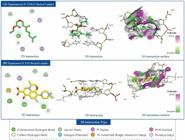
Molecular docking of ligands TSM-17 and LEV with the active site of topoisomerase IV (PDB ID: 5EIX). Main types of interactions of TSM-17 with the enzyme active site in 2D. 3D distribution and chemical bond distances of TSM-17 with active site amino acids and 3D surface model of the active site occupied by the ligand and hydrogen donor/acceptor sites. Source: Author’s data, 2024.
Levofloxacin (LEV) has a higher affinity for the active site of bacterial topoisomerase IV compared to TSM-17, observed by a lower free energy variation (ΔG) and smaller Ki. This is due to better molecular complementarity and hydrogen interactions with residues Ser1080 at 2.08 Å, Arg1119 at 1.09 Å, and nucleotides adenine 5 at 2.97 Å and guanine 1 at 2.58 Å, among other interactions that contribute to greater stability of the binding to the enzyme active site, which is predominantly polar and has hydrogen-donor regions.
According to the results, TSM-17 presented minimum inhibitory concentrations (MIC), representing the lowest concentration capable of inhibiting microbial growth, ranging from 250 µg/mL to 500 µg/mL against K. pneumoniae strains. Regarding minimum bactericidal concentration (MBC), TSM-17 showed bactericidal activity with an MBC of 1000 µg/mL against Kp105 and Kp110, while bacteriostatic potential was observed for the ATCC13883 strain of K. pneumoniae and for Kp101 and Kp104, as shown in Table 6.
Minimum Inhibitory Concentration (MIC) and Minimum Bactericidal Concentration (MBC) of TSM-17 against Klebsiella pneumoniae.
Additionally, TSM-17 significantly enhanced the efficacy of conventional antimicrobials, showing synergistic effects with ampicillin (AMP), tetracycline (TET), gentamicin (GEN), cefalotin (CRO), and ciprofloxacin (CIP) against K. pneumoniae ATCC13883, except for penicillin (PEN), as shown in Table 7.
Study of the association of synthetic compound TSM-17 with conventional antimicrobials against Klebsiella pneumoniae strains.
For clinical strains, the results were variable. For Kp101, TSM-17 increased the efficacy of PEN, AMP, and TET, and showed antagonistic effect with CRO and CIP; for Kp104, synergistic effect was observed with GEN and CRO, and antagonistic with AMP, TET, and CIP; for Kp105, indifferent effect with PEN and AMP, synergistic with CRO, and antagonistic with TET and CIP; for Kp110, synergistic with PEN, TET, GEN, and CRO, and antagonistic with AMP.
4. Discussion
In silico prediction methods represent a strategic tool to optimize drug development, reducing costs and time, and minimizing reliance on animal models (Miller et al., 2021). In this study, TSM-17 showed favorable molecular parameters according to Lipinski's Rule of Five, indicating good permeability and oral bioavailability (Lipinski et al., 2001).
Predictive pharmacological analysis via PASS Online® indicated relevant antibacterial activity for TSM-17, consistent with previous data on geraniol and other monoterpenes that have shown activity against various species, including K. pneumoniae and A. baumannii (Fajdek-Bieda et al., 2024; Kwiatkowski et al., 2022; Choudhary et al., 2022).
In silico prediction of oral toxicity is an important tool to reduce dependence on animal testing (Graham et al., 2021). According to the evaluated toxicological parameters, the compound was not considered mutagenic or carcinogenic, showed low theoretical acute toxicity, but was non-biodegradable. Mutagenic potential is an important toxicological parameter to determine safety for regulatory purposes, and the AMES test is used to detect mutagenic compounds (Li et al., 2023).
Shah et al. (2013) demonstrated that E. coli exposed to geraniol had DNA damage, justifying synthetic derivation to improve drug development. In vitro studies are still necessary to confirm the toxicity predicted in silico for TSM-17.
According to admetSAR®, the synthetic compound in this study is non-biodegradable. However, one solution could be incorporating it into a biodegradable pharmaceutical formulation, as seen in studies with naproxen-derived esters incorporated into starch films for transdermal administration (Ribeiro et al., 2021).
Molecular docking simulations of geraniol (GER) and TSM-17 were performed. Molecular docking is an established in silico modeling technique widely used in drug discovery (Pinzi and Rastelli, 2019). In the context of antibiotic resistance, investigating new inhibitors is crucial (Collins and Osheroff, 2024).
TSM-17 showed good affinity for the active site of bacterial topoisomerase IV, with ΔG and Ki values close to those observed for levofloxacin. Although the control (levofloxacin) had a more negative ΔG and smaller Ki, TSM-17 showed comparable performance, suggesting similar potential for enzyme interaction.
Topoisomerase IV is essential for bacterial cell division. Fluoroquinolone antibiotics are currently the only topoisomerase inhibitors used clinically (Kumar et al., 2023). Therefore, TSM-17 is a promising candidate for new antimicrobial development.
In vitro assays showed that TSM-17 reduced MIC values, indicating strong activity (>600 µg/mL). According to Sartoratto et al. (2004), strong antimicrobial activity corresponds to MIC ≤ 500 µg/mL, moderate activity is 600-1500 µg/mL, and weak activity is >1500 µg/mL.
Monoterpenes generally inhibit microorganisms by disrupting the cell membrane, causing cytoplasmic granulation, and inhibiting intracellular and extracellular enzyme synthesis (Nogueira et al., 2021; Singh et al., 2024).
Due to TSM-17’s hydrophobic characteristics, its structure may intercalate into lipid bilayers and interact with other lipids, modifying membrane biophysical properties and promoting inhibitory activity against microorganisms (Belin et al., 2018). Further in vitro studies are needed to elucidate this mechanism.
The bactericidal activity of TSM-17 is consistent with that of geraniol. Lira et al. (2020) reported geraniol MBC values ranging from 1386.8 µg/mL to 5547.2 µg/mL for various bacteria, including E. coli, P. aeruginosa, S. aureus, and K. pneumoniae. Kwiatkowski et al. (2022) demonstrated bactericidal activity of geraniol against K. pneumoniae ATCC BAA-2473 producing a novel metallo-β-lactamase-1.
TSM-17 also enhanced microbial growth inhibition when combined with conventional antimicrobials, showing synergy for most K. pneumoniae strains. This novel antimicrobial activity is similar to monoterpenes like geraniol, carvacrol, and linalool (Ben Selma et al., 2024; Aelenei et al., 2019; Silva et al., 2015).
Miladinović et al. (2015) observed synergism for geraniol + tetracycline against K. pneumoniae. Conversely, Miladinović et al. (2012) reported antagonism for the same combination against K. pneumoniae ATCC 700603, consistent with the present study’s results for Kp104 and Kp105.
5. Final Considerations
Based on the obtained results, the compound TSM-17 demonstrated itself as a promising molecule. In silico analyses indicated low predicted toxicity. Through molecular docking, TSM-17 showed efficient interaction with the bacterial enzyme topoisomerase IV, suggesting its potential mechanism of action. Additionally, the compound exhibited bactericidal activity and a synergistic effect against Klebsiella pneumoniae strains when combined with conventional synthetic antimicrobials.
Given the growing problem of antibiotic resistance, the positive results of TSM-17 point to its potential in the development of new drugs. However, to confirm its efficacy and safety, further studies are essential to determine its toxicity and to elucidate its mechanism of action, including in vivo evaluations and clinical trials.
Data Availability Statement
All data obtained in the research is original and available in the written work.
References
-
ADMETSAR [software], 2025 [viewed 30 October 2025]. Available from: https://lmmd.ecust.edu.cn
» https://lmmd.ecust.edu.cn -
AELENEI, P., RIMBU, C.M., GUGUIANU, E., DIMITRIU, G., APROTOSOAIE, A.C., BREBU, M., HORHOGEA, C.E. and MIRON, A., 2019. Coriander essential oil and linalool - interactions with antibiotics against Gram-positive and Gram-negative bacteria. Letters in Applied Microbiology, vol. 68, no. 2, pp. 156-164. https://doi.org/10.1111/lam.13100 PMid:30471142.
» https://doi.org/10.1111/lam.13100 -
BAUER, A.W., KIRBY, W.M., SHERRIS, J.C. and TURCK, M., 1966. Antibiotic susceptibility testing by a standardized single disk method. American Journal of Clinical Pathology, vol. 45, no. 4, pp. 493-496. https://doi.org/10.1093/ajcp/45.4_ts.493 PMid:5325707.
» https://doi.org/10.1093/ajcp/45.4_ts.493 -
BELIN, B.J., BUSSET, N., GIRAUD, E., MOLINARO, A., SILIPO, A. and NEWMAN, D.K., 2018. Hopanoid lipids: from membranes to plant–bacteria interactions. Nature Reviews. Microbiology, vol. 16, no. 5, pp. 304-315. https://doi.org/10.1038/nrmicro.2017.173 PMid:29456243.
» https://doi.org/10.1038/nrmicro.2017.173 -
BELL, E.W. and ZHANG, Y., 2019. DockRMSD: an open-source tool for atom mapping and RMSD calculation of symmetric molecules through graph isomorphism. Journal of Cheminformatics, vol. 11, no. 1, pp. 40. https://doi.org/10.1186/s13321-019-0362-7 PMid:31175455.
» https://doi.org/10.1186/s13321-019-0362-7 -
BEN SELMA, W., ALIBI, S., FERJENI, M., GHEZAL, S., GALLALA, N., BELGHOUTHI, A., GARGOURI, A., MARZOUK, M. and BOUKADIDA, J., 2024. Synergistic activity of Thymus capitatus essential oil and cefotaxime against ESBL-producing Klebsiella pneumoniae. International Journal of Environmental Health Research, vol. 34, no. 8, pp. 2936-2946. https://doi.org/10.1080/09603123.2023.2280149 PMid:37952172.
» https://doi.org/10.1080/09603123.2023.2280149 -
BONA, E.A.M., PINTO, F.G.S., FRUET, T.K., JORGE, T.C.M. and MOURA, A.C., 2014. Comparação de métodos para avaliação da atividade antimicrobiana e determinação da concentração inibitória mínima (CIM) de extratos vegetais aquosos e etanólicos. Arquivos do Instituto Biológico, vol. 81, no. 3, pp. 218-225. https://doi.org/10.1590/1808-1657001192012
» https://doi.org/10.1590/1808-1657001192012 -
CHEN, W. and VILJOEN, A.M., 2022. Geraniol: a review update. South African Journal of Botany, vol. 150, pp. 1205-1219. https://doi.org/10.1016/j.sajb.2022.09.012
» https://doi.org/10.1016/j.sajb.2022.09.012 -
CHOUDHARY, M., SHRIVASTAVA, R. and VASHISTT, J., 2022. Eugenol and geraniol impede Csu-pilus assembly and evades multidrug-resistant Acinetobacter baumannii biofilms: in vitro and in silico evidence. Biochemical and Biophysical Research Communications, vol. 636, no. Pt 2, pp. 10-17. https://doi.org/10.1016/j.bbrc.2022.10.095 PMid:36343485.
» https://doi.org/10.1016/j.bbrc.2022.10.095 - CLEELAND, R. and SQUIRES, E., 1991. Evalution of new antimicrobials in vitro and in experimental animal infections. In: V.M.D. LORIAN, ed. Antibiotics in laboratory medicine New York: Lippincott Williams & Wilkins, pp. 739-788.
- CLINICAL AND LABORATORY STANDARDS INSTITUTE – CLSI, 2012. Methods for dilution antimicrobial susceptibility: tests for bacteria that grow aerobically, aproved standard. 9th ed. Wayne: CLSI. CLSI Document, no. M07–A9.
-
COLLINS, J.A. and OSHEROFF, N., 2024. Gyrase and Topoisomerase IV: Recycling Old Targets for New Antibacterials to Combat Fluoroquinolone Resistance. ACS Infectious Diseases, vol. 10, no. 4, pp. 1097-1115. https://doi.org/10.1021/acsinfecdis.4c00128 PMid:38564341.
» https://doi.org/10.1021/acsinfecdis.4c00128 -
FAJDEK-BIEDA, A., PAWLIŃSKA, J., WRÓBLEWSKA, A. and ŁUŚ, A., 2024. Evaluation of the antimicrobial activity of geraniol and selected geraniol transformation products against gram-positive bacteria. Molecules, vol. 29, no. 5, pp. 950. https://doi.org/10.3390/molecules29050950 PMid:38474462.
» https://doi.org/10.3390/molecules29050950 -
GRAHAM, J.C., RODAS, M., HILLEGASS, J. and SCHULZE, G., 2021. The performance, reliability and potential application of in silico models for predicting the acute oral toxicity of pharmaceutical compounds. Regulatory Toxicology and Pharmacology: RTP, vol. 119, pp. 104816. https://doi.org/10.1016/j.yrtph.2020.104816 PMid:33166621.
» https://doi.org/10.1016/j.yrtph.2020.104816 - GUERRA, F.Q.S., MENDES, J.M., OLIVEIRA, W.A., COSTA, J.G.M., COUTINHO, H.D.M. and LIMA, E.O., 2012. Chemical composition and antimicrobial activity of Cinnamomum zeylanicum Blume essential oil on multi-drug resistant Acinetobacter spp. strains. Biofar, vol. 8, pp. 62-70.
- HALGREN, T. A., 2002. Force fields: MMFF94. In: P.R. SCHLEYER, ed. Encyclopedia of computational chemistry. New York: Wiley.
-
HANWELL, M.D., CURTIS, D.E., LONIE, D.C., VANDERMEERSCH, T., ZUREK, E. and HUTCHISON, G.R., 2012. Avogadro: an advanced semantic chemical editor, visualization, and analysis platform. Journal of Cheminformatics, vol. 4, no. 1, pp. 17. https://doi.org/10.1186/1758-2946-4-17 PMid:22889332.
» https://doi.org/10.1186/1758-2946-4-17 - KONEMAN, E.W., ALLEN, S.D., JANDA, W.M., SCHRECKENBERGER, P.C. and WINN, W.C., 2017. Diagnóstico microbiológico. Rio de Janeiro: Guanabara Koogan.
-
KUMAR, A., PRASUN, C., RATHI, E., NAIR, M.S. and KINI, S.G., 2023. Identification of potential DNA gyrase inhibitors: virtual screening, extra-precision docking and molecular dynamics simulation study. Chemické Zvesti, vol. 77, no. 11, pp. 6717-6727. https://doi.org/10.1007/s11696-023-02971-5
» https://doi.org/10.1007/s11696-023-02971-5 -
KWIATKOWSKI, P., SIENKIEWICZ, M., PRUSS, A., ŁOPUSIEWICZ, Ł., ARSZYŃSKA, N., WOJCIECHOWSKA-KOSZKO, I., KILANOWICZ, A., KOT, B. and DOŁĘGOWSKA, B., 2022. Antibacterial and Anti-Biofilm Activities of Essential Oil Compounds against New Delhi Metallo-β-Lactamase-1-Producing Uropathogenic Klebsiella pneumoniae Strains. Antibiotics, vol. 11, no. 2, pp. 147. https://doi.org/10.3390/antibiotics11020147 PMid:35203751.
» https://doi.org/10.3390/antibiotics11020147 -
LI, T., LIU, Z., THAKKAR, S., ROBERTS, R. and TONG, W., 2023. DeepAmes: a deep learning-powered Ames test predictive model with potential for regulatory application. Regulatory Toxicology and Pharmacology: RTP, vol. 144, pp. 105486. https://doi.org/10.1016/j.yrtph.2023.105486 PMid:37633327.
» https://doi.org/10.1016/j.yrtph.2023.105486 -
LI, X., CHEN, L., CHENG, F., WU, Z., BIAN, H., XU, C., LI, W., LIU, G., SHEN, X. and TANG, Y., 2014. In silico prediction of chemical acute oral toxicity using multi-classification methods. Journal of Chemical Information and Modeling, vol. 54, no. 4, pp. 1061-1069. https://doi.org/10.1021/ci5000467 PMid:24735213.
» https://doi.org/10.1021/ci5000467 -
LIPINSKI, C.A., LOMBARDO, F., DOMINY, B.W. and FEENEY, P.J., 2001. Experimental and computational approaches to estimate solubility and permeability in drug discovery and development settings. Advanced Drug Delivery Reviews, vol. 46, no. 1–3, pp. 3-26. https://doi.org/10.1016/S0169-409X(00)00129-0 PMid:11259830.
» https://doi.org/10.1016/S0169-409X(00)00129-0 -
LIRA, M.H.P.D., ANDRADE JÚNIOR, F.P.D., MORAES, G.F.Q., MACENA, G.D.S., PEREIRA, F.D.O. and LIMA, I.O., 2020. Antimicrobial activity of geraniol: an integrative review. The Journal of Essential Oil Research, vol. 32, no. 3, pp. 187-197. https://doi.org/10.1080/10412905.2020.1745697
» https://doi.org/10.1080/10412905.2020.1745697 -
MILADINOVIĆ, D.L., ILIĆ, B.S., KOCIĆ, B.D., ĆIRIĆ, V.M. and NIKOLIĆ, D.M., 2015. Antibacterial investigation of thyme essential oil and its main constituents in combination with tetracycline. Journal of Medicinal Food, vol. 18, no. 8, pp. 935-937. https://doi.org/10.1089/jmf.2014.0132 PMid:25599420.
» https://doi.org/10.1089/jmf.2014.0132 -
MILADINOVIĆ, D.L., ILIĆ, B.S., MIHAJILOV-KRSTEV, T.M., NIKOLIĆ, N.D., MILADINOVIĆ, L.C. and CVETKOVIĆ, O.G., 2012. Investigation of the chemical composition-antibacterial activity relationship of essential oils by chemometric methods. Analytical and Bioanalytical Chemistry, vol. 403, no. 4, pp. 1007-1018. https://doi.org/10.1007/s00216-012-5866-1 PMid:22389175.
» https://doi.org/10.1007/s00216-012-5866-1 -
MILLER, C., PADMOS, R.M., VAN DER KOLK, M., JÓZSA, T.I., SAMUELS, N., XUE, Y., PAYNE, S.J. and HOEKSTRA, A.G., 2021. In silico trials for treatment of acute ischemic stroke: design and implementation. Computers in Biology and Medicine, vol. 137, pp. 104802. https://doi.org/10.1016/j.compbiomed.2021.104802 PMid:34520989.
» https://doi.org/10.1016/j.compbiomed.2021.104802 -
MORRIS, G.M., HUEY, R., LINDSTROM, W., SANNER, M.F., BELEW, R.K., GOODSELL, D.S. and OLSON, A.J., 2009. AutoDock4 and AutoDockTools4: automated docking with selective receptor flexibility. Journal of Computational Chemistry, vol. 30, no. 16, pp. 2785-2791. https://doi.org/10.1002/jcc.21256 PMid:19399780.
» https://doi.org/10.1002/jcc.21256 -
NCUBE, N.S., AFOLAYAN, A.J. and OKOH, A.I., 2008. Assessment techniques of antimicrobial properties of natural compounds of plant origin: current methods and future trends. African Journal of Biotechnology, vol. 7, no. 12, pp. 1797-1806. https://doi.org/10.5897/AJB07.613
» https://doi.org/10.5897/AJB07.613 -
NOGUEIRA, J.O.E., CAMPOLINA, G.A., BATISTA, L.R., ALVES, E., CAETANO, A.R.S., BRANDÃO, R.M., NELSON, D.L. and CARDOSO, M.D.G., 2021. Mechanism of action of various terpenes and phenylpropanoids against Escherichia coli and Staphylococcus aureus. FEMS Microbiology Letters, vol. 368, no. 9, pp. fnab052. https://doi.org/10.1093/femsle/fnab052 PMid:34003259.
» https://doi.org/10.1093/femsle/fnab052 -
OLIVEIRA, R.A.G.D., LIMA, E.O., VIEIRA, W.L., FREIRE, K.R.L., TRAJANO, V.N., LIMA, I.O., SOUZA, E.L., TOLEDO, M.S. and SILVA-FILHO, R.N., 2006. Estudo da interferência de óleos essenciais sobre a atividade de alguns antibióticos usados na clínica. Revista Brasileira de Farmacognosia, vol. 16, no. 1, pp. 77-82. https://doi.org/10.1590/S0102-695X2006000100014
» https://doi.org/10.1590/S0102-695X2006000100014 -
OSTROSKY, E.A., MIZUMOTO, M.K., LIMA, M.E.L., KANEKO, T.M., NISHIKAWA, S.O. and FREITAS, B.R., 2008. Métodos para avaliação da atividade antimicrobiana e determinação da Concentração Mínima Inibitória (CIM) de plantas medicinais. Revista Brasileira de Farmacognosia, vol. 18, no. 2, pp. 301-307. https://doi.org/10.1590/S0102-695X2008000200026
» https://doi.org/10.1590/S0102-695X2008000200026 -
PALOMINO, J.-C., MARTIN, A., CAMACHO, M., GUERRA, H., SWINGS, J. and PORTAELS, F., 2002. Resazurin microtiter assay plate: simple and inexpensive method for detection of drug resistance in Mycobacterium tuberculosis. Antimicrobial Agents and Chemotherapy, vol. 46, no. 8, pp. 2720-2722. https://doi.org/10.1128/AAC.46.8.2720-2722.2002 PMid:12121966.
» https://doi.org/10.1128/AAC.46.8.2720-2722.2002 -
PINZI, L. and RASTELLI, G., 2019. Molecular docking: shifting paradigms in drug discovery. International Journal of Molecular Sciences, vol. 20, no. 18, pp. 4331. https://doi.org/10.3390/ijms20184331 PMid:31487867.
» https://doi.org/10.3390/ijms20184331 -
RIBEIRO, L.D., ROMERO, A.L. and ROMERO, R.B., 2021. Avaliação da biodegradabilidade e da liberação de substâncias bioativas incorporadas em filmes de amido. Revista Ibero-Americana de Ciências Ambientais, vol. 12, no. 10, pp. 128-143. https://doi.org/10.6008/CBPC2179-6858.2021.010.0012
» https://doi.org/10.6008/CBPC2179-6858.2021.010.0012 -
SARTORATTO, A., MACHADO, A.L.M., DELARMELINA, C., FIGUEIRA, G.M., DUARTE, M.C.T. and REHDER, V.L.G., 2004. Composition and antimicrobial activity of essential oils from aromatic plants used in Brazil. Brazilian Journal of Microbiology: Publication of the Brazilian Society for Microbiology, vol. 35, no. 4, pp. 275-280. https://doi.org/10.1590/S1517-83822004000300001
» https://doi.org/10.1590/S1517-83822004000300001 -
SHAH, A.A., WANG, C., YOON, S.-H., KIM, J.-Y., CHOI, E.-S. and KIM, S.W., 2013. RecA-mediated SOS response provides a geraniol tolerance in Escherichia coli. Journal of Biotechnology, vol. 167, no. 4, pp. 357-364. https://doi.org/10.1016/j.jbiotec.2013.07.023 PMid:23906844.
» https://doi.org/10.1016/j.jbiotec.2013.07.023 - SILVA, V.A., SOUSA, J.P., GUERRA, F.Q.S., PESSÔA, H.L.F., FREITAS, A.F.R., COUTINHO, H.D.M., ALVES, L.B.N. and LIMA, E.O., 2015. Antibacterial activity of the monoterpene linalool: alone and in association with antibiotics against bacteria of clinical importance. International Journal of Pharmacognosy and Phytochemical Research, vol. 7, no. 5, pp. 1022-1026.
-
SINGH, P., SARDANA, S., YADAV, S.K., AGGARWAL, N., CHOPRA, H. and DHAMA, K., 2024. Natural antimicrobial monoterpenes as potential therapeutic agents in vaginal infections: a review. Journal of Pure & Applied Microbiology, vol. 18, no. 4, pp. 2163-2187. https://doi.org/10.22207/JPAM.18.4.05
» https://doi.org/10.22207/JPAM.18.4.05 -
VANDEPUTTE, P., FERRARI, S. and COSTE, A.T., 2012. Antifungal resistance and new strategies to control fungal infections. International Journal of Microbiology, vol. 2012, pp. 713687. https://doi.org/10.1155/2012/713687 PMid:22187560.
» https://doi.org/10.1155/2012/713687 -
WANG, G., ZHAO, G., CHAO, X. and WANG, H., 2020. The characteristic of virulence, biofilm and antibiotic resistance of Klebsiella pneumoniae. International Journal of Environmental Research and Public Health, vol. 17, no. 17, pp. 6278. https://doi.org/10.3390/ijerph17176278 PMid:32872324.
» https://doi.org/10.3390/ijerph17176278 -
WAY2DRUG, 2025 [viewed 30 October 2025]. PASS online: prediction of activity spectra for substances [online]. Available from: https://way2drug.com/PassOnline/
» https://way2drug.com/PassOnline/ -
WYRES, K.L. and HOLT, K.E., 2018. Klebsiella pneumoniae as a key trafficker of drug resistance genes from environmental to clinically important bacteria. Current Opinion in Microbiology, vol. 45, pp. 131-139. https://doi.org/10.1016/j.mib.2018.04.004 PMid:29723841.
» https://doi.org/10.1016/j.mib.2018.04.004
Edited by
-
Editor:
Marcelo A.M. Esquisatto

