 Influence of the type of breed and line of agricultural poultry on the morphological composition of eggs
Abstract
The article presents, for the first time, the results of differentiating chickens, quails, turkeys, and ducks based on the morphological characteristics of their eggs and establishes the influence of species, breed, and line affiliation on egg morphological parameters. The process of agglomeration of breeds and lines of birds occurred within species affiliation, which in turn was influenced by differences in the morphological structure of eggs caused by the direction of selection. In quails and ducks, the grouping of breeds and lines occurred more rapidly than in chickens and turkeys, which is due to the intensity of selection for desirable traits. Species affiliation determined the differences in the relative weights of the shell, albumen, and yolk (η2 = 0.420–0.467, p = 0.000), as well as the relative weights of the outer liquid and dense layers of the albumen (η2_ROLLA = 0.399 and η2_RODLA = 0.351, p = 0.000). Although quails and ducks were similar in the relative weight of albumen, they exhibited differences in its structural characteristics.
Keywords:
chickens; quails; ducks; turkeys; morphological composition of the egg; species; breed; line; hierarchy analysis method
Resumo
O artigo apresenta, pela primeira vez, os resultados da diferenciação de galinhas, codornas, peruas e patas com base nas características morfológicas de seus ovos, e estabelece a influência da espécie, raça e linhagem nos parâmetros morfológicos dos ovos. O processo de aglomeração de raças e linhagens de aves ocorreu dentro da mesma espécie, a qual, por sua vez, foi influenciada por diferenças na estrutura morfológica dos ovos causadas pela direção da seleção. Em codornas e patas, o agrupamento de raças e linhagens ocorreu mais rapidamente do que em galinhas e peruas, o que se deve à intensidade da seleção para características desejáveis. A afiliação de espécies determinou as diferenças nos pesos relativos da casca, do albúmen e da gema (η2 = 0,420 - 0,467, p = 0,000), bem como nos pesos relativos do líquido externo e das camadas densas do albúmen (η2_ROLLA = 0,399 e η2_RODLA = 0,351, p = 0,000). Embora ovos de codornas e patas fossem semelhantes no peso relativo de albúmen, exibiram diferenças em suas características estruturais.
Palavras-chave:
galinhas; codornas; patas; peruas; composição morfológica do ovo; espécie; raça; linhagem; método de análise de hierarquia
1. Introduction
In a relatively short period, scientific and technological progress has transformed poultry farming into a fully developed branch of animal husbandry, now leading in the global production of animal protein for human nutrition. This is primarily due to the creation of numerous breeds of agricultural poultry, many of which have industrial significance (Saxena and Kolluri, 2018; Thiruvenkadan and Prabakaran, 2017).
Eggs of domestic birds of different species show significant variation in morphological composition, owing to differing evolutionary processes; however, the range of variability in the relative weight of egg components is quite narrow. Depending on the bird species, the shell accounts for 9–12% of the total egg weight, the albumen approximately 60%, and the yolk 30–33% (Nys and Guyot, 2011; Birkhead et al., 2018). Y. Singh et al. found statistically significant differences in morphological qualities (shell, albumen, and yolk weight) between the eggs of domestic ducks and chickens (Singh, et al., 2022; Duman et al., 2016). Sun et al. reported substantial differences in egg quality traits among domestic chickens, ducks, geese, turkeys, quails, and pigeons. The relative yolk weight varied by species within the range of 19.3–37.9% (Sun et al., 2019).
Within species, specialization of birds for priority traits has led to the emergence of pools with similar exterior and productivity characteristics, forming the basis for breed development and, through more targeted specialization, for lines. To varying degrees, poultry breeds within a single species differ in quantitative and qualitative traits, including the morphological structure of eggs. For instance, when comparing the maternal lines Hy-Line Brown (brown-shelled eggs) and Hy-Line W-36 White Leghorn (white-shelled eggs), significant differences in the relative shell mass were observed throughout the study period (32–85 weeks) (p < 0.0001). Differences in relative albumen and yolk mass were found only during certain age periods. Eggs from Hy-Line Brown hens differed from Messa 43 eggs by having a lower albumen proportion and a higher shell proportion (Sharma et al., 2022; Biesiada-Drzazga et al., 2020).
A multi-breed experiment with 25 commercial and traditional laying hen lines demonstrated a high degree of variability (> 0.8) in the mass of albumen, yolk, and shell, attributed to breed or line affiliation. The variability of these traits within lines of a single breed was much smaller than between breeds (Hocking et al., 2003). Importantly, selection intensity negatively impacts the sensory qualities of egg components, particularly the yolk (Zhang et al., 2022).
In ducks, flock P11 eggs contained 1.6% more albumen but 2.0% less yolk compared to flock P22 eggs. Statistically significant differences in density and pH were observed between the liquid and dense layers of albumen. Eggs from Cherry Valley ducks had a higher relative albumen mass, while those from Peking ducks had higher yolk and shell proportions. The albumen/yolk ratio was greater in Peking ducks compared to Cherry Valley ducks (p < 0.01) (Kokoszyński et al., 2007; Galić et al., 2019).
From a biological standpoint, the primary function of a bird’s egg is to ensure normal embryogenesis and the emergence of viable offspring. The quantitative and qualitative components of eggs are interrelated, and changes in one component affect the others (Javůrková and Mikšík, 2023; Boleli et al., 2016).
Egg weight is strongly phenotypically correlated with egg shape, absolute and relative weights of shell, albumen, and yolk. Therefore, variations in egg weight influence the variability of its components (Wolc et al., 2012; Hristakieva, et al., 2017).
In North Caucasian Bronze turkeys, phenotypic correlations between egg weight and shell weight were observed at 34 and 46 weeks of age (r = 0.51 and r = 0.50; p < 0.05). In brown-shelled chicken eggs, albumen and yolk weights showed positive phenotypic correlations with egg and shell weights: albumen with egg and shell (0.94 and 0.32), yolk with egg and shell (0.71 and 0.31). In quails, egg weight was positively correlated with albumen weight (r = 0.88; p < 0.001) and yolk weight (r = 0.26; p < 0.001). Variability in egg weight was more closely linked to variability in albumen weight (Zhang et al., 2005; Sari et al., 2016).
This conclusion is supported by research on the effects of protein-deficient diets on egg morphology. Protein-deficiency-related decreases in egg weight had less effect on yolk and shell weights than on total egg weight and albumen weight (Fisher, 1969).
Sinha B. et al., based on a synthesis of data, noted that shell, albumen, and yolk weights are breed- and line-specific in chickens, but the absolute and relative albumen mass most strongly reflects breed and line identity. The possibility of developing chicken lines characterized by dense albumen mass was suggested (Sinha et al., 2018).
In quails, phenotypic correlations between egg weight and egg component weights varied depending on breed. In dark brown quails, phenotypic correlation coefficients for egg weight with shell, yolk, and albumen mass were rshell = 0.17 (p > 0.5), ryolk = 0.20 (p < 0.01), ralbumen = 0.62 (p < 0.01). In light brown quails: rshell = 0.35 (p < 0.01), ryolk = 0.61 (p < 0.01), ralbumen = 0.74 (p < 0.01). In white quails: rshell = 0.67 (p < 0.01), ryolk = 0.62 (p < 0.01), ralbumen = 0.68 (p < 0.01). Regardless of breed, egg weight was most strongly associated with albumen mass (Hassan et al., 2017).
Thus, the structure of the egg reflects, to varying degrees, the species, breed, and line affiliation of the bird. The latter two are driven by artificial selection for specific desirable traits. Due to the rapid maturity, high reproductive rate, and adaptability of poultry, the shaping force of artificial selection is more pronounced in poultry breeding than in other livestock sectors.
The aim of our study was to investigate the similarities and differences between species, breeds, and lines of agricultural poultry under the influence of artificial selection for economically valuable traits.
2. Material and Methods
The study was conducted at the LLP "North Kazakhstan Agricultural Research Institute" (Republic of Kazakhstan) and the Siberian Research Institute of Poultry Farming — a branch of the FSBSI "Omsk Agricultural Scientific Center."
The research object comprised eggs from flocks of quails (Coturnix coturnix) of the Japanese, Omsk, Pharaoh, and Texas White breeds; chickens (Gallus gallus) from the maternal lines of Dekalb White, Hisex Brown, and Ross 308 crossbreeds; ducks (Anas platyrhynchos) of the Agidel, Ansar, and Star lines; and turkeys (Meleagris gallopavo) of the maternal line of the Hybrid Converter crossbreed.
For each breed and line, 120 eggs laid on the same day were studied. The birds were aged 52 weeks for chickens, ducks, and turkeys, and 40 weeks for quails.
The procedure sequentially involved determining the weight of the whole egg (ME), followed by measuring the absolute weights of the shell (MS), albumen (MA), and yolk (MY). The albumen was further separated into the following layers with their respective weights recorded: outer liquid albumen (MOLLA), outer dense albumen (MODLA), inner liquid albumen (MLDLA), and inner dense albumen (MILLA). All weights were measured with an accuracy of 0.01 g. Shell thickness was measured to an accuracy of 0.01 mm.
Based on the obtained data, the following relative masses were calculated:
Relative shell mass (RS = MS/ME × 100, %),
Relative albumen mass (RA = MA/ME × 100, %),
Relative yolk mass (RY = MY/ME × 100, %),
Relative outer liquid albumen (ROLLA = MOLLA/MA × 100, %),
Relative outer dense albumen (RODLA = MODLA/MA × 100, %),
Relative inner liquid albumen (RILLA = MLDLA/MA × 100, %),
Relative inner dense albumen (RIDLA = MILLA/MA × 100, %).
Statistical analysis was performed using SPSS software, version 23. For the measured parameters, means (M) and their standard errors (±SEM) were presented. The degree of variability in traits was assessed using the coefficient of variation (Cv). Species, breed, and line affiliation of the birds were considered as factors influencing the morphological composition of the eggs. The strength of factor influence (η2) was evaluated using analysis of variance (ANOVA). Statistical significance was assessed using Fisher’s F-test, with significance levels set at p < 0.05–0.001.
The degree of correlation between varying traits was determined by phenotypic correlation coefficients. The intraclass correlation coefficient (ICC) was used to quantify the degree of trait similarity among breeds and lines.
Data on the relative weights of shell, yolk, albumen, and albumen fractions were used for hierarchical classification of the studied species, breeds, and lines. Based on these data, a dendrogram was constructed, and cluster similarity was assessed by the squared Euclidean distance.
3. Results and Discussion
The egg mass corresponded to the recommended values for birds of the respective age. The coefficients of variation for egg mass across all breeds and lines were low (Cv < 10%), indicating consolidation of the flock with respect to this trait (Table 1).
Statistically significant interspecies differences were observed in the relative mass of albumen and yolk. The most pronounced differences in these parameters were identified between ducks and the other three avian species: ducks differed from chickens, quail, and turkeys (all belonging to the order Galliformes) by having a lower albumen mass and a higher yolk mass. Specifically, the relative albumen mass in duck eggs was lower by 6.59% compared to quail, 7.41% compared to chickens, and 8.53% compared to turkeys, while the relative yolk mass was correspondingly higher by 5.05%, 7.37%, and 8.42%, respectively. Interestingly, as the egg mass increases among Galliformes species (from quail → chickens → turkeys), the disparity in relative albumen and yolk mass compared to duck eggs also increases. Quail, characterized by smaller egg size, exhibited a lower relative shell mass compared to other bird species by 1.43–1.54%. In contrast, the differences in relative shell mass between ducks, chickens, and turkeys were minimal (Table 2).
Statistically significant differences between quail and chickens, ducks, and turkeys were observed in the relative mass of the albumen layers. Compared to other bird species, quail eggs had a higher proportion of outer thin albumen and a lower proportion of outer thick and inner albumen layers. Chickens and turkeys also differed significantly from ducks in the relative proportions of albumen layers. Specifically, chickens exhibited a higher proportion of both thick albumen layers and a lower proportion of both thin albumen layers compared to ducks. Statistically significant differences between chickens and turkeys were found in the relative mass of the outer thin, inner thin, and inner thick albumen layers. The relative mass of the outer thick albumen layer was nearly the same between these two species. Between ducks and turkeys, significant differences were noted in the relative mass of the outer albumen layers and the inner thin albumen layer. Ducks had a greater proportion of outer thin albumen, whereas chickens had more outer thick albumen.
Thus, statistically significant differences were established among all four bird species in terms of the relative mass of yolk, albumen, and the inner and outer thin albumen layers.
In quail, chickens, and turkeys—all belonging to the order Galliformes—statistically significant correlations were identified between the relative mass of total albumen and the relative mass of its outer layers: a positive correlation with the outer thin albumen (r_quail = 0.155, r_chicken = 0.355, r_turkey = 0.121; p < 0.05–0.01) and a negative correlation with the outer thick albumen (r_quail = –0.116, r_chicken = –0.422, r_turkey = –0.148; p < 0.05–0.01). The correlation coefficients for both albumen fractions were higher in chickens than in the other two species. Conversely, in ducks, a negative correlation was found between the relative mass of total albumen and the outer thin layer (r_duck = –0.412, p < 0.01), and a positive correlation with the outer thick layer (r_duck = 0.409, p < 0.01).
Across all bird species, common trends in albumen fraction correlations were observed: a negative correlation between the relative mass of the outer thin and thick albumen layers (r_quail = –0.789, r_chicken = –0.816, r_turkey = –0.853, r_duck = –0.299; p < 0.01), and between the outer thick and inner thin albumen layers (r_quail = –0.222, r_chicken = –0.337, r_turkey = –0.867, r_duck = –0.426; p < 0.05–0.01). A negative correlation between the inner thin and thick layers was identified in quail, chickens, and turkeys (r_quail = –0.145, r_chicken = –0.221, r_turkey = –0.141; p < 0.05–0.01), while in ducks, this correlation was positive (r_duck = 0.549; p < 0.05–0.01).
Differences between breeds were attributed to selection goals for specific productivity traits. Among quail, the Japanese breed (egg-type) differed from the Omsk breed (dual-purpose) and the meat-type Pharaoh and Texas White breeds in the relative mass of shell, albumen, and the outer thin albumen layer. A trend was observed: quail of the Japanese breed, which had smaller egg mass compared to other breeds, exhibited a higher relative shell mass. This was confirmed by a moderate intraclass correlation coefficient (ICC = 0.315, p = 0.035). Omsk quail differed from the other three breeds in total albumen mass and in the mass of both thin albumen fractions—outer and inner. The Pharaoh and Texas White breeds were similar in the relative mass of shell and yolk, and differed from the Japanese and Omsk breeds in the relative mass of albumen and its outer layers (outer thin and outer thick). Additionally, these meat-type breeds differed from the Japanese and Omsk breeds in the relative mass of the inner thin albumen layer.
Among chickens, statistically significant differences were found between all three crosses in the relative mass of yolk, outer thin and thick albumen layers, and the inner thick albumen layer. Eggs from the white-shelled cross Dekalb White differed from those of the brown-shelled crosses Hisex Brown and Ross 308 by having a higher relative mass of the inner thin albumen layer. This feature appeared to be a consistent pattern, as evidenced by a statistically significant but weak correlation between cross type and the relative mass of the inner thin albumen layer (ICC = 0.198, p = 0.045).
Hisex Brown eggs had a higher relative shell mass. The relative shell mass of the chicken crosses increased in the following order: Ross 308 → Dekalb White → Hisex Brown. The same order was observed for shell thickness: Ross 308 (0.35 ± 0.002 mm) → Dekalb White (0.37 ± 0.002 mm) → Hisex Brown (0.38 ± 0.003 mm). This pattern suggests a potential interdependence between these parameters. A positive correlation was identified between relative shell mass and shell thickness, with a strong correlation in the Hisex Brown cross (r = 0.800, p < 0.01), moderate in Dekalb White (r = 0.413, p < 0.01), and Ross 308 (r = 0.376, p < 0.01). Notably, the strength of these correlations followed the same order as the increasing trends in shell mass and thickness.
The albumen-to-yolk ratio in eggs from the Ross 308 broiler cross was 1.74, compared to 2.62 and 2.49 in the Hisex Brown and Dekalb White layer crosses, respectively. In egg-type chickens, selection is primarily focused on egg-laying performance, while in meat-type chickens, emphasis is placed on growth rate and hatchability. It was found that eggs from the Ross 308 broiler cross differed from those of the egg-laying crosses (Hisex Brown and Dekalb White) by having a lower relative albumen mass and a higher relative yolk mass. Statistically significant intraclass correlation coefficients indicated an association between these traits and the productivity direction (ICCRA = 0.114, p = 0.049; ICCRY = 0.219, p = 0.039). This association was slightly stronger for relative yolk mass than for albumen mass.
The Ansar and Star duck lines were comparable in productivity: their average live weights were 3.5 kg and 3.7 kg, and egg production over 40 weeks totaled 253 and 258 eggs, respectively. These lines were also similar in egg structural composition. In contrast, the Agidel line, characterized by lower live weight (3.2 kg) and egg production (220 eggs), differed from Ansar and Star in the relative mass of the shell and albumen layers.
Shell thickness in Agidel duck eggs was 0.30 ± 0.001 mm, compared to 0.35 ± 0.002 mm and 0.34 ± 0.002 mm in the Ansar and Star lines, respectively, closely mirroring differences in shell mass. However, when analyzed separately by line, a statistically significant correlation between shell thickness and relative shell mass was found only in the Ansar line (r = 0.392, p < 0.01). Although the lines were comparable in total relative albumen mass, the Agidel line differed from the Star and Ansar lines in the relative mass of individual albumen layers. The most pronounced differences were observed in the liquid fractions. Eggs from the Agidel line had a lower relative mass of the outer thin albumen layer by 6.84% and 6.05%, respectively, compared to the Ansar and Star lines. However, this was compensated by a higher relative mass of the inner thin albumen layer in Agidel eggs—by 7.86% and 7.34%, respectively. The relative mass of the outer thick albumen layer was also lower in the Agidel line by 2.00% and 2.33%.
Comparing the structurally and productively similar duck lines (Ansar and Star) to the distinct Agidel line enabled the identification of a significant relationship between egg structure and productivity traits: ICCRS = 0.114, p = 0.049; ICCROLLA = 0.152, p = 0.019; ICCRODLA = 0.111, p = 0.034; ICCRILLA = 0.122, p = 0.024; ICCRIDLA = 0.222, p = 0.009.
The effect of the "species" factor on all studied traits was statistically significant. Its influence on the relative mass of shell, albumen, and yolk was of moderate strength and similar in magnitude across these traits. In terms of albumen layer distribution, species had a moderate effect on the outer layers and a weaker effect on the inner layers. The influence of the "breed/line" factor was statistically significant in most cases. Notable species-specific differences were observed in how breed influenced the relative mass of egg components. In quail, the breed effect was most prominent for shell mass and the mass of the outer albumen layers (weak influence). A moderate effect of the "breed" factor was found for outer thin and inner albumen layers, and a weak effect for shell mass. In chickens, the magnitude of the "line" effect was more pronounced than in quail or ducks, indicating a higher degree of specialization in the selected lines and maternal forms regarding productivity traits. Chicken lines differed more substantially in albumen and yolk mass (with significant and strong effects, respectively), and also in the mass of the outer thin and inner thick albumen layers. For other parameters, the influence was weak but remained statistically significant (Table 3).
Influence of Species and Breed on the Variability of the Relative Mass of Egg Components (n = 120).
The greater influence of bird species and breed/line on the variability of the relative mass of the outer thin albumen layer compared to the outer thick layer is consistent with the findings of Y. Wan, who reported heritability coefficients of 0.39 and 0.31 for these respective albumen layers (Wan et al., 2019).
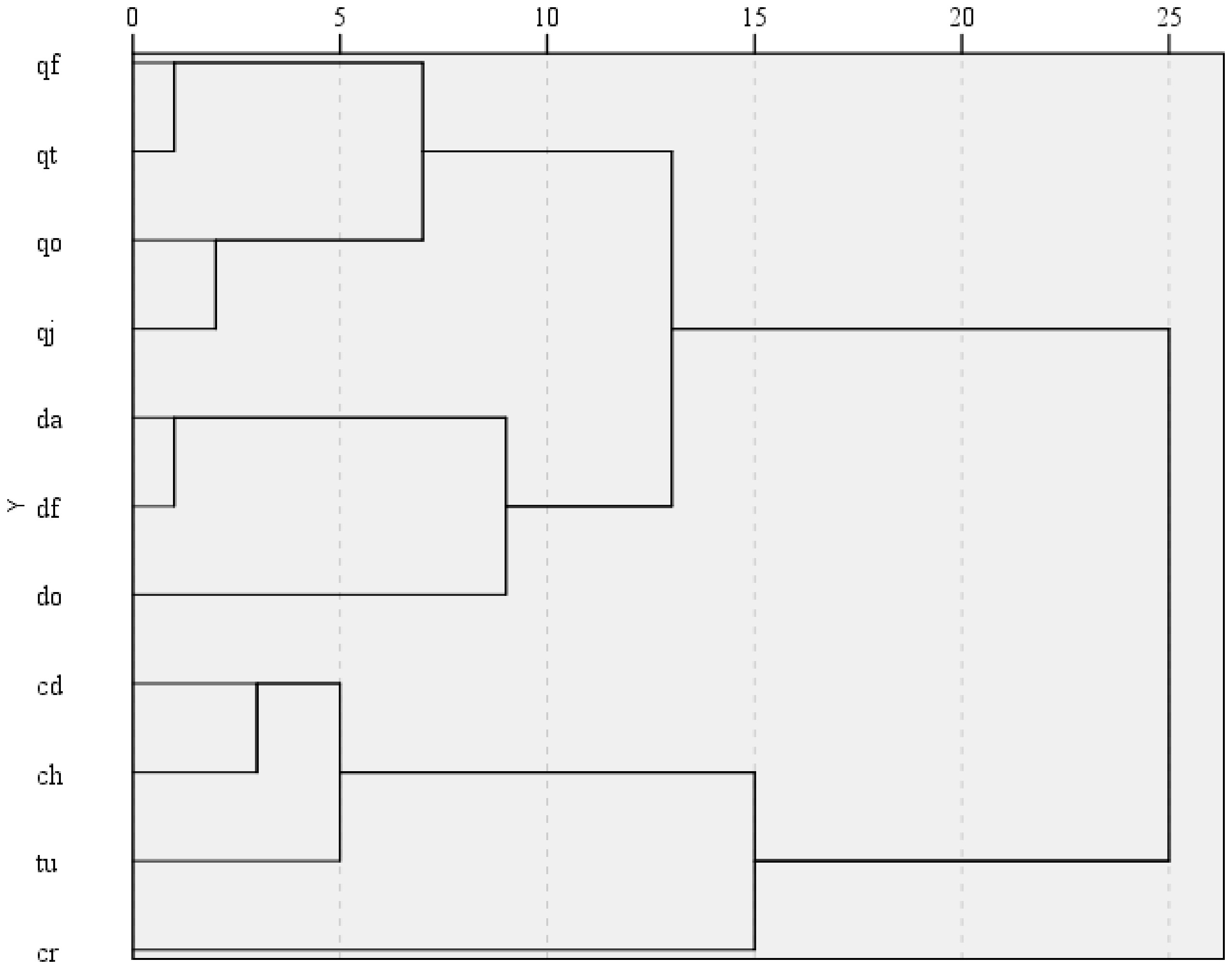
At the initial stage of agglomerative clustering, the meat-type quail breeds Pharaoh and Texas White (Saxena and Kolluri, 2018) were grouped into a single cluster, reflecting their similarity across all parameters analyzed in the study. In the second stage, the duck lines Ansar and Star (Hocking et al., 2003) were clustered together, as they also exhibited close similarities. The third stage involved clustering of the Omsk and Japanese quail breeds (Nys and Guyot, 2011), which showed similar values for the relative masses of yolk and both outer and inner thick albumen layers. At the fourth stage, the Dekalb White and Hisex Brown chicken lines (Sun et al., 2019) were grouped together due to their similarity in relative albumen mass.
Interestingly, in the fifth stage of agglomeration, the cluster formed by the egg-type lines Dekalb White and Hisex Brown merged not with the Ross 308 chicken line, but with the turkey group. This was explained by the fact that the egg-type chicken cluster exhibited less dissimilarity from the turkey cluster in terms of relative albumen and yolk mass (η2_RA = 0.053, η2_RY = 0.086, p = 0.000) and the mass of the outer thin and thick albumen layers (η2_ROLLA = 0.057, η2_RODLA = 0.094, p = 0.000), compared to the meat-type Ross 308 chicken line cluster (η2_RA = 0.689, η2_RY = 0.763; η2_ROLLA = 0.155, η2_RODLA = 0.253, p = 0.000) (Figure 1).
Hierarchical Analysis of Morphological Traits of Poultry Species and Breeds. qf – Pharaoh quail breed, qt – Texas White quail breed, qo – Omsk quail breed, qj – Japanese quail breed; da – Ansar duck line, df – Star duck line, do - Agidel duck line; cd – Dekalb White chicken line, ch – Hisex Brown chicken line, cr – Ross 308 chicken line; tu – Hybrid Converter turkey line.
The aggregation of breeds into species-level clusters occurred earlier for quail and ducks than for chickens. Moreover, quail and ducks—despite belonging to different avian orders—merged into a single cluster prior to the clustering of the Ross 308 meat-type chicken line with egg-type chickens and turkeys. This pattern is attributed to the more pronounced differences in relative masses of the outer thin and outer thick albumen layers between chickens and quail (η2_ROLLA = 0.304 and η2_RODLA = 0.278, p = 0.000), as well as between chickens and ducks (η2_ROLLA = 0.214 and η2_RODLA = 0.263, p = 0.000). Although statistically significant, the differences between quail and ducks were of minimal magnitude (η2_ROLLA = 0.069 and η2_RODLA = 0.076, p = 0.000).
These findings are consistent with previous studies, which reported that selection with a narrow focus on productivity traits has led to greater genetic and phenotypic differentiation among chicken lines compared to other poultry species. Furthermore, industrial breeds and lines tend to differ more significantly from local or traditional breeds (Vaarst et al., 2015).
The scientific classification of poultry species, breeds, and lines provides a systematic framework for organizing objects, generating new generalizations and hypotheses, and analyzing relationships both within and between classes.
The results of our study demonstrated that the agglomeration process among poultry breeds and lines followed species boundaries, which were, in turn, influenced by morphological differences in egg structure associated with selective breeding objectives. Breed aggregation within quail and duck species occurred more rapidly than in chickens and turkeys, reflecting differences in the intensity and focus of selection for desirable traits.
Species affiliation significantly determined differences in the relative mass of eggshell, albumen, and yolk (η2 = 0.420–0.467, p = 0.000), as well as in the relative mass of the outer thin and thick albumen layers (η2_ROLLA = 0.399 and η2_RODLA = 0.3516, p = 0.000). While quail and ducks were similar in terms of total relative albumen mass, they differed in the structural composition of the albumen.
4. Conclusions
This study demonstrated that the morphological structure of eggs is significantly influenced by species, breed, and line affiliation. Species had a moderate effect on the relative mass of the shell, albumen, and yolk (η2 = 0.420–0.467, p = 0.000), and on the outer albumen layers (η2_ROLLA = 0.399, η2_RODLA = 0.351, p = 0.000). While quail and ducks showed similar total albumen mass, they differed in albumen layer distribution. Breed and line effects were especially notable in chickens. Egg-type lines (Dekalb White, Hisex Brown) had higher albumen-to-yolk ratios (2.49–2.62) than the meat-type Ross 308 (1.74), with yolk mass more strongly associated with productivity direction (ICCRY = 0.219, p = 0.039). In ducks, the Agidel line showed structural shifts in albumen distribution compared to the Ansar and Star lines, despite similar total albumen mass. Hierarchical clustering revealed earlier aggregation of quail and duck breeds compared to chickens, indicating stronger breed divergence in chickens due to selection intensity. Egg morphology thus reflects both species identity and breeding objectives, making it a valuable tool for classification and breeding program assessment.
Acknowledgements
The research results presented in this paper were carried out within the framework of the program-targeted financing of the program of the Ministry of Agriculture of the Republic of Kazakhstan: BR 10765039 "Development of technologies for effective management of the breeding process in poultry farming".
Data Availability Statement
The data that support the findings of this study are available from the corresponding author upon reasonable request.
References
-
BIESIADA-DRZAZGA, B., BANASZEWSKA, D., WIELOGÓRSKA, K. and KAIM-MIROWSKI, S., 2020. The effect of the genetic origin of hens on selected egg traits. Acta Scientiarum Polonorum. Technologia Alimentaria, vol. 19, no. 1, pp. 101-107. http://doi.org/10.17306/J.AFS.0757 PMid:32227701.
» http://doi.org/10.17306/J.AFS.0757 -
BIRKHEAD, T., THOMPSON, J., BIGGINS, J. and MONTGOMERIE, R., 2018. The evolution of egg shape in birds: selection during the incubation period. The Ibis, vol. 161, no. 3, pp. 605-618. http://doi.org/10.1111/ibi.12658
» http://doi.org/10.1111/ibi.12658 -
BOLELI, I.C., MORITA, V.S., MATOS JUNIOR, J.B., THIMOTHEO, M. and ALMEIDA, A., 2016. Poultry egg incubation: integrating and optimizing production efficiency. Revista Brasileira de Ciência Avícola, vol. 18, no. spe2, pp. 1-16. http://doi.org/10.1590/1806-9061-2016-0292
» http://doi.org/10.1590/1806-9061-2016-0292 -
DUMAN, M., İEKEROĞLU, A., YILDIRIM, A., ELEROĞLU, H. and CAMCI, O., 2016. Relation between egg shape index and egg quality characteristics. Archiv für Geflügelkunde, vol. 80, pp. 1-9. http://doi.org/10.1399/eps.2016.117
» http://doi.org/10.1399/eps.2016.117 -
FISHER, C., 1969. The effects of a protein deficiency on egg composition. British Poultry Science, vol. 10, no. 2, pp. 149-154. http://doi.org/10.1080/00071666908415753 PMid:5813574.
» http://doi.org/10.1080/00071666908415753 -
GALIĆ, A., FILIPOVIC, D., PLIESTIĆ, S., JANJECIC, Z., BEDEKOVIĆ, D., KOVACEV, I., ČOPEC, K. and KORONC, Z., 2019. The comparison of quality characteristics of Pekin duck and Cherry Valley duck eggs from free-range raising system. Journal of Central European Agriculture, vol. 20, no. 4, pp. 1099-1110. http://doi.org/10.5513/JCEA01/20.4.2432
» http://doi.org/10.5513/JCEA01/20.4.2432 -
HASSAN, A., MOHAMMED, D., HUSSEIN, K. and HUSSEN, S., 2017. Comparison among three lines of quail for egg quality characters. Science Journal of University of Zakho, vol. 5, no. 4, pp. 296-300. http://doi.org/10.25271/2017.5.4.413
» http://doi.org/10.25271/2017.5.4.413 -
HOCKING, P.M., BAIN, M., CHANNING, C.E., FLEMING, R. and WILSON, S., 2003. Genetic variation for egg production, egg quality and bone strength in selected and traditional breeds of laying fowl. British Poultry Science, vol. 44, no. 3, pp. 365-373. http://doi.org/10.1080/0007166031000085535 PMid:12964619.
» http://doi.org/10.1080/0007166031000085535 - HRISTAKIEVA, P., OBLAKOVA, M., MINCHEVA, N., LALEV, M. and KALIASHEVA, K., 2017. Phenotypic correlations between the egg weight, shape of egg, shell thickness, weight loss and hatchling weight of turkeys. Slovak Journal of Animal Science, vol. 50, pp. 90-94.
-
JAVŮRKOVÁ, V.G. and MIKŠÍK, I., 2023. New insights into the relationships between egg maternal components: the interplays between albumen steroid hormones, proteins and eggshell protoporphyrin. Comparative Biochemistry and Physiology. Part A, Molecular & Integrative Physiology, vol. 279, pp. 111401. http://doi.org/10.1016/j.cbpa.2023.111401 PMid:36781044.
» http://doi.org/10.1016/j.cbpa.2023.111401 - KOKOSZYŃSKI, D., BERNACKI, Z. and KORYTKOWSKA, H., 2007. Comparison of morphological composition and the quality of egg content in Peking ducks from P11 and P22 flocks. Acta Scientiarum Polonorum. Zootechnica, vol. 6, no. 4, pp. 37-44.
-
NYS, Y. and GUYOT, N., 2011. Egg formation and chemistry. In: Y. NYS, M. BAIN & F. VAN IMMERSEEL, eds. Improving the safety and quality of eggs and egg products Sawston: Woodhead Publishing, pp. 83–132. http://doi.org/10.1533/9780857093912.2.83
» http://doi.org/10.1533/9780857093912.2.83 -
SARI, M., TILKI, M. and SAATCI, M., 2016. Genetic parameters of egg quality traits in long-term pedigree recorded Japanese quail. Poultry Science, vol. 95, no. 8, pp. 1743-1749. http://doi.org/10.3382/ps/pew118 PMid:27190108.
» http://doi.org/10.3382/ps/pew118 -
SAXENA, V. and KOLLURI, G., 2018. Selection methods in poultry breeding: from genetics to genomics London: IntechOpen. http://doi.org/10.5772/intechopen.77966
» http://doi.org/10.5772/intechopen.77966 -
SHARMA, M.K., MCDANIEL, C.D., KIESS, A.S., LOAR, R.E. and ADHIKARI, P., 2022. Effect of housing environment and hen strain on egg production and egg quality as well as cloacal and eggshell microbiology in laying hens. Poultry Science, vol. 101, no. 2, pp. 101595. http://doi.org/10.1016/j.psj.2021.101595 PMid:34933221.
» http://doi.org/10.1016/j.psj.2021.101595 - SINGH, Y., SINGH, R., SINGH, O. and SINGH, A., 2022. A comparison study of ‘egg’ morphology and components of duck, domestic chicken and layer. Indian Journal of Agriculture and Allied Sciences, vol. 8, no. 2, pp. 61-63.
-
SINHA, B., MANDAL, K., KUMARI, R. and KUMARI, T., 2018. Estimate and effect of breeds on egg quality traits of poultry – a review. International Journal of Livestock Research, vol. 1, pp. 1. http://doi.org/10.5455/ijlr.20170812102444
» http://doi.org/10.5455/ijlr.20170812102444 -
SUN, C., LIU, J., YANG, N. and XU, G., 2019. Egg quality and egg albumen property of domestic chicken, duck, goose, turkey, quail, and pigeon. Poultry Science, vol. 98, no. 10, pp. 4516-4521. http://doi.org/10.3382/ps/pez259 PMid:31287885.
» http://doi.org/10.3382/ps/pez259 -
THIRUVENKADAN, A. and PRABAKARAN, R., 2017. Recent approaches in poultry breeding. Approaches in Poultry, Dairy & Veterinary Sciences, vol. 533, no. 2. http://doi.org/10.31031/APDV.2017.02.000533
» http://doi.org/10.31031/APDV.2017.02.000533 -
VAARST, M., STEENFELDT, S. and HORSTED, K., 2015. Sustainable development perspectives of poultry production. World’s Poultry Science Journal, vol. 71, no. 4, pp. 609-620. http://doi.org/10.1017/S0043933915002433
» http://doi.org/10.1017/S0043933915002433 -
WAN, Y., WANG, Z., WANG, J., SU, H., GUO, X., WU, J., LI, Q., NI, G. and JIANG, R., 2019. Genetic parameters of the thick-to-thin albumen ratio and egg compositional traits in layer-type chickens. British Poultry Science, vol. 60, no. 5, pp. 517-521. http://doi.org/10.1080/00071668.2019.1631446 PMid:31185729.
» http://doi.org/10.1080/00071668.2019.1631446 -
WOLC, A., ARANGO, J., SETTAR, P., O’SULLIVAN, N.P., OLORI, V.E., WHITE, I.M.S., HILL, W.G. and DEKKERS, J.C.M., 2012. Genetic parameters of egg defects and egg quality in layer chickens. Poultry Science, vol. 91, no. 6, pp. 1292-1298. http://doi.org/10.3382/ps.2011-02130 PMid:22582285.
» http://doi.org/10.3382/ps.2011-02130 -
ZHANG, L.-C., NING, Z.-H., XU, G.-Y., HOU, Z.-C. and YANG, N., 2005. Heritabilities and genetic and phenotypic correlations of egg quality traits in brown-egg dwarf layers. Poultry Science, vol. 84, no. 8, pp. 1209-1213. http://doi.org/10.1093/ps/84.8.1209 PMid:16156204.
» http://doi.org/10.1093/ps/84.8.1209 -
ZHANG, R., DENG, J., LI, X., SHANG, W. and NING, Z., 2022. Research note: comparison of the texture, structure, and composition of eggs from local Chinese chickens and a highly selected line of egg-type chickens and analysis of the effects of lipids on texture. Poultry Science, vol. 101, no. 8, pp. 101934. http://doi.org/10.1016/j.psj.2022.101934 PMid:35687961.
» http://doi.org/10.1016/j.psj.2022.101934
Edited by
-
Editor:
Takako Matsumura Tundisi