|
1
|
Experimental research. |
5 |
RUT treatment (200 mg/kg) prevented 5-FU-induced histopathological changes and reduced oxidative stress by decreasing MDA concentrations and increasing GSH concentrations. RUT attenuated the inflammatory response by decreasing MPO activity, intestinal mastocytosis, and COX-2 expression. These results suggest that the COX-2 pathway is one of the underlying protective mechanisms of RUT against 5-FU-induced intestinal mucositis. |
|
2
|
In vitro Experimental Study. |
5 |
It was observed that in the presence of rutin (50 µM and 100 µM), glioblastoma-derived GL-15 cells produced lower levels of VEGF after 24 hours (mean values of 484.5 pg/mL and 586.6 pg/mL, respectively) when compared to the control groups (mean value of 1823.6 pg/mL). The same behavior was observed for TGF-β levels (mean values of 1038.4 pg/mL and 877.7 pg/mL). However, after 72 hours, the inhibition was reversed. |
|
3
|
Experimental research. |
5 |
Results suggest that short-term treatment of hypercholesterolemic Golden Syrian hamsters with a relatively high concentration of rutin (1%) led to a selective negative modulation of plasma TG levels, but did not interfere in the other biochemical parameters evaluated and showed no toxic effect. |
|
4
|
In vitro Experimental Study. |
5 |
The sulfated galactomannans showed binding to the virus surface, indicating that they interact with DENV-2. The sulfated galactomannans from D. gardneriana showed 94% inhibition of replication of DENV-2 and all also showed antioxidant activity. |
|
5
|
In Vitro Experimental Study. |
5 |
The results showed the presence of antioxidant activity by the DPPH radical sequestration method, expressive total phenolic content, β-carotene content, lycopene content, except for Dimorphandra mollis and Hymenaea stignocarpa species, with low levels of provitamin A. |
|
6
|
Experimental research. |
5 |
The extract obtained from D. gardneriana showed high antioxidant activity, similar to the standard used, quercetin. In terms of sun protection factor (SPF), D. gardneriana showed an SPF of 20,12, which could potentially be used to produce a sunscreen. |
|
7
|
In vitro Experimental Study. |
5 |
The acetonic and ethanolic extracts from the leaves and bark of D. gardneriana (18.75–10,000 g/mL) exhibited significant activity in assays against Haemonchus contortus, including the egg hatch assay (IC50 3400, 95% CI = 2600–5100 g/mL), the larval exsheathment inhibition assay (IC50 120, 95% CI = 110–130 g/mL), and the larval development assay (IC50 130, 95% CI = 100–160 g/mL). |
|
8
|
In vitro Experimental Study. |
5 |
Astilbin inhibited MPO and HRP activities in a concentration-dependent relationship and effectively scavenged HOCl. The TAC by ABTS+ of astilbin (IC50 ~ 20 mM) was higher than that of uric acid, which was used as a positive control. |
|
9
|
In vitro Experimental Study. |
5 |
Rutin modulated immune cell responses by reducing ConA-stimulated splenic lymphocyte proliferation (11% at 1 μM, 48 h) and inhibiting thymocyte proliferation (15% at 10 μM, 72 h). It increased IL-10 production in LPS-stimulated splenocytes (11% at 10 nM, 48 h) while reducing IFN-γ levels in PWM-stimulated splenocytes and ConA-stimulated thymocytes (18% at 10 nM, 48 h). Additionally, rutin at 1 μM decreased IFN-γ in ConA- (3%) and PWM-stimulated splenocytes (2%), and at 10 nM, reduced IFN-γ in PWM-stimulated thymocytes (6% at 72 h). |
|
10
|
In vitro Experimental Study. |
5 |
In the study, murine hybrid B cells obtained significant results when treated with a concentration of 50 μM of rutin. Cell proliferation was inhibited after 24 h (50%), 48 h (82%) and 72 h (77%). The production of monoclonal antibodies was reduced by 68% (48h) and 84% (72h). In addition, a significant increase in cell death by apoptosis of 110% (24h) and 573% (48h) was induced. Finally, the necrosis rate also increased by 59% (24h) and 306% (48h) compared to the control. |
|
11
|
Experimental research. |
5 |
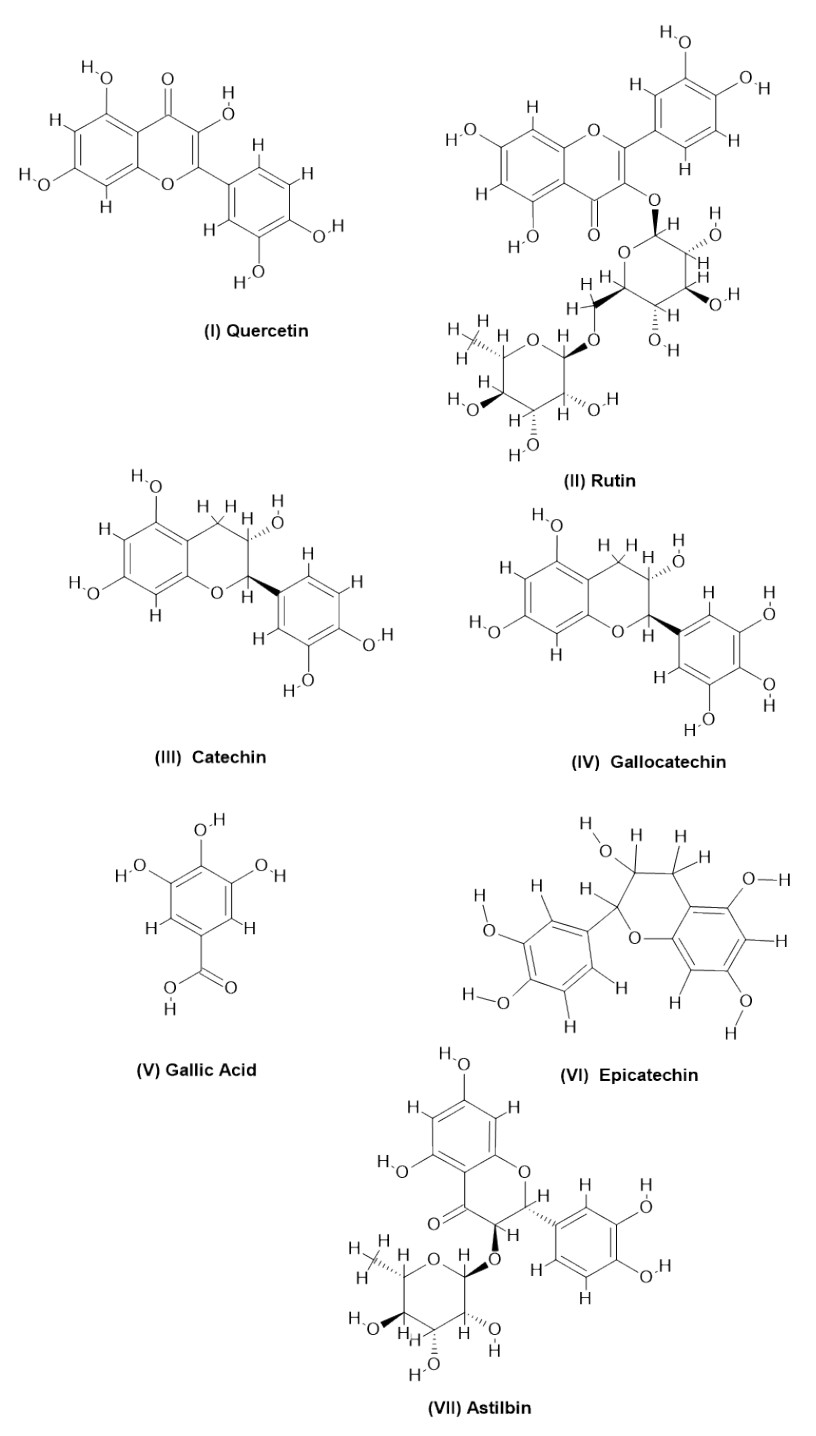
The chemical composition of D. mollis extract (acetone/water 7:3) from leaves and bark was analyzed using thin-layer chromatography, paper chromatography, and colorimetric assays. The extract contained condensed tannins with procyanidin units, monomers like catechin and/or epicatechin, oligomeric condensed tannins, and flavonol glycosides, along with low levels of total phenols, gallotannins, and protein precipitation. |
|
12
|
In vitro and In vivo models of direct and indirect interactions of cells. |
5 |
The study suggested that short-term treatment of hypercholesterolemic Golden Syrian hamsters with a relatively high concentration of rutin (1%) led to a selective negative modulation of plasma TG levels, but did not interfere with the other biochemical parameters evaluated and showed no toxic effect. |
|
13
|
In vitro Experimental Study. |
5 |
Rutin and quercetin showed activity against Leishmania infantum chagasi in both promastigote and amastigote forms, comparable to pentamidine and amphotericin B. However, they were less effective in inhibiting acetylcholinesterase, with inhibition zones of 0.6 cm, compared to 0.9 cm for physostigmine. |

 Principais constituintes químicos e atividades farmacológicas da Dimorphandra spp.
 Thumbnail
 Thumbnail