 Effects of Channa Lakta, a multi-component herbal–freshwater fish–seaweed formulation, on milk yield, pup growth, and serum prolactin levels in lactating Wistar rats
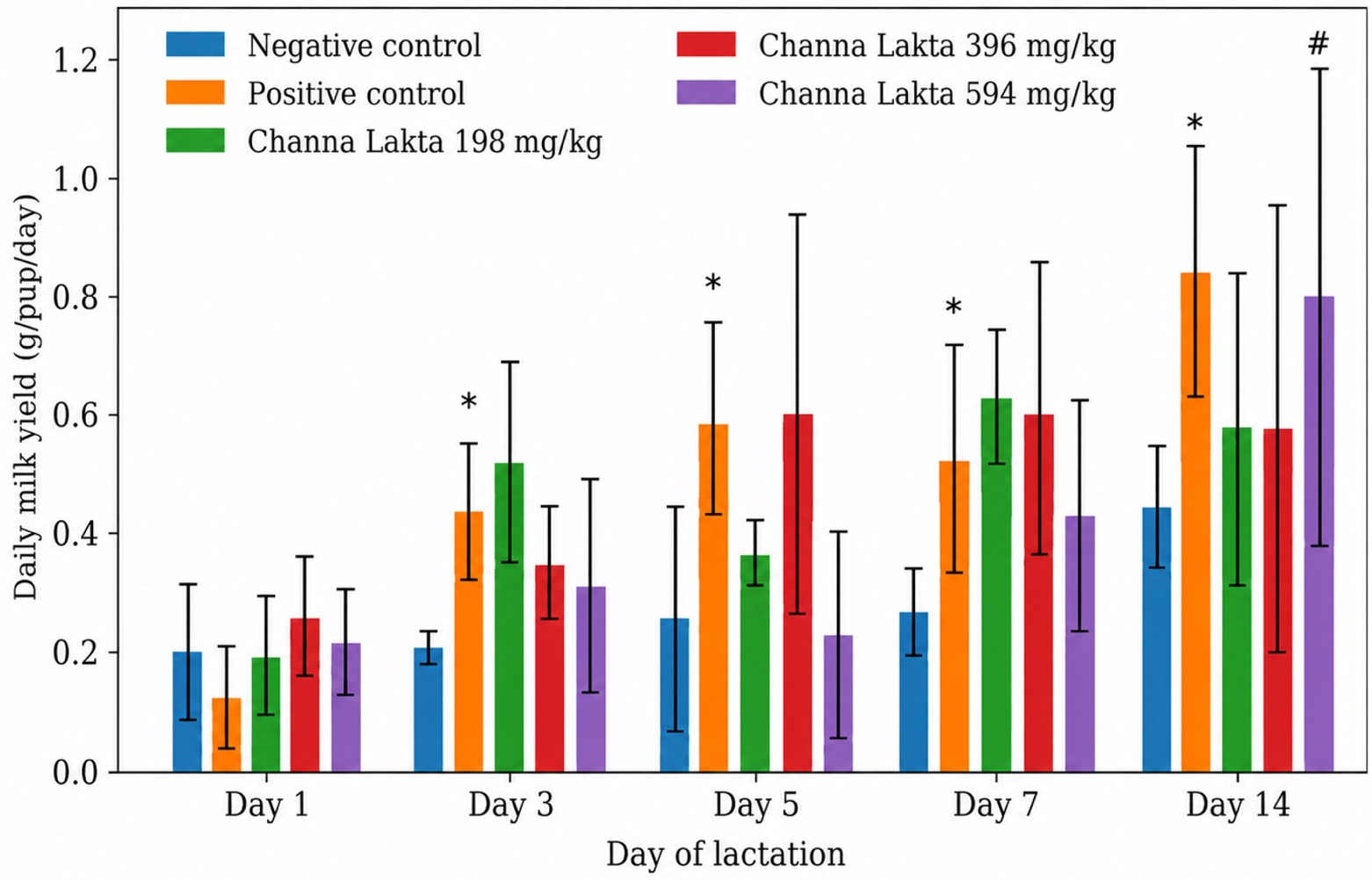
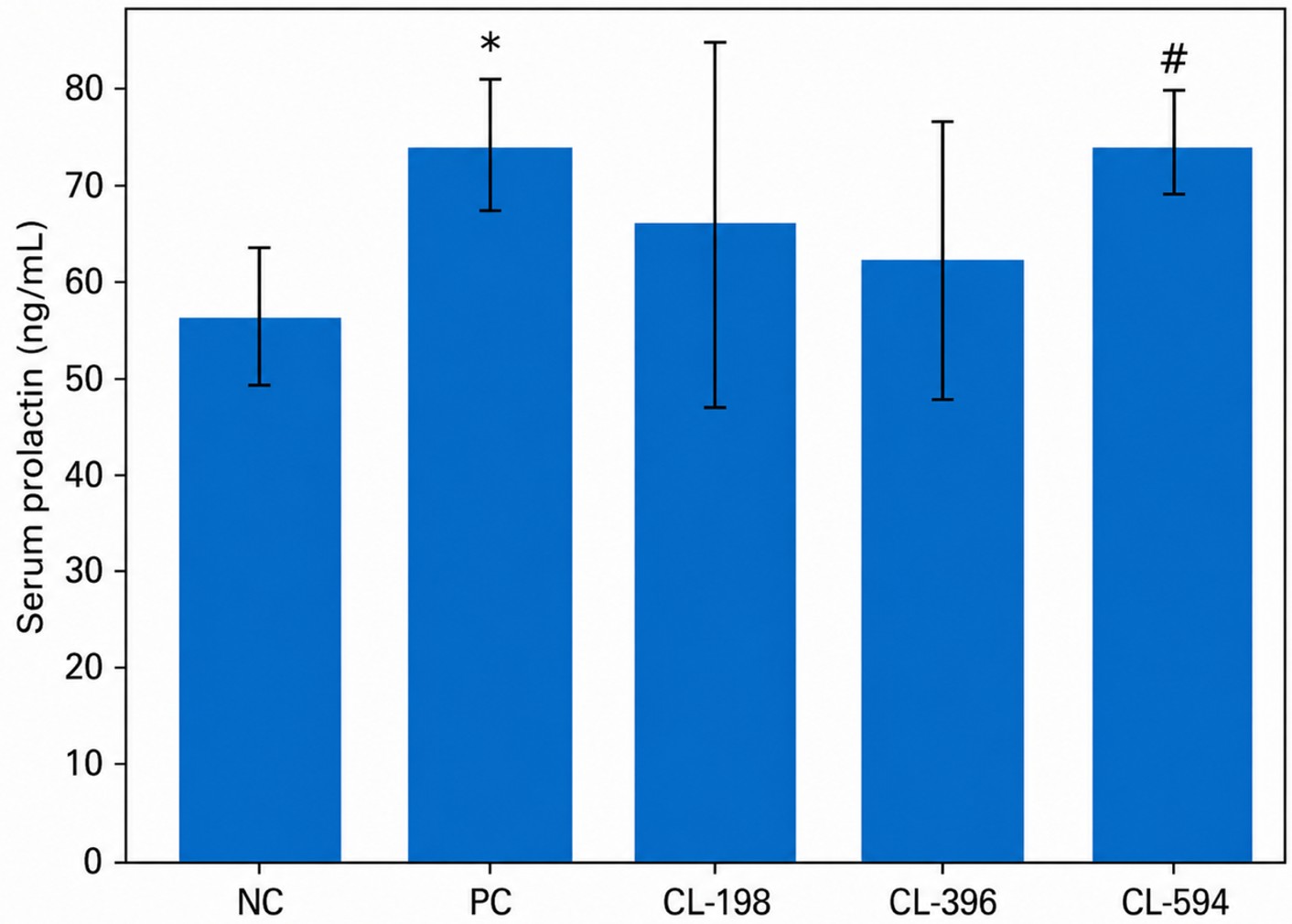
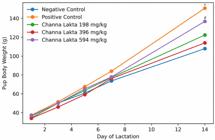
This study evaluated the effects of a multi-component herbal–freshwater fish–seaweed formulation on lactation-related parameters in lactating Wistar rats. The formulation, commercially known as Channa Lakta, contains extracts ofChanna striata,Sauropus androgynus,Amaranthus tricolor, andUlva lactuca. Lactating rats were orally administered the formulation at doses of 198, 396, and 594 mg/kg body weight for 14 consecutive days, with a vehicle-treated group as the negative control and domperidone (3 mg/kg) as the positive control. Lactational performance was assessed based on pup body weight gain, estimated daily milk yield, and serum prolactin levels. Pup body weight and milk yield increased progressively during the lactation period in all groups. At the highest dose (594 mg/kg), the formulation increased daily milk yield to 0.799 ± 0.425 g/pup/day compared with 0.439 ± 0.107 g/pup/day in the negative control and was associated with higher pup body weight at day 14 (136.72 ± 16.26 g vs. 107.89 ± 10.74 g). Serum prolactin levels measured on day 15 were higher in the high-dose group (73.66 ± 4.43 ng/mL) than in the negative control (56.34 ± 8.54 ng/mL), showing a trend toward statistical significance. Lower and intermediate doses produced more modest effects, indicating that the strongest overall response was observed at 594 mg/kg rather than uniformly across all doses. These findings indicate that the tested multi-component formulation may modulate milk production, pup growth, and serum prolactin levels in a rat model of lactation under the experimental conditions applied. Further studies with larger sample sizes, direct mammary gland endpoints, and safety evaluation are needed before translation to postpartum use.
Keywords:
lactation; milk yield; prolactin; pup body weight; polyherbal formulation; Wistar rats
 Thumbnail
 Thumbnail
 Thumbnail