 Coatings on post-harvest quality during storage of red pitaya (Hylocereus costaricensis)
Abstract
Red pitaya (Hylocereus costaricensis) has gained prominence in the Brazilian semi-arid region due to its nutritional value and market potential. However, its post-harvest conservation is challenging, mainly due to rapid water loss and bract wilting, which limit its shelf life. Therefore, this study aimed to evaluate the effect of different coatings on the physicochemical quality of pitaya during post-harvest storage. The experimental design was completely randomized, in a 4 × 4 factorial scheme, evaluating four coatings (control, PVC film, potassium silicate, and potassium silicate + PVC combination) and four storage periods (0, 15, 18, and 21 days after harvest). The results indicated that PVC reduced mass loss, maintained titratable acidity, and increased the soluble solids/titratable acidity ratio by 56.4% with PVC and 48.7% with the potassium silicate + PVC combination, compared to the control treatment. In addition, the use of PVC and potassium silicate favored the preservation of vitamin C content, with an increase of 40% and 26.6%, respectively, compared to the control. Thus, the use of coatings such as potassium silicate and PVC is a promising strategy for preserving the quality attributes of pitaya fruit, favoring its insertion into more demanding markets.
Keywords:
Hylocereus costaricensis; potassium silicate; shelf life
Resumo
A pitaya vermelha (Hylocereus costaricensis) tem ganhado destaque na região semiárida brasileira por seu valor nutricional e potencial de mercado. No entanto, sua conservação pós-colheita é desafiadora, principalmente devido à rápida perda de água e ao murchamento das brácteas, o que limita sua vida útil. Portanto, este estudo teve como objetivo avaliar o efeito de diferentes revestimentos sobre a qualidade físico-química da pitaya durante o armazenamento pós-colheita. O delineamento experimental foi inteiramente casualizado, em esquema fatorial 4 × 4, avaliando quatro revestimentos (controle, filme de PVC, silicato de potássio e combinação silicato de potássio + PVC) e quatro períodos de armazenamento (0, 15, 18 e 21 dias após a colheita). Os resultados indicaram que o PVC reduziu a perda de massa, manteve a acidez titulável e aumentou a relação sólidos solúveis/acidez titulável em 56,4% com o PVC e em 48,7% com a combinação silicato de potássio + PVC, em comparação ao tratamento controle. Além disso, o uso de PVC e de silicato de potássio favoreceu a preservação do teor de vitamina C, com aumentos de 40% e 26,6%, respectivamente, em comparação com o controle. Assim, o uso de revestimentos, como o silicato de potássio e o PVC, é uma estratégia promissora para preservar os atributos de qualidade da pitaya, favorecendo sua inserção em mercados mais exigentes.
Palavras-chave:
Hylocereus costaricensis; silicato de potássio; vida útil
1. Introduction
The consumption of tropical fruits has grown significantly in several international markets, driven by the demand for foods with high nutritional value and antioxidant properties. In this context, pitaya (Hylocereus spp.), a cactus adapted to tropical, humid subtropical, and semi-arid regions, has stood out for its attractive color, sensory acceptability, and high nutritional content (Jadhav and Jadhav, 2023). In addition, it has antioxidant and anti-inflammatory properties due to the presence of bioactive compounds such as polyphenols, flavonoids, betalains, and vitamins, presenting potential for both the food and pharmaceutical industries (Coelho et al., 2024).
Pitaya is a crop that is expanding across different regions of the world, reaching a productivity of 27 t ha-1, depending on cultivation conditions and management practices (Taharuddin et al., 2023). In Brazil, this fruit has attracted producers' interest due to rising demand and commercial value. However, the great variability in size, shape, and physicochemical characteristics limits its growth in the domestic market (Faleiro, 2022).
In addition, because it has a non-climacteric respiratory pattern (Ying and Ding, 2024), pitaya must be harvested at the ripe stage to ensure quality for consumption. This reduces the postharvest life necessary for transportation and commercialization and imposes logistical difficulties, especially when destined for distant markets. Given this, it is essential to adopt technologies that extend postharvest life and preserve fruit quality.
In this context, the use of polyvinyl chloride (PVC) films is a widely used technology in post-harvest fruit conservation, acting as a physical barrier that reduces mass loss and slows metabolic activity (Sobral et al., 2024). However, the use of non-biodegradable synthetic plastics has raised environmental concerns and stimulated the development of more sustainable alternatives.
Potassium silicate (K2SiO3) has emerged as a promising alternative for maintaining the quality of horticultural products. Its effects are primarily associated with the deposition of silica beneath the cuticle, which creates a physical barrier that reduces transpiration and water loss, thereby increasing firmness and reducing postharvest diseases in fruits (Nikagolla et al., 2019; Costan et al., 2020). Furthermore, silicon can increase the activity of antioxidant enzymes and strengthen cell walls by interacting with pectins and polyphenols, thereby delaying senescence and preserving the structural integrity of the fruits during storage. Studies on peaches, strawberries, and guavas have shown that postharvest treatment with potassium silicate prolongs shelf life and maintains soluble solids and phenolic compound content (Abidi et al., 2023; El-Sayed et al., 2023; Thanki et al., 2025). The gradual replacement of conventional plastics with biodegradable or mineral-based materials in post-harvest fruit conservation aligns with global sustainability and environmental responsibility trends.
Despite these benefits observed in various horticultural species, information regarding the specific response of red pitaya (Hylocereus costaricensis) to postharvest potassium silicate application remains scarce. Given the high perishability of pitaya, characterized by rapid water loss and bract wilting, it is essential to investigate whether this treatment can effectively mitigate these issues and maintain the fruit's bioactive compounds.
Therefore, we hypothesized that the application of potassium silicate, by promoting the formation of a physical barrier and reducing transpiration, can effectively minimize mass loss and maintain the fruit's structural and biochemical integrity for a longer period than untreated fruits. Thus, the objective of this research was to evaluate the effect of different coatings on the physicochemical quality of pitaya during post-harvest storage.
2. Materials and Methods
Red pitaya fruits (Hylocereus costaricensis) were harvested in April 2024 at the experimental orchard of the Federal Rural University of the Semi-Arid Region (UFERSA), located in the municipality of Mossoró, Rio Grande do Norte, Brazil. The fruits were harvested at commercial maturity, characterized by uniform red epidermal coloration, and fruits with damage or signs of insect infestation were discarded. After harvest, the fruits were transported to the UFERSA Post-Harvest Laboratory for analysis of physical and physicochemical quality. Upon arrival, they were subjected to a second selection process to ensure uniformity in size and color, and any fruit with defects or visible injuries was discarded. The fruits were then washed with a 1% neutral detergent solution. Following rinsing, they were sanitized by immersion in a sodium hypochlorite solution containing 100 ppm of chlorine for 15 min. After a final rinse with running water, the fruits were air-dried on sanitized benches. After the treatments dried, the fruits were placed in expanded polystyrene trays (one fruit per tray) and stored in a cold chamber at 10 ± 1 °C and 85 ± 5% relative humidity for 21 days.
Fruits were treated with four coating conditions (no coating or control. For the PVC film treatment, a commercial stretchable polyvinyl chloride (PVC) film (Alpfilm®, 12 µm thickness) was manually wrapped around the fruits to ensure complete sealing. The potassium silicate (K2SiO3) treatment was applied by immersing the fruits in a 1.0% solution of the product for 5 minutes. The solution was prepared using distilled water, and the fruits were allowed to dry naturally before being stored. Moreover, PVC film + 1% potassium silicate was evaluated at four storage periods (0, 15, 18, and 21 days). For the first 15 days, fruits were stored in a cold chamber (KitFrigor®, KFNE100, Brazil) (9 ± 2 °C and 70 ± 5% RH), and thereafter, until completing 21 days of storage, they were placed under room temperature (23 ± 2 °C and 50 ± 5% RH). A digital thermohygrometer (Highmed®, Hm-02, Brazil) was used to monitor temperature and relative humidity during the storage period.
At each harvest stage, weight loss was calculated as a percentage using the following Equation 1. The weight loss at each time point was fitted to linear models to estimate the daily weight loss.
where: WL - weight loss expressed as a percentage (%); Wi - original weight (g); Wm - weight measured at each assessment time (g).
Peel color was measured using a digital benchtop colorimeter (Konica Minolta ®, Chroma Meter CR-410, Japan). The chromatic attributes analyzed were L* (Lightness), C* (Chroma), and °h (Hue Angle). Operating with a D65 illuminant, 10° observation angle, and d/8 geometry. The instrument was previously calibrated using a standard white plate (Y = X; x = Y; y = Z). Measurements were taken at two opposite points on the equatorial region of each fruit.
After determining the color, the pulp of each fruit was extracted, homogenized in a stainless-steel fruit centrifuge (800 W, Mondial®), placed in plastic containers, and stored in a freezer at -23 °C for physical-chemical analysis. The pH was measured using a digital bench potentiometer (Instrutherm®, model PH-2000) (AOAC, 2012).
The soluble solids (SS) content was determined using a portable digital refractometer (Instrutherm®, model RTR-95), with readings taken directly on the digital display, and values expressed in °Brix (AOAC, 2012). Titratable acidity (TA) was determined by volumetric titration with 0.1 N sodium hydroxide (NaOH) solution and 1% phenolphthalein as an indicator, with values expressed as % citric acid (IAL, 2008). The SS/TA ratio was calculated as the soluble solids value divided by the titratable acidity value.
The vitamin C content was determined by titration with Tillman's solution, as described by Strohecker and Henning (1967), and the results were expressed in mg of ascorbic acid per 100 g. Total soluble sugars were determined using the anthrone colorimetric method, as described by Yemm and Willis (1954), and the results were expressed in mg glucose 100 g-1.
Total anthocyanins and total flavonoids were analyzed by spectrophotometry at 535 nm and 374 nm, respectively, and expressed as mg/100 g (Francis, 1982). Total phenolic compounds were determined by the Folin-Ciocalteu colorimetric method (Waterhouse, 2002), with results expressed as mg of gallic acid per 100 g. The betacyanin content was determined using a methodology adapted from Nilsson (1970), with values expressed as μg 100 g-1.
The experimental design was completely randomized in a 4 × 4 factorial design, with four coating treatments (control, PVC film, 1% potassium silicate, and PVC film + 1% potassium silicate) and four storage periods (0, 15, 18, and 21 days). Four replicates per treatment were used, with four fruits per replicate, for a total of 64 fruits. The data were submitted to analysis of variance using the F-test (p < 0.05). When a significant effect for the post-harvest coating factor was observed, means were compared using Tukey's test (p ≤ 0.05), and regression analysis was carried out for the storage period factor, using the significant equation with the highest coefficient of determination. The data were analyzed using SISVAR v.5.3 software (Ferreira, 2019).
3. Results
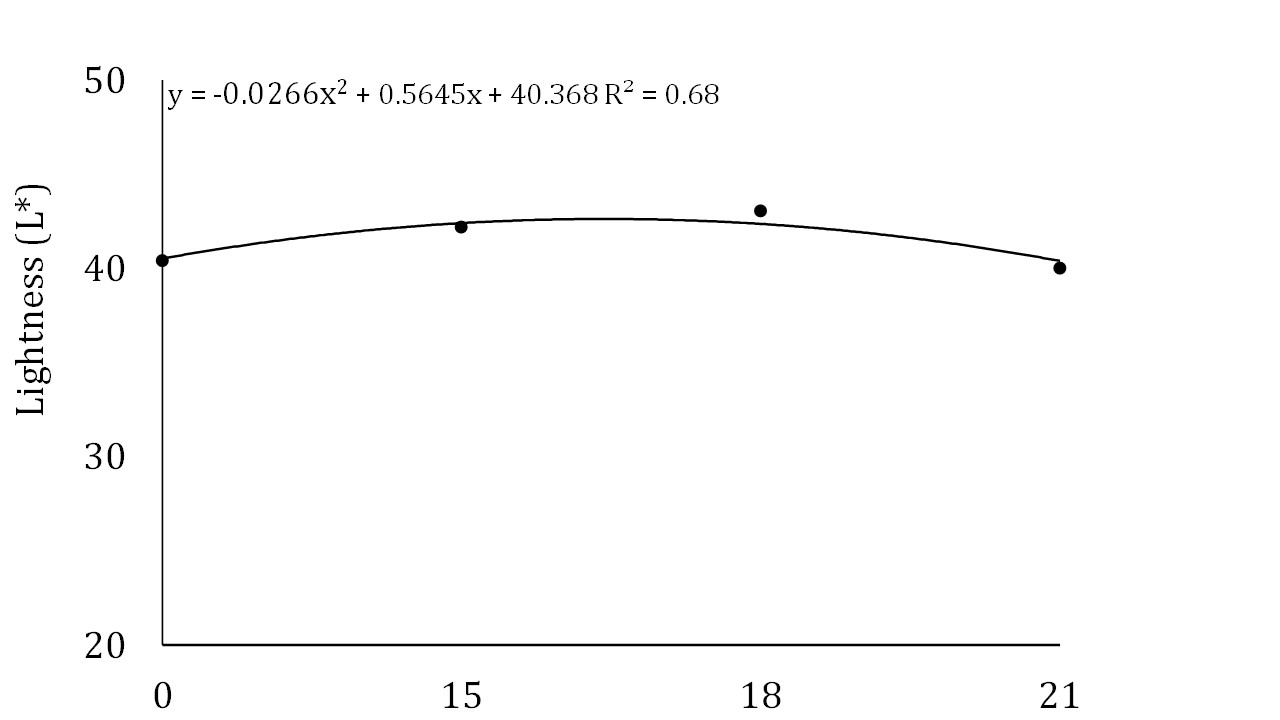
The interaction between coatings and storage periods significantly influenced only pitaya mass loss (Table S1). For peel color, lightness (L*) was affected only by storage period, while chroma (C*) responded exclusively to the coatings (Supplementary Material).
Weight loss increased throughout the storage period for all treatments, with the most pronounced rates observed between 15 and 18 days (Figure 1). By the end of the storage period (21 days), the control and silicate + PVC treatments exhibited the highest cumulative losses, reaching 1.95% and 3.61%, respectively. In contrast, the PVC and potassium silicate coatings were more effective at mitigating transpiration, with significantly lower weight loss values of 0.53% and 0.9 at the 21st day, respectively.

The L* varied significantly across storage periods, with no differences among coating treatments. It increased on the 18th day of storage, then decreased slightly on the 21st day, returning to the initial value (Figure 2). The peak lightness at 18 days suggests that this is the point of the most intense coloration of the peel, which may be associated with the full ripening of the fruit.

The C* was influenced only by the coatings applied (Table 1), with potassium silicate showing the highest C* value, indicating more intense coloration of pitaya with this coating.
The analysis of variance of the physical-chemical and biochemical parameters of pitaya (Table S2, Supplementary Material) indicated that the interaction between coatings and storage periods significantly influenced pH, titratable acidity, SS/TA ratio, total phenolic content, and total soluble sugars. On the other hand, soluble solids, flavonoids, and anthocyanins were affected only by the storage period, while vitamin C showed a significant effect only from the coatings.
The pH values of red pitaya pulp varied significantly with coating and storage period (Figure 3). Initially, the fruits had an average pH of 4.37. After 21 days of storage, slightly higher values were observed in the treatments with PVC, potassium silicate, and silicate + PVC (4.89, 4.65, and 4.68, respectively).

For soluble solids content, quadratic behavior was observed during storage (Figure 4), with a reduction until the 15th day after harvest, presenting a value of 12.76 °Brix. However, the general trend indicates relative stability in sugar content over time.

The titratable acidity in pitaya fruits was influenced by the coatings applied during storage (Figure 5). In general, a reduction in this variable was observed during storage across all treatments. However, the PVC film treatment showed a more pronounced decrease over the 21 days. The combination of potassium silicate and PVC reduced acidity more effectively than either alone.

As for the SS/AT ratio, there was no regression adjustment for the control treatment or the potassium silicate coating, which had mean values of 41.29 and 44.84, respectively (Figure 6). On the other hand, the use of PVC film increased this ratio over 21 days, with values ranging from 39.47 to 61.72, corresponding to a 56.4% increase. The combination of potassium silicate + PVC also increased the SS/AT, registering the highest value on the 21st day, with a 48.7% increase compared to the control treatment, indicating a positive effect of the coatings on the balance between sugars and acidity during the storage of pitaya fruits.

For pitaya fruit flavonoid and anthocyanin content, a similar pattern was observed, with a progressive reduction over the 21-day storage period (Figures 7 and 8). The reductions were 39% and 18% for flavonoid and anthocyanin content, respectively. These results indicate a continuous decline in bioactive compounds throughout storage, regardless of the coating used.


The total soluble sugar content in pitaya fruits varied over time in all treatments (Figure 9). The control treatment showed quadratic behavior, indicating that the fruits ripened more intensely, reaching a maximum of 12.24 mg glucose per 100 g−1 at 21 days. On the other hand, the coating treatments showed a linear increase, with values lower than the control treatment, ranging from 8.39 to 8.97 mg glucose 100 g−1 at 21 days, but with no significant differences between the coatings.

Total soluble sugars in red pitaya fruit under different coatings during 21 days of storage.
The total phenolic compound content showed significant variation between treatments throughout the storage period (Figure 10). For this variable, the control and potassium silicate treatments showed a quadratic trend, with a reduction in content until the 15th day and a subsequent increase until the 21st day of storage. Meanwhile, the PVC coating showed a linear increase in phenolic compounds throughout storage, reaching a maximum at 21 days (60.97 mg 100 g−1). Finally, the potassium silicate + PVC treatment showed quadratic behavior for total phenolic content, with a significant increase until the 15th day (55 mg 100 g-1).

The vitamin C content in red pitaya fruits was significantly influenced by the coatings, regardless of the storage period (Table 2). The PVC treatment showed the highest mean value, corresponding to an approximately 40% increase compared to the control. The potassium silicate coating, although not statistically different from PVC, also increased vitamin C content, resulting in a 26.6% increase compared to the control.
4. Discussion
The postharvest conservation of red pitaya (Hylocereus undatus) remains a complex biological challenge, as the fruit exhibits high metabolic activity characterized by rapid moisture loss and extreme susceptibility to oxidative degradation (Hasan et al., 2024). Upon harvest, the interruption of water and nutrient supply, combined with the transition from field to storage conditions, triggers a series of physiological changes, including chlorophyll degradation, consumption of organic acids, and cell wall softening, that significantly limit its commercial shelf-life (Li et al., 2022). In this context, the development of effective coating technologies is essential not only to preserve physical integrity but also to maintain the fruit's high antioxidant potential, which defines its functional quality (Nikagolla et al., 2019). Our results demonstrate that the application of PVC and potassium silicate significantly modulates these physiological pathways, mitigating senescence-related changes.
In this regard, reducing weight loss is a primary objective, as this process involves both moisture depletion via transpiration and the oxidative consumption of carbon skeletons during cellular respiration (Hasan et al., 2024). In our study, the effectiveness of the PVC coating in mitigating these losses is primarily attributed to the creation of a micro-modified atmosphere around the fruit. This barrier increases the partial pressure of water vapor and reduces the vapor pressure deficit between the fruit surface and the external environment (Moura Guerra et al., 2020; Sobral et al., 2024). Furthermore, the combination of PVC and potassium silicate promotes a synergistic protective effect. The silicon (Si) ions from the silicate are likely deposited within the cell walls of the bracts and peel, facilitating the formation of a structural silica-cuticle double layer (Nikagolla et al., 2019; Costan et al., 2020). This structure enhances resistance to water efflux and decreases tissue permeability to gases (O2 and CO2), effectively downregulating the metabolic rate and preserving the pool of respiratory substrates (Misra et al., 2025).
These findings are consistent with those of Misra et al. (2025), who observed that higher concentrations of natural-based coatings effectively restrict the diffusion of O2, CO2, and water vapor, thereby minimizing weight loss in guava fruits stored for 20 days. In this context, optimizing potassium silicate concentrations could further enhance its performance as a protective barrier to gas exchange in pitaya (Nikagolla et al., 2019). Such mineral-based interventions represent a promising and sustainable alternative to synthetic coatings, aligning with the current demand for eco-friendly postharvest technologies (Costan et al., 2020).
The preservation of physical integrity also influenced the colorimetric attributes of the pitaya peel. Regarding lightness (L*), minimal variation was observed throughout the storage period, suggesting that the fruit peel color was maintained. These observations are consistent with those of Razali et al. (2021), who reported that bio-based coatings did not significantly alter the L* values of red pitayas over 20 days. However, the color intensity, represented by chroma (C*), was significantly affected by the coatings. Potassium silicate was effective in maintaining C* values, indicating a more vivid color. This effect may be attributed to silicon's role in strengthening the peel's cellular structure (Aziz et al., 2021; Okba et al., 2021). By reinforcing the epicuticular layers, the silicate coating likely slowed the degradation kinetics of pigments, such as betalains, thereby helping to maintain the fruit's visual quality during the 21 days of storage.
In our study, the variation in TSS levels (Figure 4) suggests a controlled modulation of hydrolytic enzymes, such as α-amylase and β-amylase. These enzymes catalyze the degradation of starch and complex polysaccharides into soluble sugars, including glucose, fructose, and sucrose (Iwanami et al., 2024). The higher TSS values, typically observed in control fruits, indicate accelerated ripening and faster mobilization of energy reserves (Iwanami et al., 2024). On the other hand, the more stable soluble solids content observed in the coated dragon fruits indicates that the physical and mineral barriers provided by PVC and potassium silicate effectively regulated this enzymatic conversion. This stability confirms that the treatments were effective in prolonging the fruit's physiological stability during the 21-day storage period.
Closely linked to sugar metabolism, the observed increase in pH, accompanied by a simultaneous reduction in titratable acidity (TA) in all treatments, confirms the typical respiratory progression of pitaya. This physiological response is a direct consequence of the oxidative degradation of organic acids, which act as respiratory substrates for energy production in the Krebs cycle, maintaining cellular homeostasis during senescence (Beiparysa et al., 2023). During storage, fruit prioritizes the consumption of these acids, leading to their gradual depletion and the consequent increase in pH. However, the slower rate of acidity loss in fruits treated with potassium silicate and PVC suggests that these coatings effectively reduced respiration, thus preserving the pool of organic acids for a longer period.
The lower acidity loss in fruits treated with potassium silicate and PVC suggests that these coatings effectively reduced respiration. This physiological behavior is consistent with the findings of Dussán-Sarria et al. (2024), who demonstrated that mineral-based treatments reduce respiratory activity, thus limiting the consumption of organic acids (such as malic and citric acids) as substrates in the tricarboxylic acid cycle. Furthermore, the stability of soluble solids observed in our coated dragon fruit is consistent with their observations that mineral barriers retard starch hydrolysis, restricting enzymatic activity, such as α- and β-amylase, due to lower internal O2 availability.
Maintaining soluble solids (TSS) and total acidity (TA) directly affected the SS/TA ratio, a key determinant of flavor balance and palatability for consumers (Veer and Kshirsagar, 2025). The ratio showed distinct behaviors depending on the treatment; specifically, the combination of PVC and potassium silicate + PVC promoted a more favorable balance between sweetness and acidity. The synergy between the film's physical barrier and the silicate's biochemical/structural effects likely preserved the integrity of both sugars and acids, preventing the fruit from becoming tasteless or excessively senescent. These findings are consistent with Veer and Kshirsagar (2025), who observed that effective coatings on dragon fruit help maintain sensory balance, thus increasing marketability and consumer acceptance by delaying over-ripening.
Corroborating the metabolic protection observed in the physicochemical parameters, the vitamin C content was significantly preserved by the treatments, with increases of 40% and 26.6% in fruits treated separately with PVC and potassium silicate, respectively. This preservation suggests that both physical and mineral coatings create a protective microenvironment that minimizes ascorbic acid's oxidative degradation. These results are consistent with those of Abidi et al. (2023), who demonstrated that silicon-based coatings are highly effective at maintaining the antioxidant quality of perishable fruits by reducing direct exposure of tissues to oxygen, thereby extending their shelf life.
This initial protection by ascorbic acid likely delayed the degradation of other secondary metabolites. The behavior of total phenolic compounds, for example, was significantly influenced by the type of coating applied. The use of PVC film promoted a continuous increase in phenolic levels, suggesting that the modified atmosphere created by the physical barrier may favor the phenylpropanoid pathway (Faria et al., 2022). This accumulation can be interpreted as a positive physiological response to post-harvest conditions, in which the film stimulates the biosynthesis of phenolic compounds as a defense mechanism against tissue senescence (Faria et al., 2022). Furthermore, the combination of potassium silicate and PVC showed an intermediate effect, likely due to the complex interplay between the physical barrier and silicon metabolic signaling. It is known that silicon modulates the activity of phenylalanine ammonia-lyase (PAL), the key enzyme in phenolic biosynthesis (Abidi et al., 2023), thereby reinforcing the fruit's overall antioxidant capacity.
Maintaining these antioxidant layers directly impacted the stability of flavonoids and anthocyanins. These compounds tend to decrease during storage due to accelerated respiration and oxidative stress, processes mediated mainly by polyphenol oxidases (PPO) and the progressive consumption of pigments to combat senescence (Chen et al., 2024). In our study, the applied coatings acted as metabolic modulators, since untreated fruits showed rapid loss of color and bioactive value, while the treatments, in line with recent literature on ozone and essential oils (Xu et al., 2021; Li et al., 2022; Wang et al., 2024), effectively maintained the functional quality of the fruits over 21 days.
This preservation suggests that both physical and mineral coatings create a protective micro-environment that minimizes the oxidative degradation of ascorbic acid. These results are corroborated by Shu et al. (2024), who reported that the incorporation of functional ingredients into coating matrices enhances the overall antioxidant capacity and total phenolic content in tropical fruits like guava. Such coatings effectively delay the decline in bioactive substances by regulating polyphenol oxidase (PPO) activity and enhancing the fruit's defense mechanisms against oxidative stress, thereby supporting the higher retention of phenols and flavonoids observed in our PVC and potassium silicate treatments.
Although 21 days of storage naturally triggers physicochemical changes that compromise the post-harvest quality and commercial value of red pitaya, the application of the tested coatings effectively slowed down these degradation processes. The PVC film stood out for its superior ability to minimize weight loss and preserve phenolic compounds while maintaining a modified atmosphere. Simultaneously, potassium silicate demonstrated significant potential, particularly for maintaining color stability and preserving vitamin C, with performance comparable to PVC in these respects. While PVC stood out for specific physical attributes, potassium silicate emerges as an alternative due to its non-toxic nature and the absence of environmental residues. Consequently, future research should explore higher concentrations of potassium silicate for red pitaya preservation, since the 1% dosage used in this study may have limited the maximum protective efficacy.
5. Conclusions
The storage period significantly influences the physicochemical quality of red pitaya, leading to natural senescence and degradative metabolic changes. The application of post-harvest coatings is an effective strategy for delaying these alterations and extending the fruit's shelf life. Specifically, the isolated PVC film is most effective at minimizing mass loss and preserving vitamin C content. At the same time, potassium silicate stands out for its ability to maintain the fruit's chromatic intensity. Furthermore, the combination of PVC and potassium silicate promotes a superior sugar-acid balance (SS/TA ratio), evidencing a complementary effect between the physical barrier and the mineral treatment. These findings demonstrate that both coatings, when used alone or in combination, represent viable approaches to maintaining the overall quality and functional value of red pitaya during the post-harvest period.
Supplementary Material
Supplementary material accompanies this paper.
Table S1
Table S2
This material is available as part of the online article from https://doi.org/10.1590/1519-6984.303231
Acknowledgements
The authors thank UFERSA for institutional support and CAPES and CNPq for financial support.
Data Availability Statement
Research data is only available upon request from the corresponding author.
References
-
ABIDI, W., AKRIMI, R., HAJLAOUI, H., REJEB, H. and GOGORCENA, Y., 2023. Foliar fertilization of potassium silicon improved postharvest fruit quality of peach and nectarine [Prunus persica (L.) batsch] cultivars. Agriculture, vol. 13, no. 1, pp. 195. https://doi.org/10.3390/agriculture13010195
» https://doi.org/10.3390/agriculture13010195 - ASSOCIATION OF OFFICIAL ANALYTICAL CHEMISTS – AOAC, 2012. Official methods of analysis of AOAC International. 19. ed. Washington, D.C.: AOAC International, vol. 1.
-
AZIZ, M.H., SOLIMAN, M.A. and ENNAB, H.A., 2021. Effect of potassium silicate and chelated calcium sprays on yield, quality, and storage of peach fruits cv. “Dessert Red”. Menoufia Journal of Plant Production, vol. 6, no. 3, pp. 119-135. https://doi.org/10.21608/mjppf.2021.161213
» https://doi.org/10.21608/mjppf.2021.161213 -
BEIPARYSA, A., TOPNO, S.E., JOSEPH, A.V., BAHADUR, V., KERKETTA, A. and KESHARWANI, L., 2023. Effect of Calcium Chloride (CaCl2) and Carbon Dioxide (CO2) on post-harvest quality of apple fruit (Malus domestica) cv. Gala. International Journal of Plant and Soil Science, vol. 35, no. 18, pp. 199-207. https://doi.org/10.9734/ijpss/2023/v35i183283
» https://doi.org/10.9734/ijpss/2023/v35i183283 -
CHEN, S.Y., ISLAM, M.A., JOHNSON, J.B., XU, C.Y., MAZHAR, M.S. and NAIKER, M., 2024. Comparative analysis of shelf-life, antioxidant activity, and phytochemical contents of Australian-grown and imported dragon fruit under ambient conditions. Horticulturae, vol. 10, no. 10, pp. 1048. https://doi.org/10.3390/horticulturae10101048
» https://doi.org/10.3390/horticulturae10101048 -
COELHO, V.S., DE MOURA, D.G., AGUIAR, L.L., RIBEIRO, L.V., SILVA, V.D.M., VEIGA CORREIA, V.T., MELO, A.C., SILVA, M.R., PAULA, A.C.C.F.F., ARAÚJO, R.L.B. and MELO, J.O.F., 2024. The profile of phenolic compounds identified in pitaya fruits, health effects, and food applications: an integrative review. Plants, vol. 13, no. 21, pp. 3020. https://doi.org/10.3390/plants13213020 PMid:39519939.
» https://doi.org/10.3390/plants13213020 -
COSTAN, A., STAMATAKIS, A., CHRYSARGYRIS, A., PETROPOULOS, S.A. and TZORTZAKIS, N., 2020. Interactive effects of salinity and silicon application on Solanum lycopersicum growth, physiology and shelf‐life of fruit produced hydroponically. Journal of the Science of Food and Agriculture, vol. 100, no. 2, pp. 732-743. https://doi.org/10.1002/jsfa.10076 PMid:31597201.
» https://doi.org/10.1002/jsfa.10076 -
DUSSÁN-SARRIA, S., CAMACHO-TAMAYO, J.H. and ÁLVAREZ-HERRERA, J.G., 2024. Changes in quality attributes and physiological behavior of fresh bananas (Musa acuminata cv. ‘Cavendish’) during commercial storage. Agrária, vol. 19, no. 4, pp. 1-8. https://doi.org/10.5039/agraria.v19i4a3469
» https://doi.org/10.5039/agraria.v19i4a3469 -
EL-SAYED, S.S.F., EL-MOGY, M.M. and MAHAMOUD, G.A., 2023. Potassium silicate and calcium chloride improve production and shelf-life of strawberries. Fayoum Journal of Agricultural Research and Development, vol. 37, no. 4, pp. 736-759. https://doi.org/10.21608/fjard.2023.318064
» https://doi.org/10.21608/fjard.2023.318064 - FALEIRO, F.G., 2022. Pitaia: a fruta que está conquistando o Brasil. Anuário Campo & Negócios Hortifruti, vol. 11, pp. 97-99.
-
FARIA, R.C., MORGADO, C.M.A., VESPUCCI, I.L. and DE CAMPOS, A.J., 2022. Radiação UV-C na qualidade pós-colheita de pitaia vermelha. Comunicata Scientiae, vol. 13, e3857. https://doi.org/10.14295/cs.v13.3857
» https://doi.org/10.14295/cs.v13.3857 -
FERREIRA, D.F., 2019. SISVAR: computer analysis system for fixed effects split-plot-type designs. Revista Brasileira de Biometria, vol. 37, no. 4, pp. 529-535. https://doi.org/10.28951/rbb.v37i4.450
» https://doi.org/10.28951/rbb.v37i4.450 - FRANCIS, F.J., 1982. Anthocyanins as food colors. In: P. MARKAKIS, ed. Food colors. New York: Academic Press, pp. 155-201.
-
HASAN, M.U., SINGH, Z., SHAH, H.M.S., KAUR, J., and WOODWARD, A., 2024. Water loss: a postharvest quality marker in apple. Food and Bioprocess Technology, vol. 17, no. 8, pp. 2156-2180. https://doi.org/10.1007/s11947-023-03305-9
» https://doi.org/10.1007/s11947-023-03305-9 - INSTITUTO ADOLFO LUTZ – IAL, 2008. Métodos físico-químicos para análise de alimentos 1. ed. São Paulo: IAL, 1020 p.
-
IWANAMI, H., MORIYA-TANAKA, Y., HANADA, T., BABA, T. and SAKAMOTO, D., 2024. Factors explaining variations in soluble solids content of apples during ripening and storage. The Horticulture Journal, vol. 93, no. 2, pp. 135-142. https://doi.org/10.2503/hortj.QH-105
» https://doi.org/10.2503/hortj.QH-105 -
JADHAV, S.B. and JADHAV, N.Y., 2023. An eye-catching and comprehensive review on dragon fruit (An exotic super fruit). Journal of Pharmacognosy and Phytochemistry, vol. 12, no. 6, pp. 243-251. https://doi.org/10.22271/phyto.2023.v12.i6c.14790
» https://doi.org/10.22271/phyto.2023.v12.i6c.14790 -
LI, C., WANG, S., WANG, J., WU, Z., XU, Y. and WU, Z., 2022. Ozone treatment promotes physicochemical properties and antioxidant capacity of fresh-cut red pitaya based on phenolic metabolism. Frontiers in Nutrition, vol. 9, pp. 1016607. https://doi.org/10.3389/fnut.2022.1016607 PMid:36276831.
» https://doi.org/10.3389/fnut.2022.1016607 -
MISRA, S., ABROL, G.S., PRASAD, R., PAL, R., VISWAKARMA, G., SHARMA, G., GHOSH, A. and KUNDU, M., 2025. Tree-based natural gum coating enhances postharvest fruit quality and shelf life of guava fruit under ambient conditions. Applied Fruit Science, vol. 67, no. 5, pp. 397. https://doi.org/10.1007/s10341-025-01621-2
» https://doi.org/10.1007/s10341-025-01621-2 -
MOURA GUERRA, A.M.N., SANTOS, D.S., SILVA, M.G.M., EVANGELISTA, R.S., MAIA, A.G., SILVA, I.G. and MARACAJA, P.B., 2020. PVC film coatings promote post-harvest conservation of Italian zucchini fruits (Cucurbita pepo L.). Research, Society and Development, vol. 9, no. 8, e550985530. https://doi.org/10.33448/rsd-v9i8.5530
» https://doi.org/10.33448/rsd-v9i8.5530 -
NIKAGOLLA, N.G.D.N., UDUGALA-GANEHENEGE, M.Y. and DAUNDASEKERA, W.A.M., 2019. Postharvest application of potassium silicate improves keeping quality of banana. The Journal of Horticultural Science & Biotechnology, vol. 94, no. 6, pp. 735-743. https://doi.org/10.1080/14620316.2019.1614486
» https://doi.org/10.1080/14620316.2019.1614486 - NILSSON, T., 1970. Studies into the pigments in beetroot (Beta vulgaris L. sp vulgaris var. rubra L.). Lantbrukshogskolans Annaler, vol. 36, pp. 179-219.
-
OKBA, S.K., MAZROU, Y., ELMENOFY, H.M., EZZAT, A. and SALAMA, A.M., 2021. New insights of potassium sources impacts as foliar application on ‘Canino’ apricot fruit yield, fruit anatomy, quality and storability. Plants, vol. 10, no. 6, pp. 1163. https://doi.org/10.3390/plants10061163 PMid:34201044.
» https://doi.org/10.3390/plants10061163 -
RAZALI, N.A., SARGENT, S.A., SIMS, C.A., BRECHT, J.K., BERRY, A.D. and CHENG, G., 2021. Potential of postharvest coatings to maintain the freshness of red-fleshed pitaya (Hylocereus costaricensis). Agriculture, vol. 11, no. 9, pp. 892. https://doi.org/10.3390/agriculture11090892
» https://doi.org/10.3390/agriculture11090892 -
SHU, C., KIM-LEE, B. and SUN, X., 2024. Chitosan coating incorporated with carvacrol improves postharvest guava (Psidium guajava) quality. Horticulturae, vol. 10, no. 1, pp. 80. https://doi.org/10.3390/horticulturae10010080
» https://doi.org/10.3390/horticulturae10010080 -
SOBRAL, R.R.S., MIZOBUTSI, G.P., MIZOBUTSI, E.H., AGUIAR, F.S., ALMEIDA, L.B., SANTOS, R.C., OLIVEIRA, L.M., SOUZA, D.B. and COSTA, J.D.O., 2024. Post-Harvest Fruit Conservation of Eugenia dysenterica DC., Spondias purpurea L., Hancornia speciosa Gomes and Talisia esculenta Radlk. AgriEngineering, vol. 6, no. 3, pp. 2306-2325. https://doi.org/10.3390/agriengineering6030135
» https://doi.org/10.3390/agriengineering6030135 - STROHECKER, R.L. and HENNING, H.M., 1967. Análisis de vitaminas: métodos comprobados. Madrid: Paz Montalvo, 428 p.
-
TAHARUDDIN, N.H., JUMAIDIN, R., MANSOR, M.R., HAZRATI, K.Z., TARIQUE, J., ASYRAF, M.R.M. and RAZMAN, M.R., 2023. Unlocking the potential of lignocellulosic biomass dragon fruit (Hylocereus polyrhizus) in bioplastics, biocomposites and various commercial applications. Polymers, vol. 15, no. 12, pp. 2654. https://doi.org/10.3390/polym15122654 PMid:37376300.
» https://doi.org/10.3390/polym15122654 -
THANKI, D.M., PATEL, M.J., RATHVA, H.M. and LUNAGARIYA, R.J., 2025. Yield of guava (Psidium guajava L.) cv. Lal Bahadur as influenced by pruning time, boric acid and potassium silicate. Journal of Advances in Biology & Biotechnology, vol. 28, no. 6, pp. 722-730. https://doi.org/10.9734/jabb/2025/v28i62435
» https://doi.org/10.9734/jabb/2025/v28i62435 -
VEER, S.J. and KSHIRSAGAR, R.B., 2025. Influence of guar gum–glycerol composite coatings on postharvest quality and shelf-life extension of dragon fruit stored at refrigerated temperature (8 °C). Asian Journal of Microbiology, Biotechnology & Environmental Sciences: AJMBES, vol. 27, no. 3-4, pp. 277-282. https://doi.org/10.53550/AJMBES.2025.v27i03-04.021
» https://doi.org/10.53550/AJMBES.2025.v27i03-04.021 -
WANG, X., CHEN, J., LUO, D. and BA, L., 2024. Advances in the understanding of postharvest physiological changes and the storage and preservation of pitaya. Foods, vol. 13, no. 9, pp. 1307. https://doi.org/10.3390/foods13091307 PMid:38731681.
» https://doi.org/10.3390/foods13091307 - WATERHOUSE, A.L., 2002. Determination of total phenolics. Current Protocols in Food Analytical Chemistry, vol. 6, no. 1, pp. I1.1.1.
-
XU, Y., CAI, Z., BA, L., QIN, Y., SU, X., LUO, D., SHAN, W., KUANG, J., LU, W., LI, L., CHEN, J. and ZHAO, Y., 2021. Maintenance of postharvest quality and reactive oxygen species homeostasis of pitaya fruit by essential oil p-anisaldehyde treatment. Foods, vol. 10, no. 10, pp. 2434. https://doi.org/10.3390/foods10102434 PMid:34681482.
» https://doi.org/10.3390/foods10102434 -
YEMM, E.W. and WILLIS, A.J., 1954. The estimation of carbohydrates in plant extracts by anthrone. The Biochemical Journal, vol. 57, no. 3, pp. 508-514. https://doi.org/10.1042/bj0570508 PMid:13181867.
» https://doi.org/10.1042/bj0570508 -
YING, J.C.L. and DING, P., 2024. Flowering, fruit set and fruit development. In: S. MITRA, ed. Dragon fruit: botany, production and uses Wallingford: CABI, pp. 147-162. https://doi.org/10.1079/9781800623156.0009
» https://doi.org/10.1079/9781800623156.0009
Edited by
-
Editor:
Takako Matsumura Tundisi