 Effect of lidocaine and magnesium sulfate on rocuronium onset time: a randomized controlled experimental study
Background Neuromuscular blockers such as succinylcholine are widely used for airway management in critically ill patients; but their use may be contraindicated due to adverse effects. In rapid sequence intubation, the onset time of the neuromuscular blocker is critical and should be as short as possible. This study investigates whether lidocaine and magnesium sulfate could reduce the onset time of rocuronium bromide in an experimental model.
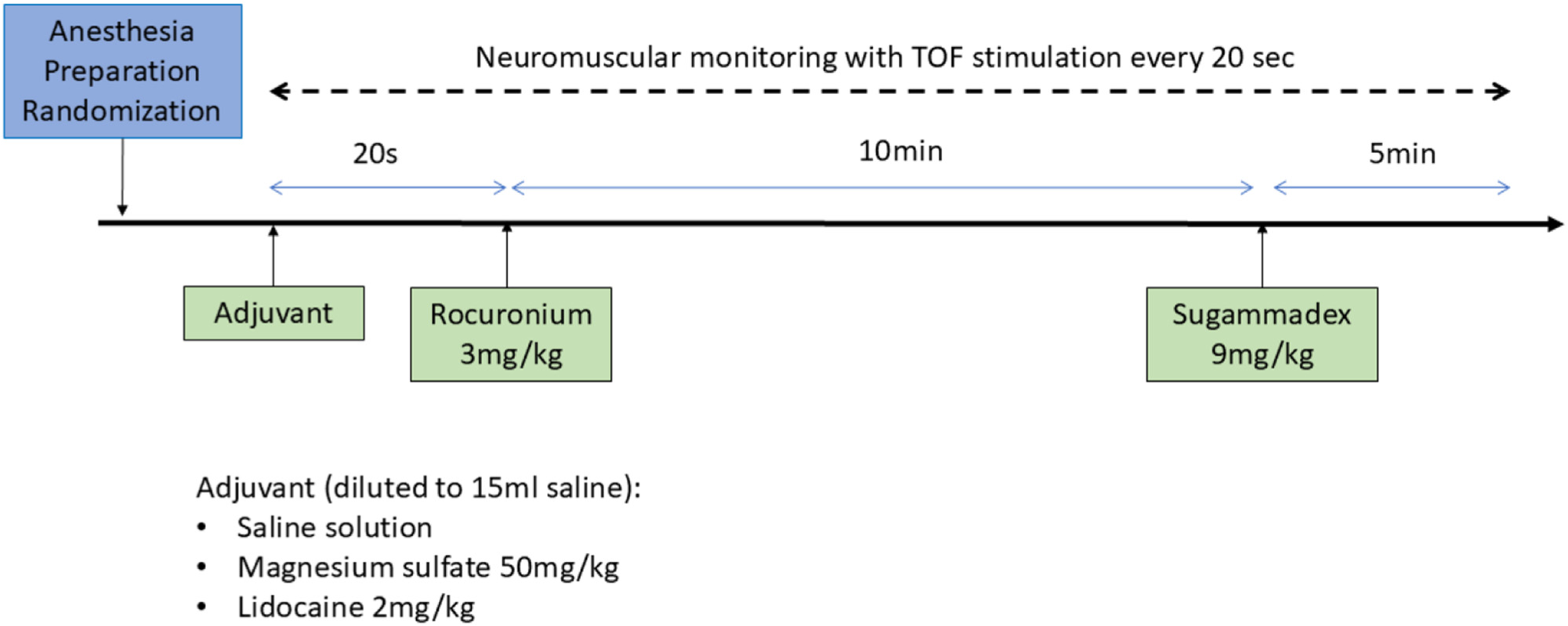
Method Eighteen animals were randomly assigned to three groups and treated with lidocaine, magnesium sulfate, or saline before receiving rocuronium bromide (3 mg.kg-1). After 10 minutes of neuromuscular blockade, reversal was performed with sugammadex (9 mg.kg-1). Onset and reversal times were measured by acceleromyography. Doses were standardized in a pilot study with four animals. Data were tested for normality using the Shapiro-Wilk and Anderson-Darling tests. Onset times are tested with a one-way ANOVA, followed by Fisher’s (LSD) post hoc test, and mean arterial pressure and heart rate with a two-way ANOVA, followed by Tukey’s post hoc test. Statistical significance was set at p ≤ 0.05.
Results The results showed that lidocaine and magnesium sulfate significantly reduced the onset time of rocuronium bromide compared to the saline solution (p < 0.05) and did not affect the onset time of reversal with sugammadex (p > 0.05). Both adjuvants caused hypotension, with a more significant effect observed with magnesium sulfate; however, blood pressure returned to baseline values.
Conclusion In conclusion, lidocaine and magnesium sulfate facilitate airway access by reducing the onset time of rocuronium bromide. Animal Ethics Committee approved 1749/2022.
KEYWORDS
Airway management; Anesthetic adjuvants; Neuromuscular blockade; Neuromuscular monitoring; Tracheal intubation
 Thumbnail