 Confirmed by integrative taxonomy first and unusual occurrence of the exotic shrimp Neocaridina davidi (Caridea: Atyidae) in Brazil
ABSTRACT
A shrimp specimen of the genus Neocaridina Kubo 1938, originally from Asia, was collected for the first time in a natural marine environment in Pernambuco, Brazil. This represents the first record of this genus in the South American continent. Morphological characteristics and mitochondrial and nuclear DNA sequences (COI, 16S, 18S, and H3) of the specimen were compared with other species of Neocaridina, enabling its identification as Neocaridina davidi. Finding this freshwater species native to mainland China in a marine environment was surprising. Based on prior findings in other locations, the most likely hypothesis for this unusual occurrence is that the shrimp may have been released intentionally or unintentionally into the environment by an aquarium hobbyist.
Keywords
Alien species; Aquarism; Decapoda; Ornamental invertebrates; South Atlantic
Resumo
Um exemplar de camarão do gênero Neocaridina Kubo 1938, originário da Ásia, foi coletado pela primeira vez em ambiente marinho natural em Pernambuco, Brasil. Ele representa o primeiro registro desse gênero no continente sul-americano. As características morfológicas e as sequências de DNA mitocondrial e nuclear (COI, 16S, 18S e H3) do espécime foram comparadas com as de outras espécies de Neocaridina, possibilitando sua identificação como Neocaridina davidi. Foi surpreendente encontrar essa espécie de água doce, nativa da China continental, num ambiente marinho. Com base em descobertas anteriores em outros locais, a hipótese mais provável para essa ocorrência incomum é que o camarão pode ter sido solto intencionalmente, ou não no meio ambiente por um aquarista.
Palavras-chave
Espécies alienígenas; Aquarismo; Decápode; Invertebrados ornamentais; Atlântico Sul
INTRODUCTION
Bioinvasion is considered the second major cause of decreased biodiversity, which can lead to changes in the structure and function of ecosystems, increasing biotic homogenization (Coradin and Tortato, 2006). Some species can negatively impact their new ecosystems by competing for resources, decreasing biodiversity, altering habitats, and acting as vectors of pathogens and hosts of ectosymbiotic species, which can transfer their hosts to native species (Gherardi, 2007; Emde et al., 2016; Patoka et al., 2016; Ohtaka et al., 2017). Among the leading causes of bioinvasion, there are the actions of human beings as protagonists in the increase of global species exchange (Gozlan et al., 2010; Havel et al., 2015). Introductions can be unintentional, including transport through shipping channels and ballast water (Nentwig, 2007), or intentional, such as trade in aquarium animals, which have contributed to introducing exotic species around the world (Heerbrandt and Lin, 2006; Lipták and Vitázková, 2015; Patoka et al., 2016; Chucholl and Wendler, 2017).
As a result, species of commercial interest have appeared in several non-native regions. Many of these species have become increasingly popular in the aquarium industry (Patoka et al., 2016; Levitt-Barmats et al., 2019). Freshwater shrimp of the genus Neocaridina Kubo 1938, native to China, Japan, Korea, Vietnam, and Taiwan, is one such example (Levitt-Barmats et al., 2019). In particular, Neocaridina davidi (Bouvier, 1904), whose taxonomy is complex, has been documented in the literature under several synonyms and divisions of species into subspecies (Yixiong, 1996; Liang, 2002, 2004; Shih and Yixiong, 2007), and remains without a precise definition.
Neocaridina davidi belongs to the family Atyidae (De Haan, 1849), the largest family of the infraorder Caridea that inhabit freshwater bodies, from fast-moving mountain streams to slow and oligohaline waters (De Grave et al., 2008; De Grave and Fransen, 2011; Schoolmann and Arndt, 2018). A small proportion of this family’s members are amphidromous (Dudgeon, 1985; Heerbrandt and Lin, 2006; Vogt, 2013), but most are confined to freshwater and characterized by abbreviated or direct development by suppression of larva. This is especially evident in the genera Caridina (H. Milne Edwards, 1837), and Neocaridina (Shih and Yixiong, 2007; Lai and Shy, 2009; Karge and Klotz, 2013; Vogt, 2013; Pantaleão et al., 2015). Neocaridina davidi, popularly known as red cherry shrimp or RCS, has a small size, and bright coloration that includes different shades of red, yellow, and blue, making it attractive among freshwater aquarists (Tomas et al., 2020). This species was previously reported as invasive in the United States of America, Japan, Israel, and Europe (Klotz et al., 2013; Jabłońska et al., 2018; Levitt-Barmats et al., 2019; Weiperth et al., 2019).
The objective of the present study was to report the unprecedented and unusual record to N. davidi collected on the coast of the Brazilian state of Pernambuco, confirmed by morphological and molecular analyses.
MATERIALS AND METHODS
On February 14, 2022, during exploratory sampling activities for different purposes of the Biota-FAPESP INTERCRUSTA Thematic Project, three trawls were carried out along of Candeias beach, in Jaboatão dos Guararapes, PE (08°12’37”S; 34°54 ‘12”W) (Fig. 1), using a shrimp boat with double bottom trawls. Along with banks of filamentous algae, one live specimen of a different morphology was sampled, frozen, and conserved in 100% ethyl alcohol. We followed the methods of Englund and Yixiong (1999) and Klotz et al. (2013) for identification and measured the carapace length with a caliper (0.01 mm). Specimens from Brazil were obtained and analyzed under federal permits (permanent licenses for FLM and FJZ for collection of zoological material 11777-2 and 34587 MMA/ICMBio/SISBIO, respectively), and for genetic access SISGEN CEA7CD5 and AE6029A). The specimen was deposited in the Crustacean Collection of the Biology Department of the Faculty of Philosophy, Sciences, and Letters of Ribeirão Preto, Universidade de São Paulo: CCDB 6963.

Collection site (P01) and the nearest freshwater bodies in Jaboatão dos Guararapes, Pernambuco, Brazil.
Molecular protocols and analysis
Molecular procedures (extraction, amplification, purification, and sequencing) followed the protocols described by Mantelatto et al. (2018). DNA was extracted from the specimen’s abdominal muscle tissue for molecular identification using the Chelating Ion Exchange Resin method (Chelex VR 100) (Estoup et al., 1996). The base pair region of the mitochondrial 16S rRNA (Schubart et al., 2000) and cytochrome c oxidase subunit 1 (COI) (Schubart and Huber, 2006), and nuclear 18S (Medlin et al., 1988) and H3 (Colgan et al., 1998), gene of the extracted DNA, were amplified using polymerase chain reaction (Sambrook et al., 1989).
Sequences were compared to the GenBank genomic database using the basic local alignment search tool (BLAST), implemented on the National Center for Biotechnology Information website. To verify identification, we entered each sequence using nucleotide BLAST (BLASTn) and looked for the most similar sequences in the general sequence database. After completing the search, we confirmed that the results were organized by the closest identity.
Maximum likelihood phylogenetic analyses were performed using the IQ-TREE program (Miller et al., 2010) with the COI gene due to the greater number of sequences available from GenBank for comparison. Other molecular markers (16S, 18S, and H3) were used to confirm the specimen’s identity and increase the number of sequences in the GenBank database, helping future research. The evolutionary model that best fit the data was determined by the IQ-TREE according to the Bayesian information criterion (Luo et al., 2010) and used for tree inference. Branch support was evaluated by ultrafast bootstrap with 1,000 replicates. The choice of the outgroup (represented by Caridina formosae Hung et al., 1993) was conducted according to the phylogeny proposed by Shih and Cai (2007). To confirm the similarity between the sequences generated and those available in GenBank, distance matrix analyses were performed in the MEGA X software (Kumar et al., 2018).
RESULTS
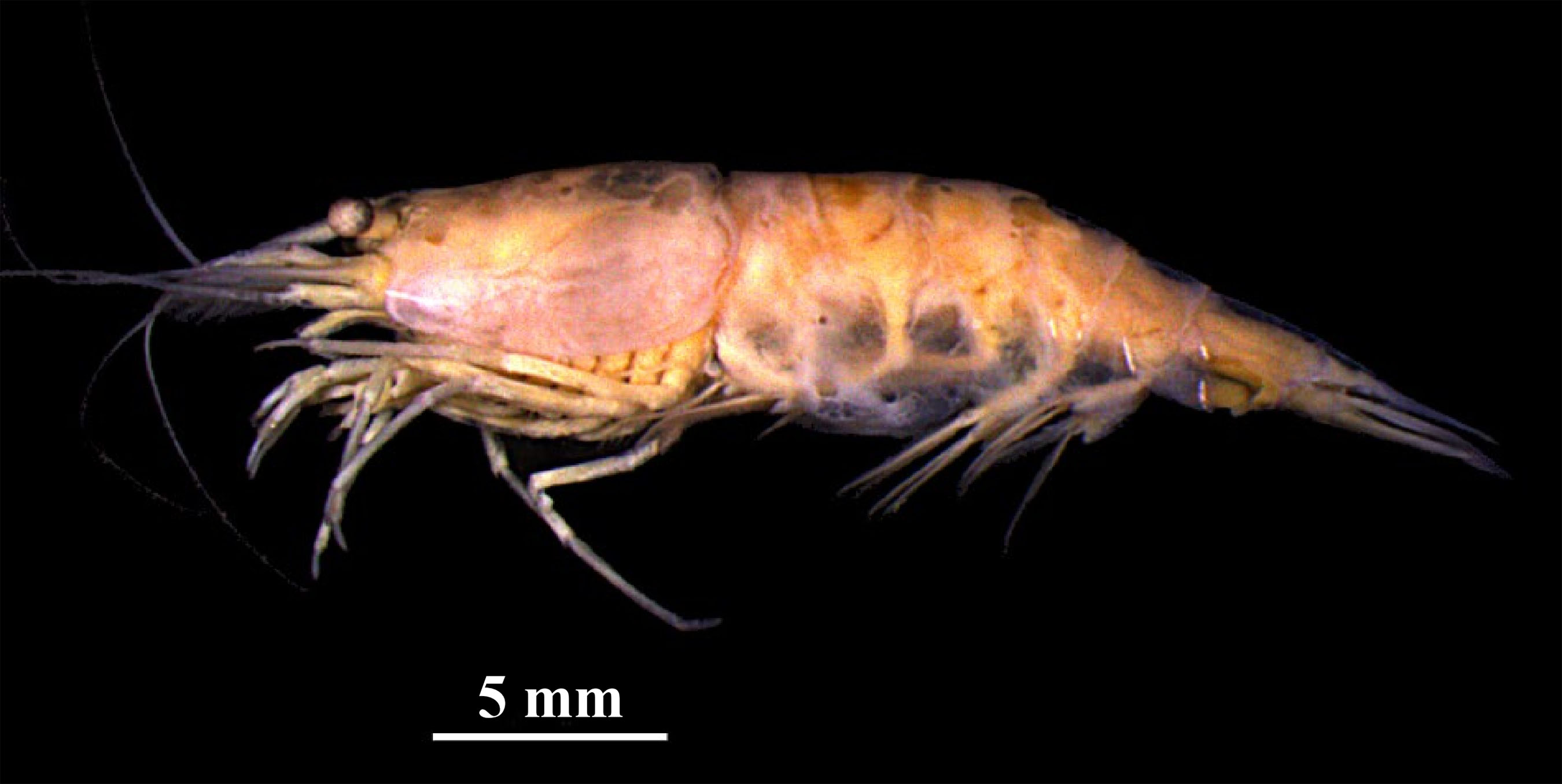
The results of our robust morphological and genetic analyses confirmed the specimen’s identification as N. davidi living in the marine environment of the Brazilian territory (Fig. 2). Our phylogenetic analysis from the COI marker revealed the positioning of our specimen to be close (genetic distance = 0,00%) to N. davidi specimens from Poland and Canada with high branch support. Unfortunately, this is the only marker available for specimens from other localities in the GenBank data base that allowed a phylogenetic comparison. The sequences accession number (GenBank) generated from the adult female specimen (CCDB 6963) are: COI (PP718677), 16S (PP716860), 18S (PP716861), and H3 (SUB14399993).

Maximum likelihood phylogenetic tree for the COI gene of species of the genus Neocaridina distributed in the world. Bootstrap values are indicated on the nodes.
Systematics
-
Infraorder Caridea Dana, 1852
-
Superfamily Atyoidea De Haan, 1849
-
Family Atyidae De Haan, 1849
-
Neocaridina Kubo, 1938

Neocaridina davidi (Bouvier, 1904) collected in Jaboatão dos Guararapes, Pernambuco, Brazil. Adult female specimen (CCDB 6963). Source: G. L. Bochini (2022).
DISCUSSION
This work is the first report of the occurrence of an exotic shrimp, N. davidi, in South America in a natural and coastal marine environment. This finding in a marine environment is unusual and unprecedented as the specimen is typically a freshwater species. Depending on the recording area (Fig. 1), it can be conjectured that the species may have originated from the lagoon environment, which is 3.16 km away from the sampled site, or from the estuary, which is located 1.58 km away. Unfortunately, the opportunity to conduct samplings in these nearby places to assess the presence of other specimens has not yet arisen. The nearby lagoon system poses challenges in terms of access and makes trawling practically impossible. Additionally, the belief that freshwater habitats could serve as a source for the spread of N. davidi in coastal environments is not held. This condition is understood to be more related to a physiological or osmoregulatory mechanism rather than being a step to reach marine environments. This rationale is the basis for advocating future experiments in this and other fields in the discussion, as recently carried out by Carvalho-Batista et al. (2023), that investigated the preference of N. davidi for types of shelter and concluded that the java moss Vesicularia sp. was the most used shelter, supporting our finding of the specimens inhabiting banks of filamentous algae.
To evaluate the potential existence of these populations, the sporadic recording of this species encourages future monitoring to assess the establishment of this shrimp variety in natural environments, particularly in coastal inland waters and those having connectivity with the marine environment. Because it is a globally invasive species, special attention to protecting the native biodiversity of Brazil should be made. The fact that only one specimen was sampled does not make the finding any less worrying, as similar results have already been reported, mainly in relation to invasive decapod species, when the first records in Brazilian waters occurred with few individuals (Mantelatto and Dias, 1999; Almeida et al., 2012; Tamburus et al., 2019). Furthermore, based on our past experience in the field and using previous literature on the survey of the region’s decapod fauna, we are convinced of this record, mainly due to the use of the precise analyses that were carried out.
Concern about the invasion of N. davidi and other shrimps with similar characteristics in South America has been described previously (Pantaleão et al., 2017). It was demonstrated that the species has prolific reproduction capabilities, allowing it to reach similar population densities as in native areas (Nur and Christianus, 2013). In addition, the small size of this species makes it easily confused with the juvenile forms of other shrimp and challenging to identify in nature to accomplish control. Besides, although the species has a life cycle entirely in freshwater, it is reportedly also tolerant in high salinity (Nur and Christianus, 2013), and investigators have cultivated newly hatched larvae in a slightly saline (5–10 ppt) environment. These results detailing the plasticity and survival of larvae may indicate their ability to live in a saline environment, at least during the larval phase. It is known that this species is commercialized in Brazil and Argentina (Pantaleão et al., 2017), and the possibility of intentional or unintentional disposal in the natural environment is almost inevitable.
Among invasive species, freshwater crustaceans represent a growing portion compared to marine species (Patoka et al., 2016). Introducing exotic species can negatively impact the host community, directly, or indirectly, affecting the functioning of the ecosystem and biodiversity, even without an established population, as they are potential transmitters of pathogens (Simberloff et al., 2013). Thus, the concern is not restricted only to the competitive potential with native species, but also because Neocaridina can be accompanied by symbiotic worms (Niwa et al., 2005; Niwa and Ohtaka, 2006; Klotz et al., 2013), which increases the potential for these worms to be introduced into Brazilian aquatic systems. There are reports that the introduction of the parasitic fungus Microsporidia in Germany occurred through N. davidi. This fungus preferentially lives in brackish and marine waters and has become a critical threat to the shrimp farming industry, particularly in Southeast Asia (Simberloff et al., 2013; Kim et al., 2022; Schneider et al., 2022).
In the case of newly introduced North American crayfish, these species are carriers of the crayfish pest, which infects European crayfish species and negatively influences indigenous European ecosystems (Aquiloni et al., 2011; Pârvulescu et al., 2012). In the United States of America and Canada, the invasion of the crustacean Mysida, popularly known as skunk shrimp, altered different freshwater ecosystems in both countries (Spencer et al., 1991).
The most plausible hypothesis explaining the introduction of the unusual species into Brazilian waters is via trade in ornamental animals. There were strong indications obtained in our phylogenetic analysis that the introduction route is through organisms from Europe. Trade in aquarium ornamentals in Turkey comes with the important risk of invasion mechanisms in the post-import stages (Turkmen and Karadal, 2012). N. davidi is also considered invasive in other regions, such as Chinese waters, where they replace other shrimp species.
On the coast of Pernambuco, several exotic marine species have already been reported. The caridean shrimp, Athanas dimorphus (Ortmann, 1894), originating from the Indo-Pacific, has the Porto de Suape as a possible introduction area (Almeida et al., 2015). Another exotic crustacean species found in the region is the Indo-Pacific crab Charybdis hellerii (Milne-Edwards, 1867) (Coelho and Santos, 2003). With introduction routes already mapped to Brazil, this later is considered invasive, with well-established populations in almost all of Brazil (Dineen et al., 2001; Mantelatto and Garcia, 2001; Negri et al., 2018).
The record of yet another exotic species in Brazilian waters is cause for alarm. Considering the capacity of N. davidi for reproduction and dispersal, concern lies in the potential for an increase in abundance in a short time and damage to the native fauna that is still obscure and difficult to predict. It is hoped that this work will inspire further research to find the focus of the dispersion of this species in the Brazilian territory to facilitate mitigation measures. In addition, future investigation on osmoregulatory mechanisms may elucidate the physiological capacity of adults of this species to occupy marine environments.
ACKNOWLEDGEMENTS
The authors would like to thank Maria Alice Garcia-Bento and the fisherman Mr. Romero (Merinho) for his help during the collection of biological material, and to anonymous reviewer for criticism and suggestions.
-
FUNDING
Fundação de Amparo à Pesquisa do Estado de São Paulo Projeto Temático BIOTA INTERCRUSTA - Grant No: 2018/13685-5PROTAX - Grant No: 2021/08075-6PD - Grant No: 2022/14593-2Conselho Nacional de Desenvolvimento Científico e TecnológicoPPBio 2023 - 07/2023 - Linha 8: Rede Costeira Marinha - Grants No: Proc. 442421/2023-0; PQ 302253/2019-0; 309298/2020-2; 308324/2023-4.
DATA AVAILABILITY STATEMENT
All research data/codes are available in the text. Generated DNA sequences have been deposited in GenBank (https://www.ncbi.nlm.nih.gov/genbank/) and their accession number is available throughout the text.
REFERENCES
-
Almeida, A.O.; Costa-Souza, A.C.; Soledade, G.O.; Santos P.S. 2015. Conquering new territories in the “new world”: the alien shrimp Athanas dimorphus Ortmann, 1894 (Decapoda: Alpheidae) on the coast of Pernambuco, northeastern Brazil. Nauplius, 23(2): 120-124. https://doi.org/10.1590/S0104-64972015002326
» https://doi.org/10.1590/S0104-64972015002326 -
Almeida, A.O.; Simões, S.M.; Costa, R.C.; Mantelatto, F.L. 2012. Alien shrimps in evidence: new records of the genus Athanas Leach, 1814 on the coast of São Paulo, southern Brazil (Caridea: Alpheidae). Helgoland Marine Research, 66: 557-565. https://doi.org/10.1007/s10152-012-0291-6
» https://doi.org/10.1007/s10152-012-0291-6 -
Aquiloni, L.; Martín, M.P.; Gherardi, F.; Diéguez-Uribeondo, J. 2011. The North American crayfish Procambarus clarkii is the carrier of the oomycete Aphanomyces astaci in Italy. Biological Invasions, 13: 359-367. https://doi.org/10.1007/s10530-010-9828-2
» https://doi.org/10.1007/s10530-010-9828-2 -
Carvalho-Batista, A.; Nogueira, C.S.; Costa, R.C.; Pantaleão, J.A.F. 2023. Shelter preference and variation in the daily activity pattern of the ornamental shrimp Neocaridina davidi (Caridea: Atyidae). Nauplius, 31: e2023018. https://doi.org/ 10.1590/2358-2936e2023018
» https://doi.org/10.1590/2358-2936e2023018 -
Chucholl, C.; Wendler, F. 2017. Positive selection of beautiful invaders: long-term persistence and bio-invasion risk of freshwater crayfish in the pet trade. Biological Invasions, 19: 197-208. https://doi.org/10.1007/s10530-016-1272-5
» https://doi.org/10.1007/s10530-016-1272-5 - Coelho, P.A.; Santos, M.C.F. 2003. Ocorrência de Charybdis hellerii (Milne Edwards, 1867) (Crustacea, Decapoda, Portunidae) no litoral de Pernambuco. Boletim Técnico-Científico do Cepene, 11(1): 167-173.
-
Colgan, D.J.; McLauchlan, A.; Wilson, G.D.F.; Livingston, S.P.; Edgecombe, G.D.; Macaranas, J.; Cassis, G.; Gray, M.R. 1998. Histone H3 and U2 snRNA DNA sequences and arthropod molecular evolution. Australian Journal of Zoology, 46: 419-437. https://doi.org/10.1071/ZO98048
» https://doi.org/10.1071/ZO98048 - Coradin, L.; Tortato, D.T. 2006. Espécies Exóticas Invasoras: Situação Brasileira Brasília: Ministério do Meio Ambiente, Secretaria de Biodiversidade e Florestas.
-
De Grave, S.; Cai, Y.; Anker, A. 2008. Global diversity of shrimps (Crustacea: Decapoda: Caridea) in freshwater. Hydrobiologia, 595: 287-293. https://doi.org/10.1007/s10750-007-9024-2
» https://doi.org/10.1007/s10750-007-9024-2 - De Grave, S.; Fransen, C.H.J.M. 2011. Carideorum catalogus: The recent species of the Dendrobranchiate, Stenopodidean, Procarididean and Caridean shrimps (Crustacea: Decapoda). Zoologische Mededelingen, 89(5): 195-589.
-
Dineen, J.F.; Clark, P.F.; Hines, A.H.; Reed, S.A.; Walton, H.P. 2001. Life history, larval description, and natural history of Charybdis hellerii (Decapoda, Brachyura, Portunidae), an invasive crab in the Western Atlantic. Journal Crustacean Biology, 21(3): 774-805. https://doi.org/10.1163/20021975-99990173
» https://doi.org/10.1163/20021975-99990173 -
Dudgeon, D. 1985. The population dynamics of some freshwater carideans (Crustacea: Decapoda) in Hong Kong, with special reference to Neocaridina serrata (Atyidae). Hydrobiologia, 120: 141-149. https://doi.org/10.1007/BF00032135
» https://doi.org/10.1007/BF00032135 -
Emde, S.; Kochmann, J.; Kuhn, T.; Dörge, D.D.; Plath, M.; Miesen, F.W.; Klimpel, S. 2016. Cooling water of power plant creates “hot spots” for tropical fishes and parasites. Parasitology Research, 115(1): 85-98. https://doi.org/10.1007/s00436-015-4724-4
» https://doi.org/10.1007/s00436-015-4724-4 - Englund, R.A.; Cai, Y. 1999. The occurrence and description of Neocaridina denticulate sinensis (Kemp, 1918) (Crustacea: Decapoda: Atyidae), a new introduction to the Hawaiian Islands. Occas. Pap. Bernice P. Bishop Museum Occasional Papers, (58): 58-65.
- Estoup, A.; Lagiardèr, C.R.; Perrot, E.; Chourrout, D. 1996. Rapid one-tube DNA extraction for reliable PCR detection of fish polymorphic markers and transgenes. Molecular Marine Biology and Biotechnology, 5(4): 295-298.
-
Gherardi, F. 2007. Biological Invaders in Inland Waters: Profiles, Distribution, and Threats Dordrecht: Springer. https://doi.org/10.1007/978-1-4020-6029-8
» https://doi.org/10.1007/978-1-4020-6029-8 -
Gozlan, R.E.; Britton, J.R.; Cowx, I.; Copp, G.H. 2010. Current knowledge on non-native freshwater fish introductions. Journal of Fish Biology, 76(4): 751-786. https://doi.org/10.1111/j.1095-8649.2010.02566.x
» https://doi.org/10.1111/j.1095-8649.2010.02566.x -
Havel, J.E.; Kovalenko, K.E.; Thomaz, S.M.; Amalfitano, S.; Kats, L.B. 2015. Aquatic invasive species: challenge for the future. Hydrobiologia, 750: 147-170. https://doi.org/10.1007/s10750-014-2166-0
» https://doi.org/10.1007/s10750-014-2166-0 -
Heerbrandt, T.C.; Lin, J. 2006. Larviculture of red front shrimp Caridina gracilirostris (Atyidae, Decapoda). Journal of the World Aquaculture Society, 37(2): 186-190. https://doi.org/10.1111/j.1749-7345.2006.00025.x
» https://doi.org/10.1111/j.1749-7345.2006.00025.x -
Hung, M.S.; Chan, T.Y.; Yu, H.P. 1993. Atyid shrimps (Decapoda: Caridea) of Taiwan, with descriptions of three new species. Journal of Crustacean Biology, 13(3): 481-503. https://doi.org/10.2307/1548789
» https://doi.org/10.2307/1548789 -
Jabłońska, A.; Mamos, T.; Gruszka, P.; Szlauer-Łukaszewska, A.; Grabowski, M. 2018. First record and DNA barcodes of the aquarium shrimp, Neocaridina davidi, in Central Europe from thermally polluted River Oder canal, Poland. Knowledge and Management of Aquatic Ecosystems, 419: 14. https://doi.org/10.1051/kmae/2018004
» https://doi.org/10.1051/kmae/2018004 - Karge, A.; Klotz, W. 2013. Süßwassergarnelen aus aller Welt Ettlingen: Dähne.
-
Kim, J.H.; Lee, C.; Jeon, H.J.; Kim, B.K.; Lee, N.; Choi, S.K.; Han, J.E. 2022. First report on Enterocytozoon hepatopenaei (EHP) infection in Pacific white shrimp (Penaeus vannamei) cultured in Korea. Aquaculture, 547: 737525. https://doi.org/10.1016/j.aquaculture.2021.737525
» https://doi.org/10.1016/j.aquaculture.2021.737525 -
Klotz, W.; Miesen, F.W.; Hüllen, S.; Herder, F. 2013. Two Asian freshwater shrimp species found in a thermally polluted stream system in North Rhine-Westphalia, Germany. Aquatic Invasions, 8(3): 333-339. https://doi.org/10.3391/ai.2013.8.3.09
» https://doi.org/10.3391/ai.2013.8.3.09 -
Kumar, S.; Stecher, G.; Li, M.; Knyaz, C.; Tamura, K. 2018. MEGA X: molecular evolutionary genetics analysis across computing platforms. Molecular Biology and Evolution, 35(6): 1547-1549. https://doi.org/10.1093/molbev/msy096
» https://doi.org/10.1093/molbev/msy096 - Lai, H.T.; Shy, J.Y. 2009. The larval development of Caridina pseudodenticulata (Crustacea, Decapoda, Atyidae) reared in the laboratory with a discussion of larval metamorphosis types. The Raffles Bulletin of Zoology, 20: 97-107.
-
Levitt-Barmats, Y.; Yanai, Z.; Cohen, T.M.; Shenkar, N. 2019. Life-history traits and ecological characteristics of the ornamental shrimp Neocaridina denticulata (De Haan, 1844), recently introduced into the freshwater systems of Israel. Aquatic Invasions, 14(4): 684-702. https://doi.org/10.3391/ai.2019.14.4.08
» https://doi.org/10.3391/ai.2019.14.4.08 - Liang, X.Q. 2002. On new species of atyid shrimps (Decapoda, Caridea) from China. Oceanologia et Limnologia Sinica, 33: 167-173.
- Liang, X.Q. 2004. Fauna Sinica Invertebrata – Crustacea – Decapoda – Atyidae. Beijing: Science Press.
-
Lipták, B.; Vitázková, B. 2015. Beautiful, but also potentially invasive. Ekólogia, 34(2): 155-163. https://doi.org/10.1515/eko-2015-0016
» https://doi.org/10.1515/eko-2015-0016 -
Luo, A.; Qiao, H.; Zhang, Y.; Shi, W.; Ho, S.Y.; Xu, W.; Zhang, A.; Zhu, C. 2010. Performance of criteria for selecting evolutionary models in phylogenetics: a comprehensive study based on simulated datasets. BMC Evolutionary Biology, 10: 242. https://doi.org/10.1186/1471-2148-10-242
» https://doi.org/10.1186/1471-2148-10-242 - Mantelatto, F.L.; Dias, L.L. 1999. Extension of the distribution of Charybdis hellerii (Milne Edwards, 1867) (Portunidae) along the Western Tropical South Atlantic. Crustaceana, 72(6): 617-620.
- Mantelatto, F.L.; Garcia, R.B. 2001. Biological aspects of the nonindigenous portunid crab (Charybdis hellerii) in the western tropical South Atlantic. Bulletin of Marine Science, 68(3): 469-477.
-
Mantelatto, F.L.; Terossi, M.; Negri, M.; Buranelli, R.C.; Robles, R.; Magalhães, T.; Tamburus, A.F.; Rossi, N.; Miyazaki, M.J. 2018. DNA sequence database as a tool to identify decapod crustaceans on the São Paulo coastline. Mitochondrial DNA Part A, 29(5): 805-815. https://doi.org/10.1080/24701394.2017.1365848
» https://doi.org/10.1080/24701394.2017.1365848 -
Medlin, L.; Elwood, H.J.; Stickel, S.; Sogin, M.L. 1988. The characterization of enzymatically amplified eukaryotic 16S-like rRNA-coding regions. Gene 71: 491-499. https://doi.org/10.1016/0378-1119(88)90066-2
» https://doi.org/10.1016/0378-1119(88)90066-2 -
Miller, M.A.; Pfeiffer, W.; Schwartz, T. 2010. Creating the CIPRES Science Gateway for inference of large phylogenetic trees. Gateway Computing Environments Workshop, New Orleans. https://doi.org/10.1109/GCE.2010.5676129
» https://doi.org/10.1109/GCE.2010.5676129 -
Negri, M.; Schubart, C.D.; Mantelatto, F.L. 2018. Tracing the introduction history of the invasive swimming crab Charybdis hellerii (A. Milne-Edwards, 1867) in the Western Atlantic: evidences of high genetic diversity and multiple introductions. Biological Invasions, 20: 1771-1798. https://doi.org/10.1007/s10530-018-1660-0
» https://doi.org/10.1007/s10530-018-1660-0 - Nentwig, W. 2007. Pathways in animal invasion. In: Nentwig, W. (Ed.). Biological Invasions Ecological Studies (vol. 193, pp. 12-27). Berlin: Springer.
- Niwa, N.; Ohtaka, A. 2006. Accidental introduction of symbionts with imported freshwater shrimps. In: Koike, F.; Clout, M.N.; Kawamichi, M.; De Poorter, M.; Iwatsuki, K. (Eds.). Assessment and Control of Biological Invasion Risk (pp. 182-186). Switzerland: World Conservation Union.
-
Niwa, N.; Ohtomi, J.; Ohtaka, A.; Gelder, S.R. 2005. The first record of the ectosymbiotic branchiobdellidan Holtodrilus truncatus (Annelida, Clitellata) and on the freshwater shrimp Neocaridina denticulata (Caridea, Atyidae) in Japan. Fisheries Science, 71: 685-687. https://doi.org/10.1111/j.1444-2906.2005.01017.x
» https://doi.org/10.1111/j.1444-2906.2005.01017.x -
Nur, F.A.H.; Christianus, A. 2013. Breeding and life cycle of Neocaridina denticulata sinensis (Kemp, 1918). Asian Journal of Animal and Veterinary Advances, 8(1): 108-115. https://doi.org/10.3923/ajava.2013.108.115
» https://doi.org/10.3923/ajava.2013.108.115 -
Ohtaka, A.; Gelder, S.R.; Smith, R.J. 2017. Long-anticipated new records of an endosymbiotic branchiobdellidan and an ostracod on the North American red swamp crayfish Procambarus clarkii (Girard, 1852) from an urban stream in Tokyo, Japan. Plankton and Benthos Research, 12(2): 123-128. https://doi.org/10.3800/pbr.12.123
» https://doi.org/10.3800/pbr.12.123 -
Pantaleão, J.A.F.; Barros-Alves, S.P.; Tropea, C.; Alves, D.F.R.; Negreiros-Fransozo, M.L.; López-Greco, L.S. 2015. Nutritional vulnerability in early stages of the freshwater ornamental red cherry shrimp Neocaridina davidi (Bouvier, 1904) (Caridea: Atyidae). Journal of Crustacean Biology, 35(5): 676-681. https://doi.org/10.1163/1937240X-00002357
» https://doi.org/10.1163/1937240X-00002357 -
Pantaleão, J.A.F.; Gregati, R.A.; Costa, R.C.; López-Greco, L.S.; Negreiros-Fransozo, M.L. 2017. Post-hatching first development of the ornamental “Red Cherry Shrimp” Neocaridina davidi (Bouvier, 1904) (Crustacea, Caridea, Atyidae) under laboratorial conditions. Aquaculture Research, 48(2): 553-569. https://doi.org/10.1111/are.12903
» https://doi.org/10.1111/are.12903 -
Pârvulescu, L.; Schrimpf, A.; Kozubíkvá, E.; Cabaniilas, R.S.; Vrålstad, T.T.; Petrusek, A.; Schulz, R. 2012. Invasive crayfish and crayfish plague on the move: first detection of the plague agent Aphanomyces astaci in the Romanian Danube. Diseases of Aquatic Organisms, 98: 85-94. https://doi.org/10.3354/dao02432
» https://doi.org/10.3354/dao02432 -
Patoka, J.; Bláha, M.; Devetter, M.; Rylková, K.; Čadkova, Z.; Kalous, L. 2016. Aquarium hitchhikers: attached commensals imported with freshwater shrimps via the pet trade. Biological Invasions, 18: 457-461. https://doi.org/10.1007/s10530-015-1018-9
» https://doi.org/10.1007/s10530-015-1018-9 - Sambrook, J.; Fritsch, E.R.; Maniatis, T. 1989. Molecular Cloning: A Laboratory Manual 2ª ed. Cold Spring Harbor: Cold Spring Harbor Laboratory Press.
-
Schneider, R.; Prati, S.; Grabner, D.; Sures, B. 2022. First report of microsporidians in the non-native shrimp Neocaridina davidi from a temperate European stream. Diseases of Aquatic Organisms, 50: 125-130. https://doi.org/10.3354/dao03681
» https://doi.org/10.3354/dao03681 -
Schoolmann, G.; Arndt, H. 2018. Population dynamics of the invasive freshwater shrimp Neocaridina davidi in the thermally polluted Gillbach stream (North Rhine-Westphalia, Germany). Limnologica, 71: 1-7. https://doi.org/10.1016/j.limno.2018.05.001
» https://doi.org/10.1016/j.limno.2018.05.001 - Schubart, C.D.; Huber, M.G.J. 2006. Genetic comparisons of German populations of the stone crayfish. Austropotamo biustorrentium (Crustacea: Astacidae). Bulletin Francais de la Pêche et de la Pisciculture, 380: 1019-1028.
- Schubart, C.D.; Neigel, J.E.; Felder, D.L. 2000. Use of the mitochondrial 16S rRNA gene for phylogenetic and population studies of Crustacea. Crustacean Issues, 12: 817-830.
- Shih, H.T.; Yixiong, C. 2007. Two new species of the land-locked freshwater shrimp genus, Neocaridina Kubo, 1938 (Decapoda: Caridea: Atyidae), from Taiwan, with notes on speciation on the island. Zoological Studies, 46(6): 680-694.
-
Simberloff, D.; Martin, J.L.; Genovesi, P.; Maris, V.; Wardle, D.A.; Aronson, J.; Courchamp, F.; Galil, B.; García-Berthou, E.; Pascal, M.; Pysek, P.; Sousa, R.; Tabacchi, E.; Vilà, M. 2013. Impacts of biological invasions: what’s what and the way forward. Trends in Ecology & Evolution, 28(1): 58-66. https://doi.org/10.1016/j.tree.2012.07.013
» https://doi.org/10.1016/j.tree.2012.07.013 -
Spencer, C.N.; McClelland, B.R.; Stanford, J.A. 1991. Shrimp stocking, salmon collapse, and eagle displacement. BioScience, 41(1): 14-21. https://doi.org/10.2307/1311536
» https://doi.org/10.2307/1311536 -
Tamburus, A.F.; França, N.F.C.; Mantelatto, F.L. 2019. First record of the box crab Cryptosoma balguerii (Desbonne in Desbonne and Schramm, 1867) (Brachyura: Calappidae) from São Paulo, Brazil revealed by DNA markers. Nauplius, 27: e2019022. https://doi.org/10.1590/2358-2936e2019022
» https://doi.org/10.1590/2358-2936e2019022 -
Tomas, A.L.; Sganga, D.E.; Marciano, A.; López-Greco, L.S. 2020. Effect of diets on carotenoid content, body coloration, biochemical composition and spermatophore quality in the “red cherry” shrimp Neocaridina davidi (Caridea, Atydae). Aquaculture Nutrition, 26(4): 1198-1210. https://doi.org/10.1111/anu.13076
» https://doi.org/10.1111/anu.13076 -
Turkmen, G.; Karadal, O. 2012. The survey of the imported freshwater decapod species via the ornamental aquarium trade in Turkey. Journal of Animal and Veterinary Advances, 11(15): 2824-2827. https://doi.org/10.3923/javaa.2012.2824.2827
» https://doi.org/10.3923/javaa.2012.2824.2827 -
Vogt, G. 2013. Abbreviation of larval development and extension of brood care as key features of the evolution of freshwater Decapoda. Biological Reviews, 88(1): 81-116. https://doi.org/10.1111/j.1469-185X.2012.00241.x
» https://doi.org/10.1111/j.1469-185X.2012.00241.x -
Weiperth, A.; Gábris, V.; Danyik, T.; Farkas, A.; Kuříková, P.; Kouba, A.; Patoka, J. 2019. Occurrence of non-native red cherry shrimp in European temperate waterbodies: a case study from Hungary. Knowledge and Management of Aquatic Ecosystems, 420: 9. https://doi.org/10.1051/kmae/2019002
» https://doi.org/10.1051/kmae/2019002 - Yixiong, C. 1996. A revision of the genus Neocaridina (Crustacea: Decapoda: Atyidae). Acta Zootaxonomica Sin, 21(2): 129-160.
Edited by
-
Section editor:
Fabiana Garcia https://orcid.org/0000-0002-2475-745X