 Adapting for sustainability: Understanding marine shrimp population dynamics and yield optimization in Brazilian coastal waters
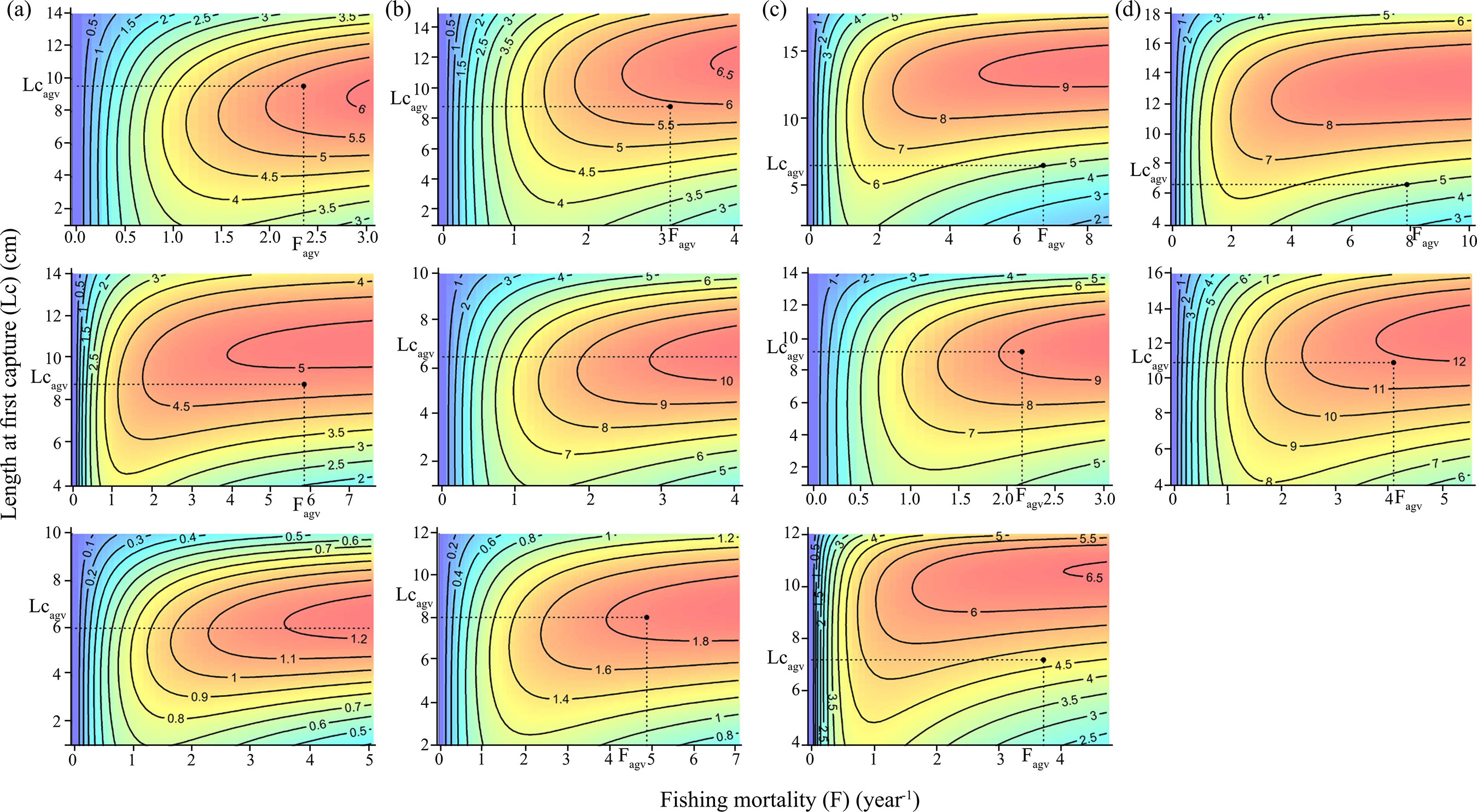
Understanding the impact of exploitation patterns on yields is crucial for ensuring the sustainability of fishing activities. However, data availability can hamper the assessment of how close resources are to optimal exploitation. We gathered simple life history parameters of shrimp stocks in Brazil using published data and applied a yield per recruit model to determine the optimal combinations of first catch length and fishing mortality for maximizing yields. We evaluated five marine shrimp species, Farfantepenaeus subtilis, F. brasiliensis, F. paulensis, Xiphopenaeus kroyeri, and Litopenaeus schmitti, distributed across four major Brazilian regions (North, Northeast, Southeast, and South). A clear pattern emerged: stocks in Northeast demonstrated high yields with appropriate first catch lengths and fishing mortality rates, with only some cases 12% below the optimum level. In contrast, the Southeast region presented more concerning situations. Its fisheries employed very small first catch lengths, capturing individuals at early life stages, below the length of first maturation, harming reproduction and stock replenishment. Combined with high fishing mortality rates, this resulted in yields 37% below the optimal, indicating signs of growth overfishing.
Keywords
Shrimp fishing; Yield per recruit; Stock assessment; Fisheries management; Marine shrimp
 Thumbnail