 Medical conduct on trial: one decade of proceedings in Minas Gerais
Abstract
This study analyzed 1,363 ethical proceedings involving physicians in Minas Gerais between 2012 and 2022. The majority were men with more than 20 years of experience, involved in proceedings related to professional liability in surgical areas. Acquittal occurred in 50.2% of cases, with public censure being the most frequent penalty. The need for continuous updates was identified: in documentation for young and experienced physicians, in advertising for mid-level general practitioners and in professional interaction among specialists. The complaints, according to the complainant, indicated the need for more precise enforcement strategies, such as reinforcement in public institutions and guidance on the importance of the physician-patient relationship. The severity of sanctions in cases related to human rights highlighted the ethical importance of this chapter of the Code of Medical Ethics. It was concluded that, for ethical regulation to be effective and consistent with professional reality, educational and enforcement interventions should be guided by the most vulnerable sanctioned professionals and the most prevalent violations.
Keywords:
Medical errors; Whistleblowing; Codes of ethic; Ethics, medical
Resumo
Este estudo analisou 1.363 processos éticos de médicos em Minas Gerais, ocorridos entre 2012 e 2022. Predominaram homens com mais de 20 anos de experiência, envolvidos em processos relacionados a responsabilidade profissional em áreas cirúrgicas. A absolvição ocorreu em 50,2% dos casos, com censura pública como penalidade mais frequente. Identificou-se a necessidade de atualizações contínuas: em documentação para médicos jovens e experientes, em publicidade para generalistas de faixa intermediária, em interação entre médicos especialistas. As denúncias, conforme o denunciante, indicaram a necessidade de estratégias fiscalizatórias mais precisas, como reforço em instituições públicas e orientação da importância da relação médico-paciente. A gravidade das sanções nos casos relativos a direitos humanos evidenciou a importância ética desse capítulo do Código de Ética Médica. Concluiu-se que, para que a regulação ética seja eficaz e aderente à realidade profissional, intervenções educativas e fiscalizatórias devem ser pautadas pelo profissional sancionado mais vulnerável e pelas infrações mais prevalentes.
Palavras-chave:
Erros médicos; Denúncia de irregularidades; Códigos de ética; Ética médica
Resumen
Este estudio analizó 1.363 procesos éticos de médicos en Minas Gerais, ocurridos entre 2012 y 2022. Predominaron los hombres con más de 20 años de experiencia, involucrados en procesos relacionados con la responsabilidad profesional en áreas quirúrgicas. La absolución se produjo en el 50,2% de los casos, la censura pública fue la sanción más frecuente. Se identificó la necesidad de actualizaciones continuas: en la documentación para médicos jóvenes y experimentados, en la publicidad para generalistas de nivel intermedio y en la interacción entre médicos especialistas. Según el denunciante, las denuncias indicaron la necesidad de estrategias de fiscalización más precisas, como el refuerzo en las instituciones públicas y la orientación acerca de la importancia de la relación médico-paciente. La gravedad de las sanciones en los casos relacionados con los derechos humanos puso de manifiesto la importancia ética de este capítulo del Código de Ética Médica. Se concluyó que, para que la regulación ética sea eficaz y se ajuste a la realidad profesional, las intervenciones educativas y de fiscalización deben basarse en el profesional sancionado más vulnerable y en las infracciones más frecuentes.
Palabras clave:
Errores médicos; Denuncia de irregularidades; Códigos de ética; Ética médica
The exponentially increased number of formal complaints against medical conduct registered in recent years has led to increasingly more ethical-professional proceedings, reviewed by the Regional Councils of Medicine (CRM), whose decisions reverberate, in many cases, in the Federal Council of Medicine (CFM), an appeal body that, in a survey in 2018, reported an alarmingly increased number of cases received, with a marked predominance of complaints from Southeastern Brazil. These data suggest the urgent need for deeper and more strategic reflection on the part of medical ethics councils, with a view to understanding their underlying causes and outlining solutions that transcend mere punitivism 1.
This originally multifaceted phenomenon is partly explained by the fact that physicians are mostly concentrated in Brazil’s southeast region, especially São Paulo, Rio de Janeiro and Minas Gerais, which by far lead the ranking of states with more health care providers. This fact is compounded by the indiscriminate opening of new medical schools and the growing migration of physicians to the large urban centers of the region, seeking better working conditions and quality of life. This geographic concentration contributes to the saturation of the medical market, in which, paradoxically, the high number of professionals does not necessarily translate into improved quality of the medical care provided 2.
According to in-depth studies, the deterioration of the physician-patient relationship is among the main causes of complaints registered with ethics councils. It should be noted that a more humanized bond – in which physicians deal sensitively with the frailties and anxieties of patients – could decisively mitigate the judicialization of medicine 3. The construction of an empathic relationship requires communicative skills that go beyond the technical domain: this process requires not only clinical dexterity, but the ability to listen and understand the humanity of the other, which proves a true art in daily medical practice 4.
Another crucial factor in this context is medical training, often centered on the pursuit of perfection and aversion to error. This educational model, although of laudable intentions, feeds a paradox: the inevitability of error, an aspect inherent in the human condition and, therefore, in medical practice, is often treated with silencing, as if it were an enemy to be eradicated, when, in fact, it should be understood as an opportunity for constant learning and improvement. The distancing from error, exacerbated by the culture of unattainable excellence, engenders not only individual suffering for professionals, but also impoverishment of medical practice as a whole, by denying them the possibility of using their own challenges to evolve 5,6.
Seeking to mitigate such mismatches there was the creation of professional ethics councils and, consequently, the Code of Medical Ethics (CEM), whose foundation is constituted by the bioethical principles of non-maleficence, beneficence, autonomy and justice 7. The CEM, with its normative framework, plays an essential role not only as a regulator of medical conduct but also as an ethical beacon for professional practice, so medical practice is guided by principles that ensure human dignity and well-being for patients 8.
However, it is intriguing to note that, despite the indisputable relevance of this normative apparatus and the growing number of lawsuits involving medicine, there is a significant lack of studies that meticulously and comprehensively address ethical proceedings, especially in the state of Minas Gerais, Brazil. Such gap in academic production on the characteristics and determinants of ethical-professional judgments is undoubtedly an invitation to reflection and urgent deepening in the dynamics that permeate the judged cases.
To this end, the present study carried out an innovative analysis of the ethical-professional judgments that occurred between 2012 and 2022 within the scope of the Regional Council of Medicine of Minas Gerais (CRM-MG), through the unprecedented cross-examination of sociodemographic, contextual-procedural and normative variables of the proceedings. This approach provides a multidimensional and integrated reading of the data, thus going beyond merely descriptive analyses and showings hidden patterns of ethical accountability, institutional vulnerabilities and gaps in professional regulation. The analysis seeks not only to quantitatively analyze the increase in complaints, but proposes a more refined and reasoned reading of the dynamics that influence the ethical behavior of physicians, from the perspective that disciplinary accountability is conditioned by structural, relational and formative factors. By integrating aspects of the profile of defendants, the nature of complainants and the context of infractions, the study provides solid inputs for more effective and situated preventive actions. The identification of relevant statistical associations between professional profiles, conducts, and institutional contexts is expected to support not only the improvement of the ethical training of health care providers, but also the promotion of a more responsible, humanized medical practice consistent with the essential vocation of medicine: to care for and protect life with dignity.
This study, by deepening the understanding of ethical-professional proceedings based on real data treated in an integrated manner, seeks to support the development of more effective and targeted training and inspection strategies, in addition to optimizing the operation of Regional Councils of Medicine. Thus, the goal is to strengthen the social trust and legitimacy of medicine as a field of technical excellence and ethical commitment.
Method
This is a cross-sectional, retrospective, descriptive and exploratory study with quantitative and qualitative data. The official data were provided by the CRM-MG board, after formal request, and extracted from the institution’s legal department database, after filtering and deleting sensitive information, in compliance with the General Data Protection Law (Law 13,709/2018) 9. No information that would allow the identification of individuals and legal entities was the object of the study.
To compose the data, 1,363 ethical-professional proceedings (EPP) were analyzed, involving 1,660 physicians. All completed medical proceedings for 2012–2022 were included. Proceedings whose data were not complete or that had not been completed by the end of 2022 were excluded.
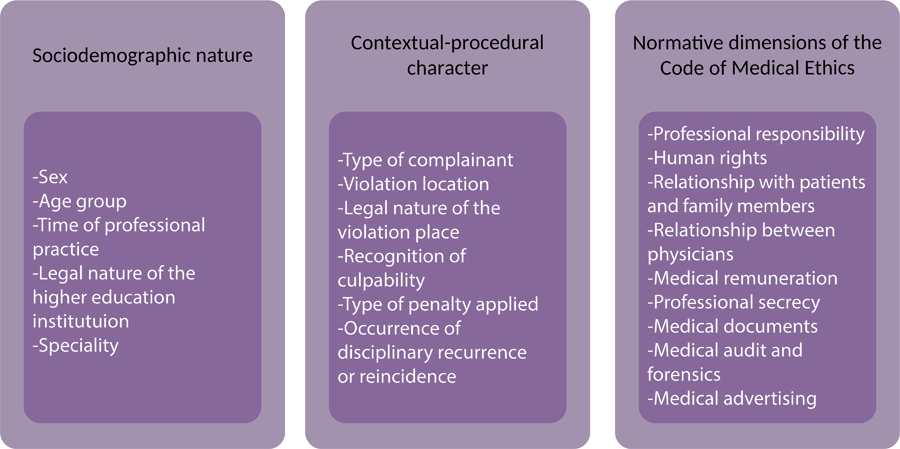
The physicians’ sociodemographic variables evaluated were: sex (female or male), age group (≤30 or 30-50 or >50 years), time of professional practice (≤10 or 10-20 or >20 years), legal nature of the higher education institution (private or public) and specialty (specialist or generalist). The contextual-procedural variables evaluated were: type of complainant (CRM-MG ex officio or patients and family members or physician or legal entity), location of occurrence (capital or nonmetropolitan area), legal nature of place of occurrence (private or public), recognition of culpability (yes or no), type of penalty applied (confidential warning [A] or confidential censure [B] or public censure [C] or suspension of professional practice for 30 days [D] or revocation [E]), occurrence of disciplinary recurrence or reincidence (yes or no) and appeal to CFM (yes or no and whether the penalty was maintained, mitigated or aggravated). The normative variables evaluated were: professional responsibility, human rights, relationship with patients and family members, relationship between physicians, professional remuneration, professional secrecy, medical documents, medical advertising, and medical audit and forensics.
The behavior of the variables was analyzed using descriptive measures. In the case of qualitative variables, we determined absolute and relative frequencies (expressed as a percentage). For quantitative variables, we used the simple arithmetic mean as a measure of central tendency.
Subsequently, we conducted a detailed and comprehensive analysis of associations between sociodemographic, contextual-procedural and normative variables in order to identify possible substantial statistical correlations. Then, these variables were cross-examined with the occurrence of culpability to determine whether sociodemographic and procedural characteristics influenced the probability of a physician being considered guilty. In a subsequent step, the same variables were analyzed in relation to penalty dosimetry, in order to assess whether sociodemographic and contextual-procedural factors influenced the severity of the sanctions applied. Finally, infraction recurrence or reincidence was analyzed to understand whether specific sociodemographic and procedural profiles were associated with a higher tendency to repeat ethical transgressions, in order to obtain a holistic and in-depth view of the dynamics of infractions in the context of medical practice (Figure 1).
The association between the variables was evaluated using the chi-square test of independence, with a significance level of 5%, in order to ensure the statistical robustness of the results.
Ethical aspects
The thesis project from which this article was extracted was submitted to rigorous analysis by the Ethics Committee of the University of Porto, which issued a favorable opinion on June 29, 2023.
Results
Of the 1,660 physicians submitted to judgement, 21% were women and 79% were men, with a mean age of 46.7 years, ranging from 24 to 79 years. Most complaints involved physicians aged 30 to 50 years (49.9%), followed by 40.2% aged over 50 years, and 9.8% aged under 30 years. In terms of experience, the average time of training was 20.1 years. The complaints were mostly associated with physicians with more than 20 years of training (48.5%), followed by those with less than 10 years (28.4%) and between 10 and 20 years (23.1%) (data not shown).
There was a prevalence of physicians without registered specialty (32.3%), followed by gynecologists/obstetricians (9.1%), occupational physicians (7.6%), general surgeons (6.8%), pediatricians (4.3%) and clinicians (4.2%). A total of 52.2% graduated from public institutions (data not shown).
The complaints were mostly initiated ex officio (53.4%), followed by complaints from patients and family members (31.8%), physicians (12%) and legal entities (2.7%). Most infractions occurred in the nonmetropolitan area of Minas Gerais (75.9%), and public institutions (53.3%) were responsible for more complaints than private ones (46.6%) (data not shown).
The infractions involved the following chapters of the CME: professional responsibility (42.5%), medical documents (14.1%), relationship with patients and family members (13.6%), medical advertising (11%), professional remuneration (7.2%), human rights (4.9%), relationship between physicians (3.6%), medical education and research (1.6%), medical audit and forensics (0.8%) and professional secrecy (0.7%) (data not shown).
With regard to penalties, 50.2% of the cases resulted in acquittal, and the sanctions imposed, in the penalized cases, were, in descending order, item C (public censure), with 15.6%, followed by items A (confidential warning), with 15.1%, B (confidential censure), with 14.8%, D (suspension of professional practice for 30 days), with 2.3%, and E (revocation), with 0.8% (data not shown).
In CFM appeals, there was a predominance of “no appeal requests,” with 72.8%, over “appeal requests,” with 25.5%. However, in cases where appeal was effectively filed, the tendency was for the penalties to be maintained (58.4%), followed by their reduction (38.4%) and, to a lesser extent, by their aggravation (2.8%). As for reincidence, it was observed that 90.4% of physicians were sued only once (data not shown).
There was association between age group and infractions of the chapters referring to medical documents (p=0.019) and medical advertising (p=0.011). Regarding the legal nature of the higher education institution (public or private), we observed significant associations with the chapters on human rights (p=0.008), physician-patient relationship (p=0.009), relationship between physicians (p=0.031) and medical advertising (p=0.007). As for being a specialist or generalist, there was association between this variable and the chapters on relationship between physicians (p=0.045) and medical advertising (p<0.001) (Table 1).
Association between sociodemographic and contextual-procedural variables and the chapters of the Code of Medical Ethics
There was association between the type of complainant and the chapters on professional responsibility (p=0.001), human rights (p<0.001), physician-patient relationship (p=0.001), relationship between physicians (p<0.001), professional remuneration (p=0.006), medical documents (p<0.001) and medical advertising (p=0.019). Regarding the variable “violation location” (capital or nonmetropolitan area), there was association with the chapter referring to medical advertising (p<0.001). As for the legal nature of the violation place (public or private), there was association with the chapters on professional responsibility (p <0.001), physician-patient relationship (p<0.001), relationship between physicians (p=0.045), professional remuneration (p=0.019), professional secrecy (p=0.011), medical documents (p =0.048) and medical advertising (p<0.001). Regarding penalty dosimetry, we found association with the chapters on professional responsibility (p<0.001), human rights (p<0.001), in addition to interactions between physician and patient (p <0.001) and between physicians (p=0.002) (Table 1).
The relation between the sociodemographic and contextual-procedural variables and the culpability and penalty variables was analyzed and an association was observed only between specialty and culpability (p<0.001) and between specialty and penalties (p=0.025) (data not shown).
Subsequently, we analyzed the association between sociodemographic and contextual-procedural variables and reincidence/recurrence and found association between reincidence/recurrence and the variables sex (p=0.011), age group (p=0.008) and time of professional practice (p<0.001) (data not shown).
Discussion
Of the 1,660 physicians judged, 79% were men, with a mean age of 46.7 years and 20.1 years of experience. The most common infractions were those related to the CME chapters on professional responsibility (42.5%) and medical documents (14.1%). Most complaints came from the nonmetropolitan area of Minas Gerais (75.9%) and were initiated ex officio (53.4%). Acquittal occurred in 50.2% of cases, and public censure was the most frequent penalty. There were statistical associations between age group, legal nature of the higher education institution, specialty, type of complainant, location and legal nature of the violation place and penalties with different ethical infractions. There were also associations between culpability and specialty, between penalties and specialty and, finally, between reincidence/recurrence and sex, age group and time of professional practice.
The demographic characteristics of physicians submitted to trial, of male prevalence, coincided with the observations of previous studies 1,10-24. The professionals’ age group, from 24 to 79 years, with the highest concentration between 30 and 50 years, followed the trend found in other studies 10-12,17,19,22,23. The accumulated experience, with more than 20 years of training, was also in line with the results of previous studies 1,16,19,24.
Although the analysis of the profile of professionals submitted to ethical-professional proceedings shows male predominance in complaints, this phenomenon should not be interpreted in a simplistic or hasty manner. The disproportion between the sexes may reflect a number of complex factors, such as the historical and structural characteristics of the medical profession 2 and the power dynamics in the professional field. However, as this study covered only one decade, it is premature to draw definitive conclusions about the causes of the imbalance. Further research, especially in subsequent periods, could shed more light on the issue and provide a more comprehensive reflection on the impact of sociocultural and institutional factors on the profile of the physicians reported.
The most prevalent age group and time of training could be explained by the fact that the age and the experience accumulated over the years of medical practice would give the professional a solid conviction of mastery over procedures and techniques, as well as a relative feeling of impunity, resulting from social prestige, financial success and popularity, both in the professional sphere and outside the medical community 5.
The marked presence of specialization among the reported physicians was confirmed by other studies on the subject 12,14,16,19,20,25,26. The higher frequency of proceedings against physicians in certain surgical specialties, such as gynecology/obstetrics and general surgery, was also widely recognized in previous studies 1,11,12,14,16,17,19,20,23,26,27. The fact that the surgical areas are among the most reported could reflect the greater complexity of the procedures, which end up immersed in a context of high risk of failures and complications 28.
The predominance of reported physicians trained in public institutions was also found in previous studies 11,19. It should be noted that, regardless of the training institution, what could be stated is that Brazilian education faces a generalized crisis of low wages, lack of high-quality faculty, lack of facilities and deficiency in infrastructures, among others 11. A possible solution would be the implementation of public policies aimed at increasing investment in the educational sector in order to ensure an adequate setting for the students’ academic learning and development.
The significant proportion of ex officio complaints, a result similar to that found in the literature 17,19,20,25, suggested that the pedagogical and supervisory role played by the professional ethics councils was essential to ensure compliance with the rules and preserve the integrity of professional practices, due to the proactivity in tracing irregularities, which reinforced transparency and responsibility in the practice of regulated activities.
The predominance of occurrences in nonmetropolitan areas of the state and in public health care institutions indicated a specific dynamics of these entities, which would deserve further analysis in subsequent studies in order to understand their particularities and implications.
The chapter on professional responsibility ranked predominantly among litigations, a fact observed in previous studies 19,23. This chapter is of particular gravity due to the direct consequences that infractions such as negligence, malpractice and mispractice can have on patient health and well-being, with irreversible damage to their care 11 and also damage to trust in the profession.
The chapter on medical documents, which ranked second, showed that inadequate or lacking records in the medical record can pose ethical conflicts and endanger patient safety. The maintenance of properly completed medical records is crucial to ensure the accuracy of information, prevent errors in diagnosis and treatment, and ensure continuity of care efficiently 29.
Litigation related to the chapter on relationship with patients and family members, which ranked third, showed that poor communication or unsatisfactory relationship with patients and their families are crucial elements in the configuration of ethical issues 14, which suggests the need for professional practices that integrate technical rigor, clarity in documentation and sensitivity in human interactions to mitigate ethical risks.
The prevalence—slightly over 50%—of proceedings that culminated in acquittal (50.2%) could be attributed to insufficient evidence, in line with the legal principle in dubio pro reo, which ensures acquittal in the face of doubt about the defendant’s guilt 22. The principle is essential to protect fundamental rights by ensuring that no one is convicted without due proof of guilt and reflects the commitment to procedural justice, in balance between seeking the truth and protecting the presumption of innocence.
The penalties applied, for the most part, in paragraph C seem to relate to the seriousness and public repercussion of the facts, which often determine more severe penalties.
The prevalence of the maintenance of penalties in the appeals filed, a finding similar to that found in another study 16, suggests that the rigor in the validation of regional deliberations by the CFM has become a preponderant criterion in the orientation of punitive decisions. Moreover, the CFM has been central in the homogenization and strengthening of ethical standards in order to ensure the coherence and consistency of sanctions throughout the national territory.
The fact that most physicians were prosecuted only once throughout the analyzed period could be attributed to the effectiveness of the sanctions applied, which, fulfilling their pedagogical function, ended up being established as dissuasive mechanisms. The effectiveness of the penalties seemed to have contributed to the prevention of recurrences of inappropriate ethical conduct, which is a positive effect on the transformation of professional behavior.
Initially, the analysis was based on individual analytical data, without searching for associations between the variables, which provided a preliminary understanding of the information in isolation. This first survey showed the general characteristics of the reported physicians and of the ethical-professional proceedings, without deepening the interrelations between the various factors involved. Now, we will move on to a more complex and refined stage of the study, in which we sought to explore the statistical associations between the variables. It enabled us to identify patterns and interactions that, when carefully interpreted, provided a more robust and elucidative view of the factors that governed the ethical-professional proceedings.
It was possible to observe the relation between the CME chapters and sociodemographic and contextual-procedural data. Initially, it was found that younger physicians (aged under 30 years) and older physicians (aged over 50 years) committed a significant number of infractions in the chapter related to medical documents, a phenomenon that can be attributed to the inexperience of the former and the resistance of the latter to the new ethical requirements. In turn, physicians aged between 30 and 50 years had a higher incidence of infractions in the chapter on medical advertising, which can be understood considering the competitive, demanding and dynamic context that marks the apex of their careers, in which the use of advertising strategies—many of which ethically questionable—arises as an attempt to attract clients.
There was also a lower prevalence of infractions in the chapters on medical advertising and physician-patient relation among physicians trained in public institutions, a phenomenon that can be attributed to the focus of these institutions on universal care and the promotion of equity, which would provide an environment where advertising and self-promotion practices would be less prevalent. In turn, among professionals trained in private institutions, there was a lower incidence of violations related to human rights and interaction between physicians, which could plausibly be associated to the rigorous requirement of these institutions as to compliance with high ethical and interpersonal conduct standards.
In addition, the higher incidence of infractions related to medical advertising among general practitioners, as opposed to the higher number of transgressions related to the relationship between physicians among specialists, would reflect the different dynamics faced by each group. While general practitioners often found themselves more invested in attracting patients in a highly competitive work market, specialists, when dealing with the intrinsic and specific issues of their respective areas of practice, faced considerably more complex challenges, especially as to professional interaction.
A correlation was observed between the types of complainants and the most frequently reported chapters. The regulatory and supervisory role of CRM-MG featured prominently, reflecting the areas of highest incidence in complaints, predominantly associated with issues such as professional responsibility, remuneration, documentation and medical advertising. The complaints filed showed the guiding function of the organization, whose role—beyond punishing—was to educate and preserve ethical standards.
The complaints from patients and family members showed a primary concern with the nature of the physician-patient relationship, which underscores the importance of an interaction founded on the highest ethical principles, such as dignity, respect for autonomy and beneficence.
Another chapter that led to a significant increase in complaints filed by patients and family members was related to medical documentation. The importance of producing accurate and complete records goes beyond bureaucratic requirements: such records—fundamental for continued treatment and safe care—directly reflect the physician’s responsibility towards patients.
As for complaints filed by the physicians, there was a particular emphasis on issues related to human rights, interaction between physicians and medical advertising, which suggests internal surveillance for preservation of professional ethics and prevention of unethical practices within the professional field. Finally, complaints from legal entities, with a clear focus on medical advertising, would reinforce the pursuit of more transparent and ethical behavior by health care institutions. This set of complaints showed the complexity and interconnection of the ethical sphere, with different actors involved in the surveillance of medical practices, each with their own perspectives on the principles that should guide medical practice.
The infractions committed in the capital—predominantly associated with medical advertising—seem to have been strongly influenced by the intensified competition in this urban context, where the search for visibility and attractiveness by professionals and institutions could lead to the adoption of riskier practices, often inconsistently with the ethical principles that govern the profession.
Comparatively to public health care institutions, private health care institutions had a lower prevalence of infractions in the chapters on professional responsibility, physician-patient relationship and medical documentation, which could be understood by taking into consideration the more structured organizational context, with internal compliance policies that prioritize strict compliance with ethical regulations.
In turn, public health care institutions had a lower prevalence of infractions in the chapters related to the relationship between physicians, professional remuneration, medical secrecy and medical advertising, which could be explained by the public nature of their funding and the focus on universality and equality in health care. In this configuration, the regulated and supervised management model would provide an environment in which ethical and conduct standards would be more clearly established and supervised.
More severe infractions, especially those related to human rights violations, resulted in a substantial probability of application of paragraph E, reflecting the seriousness of the transgressions, which not only involved ethical infractions, but also transgressed rights that are essential to human dignity. Violations in the chapters on professional responsibility and physician-patient relationship also resulted in more severe penalties, notably those of a public nature, with the exception of revocation, which presented a considerably reduced occurrence. This reduced occurrence suggests that, despite the seriousness of the infractions in these chapters, the application of a measure as extreme as revocation is seen as disproportionate, being more often avoided when there are mitigating factors, such as the specific context of the infraction. In the chapter on relationship between physicians, the tendency to impose severe penalties indicated the seriousness with which the medical field treated infractions in this domain and showed the importance of preserving ethics in professional relations, being indispensable for proper functioning of the health care system and for preserving the integrity of the profession.
Directing the analysis to new variables that proved relevant for understanding the ethical-professional proceedings was of paramount importance; these new variables included “culpability and specialty,” “penalties and specialties,” as well as “reincidence, associated with sociodemographic and procedural variables.” Such dimensions were fundamental for deepening the study, as they enabled us to observe the factors that intrinsically influenced the ethical infractions and their consequences and, thus, showed specific behaviors within the field of medical practice.
The association between culpability and specialty showed that general practitioners were more likely to be judged guilty, which indicates particular vulnerability of the category. This finding underlines the relevance of targeted continuing education programs promoted by CRM-MG, seeking not only technical-scientific update, but also improvement of the ethical training of these professionals.
The dosimetry of penalties applied to physicians, whether specialists or generalists, did not show substantial regularity. The variation hindered the tracing of a uniform trend in the application of penalties and suggests that the regulatory body’s decision-making processes were subject to multiple contextual and case-specific factors. The lack of a clear pattern in the penalties applied reflected the complexity of the ethical field, in which infractions were analyzed individually, considering the circumstances of the medical practice and the severity of the transgression. This finding is consistent with the specialized literature, which indicated the lack of a consolidated trend in the penalties applied according to the professional’s specialty 19.
Men aged over 50 years and with longer time of practice (results similar to those found in the specialized literature) 19—hence already immersed in their usual practices—were more recurrent offenders, which shows the need for continuous reflection on professional ethics. This situation demonstrates the urgency of implementing strategies geared toward these professionals, focusing not only on technical improvement, but also on promoting an ethical renewal that can remain consistent with the changes in social and professional requirements.
This study had certain limitations that should be taken into account when interpreting its results. First, the scarcity of up-to-date bibliographic sources on the judgment of ethical-professional proceedings involving Brazilian physicians posed a challenge as to contextualization of findings and comparison with previous studies. In addition, changes in the CME over the years (1988, 2009, 2018) may have influenced the criteria and the conduct of the judgments, which makes longitudinally analyzing the proceedings difficult.
Final considerations
This study accomplished the proposed objective of carrying out an unprecedented, in-depth and multidimensional analysis of the ethical-professional proceedings judged by CRM-MG over a decade. Integrating sociodemographic, contextual-procedural and normative variables enabled the study to transcend a merely descriptive approach and outline, with greater interpretative robustness, the profiles, trends and patterns of disciplinary accountability in the context of contemporary Brazilian medicine.
The analysis showed that professionals judged were mostly male, with a 46.7 years average age and a long background in medicine—which, far from translating into higher ethical maturity, was associated with recurrence, indicating that accumulated experience by itself is not a protective factor for ethical conduct. On the contrary, seniority can—in some cases—reinforce professional comfort zones that hinder adherence to the ethical-normative transformations in medical practice. This finding indicates that Medical Councils should formulate continuous training strategies that include not only young physicians, but also professionals at the end of their careers, in order to promote ethical renewal throughout the professional cycle.
According to the data, general practitioners exhibited higher probability of being found guilty and receiving more severe ethical sanctions than specialists. This vulnerability, also found in previous studies, exposes the structural and formative weaknesses of general practice in Brazil, marked by fewer resources, greater care burden and less social and institutional appreciation. Ethical accountability, in this context, seems to reflect not only individual behaviors but also systemic inequalities. Principialist bioethics—here—requires the consideration of the principles of justice and non-maleficence in the formulation of public policies that strengthen the institutional training and support for generalists.
In addition, there was a strong relation between the types of infraction and the contextual characteristics of the place of medical practice. The higher frequency of complaints in the nonmetropolitan area of Minas Gerais, especially in public institutions, indicated a field of vulnerability that requires specific attention. In these locations, the scarcity of resources, the overload of professionals and the lack of clear health care protocols can contribute to the occurrence of technical and ethical failures. Disciplinary accountability detached from structural analysis implies the risk of reinforcing inequalities rather than correcting them. Therefore, ethical justice requires that judgments consider not only the act but the context of its occurrence.
The analysis of the most frequently infringed CME chapters showed the centrality of issues related to professional responsibility, medical documents and relationship with patients and family members. Data showed that, even after decades of ethical standardization, the most frequent infractions are still associated with faulty communication, negligence in documentation and break in physician-patient trust. This finding reaffirms the importance of ethical training as a longitudinal, continuous process integrated into daily practice—and not as a static content of the formal curriculum.
Moreover, the results showed that most complaints were filed ex officio by the Medical Councils, which reaffirms their regulatory and educational role in the field of professional ethics. This finding shows the importance of institutional ethical surveillance as an instrument not only for sanction, but for promotion of quality and integrity in medical practice. However, the high rate of acquittals (50.2%) demands interpretive attention: it may legitimately reflect the insufficiency of conclusive evidence, in line with the legal principle of in dubio pro reo, which ensures the prevalence of the presumption of innocence in the face of uncertainty.
The statistically significant associations between variables such as sex, age, time of practice, specialty, type of complainant and violation location with infringed chapters, culpability and reincidence showed that disciplinary accountability in Brazil does not occur randomly, but follows patterns that, although not deterministic, are statistically consistent. When interpreted from a bioethical and institutional perspective, these patterns indicate the urgency of more situated and equitable policies for inspection, continuing education and professional support.
In summary, this study contributes toward advancing the understanding of ethical-professional proceedings in Brazil as it provides empirical evidence to support fairer, more preventive and educational practices. By focusing on factors that favor disciplinary accountability and those that make it less likely, the study provides the Councils of Medicine with technical and ethical support to enhance their operation, strengthen society’s trust in medicine and reaffirm the medical professional’s commitment to dignified, prudent, competent and ethical ethical care. It is by articulating data and principles, standards and reality, that is built an ethical-disciplinary system that is fairer and more coherent and committed to health as a fundamental right.
In this context, it is advocated a propositional ethics, which transcends the normative framework and punitive logic, guided by an institutional culture of listening, responsibility and co-responsibility. The point is cultivating a reflective ethics that leads the professionals to the permanent review of the meaning of their practice, to the sensitive reading of the vulnerability of others and to the commitment to human dignity. Founded on the principles of beneficence, justice, autonomy and non-maleficence, this ethics must be fostered in training spaces, reaffirmed in institutional practices and supported by regulatory bodies, as part of a collective endeavor toward rebuilding the pact of trust between medicine and society. The ethical enhancement of medical practice will not be achieved only through normative reforms, but by building a shared moral culture that recognizes vulnerability as a constitutive trait of human existence and integrity as an indispensable vocation of professional practice.
References
-
1 Gracindo GCL. Princípios bioéticos na prática médica no Brasil: construindo um perfil do profissional da medicina a partir dos processos ético-disciplinares julgados (período 2010-2016), com base no atual Código de Ética Médica [tese] [Internet]. Porto: Universidade do Porto; 2018 [acesso 10 set 2024]. Disponível: https://bit.ly/3IP1s7Y
» https://bit.ly/3IP1s7Y -
2 Scheffer M, Cassenote A, Guerra A, Guilloux AGA, Brandão APD, Miotto BA et al. Demografia médica no Brasil 2018 [Internet]. São Paulo: FMUSP; 2018 [acesso 10 set 2024]. Disponível: https://bit.ly/46HJCgh
» https://bit.ly/46HJCgh -
3 Santos MFO, Souza HHA, Fernandes MGM. Perfil dos médicos envolvidos em processos éticos-profissionais: Paraíba 1999 a 2009. Rev. bioét. (Impr.) [Internet]. 2011 [acesso 10 set 2024];19(3):787-97. Disponível: https://bit.ly/47eYrHf
» https://bit.ly/47eYrHf -
4 Almeida T, Pimentel D. Julgamento ético do médico em Sergipe, Brasil. Rev. bioét. (Impr.) [Internet]. 2016 [acesso 10 set 2024];24(1):128-35. DOI: 10.1590/1983-80422016241114
» https://doi.org/10.1590/1983-80422016241114 - 5 Gomes JC, Drumond JGF, França GV. Erro médico. 4ª ed. Rio de Janeiro: Guanabara Koogan; 2002.
-
6 D'Acampora AJ, Corrêa G. Erro médico, uma abordagem. Acta Cir Bras [Internet]. 1996 [acesso 10 set 2024];11(1):42-6. Disponível: https://bit.ly/47fzyv8
» https://bit.ly/47fzyv8 - 7 Alexy R. Teoria dos direitos fundamentais. 2ª ed. São Paulo: Malheiros; 2017.
-
8 Silva JAC, Brito MVH, Oliveira AJB, Brito NB, Gonçalves RS, Fonseca SNS. Sindicâncias e processos ético-profissionais no Conselho Regional de Medicina do Pará: evolução processual no período de 2005 a 2007. Rev Bras Clín Méd [Internet]. 2010 [acesso 10 set 2024];8(1):20-4. Disponível: https://bit.ly/3KElq5U
» https://bit.ly/3KElq5U -
9 Brasil. Lei nº 13.709, de 14 de agosto de 2018. Lei Geral de Proteção de Dados Pessoais (LGPD). Diário Oficial da União [Internet]. Brasília, 15 ago 2018 [acesso 10 set 2024]. Disponível: https://bit.ly/48hArV1
» https://bit.ly/48hArV1 -
10 Taragin MI, Wilczek AP, Karns ME, Trout R, Carson JL. Physician demographics and the risk of malpractice. Am J Med [Internet]. 1992 [acesso 10 set 2024];93(11):537-42. DOI: 10.1016/0002-9343(92)90582-v
» https://doi.org/10.1016/0002-9343(92)90582-v -
11 Falcão MSSA. A ética médica e suas infrações: um estudo sobre os processos ético-profissionais do estado do Rio de Janeiro [dissertação] [Internet]. Rio de Janeiro: Fiocruz; 1993 [acesso 10 set 2024]. Disponível: https://bit.ly/4h4JN95
» https://bit.ly/4h4JN95 -
12 D'Avila RL. O comportamento ético-profissional dos médicos de Santa Catarina: uma análise dos processos disciplinares no período de 1958 a 1996 [dissertação] [Internet]. Florianópolis: UFSC; 1998 [acesso 10 set 2024]. Disponível: https://bit.ly/4mRdR9f
» https://bit.ly/4mRdR9f -
13 Boyaciyan K. O perfil e as infrações ético-profissionais dos médicos denunciados que exercem ginecologia e obstetrícia no estado de São Paulo [tese] [Internet]. São Paulo: Unifesp; 2005 [acesso 10 set 2024]. Disponível: https://bit.ly/46ZIUK4
» https://bit.ly/46ZIUK4 -
14 Bittencourt AGV, Neves NMB, Neves FBCS, Brasil ISPDS, Santos LSC. Análise do erro médico em processos ético-profissionais: implicações na educação médica. Rev Bras Educ Méd [Internet]. 2007 [acesso 10 set 2024];31(2):223-8. DOI: 10.1590/S0100-55022007000300004
» https://doi.org/10.1590/S0100-55022007000300004 -
15 Gomes A. Análise comparativa entre o perfil do médico denunciado por infrações ético-profissionais no Conselho Regional de Medicina do Estado de São Paulo e o ensino médico [tese] [Internet]. São Paulo: USP; 2010 [acesso 10 set 2024]. Disponível: https://bit.ly/4o49cSm
» https://bit.ly/4o49cSm - 16 Santos MF. Análise dos processos éticos decorrentes de erros médicos na Paraíba de 1999 a 2009 [dissertação]. Recife: UPE; 2011.
-
17 Pereira Filho A. Análise das vulnerabilidades como facilitadoras da ocorrência de erros médicos no estado de São Paulo (2000-2009) julgados pelo Conselho Regional de Medicina [dissertação] [Internet]. São Paulo: Centro Universitário São Camilo; 2012 [acesso 10 set 2024]. Disponível: https://bit.ly/4mRD5EF
» https://bit.ly/4mRD5EF -
18 Constantino CF. Reflexão bioética e deontológica relacionada às denúncias e processos ético-profissionais envolvendo médicos que exercem pediatria no estado de São Paulo, Brasil [tese] [Internet]. Porto: Universidade do Porto; 2013 [acesso 10 set 2024]. Disponível: https://bit.ly/42ZTwaI
» https://bit.ly/42ZTwaI -
19 Dias TMF. Perfil dos médicos julgados em processos ético-profissionais em Santa Catarina [monografia] [Internet]. Palhoça: Universidade do Sul de Santa Catarina; 2017 [acesso 10 set 2024]. Disponível: https://bit.ly/48QVZIb
» https://bit.ly/48QVZIb -
20 Ribeiro DTA. Estudo bioético das denúncias contra médicos no Conselho Regional de Medicina do estado do Acre - Brasil [tese] [Internet]. Porto: Universidade do Porto; 2017 [acesso 10 set 2024]. Disponível: https://bit.ly/4pXk32t
» https://bit.ly/4pXk32t -
21 Araújo AOV, Araújo DD, Nogueira AHAS, Costa AKF, Andrada CP, Filgueira FSS et al. Julgamento ético no Rio Grande do Norte entre 2000 e 2015. Rev. bioét. (Impr.) [Internet]. 2019 [acesso 10 set 2024];27 (4):739-46. DOI: 10.1590/1983-80422019274357
» https://doi.org/10.1590/1983-80422019274357 -
22 Mariani PC. A bioética na medicina de fim ou de meio na cirurgia plástica [tese] [Internet]. Porto: Universidade do Porto; 2021 [acesso 10 set 2024]. Disponível: https://bit.ly/46KG3WA
» https://bit.ly/46KG3WA -
23 Gonçalves ELN, Lima e Silva FDAC, Rego G. Performance of the professional councils concerning 966 complaints addressed to regional councils of medicine (CRM) of Minas Gerais, from 2012 to 2017. Acta Bioeth [Internet]. 2022 [acesso 10 set 2024];28(2):249-55. Disponível: https://bit.ly/48rtFMB
» https://bit.ly/48rtFMB -
24 Teixeira LM, Santos Junior LA, Franco RS. Perfil de denúncias éticas contra médicos em um estado brasileiro, de 2001 a 2016. Rev Iberoam Bioética [Internet]. 2022 [acesso 10 set 2024];19:1-14. DOI: 10.14422/rib.i19.y2022.008
» https://doi.org/10.14422/rib.i19.y2022.008 -
25 Marques Filho J. A pena máxima: cassação do exercício profissional médico: análise, sob o olhar da bioética, dos processos de cassação do Conselho Regional de Medicina do Estado de São Paulo [dissertação] [Internet]. São Paulo: Centro Universitário São Camilo; 2006 [acesso 10 set 2024]. Disponível: https://bit.ly/4hc2APF
» https://bit.ly/4hc2APF - 26 Braga ADSG. Perfil da denúncia contra médicos no Conselho Regional de Medicina do estado do Piauí [dissertação]. Teresina: UFPI; 2008.
-
27 Silva JAC, Brito MVH, Brito NB, Gonçalves RS, Fonseca SNS, Oliveira AJB. Natureza e especialidades envolvidas nas denúncias sobre erros médicos que originaram processos ético-profissionais no Conselho Regional de Medicina do Estado do Pará. Ciênc Biol Saúde [Internet]. 2010 [acesso 10 set 2024];12(2):27-30. Disponível: https://bit.ly/48Er8if
» https://bit.ly/48Er8if -
28 Weingart SN, Wilson RM, Gibberd RW, Harrison B. Epidemiology of medical error. BMJ [Internet]. 2000 [acesso 10 set 2024];320(7237):774-7. Disponível: https://bit.ly/46IBtZ2
» https://bit.ly/46IBtZ2 -
29 Garritano CRO, Junqueira FH, Lorosa EFS, Fujimoto MS, Martins WHA. Avaliação do prontuário médico de um hospital universitário. Rev Bras Educ Med [Internet]. 2020 [acesso 10 set 2024];44(1):e009. DOI: 10.1590/1981-5271v44.1-20190123
» https://doi.org/10.1590/1981-5271v44.1-20190123
-
Approval CEP-FMUP 111/CEFMUP/2023
-
Data availability:
All data used or generated in this study are described and presented in full in the body of the article.
Edited by
-
Editor in charge:
Dilza Teresinha Ambrós Ribeiro
All data used or generated in this study are described and presented in full in the body of the article.