 Accuracy of implants placed with CAD-CAM surgical templates using metal or peek sleeve: an in vitro analysis
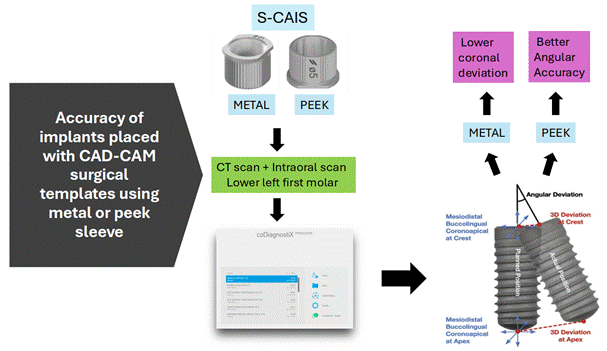
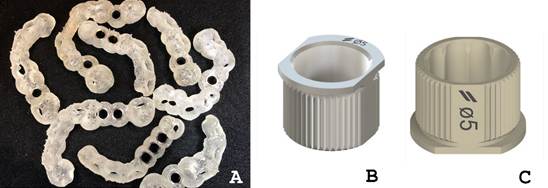
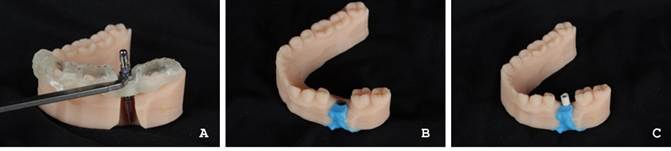
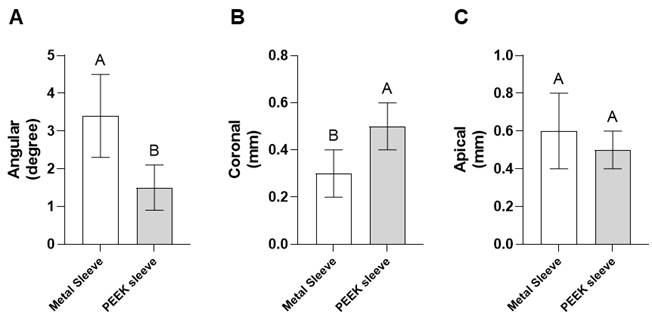
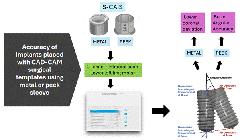
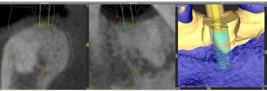
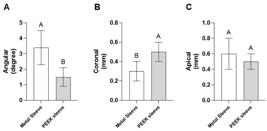
The sleeve material in printed surgical guides directly influences the accuracy of guided implant surgery, yet its impact on the 3D position of implants remains unclear. This study evaluated the effect of metal and PEEK (Polyether ether ketone) sleeves on implant accuracy compared to planned virtual positioning. Using CT scans and virtual planning software (coDiagnostiX), a STRAUMANN® RC BLT 4.1 x 10 mm implant was planned in the element 36 region of a partially edentulous patient (Ethical approval #5.879.848). Twenty surgical guides of hemi-arch were printed (10 with metal sleeves, 10 with PEEK sleeves) and tested using a master model. Implants were inserted through static guides, and the positional deviations were analyzed by comparing planned versus inserted implants using angular, coronal, and apical metrics. Statistical analysis showed significantly lower angular deviation in the PEEK sleeve group (57.2% lower than metal sleeves, p < 0.001), indicating greater precision. However, coronal deviation was significantly higher in the PEEK group (66.3% higher than metal sleeves, p = 0.006). No significant differences were found in apical deviation (p = 0.186). These findings suggest that the choice of sleeve material significantly impacts guided surgery accuracy, with PEEK sleeves offering superior angular precision but higher coronal deviation compared to metal sleeves.
Key Words:
Sleeves; guided implant surgery; accuracy
 Thumbnail
 Thumbnail
 Thumbnail
 Thumbnail
 Thumbnail