
 Comparative analysis between the XGBoost and Prophet models for the prediction of the ROTI ionospheric index: a case study in the Equatorial Ionization Anomaly region
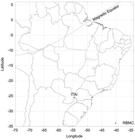
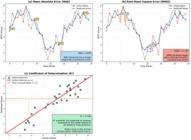
Predicting ionospheric irregularities poses a significant challenge for applications that rely on real-time positioning accuracy using the GNSS. This work presents a comparative analysis between the Prophet and XGBoost models in the prediction of the ROTI index, using time series collected by the ITAI RBMC station, located in Foz do Iguaçu/PR, during the year 2024 (peak of solar cycle 25). This study contributes to the literature by providing a direct comparison between an additive statistical model and a gradient boosting algorithm for ROTI prediction in the Equatorial Ionization Anomaly region during solar maximum conditions. Both models were subjected to the same database and predictor variables. Training and validation were conducted through cross-validation specific to time series, utilizing the chronological division of the data and evaluating performance based on the RMSE, MAE, and R² metrics. The results obtained demonstrated that XGBoost outperformed Prophet in all analyzed metrics, indicating a greater capacity for adjustment and generalization. Statistical analysis of the residuals, including normality testing and non-parametric hypothesis tests, confirmed the robustness and consistency of the XGBoost predictions. However, we noted that the operational test window covered only 72 hours (1-3 October 2024), which constrained the generalizability of these results.
Keywords:
Ionosphere; XGBoost; Prophet; Prediction; Time Series
 Thumbnail
 Thumbnail
 Thumbnail
 Thumbnail
 Thumbnail
 Thumbnail
 Source: Own authorship.
 Source: Own authorship.
 Source:
  Source:
 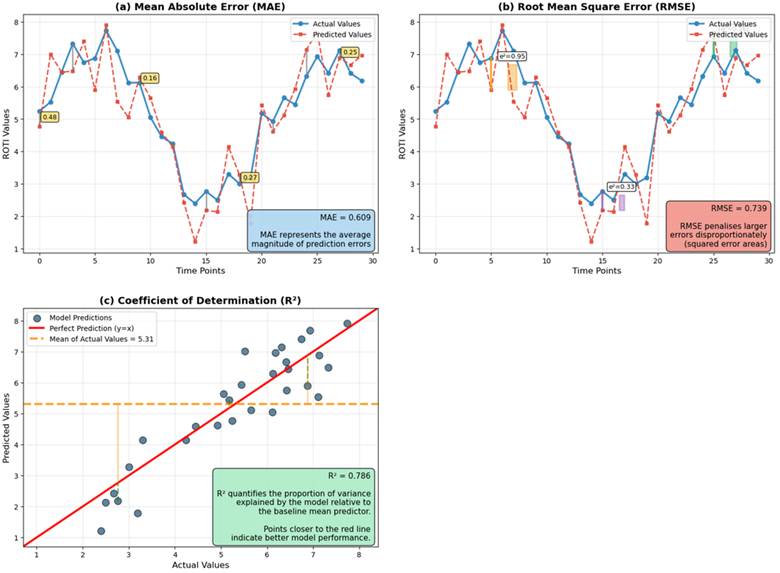 Source: Own authorship.
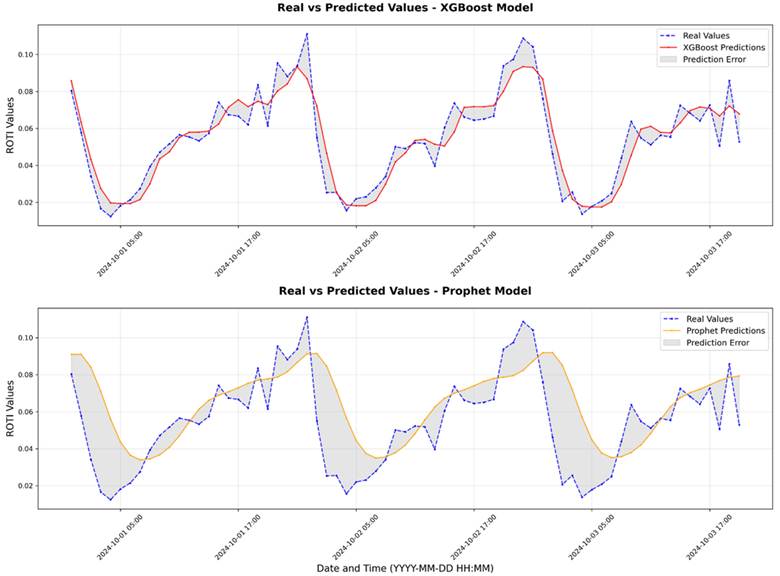 Source: Own authorship.