
 Empirical Analysis of the Greiner Model in Family Businesses
ABSTRACT
This study critically analyzes the Greiner model's applicability to family businesses, addressing gaps in its empirical indicative support for the applicability, the sequential nature of its crises, and its relevance in developing countries. The research aims to provide insights for management and organizational development for sustaining family businesses. Using a non-probabilistic sample of 131 Brazilian family businesses, this quantitative research employed cluster analysis and confirmatory factor analysis to segment organizations into developmental stages. The study identified cumulative and overlapping crises across stages, challenging the deterministic assumption of sequential crises. Organizations exhibited varying adherence to developmental stages, particularly in early stages like creativity and direction. Greiner's model remains a useful framework for understanding organizational growth, especially for family businesses. However, adjustments are needed to reflect non-linear crisis dynamics and diverse organizational environments. The research contributes by offering practical insights into improving management control and fostering sustainability.
Keywords:
organizational developmental stages; Greiner´s model; family businesses; organizational crises
RESUMO
Este estudo analisa criticamente a aplicabilidade do modelo de Greiner em empresas familiares, abordando lacunas quanto ao suporte empírico para sua aplicação, à natureza sequencial das crises e à sua relevância em países em desenvolvimento. A pesquisa busca oferecer subsídios para a gestão e o desenvolvimento organizacional visando à sustentabilidade das empresas familiares. Com base em uma amostra não probabilística de 131 empresas familiares brasileiras, esta pesquisa quantitativa utilizou análise de cluster e análise fatorial confirmatória para segmentar as organizações em estágios de desenvolvimento. O estudo identificou crises cumulativas e sobrepostas entre os estágios, desafiando a suposição determinística de crises sequenciais. As organizações apresentaram diferentes níveis de aderência aos estágios de desenvolvimento, especialmente nos estágios iniciais, como criatividade e direção. O modelo de Greiner continua sendo uma estrutura útil para compreender o crescimento organizacional, especialmente em empresas familiares. No entanto, são necessários ajustes para refletir dinâmicas de crise não lineares e ambientes organizacionais diversos. A pesquisa contribui ao oferecer insights práticos para aprimorar o controle gerencial e promover a sustentabilidade.
Palavras-chave:
estágios de desenvolvimento organizacional; modelo de Greiner; empresas familiares; crises organizacionais
1. INTRODUCTION
Analyses of planning and control artifacts often generalize the need for and availability of mechanisms (Simons, 1995; Ferreira & Otley, 2009; Malmi & Brown, 2008), ignoring the unique and evolving demands of organizations. To address this, a model of organizational evolution is necessary to identify changing needs and planning and control system configurations. Organizational life cycle (OLC) models have generally served as a theoretical foundation for examining the management practices adopted by organizations (Lester et al., 2003; Kallunki & Silvola, 2008; Wang & Singh, 2014).
Organizations can be segmented by size, sector, region, and strategic maturity; however, a model is needed to clarify expectations (e.g., Mosca et al., 2021; Angeles et al., 2022; Mousavi et al., 2022). Even after their most growing stages, organizations require elements to compare and understand their characteristics and opportunities. An OLC model helps identify elements of change for improvement and sustainability, establishing what to expect from them. A model simplifies reality, with its usefulness and goals varying over time. Choosing an organizational development model is crucial for comparability throughout an organization's life, creating synergy for different needs (Dobbs & Hamilton, 2007; Mosca et al., 2021).
Greiner (1998) model was chosen for its adherence, versatility, and comprehensiveness. First published in 1972, it was republished by Harvard Business Review (1998) and Family Business Review (1997) due to its significant research impact. Greiner’s (1998) model is considered one of the seminal OLC frameworks (Mosca et al., 2021), particularly contributing to the debate of "Evolution and Revolution as Organizations Grow". Greiner (1998) proposes that organizations progress through five consecutive stages, with each phase being followed by a transitional period triggered by a significant organizational challenge. Advancement to the next and more mature stage depends on the organization’s ability to resolve the issues inherent in each developmental phase (Quinn & Cameron, 1983; Greiner, 1998). Greiner (1998) discussed organizational development, emphasizing that management's critical task in each revolutionary period is to find new practices for the next evolutionary growth phase. These practices eventually lead to another period of revolution.
Mosca et al. (2021) point out that only a limited number of empirical studies have tested firm's stages of development. They observed that only three studies were developed to empirically validate the OLC models, with only one that analyzed Greiner model, with evidence from only six large automotive firms in Czech Republic (Sukova, 2020). These authors also point out the limitations of the deterministic trajectory of organizational development, which is limited in explaining evolution in contemporary organizations (Mosca et al., 2021). In their words, “the limited empirical support for the predictions of the OLC models casts doubts about their suitability in describing companies’ development” (Mosca et al., 2021, p. 11).
As noted, Greiner (1998) has a long history in a context of great change. The difference of a few years demands for changes in scenarios and operationalization. The past decades have raised the question of analyzing the validity of the model as it is, demanding researchers explore the field empirically: Is the model able, in a contemporary way, to segment stages, to support the management control of family businesses and to provide understanding in different stages and crises?
Hence, this paper aims to analyze the model’s validity due to its extensive history and application. The model is very important for organizations because it serves as parameter of a diagnostic stage perspective (Bachtiar & Amin, 2019), and provides understanding of organizational crisis and as well as solutions (Zhou et al., 2021). In other words, if organizations ignore or do not have success in solving crisis, they will face challenges for firm growth (Jenssen, 2020). This paper employs a quantitative approach, based on a non-probabilistic sample of 131 organizations, analyzes clusters of family businesses using elements such as focus of operations, organizational structure, control system, management style, and reward system (Greiner, 1998).
Building on these discussions, our paper addresses key gaps in OLC research and offers several contributions. First, there is a lack of empirical evidence regarding the adherence of the elements at each stage of the model in an empirical application and its consistency (Huy, 2001; Jenssen, 2020; Mosca et al., 2021). Hence, we empirically validate the distinguishing elements that delimit the adherence of organizations in each stage.
Second, we tackle the lack of guidance and challenges in managing a deterministic model (Mosca et al., 2021), which assumes sequential evolution in overcoming crises (Huy, 2001; Jenssen, 2020; Srinivasan, 2007). Thus, this paper provides a spotlight on the crises organizations face at each stage, and which push them to the next stage; and when not resolved, they are accumulated over stages. Previous empirical research has primarily focused on firm stages (Sukova, 2020; Mosca et al., 2021), our study fills this gap by emphasizing the impact of crises on organizational transitions.
Third, we provide other two empirical contributions by addressing the limited research on organizational development in family businesses and also in developing countries, such as Brazil. Addressing these empirical gaps will help bridge the theoretical gaps, bringing the typification model closer to the taxonomy model. Details of the gaps and connection with the research model are included in section 3.
This study focuses on Brazilian family businesses, henceforth the unique characteristics of Brazil as a developing economy are not merely contextual details - they significantly shape organizational behavior, growth trajectories, and crisis dynamics. Brazil presents a complex institutional environment marked by regulatory instability, bureaucratic hurdles, and informal governance practices (e.g., Berrone et al., 2012; Frezatti et al., 2021). These institutional frictions often delay or distort stage transitions predicted by Greiner’s model, such as the formalization of delegation or the effective decentralization of decision-making. Furthermore, cultural traits typical of Latin American societies (e.g., high power distance, interpersonal trust within closed networks, and family-centered authority structures) may intensify the challenges of leadership and autonomy crises (Hofstede, 2001). Economically, many organizations operate under resource constraints and volatile market conditions, which can lead to overlapping or prolonged crises rather than linear progression. Therefore, the deterministic assumptions of Greiner’s model may not fully apply to emerging market firms.
Our findings suggest that in such environments, organizational growth often entails hybrid models and non-sequential crisis management, warranting adaptations to Greiner’s framework to reflect the realities of developing contexts. This expands the theoretical applicability of OLC models and bridges a relevant empirical gap in international management research.
Finally, this research helps identify elements that promote operational sustainability in organizations and families, enhancing management in heterogeneous environments. It significantly impacts entrepreneurial families due to their economic role, providing strategic insights for managers. The study provides the perception of utility of Greiner’s model by classifying and identifying crisis accelerators through non-deterministic segmentation and corresponding cumulative impacts. It highlights the model’s ongoing relevance, offering insights into each development stage and crisis dynamics. This approach to understanding organizational crises enhances management profiles and supports sustainability for both family and business.
2. LITERATURE REVIEW
In this section, we present the research constructs, taking into account Greiner’s (1998) stages of development and the corresponding crises. We also try to explore the limitations of the basic model that inspired the theoretical model and the characterization of family businesses, the empirical focus of this research.
2.1. Greiner´s model
Greiner (1998) defines organizational life as a continuum with five sequential stages: creativity, direction, delegation, coordination, and collaboration. These stages alternate between periods of stability (evolution) and major disruptions (revolution). During an evolutionary stage, the company experiences steady growth without significant disruptions in its management practices. Conversely, a revolutionary stage is marked by substantial challenges operationalized as crises requiring stage transitions to adopt new defining characteristics (Scott & Bruce, 1987). Despite varied naming and perspectives from other authors (Scott & Bruce, 1987; Kazanjian & Drazin, 1990; Lester & Parnell, 2008), the model emphasizes sequential evolution and revolution. Each crisis resolution leads to new challenges due to internal and external factors. Greiner (1998) stresses learning from each stage for subsequent success, viewing crises as inevitable yet rich in opportunities for organizational change and learning. At the end of the day, some organizations follow the path, others skip stages, others return to prior one (Jenssen, 2020). If we can use the word consensus, (Jenssen, 2020; Hanks, 1990; Nicholls-Nixon, 2005) support the trend that the changes are a combination of gradual changes and changes through phases.
The model has been cited by various researchers from different perspectives: to report on governance evolution (Steier, 2001), organizational evolution (Burkert et al., 2014; Dyer, 2006; Chenhall & Euske, 2007; Mosca et al., 2021; Whetten, 1987; Scott & Bruce, 1987), organizational change (Simons, 1994), managerial actions (Silvola, 2005), life cycle studies (Silvola, 2005; Lester & Parnell, 2008; Lester et al., 2008), evolutionary stages and life cycles comparison (Lester & Parnell, 2008), accounting in initial stages (Moll, 2015), the model's logic in technological evolution (Kazanjian & Drazin, 1990), small business evolution (Mount et al., 1993), entrepreneurial family evolution (Lissoni et al., 2010), and management and organizational evolution (Davila & Foster, 2009). The model’s broad applicability influenced its selection due to expected impact.
2.1.1. Stages and crises
The discussion on organizational development relates to how growth impacts firm characteristics like structure and strategy (Fombrun & Wally, 1989) and management artifacts (Lee & Tan, 2001). Greiner (1998) defines stages based on elements such as focus of operations, structure, control system, management style, and reward system, that Phelps et al. (2007) identified as the basic set of key issues that you will find in a moment of the organization. These elements' importance varies over time, shaping each stage's evolution driven by crises inherent to the current organizational phase (Greiner, 1998) and it is important to implement changes in the right moment (Phelps et al., 2007).
2.1.1.1. Creativity stage
The creativity stage usually represents the birth stage of organizations. The values of the organization are the founders ones, direct supervision, uncertainty and low level of forwarding plan are characteristics of this stage (Zhou et al., Zhang, 2021). Attention is focused on developing skills to create, produce, and sell products or services (Greiner, 1998). Thus, the founders have technical and entrepreneurial profiles (Bachtiar & Amin, 2019). Little attention is paid to administrative activities (Kimberlin et al., 2011), and management is focused on responding to customers, and efforts are directed toward production and sales .
Communication between people is frequent and informal, and behavior is guided by the norms and values established by the founder (Greiner, 1998). Controls are more physical, face-to-face, and visible and usually result from problems that are perceived reactively. The studies that deal with evolution or stages adopt different perspectives, such as that of Silvola (2005), which indicates that the stage corresponding to creativity can include accounting information, but that in practice it is hardly used. This is possible because different company profiles can be observed. Simons (1995) deals with the issue of creativity and control and observes that there is an initial tendency towards the former, with the provision of simple, precarious control mechanisms that do not necessarily have the potential for repeatability. The informality profile is the main characteristic of creativity (Davila & Foster, 2009).
At this stage, growth cannot be managed with the enthusiasm and creativity of the founders alone, especially if they are unable to cope with new demands and responsibilities (Bachtiar & Amin, 2019). At the same time, they see the need to bring in new knowledge and skills, but they do not feel motivated to give up their positions. This characterizes a leadership crisis, as the founders cannot meet all the demands and the organization moves to a new stage (Bachtiar & Amin, 2019). Greiner (1998) also predicts turnover at the top of the firm as other leaders are needed to add the knowledge and skills required to introduce new business techniques. These descriptions suggest that this leadership crisis is closely related to the need to adopt management accounting and control practices.
2.1.1.2. Direction stage
In the direction stage, formal structure is introduced (Kimberlin et al., 2011), such as separating division of activities, like marketing from manufacturing, and establishing goals and incentives, with centralized hierarchy where the managers and supervisors hold the responsibilities. Hiring new people, is expected to lead to agency problems with costs to adjust the new specialists that solve the leadership crisis (Zhou et al., 2021). Communication becomes hierarchical, and the original group’s professionals provide direction, while lower-level staff are treated as specialists rather than decision-makers (Greiner, 1998; Bachtiar & Amin, 2019).
This stage often challenges family businesses' views on autonomy for non-family managers, making management mechanisms, especially accounting, crucial. Lee and Tan (2001) highlight the need for new employees to understand organizational values to reduce conflicts and speed up integration. The autonomy crisis arises as family control requires involving family members (Berrone et al., 2012), leading to governance mechanisms and formal accounting controls, though the founder's influence remains significant (Davila & Foster, 2009; Greiner, 1998).
2.1.1.3. Delegation stage
Greiner (1998) argues that in the delegation stage, managers assume greater responsibility with the decentralization (Bachtiar & Amin, 2019). This movement reduce the direct control of the senior managers and transfers that to the lower level managers (Zhou et al., 2021) with the consequence that a new kind of leadership is required (Kimberlin et al., 2011). Cost centers, incentive plans, and periodic reports are implemented to provide standard and exception guidelines, managed through visits and phone calls.
While management control mechanisms are expected in the previous stage, empirical studies rarely identify rigid patterns of change (Davila & Foster, 2009) and the control systems gradually becoming inappropriate (Zhou et al., 2021). This implies existing artifacts may not reach full potential, including diagnostic and interactive approaches (Simons, 1995). Here, operational managers assume more responsibility, expected to enhance technical efficiency and foster innovation. The control crisis emerges as senior managers may feel less control over diversification, possibly leading to renewed centralization by the owning family to regain control and advance to the next stage. Top management demands controls mechanisms to cope with their duties (Bachtiar & Amin, 2019).
2.1.1.4. Coordination stage
In the coordination stage, formal information systems are used to enhance activity coordination under management (Greiner, 1998). The organization turns to be too big with high complexity and red tape consequences due to excess of regulation (Bachtiar & Amin, 2019). The decentralized structure requires from the management justify decisions’ autonomy through documentation (Kimberlin et al., 2011). It is expected that spontaneous actions, social control and self-discipline skillful individuals tend to be substantial (Bachtiar & Amin, 2019). Decentralized units are created as formalized business units with implemented and reviewed plans. Central office structures are strengthened for control over developed areas, with capital expenditure decisions evaluated across the organization (Bachtiar & Amin, 2019). Product lines are managed as investment areas, emphasizing return on investment. Some support functions centralize, while operations decentralize. Financial incentives like bonuses and equity are crucial for long-term managerial retention.
Davila and Foster (2009) view this as a formalization phase where behavioral and financial controls intertwine. Mechanisms are expected to be more present and intensively used compared to the previous stage, learning how the parent company establishes control and monitoring. This stage faces a bureaucracy crisis, where excessive formal controls, rules, and rigid systems complicate overall coordination and management.
2.1.1.5. Collaboration stage
In the collaboration stage, Greiner (1998) emphasizes managers' spontaneity in handling interpersonal differences, countering the bureaucracy of the coordination stage (Bachtiar & Amin, 2019). Social control and self-discipline replace formal controls, challenging specialists usual to previous bureaucratic methods. Kimberlin et al. (2011) consider building the cross-department teams to allow coordination without excess of documentation. It is expected that this movement could provide any return back of the creativity perspective.
Here, Greiner’s model focuses on collaborative problem-solving through multi-oriented groups, with the central office decentralizing decision-making to subunits (Bachtiar & Amin, 2019). Team-focused economic rewards replace individual evaluations. Greiner (1998) identifies the crisis of "psychological saturation," where managers face exhaustion from intense teamwork and pressure for innovation. Davila and Foster (2009) view this stage as a rebalancing phase, hiring professional managers and formalizing behaviors to balance standards and personal interactions effectively.
2.2. Family businesses
This involves an organizational environment with its own characteristics, which needs to be specified. For this study, we followed the approach of Zellweger et al. (2011), which used the definition of Chua et al. (1999), adjusting it to make it contemporary:
A family business is a business that is governed and/or managed with the intention of shaping and pursuing the vision of business maintenance by a dominant coalition controlled by members of the same family or a small number of families in a way that is sustainable across generations of the family or families.
One notable aspect is the family's long-term ownership vision across generations, demonstrating determination and feasibility. This enduring perspective can positively impact the company, provided other family-organization dynamics are managed. However, it does not preclude the possibility of the company being sold, going public, or involving financial partners in the future. For a founder, envisioning their great-grandchild continuing their legacy is deeply valuable and prideful, beyond economic dimensions, fostering profound commitment and engagement. This perspective aligns with Berrone et al.'s (2012) theoretical framework on socio-emotional wealth in family businesses.
The company's "face" reflects choices by controlling or managing families, forming the dominant coalition that resolves key issues and determines how they are handled (Almeida et al., 2021). This value structure, rich with beliefs, personalities, and circumstances, often forms unconsciously and influences the company's management model significantly.
The definition of who is “in charge” of the company (i.e., the coalition), refers to a potential pragmatism regarding the power to direct the organization. The definition separates two features that are similar but different throughout the history of companies: control and management. There are companies in which families control and manage, others that in which they control but where there is the provision for a huge dilution of management participation by family members, and others in which control and management are relatively diluted. Depending on the profile, we will observe very different organizations (Frezatti et al., 2021).
The phrase “in a way that is sustainable” refers to a number of issues, including an approach that balances the needs of the family, the organization, and management. There may be a balance between actions that benefit the family and potentially destroy the business and a time when the business is maintained at the expense of the family. This long-term balance (and imbalance) allows us to think about sustainability through management. For this to happen, the management control structure must be able to deal with these issues in different ways, depending on the stage the company is in. The long-term view that connects the families and the organization is very powerful. Family businesses potentially have a level of pressure for results that is quite different from other types of organizations, such as multinationals and publicly traded companies. Of course, the analysis becomes more complex when it is recognized that a company can still be classified as a family business even if it is publicly traded or operates in hundreds of countries.
3. THEORETICAL RESEARCH MODEL
The two empirical gaps provide the context for the research development based on which we propose a theoretical model to address these gaps (Mosca et al. 2021; Sukova, 2020).
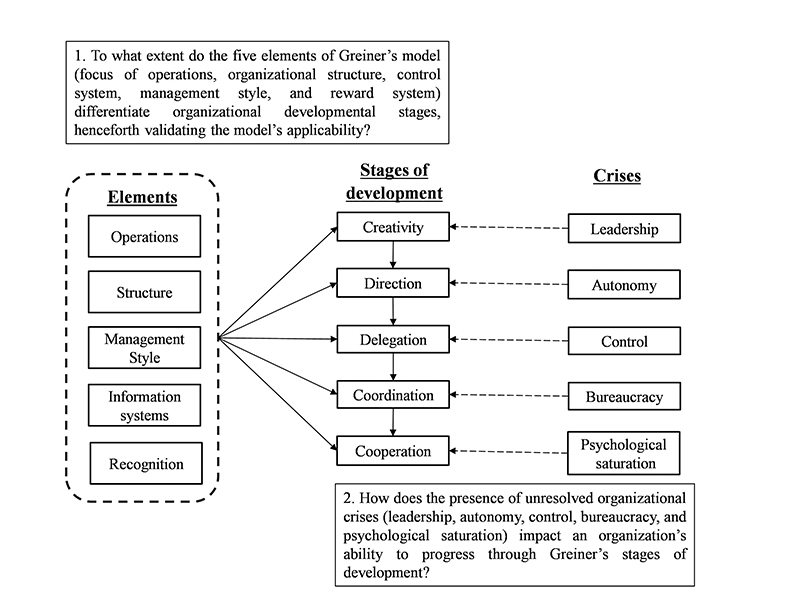
First, we highlight the lack of evidence regarding the adherence of the elements at each stage of the model in an empirical application and its consistency (Huy, 2001; Srinivasan, 2007). More than this, the time spent in each stage is not equal or even similar (Nicholls-Nixon, 2005). Each stage is characterized by five elements: focus of operations, organizational structure, control system, management style, and reward system (Greiner, 1998). Once the focus of operations is defined, the other elements are identified, determining the stage the organization is in and completing the profile. Organizations vary in their use of management mechanisms and models. The statements about the elements aim to capture profiles by examining the “baseline,” the minimum adherence expected at each stage. Research may find organizations where the framework does not fully align with what is expected at each stage and its corresponding elements, i.e., it does not fully align with what is expected based on the business focus element with the other four elements (Huy, 2001; Jenssen, 2020).
Greiner’s model was based on the author's experience and perceptions, not on a statistical empirical basis. Typologies and taxonomies are both classification strategies (Rich, 1992). According to McKelvey (1982), typology is a creative invention, while taxonomy is an empirical classification tool that interprets from the particular to the general. Each member of a class in taxonomy possesses most characteristics of that class, but not all members share the same set of properties (McKelvey, 1982; Priem et al., 2002; Rich, 1992). Taxonomies, which may or may not accompany typologies, require empirical evidence and a deductive approach. Taxonomy categories must be reality-consistent, show interdependence and interaction among attributes, and be comprehensive, with essential elements (Rich, 1992). The Greiner model has potential usefulness, needing to be broad enough to cover a scope and focused enough to credibly define possibilities.
Second, we highlight the gap in dealing with the deterministic model, which assumes crises are sequential and specific from one stage to the next to drive organizational change (Huy, 2001; Mosca et al., 2021). Each stage depends on passing through the previous one, except for the creativity stage. The model assumes a crisis triggers and drives change in a predictable sequence, without considering jumps or incomplete movements, which empirical analysis can capture. The model does not clarify what happens when an organization reaches the collaboration stage and faces a saturation crisis. Although organizations can revert to previous stages, this research does not explore this movement longitudinally. These reflections are aligned with the limitations raised by Mosca et al. (2021) about OLC models. They argue that “OLC models propose a deterministic trajectory of organizational development showing limited explanatory power when confronted with the challenges of the actual business environment” (Mosca et al., 2021, p. 4) and advise that the ‘engine’ of the trajectory are the changes.
The reality observed is more complex, and the dynamics underlying the model derived from the typological view can be enriched by the adaptability offered by the taxonomy process, which enables a more nuanced understanding of a specific segment of the environment and fosters relevant learning (Jenssen, 2020). Even considering the limitations and issues to be addressed, the model is relevant to support the discussion of emergent patterns of the organizations (Stubbart & Smalley, 1999). This motivated us to provide an empirical analysis of the model. Our paper is guided by two exploratory research questions, from which we derived three hypotheses:
1. To what extent do the five elements of Greiner’s model (focus of operations, organizational structure, control system, management style, and reward system) differentiate organizational developmental stages, henceforth validating the model’s applicability?
As consequence, the hypothesis H1: Greiner’s Model Validation is:
H1₀: The five elements of Greiner’s model (focus of operations, organizational structure, control system, management style, and reward system) do not significantly differentiate the organizational developmental stages.
H1a: The five elements of Greiner’s model significantly differentiate the organizational developmental stages, confirming the model’s applicability.
2. How does the presence of unresolved organizational crises (leadership, autonomy, control, bureaucracy, and psychological saturation) impact an organization’s ability to progress through Greiner’s stages of development?
As consequence, the hypothesis are:
H2: Impact of Unresolved Crises on Growth Delay:
H2₀: The presence of unresolved organizational crises (leadership, autonomy, control, bureaucracy, and psychological saturation) does not significantly impact an organization’s progression through Greiner’s stages.
H2a: The presence of unresolved organizational crises significantly delays an organization’s progression through Greiner’s stages.
H3: Non-Deterministic Progression of Organizational Development
H3₀: Organizational development follows a strictly deterministic sequential crisis model, where each stage is entered only after resolving the previous stage’s crisis.
H3a: Organizational development does not strictly follow a sequential crisis model; firms exhibit stage skipping, regression, or hybrid characteristics.
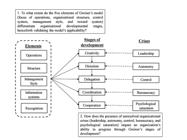
In this sense, the theoretical research model is described in Figure 1.
4. METHODOLOGY
4.1. Positioning and research sample
This paper aims to develop theory by empirically testing a theoretical model of organizational development based on the stages and their respective crises (Ketokivi & Choi, 2014). As noted by Ketokivi and Choi (2014, p. 236), the “context is not known well enough to obtain sufficient detailed premises for deducing testable hypotheses.” This research incorporates concepts, artifacts, and relationships not included in Greiner's (1998) basic model, allowing for balanced interaction between the established theory and observed empirical data.
Data were collected using a questionnaire via Surveymonkey® software from Brazilian family businesses, with a stratified sampling approach by size. When studying life cycle, it is important to have a heterogeneous sample which represents the frame population. Approximately 30 companies per cluster were targeted, segmented by employee numbers: (1) up to 49 (small); (2) 50-249 (medium); (3) 250-1000 (large I); (4) over 1000 (large II). Although the EU defines large companies as those with more than 250 employees, this research included two large categories to explore potential particularities. The stratified sample aimed to reduce bias due to size differences. Managers were invited to participate via email and LinkedIn® based on existing contacts.
This study's innovative approach involved immediate individual feedback to respondents via specific reports. This method aimed to (i) improve data credibility with possible corrections, (ii) enhance the image of research for future studies, and (iii) establish long-term relationships by providing respondents with valuable knowledge.
Table 1 shows the characteristics of the companies and respondents based on a final sample of 131 respondents. In terms of size, we can see a relatively low variability between the segments of number of employees, with differences in the distribution of annual turnover according to the stratification of the sample. In terms of industry distribution, 25.2 % of the firms operate in wholesale and retail, 38.2 % in manufacturing, and 36.6 % in services. Within the service sector, the main segments are Specialized Services (11.5 %), Technology and Telecommunications (7.6 %), and Transportation, Logistics, and Related Services (7.6 %). In the manufacturing sector, the leading segments include Agribusiness (8.4 %), Fashion and Apparel (7.6 %), and Food and Beverages (5.3 %).
In the sample, 63.4 % of companies are 100 % family-owned, while 36.4 % have other shareholders. The average company age is 24 years, ranging from just over a year to 111 years. Regarding respondents, 76.3 % report to shareholders or the Board of Directors (level 1), 13 % report to senior management (level 2), and 10.7 % report to middle management (level 3). This respondent profile ensures data quality due to their comprehensive company knowledge and experience.
4.2. Variables
Development stage elements. According to Greiner’s (1998) model, there are five stages of development: creativity, direction, delegation, coordination, and collaboration. Each stage consists of five characteristics (the focus of operations, organizational structure, control system, management style, and reward system). We asked respondents five questions, each corresponding to one of the five characteristics. For each question, they were provided with five statements, each representing a different stage of organizational development. Respondents were instructed to select only one statement that best described their organization's current stage: (1) Creativity, (2) Direction, (3) Delegation, (4) Coordination, or (5) Collaboration (see Appendix 1).
Crises in the developmental stages. The crises were measured using statements developed by the authors based on considerations presented in Greiner’s (1998) seminal study. Organizations face five types of crises at each stage and that drive stage change: the crisis of leadership, the crisis of autonomy, the crisis of control, the crisis of bureaucracy, and the crisis known as psychological saturation. Each crisis construct was measured using five statements on a five-point Likert scale (totally disagree to totally agree, shown in Appendix 2). The level of each crisis was measured by confirmatory factor analysis (Hair et al., 2009) using SmartPLS® software. The validation parameters of the latent crisis variables are presented in the Results Analysis section. We also included firm characterization variables such as size (by number of employees), industry and age, which are commonly used in life cycle and organizational development cycle studies (e.g., Lester et al., 2008).
4.3. Data analysis methods
We used various statistical techniques for data analysis (Hair et al., 2009). First, we performed a cluster analysis (hierarchical and K-means) with the five elements characterizing development stages (Greiner, 1998). We aimed to create five clusters representing the five stages, as suggested by the hierarchical cluster after excluding outliers. Second, we conducted a confirmatory factor analysis (CFA) to validate the latent variables representing the crises. Third, we performed descriptive analysis, ANOVA, and chi-squared tests (Fávero & Belfiori, 2017; Hair et al., 2009) on the clusters, considering the stages, crises, and contingency factors like size, industry and age. The sample size met the CFA criteria and was representative for cluster analysis.
5. RESULTS ANALYSIS AND DISCUSSION
According to Greiner’s (1998) model, there are five stages of development: creativity, direction, delegation, coordination, and collaboration. Each stage consists of five elements (the focus of operations, organizational structure, control system, management style, and reward system) that comprise the variables studied.
Hypothesis H1: Greiner’s Model Validation
H1₀: The five elements of Greiner’s model (focus of operations, organizational structure, control system, management style, and reward system) do not significantly differentiate the organizational developmental stages.
H1a: The five elements of Greiner’s model significantly differentiate the organizational developmental stages, confirming the model’s applicability.
First, we applied hierarchical cluster analysis (between-groups linkage and squared Euclidean distance) using the five variables characterizing development stages (focus of operations, organizational structure, control system, management style, and reward system). We interpreted the preliminary results through the dendrogram. Although these qualitative variables represent stage characteristics, they were treated as quantitative variables to indicate the level of organizational development from the first stage (creativity) to the last stage (collaboration) in Greiner’s (1998) model.
Using hierarchical cluster analysis, we identified 13 outliers over the course of a few rounds, which were excluded from the sample. Using this technique, we have two suitable solutions with four or five clusters. Therefore, we carried out the cluster analysis using the K-means technique, with the basic pillar being the solution based on five clusters, which could theoretically represent each stage of development, according to Greiner’s (1998) model as a theoretical justification. With the five clusters, it was possible to differentiate the means between the groups at a 5 % significance level (see ANOVA results in Table 2).
A joint analysis of the levels presented in Table 2 was carried out for the characteristics, from which the designation of each cluster emerged, taking into account Greiner’s (1998) five stages of development, creativity (cluster 1), direction (cluster 2), delegation (cluster 3), collaboration (cluster 4), and coordination (cluster 5). Of note is the distribution of organizations in the collaboration and coordination stages, which are theoretically the most advanced stages or associated with more complex profiles in Greiner’s foundational study.
Table 2 shows a similarity between cluster analysis results and the stages of development proposed by Greiner (1998), validating the conceptual structure. We can see three clusters with a significant number of companies, the largest being cluster 2 with 40 companies, with two smaller clusters with only 5 and 12 companies. Furthermore, we can see in Table 2 that all the characteristics show statistical significance (ANOVA test) at a 5 % level of significance, confirming the five-cluster solution as a valid solution. The values presented for the levels of each characteristic at each stage of development are standardized (i.e., mean 0 and standard deviation 1). The H1 was not rejected and it can be interpreted that the clusters are significantly different when analyzed from the perspective of the five elements.
This evidence is aligned with prior empirical studies that support firm development stages in the OLC and management literature (Lester et al., 2008; Davila & Foster, 2009). This evidence also addresses the concerns in the literature (e.g., Mosca et al., 2021) about the suitability of OLC model and stages. This conclusion is based on the results of the cluster analysis and ANOVA, which revealed statistically significant differences in OLC elements between at least two clusters. However, some elements did not show significant variation across all clusters, for example, the Focus of Operations showed a minimal difference between Cluster 1 (-0.253) and Cluster 2 (-0.261), suggesting a lack of statistical significance in this case.
Hypothesis H2: Impact of Unresolved Crises on Growth Delay
H2₀: The presence of unresolved organizational crises (leadership, autonomy, control, bureaucracy, and psychological saturation) does not significantly impact an organization’s progression through Greiner’s stages.
H2a: The presence of unresolved organizational crises significantly delays an organization’s progression through Greiner’s stages.
After the cluster analysis and the characterization of the groups based on the elements of Greiner’s (1998) model, we also extended the discussion to the five crises faced in each of the five stages of the development cycle, as can be seen from the details in Appendix 2. The latent variables of the crises met the convergent validity criteria suggested by Hair et al. (2016) through the cross-loading matrix and other parameters, such as Cronbach’s alpha greater than 0.7 and average variance extracted greater than 0.5 for all crises. We also carried out a discriminant analysis using the Fornell-Lacker matrix (Table 3), showing a positive correlation between the crises in the different stages.
The creativity stage (cluster 1) ends up being strongly affected by all the crises because the organizations operate in an environment where the stimuli affect everyone, regardless of their stage of development (Table 4).
Changes to the direction stage and from there to delegation have the least relative impact of all the crises, except for creativity and direction itself. In both coordination and collaboration, the crises of the previous stages (i.e., creativity, direction, and delegation), no longer have an impact in terms of change. It can be said that the crises have different intensities in terms of provoking change, being stronger in creativity and with less impact in coordination and collaboration. The H2 a was not rejected and it can be interpreted that the unsolved crisis impacts the path of the sequence of stages.
This evidence is important because prior empirical literature that applied Greiner´s model did not put emphasis on organizational crisis (Mosca et al., 2021; Sukova, 2020), as we observe in our results, they are important to understand organizational development throughout the stages. Another interesting finding that was not explicitly debated in the seminal article by Greiner (1998) is that the five crises are not only present in the transition from one stage to another, but they haunt different subsequent stages.
We also analyzed whether contingency variables differed across clusters, as this could help explain the intensity of the crises associated with different developmental stages. However, the results of the ANOVA and chi-squared tests based on contingency tables did not reveal any statistically significant differences in age, size (measured by number of employees), or industry across the clusters (Table 4).
Hypothesis H3: Non-Deterministic Progression of Organizational Development
H3₀: Organizational development follows a strictly deterministic sequential crisis model, where each stage is entered only after resolving the previous stage’s crisis.
H3a: Organizational development does not strictly follow a sequential crisis model; firms exhibit stage skipping, regression, or hybrid characteristics.
The cluster analysis results are presented below, taking into account the results of both the ANOVA test and the chi-squared test, based on the contingency tables drawn up for each element characterizing the stage of development (Table 5).
The focus of operations differs more between the first two clusters than the last three, as does the structure, which stands out and differs from the other stages. On the other hand, the differentiation in management style is most pronounced in the delegation stage. Finally, control systems and reward systems are greater in clusters 2 and 5, which makes sense because the reward system must have a control system as its antecedent. Regarding the focus of operations, it can be understood that although there is a predominant profile, the focus characteristic of the creativity stage can also be found in the next stages, which are direction and delegation. The same goes for the other stages. With regard to the focus of the predominant businesses, we find organizations with characteristics from both the earlier and later stages. A possible explanation is that organizations move continuously and the change in profile is part of this evolution based on a cumulative configuration in terms of antecedents. Given that the business focus is the dimension that drives all the others, the heterogeneity of the characteristics makes this possible.
Similarly, in terms of organizational structure, we find the same phenomenon in which a given profile, for example, the creativity structure, can be found in companies that are in clusters 1, 2, and 3. On the other hand, the structures of the coordination and collaboration stages are not found in clusters 1 to 3, but only in clusters 4 and 5, confirming the logic of antecedence. Management control requires an organizational structure with a certain degree of formalization, which appears from the direction stage and is maintained in the other stages, and which is a relevant antecedent. The structure is the basis for operationalizing management control, as it allows responsibilities to be defined, goals to be set, performance to be assessed, and rewards to be provided.
Management style is a more abstract variable to capture than the previous elements. In this case, the creativity stage is the most adherent in terms of the element, which can be explained by the scarcity of resources and the initial momentum with respect to the element. On the other hand, by analogy, a given style can be found in stages other than the predominant one, and this occurs more frequently between the creativity, direction, and delegation stages. This may lead us to understand that an organization would not necessarily be led to change its structure and/or the people in its positions in a change of stage, which would depend on the hegemonic group of its governance, which may stem from a long-term vision. From the point of view of management control, increased autonomy requires objective mechanisms in order to be developed.
Table 5 deals with the element of the control system, focusing on what would be basic for this element. The initial stage of creativity is the most fragile due to its weaknesses at the beginning of the trajectory, where spending on the structure of control systems is not compatible with the possibilities. On the other hand, the profile of the control system element of the delegation stage, where the existence of a structured system is essential for proper management, is relatively very representative for the direction and coordination stages. As far as management control is concerned, the control system element becomes structured to meet expectations when it exceeds the profile established by the direction, delegation, and coordination stages.
As far as the reward system is concerned, while there is an influence from the stage, there is also an impact from the profile of the people, which explains the fact that the reward is derived from what is valued by the owners at a stage such as delegation, for example. The emphasis on salaries and merit pay is a widely accepted discourse and permeates the different profiles of organizations, allowing intra- and inter-organizational mobility. Incentives such as profit sharing, stock options, and group incentives are likely to be driven by the size and segment of the organization.
The contingency table (Table 5) shows that the profile of the elements of the organizations by stage does not occur in the way envisaged in the original model, i.e. at each stage and for each cluster there are companies that have different characteristics for some of the elements studied, such as focus of operations, organizational structure, management style, control system, and reward system. The H3 a was not rejected, and it can be interpreted that organizational development do not follow a strictly deterministic sequential crisis model. This interpretation is limited to our sample and based on the contingency table.
6. CONCLUSIONS
Like all models, the Greiner (1998) model has a guiding purpose. Its operationalization offers advantages based on the conceptual vision and the empirical sampling reality. The main goal of the research was to capture trends that can be perceived, regardless of absolute precision. The idea of applying exactly the same approach to a mature organization and another still in the early stages of development contributes little to the growth of knowledge. Considering Greiner´s model, it is still useful since it considers a non-deterministic perspective and also the crises inventory. The model provides a direction of attention for what is adequate or not according to the moment of organization life.
One important contribution of this research was to identify aspects of Greiner’s (1998) model that were presented as “deterministic” and sequential, as in the case of the framework for a single stage and multiplicity and perpetuity, as in the case of crises, where they can lead the organization to different stages and different future influences for crises that are not faced and dealt with. With this, it is possible to understand the model as very suitable and useful in understanding trends, adjusting future expectations. This observation contrasts with previous studies that challenge the real-world applicability of OLC models (Mosca et al., 2021). The concern arises from the limited empirical evidence on OLC, particularly regarding Greiner’s (1998) model (Mosca et al., 2021; Sukova, 2020).
Other important finding is that it is easier to identify companies in the early stages of organizational development than in the more advanced stages, and that they can be partially grouped into a single predominant stage, recognizing the dynamism of change that organizations undergo. Greiner’s (1998) model works well enough to discriminate between different stages at the extremes, such as creativity and cooperation, but there are limitations when we look at stages closer together, mainly because organizations undergoing change present advances and setbacks that are the transitions from one stage to the other. Thus, the determinism of identification with a complete framework becomes rare when analyzed through the empirical field of existing organizations. In any case, the direction of the stages is extremely useful for possible messages to management.
The expectation that a given crisis will manifest itself only at one stage has not been proven. Based on the empirical data, the interpretation is that although a given crisis can be perceived at any stage, there would be a better time for it to be resolved and provide an opportunity for mobility to another more suitable stage for the organization. An example of this is the creativity stage, which should be affected by a single crisis, but in fact, is affected by crises that would be typical of later stages. This is because organizations compete and operate in the same environment, and external pressures occur regardless of the stage the organization is in. Thus, the demands that cause crises affect different organizations and the responses are also different.
There is a cumulative effect of crises in the life of organizations, in which those not resolved at the stage perceived as most appropriate interfere with the development of the other stages. In addition, it is important to note the evidence that crises do not necessarily lead to a single stage, but potentially to several simultaneously, which was not foreseen by Greiner (1998) and, thanks to the dynamism of companies, the model ends up capturing this mobility from the perspective of multiple crises and multiple movements, including the logic of antecedents and consequents.
In any case, studies on management control, based on a segmentation of stages, can be seen, structured, and maintained in a way that is aligned with the challenges experienced by the organization, in the configuration desired by managers, advancing or maintaining the set of five elements according to their strategic vision.
While the statistical techniques applied (cluster analysis and CFA) provided interesting patterns in relation to the Greiner model, we fully acknowledge the limitations inherent in the sample structure. Specifically, the relatively small number of firms classified in the “collaboration” (n=5) and “coordination” (n=12) stages limits the statistical power for generalization and hinders robust inferences regarding more mature stages of organizational development. Consequently, our interpretation of the results should be viewed as exploratory rather than confirmatory. Instead of asserting that the Greiner model is “validated,” we clarify that the findings provide indicative support for the applicability of the model’s elements and crisis constructs within a subset of Brazilian family firms.
The results should be seen as a basis for theory refinement and hypothesis development, not as definitive empirical validation. Future research with larger and probabilistically selected samples is essential to strengthen external validity, test stage transitions more rigorously, and explore the potential influence of industry, governance structure, and market dynamics on developmental paths. Replication studies, especially those encompassing diverse geographic and institutional environments, are particularly needed to assess the model’s adaptability beyond this context. As previously noted, the context of emerging economies such as Brazil may give rise to hybrid elements in the organizational life cycle and non-sequential approaches to crisis management, underscoring the need for an adapted interpretation of Greiner’s model.
Finally, a deeper understanding of the development and crises of firms in the early stages (creativity) could help update Greiner’s model. The cluster of companies in this stage presented crises that should be dealt with in other stages, which can be interpreted as the need for companies to be born understanding all the structure and artifacts necessary for their management.
Acknowledgments
The corresponding author thanks CNPq, National Council for Scientific and Technological evelopment, for the financial and institutional support to the research.
References
- Almeida, D., Beuren, I. M., & Monteiro, J. (2021). Reflexes of organizational values on the reward system in a family business. Brazilian Business Review, 18(2), 140-159.
- Angeles, A., Perez-Encinas, A., & Villanueva, C. E. (2022). Characterizing organizational lifecycle through strategic and structural flexibility: Insights from MSMEs in Mexico. Global Journal of Flexible Systems Management, 23(2), 271-290.
- Bachtiar, N. K., & Amin, M. Al. (2019). Smes’ Growth Stage Model: A Literature Review and Development Model. Jurnal Analisis Bisnis Ekonomi, 17(1), 1-18.
- Berrone, P., Cruz, C., & Gomez-Mejia, L. R. (2012). Socioemotional Wealth in Family Firms: Theoretical Dimensions, Assessment Approaches, and Agenda for Future Research. Family Business Review, 25(3), 258-279.
- Burkert, M., Davila, A., Mehta, K., & Oyon, D. (2014). Relating alternative forms of contingency fit to the appropriate methods to test them. Management Accounting Research, 25(1), 6-29.
- Chenhall, R. H., & Euske, K. J. (2007). The role of management control systems in planned organizational change : An analysis of two organizations. Accounting, Organization and Society, 32(7-8), 601-637.
- Chua, J. H., Chrisman, J. J., & Sharma, P. (1999). Defining the family business by behavior. Entrepreneurship Theory and Practice, 23(4), 19-39.
- Davila, A., & Foster, G. (2009). The Adoption and Evolution of Management Control Systems in Entrepreneurial Companies : Evidence and a Promising Future. Handbooks ofManagement Accounting Research , 3, 1323-1336.
- Dobbs, M., & Hamilton, R. T. (2007). Small business growth: Recent evidence and new directions. International journal of entrepreneurial behavior & research, 13(5), 296-322.
- Dyer, W. G. (2006). Examining the “family effect”on firm performance. Family Business Review , 19(4), 253-273.
- Fávero, L. P. L., & Belfiori, P. P. (2017) Manual de análise de dados: estatística e modelagem multivariada com excel, SPSS e stata Elsevier.
- Ferreira, A., & Otley, D. (2009). The design and use of performance management systems: An extended framework for analysis, Management Accounting Research , 20(4), 263 -282.
- Fombrun, C. J., & Wally, S. (1989). Structuring small firms for rapid growth. Journal of Business Venturing, 2, 107-122.
- Frezatti, F., Bido, D. S., Mucci, D. M., & Beck, F. (2021) Essence taxonomy of Brazilian family businesses and conceptual implications for governance strategy. Journal of Management and Governance, 26(6), 1-37.
- Greiner, L. E. (1972). Evolution and revolution as organizations grow. Harvard Business Review, July-August, 3-11.
- Greiner, L. E. (1997). Evolution and revolution as organizations grow. Family Business Review , 4, 323-428.
- Greiner, L. E. (1998). Evolution and revolution as organizations grow. Harvard Business Review , May-June, 3-11.
- Hair, J., Hult, G. T. M., Ringle, C. M., & Sarstedt, M. (2016). A Primer on Partial Least Squares Structural Equation Modeling (PLS-SEM) (2nd ed.). Sage Publications.
- Hair Jr. , J. F., Black, W. C., Babin, B. J., & Anderson, R. E. (2009). Multivariate Data Analysis: A Global Perspective (7th ed.). Pearson.
- Hanks, S. H. (1990). The Organization Life Cycle: Integrating Content and Process. Journal of Small Business Strategy, 1(1), 1-12.
- Hofstede, G. (2001). Culture's recent consequences: Using dimension scores in theory and research. International Journal of Cross-Cultural Management, 1(1), 11-17.
- Huy, N. Q. (2001). Time, temporal capability and planning change. Academy of Management Review, 26(4), 601-623.
- Jenssen, J. I. (2020). How Church Leadership May Influence Growth by Applying an Organizational Life Cycle Perspective on Church Development, Scandinavian Journal for Leadership and Theology, 7, 1-26.
- Kallunki, J. P., & Silvola, H. (2008) the effect of organizational life cycle stage on the use of activity-based costing. Management Accounting Research , 19(1), 62-79.
- Kazanjian, R. K., & Drazin, R. (1990). A stage-contingent model of design and growth for technology based new ventures. Journal of Business Venturing , 5, 137-150.
- Ketokivi, M., & Choi, T. (2014). Renaissance of case research as a scientific method. Journal of Operations Management, 32(5), 232-240.
- Kimberlin, S. E., Schwartz, S. L., & Austin, M. J. (2011). Growth and resilience of pioneering nonprofit human service organizations: A cross-case analysis of organizational histories, Journal of Evidence-Based Social Work, 8(1-2), 4-28.
- Lee, J., & Tan, F. (2001). Growth of Chinese family enterprises in Singapore. Family Business Review , 14(1), 49-74.
- Lester, D. L., Parnell, J. A., & Carraher, S. (2003) Organizational life cycle: A five-stage empirical scale. International Journal of Organizational Analysis, 11(4), 339-354.
- Lester, D. L., & Parnell, J. A. (2008). Firm size and environmental scanning pursuits across organizational life cycle stages. Journal of Small Business and Enterprise Development, 15(3), 540-554.
- Lester, D. L., Parnell, J. A., Crandall, W. R., & Menefee, M. L. (2008). Organizational life cycle and performance among SMEs: Generic strategies for high and low performers. International Journal of Commerce and Management, 18(4), 313-330.
- Lissoni, J., Pereira, M. F., Almeida, M. I. R., & Serra, F. R. (2010). Family Business : How family and ownership shapes business professionalization. Revista Brasileira de Gestão de Negócios, 12(37), 464-479.
- Malmi, T., & Brown, D. (2008). Management control systems as a package - Opportunities, challenges and research directions. Management Accounting Research , 19(4), 287-300.
- McKelvey, B. (1982). Organizational systematics--taxonomy, evolution, classification University of California Press.
- Moll, J. (2015). Editorial: Special issue on innovation and product development. Management Accounting Research , 28, 2-11.
- Mosca, L., Gianecchini, M., & Campagnolo, D. (2021). Organizational life cycle models: A design perspective. Journal of Organization Design, 10, 3-18.
- Mount, J., Zinger, J. T., & Forsyth, G. R. (1993). Organizing for development in the small business. Long Range Planning, 26(5), 111-120.
- Mousavi, A., Mohammadzadeh, M., & Zare, H. (2022). A clustering approach to identify the organizational life cycle. Journal of Open Innovation: Technology, Market, and Complexity, 8(3), 108.
- Nicholls-Nixon, C. L. (2005). Rapid growth and high performance: The entrepreneur's “impossible dream?”. Academy of Management, 19(1), 2-15.
- Phelps, R., Adams, R., & Bessant, J. (2007). Life cycles of growing organizations: A review with implications for knowledge and learning. International Journal of Management Reviews, 9(1), 1-30.
- Priem, R. L., Love, L. G., & Shaffer, M. A. (2002). Executives’ perceptions of uncertainty sources: A numerical taxonomy and underlying dimensions. Journal of Management, 28(6), 725-746.
- Quinn, R. E., & Cameron, K. (1983). Organizational life cycles and shifting criteria of effectiveness: Some preliminary evidence. Management Science, 29(1), 33-51.
- Rich, P. (1992). The organizational taxonomy: Definition and design. Academy of Management Review , 17(4), 758-781.
- Scott, M., & Bruce, R. (1987). Five Stages of Growth Business in Small Business. London Business School Journal, 20(3), 45-52.
- Silvola, H. (2005). Management accounting practices. A contingency perspective based on the organizational life cycle and venture capital investors. Research Paper
- Simons, R. (1994). How new top managers use control systems as levers of strategic renewal. Strategic Management Journal, 15, 169-189.
- Simons, R. (1995). Levers of control: How managers use innovative control systems to drive strategic renewal Harvard Business School Press.
- Steier, L. (2001). Family Firms, Plural Forms of Governance, and the Evolving Role of Trust. Family Business Review, 14(4), 353-368.
- Srinivasan, V. (2007). Understanding the Human Resource Challenges in Not-for-profit Organisations from a Lifecycle Perspective. Journal of Health Management, 9(2), 189-199.
- Stubbart, C. I., & Smaley, R. D. (1999). The deceptive allure of stage models of strategic processes. Journal of management Enquiry, 8(3), 273-286.
- Sukova, L. (2020). Greiner’s model and its application in automotive companies in the Czech Republic. Acta Informatica Pragensia, 9(1), 18-29.
- Wang, G., & Singh, P. (2014). The evolution of CEO compensation over the organizational life cycle: A contingency explanation. Human Resource Management Review, 24(2), 144-159.
- Whetten, D. (1987). Organizational Growth And Decline Processes. Annual Review of Sociology, 13(1), 335-358.
- Zellweger, T. M., Nason, R. S., & Nordqvist, M. (2011). From Longevity of Firms to Transgenerational Entrepreneurship of Families: Introducing Family Entrepreneurial Orientation. Family Business Review , 25(2), 136-155.
- Zhou, D. K., Sun, A. W., & Zhang, J. Y. (2021). Interpreting Agency Theory Through Greiner Growth Model: Regulatory Mechanism Reduces Agency Costs for Modern Chinese Enterprises. Advances in Social Science, Education and Humanities Research, 571(Isemss 2021), 819-828.

 Source: Developed by the authors