
 Foreground and background factors of the service quality of financial technologies in the banking industry
ABSTRACT
Banks are trying to meet the changing needs of customers by revising their services, because, with the emergence of financial technologies, the nature of banking services has changed. This paper aims to identify the foreground and background factors of the service quality of financial technologies in the banking industry, and model development. The method used in this study is a combination of qualitative and quantitative methods. Background factors were identified using the grounded theory method, which is a qualitative method, and the combined method was used to identify the foreground factors that lead to the developed model. According to the research results, the identified background factors are: digital transformations, rapid technological changes, competitive conditions of banks, reducing the time and place limitations of providing services, reducing costs, the emergence of Fintech companies and start-ups, increasing the speed of providing banking services, cultural structure, regulations governing the banking system and hacking/phishing bank accounts. Also, the results showed that the service quality of financial technologies in Iran's banking industry is a function of the foreground factors, including the comprehensiveness of services, services sustainability, security and reliability, personalization of services, ease of use of services and innovation of services.
Keywords:
Service Quality; Financial Technologies; Digital Banking
RESUMO
Os bancos procuram atender às necessidades em constante mudança dos clientes por meio da revisão de seus serviços. Com o surgimento das tecnologias financeiras, a natureza dos serviços bancários mudou. Esta pesquisa tem como objetivo identificar os fatores de segundo e os fatores de primeiro plano da qualidade do serviço de tecnologias financeiras no setor bancário e o desenvolvimento de modelos. O método usado nesta pesquisa é uma combinação de métodos qualitativos e quantitativos. Os fatores de segundo plano foram identificados usando o método da teoria fundamentada, que é um método qualitativo, e o método combinado foi usado para identificar os fatores de primeiro plano que levaram ao desenvolvimento do modelo. De acordo com os resultados da pesquisa, as transformações digitais, as rápidas mudanças tecnológicas, as condições competitivas dos bancos, a redução das limitações de tempo e local da prestação de serviços, a redução de custos, o surgimento de empresas e startups de Fintech, o aumento da velocidade da prestação de serviços bancários, a estrutura cultural, as regulamentações que regem o sistema bancário e o hacking/phishing de contas bancárias foram identificados como os fatores de fundo. Além disso, os resultados mostraram que a qualidade do serviço das tecnologias financeiras no setor bancário do Irã é uma função dos fatores em primeiro plano, incluindo a abrangência dos serviços, a sustentabilidade dos serviços, a segurança e a confiabilidade, a personalização dos serviços, a facilidade de uso dos serviços e a inovação dos serviços.
Palavras-chave:
Qualidade de serviço; tecnologias financeiras; banco digital
1. Introduction
The service sector, also known as the tertiary sector of the economy, includes activities that produce value by providing invisible or intangible products. In today's world, service industries are the productive and leading sector of every country, and among them, the banking industry is in a special place due to its important role as the supplier of the financing chain of all industries. As one of the types of service institutions, banks are the basic pillar of the pulse of the society, i.e. the economy, and most people deal with them in some way, directly or indirectly. This issue makes banking and financial services one of the basic pillars of every country's economy.
Since obtaining customer satisfaction, and providing quality services, is a necessity in achieving excellence for any business in today's world, organizations and business institutions around the world are trying to gain unique excellence and surpass their competitors in the field of service quality. Based on the results of research in the field of service quality (Meesala & Paul, 2018; Hong et al., 2020; Dia & VanHoose, 2022; Agarwal & Dhingra, 2023; Hou et al., 2024; Elnagar, 2024), providing high quality services is the key to creating and maintaining a competitive advantage, which in turn leads to customer satisfaction, and, for this reason, service quality is one of the topics of interest in business management, especially in the banking industry.
Technological advances, along with the reduction of some restrictions in the banking sector, have caused reductions in the barriers to entering this industry and fierce competition between financial organizations. So that differentiation and competitive advantage is only possible by providing positive experiences to the customer (Barari & Furrer, 2018).
Banks operate in a highly competitive and variable environment, which requires a change in attitude towards the vital issue of customer satisfaction and improving the level of service quality (Arasli et al., 2005). In fact, the main factor in creating a competitive advantage in a business, compared to other competitors, is the quality and ease of receiving services.
With the internet revolution and mobile transformation, as well as the emergence of financial technologies and banks' exploitation of them, we have seen rapid growth in achieving higher quality service provision, creating a competitive advantage and turning this field into an important, sensitive, and competitive field. So that the leading activists in this field try to use technology to provide simpler, faster, and more efficient financial services. As costs decrease, these technologies have become an alternative to traditional financial services. Improving the quality of financial services using information technology, according to Haddad and Hornuf (2019) , is the basis of the exploitation of financial services, and, according to them, the continuous growth of investment in financial services made it possible to develop based on basic innovations in various fields such as mobile networks, big data, trust management, mobile applications, cloud computing and data analysis techniques.
The problems faced by the banks and the related challenges in the subject area of the research can be seen in Figure 1.

Financial technology helps banks’ balance their asset allocation structure, playing a countercyclical role in risk reduction. Also, financial technology can improve profitability and decrease leverage risks of large, medium-sized, and listed banks (Yu, 2024).
Therefore, paying attention to the service quality of financial technologies, especially in Iran's banking industry with all its challenges, play a vital role for the players of this industry, which will not be possible without having a plan and adopting a coherent structure based on a scientific and reliable model.
Accordingly, the purpose of the present study is to examine and extract the main criteria and, based on that, to compile a service quality model of financial technologies in Iran's banking industry.
Theoretical foundations and Literature Review
Due to the essential role of services in the economy of countries, and the fact that this sector forms a very large share of the gross national product, the competition for improving the service quality has been raised as an important and key issue for service organizations in recent years. Organizations with higher levels of service quality obtain higher levels of customer satisfaction in achieving sustainable competitive advantage (Guo et al., 2008).
With the paradigm shift from traditional banking to modern banking based on new technologies in recent years, the competitive scene has entered a new and more sensitive stage, which has fueled the heating of this intense competition.
On the one hand, new technologies are transferred to this industry from other areas of business and enable new applications and banking services (such as online identification services or block chain services) and on the other hand, digital transformations change the way customers think and act (for instance, point of sale, data privacy) and expand the base of new customers (Drasch et al., 2018). Also, in the banking sector, digital transformation is effective in the areas of information technology and their strategies and causes changes in business processes and even the entire business models (Benlian et al., 2014). In the meantime, by taking advantage of the technology industry, new financial technologies provide the possibility of increasing quality and providing more diverse services to customers. Numerous novel economic and technological forms have emerged in the current stage of rapid social-economic and technological advancements. This is accompanied by the growing trend of economic globalization and the deepening of the digital economy. Consequently, various linkages between different forms of science and technology are becoming increasingly intertwined with the economic domain. Moreover, there is a notable convergence between scientific, technological, and financial resources, leading to mutual interaction and collaborative promotion of global economic development and societal enhancement (Zhao et al., 2024).
In the rest of the article, in addition to explaining the issue of service quality and related models, financial technologies in the banking industry and the quality of these technologies are examined.
2.1 The Banking Services Quality
One of the most important topics in business management is service quality. In order to survive in the competitive business world, today's companies focus on maintaining and improving the quality of their services.
The service quality definition has always been controversial and, at the same time, undoubtedly very important for companies. Providing high quality services will result in greater customer satisfaction, customer retention, profit, cost reduction, and a good image of the company (Jiang et al., 2000). Despite providing different definitions of quality, the definitions provided by Deming, Crosby, Feigenbaum, Ishikawa and Joran are deeper and define the concept of quality with two levels including: 1) compliance with specifications and requirements, and 2) customer satisfaction.
Although previous studies (such as Kasiri et al., 2017; Meesala & Paul, 2018; Brusch et al., 2019; Hong et al., 2020; Shah et al., 2020; Khan et al., 2024) have mostly considered the relationship between service quality and other dimensions (such as customer satisfaction) to be linear, according to Mu-Chen et al. (2021) , a specific dimension of service quality does not necessarily increase customer satisfaction. The five dimensions identified for service quality include reliability, responsiveness, assurance, empathy, and tangibles.
Several models have been developed for service quality by researchers up until now, including the technical and functional model of service quality (Gronroos,1984), service quality gap analysis model or SERVQUAL (Parasuraman et al., 1988), SERVPERF model (Cronin & Taylor, 1992), The P-C-P Service Attribute Model (Philip & Hazlett, 1997), and the antecedents and mediator model (Dabholkar, et al., 2000). Also, Agarwal and Dhingra (2023) presented the cloud service quality model and showed that cloud service quality is influenced by 7 factors including agility, assurance of service, reliability, scalability, security, service responsiveness, and usability. These seven factors cause customer satisfaction and customer loyalty (Figure 2).

Although all these models have their own strengths and weaknesses, since most of them were influenced by the Service Gap Model (Parasuraman et al.), they all focused on the issue of measuring, assessing, and evaluating service quality (of course, none of them have a clear and precise approach in this regard), and they have less addressed the main issue of service quality and a framework to achieve this.
2.2 Financial Technologies
Financial technologies have been the term used for the past two decades to describe technological developments and, using them, it is possible to create a revolution in the provision of financial services, especially in the field of creating new business models, applications, processes, and products.
The scope of financial technologies is divided into three main dimensions under the title of the digital financial cube developed by Gomber et al. (2017) . These three dimensions include digital financial technologies and technological concepts, digital financial institutions, and digital financial business practices as shown in Figure 3.

Financial technology is experiencing rapid growth, and its development is a significant measure for commercial banks to deepen their reforms. Specifically, financial technology can alleviate information asymmetry (Yu, 2024), reduce the cost of debt funds, enhance the efficiency of credit resource processing (Fuster et al., 2019), and optimize preloan management (Danisewicz & Elard, 2023).
The start of the 21st century has been marked by the rise of new financial technology, ranging from online banking and mobile payments to distributed ledger technology and marketplace lending. Technological advancements make it easier to control finances, provide alternative payment instruments and enhance access to funding (Danisewicz & Elard, 2023). Since 2015, the issue of using financial technologies in the provision of banking services has been seriously raised and is also considered as an important research issue. For instance, a study was conducted in the field of banking industry revolutions by Tornjanski et al. (2015) that the purpose of which was to understand the important challenge of the banking industry, i.e. digital disruption, as a phenomenon which happened due to the rapid changes of business communities in the world towards digitalization.
In the banking industry, research on financial technologies has generally focused on the nature and necessity of applying financial technologies, analyzing relevant business models, financing, competitive issues, and startups. Financial technology development will be beneficial for financial stability, particularly when financial technology companies partner with small banks or non-listed banks (Yudaruddin et al., 2023).
A study titled "A survey on Fintech" by Gai, Qiu and Sun (2018) was conducted with the aim of examining five technical topics in fintechs, including security and privacy, data-driven techniques, development of facilities and equipment, application, and finally, establishing service models.
In a study to investigate the ecosystem, business models, investment, and challenges of fintechs by Lee and Shin (2018) , the following elements were introduced as the main players of the fintech ecosystem:
-
Fintech start-up companies
-
Technology developers (e.g. big data analytics, cloud computing, cryptography and social media developers)
-
Government (e.g. financial regulators and legislature)
-
Financial customers (e.g. individuals and organizations)
-
Traditional financial institutions (e.g. traditional banks, insurance companies, joint stock companies and investors)
The effect of financial technologies on reducing the credit risk of banks has been investigated in the study of Cheng and Qu (2020) . Carlini et al. (2021) also studied the effect of banks' investment in financial technologies on stock returns.
Some important studies conducted on financial technologies in the banking industry along with explanations and findings obtained from them are presented in Table 1.
2.3 Theoretical framework
As mentioned in the previous sections, the studies conducted in the fields related to this paper were examined, especially in the fields of service quality models and financial technologies. According to the results obtained from the previous research, in a new initiative and using the paradigm model, we classified the influencing factors of the quality of financial technology services in the banking industry into several categories including causal conditions, contextual conditions, and intervening conditions. In this study, we have named the factors of these three categories as “background factors”.
Causal conditions include a set of factors that affect the central category. Causal conditions are events that create and, to some extent, explain the situations, topics and issues related to the phenomenon. In fact, causal conditions mean the events that affect this phenomenon and lead to its occurrence.
Contextual conditions are the conditions under which the strategies and actions manage the phenomenon, and finally, the intervening conditions are broad and general conditions such as culture, space, etc., which act as facilitators or limitations of the strategies. These conditions facilitate and accelerate the implementation of strategies or, as an obstacle, delay them.
Also, in the continuation of this research, we extract strategic criteria for improving the quality of banking services that will lead to consequences. In this study, we have named these strategic criteria as “foreground factors”.
According to the mentioned cases, the conceptual model of the research was obtained according to Figure 4.

3. Research Method
As one of the most important stages of conducting research, it is very important for researchers to choose the proper research method to obtain accurate answers to the research questions. Also, to carry out any research, it is necessary to go through different and specific steps. Every research needs to consider four main elements including research strategy, research type, information collection method, and data analysis method.
Research planning at the strategic level leads to the research strategies formulation that require classification and typology based on a correct criterion. Accordingly, a survey research strategy was used, which is a combination of quantitative and qualitative methods. Also, the current research is developmental and applied based on the result and explanatory-descriptive based on the goal; the data used is quantitative-qualitative (Mixed Method) and the researcher's role in this research is independent of the research process.
As a combination of qualitative and quantitative methods, mixed research is used by the researcher or research team to understand a phenomenon accurately and comprehensively, and its effort is to examine multiple viewpoints, approaches and positions. Especially when the research problem is ambiguous, this method helps the researcher to focus on the main research problem (Schmidt et al., 2021).
In the mixed research method, researchers can use both quantitative and qualitative strategies, which increase the breadth and depth of research and develop generalizable complex theories that can include human complexities and individual experiences (Creswell & Clark, 2017). Also, due to the way the methods overlap, the researcher can use the strengths of each to reduce their weaknesses and explain complex phenomena better.
Qualitative data analysis, based on the grounded theory approach, includes four main stages of open coding, axial coding, selective coding, and code organization. In this section, semi-structured interviews are conducted to collect information and analyze them using the qualitative content analysis method.
Also, descriptive and inferential statistics techniques were used for data analysis in the quantitative part and after data collection. In this research, review, coding, data entry and database formation were performed after collecting the open-answer interviews, and after confirming the main questionnaire, statistical description methods including frequency distribution tables, descriptive figures, and central and dispersion indices were used to describe the data. SPSS statistical software was used in the stage of data descriptive analysis. Also, the confirmatory factor analysis test with AMOS software was used in the quantitative part for data analysis in the validation stage.
All the banks of the country constitute the research unit including state-owned commercial banks (Melli, Sepeh, Postbank); state specialized banks (Maskan, Keshavarzi, Sanat Madan Bank, Tose-e Saderat Bank, Tose'e Ta'avon Bank); private banks (Mellat, Saderat, Tejarat, Refah, Parsian, Pasargad, Eghtsad Noven, Sarmayeh, Saman, Ayandeh, Iran Zamin, Karafarin, Khavar Mianeh, Day, Shahr), as well as fintech companies active in the banking sector such as Fanap, Easy Pay (AP), Zarin Pal, Jibit and Finodad.
Also, the members of the board of directors and CEO, vice-presidents, and senior managers of banks and fintech companies active in the banking sector of the country constitute the research statistical population (respondents).
In the qualitative part of the research, in order to determine the number of analysis units, non-probability judgmental sampling method was used to select among the members of the board of directors and deputies related to the subject in each bank and fintech company. For the qualitative part, sampling was continued until theoretical saturation and an attempt was made to use all the banks in the sample.
Also, due to the use of different units regarding the subject in banks, a stratified random method was used for sampling in the quantitative phase of the research in order to collect the opinions of specialists and experts of each bank in the best possible way. The average of 30 experts in relation to the subjects investigated in this research was selected in each bank, Consequently, the respondents of this research included 950 people, among them, a sample of 274 people was selected based on Cochran's formula with Z=1.96, P=0.5 and d=0.05, to distribute research questionnaires among them.
In this study, two common methods of interview and questionnaire have been used based on the research objectives and hypotheses. The researcher-made questionnaire includes two types of closed and open questions, which includes the main elements of the research and is designed based on the experts’ opinion.
3.1 Validation of Research Results
In the qualitative part, the criteria of reliability and validity were considered and used through the method of revisit (re-testing) to evaluate the research validity and reliability.
With emphasis on selecting the right platform, aligning the data obtained from the results of the interview, the research was conducted in the field of financial technologies in the banking industry, as well as involving close and continuous participation and interaction, and involving banking fintech experts in interpretation. revisiting them, as well as specifying the stages and processes as clearly as possible to facilitate their review, as well as understanding by others. This was conducted to ensure the research validity and reliability as much as possible.
In the quantitative part, confirmatory factor analysis was used to confirm the validity of the tool, and the retest of the entire questionnaire was used to determine its reliability which was obtained by Cronbach's alpha coefficient 0.795.
4. Result and Discussion
In order to identify the quality components, the set of criteria was extracted from the subject literature and experts' opinions regarding the modification or completion of the criteria were obtained and completed after interviewing and explaining the issue of the quality of financial technologies in the banking industry. In the following, a "questionnaire" was designed based on the experts’ opinions to measure and determine the dimensions of the components of financial technologies. In the quantitative part, the data collection tool was a questionnaire extracted from the qualitative part of the research. After conducting and analyzing the interviews, a questionnaire was prepared based on 73 questions in 6 main criteria. Then, the Cronbach's alpha coefficient of the items was calculated for the desired indices, which indicates the significance level of the items.
The method of interviewing experts was used in the qualitative part of the research. The most important criteria mentioned in the interview include how to receive information, access to services, ease of receiving services, the level of trust and confidence in banking services, the bank's companionship with users and customers, security and service support, how to provide value-added services, costs, and incentive options.
According to the results of the research, digital transformations, rapid technological changes, competitive conditions of banks, reducing the time and place limitations of providing services, reducing costs, the emergence of fintech companies and start-ups, Increasing the speed of providing banking services, cultural structure, regulations governing the banking system and hacking/phishing bank accounts were identified as the background factors.
In the following, in order to extract the foreground factors and develop the model, the most important criteria mentioned in the interview include how to receive information, access to services, ease of receiving services, the level of trust and confidence in banking services, the bank's companionship with users and customers, security and service support, how to provide value-added services, costs, and incentive options.
The questionnaire was designed and distributed among the audience based on the results of the interviews. Then the collected data was analyzed using SPSS software and in terms of descriptive and inferential statistics. In the quantitative part, and in the validation stage, confirmatory factor analysis test with AMOS software was implemented.
In the qualitative part, first the interview text was seperated into elements with messages of open extraction codes, the categories were classified in the form of conceptual categories. In the next stage, namely axial coding, the main categories were determined, and in the selective coding stage, the relationships between the categories were determined and the theoretical model was extracted based on the data. At this stage, 244 concepts were extracted in open coding based on interviews and theoretical content analysis, and 73 concepts were identified in selective coding, and these categories were classified into 6 general criteria. To achieve theoretical saturation for the main categories, sub-categories, and their dimensions, the data analysis was done repeatedly and with great accuracy and for several times.
After validating the achievements of the qualitative stage, the questionnaire compiled based on the quality criteria of financial technologies in the banking industry was approved by 5 management experts and 10 people from the research participants, and then, the questionnaires were available to 274 people including managers, specialists, and employees of the banking sector.
In the quantitative part, 274 people participated in answering the questionnaire, of which 62.1 % were men and 37.9 % were women. Of this population, 21.1 % have less than 10 years of work experience, 7.4 % have 10 to 20 years of work experience, and 51.5 % have more than 20 years of work experience. Regarding the level of education, 10.2 % of the respondents of the questionnaire have a doctorate degree, 56.9 % have a master's degree, 29.2 % have a bachelor's degree, and 3.7 % have other educational degrees.
In this section, univariate t-test and structural equation technique were implemented to investigate the main and secondary research hypotheses.
4.1 Final Criteria
The status of model variables and the level of respondents' agreement with them were investigated inferentially using t-test. For each of the criteria, the most important proposed items are as follows:
Comprehensiveness of services: 1) providing different and diverse services based on financial technologies; 2) providing different payment services in different methods such as digital payments, electronic money and other remote payments; 3) providing all in person services in the bank through fintech tools; 4) extent of services provided; 5) providing special services tailored to different sections of the society; 6) providing services to diverse target community, including different jobs and groups; 7) providing instructions and services in the local language of each region; 8) providing services and instructions for people with disability e.g. for the deaf etc.
Services sustainability: 1) receiving continuous and online services; 2) providing services as 24*7 basis; 3) access to banking services at any time; 4) access to the user account even with poor internet; 5) using various means to notify the customer of the failure or interruption of the service before it occurs; 6) not cutting off all methods and tools of financial technologies at the same time; 7) compensation for damage in case of errors and outages exceeding the agreed thresholds.
Security and reliability: 1) preserving user information and confidentiality; 2) preventing unauthorized access; 3) managing unusual transactions; 4) providing privacy considerations for customers; 5) integrated authentication in all methods and tools of financial technologies; 6) biometric authentication through mobile phones and other equipment such as kiosks; 7) existence of security indicators; 8) logging out of users' accounts when the internet is down or sessions are extended; 9) utilizing dynamic security questions; 10) active user account during the transaction execution; 11) password recovery; 12) discovering and investigating destructive behaviors; 13) authentication using different methods such as fingerprints, eyes, etc.; 14) determining the access level for legal finance (corporate, organizational and businesses); 15) Support for errors in transaction processing.
Personalization of services: 1) providing comprehensive information in the customer's personalized dashboard; 2) providing customer-related information; 3) providing information about the customer's purchasing power after each transaction; 4) providing updated information to the customer; 5) reminders to obtain authorizations related to debit or credit cards or loans; 6) interaction through chat bots; 7) providing the capability of iterative tasks; providing a timeline to manage the actions usually performed at specific times; 8) the possibility of defining and providing person-to-person (P2P) services, such as lending, payment services, etc.; 9) advising customers for different investments and types of savings through artificial intelligence and analytical software;
Ease of use of services: 1) transparency of work instructions and reduction of bureaucracy in service delivery 2) ease of access to call centers as 24/7 basis; 3) using different methods to make it easy to access to banking services; 4) Providing 24/7 access to banking services and all products; 5) ease of searching for needed services using keywords; 6) easier to evaluate different banking service options offered to the customer; 7) ease of providing the customer with comprehensible information with different tools; 8) using different icons and symbols for each type of transaction; 9) quick response to the customer's expected services; 10) ease of use and interaction with electronic wallets of other banks; 11) ease of access and serving various tools such as ATM, POS, web, mobile, SMS, apps, IVR phone, kiosk and email and creating direct link between different methods; 12) quick login to user account; 13) completing some information automatically; 14) providing completely electronic forms using digital signature; 15) reducing the waiting time for the customer to receive banking services; 16) reducing and clarifying the steps required to perform a transaction; 17) facilitating service delivery by using virtual reality and social network interactions;
Innovation of services: 1) using social networks to provide banking services and interactions; 2) automatic customers classification (based on credit rating) for granting loans; 3) providing integrated services in all channels (omni-channel); 4) providing open banking services (open API) for various businesses and startups; 5) providing customer validation services automatically using big data and artificial intelligence; 6) using big data and artificial intelligence for automatic learning and continuous improvement in providing differentiated services; 7) utilizing and providing services on wearable devices such as Apple watches and any other tools; 8) providing services IOT equipment users and exchanging information with these equipment; 9) using big data and artificial intelligence to provide a predictive business model tailored to each customer; 10) providing the services of virtual branches to establish interactions; 11) providing the block chain technology usage and interaction and providing services to relevant businesses; 12) providing exchange with domestic and foreign digital currencies (Swap capability); 13) the possibility of using cryptocurrencies; 14) providing customers the possibility of investing in financing projects; 15) providing online services such as opening an online account, saving etc.; 16) providing services using robotic technology such as a chatbot by all financial methods and tools; 17) using big data technology and artificial intelligence to create the possibility of customer behavior analysis.
4.2 Interpretation of findings
The main question of the research is that, according to the paradigm shift from traditional banking to digital, and based on financial technologies, what are the factors that shape the quality of financial technology services in the banking industry? The research questions require the normality of the data distribution function using the technique of statistical test equations. Therefore, it was shown by the studies on the distribution of all the variables that the studied variables are normal because the skewness and tension in all the variables are between ±1.
Since the assumption of normality of the data is established, we have used the parametric tests of the single-sample t-test. For this purpose, according to the range of distributed questionnaires, the average limit of each of the components has been considered as standard 3. In this test, we have compared the practical and theoretical average. The theoretical average means the average of the codes assigned to the options of each question, which is equal to 3, and if the t-test number is more than 1.96 and the significance level is less than 0.05, and the observation average (the average of the studied sample for each variable) is significantly greater than the theoretical average.
The findings reported in Table 2 show that according to the views and opinions of the respondents, the value of the t-test and the resulting P-value are significant because in all variables, the P-value is smaller than the significance level of the test or the P-value is <0.05 and the value of t is greater than the critical value of the table (1.96). The significance level of all questions is less than 0.1 and the critical ratio (C.R) is more than 1.96. As a result, the research model is approved, with the indicators of "extensiveness and comprehensiveness of services, personalization of services, stability of services, security, ease of use of services, and innovation of services" without removing the items.
Figure 5 shows the final model extracted from the research results.

After the investigations and modification of the confirmatory factor analysis model with standard output and removal of factor loadings that were smaller than 0.3 between items and dimensions, the final model was confirmed in Figure 6.
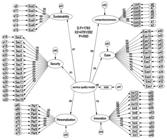
Also, Table 3 shows that the confirmatory factor analysis model fitted to the scale with the index of chi-square ratio to the degree of freedom has a value of 2.713 in the optimum level and is less than 4, and it is suitable for the validity of the model. Also, the root mean square error estimate (RMSEA) value is 0.079 and almost less than the desired level of 0.08, which indicates a reasonable error in society.
Likewise, the values of goodness of fit indices (GFI) with a value of 0.886, adjusted goodness of fit (AGFI) with a value of 0.818, comparative fit (CFI) with a value of 0.832 and smoothed goodness of fit (NFI) with a value of 0.824 is at the desired level and are considered suitable values. Therefore, the confirmatory factor analysis model fitted by the research data supports the theories at a suitable level and is considered a suitable model for explaining the dimensions. Therefore, all the items used in the research had the desired explanatory power for the dimensions of the model and according to the appropriateness characteristics and Cronbach's alpha coefficients reported, the data collection tool has the characteristics technical (reliability and credibility) a at a very good level.
The results showed that the main research model was confirmed with the indicators of extensiveness and comprehensiveness of services, stability of services, security and assurance, personalization of services, ease of use of services, and innovation of services without deleting the items. According to the results, all the averages of the six main indicators explained are higher than the hypothetical average of the society and based on the calculated t statistic with 273 degrees of freedom, the difference between the two averages is significant at the level of 0.01 and with the confidence level of 0.99.
5. Conclusion
Based on the results obtained with the grounded theory method, which is a qualitative method, digital transformations, rapid technological changes, competitive conditions of banks (as causal conditions), reducing the time and place limitations of providing services, reducing costs, the emergence of fintech companies and start-ups, Increasing the speed of providing banking services (as contextual conditions), cultural structure, regulations governing the banking system and hacking/phishing bank accounts (as intervening conditions) have been identified as the background factors.
Also, the results showed that the service quality of financial technologies in Iran's banking industry is a function of the foreground factors, including the comprehensiveness of services, services sustainability, security, and reliability, personalization of services, ease of use of services and innovation of services.
The results obtained from the analysis of the “comprehensiveness of services” index indicate that the provision of diverse services on the basis of financial technologies in such a way as to cover the majority of bank services and the needs of different segments of the society, guarantees the quality of banking financial technologies services. It will increase customer satisfaction, significantly reduce branch visits, and, as a result, reduce costs for both customers and banks.
The results obtained from the “service sustainability” index state that, in a period, where tremendous changes are constantly occurring in the banking field, it is necessary to access services continuously and online at any time and place, even through weak internet. This level of service should be established and, by using appropriate tools, any breakdown or interruption of services should be notified to the customer before it happens.
According to the results obtained from the “security and reliability” index, it can be seen that the most important factor in this index is the preservation and confidentiality of users' information. This issue has become more important especially in recent years with the emergence of cyber-attacks and information phishing. Also, maintaining privacy and creating different methods of integrated identity verification and the existence of security indicators are other factors of this index.
When the demands and requirements of the customers in all contact points of the bank, such as physical and electronic tools and personalization of the user interface, are in accordance with the preferences of the customers, it can be said that the “personalization of services” has been provided for the customers.
The ease of providing understandable information to the customer with different tools, the clarity of work instructions in providing services, the use of different icons and symbols for each type of transaction, and quick response to customers are among the "ease of use of services".
If financial technologies want to be dynamic and succeed in competing with others, they must always keep their infrastructure and services up to date. Therefore, in this field, they can always "innovate in their services" by providing open banking services, providing virtual branch services, the possibility of providing banking services and interactions in social networks.
In the statistical community, which consisted of 274 specialists, managers and experts in the banking field, the role of extensiveness and comprehensiveness of services with a coefficient of 0.69, stability of services with a coefficient of 0.68, security and assurance with a coefficient of 0.91, personalization of services with a coefficient of 0.86, ease of use of services with a coefficient of 0.90, and service innovation with a coefficient of 0.78 were estimated.
In the obtained standard coefficients, security and reliability and ease of use of services have had the highest quantity and impact. This means that attention and focus on these factors can have a greater effect on improving the quality of financial technology services in the banking industry.
It is suggested that the banks prioritize the indicators and dimensions of the model for its implementation. It is obvious that allocating time and budget in proportion to the importance of dimensions will increase success.
Also, it is suggested that, for future studies, while evaluating the results of the model obtained in different regions, the consequences of using strategic criteria should be extracted and studied.
References
- Agarwal, R., & Dhingra, S. (2023). Factors influencing cloud service quality and their relationship with customer satisfaction and loyalty. Heliyon, 9(4), e15177.
- Arasli, H., Mehtap-Smadi, S., & Turan Katircioglu, S. (2005). Customer Service Quality in the Greek Cypriot Banking Industry. Managing Service Quality, 15(1), 41-56.
- Barari, M., & Furrer, O. (2018). The customer experience ecosystem in two cultural contexts. Journal of Financial Services Marketing, 23(3-4), 234-243.
- Benlian, A., Hess, T., & Leimeister, J. M. (2014). Business Models. Business & Information Systems Engineering, 6(1), 45-53.
- Brusch, I., Schwarz, B., & Schmitt, R. (2019). David versus goliath-service quality factors for niche providers in online retailing. Journal of Retailing and Consumer Services, 50, 266-276.
- Carlini, F., Del Gaudio, B. L., Porzio, C., & Previtali, D. (2021). Banks, FinTech and stock returns. Finance Research Letters, 45(5), 102252.
- Cheng, M., & Qu, Y. (2020). Does bank FinTech reduce credit risk? Evidence from China. Pacific-Basin Finance Journal, 63, 101398.
- Creswell, J. W., & Plano Clark, V. L. (2017). Designing and Conducting Mixed Methods Research (3rd ed.). Sage Publications.
- Cronin J. Jr., & Taylor S. A. (1992). Measuring Service Quality: A Reexamination and Extension. Journal of Marketing, 56(3), 55-68.
- Dabholkar, P. A., Shepherd, C. D., & Thorpe, D. I. (2000). A comprehensive framework for service quality: An investigation of critical conceptual and measurement issues through a longitudinal study. Journal of Retailing, 71(2), 139-173.
- Danisewicz, P., & Elard, I. (2023). The real effects of financial technology: Marketplace lending and personal bankruptcy. Journal of Banking & Finance, 155, 106986.
- Dia, E., & VanHoose, D. (2022). Differentiated attributes and service-quality competition as sources of portfolio interdependence and diverging scales in banking. Economics Letters, 219, 110823.
- Drasch, B. J., Schweizer, A., & Urbach, N. (2018). Integrating the ‘Troublemakers’: A Taxonomy for Cooperation between Banks and Fintechs. Journal of Economics and Business, 100, 26-42.
- Elnagar, S. (2024). Using deep learning to enhance electronic service quality: Application to real estate websites. Intelligent Systems with Applications, 21(2024), 200330.
- Fuster, A., Plosser, M., Schnabl, P., & Vickery, J. (2019). The role of technology in mortgage lending. The Review of Financial Studies, 32(5), 1584-1899.
- Gai k., Qiu M., & Sun X. (2018). A survey on FinTech. Journal of Network and Computer Applications, 103, 262-273.
- Gomber, P., Koch, J. A., & Siering, M. (2017). Digital Finance and FinTech: current research and future research directions. Journal of Business Economics, 87, 537-580.
- Gronroos, C. (1984). A service quality model and its marketing implications. European Journal of Marketing , 18(44), 36-44.
- Guo, X., Duff, A., & Hair, M. (2008). Service Quality Measurement in the Chinese Corporate Banking Market. International Journal of Bank Marketing, 26(5), 305-327.
- Haddad, C., & Hornuf, L. (2019). The emergence of the global fintech market: Economic and technological determinants. Small Business Economics, 51(1), 81-105.
- Hong, S. J., Choi, D., & Chae, J. (2020). Exploring different airport users’ service quality satisfaction between service providers and air travelers. Journal of Retailing and Consumer Services , 52, 101917.
- Hou, J., Liu, W., Cao, Y., Wang, S., & Tang, O. (2024). Evaluating service quality of express logistics service based on online reviews using LDA-LSTM. Journal of Management Science and Engineering, 9(3), 308-327.
- Jiang J. J., Klein G., & Crampton S. M. (2000). A note on SERVQUAL reliability and validity in information system service quality measurement. Decision Sciences, 31, 725-774.
- Kasiri, L. A., Cheng, K. T. G., Sambasivan, M., & Sidin, S. M. (2017). Integration of standardization and customization: Impact on service quality, customer satisfaction, and loyalty. Journal of Retailing and Consumer Services , 35, 91-97.
- Khan, M. R., Pervin, M. T., Arif, Z. U., & Hossain, S. M. K. (2024). The impact of technology service quality on Bangladeshi banking consumers' satisfaction during the pandemic situation: Green development and innovation perspective in banking service. Innovation and Green Development, 3(2), 100120.
- Lee, I. (2016). Fintech: Ecosystem and Business Models. Advanced Science and Technology Letters, 142, 57-62.
- Lee I., & Shin Y. J. (2018). Fintech: Ecosystem, business models, investment decisions, and challenges. Business Horizons, 61(1), 35-46.
- Leong, C., Tan, B., Xiao, X., Tan, F. T. C., & Sun, Y. (2017). Nurturing a FinTech ecosystem: The case of a youth microloan startup in China. International Journal of Information Management, 37(2), 92-97.
- Meesala, A., & Paul, J. (2018). Service quality, consumer satisfaction and loyalty in hospitals: Thinking for the future. Journal of Retailing and Consumer Services , 40, 261-269.
- Micu, I., & Micu, A. (2016). Financial Technology (Fintech) and Its Implementation On the Romanian Non-Banking Capital Market. SEA-Practical Application of Science, 11, 379-384.
- Mu-Chen, C., Chia-Lin, H., & Chun-Han, H. (2021). Applying the Kano model to investigate the quality of transportation services at mega events. Journal of Retailing and Consumer Services , 60, 102442.
- Parasuraman, A., Zeithaml, V. A., & Berry, L. L. (1988). SERVQUAL: A multi-item scale for measuring consumer perceptions of service quality. Journal of Retailing , 64(1), 12-40.
- Philip, G., & Hazlett, S. A. (1997). The measurement of service quality: A new P-C-P attributes model. International Journal of Quality & Reliability Management, 14(3), 260-286.
- Philippon, T. (2016). The FinTech opportunity, NBER working paper 22476. National Bureau of Economic Research.
- Romanova, I., & Kudinska, M. (2016). Banking and Fintech: A Challenge or Opportunity? In Contemporary Studies in Economic and Financial Analysis (pp. 21-35). Emerald Publishing Ltd.
- Schmidt, R., Bell, R., & Warren, V. (2021). Keeping the wheels of the automotive industry turning: The use of tacit knowledge by product development workers in a multinational automotive manufacturer. Journal of Intellectual Capital, 22(6), 1106-1125.
- Shah, F. T., Syed, Z., Imam, A., & Raza, A. (2020). The impact of airline service quality on passengers’ behavioral intentions using passenger satisfaction as a mediator. Journal of Air Transport Management, 85, 101815.
- Tornjanski, V., Marinković, S., Săvoiu, G., & Čudanov, M. (2015). A Need for Research Focus Shift: Banking Industry in the Age of Digital Disruption. Econophysics, Sociophysics & Other Multidisciplinary Sciences Journal, 5(3), 11-15.
- Wang, Y., Sui, X., Zhang, Q. (2021). Can fintech improve the efficiency of commercial banks? -An analysis based on big data, Research in International Business and Finance, Vol 55, 101338.
- Yu, J. (2024). Stabilizing leverage, financial technology innovation, and commercial bank risks: Evidence from China. Economic Modelling, 131, 106599.
- Yudaruddin, R., Soedarmono, W., Nugroho, B. A., Fitrian, Z., Mardiany, M., Purnomo, A. H., Santi, E. N., (2023). Financial technology and bank stability in an emerging market economy. Heliyon , 9(5), e16183.
- Zhao, J., Ibrahim, H., Wang, C., Yuan, R., (2024). Investigating the Temporal and Spatial Evolution of Bank Performance and Its Impact Pathways in the Context of Financial Technology Development. Heliyon , e30585.

 Source: Prepared by the authors
 Source: Agarwal and Dhingra, 2024
 Source:
 Source: Prepared by the authors
 Source: Preparedby the authors
 Source: Preparedby the authors