
 Value Co-Destruction in Food Delivery Apps: A Text Mining Approach Based on Google Play Reviews
ABSTRACT
Objective: negative experiences with food delivery applications can erode consumer trust and reduce the perceived value of technology-mediated marketplaces.
Methods: this study examines value co-destruction (VCD) by analyzing over 100,000 user reviews on Google Play for the 10 most popular food delivery apps in Brazil. Using natural language processing, sentiment analysis, and clustering techniques, the study identified recurring patterns of dissatisfaction and categorized them into nine distinct user experience (UX) failure clusters. These include payment system breakdowns, ineffective support, delivery delays, app performance issues, and usability barriers.
Results: the analysis reveals that technological and operational misalignments, such as payment crashes, unresolved refunds, and rigid support processes, undermine perceived value. By linking consumer sentiment to specific mechanisms of VCD, the study advances the understanding of the ‘dark side’ of digital consumption and provides a scalable analytical framework for monitoring and diagnosing systemic service failures.
Conclusions: the findings offer practical guidance for improving app stability, streamlining transaction processes, and designing more responsive and empathetic customer support. Ultimately, this helps digital platforms prevent value destruction and sustain consumer engagement.
Keywords:
value co-destruction; user experience; sentiment analysis; food delivery apps; digital services
INTRODUCTION
Over the past decade, user experience (UX) has become a central topic in the study of services and technology. Positive UX has been associated with satisfaction, loyalty, and brand preference, while negative experiences can severely compromise service adoption and engagement. In digital environments, UX is shaped by complex, multidimensional factors, including usability, functionality, interface design, and perceived reliability (Otto, 2023; Ponnam & Balaji, 2014).
Concurrently, the service-dominant logic (SDL) framework has deepened our understanding of how users participate in value creation through resource integration during service interactions (Vargo & Lusch, 2004, 2017). However, recent studies have recognized that value can be co-destroyed when misalignments in practices, expectations, or resource integration occur (Echeverri & Skålén, 2021; Plé & Chumpitaz Cáceres, 2010). This phenomenon, called value co-destruction (VCD), is particularly relevant in self-service technologies, such as apps, where users depend on systems operating seamlessly to complete tasks and achieve goals (Lavorgna et al., 2021; Vo et al., 2023).
At the same time, user-generated content (UGC), such as online reviews, has become a powerful source for understanding user experience (UX) and customer sentiment (Garzaro, 2022). Researchers and practitioners have increasingly adopted techniques from natural language processing (NLP) and machine learning to extract insights from unstructured data, helping them identify patterns of satisfaction and dissatisfaction at scale (Han et al., 2016; Liu & Zhang, 2012).
Despite these advances, the literature remains limited in three key aspects. First, there is a lack of empirical studies integrating NLP analysis with theoretical frameworks such as value co-destruction, particularly in service failures on digital platforms. Second, existing research has focused mainly on value co-creation, leaving the destructive side of service interactions underexplored (Codá & Farias, 2022). Third, most current studies are concentrated in Europe and Asia. Latin America, especially Brazil, lags in investigating VCD’s theoretical and empirical dimensions in digital service interactions (Codá & Farias, 2022; Plé & Chumpitaz Cáceres, 2010).
Moreover, although some studies use online review data to address prediction tasks (e.g., ranking or rating predictions), few have explored how patterns of negative user feedback can indicate systemic failures in value delivery. This gap is particularly critical in the context of food delivery apps, which have become central to urban consumption habits yet remain vulnerable to usability failures, logistical breakdowns, and poor customer support, all of which are potential triggers of co-destruction.
The lack of empirical research on value co-destruction in technology-mediated services is not merely a theoretical oversight; it has practical consequences. Without a clear understanding of how value is destroyed in digital interactions, companies lack the tools to prevent service failures, mitigate reputational damage, and redesign experiences that meet user expectations (Gkritzali et al., 2020; Lavorgna et al., 2021). This limitation is even more acute in emerging markets like Brazil, where digital platforms are essential to daily life, particularly for food delivery services. The absence of theoretical frameworks grounded in local empirical evidence hinders the development of context-sensitive strategies for improving customer experience and service resilience (Codá & Farias, 2022; Plé & Chumpitaz Cáceres, 2010).
To address this issue, the present study examines the role of VCD in food delivery app user experiences. It applies sentiment analysis and natural language processing techniques to over 100,000 user reviews from the Google Play Store. Combining advanced data science tools with the conceptual lenses of SDL and interactive value formation (Echeverri & Skålén, 2021), this study examines how negative feedback reflects systemic issues such as usability failures, communication breakdowns, and poor service design that compromise the perceived value of digital services (Järvi et al., 2020; Laud et al., 2019; Vo et al., 2023).
The main theoretical contribution is the empirical demonstration of how VCD can be detected and analyzed through UGC. This offers a replicable method for identifying service breakdowns and resource misalignments (Otto, 2023; Yu & Zhang, 2020). Additionally, situating the analysis in a Latin American context expands the geographical scope of existing research and enriches the theoretical discussion on VCD in digital service ecosystems. The study provides a novel integration of sentiment analysis and value theory, advancing the understanding of how UX failures disrupt the service logic that underpins value creation (Reisenbichler & Reutterer, 2019; Zhang et al., 2023).
The section following this one discusses in more detail the main concepts presented in this introduction, such as value co-destruction and its causes according to the literature, user experience, and user-generated content (UGC), concluding with an argument focused on the contribution of data science and NLP to customer sentiment and experience analysis. This will serve as a foundation for discussing the results.
LITERATURE REVIEW
A brief discussion of value co-creation and value co-destruction
Value creation is a theme that has always been linked to the discussion of marketing and, more specifically, service marketing since the introduction of service-dominant logic (SDL) by Vargo and Lusch (2004) in the early 2000s, giving marketing a new logic - that of service as the fundamental basis of exchange (Vargo & Lusch, 2017) - associated with the discussion of value. The customer or user of the service becomes a crucial actor, as they become a co-creator of the value generated in the service relationship through their experience. In their SDL axioms, Vargo and Lusch (2017) also propose that all economic and social actors are resource integrators. These resources can be operand (material, financial, technological, etc.) or operant (performance, expertise, know-how).
In a service relationship, as in any social relationship, instead of integration, the disintegration or misuse of resources may occur, leading the actors to experience a decline in well-being during an interaction, a phenomenon that Plé and Chumpitaz Cáceres (2010) called “co-destruction of value,” after all, “value is co-created through mutually beneficial and reciprocal relationships” (Vargo et al., 2008, p. 146). Value co-destruction will henceforth be referred to in this work as VCD, and co-creation as VCC (value co-creation).
Since 2004, the literature has advanced in the discussion of SDL and VCC, and it is observed that the production of studies on the misalignment of resource integration, specifically VCD in service relations, remains limited. For this reason, this discussion aims to delve deeper into the importance of studying this dimension of interactive value formation (IVF), which can be understood as a continuum within a space that has, at its extremes, value co-creation and value co-destruction. Echeverri and Skålén (2021) propose that both VCC (practice alignment) and VCD (misalignment) are inherent in IVF, which is enabled and limited by service resources and systems. “The alignment and misalignment of the practice elements - procedures, understandings, and commitments - are enacted during encounter/matching, appeals, and evaluation” (Echeverri & Skålén, 2021, p. 241).
Table 1 summarizes the primary causes of VCD identified in the literature. A temporal analysis of these contributions reveals an evolution in understanding how misalignments between service providers and customers can erode value during interactions. The earliest studies, such as those of Vafeas et al. (2016), emphasized foundational elements, including a lack of trust, inadequate communication, and imbalanced power dynamics. These studies primarily adopted a dyadic perspective, focusing on observable failures in relational exchanges.
Subsequently, Järvi et al. (2018, 2020) introduced a more nuanced framework that distinguishes between provider-driven and client-driven failures. For instance, contextual rigidity and an inability to serve reflect organizational constraints, whereas excessive expectations and fraudulent claims indicate problematic consumer behaviors. These contributions marked a shift toward a multi-actor, systemic perspective of service interactions that is better aligned with the complexity of technology-mediated contexts. Baptista and Hemais (2020)added a cultural lens, exploring how ingrained social norms and opportunistic behaviors, which are often normalized in specific contexts, contribute to VCD. This socio-cultural framing is particularly relevant for studies in Latin America, where structural issues and cultural norms may uniquely shape user behavior and expectations.
Laud et al. (2019) further expanded the theoretical understanding with a typology that lists 10 distinct forms of resource misintegration, including negligent integration, coercive use, and a lack of willingness to integrate resources. This contribution presents a comprehensive classification of resource-related failures, advancing the field toward a more systematic and operational definition of VCD causes.
Research on value co-destruction demonstrates that value diminishes when service interactions generate resource misintegration, that is, when actors fail to apply, combine, or interpret their resources effectively within the experience (Laud et al., 2019; Plé & Chumpitaz Cáceres, 2010). In digital environments, UX failures operate as triggers of this process by undermining users’ cognitive, emotional, and operational capacity to engage constructively throughout the service journey. Unintuitive interfaces, inconsistent navigation flows, and ambiguous cues produce script misalignment (Järvi et al., 2020), thereby increasing the likelihood of resistance, abandonment, and complaints. UX breakdowns not only frustrate users but also reconfigure the interactional dynamics in ways that activate the mechanisms identified by Echeverri and Skålén (2021), through which misunderstandings, involuntary actions, and relational tensions transform the encounter into a trajectory of co-destruction. Based on this perspective, UX failures can be framed as direct predictors of VCD processes, as they negatively shape how users mobilize their resources during digital service interactions.
For this reason, in ICT-mediated services, it is crucial to monitor perceived usability from a user experience (UX) perspective. This perspective on UX is grounded in a phenomenological theoretical foundation, where the individual’s subjective experience is the primary and natural focus of the investigation. This approach focuses on one’s experience as a subjective phenomenon constantly being interpreted and reinterpreted by the individual. When interaction is viewed as a performance, the experience can be described in terms of the performers’ perceptions of their appearance, their regard for the spectators around them, and how they move fluidly between acting and watching (Williamson & Brewster, 2012).
User experience is a fundamental concept that focuses on the interaction between the customer and a product or service. In this paper, user experience is related to service quality, customer engagement, value co-creation, and value co-destruction. Understanding user experience is crucial for enhancing customer satisfaction and fostering stronger brand relationships (Otto, 2023).
UX studies generate the information needed to develop responsive and user-friendly systems. UX studies map people’s perceptual and behavioral responses to a system that is anticipated or already in place. While UX is dynamic and evolves with technological advancements, a key finding of UX research is that user endorsement of a system’s functionality, utility, usability, and efficiency is crucial for technology adoption (Lavorgna et al., 2021).
Studies investigating barriers to technology acceptance also suggest that ignoring or paying insufficient attention to UX can foster ‘algorithm aversion,’ a term that refers to the general reluctance of target users to adopt technologies designed to fully or partially automate tasks, preferring human judgment, particularly after observed or reported technological failures (Lavorgna et al., 2021).
The ‘Five Es’ of a product’s usability are relevant to apps. A product is usable when it is (a) effective, (b) efficient, (c) engaging, (d) easy to learn, and (e) error-tolerant. It is effective when it allows the achievement of goals with minimal effort; efficient when it allows tasks to be completed quickly and with few errors; engaging when it offers pleasant daily navigability; easy to learn when it supports rapid adaptation through the acquisition and expanded development of skills as the user experience advances; and error-tolerant when it avoids errors and supports recovery from these errors (Subramanya, 2016).
Data science, UGC, and NLP in customer sentiment and experience analysis
ElKattan et al. (2023) address the concept of sentiment analysis, which involves understanding and evaluating users’ emotions, attitudes, and opinions about services offered on sharing platforms such as Uber and Airbnb. Sentiment analysis involves techniques and algorithms, such as text analytics and natural language processing, to identify and understand user perceptions expressed in reviews, comments, and other forms of feedback. Sentiment analysis applies natural language processing (NLP) and machine learning techniques to identify and classify opinions, attitudes, and emotions expressed in text (Otto, 2023). Garzaro (2022) employed sentiment analysis on tweets from Brazilian fintech companies to comprehend customer perceptions of the financial services they provide.
Regarding UGC, its analysis can reveal customer sentiments and experiences (Buhalis & Sinarta, 2019), which service providers may overlook. The advancement of data science has sparked a growing trend in using textual analytics to reveal customer insights (Celuch, 2021). Due to the unstructured nature of online analyses, scholars have embraced NLP as an emerging tool to gain deeper insights into large amounts of text data (Amado et al., 2018).
Machines can read, understand, and derive meaning from human language. Under the guise of text analysis, topic modeling, and sentiment analysis, these approaches are currently the dominant methods in tourism contexts. The former identifies hidden topical patterns, while the latter extracts subjective information (e.g., sentence tone) from textual data (Yu & Zhang, 2020).
Scholars realized the need to quantitatively advance results by incorporating consumer sentiments through NLP analysis. The synergy between opinion mining and topic classification generates even more comprehensive insights through the computational quantification of online assessments (Vu et al., 2019). For example, based on the results of topic modeling, NLP enables researchers to capture an overview of both the positive and negative aspects of consumer experience with the use of apps and other service entities (Yu & Zhang, 2020).
State-of-the-art concepts in sentiment analysis and user experience demonstrate that these areas are rapidly evolving research fields. In sentiment analysis, artificial neural network models have been widely used because they can understand and process large volumes of text data. Sentiment analysis has expanded to encompass text and multimedia, including images and videos. Regarding user experience, the current literature emphasizes the importance of understanding users’ needs and expectations when interacting with information systems, such as search engines. Personalization and adaptation of search systems to meet individual user preferences have been areas of growing interest (Zhang et al., 2023).
Otto (2023) primarily discusses the performance analysis of an image-type classifier, focusing on accuracy, recall, and the F1 score. It also explores the extraction of textual features from video presentations, including syntax, structure, semantics, and readability. Although the article does not explicitly address sentiment analysis or user experience, it underscores the importance of semantic understanding for search engine accuracy in requirements engineering. Current theoretical discussions in the sentiment analysis literature focus on improving the accuracy and effectiveness of artificial neural network models, as well as developing more personalized and adaptive approaches to meet specific user needs. Research is also exploring new ways to integrate sentiment analysis and user experience into search systems and other natural language processing applications (Zhang et al., 2023).
Currently, theoretical discussions in the literature are moving toward exploring specific thresholds for positive and negative affective load to better understand how these affect consumer decisions (Garzaro, 2022).
RESEARCH METHOD
This is a qualitative-quantitative descriptive study that may also be considered explanatory. First, data scraping and database organization were carried out. In the present study, publicly available user comments from the Google Play Store were exclusively used, none of which contained sensitive personal data or identifiers. No direct interaction with individual users (e.g., surveys or interviews) was conducted, nor were any personal names, email addresses, user identifiers, or other ‘sensitive personal data,’ as defined by the LGPD (Lei n. 13.709, 2018 / Law No. 13,709, 2018), collected. Therefore, this research falls within the category of using open, anonymized user-generated content and does not involve the processing of identifiable personal data subject to stricter LGPD protections (Fernandes & Nuzzi, 2024).
The LGPD establishes that the processing of personal data must comply with the principles of transparency, purpose limitation, data minimization, and respect for data subject rights (Prestes et al., 2021). As the dataset comprises only public, aggregated review texts, and no attempt was made to identify authors or link comments to individual profiles, the methodology honors these principles. Additionally, existing discourse on the ethics of research involving social media and the open web emphasizes that, although public data may mitigate certain risks, researchers should still address issues of user autonomy, consent, and platform context (Gilbert et al., 2020).
Next, the research was conducted using a methodological protocol, from data collection to analysis. One well-known method is the cross-industry standard process for data mining (CRISP-DM). According to Chapman et al. (2000), it is a widely used methodology for developing data mining projects. This approach provides a structured, iterative process to guide professionals in analyzing and extracting knowledge from data. The data collection and analysis process is shown in Figure 1.
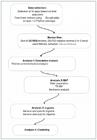
The six phases of CRISP-DM are:
-
Understanding the business: The project’s objectives, requirements, and success criteria have been defined. Understanding the business context is essential for a solid foundation.
-
Understanding the data: The available data has been thoroughly explored and analyzed to identify its quality and relevance, including preprocessing activities such as cleaning and integration.
-
Data preparation: The data has been transformed and prepared for modeling, ensuring its readiness for subsequent steps.
-
Modeling: Various modeling techniques were applied, evaluated, and adjusted to develop descriptive models that met the established criteria.
-
Evaluation: The models were thoroughly evaluated with additional tests to ensure their robustness and effectiveness.
-
Implementation: Final adjustments, monitoring planning, and complete documentation were completed, along with integration and adoption strategies.
In the business understanding phase, the research goal was to identify recurring patterns of negative user experiences that signal mechanisms of value co-destruction in food delivery apps. This informed both the scope of the data extraction, Brazilian apps from 2014 to 2025, and the decision to focus on user-generated reviews written in Portuguese.
In the data understanding phase, the dataset extracted via the Google Play Scraper library was initially inspected to detect incomplete or inconsistent records. Descriptive statistics were then used to evaluate the volume of data, language distribution, and rating frequency. Exploratory text analysis identified the prevalence of emojis, special characters, and non-Portuguese fragments, informing subsequent cleaning rules.
The data preparation phase involved several systematic cleaning and normalization steps. Only reviews written in Portuguese containing at least five words were retained to ensure semantic consistency. Duplicate entries, empty texts, and automated or promotional content were removed. The texts were converted to lowercase, and punctuation, numbers, and stop words were eliminated using the NLTK Portuguese stop word list. Orthographic normalization and lemmatization were applied to unify different morphological forms of the same word (e.g., ‘ótimo/ótima’). Words that were common in the app context but semantically neutral (e.g., ‘pedido’, ‘entrega’) were preserved to maintain domain relevance.
Following text normalization, tokenization and n-gram feature extraction (unigrams, bigrams, and trigrams) were performed to provide a numerical representation of the textual corpus. Term frequency (TF) and term frequency-inverse document frequency (TF-IDF) matrices were then computed to capture local and global term relevance. The prepared dataset was subsequently used for clustering and sentiment analysis in the later stages of the CRISP-DM modeling and evaluation process.
The crawler simulated human behavior by scraping web data to avoid machine-translated revisions and by extracting only Portuguese reviews. It accessed user reviews and complementary data from the most popular food delivery apps, including review date, rating, text, and company responses. Evaluations from 2014 to July 2025 were collected from Brazil’s 10 most popular delivery apps. Scores of four and five were considered positive, three neutral, and two and one negative, on a scale from one to five. There are several approaches to applying sentiment analysis. In this research, an approach based on lexical polarity was used. This approach relies on polarity-rated opinion word dictionaries (Ravi & Ravi, 2015). Therefore, dictionary selection is an important methodological consideration. A relevant aspect of dictionary choice is its suitability for the text domain. Based on this criterion, the sentiment lexicons SentiLex-PT 02 (Silva et al., 2012) and Oplexicon_v3.0 (Souza & Vieira, 2012) were used.
The process of selecting n neighboring words from the text content as features is referred to as n-gram features. When n = 1 (i.e., one word) is assigned at a time, it is known as a unigram. If two neighboring words (n = 2) at a time are chosen, it is known as a bigram; similarly, when four neighboring words (n = 4) are assigned at the same time, it is known as a four-gram.
In addition to the sentiment analysis pipeline, the study used an unsupervised learning approach to identify underlying themes in user reviews. Instead of relying solely on partition-based methods, various clustering and topic modeling techniques, including K-means, DBSCAN, and latent Dirichlet allocation (LDA), were systematically evaluated to determine the most suitable algorithm for high-dimensional textual data. Previous studies have shown that different clustering paradigms behave quite differently in sparse linguistic spaces (Agarwal et al., 2024; Jelodar et al., 2019); therefore, an empirical comparison is essential.
All models were trained using the same feature representation to ensure comparability. The textual data were preprocessed by lowercasing, tokenizing, removing stop words, and normalizing. The reviews were transformed using TF-IDF vectorization with the following parameters: max_features = 3000, ngram_range = 1-2, min_df = 5, max_df = 0.85, and sublinear_tf = true. Dimensionality reduction was then performed using TruncatedSVD, with n_components automatically selected between 120 and 200 based on explained variance. The final model retained 150 components. This configuration follows best practices recommended for topic modeling on high-dimensional, sparse corpora (Bingham & Mannila, 2001). The resulting dense semantic embeddings were scaled with StandardScaler and used as input for all clustering and topic modeling evaluations.
K-means is widely used in text clustering due to its computational efficiency and intuitive, centroid-based formulation (Hu et al., 2023; Ikotun et al., 2023). However, its performance in this study was suboptimal. The algorithm produced low silhouette values and limited semantic coherence, which is consistent with previous findings that K-means struggles when clusters are not linearly separable or when document vectors exhibit irregular density patterns. DBSCAN was also evaluated but failed to generate meaningful clusters across 60 parameter configurations. This result aligns with well-documented limitations of density-based methods in high-dimensional, sparse vector spaces, where distance concentration leads to unstable density estimation (Campello et al., 2015; Schubert et al., 2017).
In contrast, LDA produced substantially more coherent thematic structures and superior internal quality metrics across the same preprocessed dataset. LDA is particularly well suited for modeling semantic patterns in large corpora because it assumes that documents are probabilistic mixtures of latent topics, each of which is characterized by a distribution of words (Blei et al., 2003). This generative structure enables LDA to capture co-occurrence patterns and latent semantics that partition-based clustering methods may overlook. In this study, LDA outperformed both K-means and DBSCAN, yielding higher topic coherence scores, better interpretability, and clearer alignment with the underlying complaint categories.
DISCUSSION OF RESULTS
This study investigated how negative experiences with food delivery applications can lead to value co-destruction (VCD) by utilizing natural language processing (NLP) and machine learning techniques on a large dataset of application reviews.
Crawler creation and capture of reviews in food delivery apps
For the automated capture of evaluations, the Python Google Play Scraper library was used. A list of the most used apps was formed: iFood, Zé Delivery, McDonald’s, Habib’s, Daki, Food to Save, Rappi, Burger King, Coco Bambu, and Aiqfome. Among the information available for data scraping, the fields app_name, app_id, review_date, rating, and review_text were programmed for crawler collection. Ultimately, 357,958 evaluations were collected. Figure 2 shows the distribution of the evaluations.

The second part of the data treatment involved separating evaluations into three categories: positive (scores 4 and 5), negative (scores 1 and 2), and neutral (score 3), creating a new column called ‘feeling.’ After the separation, a new database was created, with 120,792 negative evaluations, of which 88,272 were grade 1 and 12,153 were grade 2. The distribution of reviews per application is shown in Figure 3.

Figure 3 shows that the volume of negative reviews remained relatively low until 2019, when it began to increase sharply. This increase is likely due to the growth in the use of delivery apps during the pandemic. From 2020 onward, there has been an apparent surge in reviews, peaking around 2021 and 2022. Apps such as iFood and Zé Delivery stand out with the highest volume of negative feedback across multiple years. Other apps, including Rappi, McDonald’s, and Aiqfome, also show high numbers of negative reviews. Meanwhile, newer or more niche apps, such as Food to Save and Daki, have smaller but noticeable shares in more recent years. Notably, even though 2025 only covers up to June, it presents a significant volume of negative reviews, indicating continued user engagement and feedback.
For the second phase, data preparation, the development of NLP involved selecting, merging, cleaning, coding, and building features from the original dataset. Modeling requires a two-dimensional dataset composed of rows and columns. Each row represents the unit of analysis, while columns represent attributes, descriptors, or variables (Abbott, 2014). Before applying sentiment analysis to review descriptions to extract additional features, preprocessing is the most critical step in transforming text from an unstructured to a structured form (Han et al., 2016). This process allowed for the retention and removal of irrelevant information.
The procedure was carried out through the application of the following preprocessing steps, some of which are language-dependent: (a) transformation of all evaluation texts into lowercase; (b) stemming of common delivery-related words, such as ‘app’ and ‘delivery,’ and others that may be significant for data interpretation; (c) standardization of terms used to write some words or expressions that could be spelled differently or misspelled; for example, treating ‘You’ and ‘U’ as the same token; (d) normalization of terms used to write words or expressions that could vary in form or gender (e.g., ‘Great,’ ‘good,’ ‘very good,’ and ‘fine’) ; and (e) removal of punctuation, numbers, and stop words.
After preprocessing the text, the data were transformed into a bag-of-words representation, one of the most popular methods used in text mining (Antonio et al., 2018). This method created two document-term matrices, one per document (review) and the other per sentence (sentences within comments). Each matrix consists of rows representing documents and columns representing word frequencies (i.e., all words present in a document). These matrices produced the information needed to create two sets of data characteristics: the number of words per review and the number of sentences per review.
Each feature was determined using two techniques commonly employed in data prediction modeling: term frequency (TF) and term frequency-inverse document frequency (TF-IDF). TF is a numerical statistic representing how often each term appears in a document. TF-IDF is also a numerical statistic, representing the composite weight of each term in a document. Terms can be a single word (a unigram or n-gram) or a contiguous sequence of n words in a text (Liu & Zhang, 2012).
User experience (UX) and the co-destruction of value in the service relationship between users and applications used
Figure 4 shows the distribution of UX issues reported in negative reviews of food delivery apps. The most frequently mentioned issue was payment problems (26.7%), followed by support (23.8%) and delivery problems (21.8%). Together, these categories accounted for over 70% of all UX complaints, indicating that failures in transaction completion and service response are primary triggers of dissatisfaction. One user expressed frustration with being charged twice and not receiving a refund, stating, “They deducted twice and did not return the amount,” a classic example of operational resource failure leading to perceived injustice and value destruction (Laud et al., 2019; Plé & Chumpitaz Cáceres, 2010).

Similarly, several complaints cited support inefficiency, with users reporting that the chatbot provided only automated responses and that no human representative was available, revealing unmet expectations and communication breakdowns (Järvi et al., 2020). Delivery-related grievances emphasized delays and failed orders. One user wrote, “My order never arrived, and no one solved it,” highlighting how logistical breakdowns can dismantle the value-in-use process (Echeverri & Skålén, 2021). Technical issues with app performance (16.7%) and usability (7.9%) further illustrated digital friction. Comments such as “the app crashes during payment” and “I cannot find the cancel option” suggest poor interface design and a lack of error tolerance (Subramanya, 2016). Although food quality was the least cited issue (3.1%), complaints such as “cold and spilled food” showed that downstream service failures can erode customer satisfaction even when app-mediated processes function properly. These patterns reflect how misalignments of both operant (e.g., knowledge, responsiveness) and operand (e.g., technology, logistics) resources jointly contribute to value co-destruction in digital service ecosystems (Lavorgna et al., 2021; Vo et al., 2023).
After analyzing word correlations, the most recurrent words in the evaluations were associated using n-grams. In computational linguistics, an n-gram is a contiguous sequence of n elements from a text sample. These elements can be phonemes, syllables, letters, words, or base pairs. Figure 5 shows the top 20 bigram associations.

Figure 5 shows the results of a bigram analysis of negative app reviews. This analysis reveals the most frequent two-word combinations, providing deeper insight into patterns of user dissatisfaction and value co-destruction. The most frequent bigram, “delivery man,” which occurred 2,290 times, highlights the critical role of last-mile logistics in shaping the customer experience. Complaints such as “the delivery person left the order in the wrong place and did not answer the phone” reveal failures in service execution and poor integration of technology and personnel (Echeverri & Skålén, 2021; Laud et al., 2019).
Phrases such as “bad app,” “horrible app,” and “bad application,” mentioned over 6,000 times, indicate deep dissatisfaction with the system’s interface and functionality. These comments often refer to crashes, login problems, or update failures, such as “the app closed in the middle of the order,” reflecting a breakdown of operant and operand resources and unmet digital service expectations (Lavorgna et al., 2021; Vo et al., 2023).
Bigram patterns such as “placed order,” “made purchase,” “cancel order,” and “canceled order” suggest that transactional breakdowns are common. Users consistently describe their failed attempts to complete or reverse transactions, such as “I placed the order, it charged me, but nothing arrived,” or “I tried to cancel, but the app would not let me.” These issues underscore systemic flaws in user flow design and the impact of usability barriers on user frustration and dissatisfaction (Liu, 2020; Subramanya, 2016). Terms such as “credit card,” often appearing in payment-related grievances, point to perceived risks and a lack of financial transparency. For example, one user reported, “The credit card was charged twice, and I never received support.” These concerns align with issues of trust, fairness, and information asymmetry, which are common triggers of negative emotions on digital platforms (Garzaro, 2022; Järvi et al., 2020).
Additionally, phrases such as “several times,” “every time,” and “long time” reveal recurring and unresolved issues, suggesting that the failures are systemic rather than isolated. As one review laments, “Every time I use the app, something goes wrong - it is exhausting.” These repeated negative encounters demonstrate a cumulative erosion of value and trust over time (Zhang et al., 2018). Finally, mentions of “misleading advertising” and “bad service” capture a perception of betrayal or deception in the brand-user relationship. For example, “They promised a discount that never applied - misleading advertising!” illustrates the misalignment in communication and violations of expectations discussed in value co-destruction theory (Plé & Chumpitaz Cáceres, 2010; Wang et al., 2024).
The same procedure was performed in the treatment of the research data, but this time using trigrams. Figure 6 shows the top 20 trigram associations.

Figure 6 shows the results of a trigram analysis that highlights more nuanced expressions of dissatisfaction in user reviews. This analysis reveals how specific sequences of problems manifest in everyday interactions with food delivery apps. The most frequent trigram, “takes a long time” (n = 379), emphasizes persistent delays that disrupt user expectations of speed and convenience - two key promises of delivery services’ value propositions. Phrases such as “takes a long time to load, long time to confirm, and even longer to arrive” suggest friction throughout the service journey, from app response time to delivery time. These phrases reinforce the idea that temporal inefficiency can destroy experiential value (Vo et al., 2023; Zhang et al., 2018). Similarly, ‘already uninstalled” (n = 300) and “worst app ever” (n = 259) reflect definitive user disengagement and frustration. These phrases are often accompanied by comments such as “I have installed and uninstalled it three times, and it still does not work,” illustrating the threshold at which repeated failures lead to total abandonment and forfeiture of value (Lavorgna et al., 2021; Wang et al., 2024).
Trigrams such as “every time I try, ” “always gives error,” and “app crashes a lot” indicate systemic reliability issues and cumulative frustration, which are hallmarks of unreliable service. As one user notes, “Every time I try to pay, the app crashes or gives an error,” conveying the erosion of user trust due to unstable operating resources. This reinforces the significance of app robustness for perceived value (Järvi et al., 2018; Subramanya, 2016). Similarly, “want money back” (n = 249) and “payment via Pix” (n = 223) suggest recurring financial and transactional disputes, frequently related to Brazil’s popular instant payment system, Pix. Several comments included statements such as “Paid via Pix, app crashed, no order received, no refund,” suggesting gaps in critical accountability and compensation mechanisms. These grievances reflect value co-destruction stemming from failures in operand (financial systems and app infrastructure) and operant (support processes and service recovery) resources (Laud et al., 2019; Plé & Chumpitaz Cáceres, 2010).
The recurrence of expressions such as “bad app,” “horrible app,” and “bad application,” mentioned more than 6,000 times, reveals not merely functional dissatisfaction but a breakdown in the integration between operand resources (e.g., technological infrastructure, system code, payment and login modules) and operant resources (users’ skills, expectations, cognitive scripts, and agency), as defined within service-dominant logic (Vargo & Lusch, 2004, 2017; Vargo et al., 2008). Comments such as “the app closed in the middle of the order” illustrate failures in operand resources that prevent users from deploying their operant resources effectively, thereby diminishing their ability to complete intended actions. This misintegration directly activates the mechanisms of value co-destruction described by Echeverri and Skålén (2021), in which malfunction, misinterpretation, and frustration progressively convert interactions into destructive trajectories (Lavorgna et al., 2021; Vo et al., 2023).
Bigram patterns such as “placed order,” “made purchase,” “cancel order,” and “canceled order” indicate that transactional breakdowns reflect simultaneous failures of system operand resources (transactional architecture, business rules, payment authorization logic) and constrain the productive use of customers’ operant resources (planning, decision-making, trust, problem-solving). Statements such as “I placed the order, it charged me, but nothing arrived” or “I tried to cancel, but the app would not let me” illustrate how usability barriers (Liu, 2020; Subramanya, 2016) interrupt the expected resource-integration process and undermine the reciprocal dynamics essential for service interaction. When a reviewer reports, “The credit card was charged twice, and I never received support,” it highlights the erosion of socioemotional operant resources such as trust and perceived fairness, which are well-established antecedents of value co-destruction on digital platforms (Garzaro, 2022; Järvi et al., 2020).
Furthermore, terms such as “several times,” “every time,” and “long time” point to the systemic and persistent nature of the failures, indicating that resource misintegration is structural rather than episodic. As one user laments, “Every time I use the app, something goes wrong - it is exhausting.” These repeated breakdowns progressively deplete customers’ emotional and cognitive operant resources, triggering mechanisms such as resistance, abandonment, and negative MWOM. Taken together, these review excerpts show that UX failures represent critical junctures at which deficient operand resources inhibit the effective mobilization of users’ operant resources, creating fertile conditions for value co-destruction.
This study employed topic coherence analysis to evaluate the semantic interpretability of topics in probabilistic topic models (Mimno et al., 2011; Röder et al., 2015) and to identify the most appropriate number of latent topics in the corpus. Topic coherence evaluates the extent to which the most representative words of each topic appear in similar contexts, capturing semantic alignment beyond statistical co-occurrence. The literature emphasizes that coherence-based evaluation offers a more reliable, linguistically grounded criterion than geometrical notions of cluster separation when the objective is to uncover latent semantic structures in textual data (Stevens, 2012).
Following established best practices, the coherence metric c_v was calculated for multiple candidate topic configurations (K = {3, 4, 5, 6, 7}) using consistent preprocessing steps, including TF-IDF vectorization, Portuguese stop word removal, bigram generation, and TruncatedSVD-based dimensionality reduction. The results showed a steady increase in coherence from K = 3 to K = 6, at which point the model achieved its highest coherence value (approximately 0.52). Beyond this point, however, coherence decreased, suggesting topic fragmentation and reduced semantic clarity at higher values of K.
As illustrated in Figure 7, the coherence curve peaks at K = 6, indicating that this configuration is the most semantically robust and interpretable solution. Selecting the number of topics at the coherence maximum aligns with methodological recommendations for topic modeling, which emphasize that coherence should guide the identification of a balance between parsimony and semantic richness (Röder et al., 2015). Based on this evidence, the final model adopted six latent topics, providing meaningful and coherent thematic groupings for subsequent analysis.

Figure 8 shows how negative reviews are distributed across the six latent topics identified by the LDA model. The results reveal a heterogeneous yet balanced structure, with each topic capturing a significant amount of user dissatisfaction. The most prominent topic is Topic 5, which aggregates 30,938 reviews. This is followed by Topic 0, which aggregates 22,581 reviews, and Topic 3, which aggregates 18,942 reviews. Together, these three topics account for over half of all negative reviews, suggesting that a few underlying issues primarily contribute to users’ negative experiences with the app.

Cluster 0: Systemic reliability and service failure breakdown
Cluster 0 reveals a pervasive pattern of systemic reliability issues and recurring service breakdowns. This pattern has led to deep user frustration with the digital platform and the operational ecosystem behind it. Rather than describing isolated defects, the comments consistently and cumulatively convey the perception that the apps fail at basic tasks, such as loading the interface, processing orders, and resolving delivery issues. This aligns with broader evidence indicating that reliability failures and system instability are among the strongest drivers of negative user sentiment in digital services (Hu et al., 2023; Ikotun et al., 2023).
Many users cite persistent technical failures, such as apps freezing during the ordering process, unresponsive buttons, and payment screens that never finish loading. Some users explicitly state that these bugs have “been happening for months,” indicating not only technical fragility but also a perceived lack of platform stewardship. These patterns mirror the dimensions of unreliable service described in classic service quality models. Several users describe having to repeatedly restart the app or abandon orders due to an inability to complete basic actions, which is consistent with the high-friction digital experiences documented in prior UX failure research (Stevens, 2012).
The cluster also reflects frustration with customer support that fails to resolve issues. Many users describe receiving automated replies, being denied refunds even when an order never arrived, and navigating support flows that loop endlessly without solving anything. Some users feel that the platform “always blames the user,” which exacerbates perceptions of injustice and abandonment. These reactions align with topic modeling literature showing that ineffective support often occurs alongside operational failures because users experience them sequentially, which compounds dissatisfaction (Mimno et al., 2011; Röder et al., 2015).
Emotionally, the discourse in this cluster conveys an escalating loss of trust. Comments include sentiments such as “I’m done with this app,” “you can’t rely on it anymore,” and “they don’t care about customers.” Such sentiments indicate that users interpret repeated failures as systemic rather than circumstantial. This reinforces insights from recent digital service research, indicating that persistent reliability issues significantly accelerate user disengagement (Ikotun et al., 2023).
User reviews also reveal a critical emotional dimension in the process of value co-destruction, a facet often overlooked but essential for understanding how customers feel and internalize deteriorating service experiences. Statements such as “I’m exhausted,” “this has been happening for months,” “they always blame the user,” “I’m done with this app,” “you can’t rely on it anymore,” and “they don’t care about customers” highlight the progressive erosion of emotional operant resources, including trust, security, perceived justice, agency, and relational belonging.
As Echeverri and Skålén (2021) argue, VCD arises not only from functional breakdowns but from the interplay between technical failures and the affective responses they elicit, triggering frustration, psychological fatigue, and a sense of abandonment. From this perspective, the emotional intensity expressed by users signals the deepening of a destructive cycle in which recurring UX failures, compounded by inadequate provider responses, reinforce feelings of powerlessness and neglect, ultimately rupturing the relational bond. Thus, value co-destruction emerges as a phenomenon that is simultaneously technical and emotional, in which negative affect is not a peripheral outcome but a constitutive element of the destructive process itself.
Cluster 1. Promotions, pricing, and access friction
Cluster 1 reveals a pattern of user dissatisfaction related to promotional inconsistency, high prices, and manipulative practices in the platform’s incentive system. User comments, though informal, consistently touch on themes of pricing opacity, algorithmic unfairness, and value destruction, all of which are recognized as critical issues in digital marketplaces (Davenport-Klunder & Hine, 2023; Haenlein et al., 2022; Shankar et al., 2022).
A prevalent concern is that promotions and coupons seem appealing but are unusable at checkout. Many users describe this issue as deceitful or intentionally obstructive. Users report that “coupons never apply,” “the discount disappears as soon as I confirm the order,” and that restaurants label items as “promotional” to block coupon usage. One reviewer writes, “I have plenty of coupons, but none work because the selected restaurants are never open,” while another states, “They show $0.99 deals, but when you click, the total is $14.50 - this is fraud.” These narratives echo concerns in the literature about how algorithmic pricing ambiguity undermines consumer trust (Davenport-Klunder & Hine, 2023; Traczyk et al., 2021).
Another common theme is substantial price inflation. Users perceive the app’s prices as consistently higher than those offered directly by restaurants. Users have noted that “everything is more expensive here,” “delivery costs as much as the meal,” and “restaurants increase menu prices just to cancel coupon usage.” Some view this as deliberate manipulation: “I see the same item priced at $30 with free delivery, but during a promotion, the price drops to $10 with a $20 delivery fee.” These patterns align with recent discussions about the perceived opportunism of platform pricing and personalized discount strategies (Haenlein et al., 2022).
Users also express frustration with the platform’s subscription-based discount program, which they often describe as delivering little or no real benefit. Users express sentiments such as “I pay for the club, but none of the coupons work,” “the club is just a way to take your money,” and “after I subscribed, stores removed the pickup option, forcing me to pay for delivery.” These complaints reflect what Shankar et al. (2022) describe as value co-destruction: platform features intended to increase loyalty that instead trigger dissatisfaction and erosion of trust.
Technical issues, such as bugs, crashes, and malfunctioning payment systems, intensify the perception of deteriorating platform reliability. Several users mention, “The app won’t open when I need it,” “The system shows that my meal voucher is accepted, but an error occurs during checkout,” and “The app freezes whenever I try to apply a coupon.” These usability failures reinforce broader concerns about the inconsistent quality of service and unreliable features of digital platforms (Balzano et al., 2024).
A combination of promotional barriers, inflated prices, and technical instability often causes users to abandon or bypass the platform. Comments include, “I prefer ordering directly from the restaurant,” “I’m uninstalling the app,” and “The competition is already better.” This behavioral response is consistent with recent evidence indicating that customers may switch to competitors more quickly in response to perceived unfairness in algorithmic or pricing decisions (Haenlein et al., 2022).
Cluster 2. Breakdowns in customer support, refunds, and account access
This cluster encompasses a wide range of complaints related to inadequate customer support, unsuccessful refund attempts, and issues with accessing accounts. These complaints reveal significant systemic weaknesses in the platform’s post-purchase infrastructure. The reviews show that users struggle to obtain basic assistance when orders go wrong or accounts become inaccessible. According to prior research, this pattern strongly undermines trust and heightens perceptions of platform unfairness (Ghose & Han, 2023; Turel, 2021).
Many comments describe denied refunds or incomplete reimbursements, often accompanied by frustration and accusations of neglect. Users report experiences such as “the store canceled my order, and I never received my money back” and “I provided proof, but the platform refused to refund me.” These cases reflect a perceived failure of service recovery, which is a critical determinant of satisfaction in on-demand service ecosystems (Belanche et al., 2020). When refunds depend on opaque or automated decisions, users interpret the process as arbitrary or biased, which reinforces a sense of vulnerability (Ghasemaghaei, 2023).
Another recurring theme involves account access failures, particularly after changes to phone numbers, loss of devices, or attempted security updates. Users report issues such as “I can’t access my account because the verification code goes to my old number” and “I was blocked for 72 hours just for trying to update my information.” These rigid authentication processes are what digital service researchers describe as “lockout events,” which occur when consumers are temporarily excluded from essential services due to inflexible system rules (Turel, 2021). Such situations generate disproportionate frustration because users feel punished for issues beyond their control.
The cluster also reveals significant dissatisfaction with opaque and automated customer service. Many comments note that help requests are closed without explanation, as in “they closed my ticket without solving anything,” or that no human agent is available, forcing users to interact exclusively with bots. Previous studies have shown that when customer service automation lacks escalation paths or transparency, consumers interpret it as avoidance rather than support. This amplifies negative emotions and perceptions of platform irresponsibility (Bauer et al., 2025; Belanche et al., 2020).
Additionally, users frequently mention security and billing concerns, such as unauthorized charges, suspected fraud, and forced or recurring payments. Comments such as “my card was cloned” or “I never signed up for this membership, and they kept charging me” illustrate how lapses in perceived security erode platform credibility. Recent research highlights that unresolved security incidents strongly weaken trust, especially when users perceive the platform as slow or unwilling to investigate (Ghose & Han, 2023).
Cluster 3. Value destruction arising from technical instability, systemic frictions, and interaction failures
Cluster 3 reveals a clear pattern of value destruction caused by technical instability, system errors, and breakdowns in interaction, which collectively undermine users’ ability to complete basic tasks on the platform. Users consistently report issues such as app crashes, frozen screens, missing order confirmations, inconsistent restaurant availability, and failures in payment or tracking functions.
These problems are described in comments like “the app opens and closes and I can’t finish an order,” “after the update nothing works,” and “the order disappears or the system simply stops responding.” These issues undermine the fundamental UX attributes of reliability, predictability, and functional transparency that digital platforms must provide to maintain user trust (Lemon & Verhoef, 2016). When system performance becomes unstable, users experience heightened uncertainty and emotional discomfort. This aligns with research showing that operational failures amplify perceived risk and reduce engagement across digital journeys (Ostrom et al., 2021). Repeated reports of “the app freezing,” “features not loading,” and “restaurants suddenly becoming unavailable” illustrate a breakdown in the orchestration of partner interfaces. This issue disrupts service continuity and weakens consumers’ sense of control in digital decision-making (Kleijnen et al., 2007).
These failures diminish utilitarian value by preventing users from completing simple tasks, such as placing an order or verifying delivery status. They also accelerate value destruction by generating frustration, cognitive overload, and abandonment intentions. These outcomes are widely associated with poor interface consistency and fragmented touchpoints (Harmeling et al., 2017).
Cluster 4. Frustrating frictions and cognitive overload in app navigation
Cluster 4 focuses on cognitive, procedural, and sensory issues that prevent customers from completing core tasks on food delivery apps. Users frequently report being overwhelmed by pop-ups, authentication loops, and access barriers. They also mention interface omissions, such as the absence of dark mode. One user said, “The number of pop-ups is absurd. It feels like I’m doing the app a favor instead of the opposite.” Another user said, “I can’t access my account. To ask for help, I need to be logged in, which is impossible.” These failures collectively erode the perceived usability, fluidity, and intentionality of the digital journey.
This pattern aligns with research on UX-induced value destruction in service systems (Becker & Jaakkola, 2020; Hazée et al., 2017). This research demonstrates that when digital touchpoints require effort, cause confusion, or induce sensory discomfort, users shift from co-creating value to actively experiencing value erosion. Comments such as “irritating,” “worse every day,” and “bureaucratic to the point of spending almost an hour to order a snack” illustrate how process complexity and friction convert routine interactions into burdensome experiences. These frictions contradict customer-centric design principles, such as those outlined by Lemon and Verhoef (2016) and De Keyser et al. (2020), which emphasize the need for seamless transitions across digital touchpoints.
Several comments highlight forced interactions and intrusive design. Examples include mandatory facial recognition (“The app requires facial identification, and I refuse to share my private information”) and constant notification spam (“I receive notifications all day, and the settings screen never loads”). These practices are perceived as violations of privacy and autonomy, which are known to destroy value and erode trust (Harmeling et al., 2017). The tension between personalization and intrusion is especially apparent when customers feel trapped in a technological environment that limits their control.
Furthermore, comments describing repeated bugs, system loops, and unstable flows, such as “it keeps loading forever and never activates delivery” or “the app exits my account by itself,” reflect structural breakdowns in customer-operant resource integration, as described by Zahra et al. (2023). When users cannot leverage their own skills, information, or effort because the system blocks or distorts them, co-creation becomes impossible. Instead, customers experience negative emotional and cognitive states (McColl-Kennedy et al., 2019), including annoyance, confusion, skepticism, and, ultimately, abandonment (“I’m uninstalling”; “I’ll look for a restaurant that isn’t here”).
Additionally, comments signal a perceived misalignment between commercial priorities and user needs. For example, users may feel that there is an overemphasis on donation tabs or promotional banners while basic UX improvements are ignored (“The donation tab is beautiful, but they never implement dark mode”). These perceptions reinforce consumers’ beliefs that the platform prioritizes its own agendas over usability. This diminishes trust and psychological comfort, which are critical elements in the digital customer experience (Keiningham et al., 2020; Voorhees et al., 2017).
Cluster 5. Systemic app instability
Cluster 5 reveals a widespread pattern of critical application failures that prevent users from performing even the most basic interactions with the platform. Users frequently report that the app crashes on startup, closes automatically, freezes on the loading screen, or simply does not open, even after repeated attempts to reinstall, clear the cache, or update the device. Users often describe the interface as “the app does not open,” “it crashes instantly,” or “the system reports a bug that requires developer intervention.” In addition to startup failures, many users report persistent login errors, failures to authenticate their identities, and an inability to recover their accounts or complete payments, especially with regard to credit and debit cards, Pix, and meal voucher integrations. These breakdowns affect core transactional flows as well. Users report being unable to finalize orders due to internal errors, having payments declined despite having a balance, and being unable to add items to the cart. The scale and intensity of these complaints indicate a scenario of complete functional collapse, where the service becomes unusable, either temporarily or chronically.
From a UX perspective, this cluster exemplifies the severe usability breakdowns identified by existing research as disrupting system reliability, eroding user trust, and causing acute value destruction (Hartmann & Lussier, 2020; Lemon & Verhoef, 2016; Meire et al., 2019). When core functionalities such as logging in, making payments, and navigating malfunction simultaneously, users perceive the digital interface as an obstacle that generates frustration, risk, and service denial rather than as a facilitator of value creation. Comments such as “I cannot access my account at all,” “the app is useless. It won’t open,” and “I haven’t been able to order food in days” illustrate what the literature describes as process failure episodes, in which the customer journey collapses before value can be produced (Hazée et al., 2017). In platform ecosystems, such failures are particularly damaging because they interrupt high-frequency, high-dependency usage contexts, transforming routine interactions into stressful service disruptions.
Furthermore, widespread mentions of “problems after the latest update,” “the app stopped working on Android devices,” and “fails on multiple devices even after reinstalling” point to technology-layer failures, including compatibility issues, untested updates, and backend outages. As digital service literature highlights, system instability often produces amplified dissatisfaction because it signals an unreliable service provider, creating expectations of recurring failures and long-term risk for users (Hollebeek et al., 2019). Many comments demonstrate escalating emotional responses, such as “this app is horrible,” “it does not work on any device,” “I will cancel the service,” and “a disaster of an update.” These responses indicate a shift from momentary irritation to chronic distrust. The literature associates chronic distrust with customer disengagement and negative word-of-mouth (Harmeling et al., 2017; Voorhees et al., 2017).
Figure 9 shows a heatmap of the user experience (UX) problem categories distribution across nine clusters. Each cell represents the proportion of a specific UX issue, such as app performance, payment issues, or support, within a given cluster. This visualization allows for a comparative analysis of how UX problems vary in prominence across different segments of negative user feedback. The heatmap also provides empirical support for the segmentation, confirming that the clusters are structurally distinct, as shown by the LDA results, and semantically interpretable based on thematic content.

The heatmap illustrates how various UX problem categories correspond to the six latent topics identified by LDA, revealing significant disparities in the nature and intensity of value-destructive experiences reported by users. UX failures are not uniformly distributed; rather, they are concentrated in specific topic-category combinations, signaling structural weaknesses in the platform’s service ecosystem and digital interface (Lemon & Verhoef, 2016; Ostrom et al., 2021).
Topic 5 has the strongest concentration of app performance issues (0.56), indicating a cluster almost exclusively defined by technical breakdowns, such as crashes, freezes, login errors, and functional instability. This dominance suggests systemic failures in the platform’s technological infrastructure that undermine ease of use and reliability, two foundational components of UX quality (Kleijnen et al., 2007).
In contrast, Topics 1 and 2 exhibit markedly higher proportions of payment issues (0.46 and 0.40, respectively). These topics capture users’ concerns about unjustified charges, double billing, canceled payments, and errors in refund processing. Such failures create sharp moments of value destruction by violating expectations of fairness, transparency, and transactional security, dimensions central to customer experience integrity (Harmeling et al., 2017; Hoyer et al., 2020).
Meanwhile, support-related problems cluster more prominently in Topics 0, 2, and 3 (0.41, 0.31, and 0.32, respectively). These issues reflect dissatisfaction with customer service interactions, such as slow responses, ineffective problem resolution, and unhelpful automated replies. The recurrence of support failures across several topics signals friction in the platform’s recovery mechanisms, which are crucial for mitigating negative experiences and preventing escalation into deeper value destruction (Ostrom et al., 2021).
Delivery problems appear more diffusely, with moderate concentrations in Topics 1, 3, and 4 (0.28, 0.22, and 0.14, respectively). This dispersion suggests that delivery-related frustration permeates multiple experiential pathways, from delays and lost orders to poor coordination between couriers and restaurants, rather than being isolated to a single type of complaint. App usability emerges most prominently in Topic 4 (0.23), reflecting issues related to navigation, inconsistent layout, difficult access to key functions, and poor interface logic. These findings reinforce prior evidence that usability issues can hinder task completion and reduce users’ perceived control of digital services (Meire et al., 2019).
The heatmap illustrates how distinct forms of UX failure occur and interact with one another across all topics, creating multifaceted patterns of value destruction. Instead of isolated incidents, the distribution reveals systemic misalignments between user expectations and the platform’s technological, operational, and relational capabilities. This is consistent with current research that emphasizes the cumulative and interconnected nature of negative customer experiences (Harmeling et al., 2017; Lemon & Verhoef, 2016).
CONCLUSION, RECOMMENDATIONS, AND CONTRIBUTIONS OF THE STUDY
This study demonstrates that when customers repeatedly encounter operational disruptions, unresolved payments, system crashes, or poor customer support, their perception shifts from a temporary inconvenience to a systemic failure. These perceptions align with the notion of value destruction discussed by Vo et al. (2023), wherein the erosion of service reliability and user control transforms service encounters into disvalue experiences. Identifying high-frequency expressions (bigrams and trigrams) and segmenting user complaints into nine distinct clusters reveals that value co-destruction occurs through multiple, often concurrent, breakdowns in technological, operational, and relational resources, and is not a monolithic phenomenon.
Methodological implications
This study’s methodological contributions derive from integrating topic modeling, lexical pattern extraction, and supervised UX categorization to form a scalable analytical pipeline that advances the study of customer experience in digital service ecosystems. Topic coherence analysis determined the optimal number of topics (K = 6), ensuring that the resulting themes exhibited statistical validity and conceptual interpretability, essential requirements when examining multidimensional UX failures. Combining LDA with bigram and trigram frequency extraction allowed the analysis to capture the dominant thematic patterns and the linguistic markers that characterize each topic, thereby enriching the granularity of interpretation.
The construction of a UX problem-category heatmap further demonstrates the value of integrating unsupervised topic modeling with supervised classification based on predefined UX categories. This mixed-methods strategy enhances the explanatory power of text mining by linking emergent semantic structures to theoretically grounded dimensions of user experience, such as app performance, payment reliability, customer support, and interface usability. This approach aligns with the CRISP-DM framework (Chapman et al., 2000) and reflects recent advancements in service research methodologies and customer analytics (Hu et al., 2023; Järvi et al., 2020). It also ensures full reproducibility by clearly documenting the preprocessing steps, parameter settings, and validation metrics, including TF-IDF configuration, SVD-based dimensionality reduction, and topic coherence computation.
More broadly, this methodological design helps operationalize theoretical constructs associated with value co-creation and co-destruction within the service-dominant logic framework. By quantifying patterns of resource misintegration, system friction, and customer disengagement on a large scale, the study shows how machine learning techniques can transform abstract theoretical concepts into empirical evidence based on real-world consumer data. This integration supports recent literature that calls for more data-driven, user-centered approaches to understanding the formation and dissolution of experiential value on digital platforms (Harmeling et al., 2017; Lemon & Verhoef, 2016; Meire et al., 2019; Ostrom et al., 2021).
Theoretical implications
This study advances the theoretical understanding of VCD in platform-mediated service ecosystems. It demonstrates how large-scale UGC reveals systematic patterns of resource misintegration and experiential breakdowns. Based on SDL, the results support the idea that value in digital platforms does not come from technologies or processes, but rather from users’ interactions with operant and operand resources (Lemon & Verhoef, 2016; Ostrom et al., 2021). When these resources fail to integrate technologically, operationally, relationally, or affectively, value is co-destroyed rather than co-created (Järvi et al., 2020).
Using LDA topic modeling, six distinct patterns of VCD were identified, each reflecting a different mode of experiential deterioration. Rather than describing isolated inconveniences, these topics represent the systemic mechanisms through which digital platforms may erode user value. For instance, Topic 2 illustrates transactional fragility associated with payment failures, and Topic 0 reveals relational and procedural frictions in support interactions. Topics 3 and 4 highlight breakdowns in technological and operational performance. Topic 5 exposes emotional escalation ranging from frustration to outright hostility, which signals cumulative disvalue and disengagement (Harmeling et al., 2017; Meire et al., 2019). Figure 10 synthesizes the theoretical architecture of the study, integrating empirical inputs, analytical mechanisms, UX failure dimensions, and VCD within an SDL perspective.

Integrating these empirical patterns with SDL and VCD theories enables a theoretically grounded understanding of how digital platforms can unintentionally lead to negative service interactions. Misconfigured algorithms, dysfunctional interfaces, and ineffective recovery systems emerge as triggers of resource misintegration. These triggers shape the conditions under which users withdraw effort, trust, and participation, which are key mechanisms of co-destruction (Järvi et al., 2020). The heatmap further reinforces this understanding by illustrating how different types of UX failures cluster together to produce negative experiences that compound, thereby contributing to the accumulation of disvalue (Hoyer et al., 2020).
Managerial implications
Identifying nine distinct clusters of user dissatisfaction reveals that negative experiences stem from multiple failure points, including technological inefficiencies, operational delays, communication breakdowns, and emotional frustration. This segmentation enables managers to implement more targeted, context-specific interventions that mitigate value destruction and enhance user retention.
First, the prevalence of topics related to system instability and performance failures (e.g., Topic 3) shows that technical reliability is essential for creating value. Basic operability, fast loading, stable navigation, and error-free functionality are expected standards, not differentiators, in digital platforms (Meire et al., 2019; Ostrom et al., 2021). Therefore, organizations should prioritize real-time performance monitoring, automated error-detection pipelines, and continuous usability testing. Investing in lightweight design, stability-first updates, and interface simplification can reduce friction and restore operational trust.
Second, payment systems and refund processes emerge as chronic pain points across multiple clusters. Frustrations with double charges, failed Pix transactions, and a lack of reimbursement erode user confidence and trigger negative word-of-mouth. Platforms must establish transparent and responsive refund workflows and clearly communicate about financial transactions. Integrating automated resolution tools with real-time status tracking can enhance accountability and reduce customer effort, which are key predictors of satisfaction in self-service environments (Laud et al., 2019; Vo et al., 2023).
Third, the customer support infrastructure requires urgent rethinking. Many users receive unhelpful or generic replies, particularly when interacting with automated systems or outsourced chat support. Support channels must be more humanized and responsive to minimize relational breakdowns and capable of providing resolutions rather than deflecting issues. Cross-training staff to handle technical and logistical issues can minimize blame displacement and increase first-contact resolution rates.
Fourth, UX problems should be monitored using real-time sentiment analysis and issue clustering. The NLP and machine learning applications demonstrated in this study allow for the early detection of systemic problems before they escalate into reputational crises. For instance, sudden spikes in the trigram “want money back” or cluster activity related to “support bottlenecks” could indicate a breakdown requiring immediate managerial intervention.
Cross-functional alignment between technical, marketing, and operations teams is crucial. Many UX failures stem from inconsistencies between the app’s promises (e.g., quick delivery, smooth payment, and active promotions) and what is delivered in practice. Aligning customer experience goals across departments ensures that operand and operant resources are integrated effectively, reducing the risk of miscommunication, service failure, and, ultimately, value co-destruction (Järvi et al., 2020; Plé & Chumpitaz Cáceres, 2010).
Limitations and future research
The analysis was limited to user reviews collected exclusively from the Google Play Store. Consequently, the findings may reflect platform-specific user demographics and behaviors, potentially excluding insights from iOS users or other review ecosystems, such as social media and app-specific support forums. Future studies should compare multi-platform data to assess the consistency of UX problems and patterns of value co-destruction across operating systems and digital environments.
Although lexicon-based sentiment analysis enabled scalable classification of user polarity, this method is limited in interpreting sarcasm, slang, regionalisms, and nuanced affective tones, particularly in Portuguese. More sophisticated aspect-based sentiment models (Liu, 2020; Wang et al., 2024) or transformer-based classifiers (e.g., BERT) could improve sentiment attribution accuracy and enable a deeper understanding of user attitudes toward specific features (e.g., payment process, delivery status, and chat support).
Despite the methodological rigor adopted in the collection and preprocessing of data, this study is subject to several limitations that may influence its findings. The dataset was limited to reviews written in Portuguese and collected exclusively from the Google Play Store. These constraints introduce potential biases related to language and platform, as expressions, cultural nuances, and user behaviors may differ across countries and operating systems.
The analysis relied on lexicon-based sentiment tools (VADER and TextBlob), which struggle to detect sarcasm, irony, or contextual ambiguity, all of which are commonly present in user-generated content. Consequently, some sentiment classifications may not fully capture the intended emotional tone of the reviewers.
User-generated reviews inherently reflect self-selection bias; individuals with extreme experiences (either highly positive or highly negative) are more likely to post feedback, potentially skewing the distribution of sentiment.
The study covers data collected over multiple years (2014-2025), during which platform updates, algorithmic changes, and shifting user expectations may have influenced review patterns. These factors should be considered when interpreting the results or attempting to generalize them beyond the analyzed context.
While this study established a theoretical connection between empirical findings and VCD constructs (e.g., resource misintegration, contextual rigidity, and affective thresholds), this connection remains interpretive rather than predictive. Future research should explore the quantitative modeling of co-destruction risk using classification or regression models trained on labeled UX data. This would enable the development of predictive tools to anticipate value breakdowns before they occur.
The study did not incorporate metrics related to digital literacy, accessibility, or inclusivity, all of which are increasingly relevant in service design. Understanding how user characteristics (e.g., age, technological proficiency, and disability status) affect interaction with digital platforms could help explain variations in UX perception and tolerance for failure. Combining behavioral analytics with survey-based attitudinal data can provide a more comprehensive understanding of why and how users disengage from apps after experiencing negative events.
Future research could extend the investigation of co-destruction to more complex AI-driven environments, such as chatbots, voice assistants, and recommendation systems, where user expectations for personalization, empathy, and accuracy are higher. As these interfaces become more central to the service experience, it will be essential to understand how their failures contribute to value erosion in order to design resilient, human-centered digital ecosystems.
REFERENCES
- Abbott, D. (2014). Applied predictive analytics: Principles and techniques for the professional data analyst. John Wiley and Sons.
- Agarwal, S., Singh, S., Hazela, B., & Singh, V. (2024, September). Harnessing Machine Learning for Effective Customer Segmentation. In 2024 International Conference on Signal Processing and Advance Research in Computing (SPARC) (Vol. 1, pp. 1-6). IEEE.
-
Amado, A., Cortez, P., Rita, P., & Moro, S. (2018). Research trends on big data in marketing: A text mining and topic modeling-based literature analysis. European Research on Management and Business Economics, 24(1), 1-7. https://doi.org/10.1016/j.iedeen.2017.06.002
» https://doi.org/10.1016/j.iedeen.2017.06.002 -
Antonio, N., Almeida, A. M., Nunes, L., Batista, F., & Ribeiro, R. (2018). Hotel online reviews: Creating a multi-source aggregated index. International Journal of Contemporary Hospitality Management, 30(12), 3574-3591. https://doi.org/10.1108/IJCHM-05-2017-0302
» https://doi.org/10.1108/IJCHM-05-2017-0302 - Balzano, M., Ciacci, A., & Marzi, G. (2024). Digital business models: An evolutionary perspective on how digital technologies shape ecosystems. In Digital Entrepreneurship in Science, Technology and Innovation (pp. 66-90). Edward Elgar Publishing.
-
Baptista, T. F., & Hemais, M. W. (2020). Reclamações fraudulentas a partir de características da cultura brasileira: Um estudo qualitativo utilizando a técnica projetiva. REAd. Revista Eletrônica de Administração, 26(1), 81-113. https://doi.org/10.1590/1413-2311.275.94047
» https://doi.org/10.1590/1413-2311.275.94047 -
Bauer, K., Li, X., & Hinz, O. (2025). My Advisor, Her AI and Me: Evidence from a field experiment on human-AI collaboration and investment decisions. arXiv preprint arXiv:2506.03707. https://doi.org/10.48550/arXiv.2506.03707
» https://doi.org/10.48550/arXiv.2506.03707 -
Becker, L., & Jaakkola, E. (2020). Customer experience: Fundamental premises and implications for research. Journal of the Academy of Marketing Science, 48(4), 630-648. https://doi.org/10.1007/s11747-019-00718-x
» https://doi.org/10.1007/s11747-019-00718-x -
Belanche, D., Casaló, L. V., Flavián, C., & Schepers, J. (2020). Service robot implementation: A theoretical framework and research agenda. The Service Industries Journal, 40(3-4), 203-225. https://doi.org/10.1080/02642069.2019.1672666
» https://doi.org/10.1080/02642069.2019.1672666 - Bingham, E., & Mannila, H. (2001, August). Random projection in dimensionality reduction: applications to image and text data. In Proceedings of the seventh ACM SIGKDD International Conference on Knowledge Discovery and Data Mining (pp. 245-250).
-
Blei, D. M., Ng, A. Y., & Jordan, M. I. (2003). Latent dirichlet allocation. Journal of Machine Learning Research, 3(Jan), 993-1022. https://dl.acm.org/doi/10.5555/944919.944937
» https://dl.acm.org/doi/10.5555/944919.944937 -
Buhalis, D., & Sinarta, Y. (2019). Real-time co-creation and nowness service: Lessons from tourism and hospitality. Journal of Travel and Tourism Marketing, 36(5), 563-582. https://doi.org/10.1080/10548408.2019.1592059
» https://doi.org/10.1080/10548408.2019.1592059 -
Campello, R. J., Moulavi, D., Zimek, A., & Sander, J. (2015). Hierarchical density estimates for data clustering, visualization, and outlier detection. ACM Transactions on Knowledge Discovery from Data (TKDD), 10(1), 1-51. https://doi.org/10.1145/2733381
» https://doi.org/10.1145/2733381 -
Codá, R. C., & Farias, J. S. (2022). Interactive value formation: Exploring the literature on dark side of the service experience from the Perspective of Value Co-Destruction (VCD). Services Marketing Quarterly, 43(4), 520-540. https://doi.org/10.1080/15332969.2021.1997505
» https://doi.org/10.1080/15332969.2021.1997505 -
Celuch, K. (2021). Customers’ experience of purchasing event tickets: Mining online reviews based on topic modeling and sentiment analysis. International Journal of Event and Festival Management, 12(1), 36-50. https://doi.org/10.1108/IJEFM-06-2020-0034
» https://doi.org/10.1108/IJEFM-06-2020-0034 -
Chapman, P., Clinton, J., Kerber, R., Khabaza, T., Reinartz, T., Shearer, C., & Wirth, R. (2000). CRISP-DM 1.0: Step-by-step data mining guide. CRISP-DM Consortium. https://the-modeling-agency.com/crisp-dm.pdf
» https://the-modeling-agency.com/crisp-dm.pdf -
Davenport-Klunder, K., & Hine, K. (2023). ‘Setting benchmarks and breaking chains’: Public opinions of female police officers. Policing and society, 33(6), 643-665. https://doi.org/10.1080/10439463.2023.2175823
» https://doi.org/10.1080/10439463.2023.2175823 -
De Keyser, A., Verleye, K., Lemon, K. N., Keiningham, T. L., & Klaus, P. (2020). Moving the customer experience field forward: Introducing the touchpoints, context, qualities (TCQ) nomenclature. Journal of Service Research, 23(4), 433-455. https://doi.org/10.1177/1094670520928390
» https://doi.org/10.1177/1094670520928390 -
Echeverri, P., & Skålén, P. (2021). Value co-destruction: Review and conceptualization of interactive value formation. Marketing Theory, 21(2), 227-249. https://doi.org/10.1177/1470593120983390
» https://doi.org/10.1177/1470593120983390 -
ElKattan, A. G., Gavilan, D., Elsharnouby, M. H., & Mahran, A. F. A. (2023). Mapping sharing economy themes: Science mapping, topic modeling, and research agenda. Journal of Marketing Analytics, 12, 1-22. https://doi.org/10.1057/s41270-023-00238-2
» https://doi.org/10.1057/s41270-023-00238-2 -
Haenlein, M., Bitner, M. J., Kohli, A. K., Lemon, K. N., & Reibstein, D. J. (2022). Guest editorial: Responsible research in marketing. Journal of the Academy of Marketing Science, 50(1), 8-12. https://doi.org/10.1007/s11747-021-00812-z
» https://doi.org/10.1007/s11747-021-00812-z -
Harmeling, C. M., Moffett, J. W., Arnold, M. J., & Carlson, B. D. (2017). Toward a theory of customer engagement marketing. Journal of the Academy of Marketing Science, 45(3), 312-335. https://doi.org/10.1007/s11747-016-0509-2
» https://doi.org/10.1007/s11747-016-0509-2 -
Fernandes, M. E., & Nuzzi, A. P. E. (2024). Grounds of the General Data Protection Law (LGPD): A narrative review. Research, Society and Development, 11(12), e310111234247. https://doi.org/10.33448/rsd-v11i12.34247
» https://doi.org/10.33448/rsd-v11i12.34247 - Garzaro, D. M. (2022). As ligações entre qualidade de serviço, engajamento do consumidor, cocriação e codestruição de valor: Usando inteligência artificial para análise de tuítes de fintechs brasileiras [Doctoral dissertation]. Universidade Nove de Julho, Brazil.
-
Ghasemaghaei, M. (2023). Does knowledge sharing belief of data analysts impact their behavior?. Journal of Computer Information Systems, 63(2), 460-478. https://doi.org/10.1080/08874417.2022.2070799
» https://doi.org/10.1080/08874417.2022.2070799 -
Ghose, A., & Han, S. P. (2023). Estimating demand for mobile applications in the new economy. Management Science, 60(6), 1470-1488. https://doi.org/10.1287/mnsc.2014.1945
» https://doi.org/10.1287/mnsc.2014.1945 -
Gilbert, J.-P., Ng, V., Niu, J., & Rees, E. E. (2020). A call for an ethical framework when using social media data for artificial intelligence applications in public health research. Canadian Communicable Disease Report, 46(6), 169-173. https://doi.org/10.14745/ccdr.v46i06a0
» https://doi.org/10.14745/ccdr.v46i06a0 -
Gkritzali, A., Mavragani, E., & Gritzalis, D. (2020). Negative MWOM and value co-destruction during destination crises. Business Process Management Journal, 26(4), 839-856. https://doi.org/10.1108/BPMJ-07-2019-0278
» https://doi.org/10.1108/BPMJ-07-2019-0278 -
Han, H. J., Mankad, S., Gavirneni, N., & Verma, R. (2016). What guests really think of your hotel: Text analytics of online customer reviews. Cornell Hospitality Report, 16(2), 3-17. https://doi.org/10.13140/RG.2.1.3963.6244
» https://doi.org/10.13140/RG.2.1.3963.6244 -
Hartmann, N. N., & Lussier, B. (2020). Managing the sales force through the unexpected exogenous COVID-19 crisis. Industrial Marketing Management, 88, 101-111. https://doi.org/10.1016/j.indmarman.2020.05.005
» https://doi.org/10.1016/j.indmarman.2020.05.005 -
Hazée, S., Van Vaerenbergh, Y., & Armirotto, V. (2017). Co-creating service recovery after service failure: The role of brand equity. Journal of Business Research, 74, 101-109. https://doi.org/10.1016/j.jbusres.2017.01.014
» https://doi.org/10.1016/j.jbusres.2017.01.014 -
Hollebeek, L. D., Sprott, D. E., Andreassen, T. W., Costley, C., Klaus, P., Kuppelwieser, V., Karahasanovic, A., Taguchi, T., Islam, J. U., & Rather, R. A. (2019). Customer engagement in evolving technological environments: Synopsis and guiding propositions. European Journal of Marketing, 53(9), 2018-2023. https://doi.org/10.1108/EJM-09-2019-970
» https://doi.org/10.1108/EJM-09-2019-970 -
Hoyer, W. D., Kroschke, M., Schmitt, B., Kraume, K., & Shankar, V. (2020). Transforming the customer experience through new technologies. Journal of Interactive Marketing, 51(1), 57-71. https://doi.org/10.1016/j.intmar.2020.04.001
» https://doi.org/10.1016/j.intmar.2020.04.001 -
Ikotun, A. M., Ezugwu, A. E., Abualigah, L., Abuhaija, B., & Heming, J. (2023). K-means clustering algorithms: A comprehensive review, variants analysis, and advances in the era of big data. Information Sciences, 622, 178-210. https://doi.org/10.1016/j.ins.2022.11.139
» https://doi.org/10.1016/j.ins.2022.11.139 -
Hu, H., Liu, J., Zhang, X., & Fang, M. (2023). An effective and adaptable K-means algorithm for big data cluster analysis. Pattern Recognition, 139, 109404. https://doi.org/10.1016/j.patcog.2023.109404
» https://doi.org/10.1016/j.patcog.2023.109404 -
Järvi, H., Kähkönen, A. K., & Torvinen, H. (2018). When value co-creation fails: Reasons that lead to value co-destruction. Scandinavian Journal of Management, 34(1), 63-77. https://doi.org/10.1016/j.scaman.2018.01.002
» https://doi.org/10.1016/j.scaman.2018.01.002 -
Järvi, H., Keränen, J., Ritala, P., & Vilko, J. (2020). Value co-destruction in hotel services: Exploring the misalignment of cognitive scripts among customers and providers. Tourism Management, 77, 104030. https://doi.org/10.1016/j.tourman.2019.104030
» https://doi.org/10.1016/j.tourman.2019.104030 -
Jelodar, H., Wang, Y., Yuan, C., Feng, X., Jiang, X., Li, Y., & Zhao, L. (2019). Latent Dirichlet allocation (LDA) and topic modeling: Models, applications, a survey. Multimedia tools and applications, 78(11), 15169-15211. https://doi.org/10.1007/s11042-018-6894-4
» https://doi.org/10.1007/s11042-018-6894-4 -
Keiningham, T., Aksoy, L., Bruce, H. L., Cadet, F., Clennell, N., Hodgkinson, I. R., & Kearney, T. (2020). Customer experience driven business model innovation. Journal of Business Research, 116, 431-440. https://doi.org/10.1016/j.jbusres.2019.08.003
» https://doi.org/10.1016/j.jbusres.2019.08.003 -
Kleijnen, M., De Ruyter, K., & Wetzels, M. (2007). An assessment of value creation in mobile service delivery and the moderating role of time consciousness. Journal of Retailing, 83(1), 33-46. https://doi.org/10.1016/j.jretai.2006.10.004
» https://doi.org/10.1016/j.jretai.2006.10.004 -
Laud, G., Bove, L., Ranaweera, C., Leo, W. W. C., Sweeney, J., & Smith, S. (2019). Value co-destruction: A typology of resource misintegration manifestations. Journal of Services Marketing, 33(7), 866-889. https://doi.org/10.1108/JSM-01-2019-0022
» https://doi.org/10.1108/JSM-01-2019-0022 -
Lavorgna, A., Ugwudike, P., Carr, L., Benitez, Y. S., & Rekha, G. S. (2021). To app or not to app?: Understanding public resistance to COVID-19 digital contact tracing and its criminological relevance. Law, Technology and Humans, 3(2), 28-45. https://doi.org/10.5204/lthj.2012
» https://doi.org/10.5204/lthj.2012 -
Lei n. 13.709, de 14 de agosto de 2018. (2018). Lei Geral de Proteção de Dados Pessoais. Diário Oficial da União. https://www.planalto.gov.br/ccivil_03/_ato2015-2018/2018/lei/l13709.htm
» https://www.planalto.gov.br/ccivil_03/_ato2015-2018/2018/lei/l13709.htm -
Lemon, K. N., & Verhoef, P. C. (2016). Understanding customer experience throughout the customer journey. Journal of Marketing, 80(6), 69-96. https://doi.org/10.1509/jm.15.0420
» https://doi.org/10.1509/jm.15.0420 - Liu, B. (2020). Sentiment analysis: Mining opinions, sentiments, and emotions. Cambridge university press.
- Liu, B., & Zhang, L. (2012). A survey of opinion mining and sentiment analysis. In C. C. Aggarwal & C. X. Zhai (Eds.), Mining Text Data (pp. 415-463). Springer.
-
McColl-Kennedy, J. R., Zaki, M., Lemon, K. N., Urmetzer, F., & Neely, A. (2019). Gaining customer experience insights that matter. Journal of Service Research, 22(1), 8-26. https://doi.org/10.1177/1094670518812182
» https://doi.org/10.1177/1094670518812182 -
Meire, M., Hewett, K., Ballings, M., Kumar, V., & Van den Poel, D. (2019). The role of marketer-generated content in customer engagement marketing. Journal of Marketing, 83(6), 21-42. https://doi.org/10.1177/0022242919873903
» https://doi.org/10.1177/0022242919873903 - Mimno, D., Wallach, H. M., Talley, E., Leenders, M., & McCallum, A. (2011). Optimizing sem antic coherence in topic models. Proceedings of the Conference on Empirical Methods in Natural Language Processing (EMNLP), pp. 262-272.
-
Ostrom, A. L., Field, J. M., Fotheringham, D., Subramony, M., Gustafsson, A., Lemon, K. N., Huang, M.-H., & McColl-Kennedy, J. R. (2021). Service research priorities: Managing and delivering service in turbulent times. Journal of Service Research, 24(3), 329-353. https://doi.org/10.1177/10946705211021915
» https://doi.org/10.1177/10946705211021915 - Otto, C. R. (2023). Automatic understanding of multimodal content for Web-based learning [Technical report].
-
Plé, L., & Chumpitaz Cáceres, R. C. (2010). Not always co-creation: Introducing interactional co-destruction of value in service-dominant logic. Journal of services Marketing, 24(6), 430-437. https://doi.org/10.1108/08876041011072546
» https://doi.org/10.1108/08876041011072546 -
Ponnam, A., & Balaji, M. (2014). Matching visitation-motives and restaurant attributes in casual dining restaurants. International Journal of Hospitality Management, 37, 47-57. https://doi.org/10.1016/j.ijhm.2013.10.004
» https://doi.org/10.1016/j.ijhm.2013.10.004 -
Prestes, M. V. P., Bonini, D. M. S., Correa de Melo, F., Bastos, M., & Bonini, J. S. (2021). General Data Protection Law No. 13.709/2018: Notes on its context as a legal framework in Brazil. Research, Society and Development, 10(12). https://doi.org/10.33448/rsd-v10i12.20906
» https://doi.org/10.33448/rsd-v10i12.20906 -
Prior, D. D., & Marcos-Cuevas, J. (2016). Value co-destruction in interfirm relationships: The impact of actor engagement styles. Marketing Theory, 16(4), 533-552. https://doi.org/10.1177/14705931166497
» https://doi.org/10.1177/14705931166497 -
Ravi, K., & Ravi, V. (2015). A survey on opinion mining and sentiment analysis: Tasks, Approaches and applications. Knowledge-Based Systems, 89(1), 14-46. https://doi.org/10.1016/j.knosys.2015.06.015
» https://doi.org/10.1016/j.knosys.2015.06.015 -
Reisenbichler, M., & Reutterer, T. (2019). Topic modeling in marketing: Recent advances and research opportunities. Journal of Business Economics, 89(3), 327-356. https://doi.org/10.1007/s11573-018-0915-7
» https://doi.org/10.1007/s11573-018-0915-7 -
Röder, M., Both, A., & Hinneburg, A. (2015). Exploring the space of topic coherence measures. Proceedings of the Eighth ACM International Conference on Web Search and Data Mining (WSDM), pp. 399-408. https://doi.org/10.1145/2684822.2685324
» https://doi.org/10.1145/2684822.2685324 -
Shankar, A., Dhir, A., Talwar, S., Islam, N., & Sharma, P. (2022). Balancing food waste and sustainability goals in online food delivery: Towards a comprehensive conceptual framework. Technovation, 117, 102606. https://doi.org/10.1016/j.technovation.2022.102606
» https://doi.org/10.1016/j.technovation.2022.102606 - Silva, M. J., Carvalho, P., & Sarmento, L. (2012, April). Building a sentiment lexicon for social judgement mining. In International Conference on Computational Processing of the Portuguese Language (pp. 218-228). Springer Berlin Heidelberg.
- Stevens, K. (2012, July). Evaluating unsupervised ensembles when applied to word sense induction. In Proceedings of ACL 2012 Student Research Workshop (pp. 25-30).
-
Schubert, E., Sander, J., Ester, M., Kriegel, H. P., & Xu, X. (2017). DBSCAN revisited, revisited: Why and how you should (still) use DBSCAN. ACM Transactions on Database Systems (TODS), 42(3), 1-21. https://doi.org/10.1145/3068335
» https://doi.org/10.1145/3068335 - Souza, M., & Vieira, R. (2012, April 17-20). Sentiment analysis on twitter data for Portuguese language. In Computational Processing of the Portuguese Language: 10th International Conference, PROPOR 2012, Proceedings 10 (pp. 241-247), Coimbra, Portugal. Springer.
-
Subramanya, S. R. (2016). Design elements of mobile apps to be used as supplements in a typical introductory engineering analysis course. Journal of Research in Engineering and Applied Sciences, 1(2), 47-55. https://doi.org/10.46565/JREAS.2016.V01I02.001
» https://doi.org/10.46565/JREAS.2016.V01I02.001 -
Traczyk, J., Fulawka, K., Lenda, D., & Zaleskiewicz, T. (2021). Consistency in probability processing as a function of affective context and numeracy. Journal of Behavioral Decision Making, 34(2), 228-246. https://doi.org/10.1002/bdm.2206
» https://doi.org/10.1002/bdm.2206 -
Turel, O. (2021). Technology-mediated dangerous behaviors as foraging for social-hedonic rewards: The role of implied inequality. MIS Quarterly, 45(3), 1249-1286. https://doi.org/10.25300/MISQ/2021/16353
» https://doi.org/10.25300/MISQ/2021/16353 -
Vafeas, M., Hughes, T., & Hilton, T. (2016). Antecedents to value diminution: A dyadic perspective. Marketing Theory, 16(4), 469-491. https://doi.org/10.1177/1470593116652005
» https://doi.org/10.1177/1470593116652005 -
Vargo, S. L., & Lusch, R. F. (2004). Evolving to a new dominant logic in Markting. Journal of Marketing, 68(1), 1-17. https://doi.org/10.1509/jmkg.68.1.1.24036
» https://doi.org/10.1509/jmkg.68.1.1.24036 -
Vargo, S. L., & Lusch, R. F. (2017). Service-dominant logic 2025. International Journal of Research in Marketing, 34(1), 46-67. https://doi.org/10.1016/j.ijresmar.2016.11.001
» https://doi.org/10.1016/j.ijresmar.2016.11.001 -
Vargo, S. L., Maglio, P. P., & Akaka, M. A. (2008). On value and value co-creation: A service systems and service logic perspective. European Management Journal, 26(3), 145-152. https://doi.org/10.1016/j.emj.2008.04.003
» https://doi.org/10.1016/j.emj.2008.04.003 -
Vo, D.-T., Hoang, A. P., Dang, D. P. T., & Nguyen, L. V. T. (2023). Exploring value co-destruction process in customer interact ions with AI-Powered mobile applications. Pacific Asia Journal of the Association for Information Systems (PAJAIS) Preprints (Forthcoming). 11. https://aisel.aisnet.org/pajais_preprints/11
» https://aisel.aisnet.org/pajais_preprints/11 -
Voorhees, C. M., Fombelle, P. W., Gregoire, Y., Bone, S., Gustafsson, A., Sousa, R., & Walkowiak, T. (2017). Service encounters, experiences and the customer journey: Defining the field and a call to expand our lens. Journal of Business Research, 79, 269-280. https://doi.org/10.1016/j.jbusres.2017.04.014
» https://doi.org/10.1016/j.jbusres.2017.04.014 -
Vu, H. Q., Li, G., Law, R., & Zhang, Y. (2019). Exploring tourist dining preferences based on restaurant reviews. Journal of Travel Research, 58(1), 149-167. https://doi.org/10.1177/0047287517744672
» https://doi.org/10.1177/0047287517744672 -
Wang, B., Jin, X., & Ma, N. (2024). Are negative reviews the order terminators? An aspect-based sentiment threshold analysis of online reviews in the context of sharing accommodation. Kybernetes, 54(11), 6687-6719. https://doi.org/10.1108/K-10-2023-2132
» https://doi.org/10.1108/K-10-2023-2132 -
Williamson, J. R., & Brewster, S. (2012). A performative perspective on UX. Communications in Mobile Computing, 1(1), 3. https://doi.org/10.1186/2192-1121-1-3
» https://doi.org/10.1186/2192-1121-1-3 -
Yu, C.-E., & Zhang, X. (2020). The embedded feelings in local gastronomy: A sentiment analysis of online reviews. Journal of Hospitality and Tourism Technology, 11(3), 461-478. https://doi.org/10.1108/JHTT-02-2019-0028
» https://doi.org/10.1108/JHTT-02-2019-0028 -
Zahra, A. R. A., Jonas, D., Erliyani, I., Rosdiana, & Yusuf, N. A. (2023). Assessing customer satisfaction in ai-powered services: An empirical study with smartPLS. International Transactions on Artificial Intelligence, 2(1), 81-89. https://doi.org/10.33050/italic.v2i1.432
» https://doi.org/10.33050/italic.v2i1.432 -
Zhang, T., Lu, C., Torres, E., & Chen, P. J. (2018). Engaging customers in value co-creation or co-destruction online. Journal of Services Marketing, 32(1), 57-69. https://doi.org/10.1108/JSM-01-2017-0027
» https://doi.org/10.1108/JSM-01-2017-0027 -
Zhang, H., Liu, R., & Egger, R. (2023). Unlocking uniqueness: Analyzing online reviews of Airbnb experiences using BERT-based models. Journal of Travel Research, 63(7), 1688-1708. https://doi.org/10.1177/00472875231197381 Josivania Silva Farias
» https://doi.org/10.1177/00472875231197381
-
How to cite:
Coda, R. C., & Farias, J. S. (2026). Value co-destruction in food delivery apps: A text mining approach based on Google Play reviews. BAR-Brazilian Administration Review, 23(1), e250188. DOI: https://doi.org/10.1590/1807-7692bar2026250188
-
Funding:
The author stated that there is no funding for the research.
-
Peer Review Report:
The disclosure of the Peer Review Report was not authorized by its reviewers.
-
Data Availability:
Calhau, Renato; Farias, Josivania (2025), “Value Co-Destruction in Food Delivery Apps”, Mendeley Data, V1, doi: http://doi.org/10.17632/t5cnf8krvp.1.BAR - Brazilian Administration Review encourages data sharing but, in compliance with ethical principles, it does not demand the disclosure of any means of identifying research subjects.
-
Plagiarism Check:
BAR maintains the practice of submitting all documents received to the plagiarism check, using specific tools, e.g.: iThenticate.
-
Peer review:
is responsible for acknowledging an article’s potential contribution to the frontiers of scholarly knowledge on business or public administration. The authors are the ultimate responsible for the consistency of the theoretical references, the accurate report of empirical data, the personal perspectives, and the use of copyrighted material. This content was evaluated using the double-blind peer review process. The disclosure of the reviewers’ information on the first page is made only after concluding the evaluation process, and with the voluntary consent of the respective reviewers.
-
JEL Code:
M31
Edited by
-
Editor-in-Chief:
Ricardo Limongi https://orcid.org/0000-0003-3231-7515(Universidade Federal de Goiás, Brazil)
-
Associate Editor:
Jorge Brantes Ferreira https://orcid.org/0000-0002-9579-4477(Pontifícia Universidade Católica do Rio de Janeiro, Brazil)
Calhau, Renato; Farias, Josivania (2025), “Value Co-Destruction in Food Delivery Apps”, Mendeley Data, V1, doi: http://doi.org/10.17632/t5cnf8krvp.1.
BAR - Brazilian Administration Review encourages data sharing but, in compliance with ethical principles, it does not demand the disclosure of any means of identifying research subjects.

 Source: Developed by the authors.
 Source: Survey data.
 Source: Developed by the authors. The figure shows the annual distribution of negative reviews across platforms, which serves as the basis for the analytical classification discussed in the text.
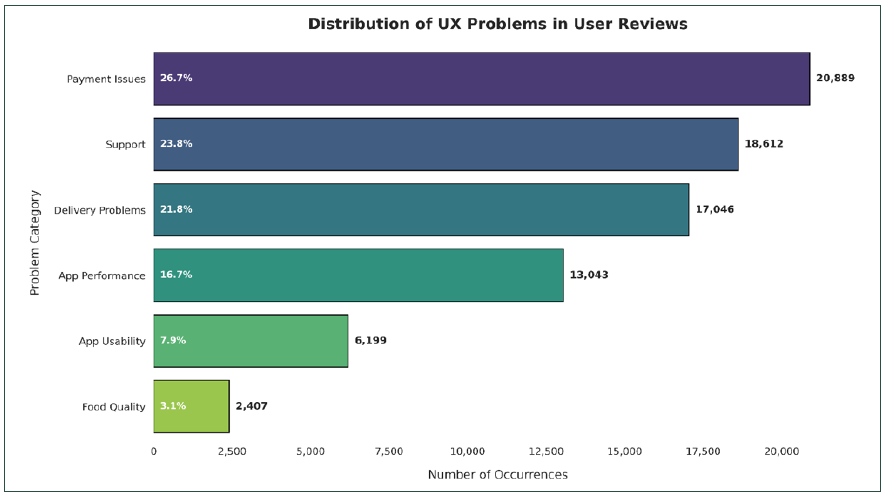 Source: Developed by the authors.
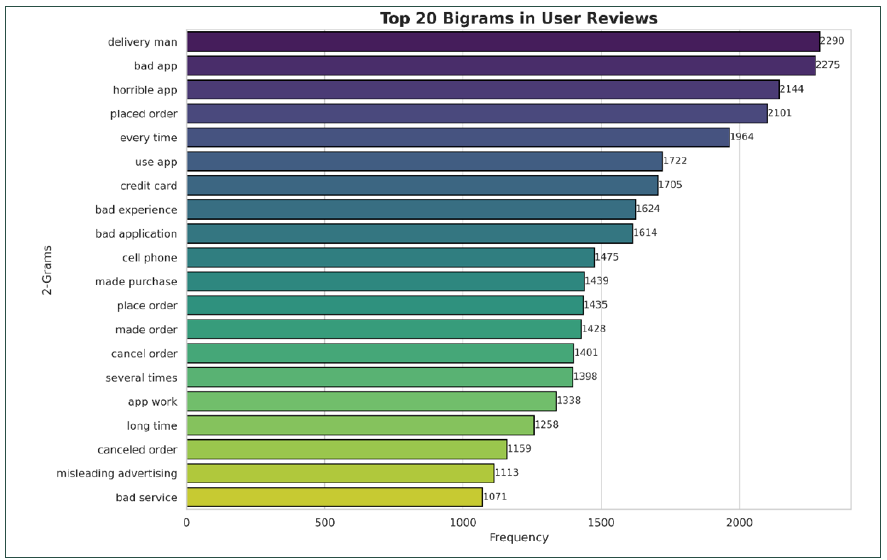 Source: Developed by the authors.
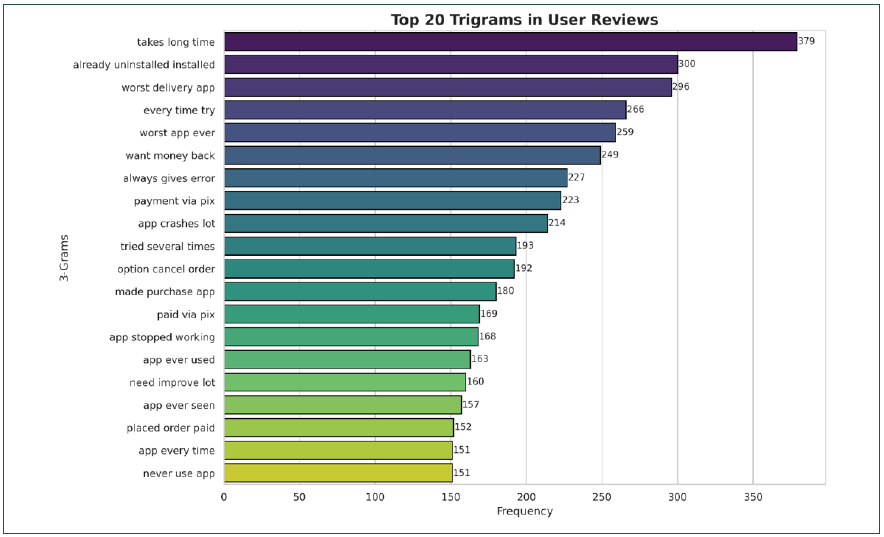 Source: Developed by the authors.
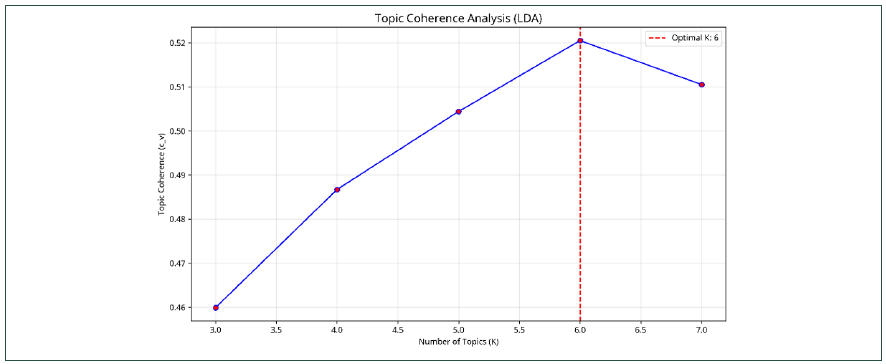 Source: Developed by the authors.
 Source: Developed by the authors.
 Source: Developed by the authors.
 Source: Developed by the authors.