
 Influence Building in Stigmatized Contexts: Women’s Domestic Work as a Platform for Digital Content
ABSTRACT
Objective: this research investigates how influencers embrace culturally stigmatized practices to build their opinion leadership on social networks.
Methods: the work adopts the netnographic method for a longitudinal case study of the influencer Ju Feitoza, who has become a reference in the housewife movement known as ‘Neighbors of Insta’ on Instagram.
Results: the research demonstrates the development of a platform for building leadership of influence through four strategic steps in the digital environment: (1) building a sense of community, (2) authenticity under stigma, (3) destigmatization of social identity, and (4) entrepreneurial leadership.
Conclusions: this study demonstrates how influencers strategically build their leadership on social networks by re-signifying culturally stigmatized practices, transforming undervalued, ordinary and invisible practices into aspirational and marketable activities.
Keywords:
stigma; influence; influencers; practices; social networks
INTRODUCTION
“Good afternoon, my dear people; I hope everything is fine and peaceful!! Here, everything was rushed. As you know, today I got to do a deep cleaning in the living room, but before that, I did the basic cleaning (in the other rooms that I have already cleaned this week), the bedrooms and bathrooms” (Feitoza, 2020b). This is how the influencer Ju Feitoza begins the inviting speech to her network, illustrated by images of thermoses overflowing with dark amounts of dirt, grimy stovetops, and drains being cleaned. In her profile, which positions itself as an “inspiration to take care of the home with love and dedication” (official profile @jufeitoza), we see content about the virtuous management of the domestic environment. The influencer is part of a group of content producers who call themselves ‘Vizinhas do Insta’ (‘Neighbors of Insta’) that began to connect organically through the Instagram platform, sharing domestic routines, secrets, products, and the results of their work. They represent a community that uses the digital environment to give visibility to domestic work, which is usually invisible, unequal, and stigmatized (Bianchi et al., 2000; Madalozzo et al., 2010).
Social networks play an increasingly relevant role in contemporary communication, facilitating the instant connection between individuals who share similar social experiences through platforms in which information can be produced, accessed, and shared in real-time and globally. By enabling new possibilities for communication, these platforms have empowered and brought greater agency to consumers by allowing information sharing and networking (Labrecque et al., 2013; McQuarrie et al., 2013). By allowing the formation of different types of connections and even digital collectivities (Arvidsson & Calliandro, 2016; Kozinets et al., 2017), social networks have brought a myriad of possibilities in the relationship between consumers and between them and the consumer market (Nascimento et al., 2020; Scaraboto & Fisher, 2013).
In this network formed by digitally constructed connections, some consumers begin to stand out as figures of influence and even reach prominent positions that can bring them closer to the status of celebrities (Erz & Christensen, 2018; McQuarrie et al., 2013). Digital influencers, with their developed skills, perceived expertise, and high level of cultural capital, create and share content on social networks, being distinguished for their authenticity (Campbell & Farrel, 2020; McQuarrie et al., 2013). In this process, their authentic narratives become fundamental for building connections with specific audiences, amplifying their reach and engagement and thus allowing these individuals to increasingly influence the purchasing decisions of their followers (Erz & Christensen, 2018; Nascimento et al., 2020; Zanette et al., 2013). Barta et al. (2023) studied the effects of influencers (considering the type of content and profile characteristics) on the hedonic responses and perception of expertise by followers, demonstrating the importance of originality and opinion leadership in content consumption on social networks.
The literature that investigates the nature and trajectory of digital influencers (Deighton & Kornfeld, 2011; Dennen, 2014; Drenten et al., 2024; Erz & Christensen, 2018; Miguel et al., 2022; Nascimento et al., 2020; Tolson, 2010) highlights a series of some tactics used by content creators to build and consolidate positions of influence within the audience or community. On the one hand, influencers seek to develop a sense of closeness by constructing authentic narratives. Tolson (2010) identifies some resources used for this purpose, such as a direct and close discourse (trying to emulate a face-to-face conversation), use of colloquial vocabulary or a vocabulary more suitable to that audience, the demonstration of amateurism, the sharing of flaws, and even grammar mistakes. However, in the context of influencers on the domestic theme, we see something that goes beyond ‘face to face.’ We have a narrative of effort, of perseverance in adversity, which glamorizes the socially stigmatized practice of domestic labor (Bianchi et al., 2000). These are women who build voice and authority from the de-invisibilization of this type of activity through a discourse that is often associated with religious values, even without an identified denomination.
This movement of housewives who share their routines on social networks is not an isolated phenomenon. The online publications of the #tradwives, which refer to a movement of traditional housewives with a strong presence on social networks such as TikTok and Instagram, have already accumulated millions of views. They share their routines of domestic practices, whether cleaning, decorating, cooking, or engaging in different types of do-it-yourself activities, anchored in traditional values of family care and the role of women as caretakers of the house, husband and children (The Economist, 2024). The Brazilian reality has an additional bias, not only cultural but also historical and socioeconomic, in the representation of the female figure as the traditional caregiver of the home (Prandi, 2016). At the same time, it offers an interesting counterpoint by showing another face of a domestic routine commonly marked by patriarchal ideas and female segregation from the family environment (Madalozzo et al., 2010). Here, these housewives evidence their belonging to an extensive female network of connections, demonstrating skills and relationships of influence that even become sources of income for some of them.
In general, social networks have been a territory for the circulation of content that oscillates between entertainment (e.g., lifestyle, beauty, or music) and the promotion of products for brands (Erz & Christensen, 2018; Gannon & Prothero, 2018; McQuarrie et al., 2013). However, the literature has been studying the increase in content production related to consumer ideologies on digital platforms (Drenten et al., 2024), both in activist territories (Scaraboto & Fisher, 2013) and for controversial or even prohibited topics in specific contexts (Daniel et al., 2018; Drenten et al., 2024; Gupta et al., 2020). It is known that in the context of stigma and social invisibility, consumers are led to learn production practices (Rocha et al., 2020), in which social networks usually play a significant role in instrumentalizing these skills (Miguel et al., 2022). However, little has been studied in the context of social networks, profiles, or influencers that relate to culturally stigmatized practices beyond contexts related to fashion and religion (Ajala, 2017; Becheri et al., 2023; Kavakci & Kraeplin, 2017; Sandikci & Ger, 2010) and that associate ideas and narrative resources within the digital environment that allow transforming historically stigmatized practices into more socially attractive alternatives. In addition, in stigmatized contexts, the authenticity of the influencer’s content may need to be adjusted to mitigate the detractor effects of producing content around unvalued territories.
Thus, this study aims to investigate how an influencer strategically builds their content platform in a territory of culturally stigmatized or invisible practices through narratives that re-signify such practices, thus creating a leadership position on social networks. In this sense, we will investigate the transposition of strategies for transforming stigma (Sandikci & Ger, 2010) to the digital environment and explore new narrative strategies built in this particular context.
For this purpose, our research was based on a case study (Yin, 2014) of the digital influencer Ju Feitoza (@ju_feitoza), a housewife who became one of the most relevant and influential names within this universe in Brazil. The influencer’s profile was investigated longitudinally for approximately four years using the netnographic method (Kozinets, 2019). As part of the exploratory interpretive approach, we also observed the housewives’ movement in the digital environment (the #vizinhas) as a context for the influencer’s profile.
The study presents the “Platform for Building Influence in Contexts under Stigma", which describes the steps taken by an influencer who builds her visibility and leadership on social networks. Thus, in addition to exemplifying how practices already theorized as resources for destigmatization outside social networks were transposed and adapted to the digital territory, we identified two original and specific strategic stages in the context of influence in contexts of stigma: the destigmatization of social identity under stigma and the construction of leadership itself. Both work to activate the community through the reinforcement of self-esteem and the positivity of the social identity of the domestic woman.
In the following sections, the literature review will focus on the resources for building positions of influence, discussing the literature on influence and presenting the theory on stigma and consumption. Then, this work’s methodology and main results will be presented with the proposition of the narratives used by influencers in their process of building influence in the context of stigma.
THEORETICAL BACKGROUND
The literature considers an influencer as a prominent user of social networks who creates and shares content and is regarded as an opinion leader by a specific audience (Campbell & Farrel, 2020; Erz & Christensen, 2018). Campbell and Farrell (2020) propose classifying influencers based on factors such as the number of followers, level of expertise, and perceived cultural capital (whose level would be higher as the influencer’s reach increases), authenticity, and accessibility (characteristics that would be higher at the beginning, with a lower reach of followers). The emergence of new digital platforms with more possibilities for interaction, inclusion, and content sharing was made possible by technological affordances (Kozinets et al., 2021), and it is related to the exponential increase in the importance of social networks in the sharing of information between consumers and the influence on the purchase decision-making process, generating several studies on the phenomenon of influence (Barta et al., 2023; Campbell & Farrel, 2020; Erz & Christensen, 2018; He et al., 2022; Nascimento et al., 2020; Zanette et al., 2013).
Conversely, the influencer is at the center of a project to build cultural relevance, either through integration with consumer communities or through the production and promotion of content linked to consumer ideologies on digital platforms (Drenten et al., 2024). In this sense, influencers not only play an economic role in influencing purchasing decisions (Nascimento et al., 2020), but they also affect the diffusion of diverse ideologies (Rosenthal & Airoldi, 2024; Scaraboto & Fisher, 2013).
In the following sections of the literature review, we will discuss the formation of the influencer and their strategies and tactical resources for building relevance and engagement. We will then discuss the cultural and ideological role of influencers. Finally, we will present the theoretical discussion on domestic work and consumption practices in stigmatized contexts.
The influencer and the connection building with the audience: From audience to community
In their research on fashion blogs, McQuarrie et al. (2013) discuss the potential ‘megaphone’ of virtual platforms that give voice to ordinary consumers to reach large audiences. According to the authors, the beginning of the trajectory of these content creators would be focused on building a community with their followers through frequent interactions, which would result in the accumulation of social capital. However, displaying high-valued tastes and perceived expertise would lead them to leadership positions, transforming them from ordinary consumers into experts and opinion leaders, converting them into economic and social capital through audience growth. Later research discussed the formation of communities around content creators in digital media, proposing that bloggers, YouTubers, and other influencers form communities around themselves (Dennen, 2014; Gannon & Prothero, 2018; Kozinets et al., 2010; Miguel et al., 2022).
Some recent studies also bring discussions about different formations on digital platforms based on their technological possibilities and restrictions, either by allowing greater consumer agency in their relationship with brands and the consumer market (Kozinets et al., 2021) or in the development of relationships based on networks or communities of practice in digital environments (Kozinets et al., 2017; Miguel et al., 2022) or even in social formations without community ties and connections between their members (Arvidsson & Calliandro, 2016). In Arvidsson and Calliandro’s (2016) research on brand public, the authors discuss how consumers share common interests by the means of mediation practices, in this case, an interest in the Louis Vuitton brand that manifests itself through hashtags associated with the brand. Considering the relationships that develop between the influencer, their audience, and the market system from digital platforms, it is necessary to investigate further the narratives present in the connections between these actors within an integrated perspective of the development of influence relations. Understanding this process of influence construction becomes particularly relevant in stigmatized contexts in which society (or part of it) does not value or has a prejudiced view of certain practices, leading to a potential lack of interest in this content.
Strategic trajectory of influence: Tactics for building connections with the audience
Considering the current literature that investigates digital influencers and their trajectories of development of blogging practice (Deighton & Kornfeld, 2011; Dennen, 2014; Erz & Christensen, 2018; Miguel et al., 2022; Nascimento et al., 2020; Tolson, 2010; ), it is possible to identify a series of tactics, that is, resources and practices that are used by content creators as a basis for building their strategy and consolidating influence within the audience or community, consolidated in Table 1 and detailed in the following subsections.
The use of brand relationships as landmarks of external recognition
If, in the development of influence trajectories, relationships with brands can compromise authenticity (Tolson, 2010), they can also indicate a changing position of the influencer. At the beginning of the trajectory of influence, brands are used as resources for experimentation (Nascimento et al., 2020) related to self-expression and identification (Erz & Christensen, 2018) and as resources for producing content. When more effective business relationships emerge, such as products sent to influencers by brands and other commercial partnerships, a transition begins in which the blogger starts to be seen as relevant in the marketing system and begins to see a possibility of making a profession out of it based on the financial gains from these actions, particularly in fashion and beauty contexts (Erz & Christensen, 2018; Nascimento et al., 2020; Scaraboto & Fisher, 2013).
According to Nascimento et al. (2020), in this stage of professionalization, influencers begin to participate in brand actions with other content creators and gain greater visibility from the public. For the authors, to the extent that the influencer becomes a human brand, influencer-brand relations become closer to those with traditional celebrities (Nascimento et al., 2020).
The authenticity discourse as a resource for validating the online persona
Authenticity is an issue of great relevance in the narratives of digital influencers (Miguel et al., 2022). Deighton and Kornfeld (2011) use Goffman’s (1959) concept to discuss the dramaturgical performances associated with blogging practice when investigating the building of its audience. According to the anthropologist, authenticity is restricted to private and intimate spaces, so any individual in a public exhibition situation would not be authentic but rather represents a persona that does not correspond to their true identity (McQuarrie et al., 2013).
It can be inferred that bloggers combine cultural resources and dramaturgical aspects to build their online personas and then stage aspects of their lives that are shared on digital platforms, omitting from their discourses problems and challenges faced while bringing curiosity about other personal aspects to keep their audiences engaged and interested. In this way, blogging practices would be “interactive performances through which authors perform their lives in the eyes of others” (Deighton & Kornfeld, 2011, p. 147).
In an attempt to convey a more authentic image to their audience, Tolson (2010) identifies some resources used by bloggers as tools to build authenticity in the production of content, such as direct speech made with a language appropriate to that audience, demonstrations of amateurism, and even some language errors on purpose. The challenge of this strategy is that the existence of commercial relationships can impact authenticity, since even if the content seems spontaneous, the commercial involvement of the content creator with market actors can affect the authentic performance of that individual (authentic self) (Tolson, 2010).
‘Ordinariness’ and the demonstration of expertise as resources to be close to the audience
‘Intrinsic ordinariness’ is in the literature as an essential aspect for building a connection with the audience by bringing content creators closer to their audience in a way that is different from the more traditional and distant relationship between celebrities and fans (Arsel & Zhao, 2013; Deighton & Kornfeld, 2011; McQuarrie et al., 2013). Building the image of the content creator as an ordinary person (‘ordinariness’) can be developed not only by the domestic environment shared but also by the message that the content creator shares about themselves in the content. Minor bloopers, for example, or missing objects in the scene that lead the content creator to apologize are elements that bring this sense of normality related to the ordinary person and work as a strategy to get the influencer closer to their followers (Deighton & Kornfeld, 2011; McQuarrie et al., 2013).
The relevance of content creators is also being worked on as they begin to diversify their repertoire and start to share their competence discourses, positioning themselves as ordinary experts and adopting forms of discourse traditionally associated with a role of expertise mixed with elements of colloquiality that bring them closer to ‘ordinary consumers’ (Tolson, 2010; Erz & Christensen, 2018). This perception of the content creator as an ordinary consumer with a high level of expertise then helps consolidate the leadership position in that collectivity (McQuarrie et al., 2013).
Women’s domestic work and consumption practices under stigma
Domestic work is a “set of activities carried out to handle part of the family responsibilities that are circumscribed to the domestic and the family arrangement contained therein” (Bruschini & Ricoldi, 2012, p. 263). This definition encompasses meal preparation, household cleaning, and home maintenance. Domestic work is generally seen as a valueless activity because it is not directly linked to production and is not a paid activity (Blay, 1975). It has historically been associated with women in the roles of caregivers of the home and family and as a form of affective work (Oksala, 2016). Nowadays, even though we have growing female participation in the labor market (Instituto Brasileiro de Geografia e Estatística, 2014), domestic activities are still linked to women (Prandi, 2016) and carry meanings of gender inequality, devaluation, overload, and invisibility in the domestic environment, configuring themselves as spaces of stigmatization.
There is a movement, however, that defends the role of women dedicated to domestic life and the care of the home and family. This movement has dramatically grown on social media platforms, with the increase in women who share and value their domestic routines as housewives, the so-called ‘tradwives’ (The Economist, 2024). By sharing private spaces in the online environment, these women can monetize practices that were previously invisible and devoid of value linked to motherhood and domestic routine (He et al., 2022) and even (re)produce ideological discourses associated with conservatism, heteronormativity, and the division of roles by gender in which men must act as providers and women as caregivers of the home and the well-being of the family (Sykes & Hopner, 2024). Thus, while the role of women in domestic activities may be seen in a stigmatized way by society, for some women, this seems to be seen differently. According to Sykes and Hopner (2024), tradwives can be considered a subculture that uses different platforms to disseminate right-wing conservative ideologies anchored in religious and political values while monetizing their content through commercial partnerships with brands or even in the creation of online businesses aligned with an expansion of the tradwife subculture.
The literature defines stigma as a socially attributed attribute that profoundly devalues an individual, making them a devalued and invisible member, reproducing structural inequalities (Goffman, 1963; Sandikci & Ger, 2010). In this research context, the role of domestic management, structurally attributed to women, has historically been a territory of invisibility and demerit for those who performed it (Prandi, 2016). We can point to other territories related to race (Rocha et al., 2020) and religion (Ajala, 2017; Becheri et al., 2023), where stigma permeates individuals’ consumption experiences.
Recent studies, such as Ajala (2017) and Becheri et al. (2023), discuss the growth of modest fashion related to specific religious limitations, which are often seen in a stigmatized way by groups in society as being oppressive to women and their bodies. By investigating the growth of Islamic fashion, especially among younger women, Ajala (2017) discusses the existence of hybrid practices that connect secular and religious values with neoliberal and postmodern forces related to consumerism and the search for individualization. Becheri et al. (2023) show how social networks can act in this process by investigating the social network Instagram as a mediation platform that creates spaces for interaction between different actors, connecting religious values, meanings, practices, and objects to individuals. In this sense, when investigating hijabista influencers (a term that mixes hijab and fashionista), Kavakci and Kraeplin (2017) also show that, despite possible political or religious limitations, the virtual environment appears as a terrain that favors the construction of virtual identities or personas, elevating ordinary consumers to positions of prominence and influence that (re)negotiate meanings associated with certain traditional practices.
Processes of destigmatization of practices associated with consumption have been discussed in the literature in three main ways. The first is related to a search for social acceptance and the reestablishment of positive values associated with consumption, as in the research by Sandikci and Ger (2010) on resignifying the use of the veil (traditionally associated with religious and cultural practices) in the fashion sphere. In this process of transforming stigma into fashion in which conventional notions about identity, oppression, and freedom are challenged, stages were observed such as the formation of a community, personalization, and aestheticization of the practice of wearing veils, adding meanings of beauty and good taste to its routine use. In this way, an approximation between the modern and the traditional is sought, and in this process, there is a change in the stigma associated with this practice.
The second stream of research discusses seeking inclusion in the consumer market in contexts where consumers feel excluded or unserved. Scaraboto and Fisher (2013) investigated plus-size fashion consumers (fatshionistas) who do not find options in the market and who eventually modify market dynamics through the development of a collective identity made possible by online platforms, which allows the questioning of practices and the emergence of institutional entrepreneurs who start to offer new options. Rocha et al. (2020) also investigated social stigma contexts when investigating black women who face market invisibility when they do not find specific products for their hair type. The authors discuss the emergence of an involuntary prosumption due to the absence of market options, which is related to the processes of resignification of curly hair and the development of specific skills and competencies.
Finally, controversial contexts were also researched in the digital environment related to sharing ideological views and seeking acceptance of certain practices (Drenten et al., 2024; Rosenthal & Airoldi, 2024). The sharing of morality discourses (Rosenthal & Airoldi, 2024) and consumer ideologies occurs through curation tactics related to consumption practices and the sharing of meanings (Drenten et al., 2024). In their research on guninfluencers, Drenten et al. (2024) discuss the use of glamorization tactics and demystification of practices at the same time that there is a movement of tribalization with the formation of a collective of consumers who share the same values and associated meanings. The authors also discuss processes of victimization in which individuals feel oppressed and wronged by society for having an identity as defenders and consumers of weapons.
These studies demonstrate that influencers are cultural operators, sharing their consumption ideologies through digital platforms and renegotiating cultural meanings. Their narratives affect sensibilities, roles, and social movements through the diffusion of diverse ideologies (Drenten et al., 2024; Rosenthal & Airoldi, 2024). Therefore, in consumer markets under stigma, we see a theorization that shows how influencers act to change patterns, representations, and even market offers from an activist content platform. Their effort to re-signify occurs through criticism, the demand for inclusion, and complaints against the prejudice (Scaraboto & Fisher, 2013). However, in the context of domestic work, the focus of this research, we see a particular role of influencers as cultural operators in a context of stigma who do not complain, criticize, or even victimize themselves, but rather act in appreciation of criticized behaviors. In the following section, we will then present the methodological procedures of this research.
METHODOLOGY
Considering that this study aims to investigate how influencers embrace culturally stigmatized practices to build their opinion leadership on social networks through content platforms, the methodology used in this work followed a longitudinal netnographic approach applied to a case study (Kozinets, 2019; Yin, 2014). Netnography is a method that uses qualitative research techniques and ethnographic methods within a cultural perspective to collect, analyze, and understand online traits, networks, and other data collected through social networks (Kozinets, 2019). Given the focus of netnography on online traces, this approach offers the possibility of investigating the process of both realization and shared exhibition of the practice on social networks.
When searching for posts related to cooking on the social network Instagram, publications were found with the hashtag #vizinhas (#neighbors), which seemed to be used as a mechanism of interaction and identification by a group of women. At the beginning of this research project in 2018, this hashtag accounted for more than 238 thousand publications on Instagram alone and constantly appeared associated with similar hashtags (e.g., #vizinhasdolar [#homeneighbors], #vizinhasdoinsta [#neighborsofinsta]).
Thus, the investigative phase (Kozinets, 2019) of data collection began, which lasted from March to July 2018 and resulted in the collection of more than 250 posts using the hashtag #vizinhas (#neighbors). From then on, it was noticeable the existence of a network of women who, through personal profiles or usernames that included words related to the domestic environment, such as casinha (house), apartamento (apartment), and lar (home) (among others), shared in their profiles the routines of daily domestic practices, along with recipes and inspirations for the housewife. This network of women included many personal profiles of nano and micro influence (Campbell & Farrel, 2020) and some profiles that differed by having between 300 and 550 thousand followers.
In the second stage of data collection, in the interactive phase (Kozinets, 2019), 27 profiles were identified and began to be monitored by the researcher. The research followed the qualitative criteria suggested by Kozinets (2019) for netnographic research - relevance to the researched topic, activity, interactivity with its audience, diversity of profiles, and richness of information. Considering the ethical issues in searching for profiles on social networks, we also considered whether they were public and verified profiles.
After approximately three months of following, however, it was noticed that there were three types of profiles: (1) private and public profiles with few followers that occasionally posted content related to domestic life, (2) nano- and micro-influence profiles that acted in an attempt to establish relevance and influence, and (3) meso- and macro-influence profiles that already had greater frequency and professionalism in content production. In this third group, it was noticed that the Instagram profile of content creator Ju Feitoza (@ju_feitoza) differed from the others by profile size, high frequency of posts, as well as the use of influence-building tactics beyond what was seen in other profiles, resulting not only in the constant increase in the number of followers but also in the high engagement of her publications, relationship building with brands and discourses of appreciation of the housewife identity, which was shared by other women from that community on the social network. Thus, we opted for the case study (Yin, 2014) of this profile to understand the process of building a position of influence in a context of stigmatization, as in the case of these housewives.
Juliana Feitoza is a 34-year-old content creator living in the city of Recife (in Pernambuco, Brazil), married, and a mother. In her profile, she describes herself as “Juliana Feitoza | Home Tips. I inspire you to take care of your home with love and dedication. Organization | Table Set | Recipes and real life.” In May 2018, her profile had 232,701 followers; in May 2022, this number increased to 515,833 followers, and at the end of 2024, it was nearly 735 thousand, currently being the profile with the highest number of followers among the profiles surveyed in this segment of profiles directed to the domestic routine.
Thus, considering the criteria of Kozinets (2019) and the relevance of the profile within this universe of housewives’ profiles on Instagram, we chose this influencer to investigate the process of building narratives of influence through a longitudinal netnographic research. From choosing the profile, the immersive phase (Kozinets, 2019) of data collection occurred from May 2018 to May 2022. In addition to the profile @ju_feitoza selected for the case study, the researcher also started to follow profiles of brands that partnered with this influencer, profiles related to cooking and domestic practices, and profiles of other content creators and followers who interacted with the profiles selected for this research.
Regarding the researcher’s immersive engagement (Kozinets, 2019) with these profiles, not only the content generated was considered but also the comments of followers and other messages exchanged with content creators in the posts. Textual and visual posts shared in captions, hashtags, mentions, simple images, image carousels, stories, reels, short videos, and long videos on Instagram pages were collected. The first author monitored the profile daily, and the criteria for selecting data for analysis were related to the research objective, which was the sharing of daily practices and discourses shared by the influencer, besides interactions with her followers.
The data collected accounted for 1,587 screenshots of content posts and comments. In addition, about 50 videos published by the influencer were watched, either in stories, reels, or long videos, with more than 90 minutes of material. An immersive field diary (Kozinets, 2019) was also kept, which included 32 pages of notes on the videos posted, stories (video resources that disappear in 24 hours), and lives during this period, in addition to the researchers’ perceptions over the time of analysis of this material. Only publicly displayed data from the social network was collected (Kozinets, 2019), which did not require permission to access. All the data collected was saved in a Google Drive folder with restricted access by the authors. The longitudinal data collection process involved three phases, briefly described in Table 2.
The analysis procedures followed the protocols suggested by Thompson (1997), involving a two-stage interpretative process: a cycle of intratextual analysis, in which the posts and descriptions of videos were read to understand more general meanings, and the images went through a first phase of analysis, categorizing this material according to the theme addressed. The main objective of the next intertextual stage was to make comparisons and contrasts, identifying emerging patterns and creating codes. Considering the hermeneutic circle (Thompson, 1997), we sought to understand this phenomenon considering a historical and cultural contextualization related to this context of the role of women in the domestic routine, as well as existing studies on the phenomenon of digital influencers for constructing a reference panorama. Through these procedures, the objective was to identify, within specific sociocultural contexts, narratives related not only to an individual identity project but also to processes of manifestation of desired identities and their associated meanings through consumption (Thompson, 1997).
The initial coding process then identified the main themes and the associated meanings. The main topics found in this stage were cooking, cleaning, motivational, DIY, lifestyle, decoration, personal content, and relationship with brands. A series of sub-themes were also identified for each theme. Then, an iterative process of comparisons and contrasts between the data and the literature was carried out in successive rounds of analysis (Kozinets, 2019; Thompson, 1997). This iterative process of comparison and contrast allowed the identification of four strategic steps in the digital environment used at different times to build influential leadership. These results will be presented in the following section.
RESULTS
This research demonstrates the development of a platform of influence in stigmatized contexts that acts in the resignification of practices and operates through four narrative strategies of destigmatization and construction of influence in the digital context: (1) construction of a sense of community, (2) authenticity under stigma, (3) destigmatization of social identity, and (4) entrepreneurial leadership. These narratives will then be presented in the following sections.
#vizinhasdoinsta: Building a sense of community
The Vizinhas do Insta (Neighbors of Insta) are housewives who created online profiles and began to connect organically through the Instagram platform, sharing on their pages content related to their domestic routines, including recipes, product recommendations, and step-by-step cooking, cleaning, and even handicraft activities, as well as tricks and tips. In their discourses and publications, they call themselves ‘neighbors,’ referring to a terminology used to refer to people who live geographically close. In their publications, they add hashtags such as #vizinhas (#neighbors) or #vizinhasdoinsta (#neighborsofinsta), in addition to other possibilities made available by the digital platform such as posts on the profile page, videos using features from the platform such as stories, reels, IGTV, and lives (Shamayleh & Arsel, 2021), using these resources to find other people who think in a similar way, building a network of connections and mutual support.
Only recently has the digital influencer phenomenon been discussed as a community formation (Gannon & Prothero, 2018; Miguel et al., 2022). Although they point to forms of online engagement such as likes and comments in building relationships among their members (Miguel et al., 2022), especially in communities of practice using social networks such as Twitter (Gilbert, 2016; Lewis & Rush, 2013; Roland et al., 2017; Rosell-Aguillar, 2018), little is discussed about the narrative strategies used by content creators in the construction of their role of influence in these collectivities.
The analysis of the data collected in this research suggests the formation of a sense of community that begins with the organic movement of naming themselves ‘neighbors’ as representative of this group of women who connect and share their domestic routines on Instagram. Elements were found that highlight the characteristics of communities of practice (Wenger, 1998), such as a topic of common interest (the domestic life), shared repertoire (expressions, jargon, and terminologies), and forms of engagement (shares, likes, mentions, and comments, even among the followers themselves).
As in other stigmatized contexts, such as veiled women (Sandikci & Ger, 2010), fatshionists (Scaraboto & Fisher, 2013), and guninfluencers (Drenten et al., 2024), community formation appears as a fundamental step in enabling the connection of individuals who share the same meanings, ideologies of consumption, and similar practices. In the case of the Neighbors of Insta, the sharing and learning of domestic activities generate a connection between these women anchored in religious values, in the caring for the family, and the feeling of gratitude for being able to do so. Domestic routines are shared through daily posts on the profile and via the stories feature, as shown in Figure 1.

The posts start with the preparation of breakfast and the planning of the day’s tasks. Other activities, such as personal care, handicraft practices, and do-it-yourself, are added to these activities, thus forming a ‘virtual diary’ of the daily domestic routine until the end of the day. In the following text of a publication about her activities for the day, Ju Feitoza shares all the tasks performed with details of the products used and a motivational message about the effort rewarded by the result of the clean and fragrant house, in addition to the feeling of ‘duty accomplished.’
“The kitchen is all ready and organized, and the smell of cleanliness… wow (sic) good thing!! Wow, my dears today was hard. I did many things to be freer tomorrow, it was a very productive day. Thank God, I’m thrilled when I can execute everything I planned for the day; that feeling of accomplishment… It’s so good!
Today, I cleaned the fridge and to clean that and other things in the kitchen I use my #misturatopdajufeitoza (#topmixtureofjufeitoza). It is simple and fast, it leaves everything white without grease, and makes cleaning easier. I took advantage of the fact that I removed things from the fridge and have already cleaned the floor behind it and the stove. I cleaned the stove and oven, used only steel wool, stone soap, and in the glass I used alcohol to finish the cleaning. The floor, I washed it with detergent and then with chlorine gel. Think of the good smell here…
#apertaobotaodadisposicao (#pressthegoodmoodbutton) and believe me, not all storms come to disrupt our lives
#cozinhalimpa #cozinhaorganizada #tudosimples #tudocheiroso #rotinadedonadecasa #amomeular #esposavirtuosa #quarentena #cheirinhodelimpeza #limpezapesada #donadecasaeusou #vidareal” (#cleankitchen #organizedkitchen #everythingsimple #everythingsmelly #housewiferoutine #lovemyhome #virtuouswife #quarantine #smellofcleanliness #heavycleaning #housewifeIam #reallife”)
Publication of the official profile @ju_feitoza on April 30, 2020 (Feitoza, 2020e).
The shared repertoire is one of the leading community dimensions and is related to the type of content, language, practices, and tools (Wenger, 1998). In the context investigated, the language used is simple, colloquial, and sometimes religious. Some women in this group are also micro-influencers (Campbell & Farrel, 2020), content producers or aspirants, and have profiles whose names refer to domestic life using identification words such as casinha (home), apartamento (apartment), and lar (home). These profiles also share their domestic routines and play an essential role as commentators (Dennen, 2014), bringing engagement to the influencer through likes and comments on their publications and moving this network of relationships. In addition, these profiles often use Instagram’s mentions feature to tag the influencer’s profile by reproducing her tips and recipes, seeking influencer recognition, and attracting visibility to their profile (Dennen, 2014).
Among the jargon and terms shared in this community, there is some vocabulary specific to this group used by content creators and followers in their posts. Geladeira plim (plim refrigerator), for example, refers to the day of cleaning the refrigerator, including the inside part with the drawers and shelves; ‘mixture’ refers to the mixtures of cleaning products that they make to maximize the cleaning process or finish environments; the expression ‘meus ajudantes’ refers to appliances, accessories, and cleaning products used in the domestic routine.
In the post (Figure 2), in addition to introducing the new ‘helper,’ the influencer also takes advantage of the speech to encourage engagement by calling on followers to help her name it, personifying that device. It is also possible to notice that there are grammatical and typing errors in two moments of the video. It is known that grammatical errors and minor flaws in the content (in the sound, subtitles, etc.), added to a speech in an informal conversational tone, as in a face-to-face conversation, are factors that contribute to the process of building the authenticity of the content creator through amateurism by bringing the influencer and audience closer, as discussed by Tolson (2010)and Deighton and Kornfeld (2011). Thus, although it is not clear what the influencer’s intention is, it is possible to see the connection that this more colloquial speech brings between the influencer and her target audience.

Hashtags also appear as an essential linguistic resource (Zappavigna, 2015) in forming a sense of community. This research corroborates the view of hashtags as communicative resources (Erz et al., 2018) and mediation devices (Arvidsson & Calliandro, 2016) but expands the functions performed by these devices and their importance in building positions of influence.
In this sense, mediation and community aggregation hashtags were found as signposts of this shared identity (#vizinhasdoinsta [#neighborsofinsta], #vizinhasdolar [#homeneighbors], #donadecasaeusou [#housewifeIam], #esposavirtuosa [#virtuoswife]), but hashtags have also been used with other functions, acting as markers of shared values (#gratidaosempre [#alwaysgrateful], #vidareal [#reallife]) and practices that are signaled and valued by this group (e.g., #quartolimpo [#cleanbedroom], #limpezapesada [#heavycleaning], #geladeiraorganizada [#organizedfridge]), as in the following publication:
“Here comes the lunch, full of carbohydrates, love, and affection, too.
Good afternoon, my loves. It’s half week, and I’m already in that rush that you already know. Today, there is a simple and very fresh lunch. I made pancakes with ground beef filling #panquecasdajufeitoza (#pancakesofjufeitoza). The recipe is in the last photo …
#panquecasdajufeioza (#pancakesofjufeitoza) #Receitasdajufeitoza (#recipesofjufeitoza) #comidasimples (#simplefood) #comidacaseira (#homemademeal) #donadecasafeliz (#happyhousewife) #gratidaosempre (#alwaysgrateful) #cozinhasimples (#simplekitchen) #organização (#organization) #gratidaopeloalimento (#gratitudeforfood) #rotinadedonadecasa (#housewiferoutine) #lardocelar (#homesweethome)” (Feitoza, 2020b)
Thus, in addition to the self-promotion function described by Erz et al. (2018), hashtags in this context perform other roles, such as constructing a shared collective identity and community values.
Authenticity under stigma
The second strategic narrative of transforming a stigmatized activity into a process of influence-building involves perceived authenticity. The construction of authenticity in the context of stigma is related to demonstrating mastery of a repertoire of practices recognized and valued by followers. In addition, this exhibition is carefully staged to become seemingly natural but arouses curiosity, desire, and wonder. The construction of authenticity under stigma occurs (1) by demonstrating superior expertise in shared practices and (2) through the aestheticization of practices. This type of resource was already discussed in the research of Sandikci and Ger (2010) in the process of glamorizing the use of veils and personalizing them, as well as in the display of weapons made by the guninfluencers (Drenten et al., 2024) by seeking acceptance of their worldview on the carrying and use of firearms. The researched context, however, shows a process of aestheticization of certain practices that are generally not shared (especially on social networks) because they are related to the privacy of each family and because they involve messy places and dirt: washing toilets, sinks full of dishes and ovens with grease, sweeping floors, washing dirty clothes, among other activities.
In the context investigated, the display of these valued competencies signals a leadership position, differentiating the members of that group (Maciel & Wallendorf, 2017), while the aestheticization of specific tasks acts on the desirability of that practice, transforming daily tasks into activities to be replicated, praised, and accompanied by an inspirational discourse. Thus, the influencer positions herself in an educational role, teaching the ‘how to’ through videos and images of each process’s stages, as seen in Figure 3. Her followers ask questions, praise, and share their perceptions about executing those activities.

In the post of Figure 3, the content creator shares her process for doing the laundry, including the best products for each stage and the tricks and mixtures that she uses as differentials to bring a superior result. Each step is shared through photos and videos, in addition to appearing in the stories of that day. It is also possible to see that even in routine cleaning activities, the issue of aestheticization already occurs in the photos taken by the content creator with the clothesline tidy, products organized, nails done, and the cup of coffee. The room to be cleaned is already tidier and more organized. Intimate and private environments that are not usually publicly displayed, such as bathrooms, are also featured in publications about home cleaning. In the publication of Figure 4, it is possible to see how the influencer shares cleaning the bathroom, with photos of the process and a description of the steps and products used in each step. This type of content helps build the influencer’s authenticity by sharing a practice that is usually undervalued (such as washing the toilet, for example) but, in this case, puts the influencer on the same level as other housewives and generates a sense of proximity and identification with her audience. In addition, the sharing of this type of content acts in the normalization and destigmatization of domestic activity by showing an intimate space with a series of other associated meanings that are usually not exposed, particularly in its cleaning process. Ultimately, the aesthetic result of this cleaning and tidying up is displayed.

In this publication’s comments, compliments such as “My bathroom inspiration is yours @ju_feitoza” are included, as well as other reinforcers of shared value such as “There is nothing better than a clean bathroom” and “Bathroom plim we see here.” Thus, the influencer builds her position of reference and authenticity in her own domestic space, acting as an accessible inspiration to be sought and within a process of demonstrating expertise based on the practices she performs.
The result of each domestic activity is aesthetically planned, whether in cleaning, tidying up, or cooking. The scene arrangement for the photo or video is careful, with elements arranged and organized. Photos and videos can be edited, with filters and music. Therefore, an aesthetic is created that values and glamorizes domestic activity, which other group members then copy in similar publications. An example of this is the ‘stove look,’ in which, similar to a widespread fashion practice of photographing the ‘look of the day,’ the prepared dishes are displayed on top of the stove, as can be seen in Figure 5:

Figure 5 exemplifies care in the display of daily practices. The clean stovetop serves as a table for displaying the dishes, the juice is fresh, and there is a decoration with plants or flowers. The aesthetically planned presentation of everyday activities then acts in this narrative of glamorization of the typically devalued domestic routine (Prandi, 2016) that approaches fashion and beauty contexts in which aesthetic issues have great relevance (Scaraboto & Fisher, 2013).
‘Table set’ posts are also shared, as in Figure 6, even in everyday situations such as breakfasts or snacks. In this type of content, a taste demonstration appears related to aesthetic judgment and tidying skills, as discussed in the research by McQuarrie et al. (2013), but in the researched context, this type of competence seems to add another layer to the construction of the influencer’s position of authority from achieving her main domestic activity. This acts in the process of destigmatization of that practice through its aestheticization.
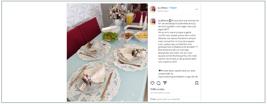
Thus, while in fashion and beauty contexts, aesthetic judgment and the display of tastes are artifices used by the blogger to stand out within a position of expertise (Tolson, 2010; McQuarrie et al., 2013; Erz & Christensen, 2018), in the present research, the proof of expertise comes through (1) sharing the performance of practices (the ‘how to’), (2) the display of repertoires of practices by the amount of content posted (varied recipes, homemade mixtures, etc.), and (3) the ‘proof’ through the validation from the followers.
In the investigated profile, it is common that followers share mentions through the ‘stories’ feature, followed by the praise from the influencer about their reproductions of recipes. In Figure 7 (right image), the influencer posts a follower’s reproduction of the recipe she had posted on the same day on her profile (left image):

It is possible to notice the difference between the recipes made by the most influential members and those of their followers in terms of the execution of the recipe, the aesthetics of the captured scene, and the way of sharing. What is valued, however, are the reproduction attempts and the influencer’s recognition, regardless of the result.
Another choice that becomes strategic is the selection of content that will be posted on the main feed of the profile. This is because the posted content starts to form a showcase for the exhibition of practices (Shove et al., 2012), demonstrating the diversity of the repertoire of knowledge of that content creator. Secondly, profile posts function as a collection of achievements, a digital extended memory (Jenkins & Denegri-Knott, 2017) to remember past deeds and re-energize that collective through a new sharing of older content. This resource was used, for example, to remember a recipe that had already been posted.
Destigmatization of social identity
A fundamental step in building influence in stigmatized contexts is transforming the social identity shared by the members of that collectivity. This identity is exhibited to society as a positioning of the positive values and beliefs of those individuals.
In addition to the publications, the exchanges of messages between the content producer and her followers through comments on the posts signal mutual support and appreciation of domestic practices, seen as an act of love and gratitude for the family and validated by the return of engaged followers ‘inspired’ by the publications. These interactions between the influencer and followers also reduce the isolation and invisibility of housewives by developing new relationships in the digital environment. In this virtual space, housewives seem to find value in their daily activities, which are sometimes devalued by society (Prandi, 2016). There is a belief in the importance of the role of the housewife as a caregiver of the family, often related to religious discourses and feelings of gratitude. The circularity of this process between the influencer and her followers in the construction of these shared values can be seen in comments such as the publication about cleaning the refrigerator:
“I love and admire the way you take care of your house my friend! Now that’s what it’s like to value what God has given!” (C., follower of profile @ju_feitoza).
“I love your posts; I don’t feel alone, the only housewife while everyone is away working…” (F., follower of the profile @ju_feitoza).
“Wow, good thing, my friend! Around here, there was also a deep cleaning of the kitchen” (A., follower of the profile @ju_feitoza).
“Oh Ju, there are days when I’m very discouraged with the organization of the house; my son is 3 years old and doesn’t leave anything in place; when I see your photos and care with the house, it motivates me to fight for mine again.” (B., follower of the profile @ju_feitoza).
Comments from followers on the post on the official profile @ju_feitoza (Feitoza, 2020e).
In this way, a project of shared identity is developed among those individuals and reinforced in the interaction between them. Most comments from followers use complimentary adjectives such as ‘capricious’ and strengthen the appreciation, recognition, and perceived importance of these practices:
“If someone one day told me to choose a house to eat food from the floor, I would choose the one from @ju_feitoza without fear, and I wouldn’t even be disgusted because her floor must be cleaner than the plate of many restaurants! Oh, what a virtuous woman, it inspires me to see all this love for home and family.” (Follower of the official profile @ju_feitoza in April 2021) (Feitoza, 2021c).
“… The path is not easy, the routine is hard, but it’s pleasurable, right friend? Taking care of what is ours, of our family closely, there is no better joy.” (Influencer Ju Feitoza’s response to a follower’s comment exposed in the previous excerpt on the official profile @ju_feitoza on January 30, 2020) (Feitoza, 2020d).
Thus, a project of shared identity is being built that moves toward the construction of community among those individuals. Most of the comments from followers reinforce the appreciation, admiration, recognition, and perceived importance of these practices:
“I have never been a housewife! But I grew up watching my mother tidy everything up. I now have a 1-year-old and a 9-month-old baby, and I am 21 weeks pregnant. Since my daughter was born, I have become a mother and housewife. Sometimes, the routine gets tiring, but I get inspired when I see you here! Congratulations!” (Follower’s comment on the official profile @ju_feitoza on January 30, 2020). Source: Feitoza, 2020d.
The messages from the followers show the influencer’s role as a guide in this group. When they feel unmotivated, insecure, and unsupported, followers look to the influencer as a source of inspiration and motivation. It is from this type of dialogue that the attempts to build a collective identity project of a community of housewives operate.
In building influence from the destigmatization of practices, a narrative of proximity operates through the connection with the audience in which the influencer places herself as a member of that group within a discourse of “we are here together, I am like you.” According to the data analyzed, this relationship is built from resources such as (1) the use of direct speech, (2) specific appeals (use of proximity vocatives such as calling followers ‘friends,’ ‘loves,’ ‘neighbors,’ etc.), and (3) the sharing of personal stories and speeches that demonstrate gratitude or vulnerability, bringing the influencer and followers closer together.
This narrative is then related to the discourse made by the influencer to bring her closer to the audience by putting herself in the position of an ‘ordinary individual’ who shares authentic narratives that bring her experience closer to the reality of her followers. Contrary to the discussion by Deighton and Kornfeld (2011) about the omission of personal problems in the construction of personas on digital platforms, in this case, the challenges and vulnerabilities are shared to build relationships with the audience that may share similar difficulties.
Hence, an image of authenticity is created when the influencer shares her problems and weaknesses as an ordinary person. For example, after recording content for a certain brand, the influencer Ju Feitoza shows her reddish face in the stories feature of Instagram and tells the audience that she had an allergy to the professional makeup products used. Personal problems can also be shared, as in another post in which she tells about a miscarriage she suffered to ‘justify’ her absence from the social network for a few days. Situations dealing with problems or illnesses usually appear in images or via stories followed by a message of hope or a religious discourse. In the case of the miscarriage suffered, shared in a publication, the followers provided their support. They shared their own personal stories, and a few days later, the influencer returned to her usual content, no longer speaking about the issue. The message behind the shared content is always one of strength, hope, overcoming difficulties anchored in religious values, and valuing the family unit.
In this sense, therefore, the results found corroborate some of the strategies discussed by Tolson (2010), such as the eye-to-eye conversation and amateurism in the content, while other aspects are added, such as the sharing of personal problems (in terms of content) and the use of hashtags as #vidareal (#reallife) to punctuate the meaning of the action or discourse that is being shared and signal situations or problems that may be common to other people. Finally, unlike other contexts in which identities are victimized or criticized to be perceived and re-signified (Drenten et al., 2024; Scaraboto & Fisher, 2013), in the context of domestic labor, we find a strategy of a positive view, or even a cultural glorification of a social identity that was previously invisible and devalued.
Entrepreneurial leadership
Building influence in stigmatized contexts culminates with the positioning of the influencer as a leader within that collectivity. It is the embodiment of a positive social identity. This strategy, built from the authenticity perceived by the group, display of competencies, and aestheticization of shared practices, adds another layer that consolidates the leadership position. In addition to the traditional domestic activities, the content producer starts developing her curatorship with specific ways of making original recipes, such as do-it-yourself activities, handicrafts, and homemade mixtures from existing products on the market. These activities are associated with financial savings when performing certain activities at home, practicality, and the feeling of empowerment and self-realization. In Figure 8, for example, we see the sharing of the homemade making of a mosquito net.

The creation of original recipes from market products in an artisanal way (Campbell, 2005) in the context investigated are the so-called ‘mixtures,’ a combination of products that already exist in the market which function as ingredients for a particular purpose, usually for specific issues of domestic cleaning practices: a mixture to clean the stove, a mixture to clean the bathroom, a mixture to spray on the beds (with fragrance), a mixture to wash dish towels, among many others. These ‘mixtures’ help reinforce leadership positions and influence by demonstrating the influencer’s knowledge about different uses and applications of the products as well as the difficulties and limitations of their use in daily domestic activities.
These mixtures are presented as better original solutions for a specific cleaning purpose and operate as a ‘private brand’ of that influencer, seeking to create a differential for her content. The original brands of some of the ingredients are intentionally shown and sometimes even freely suggested, without necessarily being endorsement actions negotiated with brands, as in the post in Figure 9:
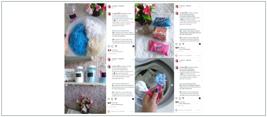
In the post in Figure 9, influencer Ju Feitoza teaches the possible uses of the mixture and even provides tips for using it in different types of washing machines. In this case, the influencer creates her recipe, naming it ‘Ju Feitoza’s turbinated cleaning mixture.’ In addition, an authorial hashtag is created that is used in all posts in which the mix is mentioned in an attempt to create a leadership position through the recipe and as a resource to increase engagement by encouraging its sharing on the platform, expanding audience and relevance.
As the profile grows in number of followers and engagement and the content producer consolidates the position of influence on the digital platform, relationships with brands emerge and operate as an instrument that validates the position of influence and authority for the audience by showing market recognition of her influence. In the researched context, the content shared is related to domestic practices; it is common for different brands to be shown and discussed freely, either to demonstrate knowledge linked to the position of expertise that is being built or as an attempt to get the profile noticed by brands (Nascimento et al., 2020).
Partnerships begin when brands send products directly to the influencer’s home for them to familiarize themselves with, test, and promote them (Nascimento et al., 2020). As discussed by Nascimento et al. (2020), in the researched context, the products received are from small brands, local companies, or small entrepreneurs in the food, fashion, beauty, and decoration segments. With the growth of the profile, the influencer’s entrepreneurial actions begin through partnerships with more prominent brands for sponsored publications, the ‘publiposts,’ in which there is some financial compensation or another type of commercial negotiation for the content creation about the products or brands (Nascimento et al., 2020). In this way, even if they remain in partnership with small entrepreneurs, the influencer starts to include other forms of advertising aligned with the type of content shared on her page. In the case of food products, for example, it is common for them to be used in recipes, as in the example of Figure 10.

Unlike Nascimento et al. (2020), who associate this partnership phase through sponsored posts with a relationship between influencers and brands that resembles the relationship with celebrities, in our research, the influencer (even with a high number of followers) does not change her project of collective identity as a blogger (Erz & Christensen, 2018) and maintains a type of language and content construction that uses elements of normality and proximity to the audience as platforms for building relevance and influence.
It is possible to conclude, then, that there are two types of narrative construction from the relationship with brands: a narrative that happens in a declared way from the influencer-brand relations and an implicit narrative of the construction of a position of authority and relevance that is perceived by the audience from this market recognition. Thus, in addition to the brand as a resource for building identity and as a partner in commercial relationships (Erz & Christensen, 2018; Nascimento et al., 2020), the present study shows that the influencer can use the brand to mark their position of expertise and leadership before their audience.
Another resource is the acknowledgment speech for the opportunities received from the audience’s engagement, as in the publication of Figure 11, in which Ju Feitoza travels to São Paulo to record a TV program and thanks her followers: “Thank you all for being here supporting me and trusting my work. You can be sure that I will always try to bring you the best.”

Through this speech, Ju Feitoza positions herself, finally, as a digital influencer, based on development of this sense of community and the development of affection. The influencer shares the feeling of gratitude for the relationships established in that collectivity and for the opportunities received, sharing the success with her audience. In that way, she contributes to the destigmatization of domestic practices by using resources to aestheticize undervalued practices, highlight the meanings shared in that collectivity, and position herself within this as an entrepreneurial leader whose role is to bring quality content that inspires, teaches, and helps these women in their daily demands, monetizing her discourse.
DISCUSSION
Ju Feitoza’s trajectory gradually reveals strategies that build a position of voice leadership based on the content production about a consumption practice under stigma: domestic labor. This process goes through four stages, as illustrated in Figure 12. Part of this journey illustrates how these influencers adopt strategies already identified in the literature for non-digital contexts (Sandikci & Ger, 2010), especially in the early stages. This journey also brings a specific strategy of influence in the context of stigma, positioned more at the top of the platform and whose conceptual design results from the evidence collected here and previously described.
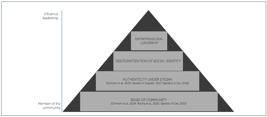
The strategic trajectory begins at the base of the platform’s pyramid when the influencer has a single channel or a social media profile and is still only a member of that community, gradually inserting themself into a digital collectivity. Initially, the influencer appropriates and triggers a sense of community around them message and content, mentioning hashtags that designate this community of profiles (e.g., #vizinhas [#neighbors]) and adopting a vocabulary that refers to a group. Often, these hashtags are incorporated into the profile description to be identified by the same audience of the collectivity with which they identify (Arvidsson & Calliandro, 2016). In the literature, we have already seen the role of collectivities as the first territory of support for individuals under stigma (Sandikci & Ger, 2010; Rocha et al., 2020), for individuals who generally work to promulgate a specific consumer ideology (Drenten et al., 2024). In the context of consumption under stigma, the sense of community works to mitigate the feeling of invisibility and isolation of this consumer, who realizes that other people have the same issues as them.
The second stage of the influence-building platform refers to producing content based on an effort to positivize content under stigma. It is an authenticity staged through strategies of glamorization and aestheticization. The influencer produces posts that mimic everyday life and simulate authentic spontaneity (Tolson, 2010), even though they are planned, created, and aestheticized in the smallest detail. As in the research by Drenten et al. (2024) and Kavakci and Kraeplin (2017), in which influencers adopt glamorization and aestheticization to activate aspirational desires around consumption (in diverse contexts such as fashion and weaponry), in this research, we find a cozy home, always clean and with delicacies on beautiful table sets, which invite others to mimic these practices. Domestic care becomes an inspiration and an object of desire. In addition to the glamour, through the use of accessories that evoke a more elite consumption, we see the strategy of aestheticization, such as in the research of Sandikci and Ger (2010) on the use of veils and the transformation of modest fashion into something linked to the fashion world in the digital environment (Becheri et al., 2023; Kavakci & Kraeplin, 2017). The posts are set in organized spaces, with objects aligned and arranged with clear aesthetic intentionality. In the end, even the service area receives the aesthetic contours of a living room.
The third stage of the platform refers to the effect that the influencer’s content has on their own social identity under stigma. For Goffman (1963), the individual under stigma cannot achieve full social acceptance. Prandi (2016) argues that the role of the housewife is articulated with a cultural stereotype attributed to women and taken as less valued than participation in the labor market. In the content platform proposed here, we see a series of narratives of the positivization of social identity under the stigma of the housewife. The literature shows strategies for reversing stereotypes either through the critical or activist reinvention of stereotypes on social networks (Scaraboto & Fisher, 2013) or through processes of victimization that configure the tribe as victims of external oppression, building a sense of empathy with followers (Drenten et al., 2024). Here, however, we find a strategy to reinforce the social identity of the housewife through her performance with maximum efficiency, thus becoming an identity that can be admired and an ideal type. The public sharing of private spaces and exposure of intimacy become content that brings the realities of the content creator and their followers closer together and operates in the process of destigmatizing the practices they value and perform. The apology for effort, self-discipline, and resilience highlights its strength. In addition, these narratives are associated with value systems that reinforce the positive value of an identity previously under stigma.
The final stage occurs when other market players recognize the building process of this leadership. The relationship that develops with brands begins by demonstrating knowledge, product manipulation, and creating recipes that validate the place of expertise in shared narratives. With the beginning of commercial relations with brands, the increase in visibility and the position of opinion leadership are demonstrated, acting as a social and market seal of influence. Unlike other studies, however, reaching a new level does not mark a change in the influencer’s posture or language (Nascimento et al., 2020) but rather positions influencer leadership as an entrepreneurial activity that continues to create content based on authenticity and proximity to the audience. In this way, the end of the destigmatization process is demonstrated by transforming ordinary, invisible, devalued, and mundane activities into aspirational, aestheticized, and marketable activities.
FINAL CONSIDERATIONS
This study aimed to investigate how influencers strategically build their leadership on social networks through content platforms in a territory of culturally stigmatized practices by re-signifying these practices. Its contribution lies in showing the transposition of strategies for transforming stigma (Sandikci & Ger, 2010) to the digital environment and scrutinizing narrative strategy construction.
Through the longitudinal case study (Yin, 2014) of digital influencer Ju Feitoza (@ju_feitoza), one of the most significant representatives of influence within the collective of housewives on Instagram (Vizinhas do Insta [Neighbors of Insta]), we followed the movement of housewives in the digital environment and the construction of the leadership of this content creator in a stigmatized context that devalues domestic work.
This study contributes to the Platform for Building Influence in Contexts under Stigma, which describes the stages of leadership construction taken by an influencer on social networks. In addition to showing the existence of digital-native practices related to the activation of the community through the positivization of the social identity of the housewife and anchored in ideological consumption platforms, two strategic steps specific to the context of influence in contexts of stigma were proposed: the destigmatization of the social identity under stigma and the construction of entrepreneurial leadership. These two processes illustrate the need for a specific effort of entrepreneurship not only of the content but also of the social identity that underpins the influence project, as well as the identity of the influencer themself, who lends themself as an ideal model of the social identity that they project aims to declare as positive. Consumption under stigma requires this layer of moral entrepreneurship, possibly less present in other contexts of influence. In socially valued contexts, influencers tend to find themselves in a territory of greater convergence and moral comfort, as they are aligned with the dominant values of society.
The managerial contributions of this work are related to demonstrating how stigmatized groups develop strategies of resignification that include a series of practices that provide new opportunities for positioning and integrating brands in these territories and discourses, approaching this collectivity of consumers and even strategically adapting to these contexts within the digital environment. Brands can investigate these communities to evaluate consumer behaviors and trends and verify discourses associated with their brand and the insertion of their products in the daily lives of their consumers to perceive new business possibilities and in the consumer journey of using their products. The ‘mixtures’ made by skilled consumers also bring new opportunities for developing products that allow consumers to embrace more of their production activities. Above all, brands must learn that they need to promote the symbolic reversal of social identity under stigma, supporting the community’s effort to value its destigmatization practices and movements.
Regarding the limitations, this study selected a reference and highly relevant profile to investigate the construction of leadership based on narratives of destigmatization in the context of female domestic work. The selection of this context has some limitations because it is a single case study that demonstrates the trajectory taken by that reference influencer in a given collectivity. The selection of other profiles and contexts can bring other findings and possibilities, including investigating the network between influencers, brands, and communities. Another limitation is related to the type of stigma pertinent to the researched context, which may demonstrate distinct characteristics and dynamics in other territories of consumption.
SUGGESTIONS FOR FUTURE RESEARCH
For future investigations, the strategies for building influence from stigmatized contexts suggested here can be analyzed in other collective formations in digital environments, considering contexts and groups such as consumers in situations of greater vulnerability or groups with more significant restrictions on access to technological platforms, such as older people. Additionally, the different functions of hashtags beyond linguistic mediation resources can be investigated in future research, considering their role in community formations and in sharing specific meanings. The researched context can also be explored through the lens of gender literature through the analysis of a housewife who digitally stages her domestic routine. If, on the one hand, we have an approach within feminist studies about the domestic environment and the role of the housewife associated with movements of exploitation of women and the reproduction of patriarchal structures, on the other hand, we have here an additional angle of domestic work as a professional resource created by the woman and housewife who becomes an entrepreneur, a provider for the family, and who uses social networks strategically to build a base of digital influence in a historically stigmatized context, demonstrating new layers of female representation in domestic work. Other methodological choices, such as interviews with influencers from other profiles (nano, micro, and meso) and followers and members of these collectivities, would bring other layers to this phenomenon. Investigating destigmatization movements in other digital contexts and the relations with the consumer market can also bring interesting perspectives to the field and advance the construction of this leadership platform model.
REFERENCES
-
Ajala, I. (2017). From Islamic Dress and Islamic Fashion to Cool Islam: An Exploration of Muslim Youth Hybrid Identities in the West 2017. The International Journal of Interdisciplinary Cultural Studies, 12(3), 1-11. https://doi.org/10.18848/2327-008X/CGP/v12i03/1-11
» https://doi.org/10.18848/2327-008X/CGP/v12i03/1-11 - Arsel, Z., & Zhao, X. (2013). Blogs. In R. Belk & R. Llamas (Eds.), The Routledge Companion to Digital Consumption (pp. 51-63). Routledge.
-
Arvidsson, A., & Calliandro, E. (2016). A brand public. Journal of Consumer Research, 42(5), 727-748. https://doi.org/10.1093/jcr/ucv053
» https://doi.org/10.1093/jcr/ucv053 -
Barta, S., Belanche, D., Fernández, A., & Flavián, M. (2023). Influencer marketing on TikTok: The effectiveness of humor and followers’ hedonic experience. Journal of Retailing and Consumer Services, 70, 103-149. https://doi.org/10.1016/j.jretconser.2022.103149
» https://doi.org/10.1016/j.jretconser.2022.103149 -
Becheri, J. O., Gusmão, A. H., Cozadi, E. G., & Leme, P. H. M. V. (2023). Instagram in the modest fashion market: Analysis by the perspective of sociotechnical structures. Revista de Administração Contemporânea, 27(4), 1-22. https://doi.org/10.1590/1982-7849rac2023220168.en
» https://doi.org/10.1590/1982-7849rac2023220168.en -
Bianchi, S. M., Milkie, M. A., Sayer, L. C., & Robinson, J. P. (2000). Is anyone doing the housework? Trends in the gender division of household labor. Social Forces, 79(1), 191-228. https://doi.org/10.1093/sf/79.1.191
» https://doi.org/10.1093/sf/79.1.191 -
Blay, E. A. (1975). Trabalho industrial x trabalho doméstico a ideologia do trabalho feminino. Cadernos de pesquisa, (15), 8-20. https://publicacoes.fcc.org.br/cp/article/view/1810
» https://publicacoes.fcc.org.br/cp/article/view/1810 -
Bruschini, M. C. A. & Ricoldi, A. M. (2012). Revendo estereótipos: o papel dos homens no trabalho doméstico. Estudos Feministas, 20(1), 259-287. https://doi.org/10.1590/S0104-026X2012000100014
» https://doi.org/10.1590/S0104-026X2012000100014 - Campbell, C. (2005). O consumidor artesão: Cultura, artesania e consumo em uma sociedade pós-moderna. Antropolítica, 17(2), 45-67.
-
Campbell, C., & Farrel, J. (2020). More than meets the eye: The functional components underlying influencer marketing. Business Horizons, 63(4), 469-479. https://doi.org/10.1016/j.bushor.2020.03.003
» https://doi.org/10.1016/j.bushor.2020.03.003 -
Daniel, E., Crawford Jackson, E. C., & Westerman, D. K. (2018) The influence of social media influencers: understanding online vaping communities and parasocial interaction through the lens of taylor’s six segment strategy wheel. Journal of Interactive Advertising, 18(2): 96-109. https://doi.org/10.1080/15252019.2018.1488637
» https://doi.org/10.1080/15252019.2018.1488637 - Deighton, J., & Kornfeld, L. (2011). The construction of ordinary celebrity. In D. W. Dahl, G. V. Johar, & S. M. J. van Osselaer (Eds.), Advances in consumer research (Vol. 38, pp. 703-710). Association for Consumer Research.
-
Dennen, V. P. (2014). Becoming a blogger: Trajectories, norms, and activities in a community of practice. Computers in Human Behavior, 36, 350-358. https://doi.org/10.1016/j.chb.2014.03
» https://doi.org/10.1016/j.chb.2014.03 -
Drenten, J., Gurrieri, L., Huff, A. D., & Barnhart, M. (2024). Curating a consumption ideology: Platformization and gun influencers on Instagram. Marketing Theory, 24(1), 91-122. https://doi.org/10.1177/14705931231207329
» https://doi.org/10.1177/14705931231207329 -
Erz, A., & Christensen, A. H. (2018). Transforming consumers into brands: Tracing transformation processes of the practice of blogging. Journal of Interactive Marketing, 43, 69-82. https://doi.org/10.1016/j.intmar.2017.12.002
» https://doi.org/10.1016/j.intmar.2017.12.002 -
Erz, A., Marder, B. & Osadchaya, E. (2018). Hashtags: Motivational drivers, their use, and differences between influencers and followers. Computers in Human Behavior, 89, 48-60. https://doi.org/10.1016/j.chb.2018.07.030
» https://doi.org/10.1016/j.chb.2018.07.030 -
Feitoza, J. [@ju_feitoza]. (2020a, 18 de junho). Boa tarde meu povo querido, espero que por aí esteja tudo bem, tudo na paz. [Fotografia]. Instagram. https://www. instagram.com/p/CBIKepugZzV/
» https://www. instagram.com/p/CBIKepugZzV/ -
Feitoza, J. [@ju_feitoza]. (2020b, 27 de maio). Vai almocinho todo trabalhado no carboidrato, no amor e carinho também. [Fotografia]. Instagram. https://www.instagram.com/p/CAshAzogQn0/
» https://www.instagram.com/p/CAshAzogQn0/ -
Feitoza, J. [@ju_feitoza]. (2020c, 20 de dezembro). Porque será que almoço de fim de semana (principalmente almoço de domingo) tem uma magia mais que especial??? [Fotografia]. Instagram. https://www.instagram.com/p/CAshAzogQn0/
» https://www.instagram.com/p/CAshAzogQn0/ -
Feitoza, J. [@ju_feitoza]. (2020d, 30 de janeiro). Lavanderia e cozinha tudo trabalhado na limpeza e Organização!!!! [Fotografia]. Instagram. https://www.instagram.com/p/B79GrlCghPU/?utm_source=ig_web_copy_link&igsh=MzRlODBiNWFlZA==
» https://www.instagram.com/p/B79GrlCghPU/?utm_source=ig_web_copy_link&igsh=MzRlODBiNWFlZA== -
Feitoza, J. [@ju_feitoza]. (2020e, 02 de Junho). Dia de repor uma das minhas misturas preferidas a #misturaturbinadadajufeitoza . Boa tarde amores, dei as caras por aqui né mas é correria amores. [Fotografia]. Instagram. https://www.instagram.com/p/CA8aGoWnkbz/?utm_source=ig_web_copy_link
» https://www.instagram.com/p/CA8aGoWnkbz/?utm_source=ig_web_copy_link -
Feitoza, J. [@ju_feitoza]. (2020f, 18 de julho). Amores sou suspeita para falar, mas Hambúrguer caseiro tem o seu valor né?. [Fotografia]. Instagram. https://www.instagram.com/p/CCzKrEiA1jV/
» https://www.instagram.com/p/CCzKrEiA1jV/ -
Feitoza, J. [@ju_feitoza]. (2021a, 27 de maio). A gente aprende tanto observando a VIDA!! Bom dia,bom dia amores preciosos como estão por aí??? [Vídeo]. Instagram. https://www.instagram.com/p/CPX-4wAAQr4/
» https://www.instagram.com/p/CPX-4wAAQr4/ -
Feitoza, J. [@ju_feitoza]. (2021b, 13 de dezembro). Segundou mais uma vez…então vamos seguir sem pressa,sem correria,no nosso tempo,de acordo com nossa realidade,que as poucos a gente vai engrenando e tudo acontece… [Fotografia]. Instagram. https://www.instagram.com/p/CXbPMZxLCqr/
» https://www.instagram.com/p/CXbPMZxLCqr/ -
Feitoza, J. [@ju_feitoza]. (2021c, 20 de abril). E pra VOCÊ... [Fotografia]. Instagram. https://www.instagram.com/p/CN5MsTUgAw5/?utm_source=ig_web_copy_link&igsh=MzRlODBiNWFlZA==
» https://www.instagram.com/p/CN5MsTUgAw5/?utm_source=ig_web_copy_link&igsh=MzRlODBiNWFlZA== -
Feitoza, J. [@ju_feitoza]. (2021d, 27 de Maio). Janelas protegidas de insetos e mosquitos temos!!! [Fotografia]. Instagram. https://www.instagram.com/p/CPWN_Tlg1p5/
» https://www.instagram.com/p/CPWN_Tlg1p5/ -
Feitoza, J. [@ju_feitoza]. (2022, 13 de maio). Bom dia, bom dia amores posso apresentar a vocês meu novo ajudante? Sabe aquele negócio de pagar com a língua…tô pagando. [Vídeo]. Instagram. https://www.instagram.com/p/CdgDQGLjUj7/
» https://www.instagram.com/p/CdgDQGLjUj7/ -
Feitoza, J. [@ju_feitoza]. (n.d.). Posts. [Instagram profile]. Instagram. https://www.instagram.com/ju_feitoza/?hl=pt-br
» https://www.instagram.com/ju_feitoza/?hl=pt-br -
Gannon, V., & Prothero, A. (2018). Beauty bloggers and YouTubers as a community of practice. Journal of Marketing Management, 34(7-8), 592-619. https://doi.org/10.1080/0267257X.2018.1482941
» https://doi.org/10.1080/0267257X.2018.1482941 -
Gilbert, S. (2016). Learning in a Twitter-based community of practice: An exploration of knowledge exchange as a motivation for participation in #hcsmca. Information, Communication & Society, 19(9), 1214-1232. https://doi.org/10.1080/1369118X.2016.1186715
» https://doi.org/10.1080/1369118X.2016.1186715 - Goffman, E. (1959). The presentation of self in everyday life. Doubleday.
- Goffman, E. (1963). Stigma: Notes on the management of spoiled identity. Prentice Hall.
-
Gupta N, Dorfman R, Saadat S,. & Roostaeian J. (2020) The plastic surgery social media influencer: ethical considerations and a literature review. Aesthetic Surgery Journal 40(6): 691-699. https://doi.org/10.1093/asj/sjz329
» https://doi.org/10.1093/asj/sjz329 -
He, G., Leurs, K., & Li, Y. (2022). Researching motherhood in the age of short videos: Stay-at-home mothers in China performing labor on Douyin. Media and Communication, 10(3), 273-289. https://doi.org/10.17645/mac.v10i3.5510
» https://doi.org/10.17645/mac.v10i3.5510 -
Instituto Brasileiro de Geografia e Estatística. (2014). Relatório Estatísticas de Gênero: Indicadores sociais das mulheres no Brasil. https://biblioteca.ibge.gov.br/visualizacao/livros/liv102066_informativo.pdf
» https://biblioteca.ibge.gov.br/visualizacao/livros/liv102066_informativo.pdf - Jenkins, R., & Denegri-Knott, J. (2017). Extending the mind: Digital devices and the transformation of consumer practices. In F. Cochoy, J. Hagberg, M. Petersson McIntyre, & N. Sörum (Eds.), Digitalising Consumption: How Devices Shape Consumer Culture (pp. 85-102). Routledge.
-
Kavakci, E., & Kraeplin, C. R. (2017). Religious beings in fashionable bodies: The online identity construction of hijabi social media personalities. Media, Culture & Society, 39(6), 850-868. https://doi.org/10.1177/0163443716679031
» https://doi.org/10.1177/0163443716679031 - Kozinets, R. (2019). Netnography: The essential guide to qualitative social media research. Sage.
-
Kozinets, R., De Valck, C., Wojnicki, A., & Wilner, S. (2010). Networked narratives: Understanding word-of-mouth marketing in online communities. Journal of Marketing, 74(2), 71-89. https://doi.org/10.1509/jm.74.2.71
» https://doi.org/10.1509/jm.74.2.71 -
Kozinets, R., Ferreira, D., & Chimenti, P. (2021). How do platforms empower consumers? Insights from the affordances and constraints of Reclame Aqui. Journal of Consumer Research, 48(3), 428-455. https://doi.org/10.1093/jcr/ucab014
» https://doi.org/10.1093/jcr/ucab014 -
Kozinets, R., Patterson, A., & Ashman, R. (2017). Networks of desire: How technology increases our passion to consume. Journal of Consumer Research, 43(5), 659-682. https://doi.org/10.1093/jcr/ucw061
» https://doi.org/10.1093/jcr/ucw061 -
Labrecque, L., vor dem Esche, J., Mathwick, C., Novak, T., & Hofacker, C. (2013). Consumer power: Evolution in the digital age. Journal of Interactive Marketing, 27(4), 257-269. https://doi.org/10.1016/j.intmar.2013.09.002
» https://doi.org/10.1016/j.intmar.2013.09.002 -
Lewis, B., & Rush, D. (2013). Experience in developing Twitter-based communities of practice in higher education. Research in Learning Technology, 21. https://doi.org/10.3402/rlt.v21i0.18657
» https://doi.org/10.3402/rlt.v21i0.18657 -
Maciel, A., & Wallendorf, M. (2017). Taste engineering: An extended consumer model of cultural competence constitution. Journal of Consumer Research, 43(5), 726-746. https://doi.org/10.1093/jcr/ucw054
» https://doi.org/10.1093/jcr/ucw054 -
Madalozzo, R., Martins, S. R., & Shiratori, L. (2010). Participação no mercado de trabalho e no trabalho doméstico: Homens e mulheres têm condições iguais? Revista Estudos Feministas, 18(2), 547-566. https://doi.org/10.1590/S0104-026X2010000200015
» https://doi.org/10.1590/S0104-026X2010000200015 -
McQuarrie, E. F., Miller, J., & Phillips, B. J. (2013). The megaphone effect: Taste and audience in fashion blogging. Journal of Consumer Research, 40(1), 136-158. https://doi.org/10.1086/669042
» https://doi.org/10.1086/669042 -
Miguel, C., Clare, C., Ashworth, C. J., & Dong, H. (2022). ‘With a little help from my friends’: Exploring mutual engagement and authenticity within foodie influencers’ communities of practice. Journal of Marketing Management, 38(13-14), 1561-1586. https://doi.org/10.1080/0267257X.2022.2041705
» https://doi.org/10.1080/0267257X.2022.2041705 -
Nascimento, T., Campos, R., & Suarez, M. (2020). Experimenting, partnering and bonding: A framework for the digital influencer-brand endorsement relationship. Journal of Marketing Management, 36(11-12), 1009-1030. https://doi.org/10.1080/0267257X.2020.1791933
» https://doi.org/10.1080/0267257X.2020.1791933 -
Oksala, J. (2016). Affective labor and feminist politics. Signs: Journal of Women in Culture and Society, 41(2), 281-303. http://doi.org/10.1086/682920
» http://doi.org/10.1086/682920 -
Prandi, J. R. (2016). A mulher e o papel de dona-de-casa: Representações e estereótipos. Revista de Antropologia, 24, 109-121. https://doi.org/10.11606/2179-0892.ra.1981.110971
» https://doi.org/10.11606/2179-0892.ra.1981.110971 -
Rocha, A. R. C., Campos, R. D., Casotti, L. M., & Nascimento, T. C. D. (2020). Producing beauty ‘the hard way’: Involuntary prosumption in a stigmatising context. Journal of Marketing Management, 36(13-14), 1223-1251. https://doi.org/10.1080/0267257X.2020.1795430
» https://doi.org/10.1080/0267257X.2020.1795430 -
Roland, D., Spurr, J., & Cabrera, D. (2017). Preliminary evidence for the emergence of a health care online community of practice: Using a netnographic framework for Twitter hashtag analytics. Journal of Medical Internet Research, 19(7), 252-271. https://doi.org/10.2196/jmir.7072
» https://doi.org/10.2196/jmir.7072 -
Rosell-Aguillar, F. (2018). Twitter: A professional development and community of practice tool for teachers. Journal of Interactive Media in Education, 2018(1), 1-12. https://doi.org/10.5334/jime.452
» https://doi.org/10.5334/jime.452 -
Rosenthal, B., & Airoldi, M. (2024). Consumer morality formation on social media platforms: the case of guns in Brazil. Journal of Macromarketing, 44(1), 178-198. https://doi.org/10.1177/02761467231204866
» https://doi.org/10.1177/02761467231204866 -
Sandikci, Ö., & Ger, G. (2010). Veiling in style: How does a stigmatized practice become fashionable? Journal of Consumer Research, 37(1), 15-36. https://doi.org/10.1086/649910
» https://doi.org/10.1086/649910 -
Scaraboto, D., & Fisher, E. (2013). Frustrated fatshionistas: An institutional theory perspective on consumer quests for greater choice in mainstream markets. Journal of Consumer Research, 39(6), 1234-1257. https://doi.org/10.1086/668298
» https://doi.org/10.1086/668298 - Shamayleh, G., & Arsel, Z. (2021). From blogs to platforms: Content landscapes and affordances. In R. Llamas & R. Belk (Eds.), Routledge Handbook of Digital Consumption (pp. 191-208). Routledge.
- Shove, E., Pantzar, M., & Watson, M. (2012). The dynamics of social practice: Everyday life and how it changes. Sage.
-
Sykes, S., & Hopner, V. (2024). Tradwives: Right-Wing Social Media Influencers. Journal of Contemporary Ethnography, 53(4), 453 -487. https://doi.org/10.1177/08912416241246273
» https://doi.org/10.1177/08912416241246273 -
The Economist. (2024, May 15). #Tradwives, the real housewives of the internet, have gone viral. The Economist. https://www.economist.com/culture/2024/05/15/tradwives-the-real-housewives-of-the-internet-have-gone-viral
» https://www.economist.com/culture/2024/05/15/tradwives-the-real-housewives-of-the-internet-have-gone-viral -
Thompson, C. (1997). Interpreting consumers: A hermeneutical framework for deriving marketing insights from the texts of consumers’ consumption stories. Journal of Marketing Research, 34(4), 438-455. https://doi.org/10.1177/002224379703400403
» https://doi.org/10.1177/002224379703400403 -
Tolson, A. (2010). A new authenticity? Communicative practices on YouTube. Critical Discourse Studies, 7(4), 277-289. https://doi.org/10.1080/17405904.2010.511834
» https://doi.org/10.1080/17405904.2010.511834 - Wenger, E. (1998). Communities of practice: Learning, meaning, and identities. Cambridge University Press.
- Yin, R. (2014). Case study research design and methods (5th ed.). Sage.
-
Zanette, M. C., Brito, E. P. Z., & Coutinho, M. (2013). New influentials: An exploratory study on blogs. Journal of Direct, Data and Digital Marketing Practice, 15, 36-46. https://doi.org/10.1057/dddmp.2013.45
» https://doi.org/10.1057/dddmp.2013.45 -
Zappavigna, M. (2015). Searchable talk: The linguistic functions of hashtags. Social Semiotics, 25(3), 274-291. https://doi.org/10.1080/10350330.2014.996948
» https://doi.org/10.1080/10350330.2014.996948
-
How to cite:
Fracalanzza, F. P., Campos, R. D., & Suarez, M. C. (2024). Influence building in stigmatized contexts: Women’s domestic work as a platform for digital content. BAR-Brazilian Administration Review, 21(Suppl.), e240125. DOI: https://doi.org/10.1590/1807-7692bar2024240125
-
Funding:
The authors stated that there is no funding for the research in the article.
-
Data Availability:
BAR - Brazilian Administration Review encourages data sharing but, in compliance with ethical principles, it does not demand the disclosure of any means of identifying research subjects.
-
Plagiarism Check:
BAR maintains the practice of submitting all documents received to the plagiarism check, using specific tools, e.g.: iThenticate.
-
Peer review:
is responsible for acknowledging an article’s potential contribution to the frontiers of scholarly knowledge on business or public administration. The authors are the ultimate responsible for the consistency of the theoretical references, the accurate report of empirical data, the personal perspectives, and the use of copyrighted material. This content was evaluated using the double-blind peer review process. The disclosure of the reviewers’ information on the first page is made only after concluding the evaluation process, and with the voluntary consent of the respective reviewers.
-
JEL Code:
M31
Edited by
-
Editors-in-Chief:
Ricardo Limongi https://orcid.org/0000-0003-3231-7515(Universidade Federal de Goiás, Brazil)
-
Guest Editors:
Valter Afonso Vieira https://orcid.org/0000-0002-4129-3343(Universidade Estadual de Maringá, Brazil)Edvan Cruz Aguiar https://orcid.org/0000-0002-3433-6210(Universidade Federal de Campina Grande, Brazil)Marcia Christina Ferreira https://orcid.org/0000-0003-2599-8754(University of Essex, United Kingdom)Marlon Dalmoro https://orcid.org/0000-0002-6211-0905(NOVA IMS Information Management School, Portugal and Universidade do Vale do Taquari, Brazil)
BAR - Brazilian Administration Review encourages data sharing but, in compliance with ethical principles, it does not demand the disclosure of any means of identifying research subjects.

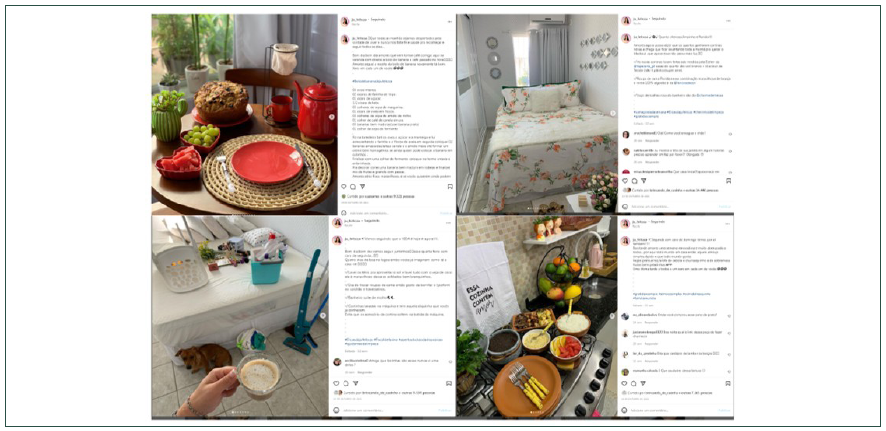 Source: Feitoza (n.d.). Mosaic of images taken by the authors from the official profile @ju_feitoza on October 11, 13, and 14, 2021.
 Source:
  Source:
 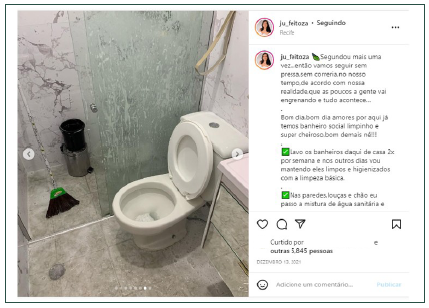 Source:
 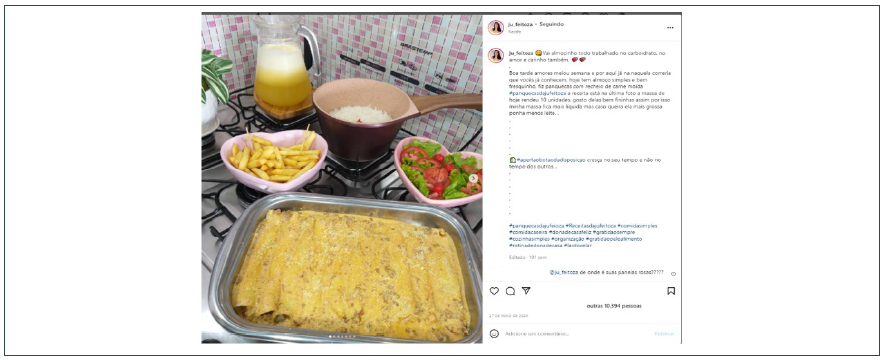 Source:
  Source:
 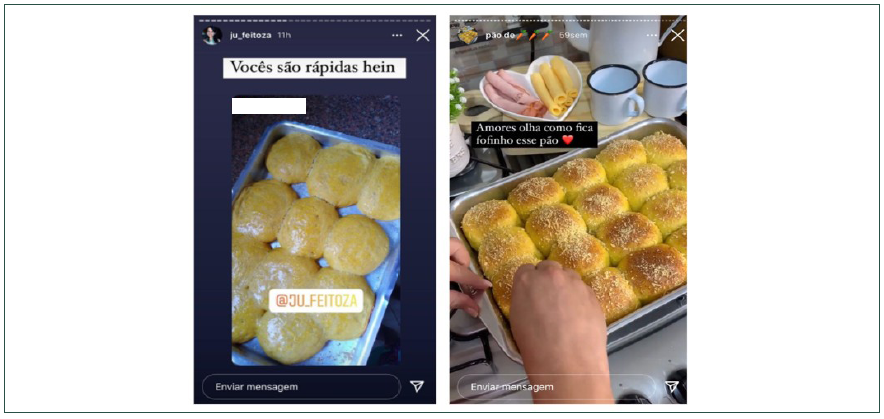 Source: Feitoza (n.d.). Compilation by the author. Posts in the stories of the official profile @ju_feitoza.
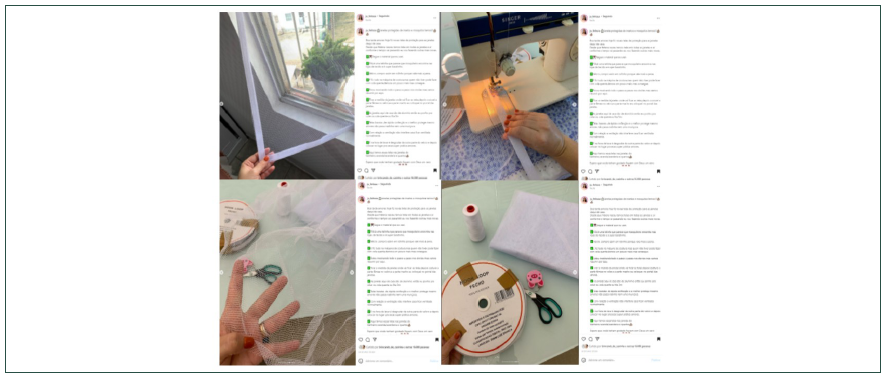 Source:
 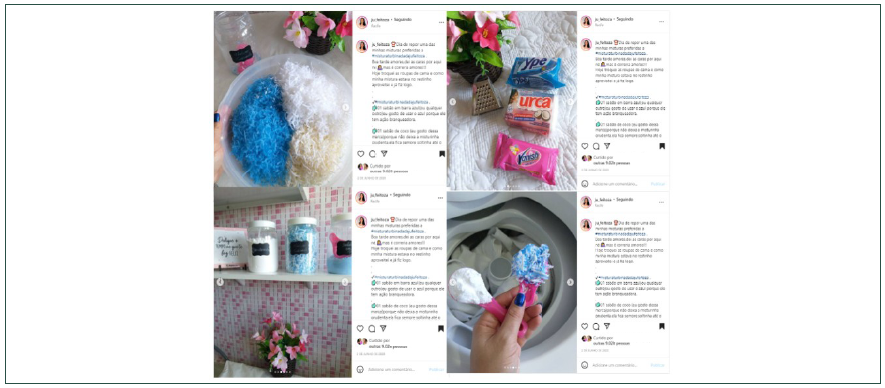 Source:
  Source:
 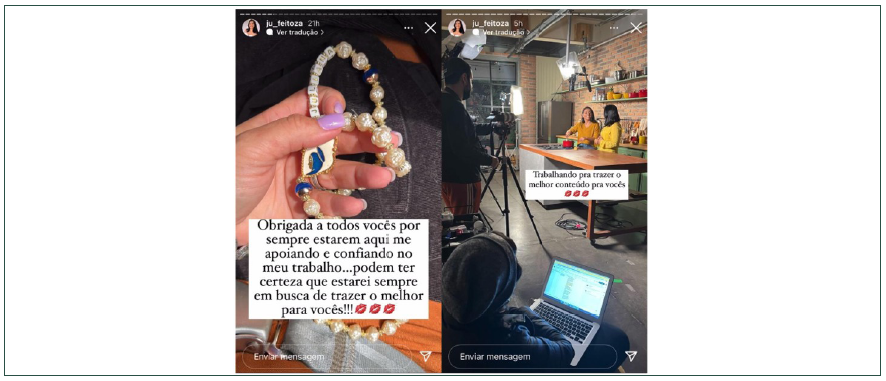 Source: Feitoza (n.d.). Stories from the official profile @ju_feitoza.
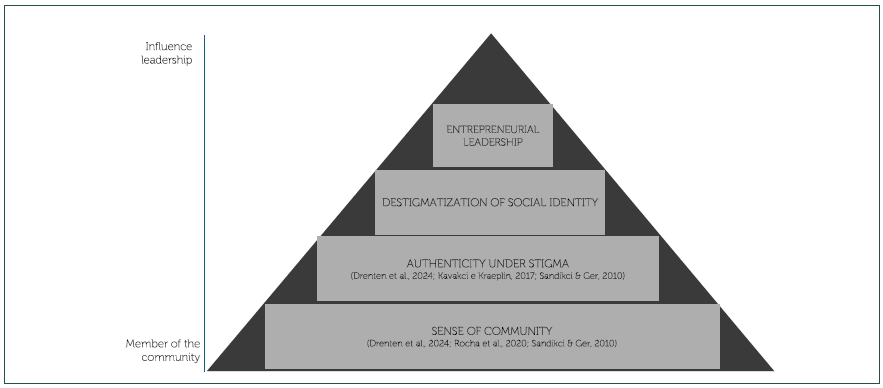 Source: Elaborated by the authors.