
 Fight for Respect! Exploring Digital Activism among Cosplayers through Consumer Resistance Based on Foucauldian Theory
ABSTRACT
Objective: drawing from digital consumer activism and the Foucauldian concept of resistance, the aim of this research is to analyze how cosplayers’ digital activism governs their online interactions.
Method: the ethnographic Foucauldian genealogy was carried out over a four-and-a-half-year data collection period.
Results: our analysis revealed the Fight for Respect dispositif, when cosplayers’ digital activism represents the exercise of multiple resistances assembled to organize themselves through digital activism to establish care of the self and others. It is described by how consumers encompass several levels when dealing with attacks against themselves or their peers: from a proposal for coexistence - Agenda; to a desire for change - Protests; and reaching a position of rupture - Riot.
Conclusion: the study highlights how consumer activism carried out virtually by a specific and engaged audience is capable of continually re-elaborating digital marketing relationships. Such activism opposes a dark-side activism, reiterating the importance of researchers and marketing managers paying attention to the curtailment or manifestation of pride in ontological conditions that are typically attacked in the digital environment.
Keywords:
cosplay; ethnographic Foucauldian genealogy; virtual consumer activism; virtual consumer resistance; digital marketing dispositif
INTRODUCTION
Cosplay is an interdisciplinary phenomenon in which consumers dress up and play characters from pop culture (Arnould et al., 2020; Seregina & Weijo, 2017). This phenomenon is commonly associated with fan practices - i.e., specialized consumers who converge and commune in specific communities called fandoms (Kozinets & Jenkins, 2022; Moura & Souza-Leão, 2023) since it allows its practitioners - i.e., cosplayers - to publicly attest to their intense relationship with media products or adapt them to manifest identity projects and co-create extraordinary consumption experiences (Carrington & Ozanne, 2022; De Mello et al., 2021).
Like other interactive phenomena of participatory culture, cosplay is often a means of establishing discussions that go beyond consumer relations (El Jurdi et al., 2022; Winge, 2006). Recent studies highlight the ability of cosplay to represent civic manifestations and political activism (Atkins, 2022; Lamerichs, 2023). Thus, cosplay has been highlighted as a means for its practitioners to exercise consumer resistance, when they manifest and represent ethical values and their ontological conditions in order to broaden discussions about the social spaces that are theirs (Gn, 2011; Seregina, 2020). Furthermore, cosplay is one of the phenomena that allows consumer research to seek to understand how interactions between peers from the same consumer subculture are articulated virtually and in person as consumer activism (Kozinets & Jenkins, 2022).
Consumer activism is a long-standing phenomenon (Hawkins, 2010; Swimberghe et al., 2011) that has undergone a major rise and spread following the exponential popularity of information and communication technologies (ICT) or social networks in routine consumer choices and practices since the turn of the century (Discetti & Anderson, 2023; Hollenbeck & Zinkhan, 2006). According to Lekakis (2022), consumer activism is a broad phenomenon that encompasses any coordinated movement in which people organize online and offline actions to question or endorse pre-established marketing relationships.
Broadly, contemporary consumer activism is hybrid, as digital interactions reflect and impact in-person practices, showing how online and offline consumer relations are increasingly inseparable (Discetti & Anderson, 2023; Kozinets & Seraj-Aksit, 2024). Consumer activism is mostly about questioning and sabotaging globalized products or brands (Minocher, 2019), but it has also aligned itself with civic and social discourses that it disagrees with or rejects (Swimberghe et al., 2011).
However, two perspectives have stood out more recently. On the one hand, activism is used to defend particular values for consumers, even if they propagate discourses of segregation, in a type of dark side of consumer activism (Lekakis, 2022; Zanette, 2023). On the other hand, there is consumer activism that seeks to advocate against hate speech and political movements to which they are interrelated, often appropriating the entertainment industry to carry out this coordinated effort (Atkins, 2022; Souza-Leão et al., 2022).
In both cases, consumer activism can be interpreted as an exercise in resistance through consumption practices. Consumer resistance reveals the positions they take - such as activism - to question or endorse marketing discourses and behaviors that they need to deal with (Denegri-Knott et al., 2018; Zanette & Brito, 2020). Such resistance is conceived as a productive positioning, when consumers assume a leading role in the co-creation of their experiences and, simultaneously, in maintaining the market relationships in which they are inserted (Cova & Cova, 2012; Cronin & Hopkinson, 2018). Therefore, such resistances are commonly interpreted as contemporary examples of Foucauldian resistance (Mikkonen & Bajde, 2013; Thompson et al., 2018).
According to Foucault (2012), resistance is a productive power exercise, when subjects position themselves in the face of the government forms that rule their lives. In the Foucauldian perspective, to understand the social relations in which we live in, it is necessary to observe the power exercises that are carried out by the subjects and institutions that make up society. Such power exercises are productive since they produce consequences in the ways in which people govern their own practices. Thus, when the multiple coexisting power exercises are put together, it is possible to map broader government forms that guide behavior and knowledge.
Resistance can question but also endorse and expand knowledge or power exercises that already regulate the social structure. There is no antagonistic resistance, because despite often presenting oppositional characteristics, all resistance invariably refers to the government form with which it relates. Additionally, many of the resistances exercised are designed to adjust or intensify behaviors that benefit certain social agents, whether at the individual or collective level (Foucault, 2008).
Consequently, every resistance exercise simultaneously manifests those who resist and the government forms to which they resist. Furthermore, it is possible and common for resistance to influence and align with other resistances, establishing or (re)configuring previously established government forms. This possibility indicates that the arrangement of resistances is capable of and usually governs part of the social relations in the context in which they are exercised (Foucault, 2006).
Thus, the Foucauldian perspective on resistance exercises allows consumer culture theory (CCT) researchers to understand how individual movements or even those coordinated between consumers (re)configure market power relations (Shankar et al., 2006). More specifically, it broadens the interpretations of marketing researchers and organizational managers about the implications of consumer activism propagated in digital consumer communities, but with market implications (Souza-Leão et al., 2022; Zanette & Brito, 2020).
Broadly, for CCT studies, exploring consumer resistance works as a tool to help its researchers understand how the relationship between different market agents is mutual and continuous. On the one hand, such a theme - i.e., consumer resistance - allows for identifying the ways in which consumers position themselves in relation to what they consume, influencing, propagating, or rejecting the maintenance of market subcultures (Cronin & Hopkinson, 2018; Zanette & Brito, 2020). On the other hand, it can indicate how marketing managers have incorporated and aligned their strategies with the increasingly common new consumption patterns (Denegri-Knott et al., 2018; Kedzior & Allen, 2016). Thus, consumer resistance illustrates how CCT is a mosaic of theoretical perspectives that are interested in exploring the transversality of consumption as a cultural practice (Arnould et al., 2020). Moreover, it explains how this field of study is defined as an alternative tradition of consumer research, conceived as a heuristic mapping of multiple consumption practices, whether in the online and offline ambiance or in the transition and contiguity between both (Franco, 2022; Kozinets et al., 2018).
Following this perspective, the present research aims to understand how cosplayers’ digital activism governs their online interactions. Such a purpose fills the gap in CCT studies, where previous discussions on consumer activism are limited to understanding the cultural movements, its social representation, or the market consequences of the use of digital and interactive platforms. Although these studies are enlightening and fundamental to the establishment of our study, they do not delve deeper into the understanding that digital consumer activism is a government form that guides consumer practices themselves.
Consequently, our study considers that resistances characterized as consumer activism, when exercised virtually and internationally, can add up and establish a government form that impacts the consumer relations of their peers and the very market logic that allows them to consume. Additionally, our study was designed to update and expand the phenomena investigated - such as cosplay - that allow for consumer resistance from a Foucauldian perspective.
Thus, this study was designed to continue what was proposed by Seregina and Weijo (2017) when they considered that cosplayers interact with each other to support the playful and positive aspects of their consumption experiences, even when facing attacks, prejudices, and negative comments about their cosplays. Furthermore, we also adopted the suggestion of Arnould et al. (2020) that cosplay is an emblematic phenomenon to be explored to illustrate the rich mosaic of possibilities that can be investigated by CCT. Additionally, the present study also follows Kumar and Dholakia (2022) suggestion that new research should establish discussions and insights about the role of consumers and marketing managers in mitigating and questioning social asymmetries previously established in market relations, aligning with the Sustainable Development Goals (SDGs) and expanding discussions on the theme of responsible consumption and production.
THEORY DEVELOPMENT
The digital marketing environment is pointed out as an accelerated adaptation of traditional marketing relations, serving as an extension or intensification of broader social interactions (Audy Martínek et al., 2023; Kozinets & Jenkins, 2022). The present study focuses on this scenario to explore the interrelationship between consumer activism and resistance. On the one hand, consumer activism has been intensifying in the online environment, becoming a multifaceted and possibly politicizable phenomenon (Kozinets & Seraj-Aksit, 2024; Lekakis, 2022; Minocher, 2019). On the other hand, consumer resistance is a theme traditionally explored by CCT and, thanks to the advent of digital marketing, it allows us to understand collective and individual movements in which consumers seek to adjust and reconfigure the market relations in which they are inserted (Denegri-Knott & Tadajewski, 2017; Franco, 2022; Jones & Hietanen, 2023). Both phenomena are commonly investigated as resulting from market power relations. Thus, it is timely and contributive to focus on the interrelationship between both and the context of the digital marketing environment through the Foucauldian perspective of power relations. Figure 1 presents a theoretical framework that summarizes this proposal.
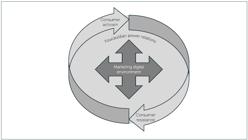
Consumer activism
The discussion about consumer activism is secular, exercised mainly by boycotts or movements that seek to reject or demand adjustments - i.e., buycotts - in consumed products and brands. Therefore, marketing managers have long been concerned with such activism in order to establish coordinated strategies to deal with negative reactions of consumers, whether to their products or to positions regarding sociocultural and political causes that go beyond the market environment (Hawkins, 2010; Swimberghe et al., 2011).
With the expansion of a globalized context, consumer activism began to be coordinated between the online and offline spheres, in order to establish ways to oppose large brands (Hollenbeck & Zinkhan, 2006). More recently, the popularization and presence of social networks and information and communication technologies (ICTs) in consumers’ daily lives have turned the digital environment into a space for the rise and multifaceted exercise of consumer activism (Discetti & Anderson, 2023; Kozinets & Seraj-Aksit, 2024; Minocher, 2019).
On the one hand, consumer activism is intrinsically connected to current resistance movements that challenge forms of mass consumption and a neoliberal logic that governs many marketing relationships (Souza-Leão & Lopes, 2023; Vrikki & Lekakis, 2024). To this end, consumers establish communities of consumers who share cultural values, in order to question broader market ideologies, but also to coordinate ways of establishing a space for affirming their own interests (Kozinets & Seraj-Aksit, 2024; Muraro et al., 2023). On the other hand, this activism can also propagate ways of restricting the space given to third parties, when the so-called dark side of consumer interactions emerges, which tend to attack the agendas or ontological conditions of other consumers (Lekakis, 2022; Zanette, 2023). Consumer actions, when involving practices that aim to harm other consumers, are identified as means that promote interpersonal tensions and question the active participation of members in a specific community (Seregina & Weijo, 2017; Thompson et al., 2018).
According to Kozinets and Jenkins (2022), a good example to understand the multiple layers of consumer activism is the way in which fans connect in their own communities - i.e., fandoms - to share their intense relationships with the products and media brands they consume. However, it is very common for this space to also be used to share values and interests, allowing consumer researchers and brand managers to observe broader civic movements such as consumer activism that go beyond market relations, reflecting broader civic and social agendas.
One of the examples they point to is the cosplay phenomenon. Defined as a fan production performed offline, but which is often shared online, it represents an opportunity for consumers to experience the extraordinary through interactions with their peers or those interested in this phenomenon. Such an experience is only possible because cosplay is the result of the combination of products, services, moments, and knowledge that express their involvement with the products or performed characters of which they are fans, revealing a certain type of activism (De Mello et al., 2021; Seregina & Weijo, 2017).
Thus, it is common for performances carried out via cosplay to reveal the values of their practitioners, including their ontological conditions or civic and political causes with which they associate themselves (El Jurdi et al., 2022; Seregina, 2020). It is an effort to express their commitment to the cosplay phenomenon and also a means of experiencing their own desires, when they position themselves productively in the face of power relations previously established within their consumption practices (Gn, 2011; Moura & Souza-Leão, 2023).
Such an effort reflects the exercise of consumer resistance that often evokes the homonymous concept developed in the works of Michel Foucault. The resistance exercised by consumers has been explored in consumer cultural research to understand how they position themselves in the face of factors that determine the forms of government that guide their consumption relations (Cronin & Hopkinson, 2018; Zanette & Brito, 2020).
Consumer resistance
Consumer resistance emerges as a way of challenging the norms and values imposed by the market, given that consumers are increasingly aware of the power they have and their ability to shape consumption practices (Penãloza & Price, 1993; Roux, 2007). Thus, consumer resistance can be manifested through micropolitical acts that oppose dominant consumer culture practices, but also as aversion to certain types of products that are associated with specific symbolic representations.
Through consumer resistance, it is possible to identify the ways in which consumers position themselves in relation to what they consume - such as consumer activism - influencing the propagation and rejection of brand discourses and market subcultures (Souza-Leão & Lopes, 2023; Zanette & Brito, 2020). Such resistances indicate the ways in which market strategies have incorporated and aligned themselves with the increasingly common new social power relationships established through consumption (Denegri-Knott et al., 2018; Kedzior & Allen, 2016).
Thus, seeking to understand the resistances exercised in the market context indicates how this context functions as a productive arena for the positioning of different agents - e.g., consumers, producers, or brand managers - considering that consumption practices establish complex networks of power relations (Mikkonen & Bajde, 2013). Moreover, the resistance exercised in this scenario allows for the manifestation of an alignment - or not - with institutionalized government forms that seek to conduct the marketplace and its logic - e.g., maximizing the utility of goods, boycotting hegemonic brands and products, and affirming the sovereignty of consumer choice (Bhattacharjee et al., 2014; Denegri-Knott & Tadajewski, 2017).
Consequently, the resistance exercises observed in the marketing environment produce and corroborate the relationship that consumers have with their moral, ethical subjectivities, and truths (Ashman et al., 2018; Thompson et al., 2018). It should be remembered that market relations present certain narratives that work as a regime of truth for consumers, leading them to act ethically or unethically depending on their positions and consumption practices (Hanna, 2013; Mikkonen & Bajde, 2013; Souza-Leão et al., 2022).
Thus, observing how market resistance works allows CCT researchers to understand how the relationship between different agents in this context is mutual and continuous through the Foucauldian homonymous concept (Cronin & Hopkinson, 2018; Kedzior & Allen, 2016). Not by coincidence, among Michel Foucault’s contributions explored by CCT studies, the conceptions of government forms and resistance seem to be among the most explored (Cova & Cova, 2012; Denegri-Knott & Tadajewski, 2017; Mikkonen & Bajde, 2013).
Foucauldian resistance and its power relations
According to Foucault (2007), resistance is a sine qua non condition of the power exercises and its subsequent government forms that guide contemporary society. The difference between a government form that acts on subjects and a domination form that acts on objects is the possibility of subjects to resist. In this sense, the French philosopher postulates that resistance is a productive vector that expands or questions the power relations established by the government forms.
Thus, resistance can question or expand any pre-existing power exercise, including other resistances. The coexistence of power exercises and resistance - even when openly opposed - is incapable of nullifying others. Even because, if they did, they would be a domination form and not government. Regardless of the relationship that unites them - conflict or alignment -, power exercises - such as resistance - are assembled in diagrams that function as a diagram (Foucault, 2008).
Foucault (2008) explains how the existence of power diagrams includes various power operators - e.g., attitudes, behaviors, status, etc. - that represent the social positions and conducts exercised by individuals. Such power operators put into practice previously established knowledge and are propagated in discourses that are elaborated, maintained, or questioned socially - such as resistance exercises.
The discourses endorse or reformulate the strategies and logics present in the power exercises - and their consequent resistance - that govern the actions of different social agents (Foucault, 2006). Therefore, if individuals are led by certain institutions through power operators, such institutions are governed by complex power diagrams. Broadly, the diagrams themselves are consistent and influence each other, indicating the existence of a further form of government called ‘dispositifs’ (Foucault, 2001).
Such ‘dispositifs’ indicate how individuals, when interacting socially, act as propagators of behaviors that prevent government forms from functioning as absolute oppression. When power relations are investigated, they are organized in such a way that it allows for the understanding not only of the existence of power exercises but also of the existence of resistances that do not nullify them, but that affect them and are mutually affected (Foucault, 2007).
In the Foucauldian perspective, if power relations imply resistance, it is possible for government forms to coexist - and the same goes for resistance. More than coexisting, the multiple influences of resistance are what allow subjects to recognize their own wills in the face of other people’s moralities and truths (Foucault, 2008). Therefore, the sum of multiple resistances allows the production of subjects, as we individualize ourselves to the demands of the social powers that guide our lives and, simultaneously, in the way that each individual needs to manifest a (re)cognizable identity in the social context in which they live in order to play a productive role in society (Foucault, 2012).
The Foucauldian genealogical approach allows for identifying and understanding the interrelationship between the production and propagation of discourses and the consequent power relations to which they are invariably analogous. Analyzing the genealogical composition of power relations allows an understanding of the government forms that guide day-to-day practices and the context in which we live (Foucault, 2001). According to Foucault (2006), it is only the socially produced and maintained discursive formations that provide clues for understanding the power relations that govern us; every discursive formation represents the existence of attitudes and behaviors exercised by individuals, which allows the inference of operators of power. Such operators tend to affect each other, indicating the existence of complex networks of power relations, which are called diagrams. When multiple diagrams coexist in the same social context, it becomes possible to observe the existence of complex dispositions that govern the social context.
METHODOLOGICAL PROCEDURES
The ethnographic Foucauldian genealogy (EFG) was chosen as the methodology, as it adheres to the theoretical lens adopted by the study and the phenomenon investigated. This methodology uses virtual ethnography data collection procedures in combination with analytical procedures and the consequent interpretations of results through theoretical concepts proposed by Michel Foucault.
Additionally, such methodology meets Kozinets's (2020) suggestion about how cultural consumer researchers can and should access analytical approaches and theoretical lenses that expand the reflections and contributions of their virtual studies. Consequently, we elaborated the following subsections to present data collection and analysis procedures.
Data collection procedures
Ethnography has long been accessed through the culturalist approach to consumer research, as it allows for an understanding of dynamic marketing relationships by accessing subcultures and consumer communities (Arnould & Wallendorf, 1994; Cova & Cova, 2012; Kozinets, 2002). Furthermore, this methodological approach has been adjusted, remodeled, and expanded over the years, in order to capture the new realities that impact consumption practices - e.g., social networks, apps, etc. (Hine, 2020; Kozinets, 2020).
Following these assumptions, our study combined two of the techniques that make up virtual ethnography - i.e., netnography and virtual ethnomethodology. Such a combination makes it possible to capture how digital interactions are arranged in specific interactions with the investigated cultural grouping, but also occur naturally in the everyday lives of those investigated, in order to discover their underlying motivations (Audy Martínek et al., 2023; Hine, 2020). Figure 2 summarizes the details carried out during the construction of the corpora for our study.

Netnography must be initiated by choosing a relevant community to represent the phenomenon investigated. At the same time, it is necessary for researchers to pay attention to carrying out a cultural entrée, when they become familiar with the structure of the ethos they are focusing on and become aware of the signs and forms of interactions particular to the group. In this effort, they become capable of capturing the intimate relationship between virtual interactions and their impacts on the consumption practices that are being studied (Kozinets et al., 2018). Virtual ethnomethodology adapts the effort to monitor consumers’ routines through their use of social networks to an online environment. Therefore, users who produce content and interact about the phenomenon investigated with a certain frequency must be chosen (Toder-Alon et al., 2016).
It is worth highlighting that this study adapts Arnould and Wallendorf's (1994) proposal to digital marketing research by combining the collective scope of ethnography and the individual scope of ethnomethodology. We sought to better understand the virtual interrelations between members of the consumer ethos investigated - i.e., cosplayers. In this process, netnography allowed researchers to familiarize themselves with the signs, themes, and practices published by cosplayers on social media. In addition, the netnographic data encompass collective movements that reveal generalizations of virtual activism exercised by consumers. Virtual ethnomethodology, on the other hand, allowed researchers to have a detailed understanding of the positions and even ontological conditions manifested daily by consumers in activism exercised in the online environment.
Data organization, analytical procedures, and research quality criteria
In both data collection efforts, we followed Kozinets's (2020) recommendations for monitoring and archiving consumer interactions on social media. Consequently, we also sought to meet the quality criteria that the aforementioned author lists for carrying out a virtual ethnography. Additionally, we adopted adaptations of the triangulations proposed by Denzin (1970) for qualitative research. Each of these adoptions allowed us to follow Tadajewski's (2011) suggestions for implementing Foucault’s methodology for marketing studies. Figure 3 elucidates the EFG steps and criteria that combine such methodological suggestions.

Ethnographic Foucauldian genealogy data organization, analytical procedures, and research quality criteria.
Researchers must strictly follow five steps - i.e., simplification, search, scouting, selecting and saving - to collect and organize a research corpus with social network data. In this effort, the data collected resonate the perspectives of individuals involved in online interactions and the likelihood of subculture norms. Subsequently, the data must be organized coherently considering its publication or topic discussed, guiding a movement of reflexivity among researchers. Such orientation indicates the instruction exercised by researchers, when they pay attention to the phenomenon praxis. Furthermore, research results must be interpreted in accordance with existing literature - i.e., background - seeking to establish innovative and representative contributions (Kozinets, 2020).
Considering these steps and criteria, the data were organized based on the social networks from which they were collected - i.e., Facebook and Instagram - and the chronology of their publication (as presented in Figure 2). Based on such data organization, the researchers carried out rounds of analysis for periods of seven or fifteen days a week to observe how different events in the ethos of consumption investigated impacted the netnography and virtual ethnomethodology data, obtaining discursive regularity.
These rounds of analysis and the comparison between the data results elucidate the authors’ effort to triangulate the research findings based on Denzin's (1970) proposals already adopted by digital marketing research. On the one hand, by comparing data from different research corpora, an observational triangulation was carried out that allows researchers to understand the meanings and motives behind the actions observed in the online research data (see Audy Martínek et al., 2023). On the other hand, by comparing analytical inferences between researchers, a reflexive triangulation was sought, in which each researcher’s particular semiological perceptions are limited, in order to establish a more reliable understanding of the cultural context investigated (see Kozinets, 2020). Nevertheless, the analytical rounds and triangulation efforts were carried out in a way that was equivalent to Tadajewski's (2011) warning about the need to carry out a thorough analysis when marketing research adopts the Foucauldian methodology.
Foucauldian genealogical analysis allows marketing researchers to observe and interpret the ambiguities that exist in the power relations that govern consumption practices (Tadajewski, 2011; Thompson, 2017). Such analytical effort leads marketing studies to present critical discussions about consumption phenomena. Therefore, it can indicate the government forms that (re)configure cultural interactions, hegemonic status and social structures through the understanding of consumption practices (Denegri-Knott et al., 2018; Moura & Souza-Leão, 2024).
Our analysis sought to identify the Foucauldian categories that represent power relations. Thus, we initially identified the discursive practices enunciated by the cosplayers. These discursive practices were categorized as discursive formations. When confronted with the practices exercised by the cosplayers and the positions assumed in the face of certain events, we were able to compose the power operators. Such operators, in turn, simultaneously shared similar subjects and broader movements that reflected the exercise of resistance by consumers. Consequently, these resistances were categorized as power diagrams. When put together, these diagrams could be generalized into a broader movement of digital consumer activism, which was evidenced as a ‘dispositif.’
Finally, it is worth indicating that our study follows Leban's et al. (2021) suggestion to not use the image, name or nicknames of social media users, even if data is available on public pages and profiles. According to these authors, it is important that photos and videos are processed with software that transforms people into cartoons. Such an effort avoids possible questions about image rights and allows the study to preserve the privacy of research participants.
RESULTS DESCRIPTION
The analytical effort led us to observe the existence of a digital marketing ‘dispositif’ (DMD) we named Fight for Respect, which governs cosplayers’ online interactions as a form of virtual consumer activism (VCA) and resistance (VCR). Consequently, the DMD assembles power relationships present in collective movements, individual attitudes or behaviors, and discourses available in the virtual interactions shared by cosplayers. In this sense, Figure 4 presents the analytical categories - i.e., power diagrams, power operators, and discursive formations - that give substance to the Fight for Respect ‘dispositif’.

Thus, to understand the identified DMD, first, it is necessary to know the power diagrams that sustain it. Although these analytical categories present particularities that allowed their identification, they share common elements. Consequently, the following three subsections describe, contextualize, and exemplify each of the three power diagrams and its elements - i.e., power operators and discursive formations. However, it is worth highlighting that, although the chosen examples in the following subsections show cosplayers’ individual publications, these are findings that were observed in other interactions, illustrating collective movements within the cosplay community. Furthermore, we also chose not to directly present the texts published on social media, resorting to contextualizing these messages, in order to prevent the original publications and user profiles from being digitally tracked.
Agenda: Establishing complicit resistance
Agenda is the first power diagram identified, revealing how cosplayers tend to promote digital activism of inclusion and pride in online interactions that approach their struggles or social causes. In this movement, cosplay is seen as an environment able to unify pairs to highlight characters or adapted performances - i.e., non-canonical - that are representative of the ontological diversity of the media product fans. There are two power operators related to this diagram.
Standing is the operator that synthesizes behaviors and attitudes exercised on social networks to deal with harassment and prejudice through an overcoming perspective. To do so, cosplayers count on the virtual assistance of their peers - regardless of whether they are ontologically affected by such attacks - promoting attempts to legitimize the agenda for space and diversity in the cosplay community. Thus, this operator is analogous to two discursive formations.
Support is the discourse expressed between cosplayers about how social networks serve as a tool to find peers that sympathize with causes and social agendas of part of the cosplay community. Instruction is the other discourse, when cosplayers share on social media explanations or present details that make a performance or character representative of a certain identity cause.
To illustrate these analytical categories presented, we elaborated Figure 5 with a post in the Facebook community ‘Cosplay of a Certain Age’ dated April 3, 2023. Along with the four photos, the cosplayer wrote about his pride with the release of the trailers for the film Blue Beetle, where a Hispanic superhero is the protagonist of the story. According to the cosplayer, his Blue Beetle cosplay makes him proud because it was done with his boyfriend, but mainly because it allows him to experience a character that represents his ethnicity. Thus, he praises the growth of Hispanic protagonists in superhero films - i.e., Blue Beetle, Miles Morales, and Miguel O’Hara in Spider-Man 2099 - and expresses his interest in updating his cosplays to represent his ethnicity.

The cosplayer is proud to have characters in the entertainment industry that represent his own ethnicity - i.e., Hispanic. In this sense, he considers that a way to expand the space given to his cultural identity in the media is to cosplay this character. Consequently, he states a ‘support’ ethnic issue, seeking to propagate the ‘standing’ behavior that establishes an inclusive ‘agenda’ through virtual activism among cosplayers.
Another example of this analytical movement is presented in the Instagram post of a cosplayer on June 28, 2020 (see Figure 6). In the post description, the cosplayer extols the pride of performing and virtually publishing her first LGBTQIAPN+ character. Despite the happiness she experienced during the photos, she felt sad when she shared them and did not receive a good engagement. However, considering the date of the publication - i.e., June 28, LGBTQIAPN+ Pride Day - she felt compelled to publish her cosplay so that all people in this segment and fans of the characters could celebrate, be inspired, and be proud.

When the cosplayer highlights her pride in having experienced her first collaboration with another cosplayer - i.e., a duo - with characters that are representative of the LGBTQIA+ public, she highlights the importance of that date as an effort to instruct (instruction) her followers in a didactic way through cosplay. Thus, she positions herself via ‘standing’ to mitigate prejudices within the cosplay community and, using social networks, to establish an ‘agenda’ for the inclusion of diversity in this consumer ethos.
Such an example (see Figure 6) also indicates the existence of the next identified power operator: ‘manifesting’. It refers to the public behaviors and attitudes exercised by cosplayers to share how cosplay is for everyone and how it serves as an environment that stimulates proud expressions of their ontological condition.
Consequently, the ‘manifesting’ operator is associated with the discourse formation named ‘instruction’ - presented previously and exemplified in Figure 6. The other discursive formation analogous to ‘manifesting’ was named as ‘outrage’, indicating a more reactive tone assumed by cosplayers who need to deal with harassment and soft prejudices that occur in virtual interactions about the phenomenon.
To exemplify the intimate relationship between ‘outrage’ and ‘manifesting’, we present in Figure 7 an interaction in the cosplay Facebook community in February 2021. Among the 20 comments posted, two stand out.

In the first comment, a cosplayer points out that there are haters among cosplayers and that they are jerks. However, he also claims that his peers need to agree that the girl he ridiculed in the post made a bad choice of character, by playing someone of another ethnicity. To explain his reasoning, he questions whether a white or Asian cosplayer who could play a black character - i.e., from the movie Wakanda Forever - should tan. Thus, he reiterates that everyone in the community respects POC, but that they should feel more comfortable criticizing cosplays without having to feel like jerks for such criticism.
In the second emblematic message, a cosplayer responds to the previous comment saying that her peer was racist and completely wrong. For her, any cosplayer can dress however they want - including as the character Black Panther. However, no cosplayer should try to change their own ethnicity, whether through tanning or blackface. Thus, she reiterates that the cosplayer in the post did not try to lighten her skin and, even so, was ridiculed. Finally, she ends her message by explaining that everyone is free to wear any outfit or costume, but they should not try to change their skin tone.
While the first comment seems to be convinced that the situation may have been motivated by the prejudice victim, the second comment is outraged by such a position from a colleague in the community. In Comment 2, it is possible to observe ‘outrage’ that this situation still exists in virtual interactions about cosplay. More than that, she considers that all her peers should defend the right of any ethnic group to adapt characters as long as they do not resort to racist practices that go beyond cosplay itself - i.e., blackface. Therefore, she is expressing a position that reveals the necessity of an ‘agenda’ for changes in the cosplay community, but also how it is necessary an articulation of cosplayers’ positions against attacks, perjury, and harassment suffered by her peers.
Protest: Establishing committed resistance
The second power diagram was named ‘protest’. This diagram contemplates the multiple power relations established between cosplayers to position themselves in the face of attacks aimed at ontological and identity issues carried out against themselves or their peers in the digital sphere. It represents a commitment by cosplayers to propagate or simply express the validity of changes in the community in which they operate so that they are more respected or feel safer.
Consequently, the articulated positioning seen in the example (see Figure 7) gives evidence that the ‘manifesting’ - and its analogous discursive formations - is one of the power operators that sustain such a power diagram. Complementarily, ‘exposing’ is the other power operator related to the ‘protest’ exercised by cosplayers. This operator contemplates the attitude that some cosplayers decide to take when faced with the attacks they suffer, using their social networks to show who offends them and how these offenses are made: from a soft level - laughing at the shared performance - going through a supposedly justification - lack of canon in cosplay when cosplayers adapt characters’ gender, body or ethnicity - and reaching direct offenses - i.e., racism, misogyny, homophobia, body shaming, etc.
Thus, the ‘exposing’ operator is analogous to two discursive formations: ‘outrage’ - previously presented and exemplified in Figure 7 - and ‘confrontation’. This last discursive formation includes the speeches of cosplayers who no longer accept dialogue or the presence of offenses in the community. Therefore, they state that it is necessary to fight back when faced with hateful attitudes and speech.
To exemplify the analytical convergence between ‘confrontation’, ‘exposing’, and ‘protest’, we highlight the publication made by a cosplayer on her Instagram on March 25, 2024 (see Figure 8). In the post description, the cosplayer explains how shocked she is by receiving this type of message and that she must hold herself back from responding directly. Additionally, she states that she is unable to understand how some people think they can demand that her cosplays be limited to canonical versions or characters that look like her - e.g., body size, skin color - just because she has been paid to perform some cosplays.
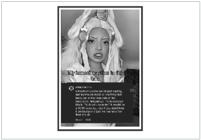
In Example 4, the cosplayer decided to respond to a hater interpreting her cosplay performance that was attacked - i.e., Princess Yue - for having a different skin color than the character. In the ten-second video, the cosplayer uses lip-sync - i.e., popular and viral content on social media - to send the offender away from her account in a good-humored way. However, in the post description, she makes it clear that she does not understand this type of attitude such as attacking other people’s cosplay due to a supposed lack of reliability in her performance - i.e., because her ethnicity or body shape does not match that of a fictional character.
It is possible, then, to observe confrontation’s discourse, when she seeks to expose the insults and offensive users that she has to deal with daily, just because she is a black cosplayer. This attitude is part of a broader behavior when she to ‘exposes’ the hater to ‘protest’ against any attacks carried out virtually on cosplay in general.
Riot: Establishing tactical resistance
Riot was the third power diagram identified in our analysis. It represents a power relations arrangement, when cosplayers actively position themselves to limit and, possibly, ban virtual attacks that they suffer or witness in the cosplay community. Such a diagram assembles a set of practices aimed at purging any offensive, disrespectful, or prejudiced interactions - e.g., racism, misogyny, homophobia, body shaming - against performances shared virtually.
In this sense, ‘riot’ is supported both by the ‘exposing’ - previously presented and exemplified in Figure 8 - but also by the ‘counterattacking’ power operators. On the one hand, the example shown in Figure 8 that illustrates an ‘exposing’ case also points to the existence of the ‘riot’ diagram. On the other, ‘counterattacking’ is a novelty that concerns the radical reactions taken by cosplayers to offend those who tend to diminish, attack and perjure cosplay performances shared on social media.
Counterattacking is, then, analogous to two discursive formations: ‘confrontation’ - presented previously and exemplified in Figure 8 - and ‘proscription’. Such a discursive formation concerns the cosplayers’ understanding of how offensive users who share hate on social media about the others’ cosplay must be banned and purged from this environment. To do so, they usually express offenses in response to the original offenses received or witnessed by them in cosplay performances shared on social media.
To illustrate this last analytical convergence, we created Figure 9 with an interaction dated August 12, 2020, in the cosplay community on Facebook. When sharing her cosplay performance, a cosplayer had to deal with several joking and bullying comments about her body, as well as reactions on the ‘LOL’ social network itself - when other users considered the post worthy of laughter.

In response to such offenses, three other community members attempted to intercede. In Comment 1, there is a request to ignore such negativity. In Comment 2, there are rude insults directed at the community member who had posted body-shaming comments about the shared cosplay. In Comment 3, there is an encouragement for the cosplayer to continue performing and publishing her performances, but also an understanding that all members who reacted with the ‘LOL’ option on Facebook should be banned from the virtual community and from events where people usually perform. their cosplays - i.e., cons and fairs.
Specifically, Comments 2 and 3 illustrate the ‘proscription’ discourse, when cosplayers demand that those who practice virtual hatred must be banned from the cosplay environment. This is a ‘counterattacking’ attitude, when they consider it valid to use offenses to ward off offensive practices against themselves or their peers who share their performances on social media. It is, therefore, a ‘riot’ movement that seeks to transform the consumer ethos that they are part of, even if it is done through more radical speeches and attitudes.
RESULTS DISCUSSION AND STUDY CONTRIBUTIONS
Based on the described results, it is possible to establish an interpretation that alludes to the theory development and elucidates the study contributions. The three power diagrams sustain a unique ‘dispositif’, exemplifying how a digital marketing ‘dispositif’ (DMD) governs practices in all instances of virtual consumption interactions, since it is mutually fed by virtual consumer activism (VCA) and resistance (VCR). To illustrate this relationship, we created Figure 10 (an update of Figure 4).
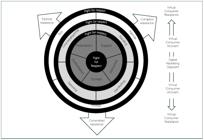
As described previously, Fight for Respect is a DMD that propagates and popularizes the multiple VCR forms through which some cosplayers oppose attempts to offend, harass or perjure their ontological conditions - e.g., ethnicity or race, gender, sexuality, shape size, etc. Such resistances are analogous to the VCA behaviors when cosplayers mobilize a space of respect for the singularities of any cosplayers or their digital online interactions. Thus, it is possible to interpret the contiguity between DMD and its VCR and VCA through Foucauldian concepts already established in CCT previous studies. Consequently, the following subsections take up the study results - previously described - to discuss reflections and the contribution of the study based on the Fight for Respect ‘dispositif’.
Fight for Respect: a ‘dispositif’ produced by the resistance’s assemblage
Despite being autonomous, the ‘agenda’, ‘protest’, and ‘riot’ power diagrams share common elements. These communal elements highlight the existence of a resistance assemblage that adds up to a ‘dispositif’ produced and perpetuated through a digital activism aimed at limiting the attacks that cosplayers suffer or witness in virtual interactions.
The virtual activism exercised through ‘standing’, ‘manifesting’, ‘exposing’, and ‘counterattacking’ behaviors allows cosplayers to fight against attacks and offenses that they witness or are targets of. In a similar way, they enunciate discourses of ‘support’, ‘instruction’, ‘outrage’, ‘confrontation’, and ‘proscription’ which, at different levels, propagate knowledge of how the cosplay community should deal with hateful practices that often occur in virtual interactions about cosplay. Thus, knowledge and attitudes exemplify how consumers can commit to virtual activism to question marketing practices that they consider oppressive or offensive.
Within the scope of the ‘agenda’ diagram, it is possible to observe a type of complicit resistance, when consumers take a stand against market asymmetries that limit their consumption practices or those of their peers. However, as Zanette and Brito (2020) explain, this resistance is partial to the government strategies that guide the marketing practices in which they are inserted.
An example of this resistance can be seen in Figure 11 where a cosplayer published her message at the beginning of June 2024 to remind her followers of the fight for respect agenda during Pride Month. In the post description, she lists that to celebrate Pride Month, which represents her sexuality, she uses a character who shares the same ontological condition - i.e., fluid gender.

The protest’s power relations attest to a committed resistance when consumers discuss and plead for ways to increase respect and representation for their own ontological conditions, but also for their peers. This is a resistance that, according to Souza-Leão et al. (2022), represents a commitment to freedom that goes beyond consumption practices themselves, exercised to transform the very ethos in which they are inserted and, if possible, the industry logic.
To illustrate such resistance, we bring a post in ‘Cosplay of a Certain Age’ Facebook group - from September 2023 - when a cosplayer points out her protest and commitment to the fight for respect (see Figure 12). By posting a photo of one of her favorite cosplays - i.e., Professor McGonagall from the Harry Potter series of books and films - the cosplayer states that she is giving up and passing on the costume. This attitude reflects her disturbance with the behavior and speeches of the author of the media product - i.e., J. K. Rowling - against LGBTQIAPN+ people. According to the cosplayer, the character was special because it brought her closer to a work that allowed her, together with her children, to overcome a difficult stage in her life - her divorce. Furthermore, considering that she herself and her children are entering the LGBTQIAPN+ community, she no longer feels comfortable alluding to this work. Ultimately, she is grateful for the journey with this cosplay and says that she will still support other fans who feel comfortable with such characters, but this is no longer her situation.

Finally, the ‘riot’ diagram expresses a type of tactical resistance, when consumers turn to the digital sphere to promote safe spaces from attacks, in order to increase their market share by excluding offenders. Such resistance resembles the tactics enumerated by Brouard et al. (2023) that allow the creation of digital enclaves through legitimizing, delimiting, vitalizing, manifesting, and bridging.
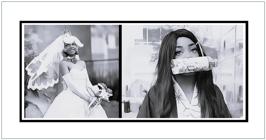
Some of these tactics are present in the Figure 13 from June 2020, when a cosplayer stimulates a riot among her peers against the continuous racist attacks that she, as well as other Black cosplayers, suffers on social media. In her post description, she shares how common it is for members of cosplay groups to be racist toward versions performed by Black cosplayers. Additionally, she reiterates that Black people are already treated as outsiders in real life and should not feel that way in the cosplay community as well. Therefore, she asks her virtual peers to not remain silent if they witness or see racist harassment and to take a stand to defend Black cosplayers.
When combined into a complex movement, all three resistances express Lekakis's (2022) understanding of the importance of a portion of consumers organizing and executing digital activism that counters what he calls the growing virtual movement of the dark side of consumer activism. To deal with a threat to the consumer practices of oneself and one’s peers, it is necessary to establish different ways to limit attacks.
In this sense, the articulation of an ‘agenda’, the popularization of ‘protests’ and, in some cases, the need for a ‘riot’ exemplify how resistance represents a promising path for consumer activism that governs its digital online interactions through a Fight for Respect. Such consumer activism invites and encourages peers to take a stand to defend the right to perform for everyone, regardless of their ontological conditions.
The possibility of resistance being added to a broader arrangement is discussed by Foucault (2008) through the resistance capacity to produce transformations in previously established power relations. Resistances are reactive forces to other forces of power; they represent an action that aims to establish positions in relation to other practices of power, but not in a sense of opposition or antagonism. It is the resistance’s productivity that guarantees that ‘dispositifs’ are government forms and not a complete and absolute form of domination. Consequently, resistances can converge or diverge with other resistances, stabilizing or destabilizing the ‘dispositifs’ that govern the social context in which we live.
Fight for Respect: A dispositif to care for the self and the others
The resistance assemblage identified in the present study stabilizes the Fight for Respect DMD that governs cosplayers’ online interactions. Each resistance is productive and positions cosplayers who take a stand, manifest, expose, and counterattack certain attitudes that they consider toxic to the phenomenon of which they are part.
Thus, our findings reiterate Jenkins's (2012) understanding of how interactions between fans - such as cosplayers - are usually guided by themes and positions - civic and political - when they resort to interactions with their peers to resist social relations that go beyond the market relations that unite fans. According to Kozinets (2002), the resistance exerted by certain market subcultures - such as fans - are interactional practices of consumers, capable of calling into question social norms beyond the phenomenon investigated. Broadly, when consumers resist dominant practices and discourses in the cultural context in which they are inserted, they end up developing knowledge about themselves and for themselves through market relations in which they are still governed by disciplines, social norms, and cultural formations (Roux & Belk, 2019; Schwarzkopf, 2022).
In this sense, it can be interpreted as an exercise of Foucauldian self-care, when consumers resort to their consumption practices to develop, in the marketing context, ethical conditions that represent their own wills (Hanna, 2013; Schneider-Kamp & Askegaard, 2021). For Foucault (2012), self-care is a continuous exercise to expand the possibilities of living in ways conceived as appropriate - representing space for their ontological condition and their own wills. Moreover, it is an arrangement of practices in which the subjects take care of themselves, as a permanent guide to continue the process of self-elaboration that allows them to exist in the most skillful way possible in the context in which they live.
Self-care is the intervention of individuals who decide to take care of themselves and, simultaneously, an act of caring for others. Therefore, it is neither an altruistic exercise nor an arrangement of selfish attitudes, since only those who take care of themselves can take care of others. Taking care of themselves is, after all, taking care of others and striving to create, according to their wills, a social context in which it is possible to live according to one’s own ontological conditions without restricting those of others (Foucault, 2012).
Foucault (2011) considers that there is no individual self that is separated from the collective. Thus, the care of the self and the others occurs in an inseparable process and reveals an ethical dimension of the subject. The ethical construction of the subject, in turn, presupposes a relationship with the truth; not a universal truth, but one in which one believes and results from the sharing of worldviews. In this sense, truth goes through a process from its enunciation and practice exercised by the subject in the social contexts in which it acts until it is reaffirmed by the collective of which it is a part.
Such a process of self-affirmation is called by Foucault (2014) as alethurgy, when the philosopher presents ways for a subject to understand and position himself as such. The alethurgy exercise is the manifestation of self-elaboration by a subject to expose his own understanding of the world. Therefore, the truths manifested by alethurgy go beyond the subject who utters them; they are productions of one’s existence, their subjectivation and experience with the relationships they establish between oneself and others.
Following this Foucauldian perspective, we understand that the Fight for Respect is a DMD created through VCR and VCA exercised by cosplayers that aim to take care of themselves and their peers. Such an understanding derives from the fact that the sum of observed resistance is designed to guarantee space for the manifestation of the ontological conditions of all cosplayers and their respective wills, without being limited to restricting the toxic attitudes of others.
FINAL CONSIDERATIONS
The results description and discussion revealed the existence of a DMD - i.e., Fight for Respect - that governs cosplayers’ online interactions. The Fight for Respect encompasses different Foucauldian interpretations - previously established in CCT studies - about resistance exercises identified among consumers interactions - i.e., complicit, committed, and tactical.
In our analysis, such interactions indicate how cosplayers articulate themselves in the virtual ambiance to limit and reject behaviors that can threaten their participation in the cosplay phenomenon. Thus, Fight for Respect also evidences how VCA and VCR are inseparable, developed thanks to technological advances and the acceleration of digital marketing practices.
On the one hand, the Fight for Respect is a DMD that governs the knowledge propagated by consumers - i.e., ‘support’, ‘instruction’, ‘outrage’, ‘confrontation’, and ‘proscription’ - who need to deal with attacks when carrying out their consumption practices. This DMD also drives behaviors analogous to this knowledge that are exercised by consumers - i.e., ‘standing’, ‘manifesting’, ‘exposing’, and ‘counterattacking’. Both are inseparable parts of the VCA that are experienced by members of the consumption ethos that we analyzed.
On the other hand, Fight for Respect also guides the power relations established, maintained, and reinterpreted through the ways - i.e., agenda, protest, and riot - that consumers deal with such problems and attacks. Each of these is equivalent to VCR that, to some extent, adapts concepts previously established in the literature.
Thus, Fight for Respect is an elaboration that considers movements to establish an ‘agenda’, propagate ‘protests’, and execute ‘riots’ against those who somehow offend other members of the same consumer subculture to which they belong. By committing these resistances, it is possible to observe a care of the self and the others, when consumers establish minimum conditions where the values and ontological conditions of themselves and their peers are respected.
Broadly, the study’s contributions lie in how the Fight for Respect can be formulated by multiple resistances that illustrate how it is possible to articulate responsible consumption and production practices that, more broadly, represent Sustainable Development Goals (SDGs) for a better world. However, its main contribution is in making explicit the existence of a DMD mutually supported by VCA and VCR, which, in addition to not being dissociated, represent the ability of consumers to elaborate, maintain and question the market power relations that govern them. These instances - consumer activism and resistance - become more interrelated in the digital marketing environment. Thus, the study evidences the digital capacity and effort of consumers to remodel market relations to mitigate social asymmetries that limit their own participation - an attack on ontological conditions.
Considering how digital marketing was pointed out as limited to responding to issues of virtual activism and resistance (see Shankar et al., 2022), our study makes it clear that there are already themes and movements - individual and collective - that engage consumers. Therefore, it seems to us that one of the most assertive ways to assimilate consumer engagement in the virtual environment would be the elaboration or adaptation of more authentic marketing narratives. These narratives need to be concrete, alluding to the themes and movements previously established and identified through VCA and VCR monitoring.
As limitations, the study focuses on a single consumer subculture and its virtual interactions. On the other hand, it is worth mentioning that this specific subculture has been pointed out as emblematic for understanding the richness of CCT’s investigative possibilities (see Arnould et al., 2020), thus, it seems promising that the insights used here could be expanded to other consumer ethos. On the one hand, cosplay is a phenomenon typically associated with fan culture, which is intensely affected by the way this type of consumer subculture usually behaves, when online and offline interactions tend not to be at odds with each other, but rather function as a broader continuum (see Kozinets & Jenkins, 2022).
Such limitations present possibilities for a research agenda. First, in research that explores the offline scope of cosplay, how consumer activism and resistance are mediated and exercised - not limited to the virtual sphere. Second, future studies that seek to understand VCA and VCR among fans or gamers that address issues of gender, race or ethnicity, and sexuality, can expand our results and contributions. Third, considering the transformative scope of cosplay in experiencing a new persona, it seems to us that research focusing on virtual interactions between drag queens can also build on the findings of our research.
REFERENCES
- Arnould, E. J., Thompson, C. J., & Press, M. (2020). Consumer Culture Theory: An Anthropological Contribution to Consumption Studies. In The Routledge Companion to Anthropology and Business (pp. 118-131). Routledge.
-
Ashman, R., Patterson, A., & Brown, S. (2018). ‘Don’t forget to like, share and subscribe’: Digital autopreneurs in a neoliberal world. Journal of Business Research, 92, 474-483. https://doi.org/10.1016/j.jbusres.2018.07.055
» https://doi.org/10.1016/j.jbusres.2018.07.055 -
Arnould, E. J., & Wallendorf, M. (1994). Market-oriented ethnography: Interpretation building and marketing strategy formulation. Journal of marketing research, 31(4), 484-504. https://doi.org/10.1177/002224379403100404
» https://doi.org/10.1177/002224379403100404 -
Atkins, J. (2022). The new normal: Activist handmaids and cosplay choreographies in Trump’s America. European Journal of American Culture, 41(2), 187-208. https://doi.org/10.1386/ejac_00071_1
» https://doi.org/10.1386/ejac_00071_1 -
Audy Martínek, P., Caliandro, A., & Denegri-Knott, J. (2023). Digital practices tracing: studying consumer lurking in digital environments. Journal of Marketing Management, 39(3-4), 244-274. https://doi.org/10.1080/0267257X.2022.2105385
» https://doi.org/10.1080/0267257X.2022.2105385 -
Bhattacharjee, A., Berger, J., & Menon, G. (2014). When identity marketing backfires: Consumer agency in identity expression. Journal of Consumer Research, 41(2), 294-309. https://doi.org/10.1086/676125
» https://doi.org/10.1086/676125 -
Brouard, M., et al. (2023). “Upload your impact”: Can digital enclaves enable participation in racialized markets?. Journal of Public Policy & Marketing, 42(1), 56-73. https://doi.org/10.1177/07439156221130960
» https://doi.org/10.1177/07439156221130960 -
Carrington, M. J., & Ozanne, J. L. (2022). Becoming through contiguity and lines of flight: The four faces of celebrity-proximate assemblages. Journal of Consumer Research, 48(5), 858-884. https://doi.org/10.1093/jcr/ucab026
» https://doi.org/10.1093/jcr/ucab026 -
Cova, B., & Cova, V. (2012). On the road to prosumption: Marketing discourse and the development of consumer competencies. Consumption Markets & Culture, 15(2), 149-168. https://doi.org/10.1080/10253866.2012.654956
» https://doi.org/10.1080/10253866.2012.654956 -
Cronin, J., & Hopkinson, G. (2018). Bodysnatching in the marketplace: Market-focused health activism and compelling narratives of dys-appearance. Marketing Theory, 18(3), 269-286. https://doi.org/10.1177/1470593117740754
» https://doi.org/10.1177/1470593117740754 -
De Mello, R. R., De Almeida, S. O., & Dalmoro, M. (2021). The emperor’s new cosplay: the agency of an absent material on the consumption experience. Consumption Markets & Culture, 24(3), 241-261. https://doi.org/10.1080/10253866.2020.1756268
» https://doi.org/10.1080/10253866.2020.1756268 -
Denegri-Knott, J., Nixon, E., & Abraham, K. (2018). Politicising the study of sustainable living practices. Consumption Markets & Culture, 21(6), 554-573. https://doi.org/10.1080/10253866.2017.1414048
» https://doi.org/10.1080/10253866.2017.1414048 -
Denegri-Knott, J., & Tadajewski, M. (2017). Sanctioning value: The legal system, hyper-power and the legitimation of MP3. Marketing Theory, 17(2), 219-240. https://doi.org/10.1177/1470593116677766
» https://doi.org/10.1177/1470593116677766 - Denzin, N.K. (1970). The research act: A theoretical introduction to sociological methods. Aldine
-
Discetti, R., & Anderson, M. (2023). Hybrid consumer activism in Fairtrade Towns: exploring digital consumer activism through spatiality. Consumption Markets & Culture, 26(4), 280-297. https://doi.org/10.1080/10253866.2022.2144265
» https://doi.org/10.1080/10253866.2022.2144265 -
El Jurdi, H., Moufahim, M., & Dekel, O. (2022). “They said we ruined the character and our religion”: authenticity and legitimation of hijab cosplay. Qualitative Market Research: An International Journal, 25(1), 43-59. http://dx.doi.org/10.1108/QMR-01-2021-0014
» http://dx.doi.org/10.1108/QMR-01-2021-0014 - Foucault, M. (2001). Questions of Method. In: J. D. Faubion (Ed.), Power: Essential Works of Michel Foucault (vol. 3, pp. 223-238). Allen Lane.
- Foucault, M. (2006). The history of sexuality, vol. 1: The Will to Knowledge. Penguin.
- Foucault, M. (2007), Security, Territory, Population: Lectures at the College De France, 1977-1978. Palgrave.
- Foucault, M. (2008). The birth of biopolitics: lectures at the Collège de France, 1978-1979. Springer.
- Foucault, M. (2011). The courage of truth. Springer.
- Foucault, M. (2012). The history of sexuality, vol. 3: The care of the self. Palgrave Macmillan.
- Foucault, M. (2014). On the government of the living: lectures at the Collège de France (1979-1980). Palgrave Macmillan.
- Franco, P. (2022). The Consumer Culture Theory (CCT) Research Tradition and Digital Marketing. In The SAGE Handbook of Digital Marketing, (pp. 118-135).
-
Gn, J. (2011). Queer simulation: The practice, performance and pleasure of cosplay. Continuum, 25(4), 583-593. https://doi.org/10.1080/10304312.2011.582937
» https://doi.org/10.1080/10304312.2011.582937 -
Hanna, P. (2013). A break from ‘reality’: An investigation into the ‘experiments with subjectivity’on offer within the promotion of sustainable tourism in the UK. Journal of Consumer Culture, 13(3), 366-386. https://doi.org/10.1177/1469540513485270
» https://doi.org/10.1177/1469540513485270 -
Hawkins, R. A. (2010). Boycotts, buycotts and consumer activism in a global context: An overview. Management & Organizational History, 5(2), 123-143. https://doi.org/10.1177/1744935910361644
» https://doi.org/10.1177/1744935910361644 - Hine, C. (2020). Ethnography for the internet: Embedded, embodied and everyday. Routledge.
- Hollenbeck, C. R., & Zinkhan, G. M. (2006). Consumer activism on the internet: The role of anti-brand communities. Advances in Consumer Research, 33, 479.
-
Jenkins, H. (2012). Superpowered Fans: The many worlds of San Diego’s Comic-Con. Boom: A Journal of California, 2(2), 22-36. https://doi.org/10.1525/boom.2012.2.2.22
» https://doi.org/10.1525/boom.2012.2.2.22 -
Jones, H., & Hietanen, J. (2023). The r/wallstreetbets ‘war machine’: Explicating dynamics of consumer resistance and capture. Marketing Theory, 23(2), 225-247. https://doi.org/10.1177/14705931221114172
» https://doi.org/10.1177/14705931221114172 -
Kedzior, R., & Allen, D. E. (2016). From liberation to control: Understanding the selfie experience. European Journal of Marketing, 50(9/10), 1893-1902. https://doi.org/10.1108/EJM-07-2015-0512
» https://doi.org/10.1108/EJM-07-2015-0512 -
Kozinets, R. V. (2002). Can consumers escape the market? Emancipatory illuminations from burning man. Journal of Consumer research, 29(1), 20-38. https://doi.org/10.1086/339919
» https://doi.org/10.1086/339919 - Kozinets, R. V. (2020). Netnography: The essential guide to qualitative social media research. Doing ethnographic research online. Sage.
-
Kozinets, R. V., & Jenkins, H. (2022). Consumer movements, brand activism, and the participatory politics of media: A conversation. Journal of Consumer Culture, 22(1), 264-282. https://doi.org/10.1177/14695405211013993
» https://doi.org/10.1177/14695405211013993 -
Kozinets, R. V., Scaraboto, D., & Parmentier, M. A. (2018). Evolving netnography: How brand auto-netnography, a netnographic sensibility, and more-than-human netnography can transform your research. Journal of Marketing Management, 34(3-4), 231-242. https://doi.org/10.1080/0267257X.2018.1446488
» https://doi.org/10.1080/0267257X.2018.1446488 -
Kozinets, R. V., & Seraj-Aksit, M. (2024). Everyday activism: an AI-assisted netnography of a digital consumer movement. Journal of Marketing Management, 40(3-4), 347-370. https://doi.org/10.1080/0267257X.2024.2307387
» https://doi.org/10.1080/0267257X.2024.2307387 -
Kumar, B., & Dholakia, N. (2022). Firms enabling responsible consumption: A netnographic approach. Marketing Intelligence & Planning, 40(3), 289-309. http://dx.doi.org/10.1108/MIP-09-2018-0387
» http://dx.doi.org/10.1108/MIP-09-2018-0387 - Lamerichs, N. (2023). Cosplay: A History. American Journal of Play, 15(1), 115-116.
-
Leban, M., Thomsen, T. U., von Wallpach, S., & Voyer, B. G. (2021). Constructing personas: How high-net-worth social media influencers reconcile ethicality and living a luxury lifestyle. Journal of Business Ethics, 169(2), 225-239. https://link.springer.com/article/10.1007%2Fs10551-020-04485-6
» https://link.springer.com/article/10.1007%2Fs10551-020-04485-6 - Lekakis, E. J. (2022). Consumer activism: Promotional culture and resistance. Sage.
-
Mikkonen, I., & Bajde, D. (2013). Happy Festivus! Parody as playful consumer resistance. Consumption Markets & Culture, 16(4), 311-337. https://doi.org/10.1080/10253866.2012.662832
» https://doi.org/10.1080/10253866.2012.662832 -
Minocher, X. (2019). Online consumer activism: Challenging companies with Change.org. New Media & Society, 21(3), 620-638. https://doi.org/10.1177/1461444818803373
» https://doi.org/10.1177/1461444818803373 -
Moura, B. M., & de Souza-Leão, A. L. M. (2023). Cosplay aesthetics: Fans poach for a beautiful life. Revista FAMECOS, 30(1), 1-16. https://www.doi.org/10.15448/1980-3729.2023.1.43130
» https://www.doi.org/10.15448/1980-3729.2023.1.43130 -
Moura, B. M., & Souza-Leão, A. L. M. D. (2024). Avatar of the self: Governing meta-body elaborated based on embodiments of consumption. Revista Brasileira de Gestão de Negócios, 26(1), 1-27. https://doi.org/10.7819/rbgn.v26i01.4248
» https://doi.org/10.7819/rbgn.v26i01.4248 -
Muraro, I. S., Thorson, K., & Huddleston, P. T. (2023). Spurring and sustaining online consumer activism: the role of cause support and brand relationship in microlevel action frames. Journal of Brand Management, 30(5), 461-477. https://doi.org/10.1057/s41262-023-00322-z
» https://doi.org/10.1057/s41262-023-00322-z - Penãloza, L., & Price, L. L. (1993). Consumer resistance: A conceptual overview. Advances in consumer research, 20(1).
-
Roux, D. (2007). Consumer resistance: Proposal for an integrative framework. Recherche et Applications en Marketing (English Edition), 22(4), 59-79. https://doi.org/10.1177/205157070702200403
» https://doi.org/10.1177/205157070702200403 -
Roux, D., & Belk, R. (2019). The body as (another) place: Producing embodied heterotopias through tattooing. Journal of Consumer Research, 46(3), 483-507. https://doi.org/10.1093/jcr/ucy081
» https://doi.org/10.1093/jcr/ucy081 -
Shankar, A., Cherrier, H., & Canniford, R. (2006). Consumer empowerment: a Foucauldian interpretation. European Journal of Marketing, 40(9/10), 1013-1030. https://doi.org/10.1108/03090560610680989
» https://doi.org/10.1108/03090560610680989 -
Shankar, V., Grewal, D., Sunder, S., Fossen, B., Peters, K., & Agarwal, A. (2022). Digital marketing communication in global marketplaces: A review of extant research, future directions, and potential approaches. International Journal of Research in Marketing, 39(2), 541-565. https://doi.org/10.1016/j.ijresmar.2021.09.005
» https://doi.org/10.1016/j.ijresmar.2021.09.005 -
Schneider-Kamp, A., & Askegaard, S. (2021). Do you care or do I have a choice? Expert authority and consumer autonomy in medicine consumption. Consumption Markets & Culture, 24(5), 419-438. https://doi.org/10.1080/10253866.2020.1814260
» https://doi.org/10.1080/10253866.2020.1814260 - Schwarzkopf, S. (2022). Market research as ascetic detachment: product testing in a German market test town. In Market Detachment (pp. 23-36). Routledge.
- Seregina, A. (2020). Undoing gender through performing the other. In Gender After Gender in Consumer Culture (pp. 148-167). Routledge.
-
Seregina, A., & Weijo, H. A. (2017). Play at any cost: How cosplayers produce and sustain their ludic communal consumption experiences. Journal of Consumer Research, 44(1), 139-159. http://dx.doi.org/10.1093/jcr/ucw077
» http://dx.doi.org/10.1093/jcr/ucw077 -
Souza-Leão, A. L. M. D., Ferreira, B. R. T., & Moura, B. M. (2022). Commitment to freedom: A fannish struggle for the representativeness of political identities. Revista Brasileira de Gestão de Negócios, 24(4), 638-654. https://doi.org/10.7819/rbgn
» https://doi.org/10.7819/rbgn -
Souza-Leão, A. L. M. D., & Lopes, M. A. D. S. (2023). Favela won!-Resistance conveyed in bregafunk music videos. Cadernos EBAPE. BR, 21(4), e2022-0124. https://doi.org/10.1590/1679-395120220124x
» https://doi.org/10.1590/1679-395120220124x -
Swimberghe, K., Flurry, L. A., & Parker, J. M. (2011). Consumer religiosity: Consequences for consumer activism in the United States. Journal of Business Ethics, 103, 453-467. https://doi.org/10.1007/s10551-011-0873-2
» https://doi.org/10.1007/s10551-011-0873-2 -
Tadajewski, M. (2011). Producing historical critical marketing studies: theory, method and politics. Journal of Historical Research in Marketing 3(4), 549-575. http://dx.doi.org/10.1108/17557501111183662
» http://dx.doi.org/10.1108/17557501111183662 - Thompson, C. J. (2017). Canonical Authors in Consumption Theory. In Askegaard, S. & Heilbrunn, B. (Eds.), Producing foucaldians: consumer culture theory and the analytics of power (pp. 212-220). Routledge.
-
Thompson, C. J., Henry, P. C., & Bardhi, F. (2018). Theorizing reactive reflexivity: Lifestyle displacement and discordant performances of taste. Journal of Consumer Research, 45(3), 571-594. https://doi.org/10.1093/jcr/ucy018
» https://doi.org/10.1093/jcr/ucy018 - Toder-Alon, A., Brunel, F. F., & Fournier, S. (2016). Word-of-mouth rhetorics in social media talk. In Word of Mouth and Social Media (pp. 41-63). Routledge.
-
Vrikki, P., & Lekakis, E. (2024). Digital consumers and platform workers unite and fight? The platformisation of consumer activism in the case of #cancel_efood in Greece. Marketing Theory, 24(1), 173-190. https://doi.org/10.1177/14705931231195191
» https://doi.org/10.1177/14705931231195191 -
Winge, T. (2006). Costuming the imagination: Origins of anime and manga cosplay. Mechademia, 1(1), 65-76. http://dx.doi.org/10.1353/mec.0.0084
» http://dx.doi.org/10.1353/mec.0.0084 - Zanette, M. C., & Brito, E. P. Z. (2020). Fashionable subjects and complicity resistance: power, subjectification, and bounded resistance in the context of plus-size consumers. In Gender After Gender in Consumer Culture (pp. 57-76). Routledge.
-
Zanette, M. C. (2023). Consumer activism, promotional culture, and resistance: Integrating a celebratory fragmented literature and showing a dark side. Consumption Markets & Culture. https://doi.org/10.1080/10253866.2023.2219613
» https://doi.org/10.1080/10253866.2023.2219613
-
How to cite:
Moura, B. M., & Souza-Leão, A. L. M. (2024). Fight for respect! Exploring digital activism among cosplayers through consumer resistance based on Foucauldian theory. BAR-Brazilian Administration Review, 21(Suppl.), e240120. DOI: https://doi.org/10.1590/1807-7692bar2024240120
-
Funding:
Conselho Nacional de Desenvolvimento Científico e Tecnológico [CNPq], Brasil, and Fundação de Amparo à Ciência e Tecnologia do Estado de Pernambuco [FACEPE], Brazil.
-
Data Availability:
BAR - Brazilian Administration Review encourages data sharing but, in compliance with ethical principles, it does not demand the disclosure of any means of identifying research subjects.
-
Plagiarism Check:
BAR maintains the practice of submitting all documents received to the plagiarism check, using specific tools, e.g.: iThenticate.
-
Peer review:
is responsible for acknowledging an article’s potential contribution to the frontiers of scholarly knowledge on business or public administration. The authors are the ultimate responsible for the consistency of the theoretical references, the accurate report of empirical data, the personal perspectives, and the use of copyrighted material. This content was evaluated using the double-blind peer review process. The disclosure of the reviewers’ information on the first page is made only after concluding the evaluation process, and with the voluntary consent of the respective reviewers.
-
JEL Code:
M31
Edited by
-
Editors-in-Chief:
Ricardo Limongi https://orcid.org/0000-0003-3231-7515 (Universidade Federal de Goiás, Brazil)
-
Guest Editors:
Valter Afonso Vieira https://orcid.org/0000-0002-4129-3343 (Universidade Estadual de Maringá, Brazil)Edvan Cruz Aguiar https://orcid.org/0000-0002-3433-6210 (Universidade Federal de Campina Grande, Brazil)Marcia Christina Ferreira https://orcid.org/0000-0003-2599-8754 (University of Essex, United Kingdom)Marlon Dalmoro https://orcid.org/0000-0002-6211-0905 (NOVA IMS Information Management School, Portugal and Universidade Federal do Rio Grande do Sul, Brazil)
BAR - Brazilian Administration Review encourages data sharing but, in compliance with ethical principles, it does not demand the disclosure of any means of identifying research subjects.

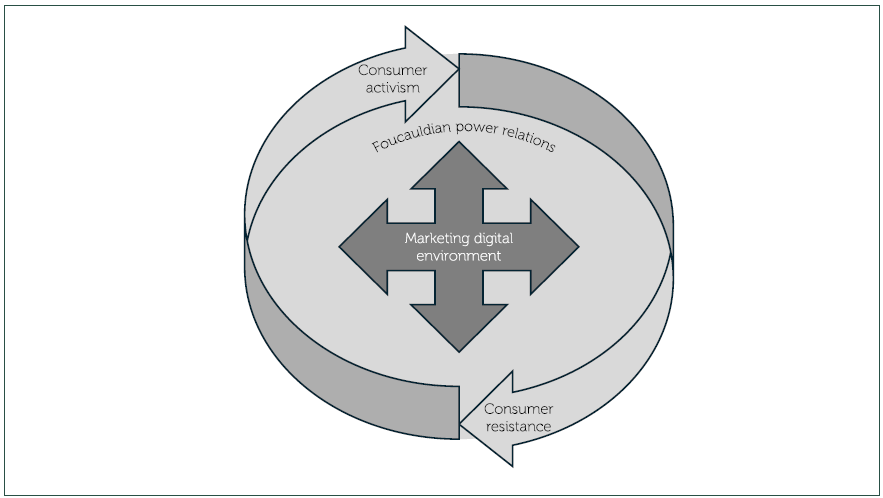 Source: Elaborated by the authors.
 Source: Elaborated by the authors following
 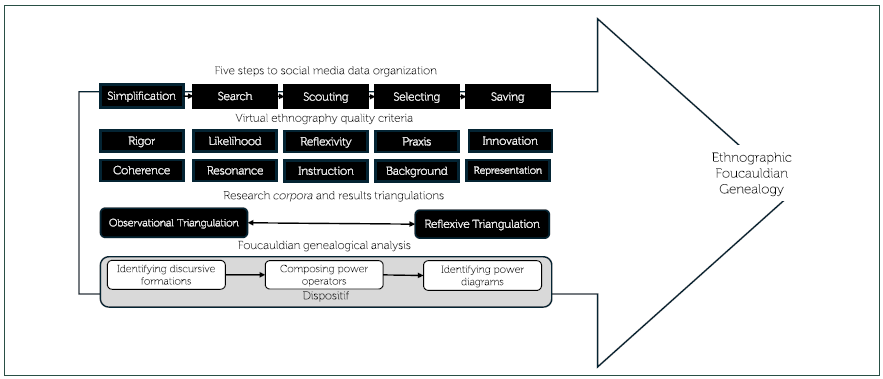 Source: Elaborated by the authors combining suggestions from
  Source: Elaborated by the authors.
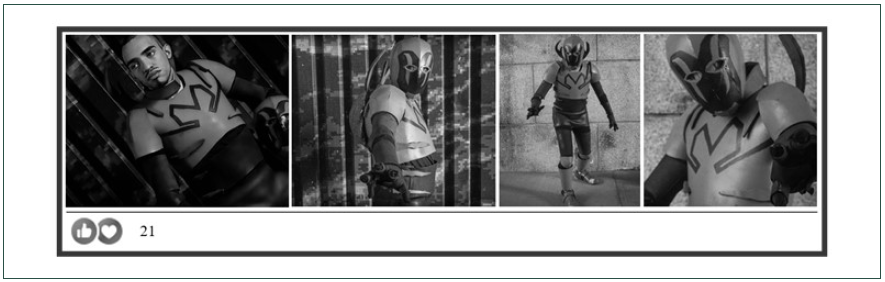 Source: Organized and edited by the authors from the netnographic corpus.
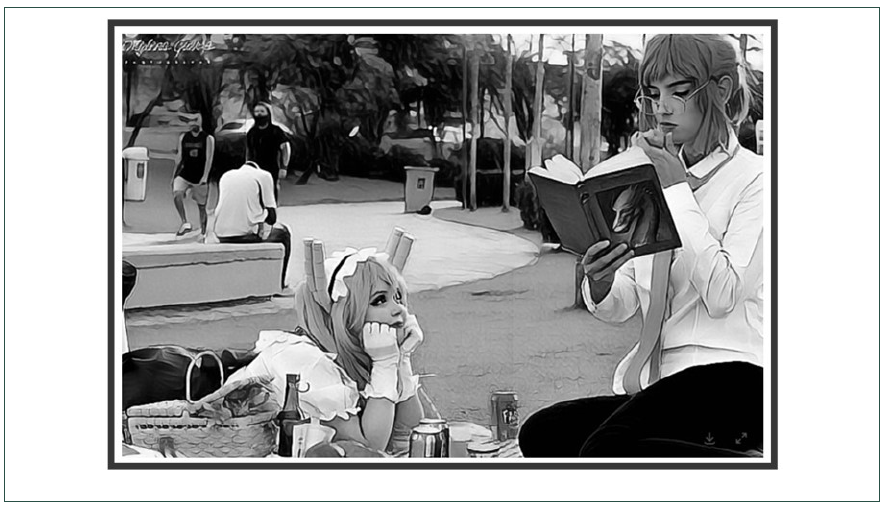 Source: Organized and edited by the authors from the virtual ethnomethodology corpus.
 Source: Organized and edited by the authors from the netnographic corpus.
 Source: Organized and edited by the authors from the virtual ethnomethodology corpus.
 Source: Organized and edited by the authors from the netnographic corpus.
 Source: Elaborated by the authors.
 Source: Organized and edited by the authors from the virtual ethnomethodology corpus.
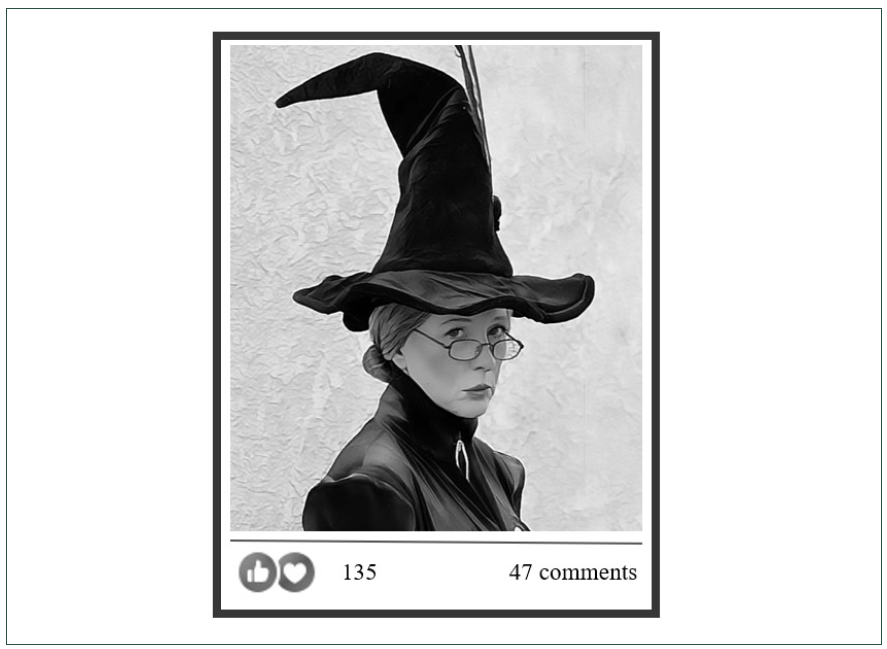 Source: Organized and edited by the authors from the netnographic corpus.
 Source: Organized and edited by the authors from the netnographic corpus.