
 Toot or Boot? Drag Celebrification and Fannish Performativity in the Brazilian RuPaul’s Drag Race Fandom
ABSTRACT
Objective: RuPaul’s Drag Race (RPDR) has catalyzed the celebrification of drag culture and the emergence of a vibrant global fandom. Despite the growing visibility of drag performers in mainstream media and the increasing scholarly attention to RPDR, little is known about how fans engage with drag celebrities in ambivalent and performative ways, particularly in the Global South. Thus, this study addresses this gap by examining the process of drag celebrification, as shaped by fan engagement with and performances related to drag queens, through the lens of consumption performativity exercised by Brazilian RPDR fans.
Methods: using a netnographic approach, we analyzed 4,892 posts from X (formerly Twitter).
Results: drawing on Judith Butler’s theory of performativity, we conceptualize drag consumption as a site of negotiation where fans can both reproduce and resist hegemonic norms. We identify four categories that intersect forms of fan-celebrity engagement (love, like, question, hate) with levels of fannish performativity (embody, promote, criticize, reject).
Conclusions: our findings contribute to queer fandom studies by illuminating the contested nature of queer visibility through the lenses of celebrification and performativity, and by advancing non-Western perspectives on transcultural fandom.
Keywords:
RuPaul’s Drag Race; fans, celebrity; performativity; netnography
INTRODUCTION
Celebrities, especially in contemporary consumer culture, play a central role in marketing and consumer behavior (Eagar et al., 2025). Celebrity status, however, is not innate. It emerges through the assemblage of multiple factors, with consumer engagement being key (Banister & Cocker, 2014; Carrington & Ozanne, 2022). Marketing scholars have examined this process, named celebrification, through which individuals become socially powerful superstars, able to endorse brands and forge deep emotional connections with audiences (Brooks et al., 2021). They have also exposed the fragility of this status through potential breakdowns in consumer-celebrity relationships following moral transgressions (Jones et al., 2022; Mortensen & Kristensen, 2020).
Yet, much of the marketing literature overlooks this fragile process in relation to drag artists. Despite historical marginalization, drag performers are gaining mainstream visibility and influencing markets and consumer identities (Feldman & Hakim, 2020; Laamanen et al., 2025). RuPaul’s Drag Race (RPDR) has been central to mainstreaming drag artistry and queer themes (Brennan & Gudelunas, 2017; Vesey, 2017). Within this context, drag-related consumer cultures emerge at the intersection of queer representation and commercial spectacle. This form of queer-related consumption reflects the broader inclusion of historically marginalized LGBTQIAPN+ identities in media and markets (Coffin et al., 2019; Eichert & Luedicke, 2022).
However, while queer-oriented offerings have expanded an engaged consumer base, they are often criticized for reinforcing stereotypes (Montecchi et al., 2024). In the context of RPDR, critics argue that although the show amplifies queer visibility, its competitive structure (drag queens competing in weekly challenges to win a crown) legitimizes some drag queens over others. For instance, the ‘Toot or Boot?’ ranking system, popular in RPDR and its spin-offs, serves as a game/tool for evaluating drag outfits, with ‘toot’ signaling approval and ‘boot’ signaling disapproval. Holistically, this process reflects a neoliberal logic that works to elevate certain identities (i.e., drags) while devaluing or rendering others invisible (Edgar, 2011; Feldman & Hakim, 2020; González & Cavazos, 2016; Vesey, 2017). Considering drag celebrities as brands, it is therefore interesting to explore the processes that shape the celebrity status of drag artists based on the participatory engagement of their audience.
Through this interest, we align with Consumer Culture Theory (CCT), adopting a consumer-driven approach to celebrity consumption that emphasizes the transformative impact of these relationships on consumer culture and its major participatory audience: fans (Banister & Cocker, 2014; Carrington & Ozanne, 2022). Fans are engaged consumers who establish particular communities (i.e., fandoms) to experience safe spaces among peers, eliciting emotional, collective, and sometimes subversive responses to dominant norms (Chen, 2021; Kozinets & Jenkins, 2022).
Fandom’s impact extends economically for celebrities and socially for consumers, shaping what consumption enables. For example, RPDR fans generate significant economic activity around the show and often draw inspiration from drag performers to create their own personas, highlighting the show’s role in fostering creative expressions that challenge gender norms and stigma (Venkatraman et al., 2024). Consequently, consumer reactions to drag as spectacle create spaces of varied practices, where subjectivation and identity negotiation occur as forms of fannish performativity (Moura & Souza-Leão, 2024; Seregina & Weijo, 2017; Souza-Leão et al., 2022).
Nonetheless, while CCT studies have explored RPDR’s fandom (Campana et al., 2022; Canavan, 2021, 2024), they have yet to examine how drag celebrity status is established and contested. This gap is significant because drag celebrification, sustained by fan engagement, has both social and economic implications. Within queer cultures, celebrification is not a conventional process but a performative one, as drag performers are invoked to inspire fans’ deep sense of self and their connection to queer and drag cultures. At the same time, drag here functions as a professional art form that generates income and builds a brand capable of gaining or losing symbolic and economic capital. We therefore ask: How does fannish performativity shape the processes of drag celebrification through fan engagement?
To answer the study question, we draw on Judith Butler’s (2006, 2011, 2021) concept of performativity. Butler’s work challenges traditional conceptions of gender and universalizing metanarratives, such as stereotypes rooted in biological sex, by proposing that gender identity is not inborn but socially constructed. According to Butler, gender is materialized through the repeated performance of regulatory norms, making repetition central to hegemonic orders. Media plays a significant role in reinforcing these norms, helping to shape public understandings of gender-sexual identities. Within this framework, drag emerges as a body excluded from society’s normative matrix yet reinscribed into social discourse through its commodified presence in consumer culture (Butler, 2011).
This ambivalent position opens up space for performances that can challenge or reinforce dominant gender norms. By viewing gender as fluid and socially constructed, we recognize gender performances as creative acts of consumer agency that can resist hegemonic norms (González & Cavazos, 2016). In particular, Brazilian RPDR fans engage with drag celebrities as sites of performative support, reshaping their own identities and resisting standard gender structures (Henn et al., 2017). Consequently, this perspective allows us to examine drag consumption as a space for imaginative reconfigurations of identity and the diverse ways in which such processes are structured.
Additionally, the present study responds to calls for non-Western-centric approaches to fandom and LGBTQIAPN+ topics (Coffin et al., 2019; Coffin et al., 2022; Daros, 2023; Zheng, 2023). By aiming to explore fan communities through a transcultural lens, we highlight how local contexts shape appropriations and re-significations of global cultural products, especially when gender and sexuality norms are negotiated outside their original contexts (Zheng, 2023). Therefore, given the scarcity of marketing studies on RPDR and the socio-political context of the Global South, this article examines Brazilian fan interactions with RPDR drag celebrities.
Brazil is a key context for RPDR consumption, where the show plays a central role in promoting local drag culture and expanding queer discourse (Henn et al., 2017). Many Brazilian drag performers contend with precarious artistic labor, often employing drag as a means of economic and social survival. However, attaining mainstream visibility remains a challenging endeavor, marked by numerous structural and cultural barriers. RPDR has been credited with revitalizing drag in Brazil, generating economic opportunities around the art form and providing performers with new platforms for exposure. The current proliferation of drag-centered programs, such as Glitter: Em Busca de um Sonho, Caravana das Drags, Drag Race Brasil, Drag Me as a Queen, Nasce uma Rainha, and Queen Stars Brasil, alongside internationally recognized artists like Pabllo Vittar, Grag Queen, and Gloria Groove, illustrates this trend. Accordingly, RPDR has become a main vehicle for elevating local drag performers to celebrity status in Brazil (Castellano & Machado, 2017). Yet, this celebration faces a contradictory context. Despite advancements in LGBTQIAPN+ rights (e.g., marriage equality, adoption rights, blood donation, and anti-discrimination laws), Brazil continues to record alarming levels of LGBTQIAPN+-phobia, violence, and murder, particularly against transgender people. This political and social complexity reveals the coexistence of growing queer awareness and persistent prejudice. Understanding Brazilian RPDR fans’ engagement with drag culture is thus crucial to grasping how interactions with drag celebrities shape diverse performative responses.
Hence, this study explores the divergent celebrity engagement and performative work emerging from Brazilian fan interactions with RPDR’s representation of drag performers. Using netnography (Kozinets, 2020), we identify four categories of fan engagement reflecting varying levels of celebrity connection and performative expression. Our analysis shows that RPDR drag performers generate dimensions of both celebrification and de-celebrification and reveals distinct forms of fan performativity toward this culture.
Theoretically, this research advances CCT by contributing to the understanding of the ambivalent and contested nature of queer visibility within emerging consumption cultures (Brennan & Gudelunas, 2017; Coffin et al., 2019; Coffin et al., 2022; Jenkins, 2014; Pirani & Daskalopoulou, 2022). Drawing on Butlerian performativity, we argue that fan engagement reflects differing degrees of alignment, subversion, or negotiation of normative gender and sexual expectations. Practically, we contribute by depicting how fan engagement can produce both positive and negative reactions toward celebrities, influencing emotional investment, advocacy, and willingness to consume or reject artists, as well as to engage with a major sociocultural movement, such as the queer scenario.
To delve deeper into these dynamics, our paper is organized as follows: the literature review, divided into two parts, outlines the study’s conceptual and theoretical foundations; the methodology section details the netnographic approach; the results section presents four analytical dimensions; and the discussion and conclusion synthesize the main theoretical insights, practical implications, and directions for future research.
LITERATURE REVIEW
Aligned with the study’s objective to understand how fannish performativity shapes processes of drag celebrification, a theoretical framework (see Figure 1) was developed to clarify the interrelation between the themes addressed. Initially, we consider that drag celebrities have their performances shared and engaged with in the media based on the resonance initiated by the content of the television show. This engagement is fundamentally fueled by fans, who exercise performativity by speaking out and issuing discourses and positions about the drag queens based on the shared and discussed performances. In doing so, fans create new spaces and forms of knowledge that can transform social perceptions of queer culture. Consequently, the performativity exercised by fans sustains the process of celebrification, either by legitimizing or questioning drag celebrity status. Certain individuals and their performances then become recognized as relevant or representative by the fandom and, potentially, by the broader cultural context, which, in this study, refers to the drag phenomenon.
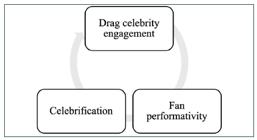
In this sense, the following sections present the interrelation and continuity between these themes, which are already seminal in CCT studies. Therefore, we initially present the connection between celebrities and fan engagement. Following that, we explore queer consumption and the exercise of performativity based on Judith Butler’s perspective.
Celebrities and fan engagement
Celebrities hold substantial economic, symbolic, and cultural value in contemporary consumer cultures (Eagar et al., 2025). Often viewed as brands and media products, they can achieve considerable societal influence (Jones et al., 2022; Wohlfeil et al., 2019). However, defining what makes someone a celebrity has become increasingly complex in the digital era, where ordinary individuals can rapidly achieve fame (Moraes et al., 2019). This shift has sparked scholarly interest in celebrification, defined as the process by which individuals accumulate celebrity capital and attain celebrity status (Brooks et al., 2021; Jerslev & Mortensen, 2016). Yet, the intricate relationships between fans and celebrities, once seen as grounded in love or parasocial connections, can fragment due to transgressions, triggering a process of loss of celebrity status (de-celebrification) (Jones et al., 2022; Mortensen & Kristensen, 2020).
In this sense, engaged consumers play a vital role in their relationships with celebrities, negotiating representations of their public personas and constructing their own identities through the symbolic meanings offered by celebrity consumption (Banister & Cocker, 2014; Carrington & Ozanne, 2022). Consequently, fan-celebrity interplays have become a compelling topic within CCT studies (Wohlfeil et al., 2019). This reflects the impact of participatory cultural dynamics on consumer cultures, where fans act as active co-creators who develop emotional and productive ties with media content (Chen, 2021; Fuschillo, 2020; Kozinets & Jenkins, 2022). Celebrity fan practices are therefore generally marked by emotional investments, performative engagements, and shared enthusiasm from both individual and collective perspectives (Derbaix & Korchia, 2019; Loureiro et al., 2023).
In these forms of celebrity fan involvement, social media has enabled new ways of expressing support for artists, facilitating celebrification processes (Berryman & Kavka, 2017). Digital networks, for instance, serve as important sites for expressing the deep bonds fans share with celebrities, who are often elevated to a sacred status, evident in feelings of loss and grief after a celebrity’s death (Radford & Bloch, 2012). However, this new era of digital engagement can also intensify negative interactions, contextualized, for instance, within cancel culture, which can lead to online celebrity bashing, a form of online aggression based on hateful commentary, especially common toward reality-TV stars (Ouvrein et al., 2021). Accordingly, in this paper, celebrification is not treated merely as an outcome but as a conceptual lens to explore how fans engage with drag performers, at times reinforcing and at other times contesting their celebrity status, demonstrating how such capital can be gained and lost.
These previous studies, nevertheless, have overlooked how fans contradictorily negotiate contemporary drag celebrity status, mostly focusing on its positive sides. Insightfully, Feldman and Hakim (2020) highlight how drag performers have gained visibility in mainstream media, enhancing the celebrification of drag culture, with RPDR playing a central role in this shift. This has contributed to drag’s rising position in consumer cultures (Laamanen et al., 2025), influencing how fans, for instance, express their identities through digital productivity (Canavan, 2021, 2024), create their own drag personas (Venkatraman et al., 2024), and perform in ways inspired by the show (Henn et al., 2017). This is especially significant in LGBTQIAPN+ contexts, as Campana et al. (2022) argue that RPDR’s spectacularization of drag bodies helps normalize stigma, even when considering critical fan responses.
Despite these valuable insights, this body of research remains largely centered on Northern contexts, overlooking how drag celebrity culture is negotiated in the Global South. However, contexts such as the Brazilian one can offer a transcultural perspective that reveals unique forms of fan engagement, cultural adaptation, and celebrity dynamics (Daros, 2023; Zheng, 2023). Studies have shown that Brazilian RPDR fans, through their distinctive use of social media platforms such as Facebook, YouTube, and X (formerly Twitter), actively engage with RPDR’s drag performers, producing and reinterpreting content through locally meaningful forms of fan labor while negotiating the political and cultural implications of drag culture in the country (Castellano & Machado, 2017; Henn et al., 2017).
The importance of this focus also lies in how the Brazilian RPDR fandom is embedded in a context characterized not only by intense consumer engagement but also by complex LGBTQIAPN+ politics and intersecting social inequalities, including race, class, and geographic disparities (Brennan & Gudelunas, 2017; Castellano & Machado, 2017). These sociopolitical conditions can influence how fans engage with the show, negotiate drag celebrity status, and produce locally meaningful forms of fan labor (Henn et al., 2017). In this context, RPDR has revitalized local drag culture and expanded queer discussions in a country still marked by high levels of LGBTQIAPN+ discrimination and social issues (Castellano & Machado, 2017). This dynamic demonstrates a unique context in which the show can elevate drag queens, who previously had limited mainstream exposure, into internationally recognized, celebrated, and culturally relevant public figures (Feldman & Hakim, 2020; Vesey, 2017).
Therefore, from a celebrification perspective, the limited attention given to how fans negotiate drag celebrity status, particularly in Brazil, underscores the need to consider intersectional dynamics when examining fannish performativity. To explore this phenomenon and its implications, we situate historically marginalized perspectives on LGBTQIAPN+ consumer cultures and fandom and draw on Butlerian theoretical lenses to examine fannish performativity.
Queer consumption and performativity
The LGBTQIAPN+ rights movement, as noted by Ciszek (2020), has significantly influenced both the political landscape and the consumer cultures of queer communities, leading to the emergence of more inclusive markets and diverse LGBTQIAPN+ consumer segments (Eichert & Luedicke, 2022). However, marketing scholarship still lacks sufficient depth and scope on this topic due to historical marginalization (Ginder & Byun, 2015; Montecchi et al., 2024), making it crucial to broaden the dimensions of queer discourses within the discipline (Coffin et al., 2019; Coffin et al., 2022; Pirani & Daskalopoulou, 2022). A promising direction lies in the exploration of queer fandoms through a CCT lens, which emphasizes the socio-cultural, identity-based, contextual, and performative dimensions of consumption (Maclaran, 2017).
Positioned at this intersection, this article builds on the premise that active fan engagement can challenge dominant media representations. Fans play pivotal roles in demanding and infusing queerness into media spaces, often using social media as a vital platform to exchange experiences, co-create identities, and foster a more pluralistic social environment (Canavan, 2021, 2024). This aligns with Kozinets’s (2001) view of fandoms as spaces for personal development, serving as environments for identity expression and queer practices, even within politically coercive contexts (Zheng, 2023). Through their media consumption, fans of queer content may engage in performative negotiations that can resist hegemonic norms (Henn et al., 2017).
In this sense, it is common for part of the engagement of some fandoms to be directed toward validating the social space of some of their members (Moura & Souza-Leão, 2024; Souza-Leão et al., 2022) and developing identity values associated with their consumption practices (Seregina & Weijo, 2017). Both cases reveal how the social exchanges inherent to fandoms allow their members to understand themselves as subjects when exercising performative practices (González & Cavazos, 2016), which, in turn, are inseparable from their consumption relations (Maclaran, 2017). Thus, fan identities are not simply expressed but actively formed through performances, indicating that acts of consumption enact performativity.
Specifically, social transformations seen as performative political practices of the queer fan community are subject to various consequences and re-significations that can profoundly affect narratives and social relations (Henn et al., 2017). It is, therefore, part of a broader movement when the appropriation of technologies and the growing participation of people seek to transform society through the elaboration of performativity that is representative of the deconstruction of normative gender categories (Haraway, 1985; Zaidi & Sahibzada, 2020).
Consequently, we draw on Butler’s (2011) concepts of performativity to question and reflect on traditional understandings of gender. According to the author, the agency of subjects shapes their identity and self-expression. In this theoretical perspective, individuals shape their own identities, moving them from a normative stereotype to an alternative one, seeking expressions and representations that confront the patriarchal, heteronormative, and misogynistic structures imposed on them.
Since gender norms are inscribed on the body through performances and cultural practices, these individuals seek alternative representations of their bodies and identities, challenging the ideal body images propagated by dominant culture (Avery, 2012; Salih & Butler, 2004). Therefore, the discursive and citational constitution of gender and the body, together with their performativity through signs, acts, and gestures, is a process in which categories and representations are used to subvert and/or give new meaning to the performative character of gender and, consequently, of the body itself (Butler, 2011, 2021).
In this sense, Butler (2006, 2021) proposes a fluid and socially constructed vision in which the cultural intelligibility of gender performances is an iterative result of social practices, as opposed to deterministic perspectives. Furthermore, individual, queer, and fannish agency, undertaken through the reinterpretation and subversion of existing gender norms, manifests itself through creative and contesting expressions that challenge hegemonic cultural norms (Butler, 2011).
Broadly, Butler (2006) discusses the concept of gender as a kind of performance, comparing it to a runway show, as a structure that is created in the process of being created, whereby the individual is part of a performance that is not necessarily consciously enacted. From this perspective, the author suggests that individuals enact their gender identities through socially scripted behaviors. Nonetheless, it is also essential to acknowledge a paradox in the queer visibility promoted by the drag celebrities in the show. While this representation has contributed to increased mainstream visibility of drag, it can simultaneously reinforce a hegemonic discourse about what constitutes a ‘good,’ ‘beautiful,’ or noteworthy drag, one that appeals to the crowd and is considered the best of all. This generates a ‘new normal’ in drag culture, in which emerging norms are embedded in a new form of dominant social structures, ultimately pushing back to the fringes those bodies that do not conform (or perform) to new beauty and behavior standards according to this emerging logic (Edgar, 2011; Feldman & Hakim, 2020; González & Cavazos, 2016; Vesey, 2017). Consequently, this dynamic can lead to the acceptance of some forms of drag while simultaneously rejecting others.
Notwithstanding, through the theoretical lens of performativity, these tensions in drag performativity apply not only to the drag queens themselves but also to the fans. By consuming RPDR, fans engage with these drags and construct their own performativity, which we refer to as fannish performativities, going beyond previous literature (Campana et al., 2022; Henn et al., 2017; Venkatraman et al., 2024) because of our interest in its ambivalent aspect. In this context, considering that media content is an ideology-driven industry process that reproduces norms about gender, sex, and materiality, RPDR drag performers invite different configurations of fannish performativities. The fan-celebrity relationship thus becomes a medium for negotiating queer visibility and constructing subjectivities that can either reconcile with or challenge hegemonic norms. Consequently, this study centers on investigating how varying modes of celebrity engagement by fans enact distinct forms of fannish performativity.
METHODOLOGY
We adopted netnography as our methodological approach to investigate the online community of Brazilian RPDR fans, as it is particularly suited to exploring online consumption practices (Kozinets, 2020). In a digitally connected world, netnography has shown broad applicability across research contexts (Kozinets & Gambetti, 2020). Its cultural and contextual sensitivity has made it an established method in CCT research, including studies of fandom and celebrity consumption (Canavan, 2021; Radford & Bloch, 2012). Our methodological choice was guided by the socio-cultural and geographic specificities of our context. As a globally consumed franchise, Brazilian RPDR fandom is geographically dispersed and socially diverse, making netnography especially suited to capturing the nuances of these transcultural fan practices (Addeo et al., 2019).
Moreover, the sensitive nature of our research, addressing identity, sexuality, and self-expression, further supports the use of netnography. Online platforms often facilitate greater freedom of self-expression, especially in practices involving non-hegemonic negotiations of gender and sexuality (Canavan, 2024; Zheng, 2023). Netnography’s ‘voyeuristic quality’ enhances its effectiveness in exploring stigmatized or sensitive consumption experiences, offering a key advantage in accessing delicate topics that may be difficult to address through face-to-face research (Costello et al., 2017; Kozinets, 2015; Langer & Beckman, 2005). The possibility of covert data access, or ‘lurking,’ in which the researcher remains invisible or unidentified, reduces intrusiveness while maintaining ethical standards and enabling more natural and genuine fan interactions (Addeo et al., 2019). Netnography, therefore, facilitates the observation of spontaneous, authentic, and synchronic engagements (Kozinets & Gretzel, 2024). Thus, guided by Kozinets’s (2015, 2020) methodological framework, we structured our netnographic approach as detailed below.
The first stage, community selection, involves identifying a specific group for research. This study focuses on the expressive community of Brazilian RPDR fans. We chose X as our primary data collection platform due to its high volume of RPDR-related interactions among Brazilian users, making it the most representative site for fan engagement. The platform’s real-time interactions, often sparked by episode airings (Campana et al., 2022), further justified this choice. Although we considered Facebook, particularly the ‘RuPaul’s Drag Race Brasil.OFICIAL’ group (78,500+ members), its lower activity and gatekeeping by moderators limited its relevance for studying spontaneous interactions. Thus, while prior studies have explored Brazilian RPDR fandom through Facebook groups (Castellano & Machado, 2017; Henn et al., 2017), we extend this focus by examining X, which offers a more dynamic, content-rich, and complementary research environment for our context.
The second stage, cultural entrée, involves the researcher’s immersion in the selected community to gain cultural insight. In our case, this occurred organically. The primary author has been a devoted RPDR fan since 2017, actively engaging in various online practices, attending events in Brazil and abroad, and watching multiple RPDR franchises (e.g., American, British, Brazilian, Mexican, Spanish). While the co-authors are less immersed in the fandom, their contextual familiarity offered critical distance, allowing the team to balance insider knowledge with analytical rigor.
The third stage, data collection, involved gathering posts to build the research corpus. We used Meltwater, a social media listening tool, to extract raw data (texts, images, videos, and links). While effective for data extraction, this software was not used for content analysis, as we argue that such big data tools are ill-suited to capturing the nuanced and contextual meanings of sensitive digital expressions essential to cultural consumption studies, in agreement with Kozinets et al. (2018).
To choose the dataset, three specific filters were applied: (1) Brazilian IP addresses; (2) the collection period was limited to 2022, an important year for RPDR due to new franchise seasons, streaming platforms, competition elements, and increased diversity (e.g., the participation of a cisgender heterosexual male drag performer and the highest number of transgender contestants); and (3) relevant hashtags were identified using a platform called Display Purposes (2023) to guide our choices, along with the researcher’s expertise and intention to include possible variations of the main hashtags within the Brazilian context. Then, quote posts and reposts without hashtags or added commentary were excluded, as well as posts unrelated to the show. To visualize this process, we present an illustrative and detailed overview of the data collection procedure in Figure 2.

This process resulted in a final dataset of 4,892 posts from Brazilian users, published between January and December 2022, containing the hashtags #rpdr, #rupaul, #dragrace, #rupaulsdragrace, #rupauldragrace, #dragracebr, #dragracenamtv, and #dragracebrasil. This expanded on Campana et al. (2022), which collected X data until 2019, used only the #dragrace hashtag, and did not filter posts by Brazilian users.
The fourth step, analysis and interpretation, involved examining and interpreting the data to derive insights and conclusions, thereby defining the research results and deepening understanding of the topic. The interpretation followed a manual, interpretative, and inductive approach in nonlinear steps, which ensured reflexivity throughout the analysis.
The research team had varying degrees of RPDR knowledge and different nationalities, allowing both insider and outsider perspectives. This diversity facilitated a closer understanding of the context by the first author, a RPDR fan himself, who could interpret culturally complex posts due to RPDR’s unique culture, while the co-authors provided necessary distance as non-fans, yet were knowledgeable about the context to varying degrees (from more to less familiar). The first three authors are Brazilian, and the last author is a non-Portuguese-speaking foreigner, who contributed by challenging interpretations and generalizations and by requesting more cultural context when needed. Their roles were as follows: the primary analysis was led by the first author, who read all posts and analyzed every text, image, and video attached to them. The second author validated all codes and raised questions to extend and challenge interpretations. Authors three and four also monitored and validated the analysis, suggesting theoretical lenses that informed the final interpretations.
The thematic coding procedure, which sought to explore, interpret, and find meaning through data analysis, began with classifying the data based on the researchers’ initial impressions of the posts. Subsequently, notes were used as reflections on the first round of coding. This primary effort was based on a basic understanding of the overall idea the user wanted to convey. Some posts received different codes, as different meanings could be perceived, but they were later resolved through the applied theoretical lens. After an initial round of codes emerged, reflecting this preliminary analysis, they were filtered and grouped into broader themes. Here, the primary codes were classified into combined themes related to the same topic, or very close in meaning, leading to fewer and more structured categorizations. These categories were then revisited with reference to the chosen literature and led to specific coding refinement, definition, and naming.
Considering that the study centers on posts from Brazilian RPDR fans, the analysis revealed their constructive behaviors stemming from engagement with the show’s cast (i.e., the celebrities). Many posts highlighted different aspects of fans’ constructions around the cast, understood as human brands, as revealed through the data encoding process. The application of relevant literature and theoretical lenses was crucial for interpreting and expanding these findings. Theories were employed to make sense of the meanings derived from the data. Subsequently, the empirical material was revisited to refine the analysis and gain a deeper understanding of how the data connected with the proposed theoretical generalizations.
Finally, the results were articulated to translate these meanings through relevant theoretical perspectives and to clarify the dimensions and nuances of our findings in the writing process. Although a chronological sequence of the coding process is described here, the process was highly interactive. Interpretations depended on both the empirical context and theoretical insights. The codes, themes, and interpretations were continuously revisited and validated collaboratively until the completion of the manuscript.
Nonetheless, it is important to emphasize that these stages adhered to strict qualitative quality criteria to ensure rigorous analysis, establish research validity, and avoid potential biases. First, we relied on triangulation of results among all authors and involved numerous stages of coding to reach the final categories presented in this article. The first author’s familiarity with RPDR, deep engagement with the context, and status as a native Brazilian Portuguese speaker, as well as the lesser degree of familiarity of the other authors and the inclusion of a foreign co-author who received translated material, ensured both deep contextual understanding and critical distance that challenged interpretations.
Second, we sought to obtain a representative corpus, ensuring a representative sample in terms of size, time, and data saturation, which occurred when all data from the chosen framework had been collected. We then practiced reflexivity, which involved self-reflection during the analysis process, enabling alternative interpretations through the transformations experienced by the researchers, especially when confronting the empirical data with the literature and theories used, leading to new rounds of analysis. Finally, we produced a final report with a full, clear, and detailed description of the results, ensuring that the necessary context was provided for readers.
Ethical considerations were crucial throughout this study. We follow Canavan’s (2024) steps, who reiterated that public platforms do not automatically render all content ethically accessible. All examples presented in this paper were anonymized. This was done in an effort to make users’ posts unsearchable by removing certain identifiable elements: usernames, visual elements, keywords, hashtags, emojis, dates, punctuation, and URLs.
Additionally, as this paper is written in English for an international audience and concerns a stigmatized context, we took further steps to ensure confidentiality and prevent participants from becoming potential targets of discrimination. We therefore went a step further than Canavan (2024) by translating, localizing, and adapting all posts into English ourselves when presenting examples of our empirical data. To ensure the accurate transmission of meaning, we contextualized and explained each example in detail. It is important to note that we translated examples only to illustrate them in the results section. However, we reiterate that the analysis of the posts was conducted in the original language and led by the three native Portuguese-speaking authors, and triangulated with a foreign co-author, which allowed for analytical distancing. We argue that this process ensured a culturally sensitive and contextually grounded interpretation, preserving cultural nuances, humor, and local slang in the interpretations while fully complying with ethical regulations concerning the use of online data and the protection of user privacy and safety.
RESULTS DESCRIPTION AND DISCUSSION
To understand the virtual expressions of fannish performativity that enact divergent forms of drag celebrification, we developed a matrix (see Figure 3) that intersects the two dimensions of fan positioning found, revealing four categories that illustrate how fans engage with and perform around drag celebrity culture through their consumption practices. A more detailed and operational description of each category and code can be found in Appendix.

As shown in the matrix, we identified four main behaviors and discourses that constitute the performativity exercised by Brazilian RPDR fans. The findings revealed that, along one dimension (vertical), fans engage with drag celebrities across a spectrum of positive to negative perspectives, embodying affective modes of expression ranging from love and liking to questioning and hate. Along the other dimension (horizontal), fans express varying degrees of engagement with the drag performances they encounter, both through the TV show and their participation in the fandom, reflecting how they embody, promote, criticize, or reject this drag culture. Although autonomous, these categories are continuous with each other, highlighting a fannish performativity that unites them, engages with broader social constructs beyond the consumption context that originally established them (the TV show), and influences the processes through which drag queens are celebrified. Thus, the next subsection describes, contextualizes, and exemplifies each category that sustains such performativity.
I love them, and I embody this culture!
This category reflects a positive perspective on drag celebrities combined with high performative engagement, capturing the strongest emotional connection and the clearest expression of fannish performativity. Celebrity status elevates drag artists to media superstars, stimulating fans to engage through embodied performances. Drag celebrification reaches an intense affective level, generating positivity for the celebrity brand, while fans actively internalize and express drag culture through their own bodies and practices.
Thus, our results align with previous discussions about how fans go online and show intense love, admiration, and devotion toward drag celebrities, driven by a strong sense of representation through RPDR’s media visibility. Here, celebrification enables fans to connect with the personal and cultural values of drag, highlighting the affective depth and loyalty of fan-celebrity attachments (Derbaix & Korchia, 2019; Loureiro et al., 2023; Wohlfeil et al., 2019). It echoes the sacred status that celebrity can attain, capable of evoking profound emotions, even in moments of loss, such as when a celebrity passes away (Radford & Bloch, 2012). Through celebrification, drags are elevated beyond entertainers to become symbolic figures, icons who command reverence and admiration. Fans invest deeply in these figures, viewing them as aspirational yet profoundly relatable, allowing drag performers to occupy a privileged space in fans’ cultural imaginaries.
At the most immediate level, fans celebrate drag performers as cultural icons, expressing intense admiration and reverence for their presence. This celebration often takes the form of emotional declarations that elevate drags to near-mythic status. Statements like “No words can describe it, but I’m just too thrilled to witness greatness, like omg. Amazing. The power of drag is infinite. I love you Chic-Li-Fay, I love you Poppy Love, I love you Chakra 7” exemplify this affective engagement, reinforcing the perceived cultural significance and symbolic power of these figures. Through such declarations, fans situate drag performers within a celebrity framework that is both celebratory and emotionally charged.
Beyond admiration, fans also find deep inspiration in the personal narratives, emotional journeys, and lived experiences shared by the drags. These stories, often centered on queer experiences, navigating marginalization, or building chosen families, serve as vital sources of identification. Fans express heartfelt appreciation for these intimate revelations, viewing them as affirmations of their own paths. One fan, responding to a drag queen’s reflection on emotional bonds formed during the show, wrote: “One of the most beautiful statements I’ve ever seen, thank you so much, Miss Raja. I related to this a lot.” Such moments show how drag celebrities function as affective mirrors, sources of inspiration and personal resonance, through which fans navigate, affirm, and rearticulate their own identities and stories.
Both virtual and physical interactions further intensify these affective ties. Fans cherish moments of direct engagement with drags, whether through online comments or in-person encounters at clubs and events. These interactions are often remembered as deeply meaningful. For example, one fan posted, “[I] met SHANGELA last night in Orlando! what a fuckin genuine & kind person <3,” revealing the emotional resonance and personal significance attached to such experiences. These expressions reflect not only the excitement and gratitude of fans but also the way drag celebrity culture fosters emotional investment and deep connections.
In addition to forming personal bonds, fans act as cultural intermediaries who help extend the visibility and legitimacy of drag beyond the show itself. They actively promote and celebrate drag queens’ achievements outside the RPDR context, reinforcing their broader careers. For instance, when Shea Couleé was cast in a Marvel series, one fan exclaimed, “She won!”, framing this accomplishment as a transcendent victory not only for Shea but for drag culture at large. These celebrations reflect a collective joy in witnessing drag’s growing recognition in mainstream cultural spheres.
This engagement also takes on a national dimension. Brazilian fans often express strong pride when local drags succeed internationally or when national drag culture receives recognition. They rely on the spectacle brought about by RPDR in drag culture to highlight the creativity and quality of Brazilian drag, advocating for greater appreciation and support for local artists. This sentiment was clearly visible in the enthusiastic celebration of Grag Queen’s win on the franchise “Queen of the Universe,” a show produced by the creators of RPDR. “I will never get tired of remembering this victory. ... The greatest pride of my life: Grag Queen,” one fan declared. Similarly, fans also point out how Brazilian drag is sometimes undervalued, stressing that there is much to be admired and celebrated in local drag culture. In these moments, love for drag intersects with national pride, positioning drag as a meaningful source of collective identity and cultural legitimacy within Brazil.
Still, these intense attachments come with vulnerability. When a drag queen falls ill or passes away, fans express public mourning, revealing the depth of their emotional bonds. The grief following such losses underscores the immersive nature of these connections. One fan, reacting to the death of a queen, reflected on how heartbreaking it is to remember her passing. Such expressions reveal just how deeply embedded drag celebrities are in the emotional lives of their fans.
Consequently, it is possible to interpret that RPDR enacts fans’ performances, allowing for both representation and the construction of the self (see Henn et al., 2017). Importantly, fans’ engagement with drag celebrities goes beyond admiration, as they embody drag-inspired practices through fannish performativities. Echoing Venkatraman et al. (2024), drag embodiment can be seen as a consumption practice that can offer identity repair.
This is especially evident in cases where fans create their own drag personas as acts of resistance against stigma. As one fan shared, creating their persona was “MORE THAN A PERFORMANCE, IT WAS THE FULFILLMENT OF A DREAM”, underscoring drag’s transformative personal significance. Embodiments do not occur only through the creation of drag characters, but also when fans feel empowered in their everyday gendered expressions. One fan proclaimed, “I, a kitty-cat, am all feminine today. RPDR enhanced my femininity,” pointing to how the influence of drag celebrities can amplify and validate their self-perceptions and play with gender expressions.
These aforementioned examples - and the codes they illustrate - demonstrate that fans do not merely admire drag celebrities, as they internalize and personalize the cultural practices these figures represent. This signals a profound emotional, identitarian, and performative investment, where adored figures become extensions of the adored self.
Consequently, it becomes clear that this is an articulation among fans that manifests identity aspects when drag culture is projected as representative and attractive thanks to the media space gained by RPDR. This articulation is characterized by the repetition of acts, gestures, styles, and expressions, as fans reproduce and intensify drag gestures, resignifying gender norms. It is a movement that attests to Butler’s (2006) understanding that performativity occurs in action, always open to displacements and reinventions. For the author, these displacements are driven by desires, affects, and social recognition. This allows us to interpret that the analyzed fandom functions as a community mechanism of recognition that encourages performative repetition.
I like them, and I promote this culture!
The second category reflects a positive perspective on drag celebrities combined with low performative engagement. Fans show appreciation and support for RPDR and its cast in a less affectively intense way, engaging performatively in a discursive and promotional sense. Thus, our results indicate that fans like and support RPDR and its cast as vehicles for democratizing and popularizing queer culture. Here, celebrification is seen as a process that familiarizes wider audiences with practices once rooted in LGBTQIAPN+ communities and niche fandoms. While still positive, this engagement is less intense than the emotional investment seen in the first category.
As Mercer and Sarson (2020) note, RPDR drag celebrities rely on diverse consumer engagement, even through memes, irony, and camp, to sustain their celebrity status and ongoing audience appeal. Therefore, fans express appreciation in more moderate and casual ways, contributing to the performers’ visibility without displaying deep personal attachment. Yet, this support remains impactful, as it helps drag artists build symbolic and economic capital, enabling brand partnerships and career advancement without necessarily elevating them to mythic status (Brooks et al., 2021; Vesey, 2017).
Fans often express their support through compliments. “KORNBREAD’s outfit is AMAZING,” one fan writes, illustrating the appreciation fans show for a wide range of aspects - from personality and performance to makeup, outfits, storytelling, representation, and diversity. Compliments touch on identity, sexuality, geography, fashion style, mannerisms, beauty, decision-making, and the drags’ overall talents and charisma. Fans also recognize the judges for their thoughtful critiques and the role they play in shaping contestants’ journeys. These expressions reflect an overall positive sentiment, though they remain more superficial than deeply emotional.
Humor also plays a role in this form of engagement. Fans often take a playful approach, sharing jokes, memes, and light-hearted commentary that poke fun without malice. One fan laughs at the characteristic gestures of some drag queens on the runway, saying, “I just LOVE it when the queen points to where she’s going hahaha.” Such moments reflect a celebratory and playful fan engagement, infused with camp and comedy, underscoring the recurring fun spirit of drag itself.
Yet, this category also highlights the diverse ways in which fans engage with drag celebrities, spanning show-related content, off-screen activities, and aspects of the drag queens’ personal lives. This includes the use of catchphrases, promoting cast members, ranking contestants, and showing interest in the show’s competitive dynamics and narrative developments. For instance, one fan shares: “My top 4 for the 14th season of RPDR are Angeria, Kornbread, Kerry, and Willow. To me, they’ve already won!” Additionally, fans also delve into the drags’ personal details, such as birthdays and behind-the-scenes curiosities, and even express when developing crushes on cast members. Engaging with drag celebrities becomes a means of affirming their liking for this culture.
These interactions often include fan expectations and speculations about the drags. Many express eagerness to see certain performers return to the screen or appear in upcoming projects. For instance, one fan expressed frustration at not seeing a local queen audition for the Brazilian franchise: “I really wanted to see our queen on national television.” The announcement of RPDR’s Brazilian edition intensified these sentiments, as fans voiced excitement about the show’s challenges, such as the Snatch Game (a challenge in which the drag queens impersonate famous celebrities) or runways being reimagined with local figures or inspired by Brazilian culture. These responses underscore how fan commentary is shaped not only by existing content but also by expectations and speculations about imagined futures and national representation.
Celebrity endorsement also plays a crucial role in these interactions. Fans engage in purchasing, promoting, or reselling products used or created by RPDR celebrities. Their posts reflect genuine interest in merchandise, such as cosmetics, music, videos, and even drag-specific apparel. One fan, noticing a practical product used by drags, shared: “I noticed that drag queens from RPDR are using them [tights] because it seems to help hide the padding a lot. ... I’ll buy them to see how they look.” These acts of consumption reflect the economic participation of fans in celebrity engagement.
This positive fan engagement fosters a space in which fannish performativity actively promotes drag culture. Consequently, it seems to represent Canavan’s (2024) proposition about how RPDR’s digital fandom engages in discussions that help normalize gender and sexual plurality. The celebrification of drag artists and their mainstream success serve as catalysts for legitimizing non-normative identities (Feldman & Hakim, 2020; Laamanen et al., 2025).
Rather than embodying drags themselves, as seen in the previous category, these fans participate through discursive promotion, reinforcing the cultural value of drag and queer visibility. One fan affirms, “RPDR carries an extremely significant message for humanity!”, emphasizing the moral and symbolic weight of the show. Another highlights the role of representation: “Through RPDR, many children and teenagers, like me, have had the chance to see themselves represented and embraced.” By supporting the show and its drags, these fans help circulate conversations around gender performativity and LGBTQIAPN+ acceptance, positioning RPDR celebrities as agents of cultural change.
The examples and codes presented show that RPDR fans participate in drag culture through symbolic support (e.g., likes, shares) and endorsing speech. Both practices are, ultimately, discursive acts that reproduce and reinforce the existence and legitimacy of drag culture beyond the content of RPDR. Thus, even without performing physically, these fans contribute to the production of the social reality of drag culture, reiterating its legitimacy and disseminating its values.
For Butler (2021), performativity is grounded in the reiterated act, which is often elaborated and interpreted within the discursive sphere, extending beyond purely bodily expression. The author emphasizes that many norms and identities are constituted through language practices that are repeated and socially reiterated. In this sense, queer discourses and performances, when displaced to new social arenas, tend to simultaneously reinforce existing norms and resignify them by proposing new understandings. This shift is evident in the way drag celebrity acts as a mechanism that amplifies the public repetition of queer values, helping to destabilize hegemonic norms and introduce and normalize new forms of performativity into mainstream spheres.
I question them, and I criticize this culture!
This category reflects a negative perspective on drag celebrities combined with low performative engagement. It shows how fans express discontent and critique through social media. The media space given to certain drag artists often leads to skepticism, as fans question the authenticity, behavior, or representation of these queer celebrities, enacting critical forms of fannish performativity. Thus, when Brazilian RPDR fans question the celebrity status of drag performers, especially their positioning within the entertainment industry, they reveal concepts previously established in the literature. While skepticism prevails, centered on how these celebrities’ behaviors and discourses shape queer culture, it is often expressed through humor, irony, or pointed commentary rather than outright cancellation.
It is common for fans to critique without fully delegitimizing the performers, highlighting celebrification as an ongoing process of negotiation (Brooks et al., 2021; Jerslev & Mortensen, 2016). Scandals, unless they involve serious or repeated moral violations, are seen as part of celebrity culture and can even heighten public engagement (Mortensen & Kristensen, 2020). Within RPDR’s competitive format, in which only one drag queen wins, controversy becomes part of the spectacle. Through online platforms, fans actively negotiate authenticity, fostering more critical and nuanced discussions around drag celebrities (Canavan, 2021).
The first form of critique emerges through comments about the celebrities, including their drags and performances. For instance, a fan says, “50% of what’s happening with Shea in the all-winners season is due to sabotage, but 50% is on her. Her performances are pretty flat, and the looks are very average; some are even below regular season standards. And mind you, I adore Shea.” This illustrates how fans critically engage with these drag celebrities, doing so in an opinionated yet thoughtful manner.
Criticism is not always direct; it can also come disguised as satirical comments. Satirical content, often created with humor, serves to mock, criticize, or belittle, sometimes in ways that can be hurtful. This differs from the humorous comments seen in the previous category because here fans create humorous content with the intent to satirize in a hurtful, shady, or negative way. For example, a fan comments about Daya Betty’s portrayal on the show: “Does Daya Betty really want to come across as a bitch? It’s working. She’s so annoying... Hahaha.” While humor and a sense of fun in the drag’s portrayal are present, the satire is aggressive and might be perceived as hurtful, though it does not invalidate the drag queens or their presence on the show.
Fans also engage in depreciating the behaviors of these drag celebrities. This unfolds a type of negative engagement in which fans interact with celebrities in a critical, sometimes demeaning manner, which contrasts with the portrayal of these drags on the TV show. This is seen, for example, when a fan says: “Monique Heart signed up to be the villain of the season. Giiiiiiirl, chill out.” Here, the critique of behaviors reflects what fans interpret from the show, tied to the narratives and storytelling that the show creates about these drag queens and the way they are playing the game.
Fans frequently express disagreement with the actions and decisions of drag celebrities. For example, one fan criticized RuPaul: “The old lady, RuPaul, is crazy! She gave the win to the wrong person.” While harsh, this comment does not question RuPaul’s status, indicating that fans still engage with the show even when disagreeing. Similarly, Brazilian fans have voiced frustration over the lack of Brazilian representation. One fan criticized a drag queen’s portrayal of Brazil, saying, “What the hell is Bosco doing, using a Brazilian as a reference?” Another fan expressed disappointment over RuPaul not featuring Pabllo Vittar, responding to RuPaul’s tweet, “I LOVE & SUPPORT @PablloVittar. Shame on you catty Twitter trolls trying to create a rivalry,” with: “Saying you love and support is easy, now call her on the show’s judging panel.” These responses reflect how critical questions are raised in the fandom, wherein fans often call out the arbitrary inclusion of Brazilian culture.
These forms of criticism extend beyond the show itself. Fans also critique the products and events endorsed, created, or promoted by the celebrities, offering judgments about their consumption of drag culture. For instance, one fan complains about the high cost of tickets for meet-and-greets, which they deem inaccessible to Brazilian fans, given the country’s context of social and economic inequality: “Sorry to say, but these RuGirls take advantage of Brazilian fans’ desperation, charging R$850 for a meet-and-greet when the minimum wage is R$1200? Get lost.” In contrast, another defends the prices: “Seriously, a lot of money to get a crumb of attention from a drag queen? LOL Go see how much these faggots charge on other tours...” These opposing views illustrate a tension between fans’ desire for affordable, inclusive access to drag culture and their attempts to rationalize its commodification. Such debates reflect how structural inequalities, such as income disparities and geographic limitations, shape participation in drag events and access to related products, emphasizing affordability and accessibility as key dimensions of inclusive fan engagement.
Such engagement demonstrates how fandom challenges not only celebrity figures but also the broader gender and drag performativities circulated through entertainment. In this sense, our findings indicate the development of a fannish performativity that critiques drag as a push for more authentic, inclusive queer representation. Drawing on Campana et al.’s (2022) use of the concept of ‘overflow,’ some fans respond to RPDR’s buzz on social media with negative reactions.
These reactions influence both organizational responses and how fans interpret the performativities the show promotes. For example, one fan questions, “I’m still not sure what to think about the straight contestant,” challenging the presence of cishet men in drag spaces. Another states, “I don’t think they’re drag enough,” reflecting ongoing debates about authenticity, while others recognize drag’s broader artistic scope: “Her art isn’t limited to the show.” Some also reflect critically on RPDR’s influence: “The buzz around All Stars 7 is fascinating from the perspective of what it means to be a drag queen.” Ultimately, these critiques create a dialogical space in which fans navigate media narratives, reinforcing the idea that drag culture is multifaceted and continually negotiated, even when approached critically.
Thus, the codes and their examples indicate how fans question the authenticity or representativeness of a drag queen associated with RPDR. In this process, they end up being part of performative regularization, indicating which performances are seen as valid or not. As a mechanism of this validation, they make use of irony, criticism, and humor that normalize which drag queens should be approved, simultaneously reinforcing or challenging queer values that have evolved thanks to their space in the mainstream media. For these fans, when a drag queen enters the mainstream sphere, she ceases to be just a subversive queer practice and begins to respond to market, celebrity, and media norms.
Fans perceive this change and criticize it, presenting a movement that reflects the very performative dynamics established by Butler (2011, 2021), when the author indicates that social norms are dynamic and constantly produced, negotiated, and contested. For the author, the increased visibility given to queer culture has brought new normative tensions, as public exposure forces the renegotiation of gender and sexuality norms. Thus, our results reveal how fans reproduce the performative logic itself, in which the notion of authenticity is always a regulatory fiction, created by social norms about how a given body should perform.
I hate them, and I reject this culture!
This category reflects a negative perspective on drag celebrities combined with high performative engagement. It captures how some fans express hate and rejection toward drag celebrities and culture. The popularity of certain drag performers triggers detrimental reactions. In these moments, fans engage in de-celebrification, stripping drag artists of their celebrity legitimacy and status, and rejecting this drag culture itself. Despite being a minority, some Brazilian RPDR fans engage negatively with drag celebrities, often expressing intense disdain and even hatred toward certain drags.
This articulation reveals a common rejection of celebrity transgressions, such as abuse of power, sexual misconduct, or substance use, which can lead to de-celebrification, whereby the celebrity loses legitimacy, status, and symbolic capital (Mortensen & Kristensen, 2020). This process mirrors Jones et al.’s (2022) concept of para-loveshock, in which the fan-celebrity bond is ruptured, representing a form of consumer identity work focused on managing moral breaches, especially in the context of cancel culture. We extend this framework by suggesting that de-celebrification is driven not only by moral failings but also by engagement around drag bodies, which can fuel celebrity bashing (Ouvrein et al., 2021), depending on fans’ perceptions and the cultural context of the show. In this category, humor and constructive critique are overshadowed by hateful, cancel-oriented commentary. Fans, through ongoing attacks and insults, invalidate these drags, stripping them of their celebrity status and ability to influence or connect with audiences. This aligns with reports from several drag queens, who claim that sustained toxicity from fans has contributed to the premature end of their careers.
This dynamic becomes especially clear when fan comments aim to humiliate the cast, going beyond critiques of their performance to make personal attacks. These posts are rarely constructive and often exist solely to express disdain. For instance, one fan wrote, “Does Daya Betty realize how unbearable she is?” while another said, “There is no queen worse than Daya Betty. I hate that bitch.” The brutality of such comments has even prompted other fans to denounce the hate: “It’s so messed up to send her hate and death threats! That’s so wrong it should be a crime! It’s 2022 and the RPDR fandom is still so toxic! Stop it already!” These hateful commentaries reflect a broader judgmental stance that fans take toward the drags, fueling desires for their elimination from the show. One viewer expressed this sentiment bluntly: “I already dislike the Puerto Rican Latina, and I want her eliminated.” This shows how fan disengagement can lead to an active rejection of these drag artists.
Similarly, fans express disdain not only for the drag queens’ performance on the show but also for their professional work outside it. For example, a viewer mocked the decision to have one drag host The Pit Stop, a post-show segment, saying, “Is it really Monét X Change who’s going to host The Pit Stop? Can I get an exchange?” - a pun that undermines her legitimacy. These expressions reflect fans’ desire to challenge or reverse the drag queens’ career success. Some comments even try to delegitimize a drag queen’s victory, although they also invite pushback from others. One fan responded to criticism of Jaida Essence Hall’s win by saying, “I think it’s unnecessary when people say Jaida didn’t deserve to win her season. It’s fine to say you wanted Gigi to win, but saying Jaida didn’t deserve it is just too much. Not to mention that there are clear racist comments in these comments.” This highlights how social prejudices, including racism, which are particularly pervasive in Brazil, shape the delegitimization of drag performers. Viewed through an intersectional lens, responses to drag performances shared in multiple media reflect broader structural inequalities, revealing who gains visibility and who is marginalized.
In more extreme cases, fans advocate for the cancellation of drags, especially when they commit moral wrongdoings. This can lead to public calls for their removal from the show or erasure from the broader drag community. A notable case involved Sherry Pie, who was edited out of the show after being exposed for catfishing. Such cancellations extend beyond the show and reflect broader digital accountability processes. As one fan remarked, “It sucks, Sherry Pie was so good,” illustrating the conflicted feelings fans experience while negotiating the rupture in their parasocial relationships.
These acts of hate extend beyond individual drag queens to encompass drag culture and the RPDR fandom itself. Consequently, our findings attest to how some fans can engage in celebrity-hating as a form of fannish performativity that rejects specific drag artists, the broader culture, or even associated LGBTQIAPN+ behaviors. Such attestation was discussed by Coffin et al. (2019) and Eichert and Luedicke (2022), when they indicate that queer culture is fragmented, shaped by diverse backgrounds and interests. This rejection aligns with Campana et al.’s (2022) view of drag celebrities as bending gender into spectacular forms that can invite hostility, sometimes triggering bullying or even threats.
One fan, for instance, states, “The premiere of Season 14 was only good because the straight guy wasn’t there,” rejecting drag based on the performer’s male-cis-heterosexual identity. Another mocks RPDR fans: “Gays who still watch RPDR don’t know when to let go, like flared pants, platform sneakers, or outdated slangs,” using this rejection to mark cultural distance. A third bluntly claims, “RPDR’s drag aesthetic tires me,” while another expresses ambivalence: “Am I the only gay who loves Brazilian drag art but never had the curiosity or patience to watch RPDR?” This paradox reveals how someone can embrace drag culture while rejecting the show and its celebrities. Together, these examples illustrate a mode of rejected performativity, in which participation is replaced by disapproval and symbolic distancing from RPDR’s drag representations.
The expression of hate and rejection from some RPDR fans endorses their articulation to establish norms that regulate what needs to be rejected and/or denied in queer culture. This is a (supposed) concern to preserve symbolic aspects and values of the cultural movement that is being represented by the media product. Thus, they consider hate and rejection publications as discursive acts that attempt to regulate and restrict the boundaries of the identity that they are still struggling to establish in the social fabric in which they live.
Consequently, they consider it valid to attack and question the celebrity status of drags that seem to discredit what they consider not to be valid for queer culture. In this sense, we consider that hate functions as a performative act that attempts to undo the subversion that drags embody. Attempts to undo subversions are discussed by Butler (2011) as natural movements in the negotiation of new social spaces. For the author, hegemonic identities are produced by excluding and rejecting certain bodies and bodily practices, deeming them abject. Thus, we see that the intense rejection from some fans contributes to positioning certain drag queens in a zone of abjection, as the performativity exercised produces social effects of marginalization.
STUDY CONTRIBUTIONS
Although scholars have shown that celebrity status is acquired through a process of celebrification that can be fractured (Brooks et al., 2021; Jones et al., 2022; Mortensen & Kristensen, 2020), little attention has been given to the context in which fan engagement affects drag celebrity status and its broader implications. To address this gap, we build on Campana et al.’s (2022)work on the media space afforded to drag performers through RPDR’s popularity, exploring the contradictory dynamics that can both legitimize and undermine a drag queen’s celebrity status. We considered that, while RPDR fosters queer practices that challenge heteronormative structures (Canavan, 2021, 2024; Venkatraman et al., 2024), it can simultaneously reinforce hegemonic drag and generate new hierarchies within queer representation (Edgar, 2011; Feldman & Hakim, 2020; González & Cavazos, 2016; Vesey, 2017).
Our findings reveal that RPDR, as a competition-based reality show, encourages polarizing fan reactions, where some drags are celebrated while others are rejected, with fans often attributing these disparities to narrative framing or structural issues such as racism. Ultimately, whether a drag performer is embraced or dismissed can depend on how their body and performance are appropriated through fannish performativity. Thus, the four categories identified form a continuum along which fans navigate, using their opinions and performances to legitimize or challenge the celebrity status attained by drag queens (see Figure 4).

As a form of performativity, drag engagement is never fully detached from social hierarchies and hegemonic norms, whether traditional or embedded in a ‘new normal’ of what a drag should be to achieve celebrification, often dictated by the show’s spectacle structure within the mainstream. For instance, our data show that possessing certain skills, aesthetics, and performance abilities leads drag queens to be glorified, while the absence or deviation from these traits - which become the norm or the normal - can result in retaliation, censure, or rejection.
From this perspective, our first contribution lies in revealing how Brazilian RPDR fans use social media to express their engagement with drag celebrities across a spectrum of love, like, question, and hate. These diverse forms of engagement help elevate drag celebrities’ notoriety, reinforcing their status through celebrification - an ongoing process in which both the show and its audience co-construct celebrity capital (Berryman & Kavka, 2017; Brooks et al., 2021; Jerslev & Mortensen, 2016). This aligns with previous work suggesting that RPDR has propelled drag artists from the fringes into mainstream media, establishing them as significant marketplace actors (Feldman & Hakim, 2020; Laamanen et al., 2025). Even through forms of expression such as memes and ‘overflows,’ fan engagement can reinforce stigma normalization and enhance drag celebrity visibility (Campana et al., 2022; Mercer & Sarson, 2020).
However, fandom can become toxic, manifesting in celebrity bashing through hurtful insults, personal attacks, and cancellations (Ouvrein et al., 2021). Contrary to Mortensen and Kristensen (2020) and Jones et al. (2022), we argue that the loss of celebrity status via de-celebrification is not always rooted in moral transgressions. Instead, it can stem from negative engagement with drag performances in media spectacles, as RPDR’s competitive structure can generate a new hegemony within drag that determines which performances are celebrated and which are rejected.
Our second and major contribution explores fannish performativity as a process through which fan engagement can both legitimize and, potentially, cancel queer icons. Drawing on Butler’s (2006, 2011, 2021) concept of performativity, which frames identity as constituted through repeated social acts, we demonstrate how fans actively (re)express themselves, (re)negotiate identities, and resist social hierarchies. Our findings reveal that Brazilian RPDR fans embody, promote, critique, and reject, in a performative way, drag representations.
Through performative acts - whether discursive or embodied - fans appropriate the phenomenon of drag celebrity status to negotiate the social norms that regulate queer culture. It should be noted, however, that just as Butler (2006) emphasizes, performativity is a complex and dynamic process, and these social negotiations often involve a range of feelings, including conflicting ones, that reflect the multifaceted nature of fan engagement.
Broadly, our results align with previous literature since, while these feelings enable diverse negotiations of gender and sexual identities, they are significant within queer contexts for challenging normative structures (Venkatraman et al., 2024) and also constitute a form of resistance to the show’s own spectacularized portrayal of drag (Campana et al., 2022). Digital platforms facilitate such co-creation and expressive acts (Feldman & Hakim, 2020; Henn et al., 2017; Mercer & Sarson, 2020), aligning with the Butlerian metaphor of the runway as a site for fluid identity enactment. Therefore, extending literature on performative acts in fandoms (Henn et al., 2017), we argue that fannish performativity involves not only alignment with but also resistance to media representations, underscoring the profound diversity of drag and LGBTQIAPN+ cultures, which are far from a monolithic subculture.
Finally, a third, yet central, contribution responds to calls for more nuanced analyses of queer consumption (Ginder & Byun, 2015; Jenkins, 2014; Pirani & Daskalopoulou, 2022), especially beyond Anglo/American contexts (Coffin et al., 2019; Daros, 2023). Although RPDR is globally consumed, most CCT research examines it through Western lenses (Campana et al., 2022; Canavan, 2021, 2024), thereby overlooking culturally specific engagements. Building on Brazilian RPDR fandom research (Castellano & Machado, 2017; Henn et al., 2017), our findings allow us to reflect on how Brazilian RPDR fandom emerges as a space of both resistance and contradiction.
On the one hand, Brazilian fans actively participate in national drag celebrification and help revive local drag culture. They frequently promote and demand national representation on the show, often calling for the inclusion of lesser-known local artists - revealing how mainstream media products fuel desires for regional visibility. These practices gain further significance within a socio-political context in which LGBTQIAPN+ communities face systemic violence and oppression, making fan engagement a meaningful force for LGBTQIAPN+ acceptance and empowerment.
On the other hand, our analysis also exposes intersectional issues operating in localized ways. Fans’ comments often reveal structural inequalities, such as economic and geographical disparities that determine who can afford or access this cultural form. Moreover, we identify subtle forms of racism and xenophobia in fan discourse, where some reproduce hegemonic and exclusionary logics when judging queens based on race or nationality, or worse, by discrediting them through structurally rooted prejudices. These dynamics mirror broader social issues, such as machismo, sexism, and racism, problems also observed in other Latin American fandoms (Brennan & Gudelunas, 2017). In line with Zheng (2023), we therefore expand transcultural fandom studies by empirically demonstrating their cultural, political, and economic relevance in revealing local specificities of global drag media consumption.
CONCLUSION
This study shows how fan engagement with drag media content, expressed through love, like, question, or hate, produces multiple forms of performativity, as fans embody, promote, criticize, and reject drag culture, which in turn shapes negotiations of celebrity status within RPDR drag culture in an ambivalent manner. Thus, we offer practical implications by highlighting how social media, TV, and social networks increase affective relationships with celebrity brands and how these relationships influence varying levels of cultural acceptance.
First, for media managers, we show that competitive reality shows can have significant impacts on stakeholders, particularly celebrities and the consumers who engage with these spectacles. Careful attention to how these spectacles are produced is crucial, as poor management can harm celebrity brands and lead to cultural rejection.
Second, for celebrities, our findings demonstrate the fragility of their status, which is constantly negotiated by consumers through an affective lens. This can create challenges not only for their brand but also for their psychological well-being, making it essential for celebrities to understand and plan strategies to navigate these dynamics.
Third, from a consumer perspective, performative engagement with cultural phenomena can be linked to how narratives are portrayed and how representations are structured. These dynamics produce socio-cultural effects, evident in how people contest media messages or use them to reinforce existing stigmatization and prejudices. Ultimately, consumers can reflect on these portrayals to reconsider their own online behavior and engage with celebrity culture in ways that celebrate celebrities without diminishing others.
Nevertheless, our study faces limitations that open avenues for future research. First, we acknowledge methodological constraints inherent to netnography, including the contextual specificity of examining a single virtual community within a defined timeframe and the restrictions imposed by data collection tools on the X platform. These boundaries invite future studies to explore how processes of celebrification and performativity unfold across different countries, media formats, and market contexts, potentially revealing similar or new dimensions of these processes.
Additionally, we highlight the need for investigations in contexts where LGBTQIAPN+ and drag visibility are highly stigmatized or even prohibited, which may lead to stronger backlash, barriers, and discrimination toward these celebrities and their fans. Further, in regions currently facing political drag bans, examining how media visibility influences consumer negotiations can shed light on the meanings attached to such acts, sometimes functioning as forms of protest and resistance, while at other times reinforcing restrictive and discriminatory policies.
However, although the Butlerian concepts explored in our study attest to the existence of multiple processes that reiterate a performativity inherent in fans’ consumption of a media product that exalts the drag movement, there is an emphasis on discursive acts when compared to embodied ones. Considering that both are complementary and contribute to the maintenance and transformation of social norms, it is still possible to observe the existence of performativity - and its categories - identified in our analysis. Thus, it seems fundamental that future research focus more on embodied practices when evaluating and monitoring the role of influential drag performers in the Brazilian context.
REFERENCES
-
Addeo, F., Paoli, A. D., Esposito, M., & Bolcato, M. Y. (2019). Doing social research on online communities: The benefits of netnography. Athens Journal of Social Sciences, 7(1), 9-38. https://doi.org/10.30958/ajss.7-1-1
» https://doi.org/10.30958/ajss.7-1-1 -
Avery, J. (2012). Defending the markers of masculinity: Consumer resistance to brand gender-bending. International Journal of Research in Marketing, 29(4), 322-336. https://doi.org/10.1016/j.ijresmar.2012.04.005
» https://doi.org/10.1016/j.ijresmar.2012.04.005 -
Banister, E. N., & Cocker, H. L. (2014). A cultural exploration of consumers’ interactions and relationships with celebrities. Journal of Marketing Management, 30(1-2), 1-29. https://doi.org/10.1080/0267257X.2013.807863
» https://doi.org/10.1080/0267257X.2013.807863 -
Berryman, R., & Kavka, M. (2017). ‘I guess a lot of people see me as a big sister or a friend’: The role of intimacy in the celebrification of beauty vloggers. Journal of Gender Studies, 26(3), 307-320. https://doi.org/10.1080/09589236.2017.1288611
» https://doi.org/10.1080/09589236.2017.1288611 -
Brennan, N., & Gudelunas, D. (2017). RuPaul’s Drag Race and the shifting visibility of drag culture. Palgrave Macmillan. https://doi.org/10.1007/978-3-319-50618-0
» https://doi.org/10.1007/978-3-319-50618-0 -
Brooks, G., Drenten, J., & Piskorski, M. J. (2021). Influencer celebrification: How social media influencers acquire celebrity capital. Journal of Advertising, 50(5), 528-547. https://doi.org/10.1080/00913367.2021.1977737
» https://doi.org/10.1080/00913367.2021.1977737 - Butler, J. (2006). Gender trouble: Feminism and the subversion of identity. Routledge Classics.
- Butler, J. (2011). Bodies that matter: On the discursive limits of ‘sex’. Routledge Classics.
- Butler, J. (2021). Excitable speech: A politics of the performative. Routledge Classics.
-
Campana, M., Duffy, K., & Micheli, M. R. (2022). ‘We’re all born naked and the rest is drag’: Spectacularization of core stigma in RuPaul’s Drag Race. Journal of Management Studies, 59(8), 1950-1986. https://doi.org/10.1111/joms.12848
» https://doi.org/10.1111/joms.12848 -
Canavan, B. (2021). Post-postmodern consumer authenticity, shantay you stay or sashay away? A netnography of RuPaul’s Drag Race fans. Marketing Theory, 21(2), 251-276. https://doi.org/10.1177/1470593120985144
» https://doi.org/10.1177/1470593120985144 -
Canavan, B. (2024). The plurality principle: consumer ethics within an online brand community. Consumption Markets & Culture, 27(5), 505-520. https://doi.org/10.1080/10253866.2025.2455610
» https://doi.org/10.1080/10253866.2025.2455610 -
Carrington, M. J., & Ozanne, J. L. (2022). Becoming through contiguity and lines of flight: The four faces of celebrity-proximate assemblages. Journal of Consumer Research, 48(5), 858-884. https://doi.org/10.1093/jcr/ucab026
» https://doi.org/10.1093/jcr/ucab026 -
Castellano, M., & Machado, H. L. (2017). “Please come to Brazil!” The practices of RuPaul’s Drag Race’s Brazilian fandom. In N. Brennan & D. Gudelunas (Eds.), RuPaul’s Drag Race and the shifting visibility of drag culture: The boundaries of reality TV (pp. 167-177). Palgrave Macmillan. https://doi.org/10.1007/978-3-319-50618-0_12
» https://doi.org/10.1007/978-3-319-50618-0_12 -
Chen, Z. T. (2021). Poetic prosumption of animation, comic, game and novel in a post-socialist China: A case of a popular video-sharing social media Bilibili as heterotopia. Journal of Consumer Culture, 21(2), 257-277. https://doi.org/10.1177/1469540518787574
» https://doi.org/10.1177/1469540518787574 -
Ciszek, E. (2020). “We are people, not transactions”: Trust as a precursor to dialogue with LGBTQ publics. Public Relations Review, 46(1), 101759. https://doi.org/10.1016/j.pubrev.2019.02.003
» https://doi.org/10.1016/j.pubrev.2019.02.003 -
Coffin, J., Eichert, C. A., & Nölke, A. I. (2019). Towards (and beyond) LGBTQ+ studies in marketing and consumer research. In S. Dobscha (Ed.), Handbook of Research on Gender and Marketing (pp. 273-293). Edward Elgar Publishing. https://doi.org/10.4337/9781788115384.00017
» https://doi.org/10.4337/9781788115384.00017 -
Coffin, J., Eichert, C. A., Bettany, S., Lindridge, A., Oakenfull, G., Ostberg, J., Peñaloza, L., Rinallo, D., Rowe, D., Santana, J., Visconti, L. M., & Walther, L. (2022). Crossing wires: short-circuiting marketing theory. Marketing Theory, 22(2), 275-292. https://doi.org/10.1177/14705931221074722
» https://doi.org/10.1177/14705931221074722 -
Costello, L., McDermott, M. L., & Wallace, R. (2017). Netnography: Range of practices, misperceptions, and missed opportunities. International Journal of Qualitative Methods, 16(1), 1609406917700647. https://doi.org/10.1177/1609406917700647
» https://doi.org/10.1177/1609406917700647 -
Daros, O. (2023). Prosumer activism: The case of Britney Spears’ Brazilian fandom. Journal of Consumer Culture, 23(2), 428-443. https://doi.org/10.1177/14695405221103411
» https://doi.org/10.1177/14695405221103411 -
Derbaix, M., & Korchia, M. (2019). Individual celebration of pop music icons: A study of music fans relationships with their object of fandom and associated practices. Journal of Consumer Behaviour, 18(2), 109-119. https://doi.org/10.1002/cb.1751
» https://doi.org/10.1002/cb.1751 -
Display Purposes. (2023, April 14). Best #rupaul hashtags for Instagram, TikTok, YouTube in 2023. https://displaypurposes.com/hashtags/hashtag/rupaul
» https://displaypurposes.com/hashtags/hashtag/rupaul -
Eagar, T., Cocker, H. L., & Venkatraman, R. (2025). State of the art: Celebrity in the marketplace. Journal of Marketing Management, 1-42. https://doi.org/10.1080/0267257X.2025.2575327
» https://doi.org/10.1080/0267257X.2025.2575327 -
Edgar, E.-A. (2011). “Xtravaganza!”: Drag Representation and Articulation in “RuPaul’s Drag Race”. Studies in Popular Culture, 34(1), 133-146. http://www.jstor.org/stable/23416354
» http://www.jstor.org/stable/23416354 -
Eichert, C. A., & Luedicke, M. K. (2022). Almost equal: Consumption under fragmented stigma. Journal of Consumer Research, 49(3), 409-429. https://doi.org/10.1093/jcr/ucab077
» https://doi.org/10.1093/jcr/ucab077 -
Feldman, Z., & Hakim, J. (2020). From Paris is Burning to #dragrace: Social media and the celebrification of drag culture. Celebrity Studies, 11(4), 386-401. https://doi.org/10.1080/19392397.2020.1765080
» https://doi.org/10.1080/19392397.2020.1765080 -
Fuschillo, G. (2020). Fans, fandoms, or fanaticism?. Journal of Consumer Culture, 20(3), 347-365. https://doi.org/10.1177/1469540518773822
» https://doi.org/10.1177/1469540518773822 -
Ginder, W., & Byun, S. E. (2015). Past, present, and future of gay and lesbian consumer research: Critical review of the quest for the queer dollar. Psychology & Marketing, 32(8), 821-841. https://doi.org/10.1002/mar.20821
» https://doi.org/10.1002/mar.20821 -
González, J. C., & Cavazos, K. C. (2016). Serving fishy realness: Representations of gender equity on RuPaul’s Drag Race. Continuum, 30(6), 659-669. https://doi.org/10.1080/10304312.2016.1231781
» https://doi.org/10.1080/10304312.2016.1231781 - Haraway, D. (1985). A Cyborg Manifesto: Science, Technology, and Socialist-Feminism in the Late Twentieth Century. Manifestly Haraway. University of Minnesota Press.
-
Henn, R., Machado, F. K., & Gonzatti, C. (2017). “We’re all born naked and the rest is drag”: The performativity of bodies constructed in digital networks. In N. Brennan & D. Gudelunas (Eds.), RuPaul’s Drag Race and the shifting visibility of drag culture: The boundaries of reality TV (pp. 287-303). Palgrave Macmillan. https://doi.org/10.1007/978-3-319-50618-0_19
» https://doi.org/10.1007/978-3-319-50618-0_19 -
Jenkins, H. (2014). Fandom studies as I see it. Journal of Fandom Studies, 2(2), 89-109. https://doi.org/10.1386/jfs.2.2.89_1
» https://doi.org/10.1386/jfs.2.2.89_1 -
Jerslev, A., & Mortensen, M. (2016). What is the self in the celebrity selfie? Celebrification, phatic communication and performativity. Celebrity studies, 7(2), 249-263. https://doi.org/10.1080/19392397.2015.1095644
» https://doi.org/10.1080/19392397.2015.1095644 -
Jones, S., Cronin, J., & Piacentini, M. G. (2022). Celebrity brand break-up: Fan experiences of para-loveshock. Journal of Business Research, 145, 720-731. https://doi.org/10.1016/j.jbusres.2022.03.039
» https://doi.org/10.1016/j.jbusres.2022.03.039 -
Kozinets, R. V. (2001). Utopian enterprise: Articulating the meanings of Star Trek’s culture of consumption. Journal of Consumer Research, 28(1), 67-88. https://doi.org/10.1086/321948
» https://doi.org/10.1086/321948 - Kozinets, R. V. (2015). Netnography: Redefined. Sage.
- Kozinets, R. V. (2020). Netnography: The Essential Guide to Qualitative Social Media Research. Sage Publications.
-
Kozinets, R. V., & Gambetti, R. (2020). Netnography Unlimited: Understanding Technoculture using Qualitative Social Media Research. Routledge https://doi.org/10.4324/9781003001430
» https://doi.org/10.4324/9781003001430 -
Kozinets, R. V., & Gretzel, U. (2024). Netnography evolved: New contexts, scope, procedures and sensibilities. Annals of Tourism Research, 104, 103693. https://doi.org/10.1016/j.annals.2023.103693
» https://doi.org/10.1016/j.annals.2023.103693 -
Kozinets, R. V., & Jenkins, H. (2022). Consumer movements, brand activism, and the participatory politics of media: A conversation. Journal of Consumer Culture, 22(1), 264-282. https://doi.org/10.1177/14695405211013993
» https://doi.org/10.1177/14695405211013993 -
Kozinets, R. V., Scaraboto, D., & Parmentier, M. A. (2018). Evolving netnography: How brand auto-netnography, a netnographic sensibility, and more-than-human netnography can transform your research. Journal of Marketing Management, 34(3-4), 231-242. https://doi.org/10.1080/0267257X.2018.1446488
» https://doi.org/10.1080/0267257X.2018.1446488 -
Laamanen, M., Campana, M., Micheli, M. R., Venkatraman, R., & Duffy, K. (Eds.). (2025). Drag as Marketplace: Contemporary Cultures, Identities and Business (1st ed.). Bristol University Press. https://doi.org/10.2307/jj.12348219
» https://doi.org/10.2307/jj.12348219 -
Langer, R., & Beckman, S. C. (2005). Sensitive research topics: Netnography revisited. Qualitative Market Research, 8(2), 189-203. https://doi.org/10.1108/13522750510592454
» https://doi.org/10.1108/13522750510592454 -
Loureiro, S. M. C., Sarmento, E. M., Vinagre, F., & Ferreira, M. (2023). Human branding: From attachment strength to loyalty. Journal of Marketing Communications, 31(4), 371-392. https://doi.org/10.1080/13527266.2023.2245826
» https://doi.org/10.1080/13527266.2023.2245826 - Maclaran, P. (2017). Judith Butler: Gender performativity and heterosexual hegemony. In S. Askegaard & B. Heilbrunn (Eds.), Canonical Authors in Consumption Theory (pp. 227-233). Routledge.
-
Mercer, J., & Sarson, C. (2020). Fifteen seconds of fame: Rupaul’s drag race, camp and ‘memeability.’ Celebrity Studies, 11(4), 479-492. https://doi.org/10.1080/19392397.2020.1765102
» https://doi.org/10.1080/19392397.2020.1765102 -
Montecchi, M., Micheli, M. R., Campana, M., & Schau, H. J. (2024). From crisis to advocacy: Tracing the emergence and evolution of the LGBTQIA+ consumer market. Journal of Public Policy & Marketing, 43(1), 10-30. https://doi.org/10.1177/07439156231183645
» https://doi.org/10.1177/07439156231183645 -
Moraes, M., Gountas, J., Gountas, S., & Sharma, P. (2019). Celebrity influences on consumer decision making: New insights and research directions. Journal of marketing management, 35(13-14), 1159-1192. https://doi.org/10.1080/0267257X.2019.1632373
» https://doi.org/10.1080/0267257X.2019.1632373 -
Mortensen, M., & Kristensen, N. N. (2020). De-celebrification: Beyond the scandalous. Celebrity studies, 11(1), 89-100. https://doi.org/10.1080/19392397.2020.1704385
» https://doi.org/10.1080/19392397.2020.1704385 -
Moura, B. M., & Souza-Leão, A. L. M. D. (2024). Fight for respect! Exploring digital activism among cosplayers through consumer resistance based on Foucauldian theory. Brazilian Administration Review, 21(Suppl), e240120. https://doi.org/10.1590/1807-7692bar2024240120
» https://doi.org/10.1590/1807-7692bar2024240120 -
Ouvrein, G., Hallam, L., JS De Backer, C., & Vandebosch, H. (2021). Bashed at first sight: The experiences and coping strategies of reality-TV stars confronted with celebrity bashing. Celebrity Studies, 12(3), 389-406. https://doi.org/10.1080/19392397.2019.1637269
» https://doi.org/10.1080/19392397.2019.1637269 -
Pirani, D., & Daskalopoulou, A. (2022). The queer manifesto: Imagining new possibilities and futures for marketing and consumer research. Marketing Theory, 22(2), 293-308. https://doi.org/10.1177/1470593122107472
» https://doi.org/10.1177/1470593122107472 -
Radford, S. K., & Bloch, P. H. (2012). Grief, commiseration, and consumption following the death of a celebrity. Journal of Consumer Culture, 12(2), 137-155. https://doi.org/10.1177/1469540512446879
» https://doi.org/10.1177/1469540512446879 - Salih, S., & Butler, J. (2004). The Judith Butler Reader. Blackwell Publishing.
-
Seregina, A., & Weijo, H. A. (2017). Play at any cost: How cosplayers produce and sustain their ludic communal consumption experiences. Journal of Consumer Research, 44(1), 139-159. https://doi.org/10.1093/jcr/ucw077
» https://doi.org/10.1093/jcr/ucw077 -
Souza-Leão, A. L. M., Ferreira, B. R. T., & Moura, B. M. (2022). Commitment to freedom: A fannish struggle for the representativeness of political identities. Revista Brasileira de Gestão de Negócios, 24(4), 638-654. https://doi.org/10.7819/rbgn.v24i4.4202
» https://doi.org/10.7819/rbgn.v24i4.4202 -
Venkatraman, R., Ozanne, J. L., & Coslor, E. (2024). Stigma Resistance through Body-in-Practice: Embodying pride through creative mastery. Journal of Consumer Research, 51(4), 797-819. https://doi.org/10.1093/jcr/ucae015
» https://doi.org/10.1093/jcr/ucae015 -
Vesey, A. (2017). “A Way to Sell Your Records”: Pop stardom and the politics of drag professionalization on RuPaul’s Drag Race. Television & New Media, 18(7), 589-604. https://doi.org/10.1177/1527476416680889
» https://doi.org/10.1177/1527476416680889 -
Wohlfeil, M., Patterson, A., & Gould, S. J. (2019). The allure of celebrities: Unpacking their polysemic consumer appeal. European Journal of Marketing, 53(10), 2025-2053. https://doi.org/10.1108/EJM-01-2017-0052
» https://doi.org/10.1108/EJM-01-2017-0052 -
Zaidi, S., & Sahibzada, M. (2020). Deconstruction of gender in Post-cyberpunk literature through a Poststructural feminist approach. Gender, Technology and Development, 24(2), 236-249. https://doi.org/10.1080/09718524.2020.1772700
» https://doi.org/10.1080/09718524.2020.1772700 -
Zheng, S. (2023). Gendered fandom in transcultural context-female-dominated paratexts and compromised fan culture. Journal of Consumer Culture, 23(4), 1017-1035. https://doi.org/10.1177/14695405231168963
» https://doi.org/10.1177/14695405231168963
-
How to cite:
de Moura, V., Moura, B., de Souza-Leão, A. L. M., & Hermann, V. (2026). Toot or boot? Drag celebrification and fannish performativity in the Brazilian RuPaul’s Drag Race fandom. BAR-Brazilian Administration Review, 23(1), e250131. DOI: https://doi.org/10.1590/1807-7692bar2026250131
-
Funding:
This article is derived from the first author's Master's thesis, completed under the Stipendium Hungaricum Scholarship Programme.
-
Data Availability:
Considering that the data in the present study are nethnographic, it is necessary to follow the Kozinets’ (2019) suggestions about preserving and not harassing members of an ethos of virtual consumption. Therefore, all data can be accessed on the social platform, and it remains securely stored by researchers for internal use. If it is the case, we can provide a list of the data that supports the findings of this study through contact with the corresponding author upon reasonable request. Although we can share with the BAR editorial team, we prefer it to remain private.Kozinets, R. (2019). Netnography: The essential guide to qualitative social media research. Netnography, 1-472.Moura, V., Moura, B., de Souza-Leão, A. L. M., & Hermann, V. (2026). Data for: Toot or Boot? Drag Celebrification and Fannish Performativity in the Brazilian RuPaul's Drag Race Fandom published by Brazilian Administration Review [Data set]. Zenodo. https://doi.org/10.5281/zenodo.18881230BAR - Brazilian Administration Review encourages data sharing but, in compliance with ethical principles, it does not demand the disclosure of any means of identifying research subjects.
-
Plagiarism Check:
BAR maintains the practice of submitting all documents received to the plagiarism check, using specific tools, e.g.: iThenticate.
-
Peer review:
is responsible for acknowledging an article’s potential contribution to the frontiers of scholarly knowledge on business or public administration. The authors are the ultimate responsible for the consistency of the theoretical references, the accurate report of empirical data, the personal perspectives, and the use of copyrighted material. This content was evaluated using the double-blind peer review process. The disclosure of the reviewers’ information on the first page is made only after concluding the evaluation process, and with the voluntary consent of the respective reviewers.
-
JEL Code:
M31
Edited by
-
Editor-in-Chief:
Ricardo Limongi https://orcid.org/0000-0003-3231-7515(Universidade Federal de Goiás, Brazil)Associate Editor:Elisa Conz https://orcid.org/0000-0003-1082-4348(Università di Pavia, Italy)
Considering that the data in the present study are nethnographic, it is necessary to follow the Kozinets’ (2019) suggestions about preserving and not harassing members of an ethos of virtual consumption. Therefore, all data can be accessed on the social platform, and it remains securely stored by researchers for internal use. If it is the case, we can provide a list of the data that supports the findings of this study through contact with the corresponding author upon reasonable request. Although we can share with the BAR editorial team, we prefer it to remain private.
Kozinets, R. (2019). Netnography: The essential guide to qualitative social media research. Netnography, 1-472.
Moura, V., Moura, B., de Souza-Leão, A. L. M., & Hermann, V. (2026). Data for: Toot or Boot? Drag Celebrification and Fannish Performativity in the Brazilian RuPaul's Drag Race Fandom published by Brazilian Administration Review [Data set]. Zenodo. https://doi.org/10.5281/zenodo.18881230
BAR - Brazilian Administration Review encourages data sharing but, in compliance with ethical principles, it does not demand the disclosure of any means of identifying research subjects.

 Source: Developed by the authors.
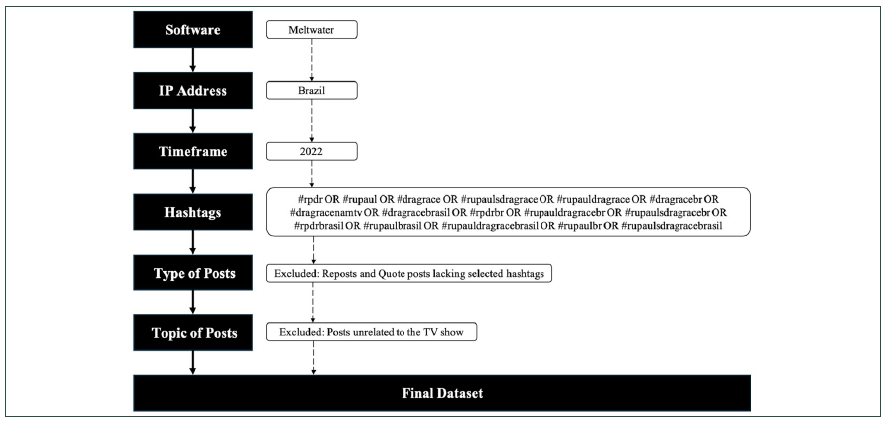 Source: Developed by the authors.
 Source: Developed by the authors.
 Source: Developed by the authors.