 Decolourization Kinetics of Congo Red Using Immobilized and Free Cells of Rhodococcus biphenylivorans
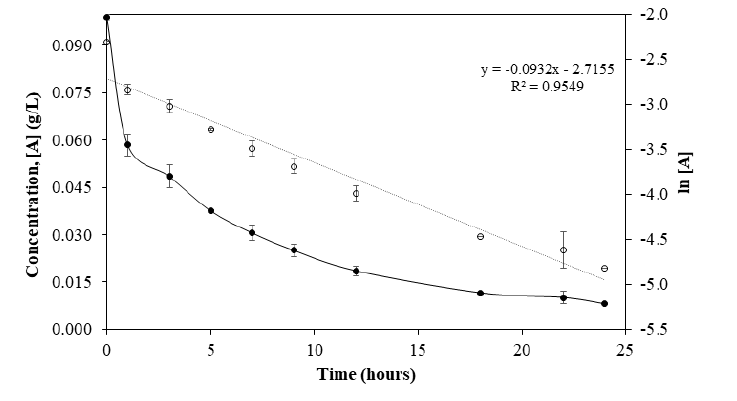
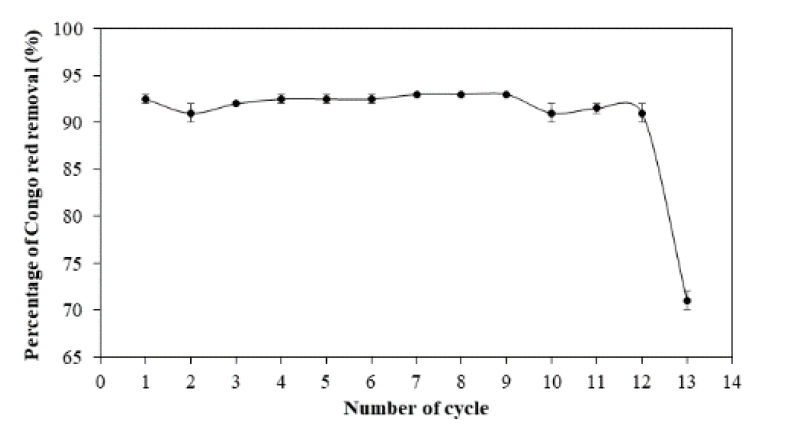
In the present study, a cost-effective and eco-friendly approach is being explored to remove the harmful dye Congo red from synthetic wastewater, using an equatorial strain of Rhodococcus biphenylivorans. The immobilized cells’ Congo red-decolorizing activity in calcium alginate showed an increase of 217% compared to the free cells. By improving the alginate concentration to 4% (w/v), the bead diameter to 3 mm and using 50 beads, a 67% decrease in the time required for complete decolorization was accomplished. Both free and immobilized cells followed first-order kinetics for the elimination of Congo red, with immobilized cells displaying a decolorization rate 3.2 times greater than that of free cells, resulting in an 84% reduction in half-life. The immobilized cells displayed the capability to remove 0.10 g/L Congo red without any significant decline in their efficiency for up to twelve cycles, offering an economic advantage due to their reusability. Examining the decolorized products of Congo red showed no hindrance in the germination of Triticum aestivum and Vigna radiata, indicating the effective removal of all toxic components from the original dye via the biological method. Therefore, this strain has significant potential as a biological agent to eliminate wastewater contaminated with Congo red efficiently.
Keywords:
Congo red; decolorization; immobilization; kinetic study; Rhodococcus biphenylivorans
Immobilized cells increased Congo red-decolorizing activity by 217%.
Immobilized cells removed Congo red efficiently for 12 cycles without decline.
Effective toxic component removal was revealed through a phytotoxicity study.
Rhodococcus discovery boosts local biodiversity for effective bioremediation.
 Thumbnail
 Thumbnail
 Thumbnail