 Genetic transformation of Drosophila willistoni using piggyBac transposon and GFP
Abstract
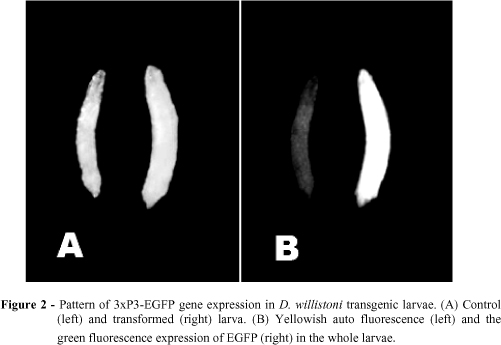
Studies were carried out on the use of piggyBac transposable element as vector and the green fluorescent protein (EGFP) from the jellyfish, Aquorea victoria, as a genetic marker for the transformation of Drosophila willistoni. Preblastoderm embryos of D. willistoni white mutant were microinjected with a plasmid containing the EGFP marker and the piggyBac ITRs, together with a helper plasmid containing the piggyBac transposase placed under the control of the D. melanogaster hsp70 promoter. G0 adults transformants were recovered at a frequency of approximately 67%. Expression of EGFP in larvae, pupae and adults was observed up to the third generation, suggesting that this transposon was not stable in D. willistoni. Transformed individuals displayed high levels of EGFP expression during larvae and adult stages in the eye, abdomen, thorax and legs, suggesting a wide expression pattern in this species than reported to other species of Drosophilidae.
Transposable elements; insect transgenesis; germ-line transformation; fluorescent protein marker; microinjection