 Herbicidal Potential of Combined Essential Oil Nanoemulsions against Megathyrsus maximus (Jacq.) B.K. Simon & S.W.L. Jacobs and Lactuca sativa L.
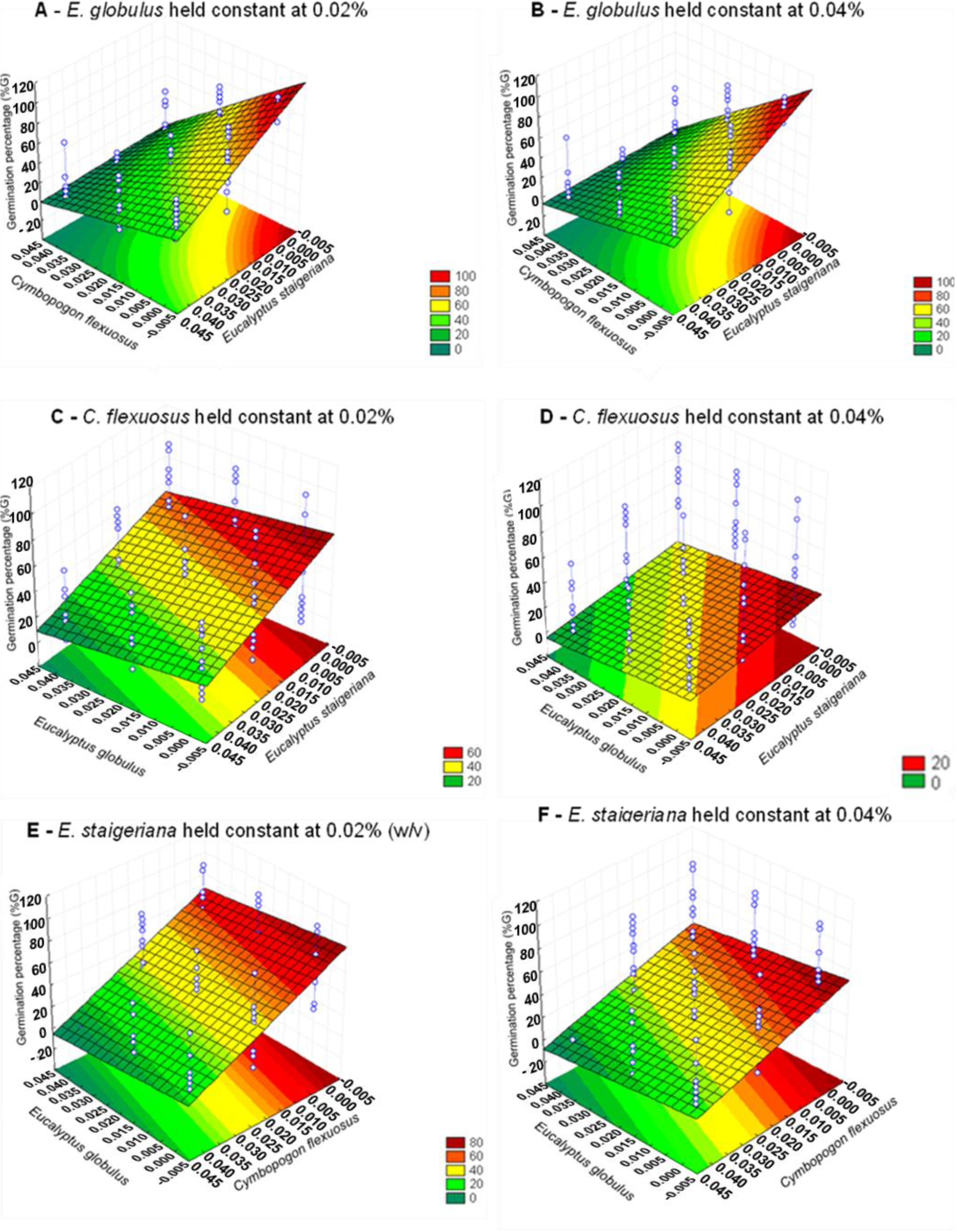
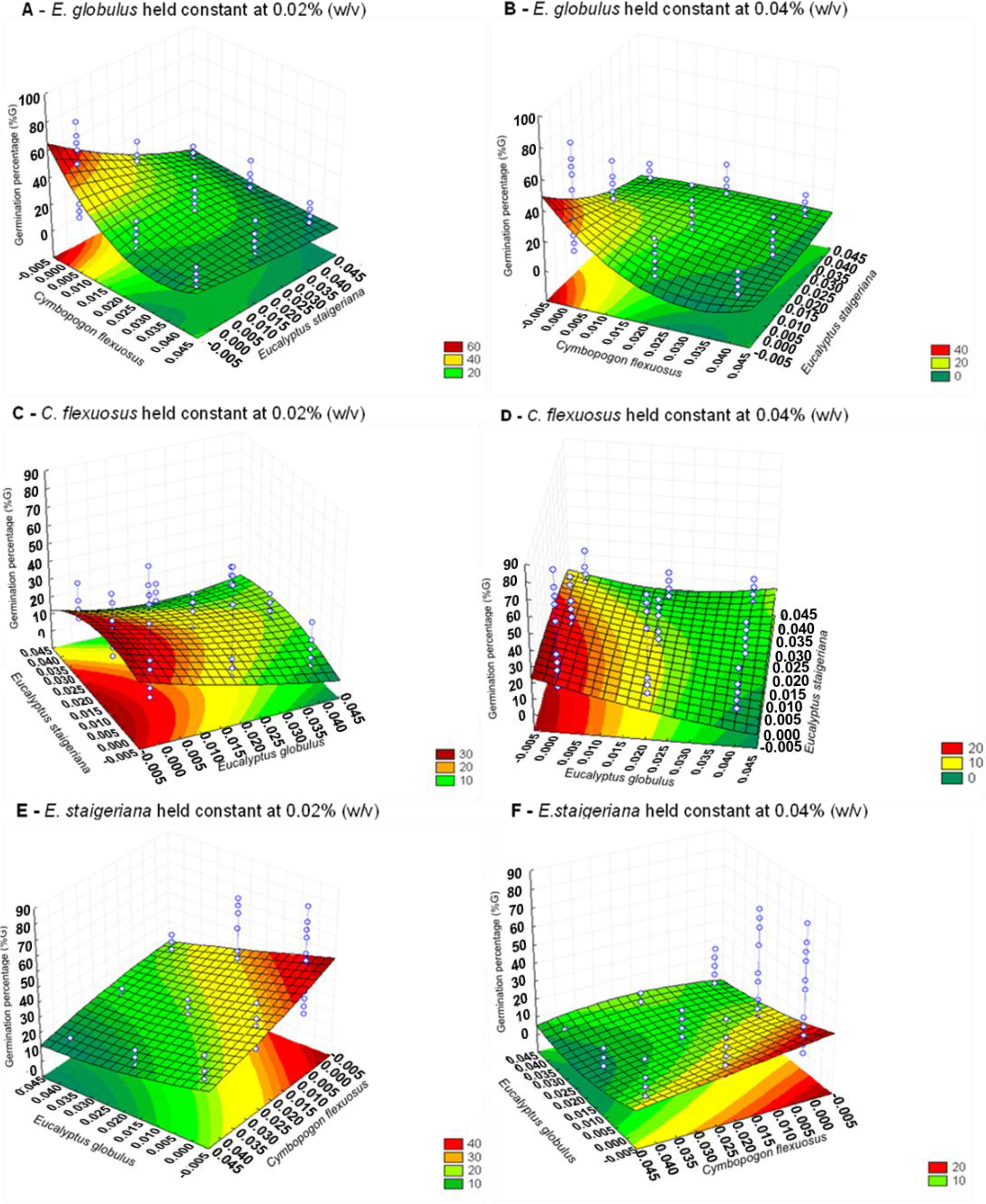
The development of sustainable alternatives to synthetic herbicides has become increasingly important due to environmental and health concerns. This study assessed the herbicidal activity of nanoemulsion (NE) mixtures, emphasizing the combination of distinct essential-oil nanoemulsions under constant surfactant load and multivariate statistical assessment of interaction effects. Nanoemulsions were prepared from seven commercial essential oils (EOs): Eucalyptus globulus, Melaleuca alternifolia, Mentha piperita, Cymbopogon winterianus, Cymbopogon flexuosus, Zingiber officinale, and Eucalyptus staigeriana. The experiments were conducted in two stages to assess effects on Megathyrsus maximus and Lactuca sativa. A structured experimental approach combining Plackett-Burman screening and full factorial optimization was employed to detect and quantify additive interaction effects under controlled formulation. The results for the first stage, all seven NEs were screened using a Plackett-Burman design at 0.03% (w/v), and four formulations were excluded based on lower phytotoxic performance. In the second stage, the three most active NEs were evaluated and optimized using a 33 full factorial design, individually and in combination at 0.02% and 0.04% with the statistical evaluation of the interaction effects. Germination percentage, germination speed index, shoot length, root length and dry mass were analyzed. The NEs of C. flexuosus, E. globulus, and E. staigeriana showed the most pronounced herbicidal effects. The C. flexuosus NE inhibited germination and early growth, but its combination with the other two oils produced stronger inhibition, suggesting an additive interaction, with combined formulations outperforming individual treatments under identical surfactant conditions. These findings indicate that combined NEs are a viable and environmentally sound option for pre-emergent weed control. This work contributes to the area of agricultural technologies, biotechnology and environment by developing and optimizing an essential-oil nanoemulsion-based preemergent bioherbicide as a sustainable alternative.
Keywords:
essential oils; nanoemulsion; weed control; Megathyrsus maximus; bioherbicides; factorial design.
• Formulations of combined essential oil nanoemulsions exhibit significant herbicidal activity.
• In vitro assays confirm strong inhibitory effects on seed germination and seedling growth.
• A specific three-oil mixture demonstrated superior control of Megathyrsus maximus germination.
 Thumbnail
 Thumbnail