Potential reduction of non-imidazolinone rice grain yield by imidazolinone soil residual activity
Abstract
Background Imidazolinone (IMI) soil residual activity can carryover and affect non-tolerant rice growth and grain yield.
Objective This study aimed to determine the IMI soil residual concentration that can potentially reduce non-IMI rice plant height (PH) and grain yield (GY).
Methods Two field experiments in a randomized complete block design were performed to estimate the D10 value (herbicide rate that reduces the rice plant height or grain yield by 10%). The factorial arrangement comprised: A) non-IMI rice (ProvisiaTM, IRGA 417, and IRGA 424); B) rates of imazapyr + imazapic: 0 to 0.25x (x = 147 + 49 g ai ha-1) applied 28 days before non-tolerant rice sowing. IMI concentration analyses were performed through high-performance liquid chromatography coupled to tandem mass spectrometry (HPLC-MS/MS) using soil samples from the 0-20 cm depth on the day of rice sowing. The data (concentration of imazapyr, imazapic and imazapyr + imazapic in the soil) were analyzed via linear regression. The means of imazapyr + imazapic were used to fit PH and GY by a nonlinear mixed-effects model.
Results Imazapyr + imazapic soil concentration ranged from 0 to 10.08 μg kg-1 (Year 1) and 0 to 20.11 μg kg-1 (Year 2). D10 values for PH were 5.20, 4.03, and 4.07 μg kg-1, while D10 values for GY were 4.55, 2.76, and 3.84 μg kg-1 for ProvisiaTM, IRGA 417, and IRGA 424, respectively.
Conclusions The soil concentration of imidazolinones at rice sowing that can reduce grain yield is 2.8 to 4.5 μg kg-1, close to the field applied doses of 3–6%, depending on various environmental and soil factors.
Carryover; Clearfield®; Imazapyr; Imazapic; HPLC-MS/MS
1.Introduction
Imidazolinones (IMI) are one of the five chemical groups of acetolactate synthase (ALS)-inhibiting herbicides in plants and provide a broad control spectrum (grasses, sedges, and broadleaf weeds) at low application rates (Wendeborn et al., 2012; Yu, Powles, 2014). With the launch of IMI-resistant Clearfield® (CL) rice (Oryza sativa L.) in the early 2000s (Sudianto et al., 2013), the use of IMIs became almost essential for rice cultivation (Menezes et al., 2013). The IMI herbicides used in the CL system allowed for selective post-emergence weedy rice control (Oryza spp.) (Burgos et al., 2021), which is one of the most troublesome and persistent weeds in direct-seeded paddy rice fields in America, Asia and Europe (Zhang et al., 2014; Merotto et al., 2016; Dai et al., 2017). However, the evolution of IMI-resistant weedy rice is the primary concern in CL rice fields (Avila et al., 2021).
Currently, IMI-resistant weedy rice occurs in all the main rice-producing countries (Heap, 2024), causing widespread abandonment of paddy fields (Merotto et al., 2016). Herbicide-resistant weeds make chemical control nonviable (Busi et al., 2013). ProvisiaTM rice (PV) was recently released as an alternative, or supplemental technology, to CL rice to sustain rice production (Dauer et al., 2018; Camacho et al., 2019). PV was developed through a mutation in the acetyl coenzyme-A carboxylase (ACCase) gene, which confers resistance to quizalofop-p-ethyl (QPE) (Dauer et al., 2018; Camacho et al., 2019). QPE effectively controls IMI-resistant weedy rice (Lancaster et al., 2018; Rustom et al., 2018). However, PV rice is highly sensitive to residual activity of IMI in soil (Junkes et al., 2022).
IMI residual activity depends mainly on the sorption-desorption process (which affects bioavailability and phytotoxicity) and the persistence of these compounds in the environment (Liu et al., 2018; Marinho et al., 2019; Su et al., 2019). The most widely used IMIs in CL rice include imazethapyr (Fish et al., 2015) and the premix formulation of imazapyr + imazapic (Dilipkumar et al., 2018). The long persistence of these IMIs in the soil matrix (Gianelli et al., 2014; Su et al., 2019) can affect the growth and development of sensitive plants (carryover), reducing the grain yield of non-IMI crops sowed in succession or rotation (Bundt et al., 2015). In fact, up to one year after application, IMI can reduce the grain yield (or yield components) of non-IMI rice by 50% (Marchesan et al., 2010; Junkes et al., 2022).
Herbicide persistence is desired when it results in longer weed control, but it is undesirable when it damages crops sown in succession/rotation (Santos et al., 2014). Thus, the risk of carryover can preclude the direct transition from CL to PV (Junkes et al., 2022). An alternative to avoid IMI carryover in non-IMI rice is to plant tolerant crops in rotation, such as soybean [Glycine max (L.) Merr.] (Dauer et al., 2018; Agostinetto et al., 2018). However, lowland soils, where rice is typically grown, are not entirely conducive to soybean cultivation due to factors such as soil relief and hydromorphism (Sartori et al., 2016), which can hinder the implementation of this strategy. In this case, it is necessary to adopt some agronomic practices that can increase IMI dissipation in the soil (Gehrke et al., 2021) and mitigate non-CL rice damage (Junkes et al., 2022).
Dissipation of IMI herbicides in soil is affected by several factors, such as photodegradation, chemical degradation, hydrolysis, and microbial activity (Refatti et al., 2017). Thus, the IMI half-life (time required for 50% of the herbicidal molecules to dissipate) is variable, ranging from 72–257 days for imazethapyr (National Center for Biotechnology Information, 2023); 37–182 days for imazapyr (Gianelli et al., 2014; Junkes et al., 2022); and 138–364 days for imazapic (Su et al., 2019). These values vary according to the soil clay content, initial concentration, temperature, moisture, pH (Gianelli et al., 2014; Su et al., 2019), and management of the field (Gehrke et al., 2021; Junkes et al., 2022). The half-life of imazapyr, for example, can be as long as 6 months or as short as 42 days in continuous flooding and intermittent water management, respectively (Junkes et al., 2022). Thus, as much as 25.0% or as little as 0.4% of the applied dose can be present in the soil in the following sowing season. However, no research has linked IMI soil concentrations to grain yield reduction in non-IMI rice and the acceptable loss.
Considering that the evolution of IMI-resistant weedy rice has caused the abandonment of some rice fields and assuming a 10% overall crop yield reduction due to weed management failures (Chauhan, 2020), this value may be a plausible loss due to herbicide residue in soil during the transition from CL to PV. However, due to low application rates and its sorption in the soil, it is difficult to extract and quantify the residual IMI. The analysis of IMI in soil at low limits of detection (LOD) and quantification (LOQ) is complex (Ramezani et al., 2010). However, the use of extraction techniques optimized for the analyte and matrix, combined with sensitive and robust analytical instrumentation has shown potential for the determination of IMI waste in the soil (Kemmerich et al., 2015). The development of a QuEChERS (quick, easy, cheap, effective, rugged, and safe) extraction method, using high-performance liquid chromatography-tandem mass spectrometry (HPLC-MS/MS) has enabled advances in IMI analyses and can be used for this purpose (Kemmerich et al., 2015; Marinho et al., 2019).
This work aimed to evaluate the IMI soil residual concentration that can reduce non-tolerant rice plant height and grain yield by 10%.
2.Material and Methods
During the growing seasons 2021-2022 (Year 1) and 2022-2023 (Year 2), field experiments in adjacent areas (Capão do Leão, RS, 31°48’30.8” S, 52°28’50.2” W; and 31°48’27.3” S, 52°28’51.4” W, respectively) were conducted at Centro Agropecuário da Palma. The soil in the area is classified as Haplic Planosol (Empresa Brasileira de Pesquisa Agropecuária, 2013), a silty-loam soil type, with the following chemical properties: water pH = 5.2, ECEC = 5.3 cmolc dm-3, organic matter= 1.79%, clay content = 22%, phosphorus (P) = 8.5 mg dm-3, potassium (K) = 31 mg dm-3 (Year 1); and water pH = 4.9, ECEC = 5.2 cmolc dm-3, organic matter = 1.93%, clay content = 25%, phosphorus (P) = 5.7 mg dm-3, potassium (K) = 35 mg dm-3 (Year 2).
2.1 Dose-response curve
The experiment was performed in a randomized complete block design with four replications – with each plot having 10 m2 (2 x 5 m). The factorial arrangement comprised: 1) non-IMI rice (ProvisiaTM, IRGA 417, and IRGA 424); 2) rates of imazapyr + imazapic (Kifix, 525 + 175 g ai Kg-1, WG): 0, 3.06, 6.12, 12.25, 24.50, and 49 g ai ha-1 (or 0, 0.015, 0.031, 0.062, 0.125 and 0.25x; or 196 g ai ha-1 – maximum field rate), with adjuvant addition of 0.5% (v/v) (Dash® HC, 933 g L-1, EC). The treatments were applied 28 days before rice sowing with a CO2 pressurized sprayer equipped with flat fan nozzles (XR 110.015 model, 0.5 m apart). The application was performed at 250 kPa pressure, delivering 150 L ha-1 of carrier volume. Nozzles were positioned at 0.5 m above the soil surface. The environmental conditions were monitored during applications using a Kestrel® 4500 weather meter.
Rice was planted in both years (2021 and 2022) in November as recommended for the region, by direct dry seeding with a nine-row seeder spaced at 0.17 m. For IRGA 417 and IRGA 424, 90 kg ha-1 of seeds were used; for ProvisiaTM, 45 kg ha-1 of seeds were used. In both cases, 250 kg ha-1 of a 05-20-20 N-P-K fertilizer was applied at rice sowing. Subsequently, 110 kg ha-1 of nitrogen (N) was applied as urea; the first application (50%) was done when seedlings reached the 3–4-leaf stage, and the second (50%) at panicle differentiation (R1). Before rice emergence, pendimethalin at 1,365 g ai ha-1 (Prowl H2O, 455 g ai L-1, CS), glyphosate at 1,500 g a.e. ha-1 (Zapp QI 620, 500 g a.e. L-1, SL) and penoxsulam at 48 g ai ha-1 (Ricer, 240 g ai L-1, CS) were applied. When rice was at 3-4 leaf stage, permanent flood was established. From plant establishment to harvest, the field was inspected, and if necessary, weeds were hand-pulled.
At 35 days after flooding, plant height (PH) was measured from the base to the apex of the completely distended leaf. Rice grains were harvested (area of 3 m2) when grain moisture reached 23%. The samples were threshed and weighed, and a portable device was used to determined grain moisture (Gehaka Agri, G650, Brazil). The rice grain yield (GY) was corrected to 13% moisture and then converted to kg ha-1 (Figure 1).

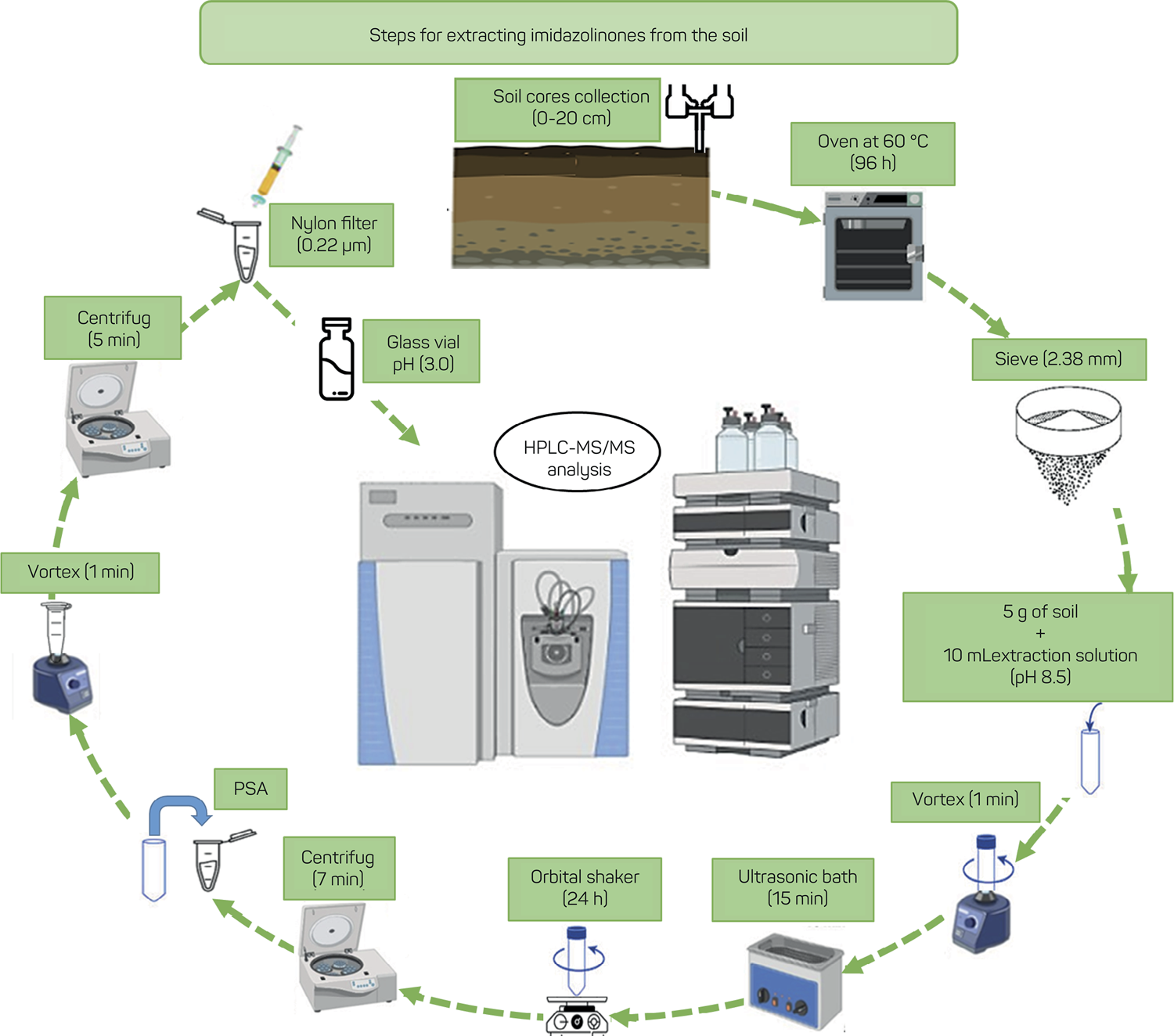
Scheme to evaluate the potential reduction of non-IMI rice (ProvisiaTM, IRGA 417, and IRGA 424) grain yield by imazapyr + imazapic soil residual activity
2.2 Soil sampling and extraction of IMI from the soil
On the day of rice sowing, four soil cores of 0–20 cm depth (Bundt et al., 2010) were randomly collected for each treatment. The subsamples were homogenized into a composite sample. Each composite sample was placed in a forced-air oven set at 60 °C for 96 h. The soil samples were passed through a 2.38 mesh sieve in the next step. The samples were stored in polyethylene bags and kept at -4 °C until IMI extraction.
The IMI extraction was performed according to the procedure developed by Kemmerich et al. (2015), with some adaptations. Initially, 5 g of soil was weighed in a 50 mL polypropylene tube, by adding 10 mL of extracting solution (ultrapure water containing 0.5 mol L-1 ammonium acetate at pH 8.5, adjusted with ammonium hydroxide). The tubes were shaken (vortex mixer – Phoenix Luferco, AP 56, Brazil) for 1 min and then kept in an ultrasonic bath (QuIMI, 03350, Brazil) for 15 min. Subsequently, the tubes were kept in the dark under agitation (orbital shaker – Novatecnica, NT50, Brazil) for 24 h.
Next, the tubes were centrifuged (Heraeus Megafuge 16R, Thermo Scientific, USA) for 7 min (5,000 rpm) at 10 °C. An aliquot of 1.4 mL was transferred to a microcentrifuge tube (1.5 mL) containing 62.5 mg of primary secondary amine (Supelclean™ PSA SPE, Supelco, USA), shaken for 1 min and centrifuged for 5 min (3,500 rpm) at 10 °C. The extract was filtered using a nylon filter syringe with 0.22 μm mesh, 1 mL was transferred to glass vials, and the pH was adjusted to 3.0 with hydrochloric acid (HCL, 6 mol L1 – approximately 83 μL).
2.3 Parameters for detection and quantification of IMI by HPLC-MS/MS
The IMI levels in the soil were determined by high-performance liquid chromatography-tandem mass spectrometry (HPLC-MS/MS), with a Dionex UltiMate 3,000 automatic sampler coupled to a Q-ExactiveTM Focus hybrid Quadrupole-Orbitrap mass analyzer and the data acquisition system using the Trace Finder 4.1 software (Thermo Fisher ScientificTM, USA). The herbicide was separated in an AccucoreTM C18 column (100 mm x 2.1 mm – particle size of 2.6 μm, Thermo Fisher ScientificTM, USA). The mobile phases were: A) an aqueous solution of ammonium formate (5 mM) and formic acid (0.1%); and B) HPLC-grade methanol. The percentage of organic solvent (methanol) was changed: 0.5 min (5%), 2.5 min (100%), 3.0 min (100%), 3.5 min (5%), and 6.0 min (5%); with a flow rate of 0.3 mL min-1 and total chromatographic run time of 6 min. The injection volume was 10 μL, and the column temperature was 40 °C.
The conditions used in MS/MS were electrospray ionization (ESI) in positive mode; ionization energy of 20, 40, and 60 eV; capillary temperature of 350 °C; spray voltage of 4.0 kV; sheath gas flow of 40 L h-1; auxiliary gas flow of 12 L h-1; and resolution of 70,000. For imazapyr, the precursor ion was 262.11862 m/z; and the product ions were 220.07161, 217.09714, 202.06107, and 86.09635 m/z. For imazapic, the precursor ion was 276.13427 m/z, and the product ions were 234.08737, 231.11288, 216.07684, and 86.09639 m/z. The retention time and fragmentation profile were used to confirm the IMI compounds in the soil samples.
For IMI quantification, a calibration curve with analytical standards (Sigma-Aldrich) for imazapyr (99.5% purity – CAS number 81334-34-1) and imazapic (99.9% purity – CAS number 104096-48-8) were used at 0.1, 0.2, 1.0, 5.0, 10.0, 15.0, 20.0 and 25.0 μg L-1 (using soil extract without herbicide – blank soil sample) – equivalent to 0.2, 0.4, 2.0, 10.0, 20.0, 30.0, 40.0, and 50.0 μg Kg-1 (conversion factor of 2x). Linearity was evaluated with an acceptance coefficient of determination (r2) ≥ 0.99. Accuracy was determined by recovery assays (acceptability of 70–120%), by spiking blank soil samples at 0.3, 0.5, 5.0, and 10.0 μg Kg-1 with three replicates (n = 3), and the precision was evaluated through the relative standard deviation (RSD% ≤ 20). The LOQ was obtained by the lowest fortified concentration that presented acceptable accuracy and precision values. The limit of detection (LOD) was obtained by dividing the LOQ by 3.33 (Kemmerich et al., 2015).
2.4 Statistical analyses
The field data were analyzed using the R program (R Core Team, 2019). Each IMI (imazapyr or imazapic) individually and their sum (imazapyr + imazapic) were evaluated. A mixed-effects multi-factor ANOVA model (with blocks as random effects) was used to distinguish doses, non-IMI rice, and years using the lme4 package. The homogeneity of variance and normal distribution of the measurement errors were graphically evaluated by plotting the distribution of residuals against the fitted value and by normal q-q plot, illustrating whether the residuals were normally distributed, respectively. The lmer and Anova functions indicated the interaction between doses and years (F test < 0.05) – data not shown. Thus, the IMI was fitted by doses and years (joining rice data) via linear regression (Equation 1). The summary function was used to assess whether parameters were significant (P < 0.05) and to estimate the standard errors and the adjusted r-squared (r2) (Kniss, Streibig, 2024).
where Y is IMI soil concentration (μg Kg-1); a is the intercept of the regression line (predicted value when x = 0); b is the slope of the regression line; x = IMI soil applied (g ai ha-1).
The mean values of imazapyr plus imazapic (μg Kg-1– Year 1 and Year 2) were used to fit the raw data of PH and GY. The medrc and drc packages were used to adjust dose-response curves by the nonlinear mixed-effects (NLME) model, assuming a three-parameter log-logistic equation with a separate set of b, d, and D50 for each non-IMI rice variety (Equation 2). Individual effects were included in these parameters by the metadrm function – cid2 (individual curves) and ind (as a factor containing the between-curve grouping of the data).
where Y is the PH (cm) or GY (kg ha-1) reduction; D50 is the dose that causes 50% PH or GY reduction; d is the upper limit; and b is the slope around e (Ritz et al., 2019).
The metadrm (drm and summary functions) estimated the parameters, their standard errors, and the parameters’ significance (P < 0.05). D10 (the dose that causes 10% in PH or GY reduction) was estimated by ED function (95% confidence intervals). The variance homogeneity and normally distributed errors were evaluated as mentioned above. We fit a joint model based on the entire dataset (% relative to the untreated control) to create the figures and test the model’s goodness of fit (when not significant, the regression describes the variation of data similar to ANOVA).
3.Results and Discussion
3.1 Parameters for detection and quantification of IMI by HPLC-MS/MS
The extraction method and analysis by HPLC-MS/MS were efficient for determining the IMI content in the soil (Figure 2). Proper separation with retention times of 3.52 min and 3.70 min was achieved for imazapyr and imazapic, respectively (Figure 3). Linearity showed acceptable values (r2 ≥ 0.99) in all analyses, in the range of 0.1-25 μg ai L1 (data not shown). Furthermore, the recovery assays resulted in acceptability values (70-120%) for each compound, with RSD ≤ 20% (Figure 4). Thus, the LOQ obtained was 0.3 μg Kg-1, and the LOD was 0.09 μg Kg-1.


Chromatogram of imazapyr (a) and imazapic (b) of a standard solution at 5 μg L-1 by HPLC-MS/MS, with retention time (min) and precursor ion (m/z)

Recovery and relative standard deviation (RSD%) for “blank” samples spiked with imazapyr (a) and imazapic (b) at 0.3, 0.5, 5.0, and 10 μg kg soil−1 (n = 3)
Liquid chromatography with tandem mass spectrometry is a viable technique for the analysis of residual compounds due to its sensitivity and robustness (Martins et al., 2014; Marinho et al., 2019). Because it can separate and identify the analytes present in the sample and subsequently quantify even very low concentrations. HPLC-MS/MS has been increasingly used in different areas of science (Snyder et al., 2010; Coskun, 2016). Despite the analytical advantages of this technique, factors such as the extraction process and the sample matrix effect during the analysis were limited to obtaining low LOQ/LOD. The IMI extraction process requires using a suitable soil extract, clean-up, and alkalinization of the extraction solution (Kemmerich et al., 2015).
The alkalinization of the extraction solution is due to the adsorption of herbicides on soil particles, which determines their distribution in the solution and the soil matrix (Wauchope et al., 2002). Most agricultural soils have a net negative charge, resulting in repulsive forces and low adsorption of anions (Reginato et al., 1997). Imazapyr and imazapic are weak acids and have a carboxylic functional group (COOH) (Tan et al., 2005; Kemmerich et al., 2015). The acid dissociation constant values (pKa, which represents the pH-value at which 50% of the molecules are in the molecular form and 50% in the dissociated form) of these herbicides are 3.6 (imazapyr) and 3.9 (imazapic). Depending on the pH of the medium, they occur in cationic or anionic forms (Kemmerich et al., 2015). At pH values greater than 6.0, both imazapyr and imazapic are predominantly anionic (COO-) (Kraemer et al., 2009). In the present study, alkalinization was carried out with a buffer of 0.5 mol L-1 of ammonium acetate at pH 8.5 for the effective extraction of IMI strongly adsorbed to the soil.
Rice fields have a more acidic soil pH (Junkes et al., 2022) and thus allow for greater adsorption of imidazolinone herbicides, due to the occurrence of the molecular form (COOH) in these soil pH conditions. Indeed, in the present study, the soil pH values were 5.2 (Year 1) and 4.9 (Year 2). Thus, adjusting the extraction solution to pH 8.5 enables the alkalinization of the medium, favoring the extraction of IMI for more assertive quantification. This occurs because these herbicides are repelled by the negative charges of the soil in anionic form (COO-) and remain in higher concentrations in the solution (Aichele, Penner, 2005; Kraemer et al., 2009).
Another factor that enabled the analysis of very low concentrations of IMI in the soil was the increase in proportion between extraction solution:soil (2:1) and the incubation time with agitation (24 h). Water is a competitor for soil adsorption site, and the chemicals are released when the soil is re-wetted, but time is required for molecules to diffuse either toward or away from the soil surface (Wauchope et al., 2002). Thus, using instrumentation with high resolution and sensitivity combined with adopting QuEChERS methods has enabled advances in IMI analyses (Martins et al., 2014; Kemmerich et al., 2015; Marinho et al., 2019). Consequently, it was possible to obtain LOQ and LOD values at low levels, such as those found in this study.
3.2 Concentration of IMI in the soil
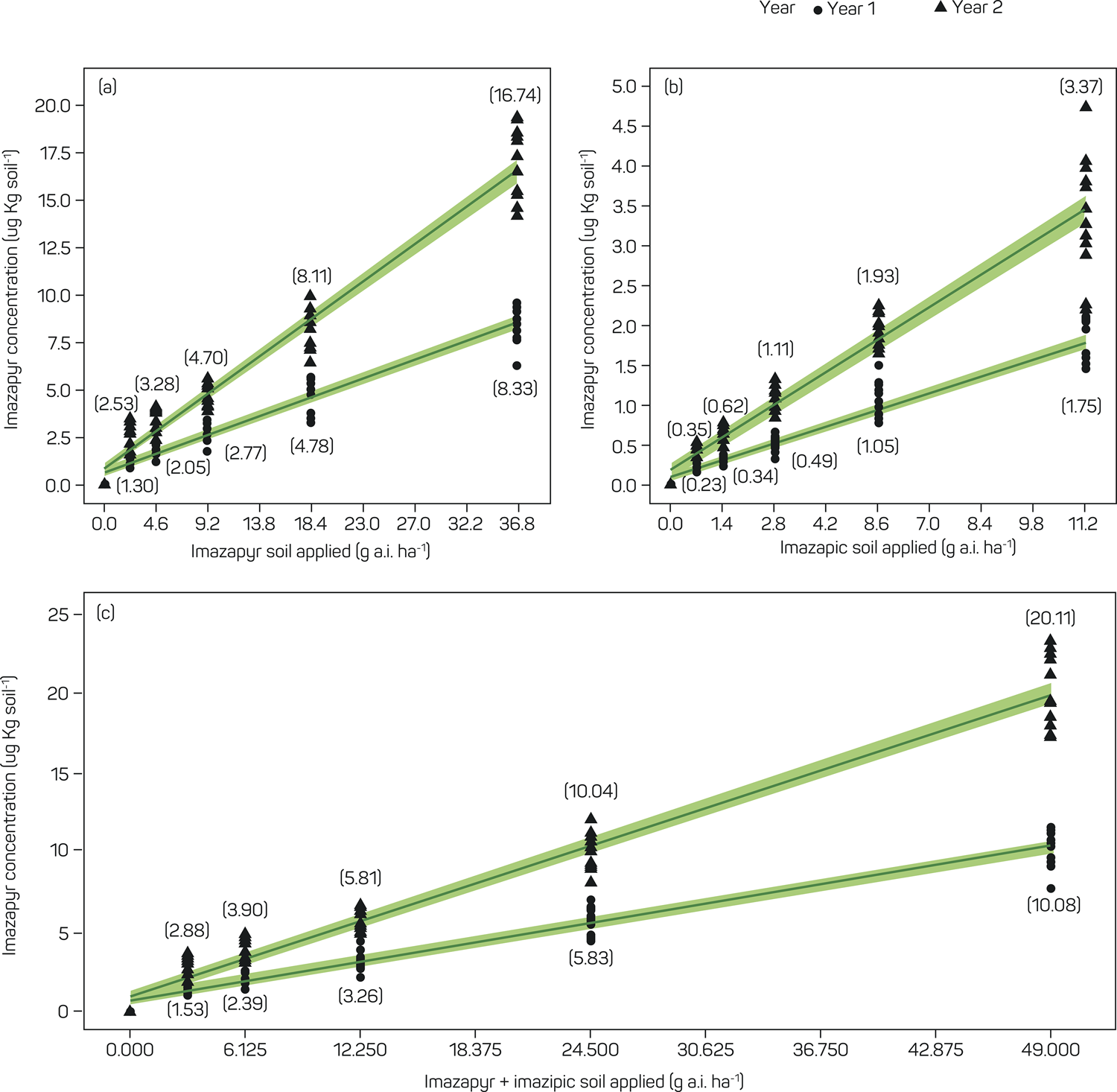
The low values of LOQ and LOD obtained using the HPLC-MS/MS method allowed us to evaluate the IMI rates (sub-doses) applied in the field. The IMI (imazapyr or imazapic, and the sum of both) concentrations in the topsoil (0-20 cm depth) profile (μg Kg-1) differed between years and increased linearly in response to soil application rates (Table 1). For imazapyr, the mean values ranged from 0 to 8.33 μg Kg-1 and 0 to 16.74 μg Kg-1 in year 1 and year 2, respectively (Figure 5a). For imazapic, the mean values ranged from 0-1.75 μg Kg-1 (year 1) and 0-3.37 μg Kg-1 (year 2) (Figure 5b). Thus, the mean values for the sum of imazapyr plus imazapic were 0-10.08 μg Kg-1 and 0-20.11 μg Kg-1 for years 1 and 2, respectively (Figure 5c).
Estimated parameters (a and b – with standard error in parentheses) and adjusted r-squared (r2) by linear regression 1, based on the soil concentration of imazapyr, imazapic and imazapyr + imazapic (μg Kg soil-1) as a function of imazapyr + imazapic soil applied (g ai ha-1) on the rice sowing day.
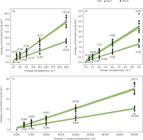
Observed (⚫ and ▴) and predicted (line) values for the soil concentration up to 20 cm depth (μg Kg soil-1) of imazapyr (a), imazapic (b), and imazapyr + imazapic (c) as a function of imazapyr + imazapic soil applied (g ai ha-1) on the rice sowing day. Values in parentheses are the averages of each rate (n = 12)
One day after application of imazapyr plus imazapic (147 + 49 g ai ha-1) in CL rice, we found up to 50.00 and 6.90 μg kg-1 (sum of 56.90 μg kg-1) of these compounds in the soil profile, respectively (Junkes et al., 2022). These values are close to the inter-year average rate of 25% (or 15.09 μg kg-1) applied in the present study. Differences in environmental conditions and soil properties can explain the differences between the doses across years. IMI is mainly degraded by soil aerobic microbial activity (Gehrke et al., 2021), which is directly associated with soil conditions and adsorption process (Su et al., 2019), which in turn affect the bioavailability of these compounds (Liu et al., 2018; Marinho et al., 2019). Thus, depending on the environment and the management of the field, the IMI half-life can vary by more than 400% (Junkes et al., 2022). Furthermore, imazapic can reach deeper into the soil profile (Bundt et al., 2014), explaining the non-ratio of 3:1 found in the 0-20 cm layer.
3.3 Dose-response curve
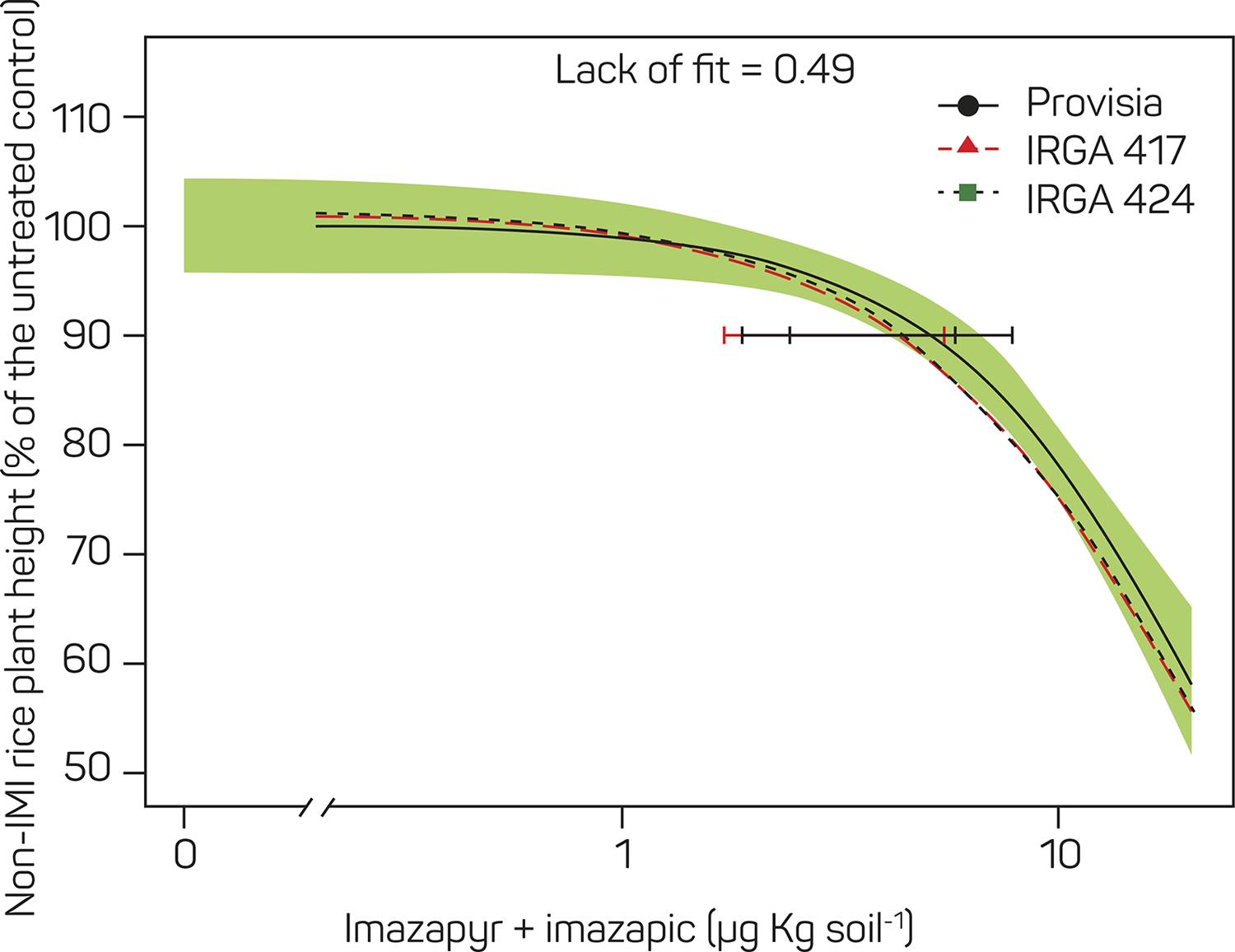
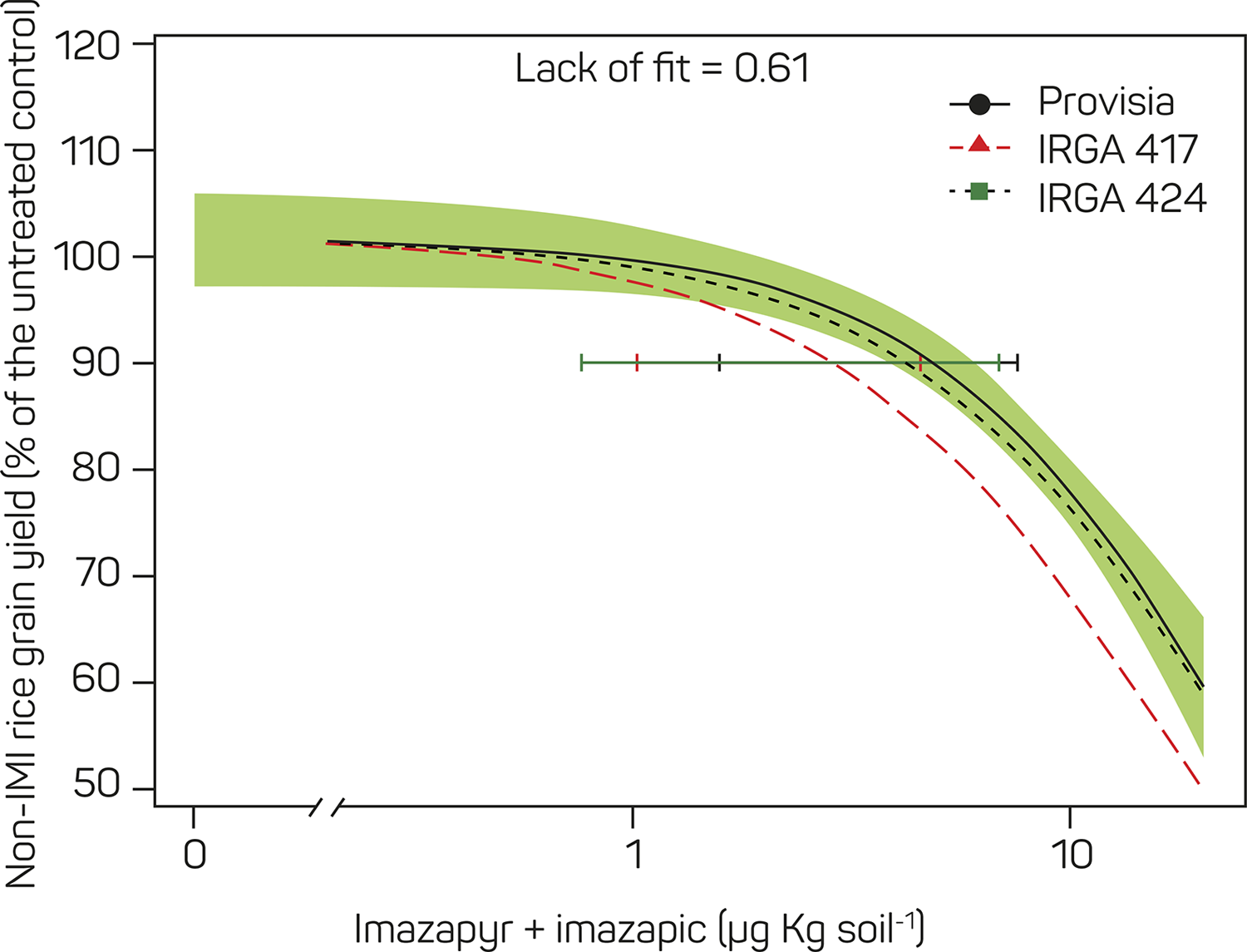
The PH and GY reductions showed sigmoidal behavior as a function of increasing concentrations of imazapyr + imazapic in the soil, indicating no differences among rice cultivars. The D10 values for PH were 5.20, 4.03, and 4.07 μg kg-1 for ProvisiaTM, IRGA 417, and IRGA 424, respectively (Table 2; Figure 6). For grain yield, these values were 4.55, 2.76, and 3.84 μg kg-1 for ProvisiaTM, IRGA 417, and IRGA 424, respectively (Table 3, Figure 7).

Adjusted values (% relative to untreated control) for non-IMI rice plant height (ProvisiaTM (⚫), IRGA 417 (▴), and IRGA 424 (◼)) as a function of imazapyr + imazapic (μg Kg soil-1) soil concentration up to 20 cm depth, with confidence interval by the joint model based on the entire dataset. The horizontal bar represents the 95% confidence interval to obtain 10% plant height reduction (D10)

Adjusted values (% relative to untreated control) for non-IMI rice grain yield (ProvisiaTM (⚫), IRGA 417 (▴), and IRGA 424 (◼)) as a function of imazapyr + imazapic (μg Kg soil-1) soil concentration up to 20 cm depth, with confidence interval by the joint model based on the entire dataset. The horizontal bar represents the 95% confidence interval to obtain 10% grain yield reduction (D10)
As discussed before, the adsorption process also influences the IMI phytotoxicity (Gianelli et al., 2014; Liu et al., 2018). At typical soil pH values (Gianelli et al., 2014), these compounds are in anionic forms (around 94% at pH 5 – a pH value close to the present study), are weakly adsorbed in the soil and can be translocated easily in plants (Sondhia et al., 2015). Indeed, the IMI phytotoxicity to rice increases as soil pH increases, indicating that the adsorption process is the main factor (Liu et al., 2018). Furthermore, when the rice crop is grown in continuous flooding conditions, the herbicide is solubilized, i.e., optimizing uptake by the plants (Junkes et al., 2022).
In the soil, IMI can be absorbed by plant roots via ion trapping, translocated to the shoot (Little et al., 1994), and interfere with the ALS activity of susceptible plants. ALS is the first enzyme in the biosynthesis route of branched-chain amino acids (BCAAs – valine, leucine, and isoleucine) (Garcia et al., 2017). In susceptible plants, the IMI binds to a domain that crosses the entrance of the catalytic site, preventing the substrate from connecting to it and interfering with amino acid synthesis (Duggleby et al., 2008). Multiple hypotheses have been proposed for the mechanism of susceptible plant mortality by ALS-inhibiting herbicides. However, it is known that BCAA depletion causes a decline in protein synthesis, which in turn affects cell division (mitosis) and DNA synthesis (Zhou et al., 2007) and interferes with regular plant growth and development (Bzour et al., 2018).
Our findings corroborate the factors mentioned above, revealing a reduction in the PH of non-IMI rice as a function of increased soil concentrations of imazapyr + imazapic. Ruzmi et al. (2020) reported that only 1.7 nM is needed to achieve 50% inhibition of rice ALS activity in vitro for both herbicides – i.e., IMI can affect the rice plant growth even at low concentrations. For rice, certain agronomic traits, such as PH, influence grain yield (Zhang et al., 2017; Li et al., 2019). Indeed, to reach high crop yields, a proper plant architecture is required, often defined by PH (Xue et al., 2008). PH is closely related to biomass production and directly impacts rice grain yield (Zhang et al., 2017). Thus, the observed reduction in plant height can also explain the grain yield reduction found in this study.
In a previous study of a Clearfiled® rice system 306 days after application of , imazapyr concentrations of 6.49 μg kg-1 and 1.87 μg kg-1of imazapic were detected (Junkes et al., 2022). That study considered only 0-10 cm layer of soil. About one year after application, the IMI may have leached into the soil profile (Refatti et al., 2017). Damage to rice typically occurs IMI residue at depths up to 20 cm below the soil surface (Bundt et al., 2010). The said study confirmed that residual activity exists and that the sum of imazapyr + imazapic (8.36 μg kg-1) can reduce non-IMI rice grain yield components, including the number of stems (67%) and the shoot dry weight (43%), compared to plants grown in an area without herbicide residue (Junkes et al., 2022). Thus, residual IMI herbicide in soil is a hidden threat to yield of susceptible rice.
The IMI fate (sorption-desorption, bioavailability, phytotoxicity, and persistence) in the soil is mainly determined by soil pH (Aichele, Penner, 2005; Kemmerich et al., 2015; Sondhia et al., 2015; Liu et al., 2018; Marinho et al., 2019; Su et al., 2019). The adsorption process depends on several other factors, such as organic matter, soil texture (clay content), moisture, and temperature (Kraemer et al., 2009; Gianelli et al., 2014; Su et al., 2019; Gerhke et al., 2021). Thus, the potential damage that soil residual activity of IMI can cause to non-IMI crops is environment-specific. In the present study, the potential to reduce non-IMI rice grain yield by 10% occurred at 2.8 to 4.5 μg kg-1, close to the applied doses of 3-6%. The IMI residue that can remain in paddy rice field (Junkes et al., 2022) is above the acceptable reduction and should be avoided in areas where residual activity occurs.
It is known that some agronomic practices can increase the degradation of IMI in the soil, such as drainage, liming, soil tillage, use of cover crops (Gehrke et al., 2021), and intermittent flooding (Junkes et al., 2022). These factors can mitigate damage to the susceptible crop. Thus, having a reference concentration value for the potential damage that the IMI residual activity can cause to rice is fundamental. However, organic chemicals, in general, are absorbed by plant roots from water in soil pores, and bioavailability has been estimated using pore water concentrations, which are the effective soil concentrations (Liu et al., 2018). The alkaline method used to extract IMI did not allow us to evaluate the bioavailability, and the low application rates made this task almost impossible.
In our research, we developed and validated a robust analytical technique for assessing the presence of imidazolinone (IMI) herbicides in soil at very low concentrations, which was not tenable previously. Further, we evaluated the impact residual IMI herbicides on the productivity of non-IMI rice. The methods introduced in this study offer validated tools for the precise analysis of IMI levels in soil, facilitating improved monitoring and research in rice-producing areas. These advancements enable the immediate tracking of IMI residual concentrations following application and especially following harvest. Specifically, our methods 1) support residual monitoring in Clearfield (CL) rice cultivation areas with varying histories of IMI use, 2) allow for pre-planting soil analysis to assess potential productivity losses in non-IMI rice, and 3) aid in decision-making for transitioning from CL to non-IMI rice cultivation.
4.Conclusions
Our results demonstrated that the concentration of IMI in soil at rice sowing that can reduce grain yield by 10% was above 2.8 μg kg-1.
Acknowledgments
We thank the Weed Science Research Group (CEHERB – UFPel) for the support and discussions of this research. We also thank BASF Corporation for the opportunity to work with the ProvisiaTM Rice system.
References
-
Agostinetto D, Fraga DS, Vargas L, Oliveira ACB, Andres A, Villela FA. Response of soybean cultivars in rotation with irrigated rice crops cultivated in Clearfield ® system. Planta Daninha. 2018;36:1-9. Available from: https://doi.org/10.1590/s0100-83582018360100048
» https://doi.org/10.1590/s0100-83582018360100048 -
Aichele TM, Penner D. Adsorption, desorption, and degradation of imidazolinones in soil. Weed Technol. 2005;19(1):154-9. Available from: https://doi.org/10.1614/WT-04-057R
» https://doi.org/10.1614/WT-04-057R -
Avila LA, Marchesan E, Camargo ER, Merotto A Jr., Ulguim AR, Noldin JA et al. Eighteen years of Clearfield™ rice in Brazil: what have we learned? Weed Sci. 2021;69(1):1-40. Available from: https://doi.org/10.1614/WT-04-057R
» https://doi.org/10.1614/WT-04-057R -
Bundt ADC, Avila LA, Agostinetto D, Nohatto M, Vargas HC. Carryover of imazethapyr + imazapic on ryegrass and non-tolerant rice as affected by thickness of soil profile. Planta Daninha. 2015;33(3):357-64. Available from: https://doi.org/10.1590/0100-83582015000200022
» https://doi.org/10.1590/0100-83582015000200022 -
Bundt ADC, Avila LA, Agostinetto D, Nohatto MA, Souto KM, Senseman SA. [Depth of placement of the herbicide imazethapyr + imazapic in soil profile on non-tolerant rice injury]. Cienc Rural. 2010;40(9):1867-73. Portuguese. Available from: https://doi.org/10.1590/S0103-84782010000900003
» https://doi.org/10.1590/S0103-84782010000900003 -
Bundt ADC, Avila LA, Agostinetto D, Refatti JP, Cassol L, Rockemback FC. [Imidazolinone leaching in response to different irrigation management on rice cultivated soil]. Cienc Rural. 2014;44(11):1943-9. Portuguese. Available from: https://doi.org/10.1590/0103-8478cr20131216
» https://doi.org/10.1590/0103-8478cr20131216 -
Burgos NR, Sudo MPS, Olsen KM, Werle I, Song B-K. Weedy rice ( Oryza spp.): what's in a name? Weed Sci. 2021;69(5):505-13. Available from: https://doi.org/10.1017/wsc.2021.22
» https://doi.org/10.1017/wsc.2021.22 -
Busi R, Vila-Aiub MM, Beckie HJ, Gaines TA, Goggin DE, Kaundun SS et al. Herbicide-resistant weeds: from research and knowledge to future needs. Evol Appl. 2013;6(8):1218-21. Available from: https://doi.org/10.1111/eva.12098
» https://doi.org/10.1111/eva.12098 -
Bzour MI, Zuki FM, Mispan MS. Introduction of imidazolinone herbicide and Clearfield ® rice between weedy rice: control efficiency and environmental concerns. Environ Rev. 2018;26(2):181-98. Available from: https://doi.org/10.1139/er-2017-0096
» https://doi.org/10.1139/er-2017-0096 -
Camacho JR, Linscombe SD, Sanabria Y, Mosquera PA, Oard JH. Inheritance of Provisia TM rice resistance to quizalofop-p-ethyl under laboratory and greenhouse environments. Euphytica. 2019:215:1-9. Available from: https://doi.org/10.1007/s10681-019-2407-4
» https://doi.org/10.1007/s10681-019-2407-4 -
Chauhan BS. Grand challenges in weed management. Front Agron. 2020;1:1-4 Available from: https://doi.org/10.3389/fagro.2019.00003
» https://doi.org/10.3389/fagro.2019.00003 -
Coskun O. Separation techniques: chromatography. North Clin Istanb. 2016;3(2):156-60. Available from: https://doi.org/10.14744/nci.2016.32757
» https://doi.org/10.14744/nci.2016.32757 -
Dai L, Song X, He B, Valverde BE, Qiang S. Enhanced photosynthesis endows seedling growth vigour contributing to the competitive dominance of weedy rice over cultivated rice. Pest Manag Sci. 2017;73(7):1410-20. Available from: https://doi.org/10.1002/ps.4471
» https://doi.org/10.1002/ps.4471 -
Dauer J, Hulting A, Carlson D, Mankin L, Harden J, Mallory-Smith C. Gene flow from single and stacked herbicide-resistant rice ( Oryza sativa ): modeling occurrence of multiple herbicide-resistant weedy rice. Pest Manag Sci. 2018;74(2):348-55. Available from: https://doi.org/10.1002/ps.4711
» https://doi.org/10.1002/ps.4711 -
Dilipkumar M, Burgos NR, Chuah TS, Ismail S. Cross-resistance to imazapic and imazapyr in a weedy rice ( Oryza sativa ) biotype found in Malaysia. Planta Daninha. 2018;36:1-10. Available from: https://doi.org/10.1590/S0100-83582018360100058
» https://doi.org/10.1590/S0100-83582018360100058 -
Duggleby RG, McCourt JA, Guddat LW. Structure and mechanism of inhibition of plant acetohydroxyacid synthase. Plant Phys Biochem. 2008;46(3):309-24. Available from: https://doi.org/10.1016/j.plaphy.2007.12.004
» https://doi.org/10.1016/j.plaphy.2007.12.004 - Empresa Brasileira de Pesquisa Agropecuária - Embrapa. [Brazilian soil classification system]. Brasília: Empresa Brasileira de Pesquisa Agropecuária; 2018. Portuguese.
-
Fish JC, Webster EP, Blouin DC, Bond JA. Imazethapyr co-application interactions in imidazolinone-resistant rice. Weed Technol. 2015;29(4):689-96. Available from: https://doi.org/10.1614/WT-D-15-00030.1
» https://doi.org/10.1614/WT-D-15-00030.1 -
Garcia MD, Nouwens A, Lonhienne TG, Guddat LW. Comprehensive understanding of acetohydroxyacid synthase inhibition by different herbicide families. Proc Natl Acad Sci USA. 2017;114(7):E1091-100. Available from: https://doi.org/10.1073/pnas.1616142114
» https://doi.org/10.1073/pnas.1616142114 -
Gehrke VR, Fipke MV, Avila LA, Camargo ER. Understanding the opportunities to mitigate carryover of imidazolinone herbicides in lowland rice. Agriculture. 2021;11(4):1-17. Available from: https://doi.org/10.3390/agriculture11040299
» https://doi.org/10.3390/agriculture11040299 -
Gianelli VR, Bedmar F, Costa JL. Persistence and sorption of imazapyr in three Argentinean soils. Environ Toxicol Chem. 2014;33(1):29-34. Available from: https://doi.org/10.1002/etc.2400
» https://doi.org/10.1002/etc.2400 -
Heap I. International herbicide-resistant weed database. Weescience. 2024[access Apr 15, 2024]. Available from: http://www.weedscience.org/Pages/Species.aspx
» http://www.weedscience.org/Pages/Species.aspx -
Junkes GV, Avila LA, Kemmerich M, Gehrke VR, Fipke MV, Camargo ER. Imidazolinone herbicide dissipation in rice fields as affected by intermittent and continuous irrigation. Adv Weed Sci. 2022;40:1-11. Available from: https://doi.org/10.51694/AdvWeedSci/2022;40:00006
» https://doi.org/10.51694/AdvWeedSci/2022;40:00006 -
Kemmerich M, Bernardi G, Adaime MB, Zanella R, Prestes OD. A simple and efficient method for imidazolinone herbicides determination in soil by ultra-high performance liquid chromatography-tandem mass spectrometry. J Chromatogr A. 2015;1412:82-9. Available from: https://doi.org/10.1016/j.chroma.2015.08.005
» https://doi.org/10.1016/j.chroma.2015.08.005 -
Kniss A, Streibig J. Statistical analysis of agricultural experiments using R. RStats4AG. 2018[access Apr 15, 2024]. Available from: https://rstats4ag.org/
» https://rstats4ag.org/ -
Kraemer AF, Marchesan E, Avila LA, Oliveira MSL. [Environmental fate of imidazolinone herbicides: a review]. Planta Daninha. 2009;27(3):629-39. Portuguese. Available from: https://doi.org/10.1590/S0100-83582009000300025
» https://doi.org/10.1590/S0100-83582009000300025 -
Lancaster ZD, Norsworthy JK, Scott RC. Evaluation of quizalofop-resistant rice for Arkansas rice production systems. Int J Agron. 2018;1-8. Available from: https://doi.org/10.1155/2018/6315865
» https://doi.org/10.1155/2018/6315865 -
Li R, Li M, Ashraf U, Liu S, Zhang J. Exploring the relationships between yield and yield-related traits for rice varieties released in China from 1978 to 2017. Front Plant Sci. 2019;10:1-12. Available from: https://doi.org/10.3389/fpls.2019.00543
» https://doi.org/10.3389/fpls.2019.00543 -
Little DL, Shaner DL, Ladner DW, Tecle B, Ilnicki RD. Root absorption and translocation of 5-substituted analogs of the imidazolinone herbicide, imazapyr. Pestic Sci. 1994;41(3):161-9. Available from: https://doi.org/10.1002/ps.2780410302
» https://doi.org/10.1002/ps.2780410302 -
Liu K, He Y, Xu S, Hu L, Luo K, Liu X et al. Mechanism of the effect of pH and biochar on the phytotoxicity of the weak acid herbicides imazethapyr and 2,4-D in soil to rice ( Oryza sativa ) and estimation by chemical methods. Ecotoxicol Eviron Safety. 2018;161:602-9. Available from: https://doi.org/10.1016/j.ecoenv.2018.05.096
» https://doi.org/10.1016/j.ecoenv.2018.05.096 -
Marchesan E, Santos FM, Grohs M, Avila LA, Machado SLO, Senseman AS et al. Carryover of imazethapyr and imazapic to nontolerant rice. Weed Technol. 2010;24(1):6-10. Available from: https://doi.org/10.1614/WT-08-153.1
» https://doi.org/10.1614/WT-08-153.1 -
Marinho MIC, Costa AIG, Vieira NM, Paiva MCG, Freitas FCL, Silva AA. Validation and application of a QuEChERS based method for estimation of half-life of imidazolinone herbicides in soils by LC-ESI-MS/MS. Ecotoxicol Eviron Safety. 2019;167:212-7. Available from: https://doi.org/10.1016/j.ecoenv.2018.09.075
» https://doi.org/10.1016/j.ecoenv.2018.09.075 -
Martins GL, Friggi CA, Prestes OD, Vicari MC, Friggi DA, Adaime MB. Simultaneous LC-MS/MS determination of imidazolinone herbicides together with other multiclass pesticide residues in soil. Clean. 2014;42(10):1441-9. Available from: https://doi.org/10.1002/clen.201300140
» https://doi.org/10.1002/clen.201300140 -
Menezes VG, Mariot CHP, Kalsing A, Freitas TFS, Grohs DS. [Association of glyphosate and imidazolinones on red rice control in Clearfield™ rice]. Cienc Rural. 2013;43(12):2154-9. Portuguese. Available from: https://doi.org/10.1590/S0103-84782013001200006
» https://doi.org/10.1590/S0103-84782013001200006 -
Merotto AJR, Goulart ICGR, Nunes AL, Kalsing A, Markus C, Menezes VG et al. Evolutionary and social consequences of introgression of nontransgenic herbicide resistance from rice to weedy rice in Brazil. Evol Appl. 2016;9(7):837-46. Available from: https://doi.org/10.1111/eva.12387
» https://doi.org/10.1111/eva.12387 -
National Center for Biotechnology Information - NCBI. 12.2.9 Environmental Biodegradation. Pub Chem Database Imazethapyr. 2023[access Jun 15, 2023]. Available from: https://pubchem.ncbi.nlm.nih.gov/compound/Imazethapyr #section=Environmental-Biodegradation
» https://pubchem.ncbi.nlm.nih.gov/compound/Imazethapyr #section=Environmental-Biodegradation -
R Core Team. R: A language and environment for statistical computing. Vienna: R Foundation for Statistical Computing; 2019. Available from: https://www.R-project.org/
» https://www.R-project.org/ -
Ramezani MK, Oliver DP, Kookana RS, Lao W, Gill G, Preston C. Faster degradation of herbicidally-active enantiomer of imidazolinones in soils. Chemosphere. 2010;79(11):1040-5. Available from: https://doi.org/10.1016/j.chemosphere.2010.03.046
» https://doi.org/10.1016/j.chemosphere.2010.03.046 -
Reginato JB, Bischoff M, Lee LS, Reichert JS, Turco RF. Retention of imazaquin in soil. Environ Toxicol Chem. 1997;16(3):397-404. Available from: https://doi.org/10.1002/etc.5620160302
» https://doi.org/10.1002/etc.5620160302 - Ritz C, Jensen SM, Gerhard D, Streibig JC. Dose-response analysis using R. Boca Raton: CRC; 2019.
-
Rustom SY, Webster EP, Blouin DC, McKnight BM. Interactions between quizalofop-p-ethyl and acetolactate synthase-inhibiting herbicides in Acetyl-coA carboxylase inhibitor-resistant rice production. Weed Technol. 2018;32(3):297-303. Available from: https://doi.org/10.1017/wet.2018.15
» https://doi.org/10.1017/wet.2018.15 -
Ruzmi R, Ahmad-Hamdani MS, Mazlan N, Subudhi PK. Ser-653-Asn substitution in the acetohydroxyacid synthase gene confers resistance in weedy rice to imidazolinone herbicides in Malaysia. PloS One. 2020;15(9):1-9. Available from: https://doi.org/10.1371/journal.pone.0227397
» https://doi.org/10.1371/journal.pone.0227397 -
Santos LO, Pinto JJO, Piveta LB, Noldin JA, Galon L, Concenço G. Carryover effect of imidazolinone herbicides for crops following rice. Am J Plant Sci. 2014;5(8):1049-58. Available from: https://doi.org/10.4236/ajps.2014.58117
» https://doi.org/10.4236/ajps.2014.58117 - Snyder LR, Kirkland JJ, Dolan JW. Introduction to modern liquid chromatography. 3rd ed. Hoboken: John Wiley & Son; 2010.
-
Sondhia S, Khankhane PJ, Singh PK, Sharma AR. Determination of imazethapyr residues in soil and grains after its application to soybeans. J Pestic Sci. 2015;40(3):106-10. Available from: https://doi.org/10.1584/jpestics.D14-109
» https://doi.org/10.1584/jpestics.D14-109 -
Su W, Hao H, Ding M, Wu R, Xu H, Xue H, Shen C et al. Adsorption and degradation of imazapic in soils under different environmental conditions. PloS One. 2019;14(7):1-11. Available from: https://doi.org/10.1371/journal.pone.0219462
» https://doi.org/10.1371/journal.pone.0219462 -
Sudianto E, Beng-Kah S, Ting-Xiang N, Saldain NE, Scott RC, Burgos NR. Clearfield® rice: its development, success, and key challenges on a global perspective. Crop Prot. 2013;49:40-51. Available from: https://doi.org/10.1016/j.cropro.2013.02.013
» https://doi.org/10.1016/j.cropro.2013.02.013 -
Tan S, Evans RR, Dahmer ML, Singh BK, Shaner DL. Imidazolinone-tolerant crops: history, current status and future. Pest Manag Sci. 2005;61(3):246-57. Available from: https://doi.org/10.1002/ps.993
» https://doi.org/10.1002/ps.993 -
Wauchope RD, Yeh S, Linders JBHJ, Kloskowski R, Tanaka K, Rubin B et al. Pesticide soil sorption parameters: theory, measurement, uses, limitations and reliability. Pest Manag Sci. 2002;58(5):419-45. Available from: https://doi.org/10.1002/ps.489
» https://doi.org/10.1002/ps.489 -
Wendeborn S, Godineau E, Mondière R, Smejkal T, Smits H. 1.8 Chirality in agrochemicals. Compr Chiral. 2012;1:120-66. Available from: https://doi.org/10.1016/B978-0-08-095167-6.00102-6
» https://doi.org/10.1016/B978-0-08-095167-6.00102-6 -
Xue W, Xing Y, Weng X, Zhao Y, Tang W, Wang L et al. Natural variation in Ghd7 is an important regulator of heading date and yield potential in rice. Nat Genet. 2008;40:761-67. Available from: https://doi.org/10.1038/ng.143
» https://doi.org/10.1038/ng.143 -
Yu Q, Powles SB. Resistance to AHAS inhibitor herbicides: current understanding. Pest Manag Sci. 2014;70(9):1340-50. Available from: https://doi.org/10.1002/ps.3710
» https://doi.org/10.1002/ps.3710 -
Zhang Y, Yu C, Lin J, Liu J, Liu B, Wang J et al. OsMPH1 regulates plant height and improves grain yield in rice. PloS One. 2017;12(7):1-17. Available from: https://doi.org/10.1371/journal.pone.0180825
» https://doi.org/10.1371/journal.pone.0180825 -
Zhang Z, Dai W, Song X, Qiang S. A model of the relationship between weedy-rice seed bank dynamics and rice-crop infestation and damage in Jiangsu Province, China. Pest Manag Sci. 2014;70(5):716-24. Available from: https://doi.org/10.1002/ps.3649
» https://doi.org/10.1002/ps.3649 -
Zhou Q, Liu W, Zhang Y, Liu KK. Action mechanisms of acetolactate synthase-inhibiting herbicides. Pest Biochem Phy. 2007;89(2):89-96. Available from: https://doi.org/10.1016/j.pestbp.2007.04.004
» https://doi.org/10.1016/j.pestbp.2007.04.004
-
Funding:
This study was supported in part by the Coordenação de Aperfeiçoamento de Pessoal de Nível Superior (Capes), Finance Code 001; and by the Conselho Nacional de Desenvolvimento Científico e Tecnológico (CNPq) via the research fellowships for Luis Antonio de Avila (process no. 426714/2018-0) and Edinalvo Rabaioli Camargo (process no. 311449/2022-0). The first author is a CNPq doctoral fellowship.
Edited by
-
Editor in Chief:
Carol Ann Mallory-Smith
-
Associate Editor:
Nilda Roma Burgos