Herbicide programs for hairy fleabane control in Enlist® soybean systems
Abstract:
Background: Hairy fleabane (Conyza bonariensis L.) is a difficult weed to control in soybean production systems as it presents resistance to some herbicides; thus, leading to substantial grain yield losses.
Objective: The objective of this study was to evaluate the efficacy and selectivity of herbicides applied before and after soybean planting on glyphosate-resistant C. bonariensis.
Methods: Field experiments were conducted over two soybean growing seasons in 2021/22 and 2022/23 near Erechim, Rio Grande do Sul, Brazil. Early weed management treatments included terbuthilazine (1,500 g ha−1), mesotrione+atrazine (120+1,200 g ha−1), metsulfuron-methyl (6 g ha−1), dicamba (720 g ha−1), 2,4-D amine (1,612 g ha−1), flumioxazin (50 g ha−1), diclosulam (35.28 g ha−1) and atrazine+simazine (1,500+1,500 g ha−1) applied 60 days before soybean planting. For pre-plant burndown, diquat + saflufenacil (600+70 g ha−1) were applied three days before soybean planting. For post-emergence weed control, 2,4-D choline+glyphosate (971.28+1232.65 g ha−1) were applied at the V3 to V4 soybean growth stage. The C. bonariensis plants present in the experimental area were resistant to the herbicide glyphosate.
Results: The best early hairy fleabane control was achieved with mesotrione+atrazine, dicamba, and 2,4-D amine, providing more than 90% efficacy. Diquat+saflufenacil applied pre-plant burndown provided excellent level of control, particularly following dicamba in early management, reaching 100% control. Post-emergence application of 2,4-D choline+glyphosate after early treatments with mesotrione+atrazine or dicamba resulted in 100% control.
Conclusions: The combination of atrazine + simazine for early management, diquat + saflufenacil for pre-plant burndown, and 2,4-D choline+glyphosate post-emergence effectively controlled hairy fleabane and contributed to higher grain yield.
Keywords:
Conyza bonariensis
;
Glycine max
; Weed Management
1. Introduction
Among the biotic factors that can negatively impact soybean yield and grain quality, weed interference is particularly significant. Weeds compete for resources (water, light, and nutrients), release allelopathic substances, or serve as hosts for pests, resulting in substantial yield losses (Soltani et al., 2017; Galon et al., 2022; Miller et al., 2025). Inadequate weed management is a major constraint to achieving high soybean yields (Koehler-Cole et al., 2021; Miller et al., 2025), with potential losses exceeding 52% in the absence of control measures (Soltani et al., 2017; Galon et al., 2022).
Among the weeds affecting soybean production, species from the genus Conyza (hairy fleabane) are of particular concern. Native to South America, Conyza spp. such as hairy fleabane (C. bonariensis) and Sumatran fleabane (C. sumatrensis) are characterized by simple or branched stems, alternate or sessile leaves, and inflorescences with pedunculate capitula (Ulzurrun et al., 2020). Germination mainly occurs in the fall, with emergence extending into late spring, causing significant damage during fallow periods and to subsequent crops such as soybean, corn, and beans.
Hairy fleabane infests approximately 11.8 million hectares across all Brazilian states (Adegas et al., 2017). In soybean fields, infestations ranging from 16 to 18 hairy fleabane plants per square meter can lead to grain yield reductions of 1,17 to 1,47 t ha−1 (Adegas et al., 2017). A single hairy fleabane plant per square meter can reduce soybean yield by more than 20% (Agostinetto et al., 2017), while uncontrolled infestations can cause losses of up to 36% (Trezzi et al., 2015). Moreover, the cost of controlling glyphosate-resistant hairy fleabane can be up to five times higher than that for susceptible populations (Adegas et al., 2017), imposing significant economic burden on soybean growers.
In soybean-corn rotation systems, hairy fleabane emergence typically occurs between corn harvest and soybean planting. Optimal management should be implemented in the fall, during the fallow period, and complemented by strategic pre- and post-emergence herbicide applications to control established plants and prevent new flushes. This approach helps reduce competition during the summer crop (Schneider et al., 2022). Hairy fleabane has evolved resistance to glyphosate (Heap, 2025) and can produce over 800,000 seeds per plant, underscoring its high potential for resistance spread and soil seedbank replenishment (Kaspary et al., 2017).
Given the widespread occurrence of glyphosate-resistant weeds such as hairy fleabane, there is a growing need for diversified herbicide programs. The adoption of glyphosate-resistant soybeans (Roundup Ready™) contributed to increased glyphosate use, which in turn accelerated the selection of resistant populations (International Service for the Acquisition of Agri-biotech Applications, 2021). To address this challenge, recent research has focused on alternative herbicide-tolerant traits in genetically modified crops. The Conkesta Enlist E3™ soybean, for example, is resistant to 2,4-D choline, glyphosate, and glufosinate-ammonium (International Service for the Acquisition of Agri-biotech Applications, 2021), enabling effective weed control across multiple modes of action without crop injury (Foles et al., 2023).
Since hairy fleabane emergence primarily occurs in the fall, timely management during this period is essential to reduce infestations in spring-planted crops. Effective hairy fleabane control in the fall reduces herbicide costs at desiccation and post-emergence, while also streamlining the planting process. Sequential herbicide applications are recommended, particularly for advanced-stage plants, as they broaden the spectrum of control and enhance efficacy, resulting in cleaner fields that support optimal crop establishment and yield (Rossi et al., 2018; Miller et al., 2025).
Early herbicide application, including residual herbicides and pre-plant burndown treatments, provides effective weed control prior to soybean planting and supports extended hairy fleabane control. This practice promotes early crop growth and development, ultimately protecting soybean grain yields. Therefore, this study aimed to evaluate the efficacy and selectivity of herbicides applied both before and after soybean planting for controlling hairy fleabane.
2. Material and Methods
2.1 Site description
Field experiments were conducted at the experimental area of the Federal University of Fronteira Sul (UFFS), Erechim Campus, RS, Brazil, 27°43’31" S, 52°17’40" W, 650 m a.s.l. during the 2021/22 and 2022/23 soybean growing seasons. In the experimental area where the studies were conducted, the presence of hairy fleabane with confirmed resistance to the herbicide glyphosate had been previously reported.
The soil of the experimental area is classified as Red Latosol with aluminum and iron dominance, corresponding to the Humic Hapludox (Oxisol) according to the USDA Soil Taxonomy. Soil pH correction and fertilization were performed according to the results of a physical-chemical analysis and following technical recommendations for soybean cultivation. The soil's chemical and physical properties were as follows: pH(water) 4.8; organic matter 3.3%; P = 6.3 mg dm−3; K = 106.0 mg dm−3; Al3+ = 0.9 cmolc dm−3; Ca2+ = 5.1 cmolc dm−3; Mg2+ = 3.3 cmolc dm−3; CEC(effective) = 9.8 cmolc dm−3; CEC(pH 7) = 17.6 cmolc dm−3; H+Al = 8.7 cmolc dm−3; base saturation = 51%; clay content = 62%, sand= 15% and silt= 23%.
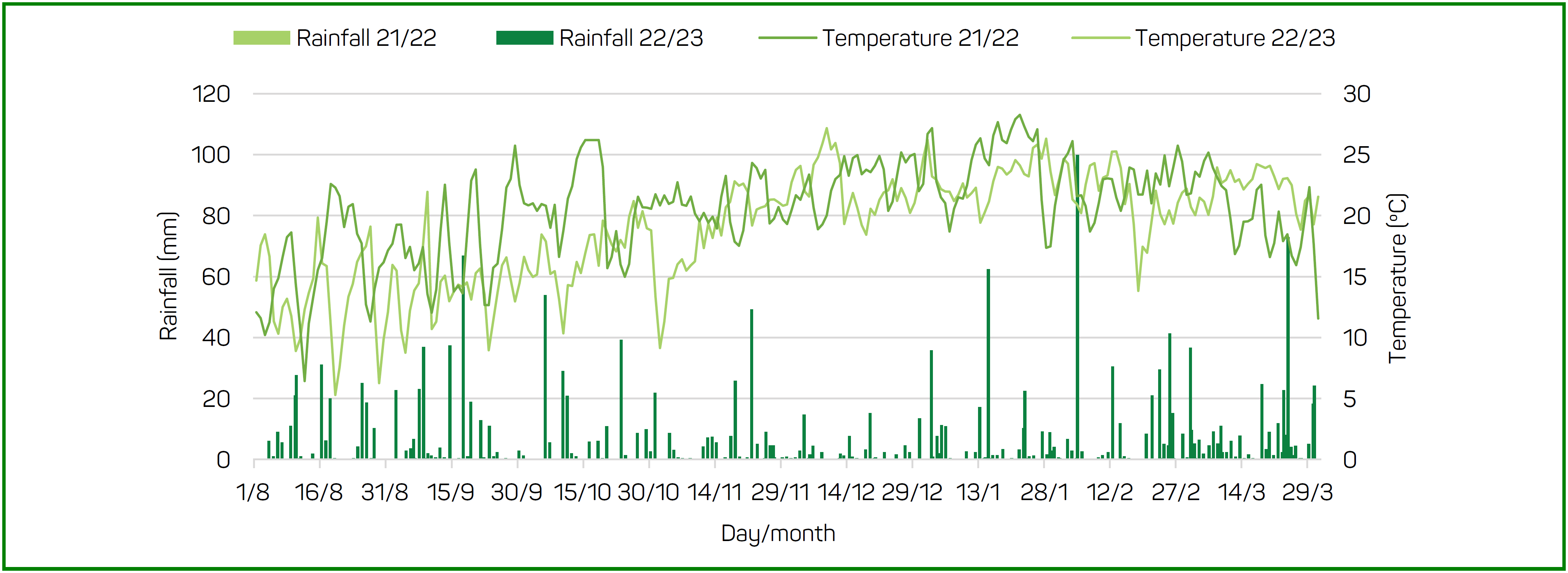
The climate of the region is classified as Cfa (Köppen), characterized as a humid subtropical climate with hot summers, evenly distributed rainfall, and an average temperature in the warmest month below 22°C. Annual precipitation ranges from 1,100 to 2,000 mm, and severe, frequent frosts occur on average 10 to 25 days per year (Peel et al., 2007). Weather data, including precipitation (mm) and temperature (°C) recorded during the experimental period, are presented in Figure 1.
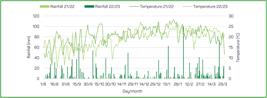
Monthly average temperature (°C) and accumulated precipitation (mm) during the experimental period from August 2021 to March 2023
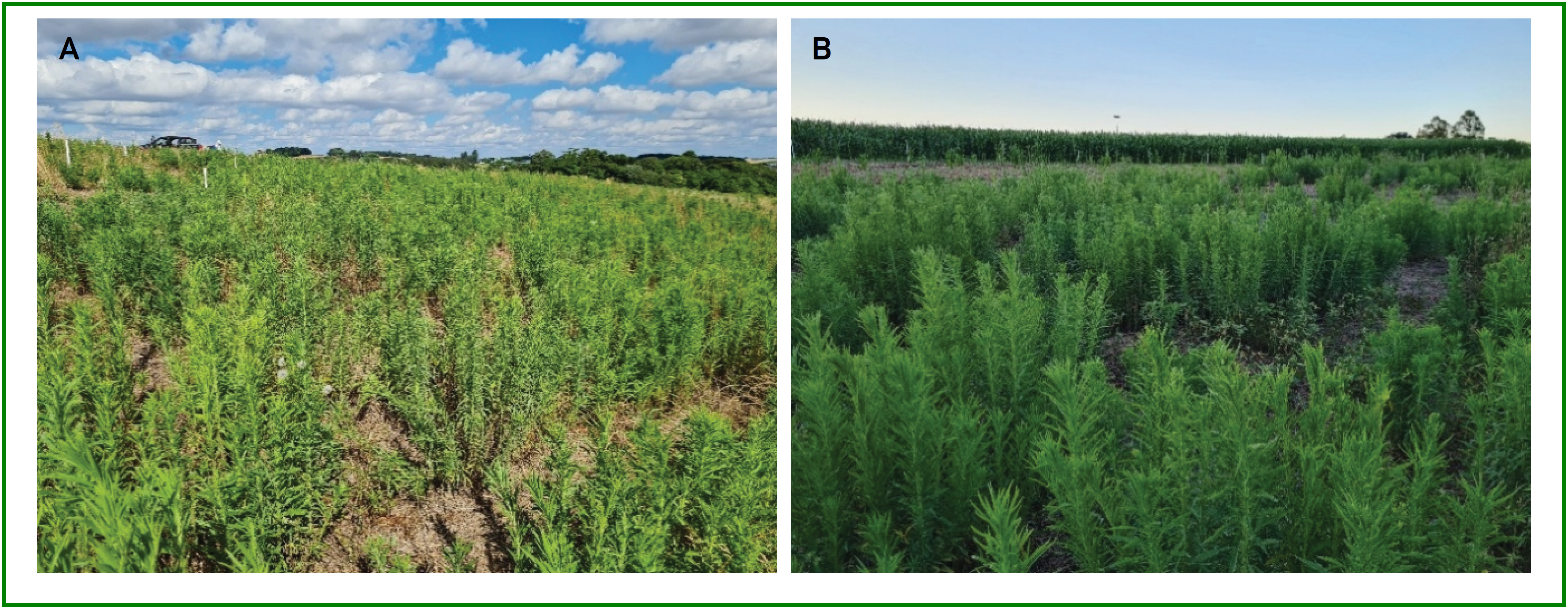
Soybean was seeded on November 22, 2021, and November 18, 2022, for the first and second growing seasons, respectively. In both seasons, the Enlist soybean cultivar (E3 Brasmax Vênus 57K58R5F CE) was used at a seeding rate of 24 seeds m−2. The crop was fertilized at planting with 375 kg ha−1 of the 05-20-20 (N-P2O5-K2O) fertilizer. In both growing seasons, the experimental area was left fallow over the winter, beginning immediately after the harvest of the preceding soybean crop. This practice allowed for the natural germination and establishment of hairy fleabane, ensuring a consistent weed population for evaluating the efficacy of the applied treatments (Figure 2A e B).
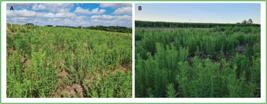
Experimental site area during the first crop season (2021/22; A) and the second crop season (2022/23; B)
2.2 Experimental design and herbicide application
The experiments were conducted using a randomized complete block design with four replications, the treatments are listed in Table 1. The experimental units were 3 m wide by 5 m long, with six soybean rows spaced 0.5 m apart. The harvestable area (6 m2) consisted of the four central rows, excluding one border row on each side and 1 m at each end of the plot.
Herbicide treatments applied for hairy fleabane (Conyza bonariensis) management during the 2021/22 and 2022/23 crop seasons
The treatments consisted of eight herbicides applied at different timings: early weed management (approximately 80–100 days before soybean sowing, depending on the growing season), followed by a standard pre-plant burndown application 3 days before sowing, and post-emergence applications at the V3 to V4 growth stages of soybean. In addition, weed-free and weedy control treatments were included for comparison.
The herbicide applications were performed using a CO2-pressurized backpack sprayer equipped with four DG 110.02 flat-fan nozzles, 210 kPa operating pressure, at a speed of 3.6 km h−1, calibrated to deliver 150 L ha−1. Weather conditions during herbicide application are presented in Table 2.
Weather conditions at the time of herbicide applications during early management, pre-plant burndown (three days before sowing), and post-emergence (V3 to V4 soybean growth stage) in the 2021/22 and 2022/23 crop seasons
Hairy fleabane infestations in the soybean crop originated from the soil seed bank. At the time of early management herbicide application (Table 1), hairy fleabane densities were 73 and 67 plants m−2 in the 2021/22 and 2022/23 growing seasons, respectively. At the time of the pre-plant herbicide application, plant heights ranged from 4 to 0.9 m in both seasons.
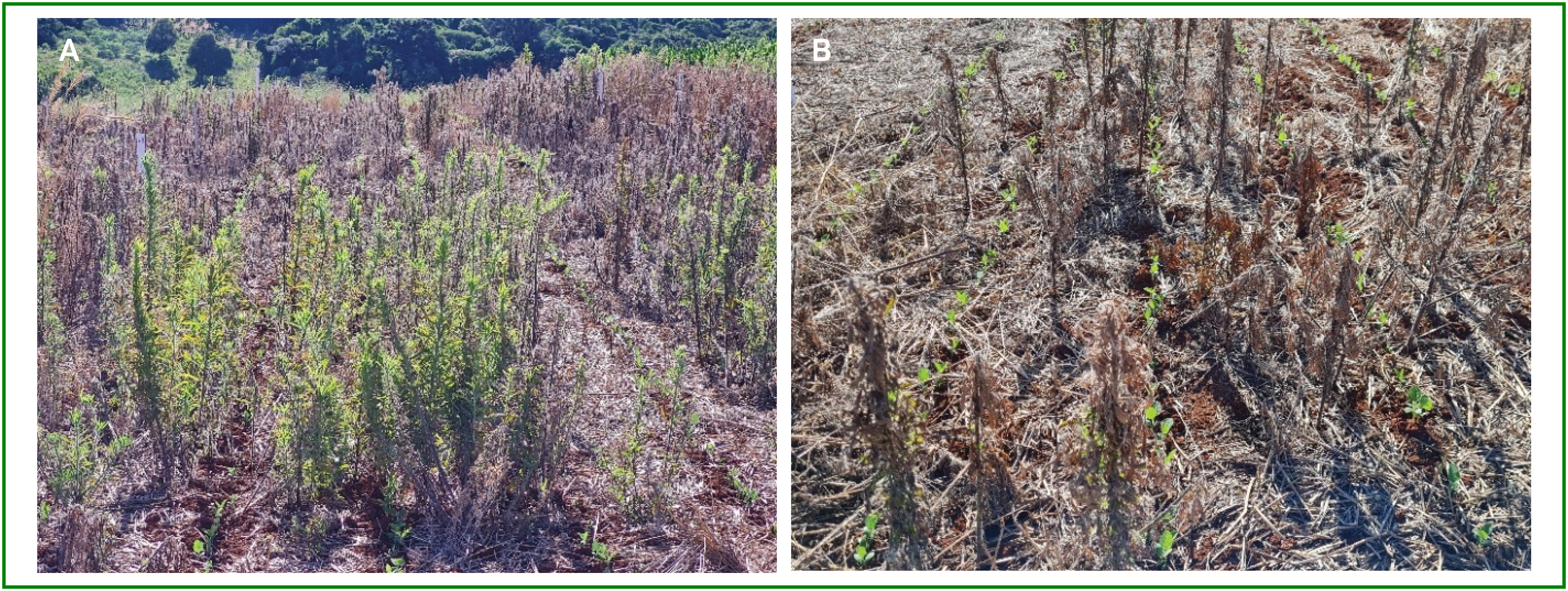
Three days before soybean planting (November 19, 2021, and November 15, 2022, for the respective seasons; Figure 3 A e B), all plots except the weedy and weed-free controls, received an application of diquat + saflufenacil (600 + 70 g ha−1) + crop oil concentrate (0.5% v/v). This treatment simulated the pre-plant burndown commonly practiced by growers, particularly to control hairy fleabane plants that escaped earlier management efforts (Table 1). This pre-plant burndown strategy is recommended for effective management of difficult-to-control weeds at advanced growth stages, such as glyphosate-resistant hairy fleabane, by applying systemic herbicides during early management and follow-up by contact herbicides closer to planting.
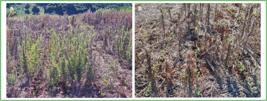
Weed-free control plot (A) and pre-plant burndown application of diquat + saflufenacil (B), three days before soybean planting
This pre-plant burndown strategy is recommended for the effective management of difficult-to-control weeds at advanced growth stages, such as glyphosate-resistant hairy fleabane. Additionally, early weed management can be adopted in areas with high weed infestations or a large soil seed bank, as well as in production systems without soil cover or winter crops. Under these conditions, early applications of systemic herbicides, followed by contact herbicides closer to planting, help reduce weed emergence and infestation during the spring–summer growing season.
When soybeans reached the V3 to V4 stage (three to four trifoliate leaves) on December 2, 2021, and November 28, 2022, for the first and second seasons, respectively, a mixture of 2,4-D choline + glyphosate (971.28 + 1,232.65 g ha−1 or 2.77 + 2.13 L ha−1) was applied. At this stage, surviving hairy fleabane plant heights ranged from 0.10 to 1.6 m, with average densities of 24 and 25 plants m−2 in the respective seasons.
2.3 Data collection
Hairy fleabane visual control was assessed at 7, 14, 21, 28, and 35 days after treatment (DAT) for early management and post-emergence herbicide treatments (Table 1), and at 7, 14, 21, and 28 DAT for pre-plant burndown treatments. Soybean crop injury from early management and post-emergence treatments was assessed at 7, 14, and 21 days after crop emergence (DAE). Control and phytotoxicity ratings were assigned on a percentage scale, with 0% indicating no injury and 100% indicating complete death of weeds or crop, as described by Velini et al. (1995).
At 45 DAE, gas exchange measurements were taken using an infrared gas analyzer (IRGA, model LCpro-SD, ADC BioScientific Ltd). The variables measured included internal CO2 concentration (Ci, µmol mol−1), transpiration rate (E, mol m−2 s−1), stomatal conductance (GS, mol m−1 s−1), photosynthetic rate (A, µmol m−2 s−1), water use efficiency (WUE, mol CO2 mol H2O−1), and carboxylation efficiency (CE, mol CO2 m−2 s−1). WUE and CE were calculated as the ratios A/E and A/Ci, respectively. Measurements were taken from each block under natural light between 7:00 and 11:00 a.m. on clear days to ensure uniform environmental conditions.
At pre-harvest, the number of soybean plants per meter was recorded. Ten plants were randomly collected from the harvestable area of each plot, placed in plastic bags, and taken to the laboratory for yield component analysis, including the number of pods per plant and the number of grains per pod. After manual harvest and threshing, thousand-grain weight (g) and grain yield (kg ha−1) were determined. Thousand-grain weight was calculated from eight subsamples of 100 seeds each, weighed on an analytical balance. Grain moisture was standardized to 13%, and yields were converted to kg ha−1.
2.4 Statistical analysis
The data were initially subjected to diagnostic analysis to verify compliance with the assumptions of analysis of variance (ANOVA). Normality of residuals was assessed using the Shapiro–Wilk test, and homogeneity of variances was evaluated using Levene's test. When necessary, data transformation was considered to meet these assumptions, although no transformations were ultimately required.
The experiments were conducted in a randomized complete block design, and the data were analyzed considering the effects of herbicide treatments. As no significant differences were observed between growing seasons, data were pooled across years for the final analysis. Analysis of variance (ANOVA) was then performed using the F-test (p ≤ 0.05).
When significant treatment effects were detected, means were grouped using the Scott–Knott clustering test at the 5% probability level, which is appropriate for agricultural experiments as it minimizes type I error and provides clear grouping of treatments.
All statistical analyses were carried out using the R statistical software (R Core Team, 2018), with appropriate packages for analysis of variance and mean grouping.
3. Results and Discussion
The ANOVA revealed no significant differences between the two growing seasons (2021/22 and 2022/23. Therefore, data from both growing seasons were combined for a joint analysis. For all evaluated variables, no significant differences were observed between the two years in which the experiments were conducted.
Although no significant differences were observed between growing seasons, climatic conditions are known to influence herbicide performance. Soil moisture and rainfall patterns affect both herbicide availability in the soil and weed physiology, particularly for residual herbicides applied prior to soybean planting (Ou et al., 2018; Peruzzo et al., 2020; Schneider et al., 2022). Under drier conditions, limited soil moisture may reduce herbicide activation and uptake, potentially decreasing residual control of species such as hairy fleabane (Conyza bonariensis). Conversely, rainfall following application generally enhances the incorporation and activity of soil-applied herbicides, including terbuthylazine, atrazine, simazine, flumioxazin, and diclosulam. Temperature and plant growth conditions may also affect the performance of post-emergence herbicides, as actively growing weeds tend to absorb and translocate these compounds more efficiently. Therefore, despite the similar control levels observed between seasons in the present study, variations in rainfall distribution and soil moisture between dry and wet years may influence herbicide efficacy under field conditions.
3.1 Control of hairy fleabane with herbicides
The herbicides mesotrione + atrazine, dicamba, and 2,4-D amine provided the highest levels of hairy fleabane control when applied during early management, consistently outperforming the other herbicides at all evaluation intervals from 7 to 35 DAT (Table 3). These treatments maintained the highest average control rates from 14 DAT onwards, statistically matching the weed-free control up to 28 DAT. Although control levels declined by 35 DAT, mesotrione + atrazine, dicamba, and 2,4-D amine herbicides still showed superior performance, second only to the weed-free control. In contrast, terbuthylazine and flumioxazin resulted in the lowest control rates, only outperforming or equaling the weedy control. The other herbicides (metsulfuron-methyl, diclosulam, and atrazine + simazine) showed intermediate performance for hairy fleabane control in early management.
Hairy fleabane (Conyza bonariensis) control (%) during early management after application of all treatments, 2021/22 and 2022/23 crop seasons
According to Velini et al. (1995), a minimum of 80% control is required for a herbicide to be recommended for weed management. In this study, mesotrione + atrazine, dicamba, and 2,4-D amine achieved hairy fleabane control above 86% from 14 to 35 DAT, surpassing the recommended threshold.
The differences observed among herbicide treatments in early management are due to the efficacy of auxin-inhibiting herbicides, such as dicamba, which are known to control difficult weeds like Kochia scoparia (Ou et al., 2018) and glyphosate-resistant hairy fleabane (Gazola et al., 2022). The combination of atrazine + mesotrione provided over 93% control of C. bonariensis in previous studies (Matte et al., 2018), consistent with our results from 14 to 28 DAT.
The use of diquat + saflufenacil for desiccation yielded the best results when dicamba was applied in early management, achieving 100% control from 7 to 28 DAT, matching the weed-free control (Table 4). Similarly, Ou et al., (2018) reported that the results of applying 2,4-D + glyphosate, alone or in combination, for managing hard-to-control species vary depending on the weed, growth stage, dose, and mode of action, which can result in synergism, antagonism, or additive effects. In another study, control of hairy fleabane ranged from 90 to 97% at 28 DAT when combining dicamba, saflufenacil, and glyphosate (Cantu et al., 2021).
Hairy fleabane (Conyza bonariensis) control (%) during desiccation with diquat + saflufenacil applied 3 days before soybean sowing (Enlist Venus CE cultivar), depending on early management herbicide application, 2021/22 and 2022/23 crop seasons
All treatments except atrazine + simazine achieved the minimum required 80% control. (Velini et al., 1995). However, this threshold is critical, as even a single hairy fleabane plant per square meter can reduce soybean yield by up to 36% (Trezzi et al., 2015). The combination of diquat with pre-emergence or residual herbicides is effective, as the sequential use of systemic followed by contact herbicides enhances control, particularly for advanced-stage weeds (Albrecht et al., 2020). Diquat, a photosystem I inhibitor, acts rapidly under light, providing quick visible control (Menegazzo et al., 2021). Saflufenacil at 35 g ha−1 can achieve 80% (Dalazen et al., 2015) to 95% hairy fleabane control and higher rates or favorable conditions can yield up to 100% control at the 4–6 leaf stage (Cesco et al., 2019; Cantu et al., 2021).
Weeds at more advanced growth stages have greater reserves accumulated in both the aerial parts and the root system, making them harder to control with herbicides, as these plants also have more waxes or even hairiness, which are barriers that hinder herbicide action and increase the plant's ability to survive and recover from product effects (Zobiole et al., 2018).
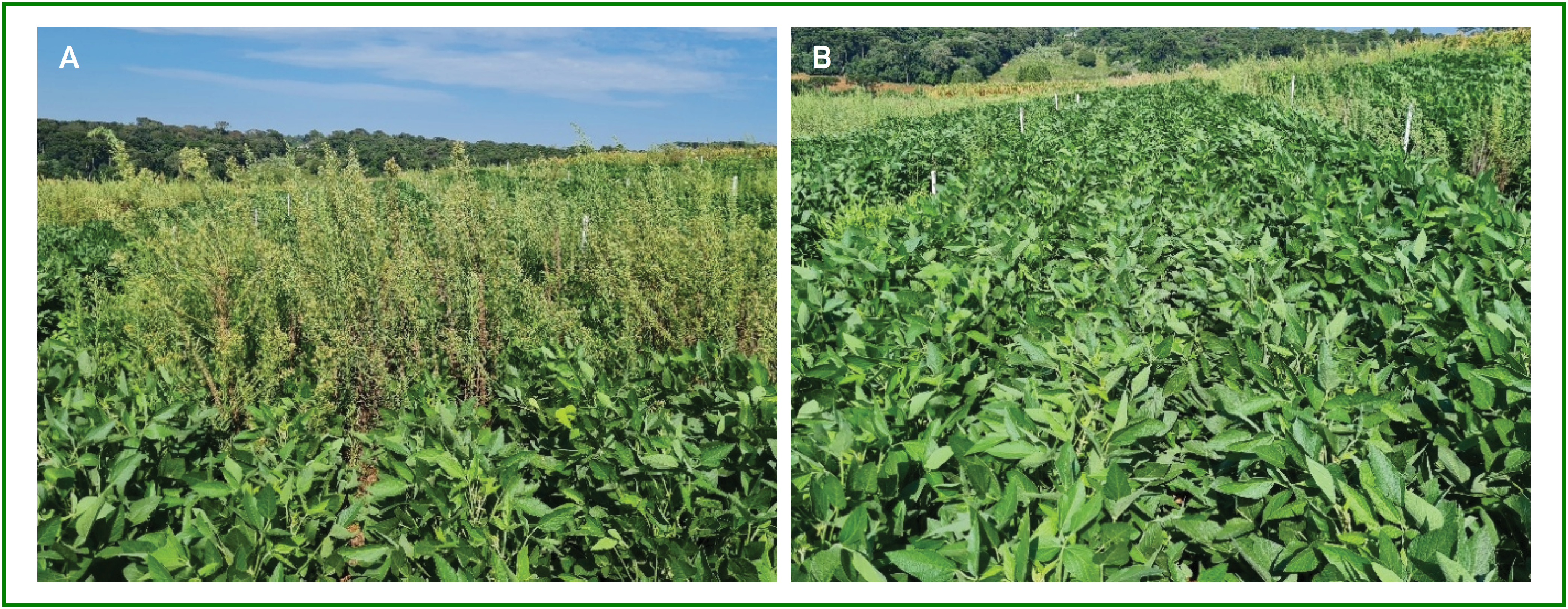
Applying 2,4-D choline + glyphosate at the V3 to V4 soybean stage following early management with mesotrione + atrazine, dicamba, or 2,4-D resulted in hairy fleabane control above 95% (Table 5). When dicamba was used in early management, followed by diquat + saflufenacil for desiccation, and 2,4-D choline + glyphosate for soybean Enlist (V3-V4 stages) post-emergence cleaning, 100% control was achieved from 14 DAT, matching the weed-free control up to 28 DAT (Figure 4A e B).
Hairy fleabane (Conyza bonariensis) control (%) after different early management herbicides and post-emergence application of 2,4-D choline + glyphosate at the V3–V4 soybean stage, 2021/22 and 2022/23 crop seasons
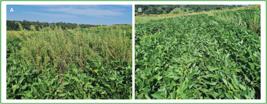
Weedy control (A), use of dicamba in early management and application of 2,4-D choline + glyphosate (B) when soybean was at the V3 to V4 growth stage
Combining glyphosate with other herbicides applied at pre- and post-emergence stages in soybean resulted in control levels above 88% from 7 to 28 DAT, reaching up to 82% at crop pre-harvest (Nonemacher et al., 2017). These authors report that this is due to the residual effects of the mixtures, which favor the control of glyphosate-resistant or tolerant weeds for a longer period. Thus, it is observed that the association of herbicides improves the efficiency of hairy fleabane control.
Even though the use of terbuthylazine, metsulfuron-methyl, flumioxazin, and diclosulam in early management, diquat + saflufenacil for desiccation, and 2,4-D choline + glyphosate for post-emergence cleaning at V3–V4 did not provide the best hairy fleabane control, the control percentage exceeded 83% from 7 to 35 DAT (Table 5), which is above the recommended minimum. Zobiole et al. (2018), using diclosulam + halauxifen-metil combined with glyphosate in sequential applications of glufosinate-ammonium, paraquat, and saflufenacil for Conyza spp.
The use of atrazine + simazine in early management, followed by diquat + saflufenacil for desiccation and 2,4-D choline + glyphosate at soybean pos-emergence (V3 a V4), resulted in a great hairy fleabane control above 89% from 7 to 21 DAT (Table 5). Control of glyphosate-resistant hairy fleabane improved with the commercial mixture of atrazine + mesotrione, alone or combined with glyphosate, tembotrione, and nicosulfuron, or with tank mixes of atrazine + glyphosate and atrazine + nicosulfuron, or even with atrazine alone (Matte et al., 2018). Thus, there are alternative herbicides that can be used for hairy fleabane control, especially in early management, where there is a longer interval between application and soybean sowing, reducing the risk of herbicide carryover and subsequent phytotoxicity in soybeans.
The effects of herbicides applied during early management were evaluated at 7, 14, and 21 days after soybean emergence, with no symptoms of phytotoxicity observed (data not shown). This absence of phytotoxic effects is likely due to the use of herbicides that are either recommended and/or registered for soybean cultivation (Table 1)—whether as pre-sowing desiccants or for pre- or post-emergence applications—or to the degradation of the active ingredients over time, which minimized their impact by the time of sowing.
The application of 2,4-D choline + glyphosate at the V3–V4 soybean stage caused average phytotoxicity rates of 10%, 5%, and 0% at 7, 14, and 21 DAT, respectively, in all plots where this mixture was applied (data not shown). Observed injuries included cupped leaves, leaf curling, yellowed edges, and deformation. However, over time, the plants recovered, and symptoms disappeared completely by 21 DAT. The 2,4-D choline + glyphosate mixture used in Enlist® soybeans can cause initial phytotoxicity, such as chlorosis and leaf curling (Foles et al., 2023). These injuries are temporary and can be influenced by environmental and soil conditions, product doses, volatility, foliar absorption, among other factors (Albrecht et al., 2020). In most cases, injuries disappear as the plant develops, resulting in full recovery, as observed in this study.
3.2 Effect of herbicides on physiological characteristics of soybean
The combination of mesotrione + atrazine applied during early management, followed by pre-sowing desiccation with diquat + saflufenacil and post-emergence application of 2,4-D choline + glyphosate, resulted in the highest values for all evaluated physiological variables, including internal CO2 concentration (Ci), transpiration rate (E), stomatal conductance (GS), photosynthetic rate (A), water use efficiency (WUE), and carboxylation efficiency (CE). These values were statistically similar to those observed in the weed-free control (Table 6), indicating that this treatment sequence did not impair soybean physiological performance.
CO2 concentration (Ci, µmol m−2 mol−1), transpiration rate (E, mol m−2 s−1), stomatal conductance (gS. mol m−1 s−1), photosynthetic rate (A, µmol m−2 s−1), water use efficiency (WUE, mol CO2 mol H2O−1), and carboxylation efficiency (CE, mol CO2 mol H2O−1) in Enlist Vênus CE soybean as influenced by herbicide treatments during the 2021/22 and 2022/23 crop seasons
The remaining treatments generally resulted in lower values compared to mesotrione + atrazine and the weed-free control, although differences were not always statistically significant. Previous studies have reported that atrazine residues may negatively affect chlorophyll content and soybean growth; however, when an adequate interval between application and sowing is respected (e.g., 90 days), no detrimental effects are observed (Novais et al., 2019). In the present study, mesotrione + atrazine was applied 82 and 96 days before soybean sowing in the 2021/22 and 2022/23 growing seasons, respectively, which likely minimized potential carryover effects.
WUE was generally not affected by most treatments; however, higher values were observed for mesotrione + atrazine and the weed-free control (Table 6). This response is associated with a reduction in transpiration rate (E), while maintaining photosynthetic activity (A), resulting in improved efficiency in water use. Atrazine acts as a photosystem II inhibitor, temporarily affecting electron transport; however, in tolerant crops such as soybean, this effect is transient and does not significantly impair carbon assimilation under adequate environmental conditions (Battaglino et al., 2021).
Most physiological variables, including CE, A, GS, and E, were not significantly affected by herbicide treatments, indicating that soybean plants maintained stable physiological performance under the evaluated conditions. An exception was observed for the atrazine + simazine treatment, which resulted in higher Ci, E, and GS values (Table 6). This response may be related to temporary alterations in photosynthetic activity caused by PSII inhibition, leading to reduced CO2 fixation immediately after application. In tolerant plants, however, photosynthetic processes tend to recover over time, which explains the absence of reductions in overall physiological performance (Battaglino et al., 2021).
The overall results indicate that the evaluated herbicide programs do not cause significant physiological stress to soybean plants when applied at appropriate timings and intervals, even when including herbicides with known effects on the photosynthetic apparatus.
3.3 Influence of hairy fleabane management on soybean grain yield components
Regarding soybean yield components, the results show that the application of atrazine + simazine in early management, diquat + saflufenacil for desiccation, and 2,4-D choline + glyphosate in soybean post-emergence (V3 to V4) grains per podresulted in the highest thousand-grain weight and grain yield, while showing intermediate values for pods per plant and no significant effect on grains per pod (Table 7). This response may be associated with the fact that the commercial mixture of atrazine + simazine was among the treatments that provided hairy fleabane control above 89% during the initial soybean development stages (7, 14, and 21 DAT), following the post-emergence application of 2,4-D choline + glyphosate at V3–V4. This phase is considered one of the most critical for the crop, as soybean must be free from weed competition to reach its full yield potential.
Number of pods per plant (NPP), number of grains per pod (NGP), thousand-grain weight (TGW) and grain yield (Yield, kg ha−1) in Enlist Vênus CE soybean as influenced by herbicide treatments during the 2021/22 and 2022/23 crop seasons
Reduced control of hairy fleabane up to 28 DAT may have resulted in lower soybean yields, as this period coincides with grain differentiation and is a critical stage for crop growth and development. Maintaining the crop free from weed competition during this phase is essential to achieve maximum yield potential. The critical period for weed control in soybean ranges from 14 to 42 DAE (Galon et al., 2022), which is consistent with the results observed in this study. Additionally, the atrazine + simazine mixture has a longer residual effect in the soil, with average half-lives of 60 and 22 days, respectively (Peruzzo et al., 2020), helping to suppress subsequent weed emergence, especially hairy fleabane.
It is important to note that in advanced soybean stages, it can be difficult to identify younger weeds that have emerged after crop establishment, and even small plants can compete with the crop, particularly with highly competitive species like hairy fleabane (Trezzi et al., 2015). Triazine herbicides are relatively persistent in most soils, with residual periods ranging from one month to two years depending on rainfall and soil characteristics. Their effectiveness against broadleaf weeds has contributed to increased soybean yields (Peruzzo et al., 2020).
The presence of weeds during the early stages of soybean development leads to competition for resources such as light, water, and nutrients, compromising the crop's ability to efficiently produce high-quality grains (Soltani et al., 2017; Miller et al., 2025). Weed competition during this critical phase can reduce pod number and seed size, directly impacting soybean yield.
The results indicate that grain yield was highest in early management with atrazine + simazine, and was higher than the weed-free control (Table 7). This treatment increased yield by 1,253.90 kg ha−1 (28.80%) compared to the average of other herbicides, by 2,956.25 kg ha−1 (67.9%) compared to the weedy control, and by 1,577.5 kg ha−1 (36.2%) compared to the weed-free control. Effective weed control, whether by herbicides or hand weeding, is necessary to avoid yield losses. Similar results were reported by Carmo et al. (2023), who found that pre-sowing desiccation with glufosinate-ammonium allowed for early weed control and significantly increased grain yield.
The choice of herbicide for hairy fleabane management in soybean must consider crop selectivity to avoid phytotoxicity while ensuring effective weed control. Hand weeding may damage soybean roots or allow weed regrowth, potentially leading to reduced yields. Moreover, mechanical control tends to be costly, labor-intensive, and generally less efficient compared to chemical methods (Miller et al., 2018; Rossi et al., 2025).
Integrating herbicide rotation with crop rotation and cover crops allows farmers to adopt more efficient and cost-effective weed management strategies. Rotating active ingredients with different modes of action helps prevent the spread of herbicide resistance, particularly in hairy fleabane, as it reduces selection pressure on weeds and prolongs the effectiveness of available herbicides.
4. Conclusions
The herbicides mesotrione + atrazine, dicamba, and 2,4-D amine provided the best hairy fleabane control when applied in early management.
Diquat + saflufenacil applied for desiccation resulted in satisfactory hairy fleabane control, especially when dicamba was used in early management.
The use of 2,4-D choline + glyphosate at the V3–V4 soybean stage for post-emergence cleaning achieved better hairy fleabane control when dicamba, mesotrione + atrazine, or 2,4-D amine were applied in early management.
The sequential application of mesotrione + atrazine before soybean desiccation with diquat + saflufenacil and post-emergence 2,4-D choline + glyphosate led to the best physiological performance in soybean.
The highest grain yield for the Enlist Brasmax Vênus 57K58R5F CE soybean cultivar was obtained with atrazine + simazine applied in early management.
Future research can be carried out by evaluating the best pre-emergent herbicides from the present study in relation to the control of hairy fleabane and how much they can reduce the level of economic damage from this weed in different soybean cultivars.
Funding
Data Availability
The data supporting the conclusions of this study are available with the corresponding author, [Galon, L.], upon request will be provided in a basic manner and can be shared to the public.
Acknowledgements
To Professor Victor Hugo Vidal Ribeiro, Department of Crop and Soil Science, Oregon State University, for his collaboration and help in writing this work.
References
-
Adegas FS, Vargas L, Gazziero DLP, Karam D, Silva AF, Agostinetto D. [Economic impact of herbicide-resistant weeds in Brazil]. Londrina: Embrapa Soja; 2017. Portuguese. Available from: https://www.infoteca.cnptia.embrapa.br/infoteca/bitstream/doc/1074026/1/CT132OL.pdf
» https://www.infoteca.cnptia.embrapa.br/infoteca/bitstream/doc/1074026/1/CT132OL.pdf -
Agostinetto D, Silva DRO, Vargas L. Soybean yield loss and economic thresholds due to glyphosate resistant hairy fleabane interference. Arq Inst Biol. 2017;84:1-9. Available from: https://doi.org/10.1590/1808-1657000022017
» https://doi.org/10.1590/1808-1657000022017 -
Albrecht PAJ, Albrecht LP, Silva AFM, Ramos RA, Corrêa NB, Carvalho MG et al. Control of Conyza spp. with sequential application of glufosinate in soybean pre-sowing. Cienc Rural. 2020;50(3):1-9. Available from: https://doi.org/10.1590/0103-8478cr20190868
» https://doi.org/10.1590/0103-8478cr20190868 -
Battaglino B, Grinzato A, Pagliano C. Binding properties of photosynthetic herbicides with the QB site of the D1 protein in plant photosystem II: a combined functional and molecular docking study. Plants (Basel). 2021;10(8):1-15. Available from: https://doi.org/10.3390/plants10081501
» https://doi.org/10.3390/plants10081501 -
Cantu RM, Albrecht LP, Albrecht AJP, Silva AFM, Danilussi MTY, Lorenzetti JB. Herbicide alternative for Conyza sumatrensis control in pre-planting in no-till soybeans. Adv Weed Sci. 2021;39:1-9. Available from: https://doi.org/10.51694/AdvWeedSci/2021;39:000012
» https://doi.org/10.51694/AdvWeedSci/2021;39:000012 -
Carmo GL, Cabral Filho FR, Andrade CLL, Teixeira MB, Alves DKM. Use of ammonium glufosinate and diquat in field desiccation in soybean culture. Braz J Sci. 2023;2(4):54-63. Available from: https://doi.org/10.14295/bjs.v2i4.296
» https://doi.org/10.14295/bjs.v2i4.296 -
Cesco V, Nardi R, Krenchinski FH, Albrecht AJP, Rodrigues DM, Albrecht LP. Management of resistant Conyza spp. during soybean pre-sowing. Planta Daninha. 2019;37:1-9. Available from: https://doi.org/10.1590/S0100-83582019370100039
» https://doi.org/10.1590/S0100-83582019370100039 -
Dalazen G, Kruse ND, Machado SLO, Balbinot A. [Synergism of the glyphosate and saflufenacil combination for controlling hairy fleabane]. Pesq Agropec Trop. 2015;45(3):249-56. Portuguese. Available from: https://doi.org/10.1590/1983-40632015v4533708
» https://doi.org/10.1590/1983-40632015v4533708 -
Foles WCS, Oliveira KCL, Possamai ACS, Franz GM, Dipple FL. Technologies of resistance to herbicides in soybeans (Glycine max L. Merrill): literature review. Sci Elect Arch. 2023;16(2):65-72. Available from: https://doi.org/10.36560/16620231744
» https://doi.org/10.36560/16620231744 -
Galon L, Konzen A, Piazzetta HVL, Concenco G, Bagnara MAM, Silva AML et al. Periods of interference of Alexandergrass on morphophysiological and productive characteristics of transgenic soybean. Commun Plant Sci. 2022;12:60-6. Available from: https://doi.org/10.26814/cps2022008
» https://doi.org/10.26814/cps2022008 -
Gazola T, Costa RN, Carbonari AC, Velini ED. Dynamics of 2,4-D and dicamba applied to corn straw and their residual action in weeds. Plants (Basel). 2022;11(20):1-18. Available from: https://doi.org/10.3390/plants11202800
» https://doi.org/10.3390/plants11202800 -
Heap I. The international survey of herbicide resistant weeds. Weedscience. 2025[access Nov 16, 2025]. Available from: http://www.weedscience.org/
» http://www.weedscience.org/ -
International Service for the Acquisition of Agri-biotech Applications – ISAAA. GM approval database. Ithaca: International Service for the Acquisition of Agri-biotech Applications; 2025[access nov 29, 2025]. Available from: https://www.isaaa.org/
» https://www.isaaa.org/ -
Kaspary TE, Lamego FP, Cutti L, Aguiar ACM, Rigon GCA, Basso CJ. Growth, phenology, and seed viability between glyphosate-resistant and glyphosate-susceptible hairy fleabane. Bragantia. 2017;76(1):92-101. Available from: https://doi.org/10.1590/1678-4499.542
» https://doi.org/10.1590/1678-4499.542 -
Koehler-Cole K, Proctor CA, Elmore RW, Wedin DA. Spring-planted cover crops for weed control in soybean. Renew Agric Food Syst. 2021;36(5):501-8. Available from: https://doi.org/10.1017/S1742170521000107
» https://doi.org/10.1017/S1742170521000107 -
Matte WD, Oliveira Junior RS, Machado FG, Constantin J, Biffe DF, Gutierrez FSD, et al. [Efficacy of [atrazine + mesotrione] in control of weed in corn]. Rev Bras Herb. 2018;17(2):1-15. Portuguese. Available from: https://doi.org/10.7824/rbh.v17i2.587
» https://doi.org/10.7824/rbh.v17i2.587 -
Menegazzo RF, Rickli ME, Scanavacca J, Lima JD, Silveira AC, Menegazzo AW et al. Differential response to different classes of herbicides: Tradescantia pallida (Rose) D. R. Hunt var. purpurea Boom as a model plant. Res Soc Dev. 2021;10(1):1-14. Available from: https://doi.org/10.33448/rsd-v10i1.11452
» https://doi.org/10.33448/rsd-v10i1.11452 -
Miller LR, Landau CA, Williams MM, Hager AG. Early-planted soybean weed management as affected by herbicide application rate and timing. Weed Technol. 2025;39:1-7. Available from: https://doi.org/10.1017/wet.2024.103
» https://doi.org/10.1017/wet.2024.103 -
Nonemacher F, Galon L, Santin CO, Forte CT, Fiabane RC, Winter FL et al. Herbicide association applied to control weeds in glyphosate-resistant soybean. Rev Bras Herb. 2017;16(2):142-51. Available from: https://doi.org/10.7824/rbh.v16i2.529
» https://doi.org/10.7824/rbh.v16i2.529 -
Novais J, Mendes KF, Inoue MH, Maciel CDG, Helvig EO, Stanieski M. Use of sunflower and soybean as bioindicators to detect atrazine residues in soils. Planta Daninha. 2019;37:1-8. Available from: https://doi.org/10.1590/S0100-83582019370100153
» https://doi.org/10.1590/S0100-83582019370100153 -
Ou J, Thompson CR, Stahlman PW, Jugulam M. Preemergence application of dicamba to manage dicamba-resistant Kochia (Kochia scoparia). Weed Technol. 2018;32(3):309-13. Available from: https://doi.org/10.1017/wet.2018.1
» https://doi.org/10.1017/wet.2018.1 -
Peel MC, Finlayson BL, McMahon TA. Updated world map of the Köppen-Geiger climate classification. Hydrol Earth Syst Sci. 2007;11(5):1633-44. Available from: https://doi.org/10.5194/hess-11-1633-2007
» https://doi.org/10.5194/hess-11-1633-2007 -
Peruzzo FT, Silva DRO, Silva AAA, Novello BD, Cuch ML. [Residual effect of atrazine and atrazine + simazine in soybean]. Rev Cienc Agrovet. 2020;19(1):64-72. Portuguese. Available from: https://doi.org/10.5965/223811711912020064
» https://doi.org/10.5965/223811711912020064 -
R Core Team. R: A language and environment for statistical computing. Vienna: R Foundation for Statistical Computing; 2018[access Feb 20, 2026]. Available from: https://www.r-project.org
» https://www.r-project.org -
Rossi CVS, Zobiole LHS, Lucio FR, Neves R. [Comparison of horseweed chemical control methods with burndown starting in dry or moist period]. Rev Bras Herb. 2018;17(3):1-9. Portuguese. Available from: https://doi.org/10.7824/rbh.v17i3.613
» https://doi.org/10.7824/rbh.v17i3.613 -
Schneider T, Michelon F, Bortolotto RP, Camera JN, Machado JM, Koefender J. [Horseweed chemical control in pre-plant burndown in soybean]. Weed Control J. 2022;21:1-6. Portuguese. Available from: https://doi.org/10.7824/wcj.2022;21:00766
» https://doi.org/10.7824/wcj.2022;21:00766 -
Soltani N, Dille JA, Burke IC. Perspectives on potential soybean yield losses from weeds in North America. Weed Technol. 2017;31(1):148-54. Available from: http://dx.doi.org/10.1017/wet.2016.2
» http://dx.doi.org/10.1017/wet.2016.2 -
Trezzi MM, Vidal RA, Patel F, Miotto Junior E, Debastiani F, Balbinot Junior AA et al. Impact of Conyza bonariensis density and establishment period on soyabean grain yield, yield components and economic threshold. Weed Res. 2015;55(1):34-41. Available from: https://doi.org/10.1111/wre.12125
» https://doi.org/10.1111/wre.12125 -
Ulzurrun PD, Acedo MB, Garavano ME, Gianelli V, Ispizua VN. Analysis of the agronomic interest characteristics for the management of Conyza blakei, Conyza bonariensis, Conyza sumatrensis, and Conyza lorentzii Agrocienc Uruguay. 2020;24(1):e112. Available from: https://doi.org/10.31285/AGRO.24.112
» https://doi.org/10.31285/AGRO.24.112 - Velini ED, Osipe R, Gazziero DLP, editors. [Procedures for installation, evaluation and analysis of experiments with herbicides]. Londrina: Sociedade Brasileira da Ciência das Plantas Daninhas; 1995. Portuguese.
-
Zobiole LHS, Krenchinski FH, Pereira GR, Rampazzo PE, Rubin RS, Lucio FR. Management programs to control Conyza spp. in pre-soybean sowing applications. Planta Daninha. 2018;36:1-8. Available from: https://doi.org/10.1590/S0100-83582018360100076
» https://doi.org/10.1590/S0100-83582018360100076