Prediction of wild einkorn wheat (Triticum monococcum subsp. aegilopoides (Link) Thell.) global geographical distribution using climate match index
Abstract:
Background: Triticum monococcum subsp. aegilopoides (wild einkorn wheat) is a problematic weed in the Mediterranean and Middle Eastern winter cereal crops.
Objective: A process-based niche model for this species was developed using CLIMEX to evaluate its potential global distribution.
Methods: Records from Iran were utilized in the model, and the prediction was applied under the current climate and two climate change scenarios (A1B, A2). Both scenarios represent contrasting temporal patterns of economic development and carbon dioxide (CO2) emissions.
Results: The results showed that Europe and Africa continent were the most and least vulnerable regions, respectively, to wild einkorn wheat infestation. Under climate change scenarios A1B and A2, the average Climate Matching Index (CMI) showed significant increases of 4.7% and 5.6% in Europe and North America, respectively, compared to the current conditions. In contrast, Oceania, Asia, and Africa experienced notable decreases of 6.9%, 5.7%, and 4.7%, respectively. In the Northern Hemisphere, 97% of the areas with a CMI's greater than 0.75 were located within the 30° to 48° latitude range.
Conclusions: These findings can serve as a foundation for ongoing monitoring efforts to prevent the further spread of this species, as well as to develop effective quarantine regulations and preventive measures aimed at minimizing its negative impact on wheat yields and appropriate management options.
Keywords:
Cereal crops; Climate scenarios; Process-based niche model; Weed management
1. Introduction
Agricultural regions are increasingly challenged by climate change, which hampers optimal crop production by 10–20% and threatens ecosystem sustainability (Intergovernmental Panel on Climate Change, 2022). Weed flora, in particular, is expected to be especially affected with alterations in the competitive and allelopathy interactions between weeds and crops (Peters et al., 2014; Choudhary et al., 2023), as well as shifts their geographic distribution (Castellanos-Frias et al., 2014). Accurately estimating the climate suitability of weed species under future climate scenarios is crucial to predict potential distribution and invasiveness (Anwar et al., 2021; Calvia et al., 2024). In this regard, species distribution models have become powerful tools for determining and anticipating the geographic spread of weeds across different regions (Lopez-Tirado, Gonzalez-Andujar, 2023). These models, which are commonly grounded in the bioclimatic niche concept, have been developed using a range of computational tools such as CLIMEX, BIOCLIM, and MaxEnt. They use eco-physiological data to assess a species’ potential to invade new habitats under changing climatic conditions (Guillera-Arroita et al., 2015; Castellanos-Frias et al., 2016; Magarey et al., 2018).
Wild einkorn wheat (Triticum monococcum subsp. aegilopoides (Link) Thell., syn. Triticum boeoticum Boiss.) is an annual plant from the Poaceae family, with a natural distribution spanning from southeastern Europe to Afghanistan and alien range in Spain (https://powo.science.kew.org/). Recently, this species has emerged as an aggressive weed in wheat-growing areas, posing a serious threat to cereal crop production (Ruiz et al., 2012; Mousavi et al., 2018a). Due to its high genetic and morphological similarity to wheat plant, herbicide application is improbable in wheat fields, for that reason its population is easily impacted on the quality and quantity of crop in the infected areas (Farhangfar et al., 2015; Mousavi et al., 2018b). This species has a brittle rachis and a growth habit similar to wheat, making it persist in wheat fields through seed shattering, which is a crucial characteristic for the replenishment and survival of seed bank, ultimately competing with crop plant (Ruiz et al., 2012; Mousavi et al., 2018a). Additionally, its high seed germination rate, adult fertility (reproductive capacity), dormancy, and synchronized emergence with crops contribute to its persistence as a problematic weed (Ruiz et al., 2012; Mousavi et al., 2017; 2018a). The emergence of wild einkorn wheat is highly dependent on temperature and rainfall; therefore, it is highly likely that climate change will have an impact on its current geographic distribution (Mousavi et al., 2018b). Despite its potential to cause significant economic losses in cereal crops (Mousavi et al., 2015) and its high risk of introduction via seed contamination, information is not currently available regarding its potential geographic distribution under current and future climate conditions. Identifying environmentally suitable regions is essential for anticipating and mitigating its spread, thereby enabling farmers and land managers to prioritize control strategies more effectively (Vermeulen et al., 2012; Soufizadeh et al., 2022).
In this context, the present study developed a process-based niche model to (i) estimate the current global potential distribution of wild einkorn wheat and (ii) predict its future suitable global habitat under climate change scenarios. The outcomes aim to inform proactive management by identifying areas at high risk of invasion, ultimately supporting more efficient allocation of resources for monitoring and control efforts.
2. Material and Methods
2.1 CLIMEX match climates regional algorithm
CLIMEX's Match Climates Regional algorithm (MCR) compares meteorological data from two locations (HOME region and AWAY region) to compute the Composite Match Index (CMI), which quantifies climatic similarity on a scale from 0 (no match) to 1 (perfect match) (Phillips et al., 2017; Early et al., 2021). By default, MCR evaluates similarity based on monthly rainfall and minimum and maximum monthly temperatures, each weighted equally. The method calculates individual indices for these variables, all ranging from 0 to 1, and combines them multiplicatively to derive the CMI, with higher values indicating greater climatic similarity,
Where CMI is composite match index, ITemp is the Thermal Similarity Index, and IRain is the Precipitation Similarity Index
Tdmax, and Tdmin are the means of the weekly absolute differences of maximum, and minimum temperatures, between the "HOME" and "AWAY" locations. The constant, KT, is set to 0.1, thus giving values for the index of 0.9 and 0.6 for a mean weekly difference of 1o C, and 5o C, respectively. They are selected according to the average weekly absolute differences in maximum, minimum, and average temperatures between the two locations.
RD is the mean of the absolute difference between the weekly rainfall of the ‘Home’ and ‘Away’ location, after the weekly rainfall of the ‘home’ location has been multiplied by RZ (RZ = RM/RT). RT=annual rainfall at Home location and RM = annual rainfall at Matching location. The constant, kP, is set to 0.005, thus giving values for the index of 0.9 and 0.6 for a mean weekly difference of 20 mm, and 100 mm, respectively, based on the average rainfall of locations (Sutherst et al., 2007).
2.2 Meteorological database and data collection
Lorestan Province was designated as the HOME region, with climate data recorded from five weather station (Rymaleh, Alashtar, Imanabad, Nurabad, Aligudarz) from their establishment until 2016 (Table 1). The AWAY region comprised the rest of the world, for which we used climate data that were provided with CLIMEX, covering 2570 locations at a 0.5° resolution (Sutherst et al., 2007). These CLIMEX data, recorded between 1964 and 1990, were derived from a globally interpolated dataset produced by the Climate Research Unit at Norwich, UK (Kriticos et al., 2015). The Match Climates Regional (MCR) algorithm was applied using its default variables (rainfall, and minimum and maximum temperature). According to the long-term weather statistics from the HOME region (the 5 stations), the average maximum temperatures of the coldest and warmest months of the year were −4.4° C and 34.9° C, respectively. The region received an average annual rainfall of 440.9 mm and was classified as having a mild cold climate.
Specifications of five weather stations in Lorestan Province, Iran which was used in this study based on 30-year averages from 1986 to 2016
To identify the center of wild einkorn wheat infestation (Home location) in Lorestan, Iran, a total of 397 fields (ranged from one to ten hectares) were randomly selected across 10 townships during the 2013–14 and 2014–15 cropping seasons. Data collection followed a systematic W-pattern, with samples taken from five points at 20-step intervals within each field in plot size (0.5 m × 0.5 m). The geographical coordinates and altitude above sea level were recorded at each farm using a Garmin GPS device. The intensity of weed infestation was determined using the average of density and frequency ratios. The frequency ratio represents the proportion of each species’ density in a given field relative to its total density across all surveyed fields (Mousavi et al., 2018a).
2.3 Characteristics of climate change scenarios
The climate change scenarios were obtained from Nakicenovic et al. (2000). The A1 scenario describes a future world characterized by very rapid economic growth, global population that peaks in mid-21st. century before declining, and the rapid introduction of new and more efficient technologies. The A1 scenario family is further divided into three groups, with the group A1B (selected here) balancing global population, economic development and economic growth. In contrast, the A2 scenario describes a very heterogeneous world, by continuously increasing global population. Economic development is primarily regionally oriented and per capita economic growth is slower compared to other scenarios. The model represents the climate at a regional scale relatively well, and provides the data required CLIMEX (Kriticos et al., 2012). The target year was set at 2,100 using different greenhouse gas emission scenarios. The model was subjected to the conditions of medium (A1B) and high (A2) emission scenarios (Intergovernmental Panel on Climate Change, 2007; Rahmstorf et al., 2007) (Table 2).
2.4 Statistical analysis
Cluster analysis was performed using the Ward method (with 5 clusters identified at Euclidean distances of 0.0095 and 0.13) in JMP Pro 12.0.1 to analyze CMI values for various continents in terms of wild einkorn wheat invasion susceptibility under both current and climate change conditions. The t-test at a 5% significance level was utilised to undertake a comparative analysis of the CMI of countries possessing wild einkorn wheat (Global Biodiversity Information Facility, 2016) with the CMI of other countries.
3. Results and Discussion
3.1 Prediction under current weather conditions
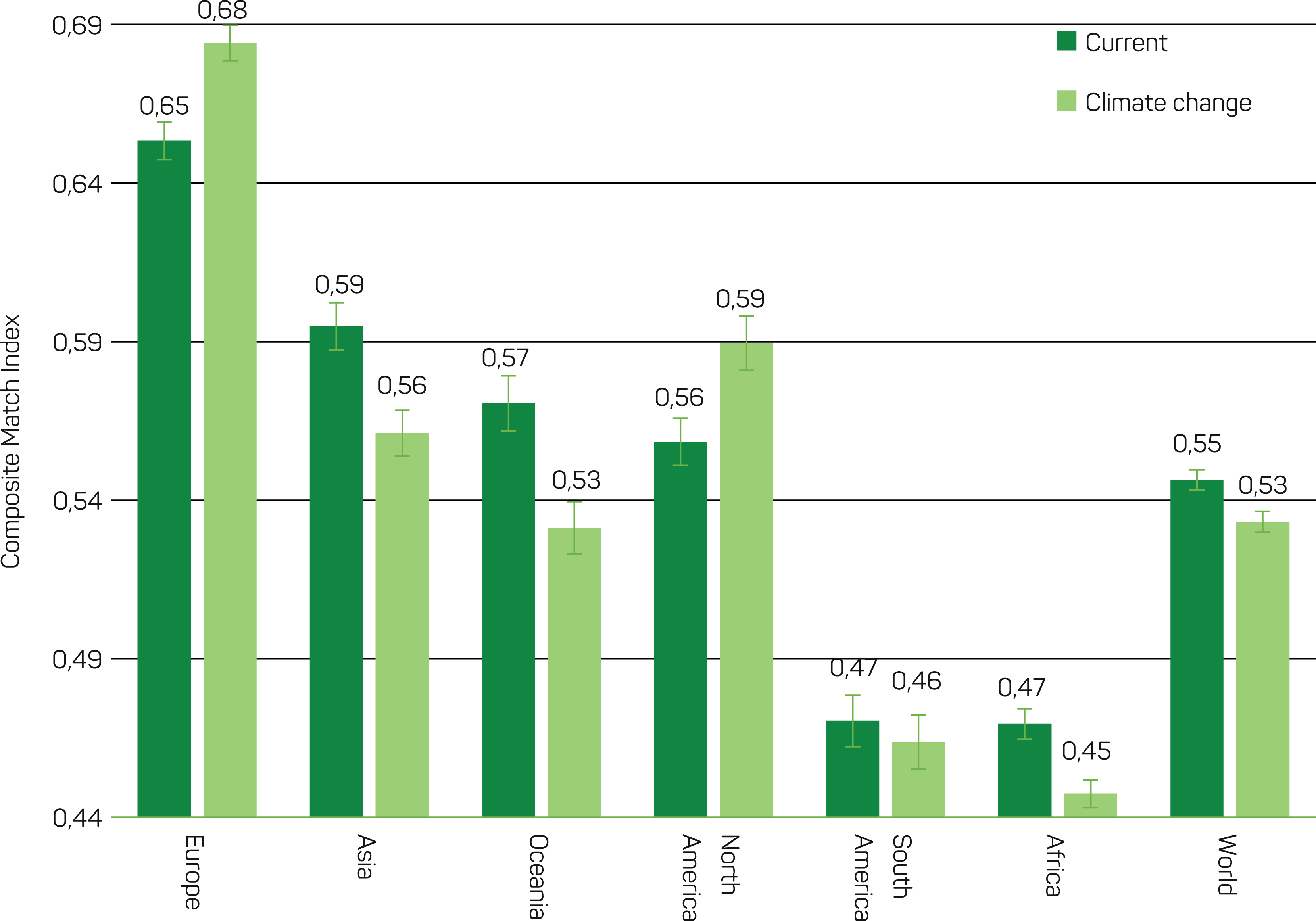
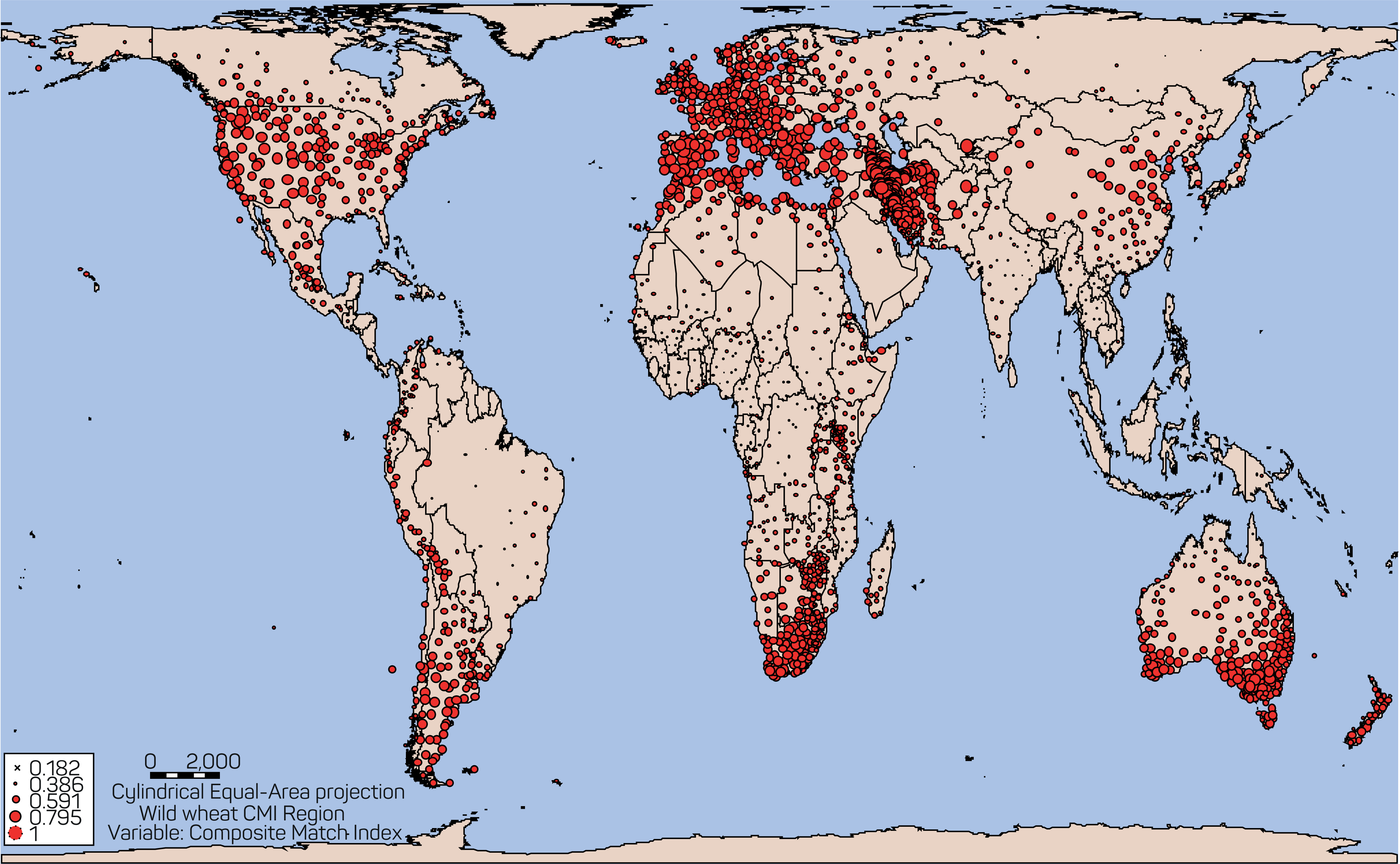
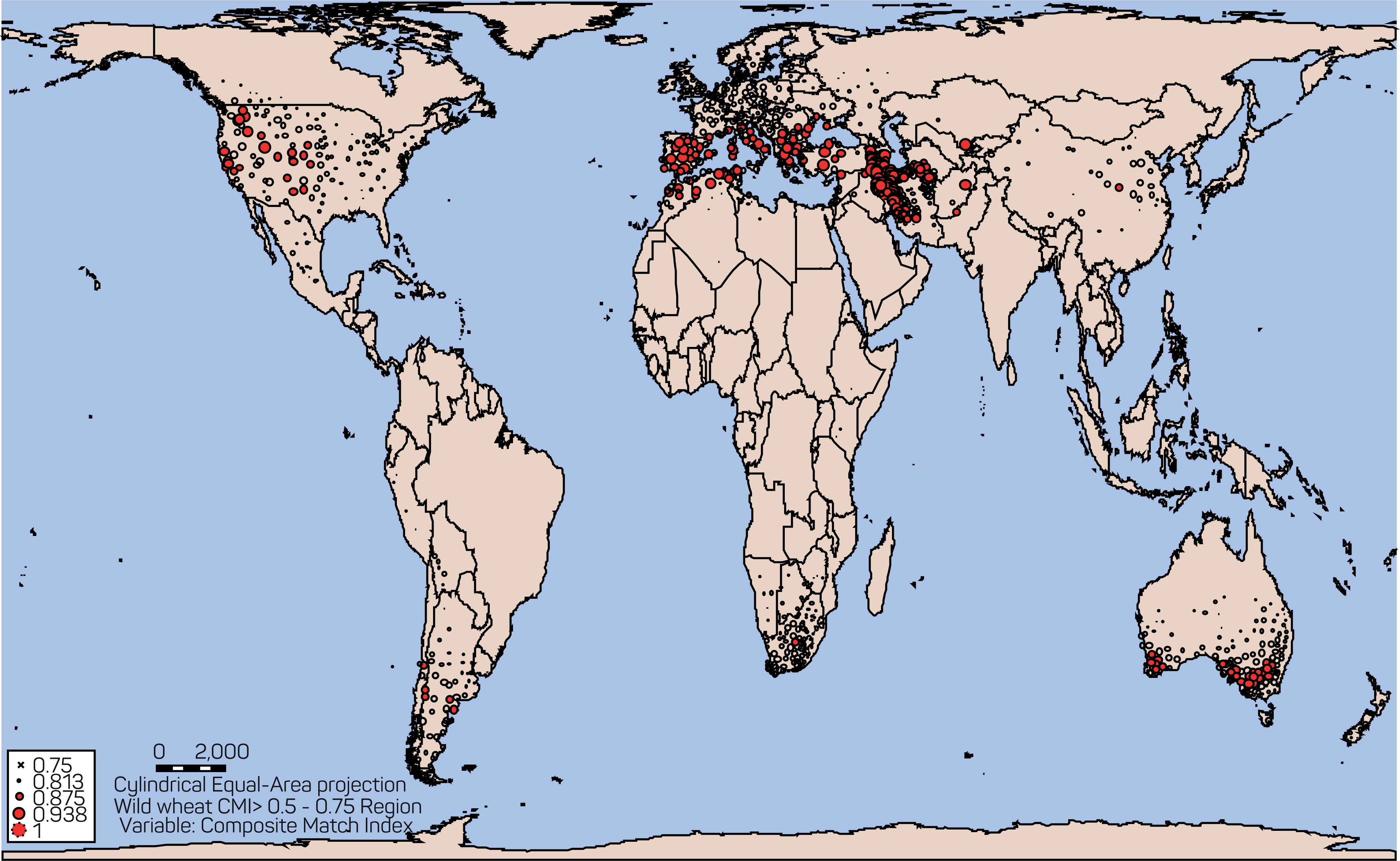
Our results revealed that 0.50% and 3.84% of the Earth's surface exhibited CMI values greater than 0.9 and less than 0.8, respectively, based on a 30' geographical grid under current climate conditions. Europe showed the highest average CMI values for wild einkorn wheat invasion susceptibility among all continents, followed in descending order by Asia, Oceania, and North America. In contrast, South America and Africa had significantly lower average CMIs. Globally, the average CMI under the current climate conditions was calculated at 0.54 (Figure 1). The present results clearly suggest that wild einkorn wheat has the potential to expand its global range far beyond its current distribution. Continents such as Europe, Asia, North America and Australia and some regions of South America exhibit the highest potential for range expansion (Figure 2A). Countries including Uzbekistan, Afghanistan, Turkey, Armenia, Syria, Spain, Greece, Macedonia, Italy, Bulgaria, Romania, Algeria, Australia and the USA were identified as having at least one region with a CMI above 0.8, relative to the wild einkorn wheat -infested region in Lorestan (Figures 3 and 4). The average of CMI, as estimated by the CLIMEX model for countries where wild einkorn wheat was recorded according to GBIF (2016) was 46.7% higher than the average of CMI for other countries without recorded occurrences. A t-test showed that this difference was statistically significant (P < 0.0001), indicating a substantially greater climatic suitability in countries where wild einkorn wheat is already present compared to those where it has not yet been reported.
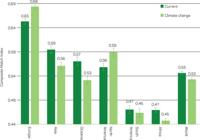
CMI values for the different continents in terms of wild einkorn wheat invasion susceptibility under current and climate change conditions (both A1B and A2 scenarios). The difference between continents were significant for current and climate change condition based on t-test (Pvalue<0.0001)

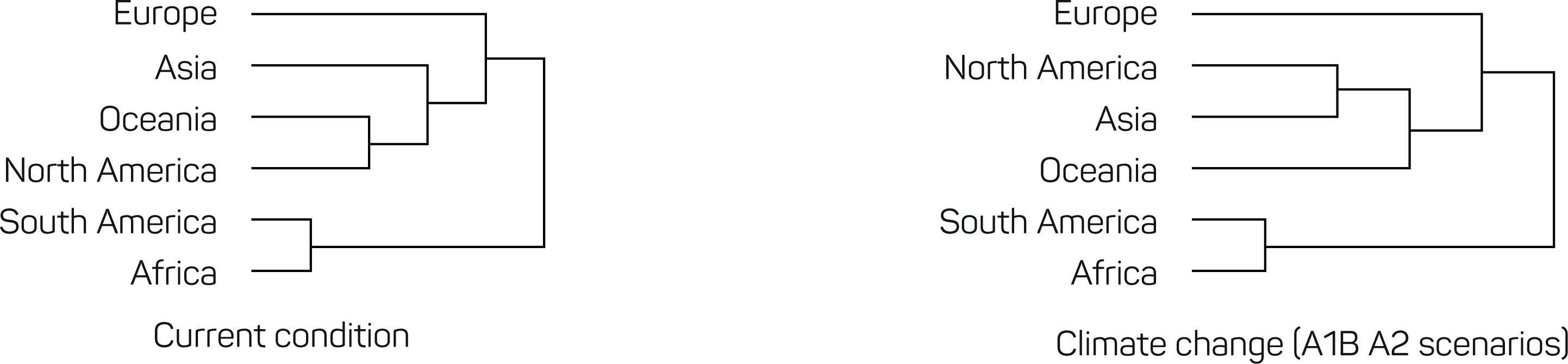
Classification of the different continents in terms of wild einkorn wheat invasion susceptibility in the current condition and climate change. The grouping of CMI values was done based on the cluster analysis using Ward method (5 categories with the Euclidean distances of 0.0095 and 0.13)
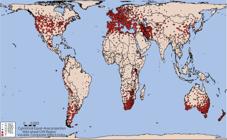
CMI >0.5 for different regions of the world in terms of wild einkorn wheat invasion susceptibility under the current conditions

Regions with a CMI > 0.75 for wild einkorn wheat invasion susceptibility under the current conditions
The results clearly suggest that, under the current climate, this weed species has the potential to expand its global range beyond its current distribution. Europe and Asia show the greatest potential for range expansion, with North America identified as a likely region for introduction. The areas with the highest CMI closely match the infested regions in Lorestan province, where the average CMI for the most suitable regions of the aforementioned countries was estimated to be 0.77. Other studies have established a CMI threshold of ≥ 0.7 for species suitability for distribution (Castellanos-Frıas et al., 2014; 2016; Roigé, Phillips, 2021). The validation results showed that CMIs increase gradually as the number of AWAY climate cells increases (Roigé, Phillips, 2021), highlighting the relatively high accuracy of the CLIMEX model in estimating the regions susceptible to this weed invasion. Other weedy grasses such as Lolium rigidum L. (rigid ryegrass), Avena sterilis L. (sterile oat), Bromus lanceolatus Roth. (Mediterranean brome) have also been predicted by the CLIMEX climate matching algorithm, which showed overall high accuracy and relatively low sensitivity to sample size (Castellanos-Frıas et al., 2014; 2016; Roigé, Phillips, 2021). Understanding the current geographical distribution of wild einkorn wheat is crucial for identifying potential areas of invasion, and establishing a foundation for planning and management strategies. In general, the northern hemisphere will be considered the most susceptible region for the establishment of wild einkorn wheat, although the coldest areas in the southern areas are prone too.
3.2 Prediction under AB1 and A2 scenarios
The average Climate Matching Indices (CMIs) under both the low-carbon emission scenario (A1B) and the most extreme scenario (A2) showed notable increases of 4.7% and 5.6% for Europe and North America, respectively. In contrast, significant declines were observed for Oceania (−6.9%), Asia (−5.7%), and Africa (−4.7%) (Figure 1).
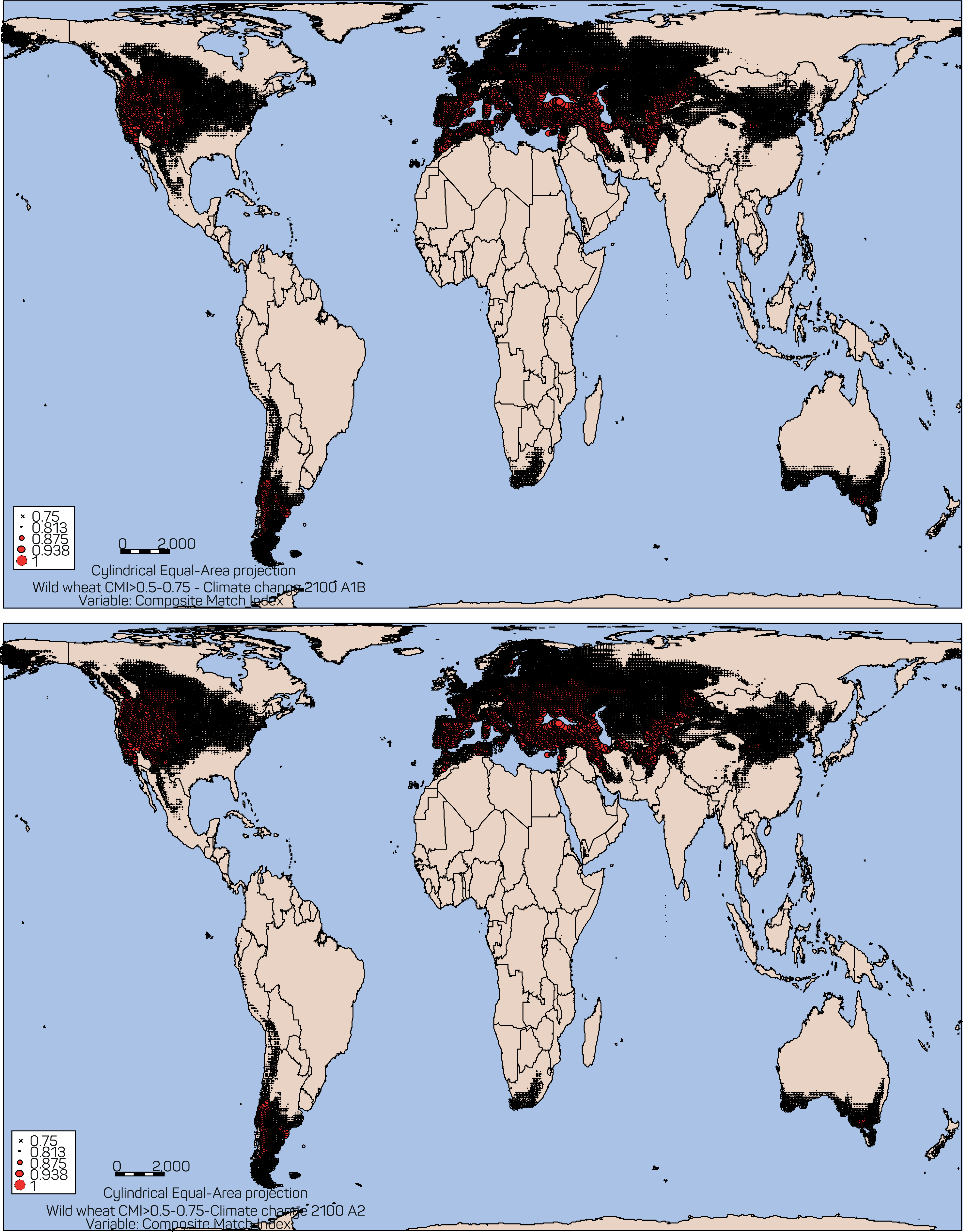
The global average CMI for wild einkorn wheat invasion is projected to decrease by 2.4% under future climate change when compared to current conditions (Figure 1). However, under both the A1B and A2 emission scenarios, regions with CMI values above 0.9 are expected to increase by more than 22.6% and 21.2%, respectively, by 2100. Similarly, areas with CMI values exceeding 0.8 are projected to expand by 12.4% under the A1B scenario and 18.9% under the A2 scenario (Figure 5). Both scenarios suggest a comparable expansion of climatically suitable areas for the spread of this weedy species, particularly into regions that are currently too cold to support its survival.
Important regions with CMIs > 0.5 in terms of wild einkorn wheat susceptibility in climate change conditions under A1B (upper) and A2 (down) scenarios for 2100. CMI > 0.75 are shown in re
The cluster analysis indicated that Europe and North America presented the most favorable climatic conditions for wild einkorn wheat invasion, while Africa showed the least favorable conditions (Figure 2 B). Specifically, eighteen countries in Europe were identified as highly prone to wild einkorn wheat establishment with CMI > 0.69, indicating the highest risk. In contrast, over thirty countries globally, primarily distributed across Africa, Asia, and South America—were categorized as minimally susceptible, with CMI values below 0.57. Notably, South Africa showed the lowest risk of invasion, displaying CMI value around 0.4 (Supplementary Figures 1 to 3).
Our result highlighted how climate change may facilitate the geographical expansion of wild einkorn wheat in Europe and North America. This poses a long-term threat to the crop yield, as wild einkorn wheat has an excellent adaptation to cereal production (Ruiz et al., 2012; Farhangfar et al., 2015; Mousavi et al., 2018a), potential leading to a significant crop yield loss. The outcomes from of the climate change models suggest potential changes in its distribution in different regions (Magarey et al., 2018). Under these climate scenarios, weed flora is expected to shift, making weed management increasingly challenging (Colwell et al., 2008). For example, climate change projections for the future distribution of 10 invasive grass species in the Neotropics indicate a trend towards population reductions in wetter regions and expansions into drier areas (Lopes et al., 2023). The impact of climate change and growing concerns regarding agriculture's ability to ensure future food security have posed significant threats to the sustainability of agricultural systems (Godfray et al., 2010; Vermeulen et al., 2012).
Rising awareness about the potential level of invasion susceptibility of a region can be used in planning preventive operations, such as quarantine regulations. In the present modeling study, a strip equivalent to the width of the USA latitude in the northern hemisphere, is identified as the area most prone to wild einkorn wheat weed invasion worldwide. Therefore, it will be necessary to be careful about new introduction of this weed especially from seed lots, as it can easily be transported due to its similarity to wheat, barley, and triticale seeds. Many alien weed species are introduced via seed lots due to their seed characteristics with the crop (Sohrabi, Gherekhloo, 2015; Arianoutsou et al., 2021). Given its potential to cause significant problems in wheat production areas, robust quarantine regulations and preventive operations are essential to reduce its negative impacts on wheat yield. Beyond its economic impacts, the spread it can cause ecological problems, including the loss of biodiversity of the susceptible area. Evidence suggests that 25 percent of perennial grasslands have been converted to annual grasslands or barren land as a result of such invasive plant species (Shiferaw et al., 2019). As the species’ geographical distribution is not determined exclusively to climate, other biotic or abiotic habitat components might have relevance too (Taylor et al., 2012). Additional studies are required to explore how soil type, the prevalence of pests and diseases, and biotic interactions influence the growth potential of this weed.
The bioclimatic niche models and species distribution models that relate the spatial distribution of plant species to the environmental variables have served as useful tools to respond to the questions concerning the ecology of important weed species and their management (Guisan, Thuiller, 2005; Sohrabi et al., 2024). The developed model provides valuable insights into the expected changes in wild einkorn wheat distribution across Europe, East Asia, and North America under current and future climate conditions. This can aid in the development of adaptation and/or mitigation strategies. However, the distribution of wild einkorn wheat may be prevented by strategies, such as restricting seed dispersal (e.g., through cleaning harvesters) and using certified seeds for sowing. The use of certified seeds ensures that only high-quality, non-contaminated seeds are planted, further reducing the likelihood of weed spread (Baglan et al., 2020). These measures, when implemented effectively, can significantly limit the potential range of wild einkorn wheat and mitigate its negative impacts on agricultural systems.
4. Conclusions
This study set out to assess the potential distribution areas of wild einkorn wheat in the world under two climate change scenarios. As climate conditions become extreme, this weed may increase its extension and its subsequent damage in agricultural ecosystems, which signifies a serious threat to the economic and environmental sustainability of winter cereal crops. Besides, the study highlighted a wide distribution of this species across different areas. A major finding of the study suggests urgent interventions to curtail its further expansion to other regions in the world. Currently, its distribution is limited to some countries in Europe, but without effective restrictions, its introduction to America and other parts of Europe could become a significant challenge due to its high expansion potential. We recommend prioritization of sensitive sites at the verge of greater invasion threat and adoption of robust system to mitigate its introduction especially through the use of cereal seed certified.
Data Availability Statement
The data availability policy does not apply.
Acknowledgments
The authors are grateful to anonymous reviewers for their valuable comments.
References
-
Anwar MP, Islam AKMM, Yeasmin S, Rashid MH, Juraimi AS, Ahmed S et al. Weeds and their responses to management efforts in a changing climate. Agronomy. 2021;11(10):1-20. Available from: https://doi.org/10.3390/agronomy11101921
» https://doi.org/10.3390/agronomy11101921 -
Arianoutsou M, Bazos I, Christopoulou A, Kokkoris I, Zikos A et al. Alien plants of Europe: introduction pathways, gateways and time trends. Peer J. 2021;9:1-20. Available from: https://doi.org/10.7717/peerj.11270
» https://doi.org/10.7717/peerj.11270 -
Baglan M, Mwalupaso GE, Zhou X, Geng X. Towards cleaner production: certified seed adoption and its effect on technical efficiency. Sustainability. 2020;12:1-17. Available from: https://doi.org/10.3390/su12041344
» https://doi.org/10.3390/su12041344 -
Calvia G, Hidalgo PJ, López-Tirado J, Farris E, Fenu G, Bacchetta G. From current to potential distribution: the case of Taxus baccata (Taxaceae, Pinales) on the island of Sardinia (Italy). Plant Biosyst Int J Deal Aspec Plant Biol. 2024;158(4):808-22. Available from: https://doi.org/10.1080/11263504.2024.2360473
» https://doi.org/10.1080/11263504.2024.2360473 -
Castellanos-Frías E, García de León D, Bastida F, Gonzalez-Andujar JL. Predicting global geographical distribution of Lolium Rigidum (rigid ryegrass) under climate change. J Agric Sci. 2016;154(5):755-64. Available from: https://doi.org/10.1017/S0021859615000799
» https://doi.org/10.1017/S0021859615000799 -
Castellanos-Frías E, García de León D, Pujadas-Salva A, Dorado J, Gonzalez-Andujar JL. Potential distribution of Avena sterilis L. in Europe under climate change. Ann Appl Biol. 2014;165(1):53-61. Available from: https://doi.org/10.1111/aab.12117
» https://doi.org/10.1111/aab.12117 -
Choudhary CS, Behera B, Raza BM, Mrunalini K, Kumar Bhoi TK, Kumar Lal M et al. Mechanisms of allelopathic interactions for sustainable weed management. Rhizosphere. 2023;25. Available from: https://doi.org/10.1016/j.rhisph.2023.100667
» https://doi.org/10.1016/j.rhisph.2023.100667 -
Colwell RK, Brehm G, Cardelus CL, Gilman AC, Longino JT. Global warming, elevational range shifts, and lowland biotic attrition in the wet tropics. Science. 2008;322(5899):258-61. Available from: https://doi.org/10.1126/science.1162547
» https://doi.org/10.1126/science.1162547 -
Early R, Rwomushana I, Chipabika G, Day R. Comparing, evaluating and combining statistical species distribution models and CLIMEX to forecast the distributions of emerging crop pests. Pest Manag Sci. 2022;78(2):671-83. Available from: https://doi.org/10.1002/ps.6677
» https://doi.org/10.1002/ps.6677 -
Farhangfar M, Entesari M, Babaee S, Yazdani M, Alizadeh H. Evaluation of biology aspects and chemical management of Triticum boeticum Boiss. in wheat fields. Iran J Field Crop Sci. 2015;46(3):395-404. Available from: https://doi.org/10.22059/ijfcs.2015.55843
» https://doi.org/10.22059/ijfcs.2015.55843 -
Global Biodiversity Information Facility – GBIF. GBIF backbone taxonomy. Copenhagen: Global Biodiversity Information Facility; 2016[access Oct 25, 2016]. Available from: http://www.gbif.org
» http://www.gbif.org -
Godfray CHJ, Beddington JR, Crute IR, Haddad L, Lawrence D, Muir JF et al. Food security: the challenge of feeding 9 billion people. Science. 2010;327(5967):812-8. Available from: https://doi.org/10.1126/science.1185383
» https://doi.org/10.1126/science.1185383 -
Guillera-Arroita G, Lahoz-Monfort J, Elith J, Gordon A, Kujala H, Lentini P et al. Is my species distribution model fit for purpose? Matching data and models to applications. Glob Ecol Biogeogr. 2015;24(3):276-92. Available from: https://doi.org/10.1111/geb.12268
» https://doi.org/10.1111/geb.12268 -
Guisan A, Thuiller W. Predicting species distribution: offering more than simple habitat models. Ecol Lett. 2005;8:993-1009. Available from: https://doi.org/10.1111/j.1461-0248.2005.00792.x
» https://doi.org/10.1111/j.1461-0248.2005.00792.x - Intergovernmental Panel on Climate Change – IPCC. Climate change 2007: synthesis report: summary for Policymakers. Cambridge: Cambridge University; 2007.
- Intergovernmental Panel on Climate Change – IPCC. Climate change 2022: impacts, adaptation, and vulnerability. Cambridge: Cambridge University, 2022.
-
Kriticos DJ, Webber BL, Leriche A, Ota N, Macadam I, Bathols J et al. CliMond: global high resolution historical and future scenario climate surfaces for bioclimatic modelling. Methods Ecol Evol. 2012;3(1):53-64. Available from: https://doi.org/10.1111/j.2041-210X.2011.00134.x
» https://doi.org/10.1111/j.2041-210X.2011.00134.x -
Lopes A, Demarchi LO, Fernandez Piedade MT, Schöngart J, Wittmann F, Rodriges Munhoz CB et al. Predicting the range expansion of invasive alien grasses under climate change in the Neotropics. Perspec Ecol Cons. 2023;21(2):128-35. Available from: https://doi.org/10.1016/j.pecon.2023.02.005
» https://doi.org/10.1016/j.pecon.2023.02.005 -
Lopez-Tirado J, Gonzalez-Andujar JL. Spatial weed distribution models under climate change: a short review. Peer J. 2023;11:1-13. Available from: https://doi.org/10.7717/peerj.15220
» https://doi.org/10.7717/peerj.15220 -
Magarey R, Newton L, Hong SC, Takeuchi Y, Christie D, Jarnevich CS et al. Comparison of four modeling tools for the prediction of potential distribution for non-indigenous weeds in the United States. Biol Invasions. 2018; 20:679-94. Available from: https://doi.org/10.1007/s10530-017-1567-1
» https://doi.org/10.1007/s10530-017-1567-1 -
Mousavi SK, Ghanbari A, Ghorbani R, Baghestani MA. [The effect of temperature on germination and emergence of wild wheat (Triticum boeoticum Boiss) and wild barley (Hordeum spontaneum C. Koch)]. Iran J Weed Sci. 2017;13(1):11-28. Persian. Available from: https://doi.org/10.22092/ijws.2017.1301.02)
» https://doi.org/10.22092/ijws.2017.1301.02) -
Mousavi SK, Ghanbari A, Ghorbani R, Baghestani MA. [The presence severity of wild wheat (Triticum boeoticum Boiss) and wild barley (Hordeum spontaneum K.Koch) weeds in the rainfed wheat fields of Lorestan Province]. Iran J Plant Prot Res. 2018a;32(2):231-43. Persian. Available from: https://doi.org/10.22067/jpp.v31i3.55439
» https://doi.org/10.22067/jpp.v31i3.55439 -
Mousavi SK, Ghanbari A, Ghorbani R, Baghestani M. After-ripening and emergence pattern of wild wheat (Triticum boeoticum Boiss) and wild barley (Hordeum spontaneum K. Koch) under dryland condition of Lorestan Province. Iran J Plant Prot Res. 2018b;32(3):385-98. Persian. Available from: https://doi.org/10.22067/jpp.v32i2.61452
» https://doi.org/10.22067/jpp.v32i2.61452 - Nakicenovic N, Alcamo J, Davis G, Vries B, Fenhann J, Gaffin S et al. Special report on emissions scenarios: a special report of working group III of the Intergovernmental Panel on Climate Change. Richland: Environmental Molecular Sciences Laboratory; 2000.
-
Peters K, Breitsameter L, Gerowitt B. Impact of climate change on weeds in agriculture: a review. Agron Sustain Dev. 2014;34:707-21. Available from: https://doi.org/10.1007/s13593-014-0245-2
» https://doi.org/10.1007/s13593-014-0245-2 -
Phillips CB, Kean JM, Vink CJ, Berry JA. Utility of the CLIMEX ‘match climates regional' algorithm for pest risk analysis: an evaluation with non-native ants in New Zealand. Biol Inv. 2018;20:777-91. Available from: https://doi.org/10.1007/s10530-017-1574-2
» https://doi.org/10.1007/s10530-017-1574-2 -
Rahmstorf S, Cazenave A, Church JA, Hansen JE, Keeling RF, Parker DE, Somerville RCJ. Recent climate observations compared to projections. Science. 2007;316(5825):709. Available from: https://doi.org/10.1126/science.1136843
» https://doi.org/10.1126/science.1136843 -
Roigé M, Phillips CB. Validation and uncertainty analysis of the match climates regional algorithm (CLIMEX) for Pest risk analysis. Ecol Inform. 2021;61. Available from: https://doi.org/10.1016/j.ecoinf.2020.101196
» https://doi.org/10.1016/j.ecoinf.2020.101196 -
Ruiz M, Fite R, Novillo MA, Martinez Labarga JM. Short communication: collection and characterisation of a population of Triticum boeoticum Boiss., a wild wheat species not previously found in the Mediterranean western region. Span J Agric Res. 2012;10(4):1070-4. Available from: https://doi.org/10.5424/sjar/2012104-2781
» https://doi.org/10.5424/sjar/2012104-2781 -
Shiferaw H, Bewket W, Alamirew T, Zeleke G, Teketay D, Bekele K et al. Implications of land use/land cover dynamics and prosopis invasion on ecosystem service values in Afar Region, Ethiopia. Sci Total Environ. 2019;675:354-66. Available from: https://doi.org/10.1016/j.scitotenv.2019.04.220
» https://doi.org/10.1016/j.scitotenv.2019.04.220 -
Sohrabi S, Gherekhloo J, Hassanpour-bourkheili S, Soltani A, Gonzalez-Andujar JL. Factors influencing the variation of plants' cardinal temperature: a case study in Iran. Plants. 2024;13(20):1-13. Available from: https://doi.org/10.3390/plants13202848
» https://doi.org/10.3390/plants13202848 - Sohrabi S, Gherekhloo J. [Investigating status of the invasive weeds of Iran]. In: Proceeding of 6th Iranian Weed Science Congress. Birjand: Iranian Society of Weed Science; 2015. p. 74. Persian.
-
Soufizadeh T, Gherekhloo J, Sohrabi S, Bagherani N, Siahmarguee A. [Mapping the distribution of winter wild oat (Avena ludoviciana Durieu.) biotype resistant to clodinafop-propargyl, diclofop-methyl and fenoxaprop-P ethyl herbicides in wheat fields of Kalaleh]. Iran J Weed Sci. 2022;18(1):101-13. Persian. Available from: https://doi.org/10.22092/ijws.2022.127707.1349
» https://doi.org/10.22092/ijws.2022.127707.1349 - Sutherst RW, Maywald GF, Kriticos DJ. CLIMEX version 3: user's guide. Kingscliff: Hearne Scientific Software; 2007.
-
Taylor S, Kumar L, Reid N, Kriticos DJ. Climate change and the potential distribution of an invasive shrub, Lantana camara L. PLoS One. 2012;7(4):1-14. Available from: https://doi.org/10.1371/journal.pone.0035565
» https://doi.org/10.1371/journal.pone.0035565 -
Vermeulen S, Zougmoré R, Wollenberg E, Thornton P, Nelson G, Kristjanson P et al. Climate change, agriculture and food security: a global partnership to link research and action for low-income agricultural producers and consumers. Curr Op Env Sust. 2012;4(1):128-33. Available from: https://doi.org/10.1016/j.cosust.2011.12.004
» https://doi.org/10.1016/j.cosust.2011.12.004