
 Goosegrass management challenges in Brazil: the ongoing battle against herbicide resistance
Abstract
Eleusine indica (L.) Gaertn., commonly known as goosegrass, is one of the most troublesome weed species worldwide. In Brazil, the increasing number of herbicide-resistance cases, particularly to glyphosate, has made goosegrass the most agronomically significant weed species in the country. Given its rapid spread in recent cropping seasons, this review compiles current knowledge on goosegrass biology and herbicide resistance to support the development of more effective integrated weed management strategies. Successful control approaches must consider the species’ biological characteristics and the potential occurrence of herbicide-resistant populations in target areas. The adoption of preventive practices (e.g., cleaning machinery, purchasing seeds from certified companies), cultural practices (e.g., balanced fertilization, use of regionally cultivars, phytotechnical adjustments), and mechanical practices (e.g., mowing) can optimize the effectiveness of herbicides in controlling this weed. Chemical control of goosegrass should rely on pre-emergence herbicides, along with post-emergence products featuring different mechanisms of action, with sequential applications anticipated. Implementing integrated weed management systems offers the potential to mitigate the current losses and damage caused by goosegrass.
Chemical Control; Eleusine indica ; Glyphosate Resistance; Weed Resistance
Introduction
The genus Eleusine comprises approximately 90 species, including both annual and perennial plants. The most common species worldwide are E. africana, E. coracana, E. floccifolia, E. indica, E. intermedia, E. jaegeri, E. kigeziensis, E. multiflora, E. reniformis, E. tristachya, and E. verticillata (Hiremath, Chennaveeraiah, 1982; Dwivedi et al., 2012). Among them, E. indica (goosegrass) is the most widely known, primarily due to its importance as a weed in various agricultural production systems. Currently, goosegrass, along with sourgrass (Digitaria insularis) and horseweed (Conyza spp.), is among the three most prevalent weeds in Brazil in terms of geographic distribution and abundance. Goosegrass has caused significant yield losses for grain producers across all regions of the country (Santos et al., 2018; Lucio et al., 2019; Amaral et al., 2023; Kalsing et al., 2024; Alcantara et al., 2025).
Recently, the emergence of goosegrass populations with single resistance to glyphosate (an inhibitor of 5-enolpyruvylshikimate-3-phosphate synthase – EPSPS), cross-resistance to acetyl-CoA carboxylase (ACCase) inhibitors, and multiple resistance to both mechanisms (Heap, 2025) has made its chemical control challenging in many Brazilian regions. In addition to resistance issues, the application of post-emergence herbicides outside the recommended growth stages has further contributed to the failure of chemical control of this weed (Peppers et al., 2024).
The losses caused by goosegrass in crops result from competition vital resources such as water, light, and nutrients, as well as the release of allelopathic compounds that inhibit the growth of economically important species (Mostafiz, 2011). Beyond its highly competitive potential and allelopathy, goosegrass can indirectly damage crops by hosting nematodes, thus promoting the proliferation of these parasites in production areas (Pinheiro et al., 2019). Yield losses in soybean due to goosegrass interference can range from 35% to as high as 100% when the weed is inadequately managed (Rudell et al., 2021; Caldas et al., 2023; Duarte et al., 2024).
Potential yield reductions in soybean due to goosegrass can vary, as factors such as crop type, density, spacing, weather conditions, soil fertility, and weed characteristics (including density, growth stage, and coexistence period) affect the level of interference. For example, two competition studies conducted in the state of Rio Grande do Sul showed that soybean plants exhibited superior competitive ability compared to goosegrass when both species were present in equal proportions (Wandscheer et al., 2013; Franco et al., 2017). However, in some soybean fields heavily infested with herbicide-resistant goosegrass, producers may opt not to harvest their crops because the expected yield is insufficient to cover operational costs. Additionally, harvesting these areas could lead to significant dispersion of weed seeds to other fields on the property (Figure 1).

Soybean fields with high goosegrass density where the decision was made not to harvest the crop due to infestation conditions.
In maize crop, grain yield reductions of up to 45% have been observed due to goosegrass interference (Souza et al., 2024). The authors reported that goosegrass possesses hardy characteristics and broad adaptability to abiotic stress. Consequently, under resource limitations, goosegrass can exhibit heightened aggressiveness in competing with the crop. Another study found that maize grain yield was reduced by 20% when goosegrass plants were located in the interrows, 20 cm away from the crop rows (Rambakudzibga et al., 2002).
Given the expansion of goosegrass-infested areas in recent cropping seasons in Brazil, which has resulted in losses throughout the agricultural production chain, this literature review aims to compile information to help understand the biology and herbicide resistance of this weed. The goal is to support the development of more effective strategies for implementing integrated management of this species, focusing on soybean and maize cropping systems.
2. Goosegrass biology: impacts on management strategies
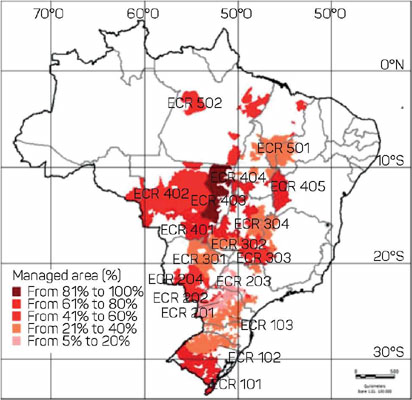
Although the center of origin of goosegrass is uncertain, some studies suggest that it is native to temperate and tropical regions of Asia (Rojas-Sandoval, Acevedo-Rodríguez, 2014). The occurrence of goosegrass has been reported at altitudes up to 2,000 m in tropical regions and in subtropical and temperate areas at latitudes up to 50° (Rojas-Sandoval, Acevedo-Rodríguez, 2014; Alcantara et al., 2016). According to the Global Biodiversity Information Facility (2025), goosegrass has been recorded in 163 countries and on Caribbean and Pacific islands, with a geographic distribution across all five continents (Figure 2). In tropical and subtropical regions, goosegrass can rapidly spread in agricultural areas and become a dominant weed. In Brazil, this species infests crops in all states, reflecting its adaptability to a wide variety of soils and climates. A study of floristic composition during the 2016/2017 soybean season found goosegrass to be widespread across approximately 14 million ha (Figure 3) (Lucio et al., 2019), corresponding to approximately 17.1% of the 81 million ha of planted area planned for 2025 in the country (Secretaria de Comunicação Social, 2025). However, recent data on the percentage of area infested by goosegrass in Brazil are lacking, and owing to the practical challenges in controlling the species across regions, goosegrass is suggested to remain the main weed in the country’s grain production systems.


Goosegrass is a monocotyledonous species belonging to the family Poaceae. This weed exhibits C4 photosynthetic metabolism, which confers a highly competitive advantage over other C3 plants, particularly in tropical climates. Goosegrass may display either a creeping or erect growth habit, influenced by phenotypic plasticity and/or competition with neighboring plants. It is a diploid species with 18 chromosomes (2n = 18) and a relatively small genome size of 584 Mb (Zhang et al., 2019). The species is classified as self-pollinating and reproduces exclusively through sexual reproduction, producing seeds. A single plant can produce up to 120,000 seeds (Takano et al., 2016). Studies have shown that goosegrass seed germination increases in the presence of light, characterizing the seeds as positively photoblastic, in a facultative manner (Chauhan, Johnson, 2008). Water availability is the primary factor regulating germination; when soil moisture is sufficient, a high percentage (≈ 85%) of seeds germinate, and seedlings emerge (Takano et al., 2016).
Goosegrass has an annual life cycle, meaning that it requires less than a year to germinate, produce seeds, and senesce (Lorenzi, 2011). However, in highly infested fields, a small proportion of goosegrass plants have been observed to survive for longer periods, even during off-season intervals that are often marked by intense dry spells in many agricultural regions of Brazil (Sodré-Filho et al., 2022). Therefore, goosegrass can exhibit biennial or perennial life cycles. This phenomenon has further complicated control efforts, as pre-sowing herbicide applications (burndown) during summer crop establishment often occur when goosegrass is at advanced stages of development (tillering and flowering), reducing the effectiveness of chemical control. For many weed species, as plant development progresses (Takano et al., 2018; Presoto et al., 2020), greater restrictions on the efficacy of post-emergence herbicides can be observed. This stage-dependent effect on herbicide efficacy arises from several factors, including increased biomass, which requires higher herbicide doses, and the evolution of tolerance or resistance mechanisms (e.g., greater wax deposition and enhanced ability to metabolize herbicides), in addition to aspects related to application technology. This is especially important for contact-action herbicides (Takano et al., 2016; Mendes et al., 2020).
Goosegrass exhibits rapid initial growth, with intense tillering starting approximately 35 days after emergence (DAE). At this stage, there is a noticeable increase in the proportion of stems and inflorescences relative to leaves, along with an accumulation of dry mass. Takano et al. (2016) reported that tillering begins at approximately 9 DAE, with new tillers emerging every 3 to 4 days, depending on edaphoclimatic conditions. Although goosegrass lacks vegetative propagation mechanisms, plants at more advanced developmental stages can develop adventitious roots from stem nodes in contact with the soil (Kissmann, 1997; Ganeshaiah, Shaanker, 1982). It is also noteworthy that goosegrass plants in later developmental stages exhibit greater tolerance to abiotic stresses (Takano et al., 2016). Consequently, post-emergence herbicide applications that initially appear effective often fail to provide adequate control due to weed regrowth. Therefore, sequential herbicide application systems are needed to control flowering goosegrass plants, with the interval between applications determined by the regrowth rate.
Another critical morphological characteristic of goosegrass is the deposition of wax on its leaves, particularly during later developmental stages (Malpassi, 2006). Moreover, as a member of the family Poaceae, goosegrass possesses intercalary meristems in already formed tissues (e.g., stem internodes) and lacks a fully organized vascular system (Kissmann, 1997). These morphological characteristics hinder herbicide absorption and translocation, thereby reducing their effectiveness. Goosegrass has no specific fertility requirements and can thrive in fertile as well as in nutrient-poor soils. A striking feature of its biology is its adaptability to compacted soils (Correia et al., 2022), which explains its higher occurrence in areas with heavy machinery traffic, such as roadsides and sprayer tracks. Compared with Digitaria insularis (sourgrass), E. indica is more aggressive because it establishes successfully in both conventional planting areas (tilled soils) and direct sowing systems (no-till or minimally disturbed soils). In contrast, sourgrass, which reproduces both sexually and asexually, thrives only successful under no-till conditions (Amaral et al., 2023).
3. Resistance of goosegrass to herbicides
In addition to its biological characteristics, goosegrass resistance to herbicides has contributed to control failures (Takano et al., 2018). Herbicide-resistant goosegrass biotypes have been reported in 13 countries, with the first case documented in 1973. These reports involve cases of resistance to eight modes of action, namely EPSPS, ACCase, glutamine synthetase (GS), Photosystem I (PSI), Photosystem II (PSII), protoporphyrinogen oxidase (PPO), acetolactate synthase (ALS), and microtubule assembly inhibition (Damalas, Koutroubas, 2024). Most cases correspond to single resistance with resistance to a single mode of action). Four cases of multiple resistance have been reported to EPSPS, ACCase, GS, and PSI inhibitors (Correia et al., 2022; Nunes et al., 2022; Chen et al., 2024).
Goosegrass has a remarkable ability to evolve resistance to herbicides, relying on multiple genetic, physiological, and metabolic mechanisms, against the same herbicide. Globally, the first report of glyphosate resistance in this weed came from populations in Malaysia in 1997 (Baerson et al., 2002), who also documented the first cases of multiple herbicide resistance (Jalaludin et al., 2015). Yu et al. (2015) reported the first glyphosate resistance case involving the double TIPS mutation, which incurs a fitness cost, as plants carrying this mutation are smaller compared to susceptible biotypes (Han et al., 2017). In addition, Gherekhloo et al. (2017) reported a glyphosate resistance mechanism that combines a mutation with EPSPS overexpression (Gherekhloo et al., 2017).
In Brazil, the first case of goosegrass resistance was reported in 2003, with populations showing cross-resistance to ACCase inhibitors, including cyclohexadione (e.g., sethoxydim) and aryloxyphenoxypropionate (e.g., cyhalofop and fenoxaprop) (Vidal et al., 2006). In 2016, the first glyphosate-resistant biotype of goosegrass was reported in the state of Paraná. In 2017, the first case of multiple resistance was recorded in the state of Mato Grosso, with populations resistant to both EPSPS (glyphosate) and ACCase (haloxyfop and fenoxaprop) inhibitors (Heap, 2025). Recently, a biotype with multiple resistance to glyphosate and ACCase inhibitors (haloxyfop and clethodim) was identified (Nunes et al., 2022). In Brazil, metabolic resistance via Cyt P450 has not yet been detected; however, if it occurs, many proposed management strategies could rapidly lose effectiveness, as observed in Asian populations (Yao et al., 2024). There is also concern that some populations in Brazilian agricultural areas may evolve resistance to glufosinate (Granzioli et al., 2024; Luiz et al., 2024).
Considering all aspects discussed, some explanations have been proposed for the reduced efficacy of herbicides for goosegrass control. However, additional factors further complicate its chemical control. For example, weather conditions during application can influence the performance of systemic herbicides. Plants under water or heat stress—a common scenario during pre-sowing desiccation—are more difficult to control. Another contributing factor is the use of suboptimal herbicide doses, especially glyphosate, as the recommended doses for goosegrass are higher than those for other weed species (Ministério da Agricultura, Pecuária e Abastecimento, 2025). An additional challenge is the growth stage of plants at the time of burndown, which often necessitates sequential applications.
4. Integrated management practices for goosegrass
Considering all the issues associated with goosegrass, it is evident that control strategies in infested areas must be integrated, as relying solely on herbicides has not ensured effective management. The exclusive use of chemical control methods,coupledwiththeinabilitytoguaranteeeffectiveness, increases the selection pressure for new herbicide-resistant populations (Harker, O’Donovan, 2013). Strategies aimed at preventing the establishment of goosegrass in areas where it is not yet the dominant weed include: 1) using weed free seed free, particularly cover crop seeds; 2) cleaning machinery and equipment when moving between fields; 3) managing the most infested fields last during operational practices and harvesting; 4) controlling the weed around production areas; and 5) avoiding the movement of harvesters between different regions (Bàrberi, 2003).
Several practices can enhance the crop’s competitive advantage. These include: 1) implementing fertilization programs based on technical recommendations for the crop; 2) selecting varieties/hybrids adapted to the growing region that exhibit faster initial development; and 3) sowing within the recommended period for the crop. Such practices promote better initial development of the cultivated species, providing a competitive advantage over goosegrass. In addition, cultural control, crop rotation, and intercropping practices can help manage goosegrass within production systems (Marochi et al., 2018). Weed suppression through these crop diversification strategies occurs by occupying space that would otherwise be fallow for weed emergence, particularly during the vegetative development of the intercropped species. Suppression can also result from the release of allelopathic compounds by certain species, which may inhibit weed growth, and from the production of mulch, which acts as a physical barrier to weed emergence (Weisberger et al., 2019). Furthermore, rotating cultivated species within a production system naturally promotes herbicide diversification, making it an important strategy to prevent the establishment and development of goosegrass.
Another widely discussed control method for managing areas infested by goosegrass is mechanical control, which primarily involves two approaches: soil tillage and plant mowing. Because goosegrass lacks vegetative propagation structures, implementing this practice at the beginning of the dry season can effectively control adult plants, as the exposed tissue will dehydrate under direct sunlight (Fishkis, Koch, 2023). This practice is effective when roots are completely exposed, meaning that care should be taken to ensure soil aggregates is not in contact with them, as this could lead to plant regrowth. However, tilling can result in the loss of organic matter, compromise soil physical quality, increase susceptibility to erosion, and facilitate the spread of weed seeds throughout the area (Oliveira et al., 2020). Therefore, the decision to adopt tillage should not be based solely on the presence of goosegrass, but rather on soil-related factors, such as physical constraints (e.g., low porosity and compaction) and/or fertility issues (e.g., high levels of exchangeable aluminum and low base saturation).
Mowing goosegrass plants offers advantages, such as improving plantability in heavily infested areas and ensuring the removal of all aboveground plant parts, which increases the effectiveness of subsequent herbicide applications, as already demonstrated for other weed species of the family Poaceae (Raimondi et al., 2020). This practice can be effective when goosegrass exhibits an erect growth habit. However, if the area was left fallow during the intercropping period, the plants may develop a creeping habit, making mowing difficult. Disadvantages include lower efficiency, as the equipment used for this practice operates on a reduced scale, high costs, particularly due to fuel consumption, and the stimulation of root growth after regrowth. These drawbacks highlight the importance of applying herbicides after mowing these plants. One goosegrass management practice has been the application of herbicides in areas after soybean harvest. The cutting performed by the harvester improves the performance of chemical control in sequential applications following this operation.
5. Strategies to optimize chemical control of goosegrass
All weed control methods play an important role in the integrated management of goosegrass. However, in the short term, control systems capable of rapidly reducing infestations rely primarily on the use of herbicides. Therefore, proper attention to application technology in areas infested with goosegrass is a key step for its effective control. In this regard, several practices are fundamental to improving the performance of chemical control, including working with higher spray volumes, especially during pre-sowing burndown; increasing the oil dose (regardless of the source) for herbicides that require this class of adjuvants (Cieslik et al., 2013); analyzing water quality for spraying; considering the timing and weather conditions at the time of application; and avoiding antagonistic herbicide mixtures, such as ACCase inhibitors with 2,4-D (Osipe et al., 2021).
In areas heavily infested with goosegrass, the adoption of pre-emergence herbicides is necessary, particularly when populations are resistant to the active ingredients commonly used for post-emergence control. Pre-emergence applications can reduce goosegrass germination flushes and injure emerging seedlings, thereby increasing their susceptibility to post-emergence herbicides. In this context, Table 1 summarizes research findings and empirical field observations on the expected performance of pre-emergence herbicides for goosegrass control. To better understand the control levels, this review adopted the model proposed by Braz and Takano (2022), which defines three categories of herbicide effectiveness against weeds. It is worth noting that this review adopts the term expected performance for pre-emergence weed control because effectiveness can vary due to multiple factors, including application rate; soil characteristics (e.g., moisture, texture, organic matter content, presence of green biomass and/or mulch on the surface); weather conditions at the time of application; and weed infestation density.
Compilation of data on the expected performance of herbicides applied in pre-emergence for goosegrass control.
Another important aspect to consider before selecting a herbicide for pre-emergence control of goosegrass is an analysis of the product labels regarding registration for the crops of interest (e.g., soybean or maize) (Ministério da Agricultura, Pecuária e Abastecimento, 2025), as well as determination of the appropriate doses and application method (pre-sowing or post-sowing application). The use of herbicides in this modality can ensure good control performance while maintaining adequate crop selectivity. In general, the herbicides that have demonstrated the greatest efficacy for pre-emergence goosegrass control belong to the following mechanisms of action: very long-chain fatty acid inhibitors VLCFA (inhibitors) (pyroxasulfone and S-metolachlor), microtubule assembly inhibitors (pendimethalin and trifluralin), DXPS inhibitors (clomazone), and HPPD + ALS inhibitors (isoxaflutole + tiencarbazone) (Takano et al., 2018; Silva, 2020; Spricigo et al., 2024).
It is important to recognize that the current situation across Brazil may involve four resistance scenarios: 1) populations susceptible to herbicides, 2) populations resistant to ACCase inhibitors, 3) populations resistant to EPSPS inhibitors, and 4) populations with multiple resistance to both ACCase and EPSPS inhibitors. Therefore, herbicide performance may vary between populations depending on their specific resistance profile.
Table 2 presents the expected performance of herbicides applied alone for post-emergence goosegrass control. It is worth noting that their performance can vary due to factors such as application rate, weed growth stage, and weather conditions at the time of spraying. As with pre-emergence herbicides, it is necessary to check the product labels to ensure registration for use on the crops of interest, as this also helps determine the appropriate doses and timing of application.
Compilation of data on the expected performance of herbicides applied alone in post-emergence for goosegrass control.
Regarding the performance of ACCase inhibitor herbicides in populations resistant to this mechanism of action, it is important to note that, although goosegrass resistant biotypes to the main graminicides used in Brazilian production systems already exist, resistance is not always characterized as cross-resistance. Therefore, in situ analysis is recommended, as there is a possibility that a given graminicide no longer control the goosegrass population. However, another herbicide may still be effective if applied during the early stages of weed growth. An example that illustrates this situation is the Trp2027Cys mutation in the gene encoding the ACCase enzyme, which confers resistance to aryloxyphenoxypropionates but not to cyclohexadiones, in contrast to the Asp2078Gly mutation, which results in resistance to both aryloxyphenoxypropionates and cyclohexadiones (Vila-Aiub, 2015; Takano et al., 2020c). The use of glyphosate in combination with graminicides for controlling populations resistant to EPSPs inhibitors, this practice should be avoided. Research studies have shown that in cases of simple resistance to EPSPS inhibitors, the addition of glyphosate to graminicides results in an antagonistic effect compared with the application of graminicides alone (Takano et al., 2018; Almeida et al., 2022).
The performance of various herbicides against goosegrass can be optimized through mixtures that produce a synergistic effect. Mixtures of glufosinate with EPSPS inhibitors, ACCase inhibitors, or PPO inhibitors tend to show synergistic control this weed (Takano et al., 2018; Takano et al., 2020a). Although glufosinate has contact activity (Takano et al., 2020b), its action is slower than that of diquat, making it suitable for use in combination with systemic herbicides. Despite the good performance of glufosinate in specific strategies for goosegrass control, such as applications at early growth stages or in mixtures with other herbicides, its effectiveness is influenced by weather conditions at the time of application because it is a photo- dependent herbicide (Takano, Dayan, 2021; Spricigo et al., 2024). In this context, certain factors should be considered before application, particularly the timing of spraying. Applying this herbicide around midday ensures greater sunlight exposure following treatment. When glufosinate is applied early in the morning, late in the afternoon, or on cloudy days, its binding to the GS enzyme may fail to trigger the accumulation of reactive oxygen species (ROS), thereby preventing the destruction of cell membranes and necrosis of leaf tissue (Takano, Dayan, 2020). Because glufosinate binds irreversibly to GS, there is no opportunity for it to bind to additional GS molecules.
The authors’ observations demonstrate that diquat used alone, particularly on plants that have not undergone prior control measures, is not an ideal option for managing adult goosegrass (personal observation). Although it rapidly induces leaf tissue necrosis, the weed exhibits a high regrowth rate. Therefore, diquat-based products should be applied to control goosegrass at early developmental stages or in sequential applications. In the specific case of diquat, nighttime applications may improve weed control levels (Pitelli et al., 2011). When applied in the presence of light, diquat captures electrons from ferredoxin reduction in the chloroplast, forming a reducing power that converts the bipyridyl ion to a bipyridyl radical. In the presence of oxygen and water, it is reoxidized to its original form, releasing electrons that react with oxygen and water to form hydrogen peroxide (Oliveira Jr., 2011). At high concentrations, hydrogen peroxide damages cell membranes, leading to rapid necrosis of leaf tissue. However, when diquat is applied at night, hydrogen peroxide is not produced immediately, and the tissues responsible for translocation are less affected. This allows the herbicide to move slightly further within the plant before sunlight exposure initiates an intense oxidative process. This may explain why this active ingredient is more effective in certain situations when applied at night.
PPO inhibitors are promising alternatives for controlling goosegrass in areas where populations exhibit multiple resistance, provided they are used in mixtures with other herbicides (EPSPS, ACCase, GS, and PSI inhibitors), as such combinations tend to produce synergistic effects. The efficacy of PPO-inhibiting herbicides in these mixtures with other active ingredients may be affected by the presence of resistance to any of the herbicides belonging to those other modes of action. Among the active ingredients currently marketed in Brazil, those acting through this mode of action (tiafenacil, flumioxazin, saflufenacil, and carfentrazone) tend to perform better in controlling goosegrass when mixed with glufosinate or diquat. Moreover, new PPO-inhibitor- based active ingredients, such as epyrifenacil, are in the final stages of development in Brazil and could contribute mainly to burndown desiccation systems prior to the direct sowing of crops.
ALS, DXPS, and HPPD inhibitors are used for post-emergence control of goosegrass. When combined with other active ingredients (e.g., glyphosate, glufosinate, or graminicides), they can increase the effectiveness of weed control. Among ALS inhibitors, nicosulfuron has demonstrated good control of goosegrass at higher doses, when applied in combination with other herbicides and including sequential applications with contact herbicides (McCullough et al., 2012; Takano et al., 2018). For crops, where nicosulfuron is registered for post-emergence applications, such as maize, nicosulfuron has several selectivity restrictions at higher doses (e.g.: selectivity varies depending on the hybrid’s genetics, besides restrictions with nitrogen fertilization and associations with organophosphate insecticides) (Cavalieri et al., 2010). Consequently, current research is exploring the use of this herbicide in other applications, such as pre-sowing desiccation of soybean, for which commercial formulations based on this active ingredient are already registered (Ministério da Agricultura, Pecuária e Abastecimento, 2025). In pre-sowing burndown of soybean, if the recommended waiting period between nicosulfuron application and sowing is respected (30 days of plant back), the herbicide can help to control goosegrass without causing residual injury that would affect soybean (Ministério da Agricultura, Pecuária e Abastecimento, 2025).
Among the herbicides that inhibit carotenoid synthesis, clomazone (a DXPS inhibitor) applied alone in post-emergence of goosegrass is ineffective in controlling this weed. However, combining clomazone with ACCase or GS inhibitors resulted in a slight increase in control levels. For HPPD inhibitors, specifically mesotrione, tolpyralate, and tembotrione, studies conducted under post-emergence conditions in maize have shown that combining these active ingredients with PSII inhibitors (such atrazine or terbuthylazine) provides good performance in the control of goosegrass (over 80%) and improves the management of other weed species through the synergistic interaction between these modes of action (Takano et al., 2018; Fluttert et al., 2022a; Fluttert et al., 2022b).
MSMA, whose mechanism of action is unknown, has been shown to provide greater than 80%goosegrass control when combined with other post-emergence herbicides (Busey, 2004; Brosnan et al., 2008). However, a common concern with MSMA is its residual activity, which can affect subsequent crops. Although MSMA has a long half-life in the soil, its high adsorption coefficient reduces the carryover risk compared to some other residual herbicides (Price et al., 2008).
The use of PSII inhibitors, specifically metribuzin and diuron, is highly effective for post-emergence control of goosegrass, depending on factors such as soil moisture, application rate, and whether they are used alone or in combination with other herbicides (Wiecko, 2000; Rusli et al., 2014). The first studies reporting the effectiveness of metribuzin on adult (flowering) goosegrass plants showed the importance of combining this herbicide with other active ingredients and the benefit of increasing the metribuzin doses to improve control levels (Busey, 2004; Brosnan et al., 2008). The superior performance of metribuzin (over 80% control) in post-emergence applications against goosegrass led to its intensive use, creating high selection pressure and resulting in the identification of resistant populations in Hawaii (United States) in 2003 (Heap, 2025).
Based on the experiments conducted with metribuzin in postemergence control of goosegrass, the key conclusions from these studies were: 1) metribuzin controls goosegrass post-emergence mainly through absorption by the plant’s root system, with increased effectiveness when applied to moist soil (Almeida et al., 2024a); 2) metribuzin is effective alone but should be combined with other herbicides (e.g. glufosinate and tiafenacil) to improve effectiveness and reduce the risk of selecting resistant populations (Almeida et al., 2024b).
Diuron has long been used to control goosegrass in Cynodon spp. pastures within livestock systems in Brazil and has been effective when combined with MSMA. In soybean cultivation systems diuron was effective without sequential applications (Almeida et al., 2022). However, to use these PSII inhibitors (metribuzin and diuron) efficiently, further studies are needed to determine the selectivity of metribuzin for soybean cultivars and assess the safety interval (plant-back) between diuron application and soybean sowing (Braz et al., 2023). Until further studies are conducted, Metribuzin or diuron should be incorporated into early control strategies before sowing the target crop (e.g., autumn management or pre-sowing desiccation), with diuron requiring greater caution due to its higher residual activity in the soil and more limited selectivity for soybean.
In summary, based on the discussions in this review regarding the chemical control of goosegrass, the following key points emerge: 1) early identification of populations with multiple resistance is crucial, as it can reduce the effectiveness of certain active ingredients and further complicate the already complex management of this weed; 2) the use of pre-emergence herbicides remains essential; 3) the use of post-emergence herbicides applied alone has not been effective against multiple-resistant goosegrass populations, including those resistant to glyphosate and ACCase inhibitors; 4) for areas with biotypes exhibiting multiple herbicide resistance, control strategies should include mixtures of active ingredients with different mechanisms of action, as well as sequential applications; and 5) in the most effective management systems, products based on metribuzin or nicosulfuron in mixtures (with PPO or GS inhibitors), combined with sequential applications of glufosinate plus PPO inhibitors, have provided superior control performance of herbicide-resistant goosegrass populations.
6. Final considerations
Considering the production losses caused by goosegrass in agricultural systems, including yield reduction, phytosanitary problems, and higher production costs, it is evident that integrated control practices are essential, and all possible measures should be employed to manage this weed. Control strategies should be based on the biological characteristics of goosegrass and the resistance profile of the population in the area.
Currently, no herbicides on the market can, on their own, provide complete control of adult goosegrass with a single isolated application. Therefore, chemical control of this weed should involve the use of pre-emergence herbicides across all crops in the production system, combined with post-emergence herbicides with different modes of action and sequential applications.
-
Funding
This research received no external funding.
Data Availability Statement
The data availability policy does not apply.
References
-
Alcantara R, Fernandez P, Smeda RJ, Alves PL, Prado R. Response of Eleusine indica and Paspalum distichum to glyphosate following re-peated use in citrus groves. Crop Prot. 2016;79(1):1-7. Available from: https://doi.org/10.1016/j.cropro.2015.09.027
» https://doi.org/10.1016/j.cropro.2015.09.027 -
Alcantara R, Silva LBX, Takano HK, Barcellos Júnior LH, Mendes KF. The rise of Eleusine indica as Brazil’s most troublesome weed. Agronomy. 2025;15:1-20. Available from: https://doi.org/10.3390/agronomy15081759
» https://doi.org/10.3390/agronomy15081759 -
Almeida BC, Biffe DF, Barion JHR, Stulp GF, Franchini LHM, Oliveira Jr RS et al. [Control of goosefoot grass using the herbicide metribuzin in different application routes]. Proceedings of 33th Congresso Brasileiro da Ciência das Plantas Daninhas; 2024; Campinas, SP, Brazil. Londrina: Sociedade Brasileira da Ciência das plantas Daninhas: 2024a[access December 20, 2024]. Portuguese. Available from: https://cbcpd2024.com.br/files/anais_cbcpd2024_02.pdf
» https://cbcpd2024.com.br/files/anais_cbcpd2024_02.pdf -
Almeida BC, Biffe DF, Constantin J, Oliveira Jr RS, Franchini LHM, Franca CM et al. [Mixtures containing metribuzin for the control of goosegrass]. Proceedings of 33th Congresso Brasileiro da Ciência das Plantas Daninhas; 2024; Campinas, SP, Brazil. Londrina: Sociedade Brasileira da Ciência das plantas Daninhas: 2024b[access December 20, 2024]. Portuguese. Available from: https://cbcpd2024.com.br/files/anais_cb-cpd2024_02.pdf
» https://cbcpd2024.com.br/files/anais_cb-cpd2024_02.pdf - Almeida DP, Moraes RS, Ferreira B, Oliveira IG, Lopes IA, Morais EB et al. [Is goosegrass tolerant or resistant to herbicides? How can it be controlled?]. Inf CTC An Pesq Agric. 2022;5(1):119-31. Portuguese.
-
Amaral GS, Silveira HM, Mendes KF, Silva AJM, Silva MFG, Carbonari CA et al. State of knowledge of herbicide resistant sourgrass (Digitaria insularis) in Brazil. Adv Weed Sci. 2023;41:1-13. Available from: https://doi.org/10.51694/AdvWeedSci/2023;41:00024
» https://doi.org/10.51694/AdvWeedSci/2023;41:00024 -
Baerson SR, Rodriguez DJ, Tran M, Feng Y, Biest NA, Dill GM. Glyphosate-resistant goosegrass. Identification of a mutation in the target enzyme 5-enolpyruvylshikimate-3-phosphate synthase. Plant Physiol. 2002;129(3):1265-75. Available from: https://doi.org/10.1104/pp.001560
» https://doi.org/10.1104/pp.001560 -
Bàrberi P. Preventive and cultural methods for weed management. In: Labrada R, editor. Weed management for developing countries. Roma: Food and Agriculture Organization; 2003[access December 20, 2024]. Available from: https://www.fao.org/4/y5031e/y5031e0e.htm
» https://www.fao.org/4/y5031e/y5031e0e.htm - Braz GBP, Almeida DP, Fernandes RH, Lima DT, Silva LL, Delgado VAD. [Residual period between application of the MSMA + diuron mixture and sowing of soybean cultivars]. Inf CTC An Pesq Agric. 2023;6(1):204-12. Portuguese.
-
Braz GBP, Takano HK. Chemical control of multiple herbicide-resistant Amaranthus: a review. Adv Weed Sci. 2022;40(spe2):1-14. Available from: https://doi.org/10.51694/AdvWeedSci/2022;40:Amaranthus009
» https://doi.org/10.51694/AdvWeedSci/2022;40:Amaranthus009 -
Brosnan JT, Nishimoto RK, DeFrank J. Metribuzin-resistant goosegrass (Eleusine indica) in bermudagrass turf. Weed Technol. 2008;22(4):675-8. Available from: https://doi.org/10.1614/WT-08-014.1
» https://doi.org/10.1614/WT-08-014.1 -
Busey P. Goosegrass (Eleusine indica) control with foramsulfuron in bermudagrass (Cynodon spp.) turf. Weed Technol. 2004;18(3):634-40. Available from: https://doi.org/10.1614/WT-03-111R1
» https://doi.org/10.1614/WT-03-111R1 -
Caldas JVS, Silva AG, Braz GBP, Procópio SO, Teixeira IR, Souza MF et al. Weed competition on soybean varieties from different relative maturity groups. Agriculture. 2023;13(3):1-12. Available from: https://doi.org/10.3390/agriculture13030725
» https://doi.org/10.3390/agriculture13030725 -
Cavalieri SD, Oliveira Jr RS, Constantin J, Biffe DF, Alonso DG, Arantes JGZ et al. [Contrasts among origins of corn hybrids in relation to their susceptibility to nicosulfuron and isoxaflutole herbicides]. Semina Cienc Agrar. 2010;31(4):811-22. Portuguese. Available from: https://doi.org/10.5433/1679-0359.2010v31n4p811
» https://doi.org/10.5433/1679-0359.2010v31n4p811 -
Chauhan BS, Johnson DE. Germination ecology of goosegrass (Eleusine indica): an important grass weed of rainfed rice. Weed Sci. 2008;56(5):699-706. Available from: https://doi.org/10.1614/WS-08-048.1
» https://doi.org/10.1614/WS-08-048.1 -
Chen J, Shan B, Li Z, Chen Q, Yu H, Cui H et al. Unraveling the mechanisms of multiple resistance across glyphosate and glufosinate in Eleusine indica Pestic Biochem Physiol. 2024;206. Available from: https://doi.org/10.1016/j.pestbp.2024.106181
» https://doi.org/10.1016/j.pestbp.2024.106181 -
Cieslik LF, Vidal RA, Trezzi MM. [Environmental factors affecting the efficacy of ACCase-inhibiting herbicides: a review]. Planta Daninha. 2013;31(2):483-9. Portuguese. Available from: https://doi.org/10.1590/S0100-83582013000200026
» https://doi.org/10.1590/S0100-83582013000200026 -
Correia NM, Araújo LS, Bueno Júnior RA. First report of multiple resistance of goosegrass to herbicides in Brazil. Adv Weed Sci. 2022;40:1-9. Available from: https://doi.org/10.51694/AdvWeedSci/2022;40:00012
» https://doi.org/10.51694/AdvWeedSci/2022;40:00012 -
Damalas CA, Koutroubas SD. Herbicide resistance evolution, fitness cost, and the fear of the superweeds. Plant Sci. 2024;339. Available from: https://doi.org/10.1016/j.plantsci.2023.111934
» https://doi.org/10.1016/j.plantsci.2023.111934 -
Duarte ER, Peña GD, Alves MA, Silva MH, Costa EA, Sauer AV. [Efficiency of the reactor product (clomazone) for the control of buva (Conyza spp.)AND Chickweed (Eleusine Indica) in soybean crops]. Recima21. 2024;5(1):1-8. Portuguese. Available from: https://doi.org/10.47820/recima21.v5i1.4763
» https://doi.org/10.47820/recima21.v5i1.4763 -
Dwivedi S, Upadhyaya H, Senthilvel S, Hash C, Fukunaga K, Diao X et al. Millets:geneticandgenomicresources.PlantBreedRev.2012;35(1):247-375. Available from: https://doi.org/10.1002/9781118100509.ch5
» https://doi.org/10.1002/9781118100509.ch5 -
Fishkis O, Koch HJ. Effect of mechanical weeding on soil erosion and earthworm abundance in sugar beet (Beta vulgaris L.). Soil Tillage Res. 2023;225:1-12.Available from: https://doi.org/10.1016/j.still.2022.105548
» https://doi.org/10.1016/j.still.2022.105548 -
Fluttert JC, Soltani N, Galla M, Hooker DC, Robinson DE, Sikkema PH. Additive and synergistic interactions of 4-hydroxyphenylpyruvate dioxygenase (HPPD) and photosystem II (PSII) inhibitors for the control of glyphosate-resistant horseweed (Conyza canadensis) in corn. Weed Sci. 2022b;70(3):319-27. Available from: https://doi.org/10.1017/wsc.2022.13
» https://doi.org/10.1017/wsc.2022.13 -
Fluttert JC, Soltani N, Galla M, Hooker DC, Robinson DE, Sikkema PH. Interaction between 4-hydroxyphenylpyruvate dioxygenase–inhibiting and reactive oxygen species–generating herbicides for the control of annual weed species in corn. Weed Sci. 2022a;70(4):423-35. Available from: https://doi.org/10.1017/wsc.2022.23
» https://doi.org/10.1017/wsc.2022.23 -
Franco JJ, Agostinetto D, Langaro AC, Perboni LT, Vargas L. Relative competitiveness of goosegrass biotypes and soybean crops. Rev Caatinga. 2017;30(2):271-7. Available from: https://doi.org/10.1590/1983-21252017v30n201rc
» https://doi.org/10.1590/1983-21252017v30n201rc -
Ganeshaiah KN, Shaanker RU. Evolution of reproductive behaviour in the genus Eleusine. Euphytica. 1982;31:397-404. Available from: https://doi.org/10.1007/BF00021656
» https://doi.org/10.1007/BF00021656 -
Gherekhloo J, Fernández-Moreno PT, Alcantara R, Sánchez-González E, Cruz-Hipolito HE, Domínguez-Valenzuela JA et al. Pro-106-Ser mutation and EPSPS overexpression acting together simultaneously in glyphosate resistant goosegrass (Eleusine indica). Sci Rep. 2017;7:1-10. Available from: https://doi.org/10.1038/s41598-017-06772-1
» https://doi.org/10.1038/s41598-017-06772-1 -
Global Biodiversity Information Facility - GBIF. Eleusine indica (L.) Gaertn. Copenhagen: Global Biodiversity Information Facility; 2025[access Jan 5, 2025]. Available from: https://www.gbif.org/species/2705953
» https://www.gbif.org/species/2705953 -
Granzioli LF, Witter APW, Accetti JMS, Garcia VAN, Coletta MBD, Biffe DF. [Suspected Eleusine indica resistant to the herbicide glufosinate ammonium]. Proceedings of 33th Congresso Brasileiro da Ciência das Plantas Daninhas; 2024; Campinas, SP, Brazil. Londrina: Sociedade Brasileira da Ciência das plantas Daninhas: 2024[access November 12, 2024]. Portuguese. Available from: https://cbcpd2024.com.br/files/anais_cbcpd2024_02.pdf
» https://cbcpd2024.com.br/files/anais_cbcpd2024_02.pdf -
Han H, Vila-Aiub MM, Jalaludin A, Yu Q, Powles SB. A double EPSPS gene mutation endowing glyphosate resistance shows a remarkably high resistance cost. Plant Cell Envirom. 2017;40(12):3031-42. Available from: https://doi.org/10.1111/pce.13067
» https://doi.org/10.1111/pce.13067 -
Harker KN, O’Donovan JT. Recent weed control, weed management, and integrated weed management. Weed Technol. 2013;27(1):1-11. Available from: https://doi.org/10.1614/WT-D-12-00109.1
» https://doi.org/10.1614/WT-D-12-00109.1 -
Heap I. International survey of herbicide-resistant weeds. Weed-science. 2025[access Jan 15, 2025]. Available from: http://www.weed-science.org
» http://www.weed-science.org -
Hiremath SC, Chennaveeraiah MS. Cytogenetical studies in wild and cultivated species of Eleusine (Gramineae). Caryologia. 1982;35(1):57-69. Available from: https://doi.org/10.1080/00087114.1982.10796921
» https://doi.org/10.1080/00087114.1982.10796921 -
Jalaludin A, Yu Q, Powles SB. Multiple resistance across glufosinate, glyphosate, paraquat and ACCase-inhibiting herbicides in an Eleusine indica population. Weed Res. 2015;55(1)82-9. Available from: https://doi.org/10.1111/wre.12118
» https://doi.org/10.1111/wre.12118 -
Kalsing A, Velini ED, Merotto A. The population genomics of Conyza spp. in soybean macroregions suggest the spread of herbicide resistance through intraspecific and interspecific gene flow. Sci Rep. 2024;14:1-11. Available from: https://doi.org/10.1038/s41598-024-70153-8
» https://doi.org/10.1038/s41598-024-70153-8 - Kissmann KG. [Weeds and harmful plants]. 2nd ed. São Paulo: Basf; 1997. Portuguese.
- Lorenzi H. [Weed identification and control manual: direct and conventional planting]. São Paulo: Instituto Plantarum; 2011. Portuguese.
-
Lucio FR, Kalsing A, Adegas FS, Rossi CVS, Correia NM, Gazziero DLP et al. Dispersal and frequency of glyphosate-resistant and glyphosate-tolerant weeds in soybean-producing edaphoclimatic microregions in Brazil. Weed Technol. 2019;33(1):217-31. Available from: https://doi.org/10.1017/wet.2018.97
» https://doi.org/10.1017/wet.2018.97 -
Luiz RS, Oliveira Jr RS, Constantin J, Biffe DF, Witter APW. [Preliminary studies on possibly glufosinate-resistant goosegrass (Eleusine indica)]. Proceedings of 33th Congresso Brasileiro da Ciência das Plantas Daninhas; 2024; Campinas, SP, Brazil. Londrina: Sociedade Brasileira da Ciência das plantas Daninhas: 2024[access November 12, 2024.]. Portuguese. Available from: https://cbcpd2024.com.br/files/anais_cb-cpd2024_02.pdf
» https://cbcpd2024.com.br/files/anais_cb-cpd2024_02.pdf - Malpassi RN. Herbicide effects on cuticle ultrastructure in Eleusine indica and Portulaca oleracea Biocell. 2006;30(1):51-6.
-
Marochi A, Ferreira A, Takano HK, Oliveira Jr RS, Ovejero RFL. Managing glyphosate-resistant weeds with cover crop associated with herbicide rotation and mixture. Cienc Agrotec. 2018;42(4):381-94. Available from: https://doi.org/10.1590/1413-70542018424017918
» https://doi.org/10.1590/1413-70542018424017918 -
McCullough PE, Barreda DG, Raymer P. Nicosulfuron use with foram-sulfuron and sulfentrazone for late summer goosegrass (Eleusine indica) control in bermudagrass and seashore paspalum. Weed Technol. 2012;26(2):376-81. Available from: https://doi.org/10.1614/WT-D-11-00153.1
» https://doi.org/10.1614/WT-D-11-00153.1 -
McCullough PE, Yu J, Barreda DG. Efficacy of preemergence herbicides for controlling a dinitroaniline-resistant goosegrass (Eleusine indica) in Georgia. Weed Technol. 2013;27(4):639-44. Available from: https://doi.org/10.1614/WT-D-13-00060.1
» https://doi.org/10.1614/WT-D-13-00060.1 -
Mendes RF, Takano HK, Biffe DF, Constantin J, Oliveira Jr RS. Interval between sequential herbicide treatments for sourgrass management. Rev Caatinga. 2020;33(3):579-90. Available from: https://doi.org/10.1590/1983-21252020v33n301rc
» https://doi.org/10.1590/1983-21252020v33n301rc -
Ministério da Agricultura, Pecuária e Abastecimento (BR). [Phytosanitary agrochemical system]. Brasília: Ministério da Agricultura, Pecuária e Abastecimento; 2025[access Jan 21, 2025]. Available from: http://agrofit.agricultura.gov.br/agrofit_cons/principal_agrofit_cons
» http://agrofit.agricultura.gov.br/agrofit_cons/principal_agrofit_cons -
Mostafiz M. Allelopathic effects of some selected weed plant extracts on germination and seedling growth of rice [Master thesis]. Mymensingh: Bangladesh Agricultural University; 2011. Available from: https://saulibrary.edu.bd/daatj/public/uploads/BAU201101_108-32163_5.pdf
» https://saulibrary.edu.bd/daatj/public/uploads/BAU201101_108-32163_5.pdf -
Nunes JJ, Werle R, Freitas MAM, Cunha PCR. Multiple resistance in goosegrass to clethodim, haloxyfop-methyl and glyphosate. Adv Weed Sci. 2022;40:1-9. Available from: https://doi.org/10.51694/AdvWeedS-ci/2022;40:00001
» https://doi.org/10.51694/AdvWeedS-ci/2022;40:00001 -
Oliveira FCC, Ferreira GWD, Souza JLS, Vieira MEO, Pedrotti A. Soil physical properties and soil organic carbon content in northeast Brazil: long-term. Sci Agric. 2020;77(4):e20180166. Available from: https://doi.org/10.1590/1678-992X-2018-0166
» https://doi.org/10.1590/1678-992X-2018-0166 - Oliveira Jr RS. [Mechanism of action of herbicides]. In: Oliveira Jr RS, Constantin J, Inoue MH, editors. [Weed biology and management]. Curitiba: Omnipax; 2011. p. 141-92. Portuguese.
-
Osipe JB, Oliveira Jr. RS, Constantin J, Braz GBP, Takano HK, Biffe DF. Interaction of dicamba or 2,4-D with acetyl-CoA carboxylase inhibiting herbicides to control fleabane and sourgrass. J Res Weed Sci. 2021;4(2):92-109. Available from: https://doi.org/10.26655/JRWEED-SCI.2021.1.8
» https://doi.org/10.26655/JRWEED-SCI.2021.1.8 -
Peppers JM, McElroy JS, Orlinski PM, Baird J, Petelewicz P, Joseph MM et al. Methiozolin rate and application frequency influence goosegrass (Eleusine indica) and smooth crabgrass (Digitaria ischaemum) control in turf. Weed Technol. 2024;38:1-9. Available from: https://doi.org/10.1017/wet.2024.5
» https://doi.org/10.1017/wet.2024.5 -
Pinheiro JB, Silva GO, Biscaia D, Macedo AG, Correia NM. Reaction of weeds, found in vegetable production areas, to root-knot nematodes Meloidogyne incognita and M. enterolobii Hortic Bras. 2019;37(4):445-50. Available from: https://doi.org/10.1590/S0102-053620190413
» https://doi.org/10.1590/S0102-053620190413 -
Pitelli RA, Bisigatto AT, Kawaguchi I, Pitelli RLCM. Effects of diquat doses and spraying timing on the control of Eichhornia crassipes Planta Daninha. 2011;29(2):269-77. Portuguese. Available from: https://doi.org/10.1590/S0100-83582011000200004
» https://doi.org/10.1590/S0100-83582011000200004 -
Presoto JC, Andrade JF, Souza LA, Teixeira LS, Carvalho SJP. Sourgrass phenological stage and efficacy of ACCase-inhibiting herbicides. Planta Daninha. 2020;38:1-7. Available from: https://doi.org/10.1590/S0100-83582020380100089
» https://doi.org/10.1590/S0100-83582020380100089 -
Price AJ, Koger CH, Wilcut JW, Miller D, Santen EV. Efficacy of residual and non-residual herbicides used in cotton production systems when applied with glyphosate, glufosinate, or MSMA. Weed Technol. 2008;22(3):459-66. Available from: https://doi.org/10.1614/WT-07-083.1
» https://doi.org/10.1614/WT-07-083.1 -
Raimondi RT, Constantin J, Mendes RR, Oliveira Jr. RS, Rios FA. Glyphosate-resistant sourgrass management programs associating mowing and herbicides. Planta Daninha. 2020;38:1-11. Available from: https://doi.org/10.1590/S0100-83582020380100033
» https://doi.org/10.1590/S0100-83582020380100033 -
Rambakudzibga AM, Makanganise A, Mangosho E. Competitive influence of Eleusine indica and other weeds on the performance of maize grown under controlled and open field conditions. Afr Crop Sci J. 2002;10(2):157-62. Available from: https://doi.org/10.4314/acsj.v10i2.27548
» https://doi.org/10.4314/acsj.v10i2.27548 -
Rojas-Sandoval J, Acevedo-Rodríguez P. Eleusine indica (goosegrass). CABI Compendium. May 20, 2014. Available from: https://doi.org/10.1079/cabicompendium.20675
» https://doi.org/10.1079/cabicompendium.20675 -
Rosa LE. [Aspects of biology, differential susceptibility and efficacy of alternative herbicides to glyphosate in the management of goosegrass (Eleusine indica L. Gaertn.) populations] [master’s dissertation]. São Paulo: Universidade de São Paulo; 2016. Portuguese. Available from: https://doi.org/10.11606/D.11.2016.tde-04102016-182958
» https://doi.org/10.11606/D.11.2016.tde-04102016-182958 -
Rudell EC, Petrolli IDS, Santos FM, Frandaloso D, Silva DRO. Weed interference capacity on soybean yield. Rev Fac Nac Agron Medellín. 2021;74(2):9541-7. Available from: https://doi.org/10.15446/rfnam.v74n2.89705
» https://doi.org/10.15446/rfnam.v74n2.89705 - Rusli MH, Seman IA, Kamarudin N. The combination effect of MSMA and diuron in controlling glyphosate resistant Eleusine indica in oil palm plantation. Planter. 2014;90(1064):801-15.
-
Santos WF, Procópio SO, Silva AG, Fernandes MF, Santos ER. Phytosociology of weed in the southwestern Goiás region. Acta Sci Agron. 2018;40:1-11. Available from: https://doi.org/10.4025/actasciagron.v40i1.33049
» https://doi.org/10.4025/actasciagron. v40i1.33049 -
Secretaria de Comunicação Social (BR). [IBGE: estimate predicts 2025 harvest 10% larger than 2024, driven by cotton and soybeans]. Notícias Agricultura. March 13, 2025[access July 8, 2025]. Available from: https://www.gov.br/secom/pt-br/assuntos/noticias/2025/03/estimativa-prevea-safra-de-2025-10-maior-que-a-de-2024-puxada-por-algodao-e-soja#:~:text=A%20%C3%A1r-ea%20a%20ser%20colhida,164%2C4%20milh%C3%B5es%20de%20toneladas
» https://www.gov.br/secom/pt-br/assuntos/noticias/2025/03/estimativa-prevea-safra-de-2025-10-maior-que-a-de-2024-puxada-por-algodao-e-soja#:~:text=A%20%C3%A1r-ea%20a%20ser%20colhida,164%2C4%20milh%C3%B5es%20de%20toneladas -
Silva WL. [Residual herbicides for the control of Eleusine indica and selectivity in soybean crops][master’s dissertation]. Urutaí: Instituto Federal Goiano; 2020. Portuguese. Available from: https://repositorio.ifgoiano.edu.br/handle/prefix/1202
» https://repositorio.ifgoiano.edu.br/handle/prefix/1202 -
Sodré-Filho J, Marchão RL, Carmona R, Carvalho AM. Intercropping sorghum and grasses during off-season in Brazilian Cerrado Sci Agric. 2022;79(5):1-7. Available from: https://doi.org/10.1590/1678-992X-2020-0284
» https://doi.org/10.1590/1678-992X-2020-0284 -
Souza MF, Henckes JR, Zobiole LHS, Oliveira Jr RS, Braz GBP, Constantin J et al. Competitive response of maize against glyphosate-resistant Digitaria insularis and Eleusine indica Crop Prot. 2024;183(9). Available from: https://doi.org/10.1016/j.cropro.2024.106760
» https://doi.org/10.1016/j.cropro.2024.106760 -
Spricigo H, Schedenffeldt BF, Silva RO, Hirata ACS, Monquero PA. Management of resistant biotypes of Eleusine indica and glyphosate-tolerant Spermacoce latifolia with pre-emergent herbicides associated with sequential application of desiccants. Rev Cienc Agrovet. 2024;23(2):221-30. Available from: https://doi.org/10.5965/223811712322024221
» https://doi.org/10.5965/223811712322024221 -
Takano HK, Beffa R, Preston C, Westra P, Dayan FE. Glufosinate enhances the activity of protoporphyrinogen oxidase inhibitors. Weed Sci. 2020;68(4):324-32. Available from: https://doi.org/10.1017/wsc.2020a.39
» https://doi.org/10.1017/wsc.2020a.39 -
Takano HK, Beffa R, Preston C, Westra P, Dayan FE. Physiological factors affecting uptake and translocation of glufosinate. J Agric Food Chem. 2020b;68(10):3026-32. Available from: https://doi.org/10.1021/acs.jafc.9b07046
» https://doi.org/10.1021/acs.jafc.9b07046 -
Takano HK, Dayan FD. Biochemical basis for the time-of-day effect on glufosinate efficacy against Amaranthus palmeri Plants. 2021;10(10):1-Available from: https://doi.org/10.3390/plants10102021
» https://doi.org/10.3390/plants10102021 -
Takano HK, Dayan FD. Glufosinate-ammonium: a review of the current state of knowledge. Pest Manag Sci. 2020;76(12):3911-25. Available from: https://doi.org/10.1002/ps.5965
» https://doi.org/10.1002/ps.5965 -
Takano HK, Lopez-Ovejero RF, Belchior GG, Maymone GPL, Dayan FE. ACCase-inhibiting herbicides: mechanism of action, resistance evolution and stewardship. Sci Agric. 2020c;78(1):1-11. Available from: https://doi.org/10.1590/1678-992X-2019-0102
» https://doi.org/10.1590/1678-992X-2019-0102 -
Takano HK, Oliveira Jr RS, Constantin J, Braz GBP, Padovese JC. Growth, development and seed production of goosegrass. Planta Daninha. 2016;34(2):249-57. Available from: https://doi.org/10.1590/S0100-83582016340200006
» https://doi.org/10.1590/S0100-83582016340200006 -
Takano HK, Oliveira Jr RS, Constantin J, Silva VFV, Mendes RR. Chemical control of glyphosate-resistant goosegrass. Planta Daninha. 2018;36:1-10. Available from: https://doi.org/10.1590/S0100-83582018360100055
» https://doi.org/10.1590/S0100-83582018360100055 -
Vidal RA, Portes ES, Lamego FP, Trezzi MM. [Eleusine indica resistance to ACCase inhibitors]. Planta Daninha. 2006;24(1):163-71. Portuguese. Available from: https://doi.org/10.1590/S0100-83582006000100021
» https://doi.org/10.1590/S0100-83582006000100021 -
Vila-Aiub MM, Yu Q, Han H, Powles SB. Effect of herbicide resistance endowing Ile-1781-Leu and Asp-2078-Gly ACCase gene mutations on ACCase kinetics and growth traits in Lolium rigidum J Exp Bot. 2015;66(15):4711-8. Available from: https://doi.org/10.1093/jxb/erv248
» https://doi.org/10.1093/jxb/erv248 -
WandscheerACD, Rizzardi MA, Reichert M, Gaviraghi F. [Competitiveness of goosegrass with soybean]. Ciênc Rural. 2013;43(12):2125-31. Portuguese. Available from: https://doi.org/10.1590/S0103-84782013001200001
» https://doi.org/10.1590/S0103-84782013001200001 -
Weisberger D, Nichols V, Liebman M. Does diversifying crop rotations suppress weeds? A meta-analysis. PLoS One. 2019;14(7):1-12. Available from: https://doi.org/10.1371/journal.pone.0219847
» https://doi.org/10.1371/journal.pone.0219847 -
Wiecko G. Sequential herbicide treatments for goosegrass (Eleusine indica) control in bermudagrass (Cynodon dactylon) turf. Weed Technol. 2000;14(4):686-91. Available from: https://doi.org/10.1614/0890-037X(2000)014[0686:SHTFGE]2.0.CO;2
» https://doi.org/10.1614/0890-037 X(2000)014[0686:SHTFGE]2.0.CO;2 -
Yu Q, Jalaludin A, Han H, Chen M, Sammons RD, Powles SB. Evolution of a double amino acid substitution in the 5-enolpyruvylshikimate-3-phosphate synthase in Eleusine indica conferring high-level glyphosate resistance. Plant Physiol. 2015;167(4):1440-7. Available from: https://doi.org/10.1104/pp.15.00146
» https://doi.org/10.1104/pp.15.00146 -
Zhang H, Hall N, McElroy JS, Lowe EK, Goertzen LR. Complete plastid genome sequence of goosegrass (Eleusine indica) and comparison with other Poaceae. Gene. 2017;600:36-43. Available from: https://doi.org/10.1016/j.gene.2016.11.038
» https://doi.org/10.1016/j.gene.2016.11.038
Edited by
-
Editor in Chief:
Carol Ann Mallory-Smith
-
Associate Editor:
Maria Zapiola

 Source: Guilherme Braga Pereira
  Source:
  Source: