Performance of integrated herbicide programs for weed control and yield in sugar beet (Beta vulgaris L.)
Background: Weeds are among the most limiting factors in sugar beet (Beta vulgaris L.) production, as they compete for resources, reduce crop growth and yield and increase production costs. Therefore, effective and sustainable weed management strategies are essential to ensure stable and profitable sugar beet production.
Objective: This study aimed to evaluate the effectiveness of different herbicide active ingredients, their mixtures, and mechanical control practices on weed suppression, crop growth, and yield in sugar beet.
Methods: Field experiments were conducted during the 2023 and 2024 growing seasons using a randomized complete block design. Pre-emergence applications included 1575 g a.i. ha–¹ metamitron + 120 g a.i. ha–¹ quinmerac (MQ), while post-emergence treatments consisted of 1200 g a.i. ha–¹ metamitron + 165 g a.i. ha–¹ ethofumesate + 105 g a.i. ha–¹ phenmedipham (MEP) and 37.5–50 g a.i. ha–¹ quizalofop-p-ethyl (Q). Herbicides were applied alone and in combination with mechanical hoeing. Weed dry weight, herbicide efficacy, yield components, and root yield were measured, and treatment effects were assessed at regular intervals.
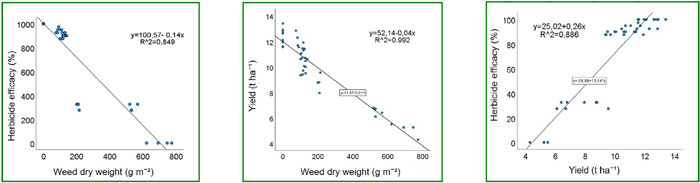
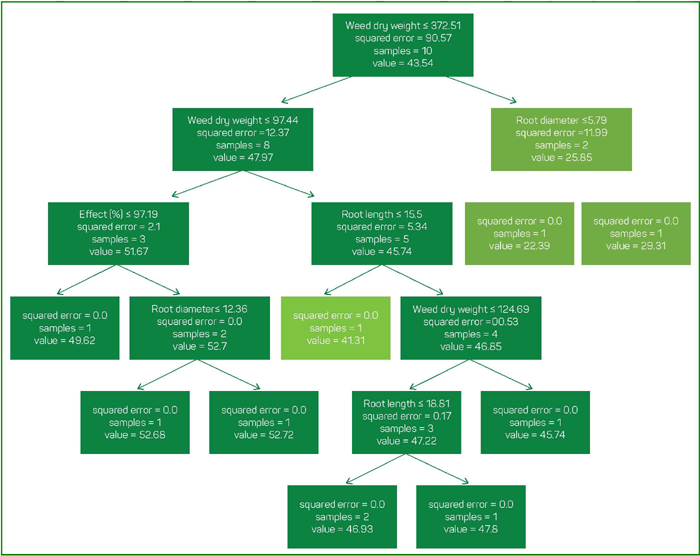
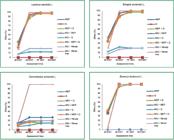
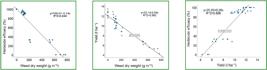
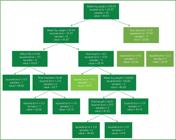
Results: Single herbicide applications provided limited weed suppression, whereas combined treatments resulted in significantly higher and more persistent control. Weed suppression peaked at 40 days after application and remained high until 150 days. The MQ + weed-free treatment achieved 100% control, followed by MQ + MEP + Q with 94.38%. Yield increased by 136% and 135% in MQ + weed-free and weed-free controls compared to weedy controls. A 1% increase in weed control corresponded to a 0.0035 t ha–¹ increase in yield. Weed density was identified as the most influential factor affecting yield.
Conclusions: Integrating herbicides with mechanical control provided superior and long-lasting weed management compared with single treatments and significantly enhanced sugar beet yield. Effective weed management should therefore prioritize maintaining low weed density to ensure sustainable production.
Keywords:
Herbicide Mixtures; Integrated Weed Management; Mechanical Weed Control; Crop–weed Competition; Weed Biomass Reduction
 Thumbnail
 Thumbnail
 Thumbnail
 Thumbnail
 Thumbnail
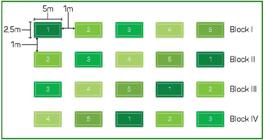
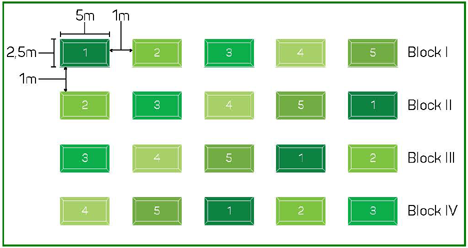 Treatment codes are as follows: 1 = MEP (metamitron + ethofumesate + phenmedipham); 2 = Q (quizalofop-p-ethyl); 3 = MEP + Q; 4 = weedy control; 5 = weed-free control. Detailed herbicide information and application rates are provided in
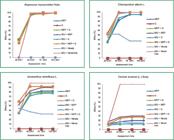
 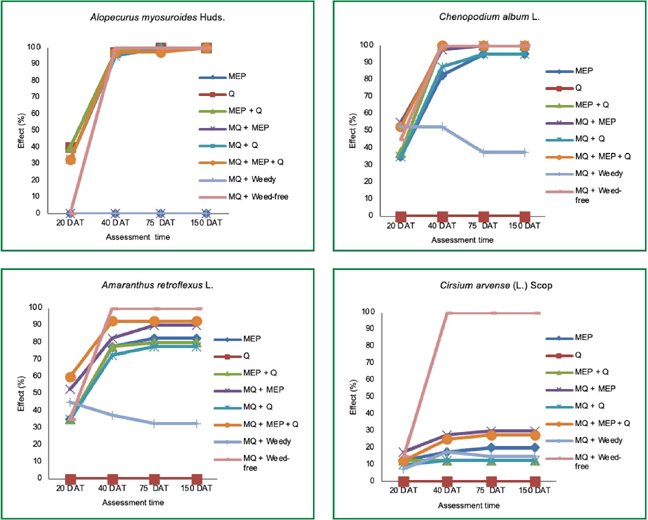 DAT; Day After Treatment. MQ; Metamitron + Quinmerac. MEP; Metamitron + Ethofumesate + Phenmedipham. Q; Quizalofop-p- ethyl.
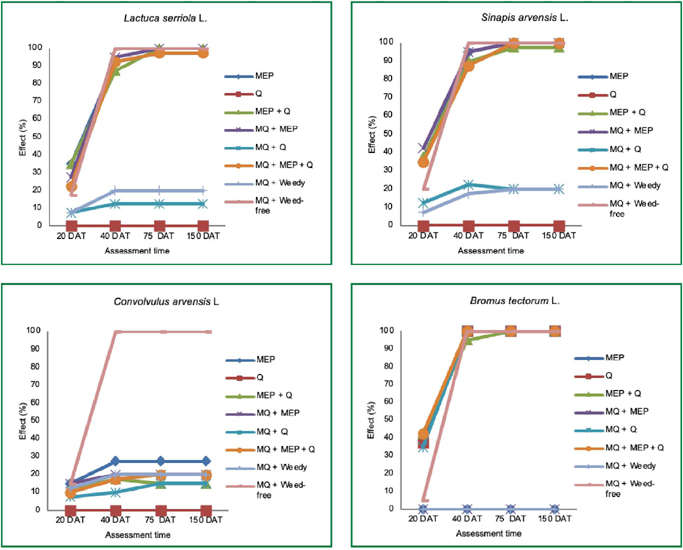 DAT; Day After Treatment. MQ; Metamitron + Quinmerac. MEP; Metamitron + Ethofumesate + Phenmedipham. Q; Quizalofop-p- ethyl.