Resistance of Sagittaria montevidensis Cham. & Schltdl. populations to acetolactate synthase inhibitors and bentazon herbicides
Abstract:
Background: Sagittaria montevidensis is one of the main weeds in paddy rice, especially in the water-seeded system. The incorrect use of herbicides allowed the selection of populations resistant to the main herbicides labeled for rice.
Objective: The objective of the experiment was to evaluate the mechanisms involved in resistance to ALS- and PSII-inhibiting (i.ALS and i.PSII) herbicides in SAGMO 32 and SAGMO 10.
Methods: The accessions SAGMO 35 (susceptible), SAGMO 32 (resistant i.ALS and PSII), and SAGMO 10 (resistant i.ALS) were used in the greenhouse experiments. The first study evaluated the effect of CYP450 inhibitors on the activity of the herbicides penoxsulam, bispyribac-sodium, and bentazon. The second study was an in vitro analysis of ALS enzyme activity with imazethapyr and metsulfuron-methyl herbicides. The third study was sequencing the ALS and psbA genes to detect resistance-conferring mutations.
Results: CYP450 inhibitors did not alter the efficiency of any of the herbicides tested. SAGMO 32 and SAGMO 10 showed RF (enzyme inhibition) of >600 and >13 for metsulfuron-methyl and imazethapyr. The ALS mutation Trp574Leu was detected in SAGMO, which confers resistance to imazethapyr and metsulfuron-methyl. The psbA sequence did not reveal any resistance-conferring mutations.
Conclusions: The resistance mechanism of Sagittaria montevidensis (SAGMO 32 and SAGMO 10) to the ALS-inhibiting herbicides is due to target-site mutation, Trp574Leu. The mechanism of resistance to the herbicide bentazon remains unidentified.
Keywords:
Sagitaria; Giant arrowhead; psbA; PSII
1. Introduction
Sagittaria montevidensis (Cham. & Schlecht.; SAGMO) is a monocot, aquatic macrophyte belonging to the Alismatacea family and considered one of the main weeds in paddy rice cultivated in the water-seeded system (Cassol et al., 2008). This weed is known as California arrowhead or sagitaria (Brazilian common name), with its center of origin in the central region of South America. It is an herbaceous perennial that propagates through seeds and tubers (Haynes, Holm-Nielsen, 1994). This species is a strong competitor with rice, reducing crop productivity and quality (Concenço et al., 2007). The level of SAGMO damage in the rice crop varies according to factors such as density, soil preparation, rice cultivar, and crop density, among others (Gibson et al., 2001).
One of the primary forms of SAGMO control in rice crops with pre-germinated cultivation is chemical control. To control this species, several selective and recommended herbicides for rice are available, including penoxsulam, imazapyr + imazapic, bentazon, bispyribac-sodium, and saflufenacil, among others (Ministério da Agricultura e Pecuária, 2023). In the evaluation of SAGMO control, it was observed that the herbicides penoxsulam, pyrazosulfuron-ethyl, imazapyr + imazapic, metsulfuron-methyl, and ethoxysulfuron showed greater than 80% control (Dornelles et al., 2017). Herbicide saflufenacil provided satisfactory control of SAGMO biotypes (Moura et al., 2015). However, the prolonged and indiscriminate use of some herbicides leads to a reduction in their effectiveness and the selection of resistant SAGMO biotypes (Concenço et al., 2007).
There are reports of SAGMO biotypes with cross-resistance to acetolactate synthase inhibitor herbicides (i.ALS). The studies showed that SAGMO biotypes showed resistance to metsulfuron-methyl and pyrazosulfuron-ethyl herbicides (sulfonylurea group; Concenço et al., 2007; Noldin et al., 1999). Furthermore, there are reports of SAGMO biotypes with multiple resistance to ALS and photosystem II inhibitor herbicides (i.PSII) (PSII; Moura et al., 2015). Other reports of resistant SAGMO biotypes in pre-germinated rice crops have been published (Moura et al., 2016; 2015).
Due to the significant importance of the rice crop in Brazil, particularly in Santa Catarina, where pre-germinated cultivation is prevalent, SAGMO management is crucial for achieving high crop productivity. Therefore, correct management to reduce the selection of resistant SAGMO populations elucidating the mechanisms of herbicide resistance. Collected from this region, two populations have been documented as resistant: SAGMO 32 (multiple resistance to ALS and PSII inhibitors) and SAGMO 10 (cross-resistance to ALS inhibitors); however, the resistance mechanisms involved have not yet been elucidated (Moura et al., 2016; 2015). This study aims to evaluate the resistance mechanisms to ALS and PSII herbicides in SAGMO 32 and SAGMO 10.
2. Materials and Methods
In this study, three populations of S. montevidensis were used: SAGMO 35 (susceptible) from Bombinhas/SC (27°08′45″S, 48°30′23″W), SAGMO 32 (multiple resistance to ALS and PSII inhibitors) from Ilhota/SC (26°51′59″S, 48°46′40″W) and SAGMO 10 (cross-resistance to ALS inhibitors) from Itajaí/SC (26°56′39″S, 48°45′38″W). The experiments were carried out in a greenhouse.
2.1 Effect of CYP450 inhibitors on herbicides penoxsulam, bispyribac-sodium and bentazon
The design used was a completely randomized block, with three replications, where units were composed of plastic pots (4 L) filled with soil (Planossolo háplico) from Pelotas (Empresa Brasileira de Pesquisa Agropecuária, 2006). The soil is equivalent to Albaqualf (North American soil classification system), with a composition of 47% sand, 34% silt, 19% clay, organic matter content of 1.2%, and pH of 5.7. Immediately after sowing the populations, irrigation was performed, maintaining a water depth of roughly 5 cm throughout the experiment. Before herbicide application, the pots were drained and thinned, keeping six plants per pot. The applications occurred when plants were 10 cm tall and contained only lanceolate leaves. The greenhouse temperature conditions during the experiment were as follows: an average temperature of 25.6 °C, a minimum temperature of 20.8 °C, and a maximum temperature of 32.8 °C.
The experiment was arranged as factorial. Factor A consisted of SAGMO 35, SAGMO 32, and SAGMO 10 populations; factor B were the CYP450 metabolism inhibitors malathion (1,000 g ha-1), PBO (piperonyl butoxide, 1,000 g ha-1), and treatment without an inhibitor. Factor C consisted of herbicides penoxsulam (60 g a.i. ha-1) + Veget′Oil® (0.5% v/v), bispiribac-sodium (50 g a.i. ha-1) + Iharaguen-S® (0.25% v/v), bentazon (960 g a.i. ha-1) + Assist® (0.5% v/v), and the check without herbicide. The inhibitors were applied two hours before the herbicides. Herbicides were applied at recommended label rates.
Herbicide application was carried out using a CO2-pressurized backpack sprayer, equipped with a 2 m long boom and four flat fan-type nozzles (series 110.02), spaced 50 cm apart, with an application volume of 150 L ha-1. At 28 days after application (DAA), the variables control (%) and shoot dry weight (SDW) were analyzed. Control (%) was assigned scores from 0 to 100%, where 0% was no control and 100% was plant death. SDW data were transformed (%) of the untreated check.
2.2 Acetolactate synthase enzyme assay
Two experiments were conducted using herbicides: metsulfuron-methyl and imazethapyr. The design used was a completely randomized block with three replications, arranged as a factorial, and consisted of 4 L pots filled with soil (described in Section 2.1). The greenhouse temperature conditions during the experiment were: an average temperature of 25.4 °C, a minimum temperature of 23.7 °C, and a maximum temperature of 30.8 °C.
Factor A consists of population SAGMO 35, SAGMO 10, and SAGMO 32; Factor B:: doses of metsulfuron-methyl 0, 0.5, 1, 2, 4 and 6 mM or doses of imazethapyr were 0, 1, 5, 10, 15 and 20 mM. The plants were collected for enzymatic analysis 60 days after emergence (DAE). For extraction, leaf tissues (5 g) were grounded with liquid nitrogen and homogenized with 4 mL of extraction buffer (4 mM thiamine pyrophosphate, 25 mM potassium phosphate, 5 mM magnesium chloride, 200 mM pyruvate and 20 μM flavin adenine dinucleotide) at pH 7.5. The crude extract was filtered through cheesecloth and Miracloth into 2-mL tubes and then centrifuged (28,600 × g, 5 min, 4 °C). The Bradford method was used to determine soluble protein content. Reactions and readings were adapted by Mendes et al. (2020). The enzyme assays were conducted twice.
2.3 ALS and psbA sequencing
Each experimental unit consisted of 4 L pots filled with soil, which were sown and maintained as described in section 2.1. The populations SAGMO 35, SAGMO 10, and SAGMO 32 were sown. The plants were collected for analysis of 60 DAE. Fully expanded leaves were collected in three biological replicates and grounded in liquid nitrogen. PureLink™ (Plant RNA Reagent, Invitrogen™, Carlsbad, CA, USA) was used for total RNA extraction, following the manufacturer's instructions. RNA concentration and quality were assessed using NanoVue™ (GE Healthcare™, Buckinghamshire, UK). RNA integrity was analyzed by electrophoresis in an agarose gel using GelRed (Invitrogen™). Each RNA sample (1 μg) was treated with DNase I (Invitrogen™) and converted into cDNA using SuperScript™ III First-Strand Synthesis System kit (Invitrogen) and oligo(dT), according to the manufacturer's protocol.
The cDNA samples were used for the amplification of ALS and pBSA genes in PCR reactions. For 25.0 μL PCR reactions were used cDNA (2.0 μL, approximately 40 ng), 5X GoTaq buffer (5.0 μL), GoTaq G2 Hot Start Polymerase – Promega (2 μL of 5 U μL-1), 10 mM dNTPs (0.5 μL), each forward and reverse primers in 10 μM (0.5 μL), 25 mM MgCl2 (1.5 μL) and nuclease-free water (14.8 μL). PCR reactions were perfeorm in the T100 Thermal Cycler (Bio-Rad) with the following cycling: 95 °C for 3 min (initial denaturing), 40 cycles of denaturation at 95 °C for 30 s, primer annealing at 60 °C for 30 s, and extension at 72 °C for 60 s, finishing with a final extension of 72 °C for 5 min.
For ALS sequencing, the forward SAG_ALS_F21 (TGCGACCAAGCTCCCCTTTA) and reverse SAG_ALS_R21 (AGCCTTCATGGTCGTCCTCCA) primers were designed using ALS sequence available at GenBank (sequence ID: HM212418) and used for amplification of a 700 bp ALS fragment. For psbA sequencing, the forward SAG_PSBA_F32 (TTCCAGGCTGAGCACAACATT) and the reverse SAG_PSBA_R32 (GTAGATGGAGCCTCAACAGCA) primers were designed from the available sequence at GenBank (sequence ID: OK588517.1) and used for amplification of a 689 bp pbsA fragment. PCR amplification was verified on 2% agarose gel using the 100 bp molecular weight (ladder, Synapse).
Finally, the ExoSAP-IT™ Express reagent (Thermo Fisher) was applied in PCR product purification before sequencing. Sequencing was performed using 1 μL of a 10-fold diluted purified PCR product with the BigDye cycle sequencing terminator kit (Thermo Fisher) and an Applied Biosystems 3,500 Genetic Analyzer instrument (Thermo Fisher). Sequenced electropherograms were analyzed and aligned using the open-source bioinformatics software UGENE (Unipro, 2012).
2.4 Statistics analyses
The data obtained were analyzed for normality using the Shapiro-Wilk test, and for homoscedasticity using Hartley's test. They were then submitted to analysis of variance (p ≤ 0.05). For experiment 1, Tukey's test was applied using 95% confidence intervals. For experiment 2, the regression analysis was performed if statistical significance was found were fitted with a log-logistic regression model according to equation [1]:
where: Y = ALS activity percentage; x = herbicide dose; x0 = value that reduce 50% of variable, being I50; a = the upper asymptotic values of Y, b = relative slope.
From the values of I50, resistance factors (RF) were obtained for the species’ populations. To use the RF, verifying the susceptible populations confidence interval (p ≥ 0.95) concerning the resistant one was necessary.
3. Results and Discussion
3.1 Effect of CYP450 inhibitors on herbicides penoxsulam, bispyribac-sodium and bentazon
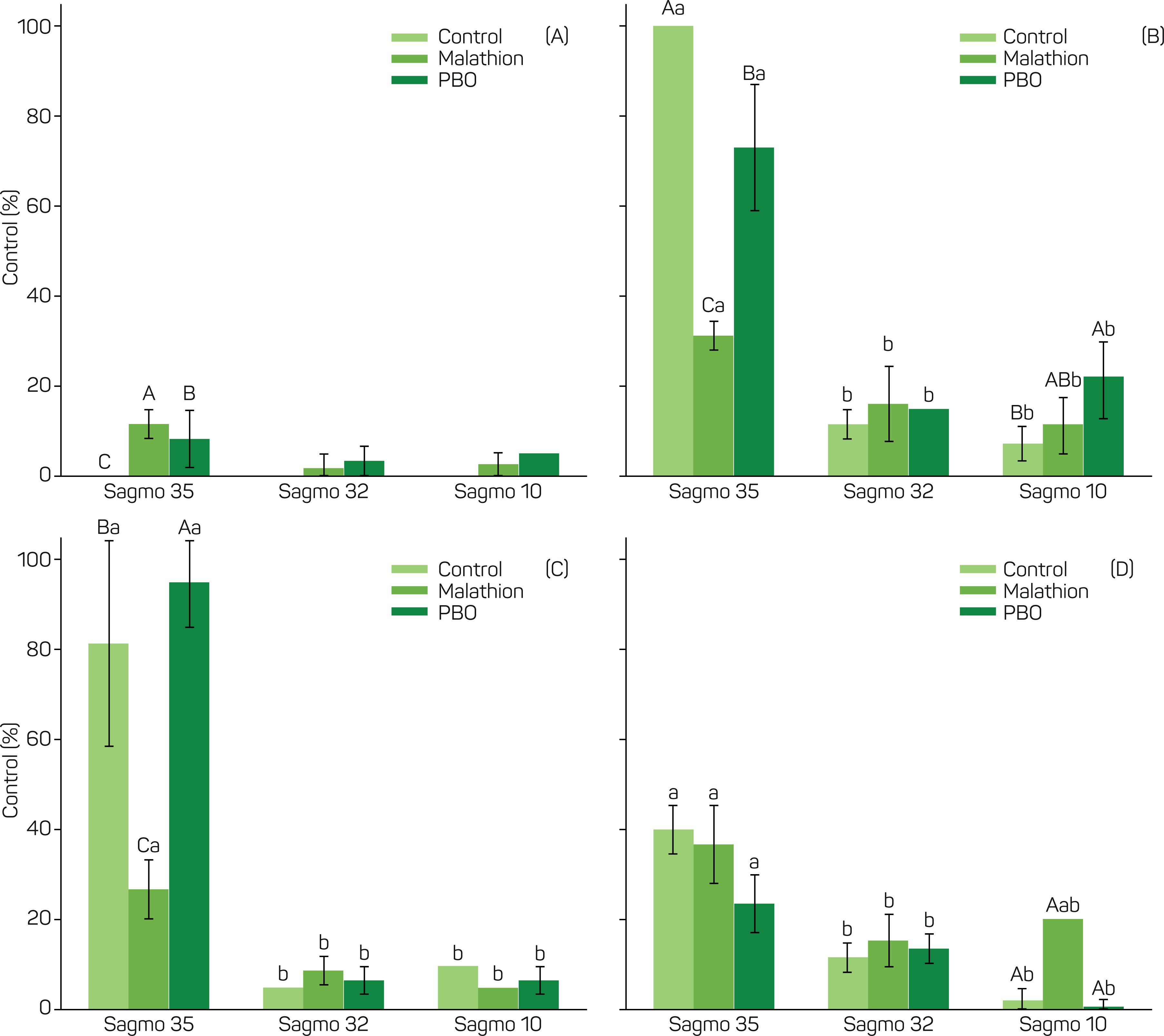
CYP450 inhibitors showed an effect that varied depending on the population and the herbicide applied. In the application of CYP450 inhibitors without herbicides, it was found that only the SAGMO 35 presented visual injury, with 11 and 8% for malathion and PBO, respectively (Figure 1A). When the herbicide bispyribac-sodium was applied, the highest levels of control was for SAGMO 35 with 100, 31 and 73 % of control without inhibitor, malathion and PBO, respectively (Figure 1B). The SAGMO 32 and SAGMO 10 did not show differences between them, regardless of the use or not of the inhibitor. A similar result was observed when the herbicide penoxsulam was used (Figure 1C). The herbicide bentazon was not efficient, regardless of the population (Figure 1D). However, for SAGMO 10, when the malathion inhibitor was used, there was an increase in control with bentazon, from 1 to 20%.
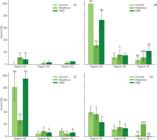
Control (%) of populations SAGMO 35 (herbicide-susceptible), SAGMO 32 (ALS+PSII-resistant) and SAGMO 10 (ALS-resistant) of Sagittaria montevidensis treated CYP450-inhibitors malathion, PBO and without inhibitor (control) depending on herbicides: without herbicide (A), bispyribac-sodium (B), penoxsulam (C) and bentazon (D) at 28 days after application. Means followed by different capital letters (comparison between CYP450-inhibitors) and lowercase letters (comparison between biotypes) differ from each other by the Tukey test (p<0.05). Error bars represent the 95% confidence intervals (n=3)
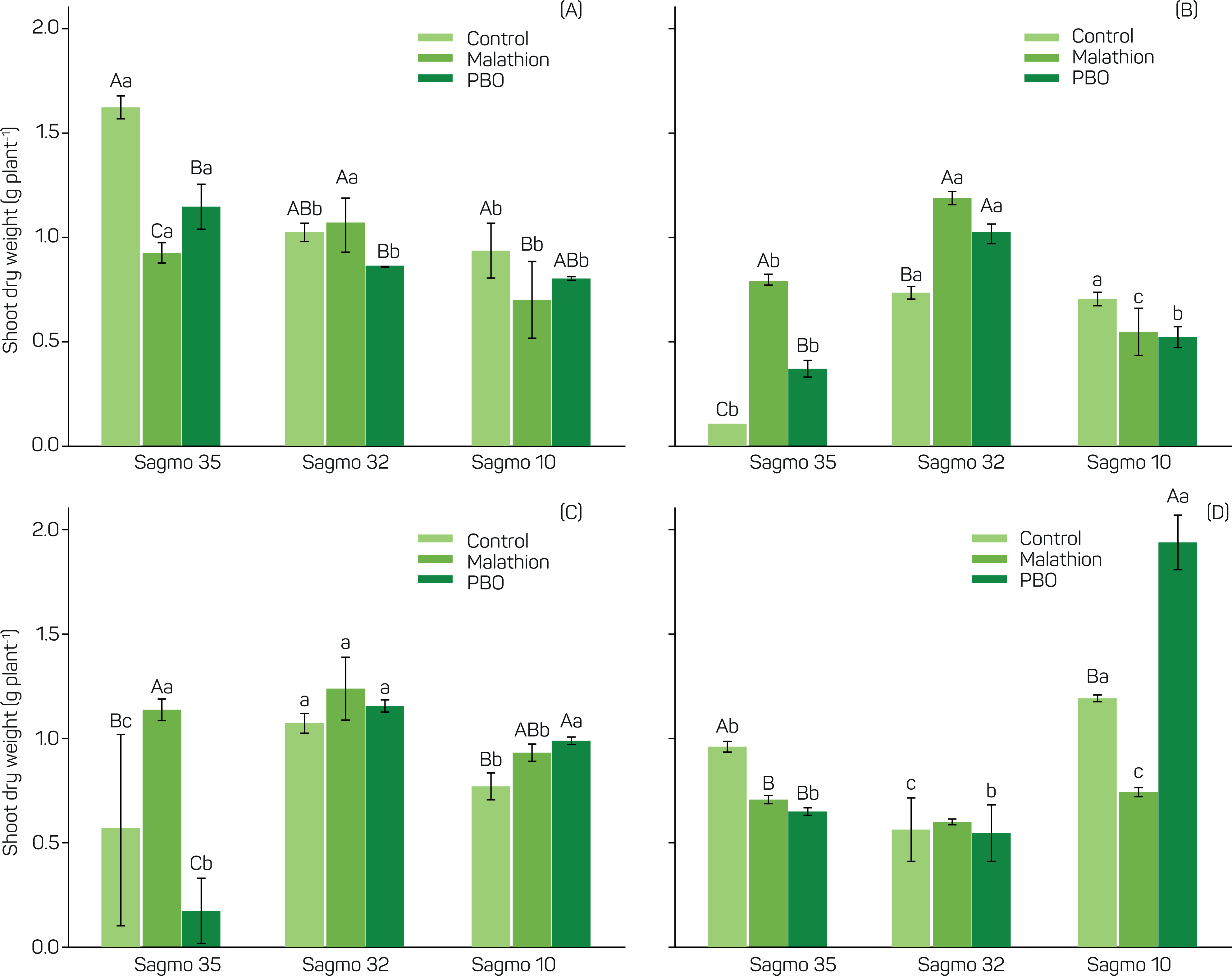
The results of the SDW (Figure 2) were like those of the control group (Figure 1). When analyzing only the effect of non-herbicide inhibitors, it was found that malathion and PBO caused a reduction in SDW in the SAGMO 35 (Figure 2A). When the herbicide bispyribac-sodium was applied (Figure 2B), there was a reduction in the effect of the herbicide with the use of malathion and PBO inhibitors in the SAGMO 35 and SAGMO 32. In the application of penoxsulam (Figure 2C), a difference was observed when malathion was applied in SAGMO 35, with plants producing 1.13 g plant-1 compared to the treatment without the inhibitor (0.57 g plant-1). In the treatment with bentazon (Figure 2D), there was a reduction in SDW in the treatments with malathion and PBO (SAGMO 35) or malathion alone (SAGMO 10). In the SAGMO 35, there was a reduction in SDW of 35 and 47% when malathion and PBO inhibitors were used. While in the SAGMO 10, the reduction in SDW was 61% with the malathion inhibitor, compared to the control treatment.
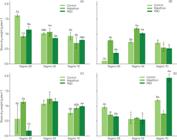
Shoot dry weight (SDW - g plant-1) of populations SAGMO 35 (herbicide-susceptible), SAGMO 32 (ALS+PSII-resistant), and SAGMO 10 (ALS-resistant) of Sagittaria montevidensis treated CYP450-inhibitors malathion, PBO and without inhibitor (control) depending on herbicides: without herbicide (A), bispyribac-sodium (B), penoxsulam (C) and bentazon (D) at 28 days after application. Means followed by different capital letters (comparison between CYP450-inhibitors) and lowercase letters (comparison between biotypes) differ from each other by the Tukey test (p<0.05). Error bars represent the 95% confidence intervals (n=3)
The SAGMO 32 and SAGMO 10 had already been reported to have difficulty controlling with ALS-inhibiting herbicides (Moura et al., 2015). Using up to 64 times the recommended rate of penoxsulam and imazapyr plus imazapic, the control level was below 10% for both herbicides (Moura et al., 2015). When evaluating the SDW, the resistance factor for imazethapyr+imazapic was 138. At the same time, it was not possible to calculate the RF with the herbicide penoxsulam because the reduction of SDW did not reach 50% at any of the rates (Moura et al., 2015). In another study, the application of penoxsulam, pyrazosulfuron-ethyl, and imazethapyr + imazapic resulted in 83, 96, and 71% survival rates for SAGMO 32 plants, respectively (Eberhardt, Noldin, 2011).
The multiple resistance of S. montevidensis to ALS-inhibiting herbicides and bentazon has been registered since 2009 (Heap, 2024). The SAGMO 32 showed a resistance factor of 7.25 compared to the SAGMO 35 when applied with bentazon (Moura et al., 2015). Applying bentazon (960 g a.i. ha-1) alone or in a mixture with saflufenacil did not provide satisfactory control of the SAGMO 32 (Moura et al., 2016). The authors report cross-resistance of this population to ALS inhibitors and multiple resistance to PSII inhibitors (Eberhardt, Noldin, 2011; Moura et al., 2016; 2015), corroborating the results found in this study.
In the evaluation of herbicide resistance, the use of inhibitors of CYP450 enzymes is employed to analyze herbicide metabolization processes, such as malathion and PBO (Barrett, 1995; Yan et al., 2019). In the study of Echinochloa crus-galli, it was found that, in addition to herbicides, plants sprayed with malathion increased their susceptibility to the herbicides florpyrauxifen-benzyl, imazamox, and penoxsulam (Takano et al., 2023). In another study using Echinochloa glabrescens resistant to penoxsulam, resistance was reversed when the plants were sprayed with PBO or malathion, indicating resistance by the non-target site (Yan et al., 2019). When evaluating the effect of malathion inhibition on maize, the CYP450-mediated hydroxylation of the herbicides nicosulfuron and bentazon was reduced by 83% and 92%, respectively (Baerg et al., 1996). An assay with bentazon-resistant Amaranthus retroflexus L. biotype demonstrated that malathion application increased bentazon efficacy, demonstrating metabolism by CYP450 (Li et al., 2022). We emphasize that in our studies, CYP450 inhibitors caused damage to the SAGMO 35 biotype (≈10 %), which may have made comparisons with other biotypes difficult. In contrast, the results indicate that the resistance of SAGMO 32 and SAGMO 10 does not involve metabolism by CYP450 to ALS-inhibiting herbicides, including bentazon.
3.2 Acetolactate synthase enzyme assay
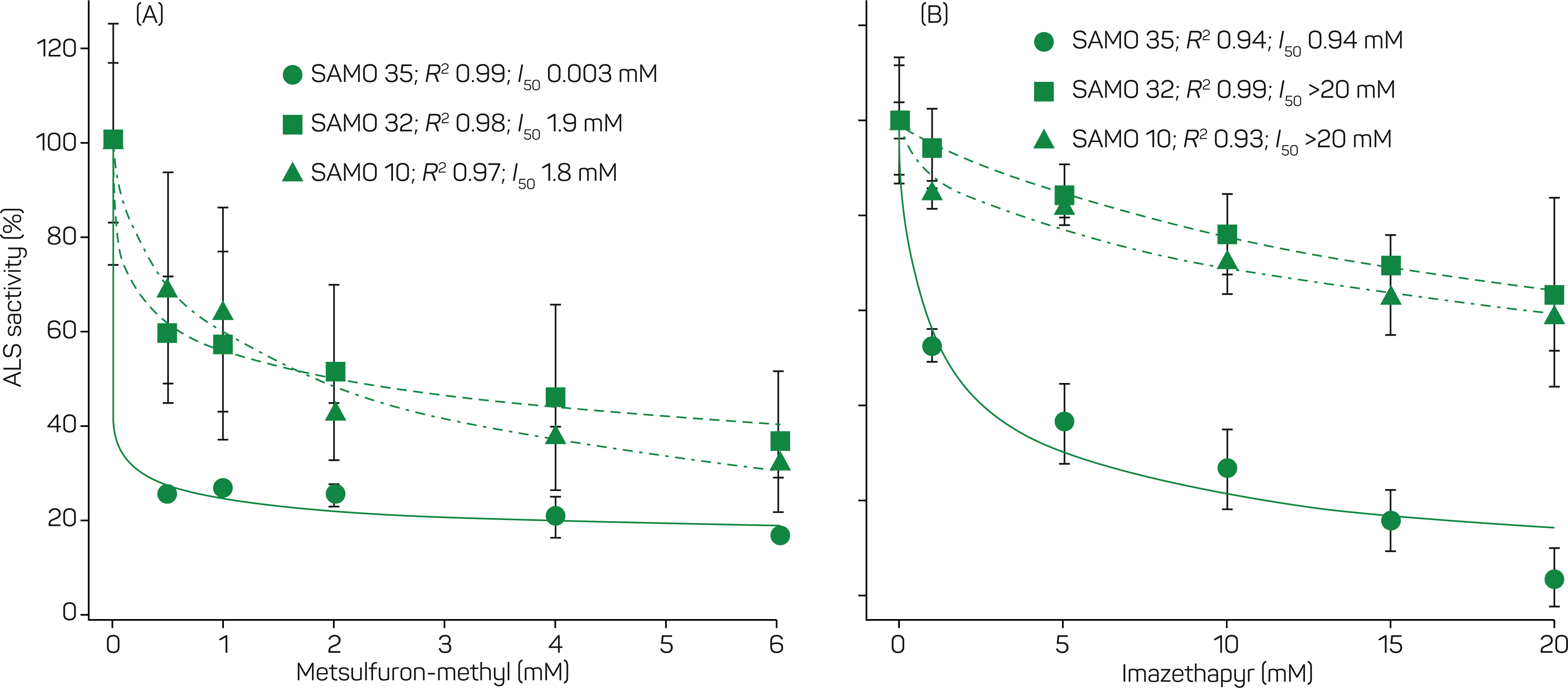
In vitro study (Figure 3), the activity of the enzymes for SAGMO 35, SAGMO 32, and SAGMO 10 was evaluated according to the rate increase of the herbicides metsulfuron-methyl and imazethapyr. For the two herbicides used, only SAGMO 35 differed from the other populations as the rate increase. For metsulfuron-methyl, the I50 values were 0.003, 1.8, and 1.9 mM for the SAGMO 35, SAGMO 10, and SAGMO 32, respectively. The RF values (Table 1) were 601-fold and 657-fold for the SAGMO 10 and SAGMO 32, respectively. For the herbicide imazethapyr, the I50 values were 1.4, >20, and >20 mM (SAGMO 35, SAGMO 32, and SAGMO 10, respectively), and consequently, the RF >14.2-fold for both resistant populations.
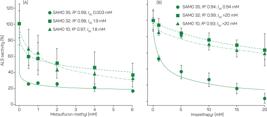
Acetolactate synthase (ALS) enzyme activity in populations SAGMO 35 (herbicide-susceptible), SAGMO 32 (ALS+PSII-resistant) and SAGMO 10 (ALS-resistant) of Sagittaria montevidensis in response to increasing metsulfuron-methyl (A) and imazethapyr (B) concentrations. Error bars represent the 95% confidence intervals (n=3)
Dose-response curve parameters and resistant factors (RF) for populations SAGMO 35 (herbicidesusceptible), SAGMO 32 (ALS+PSII-resistant), and SAGMO 10 (ALS-resistant) of Sagittaria montevidensis based on enzyme activity. Log-logistic regression model was used (according to equation [1])
The activity of the ALS enzyme complements research studies on weed resistance (Dayan et al., 2015). The inhibition or non-inhibition of the ALS enzyme by a herbicide enables the prediction of resistance if the resistance mechanism involves the target site (Dayan et al., 2015). In the evaluation of the enzyme ALS activity in Euphorbia heterophylla subjected to the herbicide imazamox, the I50 of the sensitive population was 65.6 μM, while for the resistant populations, it was above 20,000 μM (Mendes et al., 2020). In another study with Raphanus sativus L. resistant to ALS-inhibiting herbicides, the I50 values were 0.65 and 718 μM for the herbicides iodosulfuron and imazethapyr, respectively (Cechin et al., 2017). The resistance factor, as indicated by the I50 values in R. sativus, was 15 and 224 for iodosulfuron and imazethapyr, respectively (Cechin et al., 2017). Like our results, the presented results were characterized as resistance to ALS-inhibiting herbicides involving a mutation at the target site.
3.3 ALS sequencing
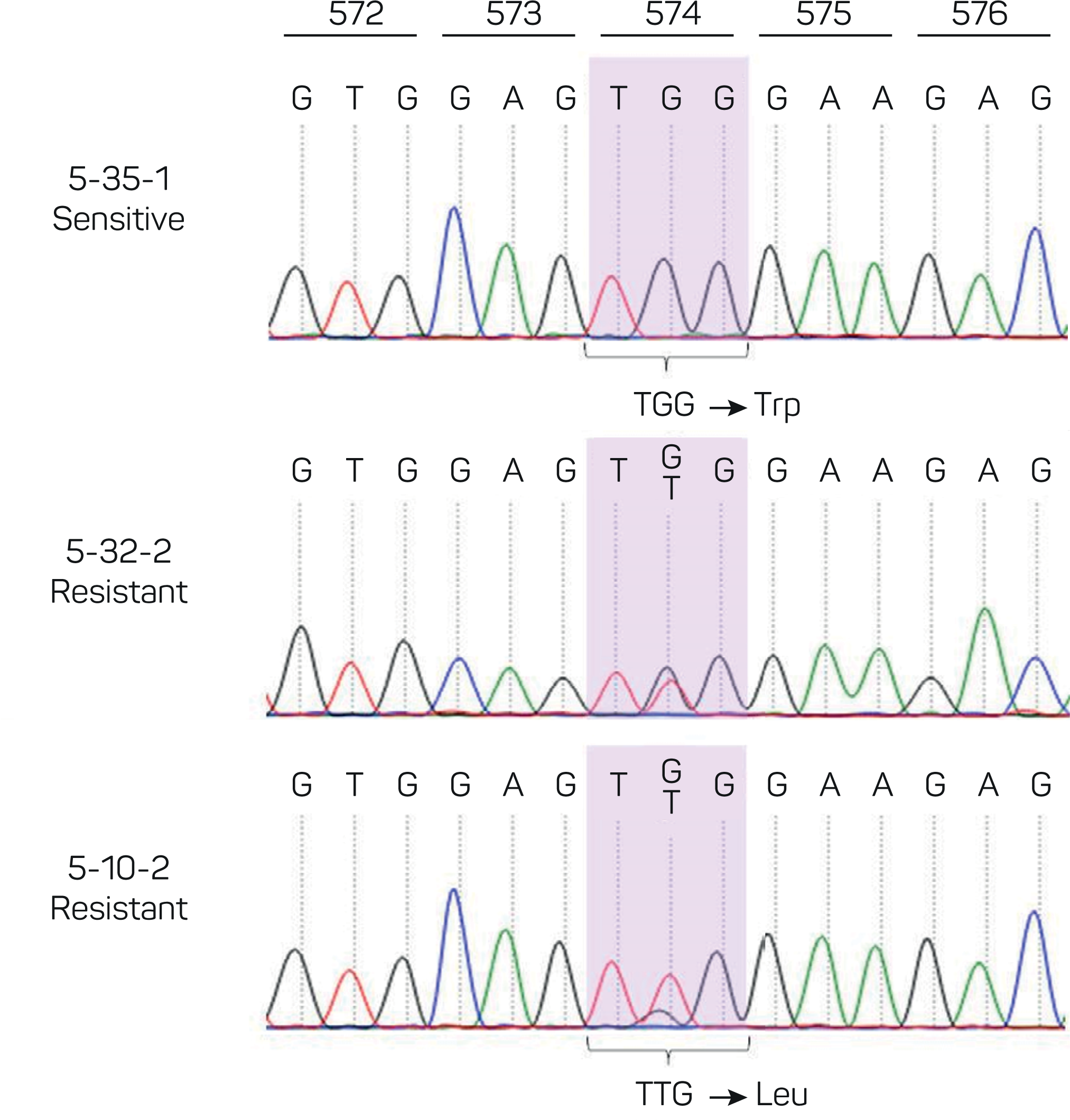
A modification in a single nucleotide polymorphism (SNP) at position 574 (based in Arabidopsis thaliana) in the resistant SAGMO 32 and SAGMO 10 were detected. The second nucleotide (G) of the codon at position 574 was substituted by T, resulting in a switch from tryptophan (TGG) to leucine (TTG) (Figure 4), conferring resistance to ALS-inhibiting herbicides. This SNP, Trp574Leu, is the second most common mutation among ALS-resistant weeds (Gaines et al., 2020). ALS-resistant E. heterophylla biotypes had a resistance factor (GR50) of 224.5 to imazamox, and resistance was attributed to the Trp574Leu mutation (Mendes et al., 2020). The resistance of Raphanus raphanistrum to the herbicides metsulfuron-methyl, imazethapyr, and pyroxsulam has been attributed to the Trp574Leu mutation in the ALS enzyme (Fruet et al., 2024).

Acetolactate synthase (als gene) sequences in populations SAGMO 35 (herbicide-susceptible), SAGMO 32 (ALS+PSII-resistant) and SAGMO 10 (ALS-resistant) of Sagittaria montevidensis. A single nucleotide changes from T for G at the 574 codons (underlined letter) results in a Trp574Leu mutation in SAGMO 32 and SAGMO 10
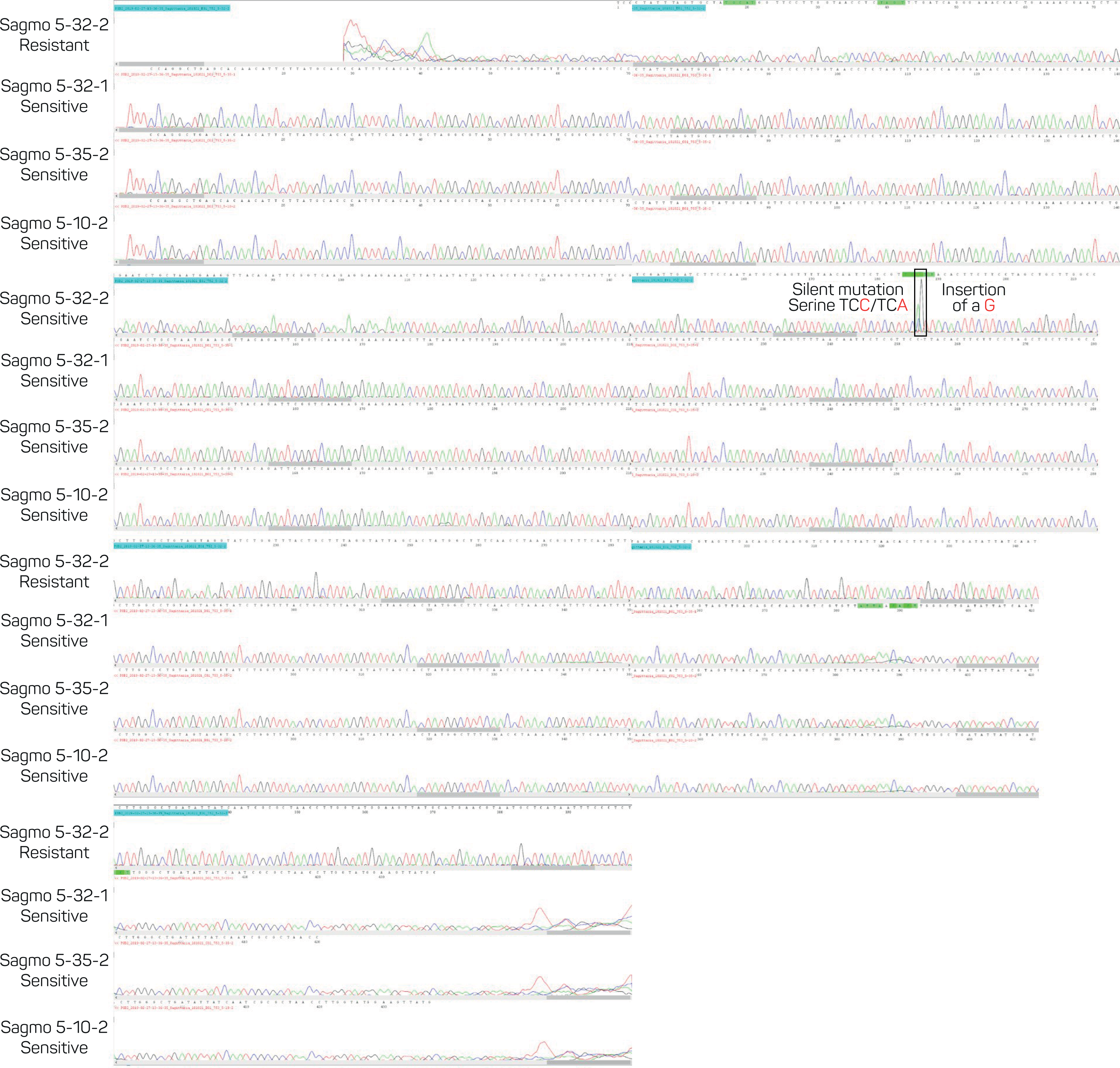
Are known eight known mutations of the D1 gene that confer resistance to PSII inhibitors involving target-site: Phe255Ile, Ser264Gly, Val219Ile, Ser264The, Asn266Thr, Leu218Val, Ala251Val, and Phe274Val (Lu et al., 2019; Mechant et al., 2008; Park, Mallory-Smith, 2006; Pedroso et al., 2016; Perez-Jones et al., 2009; Thiel, Varrelmann, 2014). We sequenced a fragment of 43 nucleotides comprising all the known mutation sites in the psbA gene (Figure 5). No changes in the known amino acids were found. A silent mutation, changing the third nucleotide of the serine (TCC to TCA) was detected in the resistant SAGMO 5-32-2. Additionally, it appears that the resistant SAGMO 5-32-2 is heterozygous for the silent mutation, as two peaks were detected in the chromatogram. A SNP with an insertion (indel) of a guanin after the TCA codon was also detected in the resistant biotype Sagmo 5-32-2. Our results suggest that the resistant SAGMO 5-32-2 may possess an indel which should be confirmed with new experiments with replicates. Indels (insertion or deletion) are an important type of mutation that cause changes in the read frame consequently affecting all the protein amino acids forward the mutation and even can affect protein secondary structure which can affect protein-herbicide interaction. In addition, the resistance mechanism associated with SAGMO 5-32-2 may be linked to herbicide metabolism such as GST-mediated detoxification or transport and compartmentalization of the herbicide. Also, the resistance can be associated to the overexpression of the psbA gene, as observed in A. retroflexus resistant to bentazon (Li et al., 2022). Together with the hypothesis of the indel in the psbA coding sequence, the overexpression of psbA and herbicide metabolism should be tested in further studies.

Photosystem II protein D1(psbA gene) sequences in biotypes SAGMO 35 (herbicide-susceptible), SAGMO 32 (ALS+PSII-resistant) and SAGMO 10 (ALS-resistant) of Sagittaria montevidensis. No mutation was detected.
To date, six cases of S. montevidensis resistance to herbicides have been reported worldwide; of these, three cases are reported in Brazil (Heap, 2024). In 1999, cross-resistance to S. montevidensis ALS-inhibiting herbicides was observed, including cyclosulfamuron, metsulfuron-methyl, ethoxysulfuron, bispyribac-sodium, and pyrazosulfuron-ethyl. In 2009, another record was made, with the occurrence of multiple resistance to ALS-inhibiting herbicides (byspiribac-sodium, ethoxysulfuron, imazethapyr, metsulfuron-methyl, penoxsulam and pyrazosulfuron) and to the PSII inhibitor (bentazon); and in 2023 resistance to the auxin-mimicking herbicide florpyrauxifen was recorded (Heap, 2024).
In this study, we aimed to elucidate the mechanisms underlying the resistance of SAGMO 32 and SAGMO 10. In Experiment 1, it was found that using CYP450 inhibitors did not increase the control of resistant populations (Figure 1–2). In experiments 2 and 3, it was observed that the mutation in the ALS enzyme, Trp574Leu, conferred resistance to ALS-inhibiting herbicides. The resistance mechanism to bentazon remains unidentified, suggesting the need for further research to explore alternative resistance pathways or metabolic processes that may confer this resistance.
4. Conclusions
The resistance mechanism of Sagittaria montevidensis (SAGMO 32 and SAGMO 10) to ALS-inhibiting herbicides is most likely due to target-site mutation, with a mutation of Trp574Leu in the ALS enzyme. The mechanism of resistance to the herbicide bentazon remains unidentified.
Acknowledgements
The authors acknowledge the assistance of artificial intelligence tools in the proofreading and grammar checking of this manuscript.
References
-
Baerg RJ, Barrett M, Polge ND. Insecticide and insecticide metabolite interactions with cytochrome P450 mediated activities in maize. Pestic Biochem Physiol. 1996;55(1):10-20. Available from: https://doi.org/10.1006/pest.1996.0030
» https://doi.org/10.1006/pest.1996.0030 -
Barrett M. Metabolism of herbicides by cytochrome P450 in corn. Drug Metabol Drug Interact. 1995;12:299-316. Available from: https://doi.org/10.1515/DMDI.1995.12.3-4.299
» https://doi.org/10.1515/DMDI.1995.12.3-4.299 -
Cassol B, Agostinetto D, Mariath JEA. Morphological analysis of Sagittaria montevidensis developed under different flooding conditions. Adv Weed Sci. 2008;26(3):487-96. Available from: https://doi.org/10.1590/S0100-83582008000300003
» https://doi.org/10.1590/S0100-83582008000300003 -
Cechin J, Vargas L, Agostinetto D, Lamego FP, Mariani F, Dal Magro T. Mutation of Trp-574-Leu ALS gene confers resistance of radish biotypes to iodosulfuron and imazethapyr herbicides. Acta Sci Agron 2017;39(3):1-8. Available from: https://doi.org/10.4025/actasciagron.v39i3.32521
» https://doi.org/10.4025/actasciagron.v39i3.32521 -
Concenço G, Noldin JA, Lopes NF, Comiotto A. Aspects of resistance of Sagittaria montevidensis to the herbicide pyrazosulfuron-ethyl ALS inhibitor. Adv Weed Sci. 2007;25(1):187-94. Available from: https://doi.org/10.1590/S0100-83582007000100021
» https://doi.org/10.1590/S0100-83582007000100021 -
Dayan FE, Owens DK, Corniani N, Silva FML, Watson SB, Howell J, et al. Biochemical Markers and Enzyme Assays for Herbicide Mode of Action and Resistance Studies. Weed Sci 2015; 63(SP1):23–63. Available from: https://doi.org/10.1614/WS-D-13-00063.1
» https://doi.org/10.1614/WS-D-13-00063.1 - Dornelles SHB, Sanchotene DM, Morais TB, Mulle EN, Leon CB, Shimóia EP et al. Efficiency of acetolactate synthase-inhibiting herbicides in control of Sagittaria montevidensis Exp Rev Eletr Ext. 2017;13:183-7.
-
Eberhardt DS, Noldin JA. Multiple herbicide-resistant sagittaria montevidensis population in Santa Catarina State (Brazil) rice fields. Proceedings of 51st. Weed Science Society of America Annual Meeting. Lawrence: Weed Science Society of America; 2011[accessed Dec 12, 2024]. Available from: https://wssaabstracts.com/public/4/abstract-9.html
» https://wssaabstracts.com/public/4/abstract-9.html - Empresa Brasileira de Pesquisa Agropecuária – Embrapa. [Brazilian soil classification system]. 2nd ed. Rio de Janeiro: Empresa Brasileira de Pesquisa Agropecuária; 2006. Portuguese.
-
Fruet D, Schelter M, Pereira F, Guerra N, Silva F, Oliveira Neto AM. Try574 read mutation confers cross: resistance to ALS - inhibiting herbicides in wild radish. Rev Caatinga. 2024;37:1–11. Available from: https://doi.org/10.1590/1983-21252024v3711974rc
» https://doi.org/10.1590/1983-21252024v3711974rc -
Gaines TA, Duke SO, Morran S, Rigon CAG, Tranel PJ, Anita Küpper et al. Mechanisms of evolved herbicide resistance. J Biol Chem. 2020;295:10307–30. Available from: https://doi.org/10.1074/jbc.REV120.013572
» https://doi.org/10.1074/jbc.REV120.013572 -
Gibson KD, Breen JL, Hill JE, Caton JEB, Foin TC. California arrowhead is a weak competitor in water-seeded rice. Weed Sci. 2001;49(3):381–4. Available from: https://doi.org/10.1614/0043-1745(2001)049[0381:CAIAWC]2.0.CO;2
» https://doi.org/10.1614/0043-1745(2001)049[0381:CAIAWC]2.0.CO;2 - Haynes RR, Holm-Nielsen LB. The Alismataceae. In: Organization for Flora Neotropica. Flora Neotropica. New York: The new York Botannical Garde; 1994.
-
Heap I. The International Herbicide-Resistant Weed Database. Weedscience. 2024[access Feb 26, 2024]. Available from: https://www.weedscience.org
» https://www.weedscience.org -
Li W, Cao Y, Liu Z, Wei S, Huang H, Lan Y et al. Investigation of resistance mechanisms to bentazone in multiple resistant Amaranthus retroflexus populations. Pestic Biochem Physiol. 2022;186:105164. Available from: https://doi.org/10.1016/j.pestbp.2022.105164
» https://doi.org/10.1016/j.pestbp.2022.105164 -
Lu H, Yu Q, Han H, Owen MJ, Powles SB. A novel psbA mutation (Phe274–Val) confers resistance to PSII herbicides in wild radish (Raphanus raphanistrum). Pest Manag Sci 2019; 75:144–51. Available from: https://doi.org/10.1002/ps.5079
» https://doi.org/10.1002/ps.5079 - Mechant E, De Marez T, Hermann O, Olsson R, Bulcke R. Target site resistance to metamitron in Chenopodium album L. J Plant Dis Prot. 2008;21(spe):37–40.
-
Mendes RR, Takano HK, Oliveira RS, Adegas FS, Gaines TA, Dayan FE. A Trp574Leu target-site mutation confers imazamox resistance in multiple herbicide-resistant wild poinsettia populations from Brazil. Agronomy. 2020;10(8):1-13. Available from: https://doi.org/10.3390/agronomy10081057
» https://doi.org/10.3390/agronomy10081057 -
Ministério da Agricultura e Pecuária (BR). Agrofit: phytosanitary pesticide system. Brasília: Ministério da Agricultura e Pecuária; 2023[access Apr 14, 2023]. http://extranet.agricultura.gov.br/agrofitcons/principal_agrofit_cons
» http://extranet.agricultura.gov.br/agrofitcons/principal_agrofit_cons -
Moura DS, Noldin JA, Galon L, Helgueira DB, Martins KP, Cassol LL. Chemical control of California arrowhead (Sagittaria montevidensis) resistant to acetolactate synthase and photosystem II inhibiting herbicides in irrigated rice. Cienc Rural. 2016;46(12):2084–9. Available from: https://doi.org/10.1590/0103-8478cr20160117
» https://doi.org/10.1590/0103-8478cr20160117 -
Moura DS, Noldin JA, Galon L, Schreiber F, Bastiani MO. Multiple resistance of Sagittaria montevidensis biotypes to acetolactate synthase and photosystem II inhibiting herbicides. Planta Daninha. 2015;33(4):779-86. Available from: https://doi.org/10.1590/S0100-83582015000400016
» https://doi.org/10.1590/S0100-83582015000400016 - Noldin JA, Eberhardt DS, Knoblauch R. [Resistance of Sagittaria montevidensis to herbicides: first evidence]. In: Proceeding of 2nd Congresso Brasileiro De Arroz Irrigado; 24th Reunião Da Cultura Do Arroz Irrigado. Porto Alegre: Instituto Rio Grandense do Arroz; 2001. p. 574-578. Portuguese.
-
Park KW, Mallory-Smith CA. psbA mutation (Asn 266 to Thr) in Senecio vulgaris L. confers resistance to several PS II-inhibiting herbicides. Pest Manag Sci. 2006;62(9):880-5. Available from: https://doi.org/10.1002/ps.1252
» https://doi.org/10.1002/ps.1252 -
Pedroso RM, Al-Khatib K, Alarcón-Reverte R, Fischer AJ. A psbA mutation (Val 219 to Ile) causes resistance to propanil and increased susceptibility to bentazon in Cyperus difformis Pest Manag Sci. 2016;72:1673-80. Available from: https://doi.org/10.1002/ps.4267
» https://doi.org/10.1002/ps.4267 -
Perez-Jones A, Intanon S, Mallory-Smith C. Molecular analysis of hexazinone-resistant shepherd's-purse (Capsella bursa-pastoris) reveals a novel psbA mutation. Weed Sci. 2009; 57(6):574–8. Available from: https://doi.org/10.1614/WS-09-089.1
» https://doi.org/10.1614/WS-09-089.1 -
Takano HK, Greenwalt S, Ouse D, Zielinski M, Schmitzer P. Metabolic cross-resistance to florpyrauxifen-benzyl in barnyardgrass (Echinochloa crus-galli) evolved before the commercialization of RinskorTM. Weed Sci. 2023;71(2):77-83. Available from: https://doi.org/10.1017/wsc.2023.11
» https://doi.org/10.1017/wsc.2023.11 -
Thiel H, Varrelmann M. Identification of a new PSII target site psbA mutation leading to D1 amino acid Leu 218 Val exchange in the Chenopodium album D1 protein and comparison to cross-resistance profiles of known modifications at positions 251 and 264. Pest Manag Sci. 2014; 70(2):278-85. Available from: https://doi.org/10.1002/ps.3556
» https://doi.org/10.1002/ps.3556 -
Yan B, Zhang Y, Li J, Fang J, Liu T, Dong L. Transcriptome profiling to identify cytochrome P450 genes involved in penoxsulam resistance in Echinochloa glabrescens Pestic Biochem Physiol. 2019; 158:112-20. Available from: https://doi.org/10.1016/j.pestbp.2019.04.017
» https://doi.org/10.1016/j.pestbp.2019.04.017
-
Data Availability
The data supporting the findings of this study are available from the corresponding author upon reasonable request. Requests for access to the data will be reviewed by the authors and will be answered in accordance with applicable institutional, ethical, and confidentiality requirements.
Edited by
-
Editor in Chief:
Anderson Nunes Gabardo
-
Associate Editor:
Nilda Roma-Burgos
The data supporting the findings of this study are available from the corresponding author upon reasonable request. Requests for access to the data will be reviewed by the authors and will be answered in accordance with applicable institutional, ethical, and confidentiality requirements.