Evaluation on control efficacy of Parthenium hysterophorus L. through chemical approaches
Abstract
Background Parthenium hysterophorus L. is a globally significant invasive weed causing numerous negative impacts. Several pre- and post-emergence herbicides are available, but information on the control efficacy against Parthenium in Malaysia is limited.
Objective Therefore, a series of experiments were conducted in laboratory, glasshouse, and field conditions to evaluate the efficacy of selected pre- and post-emergence herbicides to control Parthenium.
Methods Pre-emergence herbicides imazethapyr, indaziflam, pretilachlor, sodium chloride, diuron, atrazine, and metsulfuron-methyl were applied in the lab (Petri dish seed bioassay) and under different soil moisture conditions (field capacity, flooded and saturated) in a glasshouse trial. Post-emergence herbicides (glyphosate-isopropylamine, glufosinate-ammonium, 2,4-D, propanil, bentazone+MCPA, and metsulfuron-methyl) were applied in the glasshouse and field conditions.
Results In the seed bioassay, no seed germination was recorded in all applied dosages of imazethapyr, indaziflam, pretilachlor, and sodium chloride. Parthenium weed was totally controlled by all applied herbicides in field capacity condition, but lower efficacy was observed for sodium chloride (97.50%), imazethapyr (92.50%), and pretilachlor (86.25%) in saturated condition. In the post-emergence herbicides dose-response experiment, glufosinate-ammonium, 2,4-D, and bentazone+MCPA fully controlled (100%) Parthenium but slightly lower control (97–98%) was observed by glyphosate-isopropylamine, propanil, and metsulfuron-methyl. In the field trial, all the applied herbicides showed 100% mortality in both locations (Infoternak Farm and Kampung Tampin Linggi) except for metsulfuron-methyl (96.67% and 93.33%, respectively), although a higher rate (1.5x recommended rate) of glyphosate-isopropylamine was required to achieve the desired result.
Conclusions This study provides valuable information on suitable chemical control options for Parthenium weed in Malaysia.
Parthenium; Invasive weed; Pre-and post-emergence herbicides; Weed management
1.Introduction
Parthenium hysterophorus L., commonly known as Parthenium weed, is among the world’s top ten most devastating invasive alien weed species (Boja et al.,2022). Parthenium weed, native to South, North, and Central America, now has spread over several continents, such as South Asia, East, Southeast Asia, Middle East, Oceania, and Africa, involving 40 countries, including Malaysia (Motmainna et al.,2021a; Bajwa et al.,2016). In Malaysia, Parthenium weed was first discovered in September 2013 in Batang Kali, Selangor, and has infested approximately 70.4 ha. The widespread was very rapid in Malaysia, owing to the importation process of agrarian materials, such as compost, seed materials, and machinery from Parthenium-infested nations (Motmainna et al.,2023; Ruzmi et al.,2021; Maszura et al.,2018). Parthenium weed has invaded nearly all crops, grazing grounds, uncultivated areas, lawns, boundary lines, as well as roads (Duguma et al.,2019). Parthenium weed populations have significant and swift growth, primarily because of their abundant seed production and the absence of efficient control measures. Parthenium weed infestation can lead to a substantial reduction in crop yield, ranging from 40 to 97% (Singh et al.,2004). Meena et al. (2017) reported a 40% crop yield reduction in India due to Pathenium infestation. The weed has become a significant concern as it has caused numerous negative impacts on ecosystems, biodiversity, socio-economy, and the health of humans and domestic livestock (Adhikari et al.,2023; Motmainna et al.,2021b). Parthenium contamination caused farmers to have skin allergies, itching, asthma, and fever. According to research conducted by Kushwaha and Maurya (2012), cattle can be killed by consuming 10 to 50% of Parthenium weed. Several weed management approaches are available for Parthenium weed control, including physical (Kaur et al.,2014), mechanical (Muniyappa et al.,1980), cultural (O’Donnell, Adkins, 2005), chemical (Bajwa et al.,2019), biological (Shabbir et al.,2015), and integrated techniques (Belgeri et al.,2020). Utilizing commercial herbicides for chemical control is a cost-effective strategy that is widely recommended for managing weed growth in crop fields, as well as in open parks, along roadsides, and residential areas. This technique effectively inhibits weed growth and future seed germination by utilizing residual herbicides targeting the remaining weed seeds. The effectiveness of herbicides in controlling Parthenium weeds depends on the specific active ingredient, the dosage administered per unit area, the growth stage, and the application method (Tabe Ojong et al.,2022).
There is a significant lack of research on using herbicides to manage Parthenium in Malaysia. Pre- and post-emergence herbicides are mainly used to control Parthenium weed (Ali et al.,2020; Tanveer et al.,2015; Odero, 2012). Pre-emergence herbicides inhibit the establishment of germinated weed seedlings by impeding the growth of either the root, the shoot, or both. Most pre-emergence herbicides efficacy has a duration of 8 to 12 weeks, although there are variations in their longevity, with some lasting longer and others lasting shorter periods (James, Rahman, 2009). Post-emergence herbicides are utilized to manage weeds after germinating from the ground. Numerous pre- and post-emergence herbicides offer different levels of Parthenium control on both crop and non-crop areas. Among pre-emergence herbicides, alachlor (Muniyappa, Krishnamurthy, 1976), chlorimuron (Reddy et al.,2007), atrazine (Tadesse et al.,2010; Muniyappa et al.,1980; Adkins et al.,1997), flumioxazin (Grichar, 2006), and simazine (Muniyappa, Krishnamurthy, 1976) were adequate to control Parthenium weed. Several post-emergence herbicides are effective against Parthenium. Meanwhile glyphosate (Reddy et al.,2007; Singh et al.,2004), glufosinate (Reddy et al.,2007), 2,4-D (Reddy et al.,2007; Muniyappa et al.,1980), bentazone (Muniyappa, Krishnamurthy, 1976), dicamba, diquat (Muniyappa et al.,1980), metribuzin (Sharma, 2003), metsulfuron-methyl, picloram (Goodall et al.,2010), and sulfosulfuron (Tiwari et al.,2009) are opted for the post-emergence control of Parthenium weed.
Plants exposed to herbicides may experience a range of physiological and biochemical consequences, such as chlorosis, lipid peroxidation, and antioxidant response (Hasan et al.,2022; Motmainna et al.,2021c). The application of various herbicides with distinct modes of action can effectively reduce the risk of resistance development in Parthenium weed populations. This study does not aim to cover all possible herbicides but instead focuses on a specific selection of pre- and post-emergence herbicides. The chosen herbicides are often effective against broadleaf weeds and encompass many mechanisms of action or a diverse group of herbicides that share the same mechanism of action. To date, knowledge of the effect of pre- and post-emergence herbicides on the germination and growth of Parthenium weed in Malaysian conditions has been poorly discovered, and information on the efficacy of several commonly used herbicides is lacking. Therefore, this study aimed to determine the effectiveness of different pre- and post-emergence herbicide options on Parthenium weed control.
2.Material and Methods
2.1 Experimental location, plant materials, and treatments
The experiments were conducted at the Faculty of Agriculture, Universiti Putra Malaysia, Selangor, Malaysia. Parthenium weed seeds were collected from a highly infested area in the Department of Veterinary Services Infoternak Farm, Sungai Siput, Perak, Malaysia (4°49’8.44”N, 101°4’25.38”E). Details of the applied herbicides are tabulated in Table 1.
2.2 Laboratory bioassay
Healthy and uniform seeds of Parthenium weed were sterilized by immersing for 48 h in 0.2% potassium nitrate (KNO3) and then rinsed with distilled water. Twenty seeds were placed in a Petri dish (90×15 mm) with filter paper. Each Petri dish was treated with 5 mL of different dosages (0x, 1x, 1.5x, 2x) of herbicides (imazethapyr, metsulfuron-methyl, pretilachlor, sodium chloride, atrazine, diuron, indaziflam), where x represents the recommended rate of the herbicide. Distilled water was used as a control. The Petri dishes were incubated in a growth chamber with fluorescent light (250 mmol m22 s21 p photosynthetically active radiation, 12 hours photoperiod, temperature 30/20 °C (day/night), and relative humidity 30 to 50%. Germination (%), coleoptile and radicle lengths were measured at 14 days after treatment (DAT). Measure of coleoptile and radicle lengths was done using Leica Application Suite© Version 3.3.0.
2.3 Pre-emergence herbicides on different soil moisture conditions
Parthenium weed seeds were placed in Petri dishes with filter papers, followed by incubation in a growth chamber for 24h, as above. Twenty pre-emerged seeds of 0.5 cm protruded radicles were transferred to trays (40 × 30 × 10 cm) filled with sandy loam soil. For this study, the soil was maintained under three moisture conditions: field capacity, saturated, and flooded. The soil moisture was measured using an Irrometer tensiometer, IRROMETER Co., Inc., California, USA. Pre-emergence herbicides (imazethapyr, metsulfuron-methyl, pretilachlor, sodium chloride, atrazine, diuron, and indaziflam) were immediately applied at the discriminating rates as indicated in the seed bioassay experiment. Randomized completely block design (RCBD) was set for this experiment. Data were taken at 21 days after treatment.
2.4 Post-emergence herbicides application
A whole plant dose-response experiment compared the doses of different herbicide treatments. Ten seedlings of Parthenium weed plants were maintained in polybags (24” x 24”) filled with sandy loam soil. At 30 days of planting, the post-emergence herbicides (glyphosate-isopropylamine, glufosinate-ammonium, 2,4-D, propanil, bentazone+MCPA, metsulfuron-methyl, sodium chloride) with different doses (0x, 1x,1.5x, 2x) were applied where x represents recommended rate. 1 L multipurpose sprayer (Deluxe pressure sprayer) was used to apply the herbicides. The plants were manually irrigated 12 hours before and 24 hours after herbicide application, and daily irrigation was applied to maintain the soil moisture. Weed survival (%), number of leaves, and dry weight were quantified at 28 days after treatment . The weed control efficacy was calculated according to Hasan et al. (2021) as follows:
2.5 Field trial
The efficacy of 2,4-D, glyphosate isopropyl-amine, glufosinate-ammonium, propanil, metsulfuron-methyl, and bentazone+MCPA herbicides to control Parthenium weed was also assessed in field conditions. The experiment was conducted in two locations, namely Department of Veterinary Services Infoternak Farm in Sungai Siput, Perak (94°49’8.44”N, 101°4’25.38”E) and Kampung Tampin Linggi, Negeri Sembilan (2° 28’ 2’’ N, 102° 3’ 8’’ E) Malaysia. Each plot size measured 2.5 × 2.5 m. All vegetation in the plots was cut to ground level to allow new germination of Parthenium plants 21 days before the herbicide treatment. Plants were sprayed with the discriminating dose of post-emergence herbicides that provided the highest control as in the herbicide dose screening study. Herbicides were applied using a calibrated motorized knapsack sprayer delivering 450 L ha-1 water at 200 kpa.
2.6 Experimental design and statistical analysis
Laboratory bioassay experiment was laid as factorial in a completely randomized design with four replications where factor one is different pre-emergence herbicides, whereas factor two is different doses. Pre-emergence herbicide effect on different soil moisture experiment was carried out as factorial in a randomized complete block design with four replications where factor one is a different pre-emergence herbicide, whereas factor two is soil moisture conditions. Post-emergence herbicide dose-response experiment was conducted as factorial in a randomized complete block design with four replications where factor one is a different post-emergence herbicide, whereas factor two is different doses. The data were checked for the normality and homogeneity of variance before being subjected to two-way ANOVA, followed by Tukey’s test to compare means at 5% level of significance. Field trial experiment was laid out in a randomized complete block design with three replications. The data were checked for the normality and homogeneity of variance being subjected to ANOVA, followed by Tukey’s test to compare means at 5% level of significance. The analysis was conducted using SAS (statistical analysis system) software, version 9.4 (Cary, NC, USA).
3.Results
3.1 Seed bioassay of pre-emergence herbicides towards Parthenium weed
The germination percentage, coleoptile length, and radicle length of Parthenium weed seeds were significantly (p<0.05) reduced compared to the control (non-treated) in every pre-emergence herbicide treatment (Table 2). The mean of germination, coleoptile length and radicle length, regardless of herbicides and doses, differed significantly (p<0.05). By all means, the highest seed germination occurred in the control. No seed germination was recorded in all applied dosages of imazethapyr, indaziflam, pretilachlor, and sodium chloride. At recommended rate (1x), 70.00%, 53.80%, and 81.25% germination was recorded when treated with atrazine, diuron, and metsulfuron-methyl, respectively.
The coleoptile length of the Parthenium weed seedlings was significantly reduced (p < 0.05) by all applied herbicides except for metsulfuron-methyl. The coleoptile growth of Parthenium weed seedlings was reduced by 100%, 100%, 100%, 100%, 58.23%, 46.02%, and 16.82% when treated with imazethapyr, indaziflam, pretilachlor, sodium chloride, diuron, atrazine, and metsulfuron-methyl, respectively at the recommended rate (1x). Noradicle development of Parthenium weed seedlings was evident when pretilachlor and sodium chloride were applied at 1x, 1.5x, and 2x. Meanwhile, up to 88% inhibition was observed by imazethapyr at the highest dose (2x). All herbicides decreased the radicle length of the Parthenium weed. At the recommended dose (1x), pretilachlor, sodium chloride, indaziflam, imazethapyr, and diuron reduced the radicle length by 100%, 100%, 79.65%, 78.57%, and 72.21%, respectively. Apparently, the extent of pretilachlor and sodium chloride in inhibiting Parthenium weed germination was higher than other applied herbicides.
3.2 Efficacy of pre-emergence herbicides in different soil moisture conditions
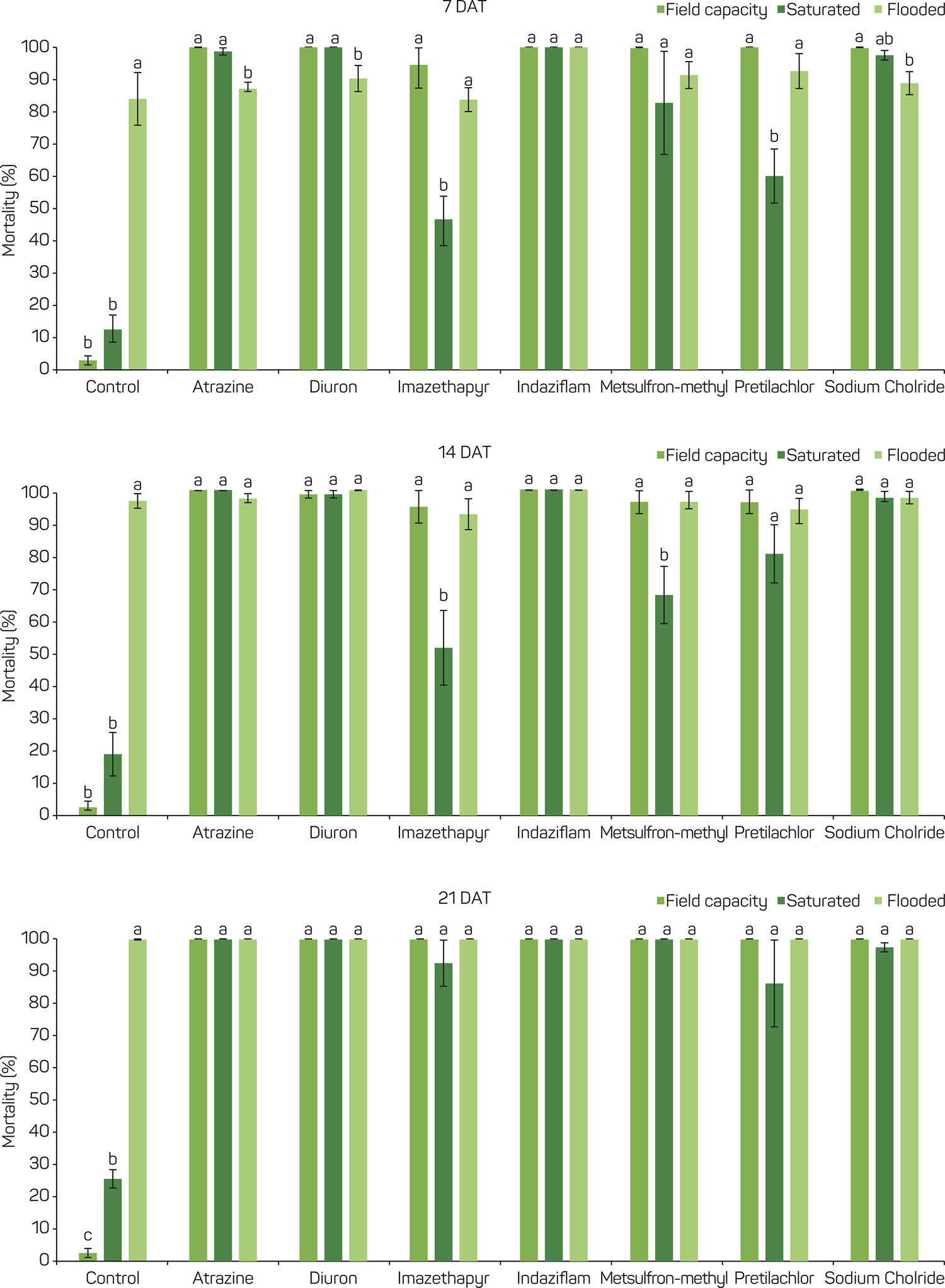
Pre-emergence herbicides activity on Parthenium weed was observed in different soil moisture conditions, viz. field capacity, saturated, and flooded. A significant (p<0.05) difference was observed between field capacity, saturated, and flooded conditions at 7, 14, and 21 DAT. At 7 DAT, pre-emergence herbicide activity on the mortality of Parthenium weed is presented in Figure 1. In the field capacity condition, most Parthenium weed seeds successfully germinated, with only 2.50% mortality/failed to germinate for untreated (control). Meanwhile, except for imazethapyr (93.75% mortality) no germination was observed in other pre-emergence herbicides treated pots. Under saturated conditions, diuron and indaziflam exhibited 100% mortality, while imazethapyr exhibited the lowest (46.25%). In flooded conditions, 100% mortality was only observed by applying indaziflam, while other herbicides produced between 84–93% mortality.
Effect of pre-emergence herbicides on mortality of Parthenium weed seedlings in different soil moisture conditions. Means having the same letter within the bar of each herbicide is not significantly different at p<0.05
At 14 DAT, both indaziflam and atrazine yielded 100% mortality in both field capacity and saturated conditions. In flooded conditions, diuron and indaziflam caused 100% mortality, although high mortality was also evident in the control. It is suspected that the mortality was mainly caused by the flooding condition, indicating that Parthenium weed is predominantly terrestrial weed, hence less tolerant to water ponding conditions. Similarly at 21 DAT, almost all herbicides resulted in 100% mortality regardless of soil moisture difference. Slightly lower efficacy was observed in saturated conditions where pretilachlor, imazethapyr, and sodium chloride showed 86.25%, 92.50%, and 97.50% mortality of Parthenium weed, although insignificantly different from other herbicides.
3.3 Post-emergence herbicides in whole-plant dose-response
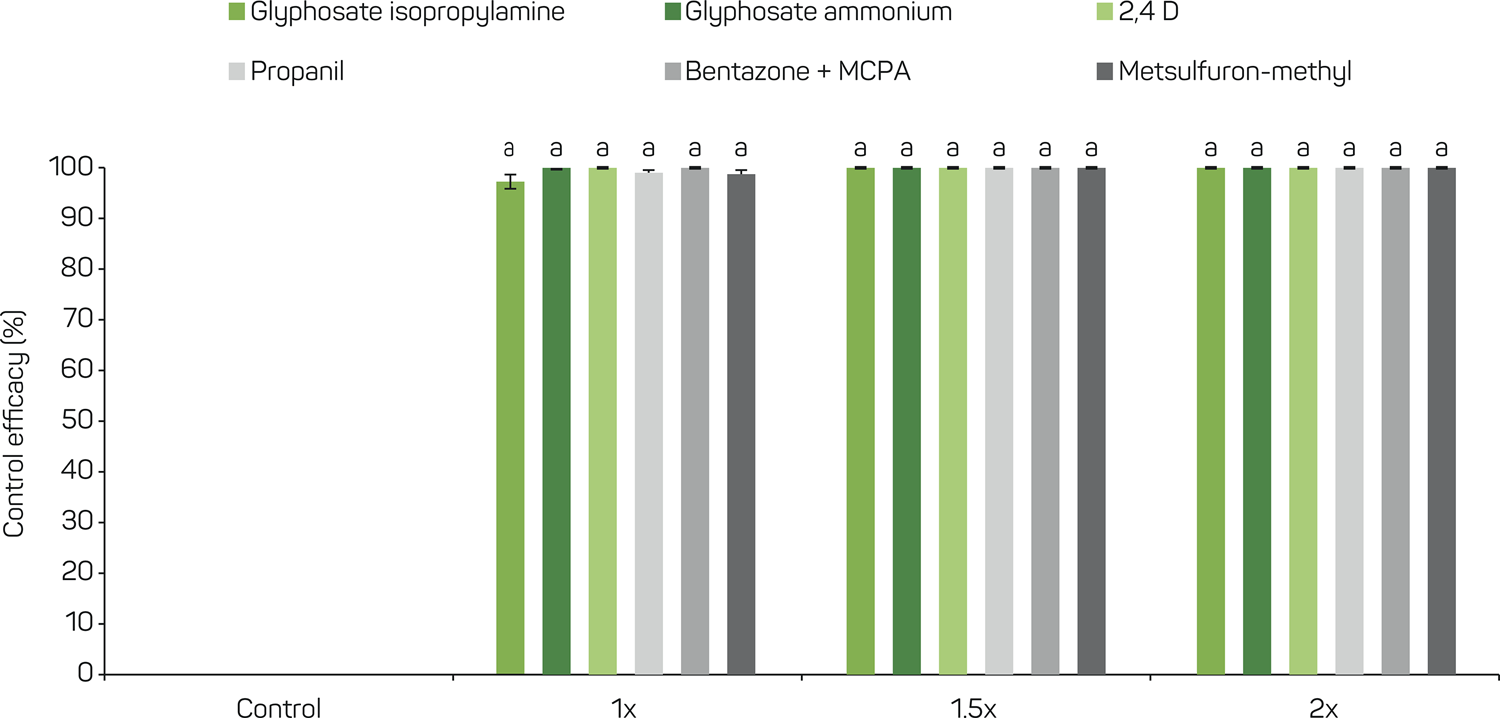
All post-emergence herbicides glyphosate-isopropylamine, glufosinate-ammonium, 2,4-D, propanil, bentazone+MCPA, and metsulfuron-methyl exhibited a promising control efficacy of Parthenium weed over the control in a glasshouse trial (Figure 2). No significant (p<0.05) difference was observed among the mean of plant height, no of leaves, and fresh weight regardless of herbicides except dry weight. Significant difference was observed in the mean regardless of doses (Table 3). At the recommended rate (1x), insignificantly high (>97%) Parthenium weed control was achieved by all herbicides, indicating the versatile options of chemical Parthenium weed management in Malaysia. At 1.5x the recommended rate and above, a complete inhibition of Parthenium weed was observed in all herbicides.
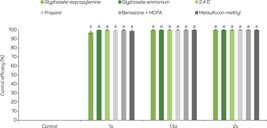
Control efficacy of post-emergence herbicides. Here, x represents the recommended dose. Means having the same letter within the bar of each herbicide is not significantly different at p<0.05
The different herbicides showed significant (p<0.05) effects on the plant height of Parthenium weed (Table 3). At the recommended rate (1x), 98.90%, 98.81%, and 95.66% inhibition of plant height were obtained by the application of metsulfuron-methyl, propanil, and glyphosate-isopropylamine, respectively. No plant height (100% inhibition) was recorded for glufosinate-ammonium, 2,4-D, and bentazone+MCPA at all-applied doses, but for other herbicides at 1.5x recommended rate and above. All applied treatments significantly (p<0.05) reduced the leaf number of Parthenium weed (Table 3). The most efficient 100% reduction of leaf number was shown by the application of glufosinate-ammonium, 2,4-D, and bentazone+MCPA at their recommended rate (1x). The applied herbicides also significantly (p<0.05) affected the fresh and dry weight of Parthenium weed and were dose-dependent (Table 3). Table 3 shows the dry weight of Parthenium weed as affected by different herbicides. The data revealed that all treatments significantly decreased the dry weight of Parthenium compared with the control. The highest dry weight was found in untreated (control) plots. No dry weight was recorded from plots sprayed with glufosinate-ammonium, 2,4-D, and bentazone+MCPA.
3.4 Efficacy of post-emergence herbicide in field conditions
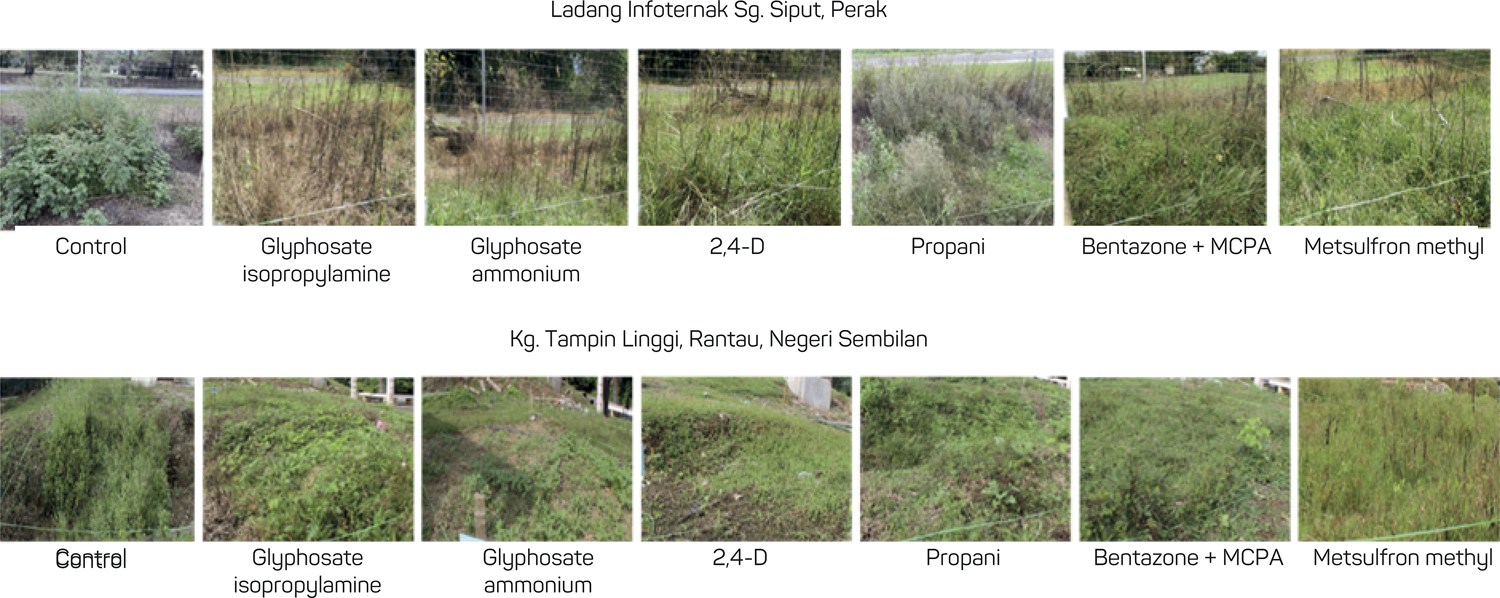
The control efficacy of all herbicides was assessed based on the % of control of Parthenium weeds in the two experimental fields (Ladang Infoternak Sg. Siput and Kg. Tampin Linggi). Control efficacy assessment was observed at 28 DAT, and it was found that the Parthenium weed was affected significantly (p<0.05) by the application of glyphosate isopropyl-amine, glufosinate-ammonium, 2,4-D, propanil, bentazone+MCPA, and metsulfuron-methyl compared to untreated (control) (Table 4). The control efficacy of herbicide-treated plots was significantly greater than the untreated plots (Figure 3). In Ladang Infoternak Sg. Siput, plots treated with 2,4-D, glyphosate isopropyl-amine, glufosinate-ammonium, propanil, and bentazone+MCPA exhibited severe damage with 100% control efficacy. Similarly, at Kg. Tampin Linggi, all herbicides showed 100% control efficacy except metsulfuron-methyl, which controlled 93.33% of Parthenium weed. Dry weight of Parthenium weed exhibited significant (p<0.05) differences among all the applied herbicide treatments in both locations (Table 4). The highest dry weight was obtained by glufosinate-ammonium (98.50 g) in Ladang Infoternak Sg. Siput and bentazone+MCPA (62.50 g) in Kg. Tampin Linggi. Glyphosate-isopropylamine produced the highest dry weight reduction of 54.77% at Ladang Infoternak Sg. Siput and glufosinate-ammonium produced 38.41% dry weight reduction in Kg. Tampin Linggi was compared to untreated (control).

4.Discussion
Pre- and post-emergence herbicides are effective methods for managing Parthenium weed, as shown in this study. In the seed bioassay, the germination of Parthenium seed was totally inhibited by imazethapyr, indaziflam, pretilachlor, and sodium chloride herbicide. Our findings were in line with findings on the effectiveness of imazethapyr (Marchioretto, Dal Magro, 2017), atrazine (Kaur et al.,2014), and thiobencarb (Javaid, 2007) to control Parthenium weed. Imazethapyr inhibits the acetohydroxy acid and disrupts protein synthesis, while Indaziflam is a cellulose-biosynthesis inhibitor with residual soil activity and broad spectrum pre-emergence control. Pretilachlor restrains the transportation of nutrients from leaves to embryos by the inhibition of α-amylase, causing energy shortage during weed germination, inhibiting the division, growth and differentiation of plant cells and ultimately retard the growth of weeds. Rehman et al. (2017) reported that in Zea mays L. field, Parthenium weed was controlled 88.00% by the application of S-metolachlor + atrazine (711.36 g a.i./ha).
The effectiveness of pre-emergence herbicides in weed management relies upon several factors, including soil moisture, soil texture, weed species composition, application rate, and environmental conditions (Hasan et al.,2023; Onwuchekwa-Henry et al.,2023). In this study, the efficacy of pre-emergence herbicides varied differently in different soil moisture conditions. All applied herbicides showed excellent weed control efficacy in field capacity (100%), and saturated conditions (86%–100%). Nonetheless, the efficacy of the herbicides under flooded conditions needs to be re-validated since no growth was observed in the control treatment as well, and the inundated soil probably contributed mortality of Parthenium weed seedlings. This might be true since there has been no infestation of Parthenium weed in rice fields or swamp areas in Malaysia. It has been proved that the efficacy of soil-active herbicides is influenced by soil moisture since it can alter herbicide absorption, translocation, or metabolism, which can affect crop phytotoxicity and herbicide efficacy (Mendes et al.,2022; Miller, Norsworthy, 2018).
The efficacy of several post-emergence herbicides to control Parthenium weed was assessed in the glasshouse and field in two different geographical locations. In the glasshouse trial, the application of glyphosate-isopropylamine, 2,4-D, bentazone+MCPA, propanil, and glufosinate-ammonium were highly effective in controlling Parthenium weed. Evidently, glufosinate-ammonium contributed to high control of Parthenium weed as well, with 100% control efficacy thus, the herbicide could be considered as an effective herbicide against Parthenium weed. Similarly, Reddy et al. (2007) also identified an effective post-emergence control by the application of glyphosate-isopropylamine, glufosinate-ammonium, and 2,4-D against Parthenium weed. In another study, Shabbir (2014) found that glyphosate-isopropylamine and isoproturon effectively controlled Parthenium weed, but glyphosate-isopropylamine was more effective than isoproturon. Bentazone and propanil are from the same group of mode of action, which is a photosystem II inhibitor, while glyphosate-isopropylamine belongs to a chemical family of glycine that inhibits the production of certain aromatic amino acids such as tyrosine, tryptophan, and phenylalanine by disrupting shikimate pathway (Gémes et al.,2022). Similarly, Khan et al. (2012) also found that Parthenium weed was highly susceptible to herbicides with the mode of actions of photosynthesis and amino acid synthesis inhibitors.
The field trial experiment was conducted in two different locations. In both locations, all the herbicides exhibited 100% mortality of Parthenium weed. Among all herbicides, 2,4-D displayed a great reduction in dry weight of Parthenium weed, around 32.71% and 15.20% in Ladang Infoternak Sg. Siput and Kg. Tampin Linggi, respectively, at 28 DAT. A study by Gaikwad et al. (2008) found a similar result, where 100% Parthenium mortality was observed after the 30th day of 2,4-D, atrazine, and glyphosate-isopropylamine applications. Other findings were parallel with our results, achieving maximum weed control by applying glyphosate-isopropylamine (Sing et al.,2017; Adnan et al.,2020), bentazone (Reddy et al.,2007), glufosinate-ammonium (Reddy et al.,2007), and 2,4-D (Javaid, 2007; Reddy et al.,2007). Asghar et al. (2021) found that glyphosate and ametryne+atrazine controlled Parthenium weed by 97% and 82%, respectively. Several post- emergence herbicides, such as halosulfuron, chlorimuron, and trifloxysulfuron were reported to provide adequate control of Parthenium weed (Reddy et al.,2007).
The application of a non-selective or broad-spectrum herbicide is practical and proper to non-agricultural and non-cropped areas such as roadsides, railway tracks, wastelands, and water channels. In this study, glyphosate-isopropylamine and glufosinate-ammonium appeared as non-selective herbicides potentially suitable for controlling Parthenium weed in an open area. The application of selective herbicide allows competition between native plants and Parthenium weed, making it practical to maintain the weed in agricultural regions. Thus, the application of effective selective herbicides, such as 2,4-D, bentazone+MCPA, and propanil against Parthenium weed, may be a great option to control the weed in crop or agricultural areas.
5.Conclusions
All the pre-emergence herbicides showed excellent control of Parthenium weed in the seed bioassay, further supported by similar results in the glasshouse. Among the post-emergence herbicides, glufosinate-ammonium, 2,4-D, and bentazone+MCPA were more effective than other herbicides. However, the continuous application of similar types of pre- and post-emergence herbicides should be avoided and carefully monitored since sole dependence on herbicides, especially sharing similar mode of action is likely to contribute to the occurrence of herbicide-resistant problems. Therefore, the rotation of different herbicide applications with different modes of action is a crucial practice to reduce the risk of herbicide resistance. Tank-mix of pre- and post-emergence herbicides needs to be considered for a more sustainable Parthenium weed management and reduce weed seedbank in the infested areas.
Acknowledgements
The authors would like to express their sincere gratitude to Universiti Putra Malaysia for providing financial support for this research under the Geran Putra – Inisiatif Putra Berkumpulan (UPM/700-2/1/GP-IPB/2017/9523401) and research grant by Malaysian Agricultural Research and Development Institute (MARDI: JTI044).
References
-
Adhikari P, Lee YH, Poudel A, Lee G, Hong SH, Park YS. Predicting the impact of climate change on the habitat distribution of Parthenium hysterophorus around the world and in South Korea. Biology. 2023;12(1):1-16. Available from: https://doi.org/10.3390/biology12010084
» https://doi.org/10.3390/biology12010084 -
Adkins SW, Wills D, Boersma M, Walker SR, Robinson G, McLeod RJ et al. Weeds resistant to chlorsulfuron and atrazine from the north-east grain region of Australia. Weed Res. 1997;37(5):343-9. Available from: https://doi.org/10.1046/j.1365-3180.1997.d01-56.x
» https://doi.org/10.1046/j.1365-3180.1997.d01-56.x - Adnan M, Asif M, Hussain I, Hayyat MS, Haq MM, Hassan M et al. Chemical management of Parthenium: a review. Int J Botany Studies. 2020;5(2):52-6.
-
Ali K, Rehman A, Khan K, Weyl P. Comparative efficacy of common broad leaf herbicides against an invasive weed: Parthenium hysterophorus L. Agric Sci. 2020;11(7):617-26. Available from: https://doi.org/10.4236/as.2020.117039
» https://doi.org/10.4236/as.2020.117039 - Asghar M, Baig MQ, Latif MMT, Hussain M. Evaluation of the effect of different herbicides for the control of parthenium weed. Turk J Weed Sci. 2021;24(1):19-27.
-
Bajwa AA, Chauhan BS, Farooq M, Shabbir A, Adkins SW. What do we really know about alien plant invasion? A review of the invasion mechanism of one of the world's worst weeds. Planta. 2016;244:39-57. Available from: https://doi.org/10.1007/s00425-016-2510-x
» https://doi.org/10.1007/s00425-016-2510-x -
Bajwa AA, Ullah A, Farooq M, Chauhan BS, Adkins S. Chemical control of parthenium weed ( Parthenium hysterophorus L.) in two contrasting cultivars of rice under direct-seeded conditions. Crop Prot. 2019; 117:26-36. Available from: https://doi.org/10.1016/j.cropro.2018.11.009
» https://doi.org/10.1016/j.cropro.2018.11.009 -
Belgeri A, Bajwa AA, Shabbir A, Navie S, Vivian-Smith G, Adkins S. Managing an invasive weed species, Parthenium hysterophorus, with suppressive plant species in Australian Grasslands. Plants. 2020;9(11):1-18. Available from: https://doi.org/10.3390/plants9111587
» https://doi.org/10.3390/plants9111587 -
Boja M, Girma Z, Dalle G. Impacts of Parthenium hysterophorus L. on plant species diversity in Ginir district, Southeastern Ethiopia. Diversity. 2022;14(8):1-21. Available from: https://doi.org/10.3390/d14080675
» https://doi.org/10.3390/d14080675 -
Duguma G, Fitamo D, Kebede F. Socioeconomic and ecological consequences of Parthenium weed ( Parthenium hysterophorus L.) in Boset Woreda, Ethiopia. Afr J Agric Res. 2019;14(34):1921-42. Available from: https://doi.org/10.5897/AJAR2019.14247
» https://doi.org/10.5897/AJAR2019.14247 - Gaikwad CB, Kasture MC, Lambade BM. Evaluation of herbicides for control of Parthenium in waste land. Indian J Weed Sci. 2008;40(1-2):79-81.
-
Gémes B, Takács E, Székács I, Horvath R, Székács A. Comparative assessment of the inhibitory potential of the herbicide glyphosate and its structural analogs on RGD-specific integrins using enzyme-linked immunosorbent assays. Int J Mol Sci. 2022;23(20):1-13. Available from: https://doi.org/10.3390/ijms232012425
» https://doi.org/10.3390/ijms232012425 -
Goodall J, Braack M, De Klerk J, Keen C. Study on the early effects of several weed-control methods on Parthenium hysterophorus L. Afr J Range Forage Sci. 2010;27(2):95-9. Available from: https://doi.org/10.2989/10220119.2010.502648
» https://doi.org/10.2989/10220119.2010.502648 -
Grichar WJ. Weed control and grain sorghum tolerance to flumioxazin. Crop Prot. 2006;25(2):174-7. Available from: https://doi.org/10.1016/j.cropro.2005.03.015
» https://doi.org/10.1016/j.cropro.2005.03.015 -
Hasan M, Mokhtar AS, Mahmud K, Berahim Z, Rosli AM, Hamdan H et al. Physiological and biochemical responses of selected weed and crop species to the plant-based bioherbicide WeedLock. Sci Rep. 2022;12(1):1-10. Available from: https://doi.org/10.1038/s41598-022-24144-2
» https://doi.org/10.1038/s41598-022-24144-2 -
Hasan M, Mokhtar AS, Mahmud K, Rosli AM, Hamdan H, Motmainna M et al. Weed control efficacy and soil activity of a new promising bioherbicide 'WeedLock'. Sains Malays. 2023;52(8):2225-35. Available from: http://doi.org/10.17576/jsm-2023-5208-05
» http://doi.org/10.17576/jsm-2023-5208-05 -
Hasan M, Mokhtar AS, Rosli AM, Hamdan H, Motmainna M, Ahmad-Hamdani MS. Weed control efficacy and crop-weed selectivity of a new bioherbicide WeedLock. Agronomy 2021;11(8):1-21. Available from: https://doi.org/10.3390/agronomy11081488
» https://doi.org/10.3390/agronomy11081488 -
James TK, Rahman A. Efficacy of preemergence herbicides on three annual grass weeds in different soils. New Zeal Plant Prot. 2009;62:356-62. Available from: https://doi.org/10.30843/nzpp.2009.62.4812
» https://doi.org/10.30843/nzpp.2009.62.4812 - Javaid A. Efficacy of some common herbicides against Parthenium weed. Pak J Weed Sci Res. 2007;13(1-2):93-8.
-
Kaur M, Aggarwal NK, Kumar V, Dhiman R. Effects and management of Parthenium hysterophorus: a weed of global significance. Int Sch Res Not. 2014;1-12. Available from: https://doi.org/10.1155/2014/368647
» https://doi.org/10.1155/2014/368647 - Khan H, Marwat KB, Hassan G, Khan MA. Chemical control of Parthenium hysterophorus L. at different growth stages in non-cropped area. Pak J Bot. 2012;44(5):1721-6.
-
Kushwaha VB, Maurya S. Biological utilities of Parthenium hysterophorus. J Appl Nat Sci. 2012;4(1):137-43. Available from: https://doi.org/10.31018/jans.v4i1.238
» https://doi.org/10.31018/jans.v4i1.238 -
Marchioretto LDR, Dal Magro T. Weed control and crop selectivity of post-emergence herbicides in common beans. Cienc Rural. 2017;47(3):1-6. Available from: https://doi.org/10.1590/0103-8478cr20160295
» https://doi.org/10.1590/0103-8478cr20160295 -
Maszura CM, Karim SMR, Norhafizah MZ, Kayat F, Arifullah M. Distribution, density, and abundance of Parthenium weed ( Parthenium hysterophorus L.) at Kuala Muda, Malaysia. Int J Agron. 2018;1-8. Available from: https://doi.org/10.1155/2018/1046214
» https://doi.org/10.1155/2018/1046214 - Meena RK, Dutt B, Kumar R, Sharma KR. Phytochemistry of congress grass ( Parthenium hysterophorus L.) and harmful and beneficial effect on human and animals: a review. Int J Chem Stud. 2017;5(4):643-7.
- Mendes KF, Mielke KC, D'Antonino L, Silva AA. Retention, absorption, translocation, and metabolism of herbicides in plants. In: Mendes KF, Silva AA, editors. Applied weed and herbicide science. New York: Springer International Publishing; 2022.
-
Miller MR, Norsworthy JK. Influence of soil moisture on absorption, translocation, and metabolism of florpyrauxifen-benzyl. Weed Sci. 2018;66(4):418-23. Available from: https://doi.org/10.1017/wsc.2018.21
» https://doi.org/10.1017/wsc.2018.21 -
Motmainna M, Juraimi AS, Ahmad-Hamdani MS, Hasan M, Yeasmin S, Anwar MP et al. Allelopathic potential of tropical plants: a review. Agronomy. 2023;13(8):1-21. Available from: https://doi.org/10.3390/agronomy13082063
» https://doi.org/10.3390/agronomy13082063 -
Motmainna M, Juraimi AS, Uddin MK, Asib NB, Islam AKMM, Ahmad-Hamdani MS et al. Physiological and biochemical responses of Ageratum conyzoides, Oryza sativa f. spontanea (weedy rice) and Cyperus iria to Parthenium hysterophorus methanol extract. Plants. 2021a;10(6):1-20. Available from: https://doi.org/10.3390/plants10061205
» https://doi.org/10.3390/plants10061205 -
Motmainna M, Juraimi AS, Uddin MK, Asib NB, Islam AKMM, Ahmad-Hamdani MS et al. Physiological and biochemical responses of Ageratum conyzoides, Oryza sativa f. spontanea (weedy rice) and Cyperus iria to Parthenium hysterophorus methanol extract. Plants. 2021c;10(6):1-20. Available from: https://doi.org/10.3390/plants10061205
» https://doi.org/10.3390/plants10061205 -
Motmainna M, Juraimi AS, Uddin MK, Asib NB, Islam AKMM, Hasan M. Bioherbicidal properties of Parthenium hysterophorus, Cleome rutidosperma and Borreria alata extracts on selected crop and weed species. Agronomy. 2021b;11(4):1-24. Available from: https://doi.org/10.3390/agronomy11040643
» https://doi.org/10.3390/agronomy11040643 - Muniyappa TV, Krishnamurthy K. Growth of parthenium under different soil conditions and relative efficacy of pre-emergent herbicides. Indian J Weed Sci. 1976;8(2):115-20.
- Muniyappa TV, Prasad TV, Krishnamurthy K. Comparative effectiveness and economics of mechanical and chemical methods of control of Parthenium hysterophorus Linn. Indian J Weed Sci. 1980;12(2):137-44
-
Odero DC. Response of ragweed parthenium ( Parthenium hysterophorus ) to saflufenacil and glyphosate. Weed Technol. 2012;26(3):443-8. Available from: https://doi.org/10.1614/WT-D-11-00116.1
» https://doi.org/10.1614/WT-D-11-00116.1 -
O'Donnell C, Adkins SW. Management of parthenium weed through competitive displacement with beneficial plants. Weed Biol Manag. 2005;5(2):77-9. Available from: https://doi.org/10.1111/j.1445-6664.2005.00160.x
» https://doi.org/10.1111/j.1445-6664.2005.00160.x -
Onwuchekwa-Henry CB, Van Ogtrop F, Roche R, Tan DK. Evaluation of pre-emergence herbicides for weed management and rice yield in direct-seeded rice in Cambodian lowland ecosystems. Farming Syst. 2023;1(2):1-7. Available from: https://doi.org/10.1016/j.farsys.2023.100018
» https://doi.org/10.1016/j.farsys.2023.100018 -
Reddy KN, Bryson CT, Burke IC. Ragweed Parthenium ( Parthenium hysterophorus ) control with preemergence and postemergence herbicides. Weed Technol. 2007;21(4):982-6. Available from: https://doi.org/10.1614/WT-07-053.1
» https://doi.org/10.1614/WT-07-053.1 -
Rehman A, Hassan FU, Qamar R, Ali M, Zamir MS, Iqbal S et al. Efficacy of herbicides in controlling Parthenium hysterophorus L. in spring maize ( Zea mays L.). Qual Assur Saf Crops Foods. 2017;9(2):213-20. Available from: https://doi.org/10.3920/QAS2015.0750
» https://doi.org/10.3920/QAS2015.0750 -
Ruzmi R, Akhir AFM, Dilipkumar M, Sinniah UR, Juraimi AS, Ghazali MN et al. Growth performance of Malaysian Parthenium hysterophorus under various environmental variables. Agriculture 2021;11(9):1-20. Available from: https://doi.org/10.3390/agriculture11090856
» https://doi.org/10.3390/agriculture11090856 - Shabbir A, Dhileepan K, Zalucki MP, O'Donnell C, Khan N, Hanif, Z et al. The combined effect of biological control with plant competition on the management of parthenium weed ( Parthenium hysterophorus L.). Pak J Bot. 2015;47(spe):157-9.
- Shabbir A. Chemical control of Parthenium hysterophorus L. Pak J Weed Sci Res. 2014;20(1):1-10.
- Sharma R. Performance of different herbicides for control of congress grass ( Parthenium hysterophorus L.) in non-cropped areas. Indian J Weed Sci. 2003;35:242-5.
-
Singh S, Yadav A, Balyan RS, Malik RK, Singh M. Control of ragweed parthenium ( Parthenium hysterophorus ) and associated weeds. Weed Technol. 2004;18(3):658-64. Available from: https://doi.org/10.1614/WT-03-128R2
» https://doi.org/10.1614/WT-03-128R2 -
Tabe Ojong MP, Alvarez M, Ihli HJ, Becker M, Heckelei T. Action on invasive species: control strategies of Parthenium hysterophorus L. on smallholder farms in Kenya. Environ Manag. 2022;69:861-70. Available from: https://doi.org/10.1007/s00267-021-01577-5
» https://doi.org/10.1007/s00267-021-01577-5 -
Tadesse B, Das TK, Yaduraju NT. Effects of some integrated management options on parthenium interference in sorghum. Weed Biol Manag. 2010;10(3):160-9. Available from: https://doi.org/10.1111/j.1445-6664.2010.00380.x
» https://doi.org/10.1111/j.1445-6664.2010.00380.x -
Tanveer A, Khaliq A, Ali HH, Mahajan G, Chauhan BS. Interference and management of parthenium: the world's most important invasive weed. Crop Prot. 2015;68:49-59. Available from: https://doi.org/10.1016/j.cropro.2014.11.005
» https://doi.org/10.1016/j.cropro.2014.11.005 - Tiwari D, Singh SK, Singh AK, Puniya R. Effect of market available herbicides on growth and yield of wheat ( Triticum aestivum l. Emond. Fiori and Paol) and associated weeds. Pantnagar J Res. 2009;7(2):220-2.
Edited by
-
Editor in Chief:
Anderson Luis Nunes
-
Associate Editor:
Asad Asaduzzaman