
 PUBLIC GOVERNANCE IN A FEDERAL HIGHER EDUCATION INSTITUTION: AN ANALYSIS CONSIDERING THE STRATEGIC MECHANISM OF THE TCU GOVERNANCE MODEL
Abstract
The article analyzed, based on a descriptive investigation, how governance practices occur in a federal higher education institution in light of the strategic mechanism of the governance model proposed by the TCU. The research used data collected through documentary analysis, semi-structured interviews, and nonparticipant observation. The main results indicate that the implementation of risk management practices occurred due to regulatory requirements. It was also found that there was an absence of second-line units and the need for greater support from senior management. It was also evident that the lack of an express declaration of those responsible for meeting strategic planning goals makes it difficult to monitor the achievement of organizational results. Furthermore, monitoring the achievement of organizational results requires greater involvement of the sectors and reflection on the achievement of goals, since the process is currently predominantly declarative. Regarding the monitoring of management functions, it was found that there were no normative documents to guide this process. The research also revealed that the practice of managing risks receives little attention from governance bodies, while the practice of establishing strategy is the one that receives the most attention.
Keywords:
public governance; strategy; governance mechanisms.
Resumo
O artigo analisou, a partir de uma investigação descritiva, como ocorrem as práticas de governança de uma instituição federal de ensino superior à luz do mecanismo estratégia do modelo de governança proposto pelo TCU. A pesquisa utilizou dados coletados por meio de análise documental, entrevistas semiestruturadas e observação não participante. Os principais resultados indicam que a implementação de práticas de gestão de riscos ocorreu devido às exigências normativas. Verificou-se, também, a ausência de unidades de segunda linha e a necessidade de maior apoio da alta gestão. Evidenciou-se, ainda, que a ausência da declaração expressa de responsáveis pelo cumprimento das metas do planejamento estratégico dificulta o monitoramento do alcance dos resultados organizacionais. Ademais, o monitoramento do alcance dos resultados organizacionais necessita de maior envolvimento dos setores e de uma reflexão sobre o alcance das metas, uma vez que o processo atualmente é predominantemente declarativo. No que se refere ao monitoramento das funções de gestão, constatou-se a ausência de documentos normativos que orientem esse processo. A pesquisa revelou, também, que a prática gerir riscos recebe baixa atenção das instâncias de governança, enquanto a prática estabelecer a estratégia é aquela que recebe maior atenção.
Palavras-chave:
governança pública; estratégia; mecanismos de governança.
Resumen
El artículo analizó, a partir de una investigación descriptiva, cómo ocurren las prácticas de gobernanza de una institución federal de educación superior a la luz del mecanismo estratégico del modelo de gobernanza propuesto por el TCU. La investigación utilizó datos recopilados a través del análisis de documentos, entrevistas semiestructuradas y observación no participante. Los principales resultados indican que la implementación de prácticas de gestión de riesgos se produjo debido a requisitos regulatorios. También hubo una ausencia de unidades de segunda línea y la necesidad de un mayor apoyo por parte de la alta dirección. También se evidenció que la ausencia de una declaración expresa de los responsables del cumplimiento de las metas de planificación estratégica dificulta el seguimiento del logro de los resultados organizacionales. Además, el seguimiento del logro de resultados organizacionales requiere una mayor involucración de los sectores y una reflexión sobre el logro de metas, ya que el proceso actualmente es predominantemente declarativo. En cuanto al seguimiento de las funciones de gestión, faltaron documentos normativos que orienten este proceso. La investigación también reveló que la práctica de gestionar los riesgos recibe poca atención por parte de los órganos de gobierno, mientras que la práctica de establecer la estrategia es la que recibe la mayor atención.
Palabras clave:
gobernanza pública; estrategia; mecanismos de gobernanza.
1 INTRODUCTION
Public administration has been urged by social demands to reconsider its management, with the aim of reassessing its processes and results (Teixeira; Gomes, 2019). In this context, the concept of governance has become significant in the construction of the assumptions of state reform, aiming at a less bureaucratic State that is more attentive to social and fiscal aspects, seeking to establish a new relationship between the State and society (Oliveira; Pisa, 2015).
As integral parts of this reform, Federal Higher Education Institutions (IFES) and their decentralized structures should ensure university autonomy, especially in the areas of administrative, financial and budgetary management (Mizael et al., 2013). This reinforces the importance of IFES being guided by governance and the principles established by it to effectively promote quality and efficiency in public administration.
When comparing higher education systems in different countries, Clark (1983) proposed the Coordination Triangle, which positions the university between three poles of influence: the State, the academic oligarchy, and the market. The author characterizes this institution as a complex structure, in which autonomy and decisionmaking power are concentrated in the base units, requiring mechanisms for mutual adjustments. He also highlights that universities operate in a matrix structure, with internal and external integrative dynamics, which makes their management a continuous exercise in governance.
In turn, Matus (1997) criticized the transposition of management models from the private sector to the public sector, as prescribed by traditional planning schools. In the early 1970s, he developed Situational Strategic Planning (SSP), a method that considers the complexity of public problems and the multiple actors involved. According to the aforementioned author, unlike corporate planning, which is centered on the market, SSP is focused on concrete political action and offers a more contextualized approach aligned with the specificities of public institutions, such as universities.
Lugoboni and Marques (2022) highlight that governance in higher education institutions has faced a series of challenges, ranging from the scarcity of resources to the rigidity of the administrative structure, which imposes significant limitations on the autonomy of managers.
The term governance has been used in different fields of study to designate diverse political-institutional and social processes and from different theoretical perspectives, making it impossible to define a single concept (Oliviere; Nesthehner; Paiva Júnior, 2018). However, the authors emphasize the need to identify the different debates surrounding this term. Teixeira and Gomes (2019) emphasize that the diversity of approaches to the topic requires the systematization of some of its main dimensions.
The Federal Court of Auditors (TCU) has undertaken efforts to implement governance practices in public institutions at the federal level. Thus, this body summarized that the concept of organizational public governance essentially comprises the mechanisms of leadership, strategy and control, which evaluate, direct and monitor management in the conduct of public policies and in the provision of services of interest to the population (Brazil, 2020a).
In this sense, the objective of this article is to analyze how the governance practices of a federal higher education institution occur in light of the strategic mechanism of the governance model proposed by the TCU.
2 THEORETICAL FRAMEWORK
2.1 Public Governance
Governance emerged in private organizations in response to agency problems arising from the separation of ownership and control. According to the Agency Theory of Jensen and Meckling (1976), there is a conflict of interests in the relationships between owners (principals) and executives (agents), caused by the asymmetry of information and the different incentives that each party has.
In the public context, agency problems occur between citizens and public managers. Thus, governance seeks to solve public problems by establishing evaluation criteria that help agencies meet social demands (Brazil, 2020a).
In this sense, Responsive Governance aims to improve the relationship between citizens and public managers, prioritizing participation and transparency to reduce information asymmetry and improve the response to the population's needs, while also promoting greater responsibility in compliance with standards (Azevedo; Anastasia, 2002).
From the perspective of Public Governance, citizens and organizations are seen as stakeholders, that is, interested parties that can influence or be impacted by public decisions, with which the public sphere builds horizontal models of relationship and coordination for the construction of public policies (Secchi, 2009).
According to Castro, Barbosa Neto and Cunha (2022), the implementation of governance mechanisms in the public sector progresses slowly, due to the limited understanding of public governance concepts and the excessive emphasis on compliance with legal aspects. In addition, the authors found a lack of continuity in projects during political transitions.
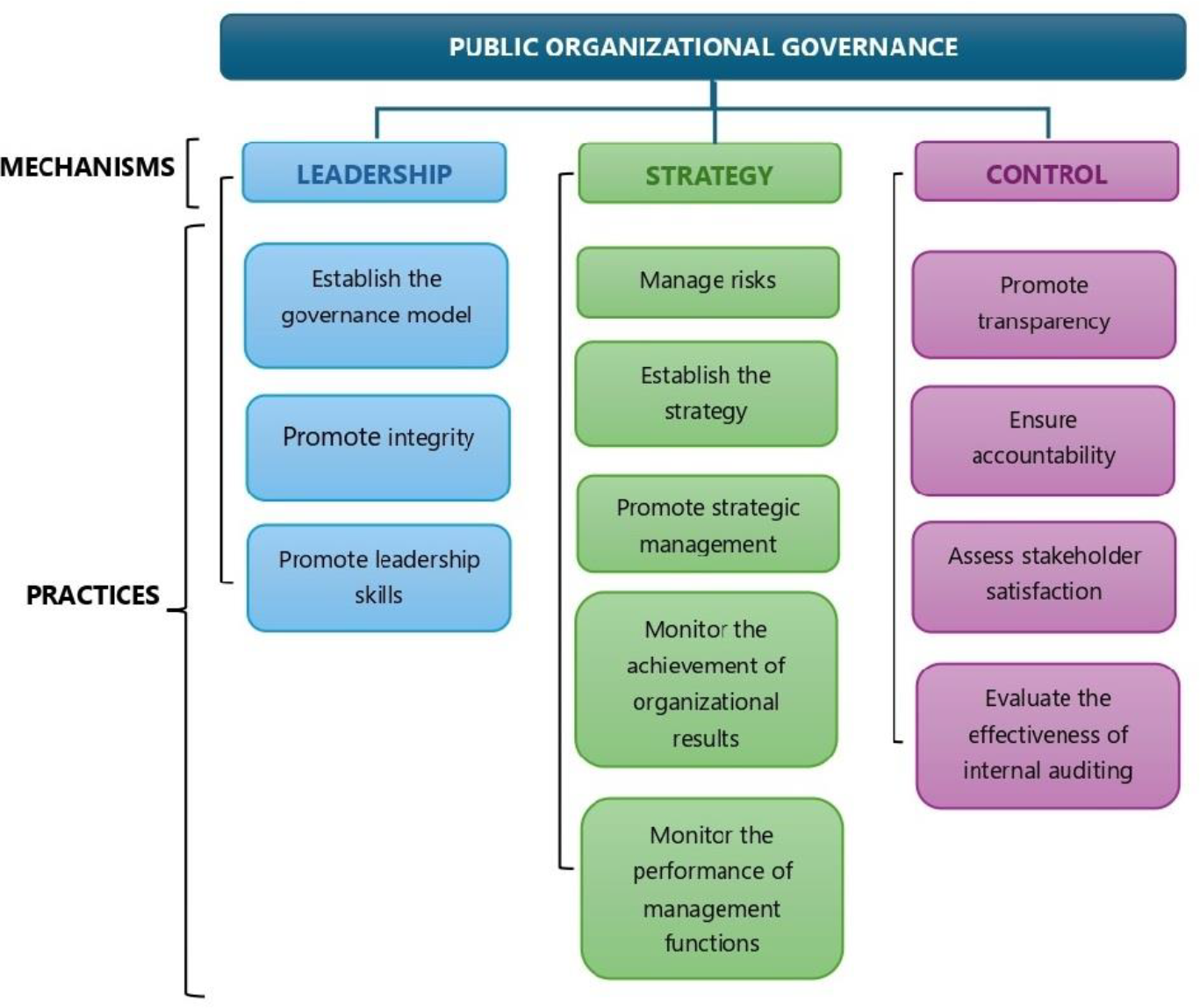
To assist agencies in implementing governance practices, the model developed by the TCU, described in Figure 1, was based on results from studies in national and international literature; laws; international guidelines, such as the recommendations of the Organization for Economic Cooperation and Development (OECD) (Teixeira et al., 2018); research published by multilateral organizations, such as the United Nations (UN); and the requirements of the World Bank (Brazil, 2020a).
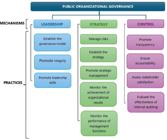
Regarding the tripod of governance mechanisms, the first of them - the leadership mechanism - encompasses behavioral practices exercised in the main positions of organizations to ensure integrity, competence, responsibility and motivation in the exercise of governance. In turn, the strategy mechanism refers to the definition of guidelines and objectives, and to the promotion of alignment between the organization and stakeholders to achieve results. The control mechanism structures processes to mitigate risks and ensure the ethical, efficient and legal execution of activities and use of public resources (Brazil, 2017).
2.2 Strategy
2.2.1 Managing Risks
Risk management aims to identify and understand risks in order to ensure appropriate responses (Brazil, 2020a). Nascimento and Silva (2020) emphasize that understanding the implementation of risk management processes is essential for them to become allies in achieving organizational objectives.
In this sense, the Joint Normative Instruction of the Ministry of Planning (MP) and the Comptroller General of the Union (CGU) No. 01, of May 10, 2016, established that federal public bodies should establish Governance, Risk and Control Committees (Brazil, 2016). In addition, Presidential Decree No. 9203, of November 22, 2017, provided for the governance policy of the direct, autarchic and foundational federal public administration (Brazil, 2017).
These measures have included the topic on the management agenda of HEIs, putting greater pressure on them to create governance committees and risk management policies (Bauer et al., 2022). On the other hand, the implementation of risk management processes in organizations often encounters resistance and challenges such as lack of knowledge of the topic, the absence of a risk culture, adequate structure and manager engagement (Araújo; Gomes, 2021; Bauer et al., 2022; Braga, 2017).
2.2.2 Establish and promote strategic management
Establishing a strategy takes into account the value chain, the analysis of the internal and external environments, and the limits to the risks to which the organization will be exposed (Brazil, 2020a). According to Teixeira et al. (2018), establishing a strategy encompasses the definition of the strategic management model, considering aspects such as transparency and stakeholder involvement and how internal governance bodies participate in the evaluation, direction, and monitoring of the strategy.
To promote strategic management, it is necessary to deploy the strategy across the different organizational units, as well as monitor and make adjustments to its execution when necessary (Brasil, 2020a). This process also presupposes the identification of the final and support units, as well as the establishment of the management model for these units with guidelines and assignment of responsibilities (Brasil, 2020a). From this perspective, Oliveira, Pinto and Mendonça (2020) highlight that the complexities inherent to IFES require the creation of articulated strategic instruments, aiming at the efficient deployment of the strategy at all levels, which contributes to the improvement and addition of value to the organization.
2.2.3 Monitoring the results and performance of management functions
According to Fenner et al. (2019), monitoring compliance with the goals and objectives established in the strategic plan is a crucial step in ensuring the effectiveness and adequate performance of public management. Monitoring the achievement of results presupposes periodic monitoring of the execution of the strategy. It is also necessary to evaluate the efficiency of the main processes by which the strategy is implemented, as well as the treatment of any inefficiencies and the effects resulting from its execution (Brazil, 2020a).
Regarding the performance of management functions, monitoring must be carried out systematically and continuously, with the aim of supporting evidence-based decision-making, correcting deviations, identifying opportunities for improvement and promoting learning (Brasil, 2020a). This practice also provides input for the evaluation of the organizational strategy, with leadership being responsible for carrying it out and reporting the results of this evaluation to stakeholders. To this end, IFES administrators need to have a reflective and proactive stance, in addition to mastering skills such as planning, coordination, control and evaluation of management processes (Mizael et al., 2013).
3 METHODOLOGY
This research is characterized as descriptive, through a case study, having as unit of analysis the Federal University of Vale do São Francisco (Univasf). With multicampi operations in the states of Pernambuco, Bahia and Piauí, Univasf was the first federal university to have its headquarters established in the interior of the Northeast, in the city of Petrolina-PE.
To achieve this objective, different data collection strategies were adopted from April 2023 to February 2024: document analysis, semi-structured interviews and, in a complementary manner, non-participant observation. Table 1 provides a list of the documents analyzed.
In conducting the semi-structured interviews, a script based on the practices of the governance strategy mechanism of the analysis model was used. Thus, for each variable of the model, there was at least one item in the script. Furthermore, we sought to encompass the multiplicity of actors and the plurality of the university. Thus, the Rector, the Vice-Rector pro tempore and three members of the University Council (CONUNI) - representatives of the teaching, technical-administrative and student categories - were interviewed. To define these interviewees, the criterion adopted was the longest time of service at CONUNI. In addition, the President of the Board of Trustees (CONCUR), the Internal Controller, the President of the Risk Management Center (NGR) and the Director of the Institutional Development Department (DDI) at the time of the implementation of ForPDI were interviewed.
Non-participant observations took place in the form of systematized reports at meetings of the Governance, Risk Management and Control Committee (CGGRC), PDI monitoring meetings and sectoral meetings with administrative units.
As an analysis model, the public governance model proposed by the TCU was adopted, based on the analysis of the practices of the governance strategy mechanism, described in Table 2.
Data from documents, non-participant observations and semi-structured interviews were transcribed and tabulated in an Excel spreadsheet and analyzed through analytical reading, which involved critical analysis based on and guided by the analysis model (Fonseca, 2019; Maciel et al., 2019).
Furthermore, a scale was developed, presented in Table 3, with the aim of measuring the level of attention directed, by the Univasf governance bodies, to the analyzed practices described in Table 2.
Thus, practices in which less than 50% of the components were identified were classified as having a low level of attention. Those that presented between 50% and 80% of the components were classified as having an intermediate level of attention. While those with more than 80% of the elements were classified as having a high level of attention.
The relative, rather than absolute, aspect of the scale was chosen, given that the practices of the strategy mechanism have different quantities of components. Therefore, if the absolute aspect were chosen, the level of attention attributed to the practices could be underestimated or overestimated.
4 DISCUSSION AND RESULTS
4.1 Governance Structure
The governance structure of Univasf is composed of the Senior Management, which includes CONUNI, the highest deliberative, normative and planning body; CONCUR, with deliberative and advisory functions related to economic and financial oversight; and the Rectorate, the executive body. In addition, the Academic Boards act as base deliberative bodies with administrative, didactic-curricular and financial functions. Other governance bodies include the Federal Attorney's Office at Univasf, the University Administration, the Pro-Rectorates, the Secretariats, the Ombudsman's Office and the Internal Controller's Office.
The following sections will present the discussion and results of the analyses of practices related to the governance strategy mechanism.
4.2 Practice managing risks
The first initiatives related to risk management at Univasf were driven by recommendations from the TCU. These initiatives included the creation of a Procurement and Contracting Plan. In addition, as a result of the Joint Normative Instruction MP - CGU No. 01, of 05/10/2016, Resolution No. 25/2017-CONUNI was approved, which stipulated the implementation of the Univasf Risk Management Policy (PGRISCOS) within 48 months after its approval (Univasf, 2017c). In this sense,
[...] the institution of the risk management policy occurred due to the imposition of a normative act of the CGU. Faced with this imposition, Univasf met the deadlines and adopted the guidelines of the normative, mainly due to the lack of internal knowledge on the subject and the limitation to adapt the policies to the specific reality of the university (Interviewee I).
This finding corroborates the results of Bauer et al. (2022), who identified that normative pressures were the main factors that drove the adoption of risk management in the universities analyzed.
In addition to PGRISCOS, Resolution No. 25/2017-CONUNI provided for the risk management structure; the attributions and responsibilities of the agents; the stages of the process; as well as established essential elements of the policy: the Governance, Risk Management and Controls Committee (CGGRC); the Risk Management Center (NGR); and the Risk Owner (PR)
According to Resolution No. 25/2017-CONUNI, the NGR should preferably be composed of people who represent the administrative, academic and laboratory areas of the university, appointed by the members of the CGGRC (Univasf, 2017c). However, the current composition is 8 (eight) members. According to interviewee B, “the limited structure of the NGR represents a significant weakness for the implementation of the PGRISCOS”.
Although the preparation of the sectoral Risk Management Plan is a responsibility of the PR, no university unit sent the aforementioned plan to the NGR, even after the extension of the PGRISCOS implementation deadline to 72 months by Resolution No. 20/2021-CONUNI (Univasf, 2021b).
Regarding the establishment of risk management support units or committees (second line), it was found that Univasf does not have a permanent and structured body. In this regard, Audit Action 202103 of the Internal Comptroller's Office deserves to be highlighted, which points out that “practical support in the execution of the Risk Management Plan is not the responsibility of the NGR or the CGGRC and the absence of a unit that offers this practical support was mentioned by some of the units that were sued” (Univasf, 2023b, p. 27).
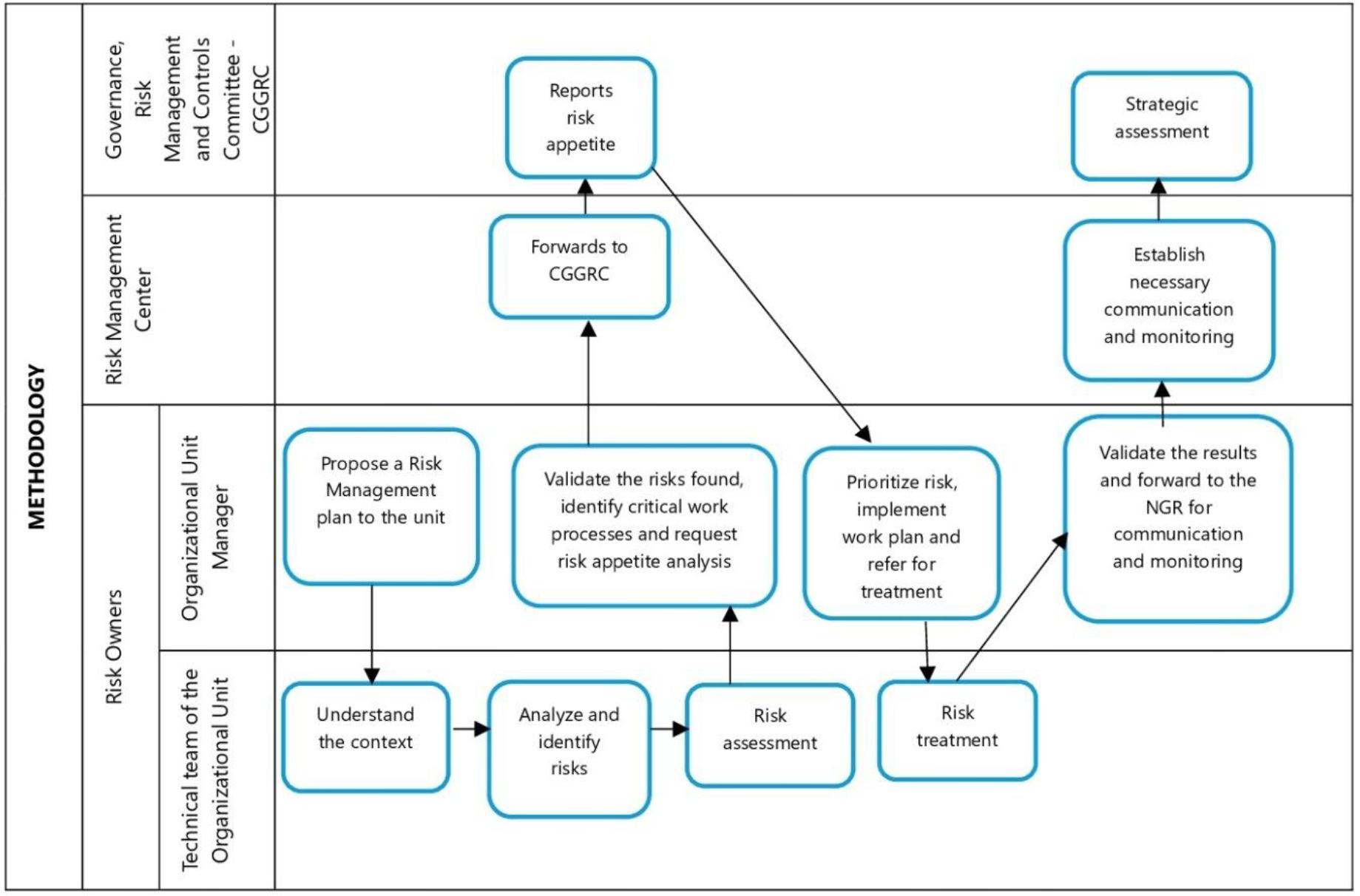
Furthermore, no business continuity management process was identified. These findings are in line with the results found by Araújo and Gomes (2021), which indicate that the Brazilian universities studied do not have the necessary structure for the effective execution of risk management. In turn, the risk management process follows the steps described in the risk management methodology, as shown in Figure 2.
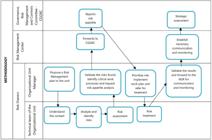
According to the risk management process flow, the NGR is responsible for forwarding the sectoral risk management plan to the CGGRC so that it can inform the level of risk that the institution is willing to accept and, thus, enable progress to the next stages of the process. However, the absence of risk management plans in the units indicates that there are no formal or documented risk management processes at the university.
The interviews also sought to identify the existence of informal risk management processes. According to interviewee A, “risk management of critical activities only becomes relevant when the situation approaches and the risk becomes imminent.” Interviewees C, D, E, F, and G highlighted that critical risks are poorly managed. These interviewees cited the discontinuation of essential service contracts as an example.
In this sense, Univasf recognizes, in its Management Reports, that the risk management approach is still in its initial stages and that it demands a joint effort from the institution to advance in the implementation of effective practices that are appropriate to the complexity and scope of the university (Univasf, 2017b, 2018b, 2019b, 2020c, 2021a, 2022a).
Discussions about this practice suggest that the initiatives carried out by Univasf are insufficient in relation to risk management. Furthermore, they indicate that the level of attention given to risk management is low, as described in Table 4.
4.3 Practice establishing the strategy
Actions aimed at developing Univasf's PDI for the period 2016 to 2025 began in 2014. To develop the plan, working groups, consultations and public sessions were set up on the university campuses, in addition to the development of online platforms to support discussions. This collaborative and participatory approach in preparing the document shows that, in this process, the involvement of interested parties (teachers, students, technical-administrative staff, and the external community) was sought, as recommended by the TCU (Brazil, 2020a).
Furthermore, as described in the 2022 Management Report, the institution considers that this “collaborative path also delayed the approval of the PDI, valid from 2016-2025, approved only in 2017” (Univasf, 2023a, p. 32). It is also worth noting that the complexity inherent in Univasf's multi-campus structure, with units located in different states, may have represented an additional factor of difficulty in the institutional articulation necessary for the approval of the plan.
It was also found that Univasf established its way of acting in cooperation with national public policies and government programs directly related to the university's mission, such as the institution's participation in environmental actions through the São Francisco River Basin Integration Project (PISF). On the other hand, Fonseca et al. (2021) point out that Univasf's PDI is worthy of some criticism, such as the lack of an express declaration of indicators and those responsible for monitoring the objectives and goals.
Furthermore, the PDI did not expressly include indicators that demonstrated the situation of the institution during the preparation of the plan. In this sense, Mizael et al. (2013) emphasize the importance of highlighting in the current plan whether there was an evaluation of previous plans, in order to verify which goals were or were not implemented.
It was also found that the university did not develop its value chain. Furthermore, Audit Action 202103 concluded that “the establishment of the institutional strategy is not fully integrated with risk management, since the institutional risk appetite was not defined” (Univasf, 2023b, p. 25).
It is worth noting that the PGRISCOS was established on December 15, 2017, after the preparation of the PDI. In this sense, Resolution No. 25/2017-CONUNI provides, in art. 5, that the university's risk management must be aligned with the PDI and other strategic, tactical and operational plans of the organizational units (Univasf, 2017c).
Regarding the budget to achieve the objectives, the PDI states that maintaining the financing trajectory observed in the period from 2011 to 2015 would be important for the institutional development phase expressed in the document. However, the budgetary expansion was not maintained. In 2016, the Management Report indicated that the financial year of that year required managerial efforts, given the budgetary difficulties faced in the period (Univasf, 2017b). In the following years, the budgetary limit for current and capital expenditures was not sufficient for the institution to fulfill its mission satisfactorily (Univasf, 2018b, 2019b, 2020c, 2021a, 2022a).
It is worth noting that the COVID-19 pandemic has compromised several activities carried out by Univasf. Another important aspect concerns the period of pro tempore management, from March 2020 to March 2023, experienced by the university while awaiting the resolution, by the Judiciary, of the dispute regarding the preparation of the list of three candidates for the term of rector in the four-year period from 2020 to 2024 and the political and administrative instability during this period. For interviewees A, B, C, D and H, the changes in the external and internal political scenario directly impacted the execution of the strategic plan and the achievement of goals.
Furthermore, for interviewee H, the 10-year validity period of the PDI is too long, which means that people do not see the current institutional problems included in the plan. From this perspective, the study by Fonseca et al. (2023), carried out in thirtyseven federal universities in the Northeast and Southeast regions of the country, reveals that the time horizons of the PDIs are, on average, 5.42 years for universities in the Southeast and 6.22 years for institutions in the Northeast. The authors conclude that these averages, considered high, can hinder flexibility and the necessary adjustments in the face of constant changes in scenarios.
On the other hand, developing a strategy in a public institution is not a simple task. According to Ota (2014), this process involves several challenges, such as the engagement of those involved, diversity of perspectives, political factors, turnover, sensitivity to organizational culture and provision of human and financial resources.
From the analysis of this practice, it was found that the establishment of the strategy has a high level of attention from the Univasf governance bodies, since it incorporates the elements defined by the analysis model, as demonstrated in Table 5.
4.4 Practice promoting strategic management
As defined in the Univasf statute (2020a), the institution's final activities include teaching, research and extension. Furthermore, student assistance is defined as a final macro process in the Management Reports. In addition to these units, the university has strategic areas and subareas that provide support for final activities, such as advisory offices and other pro-rectorates.
According to interviewee A, the units and activities were established organically and formally, and the positions were well defined. However, he highlights that the support units appear to be unaware of the impacts of their activities on the strategic objectives. In this sense, according to Oliveira, Pinto and Mendonça (2020), the integration between support activities and strategic objectives is crucial for an organization.
In turn, interviewee B highlights that, in addition to the definitions of the final and support units, it is necessary to separate the role of governance from that of management. According to interviewee B, “when the CGGRC is mature enough to draw up guidelines, management will mobilize the actors in the final and support activities to adopt practices to achieve the objectives”.
Regarding the management model of the final and support units, the statute and internal regulations establish guidelines, attributions and directions. In addition to these documents, the PDI presents the administrative bodies and details of the institutional procedures and the intersectoral division of attributions - which are described in detail in the Citizen Service Charters available on the university website.
The objectives, indicators and goals are declared only in the PDI in the form of strategic objectives and goals related to the policies of Undergraduate and Postgraduate Education; Extension, Art and Culture; Research and Innovation; Student Assistance; Management; Information and Communication Technologies; Infrastructure; Internationalization; and Administrative Organization.
For interviewee A, it is not clear whether these objectives, indicators and goals are known to the entire academic community, especially the sectors responsible for operational activities. In this sense, the TCU highlights the importance of aligning the objectives, indicators and goals of each unit with the organization's mission, vision and strategy, ensuring coherence with other areas. This requires proactive and coordinated strategies, considering resource allocation and transparent communication internally and externally (Brazil, 2020a).
Therefore, the practice of promoting strategic management was classified as an intermediate level of attention, as shown in Table 6.
4.5 Practice monitoring the achievement of organizational results
The CGGRC is responsible for monitoring the achievement of the PDI's strategic objectives, while the DDI is responsible for monitoring the execution of the strategic plan. Although those responsible for monitoring and supervising the plan were appointed in 2017, the first monitoring report was published in 2022, referring to the 2021 monitoring cycle (Univasf, 2022b).
ForPDI, a system used to monitor the achievement of organizational results, incorporates elements of the Balanced ScoreCard (BSC), through the adaptation of the BSC matrix and its dimensions: customers, financial, learning and internal processes; for the perspectives: society, public budget, learning and internal processes.
The monitoring methodology is adjusted in each cycle based on the obstacles identified by the DDI in the previous cycle. The 2021 Monitoring Report highlighted challenges such as the lack of understanding of the indicators and measurement units by the sectors; and insufficient support from senior management, evidenced by the lack of records on the achievement of the ForPDI targets by some sectors. This last obstacle was also highlighted in the 2022 report (Univasf, 2022c).
Still regarding the support of senior management, it was observed at the PDI Monitoring Meeting, referring to the 2022 monitoring cycle, the absence of representatives from Univasf sectors, as well as the presence of only one member of the CGGRC. For interviewee H, “management needs to assume the role of demanding information from the sectors on the fulfillment of goals, since the DDI has limited resources and attributions and does not have control power”.
Although the documents and non-participant observations show that the achievement of organizational results has been monitored since 2021, interviewees A and E reported being unaware of the process, indicating that there is a deficiency in the dissemination of monitoring actions and in the publicity of results. This indication is reinforced by the fact that the monitoring report, although published on the institution's website, is only presented to the CGGRC.
Furthermore, the interviewees stated that they were unaware of mechanisms for periodically assessing the efficiency and effects of the implementation and execution of the strategy. Interviewee G added that “to assess the efficiency and effects of the strategy, it is necessary to go into the field and verify the practical results”. However, this interviewee points out operational difficulties due to the size of the university and the lack of instruments and technology. It is worth noting that proof of information on the achievement of the goals recorded by the units in ForPDI is not required.
In this sense, Mizael et al. (2013) point out that measuring results is a major challenge in a higher education institution, due to the multifaceted and dynamic nature of this environment, since the results achieved in these institutions are generally perceived in the medium and/or long term.
Regarding the evaluation of the strategy aimed at solving prioritized problems and maximizing desired effects, the DDI performs a critical analysis of the goals of the sectors that provided the data in the previous cycle and then returns this analysis for the evaluation and prioritization of the units. It is worth noting that the information from the PDI monitoring is not used to review the strategic plan. In this sense, Fenner et al. (2019) indicate that the improvement of results is directly related to the capacity to review the planning.
In view of the above, an intermediate level of attention was observed, directed towards the practice of monitoring the achievement of organizational results by Univasf's governance bodies, as demonstrated in Table 7.
4.6 Practice monitoring the performance of management functions
In the analysis of this practice, no normative documents, guidelines or internal guidelines were identified that established routines for collecting information aimed at monitoring the performance of management functions. It is worth noting that collecting this information is the responsibility of the leadership, since, among other attributions, it is their responsibility to perform management control and, through this information, support the monitoring practiced by governance bodies (Brasil, 2020a).
According to interviewees B and G, at the university, there are administrative spaces, such as forums for pro-rectors, coordinators and technicians, in which strategic themes are brought up for discussion, also constituting a space for alignment between these actors and senior management.
Regarding the establishment of performance indicators, the interviewees indicated those described in the PDI and those required by the control bodies. It is worth noting that the PDI monitoring report, referring to the 2021 cycle, provided for the completion of a “Management Panel at a Glance”, a type of dashboard, with the objective of disclosing the level of execution of the PDI (Univasf, 2022b). However, this proposal did not move forward.
According to interviewee H, “management by indicators is still something to be consolidated in the university”. On this topic, Janissek et al. (2017) highlight that factors such as the lack of training and continuous education of managers, in addition to the high turnover in the management team, contribute to the fact that management practices in these institutions are still rooted in traditional and bureaucratic methods.
Management Reports are prepared annually to meet the needs of control bodies, in compliance with Article 70 of the Federal Constitution (Brazil, 1988). According to interviewees A, B, C, D, G, H and I, although the report has adopted a format that is more accessible to the general public, it still maintains a formal nature, arousing little interest from the internal and external community. Interviewee E, in turn, highlights that the university should give more visibility to the document in its communication channels.
Based on the data presented, a low level of attention to the practice of monitoring the performance of management functions was evident, as shown in Table 8.
5 Final considerations
This article was the result of an investigation that sought to analyze how governance practices occur in a federal higher education institution in light of the strategic mechanism of the governance model proposed by the TCU. Through a case study, the research had as its object the Federal University of Vale do São Francisco.
The results indicate the adoption of initiatives related to risk management due to regulatory requirements and recommendations from control bodies. The lack of structures that provide practical support for risk management was also highlighted, as well as the need for greater support from senior management.
It was observed that the establishment of the strategy incorporated the elements of the analysis model. However, there is a lack of clear definition of those responsible for the goals that involve more than one unit. In addition, the strategic plan stood out in the university debates as a tool to limit the discretion of managers during the pro tempore management period.
It is worth noting that the monitoring of organizational results was initiated halfway through the implementation of the PDI, evidencing a significant delay in this process. Recording the achievement of goals, in turn, has been characterized as a largely declarative process, generating uncertainty, since the assessment of the achievement of goals may depend excessively on the individual perception of the responsible managers.
Regarding the monitoring of the performance of management functions, there was a lack of normative documents and standardized routines to guide this process. It was also found that the practice of managing risks receives little attention from governance bodies, having the smallest number of components among the practices analyzed. On the other hand, the practice of establishing the strategy receives the highest level of attention.
In addition to the practices of the analysis model, an environment of interaction between the decision-making and governance bodies of Univasf was identified, from which relevant initiatives emerged, such as CONCUR's request for the Internal Comptroller's Office to assess the sufficiency of popular participation in institutional governance and compliance with the risk management policy. This initiative resulted in Audit Action 202103, which examined institutional risk management and process maturity.
Among the limitations of this study, we highlight the scope of the analysis model, which, although widely recognized for its applicability to public organizations, did not encompass all the practices identified in the research. This finding can generate reflections on how the model proposed by the TCU can be expanded to fully contemplate different organizational realities, such as the specificities of universities. We also highlight the restriction of the actors interviewed due to the political and administrative context of the institution, characterized by the high turnover of management positions, which may have influenced the perceptions of the interviewees.
Finally, for future research, it is suggested that practices related to governance, leadership and control mechanisms be analyzed, aiming at a broader understanding of governance, as well as investigating the existence of new practices and their elements not covered in the analysis model.
-
Erratum
In the article: OLIVEIRA, R. S.; FONSECA, P. G. Public governance in a federal higher education institution: an analysis in light of the strategy mechanism of the TCU governance model. Avaliação: Revista da Avaliação da Educação Superior. v. 30, e025019, 2025. https://www.scielo.br/j/aval/a/rLHJBWmLwM7FNBWwhs7svWL/abstract/?lang=ptOn page 1, where it readIt reads:
-
Translated by: Regiane da Silva Oliveira and Platini Gomes Fonseca regiane.oliveira@univasf.edu.br platini.fonseca@univasf.edu.br
Data availability
The data underlying this research are contained within the article.
REFERENCES
-
ARAÚJO, A.; GOMES, A. M. Risk management in the public sector: challenges in its adoption by Brazilian federal universities. Revista Contabilidade & Finanças, São Paulo, v. 32, n. 86, p. 241-254, 2021. Disponível em: https://doi.org/10.1590/1808057x202112300 Acesso em: 13 dez. 2023.
» https://doi.org/10.1590/1808057x202112300 -
BAUER, V. C. T.; CRUZ, A. P. C.; LUNARDI, G. L.; PINTO, R. S. Motivadores e inibidores da adesão à gestão de riscos em Instituições Federais de Ensino Superior. Revista Gestão Universitária na América Latina, Florianópolis, v. 15, n. 1, p. 115-138, 2022. Disponível em: http://dx.doi.org/10.5007/1983-4535.2022.e81786 Acesso em: 22 out. 2023.
» http://dx.doi.org/10.5007/1983-4535.2022.e81786 -
BRAGA, M. V. A. Risco bottom up: uma reflexão sobre o desafio da implementação da gestão de riscos no setor público brasileiro. Revista da CGU, Brasília, v. 9, n. 15, p. 682-699, 2017. Disponível em: https://repositorio.cgu.gov.br/handle/1/34476 Acesso em: 11 jan. 2024.
» https://repositorio.cgu.gov.br/handle/1/34476 -
BRASIL. Constituição da República Federativa do Brasil Brasília, 1988. Disponível em: https://www.planalto.gov.br/ccivil_03/Constituicao/ConstituicaoCompilado.htm Acesso em: 15 ago. 2023.
» https://www.planalto.gov.br/ccivil_03/Constituicao/ConstituicaoCompilado.htm -
BRASIL. Decreto nº 9.203, de 22 de novembro de 2017 Dispõe sobre a política de governança da administração pública federal direta, autárquica e fundacional. Brasília, 2017. Disponível em: https://www.planalto.gov.br/ccivil_03/_Ato2015-2018/2017/Decreto/D9203.htm Acesso em: 10 set. 2023.
» https://www.planalto.gov.br/ccivil_03/_Ato2015-2018/2017/Decreto/D9203.htm -
BRASIL. Ministério do Planejamento, Orçamento e Gestão. Controladoria-Geral da União. Instrução Normativa Conjunta nº 01/2016 Dispõe sobre controles internos, gestão de riscos e governança no âmbito do Poder Executivo Federal. Brasília, 2016. Disponível em: https://repositorio.cgu.gov.br/handle/1/33947 Acesso em: 10 ago. 2023.
» https://repositorio.cgu.gov.br/handle/1/33947 -
BRASIL. Tribunal de Contas da União. Referencial básico de governança aplicável a organizações públicas e outros entes jurisdicionados ao TCU 3ª edição. Brasília. 2020a. Disponível em: https://portal.tcu.gov.br/lumis/portal/file/fileDownload.jsp?fileId=8A81881F7595543501762EB92E957799 . Acesso em: 11 jan. 2023.
» https://portal.tcu.gov.br/lumis/portal/file/fileDownload.jsp?fileId=8A81881F7595543501762EB92E957799 -
CASTRO, M. C. C. S.; BARBOSA NETO, J. E.; CUNHA, J. V. A. Governança pública: uma revisão sistemática de sua aplicação a entes públicos. Contabilidade, Gestão e Governança, Brasília, v. 25, n. 2, p. 215-235, 2022. Disponível em: https://doi.org/10.51341/cgg.v25i2.2695 Acesso em: 14 nov. 2023.
» https://doi.org/10.51341/cgg.v25i2.2695 - CLARK, B. R. The higher education system: academic organization in cross-national perspective. Berkeley: University of California Press, 1983.
-
DE AZEVEDO, S.; ANASTASIA, F. Governança, “Accountability” e Responsividade. Revista de Economia Política, v. 22, n. 1, p. 82-100, 2002. Disponível em: https://doi.org/10.1590/0101-31572002-1225 Acesso em: 19 abr. 2025.
» https://doi.org/10.1590/0101-31572002-1225 -
FENNER, V. U.; SCHEID, L. L.; DALCIN, D.; ANES, C. E. R. A transparência como instrumento de acompanhamento do planejamento estratégico público municipal. Práticas de Administração Pública, Santa Maria, v. 3, n. 1, p. 45-62, 2019. Disponível em: https://doi.org/10.5902/2526629238024 Acesso em: 27 out. 2023.
» https://doi.org/10.5902/2526629238024 -
FONSECA, P. G. Influência do gerenciamento dos elementos dos fatores críticos de sucesso de Enterprise Resource Planning no setor público sob a ótica de pressões institucionais 2019. Tese (Doutorado em Administração) - Universidade Federal da Bahia, Salvador, 2019. Disponível em: https://repositorio.ufba.br/handle/ri/32133 Acesso em: 23 dez. 2023.
» https://repositorio.ufba.br/handle/ri/32133 -
FONSECA, P. G.; DALTRO, E. F. M. A.; PEREIRA FILHO, A.; SANTOS, E. M. Desafios na adoção de um sistema de monitoramento para o Plano de Desenvolvimento Institucional da Univasf: um caso de ensino. In: SEMINÁRIOS EM ADMINISTRAÇÃO DA UNIVERSIDADE DE SÃO PAULO, 24., 2021, São Paulo. Anais [...]. São Paulo: FEAUSP, 2021. p. 1-16. Disponível em: https://login.semead.com.br/24semead/anais/resumo.php?cod_trabalho=1493 Acesso em: 10 fev. 2024.
» https://login.semead.com.br/24semead/anais/resumo.php?cod_trabalho=1493 -
FONSECA, P. G.; SANTOS, A. V.; PINHEIRO, F. A.; RABELO NETO, M. L. S.; RAMOS, Y. R. J. Plano de Desenvolvimento Institucional (PDI) nas Universidades Federais: uma análise entre regiões. Avaliação: Revista da Avaliação da Educação Superior, Campinas; Sorocaba, v. 28, e023001, p. 1-22, 2023. Disponível em: https://doi.org/10.1590/S1414-40772023000100001 Acesso em: 15 mar. 2024.
» https://doi.org/10.1590/S1414-40772023000100001 -
JANISSEK, J.; AGUIAR, C. V. N.; MELLO, T. A. B.; FERREIRA, R. S.; CAMPOS, M. S. Práticas inovadoras de gestão no contexto das universidades públicas brasileiras: validação da escala para medir seu grau de importância e adoção. Revista do Serviço Público, Brasília, v. 68, n. 2, p. 259-284, 2017. Disponível em: http://repositorio.enap.gov.br/handle/1/3081 Acesso em: 25 jun. 2024.
» http://repositorio.enap.gov.br/handle/1/3081 -
JENSEN, M.; MECKLING, W. Theory of the firm: managerial behavior, agency costs and ownership structure. Journal of Financial Economics, Ann Arbor, v. 3, n. 4, p. 305360, 1976. Disponível em: https://doi.org/10.1016/0304-405X(76)90026-X Acesso em: 10 dez. 2023.
» https://doi.org/10.1016/0304-405X(76)90026-X -
LUGOBONI, L. F.; MARQUES, M. Governança pública e sustentabilidade em instituições de ensino. Revista Gestão Organizacional, Chapecó, v. 15, n. 2, p. 64-83, 2022. Disponível em: https://doi.org/10.22277/rgo.v15i2.6591 Acesso em: 21 out. 2023.
» https://doi.org/10.22277/rgo.v15i2.6591 -
MACIEL, R. G.; FONSECA, P. G.; DUARTE, F. R.; SANTOS, E. M. Sistema Eletrônico do Serviço de Informação ao Cidadão (e-SIC) e sua contribuição para a 93 transparência: uma experiência gerencial em uma universidade federal. Perspectivas em Ciência da Informação, Belo Horizonte, v. 24, n. 2, p. 143-164, 2019. Disponível em: https://doi.org/10.1590/1981-5344/3824 Acesso em: 16 jun. 2024.
» https://doi.org/10.1590/1981-5344/3824 - MATUS, C. O Método PES: roteiro de análise teórica. São Paulo: FUNDAP, 1997.
-
MIZAEL, G. A.; VILAS BOAS, A. A.; PEREIRA, J. R.; SANTOS, T. S. Análise do plano de desenvolvimento institucional das universidades federais do Consórcio Sul Sudeste de Minas Gerais. Revista de Administração Pública, Rio de Janeiro, v. 47, n. 5, p. 1145-1164, 2013. Disponível em: https://doi.org/10.1590/S003476122013000500004 Acesso em: 10 out. 2023.
» https://doi.org/10.1590/S003476122013000500004 -
NASCIMENTO, M. F.; SILVA, H. T. Reformas administrativas do Estado: o caso da reestruturação promovida na Secretaria de Desenvolvimento Social de Minas Gerais. Revista do Serviço Público, Brasília, v. 71, p. 264-283, 2020. Disponível em: http://repositorio.enap.gov.br/handle/1/5991 Acesso em: 11 set. 2023.
» http://repositorio.enap.gov.br/handle/1/5991 -
OLIVEIRA, A. C.; PINTO, F. R.; MENDONÇA, C. M. C. Alinhamento estratégico de planejamentos institucionais: estudo em uma universidade federal da Amazônia Setentrional. Revista Gestão Universitária na América Latina, Florianópolis, v. 13, n. 2, p. 183-205, 2020. Disponível em: http://dx.doi.org/10.5007/19834535.2020v13n2p183 Acesso em: 19 jul. 2024.
» http://dx.doi.org/10.5007/19834535.2020v13n2p183 -
OLIVEIRA, A. G.; PISA, B. J. IGovP: índice de avaliação da governança pública instrumento de planejamento do Estado e de controle social pelo cidadão. Revista de Administração Pública, Rio de Janeiro, v. 49, n. 5, p. 1263-1290, 2015. https://doi.org/10.1590/0034-7612136179 Acesso em: 18 jun. 2024.
» https://doi.org/10.1590/0034-7612136179 -
OLIVIERI, C.; NESTLEHNER, J.; PAIVA JUNIOR, P. C. A. Governança, governança corporativa e governança pública: os diferentes debates de um conceito em construção. Revista Eletrônica de Administração, v. 17, n. 2, p. 230-247, 2018. Disponível em: http://periodicos.unifacef.com.br/index.php/rea/article/view/1366/1188 Acesso em: 11 jan. 2024.
» http://periodicos.unifacef.com.br/index.php/rea/article/view/1366/1188 -
OTA, E. T. Os desafios para o uso do planejamento estratégico nas organizações públicas: uma visão de especialistas. 2014. Dissertação (Mestrado Profissional em Administração Pública) - Fundação Getúlio Vargas, Rio de Janeiro, 2014. Disponível em: https://hdl.handle.net/10438/11825 Acesso em: 10 out. 2023.
» https://hdl.handle.net/10438/11825 -
SECCHI, L. Modelos organizacionais e reformas da administração pública. Revista de Administração Pública, Rio de Janeiro, v. 43, n. 2, p. 347-369, 2009. Disponível em: https://doi.org/10.1590/S0034-76122009000200004 Acesso em: 11 set. 2023.
» https://doi.org/10.1590/S0034-76122009000200004 -
TEIXEIRA, A. F.; GOMES, R. C. Governança pública: uma revisão conceitual. Revista do Serviço Público, Brasília, v. 70, n. 4, p. 519-550, 2019. Disponível em: http://repositorio.enap.gov.br/handle/1/5422 Acesso em: 12 out. 2023.
» http://repositorio.enap.gov.br/handle/1/5422 -
TEIXEIRA, L. I. L.; ALMEIDA, A. J. B.; PAIVA, S. C. Q.; RODRIGUES, M. V. Governança em IFES do Nordeste: concepção, execução e monitoramento da gestão estratégica. Revista Organizações em Contexto, São Bernardo do Campo, v. 14, n. 28, p. 265291, 2018. Disponível em: http://dx.doi.org/10.15603/1982-8756/roc.v14n28p265291 Acesso em: 13 out. 2023.
» http://dx.doi.org/10.15603/1982-8756/roc.v14n28p265291 -
UNIVERSIDADE FEDERAL DO VALE DO SÃO FRANCISCO. Conselho Universitário. Resolução CONUNI nº 20/2021 Altera em parte a Resolução nº 25/2017-CONUNI, que institui a Política de Gestão de Riscos - PGRISCOS, da Universidade Federal do Vale do São Francisco - Univasf. Petrolina: UNIVASF, 2021b. Disponível em: https://sig.univasf.edu.br/sigrh/downloadArquivo?idArquivo=2227483&key=2d95e9116e8048a4342f86520a3ac065 . Acesso em: 20 ago. 2023.
» https://sig.univasf.edu.br/sigrh/downloadArquivo?idArquivo=2227483&key=2d95e9116e8048a4342f86520a3ac065 -
UNIVERSIDADE FEDERAL DO VALE DO SÃO FRANCISCO. Conselho Universitário. Resolução CONUNI nº 25/2017 Institui a Política de Gestão de Riscos - PGRISCOS, da Universidade Federal do Vale do São Francisco - Univasf. Petrolina: UNIVASF, 2017c. Disponível em: https://sig.univasf.edu.br/sigrh/downloadArquivo?idArquivo=2227484&key=539ed12715392899b5813ceda9cc26ac . Acesso em: 15 set. 2023.
» https://sig.univasf.edu.br/sigrh/downloadArquivo?idArquivo=2227484&key=539ed12715392899b5813ceda9cc26ac -
UNIVERSIDADE FEDERAL DO VALE DO SÃO FRANCISCO. Controladoria Interna. Relatório 202103 Petrolina: UNIVASF, 2023b. Disponível em: https://portais.univasf.edu.br/controladoria-interna/relatorios-de-auditoria/relatoriosde-auditoria-2020-1/relatorio-definitivo-202103-avaliacao-da-gestao-derisco.pdf/view Acesso em: 19 jun. 2023.
» https://portais.univasf.edu.br/controladoria-interna/relatorios-de-auditoria/relatoriosde-auditoria-2020-1/relatorio-definitivo-202103-avaliacao-da-gestao-derisco.pdf/view -
UNIVERSIDADE FEDERAL DO VALE DO SÃO FRANCISCO. Diretoria de Desenvolvimento Institucional. Plano de Desenvolvimento Institucional - Univasf: 2016-2025. 2º relatório de monitoramento, através do ForPDI. Referência: novembro de 2021. Petrolina: UNIVASF, 2022b. Disponível em: https://portais.univasf.edu.br/pdi/relatorio-pdi-ciclo-2021_em-19-04-2022.pdf/view Acesso em: 20 jun. 2023.
» https://portais.univasf.edu.br/pdi/relatorio-pdi-ciclo-2021_em-19-04-2022.pdf/view -
UNIVERSIDADE FEDERAL DO VALE DO SÃO FRANCISCO. Diretoria de Desenvolvimento Institucional. Plano de Desenvolvimento Institucional - Univasf: 2016-2025. 3º relatório de monitoramento, através do ForPDI. Referência: novembro de 2022. Petrolina: UNIVASF, 2022c. Disponível em: https://portais.univasf.edu.br/pdi/pdiunivasf/VersofinalRelatrioPDICiclo2022.docx1.pdf/view Acesso em: 16 jun. 2023.
» https://portais.univasf.edu.br/pdi/pdiunivasf/VersofinalRelatrioPDICiclo2022.docx1.pdf/view -
UNIVERSIDADE FEDERAL DO VALE DO SÃO FRANCISCO. Estatuto da Universidade Federal do Vale do São Francisco Petrolina: UNIVASF, 2020a. Disponível em: https://portais.univasf.edu.br/arquivos-gerais/base-juridica/estatuto-univasf.pdf/view Acesso em: 30 mar. 2023.
» https://portais.univasf.edu.br/arquivos-gerais/base-juridica/estatuto-univasf.pdf/view -
UNIVERSIDADE FEDERAL DO VALE DO SÃO FRANCISCO. Instrução Normativa nº 11, de 27 de dezembro de 2018 Dispõe sobre a Metodologia de Gestão de Riscos da Univasf. Petrolina: UNIVASF, 2018a. Disponível em: https://portais.univasf.edu.br/normasinstitucionais/Instruo_Normativa_n._112018Metodologia_Gesto_de_Riscos_UNIVASFAssinada.pdf/view Acesso em: 12 ago. 2023.
» https://portais.univasf.edu.br/normasinstitucionais/Instruo_Normativa_n._112018Metodologia_Gesto_de_Riscos_UNIVASFAssinada.pdf/view -
UNIVERSIDADE FEDERAL DO VALE DO SÃO FRANCISCO. Regimento Geral da Universidade Federal do Vale do São Francisco Petrolina: UNIVASF, 2020b. Disponível em: https://portais.univasf.edu.br/arquivos-gerais/regimento-geralunivasf.pdf Acesso em: 30 jul. 2023.
» https://portais.univasf.edu.br/arquivos-gerais/regimento-geralunivasf.pdf -
UNIVERSIDADE FEDERAL DO VALE DO SÃO FRANCISCO. Relatório de gestão 2018 na forma de relato integrado Petrolina: UNIVASF, 2019b. Disponível em: https://portais.univasf.edu.br/dados-institucionais/relatorios-de-governanca-egestao/relatorios-de-gestao/relatorio-de-gestao-univasf-2018.pdf Acesso em: 18 ago. 2023.
» https://portais.univasf.edu.br/dados-institucionais/relatorios-de-governanca-egestao/relatorios-de-gestao/relatorio-de-gestao-univasf-2018.pdf -
UNIVERSIDADE FEDERAL DO VALE DO SÃO FRANCISCO. Relatório de gestão 2019 na forma de relato integrado Petrolina: UNIVASF, 2020c. Disponível em: https://portais.univasf.edu.br/dados-institucionais/relatorios-de-governanca-egestao/relatorios-de-gestao/relatorio-de-gestao-univasf-2019.pdf Acesso em: 18 ago. 2023.
» https://portais.univasf.edu.br/dados-institucionais/relatorios-de-governanca-egestao/relatorios-de-gestao/relatorio-de-gestao-univasf-2019.pdf -
UNIVERSIDADE FEDERAL DO VALE DO SÃO FRANCISCO. Relatório de gestão 2020 na forma de relato integrado Petrolina: UNIVASF, 2021a. Disponível em: https://portais.univasf.edu.br/dados-institucionais/relatorios-de-governanca-egestao/relatorios-de-gestao/relatorio-de-gestao-2020-final.pdf Acesso em: 19 ago. 2023.
» https://portais.univasf.edu.br/dados-institucionais/relatorios-de-governanca-egestao/relatorios-de-gestao/relatorio-de-gestao-2020-final.pdf -
UNIVERSIDADE FEDERAL DO VALE DO SÃO FRANCISCO. Relatório de gestão 2021 na forma de relato integrado Petrolina: UNIVASF, 2022a. Disponível em: https://portais.univasf.edu.br/dados-institucionais/relatorios-de-governanca-egestao/relatorios-de-gestao/RelatriodeGesto2021.pdf Acesso em 20 ago. 2023.
» https://portais.univasf.edu.br/dados-institucionais/relatorios-de-governanca-egestao/relatorios-de-gestao/RelatriodeGesto2021.pdf -
UNIVERSIDADE FEDERAL DO VALE DO SÃO FRANCISCO. Relatório de gestão 2022 Petrolina: UNIVASF, 2023a. Disponível em: https://portais.univasf.edu.br/dadosinstitucionais/relatorios-de-governanca-e-gestao/relatorio-de-gestao-2022universidade-federal-do-vale-do-sao-francisco.pdf Acesso em 21 ago. 2023.
» https://portais.univasf.edu.br/dadosinstitucionais/relatorios-de-governanca-e-gestao/relatorio-de-gestao-2022universidade-federal-do-vale-do-sao-francisco.pdf -
UNIVERSIDADE FEDERAL DO VALE DO SÃO FRANCISCO. Relatório de gestão do exercício de 2016 Petrolina: UNIVASF, 2017b. Disponível em: https://portais.univasf.edu.br/dados-institucionais/relatorios-de-governanca-egestao/relatorios-de-gestao/relatorio-de-gestao-2016.pdf Acesso em 17 ago. 2023.
» https://portais.univasf.edu.br/dados-institucionais/relatorios-de-governanca-egestao/relatorios-de-gestao/relatorio-de-gestao-2016.pdf -
UNIVERSIDADE FEDERAL DO VALE DO SÃO FRANCISCO. Relatório de gestão do exercício de 2017 Petrolina: UNIVASF, 2018b. Disponível em: https://portais.univasf.edu.br/dados-institucionais/relatorios-de-governanca-egestao/relatorios-de-gestao/relatorio-de-gestao-e-prestacao-de-contas-2017.pdf Acesso em 18 ago. 2023.
» https://portais.univasf.edu.br/dados-institucionais/relatorios-de-governanca-egestao/relatorios-de-gestao/relatorio-de-gestao-e-prestacao-de-contas-2017.pdf
-
Editor de Seção:
André Pires
-
Editora de Layout:
Silmara Pereira da Silva Martins

 Source: Brazil (2020a, p. 52).
 Source: Risk Management Methodology (