
 Major Investment Projects: Paraná Coast going on the wrong way to sustainable development
Abstract
The Sustainable Development Goals (SDGs) are considered a master plan to globally address environmental challenges, and 193 countries worldwide have committed to them. In Brazil, there has been little effort to assess SDGs agenda achievement, and the influence Major Investment Projects (MIPs) may have on SDGs has not been studied yet. This paper analyzes the influence MIPs have on SDGs achievement in Paraná Coast, southern Brazil. A secondary data analysis was conducted to obtain an up-to-date overview of MIPs either under the licensing process or in the planning stage. From the list of 23 MIPs, seven were chosen to perform a quali-quantitative analysis of impacts on SDGs. It resulted in a list of 24 positive and 117 negative impacts showing that MIPs would intensify public services problems, cause loss of biodiversity, and interfere with artisanal fishery and tourism, risking the achievement of SDGs until 2030.
Keywords:
Atlantic Forest; Environmental Impact Study; Social Impact; Environmental Impact; Territorial planning
Resumo
Os Objetivos de Desenvolvimento Sustentável (ODS) são considerados o modelo de enfrentamento global dos desafios ambientais e 193 países se comprometeram com eles. No Brasil, poucos esforços foram feitos para compreender o cumprimento dessa agenda e a influência que Grandes Projetos de Investimento (GPI) podem ter sobre ela. Este artigo discute a influência dos GPI no alcance dos ODS no litoral do Paraná, sul do Brasil. Dados secundários foram analisados para obter uma visão geral atualizada dos GPI em processo de licenciamento ou planejados. Da lista de 23 GPI, sete foram escolhidos para realizar uma análise qualiquantitativa dos impactos nos ODS. Foram listados 24 impactos positivos e 117 negativos, que indicam que os GPI intensificariam os problemas dos serviços públicos, causariam perdas de biodiversidade e interfeririam na pesca artesanal e no turismo, colocando em risco a busca pelos ODS até 2030.
Palavras-chave:
Mata Atlântica; Estudo de Impacto Ambiental; Impacto social; Impacto ambiental; Planejamento territorial
Resumen
Los Objetivos de Desarrollo Sostenible (ODS) són un plan para abordar los desafíos globales y 193 países se han comprometido a perseguirlos. En Brasil, se han realizado pocos esfuerzos para comprender la situación actual referente al tema y la influencia que tienen los Grandes Proyectos de Inversión (GPI) sobre los ODS. Este artículo analiza la influencia del GPI en el logro de los ODS en la costa de Paraná, sur de Brasil. De la lista de 23 GPI, se eligieron siete para realizar un análisis cualitativo-cuantitativo de los impactos en los ODS. Se enumeraron 24 impactos positivos y 117 negativos, que indican que los MIP intensificarían los problemas de los servicios públicos, causarían pérdidas de biodiversidad e interferirían con la pesca artesanal y el turismo, poniendo en riesgo la consecución de los ODS para 2030.
Palabras-clave:
Bosque Atlántico; Estudio de Impacto Ambiental; Impacto social; Impacto ambiental; Planificación del territorio
Introduction
The magnitude of human activity in the biosphere has proven to be so intense that it threatens the well-being and reproduction of human societies (Steffen et al., 2018). The changes have escalated in the last 70 years, and since many infringe political boundaries, environmental issues have become central to the international agenda (Galaz et al., 2012). Therefore, a global effort is paramount to face them (Young; Steffen, 2009; Griggs et al. 2013; Steffen et al. 2015). The 17 Sustainable Development Goals (SDGs) are a United Nations initiative considered a blueprint to address global challenges. Countries worldwide, including Brazil, have committed to pursuing these goals, establishing targets and indicators for each of their goals, consolidating the Agenda 2030 (UNDP, 2020).
The 17 Sustainable Development Goals (SDGs), established by the United Nations (UN) in 2015, are part of the 2030 Agenda and represent a global action plan to eradicate poverty, protect the environment, and ensure peace and prosperity for all. They cover interconnected areas that are fundamental to human well-being and planetary sustainability: no poverty (SDG 1), zero hunger and sustainable agriculture (SDG 2), good health and well-being (SDG 3), quality education (SDG 4), gender equality (SDG 5), clean water and sanitation (SDG 6), affordable and clean energy (SDG 7), decent work and economic growth (SDG 8), industry, innovation, and infrastructure (SDG 9), reduced inequalities (SDG 10), sustainable cities and communities (SDG 11), responsible consumption and production (SDG 12), climate action (SDG 13), life below water (SDG 14), life on land (SDG 15), peace, justice, and strong institutions (SDG 16), and partnerships for the goals (SDG 17). These goals aim to promote integrated, fair, and sustainable development by engaging governments, businesses, civil society organizations, and citizens in collective transformation. The 169 targets of the SDGs are universally applicable to all countries; however, their implementation is context specific. Each country is encouraged to adapt the targets to its national circumstances, considering its level of development, institutional capacity, priorities, and unique challenges.
Paraná is one of the southern Brazilian states, and its dominant economic feature is the agribusiness production chain. It involves primary production (e.g., soy) in inland regions to the flow of commodities along its main roads and railroads connecting to the port area on its coast (Silva; Gonçalvez, 2019). Despite its strategic relevance for the agribusiness logistics chain in southern and middle-western states (Abrahão, 2011), the coastal area of Paraná is considered the poorest in the state. There are conflicts between human practices and environmental protection (Andriguetto Filho; Marchioro, 2002, p. 159), and tensions mark its long process of social differentiation, constituting a paradox between natural richness and social poverty (Estades, 2003).
Major Investment Projects (MIPs) are mega-enterprises in the fields of mining, oil, energy, logistics, and other sectors that drive the economy. Until the 1970s, MIPs were mainly state-driven, given the strong performance of sectoral state agencies in articulation with the interests of the private sector. Nowadays, under the rationality of globalized and neoliberal capitalism and guided by privatizations and deregulation movements (Harvey, 2006), large corporations directly invest in MIPs. The structuring potential of MIPs reaffirms the privatization of the territorial resources and reinforces tendencies towards the enclave and fragmentation (Vainer, 2007). MIPs are subjected to Environmental Impact Study (EIS), as an instrument that guides decision-making based mainly on positive and negative impacts of MIPs on a certain territory (CONAMA, 1986 and 1997). As far as is known, no dialogue between MIPs’ environmental impacts and SDGs Agenda 2030 has been established until now. Thus, this paper analyzes how MIPs’ impacts may impair or support SDGs Agenda 2030, in Paraná State Coast, south Brazil as MIPs become more frequent in the area.
Methods
Methodological steps
Together with the south of São Paulo state, Paraná Coast is home to the largest remnant of Atlantic Forest, a biodiversity hotspot (Myers et al., 2000). On the Paraná Coast, the restingas, mangroves, and the Dense Ombrophilous Forest stand out, the latter being the most heterogeneous and complex forest formation in southern Brazil (Roderjan, 2002). Furthermore, Paraná Coast remarkably encompasses hundreds of communities, including quilombolas, caiçaras, islanders, indigenous people, and artisanal fisherfolk, as well as family farmers (PDS Litoral, 2019).
The Atlantic Forest is legally protected by a framework of Brazilian regulations and international acts (see Paula et al., 2018). However, it is consistently threatened by increasing predatory human activities such as habitat destruction, fragmentation, and degradation (pollution); introduction of invasive alien species; introduction and/or expansion of diseases and vectors, overexploitation of resources, and climate change (Hardy, 2003).
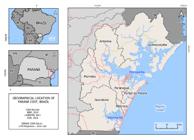
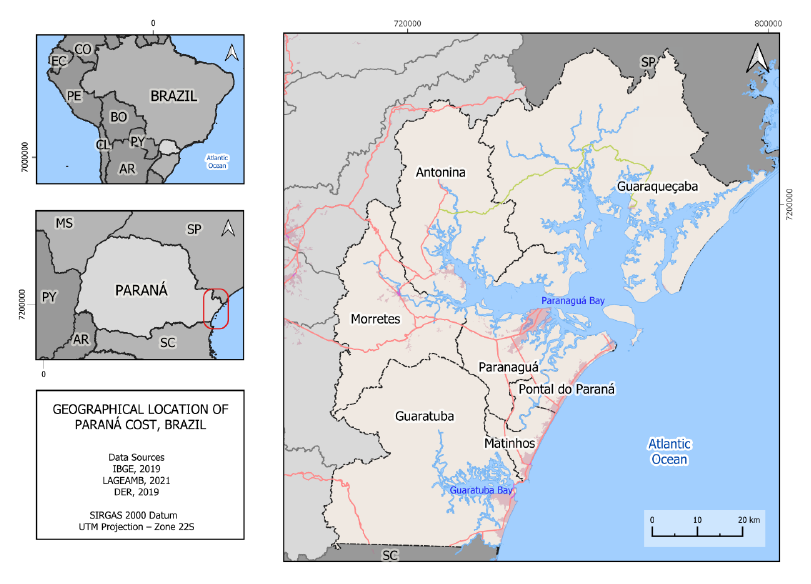
There are seven municipalities (Figure 1) that have different characteristics and vocations on Paraná Coast. According to Estades (2003), the economy of Guaraqueçaba and Morretes is based on rural activities; Antonina and Paranaguá are mainly focused on port-centered businesses; and Pontal do Paraná, Matinhos, and Guaratuba have tourism as their primary source of income. However, the discovery of the pre-salt layer (i.e., petroleum) at the start of the century brought it and the infrastructure to exploit it to the center of the discussion.
Methodological steps
Major Investment Projects overview
A secondary data search was performed based on Pigosso (2018), and the federal and state environmental agencies databases (respectively, IBAMA - Instituto Brasileiro do Meio Ambiente e dos Recursos Naturais Renováveis and IAT - Instituto Água e Terra) in July 2020, and reviewed in May 2024, to identify major investment projects planned or under environmental licensing process in the political-administrative scope of the Paraná Coast municipalities, gathering the following information: municipality, type, contracting company, environmental study, environmental agency, estimated value, current status, and whether they received public or private investments. Additionally, a complementary search for projects listed in the Sustainable Development Plan of the Paraná Coast (PDS Litoral, 2019) was carried on. Projects found therein were included in this study due to their high investment value and high impact potential. Finally, local newspapers and key informants filled gaps concerning project value and study type. MIPs cost estimate was updated from December of the year of each MIP until February 2024 based on IPCA - IBGE index using the Citizen Calculator tool available at Banco Central do Brasil (2024).
Assessment of the impact of Major Investment Projects on Sustainable Development Goals
Given the objective of analyzing the relationship between environmental impacts and the Sustainable Development Goals (SDGs), the use of impacts identified in the Environmental Impact Studies (EISs) of each project was the only viable methodological approach. EISs are one of the main tools in the Environmental Impact Assessment (EIA) and are required for activities that may cause significant environmental impacts, as in (Law No. 6.938/1981). Accordingly, priority was given to projects whose EISs were publicly available at the time of data collection, resulting in the selection of seven MIPs.
All positive and negative impacts were extracted from EISs based on their wording, i.e., no other technical correction or change was performed during the analysis, except that different names referring to the same environmental effect were replaced with synonyms to avoid overcounting impacts. MIPs’ impacts on each SDG were analyzed based on descriptions of both the impact (i.e., according to the EIS), the SDGs (UNDP, 2020), and the targets. This information was used to compile a table with the SDGs (columns) and the impacts found in the EISs (lines). Positive impacts (1), negative impacts (-1), or their absence (0) were noted in the table. The weight of each impact in the set of SDGs was calculated by multiplying the number of MIPs in which the impact is present by the sum of the SDGs affected. The sum of all impacts that affect each SDG is also shown in the table.
The quality of Environmental Impact Statements (EISs) in Brazil still presents significant shortcomings, as highlighted by Fernández, Brito and Fonseca (2018). Recurring issues include the superficial evaluation of project alternatives, lack of clarity in the assessment of impact significance, and the absence of well-structured mitigation measures. Technical formalism often undermines the effectiveness of the assessments and compromises the decision-making process.
Pigosso and Paula (2021), in evaluating the quality of Environmental Impact Statements (EISs) and Terms of Reference (TRs) for ten development projects along the coast of Paraná, with an emphasis on nature conservation, found that the EISs were of average quality, fulfilling approximately 70% of the TRs requirements. TRs themselves proved to be weak, with limited and superficial content, thereby undermining the depth and effectiveness of the impact assessments.
Due to the questionable quality of the EISs, the study faced difficulties in working with vague definitions and inconsistent data. As a result, it was deemed more appropriate not to assign significant qualitative weight to the impacts. The analysis focused on listing the impacts and linking them to the SDGs, but no degree of severity or urgency was assigned to them, meaning they were not weighted in relation to one another. Therefore, it was not feasible to incorporate mitigation, compensation, or enhancement measures, as their effectiveness would be difficult to assess without a clearer understanding of impact severity. At the conclusion of the study, the accumulation of impacts from multiple projects does not imply a proportional weight or significance but rather reflects the number of assessed MIPs.
The limitations are not restricted to EISs. Although the SDGs represent an important step forward in global governance, they face substantial criticism regarding their effectiveness. As a universal and non-binding framework, their implementation depends entirely on the political will and institutional capacity of each country. The scope and complexity of the agenda hinder prioritization, monitoring, and concrete assessment of progress. Many indicators lack technical precision or are not fully integrated across goals.
Results
Major Investment Projects on the Paraná Coast: an updated overview
Twenty-three MIPs have been identified (Table 1). Nine are related to land transportation (bridge, roads, and highways; infrastructural improvements); eight MIPs are linked to the sea transportation industry (including new ports), one is a project to readjust/implement a railway between the municipality of Maracaju - MS and Paranaguá - PR, there is also an airport project in Paranaguá. Investments in transportation infrastructure amount to more than R$ 37 billion. The waterway infrastructure represents the highest investments, with almost R$ 20 billion (Figure 2).
In addition to the transport infrastructure, other four MIPs amount to more than R$ 3 billion (Figure 2): the Matinhos’ beach nourishment project; a pipeline that connects Paraná inland to the Port of Paranaguá; and two MIPs related to the metallurgical industry for pre-salt exploitation, in Pontal do Paraná (Table 1).
The municipality of Paranaguá leads in MIP investments with almost R$ 28 billion on ten MIPs, followed by Morretes (approximately R$ 18 billion in only four MIPs), Antonina and Guaratuba (more than R$ 6 billion); Pontal do Paraná (R$ 4.76 billion in seven MIP), and Matinhos and Guaraqueçaba with less significant investments (Figure 2). Total investment exceeds R$ 40 billion, of which about R$ 16.5 billion are from the private sector (8 MIPs). More than R$ 23.6 billion are from public resources (14 MIPs) (Figure 2). Thirteen MIPs licensing processes, totaling almost R$ 16 billion, are ruled by the state agency (IAT). In contrast, seven MIPs are ruled by the environmental federal agency (IBAMA), amounting to more than R$ 24 billion in investments. There is no information about the company responsible for three of the projects. The new airport also lacks most of the information analyzed here (Table 1).
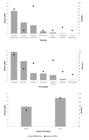
Values (in R$ billions) and the number of Major Investment Projects planned or underway by 2024, according to typology, municipality and source of funding on the Paraná Coast, Brazil
Impacts of Major Investment Projects on Sustainable Development Goals
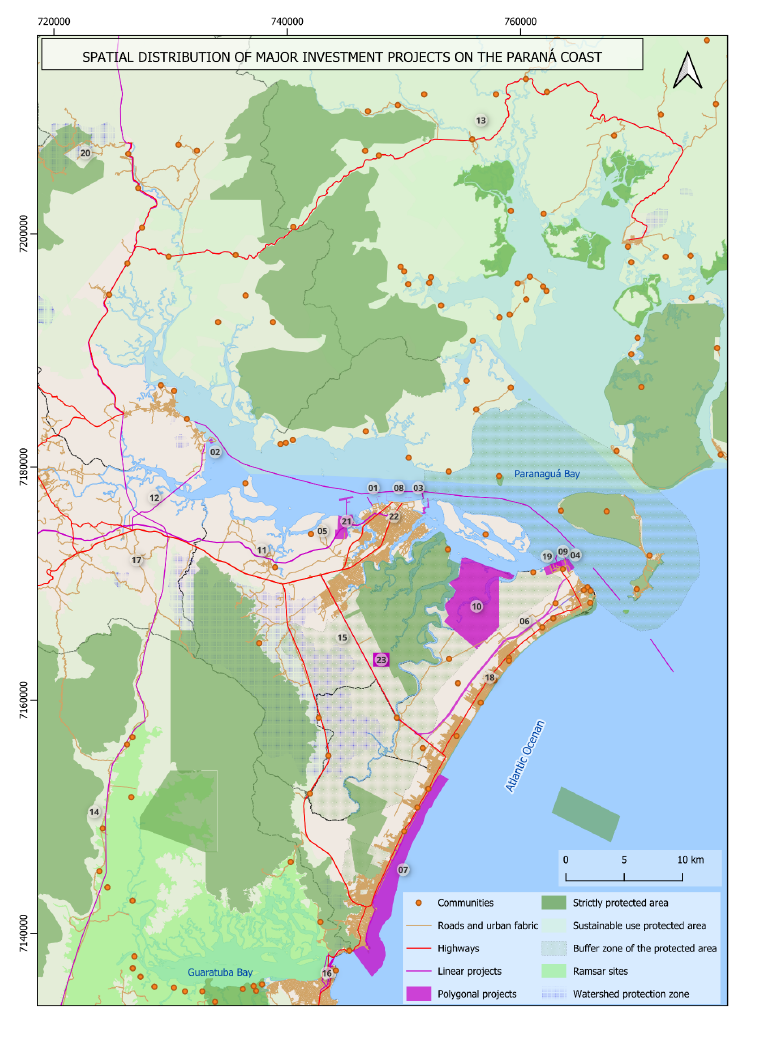
The present study includes seven projects with Environmental Impact Studies (EISs) available and potential to cause territorial transformations (Figure 3). Alongside communities, road and urban network, highways, protected areas, watershed protection areas, and Ramsar sites, the major investment projects are displayed in Figure 3 by the following numeration: 12. Highway PR-340 (CIA, 2016); 05. New Port (Envex et al., 2013); 10. Subsea7 (AAT, 2009); 19. Odebrecht Shipyard (MRS Estudos Ambientais, 2011); 09. Melport Marine Terminals (Envex et al., 2014); 04. Pontal do Paraná Port (3P) (AMB Planejamento Ambiental, 2007); 06. Infrastructure multimodal lane (Engemin, 2016).
The EISs of the seven MIPs studied revealed a list of 719 impacts. According to their descriptions, similar impacts were grouped under a single synonym, reducing the number of impacts to 141, being 24 positive and 117 negative. An impact may affect one or more SDGs, which are frequently affected by more than one kind of impact and are more affected by negative impacts than by positive ones.
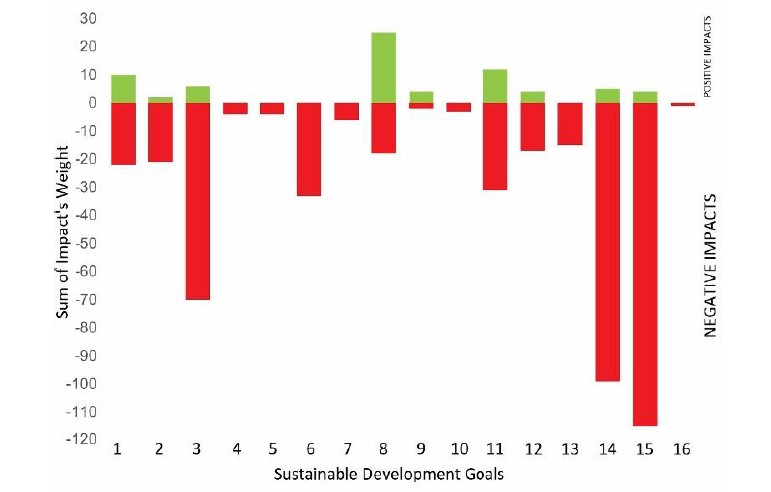
The SDGs 14 and 15 are the most severely impacted by negative effects, with SDG 15 showing the highest number of negative occurrences (−52) and weight (−115), followed closely by SDG 14 (−50 occurrences; −99 weight). In contrast, SDG 8 exhibits the greatest number of positive impacts (12 occurrences) and the highest positive impact weight (25), although it also has a considerable number of negative impacts (nine occurrences). Positive impacts were also noted in SDGs 1, 3, 9, 11, 14, and 15, with totals of 3 to 5 occurrences each, culminating in a total of 37 positive impacts with an aggregate weight of 72. Conversely, negative impacts were widespread across nearly all SDGs except SDG 17, which showed neither positive nor negative impacts. Notably, SDGs 4, 5, 6, 7, 10, 13, 16, and 17 lacked any positive impacts. The total negative impacts amounted to 220 occurrences, with an overall negative weight of −461 (Figure 4) .
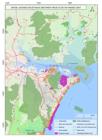
Spatial distribution of the 23 major investment projects proposed for the coast of Paraná, as listed in Table 1, alongside communities, the road and urban network, highways, protected areas, watershed protection areas, and Ramsar sites
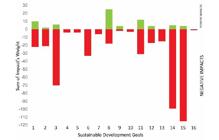
Sum of positive and negative impacts’ weight on each Sustainable Development Goal (SDG) in Paraná Coast, Brazil.
Discussion
The social dimension: Population growth, social ills, and increased demand for essential public services
Considering only sixteen MIPs, PDS Litoral (2019) foresees that the Paraná Coast would grow from 299,285 inhabitants in 2020 to 393,000 inhabitants in 2035, which is 60,000 more than the estimate without the MIPs (333,000 inhabitants).
Overloaded health services result in delays in the achievement of SDG 3. caused by the possibility of work accidents, and problems related to them; noises that affect workers and the surrounding area due to the dispersion of noise pollution; changes in air quality due to the atmospheric pollution of gasses and particles, resulting in respiratory problems; accidents with venomous animals or by the dispersion of vectors due to the increase in synanthropic fauna, possibly from extreme events related to the risk of explosion, fire, and leakage of hazardous products. An increase in accident likeliness and sea pollution may also affect public health. There are also three positive impacts listed: reducing traffic accidents, decreasing noise pollution, and improving air quality on the existing roads.
The total weight of -70 for SDG 3 is notably distant from the positive weight of impacts, six. Impacts related to changes in air quality account for -20 of this weight and are the most significant negative ones. Shipping-related particulate matter emissions from marine shipping contribute approximately 60,000 deaths annually at a global scale, and impacts are concentrated in coastal regions on major trade routes (Corbett et al., 2007). In Paranaguá, as Gurgatz (2018) pointed out, air pollution from port activity affects the population’s quality of life. High levels of pollutant concentrations potentiate cardiovascular and respiratory diseases, increasing risk of mortality from chronic exposure.
The educational system (SDG 4) weighs -4 due to the increase in the temporary and permanent immigrant population and the consequences of the increase in child and youth work. SDG 6 weighs -33 as it will suffer from an overload of demand and will possibly suffer changes in water quality due to contamination of surface and groundwater, decreasing groundwater reserves, lowering the water table, and silting water bodies, which interfere with the quality and availability of water. The SDGs 4 and 6 are not positively impacted.
SDG 11 has -15 negative impacts and five positive ones. Urban mobility will be negatively impacted by the increase in heavy truck traffic that can damage buildings, increase accidents, and inconvenience users. The hub-port operation promises to reduce the inland transport of goods. Still, it will cause at least some inconvenience for people who use the Paranaguá Estuarine Complex as a way of transportation, including islanders, workers (fishers), and tourists interested in water attractions. Property value increases will positively influence city halls and some owners, while vulnerable owners and tenants may face problems. This situation may lead to the occurrence of irregular occupations by vulnerable populations.
Real estate speculation may also compromise the productive capacity of familiar agriculture (SDG 2), caiçara culture, and artisanal fishery. The last group will suffer many impacts, e.g., a reduction in the income of professional fishers due to increased competition, changes in fishing resources, and changes in the use of the aquatic habitat in the region, which will cause issues for local fisherfolk. According to Brito (2020), the MPF note 01/2009 reports that the 3P Port EIS does not enable measuring the real negative impacts of this MIP on fishers’ lives and their families. In fact, paradoxically, the EIS describes the increase in fishers’ income as a positive impact. The same project did not ensure fishery communities that the project viability assessment would be democratic (Brito, 2020). Other indirect impacts from the risk of explosion, accidents, and leakages affect SDG 2, totaling -21 negative impacts and two positive ones.
Regarding negative impacts, SDG 5 obtained -4 and SDG 16 -1. These SDGs had no positive impacts. Higher public insecurity (SDG 16) due to higher violence in the male population and sex-based violence (SDG 5), and the increase in child and youth work reinforce possible situations of social ills.
Considering the social problems in the region and assuming their escalation due to the MIPs, the state will be responsible for managing them, which reinforces that productivity gains are obtained through the uneven transfer of social and environmental impacts of development to the poorest (Acselrad, 2010).
Impacts of MIPs on marine and terrestrial ecosystems and the worsening of climate change
Most of the impacts mentioned in the EISs regarding biotic and physical environments will negatively affect SDGs 14 and 15, accounting for a weight of -99 and -115, respectively (see Table 1). Habitat loss, pollution, alien invasive species, overexploitation of natural resources, diseases, and climate change are drivers for biodiversity loss (Oliver, 2018). A few impacts mentioned in EISs are: vegetation suppression; edge effect; water regime change in the coastal plain; modification of land use; modification of coastline; changes in hydrodynamic and sediment transport characteristics; changes in the quality of bottom sediments in marine ecosystems; air, water, and noise pollution; overload of sanitation services; increased solid waste generation; fauna and flora contamination and bioaccumulation; soil waterproofing, compaction, loss and pollution; removal of topsoil, changes in erosion/deposition rates and areas; fauna running-over (Los, 2019), hunting and trampling (Paduch; Quadros, 2018); introduction of alien invasive species; replacement of phytoplankton species; increase in synanthropic fauna and dispersion of vectors (Souza; Quadros, 2022) due to waste generation and changes in the natural environment; and reduction of carbon stocks.
Los (2019) reports the running-over of 17 mammal species, five amphibians, 13 snakes, one lizard, and 53 birds along two important highways on the Paraná Coast, PR 508 and PR 407. The running-over of fauna is mentioned in only two MIPs (PR 340 and the infrastructure lane), planned to cross a continuous extension of lowland Atlantic Forest and mangroves even though it is also a consequence of the general increase in vehicle traffic.
Paduch and Quadros (2018) reported that hunting is cultural and historical in the region. The increase in urban population and greater ease of access due to fragmentation of the forest continuum by highways and roads favor this illegal practice and its impacts. Human population increase, forest fragmentation, access opening, and irregular occupations are expected from the MIPs. Thus, the studied MIPs favor hunting and two of them-the highways planned to cut across vast areas of Atlantic Forest, including marshes and mangroves, are particularly concerning.
Data by Souza and Quadros (2022) on social and environmental determinants of leptospirosis in Paranaguá objectively show that port activity (specifically Dom Pedro II port) is responsible for (1) providing large amounts of food for the rats Rattus norvegicus, due to the loss of bulk along the access roads (especially the railway and the BR 277), (2) waterproofing the soil and (3) silting up the drainage. Thus, 14 mm rains can cause flooding, leading people to come in contact with rat urine and Leptospira, the pathogen that causes leptospirosis, a water-borne disease with a death rate of 25% for those affected in Paranaguá. Considering that port activity is the main type of MIP planned in Pontal do Paraná and Antonina, it is concerning that these projects may lead to an increase in rat population and flooding, amplifying the chances of contamination with Leptospira in these two municipalities, besides Paranaguá.
Several impacts mentioned in the EISs are directly or indirectly related to climate change, global warming, and its consequences (i.e., SDG 13). Greenhouse gasses (i.e., carbon dioxide, methane, nitrogen oxides, chlorofluorocarbons, and ozone) have the most significant effect on the Earth’s climate. The greater the concentration of these gasses, the higher the amount of long-wave (heat) radiation trapped in the lower atmosphere (Hardy, 2003). Therefore, human activities that increase the amounts of greenhouse gasses, disturbing the natural balance of heat, are responsible for global warming and its consequences, including biodiversity losses (Vale et al., 2021) and human health issues (WHO, 2014). Although only two EISs mentioned the reduction of carbon stocks due to vegetation suppression, all seven MIPs mention vegetation suppression as a negative impact. Thus, all seven MIPs contribute to greenhouse effects and climate change intensification. Furthermore, all MIPs mention other air-quality-related impacts such as air pollution from gasses and particulates, which also contribute to the greenhouse effect. The opposite is also true, i.e., the greenhouse effect leads to worsening air quality, as Hardy (2003, p. 179) reported.
The spatial distribution of the impacts reveals that they unavoidably affect protected areas. There are 44 protected areas along the Paraná Coast, but, due to lack of investment and political will, only few of them provide elemental protection to ecosystems (Paula et al., 2018). Moreover, important economic losses must also be considered since the MPF/JOI (2020) updates the estimation of the monetary value of one hectare of mangrove as US$ 17,109.73 and of an estuarine area as US$ 39,104.03.
The technological risks of MIP activities
According to the data collection and analysis, 12 impacts are related to risk of accidents, fire or explosion, leakage of toxic substances, and oil spills, summing up a weight of -82 points (in a total of -461). Among these, the risk of fire or explosion is the most negative impact of all. Toxic substances leakage, fire, and/or explosion and their respective consequences (air, soil, and water pollution, damage to properties, and personal injuries) affect all SDGs except for 4, 5, and 16. SDGs 3 and 15 are the most affected ones, followed by SDGs 14, 2, and 6.
The main impacts encompass contamination risk of natural terrestrial ecosystems and agricultural land leading to biodiversity loss and prejudice to food production, contamination risk of aquatic environments, compromising water supply, fish stocks, aquaculture, and artisanal fishing; risk to human health and overloading of the public health service, risk decrease in tourism activities and consequent economic losses. Torrisi (2017) reported that the storage, handling, and transportation of different types of hazardous substances by more than 20 companies located in the port and cargo storage areas of Paranaguá constitute technological risks to the territory. For the author, the technological dangers arising from dangerous substances coexist at high and alarming risk levels with about 40,000 people (more than 30% of the population).
From economic growth to governance issues
The seven EISs list several impacts related to economic issues mainly fall under SDGs 8 and 9. The two highways, PR 340 and Infrastructure Multimodal Lane, did not present numbers related to the construction phases, while others were mostly evasive. The Odebrecht Shipyard estimates 1,000 jobs, and Embocuí New Port expects 1,163 jobs during the installation phase, without any specification whereas direct or indirect ones. Subsea7 foresees 345 direct jobs in the installation phase and 677 in the operation phase, without predicting indirect ones. Melport Marine Terminals expects 173 direct and 83 indirect jobs in the installation phase and 98 direct and 109 indirect jobs in the operation phase. Pontal do Paraná Port - 3P expects 860 direct and 516 indirect jobs in the installation phase and points out that 858 of those will be laid off after construction, foreseeing two direct jobs in the operation and no prospects for indirect ones. With the gross investment of R$ 9,129,926,541 (see Table 1), it is possible to see that 3,541 direct and 599 indirect jobs will be generated in the installation phases, while in the operation phases 777 direct and 109 indirect jobs are expected.
The EIS of the Pontal do Paraná Port predicts that, in the 11th year of the project, there will be 58.877 inhabitants in the municipality; without the project, the estimate is 31,233 inhabitants. It is also relevant that the EISs themselves consider the relative absorption of local labor, depending on the required specialties. That is, the educational profile of the inhabitants does not fit with the profile required for the jobs, mostly during the operation phase, when jobs usually require specialization.
Increase in property value (weight 10) is remarkably significant since land value emerges as a strong conditioner of social forms of space occupation (Acselrad, 2010, p. 160). The increase of fishers’ income (8) was also relevant but did not consider the several negative impacts such as on fish stocks on fishers’ lifestyle.
The increase in port capacity appears as a positive impact with a weight of 4, even though the new projects proposed for the Paraná-São Francisco do Sul Cluster1 demand much higher handling capacity than the one projected for port, leading to oversupply (MPF, 2020).
Another positive impact is the municipal socio-economic development, with a weight of 3, which is obviously relevant but may not be as promising as portrayed. Taking Paranaguá as an example, despite its significant GDP per capita of R$ 28.964,95 (IBGE, 2012), social indicators like MHDI = 0.750 (IBGE, 2010) and GINI = 0.5235 (IBGE, 2012) call attention to the perpetuation of intra-municipal and intraregional social inequalities. Along with that, investment attraction, strengthening of existing economic activities, an increase in tax collection, and the socio-economic development of municipalities are well understood as positive impacts.
Strengthening the local economy through tourism growth is also a positive aspect of the projects, considering new structures such as transportation, accommodation, etc. and the increasing volume of tourists. On the other hand, natural environments are crucial for tourism development in the region, so losses might change this scenario.
In the context of socio-spatial inequalities in the coastal region of Paraná, it is crucial to acknowledge that the economic and environmental impacts of Major Infrastructure Projects (MIPs) disproportionately affect historically marginalized populations, as highlighted by Azevedo’s (2016) Social Vulnerability Index (IVS). These impacts not only sustain but also deepen socio-economic disparities in the coastal municipalities of Paraná.
Cumulative impacts caused by all the projects are a regional concern and the environmental licensing processes have been insufficient, as seen in the MIPs of the Industrial and Port Complex of Pontal do Paraná (Onofre et al., 2022). In the face of what has been presented here, Pierri et al. (2006) seem current when they state that land use on the Paraná Coast alienates its population from its main benefits.
These results did not consider the COVID-19 pandemic, which has intensified social inequalities in Latin American countries, nor do they analyze how climate change will affect the most vulnerable. Regardless, a recent study demonstrated that Brazil underperforms in the achievement of SDG. As Câmara dos Deputados (2021) points, from 169 targets, 54,4% step backwards, 16% stagnated, 12,4% are under threat and 7,7% have insufficient progress .
Final considerations
There are several planning tools for the region, such as Master Plans, Sustainable Development Plan, Ecological Economic Zoning, Integrated Development Plan for Sustainable Tourism, National Coastal Management Plan, Coastal Basin Plan, Atlantic Forest Municipal Plans, and Organized Port Development and Zoning Plan; but they are forgotten when a new project emerges. In other cases, the planning tools are led to adapt to the projects without technical or scientific reasons. Another way of putting sustainable development as central would be to consider SDGs in the projects. Results suggest that SDGs and sustainable territorial development were not considered on EISs, however.
Results also showed negative impacts far outweigh the positive ones. So, the investment of around R$ 38 billion will not only not bring benefits but will also bring losses. Investments that are mostly public will attend to the demands of the private sector. Also, in case of new ports, the demand is quite questionable, as it has been seen that port expansion (in Paraná and Santa Catarina) would handle it2. The benefits will fall on the ones responsible for the MIP and some of their partners. Local groups and communities and the Paraná Coast population at large will receive just a few benefits and deal with most of the social and environmental costs.
It is clear the gap between what the policies have been put as sustainable development and what is brought by the MIPs. One of the main problems relies on facing MIPs as isolated initiatives and not as a group of projects that propound a transition from tourism to ports and industries. Recommendations go towards territorial planning which assume that such a massive group of major projects cannot be considered for this region. Legal and administrative tools must be provided for treating Environmental Impact Studies (and the whole Environmental Impact Assessment) as more than a bureaucratic lack to be filled. Furthermore, the need for adequate assessment of project consequences, even from an economic point of view, including the resources or environmental services valuation, must be emphasized.
Despite its limitations, such as the questionable quality of some underlying environmental studies and the superficial treatment of goals and their relation to the SDGs, the study effectively demonstrates that no project should be considered without proper strategic assessment. Through organized data and simple calculations, the study shows that the investment is disproportionate to the projected gains and will result in significant losses. It remains unclear how many more projects must be implemented before reaching the point of no return in the transformation of Paraná’s coastal territory, currently sustained by traditional communities and remnants of viable and protected Atlantic Forest.
REFERENCES
- AAT - Consultoria e Engenharia Ambiental. (2009). Base de soldagem SUBSEA7 - Paranaguá: Estudo de impacto ambiental.
-
Abrahão, C. M. de S. (2011). Porto de Paranaguá: Transformações espaciais decorrentes do processo de modernização capitalista e integração territorial entre os anos 1970 e 2010 (Tese de doutorado, Universidade Federal do Paraná). https://acervodigital.ufpr.br/handle/1884/26205
» https://acervodigital.ufpr.br/handle/1884/26205 -
Acselrad, H. (2010). Ambientalização das lutas sociais: O caso do movimento por justiça ambiental. Estudos Avançados, 24, 103-119. https://doi.org/10.1590/S0103-40142010000100010
» https://doi.org/10.1590/S0103-40142010000100010 - AMB Planejamento Ambiental. (2007). Terminal portuário localizado no município de Pontal do Paraná, PR: Estudo de impacto ambiental.
- Andriguetto Filho, J. M., Raynaut, C., Zanoni, M., & Ferreira, A. D. D. (2002). Diagnóstico e problemática para a pesquisa. In C. Raynaut, J. M. Andriguetto Filho, & A. D. D. Ferreira (Eds.), Desenvolvimento e meio ambiente: Em busca da interdisciplinaridade (pp. 159-194). Universidade Federal do Paraná.
-
Azevedo, N. T. de. (2016). A vulnerabilidade social dos municípios do litoral do Paraná: Construção do Índice de Vulnerabilidade Social (IVS) com base nos dados dos setores censitários IBGE 2010. Guaju: Revista Brasileira de Desenvolvimento Territorial Sustentável, 2(2), 89-124. https://doi.org/10.5380/guaju.v2i2.49767
» https://doi.org/10.5380/guaju.v2i2.49767 -
Banco Central do Brasil. (2024). Calculadora do cidadão. https://www3.bcb.gov.br/CALCIDADAO/publico/exibirFormCorrecaoValores.do
» https://www3.bcb.gov.br/CALCIDADAO/publico/exibirFormCorrecaoValores.do -
Brasil. Conselho Nacional do Meio Ambiente. (1986). Resolução CONAMA nº 001, de 23 de janeiro de 1986. http://www.mma.gov.br/port/CONAMA/res/res86/res0186.html
» http://www.mma.gov.br/port/CONAMA/res/res86/res0186.html -
Brasil. Conselho Nacional do Meio Ambiente. (1997). Resolução CONAMA nº 237, de 19 de dezembro de 1997. http://www.mma.gov.br/port/CONAMA/res/res97/res23797.html
» http://www.mma.gov.br/port/CONAMA/res/res97/res23797.html -
Brito, R. P. de. (2020). Proposição de indicadores para a avaliação de equidade ambiental das comunidades pesqueiras no licenciamento da atividade portuária no litoral do Paraná (Dissertação de mestrado, Universidade Federal do Paraná). https://acervodigital.ufpr.br/handle/1884/69427
» https://acervodigital.ufpr.br/handle/1884/69427 - Companhia Ambiental (CIA) - Assessoria Técnica Ambiental. (2016). Rodovia PR-340, trecho entre a BR-277 e Antonina - PR: Estudo de impacto ambiental.
-
Corbett, J. J., Winebrake, J. J., Green, E. H., Kasibhatla, P., Eyring, V., & Lauer, A. (2007). Mortality from ship emissions: A global assessment. Environmental Science & Technology, 41(24), 8512-8518. https://doi.org/10.1021/es071686z
» https://doi.org/10.1021/es071686z - Engemin - Engenharia e Geologia Ltda. (2016). Implantação da faixa de infraestrutura em Pontal do Paraná: Estudo de impacto ambiental.
- Envex - Engenharia e Consultoria S/S Ltda., & ACE - Auditoria, Consultoria e Educação Ambiental Ltda. (2014). Melport terminais marítimos: Estudo de impacto ambiental.
- Envex - Engenharia e Consultoria S/S Ltda., & PRM Serviços de Engenharia de Trânsito e Transportes Ltda. (2013). Novo Porto terminais portuários multicargas e logística Ltda.: Estudo de impacto ambiental.
-
Estades, N. P. (2003). O litoral do Paraná: Entre a riqueza natural e a pobreza social. Desenvolvimento e Meio Ambiente, 8. https://ojs.homologa.ufpr.br/made/article/view/22047
» https://ojs.homologa.ufpr.br/made/article/view/22047 -
Fernández, G. M. R., Brito, L. L. A. de, & Fonseca, A. (2018). Does size matter? An evaluation of length and proportion of information in environmental impact statements. Environmental Impact Assessment Review, 73, 114-121. https://doi.org/10.1016/j.eiar.2018.08.004
» https://doi.org/10.1016/j.eiar.2018.08.004 -
Galaz, V., Biermann, F., Folke, C., Nilsson, M., & Olsson, P. (2012). Planetary boundaries’: Exploring the challenges for global environmental governance. Current Opinion in Environmental Sustainability, 4(1), 80-87. https://doi.org/10.1016/j.cosust.2012.01.006
» https://doi.org/10.1016/j.cosust.2012.01.006 -
Griggs, D., Stafford-Smith, M., Gaffney, O., Rockström, J., Öhman, M. C., Shyamsundar, P., Steffen, W., Glaser, G., Kanie, N., & Noble, I. (2013). Sustainable development goals for people and planet. Nature, 495(7441), 305-307. https://doi.org/10.1038/495305a
» https://doi.org/10.1038/495305a -
GT Agenda 2030. (2021). Relatório luz 2021: Analysis of the 2030 agenda for sustainable development in Brazil. https://shorturl.at/KWw3e
» https://shorturl.at/KWw3e - Hardy, J. T. (2003). Climate change: Causes, effects, and solutions. John Wiley & Sons.
-
Harvey, D. (2006). Neo-liberalism as creative destruction. Geografiska Annaler: Series B, Human Geography, 88(2), 145-158. https://doi.org/10.1111/j.0435-3684.2006.00211.x
» https://doi.org/10.1111/j.0435-3684.2006.00211.x -
Instituto Brasileiro de Geografia e Estatística. (2012). Produto interno bruto dos municípios 2010. https://ftp.ibge.gov.br/Pib_Municipios/2010/pibmunic2010.pdf
» https://ftp.ibge.gov.br/Pib_Municipios/2010/pibmunic2010.pdf - Los, T. K. (2019). A mitigação de atropelamentos de fauna silvestre da Floresta Atlântica do litoral do Paraná (Dissertação de mestrado, Universidade Federal do Paraná).
- MRS Estudos Ambientais. (2011). Licenciamento ambiental para as obras de readequação e dragagem de cais em Pontal do Paraná-PR: Estudo de impacto ambiental.
-
Myers, N., Mittermeier, R. A., Mittermeier, C. G., Da Fonseca, G. A. B., & Kent, J. (2000). Biodiversity hotspots for conservation priorities. Nature, 403(6772), 853-858. https://doi.org/10.1038/35002501
» https://doi.org/10.1038/35002501 - Oliver, T. H. (2018). Biodiversity generation and loss. Oxford Research Encyclopedias.
-
Onofre, É. V., Quadros, J., & Azevedo, N. T. de. (2022). The lack of cumulative impact analysis in the environmental licensing of the Industrial Port Complex at Pontal do Paraná, on the southern coast of Brazil. Sustainability in Debate/Sustentabilidade em Debate, 13(3). https://doi.org/10.18472/SustDeb.v13n3.2022.44007
» https://doi.org/10.18472/SustDeb.v13n3.2022.44007 -
Paduch, E., & Quadros, J. (2018). Crimes ambientais contra a fauna: Táxons cinegéticos registrados no período de 2007 a 2015 na área de proteção ambiental de Guaratuba, Paraná e seu entorno. Revista Ibero-Americana de Ciências Ambientais, 9(5), 258-271. https://sustenere.co/index.php/rica/article/view/2364
» https://sustenere.co/index.php/rica/article/view/2364 -
Paraná. (2019). Plano de desenvolvimento territorial sustentável do litoral do Paraná (PDS Litoral): Produto final. https://docplayer.com.br/83518988-Plano-para-o-desenvolvimento-sustentavel-do-litoral-do-parana-pds-litoral.html
» https://docplayer.com.br/83518988-Plano-para-o-desenvolvimento-sustentavel-do-litoral-do-parana-pds-litoral.html - Paula, E. V. de, Pigosso, A. M. B., & Wroblewski, C. A. (2018). Unidades de conservação no litoral do Paraná: Evolução territorial e grau de implementação. In M. Sulzbach, D. Archanjo, & J. Quadros (Eds.), Litoral do Paraná: Território e perspectivas (Vol. III, Dimensões de desenvolvimento, pp. 41-92). Editora Autografia.
-
Pierri, N., Angulo, R. J., Souza, M. C. de, & Kim, M. K. (2006). A ocupação e o uso do solo no litoral paranaense: Condicionantes, conflitos e tendências. Desenvolvimento e Meio Ambiente, 13. https://doi.org/10.5380/dma.v13i0.9849
» https://doi.org/10.5380/dma.v13i0.9849 -
Pigosso, A. M. B. (2018). A abordagem da conservação da natureza na avaliação de impactos ambientais no litoral do Paraná (Dissertação de mestrado, Universidade Federal do Paraná). https://acervodigital.ufpr.br/handle/1884/59477
» https://acervodigital.ufpr.br/handle/1884/59477 -
Pigosso, A. M. B., & Paula, E. V. de. (2021). Protected areas approach in the Brazilian EIA system: Quality of terms of reference and environmental impact statements of major projects in a remnant of the Atlantic Forest. Desenvolvimento e Meio Ambiente, 58, 970-987. https://doi.org/10.5380/dma.v58i0.74786
» https://doi.org/10.5380/dma.v58i0.74786 -
Roderjan, C. V., Galvão, F., Kuniyoshi, Y. S., & Hatschbach, G. G. (2002). As unidades fitogeográficas do estado do Paraná, Brasil. Ciência & Ambiente, 24(1), 75-92. https://cienciaeambiente.com.br/sharedfiles/2372/?075-092.pdf
» https://cienciaeambiente.com.br/sharedfiles/2372/?075-092.pdf -
Silva, R. D. da, & Gonçalves, G. M. (2019). Exportações e o desenvolvimento regional: Um balanço da Lei Kandir para o Rio de Janeiro, Paraná e Minas Gerais. Semestre Económico, 22(50), 179-204. https://doi.org/10.22395/seec.v22n50a9
» https://doi.org/10.22395/seec.v22n50a9 - Souza, F. X. S. de, & Quadros, J. (2022). Determinantes socioambientais da leptospirose em Paranaguá, litoral do Paraná, Brasil. In C. M. de S. Abrahão, L. M. Tiepo, & N. T. Azevedo (Eds.), Complexo portuário do Paraná: Tensões e perspectivas em desenvolvimento, território e sustentabilidade (pp. 328-353). Brazil Publishing.
-
Steffen, W., Richardson, K., Rockström, J., Cornell, S. E., Fetzer, I., Bennett, E. M., Biggs, R., Carpenter, S. R., De Vries, W., De Wit, C. A., Folke, C., Gerten, D., Heinke, J., Mace, G. M., Persson, L. M., Ramanathan, V., Reyers, B., & Sörlin, S. (2015). Planetary boundaries: Guiding human development on a changing planet. Science, 347(6223), 1259855. https://doi.org/10.1126/science.1259855
» https://doi.org/10.1126/science.1259855 -
Steffen, W., Rockström, J., Richardson, K., Lenton, T. M., Folke, C., Liverman, D., Summerhayes, C. P., Barnosky, A. D., Cornell, S. E., Crucifix, M., Donges, J. F., Fetzer, I., Lade, S. J., Scheffer, M., Winkelmann, R., & Schellnhuber, H. J. (2018). Trajectories of the Earth System in the Anthropocene. Proceedings of the National Academy of Sciences, 115(33), 8252-8259. https://doi.org/10.1073/pnas.1810141115
» https://doi.org/10.1073/pnas.1810141115 -
Torrisi, D., Paula, E. V. de, & Wroblewski, C. A. (2017). Avaliação de ameaças tecnológicas na cidade de Paranaguá/PR, Brasil. Desenvolvimento e Meio Ambiente, 41, 174-190. https://doi.org/10.5380/dma.v41i0.46015
» https://doi.org/10.5380/dma.v41i0.46015 -
United Nations Development Programme. (2024). Sustainable development goals. https://www.undp.org
» https://www.undp.org -
Vainer, C. B. (2007). Planejamento territorial e projeto nacional: Os desafios da fragmentação. Revista Brasileira de Estudos Urbanos e Regionais, 9(1), 9. https://doi.org/10.22296/2317-1529.2007v9n1p9
» https://doi.org/10.22296/2317-1529.2007v9n1p9 - Vale, M. M., Loyola, R., Brito, D., & Grelle, C. E. V. (2021). Climate change and biodiversity in the Atlantic Forest: Best climatic models, predicted changes and impacts, and adaptation options. In M. C. M. Marques & C. E. V. Grelle (Eds.), The Atlantic Forest: History, biodiversity, threats and opportunities of the mega-diverse forest (pp. 253-267).
- World Health Organization. (2014). Quantitative risk assessment of the effects of climate change on selected causes of death, 2030s and 2050s.
- Young, O. R., & Steffen, W. (2009). The earth system: Sustaining planetary life-support systems. In C. Folke, G. P. Kofinas, & F. S. Chapin (Eds.), Principles of ecosystem stewardship: Resilience-based natural resource management in a changing world (pp. 295-315). Springer.
-
1
- According to sectoral planning (PNLP Executive Summary), four projects in Baía da Babitonga (Santa Catarina State) would add 43.5 m.t./year, clearly exceeding the forecast of increased demand for the cluster (of 38.87 m.t./year).
-
2
- See footnote 1.
-
Data Availability Statement:
Research data are available upon request.These data have restricted availability, and authorization is required for sharing.
Research data are available upon request.
These data have restricted availability, and authorization is required for sharing.

 Source: authors (2025)
 Source: authors (2025) based on Correio do Litoral, 2015.; Gazeta do Povo, 2015.; PDMP, 2017, 2020.;
  Source: authors (2025) based on Correio do Litoral, 2015.; Gazeta do Povo, 2015.; PDMP, 2017, 2020.;
  Source: authors (2025).