 The relationship of good competitive farming practices and pig production efficiency in Mekong delta, Vietnam
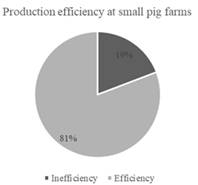
This study assesses farmers' perception towards good competitiveness practices (GCP) and explores the factors affecting pig production efficiency in Vietnam. Using binary regression analysis, the study examined variables that significantly affected the production efficiency of 260 pig farmers in Tra Vinh and Ben Tre provinces. The results showed that most farmers were male with the majority working in pig farming as their primary occupation (83.5%). The average age of farmers was 50 years, with the majority having less than ten years of experience. Most farms used artificial insemination (91.9%) and received training (93.5%), although only 39.6% used automated equipment. In GCP, the perception of pork production and sales and financial management of pig production were highly rated by farmers. However, the ability to expand business and production scale were rated lower. Farmers focusing only on pig farming had a negative impact on production efficiency. In contrast, experience and training positively affected production efficiency, emphasizing the value of practical experience and knowledge through informal education. Additionally, perception of herd and farm size in GCP were essential for improving pig production efficiency. These findings provide important insights for improving the competitiveness and productivity of pig farming in the Mekong Delta.
Keywords:
good competitive practice; pig; sustainable agriculture; production efficiency.
 Thumbnail